I received an interesting e-mail from a friend and decided to post it. Checking out how to do it, I found it already posted on slideshare. Hope you enjoy it.
Monthly Archives: June 2009
Birds of the Bible – Niami, Niger, West Africa
Our missionaries in Niami, Niger, encounter different Birds of the Bible than our missionary in Brazil, that I wrote about last week.
These are some of the different birds mentioned in the Bible that they might see in Niger that we don’t see here. Some do not have pictures, so this is not a complete list. All of these pictures are from the Niger, Africa list of birds from Wikipedia.
Avibase Checklist of Birds – Niger
*
When I Consider – Guillemot
I know all the birds of the hills, and all that moves in the field is mine. (Psalms 50:11 ESV)

When I Consider!
“Evidence From Biology”
“Every feature and function of a bird’s body testifies to design. From the moment they lay their eggs to their yearly migrations across the globe, birds provide eloquent testimony to their Creator.
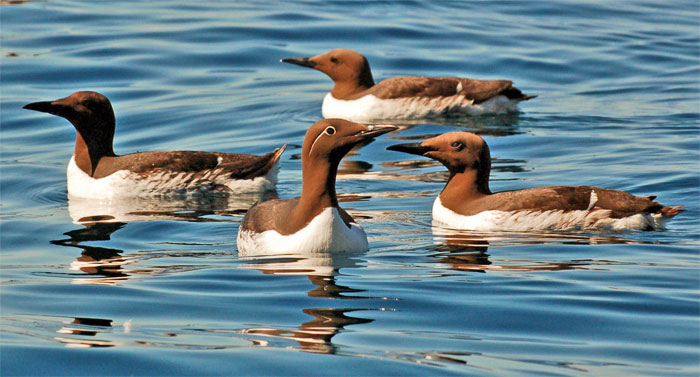
Guillemot – Wikipedia
While most birds have been given instincts to build strong nests to protect their eggs, the guillemot does not build any nest. Instead, guillemots simply lay their eggs on bare windswept rocks. Their eggs are shaped in such a way, however, that when the wind blows, they spin in place, instead of rolling off the rocks. Who programmed the guillemots to form their eggs exactly the right shape in order to survive in their harsh environment, whereas other sea birds produce ordinary shaped eggs and build nests to protect these eggs?
How do hundreds of species of birds migrate thousands of miles every year at the right time and to the right place? Every fall the American Golden Plover youngsters make an astounding 3,000 mile flight across the Pacific Ocean from Alaska to the island of Hawaii, with no parent to guide them. They fly through the darkness, clouds, and storms, and land at the correct destination. Their bodies are so effecient that they only burn ounces of body weight on this incredible 3,000 mile flight. Who designed their bodies with this extraordinary efficiency, taught these birds to navigate, and gave them the desire to make this journey?”
Above quote from June 11th’s A Closer Look at the Evidence by Richard and Tina Kleiss, with info from Myths and Miracles, p32, CEA Update Newsletter (Summer/95)
Below from Wikipedia
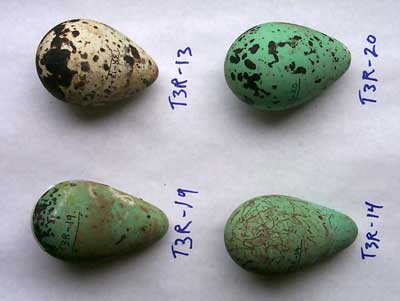
Guillemot Eggs
“Common Guillemot eggs are large (around 11% of female weight), and are pointed at one end. There are a few theories to explain their pyriform shape:
- If disturbed, they roll in a circle than fall off the ledge.
- The shape allows efficient heat transfer during incubation.
- As a compromise between large egg size and small cross-section. Large size allows quick development of the chick. Small cross-sectional area allows the adult bird to have a small cross-section and therefore reduce drag when swimming.”
Birds of the Bible – Paraiba, Brazil
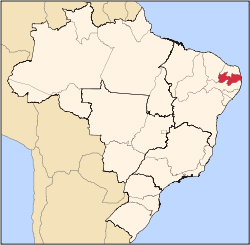
Paraiba state in Brazil
Because one of our men left for Brazil to become a missionary and we already have a missionary there, I was wondering if they might see different Birds of the Bible than we see up here in North America. So, this is the result of that search. The first thing I found out is that “Brazil has one of the richest bird diversities in the world, with more than 1700 species of birds, about 57% of the bird species recorded for all of South America. That fact was enough to make me realize I might be busy for awhile doing this. With the help of “Avibase – the world bird database” I was able to narrow the list down to Paraiba, a State, in Brazil, which is the area of both our missionaries.
Technically all birds are mentioned in the Bible because the Lord created them on the fifth day of creation. The list here is only of the “named” kinds in the Bible.
*
- Quails – Spot-winged Wood-Quail
- Cormorants – Neotropic Cormorant (here)
- Bitterns – Pinnated Bitterns
- Heron – Cocoi, Tricolored (here), Little Blue (here), Striated, Black-crowned and Yellow-crowned Night-Herons (here), Boat-billed Heron, Rufescent Tiger-Herons, and Zigzag Heron
- Storks – Wood Stork (here) and Jabiru
- Vultures – American Black and Turkey (here), Lesser Yellow-headed Vulture, Andean Condor, King Vulture
- Osprey – Osprey (here)
- Kites – Gray-headed, Swallow-tailed (here), Pearl, White-tailed (here), Snail (here), Slender-billed, Double-toothed, Plumbeous Kites
- Hawks – Tiny, Sharp-shinned, Bicolored , Crane, White-necked, Mantled, Rufous Crab-Hawk, Great Black-Hawk, Savanna, Harris’s , Black-collared, Gray, Roadside, Short-tailed (here), White-tailed (here), Zone-tailed (here)
- Eagles – Black-chested Buzzard-Eagle, Crested, Harpy, Black-and-white Hawk-Eagle, Black Hawk-Eagle, Ornate Hawk-Eagle
- Falcons Family – Laughing, Barred Forest-Falcon, Lined Forest-Falcon, Collared Forest-Falcon, American Kestrel (here), Aplomado and Peregrine Falcon (here), Bat Falcon and Orange-breasted Falcon, Southern and Yellow-headed Caracara
- Lapwings – Pied and Southern Lapwing
- Doves – Eared, Scaled, White-tipped (here), and Grey-fronted Doves
- Ground-Doves – Common, Plain-breasted, Ruddy (here), Picui, Blue
- Quail-Doves – Violaceous and Ruddy (here)
- Pigeons – Rock (here), Picazuro, Pale-vented
- Cuckoos – Yellow-billed Cuckoo, Pearly-breasted Cuckoo, Mangrove Cuckoo, Dark-billed Cuckoo, Squirrel Cuckoo, Little Cuckoo, Guira Cuckoo, Striped Cuckoo,
- Owls – Barn Owl (here), Great Horned (here), Mottled, Crested, Spectacled, Burrowing (here), Buff-fronted, Striped Owls
- Screech Owls – Tropical
- Pygmy-Owls – Ferruginous Pygmy-Owl
- Nighthawks and Nightjars – Short-tailed Nighthawk, Least Nighthawk, Least Nighthawk, Lesser Nighthawk (here), Common Nighthawk (here), Nacunda Nighthawk, Common Pauraque, Ocellated Poorwill, Rufous Nightjar, Little Nightjar, Scissor-tailed Nightjar, Pygmy Nightjar
- Swifts – White-collared (here), Biscutate, Fork-tailed Palm-Swift and Lesser Swallow-tailed Swift
- Swallows – Brown-chested Martin, Gray-breasted Martin; White-winged, Blue-and-white, Southern Rough-winged, Collared Sand Martin/Bank Swallow (here), Barn (here) Swallows
- Sparrows – Pectoral, Saffron-billed, Grassland, Rufous-collared and House (here) Sparrows
Birds of the Bible that are missing in Paraiba, Brazil are the Cranes, Hoopoe, Partridge, Peacock, Pelicans, Ravens, Swan, Pelicans. At least from what I can find out so far.
Did Birds Evolve From Dinosaurs?
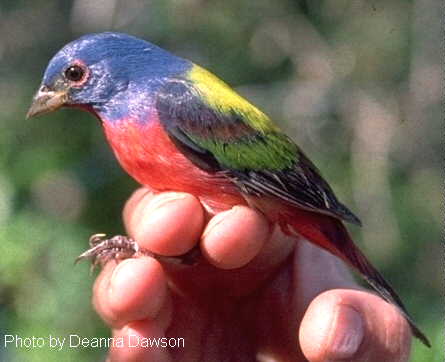 This weeks “Answersweekly” has a very interesting article about two Oregon State University scientist who don’t agree with the bird-to-dinosaur theory. There is a link there for the “Birds Did Not Evolve from Dinosaurs, Say Evolutionists“, with a subtitle of, “Stunning New Research Overturns Widely Held Evolutionary Idea.”
It is worth your time to read the material of both links. As you know, we believe God Created both the Birds and the Dinosaur (that term not used in the Bible – a modern term) during the same Creation Week. That aside, read what these evolutionary scientist say about the anatomy of the two and how the bird could not have evolved from a dinosaur.
All flesh is not the same flesh, but there is one flesh of men, and another flesh of beasts, and another flesh of birds, and another of fish. (1 Corinthians 15:39 NASB)
Birds of the Bible – Study Tips
When the Birds of the Bible were introduced in February, 2008, “Introduction to Birds of the Bible“, the goal was to acquaint you with each bird that is mentioned in the Bible and for you to learn of God’s great handiwork in their creation. These blogs have grown greatly since then. I would like to share some of the methods that I use to produce these articles and to study God’s Word.
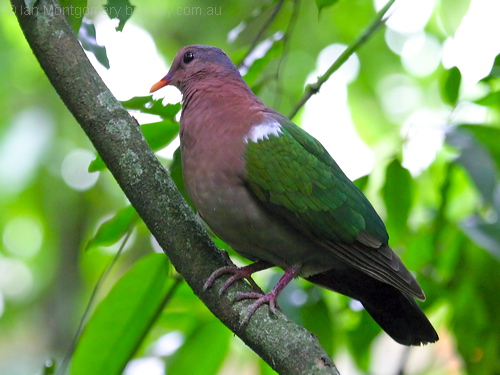
Emerald Dove by Birdway
As you are reading along in your Bible, you may come across the mention of a particular bird (or any other topic) in a verse. You see a bird and are wondering whether it is mentioned in Scripture. Your curiosity is caught and you want to find out more. What do you do?
- As a “birdwatcher,” you can pull our your handy bird handbooks like: Peterson Field Guide for Birds, Smithsonian Field Guide to the Birds, The Sibley Guide to Birds, etc.
- As an “internet birdwatcher,” you can “Google” that bird and get instant information (more than you can ever read) and learn many interesting things.
- As a “Bible birdwatcher,” you can look in your concordance for references to that bird and if you have a Bible software program, such as “e-Sword” (free), you can search for the bird.
- Also as a “Bible birdwatcher,” you may want to see why the bird is mentioned and what applications can be made by that passage of Scripture used. I like to use the Topical references, like Nave’s Topical Bible and Torrey’s New Topical Textbook. That is one reason that they are available here to help in the study of the “Birds of the Bible.” The ones here are different in that I put a picture of the bird on its page.
But now ask the beasts, and they will teach you; And the birds of the air, and they will tell you; (Job 12:7 NKJV)
This verse has been quoted many times in these blogs and we have tried to apply it to the lessons to be learned. Also, there are many other verses that give encouragement to study God’s Word.
These were more noble than those in Thessalonica, in that they received the word with all readiness of mind, and searched the scriptures daily, whether those things were so. (Acts 17:11 KJV)
Study to shew thyself approved unto God, a workman that needeth not to be ashamed, rightly dividing the word of truth. (2 Timothy 2:15 KJV)
As you study about the birds (or whatever in the Bible), I trust you will:
Let the word of Christ dwell in you richly in all wisdom; teaching and admonishing one another in psalms and hymns and spiritual songs, singing with grace in your hearts to the Lord. (Colossians 3:16 KJV)
Opening Site For Scripture and References
(Updated 12/3/09) Today I am opening up a section to be used for references. It will be used for storing some study references to use in the study of God’s Wondrous Creation. Whether it is for creation, critters or birds, I trust you will find them beneficial. One difference is that the Bird pages have pictures of the birds and in time, my desire is to add more photos to other critters and things that God has created.
I have only taken selective topics because of time and space usages. As time permits, more topics will be added. I will post some links to the full-blown versions of them. All of these are in the public domain and may be copied freely.
If a Bible reference is green, place your mouse over the verse and it will show the verse(s). I am starting with the Bird pages first. This is a work in progress.
Lord Bless you as you study His Word and about His magnificent creation.
Study to shew thyself approved unto God, a workman that needeth not to be ashamed, rightly dividing the word of truth. (2 Timothy 2:15)
All scripture is given by inspiration of God, and is profitable for doctrine, for reproof, for correction, for instruction in righteousness: (2 Timothy 3:16)
References:
R. A. Torrey’s New Topical Textbook
Treasure of Scripture Knowledge- Under Construction
Birds of the Bible – For His Pleasure II
Oh, the depth of the riches both of the wisdom and knowledge of God! How unsearchable are His judgments and His ways past finding out! (Romans 11:33 NKJV)
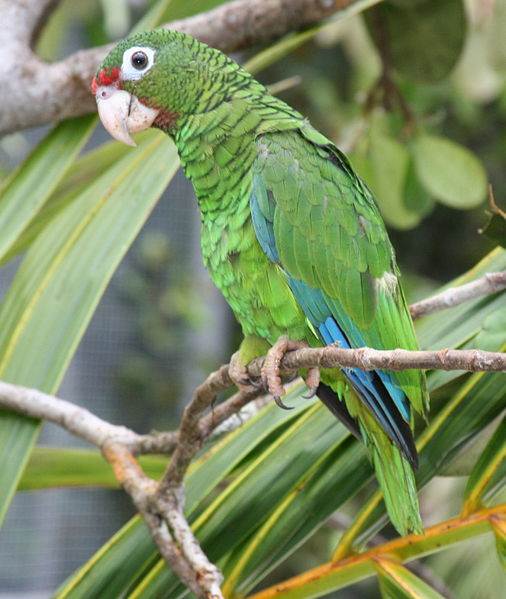
Puerto Rican Parrot
Last week the “Birds of the Bible – For His Pleasure” that I wrote was about the Lord’s Handiwork with the colors and markings of the Birds. This time, how the Lord designed their bill or beak will be considered.
It is truly amazing to observe the birds around us. They come in all kinds of sizes, shapes and colors. Have you really noticed their bills or beaks. God has designed them with various shaped bills, different length, and uses for them. Depending on what niche they fill, they have just the perfect bill for that food that they need to partake of. Some times the food that they consume is not available and they either adapt to what is available, they move on to find that food, or they become endangered or extinct. Let’s look at some of the variety of bills and the birds attached to them.
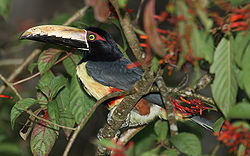
Collared Aracari
Toucan – “The colorful, giant bill, which in some large species measure more than half the length of the body, is the hallmark of toucans. Despite its size it is very light, being composed of bone struts with little solid material between them. The bill has forward-facing serrations resembling teeth,” which is used for eating fruit. “It does aid in their feeding behavior (as they sit in one spot and reach for all fruit in range, thereby reducing energy expenditure)…Also, the beak allows the bird to reach deep into treeholes to access food unavailable to other birds, and also to depredate suspended nests built by smaller birds.”

Hummingbird with beak in flower
Hummingbirds – Their thin long bills are used for collecting nectar and to protect their split tongues.
Egrets and Herons – They have long pointed bills that can be used to spear the fish they catch. They also catch them by a quick closing of the beak.
Woodpeckers – Their beaks are use to peck and tear off the bark of trees to catch bugs hidden there.
Pelican – They have a big beak with a pouch that they can hold the fish they catch.
Gnatcatcher – A very fine and small beak helps them catch gnat and other tiny insects.
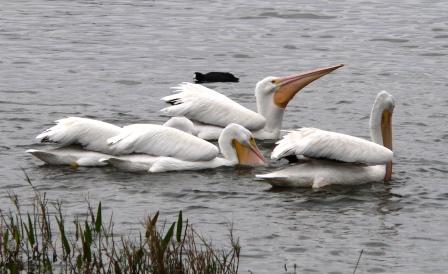
American White Pelicans at Lake Hollingsworth
Sparrows and similiar – They have a cone shape bill that allows them to crack open seeds.
Parrots – Have even a bigger cone like beak that can open larger seeds and nuts.
Spoonbills – Have what looks like a spoon for a bill. They use it to swing back and forth in the water and have a very sensitive touch that will snap the paddles together when something gets in between them. Video

Bird Beaks from Wikipedia
The list goes on and on and you will find in each case, that the bill and the bird match-up shows the infinite wisdom of our God and the Lord Jesus Christ, the Creator of them all.
As Christians, we also each have some niche that the Lord wants us to fill. He has given us the talents, abilities, gifts, etc. to do that task or ministry. Our problem sometimes is the will to do His Will with what He has provided for us. Again, let us learn from watching the birds and how they use what was designed for them.
See also: Beak from Wikipedia
 Lee's Birdwatching Adventures Plus