The Robins Come To The Rescue

THE ROBINS COME TO THE RESCUE
 

Saving the Little Birds from Danger.

Saving the Little Birds from Danger.


The honeysuckles were beginning to bud. Already the humming-birds were hovering near and had built a nest right in the heart of the vine. This vine was in a nice old-fashioned garden, but near by there was a vacant lot which was very swampy.

“You know the garden by the vacant lot?” began daddy.

“Yes,” replied both children, “are you going to tell us a story about that garden?”

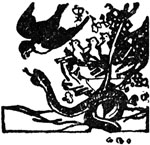
“I am going to tell you,” said daddy, “about the mother humming-bird whose little ones were attacked by a cruel snake when they were rescued by the brave robins.

“The snake had come over from the vacant field and had crawled up the honeysuckle vine as the mother humming-bird had gone off for some food. Some robins hovering near had seen the awful snake. They had cried out in terror and had flown over to the nest.

“The mother humming-bird heard the cries and hurried back, but the robins had frightened off the snake. The snake was not a very large one, and really he had been frightened by all the noise the robins had made, and when he saw so many birds flying toward him he got away very quickly.

“The mother humming-bird got back just as the snake was leaving the nest.

“She couldn’t thank the robins enough for flying to the rescue and saving her beloved little ones, but the robins didn’t want any thanks. They were thankful, too, that the dear little birds had been saved, for birds are very loyal to one another and will risk any danger to save each other.”

“I am so glad,” said Evelyn, “that the little humming-birds were saved, for I love to see them having such a good time in the honeysuckle vines, and the more there are of them the nicer it makes the summer seem.”

“It was brave of the robins to come to the rescue, though, wasn’t it, daddy?”

“Indeed it was,” said daddy; “but almost all animals and birds will do anything they can to help one another, and they seem to forget that there is such a thing as being afraid if they see any creature in danger or distress.

“After the mother humming-bird had recovered from the awful fright, and after the little ones had shown that they were perfectly well and strong, with no ill effects from their fright, the mother humming-bird invited the robins to partake of the delicious meal she had succeeded in getting before the cries came from the robins.”

Daddys Bedtime Story Images (34)

“THE MOTHER HUMMING-BIRD HURRIED BACK.”


Lee’s Addition:

Then shalt thou walk in thy way safely, and thy foot shall not stumble. (Pro 3:23)

Did the Robin brag about what they did? No. Was the Humming-bird thankful? Yes. Were they friends, yes. What can we learn from this story?

We should be willing to watch out for our friends and we should not forget to appreciate and thank those who do things for us. Also, the Lord said that He knows about the birds (Sparrows) and cares about them and us. The Lord cares more about you than the birds.

Are not five sparrows sold for two farthings, and not one of them is forgotten before God? But even the very hairs of your head are all numbered. Fear not therefore: ye are of more value than many sparrows. (Luk 12:6-7)

*

Another Bird Tales

From

Daddy’s Bedtime Bird Stories – Gutenberg ebooks

By

Mary Graham Bonner

With four illustrations in color by
Florence Choate and Elizabeth Curtis
Daddys Bedtime Story Images


These stories first appeared in the American Press Association Service and the Western Newspaper Union.


Many of the sketches in this volume are the work of Rebecca McCann, creator of the “Cheerful Cherub,” etc.
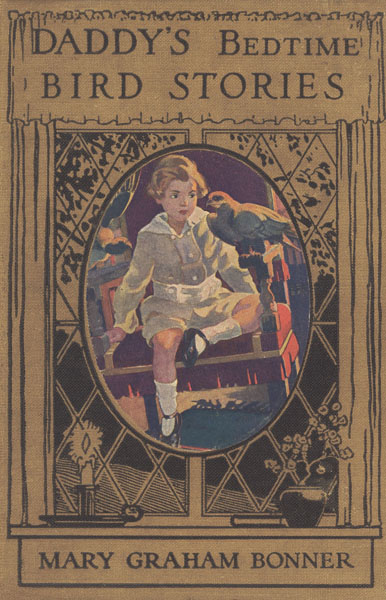
Daddy's Bedtime Bird Stories by Mary Graham Bonner - 1917

*
Daddy’s Bedtime Bird Stories by Mary Graham Bonner – 1917

*

Links:

Painted Bunting (Passerina ciris) ©©Flickr


  Bird Tales


  Daddy’s Bedtime Bird Stories


Spanish Sparrow (Passer Hispaniolensis) female ©WikiC


  Wordless Birds


*

American Robin (Turdus migratorius) eating by Jim Fenton


  Turdidae – Thrushes Family


*
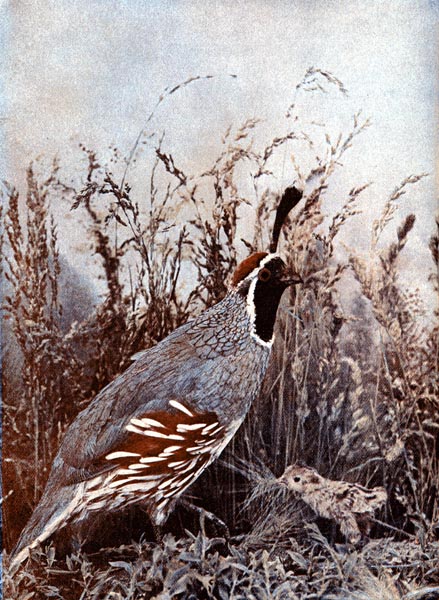
Vol 2 #2 – Gambel’s Partridge

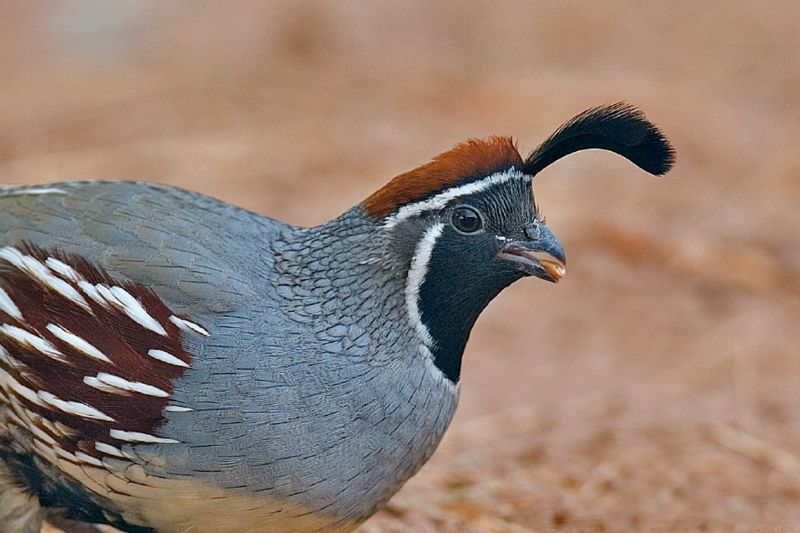
Gambel's Quail (Callipepla gambelii)

Gambel’s Partridge by Birds Illustrated by Color Photography

From col. F. M. Woodruff.

GAMBEL’S PARTRIDGE.

imgg

AMBEL’S PARTRIDGE, of which comparatively little is known, is a characteristic game bird of Arizona and New Mexico, of rare beauty, and with habits similar to others of the species of which there are about two hundred. Mr. W. E. D. Scott found the species distributed throughout the entire Catalina region in Arizona below an altitude of 5,000 feet. The bird is also known as the Arizona Quail.

The nest is made in a depression in the ground sometimes without any lining. From eight to sixteen eggs are laid. They are most beautifully marked on a creamy-white ground with scattered spots and blotches of old gold, and sometimes light drab and chestnut red. In some specimens the gold coloring is so pronounced that it strongly suggests to the imagination that this quail feeds upon the grains of the precious metal which characterizes its home, and that the pigment is imparted to the eggs.

After the nesting season these birds commonly gather in “coveys” or bevies, usually composed of the members of but one family. As a rule they are terrestrial, but may take to trees when flushed. They are game birds par excellence, and, says Chapman, trusting to the concealment afforded by their dull colors, attempt to avoid detection by hiding rather than by flying. The flight is rapid and accompanied by a startling whirr, caused by the quick strokes of their small, concave, stiff-feathered wings. They roost on the ground, tail to tail, with heads pointing outward; “a bunch of closely huddled forms—a living bomb whose explosion is scarcely less startling than that of dynamite manufacture.”

The Partridge is on all hands admitted to be wholly harmless, and at times beneficial to the agriculturist. It is an undoubted fact that it thrives with the highest system of cultivation, and the lands that are the most carefully tilled, and bear the greatest quantity of grain and green crops, generally produce the greatest number of Partridges.

Summary:

GAMBEL’S PARTRIDGE.Callipepla gambeli.

Range—Northwestern Mexico, Arizona, New Mexico, southern Utah, and western Utah and western Texas.

Nest—Placed on the ground, sometimes without any lining.

Eggs—From eight to sixteen.


Gambel's Quail (Callipepla gambelii) by S Slayton

Gambel’s Quail (Callipepla gambelii) by S Slayton

Lee’s Addition:

Partridges are mentioned in two verses, thus making it a Bible Bird. Of course, the Gambel’s is not mentioned, only his family. They belong to the Galliformes order and are now called the Gambel’s Quail. They are in the Odontophoridae – New World Quail Family along with 33 other species (3.1 IOC).

Now therefore, let not my blood fall to the earth away from the presence of the LORD, for the king of Israel has come out to seek a single flea like one who hunts a partridge in the mountains. (1 Samuel 26:20 ESV)

Like the partridge that gathers a brood that she did not hatch, so is he who gets riches but not by justice; in the midst of his days they will leave him, and at his end he will be a fool. (Jeremiah 17:11 ESV)

Since they are now known as Quails, that species also appears in Scripture four times. Exodus 16:13, Numbers 11:31-32, and Psalms 105:40 all mention quail as a provision for His people. We were privileged to see the Gambel’s Quail in California in 1999. They are so neat walking around with that top knot bobbing along.

In the evening quail came up and covered the camp, and in the morning dew lay around the camp. (Exodus 16:13 ESV)

Then a wind from the LORD sprang up, and it brought quail from the sea and let them fall beside the camp, about a day’s journey on this side and a day’s journey on the other side, around the camp, and about two cubits above the ground. And the people rose all that day and all night and all the next day, and gathered the quail. Those who gathered least gathered ten homers. And they spread them out for themselves all around the camp. (Numbers 11:31-32 ESV)

They asked, and he brought quail, and gave them bread from heaven in abundance. (Psalms 105:40 ESV)

Gambel's Quail (Callipepla gambelii) ©WikiC

Gambel’s Quail (Callipepla gambelii) ©WikiC

“The Gambel’s Quail, Callipepla gambelii, is a small ground-dwelling bird in the New World quail family. It inhabits the desert regions of Arizona, California, Colorado, New Mexico, Nevada, Utah, Texas, and Sonora; also New Mexico-border Chihuahua and the Colorado River region of Baja California. The Gambel’s quail is named in honor of William Gambel, a 19th century naturalist and explorer of the Southwestern United States.” (Wikipedia)

*

Birds Illustrated by Color Photography – Revisited – Introduction

The above article is the first article in the monthly serial that was started in January 1897 “designed to promote Knowledge of Bird-Live.” These include Color Photography, as they call them, today they are drawings. There are at least three Volumes that have been digitized by Project Gutenberg.

To see the whole series of – Birds Illustrated by Color Photography – Revisited

*

(Information from Wikipedia and other internet sources)

Next Article – The Yellow Warbler

The Previous Article – To A Water-Fowl

ABC’s Of The Gospel

Links:

Odontophoridae – New World Quail Family

GALLIFORMES – Fowl, Quail, Guans, Currasows, Megapodes Order

Gambel’s Quail – Wikipedia

Gambel’s Quail – All About Birds

*


Vol 2 #2 – To A Water-Fowl

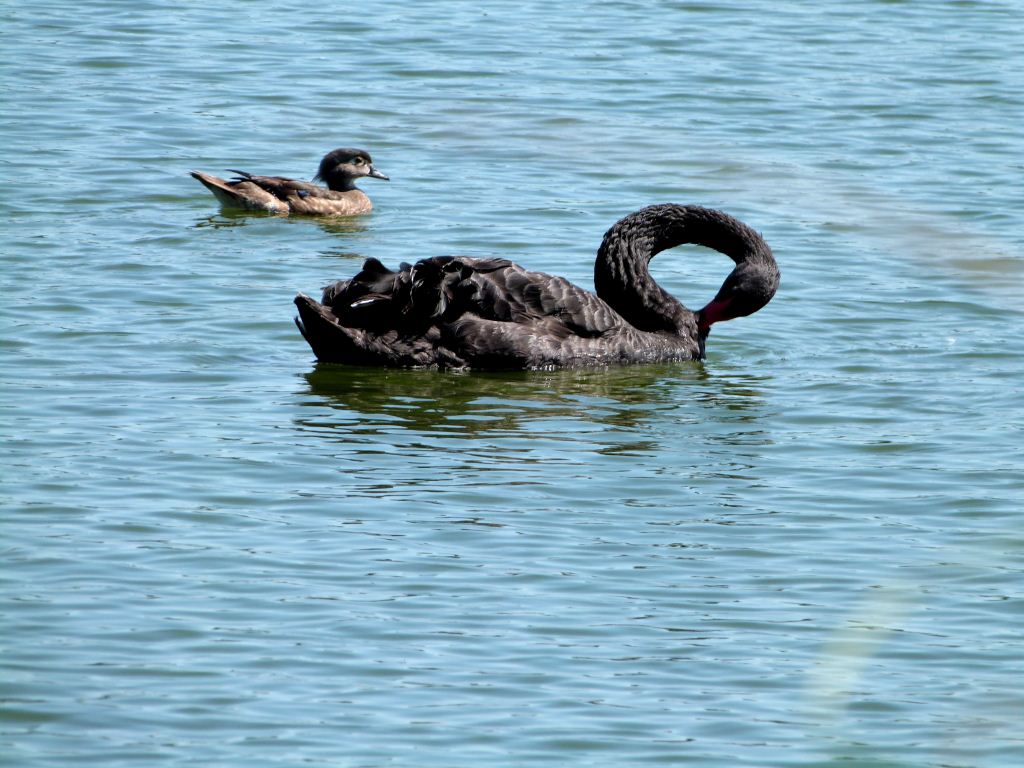
Black Swan and Wood Duck female - Lake Morton 6-28-12 by Lee

Black Swan and Wood Duck female

TO A WATER-FOWL

Whither, ’midst falling dew
While glow the heavens with the last steps of day,
Far through their rosy depths dost thou pursue
Thy solitary way?

Vainly the fowler’s eye
Might mark thy distant flight to do thee wrong,
As, darkly painted on the crimson sky,
Thy figure floats along.

Seek’st thou the plashy brink
Of weedy lake, or marge of river wide,
Or where the rocky billows rise and sink
On the chafed ocean side.

There is a Power whose care
Teaches thy way along that pathless coast—
The desert and illimitable air—
Lone wandering, but not lost.

All day thy wings have fanned,
At that far height, the cold thin atmosphere,
Yet stoop not, weary, to the welcome land
Though the dark night is near.

And soon that toil shall end;
Soon shalt thou find a summer home, and nest,
And scream among thy fellows; reeds shall bend,
Soon o’er thy sheltered nest.

Thou’rt gone, the abyss of heaven
Hath swallowed up thy form; yet on my heart
Deeply has sunk the lesson thou hast given,
And shall not soon depart.

He who from zone to zone,
Guides through the boundless sky thy certain flight,
In the long way that I must tread alone,
Will lead my steps aright.

William Cullen Bryant.


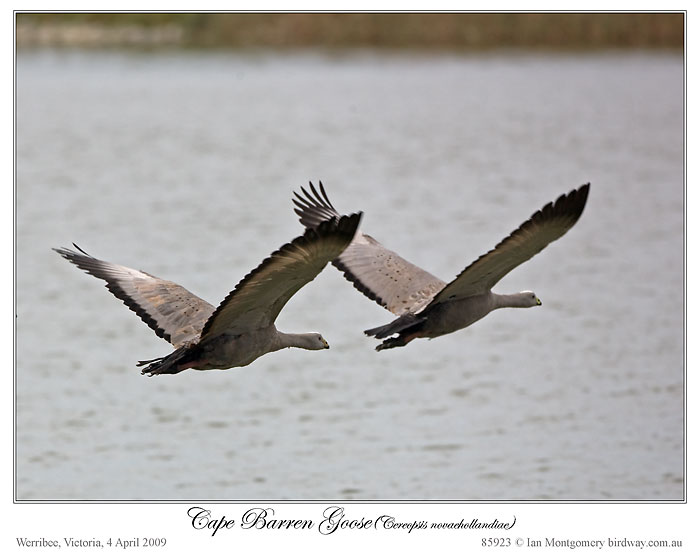
Cape Barren Goose (Cereopsis novaehollandiae) by Ian

Cape Barren Goose (Cereopsis novaehollandiae) by Ian

Lee’s Addition:

Storks know when to fly south. So do doves, swifts and thrushes. But my people do not know what I require them to do. (Jeremiah 8:7 NIrV)

“But now ask the beasts, and they will teach you; And the birds of the air, and they will tell you; (Job 12:7 NKJV)

Wikipedia say this of Waterfowl They “are certain wildfowl of the order Anseriformes, especially members of the family Anatidae, which includes ducks, geese, and swans.
They are strong swimmers with medium to large bodies. They have historically been an important food source, and continue to be hunted as game, or raised as poultry for meat and eggs. The domestic duck is sometimes kept as a pet.

Some definitions of the term ‘waterfowl’ include the saltwater shorebirds or waders, gulls, pelicans, and herons, as well as seabirds such as the albatross, but ‘fowl’ especially refers to birds used by humans for game.

*

Birds Illustrated by Color Photography – Revisited – Introduction

The above article is the first article in the monthly serial that was started in January 1897 “designed to promote Knowledge of Bird-Live.” These include Color Photography, as they call them, today they are drawings. There are at least three Volumes that have been digitized by Project Gutenberg.

To see the whole series of – Birds Illustrated by Color Photography – Revisited

*

(Information from Wikipedia and other internet sources)

Next Article –  Gambel’s Partridge

The Previous Article – The Turkey Vulture

Wordless Birds

Links:

Anseriformes Order

Anatidae Family

*

Birds of the Bible – Trees and Birds

Eagle in Tree on a windy day by Dan

These were the visions of my head while on my bed: I was looking, and behold, A tree in the midst of the earth, And its height was great. The tree grew and became strong; Its height reached to the heavens, And it could be seen to the ends of all the earth. Its leaves were lovely, Its fruit abundant, And in it was food for all. The beasts of the field found shade under it, The birds of the heavens dwelt in its branches, And all flesh was fed from it. (Daniel 4:10-12 NKJV)

What an interesting passage. Actually, this was part of the vision or dream that Nebuchadnezzar had and he is revealing it to Daniel. He is looking for an explanation for it. (See Daniel 4:19 + for the interpretation)

Daniel gives him the interpretation in the rest of the Chapter 4, but I want to concentrate on the tree and the birds. I have seen so many photos and witnessed birds enjoying themselves in the trees. The Lord created them all and provides for the tree, the beast, the birds, and us.

The trees provide food (fruit and seeds), leaves give shade for the animals and birds, the limbs provide a resting place, especially for birds, but I have seen a few leopards and koalas resting on them also.

Verse like:

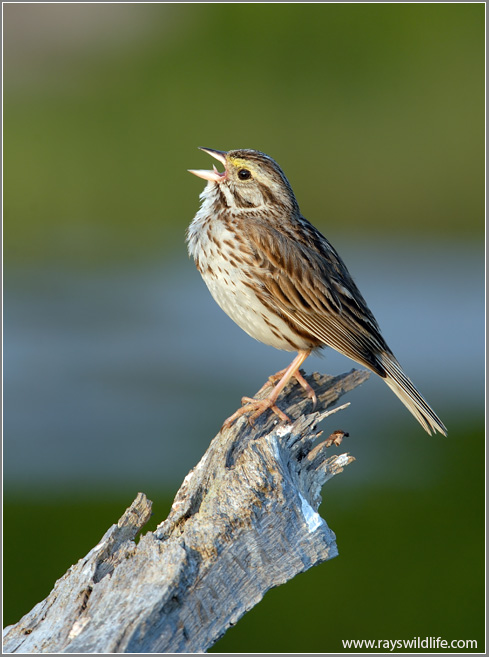
Savannah Sparrow singing by Ray

Savannah Sparrow singing by Ray

By them the birds of the heavens have their home; They sing among the branches. (Psalms 104:12 NKJV)

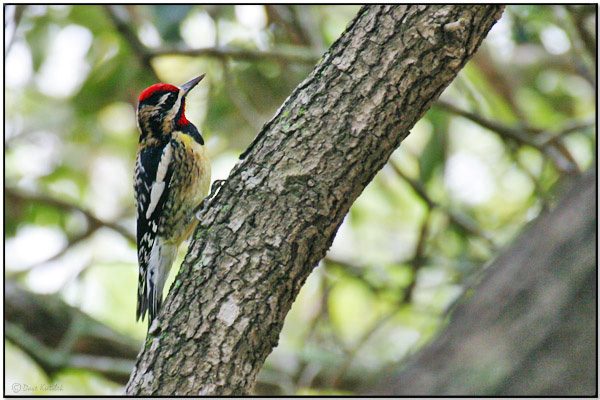
Yellow-bellied Sapsucker (Sphyrapicus varius) by Daves BirdingPix

Yellow-bellied Sapsucker (Sphyrapicus varius) by Daves BirdingPix

The trees of the LORD are full of sap, The cedars of Lebanon which He planted, (Psalms 104:16 NKJV) (Many birds like the sap – Sapsuckers for one)

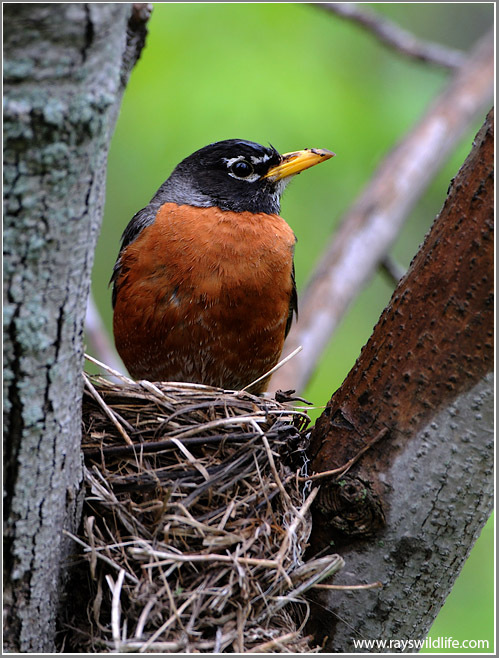
American Robin (Turdus migratorius) in nest by Ray

American Robin (Turdus migratorius) in nest by Ray

Where the birds make their nests; The stork has her home in the fir trees. (Psalms 104:17 NKJV)

And Jesus said to him, “Foxes have holes and birds of the air have nests, but the Son of Man has nowhere to lay His head.” (Matthew 8:20 NKJV)

Another parable He put forth to them, saying: “The kingdom of heaven is like a mustard seed, which a man took and sowed in his field, which indeed is the least of all the seeds; but when it is grown it is greater than the herbs and becomes a tree, so that the birds of the air come and nest in its branches.” (Matthew 13:31-32 NKJV)

Cedar Waxwing on Cedar Tree at Birdwatchers Digest.

Also he spoke of trees, from the cedar tree of Lebanon even to the hyssop that springs out of the wall; he spoke also of animals, of birds, of creeping things, and of fish. (1 Kings 4:33 NKJV)

*

Our Great Creator has wonderfully designed so many things to work together to provide for each other. Birds need trees and trees need birds. He is worthy of our praise and thanksgiving. And don’t you just enjoy watching the birds in the trees?

For His merciful kindness is great toward us, And the truth of the LORD endures forever. Praise the LORD! (Psalms 117:2 NKJV)

Yes, they shall sing of the ways of the LORD, For great is the glory of the LORD. (Psalms 138:5 NKJV)

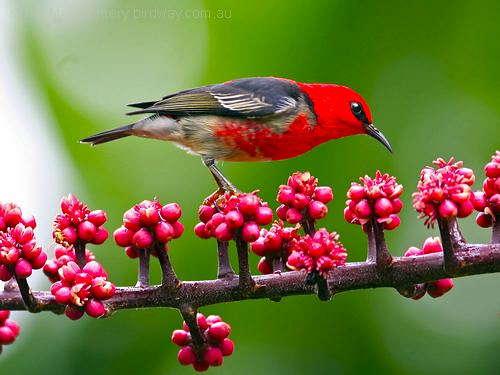
Scarlet Myzomela (Myzomela sanguinolenta) by Ian

Scarlet Myzomela (Myzomela sanguinolenta) by Ian

Great is our Lord, and mighty in power; His understanding is infinite. (Psalms 147:5 NKJV)

For the LORD your God is God of gods and Lord of lords, the great God, mighty and awesome, who shows no partiality nor takes a bribe. (Deuteronomy 10:17 NKJV)

*

Vol 2 #2 – The Turkey Vulture

Turkey Vulture Tree at Saddle Creek by Lee

Turkey Vulture Tree at Saddle Creek by Lee

THE TURKEY VULTURE.

This bird is found mostly in the southern states. Here he is known by the more common name of Turkey Buzzard.

He looks like a noble bird but he isn’t. While he is well fitted for flying, and might, if he tried, catch his prey, he prefers to eat dead animals.

The people down south never think of burying a dead horse or cow. They just drag it out away from their homes and leave it to the Vultures who are sure to dispose of it.

It is very seldom that they attack a live animal.

They will even visit the streets of the cities in search of dead animals for food, and do not show much fear of man. Oftentimes they are found among the chickens and ducks in the barn-yard, but have never been known to kill any.

One gentleman who has studied the habits of the Vulture says that it has been known to suck the eggs of Herons. This is not common, though. As I said they prefer dead animals for their food and even eat their own dead.

The Vulture is very graceful while on the wing. He sails along and you can hardly see his wings move as he circles about looking for food on the ground below.

Many people think the Vulture looks much like our tame turkey.

If you know of a turkey near by, just compare this picture with it and you won’t think so.

See how chalk-white his bill is. No feathers on his head, but a bright red skin.

What do you think of the young chick? It doesn’t seem as though he could ever be the large, heavy bird his parent seems to be.

Now turn back to the first page of July “Birds” and see how he differs from the Eagle.

THE TURKEY VULTURE

THE TURKEY VULTURE

From col. F. M. Woodruff.


THE TURKEY VULTURE.

imgt

URKEY BUZZARD is the familiar name applied to this bird, on account of his remarkable resemblance to our common Turkey. This is the only respect however, in which they are alike. It inhabits the United States and British Provinces from the Atlantic to the Pacific, south through Central and most of South America. Every farmer knows it to be an industrious scavenger, devouring at all times the putrid or decomposing flesh of carcasses. They are found in flocks, not only flying and feeding in company, but resorting to the same spot to roost; nesting also in communities; depositing their eggs on the ground, on rocks, or in hollow logs and stumps, usually in thick woods or in a sycamore grove, in the bend or fork of a stream. The nest is frequently built in a tree, or in the cavity of a sycamore stump, though a favorite place for depositing the eggs is a little depression under a small bush or overhanging rock on a steep hillside.

Renowned naturalists have long argued that the Vulture does not have an extraordinary power of smell, but, according to Mr. Davie, an excellent authority, it has been proven by the most satisfactory experiments that the Turkey Buzzard does possess a keen sense of smell by which it can distinguish the odor of flesh at a great distance.

The flight of the Turkey Vulture is truly beautiful, and no landscape with its patches of green woods and grassy fields, is perfect without its dignified figure high in the air, moving round in circles, steady, graceful and easy, and apparently without effort. “It sails,” says Dr. Brewer, “with a steady, even motion, with wings just above the horizontal position, with their tips slightly raised, rises from the ground with a single bound, gives a few flaps of the wings, and then proceeds with its peculiar soaring flight, rising very high in the air.”

The Vulture pictured in the accompanying plate was obtained between the Brazos river and Matagorda bay. With it was found the Black Vulture, both nesting upon the ground. As the nearest trees were thirty or forty miles distant these Vultures were always found in this situation. The birds selected an open spot beneath a heavy growth of bushes, placing the eggs upon the bare ground. The old bird when approached would not attempt to leave the nest, and in the case of the young bird in the plate, the female to protect it from harm, promptly disgorged the putrid contents of her stomach, which was so offensive that the intruder had to close his nostrils with one hand while he reached for the young bird with the other.

The Turkey Vulture is a very silent bird, only uttering a hiss of defiance or warning to its neighbors when feeding, or a low gutteral croak of alarm when flying low overhead.

The services of the Vultures as scavengers in removing offal render them valuable, and almost a necessity in southern cities. If an animal is killed and left exposed to view, the bird is sure to find out the spot in a very short time, and to make its appearance as if called by some magic spell from the empty air.

“Never stoops the soaring Vulture
On his quarry in the desert,
On the sick or wounded bison,
But another Vulture, watching,
From his high aerial lookout,
Sees the downward plunge and follows;
And a third pursues the second,
Coming from the invisible ether,
First a speck, and then a Vulture,
Till the air is dark with pinions.”

Summary:

TURKEY VULTURE.Catharista Atrata.

Range—Temperate America, from New Jersey southward to Patagonia.

Nest—In hollow stump or log, or on ground beneath bushes or palmettos.

Eggs—One to three; dull white, spotted and blotched with chocolate marking.


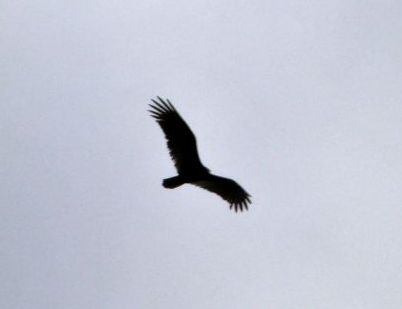
Turkey Vulture flying by - LPP

Turkey Vulture flying by – LPP

Lee’s Addition:

There is a path which no fowl knoweth, and which the vulture’s eye hath not seen: (Job 28:7 KJV)

We see Turkey and Black Vulture quite frequently here. I only disagree with one part of the article. “The Vulture is very graceful while on the wing. He sails along and you can hardly see his wings move as he circles about looking for food on the ground below.”

The way I distinguish the Turkey and Black Vultures apart is that the Black (BV) is steady on the wing, but the Turkey TV) is wobbly on the wing. They have a rocking motion, even when it is not windy. Another way to tell the two apart is the V of the Turkey and the flatter wings of the Black, who also has white on the tips of their wings.

They belong to the Cathartidae – New World Vultures Family. There are 7 Vultures and 2 Condors in that family.

*

Birds Illustrated by Color Photography – Revisited – Introduction

The above article is the first article in the monthly serial that was started in January 1897 “designed to promote Knowledge of Bird-Live.” These include Color Photography, as they call them, today they are drawings. There are at least three Volumes that have been digitized by Project Gutenberg.

To see the whole series of – Birds Illustrated by Color Photography – Revisited

*

(Information from Wikipedia and other internet sources)

Next Article – To A Water-Fowl

The Previous Article – The Evening Grosbeak

ABC’s Of The Gospel

Links:

Birds of the Bible – Vulture

Birds of the Bible – Gathering of Vultures or Eagles

Birds of the Bible – Griffon Vulture

Scripture Alphabet of Animals: The Vulture

Birds of the Bible – Vulture Eyesight

When I Consider! – Turkey Vulture

Turkey Vulture – Wikipedia

*

Pollinators….

Green Violetear (Colibri thalassinus) ©WikiC

Green Violetear (Colibri thalassinus) ©WikiC

Pollinators…. ~ by a j mithra

Hummingbirds and ornithophilous (bird-pollinated) flowers
were created to have a mutualistic relationship.
The flowers have nectar suited to the birds’ diet,
their color suits the birds’ vision
and their shape fits that of the birds’ bills.

The blooming times of the flowers have also been found
to coincide with hummingbirds’ breeding seasons….

The Rose of Sharon has the nectar
that suits our spiritual diet..

The Rose of Sharon has the power
to purify our soul…

The Rose of Sharon’s will
is to shape our lives for His glory…

If only we had pollinated the way
The Rose of Sharon wanted us to do,
our classmates and our colleagues.
our neighborhood and our nationhood
would not only have known Jesus,
but also would have been effective pollinators…
By the way,
are we seasonal pollinators or regulars?

And he (Jesus) said unto them, Go ye into all the world, and preach the gospel to every creature. (Mathew 16:15)

Have a blessed day!

Yours in YESHUA,

a j mithra

Please visit us at:

Crosstree

ajmithra21


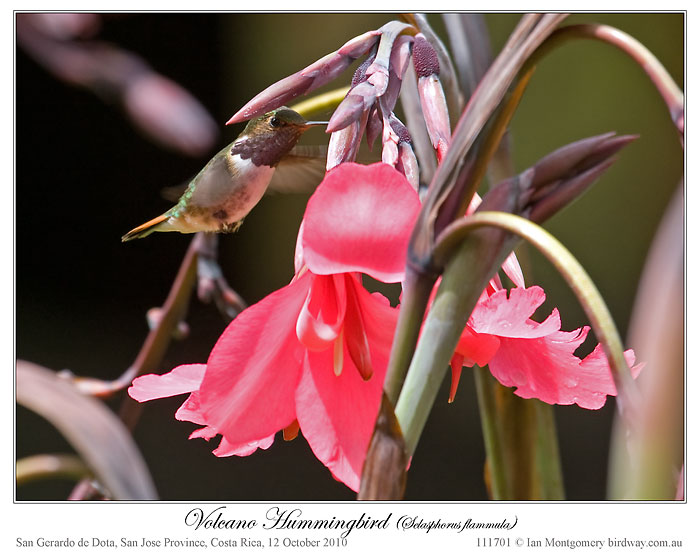
Volcano Hummingbird (Selasphorus flammula) by Ian

Volcano Hummingbird (Selasphorus flammula) by Ian

Lee’s Addition:

Ornithophily or Bird Pollination is the pollination of flowering plants by birds. The Creator created this association is derived from insect pollination (entomophily) and is particularly well developed in some parts of the world, especially in the tropics and on some island chains. The association involves several distinctive plant adaptations forming a “pollination syndrome”. The plants typically have colorful, often red, flowers with long tubular structures holding ample nectar and orientations of the stamen and stigma that ensure contact with the pollinator. Birds involved in ornithophily sre specialist nectarivores with brushy tongues, long beaks, capable of hovering flight or are light enough to perch on the flower structures. (Edited from Wikipedia)

Hummingbird – CreationWiki

Trochilidae – Hummingbirds

Hummingbirds – All About Birds

*