Sparrow Frozen To A Fence – DoDo

Another interesting video from “the dodo” channel.

“Bird Frozen To Metal Fence Rescued by Kind Man | This little bird landed on a fence that was so cold, his feet froze to it and he couldn’t fly away. But luckily the nicest guy came along and knew exactly what to do.”

Not sure if this bird prayed like this, but it would apply to us if we were in such a predicament as this.

“Be pleased, O LORD, to deliver me: O LORD, make haste to help me.” (Psalms 40:13 KJV)

P.S. This wouldn’t happen here in Central Florida. :)

See more from “the dodo” channel.

Fighting the Reflection

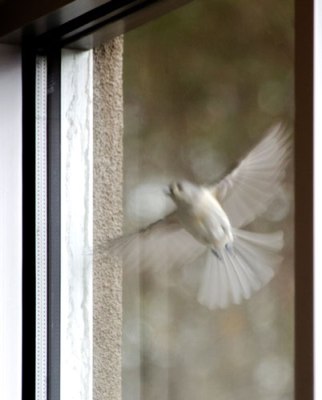
Like a bird fighting its reflection in a window, we too can fight our true reflection as revealed by the Word of God…

“But be ye doers of the word, and not hearers only, deceiving your own selves. For if any be a hearer of the word, and not a doer, he is like unto a man beholding his natural face in a glass: for he beholdeth himself, and goeth his way, and straightway forgetteth what manner of man he was.” James 1:23-24

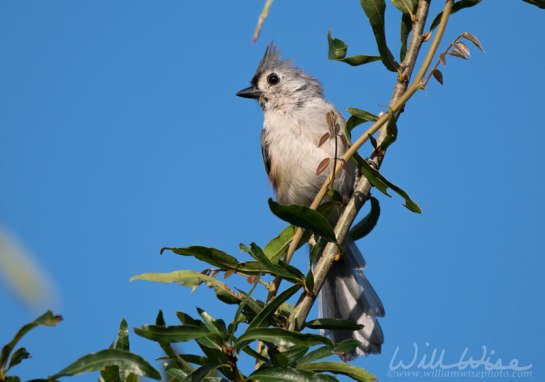
Tufted Titmouse; Walton County, Georgia. September 2, 2020. ©www.williamwisephoto.com. Please don’t steal my images. Legally download this image here.

As I sit listening to the Sunday morning sermon, I’m distracted by a feisty little Tufted Titmouse flying up to the window attacking his reflection. He believes the image in the glass to be a rival interloper invading his territory. Because the bird doesn’t like what he sees, he decides to fight the reflection.

While I watched this aggravated avian, my pastor continued to preach from the book of James. In the letter, James describes the Word of God as a mirror that reflects what manner of men we are. We have our own self-image, but our image of ourselves is always quite different than how God sees us. And the Bible has a way of revealing who we really are; a true reflection, as in a mirror.

Tufted Titmouse fighting its reflection; Athens, Georgia. www.williamwisephoto.com.

Often, as the mirror’s image comes into clear focus, we don’t like the image that we see, and like the Titmouse, we fight against that reflection.

  • When the mirror of the Word reflects our true, impatient self (James 1:4), we fight against the reflection and declare ourselves to have “the patience of Job.”
  • When the mirror reflects our poor decisions and “lack of wisdom” (James 1:5), we fight the reflection and declare the Bible outdated.
  • When the mirror of the Word reflects our true, double-minded nature (James 1:8), we fight the reflection and posit our focused faithfulness to God alone.
  • When the mirror of the Word reflects our own sinful nature as the fault of our falling to temptation (James 1:13), we fight the reflection declaring “this is how God created me.”
  • When the mirror of the Word of God reflects our hot temper (James 1:19), we fight the reflection, take up a rock and smash the mirror!

When we see our true reflection in the mirror of the Word of God, let us not fight against it as the church Titmouse. Let us not walk away and “forget what manner of men we are.” But let us be doers of the Word, and as Today’s English Version translates, let us “submit to God and accept the Word that He plants in our hearts” (James 1:21 TEV). Another lesson learned if we will listen to what creation speaks!


Hi, I’m wildlife photographer and nature writer William Wise. I was saved under a campus ministry while studying wildlife biology at the University of Georgia. My love of the outdoors quickly turned into a love for the Creator and His works. I’m currently an animal shelter director and live in Athens, Georgia with my wife and two teenage daughters, who are all also actively involved in ministry. Creation Speaks is my teaching ministry that glorifies our Creator and teaches the truth of creation.  — “What a wildly wonderful world, God! You made it all, with Wisdom at Your side, made earth overflow with your wonderful creations.” Psalms 104, The Message.

Mute Swans – From AviBirds

Mark, from AviBirds, has given us the privledge of viewing the various videos that they produce. Here is the one about the Mute Swan (Cygnus Olor).

We are fortunate to see the Mute on several of the Lakes over in Lakeland, Florida. Plus, other places around here, but we have birded Lake Morton and Lake Hollingsworth many times over the years. Here are a few of those sightings:

Why you looking at my foot – Mute Swan at Lake Morton

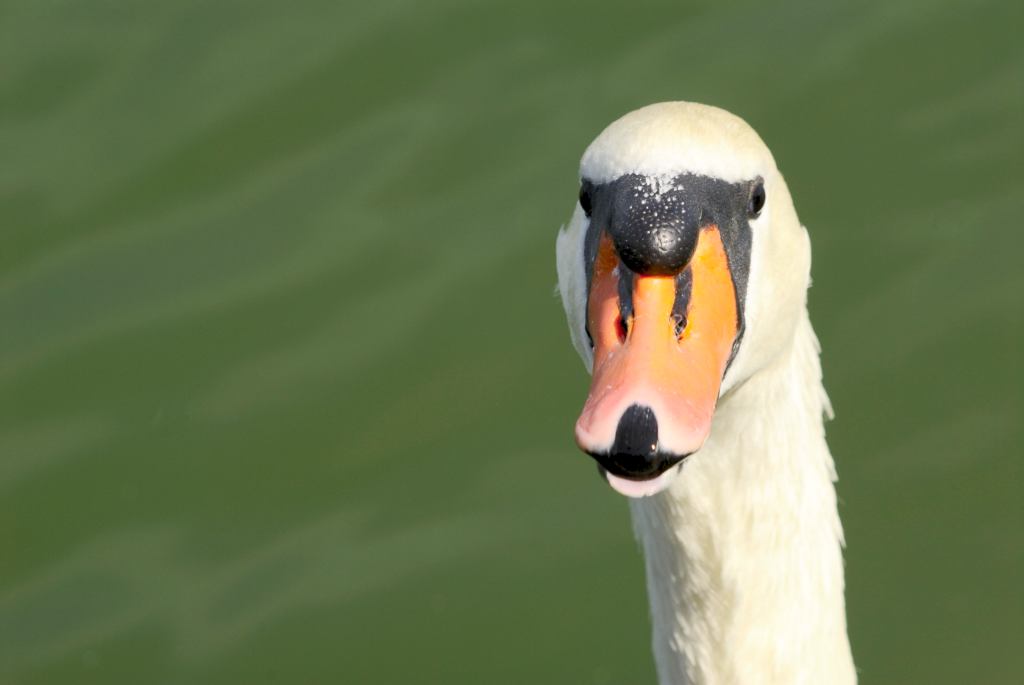
Mute Swan (Cygnus olor) (close up) at Lake Morton, Lakeland, FL By Dan’sPix

Mute Swan on Nest at Lake Morton

Mute Swan on Nest at Lake Morton by Dan

“And the swan, and the pelican, and the gier eagle,” (Leviticus 11:18 KJV) From the “Do Not Eat List”

Stop by AviBirds for all of their videos, or stay tuned for more postings here.

Birds of the Bible – Swans

Good News

Hawk Stuck In Grill Of Car – Dodo Channel

Dan found this on The DoDo channel and I thought we would share it here:

But you, God, see the trouble of the afflicted; you consider their grief and take it in hand. The victims commit themselves to you; you are the helper of the fatherless. (Hawk in the case) (Psalms 10:14 NIV)

Ducks “Social Distancing”

Black-bellied Whistling Ducks by Lee 3-15-20

Recently we were visited by a small flock of Black-bellied Whistling Ducks. Not sure who told them to “Social Distance,” but they seem to be doing it.

A few years ago, we were at the shore where these birds were not practicing this. Then again, who had ever heard of “Social Distancing” until recently?

Crowded Shore at MacDill by Lee

These shorebirds definitely are NOT “Social Distanced.” We are trusting and praying that you are staying safe and finding things to do while staying home. Check the links along the sides of this page. There are many things and birds you can read about.

Remember that the Lord never wants us to “Social distance” from Him.

“But it is good for me to draw near to God; I have put my trust in the Lord GOD, That I may declare all Your works.” (Psalms 73:28 NKJV)

Spend some of your time at home checking out these topics:

Indecisive Black-bellied Whistling-Ducks

Bible Birds – Whistling Ducks

Bible Birds

Scriptural Alphabet

Watching Birds

Golden Eagle

Bird Tales

Orni-Theology

Wordless Birds


Seabirds and Cetaceans Both Love Ocean-catch Fish! (Plus Some Information on Cetaceans’ Submarine Songfests)

SEABIRDS AND CETACEANS BOTH LOVE OCEAN-CATCH FISH!  

(With Extra Information about How Norwegians and Americans Scrutinize Saltwater Serenades)

Dr. James J. S. Johnson

Blue Whale in Red Sea (Novinite.com image)

HUMPBACK WHALE (The Bermudian Magazine)

 And God created great whales [tannînim], and every living creature that moveth, which the waters brought forth abundantly, after their kind, and every winged fowl after his kind; and God saw that it was good.   (Genesis 1:21)

SEABIRDS AND CETACEANS BOTH LOVE OCEAN-CATCH FISH!  

 Ocean-catch fish is enjoyed, daily at sea, by both whales and seabirds.  Accordingly, it is not surprising to find seabirds hovering over places where whales are feeding on oceanic fish.

Seabirds and whales share a special bond; they both love fish. Seabirds are often found at the top of the food web and can also function as indicators of ecosystem health. Seeing seabirds on the surface is a possible sign that whales are also feeding underneath. This is especially the case for humpback and North Atlantic Right whales, which are the baleen whales at the most risk in the Northern Atlantic. 

Researchers wanted to know how often seeing a specific kind of seabird known as great shearwaters  coincided with the presence of whales. To do this, they spent five years surveying both the Gulf of Maine and the Stellwagen Bank National Marine Sanctuary near Boston.

[Quoting Ashley Mickens, “Where There Are Birds … There Are Whales?”, OCEANBITES (September 30, 2022), posted at  https://oceanbites.org/where-there-are-birds-there-are-whales/#:~:text=Seabirds%20are%20often%20found%20at%20the%20top%20of,at%20the%20most%20risk%20in%20the%20Northern%20Atlantic  —  citing Tammy L. Silva, et al., “Exploring the Use of Seabirds as a Dynamic Ocean Management Tool to Mitigate Anthropogenic Risk to Large Whales”, FRONTIERS IN MARINE SCIENCE, 9:861 (2022).
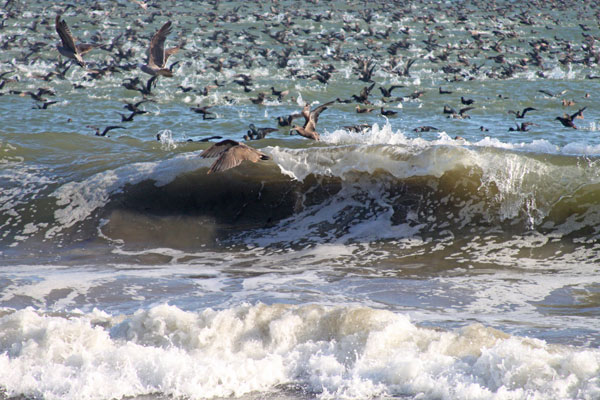
Sooty shearwaters feeding in the surf (everything eats) | Life in a ... 

SOOTY SHEARWATERS feeding on fish near shore (LifeinaSkillet.com photo credit)

In short, shearwaters tagged with GPS tags can be used to locate large whales feeding on fish, with such location information being useful for reducing the risks of collisions at sea between those whales and human-driven watercraft.

Based on their unique life-history characteristics, seabirds equipped with satellite tags could serve as valuable tools for implementing dynamic management. Procellariid seabirds are highly mobile, enabling them to respond quickly to changing environmental conditions over large spatial scales and their top position in food webs means their location may indicate areas of high forage fish abundance. Their role as ecological indicators (Velarde et al., 2019) position seabirds as attractive sentinels for monitoring changes in marine ecosystems, fluctuations in abundance and distribution of forage fishes, and for identifying areas of high productivity where top predators, including whales and ocean users may congregate. Further, tags applied to seabirds are less expensive, less invasive, and can last longer than tags on large whales.

Great shearwaters (Ardenna gravis; hereafter shearwaters) are one of the most common pelagic seabirds in the Gulf of Maine (GOM) (Powers, 1983), including in Stellwagen Bank National Marine Sanctuary (SBNMS), a 2180 km2 federal marine protected area (MPA) (SBNMS unpublished data). In the sanctuary, shearwaters overlap with humpback whales. Both species consistently overlap with sand lance (Ammodytes dubius), their preferred prey in this region (Payne et al., 1986Powers et al., 2020Silva et al., 2020) and shearwaters are often seen foraging with surface-feeding humpback whales. Sand lance are also found in specific, sandy substrates and previous work also shows that humpbacks and shearwaters use many of the same habitats throughout the GOM (Robbins, 2007Powers et al., 2017Powers et al., 2020). This suggests that satellite-tagged great shearwaters could indicate humpback whale locations at wider scales, and that some of these static locations may lend themselves to dynamic management. While the idea of investigating the use of tagged shearwaters to locate humpback whale aggregations is supported by previous work, considering tagged shearwaters as indicators of right whales is also of interest for two reasons:  (1) they are critically endangered and management tools to drastically reduce vessel strikes and entanglements is desperately needed; and ( 2) right whales and sand lance in the GOM feed primarily on copepods, including Calanus finmarchicus (Wishner et al., 1995Murison and Gaskin, 1989Mayo and Marx, 1990Suca et al., 2021), making it plausible that shearwaters feeding on sand lance may overlap with right whales.

[Quoting Tammy L. Silva, et al., “Exploring the Use of Seabirds as a Dynamic Ocean Management Tool to Mitigate Anthropogenic Risk to Large Whales”, FRONTIERS IN MARINE SCIENCE, 9:861 (2022).] 

This research buttresses earlier reports from the National Marine Sanctuaries, as noted during A.D.2020 by Anne Smrcina.


New Research Provides Insight Into Shearwaters, Humpbacks, Their Prey ...

NEW INSIGHTS ON SHEARWATERS’ WINTER RANGE

Humpback whales, great shearwaters (foreground), and gulls feasting on school of sand lance in Stellwagen Bank Nat’l Marine Sanctuary.

Photo: SBNMS/WCNE under NOAA Fisheries Permit #981-1707

In spring months, humpback whale mothers bring their calves to Stellwagen Bank to wean them as they teach them to hunt schools of fish. Stellwagen Bank National Marine Sanctuary serves as their summer nursery. Researchers now believe that the bank, as well as the greater Gulf of Maine, serves as a nursery for another important but very different species – the great shearwater, an abundant seabird locally, and a global traveler.

A sanctuary-led research team found that this seabird species, which “summers” on islands in the southern South Atlantic and along the Patagonian shelf off Argentina December-February, uses the Gulf of Maine as a “winter” nursery during the months of approximately July-November. More mature birds extend their range to the Scotian Shelf off Nova Scotia and the Grand Banks off Newfoundland.

[Quoting Anne Smrcina, “New Research Provides Insight into Shearwaters, Humpbacks, their Prey, and Future Management Implications”, NATIONAL MARINES SANCTUARIES NEWS (NOAA, November 2020), posted at  https://sanctuaries.noaa.gov/news/nov20/shearwaters-winter-range.html .]  Anne Smrcina’s research report, for NOAA (National Oceanic and Atmospheric Administration), cited the findings published in the MARINE ORNITHOLOGY journal, specifically K. D. Powers, et al., “Spatiotemporal Characterization of Non-breeding Great Shearwaters (Ardenna gravis) within their Wintering Range”, MARINE ORNITHOLOGY, 48:215-229 (2020).

shearwater preying on small fish

SHEARWATER tagged with GPS tracker (photo by Peter Flood / NOAA)

================================================================ 

Now that’s something to sing about!

(Extra Information about How Norwegians and Americans Scrutinize Saltwater Serenades)

Songs of the Humpback Whale - Digital Download – Ocean Alliance

What is “whale-song”?  Music-like whale talk!  Whales are cetaceans, a category of whales and whale-like marine mammals, e.g., porpoises and dolphins. Our English word “cetacean” derives from the Greek noun kêtos (κητος) which appears in Matthew 12:40 (as “whale”), so “whales” are mentioned in Scripture.

Consider Genesis 1:21, quoted above.  Consider also Job 7:12, Ezekiel 32:2, and Matthew 12:40, as well as the reference in Lamentations 4:3a (“Even the sea monsters draw out the breast, they give suck to their young ones:”).

For a short YouTube on humpback “songs” (by Oceania iWhales), check out https://www.bing.com/videos/search?q=whale+song&view=detail&mid=080AA0FA37A93E87AB44080AA0FA37A93E87AB44&FORM=VIRE (about 3 minutes long).

For a video (by NatGeoOceans) on researching Blue Whales, review this YouTube:  https://www.bing.com/videos/search?q=Blue+Whale+Sounds&&view=detail&mid=FA613CEC5B6570EB96A8FA613CEC5B6570EB96A8&&FORM=VRDGAR  (video is about 6 minutes, with information on how Blue Whales are observed and recorded).

How can you describe the variety of whale-song sounds?  Screeching, shrieking, grunting, wailing, moaning, groaning, rumbling, buzzing, rattling, sqeaking, squealing, clicking, whistling, whining, rumbling, sputtering, and some low-noted sounds that might be embarrassing if emitted by humans.
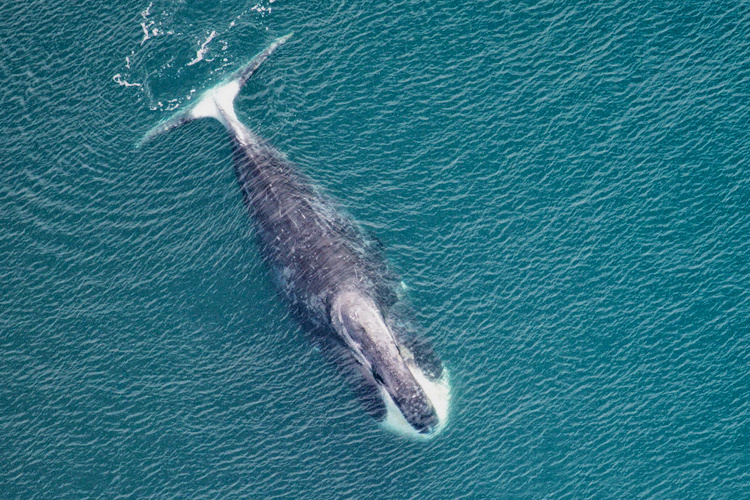
Bowhead-whale.NOAA-photo

BOWHEAD WHALE (NOAA Fisheries photo)

BOWHEAD WHALES

Three Norwegian biologists (Dr. Øystein Wiig, Dr. Kit M. Kovacs, and Dr. Christian Lydersen), with an American oceanographer (Dr. Kate M. Stafford), have been studying whale-song—specifically, the songs sung by Bowhead whales from the polar waters of Svalbard, an island territory of Norway.

Almost all mammals communicate using sound, but few species produce complex songs. Two baleen whales sing complex songs that change annually, though only the humpback whale (Megaptera novaeangliae) has received much research attention. This study focuses on the other baleen whale singer, the bowhead whale (Balaena mysticetus). Members of the Spitsbergen bowhead whale population produced 184 different song types over a 3-year period, based on duty-cycled recordings from a site in Fram Strait in the northeast Atlantic. Distinct song types were recorded over short periods, lasting at most some months. …

Complex ‘song’ in mammals is rare. While many mammalian taxa produce repetitive ‘calls’, sometimes called advertisement songs, few mammals produce vocal displays akin to bird song, which is defined by multiple frequencies and amplitude-modulated elements combined into phrases and organized in long bouts. Such songs have been documented in only a few mammalian species, including some bats (Chiroptera), gibbons (Hylobatidae), mice (Scotinomys spp.), rock hyraxes (Procavia capensis), and two great whales, humpback (Megaptera novaeangliae) and bowhead (Balaena mysticetus) whales [BLUE WHALES sing simplistic loud-and-rhythmic “rap music”, so they are excluded from this listing of “complex song” vocalists!]. With the exception of gibbons, in which males and females duet, complex songs in mammals are thought to be produced only by males. Male mammals are thought to sing to defend territories, advertise their quality, attract mates or some combination of these functions.

The song in baleen whales has been studied extensively only in humpback whales, which sing similar songs within a season across a whole population. The structure of that song gradually evolves [sic – erroneous terminology in original] over the season in unison and transfer of song types has been documented to occur directionally from one population to another over a period of years. Humpback whale songs are composed of a hierarchy from units to sub-phrases to phrases to themes.

Less is known about the songs of bowhead whales compared with humpback whales, but bowhead whale songs generally consist of a single phrase that includes amplitude- and frequency-modulated elements repeated in bouts, with two different sounds often produced simultaneously.

A pilot study from the Fram Strait in 2008 – 2009 provided the first indication that tens of song types were produced by bowhead whales in this region within a single overwinter period. No year-round studies of song diversity exist for other bowhead whale populations although multiple song types in a single year have been documented for two other populations. …

The diversity and interannual variability in songs of bowhead whales in this 3-year study are rivalled only by a few species of songbirds.

Among other mammalian singers, mice and gibbons tend to produce highly stereotyped and repetitive songs with few elements. Variation in rock hyrax and bat songs is primarily through changes in the arrangement of units.

Humpback whales produce complex songs that are similar within a year. Although the repertoire of any one individual bowhead whale in this study cannot be determined, the catalogue of song types (184) is remarkably varied.

It is not known whether individual bowhead whales sing multiple song types in a season, but some are known to share the same song type in the same period in the Bering– Chukchi–Beaufort (BCB) population. Nor is it known if individual bowhead whales maintain the same song throughout their lifetime or if they switch within and/or between years.

One explanation for the very high song diversity in the Spitsbergen bowhead whale population could be that the animals occupying this area in modern times include immigrants from both the BCB and the eastern Canada–western Greenland bowhead populations.

Until recently, these populations have been assumed to be isolated from each other due to extensive, impenetrable sea ice cover in the High Arctic.

However, in the past few decades, extreme declines in sea ice extent and thickness may have facilitated contact between these populations. However, even if this region contains bowhead whales from multiple populations, this does not fully explain the high numbers of different song types recorded in this study or the lack of recurrence of song types from year to year.

It is plausible that the bowhead whales in the Fram Strait are simply a remnant of the original Spitsbergen [Svalbard] population that survived the extreme historical levels of exploitation. The influence of small population size on song diversity is conflicted; some studies suggest song diversity increases in smaller populations, although others have found that reduced or isolated populations exhibit a reduction in song diversity and produce simpler songs.

In some species, females appear to prefer a diverse song repertoire, suggesting that increased complexity of singing might confer reproductive advantages. A recent study of howler monkeys (Alouatta spp.) documented tradeoffs in male reproductive characteristics based on (temporary) social structure: in groups with fewer males, or smaller social groups, males invested more in vocal displays as a reproductive tactic.  …

Bowhead whales are the only High Arctic resident baleen whale. Thus, interspecific identification via song may not confer the same selective [sic – should say “reproductive success”] advantage for bowheads that it might for other cetacean species. This could reduce selection pressure [sic mystical-magic jargon in original] on song stereotypy, allowing for greater variation in song types as a result of a long-term cultural mutation in songs, or song novelty itself might confer an advantage.

Because bowhead whales sing underwater, in heavy ice during the polar night, a nuanced understanding of the variable syntax of this species will be difficult to obtain.

Nevertheless, the singing behaviour of Spitsbergen bowhead whales, in which tens of distinct song types are produced annually, makes them remarkable among mammals.

[Quoting from Kate M. Stafford, Christian Lydersen, Øystein Wiig, & Kit M. Kovacs, “Extreme Diversity in the Songs of Spitsbergen’s Bowhead Whales”, BIOLOGY LETTERS, 14:20180056 (April 2018).]

But, before Bowhead Whale songs were scrutinized, it was the singing of Humpback Whales that was reported — surprisingly revealing a submarine world of sound communications that most folks would never have imagined.

Humpback-Whale.NWF

HUMPBACK WHALE (Nat’l Wildlife Federation photo)

HUMPBACK WHALES

One of the most unusual music recordings to sell into the “multi-platinum” sales level was an LP album produced in AD1970, called “Songs of the Humpback Whale”, recorded by bio-acoustician Dr. Roger Payne, who had (with Scott McVay) discovered humpback “whale-song” (i.e., complex sonic arrangements of sound, sent for communicative purposes) during the AD1967 breeding season.

Prior to AD1970 Dr. Payne had studied echolocation (i.e., “sonar”) in bats, as well as auditory localization in owls, so (biologically speaking) he had “ears to hear” how animals use vocalized sounds to send and receive information to others of their own kind. Some of Dr. Payne’s work was shared with his wife (married AD1960; divorced AD1985), Katharine Boynton Payne, who noticed the predictable patterns of humpback whale-song, such as “rhymes”.  Acoustical research included spectrograms of whale vocalizations, portraying sound peaks, valleys, and gaps—somewhat (according to her) like musical “melodies” and “rhythms”.

To this day, apparently, “Songs of the Humpback Whale” is the best-selling nature sound recording, commercially speaking. The sensation-causing album (“Songs of the Humpback Whale”) presented diverse whale vocalizations (i.e., “whale songs”) that surprised many, promptly selling more than 100,000 copies.

Some of Dr. Payne’s research on whale-song appeared early, published in SCIENCE magazine, as follows:

(1) Humpback whales ( Megaptera novaeangliae ) produce a series of beautiful and varied sounds for a period of 7 to 30 minutes and then repeat the same series with considerable precision. We call such a performance “singing” and each repeated series of sounds a “song.”

(2) All prolonged sound patterns (recorded so far) of this species are in song form, and each individual adheres to its own song type.

(3) There seem to be several song types around which whales construct their songs, but individual variations are pronounced (there is only a very rough species-specific song pattern).

(4) Songs are repeated without any obvious pause between them; thus song sessions may continue for several hours.

(5) The sequence of themes in successive songs by the same individual is the same. Although the number of phrases per theme varies, no theme is ever completely omitted in our sample.

(6) Loud sounds in the ocean, for example dynamite blasts, do not seem to affect the whale’s songs.

(7) The sex of the performer of any of the songs we have studied is unknown.

(8) The function of the songs is unknown.

[Quoting from Roger S. Payne & Scott McVay, “Songs of Humpback Whales”, SCIENCE, 173(3997):585-597 (August 13th 1971).]

humpback whales.ScienceAlert-photo

HUMPBACK WHALES (ScienceAlert photo)

Dr. Payne eventually suggested that both Blue Whales and “fin whales” (a category of baleen whales also called “finback whales” or “rorqual whales”, which include the Common Rorqual, a/k/a “herring whale” and “razorback whale”) could send communicative sounds, underwater, across an entire ocean, and this phenomenon has been since confirmed by research.

Payne later collaborated with IMAX to produce a unique movie, “Whales:  An Unforgettable Journey”.

Others, of course, have joined in the research, studying humpback whale-song in the Atlantic Ocean.

For example, Howard E. Winn and Lois King K. Winn, both at the University of Rhode Island, summarized some of their research as follows:

Songs of the humpback whale Megaptera novaeangliae were recorded and analyzed from Grand Turks in the Bahamas to Venezuela. …  The [humpback whale] song is produced only in the winter tropical calving grounds, just before the whales arrive on the banks.  Redundancy is high in that syllables, motifs, phrases and the entire song are repeated. Low, intermediate, and high-frequency sounds are scattered throughout the song. One sound is associated with blowing. The song appears to be partially different each year and there are some differences within a year between banks which may indicate that dialects are present. It is suggested that songs from other populations are quite different. The apparent yearly changes do not occur at one point in time. Only single individuals produce the song and they are hypothesized to be young, sexually mature males.  …

It has been known for 25 years that the humpback whale Megaptera novaeangliae produces a variety of sounds. However, it was not until 1971 that Payne and McVay (1971), using recordings of humpbacks from Bermuda, demonstrated that the sounds are produced in an ordered sequence. In 1970, Winnet al. verified their findings by showing that humpbacks in Mona Passage, Puerto Rico, also produce a highly patterned song which lasts from 6 to 35 min and is repeated after surfacing.

Variation in the song’s organization has been explained by a number of hypotheses. Winn (1974, 1975) hypothesized that various song types might rep resent geographic herd dialects. Recently, Payne and Payne (in press) studied additional songs from Bermuda and concluded that the song changes each year. The song’s social and behavioral context has also been studied.

Apparently the song is produced only by single, isolated individuals, primarily while they are in the tropics during the winter (Winn et al., 1970; and this paper). They calve and mate during this period, but generally do not feed (Tomilin, 1967).

The song of [humpback patterns include] … “moans and cries”; to “yups or ups and snores”; to “whos or wos and yups”; to “ees and oos”; to “cries and groans”; and finally to varied “snores and cries”. Snores, cries and other sounds can be found in different themes from year to year; yet, invariably one finds a set pattern of changing themes, in a fixed order. Several times humpbacks have breached in the middle of their song and then restarted the song from the beginning or at some different part of the song.

[Quoting from H. E. Winn & L. K. Winn, “The song of the humpback whale Megaptera novaeangliae in the West Indies”, MARINE BIOLOGY, 47(2):97-114 (January 1st 1978).]

Many years after their earliest research together, Dr. Roger Payne joined with his ex-wife (Katharine Payne) to describe their 19 years of studies of humpback whale-song, especially as observed in the Atlantic Ocean near Bermuda:

163 songs of humpback whales (Megaptera novaeangliae) recorded near Bermuda during April and May of 13 years between 1957 and 1975 have been analysed as continuous sound spectrograms and compared. In each year’s sample, all whales were singing basically the same song. However, the song was changing conspicuously and progressively with time so that songs separated by a number of years were very different in content. All the songs showed basic structural similarities so that it is possible to define a song form which characterizes songs from many years.  …

An analysis, of the songs sung by groups of whales, shows that normal singing continues even when whales are close enough, presumably, to hear each other. Such analysis demonstrates inter– and intra– individual variability, none of which is as great as the variation between songs of consecutive years. We do not understand the significance of changing songs.

We know of no other non-human animal for which such dramatic non-reversing changes appear in the display pattern of an entire population as part of their normal behavior.

[Quoting from Katharine Payne & Roger Payne, “Large Scale Changes over 19 Years in Songs of Humpback Whales in Bermuda”, ETHOLOGY, 68(2):89-114 (April 26th 2010).]

Blue-whale-vs.-elephant-Britannica-pic

BLUE WHALES

Recently Dr. Ana Širović, a Croatian-born oceanographer at University of California—San Diego’s Scripps Institution of Oceanography (based in La Jolla), reported observations of the Blue Whale—and its habit of underwater singing.  Some of these observations were published by Craig Welch, in NATIONAL GEOGRAPHIC, as follows:

By analyzing thousands of calls from more than 100 whales over 14 years, scientists are learning how these secretive beasts spend their time.

Blue-Whale.NaturalWorldSafaris-photo

BLUE WHALE (Natural World Safaris photo)

The biggest animal to ever live is also the loudest, and it likes to sing at sunset, babble into the night, talk quietly with those nearby, and shout to colleagues 60 miles away.

The blue whale, which can grow to 100 feet long and weigh more than a house, is a veritable chatterbox, especially males, vocalizing several different low-frequency sounds. And for years scientists had only the vaguest notion of when and why these giants of the sea make all those sounds. … In the first effort of its kind, Ana Širović, an oceanographer at Scripps Institution of Oceanography in La Jolla, California, and her team scoured a collection of more than 4,500 recordings of blue whale sounds taken from underwater microphones at over a dozen locations over 14 years, from 2002 to 2016, in southern California. The researchers then sync[h]ed the recordings with the movements of 121 whales that had been tagged with suction-cup trackers. What they learned challenged many assumptions about these noisy beasts.

Singing Males

Blue whales of both sexes produce several types of single-note calls, but only males sing. Males are also far noisier, and make different sounds for different reasons, but scientists aren’t always sure what those reasons are. For example, scientists had long assumed that one type of short call was used at meal time. But, instead, males and females frequently produced these vocalizations during dives that didn’t involve foraging at all. “It’s like the two behaviors are entirely separate,” says Širović.

The calls also change with the seasons and with time of day. Some single-note calls seem to occur more often when whales are returning from deep dives. Those may help with pair-bonding, scientists say. Much like birds, which often break into sound as day fades, male blue whales also tend to sing at the end of the day. In some species, such as European robins and nightingales, singing is often adjusted as a means of conserving energy, and energy may be a factor with blue whales as well. But unlike birds, Širović says, “blue whale songs propagate over tens of kilometers or even 100 kilometers.” And when they’re singing, male blues dive deeper. “I think what they are doing by regulating depth is changing the distance over which they’re calling, Širović says. “Individual calls are probably to animals nearby. They may be trying to reach much farther with singing. That’s kind of cool.” She assumes the singing—especially since it’s limited to just males—may somehow be linked to searching for mates. But no one has ever witnessed blue whale reproduction, so she can’t say for certain.

Songs of the Species

Širović has found there are similarities across many species, especially whales in the same family, such as blues, brydes, and sei whales. Males are the predominant singers and there seem to be peak calling seasons. But there are differences, too. Unlike blues, with their deep melodic songs, fin whales don’t really change notes. Their songs, instead, are produced using a single note, but with a rhythmic beat.

And unlike some dolphin species, such as killer whale, it’s not clear whether blues have distinctive voices. So far it appears they do not. “We can’t always tell whether there are 10 calls from 10 whales or one whale calling 10 times,” Širović says. “So far, we can’t really tell Joe Blue Whale from Betty Blue Whale.”

Quoting Craig Welch, “Elusive Blue Whale Behavior Revealed by Their Songs”, NATIONAL GEOGRAPHIC (February 15th, 2018), posted at https://news.nationalgeographic.com/2018/02/blue-whale-songs-behavior-decoded-spd/ .
Blue-Whale-breaching.ourmarinespecies.com-photo

BLUE WHALE breaching surface (oumarinespecies.com photo)

This Blue Whale vocalization research, by Dr. Širović, was summarized recently by creation scientist David Coppedge, as follows:

Blue whales—the largest animals in the ocean—are talented singers, too, but little has been known about the music of these secretive beasts.

NATIONAL GEOGRAPHIC reported on a 14-year effort by Scripps Institute in California to decode the vocalizations of 100 blue whales.

Since the sound travels for miles, they could pick up the sounds remotely with underwater microphones, but they also sync[h]ed the sounds with individual whales by outfitting them with suction-cup trackers.

The results were surprising, changing assumptions about blue whale behavior . . .  Both sexes vocalize, but only the males ‘sing’, the researchers found.  They’re also the loudest.  The reasons for all the noise are not well known, but the males seem to begin their ‘deep melodic songs’ around sunset, serenading into the night, probably to attract mates.  …  The more details you learn about living things, the less excuse you have to chalk it up to evolution.

[Quoting from David Coppedge, “Underwater Troubadours”, CREATION MATTERS, 23(2):8-11 (March-April 2018).]

===================================================================  


Dr. James J. S. Johnson has taught courses in biology, ecology, geography, limnology, and related topics (since the mid-AD1990s) for Dallas Christian College and other Texas colleges. A student (and traveler) of oceans and seashores, Jim has lectured as the onboard naturalist-historian (since the late AD1990s) aboard 9 different international cruise ships, including 4 visiting Alaska and the Inside Passage, with opportunities to see humpback whales, usually (but not always) from a safe distance.  Jim is also a certified specialist in Nordic History & Geography (CNHG), and also in Nordic Wildlife Ecology (CNWE), who frequently gives presentations to the Norwegian Society of Texas (and similar groups).  ><> JJSJ      profjjsj@aol.com


Move upMove downToggalyzing thousands of calls from more than 100 whales over 14 years, scientists are learning how these secretive beasts spend their time.
  •  
 

Parental Care

I gazed in awe all spring long as I watched avian parents make run after run to their nests with beaks’ full of bugs for their babies. At times, there were only a few minutes between visits. I marveled how they had the endurance for such toil and labor and still cared for themselves. At least the entire bird parental process only lasts a few weeks, while for us humans it lasts eighteen or more years!

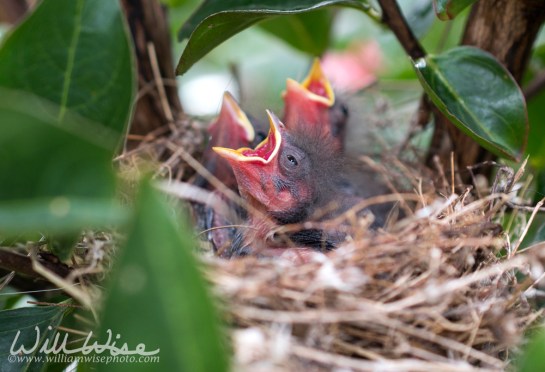
Baby Chipping Sparrows awaiting parental care. Clarke County, Georgia. July 24, 2018. ©www.williamwisephoto.com.

But “parental care” took a new definition for me as I answered a call back home these last few weeks. My aging father, who so diligently cared for me as an often ungrateful youngster, could no longer live on his own. I regret that being over 800 miles away and involved in the ministry, we couldn’t provide that care personally, but found a wonderful, brand new assisted living complex for him. At least my wife and I know he is being cared for.

While the phenomenon of children caring for parents isn’t seen in the bird species, it is a Biblical concept and obligation. In a time of trouble and distress, we read of King David providing for the care of his parents.

And David said unto the king of Moab, Let my father and my mother, I pray thee, come forth, and be with you, till I know what God will do for me. And he brought them before the king of Moab: and they dwelt with him all the while that David was in the hold. I Samuel 22:3-4

Chipping Sparrow feeding three nestlings. Clarke County, GA. July 24, 2018. ©www.williamwisephoto.com.

Even so, isn’t it just natural to care for those who raised us with such tender love and care until they go into everlasting care with our eternal Father?


Hi, I’m wildlife photographer and nature writer William Wise. I was saved under a campus ministry while studying wildlife biology at the University of Georgia. My love of the outdoors quickly turned into a love for the Creator and His works. I’m currently an animal shelter director and live in Athens, Georgia with my wife and two teenage daughters, who are all also actively involved in ministry. Creation Speaks is my teaching ministry that glorifies our Creator and teaches the truth of creation.  — “What a wildly wonderful world, God! You made it all, with Wisdom at Your side, made earth overflow with your wonderful creations.” Psalms 104, The Message.

Are You Personally On An Adventure?

Originally posted Aug 8, 2015 on Bibleworld Adventures:

Balloon Adventure ©WikiC

Balloon Adventure ©WikiC

Bibleworld Adventures

Hello to all of you out there! What is this Bibleworld Adventures blog about? The purpose for this blog is to help us see the big picture of life. Why are you on planet Earth? Where did you and I come from? While we are here, what are we supposed to do? Where can I find truth? What is truth? We will discuss some current events. We will discuss History sometimes, and at other times we will discuss Science. We will state right at the start that everybody makes assumptions each and everyday. When we drive our automobiles and go down the right side of the road, we expect that the other driver coming towards us will stay on his or her side of the road. When you turn the light switch on, you assume that the light in the room will come on. We will assume that the Bible is indeed the very “Word of God.” We will discuss many and varied subjects pertaining to real life situations. This blog will examine these things with an “open Bible.” Thanks for visiting this blog and please stay with me as we take this exciting adventure together!

I once had a college professor, Dr. Jim Johnson, who said that life with Jesus Christ is an “adventure.” This is so true! I remember when I was at the young age of ten or there about: I remember thinking that life on this planet made no sense whatsoever. Was I to grow up and learn things a t school? Was I to grow up and have a family and then work all of my life? Was I to eventually die and leave it all behind in 100 years or less. This made no sense then and makes no sense today apart from the Word of God, the BIBLE

God tells us in the Bible that there is a purpose for everything!

“To everything there is a season, and a time to every purpose under the heaven.” (Ecclesiastes 3:1) God has “made everything beautiful in his time: also he hath set the world (eternity) in their hearts…I know that, whatsoever God doeth, it shall be forever: nothing can be put to it, nor anything taken from it: and God doeth it, that men should fear before him.” (Ecclesiastes 3:11-14)

Each of you knows, down in the depths of your soul, that there is a God and there is a bigger purpose than just “me” in this vast Universe. This blog will help point us in the right direction! Each choice that we make, each action that we live out, and each thought that we think will affect our own eternity! God is eternal and He has created us with eternal souls and spirits and personalities. Good choices bring good results, bad choices bring bad results. The best choice is to accept the precious gift of “eternal life.” This means to believe and “trust” in what Jesus Christ did on the cross about 2000 years ago.

“For when we were yet without strength, in due time Christ died for the ungodly.” (Romans 5:6)

“But God commendeth (demonstrated) his love towards us, in that, while we were yet sinners, Christ died for us.” (Romans 5:8)

In fact, buy a Bible and read Romans chapter five. Remember, this Bibleworld Adventures blog will use an “open Bible” concept as we continue on with our own personal adventures. We are destined for the skies and beyond to the third Heaven, which is Paradise! You and I have started on this adventurous road and we will live somewhere forever! God is eternal and He has created us in “His image,” We also will live FOREVER!

*

Please read these previous articles by Golden Eagle that have been reproduced here. These can be found in the Golden Eagle section.

Golden Eagle

Articles on Birds of the Bible For Kids blog:

Greetings From …?

But now, he has decided that he wants to be called:

Golden Eagle Takes A Name

Noah and the Dove

Eagle’s Eyesight

Birds Are Free

Coming For A Meal 

The Father Feedeth Us 

Universe: Life Anywhere Else?

Fly Like A Bird? 

Goodness of God

You’re Invited To Supper

Bird-Brain Might Be a Compliment! 

Fly With An Open Bible!

Merry Christmas From Golden Eagle

Golden Eagle Lands Here Again

*

Bearded Vulture Visits England’s Oldest National Park

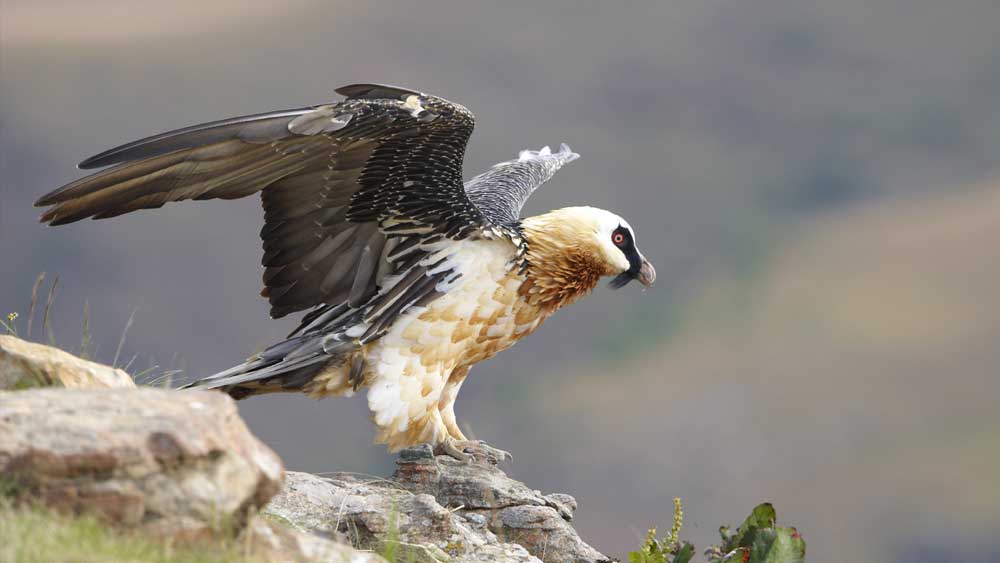
Bearded Vulture Visits England’s Oldest National Park

The only other British sighting of a Bearded Vulture occurred back in 2016 in Monmouthshire.2

This bird of prey has a commanding presence—it’s huge and hairy-looking! The bearded vulture is large: 3-4 feet long with a wingspan of 7-9 feet. It can weigh 10-17 pounds, with females being slightly larger than males. Unlike other vultures, the bearded vulture is not “bald-headed.” In fact, bristles under its chin look like a raggedly “beard,” hence the bird’s name.3

Birdwatchers have flocked to the moors to see the bearded vulture, which has only been seen once before in the UK, the Derbyshire Wildlife Trust said. But the trust’s Tim Birch said it “couldn’t have come to a worse spot in terms of bird of prey persecution”. … Mr Birch said as it was coming up to grouse shooting season, there were fears the rare raptor could be intentionally poisoned or shot. … However Richard Bailey, gamekeeper and co-ordinator of the Peak District Moorland Group, said “suggestions that this vulture is at risk from attack by gamekeepers” were wrong.1

Admittedly, the bearded vulture has a rough, if not thuggish, reputation. In Germany it is called lammergeier, meaning “lamb-hawk,” due to its habit of preying on lambs—not a positive reputation in agricultural communities. Also called “ossifrage” (meaning bone-breaker), about 80% of the bearded vulture’s diet is animal bone marrow, mostly from mammal bones, but also from bird bones.3,4

[Derbyshire Wildlife Trust’s] Birch said the bearded vulture fed mainly on bones from carcasses, very rarely on live prey, and could swallow bones whole, which were dissolved in its stomach.1

Although scavenging can provide needed food, especially during the breeding season, these vultures often attack live prey, such as hares, rock hyraxes, marmots, and even monitor lizards. More so than predatory hawks or eagles, bearded vultures often attack larger mammals, such as sheep or goats, which are dropped from heights onto rocky surfaces to break their bones. Bearded vultures also grab turtles and drop them from heights to crack open their shells.3,5

Meanwhile, to say this mountain-dwelling bird is rare—only the second time ever observed in Great Britain—is an understatement.

Birdwatcher Indy Kiemel Greene, 15, who photographed the bearded vulture on Sunday, shared the trust’s fears for its safety. He said: “Unfortunately this bird is at great risk because the location that it’s at in the Derbyshire Peaks is well-known for raptor persecution….”1

Its preferred habitat is a high-altitude mix of rocky crags, cliffs, canyons, and montane gorges. So what is it now doing in England’s Peak District anyway?

[Tim Birch] said it was thought the raptor had come from the French or Swiss Alps, where the endangered species is being reintroduced. About 500 birdwatchers have come to catch a glimpse of the bird from all over the UK, as well as France, Spain and the Netherlands. … It is thought the bird could stay in the area for a couple of weeks if it has found food before eventually returning to the Alps.1

For birdwatchers (and videographers) who can visit the Peak District National Park, this could be the opportunity of a lifetime. But if you visit the park with a pet poodle, keep your pet leashed and very close to you. No need to take a chance.

References
1. Burman, H. Fears for Bearded Vulture Spotted in the Peak DistrictBBC News. Posted on bbc.com July 14, 2020, accessed July 16, 2020.
2. Staff writer. Bearded Vulture Spotted Near Severn BridgeBBC News. Posted on bbc.com May 17, 2016, accessed July 16, 2020.
3. Jonsson, L. 1993. Birds of Europe, with North Africa and the Middle East. Princeton, NJ: Princeton University Press (transl. by David Christie), page 124. See also Clark, W. S. 1999. A Field Guide to the Raptors of Europe, the Middle east, and North Africa. Oxford, UK: Oxford University Pres, pages 56-60 & 302-303, plus Plate 12.
4. Obviously, bearded vultures are not the only predators adept at cracking and crushing bones of their prey—lions have earned a similar reputation (Daniel 6:24).
5. Other large-winged birds of prey are noted for dropping their victims in order to prepare them for ingestion. For example, near Jerusalem, eagles soar while scouting for mammals or reptiles; these same eagles are known to snatch tortoises, and to “kill [them] by dropping and smashing [the tortoises] on rocks from high in the air” (Quoting Noel and Helen Snyder. 1991. Birds of Prey. Stillwater, MN: Voyageur Press, 164).

*Dr. Johnson is Associate Professor of Apologetics and Chief Academic Officer at the Institute for Creation Research.

JAMES J. S. JOHNSON, J.D., TH.D. *  |

[Re-posted from ICR article at https://www.icr.org/article/bearded-vulture-visit-england-oldest-national-park ]

Reposted here with Dr. Jim’s permission and at his request. (Lee)


See Also:

James J. S. Johnson’s other articles here

Birds of the Bible – Name Study ~ Ossifrage

Birds of the Bible – Gathering of Vultures or Eagles

Reflections and A House Ornament

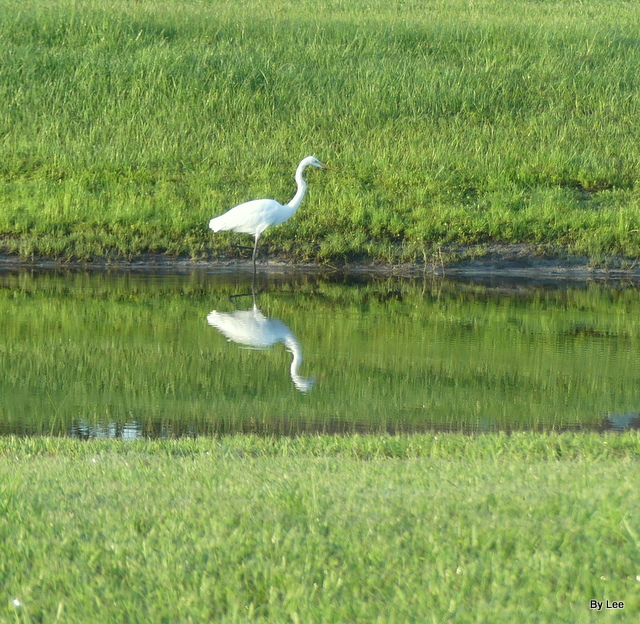
Great Egret Reflecting off the pond by Lee

Great Egret Reflecting off the pond by Lee

“Iron sharpens iron, So one man sharpens another. He who tends the fig tree will eat its fruit, And he who cares for his master will be honored. As in water face reflects face, So the heart of man reflects man.” (Proverbs 27:17-19 NASB)

“When I saw, I reflected upon it; I looked, and received instruction.” (Proverbs 24:32 NASB)

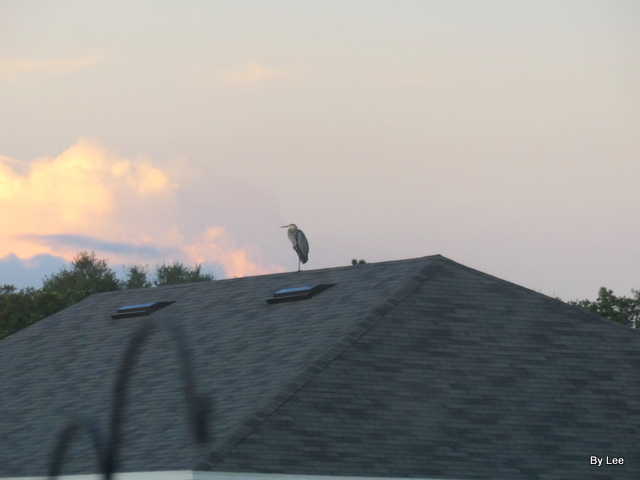
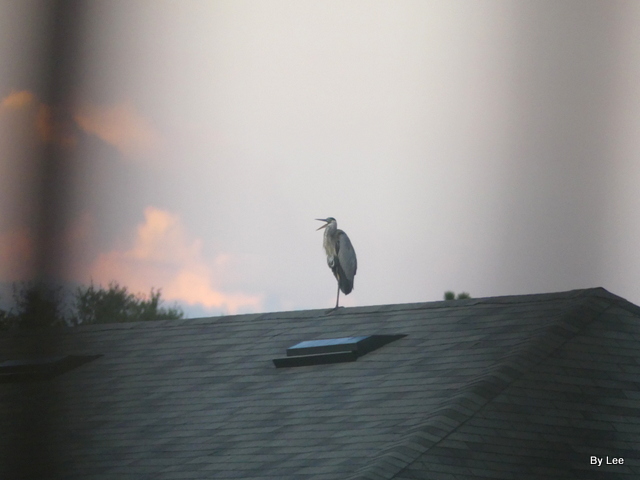
As you know, we have not been birding, or really going anywhere much lately. So, breakfast birding is becoming our birding adventures. Lately, when we go in and out of our housing addition, we have noticed quite frequently, a Great Blue Heron sitting on some houses. Of course, I have never had a camera ready or even in the car.

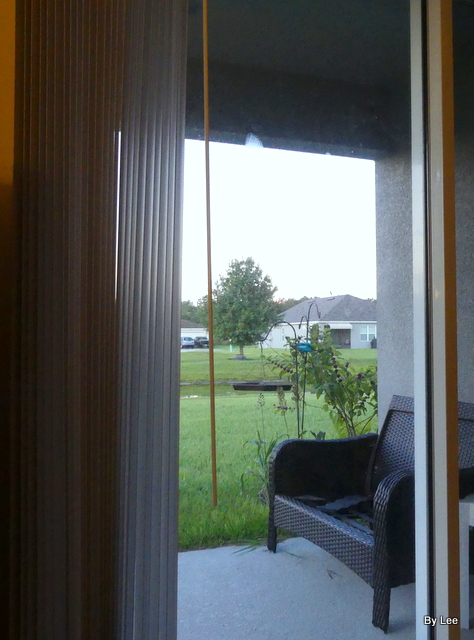
BUT, when we looked out, from the breakfast table, the other morning, this is what I saw. I grabbed the camera and took these photos:

Great Blue Heron on Housetop by Lee

Great Blue Heron on Housetop from breakfast table by Lee

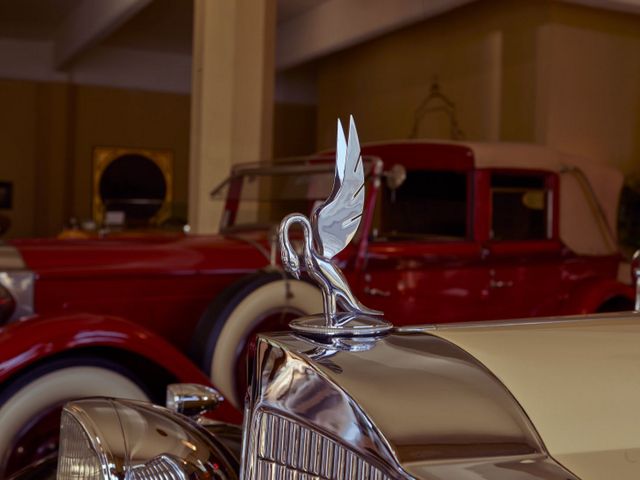
I zoomed in closer, and sure enough, there the Great Blue Heron was on my neighbors house. Back in the “old days” we used to have hood ornaments on car hoods.

Hood Ornament on a Packard (Library of Congress PD)

Hood Ornament on a Packard (Library of Congress PD)

This Heron is making a great “House Ornament.”

Great Blue Heron on Housetop by Lee

Great Blue Heron on Housetop by Lee

Great Blue Heron of Housetop by Lee

Great Blue Heron of Housetop by Lee

“For there is nothing covered, that shall not be revealed; neither hid, that shall not be known. Therefore whatsoever ye have spoken in darkness shall be heard in the light; and that which ye have spoken in the ear in closets shall be proclaimed upon the housetops.” (Luke 12:2-3 KJV)

Well, it’s back to relaxing until the next Breakfast bird/birds show up to entertain us. In the mean time, I have been working on my Geneology.

LEE’S ANCESTRY ADVENTURES

Wordless Birds – With Hummingbirds

Gannet Blown Off-Course, by Strong Winds

Gannet Blown Off-Course, by Strong Winds

Dr. James J. S. Johnson

For Thou hast been a strength to the poor, a strength to the needy in his distress, a refuge from the storm, a shadow from the heat, when the blast of the terrible ones is as a storm against the wall. (Isaiah 25:4)

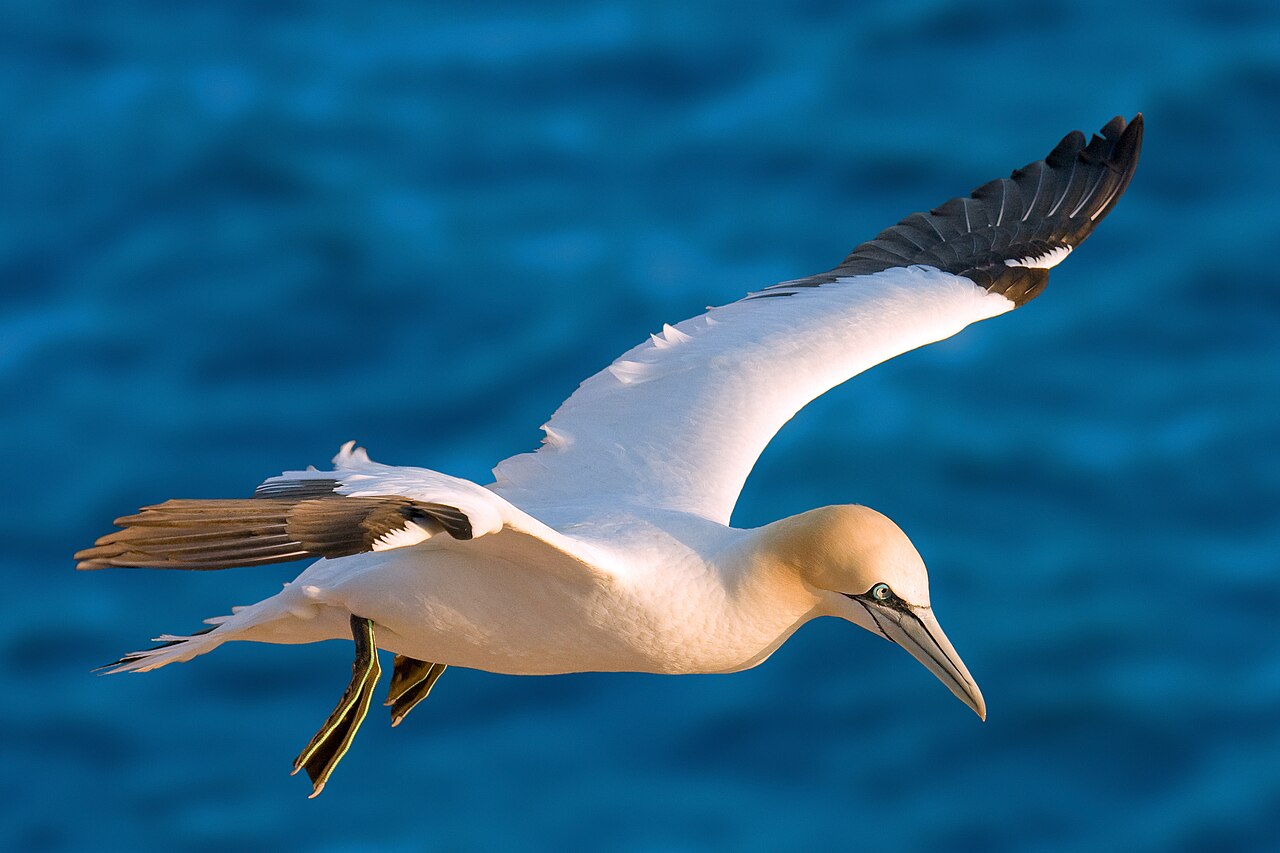
Gannet at Bempton Cliffs, Yorkshire England (Wikipedia photo credit)

What is an oceanic fish-eating seabird doing atop an inland trampoline in England? That was the question, recently, when a North Atlantic Gannet was seen resting on a British trampoline.(1)

Later, the weary-looking gannet moved to a garden, before it was gently captured by a resident (using a towel), who turned the poor seabird over to animal carers, who should return the bird to the wild after its health is aptly rehabilitated.

A seabird native to the North Atlantic has been rescued by the RSPCA after it took up residence in a Norfolk garden. Dawn Austin discovered the gannet resting on a trampoline in her North Wootton garden on Tuesday [June 2, 2020] and contacted vets when it did not fly away. … [Someone with] the RSPCA [Royal Society for Prevention of Cruelty to Animals] said there were no “obvious injuries” but the gannet was “very weak” and vets were doing all they could to help him. … feeding him three times a day as he was unable to feed himself, but they hoped that “having a chance to rest and recover” would help him “find the strength to pull through”.(1)

But gannets are seabirds—they belong at sea, not on trampolines! Gannets are gregarious seagulls that go far offshore to scoop up North Atlantic fish.

Gannets are a protected species under the Wildlife and Countryside Act 1981 and can dive at speeds of 60mph (96.5kmh) to catch fish.(1)

The largest seabirds in the North Atlantic can travel hundreds of miles from their homes just to catch food. … by following their elders. Scientists recorded thousands of [these] seabirds commuting to and from the Bass Rock, in the outer part of the Firth of Forth in the east of Scotland.(2)

So how did the ocean-faring gannet end up resting on an inland trampoline? The animal protection charity guessed that the bird “was blown off course”.(1)

This is understandable, since the British Isles (and their coastal waters) have been experiencing some weird weather lately.(3)

Gannet flying over the Celtic Sea, near Ireland (Wikipedia photo credit)

Meanwhile, being blown off-course can change an individual’s destiny, and thus also he destinies of progeny who descend from that individual.(4)

And, in some cases, a ship being blown off-course can lead to world-changing consequences.(5),(6)

Consider how the apostle Paul, and those traveling with him in a boat, were blown off-course—and eventually shipwrecked off the coast of Malta, in the Mediterranean Sea.(5) Paul’s ministry unto Maltese individuals would not have occurred had it not been for the “accidental” shipwreck that providentially occurred there.(6)

Likewise, the Mayflower Separatists (“Pilgrims”) who sailed west in A.D.1620—400 years ago—were blown off-course, reaching (and settling in) what is now part of Massachusetts, rather than territory farther south (in “Virginia”, which then stretched up to the Hudson River) as planned.(5)

Yet God’s providence, seen in hindsight, makes sense of the Pilgrims landing at Plymouth—and thus the Pilgrims were forced to establish their own Scripture-based form of colonial self-government, rather than the Pilgrims arriving in “Virginia” territory, to merely join a preexisting colony south of Plymouth.(5)

Being blown off-course can be scary, to be sure—losing control (or, or put more accurately), losing the feeling of being in control) is usually a nerve-wracking experience. Yet God is in control—even in the storms of life.(7)

Morus bassanus adu.jpg
Gannet aloft (photo credit: Andreas Trepte / Wikipedia)

References

And, providentially speaking, sometimes an unexpected destination includes some unexpected help from strangers, such as Squanto and Hobomok, if you are a Mayflower Pilgrim. Or, if you are a wind-tossed seabird like a North Atlantic gannet, the help might come from Dawn Austin and some RSPCA vets.(8)

  1. Staff writer. 2020. North Atlantic Gannet Found on Norfolk Trampoline. BBC News – England (June 5, 2020), posted at https://www.bbc.com/news/uk-england-norfolk-52938253 .  
  2. “By demonstrating that young gannets follow more experienced adults, we have shown that knowledge about the best feeding grounds may be being passed down from generation to generation.” Staff writer. 2019. Scientists Solve Mystery Behind How Gannets Hunt for Fish. BBC News – Scotland (November 1, 2019), posted athttps://www.bbc.com/news/uk-scotland-edinburgh-east-fife-50267180 . See also Wakefield, E. W., R. W. Furness, et al. 2019. Immature Gannets Follow Adults in Commuting Flocks Providing a Potential Mechanism for Social Learning. Journal of Avian Biology. Posted (September 18, 2019) at  https://doi.org/10.1111/jav.02164
  3. “A top climate scientist has called for more investment in climate computing to explain the UK’s recent topsy-turvy weather.” Harrabin, R. 2020. Weird weather: Can computers solve UK puzzle? BBC News – England (June 5, 2020), posted at https://www.bbc.com/news/science-environment-52921479 .
  4. Johnson, J. S. S. 2014. People Yet to Be Created. Acts & Facts. 43(11):20, posted at https://www.icr.org/article/people-yet-be-created .
  5. It was 400 years ago that the Mayflower providentially sailed for America, arriving at Plymouth (Massachusetts). See James J. S. Johnson, Mechanical Multi-tasking on the Mayflower. Acts & Facts. 46(11):21 (November 2017), posted at https://www.icr.org/article/mechanical-multitasking-mayflower .  See also James J. S. Johnson, Maple Syrup, Gold Nanoparticles, and Gratitude. Creation Science Update (May 25, 2020), posted at https://www.icr.org/article/maple-syrup-gold-nanoparticles-and-gratitude . The Spanish Armada’s disastrous experiences with “freak” storms during 1588 would be another example of sea-storms with historic consequences.
  6. Regarding the apostle Paul’s providential visit to and ministry at Malta, via shipwreck, see Acts 27:6-28:11.
  7. God is our personal refuge in all of the storms of life. Isaiah 25:4.
  8. God cares for birds at the individual level. Matthew 6:26; Luke 12:6-7.

Ian’s Bird of the Moment – Christmas Island Birds

Ian’s Bird of the Incident he’s called it this time in his newsletter. By Ian Montgomery
Well, I’ve finally emerged from various Christmas Island induced rabbit holes and we can have our virtual trip to look at some of the special birds of this remote island. There aren’t any feral rabbits on Christmas Island, so Red Crab burrows might be a better metaphor.
Christmas Island is both remote and very old, making it an interesting place in terms of both biogeography and avian evolution. It is about 350km/220 miles south of the western tip of Java and 1,550km/960 miles northwest of Exmouth in Western Australia. There are no nearby islands – the Cocos Keeling Islands are 980km/610 miles to its west. It first appeared about 60 million years ago as a 5,000m/ high volcanic seamount which then underwent several geological uplifts over the following 10 million years giving it a layered structure with cliffs, both coastal and farther inland, formed by coastal erosion. Coral reefs deposited limestone over the basalt core.
christmas_island_map.jpg
60 million years ago was shortly, geologically speaking, after the extinction event, thought to be a global collision with a large object, about 66 million years ago that marked the end of the Cretaceous period. This caused the extinction of many plants and animals, notably the dinosaurs, and resulted in rapid adaptive radiation of many surviving groups, particularly birds and mammals. At the time Australia was still attached to Antarctica and the other tectonic plates of the former Gondwana were still drifting to their current locations and resulting land masses: South America, Africa, Madagascar and India.
The island has an area of 135 sq km/52 sq mi and the coast is an almost continuous cliff with few bays or beaches, as shown in the photo of the east coast. Although known to European sailors from the 17th century, the cliffs made landing, exploration and settlement difficult and it remained uninhabited and consequently undisturbed until the late 19th Century. The largest bay is Flyingfish Cove near the north of the island where the Settlement is located. The photo below shows a typical stretch of coast looking south from Margaret’s Knoll on the eastern side of the island.
margarets_knoll-ps.jpg
You’ll probably know from previous posts that I’m particularly interested in the evolution and ecology of birds, and by extension their taxonomy and biogeography. Isolated islands both provide fascinating insights into and pose intriguing questions about both evolution and biogeography and I’m going to look at the species on Christmas Island from these angles. We’ll start with the taxonomically most unusual, Abbott’s Booby, which belongs to a monotypic endemic genus, then look at other interesting seabirds and finish with land birds.
abbotts_booby_40307_pp.jpg
Three of the seven global species of Booby breed on Christmas Island: Abbott’s, Brown and Red-footed. Both the Brown and Red-footed are widespread, found throughout tropical waters around the world and members of the genus Sula which comprises all the species of Booby except Abbott’s.  Abbott’s, however, breeds only on Christmas Island and is the only member of the genus Papasula. It was originally included in Sula but structural differences between it and both Gannets and other Boobies led Olson and Warheit 1988 to move it to a new more primitive genus of its own. Subsequent DNA studies have confirmed this and Papasula is thought to have branched off the early Gannet-Booby lineage about 22 million years ago.
abbotts_boby_39566_pp.jpg
We can’t, however, conclude that it evolved in isolation on Christmas Island. The species was first described from a specimen collected by the American naturalist William Louis Abbott in 1892 on an island near Madagascar in the western Indian Ocean, either Assumption Island or the nearby Glorioso Island. Fossil evidence indicates that it was quite widespread in the Indian and Pacific Oceans and there are eyewitness reports of it breeding in the Mascarene Islands near Mauritius (as described in Wikipedia). So its endemic status on Christmas Island is a result of its extinction elsewhere. On Christmas Island the population, currently estimated at about 2,000 pairs, has declined owing to habitat clearance and the species is classified as endangered.
red_footed_booby_40375_pp.jpg
Here, by way of comparison, is the white morph of the Red-footed Booby. There is also a widespread brown morph of this species but all, or almost all of the ones on Christmas Island are of the white morph. You can see photos of the brown or dark morph here: Birdway Red-footed Booby.
Frigatebirds are very well represented on Christmas Island. Three of the five global species nest on the island: Lesser, Great and the endemic Christmas (Island) Frigatebird. The other two species are the Magnificent (Birdway: Magnificent Frigatebird) of Atlantic and eastern Pacific Oceans and the Ascension, endemic to Ascension Island in the Atlantic. The Lesser (Birdway: Lesser Frigatebird) has colonised Christmas Island in small numbers relatively recently while the Great (Birdway: Great Frigatebird) is an endemic subspecies (listeri) with a population of about 3,300 pairs.. The Christmas Frigatebird is globally the rarest with a population of about 1,200 pairs. The population has declined since human settlement and the species is now classified as critically endangered, both because of its small, declining population and the fact that its breeding range is limited to a single location.
Unlike Abbott’s Booby, it’s probably fairly safe to assume that it evolved on the island and differs from the other species of Frigatebird mainly in the patterning of the plumage. The male has a diagnostic white belly, while the female has a white breast and belly extending further down the belly than in other species.
chris_is_frigatebird_40587_pp.jpg
Frigatebirds feed both by snatching prey such as squid and flying fish from on or near the surface of the water and by harrying Boobies, Tropicbirds and Terns until they drop their food. In the photo above, this female has just regurgitated a no doubt tasty mixture for its chick including a flying fish, the “wings” of which you can see sticking out on both sides of the chick’s mouth.
While we’re on the subject of tropical seabirds, Christmas Island has two of the three global species of Tropicbirds: the White-tailed and Red-tailed Tropicbird. Most of the local White-tailed Tropicbird population has black and apricot rather than the typical black and white plumage and has been ascribed to a separate subspecies fulvus. It is known locally as the Golden Bosunbird. However, 7% of the local population has the normal black and white plumage and apricot coloured birds occur in small numbers elsewhere, so it may be better to consider the differences just as colour morphs.
whitetail_tropicbird_39817_pp.jpg
For me, the Golden Bosunbird was the most beautiful bird on the island and I spent hours watching them in flight from this lookout near the settlement overlooking Tai Jin House, below, the former resident of the governor in more colonial times.
tai_jin_house-ps.jpg
The Red-tailed Tropicbird, or locally Silver Bosunbird, is quite beautiful too. In pristine condition, the birds have long red tail streamers, but these frequently get broken off when the birds are nesting. They do a spectacular fluttering display flight travelling downwards and often slightly backwards near the cliffs where they nest.
redtailed_tropicbird_40016_pp.jpg
Both of these Tropicbirds are quite widespread. The White-tailed occurs in tropical parts of the Indian, Pacific and Atlantic Oceans while the Red-tailed ranges from the western Indian Ocean to the central Pacific.
Special birds on Christmas Island are not restricted to sea birds: it has some unusual land birds as well. Here is the splendid and abundant Christmas Island Imperial Pigeon.
xmas_is_imp_pigeon_40723_pp.jpg
The dorsal plumage is this lustrous green which reminds me of Connemara marble. The breast is plum-coloured, the vent rufous and the eyes are a spectacular golden. It’s endemic to the island and its closest relative is the Pink-headed Imperial Pigeon (D. rosacea), widespread in the Indonesian islands of the Java Sea.
xmas_is_imp_pigeon_40171_pp.jpg
A much more elusive member of this family is endemic race natalis of the Common or Asian Emerald Dove. This used to be treated as the same species as the Emerald Dove that occurs in Australia but the latter has been split into two species: the Common or Asian and the Pacific. As a result, Christmas Island is the only place in Australia where the Common or Asian species occurs.
common_emerald_dove_40178_pp.jpg
Also elusive is the only resident owl, the endemic Christmas Island Boobook. With a length of 26-29cm/10-11.4in, it is generally smaller than the rather variable Australian Bookbook of the mainland: 27-36cm/10.6-13.8in. We went out one night near the golf course with David James, one of the leaders of the first Christmas Island Bird Week, who was armed with a recording of the call. The recording was of poor quality but to our delight and surprise we got a response and a family of three appeared at close quarters. The species is regarded as vulnerable with a population of maybe 500 pairs and there are concerns that the introduction of yellow crazy ants is affecting the availability of the invertebrate prey that is its main source of food.
christmas_boobook_39728_pp.jpg
Christmas Island also has an endemic diurnal predator, the Christmas Island Goshawk. Its taxonomy has proved a challenge for various taxonomists and it has generally been treated as a race of the Brown Goshawk (Accipiter fasciatus). In fact there are significant differences in structure, appearance and behaviour, so there is probably justification for treating it as a separate species. It is the rarest of the endemic birds with a population of probably less than 250 individuals. Unlike the Brown Goshawk, the birds are relatively tame and approachable.
variable_goshawk_39610_pp.jpg
Christmas Island has only two endemic Passerines, the endemic race of the Island Thrush that was the subject of the last Irregular Bird and the Christmas Island White-eye. White-eyes are famous for finding their way to and settling on remote islands so there are nearly one hundred species ranging from Africa through the warmer parts of Asia to Australasia and the islands of the Pacific. This one is posing on a coral tree near Tai Jin House.
xmas_is_white_eye_39318_pp.jpg
So, there you are. Plenty of rabbit or red crab burrows to be explored by budding taxonomists and biogeographers. Talking about Red Crabs, itt wasn’t the right time of the year for the Red Crab spawning event and I don’t remember seeing any as they keep out of sight at other times of the year. We did encounter some Robber or Coconut Crabs, however. This species  is the largest terrestrial arthropod, weighing up to 4kg/8.8lbs and measuring up to 1m/39in in span from leg tip to leg tip. Their range comprises islands of the Indian Ocean and parts of the Pacific.
robber_crab_39595_pp.jpg
Greetings and stay safe,
Ian

Lee’s Addition:

“Thus the heavens and the earth were completed, and all their hosts. By the seventh day God completed His work which He had done, and He rested on the seventh day from all His work which He had done.” (Genesis 2:1-2 NASB)

Very interesting how these birds have developed and interbred over the centuries. With isolation, much interbreeding within the species has helped influence these varieties within the families and orders.

See More of Ian’s posts at:

Ian’s Bird of the Week

Who Paints the Leaves?