Birds of the Bible – Quail

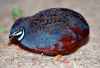
Our Bird of the Bible this week is not on the “unclean” list for a change. In fact, this bird can be eaten and is raised just for that purpose in many parts of the world. Searching the internet, you can find all kinds of recipes for quail. What has that got to do with our Quail?
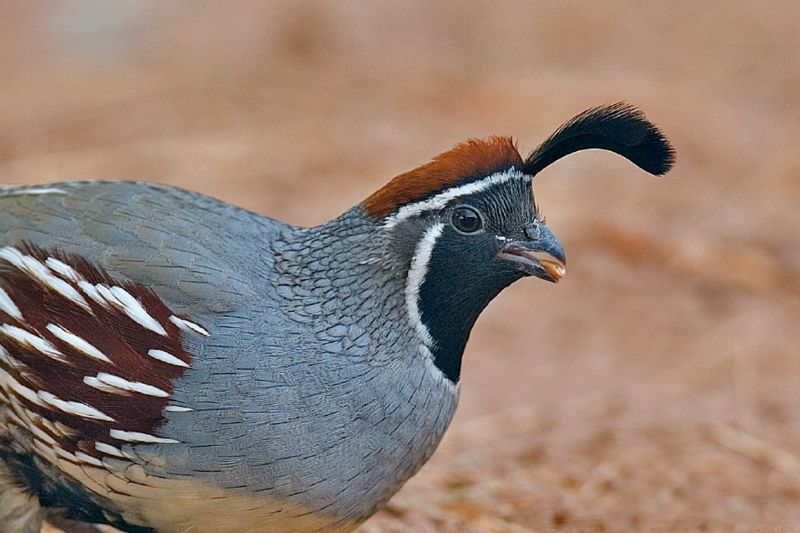
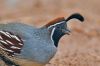
Gambel's Quail

Gambel's Quail

The children of Israel were in the wilderness, doing their constant grumbling, and they asked for “more to eat”. They were not satisfied with what God was providing. They wanted “more.” So:

And the LORD spoke to Moses, saying, “I have heard the complaints of the children of Israel. Speak to them, saying, ‘At twilight you shall eat meat, and in the morning you shall be filled with bread. And you shall know that I am the LORD your God.’ ” So it was that quails came up at evening and covered the camp, and in the morning the dew lay all around the camp. And when the layer of dew lifted, there, on the surface of the wilderness, was a small round substance, as fine as frost on the ground.(Exodus 16:11-14 NKJV)

Now a wind went out from the LORD, and it brought quail from the sea and left them fluttering near the camp, about a day’s journey on this side and about a day’s journey on the other side, all around the camp, and about two cubits above the surface of the ground. And the people stayed up all that day, all night, and all the next day, and gathered the quail (he who gathered least gathered ten homers); and they spread them out for themselves all around the camp. But while the meat was still between their teeth, before it was chewed, the wrath of the LORD was aroused against the people, and the LORD struck the people with a very great plague. So he called the name of that place Kibroth Hattaavah, because there they buried the people who had yielded to craving.(Numbers 11:31-34 NKJV)

The people asked, and He brought quail, And satisfied them with the bread of heaven.(Psalms 105:40 NKJV)

The commentaries on these Scriptures varied somewhat. Some suggested that these were not “quails” but “locusts”. Most concede that they were “quails”. Then, they debated about the “about two cubits above the surface of the ground.” Were they piled two cubits high or were they flying around at that level? If they were piled deep, they would suffocate and die, making them uneatable according to their law. So, with these questions in mind, here is how the Quail behave:

“Rapid direct flight, series of several stiff wing beats followed by a short glide”, “Escapes danger by running. Direct flight with rapid deep wing beats”. “Small, chunky, short-tailed, round-winged, ground-dwelling bird”, “Secretive. Squats and sits motionless when alarmed”, and “keeping hidden in crops, and reluctant to fly, preferring to creep away instead. Even when flushed, it keeps low and soon drops back into cover.” Sounds like they would be easy to catch.

“There are 130 species of quails worldwide. They are small, short-tailed game birds of the family Phasianidae (order Galliformes), resembling partridges but generally smaller and less robust. The 36 species of New World quail more nearly resemble Old World partridges”, from From borealforest.org, “California Quail.”

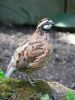
We have the California, Scaled, Mountain, Gambel’s (The bird’s average length is 11 inches (30 cm) with a wingspan of 14-16 inches (35-40 cm) , Montezuma Quails and the Northern Bobwhite here in North America. Several have a head plume and many are quite colorful.

Birds of the Bible – Pelicans

The pelican is in the Pelecanidae family which includes Pelicans, Cormorants, Gannets, etc. We have the American White and Brown Pelicans here in the U.S.
  • The White Pelican (62″ with a 108″ wingspan) is larger than the Brown (48″ with a 84″ wingspan).
  • They both fly with neck tucked.
  • Both have very large bills (White-yellow, Brown-dark) with a throat pouch.
  • The Brown Pelican feeds by plunging from air into the water and also glides low over the water.
  • The White Pelican feeds while swimming and upending to catch fish.
  • The sexes are similar in both White and Brown Pelicans

Brown Pelican flying low, by Ray's Wildlife Photography

The pelican is again listed in the “unclean” list.

And the swan, and the pelican, and the gier-eagle,(Leviticus 11:18 KJV)
And the pelican, and the gier-eagle, and the cormorant, (Deuteronomy 14:17 KJV)
Psalm 102 which is a “prayer of the afflicted” is telling about a heart smitten, groaning bones, basically he is “out of order.”
I am like a pelican of the wilderness: I am like an owl of the desert.
(Psalms 102:6 KJV) Most pelicans live near water and owls live in trees.
In spite of his affliction, the Psalm writer concludes with:
Of old hast thou laid the foundation of the earth: and the heavens are the work of thy hands. They shall perish, but thou shalt endure: yea, all of them shall wax old like a garment; as a vesture shalt thou change them, and they shall be changed: But thou art the same, and thy years shall have no end. (Psalms 102:25-27 KJV)
American White Pelican, by Dan's Pix

American White Pelican, by Dan's Pix

What a great promise. It amazes me sometimes when I “birdwatch the Scriptures,” what treasures are associated with them.

Photos are by permission of Dan’s Pix and Ray’s Wildlife Photography

Brown Pelicans Dive for their food.

American White Pelicans swim along and feed, upending themselves as they do. This video was taken at Lake Hollingsworth.

Birds of the Bible – Herons


CLASS – AVES, Order – PELECANIFORMES, Family – Ardeidae – Herons, Bitterns


Here in central Florida we can see many Herons, such as the:
(Click link for photo)
Great Blue Heron (L46″ Wingspan72″)
Little Blue Heron (L24 Wingspan 40″)
Tri-colored Heron (L26 Wingspan 36″)
Green Heron (L18″ Wingspan 26)
Black-crowned Night Heron (L25″ Wingspan 26″)
Yellow-crowned Night Heron (L24″ Wingspan 42″)

Around the World the Ardeidae family includes Herons(41), Egrets(7) and Bitterns(12). From Thayer Birding Software, “Most herons nest in dense or dispersed colonies; a few species, including most bitterns, are solitary. Nests are platforms of interlocked sticks in trees or piles of vegetation in reeds or on the ground, built mainly or entirely by the female of material brought by the male.” Most of the Herons rest and fly with their necks in an “S” curve. They can be seen along or in the edges of water fishing. Many stand perfectly still looking in the water and then thrust with a quick movement to either spear or catch their prey. Herons amaze me in how perfectly still they stand and wait. They seem so patient to me. Herons are on the “unclean” list of birds found in Leviticus 11:19 and Deuteronomy 14:18. Because they are so “patient” and “wait,” it reminds me of:

Rest in the LORD, and wait patiently for him: fret not thyself because of him who prospereth in his way, because of the man who bringeth wicked devices to pass. (Psalms 37:7 KJV)
And so, after he had patiently endured, he obtained the promise. (Hebrews 6:15 KJV)
The eyes of all wait upon thee; and thou givest them their meat in due season (Psalms 145:15 KJV
And of course our great verse from last week:
But they that wait upon the LORD shall renew their strength; they shall mount up with wings as eagles; they shall run, and not be weary; and they shall walk, and not faint. (Isaiah 40:31 KJV)

Hymns mention “waiting” and being “still” and “patient. Here is a favorite:

Be Still, My Soul by Katharina von Schlegel,
1697-Trans. By Jane L. Borthwick, 1813-1897

Be still, my soul: the Lord is on thy side;
Bear patiently the cross of grief or pain;
Leave to thy God to order and provide;
In ev’ry change He faithful will remain.
Be still, my soul: thy best, thy heav’nly Friend
Thro’ thorny ways leads to a joyful end.

Be still, my soul: thy God doth undertake
To guide the future as He has the past.
Thy hope, thy confidence let nothing shake;
All now mysterious shall be bright at last.
Be still, my soul: the waves and winds still know
His voice who ruled them while He dwelt below.

Be still, my soul: the hour is hast’ning on
When we shall be forever with the Lord,
When disappointment, grief, and fear are gone,
Sorrow forgot, love’s purest joys restored.
Be still, my soul: when change and tears are past,
All safe and blessed we shall meet at last.

*

Updated 1/20/2015

Birds of the Bible – Clean vs. Unclean

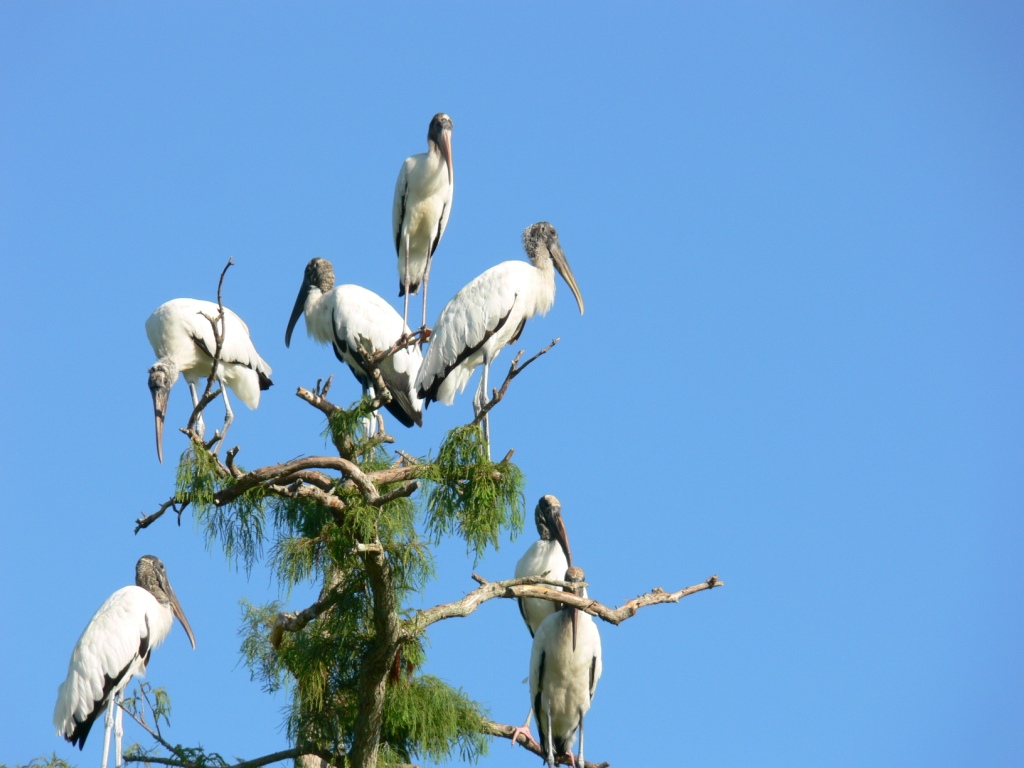
Woodstorks on top of tree at Circle B 7-22-11 by Lee

Woodstorks on top of tree at Circle B by Lee

In our study on the Birds of the Bible, it has been mentioned whether a bird is “clean” or “unclean.” As I have prepared the blogs, I have been considering why a bird is on the clean or unclean list. I had been saving this blog for later, but due to unexpected travel, I’ll do it now.

In Genesis 9:3 it is stated that “every moving thing that liveth shall be meat for you.” So, of course, the birds would be included in this as well. In Deuteronomy 14:11-20, a list of birds is given to signify which birds are unclean and not eaten; basically, all the rest can be consumed. But why are some birds unclean: Looking at the list, the eagle, ossifrage, kite, glede, vulture, and the hawk are known to eat dead animals (carrion). It would not be very healthy to eat them. The other birds on the list are all meat eaters, and maybe that has something to do with their being placed on the unclean list. Are the birds bad because of what they eat? No. Each one was created exactly for the purpose God intended. The carrion eaters help keep the land clean. Another passage mentions the list of unclean birds in Lev 11:13-20.

Some of the other birds on the list are a mystery to me. For instance the Cormorant, Swan, Pelican, Heron, and the Stork are birds I watch here in Florida, and they all seem to be fish eaters. One article mentions that the Heron used to be eaten, but they were fishy tasting and they stopped eating them. Why is it that no matter how many things we are given with only a few put off limits, that someone always has to try the few. Does that not sound like what happened in the garden of Eden when Eve just had to try the tree of knowledge of good and evil. When God puts something off-limits or says it is “unclean,” there is a good reason for it. Most times it is for our benefit because God loves us and doesn’t want us harmed. The “clean” birds mostly have a diet of grain, fruits, and vegetation. Could that be why they are okay to eat? With all the good birds available like chicken, turkey, quail, duck, etc., I’d much rather sit down to a Thanksgiving meal of turkey than vulture.
The birds used for the sacrifices were all clean birds.

Then the #1 reason to eat or not eat a bird according to the list is: AND GOD SAID

Birds of the Bible – Peacocks

The Peacock is the male and the Peahen is the female in the pheasant family, Phasianidae (order Galliformes), that consists of the blue or Indian peacock and the green or Javanese peacock which is quite aggressive. More recently they discovered a Congo peacock. Peacocks and peahens are not native to North America, but are found in many zoos here.

The males have a body that is 35-50 inches with long tail feathers that are about 60 inches and “are coloured a brilliant metallic green. This train is mainly formed of the bird’s upper tail coverts, which are enormously elongated. Each feather is tipped with an iridescent eyespot that is ringed with blue and bronze. In courtship displays, the cock elevates his tail, which lies under the train, thus elevating the train and bringing it forward. At the climax of this display the tail feathers are vibrated, giving the feathers of the train a shimmering appearance and making a rustling sound. When he is courting, the male lifts his tail feathers up in a beautiful display to attract the female.” From Britannica Online, “Peacock”.

In Job 38, God started answering Job and began asking him questions about many things. By the time we get to Job 39:13, God asks:

Gavest thou the goodly wings unto the peacocks? or wings and feathers unto the ostrich? (Job 39:13 KJV)

When Solomon was the King of Israel, he was very wise and wealthy. One of the things he did was to start a navy of ships. It appears that they would go off and every three years come back with, among other things, peacocks.

For the king had at sea a navy of Tharshish with the navy of Hiram: once in three years came the navy of Tharshish, bringing gold, and silver, ivory, and apes, and peacocks. (1 Kings 10:22 KJV)
For the king’s ships went to Tarshish with the servants of Huram: every three years once came the ships of Tarshish bringing gold, and silver, ivory, and apes, and peacocks. (2 Chronicles 9:21 KJV)

The peacock has been used as an ornamental bird for many centuries. The video below gives a view of his feathers spread out.

Gavest thou the goodly wings unto the peacocks? or wings and feathers unto the ostrich?

See:

Phasianidae Family

*

Birdwatching Tips #2

Making List of Your Birdwatching Adventures
Many people keep list of the things they see and hear while out birdwatching. There are several kinds of list you might want to consider starting.

Life List
This is a list of all the birds species you have seen or heard. The sound of a bird you heard is acceptable in lists (if you can figure out what you heard or recorded.) It is good to get a date and location of the first sighting of each new bird.

Trip Lists
I also keep a birding list when I go birdwatching. If we go to Lake Hollingsworth or Merritt Island NWR, I keep a list of that outing. I list all the birds I see or hear at that place. Like the other lists given here, I put the date, location, weather condition (sunny, overcast, windy, etc) time and whatever else is important. Sort of like a combined list and field note. It is my way of doing it. I then enter each trips list at ebird.com. (I’ll explain that in another blog post.)

Keeping Field Notes
These are your impressions of the bird as you observe it. You could describe it in words, sketches, colored pens, etc. to help identify the bird later. When you are at home with your reference guides, these notes will help to figure out which bird you saw and nail the ID.Your first impression of the bird’s size, proportions, colors and markings, bills, leg color, what the bird is doing, song or sounds, and the habitat, plus a sketch can all be helpful later.
Keeping a Bird-Watching Journal
The Journal differs from Field Notes in that it is less technical and more your impressions of the whole experience of watching the birds. Along with the date and location, you can detail the weather, the surroundings, what you think the bird is doing in more personal terms, how that makes you feel, etc.
Keeping a Birds of the Bible List or Journal

Study to show thyself approved unto God, a workman that needeth not to be ashamed, rightly dividing the word of truth. (2 Timothy 2:15 KJV)

Do your best to present yourself to God as one approved, a worker who has no need to be ashamed, rightly handling the word of truth. (2 Timothy 2:15 ESV)

So, why not have a list or journal of the birds you come across as you read the Bible. All of us come across the name of a bird or general reference to birds. Put the name down and the reference and come back later and dig a little deeper.
How to dig deeper?
Read the context of the verse. How is it being used?
  • Is it just in a list or is it the object of a lesson?
  • What is that lesson and how does it apply to me?
  • Is the bird mentioned elsewhere in scripture? Use a concordance or Bible software like e-Sword.
  • Use Naves Topical Bible or similar help to find out about birds.
  • Look up the bird online and in Bird guides.

More ideas could be mentioned, but you be creative and do what helps and motivates you to find out more about the Birds of the Bible. Later, drop a comment or email and we can share your ideas on this.

Happy Easter

Happy Easter to all of you from
Lee’s Birdwatching Adventures.
Today was a great day, with both morning and evening services being a blessing. I trust your day was also blessed as you reflected on the Resurrection of Christ and what it means to our lives.
Lee

Eye of the Beholder – House Sparrows

House Sparrow by Ray's Wildlife Photography

House Sparrow

The House Sparrow is the first bird in a new series (Eye of the Beholder) of how I or others see birds . In last week’s Birds of the Bible – Sparrow I blog, attention was drawn to how it is many times mentioned as a “pest.” The reason for this reference is the House Sparrow has taken over many other bird’s nests, houses, cavities, etc. They hog food from the “prettier and more desirable” birds.

Let’s look at the other side of the coin. The House Sparrow has learned to adapt to whatever is given it. They make do with whatever living space they can find (Did you ever notice how many letters of signs have nests in them?), and are able to eat what’s available (even at McDonald’s and Burger King). Many birds are so specialized in their diets and where they live, that as man or birds encroach in their area, they cannot adapt to the new situation. Many birds have become extinct over the years, not being able to cope. You have to give Sparrows credit for surviving after having been uprooted from their homeland. God has allowed this little brown bird, the House Sparrow, to be content and make do with what is provided.

To me, the sparrow reminds us of what the Bible says about being able to adapt and accept what the Lord allows to come into our lives. The Bible says,

“Not that I speak in regard to need, for I have learned in whatever state I am, to be content: I know how to be abased, and I know how to abound. Everywhere and in all things I have learned both to be full and to be hungry, both to abound and to suffer need. I can do all things through Christ who strengthens me.” (Php 4:11-13)