Yea, the stork in the heaven knows her appointed times; and the turtledove and the crane and the swallow observe the time of their return; but My people know not the judgment of the LORD. (Jeremiah 8:7)
The Bible mentions migratory birds – for examples, storks, turtledoves, cranes, and swallows are mentioned as faithfully migratory birds in Jeremiah 8:7. (See JJSJ’s “A Lesson from the Stork”, at http://www.icr.org/article/lesson-from-stork .)
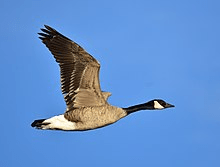
CANADA GOOSE in flight (Wikipedia photo credit)
Avian migrations are truly a wonderful recurrence in God’s phenological providences.
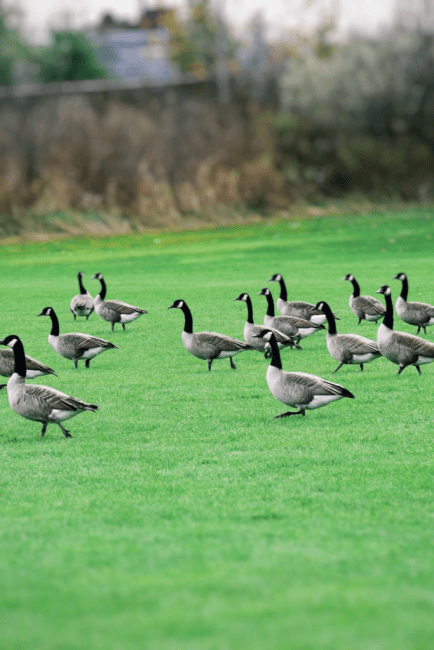
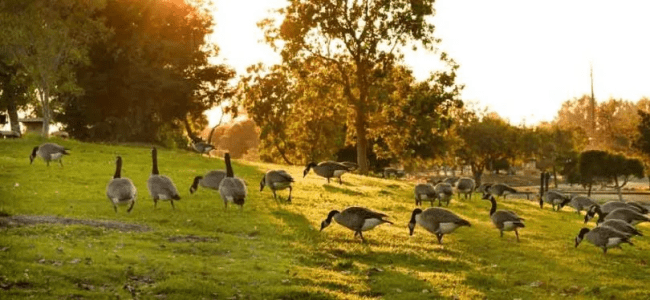
With that in mind, I observed a flock of Canada geese (Branta canadensis) in my neighborhood, not far from my mailbox—they were grazing among the grasses by my rain-runoff drainage ditch.
CANADA GEESE IN GRASS (HumaneActionPittsburgh.org photo credit)
But not long afterwards they were off again, in the air, southbound, toward wherever they go for winter. Today’s limerick follows.
Can the rush grow up without mire? can the flag grow without water?
(Job 8:11)
Speaking of birdwatching in Texas, ornithologist Stan Tekiela says, “It’s a sure sign of spring when [migratory] Red-winged Blackbirds return to the marshes.” [Quoting from Tekiela’s BIRDS OF TEXAS FIELD GUIDE (Cambridge, MN: Adventure Publications, Inc., 2004), page 9.]
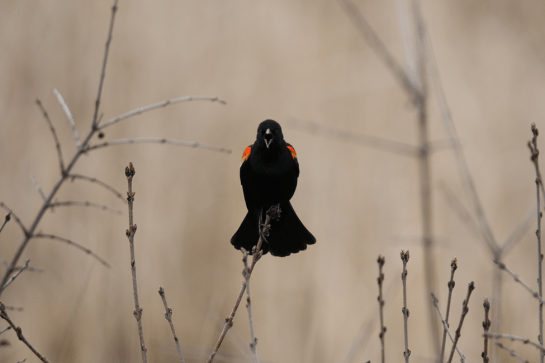
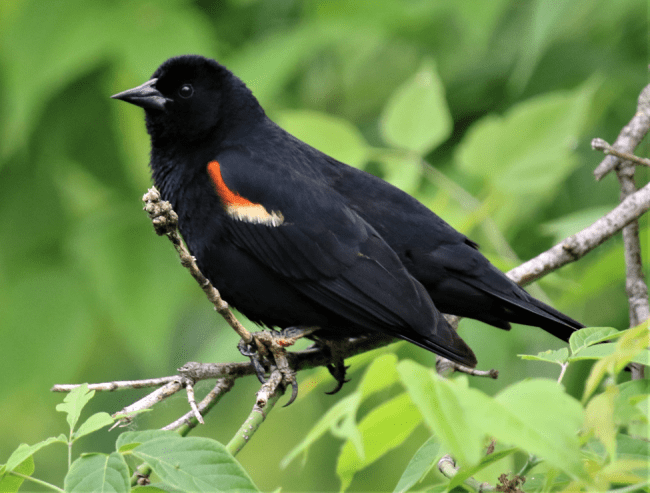
RED-WINGED BLACKBIRD MALE, front view, on budding plants (photo credit: Bryce Gaudian)
Of course, Minnesota hosts Redwinged Blackbirds in early springtime, weeks before the last snowdrifts melt away with warming spring temperatures.
“CLOUD” of RED-WINGED BLACKBIRDS, Minnesota (photo credit: Bryce Gaudian)
Of course, what could be a more iconic marshland plants than cattails, which Redwings love to perch upon, all over America’s Lower 48 states (as well as much of Mexico and Canada)?
And where you have cattails, you often have Red-winged Blackbirds, known to ornithologists as Agelaius phoeniceus, sometimes nicknamed “Redwings” (but not to be confused with the Eurasia’s thrush that is also nicknamed “redwing”), , as was noted in a previous blogpost “Redwing Pond”, posted at https://leesbird.com/2019/11/04/redwing-pond/.
The most successful way to observe the behavior of Red-winged Blackbirds is to locate a marshy area where a number of them can be regularly found, pick one or two of the more active birds, and follow their movements for about a half hour. A characteristic of Redwings is that they alternate periods of active displaying with periods of quiet and feeding, so you cannot just show up at a marsh and expect immediately to see all of their marvelous displays.
Donald Stokes, A GUIDE TO BIRD BEHAVIOR, Vol. I (Boston: Little, Brown & Company / Stokes Nature Guides, 1979), page 275.
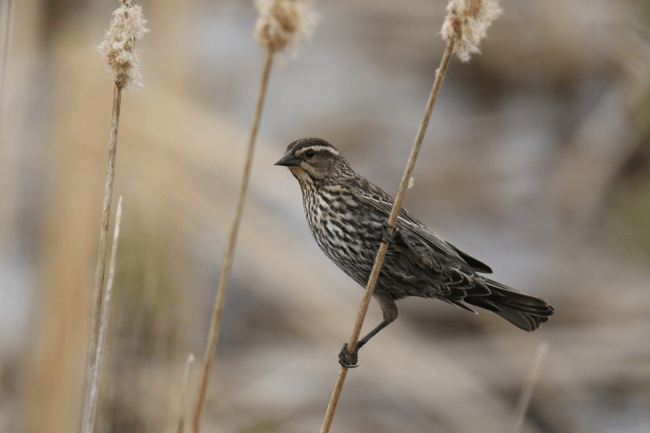
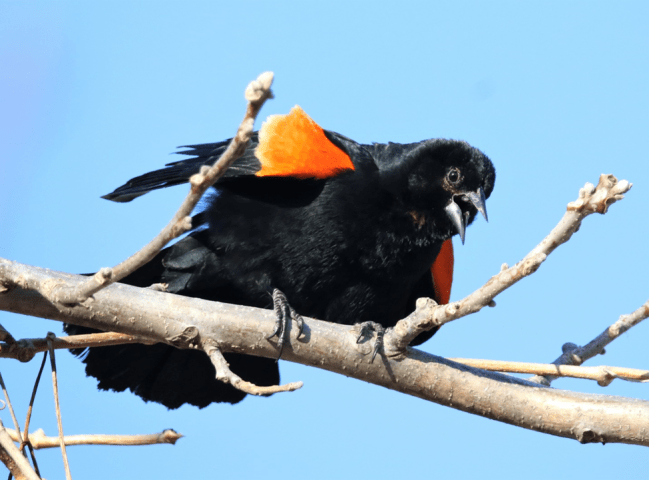
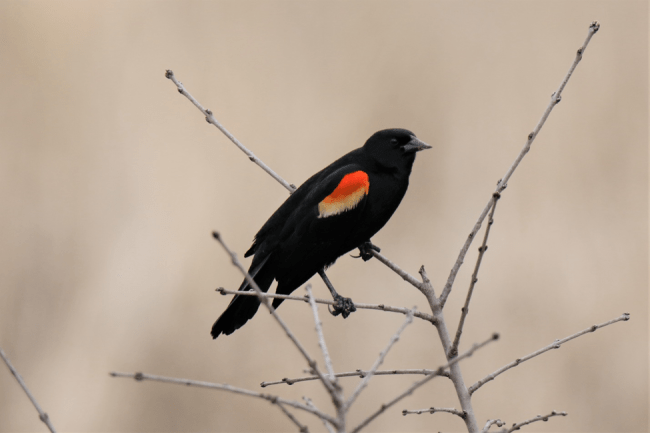
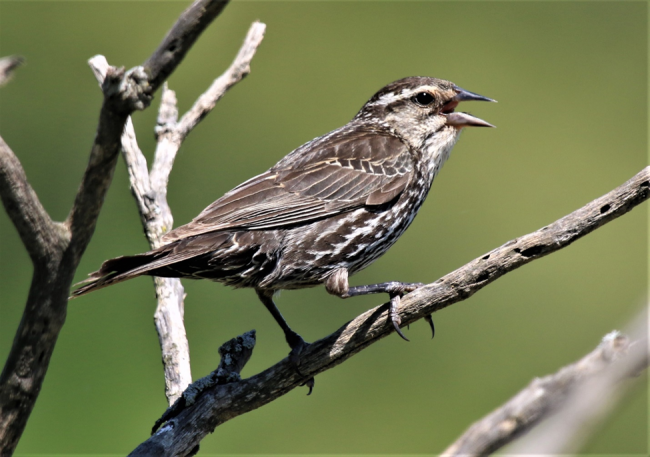
Red-winged Blackbirds are one of my favorite icterid (blackbird family) birds. The males sport colorful epaulets (i.e., shoulder-wing feather “bars”) of pale yellow and red stripes, which contrast strikingly against their otherwise glossy black plumage. The females have a more camouflage-hued brownish plumage, accenting the brown feathers with ivory-white mottling and outlining (and “eyebrows”).
Above and below are some splendid photographs taken by Christian/creationist wildlife photographer (in Minnesota), showing how beautiful (and plentiful) these Red-winged Blackbirds can be.
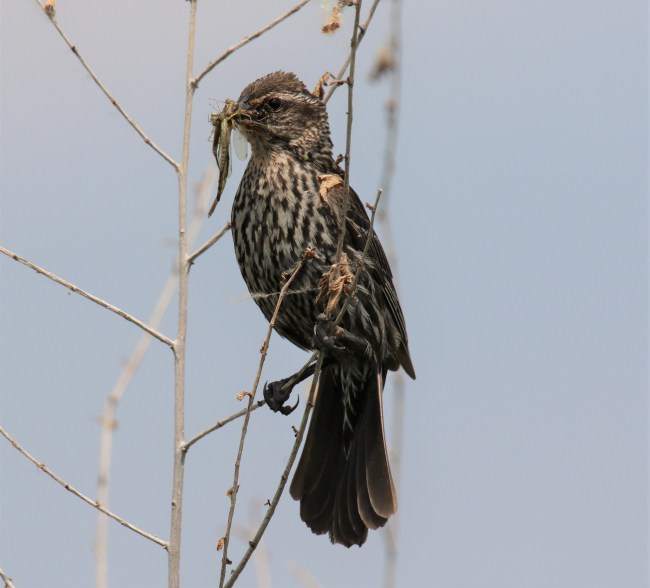
Red-winged blackbirds are not picky eaters — although they mostly eat plant material, such as seeds (including seeds from various weeds, from birdfeeders, as well as from rice or other grain seeds) and available berries (including blackberries and blueberries). Redwings also eat a mix of small animals, especially insect adults and larvae (including flies, moths, butterflies, dragonflies), spiders, earthworms, periodical cicadas, and even snails.
RED-WINGED BLACKBIRD FEMALE, perching with prey (photo credit: BRYCE GAUDIAN)
How nice it would be to see Red-winged Blackbirds perching upon cattails that constitute a fence-like edge along a pond-shore or a drainage ditch!
Thank You, Lord, for making these marsh-loving icterids.
“Behold the fowls of the air, for they sow not, neither do they reap, nor gather into barns; yet your heavenly Father feedeth them. Are ye not much better than they?”
Matthew 6:26 [quoting the Lord Jesus Christ]
Beholds the fowls of the air, especially when they land and walk nearby.
The Lord Jesus Christ told us to “behold” the birds of the air. Of course, that is easier to do if some of those flying fowl land on the ground long enough for us to observe them at close range.
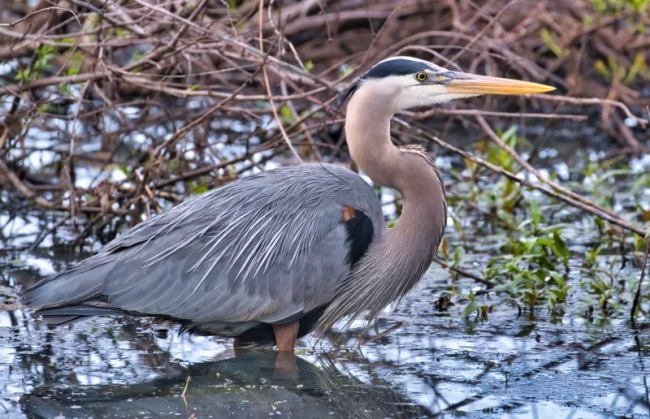
GREAT BLUE HERON in drainage water (Steve Creek photo credit)
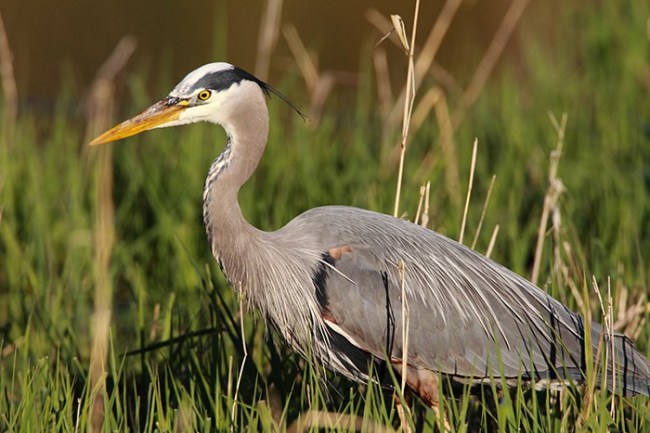
Yesterday I walked to my mailbox, to check for something I am anticipating – and nearby I saw a young Great Blue Heron, stalking in the drainage ditch that still retains pooled run-off rainwater from recent showers. The heron eyed me carefully, apparently concluding that I was not an immediate threat—since I was careful to walk slowly and meekly toward my mailbox. When I left the area the heron was still there, wading in the standing water of the drainage ditch. Probably the heron was foraging, looking for a frog or some other meal.
GREAT BLUE HERON foraging (Audubon Society of Portland)
With that memory in mind I have a limerick:
GREAT BLUE HERON IN THE DRAINAGE DITCH
Should I check out a drainage ditch?
For wetland birds it’s a niche;
If rain runoff flows through therein
It might attract great blue heron —
So, go check out a drainage ditch!
Happy birding—even if your birdwatching happens next to your own mailbox!
GREAT BLUE HERON in flight (Shoreline Area News photo credit)


 Lee's Birdwatching Adventures Plus