BUFFLEHEAD DUCKS’ DEPENDABLE MIGRATION TIMING
Dr. James J. S. Johnson
Seest thou a man diligent in his business? he shall stand before kings; he shall not stand before mean men. (Proverbs 22:29)
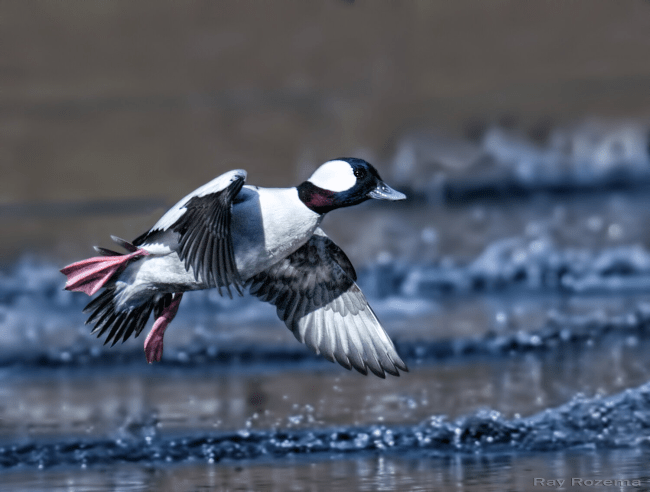
Sacramento Audubon Society / Ray Rozema photo credit
When I think of Bufflehead ducks (Bucephala albeola), I am reminded of the authoritative advice (“words of the wise”) of Proverbs 22:29, regarding reputations for dependable “diligence”. Why?
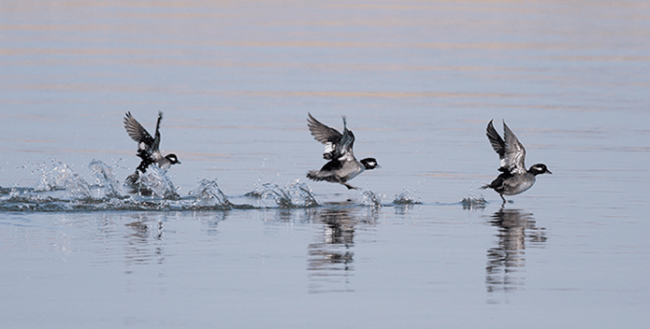
Jonathan Maher Kresge / Chesapeake bay Foundation photo credit
The first time that this author observed a Bufflehead, in the wild, was on March 11th of A.D.1996, while visiting the Texas Gulf Coast’s Aransas Bay (which is protected as Aransas Bay National Wildlife Refuge), as part of ornithological research (eventually) leading to a doctoral degree in creation science (applied to wildlife ecology). [See “Bufflehead Duck, One of Diverse Divers at Aransas Bay” (posted at https://leesbird.com/2018/01/26/bufflehead-duck-one-of-diverse-divers-at-aransas-bay/ .]
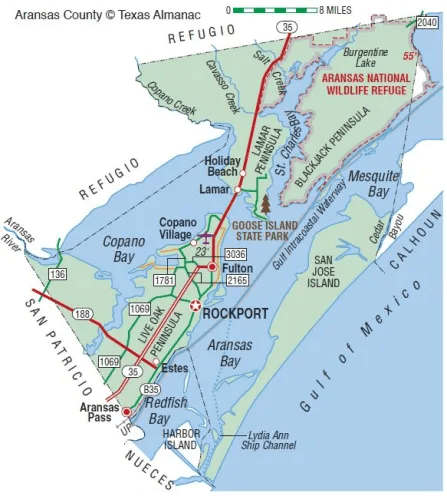
Aransas County in TEXAS ALMANAC image credit
What conspicuously beautiful ducks those Buffleheads were (and are)!
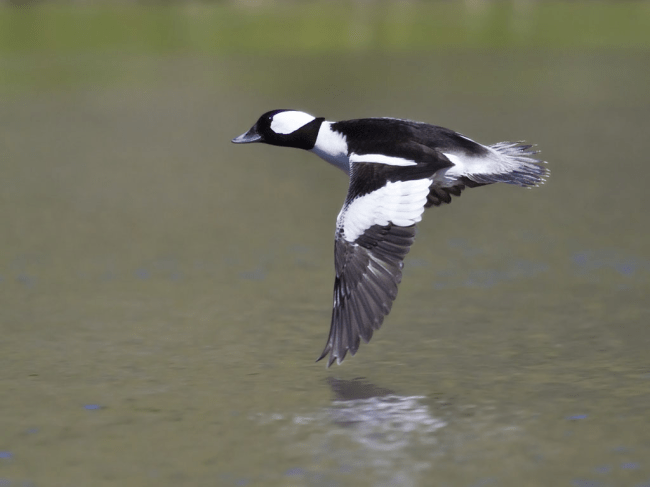
Bill Bouton photo credit
Consider the reputation that the Bufflehead duck has, for dependability punctuality, as was recently observed by Alonso Abugattas, the Chesapeake Bay area’s “Capital Naturalist”:
The bufflehead is nothing if not punctual. Few other ducks are known to arrive in our neighborhood every winter within a few delays of the date they arrived the previous year. The smallest of North America’s diving ducks, the bufflehead … [can] nest in the tree cavities of woodpeckers, most commonly northern flickers, according to Canadian zoologist Gilles Gauthier. . . . .
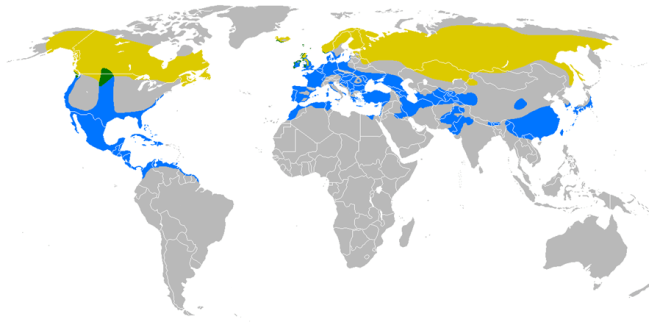
After forming their pair bonds over the winter, the birds head back to their breeding grounds in early April and early May, migrating at night. They’re among the last ducks to leave their winter territory. The greatest concentration of breeding grounds, according to abundance maps maintained by the Cornell Lab of Ornithology, are in northwestern Canada, in a wide swath crossing through Saskatchewan, Alberta and Northwest Territory… petering out in Alaska. . . .
Buffleheads start leaving [their breeding grounds] for the wintering grounds in October, settling mostly across [the U.S.A.’s Lower 48] but sometimes going as far [south] as Central America.
[Quoting CHESAPEAKE BAY JOURNAL, 34(8): 39 (November 2024).]
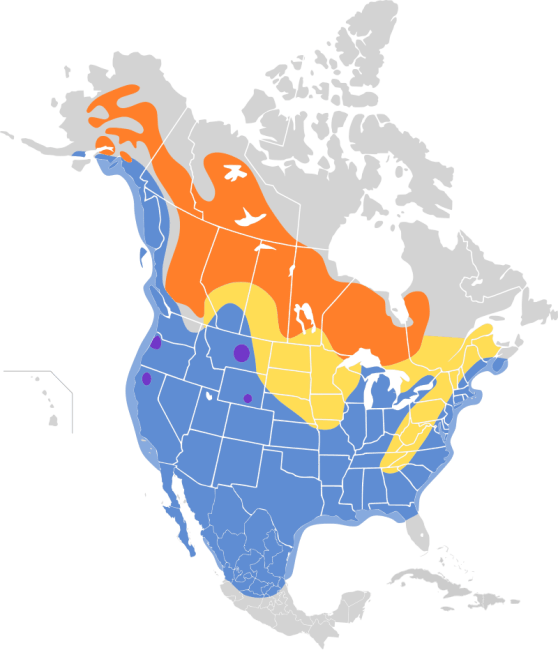
(Cephas / BirdLife Internat’l / Wikipedia image credit)
So much for the Bufflehead’s predictable-because-dependable migration movements.
Yet is there a lesson for us humans, as we consider the Bufflehead’s phenological reliability? Yes, there is – especially if we look at the details of Proverbs 22:29.
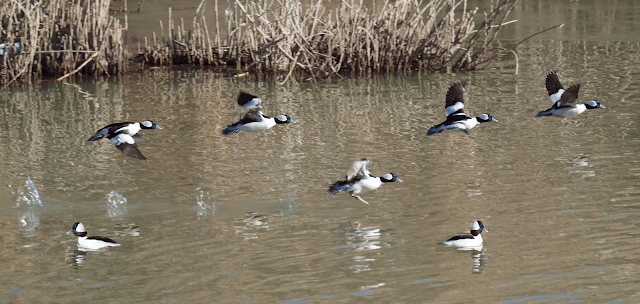
Robert Mortensen / BirdingIsFun.com composite photo credit
Of course, it is good to earn a reputation for dependable punctuality. In fact, that is similar to having a reputation for quickly fulfilling one’s responsibility — as opposed to having a reputation for dilatory procrastination. Some folks can be expected to do sloppy work – who needs that kind of “help”?
Yet other folks are famous for delivering extremely careful (almost perfectionist) work, but only in an all-too-often impractically slow response time, so slow that the perfectionist work is of diminished practical value (because the need for timely results was compromised and disappointed).
How is all that relevant to understanding Proverbs 22:29? That proverb is translated into English as follows:
Seest thou a man diligent in his business? he shall stand before kings; he shall not stand before mean men. (Proverbs 22:29)
In that sentence the phrase “man diligent” is a translation of ’îš mâhîr, with ’îš being a generic word for “man”—but what does the Hebrew word mâhîr (translated as “diligent” in the KJV) mean?
Consider that the masculine singular adjective mâhîr is translated by several English words in our English Bible. For example, mâhîr is translated “ready” in Ezra 7:6 and also in Psalm 45:1 (which is Psalm 45:2 in Hebrew verse numbering]). Also, mâhîr is translated “hasting” in Isaiah 16:5. But there is more to consider, because Hebrew adjectives are routinely related in meaning to similarly spelled nouns, verbs, and/or adverbs.
Therefore, to better understand what the Hebrew adjective mâhîr means, in Proverbs 22:29, consider also the following (non-exhaustive) listing of illustrative (etymologically related) verbs and adverbs:
ROOT VERB mâhar
“hasten”, “haste”, “make haste”, etc. (Genesis 18:6-7 & 19:22 & 24:18,20,46 & 41:32 & 43:30 & 45:9,13; Exodus 34:8; Joshua 4:10 & 8:14,19; Judges 9:48 & 13:10; 1st Samuel 9:12 & 17:48 & 23:27 & 25:18,23,34,42 & 28:24; 1st Kings 20:41 & 22:9; 2nd Kings 9:13; 2nd Chronicles 24:5; Esther 5:5 & 6:10; Psalm 16:4; Proverbs 1:16 & 7:23; Isaiah 49:17 & 51:14 & 59:7)
“make ready quickly” (Genesis 18:6)
“make speed” (2nd Samuel 15:14)
“fetch quickly” (2nd Chronicles 18:8)
RELATED MASCULINE ADVERB mahêr
“quickly” (Exodus 32:8; Deuteronomy 9:3,12[twice],16 & 26:20; Joshua 2:5; Judges 2:17,23)
“speedily” (Psalm 69:17 [69:81 in Hebrew verse numbering] & 79:8 & 102:2 [102:3 in Hebrew verse numbering]; 143:7)
“hastily” (Judges 2:23; Proverbs 25:8)
“suddenly” (Deuteronomy 7:4)
RELATED FEMININE ADVERB mehêrâh
“quickly” (Numbers 16:46 [17:11 in Hebrew verse numbering]; Deuteronomy 11:17; Joshua 8:19 & 10:6 & 23:16; 2nd Samuel 17:16,18,21; 2nd Kings 1:11; Ecclesiastes 4:12)
“hastily” (Judges 9:54)
“speedily” (Psalm 31:2 [31:3 in Hebrew verse numbering]; Ecclesiastes 8:11; Isaiah 58:8)
“swiftly” (Psalm 147:15)
[See generally George V. Wigram’s ENGLISHMAN’S HEBREW CONCORDANCE OF THE OLD TESTAMENT (Hendrickson’s 2001 reprint of the 1874 London-published 3rd edition), page 669.]
The listing above is incomplete—but the pattern is already clear—the adjective mâhîr denotes the trait of being speedy, swift, quick!

Scottish Gov’t / Parent Club photo credit
In other words, a person who consistently and dependably does his or her work fastly is appreciated—and (eventually) will “stand before kings” (i.e., not be limited to serving before low-ranking individuals).
So, just as the phenological punctuality of the returning-from-winter Bufflehead duck is dependably predictable (as is also the migratory return of Israel’s faithful stork—see www.icr.org/article/lesson-from-stork — which is noted in Jeremiah 8:7), a truly diligent human will be prompt (i.e., give quick turnaround) in his or her work responsibilities.
Careful work is appreciated, yes, but only if it is contextually timely. Promptness is really appreciated!
><> JJSJ profjjsj@aol.com 😊
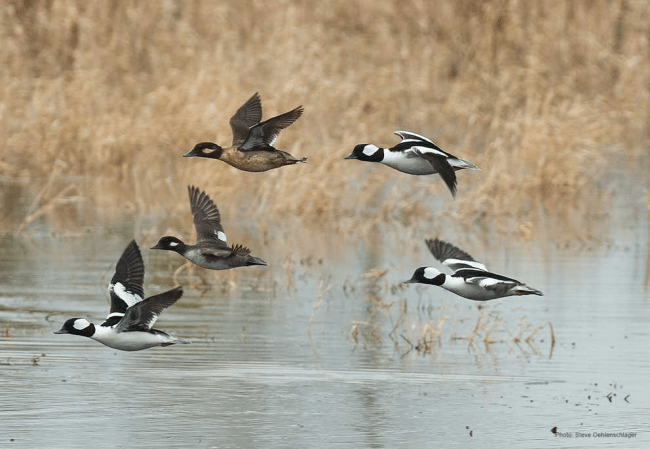
Ducks Unlimited photo credit
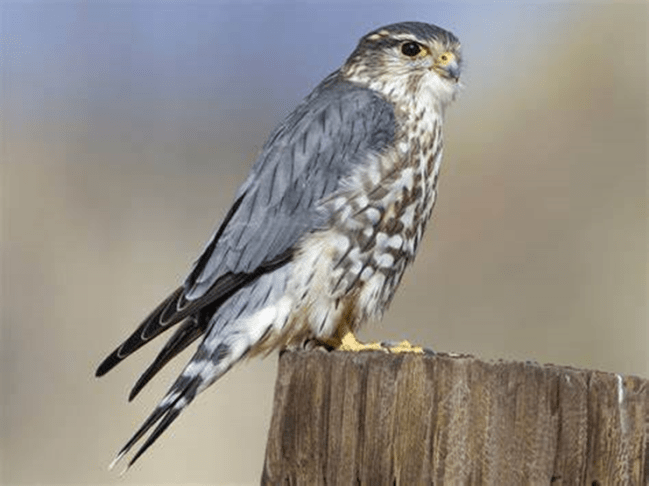
 Lee's Birdwatching Adventures Plus