Screeeeeeech

Screeeeeeech  ~ by a j mithra

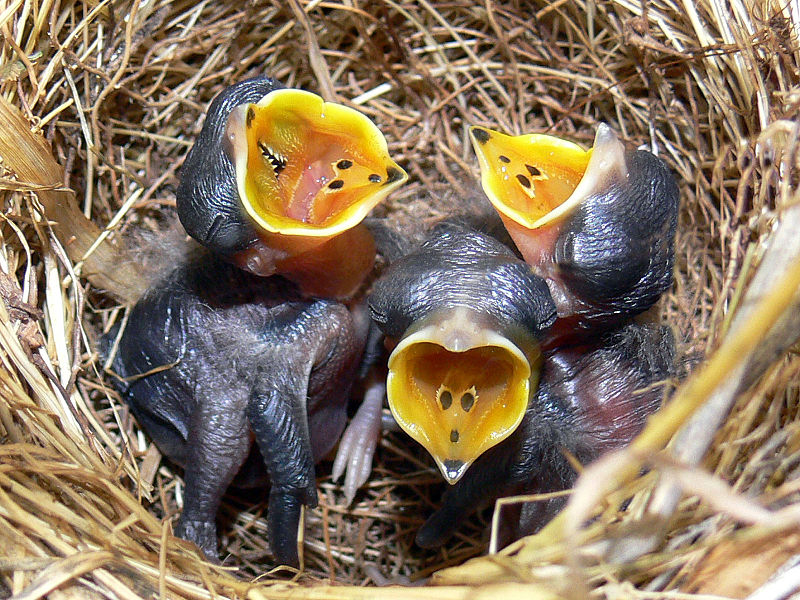
Australian Pipit (Anthus australis) ©WikiC

Australian Pipit (Anthus australis) ©WikiC

Mother birds
encourage their little ones
to scream loud…..
The one who makes
the most noise
gets its feed first
and
then the next loudest
gets its share
and
it goes on….
It is easier for GOD
to fill those who
open their mouth wide….
It seems like only
the Birds have understood
the secret and they practice,
but,
we only preach…

I am the LORD thy God, which brought thee out of the land of Egypt: open thy mouth wide, and I will fill it. (Psalm 81:10)

A thought from a j mithra

*

The Australian Pipit is in the Motacillidae Family

*

Birds – Purpose filled Singers

Birds – Purpose filled Singers ~ by a j mithra

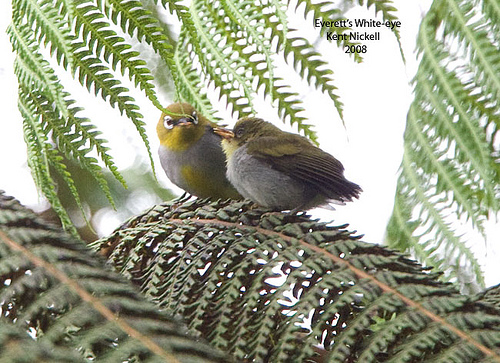
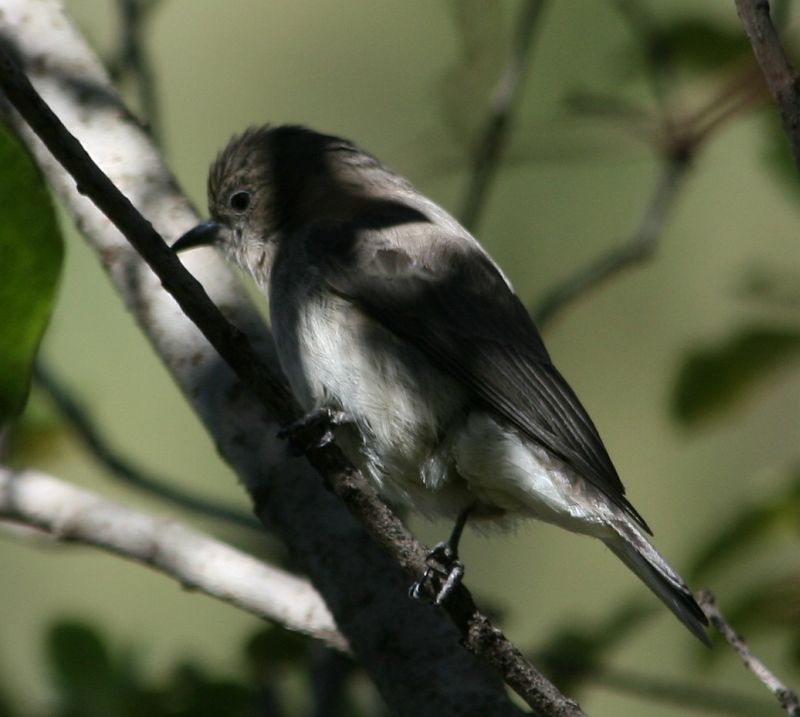
Everett's White-eye (Zosterops everetti) by Kent Nickell

Everett's White-eye (Zosterops everetti) by Kent Nickell

Studies have shown
that,
Birds should learn
the intricate
territorial songs
to gain possession
of the territory
after the death
of its senior…
The mating songs
to get the nod
of the best females around..
That memory
of those songs
will serve the Bird
the rest of its life…
Learn to sing,
only for JESUS
and
that will save you
all through your life…

The beast of the field shall honour me, the dragons and the owls: because I give waters in the wilderness, and rivers in the desert, to give drink to my people, my chosen.

This people have I formed for myself; they shall show forth my praise. (Isaiah 43:20-21)

A thought from a j mithra

*

The  Everett’s White-Eye is part of the Zosteropidae Family.

*

Birds in Hymns – Let There Be Light!

And God said, Let there be light: and there was light. (Genesis 1:3 KJV)

Thou, Whose Almighty Word (or sometimes called – Let There Be Light!)
Author: John Marriott, 1780-1825
Musician: Joan J. Pinkston, b. 1947

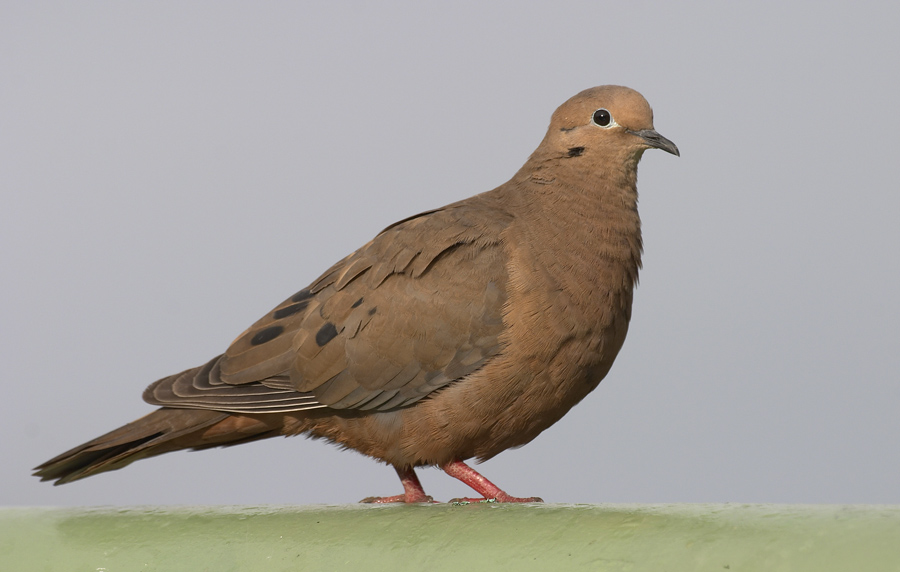
Eared Dove (Zenaida auriculata)  by Robert Scanlon

Eared Dove (Zenaida auriculata) by Robert Scanlon

The Rev. John Marriott was a clergyman of the English Church, a graduate of Rugby, and of Christ Church, Oxford. He took high honors in college, and was then engaged as private tutor by the Duke of Buccleuch, who after two years presented him with the living of Church Lawford, Warwickshire. This he kept to the end of his life. He wrote but three hymns, of which only one is in use. But this one belongs in the first rank, and entitles him to a place among the great hymn-writers:

‘Let there be light!'”

This hymn will richly repay careful study. It is founded on Genesis i. 3, but with a very fine and suggestive reference to the three persons of the Trinity. The Father uttered the original mandate “Let there be light”; the Son declared himself to be the “Light of the World”; the Spirit enlightens the soul. The poem is usually classed with the missionary hymns of the church, and very properly so. It is profoundly pervaded with the missionary spirit, not only in its separate expressions, but also in its majestic undertone. Its metaphors are striking—the “chaos” and “darkness” of creation and of heathenism; the “sick in mind”; the “lamp of grace”; the “ocean’s tide” of Wisdom, Love, and Might, and the like. The action is vigorous—”redeeming wing”; “speed forth thy flight”; “rolling in fullest pride.” The survey and sweep are most comprehensive. Above all, the hymn is a broad, beautiful, and blessed evangel.

Thou whose almighty word
Chaos and darkness heard,
And took their flight,
Hear us, we humbly pray,
And where the gospel day
Sheds not its glorious ray,
Let there be light!

Pied Imperial-pigeon (Ducula bicolor) by Kent Nickell

Pied Imperial-pigeon (Ducula bicolor) by Kent Nickell

Thou who didst come to bring
On Thy redeeming wing
Healing and sight,
Health to the sick in mind,
Sight to the inly blind,
Oh, now to all mankind
Let there be light!

Spirit of truth and love,
Lifegiving, holy Dove,
Speed forth Thy flight;

Move on the waters’ face,
Bearing the lamp of grace,
And in earth’s darkest place
Let there be light!

Blessed and Holy Three,
Glorious Trinity,
Wisdom and Might;
Where guilt and sin abound
Let gospel tidings sound,
Till Thy lost sheep be found,
Let there be light!

Information for various internet sources. CyberHymnal, Google Books and Online Hymnal

See ~ Wordless Birds

More ~ Birds in Hymns

*

Worship- The God Pleaser

Worship- The God Pleaser ~ by a j mithra

White-throated Honeyeater (Melithreptus albogularis) by Tom Tarrant

White-throated Honeyeater (Melithreptus albogularis) by Tom Tarrant

Birds choose to mate
only with those birds
which sing the most
complicated songs…
For,
they believe that
only those birds
which sing different songs,
are good at raising
and
taking care of the family
and the territory…
He worshiped
and
sang for the LORD
at all times…
Is that the reason why
GOD certifies David
as the one who pleases
HIS heart?
Would GOD say of us
like how HE said of David?

And when he had removed him, he raised up unto them David to be their king; to whom also he gave testimony, and said, I have found David the son of Jesse, a man after mine own heart, which shall fulfil all my will. (Acts 13:22)

A thought from a j mithra

*

The White-throated Honeyeater is in the Meliphagidae Family.

*

Birds of the Bible – Turtle Doves

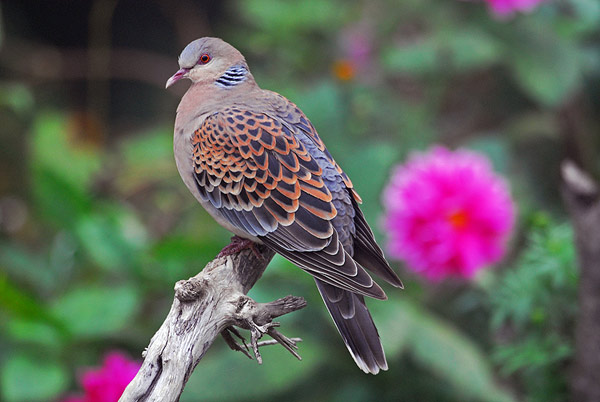
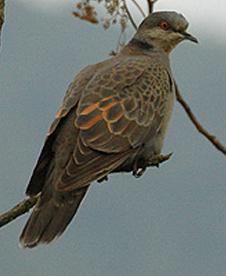
Oriental Turtle Dove (Streptopelia orientalis) by Nikhil

Oriental Turtle Dove (Streptopelia orientalis) by Nikhil

The flowers appear on the earth; the time of the singing of birds is come, and the voice of the turtle is heard in our land; (Song of Solomon 2:12 KJV)

According to the latest list of Turtle Doves by the I.O.C version 2.5 there are only six doves that bear the name “Turtle Dove.” They are in two genus (groups), the Nesoenas and the Streptopelia. That means that they are closely related, but the ornithologist have divided them that way.
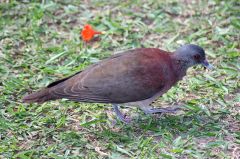
Malagasy Turtle Dove (Nesoenas picturata) ©WikiC

Malagasy Turtle Dove (Nesoenas picturata) ©WikiC

The Malagasy Turtle Dove (Nesoenas picturata) is the only one in the Nesoenas. The Malagasy Turtle-dove (Nesoenas picturata), is also known as the Madagascar Turtle-dove, is a bird species in the pigeon and dove family, Columbidae. It is found in British Indian Ocean Territory, Comoros, Madagascar, Mauritius, Mayotte, Réunion, and Seychelles. Its closest relative a Pink Pigeon together they form a lineage apart from both the typical pigeons (Columba) and the typical turtle-doves (Streptopelia).
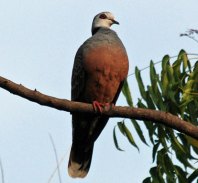
Adamawa Turtle Dove (Streptopelia hypopyrrha) ©WikiC

Adamawa Turtle Dove (Streptopelia hypopyrrha) ©WikiC

The other five Turtle Doves, the Euopean, Dusky, Adamawa, Oriental, and Red are in the Streptopelia genus. These are mainly slim, small to medium-sized species. The upperparts tend to be pale brown, and the underparts are often a shade of pink. Many have a characteristic black-and-white patch on the neck, and monotonous cooing songs. Mainly in Africa, but several species occur in tropical southern Asia. As a group, this genus is highly successful; many species are abundant in a range of habitats in the tropics, and two now have a much more extensive distribution.
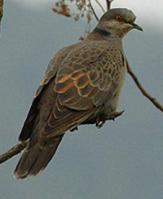
Dusky Turtle Dove (Streptopelia lugens) ©WikiC

Dusky Turtle Dove (Streptopelia lugens) ©WikiC

In Scripture, the Turtle Dove or “turtledove” appears in fifteen verses. Most of those have to do with the turtledove being used as a sacrifice. In Genesis 15:9 the Lord GOD told Abraham to provide one and a pigeon as part of a sacrifice when Abraham was give the covenant of the promised land.

Then in Leviticus a turtledove was used in the burnt offering in Lev. 1:14, two turtledoves for the trespass offering of Lev. 5:7, two for a second burnt offering in Lev. 5:11, for purification after the birth of a child in Lev. 12:6, 8, a sin offering in Lev. 14:22, a sin and a burnt offering in Lev. 14:30, two more offered in Lev. 15:14 and 29.

In Deuteronomy 6:10, two turtledove or pigeons are used for a cleansing.

O deliver not the soul of thy turtledove unto the multitude of the wicked: forget not the congregation of thy poor for ever. (Psalms 74:19 KJV)

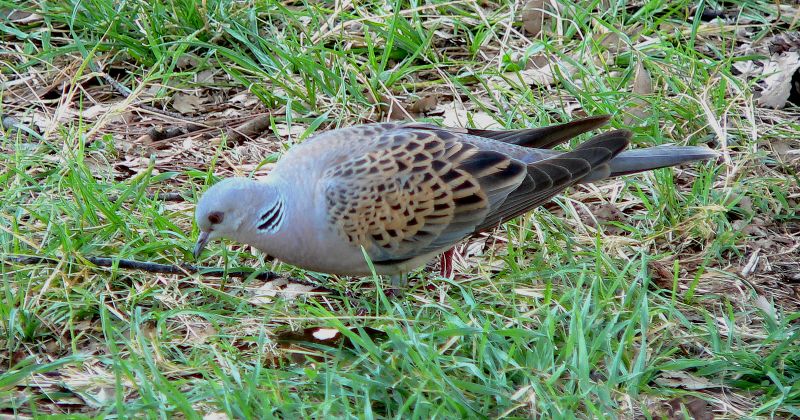
European Turtle Dove (Streptopelia turtur) ©WikiC

European Turtle Dove (Streptopelia turtur) ©WikiC

Here is what Albert Barnes Notes on the Bible says about the above verse in Psalms: “Psa 74:19 O deliver not the soul of thy turtle-dove – The “life” of thy turtle-dove; or, thy turtle-dove itself. The turtle-dove is a name of endearment for one beloved, in Son. 2:12, and is thus applied here to the people of Israel. The leading idea in such an application of the word is that of innocence, harmlessness, timidity, gentleness. The thought here is that of a people dear to God, now timid and alarmed. It is the prayer of a people beloved by God that he would not deliver them to their enemies. The prayer may be regarded as one which was used on the occasion referred to in the psalm; or, as a general prayer for the people of God, considered as exposed to ravening enemies.”

John Wesley’s Explanatory Notes says of Song of Son. 2:12 (quoted at top): “The flowers – The communications of God’s grace, the gifts, and graces, and comforts of the Holy Spirit, are vouchsafed unto, and appear in believers, as buds and blossoms do in the spring. The turtle – This seems particularly to be mentioned because it not only gives notice of the spring, but aptly represents the Spirit of God, which even the Chaldee paraphrast understands by this turtle, which appeared in the shape of a dove, and which worketh a dove – like meekness, and chastity, and faithfulness, in believers.”

Jeremiah speaks of the migration of the turtledove.

Yea, the stork in the heaven knoweth her appointed times; and the turtle and the crane and the swallow observe the time of their coming; but my people know not the judgment of the LORD. (Jeremiah 8:7 KJV)

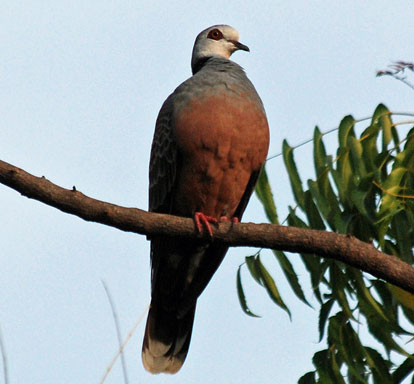
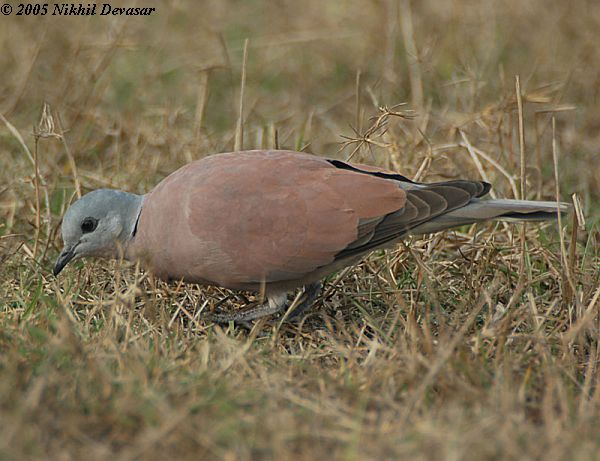
RedTurtle Dove (Streptopelia tranquebarica) by Nikhil Devasar

RedTurtle Dove (Streptopelia tranquebarica) by Nikhil Devasar

Last but not least, Mary offered a pair of turtledove at the end of her purification after Jesus was born. The turtledove are in Luke 2:24, but the whole passage from Luke 2:21-39 is worth reading.

Most of the times, not always, the turtledove or pigeons were use in the sacrifices by someone who could not afford an animal like a lamb or a bullock. I find this very comforting because God did not make salvation only for those who could afford it. In fact, none of us can afford the cost of what took for the purchase of our salvation.

Forasmuch as ye know that ye were not redeemed with corruptible things, as silver and gold, from your vain conversation received by tradition from your fathers; But with the precious blood of Christ, as of a lamb without blemish and without spot: Who verily was foreordained before the foundation of the world, but was manifest in these last times for you, Who by him do believe in God, that raised him up from the dead, and gave him glory; that your faith and hope might be in God. (1 Peter 1:18-21 KJV)

The Gospel Message

(All photos may be clicked on – WikiC = Wiki Commons. Hover mouse over underlined verses.)
*
Birds-Advertisers of Life..

Birds-Advertisers of Life..

Graceful Prinia (Prinia gracilis) by Nikhil Devasar

Graceful Prinia (Prinia gracilis) by Nikhil Devasar

If they
do not eat well
the night before,
they would surely die…That’s why,
the birds sing
at dawn,
to advertise to the world
that,
they are still alive
and that,
they are ready to face
another tough day ahead
in life…
Did you sing
for the LORD
this morning?
Why I ask you this
is cos,
those who are dead
never sing..
Do they?

Wilt thou show wonders to the dead? shall the dead arise and praise thee? Selah. (Psalm 88:10)

A thought from a j mithra.

*

The Graceful Prinia is in the Cisticolidae Family.

*

Birds of the Bible – Honeyguide?

Brown-backed (Wahlberg's) Honeybird (Prodotiscus regulus) byWiki

Brown-backed (Wahlberg’s) Honeybird (Prodotiscus regulus) byWiki

The Honeyguide is an interesting bird. They are not mentioned specifically in the Bible by “name”, but all birds are mentioned whether named or not. The Lord God created all of them on the fifth day and declared them good.

And God created great whales, and every living creature that moveth, which the waters brought forth abundantly, after their kind, and every winged fowl after his kind: and God saw that it was good. And God blessed them, saying, Be fruitful, and multiply, and fill the waters in the seas, and let fowl multiply in the earth. And the evening and the morning were the fifth day. (Genesis 1:21-23 KJV)

Honeyguides love the honey, wax, larvae or whatever else is found in the honeycomb. In fact, it was created with such a cooperative instinct, that it helps others find the honey and in return, it gets fed also. The scientist today call it “mutualism” or “sembiotic relationship”. There is a Honey Badger (Ratal) that can’t see so well but loves the same things in the honeycomb and the Honeyguide “guides” it to the honey source. The bird first finds the bee’s nest, but since it is too weak to tear the comb apart, it finds the badger. Then by flitting its wings and making a fuss, it slowly leads the critter to the nest. He or she, does the hard work. The badger tears the bee’s nest apart with its paws and enjoys the meal. There is always enough left over that the bird gets its share of the meal also. Of course God has given the badger its instinct to let the bird lead it to honey also. They both need each other to make this work.

The bird has also been known to lead humans to a honey source. “One researcher found use of honeyguides by the Boran people of East Africa reduces the search time of people for honey by approximately two-thirds. Because of this benefit, the Boran use a specific loud whistle, known as the “Fuulido”, when a search for honey is about to begin. The “Fuulido” doubles the encounter rate with honeyguides” (Wikipedia)

Pleasant words are as an honeycomb, sweet to the soul, and health to the bones. (Proverbs 16:24 KJV)
My son, eat thou honey, because it is good; and the honeycomb, which is sweet to thy taste: (Proverbs 24:13 KJV)

The Lord Jesus even was served fish and a honeycomb after His resurrection.

And they gave him a piece of a broiled fish, and of an honeycomb. (Luke 24:42 KJV)

Yellow-rumped Honeyguide (Indicator xanthonotus) by A Grosset

Yellow-rumped Honeyguide (Indicator xanthonotus) by A Grosset

The Honeyguide is in the Indicatoridae Family which has 17 members and are in the Piciformes Order. Recently three of the birds were changed from Honeyguides to Honeybirds, but they all love honey. Most honeyguides are dull-colored, though a few have bright yellow in the plumage. All have light outer tail feathers, which are white in all the African species. The two honeyguides, the Greater Honeyguide and the Scaly-throated Honeyguide, are the most studied for this behavior.

The fear of the LORD is clean, enduring for ever: the judgments of the LORD are true and righteous altogether. More to be desired are they than gold, yea, than much fine gold: sweeter also than honey and the honeycomb. (Psalms 19:9-10 KJV)

See Also:

Birds of the Bible

Creation Moments – Helpful Honeyguide

Wikipedia – Honeyguides
Don Roberson’s Bird Families of the World – Honeyguides Indicatoridae

*

Birds in Hymns – How Pleasant, How Divinely Fair

My soul longs, yes, even faints For the courts of the LORD; My heart and my flesh cry out for the living God. (Psalms 84:2 NKJV)

Words: Isaac Watts, The Psalms of Da­vid, 1719.

Music: Ware­ham, Will­iam Knapp, 1738

Al­ter­nate tune: * Adisham, by Joseph Funk (Win­ches­ter, Vir­gin­ia: J. W. Holl­is, 1832)

How Pleasant, How Divinely Fair

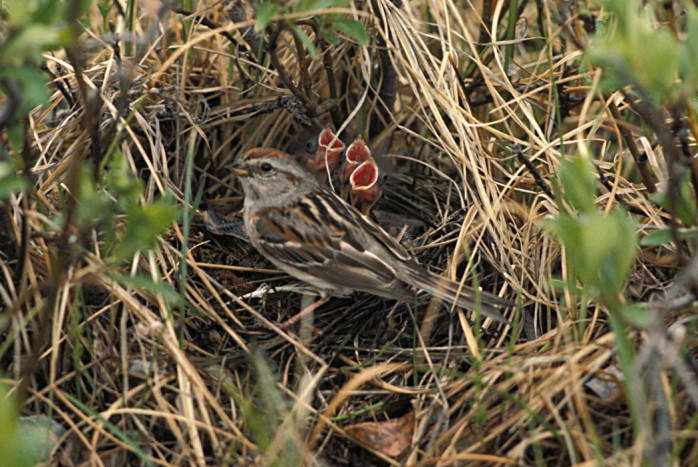
American Tree Sparrow (Spizella arborea) w chicks©USFWS

American Tree Sparrow (Spizella arborea) w chicks©USFWS

How pleasant, how divinely fair,
O Lord of hosts, Thy dwellings are!
With long desire my spirit faints
To meet th’assemblies of Thy saints.

My flesh would rest in Thine abode,
My panting heart cries out for God;
My God! my King! why should I be
So far from all my joys and Thee?

The sparrow chooses where to rest
And for her young provides her nest;
But will my God to sparrows grant
That pleasure which His children want?

Bless’d are the saints who sit on high
Around Thy throne of majesty;
Thy brightest glories shine above,
And all their work is praise and love.

Bless’d are the souls who find a place
Within the temple of Thy grace;
There they behold Thy gentler rays,
And seek Thy face, and learn Thy praise.

Bless’d are the men whose hearts are set
To find the way to Sion’s gate;
God is their strength, and through the road
They lean upon their helper God.

Cheerful they walk with growing strength,
Till all shall meet in Heav’n at length,
Till all before Thy face appear,
And join in a nobler worship there.


Words and music from CyberHymnal

See more – Birds in Hymns

*

Birds in Hymns – God Speaks To Us In Bird And Song

To him that rideth upon the heavens of heavens, which were of old; lo, he doth send out his voice, and that a mighty voice. (Psalms 68:33 KJV)

Words: Jo­seph John­son, Dibs: A Sto­ry of Young Lon­don Life (at the be­gin­ning of chap­ter 4: ‘Pro­mot­ed to the Choir’), 1888. The hymn was pub­lished in School Hymns in 1891.

Music: Child­hood – by Hen­ry W. Da­vies (1869-1941)

God Speaks to us in Bird and Song

Crested Bunting (Emberiza lathami) by Nikhil Devasar

Crested Bunting (Emberiza lathami) by Nikhi lDevasar

God speaks to us in bird and song,
In winds that drift the clouds along,
Above the din and toil of wrong,
A melody of love.

God speaks to us in far and near,
In peace of home and friends most dear,
From the dim past and present clear,
A melody of love.

God speaks to us in darkest night,
By quiet ways through mornings bright,
When shadows fall with evening light,
A melody of love.

O Voice divine, speak Thou to me,
Beyond the earth, beyond the sea,
First let me hear, then sing to Thee,
A melody of love.


Most information from The Cyber Hymnal

See ~ Wordless Birds

More ~ Birds in Hymns

*

Birds in Hymns – He Waters The Hills

He sendeth the springs into the valleys, which run among the hills. They give drink to every beast of the field: the wild asses quench their thirst. (Psalm 104:10-11)

Johann M. Haydn (1737-1806)

Words: From The Psal­ter (Pitts­burgh, Penn­syl­van­ia: The Unit­ed Pres­by­ter­i­an Board of Pub­li­ca­tion, 1912), num­ber 286.

Music: Ly­ons, at­trib­ut­ed to Jo­hann M. Hay­dn (1737-1806); ar­ranged by Wil­liam Gar­din­er, Sac­red Mel­odies (Lon­don: 1815)

HE WATERS THE HILLS

Pileated and Red-bellied on same tree - turkey point by Ray

Pileated and Red-bellied on same tree - turkey point by Ray

He waters the hills with rain from the skies,
And plentiful grass and herbs He supplies,
Supplying the cattle, and blessing man’s toil
With bread in abundance, with wine and with oil.

The trees which the Lord has planted are fed,
And over the earth their branches are spread;
They keep in their shelter the birds of the air,
The life of each creature the Lord makes His care.

The seasons are fixed by wisdom divine,
The slow changing moon show forth God’s design;
The sun in his circuit his Maker obeys,
And running his journey hastes not nor delays.

The Lord makes the night, when leaving their lair,
The lions creep forth, God’s bounty to share;
The Lord makes the morning, when beasts steal away
And men are beginning the work of the day.

How many and wise Thy works are, O Lord!
The earth with the wealth of wisdom is stored;
The sea bears in safety the ships to and fro,
And creatures unnumbered it shelters below.

The creatures all look to Thee for their food;
Thy hands open wide, they gather the good;
Thy face Thou concealest, in anguish they yearn;
Their breath Thou withholdest, to dust they return.


Another parable put he forth unto them, saying, The kingdom of heaven is like to a grain of mustard seed, which a man took, and sowed in his field: Which indeed is the least of all seeds: but when it is grown, it is the greatest among herbs, and becometh a tree, so that the birds of the air come and lodge in the branches thereof. (Matthew 13:31-32 KJV)

Sing to the LORD with thanksgiving; Sing praises on the harp to our God, Who covers the heavens with clouds, Who prepares rain for the earth, Who makes grass to grow on the mountains. He gives to the beast its food, And to the young ravens that cry. (Psalms 147:7-9 NKJV)

Most information from The Cyber Hymnal

See ~ Wordless Birds

More ~ Birds in Hymns

*

Wattled Jacana – The Perfect Partner

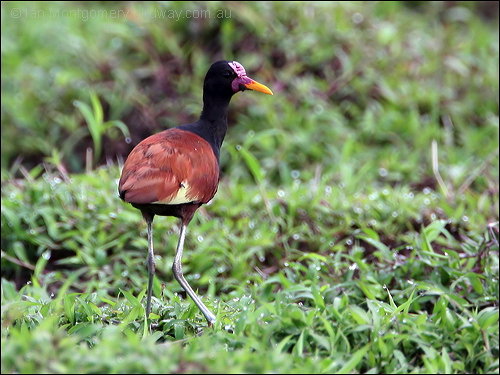
Wattled Jacana (Jacana jacana) by Ian's Birdway

Wattled Jacana (Jacana jacana) by Ian's Birdway

The Wattled Jacana is a wader which is a resident breeder from western Panama and Trinidad south through most of South America east of the Andes. Common in lowlands from Panama to northern Argentina mainly east of the Andes in southern part of range.

Frequents freshwater marshes, lakes and slow-flowing rivers where it wades in damp vegetation or walks on floating water plants, foraging for fish and insects to eat and to build their nests. Lily pads and other floating vegetation in swamps and marshes are home to jacanas.

The Wattled Jacana (Jacana jacana) is unmistakable with its exaggerated feet that are fit for a fairy tale and red, turkey like wattles. Also called the lily-trotter, its toes and toenails distribute its weight over large areas to help it sprint across aquatic vegetation as if defying gravity.

People may pass discouraging comments on your height, color, status and so on.. Remember, that our God is not a respecter of person…

The survival of these birds hinges on their exaggerated legs and toes…

  • God had created everything in us for a specific plan, so that His name maybe glorified…
  • What people see in you as weakness is in fact, your God made tool for survival…
  • Brothers saw Joseph as a dreamer, but, God saw him as a redeemer..
  • People saw Moses as a slow of speech , but God saw him as a leader..
  • King Saul saw David as a small boy, but, God saw him as a King…

…: for the LORD seeth not as man seeth; for man looketh on the outward appearance, but the LORD looketh on the heart. (1 Samuel 16:7)

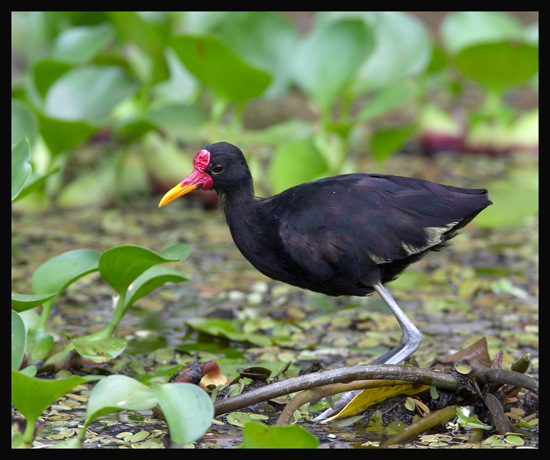
Wattled Jacana (Jacana jacana) by Robert Scanlon

Wattled Jacana (Jacana jacana) by Robert Scanlon

The jacana (zhah-suh-NAH) is a skilled swimmer and diver—fitting adaptations for life on the Amazon River. Flooded meadows offer a floating feast of small fishes, insects, snails and vegetation. With its long, thin beak it can pluck bugs and other goodies from the tangles of floating vegetation and even turn plants over to see what’s hiding beneath. During the dry season, jacanas wade along rivers, oxbow lakes and irrigation ditches scavenging for leftovers. If threatened, young chicks, as well as adults, stay underwater for long periods of time with only the tips of their bills above water. They can also swim underwater to avoid predators.

  • When life threatens, the best chance of survival comes from staying under the Living Water…
  • We sure can learn this 100% survival technique from these birds…
  • There is not only 24×7 protection, but also, abundance under the Living Water …

And there shall be a tabernacle for a shadow in the daytime from the heat, and for a place of refuge, and for a covert from storm and from rain. (Isaiah 4:6)

Jacana eggs are true works of art. They are a deep tan color, with very dark markings that look like dribbled lines of paint, crisscrossing the entire egg in an abstract design that is different on each egg. The eggs are very glossy and shiny and look as though they have been highly polished. This “wet” appearance is nature’s camaflouge, helping the eggs resemble the glossy surface of surrounding vegetation.

Males are the primary nest builders, incubators and caretakers. Jacana nests are built on mostly submerged plants. If the nest starts to sink, or the eggs are otherwise endangered, the male may pick them up and carry them under his wings to a new site. It is the male incubates the eggs, with two eggs held between each wing and the breast, and looks after the chicks…

  • Our God, the nest builder, has built an eternal nest for us in heaven..
  • Our God, the incubator, incubates our future…
  • Our God, the caretaker, is the one who takes care of even our smallest need…
  • He is the one who not only carries us but also our dreams under His wings..
  • He is the one who holds us close to His bosom..

What an awesome God we have!!!!!

He shall cover thee with his feathers, and under his wings shalt thou trust: his truth shall be thy shield and buckler. (Psalm91:4)

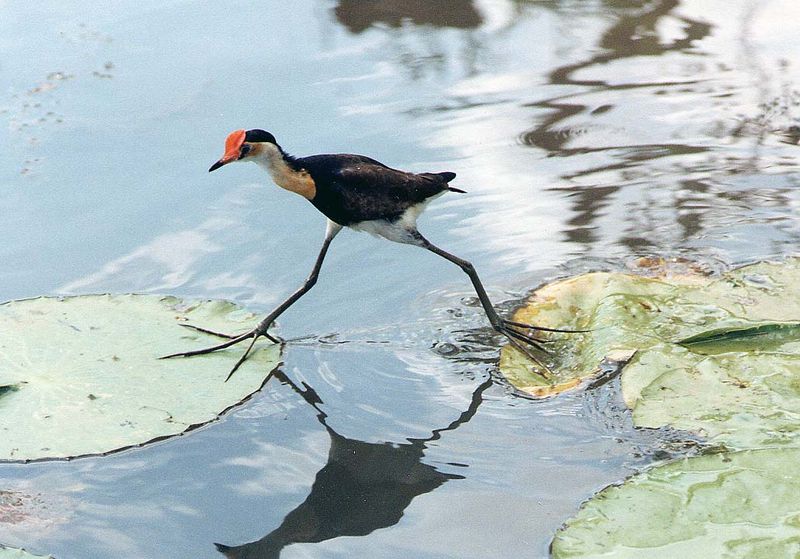
Comb-crested Jacana (Irediparra gallinacea) by Wiki

Comb-crested Jacana (Irediparra gallinacea)©Wiki on Pads

Meanwhile, the female has left the male to find more males to breed with. She does not participate in raising chicks. After the female lays her first nest of four or so eggs, she is freed to find more mates—up to five simultaneously—and lay more eggs. She will aggressively fight with marauding female competitors to both protect her male partners and ensure that she can keep laying eggs. If, however, the eggs or chicks die, she will reunite with the first male and lay another clutch of eggs. These behaviors are a matter of survival, not a lapse of fidelity.

  • Eve preferred to see the garden all by herself…
  • If she hadn’t gone out alone, she wouldn’t have fallen into satan’s trap…
  • Most of us have gone away from His presence only to be battered and bruised..
  • Like these birds, we come back to God only after dreams die, spirit broken, left alone and feel defeated…
  • God is still waiting like the father of the prodigal son, arms stretched to embrace us back into His presence…

Are we willing to get back to the basics before The King returns? Note, He will return without prior notice…

Come unto me, all ye that labour and are heavy laden, and I will give you rest.
Take my yoke upon you, and learn of me; for I am meek and lowly in heart: and ye shall find rest unto your souls. For my yoke is easy, and my burden is light. (Matthew 11:28 to 30)

Have a blessed day!

Your’s in YESHUA,
a j mithra

Please visit us at:  Crosstree


Lee’s Addition:

Jacanas are in the Jacanidae Family of eight species. The Jacanidae family is only one of nineteen families in the Charadriiformes Order known as Shorebirds and Allies.

To give an idea of how they walk around on leaves, here is a Comb-crested Jacana (Irediparra gallinacea) by Keith B – A bird walking across water lily leaves.

Birds in Hymns – Jesus, Lover Of My Soul

Blessed be God, even the Father of our Lord Jesus Christ, the Father of mercies, and the God of all comfort; Who comforteth us in all our tribulation, that we may be able to comfort them which are in any trouble, by the comfort wherewith we ourselves are comforted of God. For as the sufferings of Christ abound in us, so our consolation also aboundeth by Christ. (2 Corinthians 1:3-5 KJV)

Words: Charles Wes­ley, Hymns and Sac­red Po­ems, 1740. Some have called this the fin­est hymn in the Eng­lish lang­uage.

Music: Aberystwyth (Parry), Jo­seph Par­ry, in Ste­phens’ Ail Lyfr To­nau ac Emy­nau, 1879

Quotes below from Wholesome Words Christian Biography Resources

“The circumstance of the writing of this hymn is interesting. The story goes that Charles Wesley was roused from his sleep one night by a terrible storm. Being unable to rest he got up, put on his dressing-gown, and, opening his casement window stood looking out upon the stormy scene. Suddenly a bird, exhausted by the wind, and hotly pursued by a hawk, flew through the open window right into Charles Wesley’s breast for protection. Having saved the bird and placed it in security, he turned to his desk and wrote this immortal hymn, so realistic and descriptive of the fear and intense longing of the anxious soul to find safety and rest.

For our soul needs shelter; and the Only One Who can be a refuge for the soul is Jesus. He is our Hiding-place, our Haven of Rest. Listen to these words of the prophet Isaiah (32:2):

“A man shall be as an hiding place from the wind, and a covert from the tempest . . . as the shadow of a great rock in a weary land.”

We have no time to say anything about this wonderful hymn in detail, but I would have you notice one point about it. I have spoken of this in the case of other hymns, but the thought will bear repeating. Notice in it the personal and persistent use of me, and my, and I, in it:

“Let me to Thy bosom fly.”

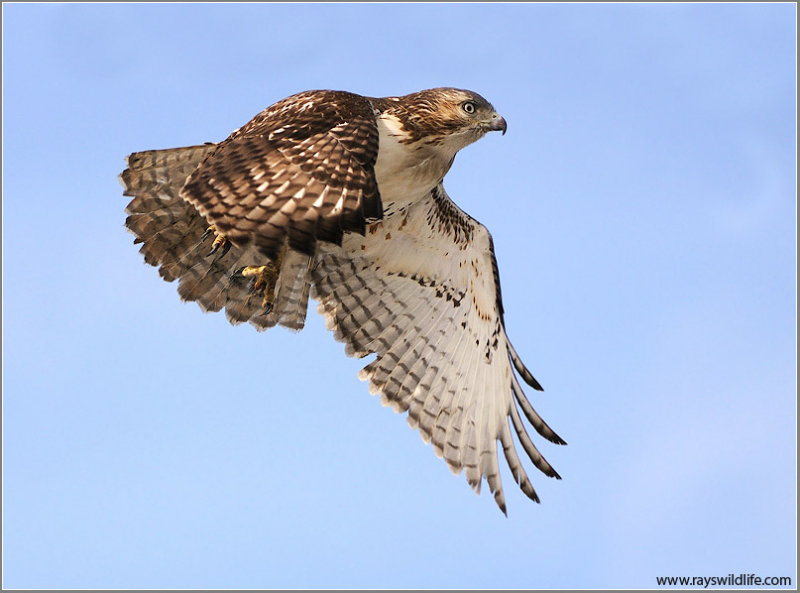
Red-Tailed Hawk by Ray

Red-Tailed Hawk by Ray

It is the prayer of the individual soul for succour, to the Saviour Himself; the call, as of a drowning man, that insists on being heard, and that can take no refusal; the cry of the terrified, and frail, and helpless bird, pursued by the cruel hawk, that is eager for its life.

Dear friends, are you “Safe in the arms of Jesus”? Have you “hidden” yourselves in Him?

Oh that these questions may go straight home to your hearts. If you are not in Christ, Oh, may God the Holy Spirit awaken you to see your danger. I will read the hymn to you, and then we will sing it together, on our knees, as our closing prayer.”

Jesus, Lover Of My Soul by Charles Wesley


Jesus, lover of my soul, let me to Thy bosom fly,
While the nearer waters roll, while the tempest still is high.
Hide me, O my Savior, hide, till the storm of life is past;
Safe into the haven guide; O receive my soul at last.

Other refuge have I none, hangs my helpless soul on Thee;
Leave, ah! leave me not alone, still support and comfort me.
All my trust on Thee is stayed, all my help from Thee I bring;
Cover my defenseless head with the shadow of Thy wing.

Wilt Thou not regard my call? Wilt Thou not accept my prayer?
Lo! I sink, I faint, I fall—Lo! on Thee I cast my care;
Reach me out Thy gracious hand! While I of Thy strength receive,
Hoping against hope I stand, dying, and behold, I live.

Thou, O Christ, art all I want, more than all in Thee I find;
Raise the fallen, cheer the faint, heal the sick, and lead the blind.
Just and holy is Thy Name, I am all unrighteousness;
False and full of sin I am; Thou art full of truth and grace.

Plenteous grace with Thee is found, grace to cover all my sin;
Let the healing streams abound; make and keep me pure within.
Thou of life the fountain art, freely let me take of Thee;
Spring Thou up within my heart; rise to all eternity.


Copyright ©2010 Wholesome Words and Info from Cyberhymnal

See ~ Wordless Birds

More ~ Birds in Hymns

*