Birds of the Bible – God’s Property

For every beast of the forest is Mine, And the cattle on a thousand hills. I know all the birds of the mountains, And the wild beasts of the field are Mine. “If I were hungry, I would not tell you; For the world is Mine, and all its fullness. (Psalms 50:10-12 NKJV)

Not only are all the birds and critters God’s, but He also provides for their needs as does He for ours. Psalm 104 is loaded with God’s provisions, but only Psalm 104:10-17 is quoted here.

He sends the springs into the valleys; They flow among the hills. They give drink to every beast of the field; The wild donkeys quench their thirst. By them the birds of the heavens have their home; They sing among the branches. He waters the hills from His upper chambers; The earth is satisfied with the fruit of Your works. He causes the grass to grow for the cattle, And vegetation for the service of man, That he may bring forth food from the earth, And wine that makes glad the heart of man, Oil to make his face shine, And bread which strengthens man’s heart. The trees of the LORD are full of sap, The cedars of Lebanon which He planted, Where the birds make their nests; The stork has her home in the fir trees. (Psalms 104:10-17 NKJV)

Thought you might enjoy viewing some of God’s birds from around the world.

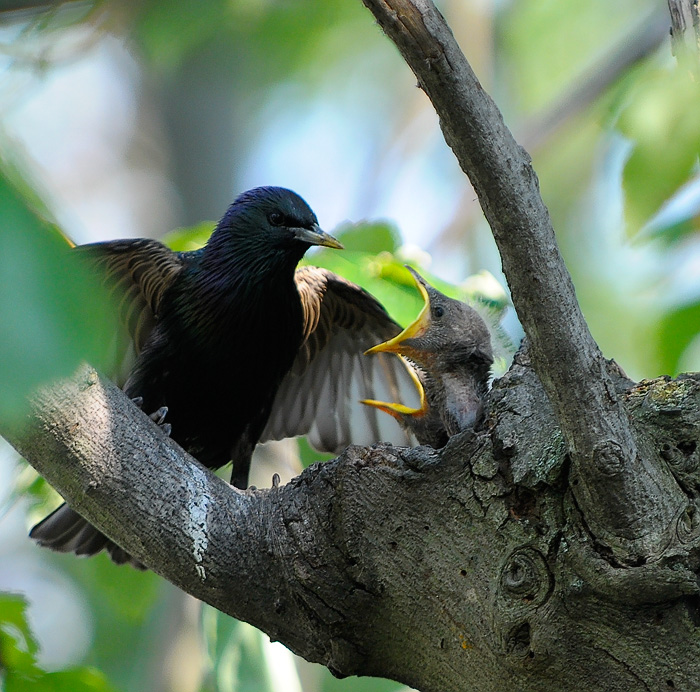
The pictures below are only 150+, yet there at least 10,474 known named bird species currently.

*

This slideshow requires JavaScript.

*

Birds in Hymns – My Refuge Is A God Of Love

To the chief Musician, A Psalm of David. In the LORD put I my trust: how say ye to my soul, Flee as a bird to your mountain? (Psalms 11:1 KJV)

Words: Isaac Watts, The Psalms of Da­vid, 1719.

Music: All­mäch­tig­er Gott, Jo­hann Crü­ger (1598-1662)

My Refuge is a God of Love


My refuge is the God of love;
Why do my foes insult and cry,
Fly like a timorous, trembling dove,
To distant woods or mountains fly?” 

If government be all destroyed,
That firm foundation of our peace,
And violence make justice void,
Where shall the righteous seek redress?

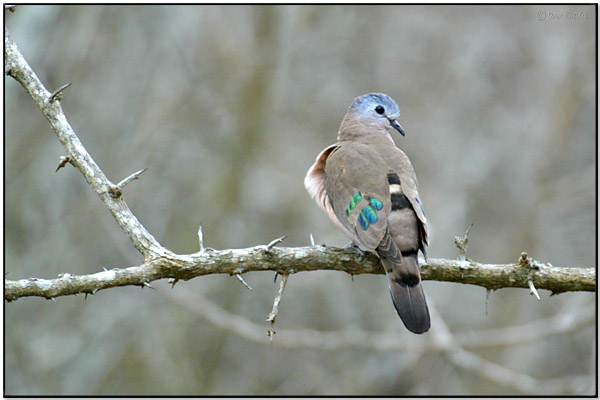
Emerald-spotted Wood Dove (Turtur chalcospilos) by Daves BirdingPix

Emerald-spotted Wood Dove (Turtur chalcospilos) by Daves BirdingPix

The Lord in Heav’n has fixed His throne,
His eye surveys the world below:
To Him all mortal things are known,
His eyelids search our spirits through.

If He afflicts His saints so far,
To prove their love and try their grace,
What may the bold transgressors fear?
His very soul abhors their ways.

On impious wretches He shall rain
Tempests of brimstone, fire and death;
Such as He kindled on the plain
Of Sodom, with His angry breath.

The righteous Lord loves righteous souls,
Whose thoughts and actions are sincere;
And with a gracious eye beholds
The men that His own image bear.

Most information from The Cyber Hymnal

See ~ Wordless Birds

More ~ Birds in Hymns

*

Birds of the Bible – Mother and Her Chicks

Snow Goose (Chen caerulescens) at nest©USFWS

Snow Goose (Chen caerulescens) at nest©USFWS

If a bird’s nest happens to be before you along the way, in any tree or on the ground, with young ones or eggs, with the mother sitting on the young or on the eggs, you shall not take the mother with the young; you shall surely let the mother go, and take the young for yourself, that it may be well with you and that you may prolong your days. (Deuteronomy 22:6-7 NKJV)

Also in the with the animals, the Bible says,

Whether it is a cow or ewe, do not kill both her and her young on the same day. (Leviticus 22:28 NKJV)

Common Starling (Sturnus vulgaris) at Nest by Anthony747

Common Starling (Sturnus vulgaris) at Nest by Anthony747

In Deuteronomy, the Israelites were being given some rules of things to do or not do. This passage about the mother bird and her chicks or eggs is among those commands. Notice that if they did this, it would be well with them and help prolong their days. There are many good characteristics for us to learn from this command. Below are some of the thoughts from the commentators.

Matthew Henry’s Commentary was the longest, but much insight. “II. In taking a bird’s-nest, the dam must be let go, Deu_22:6, Deu_22:7. The Jews say, “This is the least of all the commandments of the law of Moses,” and yet the same promise is here made to the observance of it that is made to the keeping of the fifth commandment, which is one of the greatest, that it may be well with thee, and that thou mayest prolong thy days; for, as disobedience in a small matter shows a very great contempt of the law, so obedience in a small matter shows a very great regard to it. He that let go a bird out of his hand (which was worth two in the bush) purely because God bade him, in that made it to appear that he esteemed all God’s precepts concerning all things to be right, and that he could deny himself rather than sin against God. But doth God take care for birds? 1Co_9:9. Yes, certainly; and perhaps to this law our Saviour alludes. Luk_12:6, Are not five sparrows sold for two farthings, and not one of them is forgotten before God? This law, 1. Forbids us to be cruel to the brute-creatures, or to take a pleasure in destroying them. Though God has made us wiser than the fowls of heaven, and given us dominion over them, yet we must not abuse them nor rule them with rigour. Let go the dam to breed again; destroy it not, for a blessing is in it, Isa_65:8. 2. It teaches us compassion to those of our own kind, and to abhor the thought of every thing that looks barbarous, and cruel, and ill-natured, especially towards those of the weaker and tender sex, which always ought to be treated with the utmost respect, in consideration of the sorrows wherein they bring forth children… It further intimates that we must not take advantage against any, from their natural affection and the tenderness of their disposition, to do them an injury. The dam could not have been taken if her concern for her eggs or young (unlike to the ostrich) had not detained her upon the next when otherwise she could easily have secured herself by flight. Now, since it is a thousand pities that she should fare the worse for that which is her praise, the law takes care that she shall be let go. The remembrance of this may perhaps, some time or other, keep us from doing a hard or unkind thing to those whom we have at our mercy.” (Matthew Henry’s Commentary)

Redwing Blackbird feeding young at Lake Hollingsworth

Redwing Blackbird feeding young at Lake Hollingsworth

“If a bird’s nest chance to be before thee — This is a beautiful instance of the humanizing spirit of the Mosaic law, in checking a tendency to wanton destructiveness and encouraging a spirit of kind and compassionate tenderness to the tiniest creatures. But there was wisdom as well as humanity in the precept; for, as birds are well known to serve important uses in the economy of nature, the extirpation of a species, whether of edible or ravenous birds, must in any country be productive of serious evils. But Palestine, in particular, was situated in a climate which produced poisonous snakes and scorpions; and the deserts and mountains would have been overrun with them as well as immense swarms of flies, locusts, mice, and vermin of various kinds if the birds which fed upon them were extirpated [Michaelis]. Accordingly, the counsel given in this passage was wise as well as humane, to leave the hen undisturbed for the propagation of the species, while the taking of the brood occasionally was permitted as a check to too rapid an increase.” (Jamieson, Faucett, and Brown Commentary)

If God detests cruelty done to little birds, how much more to man, made according to his image?” (Geneva Bible Translation Notes)
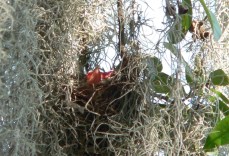
Redwing Blackbird young at Lake Hollingsworth

Redwing Blackbird young at Lake Hollingsworth

“..this law was made partly to preserve the species of birds, and prevent the decrease of them; for a dam let go might breed again, and to this purpose are the verses ascribed to Phocylides (y), which contain the substance of this law, and this reason of it: and partly, as Maimonides observes (z), that the dam might not be afflicted at the sight of the spoil of her young; for this law does not prohibit the taking of her in any other place but in her nest, nor after her young are taken, but not together; and, as the same writer remarks, if the law would have such care taken of beasts and birds, that they might be freed from sorrow and distress, how much more of man? Wherefore the intention of this law is to teach humanity, compassion, and pity in men to one another, and to forbid cruelty, covetousness, and such like vices; as also to instruct in the doctrine of Providence, which has a respect to birds; and our Lord may be thought to have this law in view, Luke 12:6.” (John Gill’s Exposition of the Whole Bible)

“The affectionate relation of parents to their young, which God had established even in the animal world, was also to be kept just as sacred. If any one found a bird’s nest by the road upon a tree, or upon the ground, with young ones or eggs, and the mother sitting upon them, he was not to take the mother with the young ones, but to let the mother fly, and only take the young. נִקְרָא for נִקְרָה, as in Exo_5:3. The command is related to the one in Lev_22:28 and Exo_23:19, and is placed upon a par with the commandment relating to parents, by the fact that obedience is urged upon the people by the same promise in both instances (vid., Deu_5:16; Exo_20:12).” (K & D Commentary on OT)

(Bolding is mine)

*
Christmas Gospel Presentation

Last Saturday, at Faith Baptist Church, we had a Free Shopping Day for about 400 less fortunate ones in our community. It was a great day and you can see some of the photos taken by either Pam or Dan and I. Check out the links below to see all the activity. .

Preparations Friday – Dec 11th
Faith Free Shopping Day – Dec 12th
Free Shopping Day Photos – Dec 12th

But most of all, watch the Christmas Presentation that was produced by Sean Fielder and our Pastor Jerry Smith for the visitors.

Birds in Hymns – Speed Away – Fanny Crosby

Go ye therefore, and teach all nations, baptizing them in the name of the Father, and of the Son, and of the Holy Ghost: Teaching them to observe all things whatsoever I have commanded you: and, lo, I am with you alway, even unto the end of the world. Amen. (Matthew 28:19-20 KJV)

Words: Fan­ny Cros­by, 1890. Some hymn­als show the au­thor as Jul­ia Ster­ling, one of Fan­ny’s pseu­do­nyms.

This in­spir­ing song of fare­well to de­part­ing miss­ion­ar­ies was writ­ten in 1890 to Wood­bu­ry’s ap­prop­ri­ate po­pu­lar mel­o­dy by Fan­ny J. Cros­by, at the re­quest of Ira D. San­key. The key-word and re­frain are adapt­ed from the orig­in­al song by Wood­bu­ry (1848), but in sub­stance and lan­guage the three hymn-stan­zas are the new and in­de­pen­dent work of this lat­er writ­er.  Brown, p. 184

Music: Isaac B. Wood­bu­ry, 1848
Isaac B. Woodbury (1819-1858)

“Speed Away, Speed Away, on your Miss­ion of Light” was writ­ten af­ter hear­ing the beau­ti­ful In­di­an mel­o­dy which Mr. Sank­ey ar­ranged for my words. The orig­in­al In­di­an po­em told the sto­ry of a young maid­en who died leav­ing her fa­ther to mourn her un­time­ly loss, and how he was com­fort­ed by a mess­age brought him by a bird she had sent from the Hap­py Hunt­ing Grounds. This mel­o­dy seemed so beau­ti­ful that we thought it ought to have hymn-words and “Speed Away” was the out­come of this feel­ing. I wrote it hop­ing that it might in­spire some­one to go in­to the miss­ion fields across the sea.  Crosby, p. 642

Speed Away

Speed away, speed away, on your mission of light,
To the lands that are lying in darkness and night;
’Tis the Master’s command; go ye forth in His Name,
The wonderful Gospel of Jesus proclaim;
Take your lives in your hand, to the work while ’tis day,
Speed away, speed away, speed away.

Australasian Gannet (Morus serrator) by W Kwong

Australasian Gannet (Morus serrator) by W Kwong

Speed away, speed away with the life giving Word;
To the nations that know not the voice of the Lord;
Take the wings of the morning and fly o’er the wave,
In the strength of your Master the lost ones to save;
He is calling once more, not at moment’s delay,
Speed away, speed away, speed away.

Speed away, speed away with the message of rest,
To the souls by the tempter in bondage oppressed;
For the Savior has purchased their ransom from sin,
And the banquet is ready, O gather them in;
To the rescue make haste, there’s no time for delay,
Speed away, speed away, speed away.

(A bird not really mentioned but only alluded to a bird.)

Most information from The Cyber Hymnal

See ~ Wordless Birds

More ~ Birds in Hymns

*

Birds in Hymns – Praise the Giver of All

Every good gift and every perfect gift is from above, and cometh down from the Father of lights, with whom is no variableness, neither shadow of turning. (James 1:17 KJV)

Words: Fan­ny Cros­by, in Bright Jew­els for the Sun­day School, by Ro­bert Low­ry et al. (New York: Big­low & Main, 1869).

Music: Will­iam F. Sher­win

Praise the Giver of All

Let us mingle our voices in chorus today;
The earth is rejoicing, all nature is gay,
And the stream in the valley goes laughing along;
How happy its beautiful song.

Refrain

Praise the Lord, the Giver of all,
Praise the Lord, the Giver of all;
Let His children with rapture His mercy recall,
The bountiful Giver of all.

Large Grey Babbler (Turdoides malcolmi) by Ian

Large Grey Babbler (Turdoides malcolmi) by Ian

There is joy in the sunbeam that sparkles so bright
And calls the young blossoms to welcome the light;
And the bird in the greenwood is singing with glee,
As cheerful and happy as we.

Refrain

Let us join the glad music and joyfully raise,
In purest devotion, our jubilant praise;
We are grateful to God for this beautiful day:
We’ll sing the bright moments away.

Refrain

Most information from The Cyber Hymnal

See ~ Wordless Birds

More ~ Birds in Hymns

*

Birds of the Bible – Cuckoo II

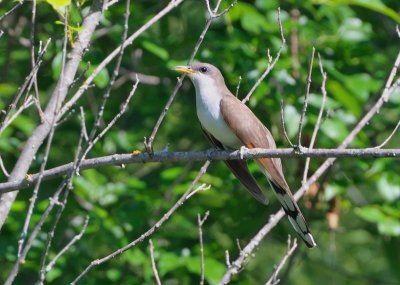
Yellow-billed Cuckoo (Coccyzus americanus) Neal Addy Gallery

And the owl, and the night hawk, and the cuckow, and the hawk after his kind,
(Leviticus 11:16 KJV) and (Deuteronomy 14:15)

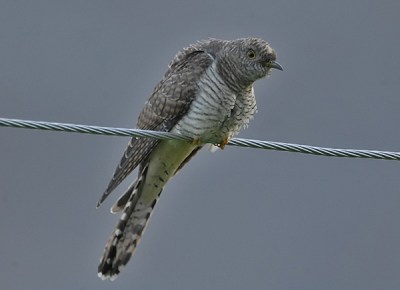
Common Cuckoo (Cuculus canorus) by Nikhil

The verses above are interesting because the cuckow (cuckoo) is taken from the Hebrew word, ” שחף or shachaph” (H7828), and is only used in those two verses. Some translate it as “cuckow” (KJV, Webster), “cuckoo” (YLT), “seamew or sea-mew” (ASV, JPS, RV), “sea-hawk” (BBE), and the rest “sea-gull or sea gull” (Darby, ESV, GW, MKJV, NASB, NKJV). From the Jewish Encyclopedia about the Cuckoo, “The A. V. rendering of (shaḥaf) in Lev. xi. 16 and Deut. xiv. 15. In both places it occurs in the list of unclean birds. This identification, however, is only a conjecture, and there is no certain tradition to support it. The Targum transcribes the Hebrew word. The Septuagint gives λάρος (“sea-gull”). The R. V. rendering is “seamew,” which is accepted by Gesenius, Bertholet, and Driver in their commentaries, and by Baentsch and Lewyson (“Zoologie des Talmuds,” p. 182). The cuckoo, however, is found in Palestine, where it passes the summer. Two varieties are met with—the common and the spotted cuckoo.”

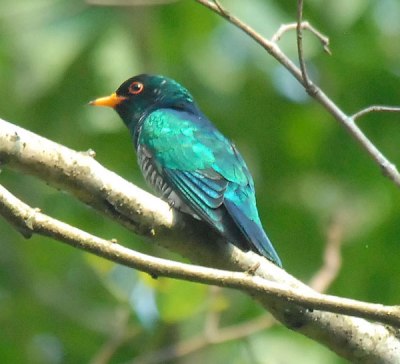
Asian Emerald Cuckoo (Chrysococcyx maculatus) by Nikhil

Asian Emerald Cuckoo (Chrysococcyx maculatus) by Nikhil

Whether it is in the cuckoo or the gull family, it is not clear. What is clear is that it was not to be eaten. For this article, I am going to concentrate on the Cuculidae Family which includes the Cuckoo, Ani, Roadrunner, Coucal, Coua, Malkoha, Koel, Drongo-Cuckoo, and Hawk-Cuckoo. All of these are in the Cuculiformes Order and all were created by the Lord.

“The Cuckoos are medium to large birds some with a long tail; species range in lenght from 6.6-28 in. (16-70 cm). The bill of all species is basically the same, varying only in size: fairly short, strong or stout, and slightly decurved”. (Complete Birds of the World, National Geographical) They are generally medium sized slender birds. The cuckoos feed on insects, insect larvae and a variety of other animals, as well as fruit. Many species are brood parasites, laying their eggs in the nests of other species, but the majority of species raise their own young.

Zygodactyl arrangement of toes – Wikipedia

“One of the most important distinguishing features of the family are the feet, which are zygodactyl, meaning that the two inner toes pointed forward and the two outer backward. There are two basic body forms, arboreal species (like the Common Cuckoo) which are slender and have short tarsi, and terrestrial species (like the roadrunners) which are more heavy set and have long tarsi. Almost all species have long tails which are used for steering in terrestrial species and as a rudder during flight in the arboreal species. The wing shape also varies with lifestyle, with the more migratory species like the Black-billed Cuckoo possessing long narrow wings capable of strong direct flight, and the more terrestrial and sedentary cuckoos like the coucals and malkohas having shorter rounded wings and a more laboured gliding flight.”

Below are photos of some of the birds in the Cuculidae Family in IOC 2009 order.

*

This slideshow requires JavaScript.

*

See Also:
Birds of the Bible – Cuckoo
Cuckoo

Birds of the Bible – Singing Birds

By them the birds of the heavens have their home; They sing among the branches. (Psalms 104:12 NKJV)

Savannah Sparrow

Savannah Sparrow by Ray

Many birds do their singing to either claim their territory, their partner, or sing because of their new young babies. Many just sing because God put a song in their heart.

According to R. A. Torrey’s New Topical Textbook the above verse, birds “Have each their peculiar note or song.” Whereas Nave’s Topical Bible titles the verse as “Songs of, at the break of day.” Referring to a bird singing both refer to Psalms 104:12, Ecclesiastes 12:4 and Song of Solomon 2:12. Not only has God created the different birds, but has given them various voices even amongst their own kind. Warblers, of which there are many kinds, have distinct voices. I have to admit that I enjoy some bird songs much more than others, as you do also.

From the commentaries about Psalm 104:12, here are some of their thoughts:
Albert Barnes’ Notes – “Which sing among the branches – Margin, as in Hebrew, “give a voice.” Their voice is heard – their sweet music – in the foliage of the trees which grow on the margin of the streams and by the fountains. There is scarcely to be found a more beautiful poetic image than this.”
Geneva Bible Translation Notes – “There is no part of the world so barren where most evident signs of God’s blessing do not appear.”
John Gill’s Exposition“By them shall the fowls of the heaven have their habitation,…. Another use of the springs, fountains, and rivers of water; by the sides and on the shores of these, some birds delight to be, and on trees that grow here do they build their nests; and here, having wetted their throats, they sit, and chirp, and sing: to doves, by rivers of water, is the allusion in Son_5:12.”
“Which sing among the branches; of trees that grow by the sides of fountains and rivers; see Eze_17:23. To such birds may saints be compared; being, like them, weak, defenceless, and timorous; liable to be taken in snares, and sometimes wonderfully delivered; as well as given to wanderings and strayings: and to fowls of the heaven, being heaven born souls, and partakers of the heavenly calling. These have their habitation by the fountain of Jacob, by the river of divine love, beside the still waters of the sanctuary; where they sing the songs of Zion, the songs of electing, redeeming, and calling grace.”
Matthew Henry – ” The birds. Some birds, by instinct, make their nests in the bushes near rivers (Psa_104:12): By the springs that run among the hills some of the fowls of heaven have their habitation, which sing among the branches. They sing, according to their capacity, to the honour of their Creator and benefactor, and their singing may shame our silence. Our heavenly Father feeds them (Mat_6:26), and therefore they are easy and cheerful, and take no thought for the morrow. The birds being made to fly above the earth (as we find, Gen_1:20), they make their nests on high, in the tops of trees (Psa_104:17); it should seem as if nature had an eye to this in planting the cedars of Lebanon, that they might be receptacles for the birds. Those that fly heavenward shall not want resting-places.

Oh, give thanks to the LORD! Call upon His name; Make known His deeds among the peoples! Sing to Him, sing psalms to Him; Talk of all His wondrous works! (1 Chronicles 16:8-9 NKJV)

Video of a Willow Warbler singing from a Hawthorn

Last but not least, we have a Song Sparrow singing by Tstormer on YouTube

*

Birds of the Bible – Wayside Sower Birds

Brandt's Mountain Finch (Leucosticte brandti) by Nikhil

By the Wayside – Brandt’s Mountain Finch (Leucosticte brandti) by Nikhil

Have your ever listened to someone talking, but you really didn’t hear them? Maybe your mind was on something else. Have you ever listened to someone, you were hearing them, but you just didn’t get what they were saying? It just didn’t make sense to you. Well, that is where our Bird of the Bible this week gets its food.

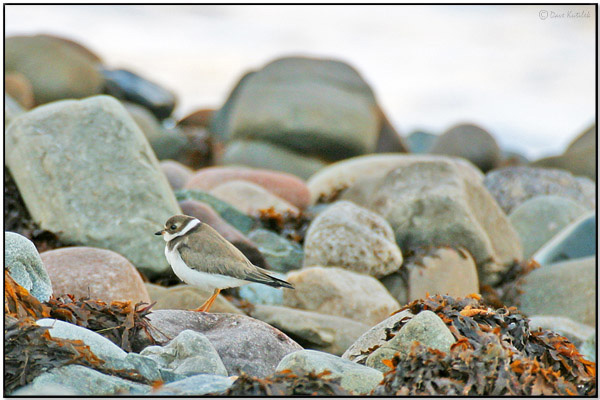
Among rocks - Piping Plover

Among rocks – Piping Plover (Charadrius melodus)

I can see you now trying to find these “Wayside Sower Birds” in your latest, up to date, birding handbook. No, these birds are mentioned in the Bible, in the Parable of the Sower. These birds are not named specifically, so it could be any kind of bird that likes to eat along the wayside of a planted field. Let’s look at what is being said about them.

Then He spoke many things to them in parables, saying: “Behold, a sower went out to sow. And as he sowed, some seed fell by the wayside; and the birds came and devoured them. (Matthew 13:3-4 NKJV)
Listen! Behold, a sower went out to sow. And it happened, as he sowed, that some seed fell by the wayside; and the birds of the air came and devoured it. (Mark 4:3-4 NKJV)
A sower went out to sow his seed. And as he sowed, some fell by the wayside; and it was trampled down, and the birds of the air devoured it.  (Luke 8:5 NKJV)

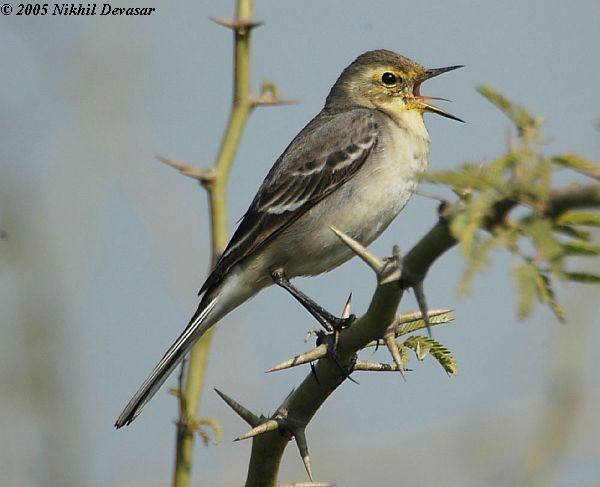
 Citrine Wagtail (Motacilla citreola) by Nikhil

Among thorns – Citrine Wagtail (Motacilla citreola) by Nikhil

The parable goes on and tells of the seed landing on rocks, in thorn bushes and also on good ground. The Lord later explained it to His disciples as:

Therefore hear the parable of the sower: (19) When anyone hears the word of the kingdom, and does not understand it, then the wicked one comes and snatches away what was sown in his heart. This is he who received seed by the wayside. (20) But he who received the seed on stony places, this is he who hears the word and immediately receives it with joy; (21) yet he has no root in himself, but endures only for a while. For when tribulation or persecution arises because of the word, immediately he stumbles. (22) Now he who received seed among the thorns is he who hears the word, and the cares of this world and the deceitfulness of riches choke the word, and he becomes unfruitful. (23) But he who received seed on the good ground is he who hears the word and understands it, who indeed bears fruit and produces: some a hundredfold, some sixty, some thirty. (Matthew 13:18-23 NKJV)

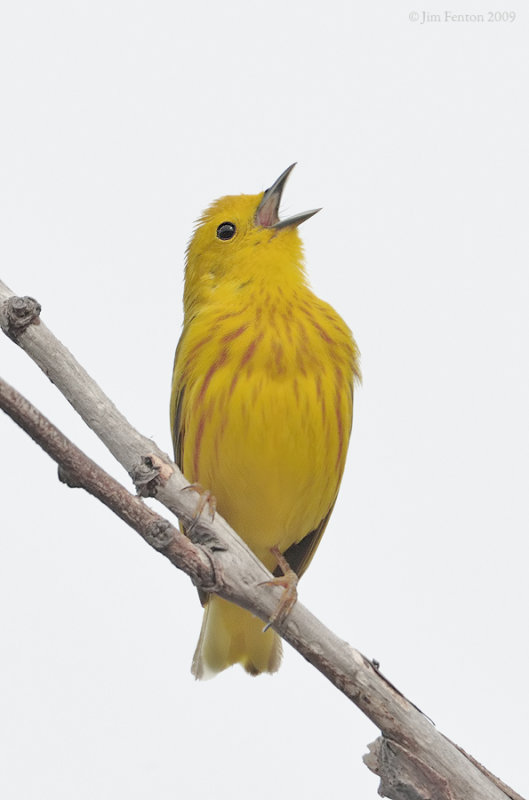
Good ground - American Yellow Warbler (Dendroica aestiva) by J Fenton

Good ground – American Yellow Warbler (Dendroica aestiva) by J Fenton

May we all receive the seed (Word of God) on good ground and not be deaf to the truth of God, letting what you hear fall by the wayside.

Gospel Message

Wordless Birds

*

*

Birds of the Bible – More Value

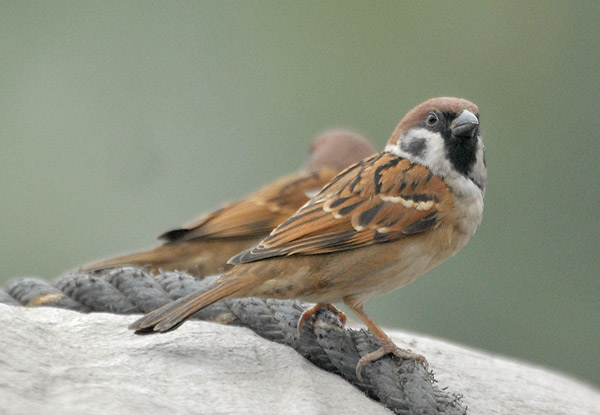
Eurasian Tree Sparrow (Passer montanus) by Nikhil

Eurasian Tree Sparrow (Passer montanus) by Nikhil

We have mentioned the sparrow many times in the blog and about how God takes care of them, as in the following articles:

Birds of the Bible – God’s Care for BirdsSparrow IISparrow I and Eye of the Beholder – House Sparrows

This time, I would like point out the part about being of “more value.” In Matthew 10:29-33, the two sparrows are mentioned as being sold for a farthing, a very small amount. According to A. Barnes’ Notes, “The argument is, that if He takes care of birds of the least value, if He regards so small a thing as the hair of the head, and numbers it, He will certainly protect and provide for you. You need not, therefore, fear what man can do to you.”

Are not two sparrows sold for a farthing? and one of them shall not fall on the ground without your Father. But the very hairs of your head are all numbered. Fear ye not therefore, ye are of more value than many sparrows. Whosoever therefore shall confess me before men, him will I confess also before my Father which is in heaven. But whosoever shall deny me before men, him will I also deny before my Father which is in heaven.(Matthew 10:29-33 KJV)

Northern Raven (Corvus corax) by Ray

Northern Raven (Corvus corax) by Ray

Also: “Indeed, the very hairs of your head are all numbered. Do not fear; you are more valuable than many sparrows.” (Luke 12:7 NASB);  “Consider the ravens, for they neither sow nor reap, which have neither storehouse nor barn; and God feeds them. Of how much more value are you than the birds?” (Luke 12:24 NKJV) and He said to them, “What man is there among you who has a sheep, and if it falls into a pit on the Sabbath, will he not take hold of it and lift it out? “How much more valuable then is a man than a sheep! So then, it is lawful to do good on the Sabbath.” (Matthew 12:11-12 NASB)

We see then that “man” has more value than sparrows, ravens, birds, and sheep just from these few verses. Yet, each of them are greatly valued by their creator. Where else are things of value mentioned in Scripture?

David had the opportunity to kill King Saul, but he valued the life of the king more.

May the LORD repay every man for his righteousness and his faithfulness; for the LORD delivered you into my hand today, but I would not stretch out my hand against the LORD’s anointed. And indeed, as your life was valued much this day in my eyes, so let my life be valued much in the eyes of the LORD, and let Him deliver me out of all tribulation.” (1 Samuel 26:23-24 NKJV)

Wisdom and understanding have great value and Job mentions it in Job 28.

But where can wisdom be found? And where is the place of understanding? “Man does not know its value, Nor is it found in the land of the living. (Job 28:12-13 NASB)

Where then does wisdom come from? And where is the place of understanding? “Thus it is hidden from the eyes of all living And concealed from the birds of the sky. (Job 28:20-21 NASB)

Zechariah in his prophecy of the future, tells about the price of Christ the Lord as 30 shekels (pieces) of silver.

Then the LORD said to me, “Throw it to the potter, that magnificent price at which I was valued by them.” So I took the thirty shekels of silver and threw them to the potter in the house of the LORD. (Zechariah 11:13 NASB)

We are of great value to the Lord, so much so, that He gave His Life for our salvation. If you know the Lord as Savior, then, that “knowing Christ Jesus,” has tremendous value.

More than that, I count all things to be loss in view of the surpassing value of knowing Christ Jesus my Lord, for whom I have suffered the loss of all things, and count them but rubbish so that I may gain Christ, (Philippians 3:8 NASB)

We trust you do know the Lord and realize how much He loves you and cares for you. Much more than the critters, whom he cares for tremendously.

See also Gospel Message

Birds of the Bible – Stork II

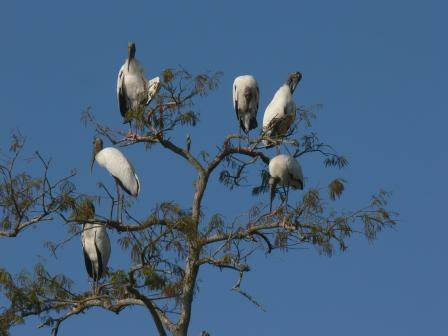
Wood Storks in Top of Tree by Lee

Wood Storks in Top of Tree by Lee

Yesterday, Dan and I went out to the Circle B Bar Reserve for some birdwatchng. I think I would have to call it, “Stork Day.” From our photos, I have counted well over 100 Wood Storks and that doesn’t count the ones we didn’t photograph. It is time to find out some more about the stork.

From the first Birds of the Bible – Stork article,we found out that the stork is on the unclean list of birds that were not to be eaten by the Israelites. (Leviticus 11:19 and Deuteronomy 14:18). Jeremiah 8:7, tells of “her appointed times” (migration) and Zechariah 5:9 mentions the “wings of a stork.”

Psalms is going to provide our thoughts for today.

The trees of the LORD are full of sap; the cedars of Lebanon, which he hath planted; Where the birds make their nests: as for the stork, the fir trees are her house. (Psalms 104:16-17)

 The Whole Tree

The Whole Tree

As you can tell from the photos, the storks like to hang out in the trees. The trees were loaded with them. We were out there recently (September 18th) and I did not see any on that visit. Jeremiah was correct, “Yea, the stork in the heaven knoweth her appointed times;” Migration has been underway and these are either resting while on their trip or they are going to be here for the winter.

“Storks (family Ciconiidae) make their nests of sticks, reeds and grass, in tall trees. When the chicks hatch, their thin, featherless skin is extremely vulnerable to the direct rays of the sun. The parent bird has two responses to the high temperature problem — if water is nearby, the stork fills its large beak, returns to the nest, and douses the tiny chicks with cooling water. If this is not sufficient, the parent then performs a most remarkable feat — it stands over the young and spreads its large wings over the entire nest, thus shading the chicks from the sun’s rays! Often it will do this for hours at a time.” from “Birdbrains?” at Answers in Genesis

Storks Shadowing Baby in Lakeland by Dan

Storks Shadowing Baby in Lakeland by Dan

When the Lord created the Stork, the knowledge to protect their babies was put in them. Our God and Savior has promised to meet our needs. If He cares about the birds, how much more does he care about us?

“Storks are large, long-legged, long-necked wading birds with long stout bills, belonging to the family Ciconiidae. They occur in most of the warmer regions of the world and tend to live in drier habitats than the related herons, spoonbills and ibises; they also lack the powder down that those groups use to clean off fish slime. Storks have no syrinx and are mute, giving no bird call; bill-clattering is an important mode of stork communication at the nest. Many species are migratory. Most storks eat frogs, fish, insects, earthworms, and small birds or mammals. There are 19 living species of storks in six genera.

Storks tend to use soaring, gliding flight, which conserves energy. Soaring requires thermal air currents. Ottomar Ansch??tz’s famous 1884 album of photographs of storks inspired the design of Otto Lilienthal’s experimental gliders of the late 19th century. Storks are heavy with wide wingspans, and the Marabou Stork, with a wingspan of 3.2 m (10.5 feet), shares the distinction of “longest wingspan of any land bird” with the Andean Condor.

Their nests are often very large and may be used for many years. Some have been known to grow to over 2 m (6 feet) in diameter and about 3 m (10 feet) in depth. Storks were once thought to be monogamous, but this is only true to a limited extent. They may change mates after migrations, and migrate without them. They tend to be attached to nests as much as partners.

Storks’ size, serial monogamy, and faithfulness to an established nesting site contribute to their prominence in mythology and culture.

This slideshow requires JavaScript.

*

Creation Moments – Columbus Day article

B. C. – Before Columbus

King Solomon also built a fleet of ships at Ezion Geber, which is near Elath on the shore of the Red Sea, in the land of Edom. (1 Kings 9:26)

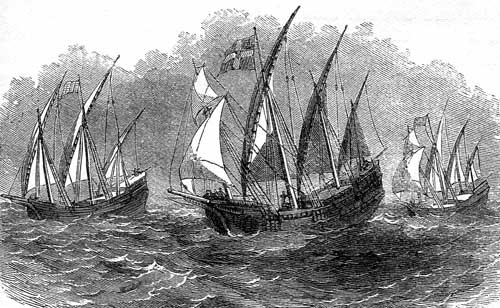
Columbus' ships

Columbus’ ships

Normally, it would not be unusual to find a stone with engraving on it in South America. But a stone found in 1872 in Brazil is unusual, since Aztec, Mayan and Incan civilizations never lived in that region. Besides, the engraving on the stone was in Phoenician. Its discoverer, who did not know Phoenician, sent it to authorities who gave it to the head of the national museum. He recognized the ancient language and translated it. It reads, “We are the Sons of Canaan from Sidon, the city of the King. Commerce has cast us on this distant shore, a land of mountains.”

Could 7th century B.C. Phoenicians have sailed as far as South America in search of commerce? In the ancient world, Phoenicians were known as the greatest commercial sailors of their day. But there is a modern bias against seeing ancient peoples as being as smart and resourceful as we are today, so the inscription has generally been considered a hoax. Then, in the 1960s, the original rubbing made of the inscription turned up at a scholarly auction in the United States. A modern expert on ancient languages studied the rubbing and concluded that the inscription must be authentic. It contains quirks of the Phoenician language that were unknown even to scholars in the 19th century.

While we today may know more facts, the ancients were no less intelligent and resourceful than we are today. That’s consistent with the Bible’s picture of man as God’s highest visible creation, rather than evolution’s gradually improving creature.

Prayer: I glorify Your Name, O Lord, for making us the way You have. Amen.

References: Archeology, “Before Columbus or the Vikings,” Science, May 1968.

©2009 Creation Moments

See Also:
Phoenicians in Brazil
Archeology: Before Columbus or the Vikings,” Time, Friday, May. 24, 1968