Birds of the Bible – The Thrush

Varied Thrush (Ixoreus naevius) by Daves BirdingPix

Varied Thrush (Ixoreus naevius) by Daves BirdingPix

Even the stork in the sky Knows her seasons; And the turtledove and the swift and the thrush Observe the time of their migration; But My people do not know The ordinance of the LORD. (Jeremiah 8:7 NASB)

The Thrush is only used in one verse and then in only the CEV, (ERV), GNB, LITV, NASB, and the NAS77 versions of the Bible.
The other versions translate the word “עגוּר or ‛âgûr” (H5693), pronounced “aw-goor’, as a swallow. H5693 is only used in 2 verses in the Bible, Jeremiah 8:7 and Isaiah 38:14. In Isaiah, the different versions all translate it as a “swallow.”

At any rate, this gives the opportunity to introduce the Thrush. Jeremiah is referring to the migration of the birds and how they know when to go and when to come back, but God’s people don’t always know what is expected of them.

There are two Thrush families, Turdidae Family (184) – most of them and the Muscicapidae Family (297) has some thrushes in it.

Thrushes are plump, soft-plumaged, small to medium-sized birds, inhabiting wooded areas, and often feed on the ground or eat small fruit. They range in size from the Forest Rock-thrush, at 21 g (0.74 oz) and 14.5 cm (5.7 in), to the Blue Whistling-thrush, at 178 g (6.3 oz) and 33 cm (13 in). Most species are grey or brown in colour, often with speckled underparts.

They are insectivorous, but most species also eat worms, snails, and fruit. Many species are permanently resident in warm climes, while others migrate to higher latitudes during summer, often over considerable distances. Our well know American Robin and Bluebirds are part of the Thrush family and are migratory.
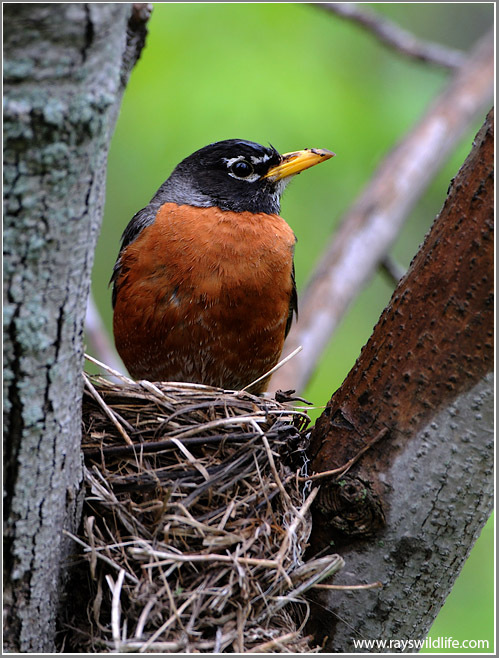
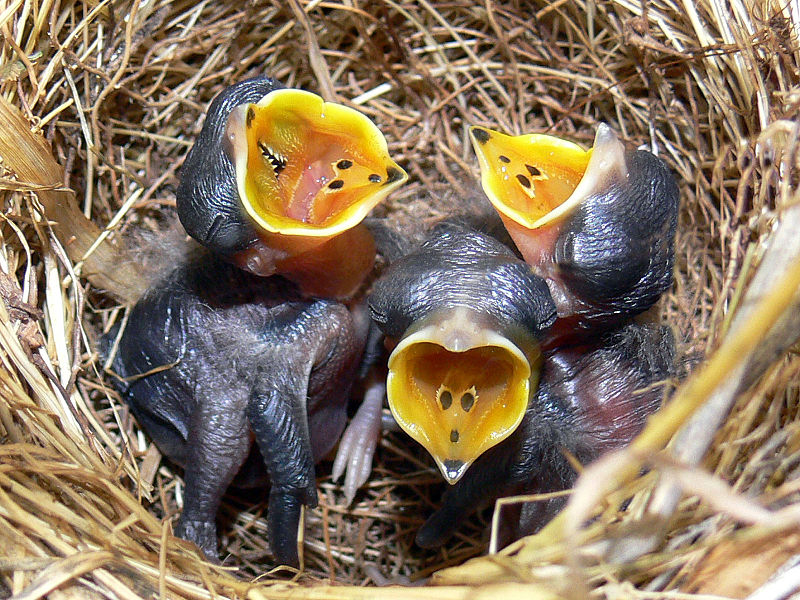
American Robin (Turdus migratorius) in nest by Ray

American Robin (Turdus migratorius) in nest by Ray

Thrushes build nest that are cup-shaped and line them with different things including mud. Both parent help in raising the young,  which normally number two to five per brood. Many have two broods a year.

According to Wikipedia the Turdus Genus has the “true thrushes” and it has 65 species in that genus. According to Scripture, I would venture to say that they are all in the same “kind” and have just been busy obeying the command given them to when they came off the Ark.

Bring out with you every living thing of all flesh that is with you, birds and animals and every creeping thing that creeps on the earth, that they may breed abundantly on the earth, and be fruitful and multiply on the earth. (Genesis 8:17 NASB)

Some examples of their migration:

  • Some species show circuitous migratory routes that reflect historical range expansions and are far from optimal in ecological terms. An example is the migration of continental populations of Swainson’s Thrush, which fly far east across North America before turning south via Florida to reach northern South America
  • The Himalayan Kashmir Flycatcher and Pied Thrush both move as far south as the highlands of Sri Lanka.
  • The Song Thrush breeds in forests, gardens and parks, and is partially migratory with many birds wintering in southern Europe, North Africa and the Middle East;
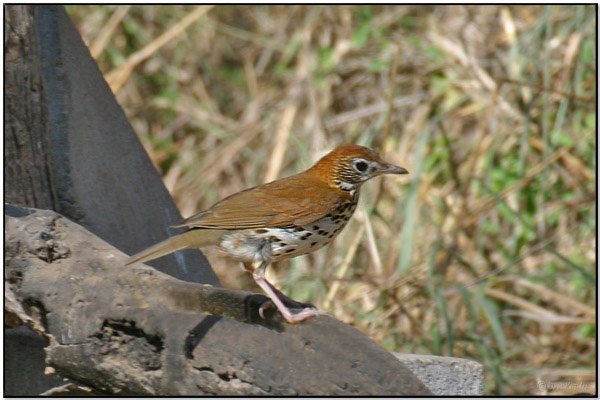
Wood Thrush (Hylocichla mustelina) by Daves BirdingPix

Wood Thrush (Hylocichla mustelina) by Daves BirdingPix

  • The Wood Thrush’s breeding range extends from Manitoba, Ontario and Nova Scotia in southern Canada to northern Florida and from the Atlantic coast to the Missouri River and the eastern Great Plains. It migrates to southern Mexico through to Panama in Central America in the winter, mostly in the lowlands along the Atlantic and Pacific coasts. It generally arrives on the U.S. Gulf Coast during the first week of April. Fall migration usually begins in mid-August and continues through mid-September. Migration takes place at night,[9] allowing them to find their direction from the stars and orient themselves by detecting the Earth’s magnetic field.
  • The Grey-cheeked Thrush migrates to northern South America. This species is a rare vagrant to Europe. Its northerly breeding range and long-distance migration make it one of the more regular North American passerine migrants to cross the Atlantic.
  • The Northern Wheatear makes one of the longest journeys of any small bird, crossing ocean, ice, and desert. It migrates from Sub-Saharan Africa in Spring over a vast area of the northern hemisphere that includes northern and central Asia, Europe, Greenland, Alaska, and parts of Canada. In Autumn all return to Africa, where their ancestors had wintered. Arguably, some of the birds that breed in north Asia could take a shorter route and winter in south Asia; however, their inherited inclination to migrate takes them back to Africa.

The Thrush families are very interesting birds and they definitely migrate. When they were created, their Creator put a destination and a great ability for them to migrate to those places.

For by Him all things were created that are in heaven and that are on earth, visible and invisible, whether thrones or dominions or principalities or powers. All things were created through Him and for Him. And He is before all things, and in Him all things consist. (Colossians 1:16-17 NKJV)

Back to our verse in Jeremiah. The last part of the verse says, “But My people do not know The ordinance of the LORD.”

I like what Matthew Henry said about the whole passage in which the verse is found. Jeremiah 8:4-13:
“What brought this ruin? 1. The people would not attend to reason; they would not act in the affairs of their souls with common prudence. Sin is backsliding; it is going back from the way that leads to life, to that which leads to destruction. 2. They would not attend to the warning of conscience. They did not take the first step towards repentance: true repentance begins in serious inquiry as to what we have done, from conviction that we have done amiss. 3. They would not attend to the ways of providence, nor understand the voice of God in them, Jer_8:7. They know not how to improve the seasons of grace, which God affords. Many boast of their religious knowledge, yet, unless taught by the Spirit of God, the instinct of brutes is a more sure guide than their supposed wisdom. 4. They would not attend to the written word. Many enjoy abundance of the means of grace, have Bibles and ministers, but they have them in vain. They will soon be ashamed of their devices. The pretenders to wisdom were the priests and the false prophets. They flattered people in sin, and so flattered them into destruction, silencing their fears and complaints with, All is well. Selfish teachers may promise peace when there is no peace; and thus men encourage each other in committing evil; but in the day of visitation they will have no refuge to flee unto.”


Wordless Birds

See:

Birds of the Bible – Thrushes (Added 3/14/11)

Birds of the Bible

Birds of the Bible – Thrush Songs

Birds of the World – Turdidae Family – Muscicapidae Family

*
Scare Scarer

Scare Scarer ~ by a j mithra

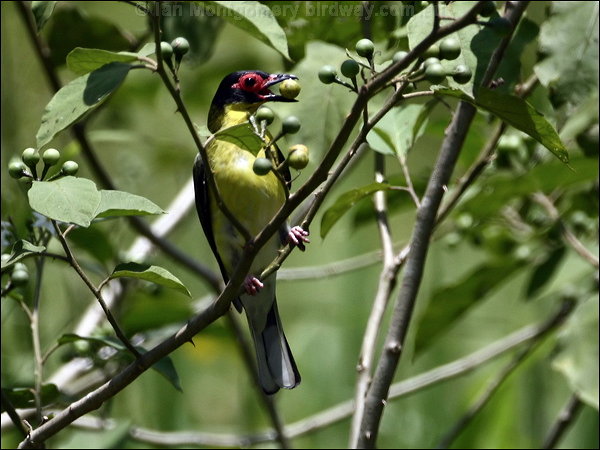
Australasian Figbird (Sphecotheres vieilloti) by Ian

Australasian Figbird (Sphecotheres vieilloti) by Ian

Birds get scared
only when the scarecrow
has human smell on it…
But,
after the rain,
the smell vanishes
and
the birds are not
scared anymore…
Come all ye people,
get wet and let
the Holy Spirit rain
and scare the scare away…

My beloved spake, and said unto me, Rise up, my love, my fair one, and come away.
For, lo, the winter is past, the rain is over and gone;
The flowers appear on the earth; the time of the singing of birds is come, and the voice of the turtle is heard in our land;
The fig tree putteth forth her green figs, and the vines with the tender grape give a good smell. Arise, my love, my fair one, and come away. (Psalm 2:10-13)

A thought from a j mithra

*

The Australian Figbird is in the Oriolidae Family

*

Birds – Watchers of Light

Birds – Watchers of Light ~ by a j mithra

American Golden Plover (Pluvialis dominica) at National Aviary by Lee

American Golden Plover (Pluvialis dominica) at National Aviary by Lee

Changes in the
level of sunlight,
causes migratory birds
to migrate…
Are you ready
to migrate
to heaven?
Cos,
the darkness
is fast approaching
and
THE LIGHT
is on the way
to trigger the migration
for the last time…

Watch therefore, for ye know neither the day nor the hour wherein the Son of man cometh. Mathew (25:13)

A thought from a j mithra

*

The Pacific Golden Plover is in the Charadriidae Family and a long distance migration bird.

*

Birds in Hymns – Thou Sweet, Beloved Will Of God

And be not conformed to this world: but be ye transformed by the renewing of your mind, that ye may prove what is that good, and acceptable, and perfect, will of God. (Romans 12:2 KJV)

Words: Ger­hard Ter­steeg­en, Geist­lich­es Blum­en-Gärt­lein, first edi­tion, 1729, Book III, number 19 (Lieb­wer­ther, süss­er Gott­es-Wille); trans­lat­ed from Ger­man to Eng­lish by Em­ma Be­van, 1858.

Music: Holl­ey, George Hews, 1835 .
Al­ter­nate tune: •Abends, Her­bert S. Oak­e­ley, 1874

This is the Abends tune by Oakeley

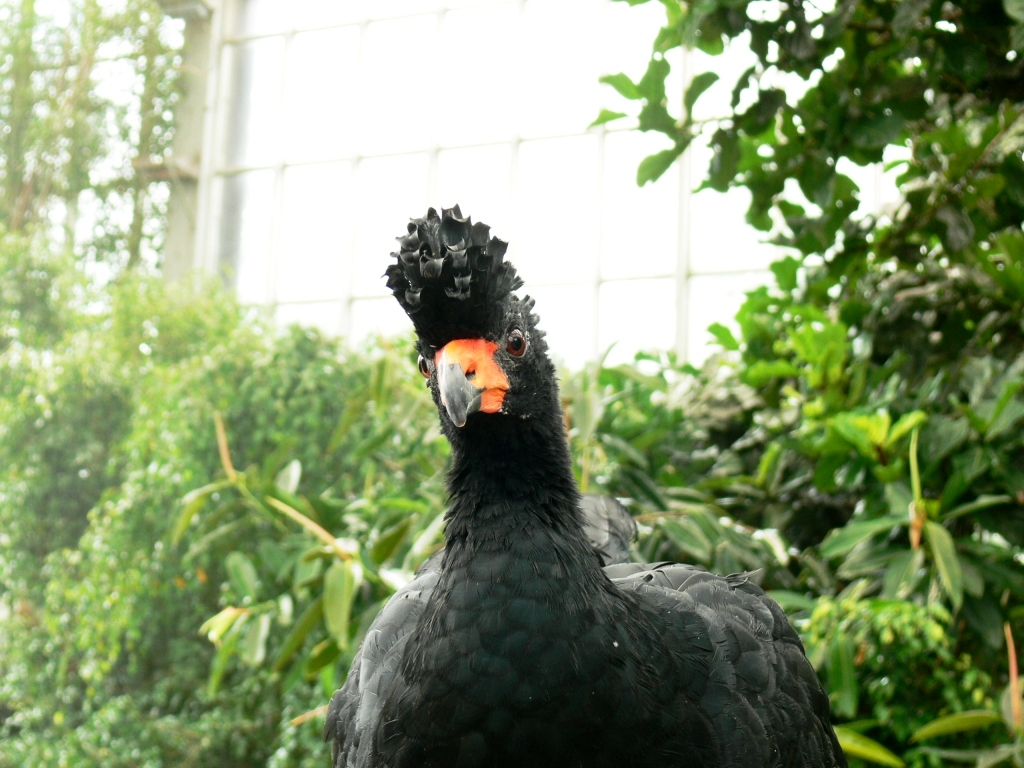
Wattled Curassow (Crax globulosa) at National Aviary by Lee

Wattled Curassow (Crax globulosa) at National Aviary by Lee

Thou sweet, belovèd will of God,
My anchor ground, my fortress hill,
My spirit’s silent, fair abode,
In thee I hide me and am still.

O Will, that willest good alone,
Lead thou the way, thou guidest best;
A little child, I follow on,
And, trusting, lean upon thy breast.

Thy beautiful, sweet will, my God,
Holds fast in its sublime embrace
My captive will, a gladsome bird,
Prisoned in such a realm of grace.

Within this place of certain good,
Love evermore expands her wings,
Or, nestling in thy perfect choice,
Abides content with what it brings.

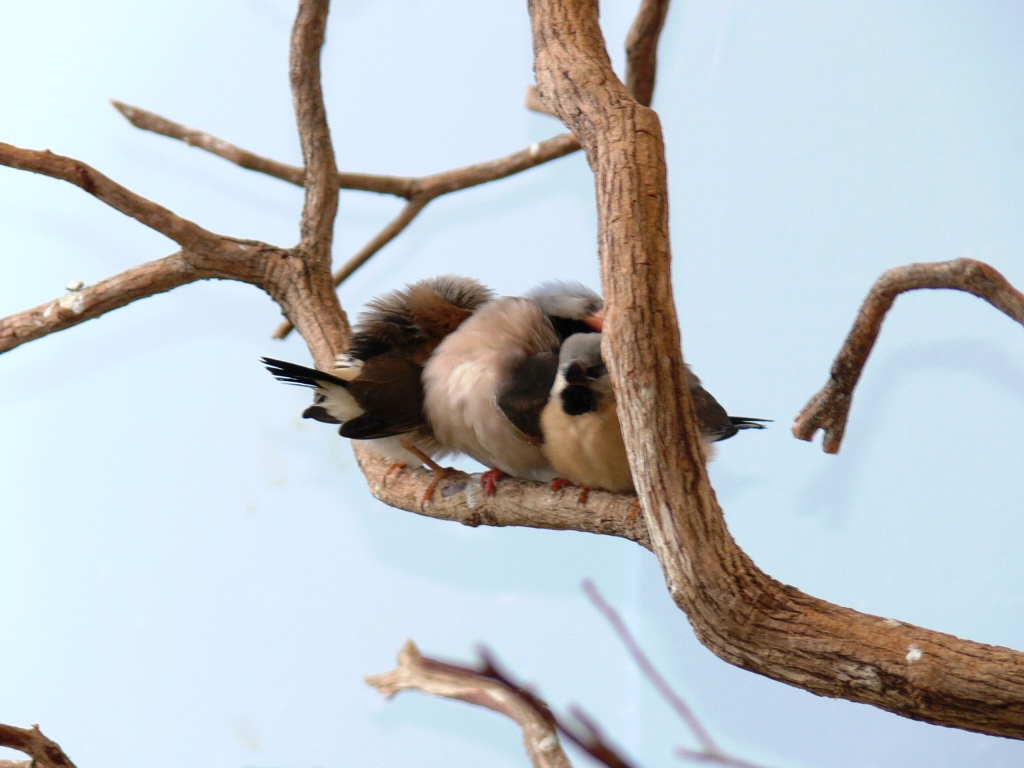
Long-tailed Finch (Poephila acuticauda) babies by Lee at National Aviary

Long-tailed Finch (Poephila acuticauda) (Spike-tailed) babies by Lee at National Aviary

O lightest burden, sweetest yoke!
It lifts, it bears my happy soul,
It giveth wings to this poor heart,
My freedom is thy grand control.

Upon God’s will I lay me down,
As child upon its mother’s breast;
No silken couch, nor softest bed,
Could ever give me such deep rest.

Thy wonderful grand will, my God,
With triumph now I make it mine;
And faith shall cry a joyous Yes!
To every dear command of thine.

Most information from The Cyber Hymnal

See ~ Wordless Birds

More ~ Birds in Hymns

I chose the Wattled Curassow because when we encountered the bird at the National Aviary, it seemed very glad, especially at feeding time. It practically got in my face. The Long-tailed (Spike-tailed) Finches are fairly young.

*

Blue Chaffinch – The High Dwellers

Blue Chaffinch – The High Dwellers ~ by a j mithra

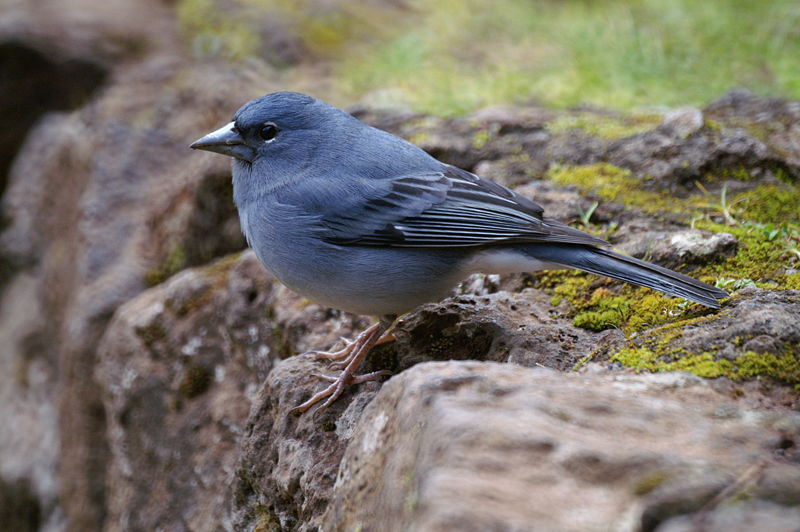
Blue Chaffinch (Fringilla teydea) ©WikiC

Blue Chaffinch (Fringilla teydea) ©WikiC

Little birds called
Blue Chaffinch
always prefer to live
about 700 to 2000 meters
above sea level..
They always build
their nests about
1000 meters above sea level
high on pine trees
which grow on the hills…
No storm shall
harm you
when you nest your hopes
on the higher place..
My hope rests
and
nests on the
most high place
called JESUS…
What about you?

The LORD is my rock, and my fortress, and my deliverer; my God, my strength, in whom I will trust; my buckler, and the horn of my salvation, and my high tower. (Psalm 18:2)

A thought from a j mithra

*

The Blue Chaffinch is in the Fringillidae Family

*

Renewing for Rapture

Renewing for Rapture ~ by a j mithra

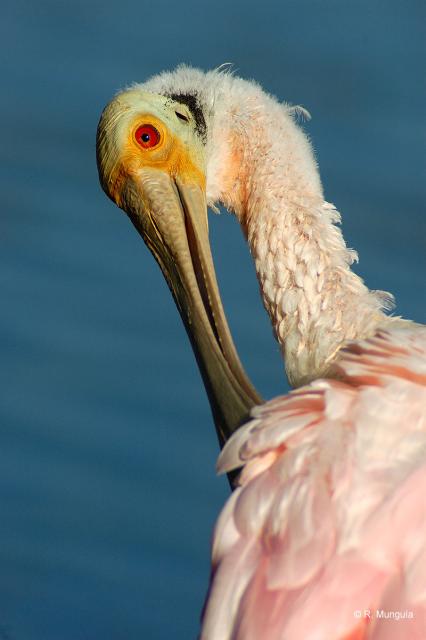
Roseate Spoonbill (Platalea ajaja) Reinier Munguia

Roseate Spoonbill (Platalea ajaja) Reinier Munguia

Before they start
to migrate,
the birds preen
and
grow new feathers
for their long journey…..
We too,
have to go on a
long journey
to be with JESUS…
Have we renewed ourselves
with the blood of JESUS?
The birds,
store their body
with lots of fat
for their long flight…
We too need energy
to fly over
difficult situations..
Have we got filled
ourselves with
The Holy Spirit?
Remember,
the migration,
which we call rapture,
is very near…
Are we getting preening
and renewing
to get ready
for the rapture?

Jesus answered, Verily, verily, I say unto thee, Except a man be born of water and of the Spirit, he cannot enter into the kingdom of God. (John3:5)

A thought from a j mithra

*

The Roseate Spoonbill is in the Threskiornithidae Family.

*

Screeeeeeech

Screeeeeeech  ~ by a j mithra

Australian Pipit (Anthus australis) ©WikiC

Australian Pipit (Anthus australis) ©WikiC

Mother birds
encourage their little ones
to scream loud…..
The one who makes
the most noise
gets its feed first
and
then the next loudest
gets its share
and
it goes on….
It is easier for GOD
to fill those who
open their mouth wide….
It seems like only
the Birds have understood
the secret and they practice,
but,
we only preach…

I am the LORD thy God, which brought thee out of the land of Egypt: open thy mouth wide, and I will fill it. (Psalm 81:10)

A thought from a j mithra

*

The Australian Pipit is in the Motacillidae Family

*

Birds – Purpose filled Singers

Birds – Purpose filled Singers ~ by a j mithra

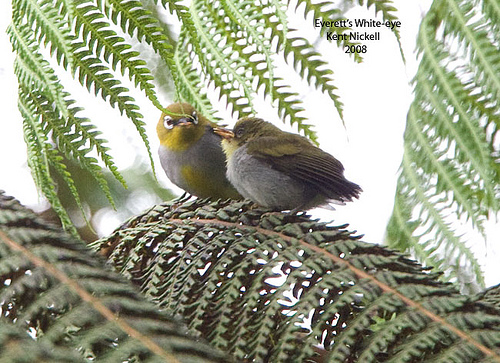
Everett's White-eye (Zosterops everetti) by Kent Nickell

Everett's White-eye (Zosterops everetti) by Kent Nickell

Studies have shown
that,
Birds should learn
the intricate
territorial songs
to gain possession
of the territory
after the death
of its senior…
The mating songs
to get the nod
of the best females around..
That memory
of those songs
will serve the Bird
the rest of its life…
Learn to sing,
only for JESUS
and
that will save you
all through your life…

The beast of the field shall honour me, the dragons and the owls: because I give waters in the wilderness, and rivers in the desert, to give drink to my people, my chosen.

This people have I formed for myself; they shall show forth my praise. (Isaiah 43:20-21)

A thought from a j mithra

*

The  Everett’s White-Eye is part of the Zosteropidae Family.

*

Birds in Hymns – Let There Be Light!

And God said, Let there be light: and there was light. (Genesis 1:3 KJV)

Thou, Whose Almighty Word (or sometimes called – Let There Be Light!)
Author: John Marriott, 1780-1825
Musician: Joan J. Pinkston, b. 1947

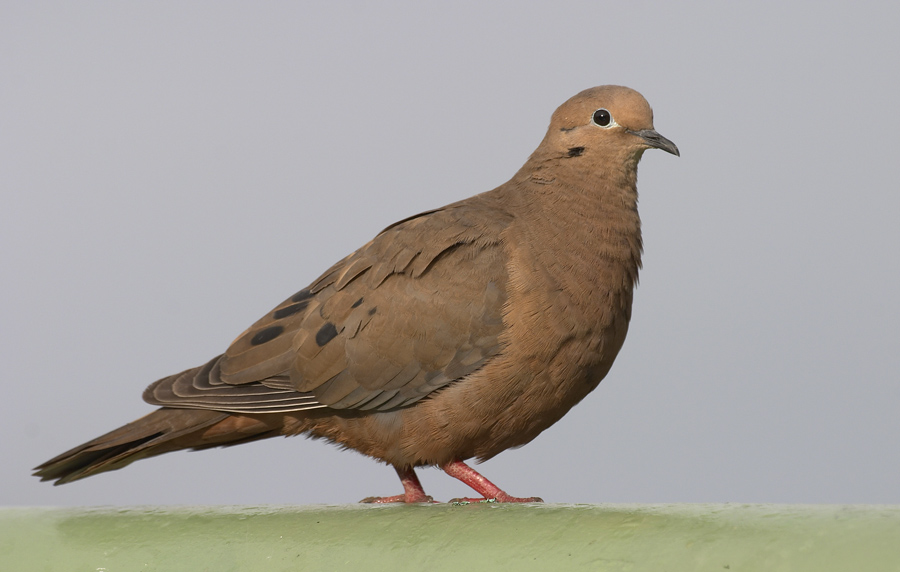
Eared Dove (Zenaida auriculata)  by Robert Scanlon

Eared Dove (Zenaida auriculata) by Robert Scanlon

The Rev. John Marriott was a clergyman of the English Church, a graduate of Rugby, and of Christ Church, Oxford. He took high honors in college, and was then engaged as private tutor by the Duke of Buccleuch, who after two years presented him with the living of Church Lawford, Warwickshire. This he kept to the end of his life. He wrote but three hymns, of which only one is in use. But this one belongs in the first rank, and entitles him to a place among the great hymn-writers:

‘Let there be light!'”

This hymn will richly repay careful study. It is founded on Genesis i. 3, but with a very fine and suggestive reference to the three persons of the Trinity. The Father uttered the original mandate “Let there be light”; the Son declared himself to be the “Light of the World”; the Spirit enlightens the soul. The poem is usually classed with the missionary hymns of the church, and very properly so. It is profoundly pervaded with the missionary spirit, not only in its separate expressions, but also in its majestic undertone. Its metaphors are striking—the “chaos” and “darkness” of creation and of heathenism; the “sick in mind”; the “lamp of grace”; the “ocean’s tide” of Wisdom, Love, and Might, and the like. The action is vigorous—”redeeming wing”; “speed forth thy flight”; “rolling in fullest pride.” The survey and sweep are most comprehensive. Above all, the hymn is a broad, beautiful, and blessed evangel.

Thou whose almighty word
Chaos and darkness heard,
And took their flight,
Hear us, we humbly pray,
And where the gospel day
Sheds not its glorious ray,
Let there be light!

Pied Imperial-pigeon (Ducula bicolor) by Kent Nickell

Pied Imperial-pigeon (Ducula bicolor) by Kent Nickell

Thou who didst come to bring
On Thy redeeming wing
Healing and sight,
Health to the sick in mind,
Sight to the inly blind,
Oh, now to all mankind
Let there be light!

Spirit of truth and love,
Lifegiving, holy Dove,
Speed forth Thy flight;

Move on the waters’ face,
Bearing the lamp of grace,
And in earth’s darkest place
Let there be light!

Blessed and Holy Three,
Glorious Trinity,
Wisdom and Might;
Where guilt and sin abound
Let gospel tidings sound,
Till Thy lost sheep be found,
Let there be light!

Information for various internet sources. CyberHymnal, Google Books and Online Hymnal

See ~ Wordless Birds

More ~ Birds in Hymns

*

Worship- The God Pleaser

Worship- The God Pleaser ~ by a j mithra

White-throated Honeyeater (Melithreptus albogularis) by Tom Tarrant

White-throated Honeyeater (Melithreptus albogularis) by Tom Tarrant

Birds choose to mate
only with those birds
which sing the most
complicated songs…
For,
they believe that
only those birds
which sing different songs,
are good at raising
and
taking care of the family
and the territory…
He worshiped
and
sang for the LORD
at all times…
Is that the reason why
GOD certifies David
as the one who pleases
HIS heart?
Would GOD say of us
like how HE said of David?

And when he had removed him, he raised up unto them David to be their king; to whom also he gave testimony, and said, I have found David the son of Jesse, a man after mine own heart, which shall fulfil all my will. (Acts 13:22)

A thought from a j mithra

*

The White-throated Honeyeater is in the Meliphagidae Family.

*

Birds of the Bible – Turtle Doves

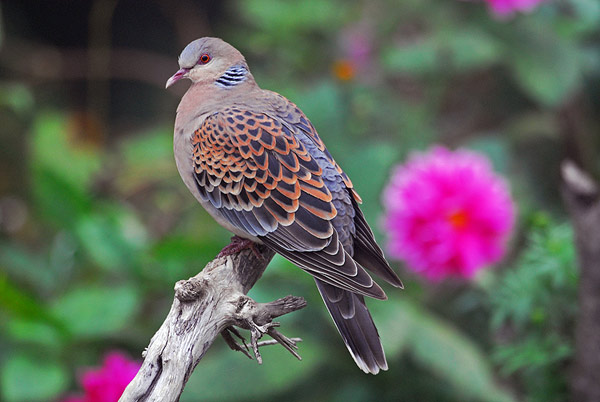
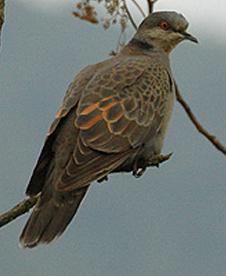
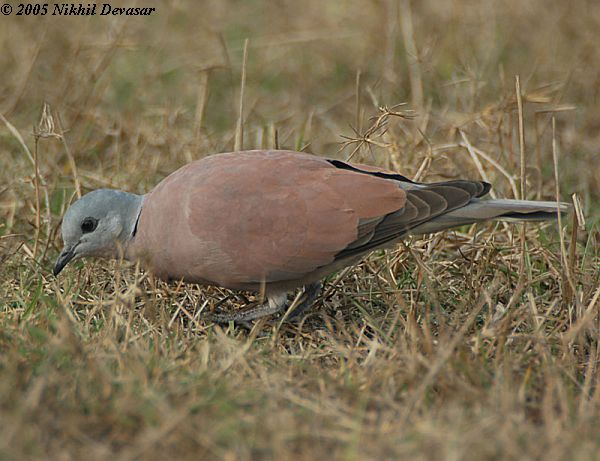
Oriental Turtle Dove (Streptopelia orientalis) by Nikhil

Oriental Turtle Dove (Streptopelia orientalis) by Nikhil

The flowers appear on the earth; the time of the singing of birds is come, and the voice of the turtle is heard in our land; (Song of Solomon 2:12 KJV)

According to the latest list of Turtle Doves by the I.O.C version 2.5 there are only six doves that bear the name “Turtle Dove.” They are in two genus (groups), the Nesoenas and the Streptopelia. That means that they are closely related, but the ornithologist have divided them that way.

Malagasy Turtle Dove (Nesoenas picturata) ©WikiC

Malagasy Turtle Dove (Nesoenas picturata) ©WikiC

The Malagasy Turtle Dove (Nesoenas picturata) is the only one in the Nesoenas. The Malagasy Turtle-dove (Nesoenas picturata), is also known as the Madagascar Turtle-dove, is a bird species in the pigeon and dove family, Columbidae. It is found in British Indian Ocean Territory, Comoros, Madagascar, Mauritius, Mayotte, Réunion, and Seychelles. Its closest relative a Pink Pigeon together they form a lineage apart from both the typical pigeons (Columba) and the typical turtle-doves (Streptopelia).

Adamawa Turtle Dove (Streptopelia hypopyrrha) ©WikiC

Adamawa Turtle Dove (Streptopelia hypopyrrha) ©WikiC

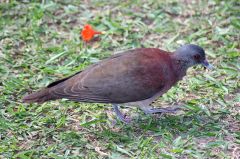
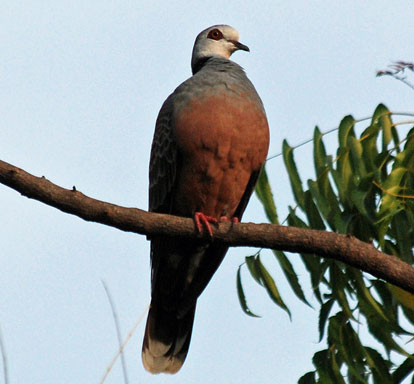
The other five Turtle Doves, the Euopean, Dusky, Adamawa, Oriental, and Red are in the Streptopelia genus. These are mainly slim, small to medium-sized species. The upperparts tend to be pale brown, and the underparts are often a shade of pink. Many have a characteristic black-and-white patch on the neck, and monotonous cooing songs. Mainly in Africa, but several species occur in tropical southern Asia. As a group, this genus is highly successful; many species are abundant in a range of habitats in the tropics, and two now have a much more extensive distribution.

Dusky Turtle Dove (Streptopelia lugens) ©WikiC

Dusky Turtle Dove (Streptopelia lugens) ©WikiC

In Scripture, the Turtle Dove or “turtledove” appears in fifteen verses. Most of those have to do with the turtledove being used as a sacrifice. In Genesis 15:9 the Lord GOD told Abraham to provide one and a pigeon as part of a sacrifice when Abraham was give the covenant of the promised land.

Then in Leviticus a turtledove was used in the burnt offering in Lev. 1:14, two turtledoves for the trespass offering of Lev. 5:7, two for a second burnt offering in Lev. 5:11, for purification after the birth of a child in Lev. 12:6, 8, a sin offering in Lev. 14:22, a sin and a burnt offering in Lev. 14:30, two more offered in Lev. 15:14 and 29.

In Deuteronomy 6:10, two turtledove or pigeons are used for a cleansing.

O deliver not the soul of thy turtledove unto the multitude of the wicked: forget not the congregation of thy poor for ever. (Psalms 74:19 KJV)

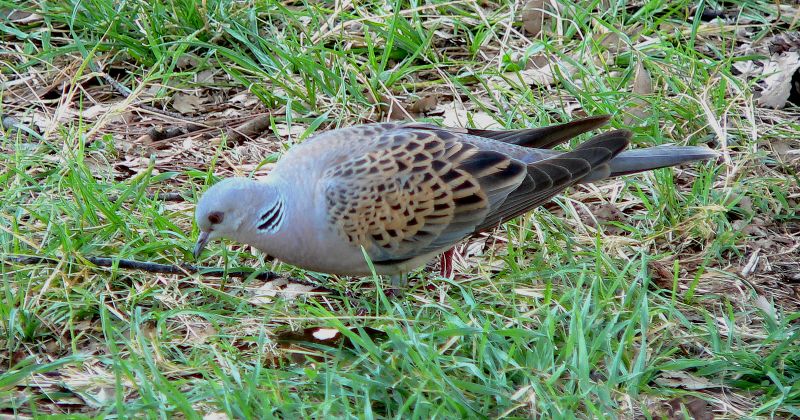
European Turtle Dove (Streptopelia turtur) ©WikiC

European Turtle Dove (Streptopelia turtur) ©WikiC

Here is what Albert Barnes Notes on the Bible says about the above verse in Psalms: “Psa 74:19 O deliver not the soul of thy turtle-dove – The “life” of thy turtle-dove; or, thy turtle-dove itself. The turtle-dove is a name of endearment for one beloved, in Son. 2:12, and is thus applied here to the people of Israel. The leading idea in such an application of the word is that of innocence, harmlessness, timidity, gentleness. The thought here is that of a people dear to God, now timid and alarmed. It is the prayer of a people beloved by God that he would not deliver them to their enemies. The prayer may be regarded as one which was used on the occasion referred to in the psalm; or, as a general prayer for the people of God, considered as exposed to ravening enemies.”

John Wesley’s Explanatory Notes says of Song of Son. 2:12 (quoted at top): “The flowers – The communications of God’s grace, the gifts, and graces, and comforts of the Holy Spirit, are vouchsafed unto, and appear in believers, as buds and blossoms do in the spring. The turtle – This seems particularly to be mentioned because it not only gives notice of the spring, but aptly represents the Spirit of God, which even the Chaldee paraphrast understands by this turtle, which appeared in the shape of a dove, and which worketh a dove – like meekness, and chastity, and faithfulness, in believers.”

Jeremiah speaks of the migration of the turtledove.

Yea, the stork in the heaven knoweth her appointed times; and the turtle and the crane and the swallow observe the time of their coming; but my people know not the judgment of the LORD. (Jeremiah 8:7 KJV)

RedTurtle Dove (Streptopelia tranquebarica) by Nikhil Devasar

RedTurtle Dove (Streptopelia tranquebarica) by Nikhil Devasar

Last but not least, Mary offered a pair of turtledove at the end of her purification after Jesus was born. The turtledove are in Luke 2:24, but the whole passage from Luke 2:21-39 is worth reading.

Most of the times, not always, the turtledove or pigeons were use in the sacrifices by someone who could not afford an animal like a lamb or a bullock. I find this very comforting because God did not make salvation only for those who could afford it. In fact, none of us can afford the cost of what took for the purchase of our salvation.

Forasmuch as ye know that ye were not redeemed with corruptible things, as silver and gold, from your vain conversation received by tradition from your fathers; But with the precious blood of Christ, as of a lamb without blemish and without spot: Who verily was foreordained before the foundation of the world, but was manifest in these last times for you, Who by him do believe in God, that raised him up from the dead, and gave him glory; that your faith and hope might be in God. (1 Peter 1:18-21 KJV)

The Gospel Message

(All photos may be clicked on – WikiC = Wiki Commons. Hover mouse over underlined verses.)
*

Birds-Advertisers of Life..

Birds-Advertisers of Life..

Graceful Prinia (Prinia gracilis) by Nikhil Devasar

Graceful Prinia (Prinia gracilis) by Nikhil Devasar

If they
do not eat well
the night before,
they would surely die…That’s why,
the birds sing
at dawn,
to advertise to the world
that,
they are still alive
and that,
they are ready to face
another tough day ahead
in life…
Did you sing
for the LORD
this morning?
Why I ask you this
is cos,
those who are dead
never sing..
Do they?

Wilt thou show wonders to the dead? shall the dead arise and praise thee? Selah. (Psalm 88:10)

A thought from a j mithra.

*

The Graceful Prinia is in the Cisticolidae Family.

*