Stork – The Kind Mother – by A. J. Mithra

Stork – The Kind Mother

Asian Openbill (Anastomus oscitans) on nest by Nikhil

Asian Openbill (Anastomus oscitans) on nest by Nikhil

The Hebrew word for stork
Is equivalent to “KIND MOTHER”,
and the care of storks for their young,
in their highly visible nests,
made the stork a widespread emblem
of parental care.

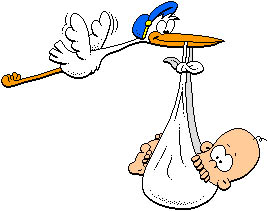
The image of a stork carrying an infant
wrapped in a sling held in its beak
is common in popular culture
and again a symbol of parental care…

As the chicks eat lots of food,
the parents find and eat the food.
Then they come back to the nest
and spit up the food for the chicks to eat..

We are so privileged, for,
JESUS gave HIMSELF
as THE LIVING BREAD
and as THE LIVING WATER,
so that we may have life eternal…
Father and mother may forsake,
but, JESUS will never leave us
nor forsake us..

It was widely noted in ancient natural history,
that the stork would prefer to be consumed
with the nest in a fire,
rather than fly and abandon it.
Such is its commitment towards its family..

White Stork (Ciconia ciconia) by Ian

White Stork (Ciconia ciconia) by Ian

How committed are we to JESUS?
We say that JESUS is our nest,
I mean SHELTER,
but, how many of us would still
have the courage to walk into the fire
like those three young men?
Do we have the courage to face
persecution like Stephen?
Or will run away from JESUS
and sit in the enemy’s camp like Peter?
When JESUS becomes our NEST,
HE shall give us our ETERNAL REST…

And my hand hath found as a nest the riches of the people: and as one gathereth eggs that are left, have I gathered all the earth; and there was none that moved the wing, or opened the mouth, or peeped. (Isaiah 10:14 KJV)

Have a blessed day!

Yours in YESHUA,
A. J. Mithra at Crosstree

Click to see more of A. J.’s articles


See the Stork page (a Bird of the Bible)

Storks are in the Ciconiidae Family of the Ciconiiformes Order

*

Birds of the Bible – Stork II

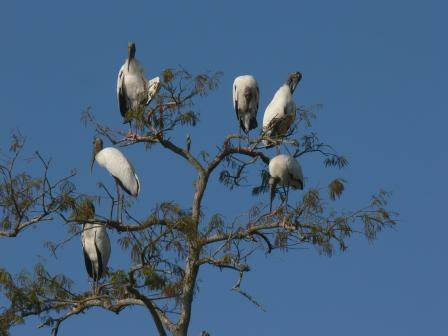
Wood Storks in Top of Tree by Lee

Wood Storks in Top of Tree by Lee

Yesterday, Dan and I went out to the Circle B Bar Reserve for some birdwatchng. I think I would have to call it, “Stork Day.” From our photos, I have counted well over 100 Wood Storks and that doesn’t count the ones we didn’t photograph. It is time to find out some more about the stork.

From the first Birds of the Bible – Stork article,we found out that the stork is on the unclean list of birds that were not to be eaten by the Israelites. (Leviticus 11:19 and Deuteronomy 14:18). Jeremiah 8:7, tells of “her appointed times” (migration) and Zechariah 5:9 mentions the “wings of a stork.”

Psalms is going to provide our thoughts for today.

The trees of the LORD are full of sap; the cedars of Lebanon, which he hath planted; Where the birds make their nests: as for the stork, the fir trees are her house. (Psalms 104:16-17)

 The Whole Tree

The Whole Tree

As you can tell from the photos, the storks like to hang out in the trees. The trees were loaded with them. We were out there recently (September 18th) and I did not see any on that visit. Jeremiah was correct, “Yea, the stork in the heaven knoweth her appointed times;” Migration has been underway and these are either resting while on their trip or they are going to be here for the winter.

“Storks (family Ciconiidae) make their nests of sticks, reeds and grass, in tall trees. When the chicks hatch, their thin, featherless skin is extremely vulnerable to the direct rays of the sun. The parent bird has two responses to the high temperature problem — if water is nearby, the stork fills its large beak, returns to the nest, and douses the tiny chicks with cooling water. If this is not sufficient, the parent then performs a most remarkable feat — it stands over the young and spreads its large wings over the entire nest, thus shading the chicks from the sun’s rays! Often it will do this for hours at a time.” from “Birdbrains?” at Answers in Genesis

Storks Shadowing Baby in Lakeland by Dan

Storks Shadowing Baby in Lakeland by Dan

When the Lord created the Stork, the knowledge to protect their babies was put in them. Our God and Savior has promised to meet our needs. If He cares about the birds, how much more does he care about us?

“Storks are large, long-legged, long-necked wading birds with long stout bills, belonging to the family Ciconiidae. They occur in most of the warmer regions of the world and tend to live in drier habitats than the related herons, spoonbills and ibises; they also lack the powder down that those groups use to clean off fish slime. Storks have no syrinx and are mute, giving no bird call; bill-clattering is an important mode of stork communication at the nest. Many species are migratory. Most storks eat frogs, fish, insects, earthworms, and small birds or mammals. There are 19 living species of storks in six genera.

Storks tend to use soaring, gliding flight, which conserves energy. Soaring requires thermal air currents. Ottomar Ansch??tz’s famous 1884 album of photographs of storks inspired the design of Otto Lilienthal’s experimental gliders of the late 19th century. Storks are heavy with wide wingspans, and the Marabou Stork, with a wingspan of 3.2 m (10.5 feet), shares the distinction of “longest wingspan of any land bird” with the Andean Condor.

Their nests are often very large and may be used for many years. Some have been known to grow to over 2 m (6 feet) in diameter and about 3 m (10 feet) in depth. Storks were once thought to be monogamous, but this is only true to a limited extent. They may change mates after migrations, and migrate without them. They tend to be attached to nests as much as partners.

Storks’ size, serial monogamy, and faithfulness to an established nesting site contribute to their prominence in mythology and culture.

This slideshow requires JavaScript.

*

Timmy and the Stork

Wood Stork by Lee

Wood Stork by Lee

I couldn’t resist this, because the Stork is one of our Birds of the Bible. And, besides that, this is funny.  This was printed in our local “Orange Peel Gazette” which comes out at least once a month and has jokes in it.

Timmy and the Stork

A man took his little boy to the zoo for the very first time. Each time they would see a new animal the little boy would ask, “What’s that?”  And each time the father would explain.  When they came to a pen with a very large bird inside the father said, “And that, Jimmy is a Stork.” The boy stood there for a few moments and the began to wave and say, “Hi! I’m Timmy!”  After several times of repeating this he finally turned to his father and exclaimed, “Guess I’m all grown up, Dad, he doesn’t recognize me.”

Timmy's delivery

Timmy’s delivery


*

For ye are all the children of God by faith in Christ Jesus. (Galatians 3:26 KJV)


Interesting Things – A Lesson from the Stork

SmileyCentral.com

“A Lesson from the Stork

“Yea, the stork in the heaven knoweth her appointed times; and the turtle and the crane and the swallow observe the time of their coming; but my people know not the judgment of the Lord.” (Jeremiah 8:7)

The migratory behavior of birds is fascinating. If it only occurred once, we would call it a miracle. Yet we see bird migrations twice a year, so we are desensitized to the Creator-designed magnificence of these journeys.

Geographically, Israel sits center-stage among the great continents of Europe, Asia, and Africa. Many birds migrate from European and Asian winters to Africa, with the migrations reversed prior to summer. …….”

Click link to see the rest of this devotional today from Days of Praise.

Birds of the Bible – Under His Wing

This week’s Birds of the Bible will divert from the introduction of a specific bird to a part of the bird. We had the privilege several weeks ago to visit a “rookery,” (a place where many birds have nests and raise their young. The Wood Storks had their wings spread out to keep the sun off of their young, which is a common behavior of birds. Birds also use their wings to protect them when danger is nearby and for warmth. It reminded me of the many Scripture references and songs about the protection or shadow of the wings.
Psalms 61:3-4 (KJV), says, “For thou hast been a shelter for me, and a strong tower from the enemy. I will abide in thy tabernacle forever: I will trust in the covert of thy wings. Selah. “
Covert as defined by the Dictionary.com Unabridged (v 1.1)
–adjective
concealed; secret; disguised; covered; sheltered.

–noun
a covering;
cover; a shelter or hiding place; concealment or disguise
Also called tectrix one of the small feathers that cover the bases of the large feathers of the wings and tail.

Just a few of the Scriptures are:

Keep me as the apple of Your eye; Hide me under the shadow of Your wings, From the wicked who oppress me, From my deadly enemies who surround me. (Psalms 17:8-9 NKJV)
How precious is Your lovingkindness, O God! Therefore the children of men put their trust under the shadow of Your wings. (Psalms 36:7 NKJV)
To the Chief Musician. Set to “Do Not Destroy.” a Michtam of David When He Fled from Saul into the Cave. Be merciful to me, O God, be merciful to me! For my soul trusts in You; And in the shadow of Your wings I will make my refuge, Until these calamities have passed by. (Psalms 57:1 NKJV)
Because You have been my help, Therefore in the shadow of Your wings I will rejoice. (Psalms 63:7 NKJV)
He shall cover you with His feathers, And under His wings you shall take refuge; His truth shall be your shield and buckler.(Psalms 91:3 NKJV)

The wing has been mentioned in many hymns such as:
God Will Take Care of You – ( by Civilla D. Martin, 1869-1948 )
God Will Take Care of You

Be not dismayed whate’er betide,
God will take care of you;
Beneath His wings of love abide,
God will take care of you.

Refrain:
God will take care of you,
Thro’ ev’ry day, O’er all the way;
He will take care of you,
God will take care of you

Under His Wings (by William O. Cushing, 1823-1902)
Under His wings I am safely abiding;
Tho’ the night deepens and tempests are wild.
Still I can trust Him; I know He will keep me;
He has redeemed me, and I am His child.

Refrain:
Under His wings, under His wings,
Who from His love can sever?
Under His wings my soul shall abide,
Safely abide forever.

Under His wings, what a refuge in sorrow!
How the heart yearningly turns to His rest!
Often when earth has no balm for my healing,
There I find comfort, and there I am blest.

Under His wings, O what precious enjoyment!
There will I hide till life’s trials are o’er;
Sheltered, protected, no evil can harm me;
Resting in Jesus I’m safe evermore.

Two other hymns that mention the wings are:
Praise Ye the Lord!
Praise ye the Lord, who o’er all things so wondrously reigneth,
Shelters thee under His wings, yea, so gently sustaineth!
Hast thou not seen How thy desires e’er have been
Granted in what He ordaineth?
And,
God Be with You Till We Meet Again
God be with you till we meet again;
‘Neath His wings protecting hide you,
Daily manna still provide you;
God be with you till we we meet again.

Most information from The Cyber Hymnal

See ~ Wordless Birds

More ~ Birds in Hymns

*

Birds of the Bible – Storks

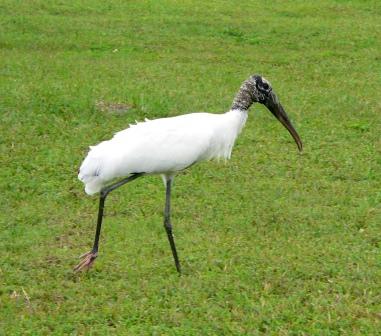
Many people think of babies being delivered when a Stork is mentioned. I am amazed when I watch the Wood Storks here in Florida. When they are on the ground, they are very unbecoming (aka-ugly), but when they are flying, it is so awesome to see the gracefulness of their flight and how beautiful their wings are.

The Wood Stork is a large bird (35”) that has huge long legs and a wing span of five and a half feet. It is the only stork that breeds here in the U.S. There are 19 species of storks worldwide. It has a long, thick, down-curved bill, and its head is black and un-feathered. The Stork is a wadder and raises its young in late winter in Florida during the dryer season. When the water is lower, the fish concentrate, and the Wood Stork and other birds can find an ample supply to feed their young. When they fly, they hold the neck extended.

Pictures by my friend Reineir Munguia, (Professional Photographer)
The stork is found in the list of unclean birds in Lev 11:19 and in Deu. 14:18
In Psalms the list is repeated with a comment here about the stork.

Where the birds make their nests; The stork has her home in the fir trees. Psa(104:17)

My picture of a Wood Stork in tree and Reinier’s much better one.

Jeremiah refers to the migration of birds and how they know when it’s time to leave. Here is an interesting quote from an article from Israel: The Bird’s Eye View By Sherri Mandell

Israel may be a small country, but thousands of birds annually take advantage of its passage-friendly flyway and the welcoming sanctuaries that dot the country.
The ancients considered Israel the center of the world, and it certainly feels that way if you look up at the sky in the spring and autumn. Half a billion migrating birds, more than 230 species, fly in Israeli air space on annual migrations between Europe, western Asia and Africa.
These journeys were noted long ago: “The stork in the heaven also knows her appointed times; and the turtledove, swift and the crane observe their time of coming” (Jeremiah 8:7).
“Tourists are sometimes afraid to visit here,” observes Alen Kasel, education director of the Jerusalem Bird Observatory, “but [the birds] never abandon us.”

Zechariah alludes to the “wings of a stork”.

Then I raised my eyes and looked, and there were two women, coming with the wind in their wings; for they had wings like the wings of a stork, and they lifted up the basket between earth and heaven. (Zec 5:9)