Pileated Woodpecker, in Denton County, Texas?

Dr. James J. S. Johnson

And the same John [i.e., John the Baptist] had his raiment of camel’s hair, and a leathern girdle about his loins; and his meat was locusts and wild honey. (Matthew 3:4)

Sometimes you see a bird that “should” be somewhere else: “Hey, bird, you’re not supposed to be here!”

PILEATED WOODPECKERS
(3 males below; 1 female above)
John James Audubon painting

Earlier this month, to my surprise, I saw a red-crested black-and-white woodpecker in one of my trees. The woodpecker’s mostly-black-with-white plumage, plus the characteristic red crest, proved it to be a Pileated Woodpecker (Dryocopus pileatus). Unable to see if its “mustache/neck stripes were red or black, I’m not sure if it was a male or a female. Regardless of that, what is a Pileated Woodpecker doing in Denton County, Texas? Pileated woodpeckers are well-known as year-round residents within the Piney Woods of East Texas, but how did one end up in the Cross Timbers suburbs of Denton County?

PILEATED WOODPECKER female, eating insects
Andrew Brownsword (Wikipedia/public domain)

Yet, I am not the only one claiming to have seen a Pileated Woodpecker inside Denton County, recently. Today, online, I found a report of 2 Pileated Woodpeckers observed on April 13th (A.D.2025) by “Hannah U.”, at Clear Creek Natural Heritage Center (in Denton, Texas — https://ebird.org/region/US-TX-121/bird-list?yr=cur ). Of course, wooded riparian habitats are known to attract insectivorous woodpeckers. If your trees have ants, these woodpeckers would love to feast on those ants! Other bug-plucking woodpeckers recently reported (on that same ebird.org website), inside Denton County (Texas), include Red-bellied Woodpecker, Downy Woodpecker, Hairy Woodpecker, Ladder-backed Woodpecker, and Red-headed Woodpecker. But Pileated Woodpeckers are easily recognized by their scarlet-red crests, plus they are conspicuously large — crow-sized (sometimes longer than 16″)!

WOODPECKERS (AvianReport.com image credit)

In fact, Pileated Woodpeckers are known to casually frequent Texas as far west as Fort Worth, according to Keith A. Arnold, of the Department of Wildlife and Fisheries Sciences, at Texas A&M University (College Station, Texas — https://txtbba.tamu.edu/species-accounts/pileated-woodpecker/ ), saying: “DISTRIBUTION:  This species is fairly common locally to uncommon in wooded portions of eastern third of Texas, west casually to Gainesville and Fort Worth [emphasis added], rarely to Bastrop and Palmetto State Park, south irregularly to Victoria (Oberholser and Kincaid 1974).” [Quoting Keith A. Arnold, “Pileated Woodpecker”, The Texas Breeding Bird Atlas, Texas A&M AgriLife Research (viewed 4-15-AD2025).]

Woodpeckers, unsurprisingly, seek to eat insects found on and in trees.

“The Pileated Woodpecker’s primary food is carpenter ants, supplemented by other ants, woodboring beetle larvae, termites, and other insects such as flies, spruce budworm, caterpillars, cockroaches, and grasshoppers [notice: “locusts” are a type of grasshopper, so these woodpeckers have part of their diet in common with that of John the Baptist!]. They also eat wild fruits and nuts, including greenbrier, hackberry, sassafras, blackberries, sumac berries, poison ivy, holly, dogwood, persimmon, and elderberry. In some diet studies, ants constituted 40 percent of the diet, and up to 97 percent in some individuals. Occasionally, Pileated Woodpeckers visit backyard bird feeders for seeds or suet.” [Quoting “Pileated Woodpecker”, ALL ABOUT BIRDS, CORNELL LAB OF ORNITHOLOGY, posted at http://www.allaboutbirds.org/guide/Pileated_Woodpecker/lifehistory .]

PILEATED WOODPECKERS
Mass Audubon (Massachusetts Audubon) image credit

What beautiful birds — and, considering their large size, imagine how many carpenter ants (and other insects) that a Pileated Woodpecker eats, over its lifespan of perhaps more than 10 years. That a lot of insects!

Yes, some insects are eaten by humans — such as the locusts that John the Baptist was famous for eating — but I still think that I’d rather have eggs, bacon, and some buttered rye toast, with coffee.

GREAT WHITE & CATTLE EGRETS, OBSERVED IN POND & PASTURE

Dr. James J. S. Johnson

 “And the stork, the heron after her kind, and the lapwing, and the bat.” (Leviticus 11:19)

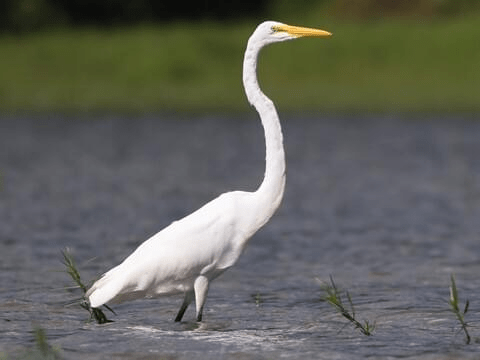
This is just a quick note, from my part of Texas, to report seeing some white egrets lately.

GREAT WHITE EGRET, wading in pond-water
(Cornell Lab of Ornithology photo credit)

So much of (our part of) Texas is urbanizing–and suburbanizing. So, frequenting a rural area, where birdwatching is convenient, is like hunting for an endangered species.

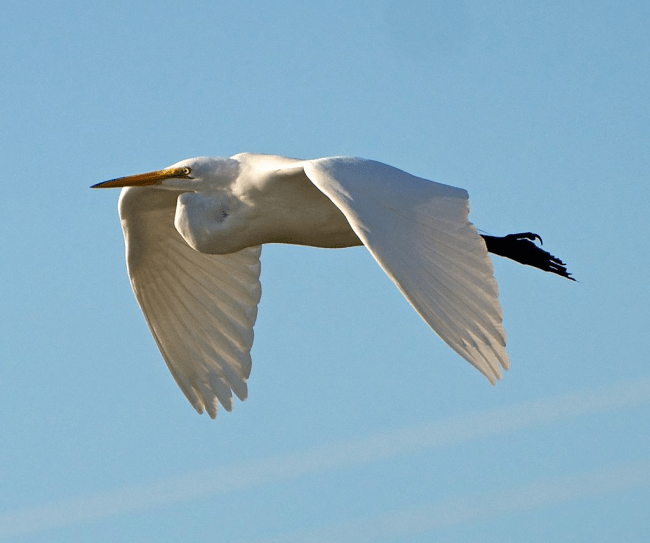
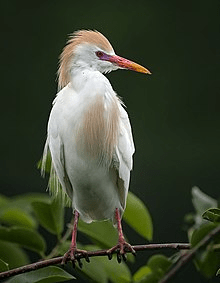
Last Sunday, in a journey that included driving through parts of Denton County and Tarrant County (Texas), my wife drove our car, as I looked out my car window–for birds in pastures and ponds. Ponds attract heron-like birds, such as foraging Great White Egrets (a/k/a “Great White Heron”). Likewise, pastures (with bovine cattle grazing), attract foraging Cattle Egrets.

GREAT WHITE EGRET in flight
(Wikipedia photo credit)

Thankfully, I saw several kinds of birds, from place to place, in field and trees, and besides ponds and drainage ditches. Among those birds, observed that day, were two kinds of heron-like wading birds–Great White Egret and Cattle Egret. Which led to composing this limerick:

GREAT WHITE & CATTLE EGRETS, OBSERVED WHILE TRAVELLING

Cute critters—some are wild, some are pets;

Yesterday, I observed white egrets!

Standing, beside a pond;

Others, in grass beyond …

Go birding—you’ll have no regrets!

It’s good to know that, so far, there are still some pastures and ponds, where we can still view egrets.

Yes, we can all thank the Lord for making and sustaining these oft-ignored (yet magnificent) wild white wonders (Job 9:10).

CATTLE EGRET
(Wikipedia image credit)

(Regarding Cattle Egrets, see JJSJ’s “Cabin Fever, Cattle Egrets, and Pasture-land Partnerships” http://www.icr.org/article/cabin-fever-cattle-egrets-pasture-land-partnership/ .)

Hallelujah! — A Beautiful Scissortail!

Hallelujah! — A Beautiful Scissortail!

Dr. James J. S. Johnson

He [i.e., God] hath made every thing beautiful in His time; also He hath set the world in their heart, so that no man can find out the work that God maketh from the beginning to the end.

Ecclesiastes 3:11
SCISSOR-TAILED FLYCATCHER
Ken Slade / BirdNote.org photo credit

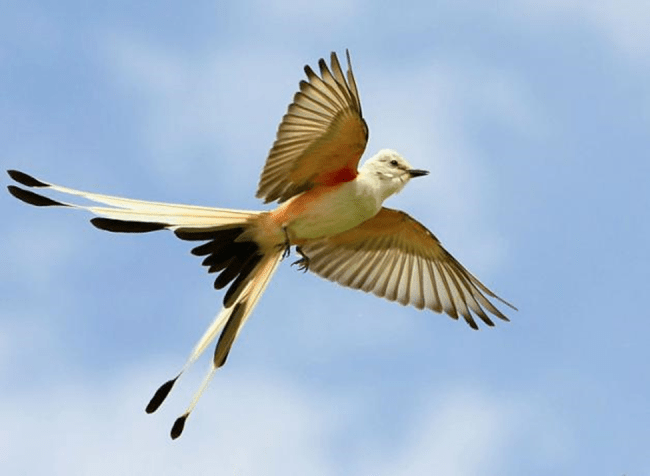
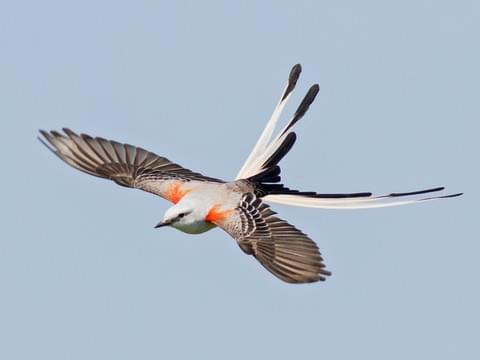
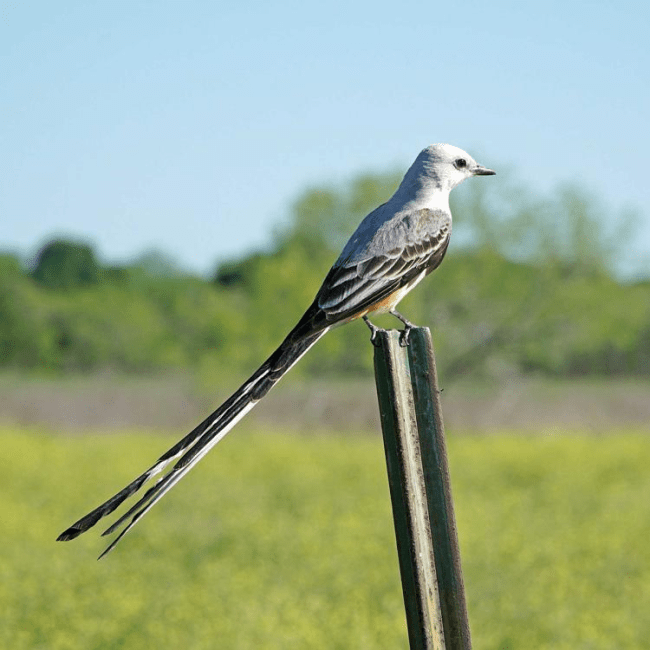
It was a welcome sight to see a beautiful Scissor-tailed Flycatcher, last week, when my wife and I were returning home, in our van, near the Elm Fork of Texas’s Trinity River. The scissortail was perched upon a utility line, paralleling the roadside, near the edge of a forested area–and what a beautiful bird the scissor tail is!

For relevant information (and pictures) of the Scissor-tailed Flycatcher, see my earlier blogpost, “SCISSOR-TAILED FLYCATCHER: the Texas Bird of Paradise”, posted at https://leesbird.com/2022/06/17/scissor-tailed-flycatcher-the-texas-bird-of-paradise/ .

SCISSORTAIL in flight (Cornell photo credit)

Enjoying even a quick view, of what Lee Dusing calls “God’s avian wonders”, is a reminder that we need to get outside more often, especially as the weather permits. (Can I get an “Amen” on that?)

The need to enjoy nature is recognized by many folks, including non-Christians (as is evidenced by the quote below), yet Christians especially should be enjoying God’s interactive handwork–especially “God’s avian wonders”.

Tracking a white-tailed deer through a forest, hooking a smallmouth bass or rockfish, feeding ruby-throated hummingbirds in your backyard, or just watching a beautiful butterfly visit flower after flower in your garden — these are all activities that connect us not only to nature but to each other. And a growing body of research shows that we are healthier and happier when we spend more time outdoors.

This passion for wildlife and wild places is reflected in the preliminary findings of the 2022 National Survey of Fishing, Hunting and Wildlife-Associated Recreation, coordinated by my employer, the U.S. Fish and Wildlife Service. First conducted in 1955 — and every five or six years since — this survey is based on interviews with thousands of citizens from all walks of life.

In 2022, more than 259 million Americans participated in some form of wildlife-associated recreation including fishing, hunting, birdwatching, photography and more. Watching wildlife was most popular (148 million), followed by fishing (almost 40 million) and hunting (14 million). This translates into 57% of Americans spending time observing wildlife. About 15% fished, and 6% hunted. The Mid-Atlantic region mimicked this trend with 17.8 million (54%) citizens engaged in wildlife watching, while 4 million fished (13%) and 1.5 million hunted (5%).

The survey defines wildlife watching primarily as taking a special interest in wildlife around homes or taking a trip for the primary purpose of seeing animals of one kind or another. But it also includes feeding animals (mainly birds), photographing them and maintaining or planting natural areas for the benefit of wildlife. Most people did these things around or near their homes (146 million). A comparison of results from the 2022 survey with those of the 2016 survey revealed there was a 72% increase in the number of Americans engaged in wildlife watching.

Kathy Reshetiloff, “More Than Ever, we like to go where the wild things are”, CHESAPEAKE BAY JOURNAL, 33(7):40 (October 2023), emphasis added.
MALE SCISSORTAIL perching
Forrest Mims III / Seguin Gazette photo credit

Wow! Wildlife watching is really a big deal!

And the most popular form of wildlife watching is birdwatching. (THANKS, LEE, for hosting this Christian birdwatching blog–all these many years–so that we can cyber-share in these beautiful birdwatching experiences, with all of those who–in God’s providence–visit this wonderful blog.)

Of course, of all those who enjoy birdwatching (in the wild or via cyber “watching”), surely Christians should enjoy birdwatching the most, because Christians personally know the marvelous Maker of all the beautiful birds (John 17:3; 2nd Corinthians 10:17; Jeremiah 9:23-24), including scissortails!