Ian’s Bird of the Week – Resplendent Quetzal

Resplendent Quetzal (Pharomachrus mocinno) by Ian

Resplendent Quetzal (Pharomachrus mocinno) by Ian

Ian’s Bird of the Week – Resplendent Quetzal ~ Ian Montgomery

Newsletter 10-18-10

It looks like your collective prayers worked, thank you very much, so here is the legendary Resplendent Quetzal, the main goal of my visit to Costa Rica.
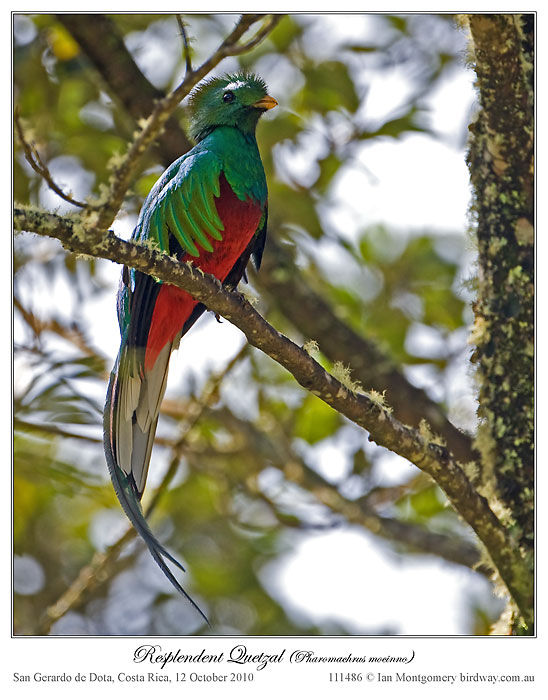
Resplendent Quetzal (Pharomachrus mocinno) by Ian2

Resplendent Quetzal (Pharomachrus mocinno) by Ian2

After a post-flight night in a hotel in the capital, San Jose, I drove to hotel called the Hotel Savegre ( http://www.savegre.co.cr/ ) in a town called San Gerardo de Dota in a valley in the mountains often now called Quetzal valley. On the following morning, I went out with an excellent guide called Melvin Fernandez who is attached to the hotel ( birdwatchersavegre@hotmail.com ) and within two hours he had taken me to a Quetzal-favoured avocado tree containing two pairs of Quetzals and I had taken photos to my hearts content.
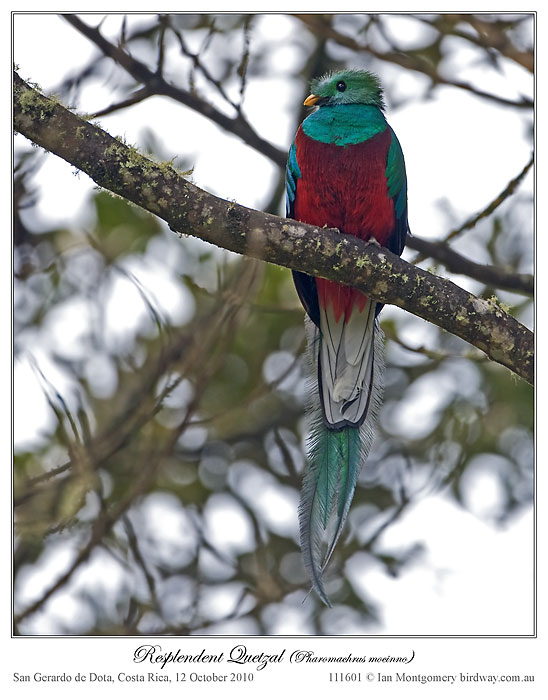
Resplendent Quetzal (Pharomachrus mocinno) by Ian3

Resplendent Quetzal (Pharomachrus mocinno) by Ian3

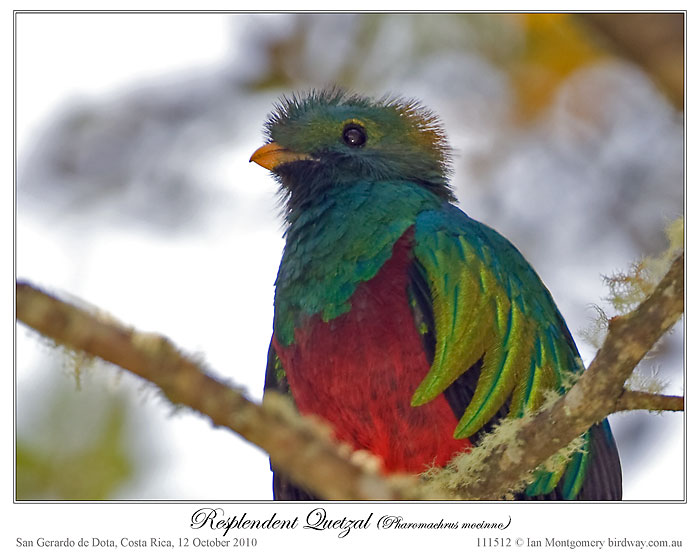
The Resplendent Quetzal is regarded as the most spectacular bird in the Americas, and it would be easy to agree. The males are just sensational as you can see in the first three photos. At this time of the year the tail streamers are short, which actually makes photographing them easier as you can fit the whole bird in more easily. They shed the streamers in July and they gradually grow back month by month to their maximum extent of up to 64cm/25in in time for the breeding season.
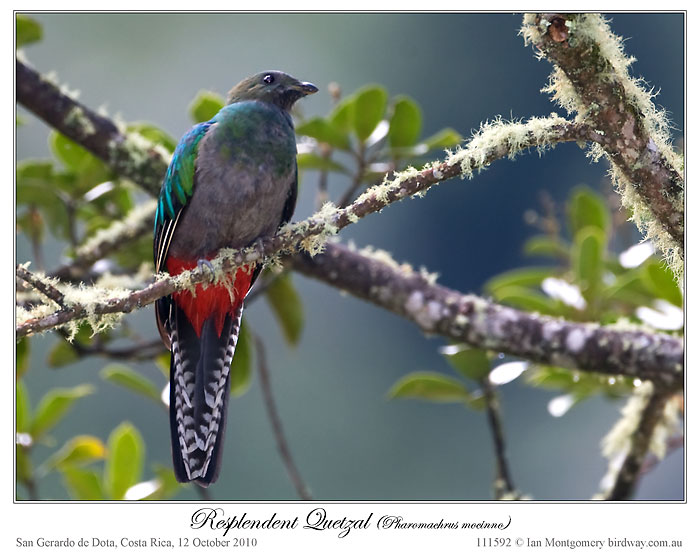
Resplendent Quetzal (Pharomachrus mocinno) by Ian Female

Resplendent Quetzal (Pharomachrus mocinno) by Ian Female

The female, fourth photo, shows the birds Trogon affinities – they are members of the Trogon family, Trogonidae – and she is quite gorgeous in her own right, though completely eclipsed by her amazing partner.

The adjective legendary is literally the case and the legends and myths focus on three aspects: the divine nature of the bird, the the defeat of the Mayans by the Spanish and its symbolic representation of liberty. You can read all about it here http://en.wikipedia.org/wiki/Resplendent_Quetzal and here http://blog.guatemalangenes.com/2009/03/legend-of-quetzal.html so I won’t repeat the details but just say that they add to the magic of the bird.

Resplendent Quetzal (Pharomachrus mocinno) by Ian5

Resplendent Quetzal (Pharomachrus mocinno) by Ian5

The tail streamers are not tail feathers – the tail is quite trogon-like – but erectible extensions of four of the feathers of the tail coverts, as you can see in the fifth photo. Similarly, the cloak-like feathers across the breast are the wing coverts.

Having photographed these amazing birds, mision completa as they say in Spanish, I was then free to relax and enjoy the rest of my stay in Costa Rica. The adventure, however, had just started and I have plenty of other interesting material for future birds of the week.

If you want to see the Quetzal, I highly recommend the Savegre Hotel. It’s family owned, has delightful gardens and its own primary cloud forest (the hotel is at 2,200m 7,200ft) and lots of trails, is on the Savegre River and Melvin tells me the best months for the Quetzal are February and March – I was there in the wet season and it rained heavily every afternoon.

I’m now back in California, due, flights permitting, to return to Australia tonight and looking forward to getting home.

Best wishes,
Ian

Ian Montgomery, Birdway Pty Ltd,
454 Forestry Road, Bluewater, Qld 4818
Phone: +61-7 4751 3115
Preferred Email: ian@birdway.com.au
Website: http://birdway.com.au


Lee’s Addition:

I am glad our prayers for your Quetzal were so speedily answered as were the ones for traveling mercies. That bird is a prize catch for most birdwatchers heading to Costa Rica.

Delight thyself also in the LORD; and he shall give thee the desires of thine heart. Commit thy way unto the LORD; trust also in him; and he shall bring it to pass. (Psalms 37:4-5 KJV)

To see Ian’s Trogonidae photos – Click Here

The Quetzals are part of the Trogonidae Family in the Trogoniformes Order.
Ian’s Bird of the Week: Clark’s Nutcracker

Clark's Nutcracker (Nucifraga columbiana) by Ian

Clark's Nutcracker (Nucifraga columbiana) by Ian

Ian’s Bird of the Week: Clark’s Nutcracker ~ by Ian Montgomery

Newsletter – 10-14-10

My apologies for the very late bird of the week. My last week in California was very full, so the flight to Costa Rica last Sunday was the first opportunity to prepare the photos and, owing to internet problems at my first two hotels, I haven’t been able to send this email until now (Thursday) although I wrote it on Monday morning.

Craggy Trail-Lassen Volcanic National Park

Craggy Trail-Lassen Volcanic National Park

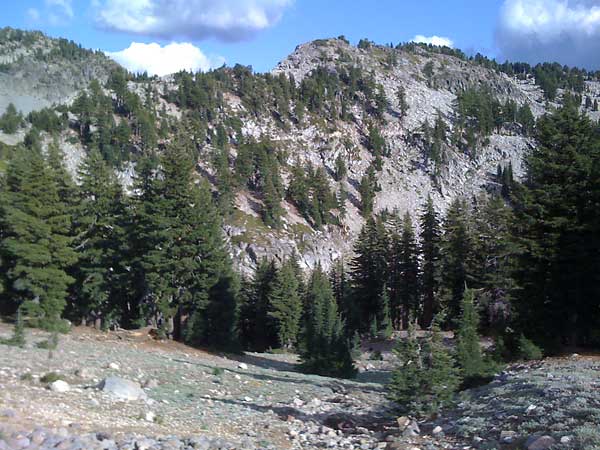
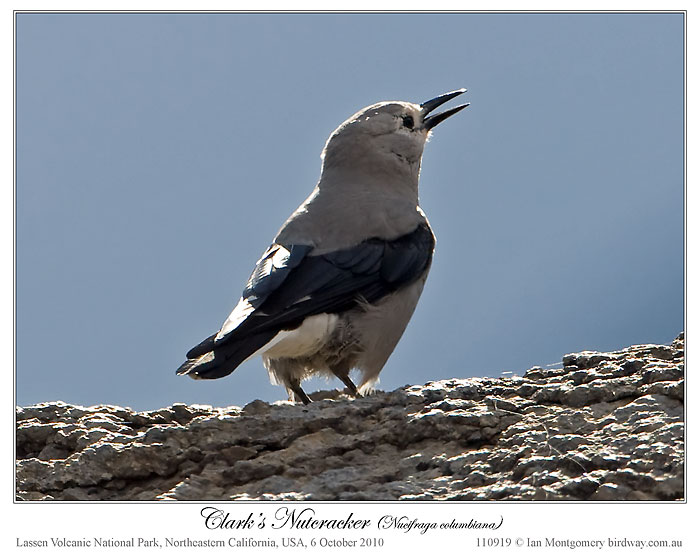
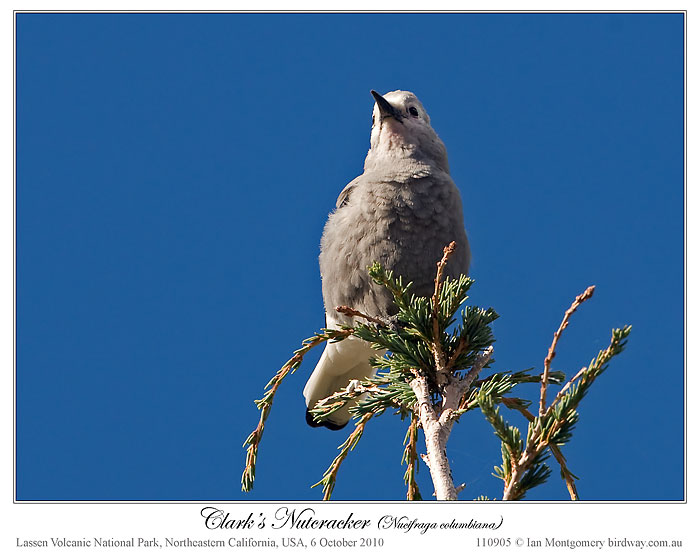
This is one of the birds of the week that gets chosen because there’s a good story to go with it. Clark’s Nutcracker is a mountain species, found near the tree-line in coniferous forest or rocky areas, that I’d only seen once before, in Colorado in September 1970 and and last week’s visit to Lassen Volcanic National Park in NE California was my third since 2008 to look for it. The first photo shows the craggy trail recommended by a ranger to Bumpass Hell (I kid you not) my sister, Gillian, and I took to look for it.

Clark's Nutcracker (Nucifraga columbiana) by Ian

Clark's Nutcracker (Nucifraga columbiana) by Ian

Clark's Nutcracker (Nucifraga columbiana) by Ian

Clark's Nutcracker (Nucifraga columbiana) by Ian

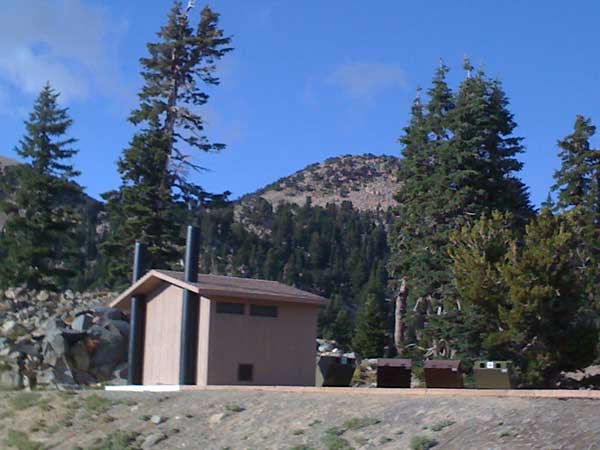
Eventually, we returned to the car park empty-handed and went to the rest-rooms shown in the second photo. After I’d emerged, I heard the call we had been listening for, and turned round the find Gillian looking for the source – a Clark’s Nutcracker calling mockingly at us perched the very top of the small pine tree right behind the building, third photo.

Restroom area-Lassen Volcanic National Park

Restroom area-Lassen Volcanic National Park

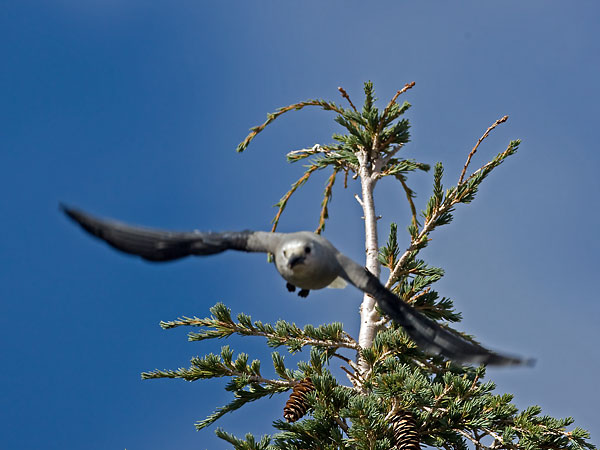
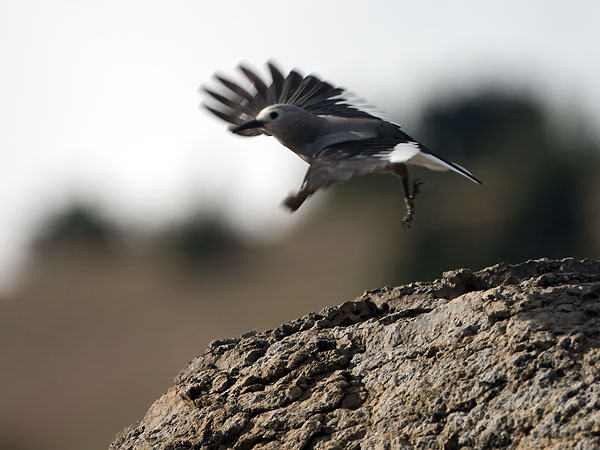
After a few seconds, it then flight right over my head and almost into the camera, fourth photo, to perch on a rock beside the car park, directly in front of the sun, thank you very much, fifth photo. I dodges the inevitable questions from a couple of tourists about the size of my 500mm lens to get in a better position before the bird flew, sixth photo, with its mate down into the very steep valley, never to be seen again.

Clark's Nutcracker (Nucifraga columbiana) by Ian

Clark's Nutcracker (Nucifraga columbiana) by Ian

Many birders will be familiar with the car park list, the ones you find waiting for you when you get back after a long and arduous hike and the rest-room list is a variation on this. And familiar with the advice to take your camera everywhere. EVERYWHERE! And with the settings ready to take photos of the unexpected.

My main target here is the elusive Resplendent Quetzal, so a collective world-wide prayer that I can serve it up to you as the next bird of the week would be greatly appreciated!

Best wishes,
Ian,

Ian Montgomery, Birdway Pty Ltd,
454 Forestry Road, Bluewater, Qld 4818
Phone: +61-7 4751 3115
Preferred Email: ian@birdway.com.au
Website: http://birdway.com.au


Lee’s Addition:
I couldn’t help but chuckle about his being ready at all times episode. It reminded me of a verse in Daniel that says,

Now if ye be ready that at what time ye hear the sound of the cornet, flute, harp, sackbut, psaltery, and dulcimer, and all kinds of musick, … (Daniel 3:15 KJV)

I didn’t read where it mentioned the “Clark’s Nutcracker calling mockingly.”

As usual, Ian had another interesting birdwatching experience.

The Clark’s Nutcracker (Nucifraga columbiana) are in the Corvidae – Crows, Jays family of the Passeriformes order.

See also:

a j mithra’s – Clark’s Nutcracker

Ian’s Bird of the Week – Sora

Sora (Porzana carolina) by Ian

Sora (Porzana carolina) by Ian

Ian’s Bird of the Week – Sora (#382) ~ By Ian Montgomery

Newsletter (#382)  – 09-29-10

Any birds that are a challenge to see exert a particular fascination. This includes all the night birds – owls, nightjars, etc – and all the skulkers and lurkers. We had a classic skulker, the American Bittern, a couple of weeks ago, and the crakes and rails belong in the same category and the same habitat. In Australia, I’ve never seen a Lewin’s Rail and I’ve never photographed a Spotless Crake. Here in the US, the Clapper Rails at the Baylands Park at Palo Alto are giving me a hard time too, but the Sora, a crake, and the Virginia Rail have been more obliging.

The Sora (Porzana carolina) is very close related to the Australian Spotted Crake (Porzana fluminea) and looks very similar, but lacks the Moorhen-like red spot on the bill. They both live in reedbeds but will sometimes come out into the open to feed, particularly in the evening and when water levels are low, as they are here now in California at the end of a dry summer.

Sora (Porzana carolina) by Ian

Sora (Porzana carolina) by Ian

I’ve recently visited a park in the hills above San Jose three times looking without success for Golden Eagles, but each time I’ve seen a Sora and twice a Virginia Rail as well. In fact, the bird in the first photo came out into the sunshine to feed on the edge of the reed when we – my sister is here now – were watching for a less cooperative Virginia Rail, that was making a lot of noise. All the crakes and rails have very distinctive, loud calls, so presumably they, like the bittern, have trouble seeing each other too.

Both species are widespread throughout the United Sates and southern Canada, so there’s probably a cautionary tale here about naming species after places, such as Virginia or carolina, though I’m presuming that they weren’t named after people. Both migrate, so crakes and rails will fly quite long distances if they have to – usually at night – and turn up in odd places. Some, like the Buff-banded Rail, widespread in Australia also occurs on coral islands on the Barrier Reef and in the South Pacific, where, with nowhere to hide, it can become quite tame. Others like the Lord Howe Island Woodhen, have gone to the skulking extreme and lost the ability to fly.

Links:

Sora
Australian Spotted Crake
Virginia Rail
Buff-banded Rail

Best wishes,
Ian

Ian Montgomery, Birdway Pty Ltd,
454 Forestry Road, Bluewater, Qld 4818
Phone: +61-7 4751 3115
Preferred Email: ian@birdway.com.au
Website: http://birdway.com.au


Lee’s Addition:

Well, Ian does it again! I saw a Sora once years ago and still haven’t been able to spot one again here in Central Florida. Ours hide a little more than the one he found. :)

I am glad that he is being successful out there in California. If I was envious, I would be upset, but I am not. I’ll just keep looking.

At any rate, the Sora is part of the Rallidae Family of Rails, Crakes & Coots. There are 131 species in the family. The Rallidaes keep company with the Flufftails, Finfoots, Trumpeters, Cranes and Limpkins who are also in the Gruiformes Order.

The Sora’s breeding habitat is marshes throughout much of North America. They nest in a well-concealed location in dense vegetation. The female usually lays 10 to 12 eggs, sometimes as many as 18, in a cup built from marsh vegetation. The eggs do not all hatch together. Both parents incubate and feed the young, who leave the nest soon after they hatch and are able to fly within a month. (Wikipedia)

Can the papyrus grow up without a marsh? Can the reeds flourish without water? While it is yet green and not cut down, It withers before any other plant. So are the paths of all who forget God; … (Job 8:11-13a NKJV)

Ian’s Bird of the Week – Wilson’s Warbler

Wilson's Warbler (Wilsonia pusilla) by Ian

Wilson's Warbler (Wilsonia pusilla) by Ian

Ian’s Bird of the Week – Wilson’s Warbler ~ by Ian Montgomery

Newsletter – 09-21-10

Here is the attractive Wlson’s Warbler one of the New World Wood-Warblers (family Parulidae) that is quite common in Canada and the western United States. We encountered this one at Point Reyes, an pleasant coastal area and good birding spot just north of San Francisco. With a length of only 12cm/4.75in, the specific name pusilla (small) given to it by Alexander Wilson in 1811 is appropriate.

The Wood-Warblers, so named to distinguish them from the unrelated Old World Warblers, are justifiably popular with American birders, particular during the spring and fall migrations. They come in a wide variety of shapes and colours, with over 50 species (out of a family total of near 120) occurring in North America. Most species spend the winter in Central and South America, a few in the warmer southern states such as California and Florida and during the migration, many birders are on the lookout for Warblers occurring outside their breeding range.

Wilson's Warbler (Wilsonia pusilla) by Ian

Wilson's Warbler (Wilsonia pusilla) by Ian

Alexander Wilson moved from Scotland to Pennsylvania in 1794 at the age of 28, became interested in ornithology in 1801 and decided in 1802 to publish a book illustrating all the North America birds. This appeared as the nine volume American Ornithology between 1808 and 1814, though Wilson died in 1813 and the ninth volume was completed by his friend George Ord. He met John James Audubon in 1810 and probably inspired him to publish his own book of illustrations, even though Audubon’s reaction to Wilson is described as ‘decidedly ambiguous’. (He declined to subscribe to American Ornithology, felt his own illustrations were much better and, in 1820, decided to publish the ‘greatest bird book ever’.) Seven species of birds are name after Wilson, including two on the Australian list, Wilson’s Phalarope and Wilson’s Storm-Petrel.

I have had a report of a list member having trouble accessing the Birdway website. If you have encountered any such difficulties recently, I’d like to hear from you. Recent additions to the website include:

Black Turnstone
Cassin’s Auklet
Rhinoceros Auklet
Sora
Virginia Rail

Best wishes,
Ian

Ian Montgomery, Birdway Pty Ltd,
454 Forestry Road, Bluewater, Qld 4818
Phone: +61-7 4751 3115
Preferred Email: ian@birdway.com.au
Website: http://birdway.com.au


Lee’s Addition:

Another winner for Ian. What a pretty little warbler. I like that black cap it is wearing. As he said, they are in the Parulidae Family. You can see his photos of the Parulidaes and then check out the whole family here at the Parulidae Family. There are 120 members in the family at this time.

By them the birds of the heavens have their home; They sing among the branches. (Psalms 104:12 NKJV)

Ian’s Bird of the Week – American Bittern

American Bittern (Botaurus lentiginosus) by Ian Montgomery

American Bittern (Botaurus lentiginosus) by Ian Montgomery

Ian’s Bird of the Week – American Bittern ~ by Ian Montgomery

Newsletter – 9/14/2010

Lightning, they say, doesn’t strike the same place twice. Luck, in bird photography, is rather similar: a missed opportunity usually remains just that. High on my list of American targets was the American Bittern, a cryptic and elusive bird of inaccessible reed beds that had successfully eluded me since I first did some serious birding in the USA exactly forty years ago. Imagine my delight and disappointment when I finally flushed one from reeds on the Feather River at Lake Almanor in NE California last Sunday but wasn’t quick enough to get a photo of it as if flew off. I found it in the viewfinder okay, but the autofocus didn’t as often happens when it gets distracted by a complex background.

American Bittern (Botaurus lentiginosus) by Ian Montgomery

American Bittern (Botaurus lentiginosus) by Ian Montgomery

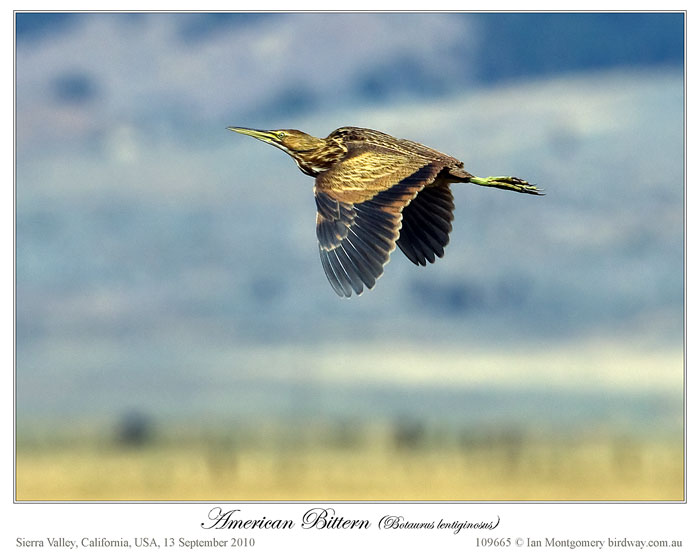
Yesterday, two days later, at Sierra Valley in the Sierra Nevada (‘Snowy Mountains’) I saw a large bird flying towards and past me across more reeds and decided to photograph it even before I realized that it was another Bittern, see the first photo. Shortly later, another more distant one flew past and then I found a couple more lurking in the dwindling area of wetland remaining at the end of a dry summer. Eventually, I startled one in a ditch beside the road which froze in indecision (if in doubt, freeze, is a Bittern maxim) frustratingly close but on the other side of an unpicturesque barbed wire fence.

American Bittern (Botaurus lentiginosus) by Ian Montgomery

American Bittern (Botaurus lentiginosus) by Ian Montgomery

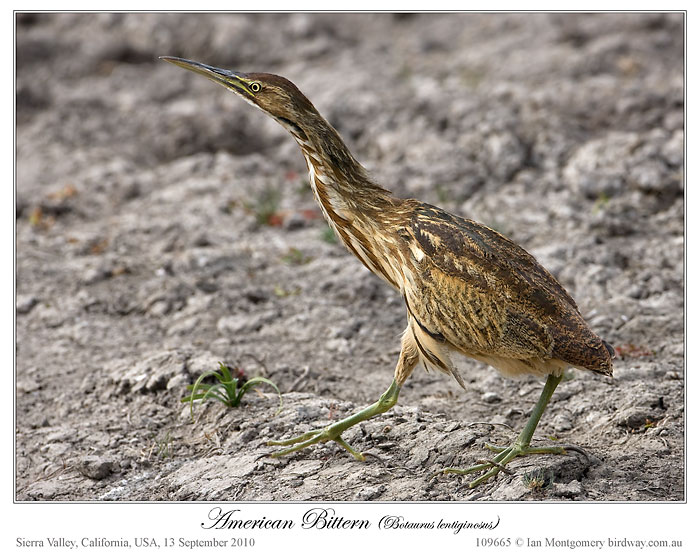
Then started a waiting game with an endlessly patient opponent that I was bound to loose. Eventually, I moved along the road away from it in the hope that it would come through the fence to regain the sanctuary of the ditch. In time, it did just that and quite stealthily, second photo. Bitterns are bizarre birds in appearance and behaviour, with extraordinarily effective camouflage and very beautiful plumage. When it had entered a small patch of reeds not much bigger than itself, it vanished, and search as I could with binoculars from a short distant, I never saw it again.

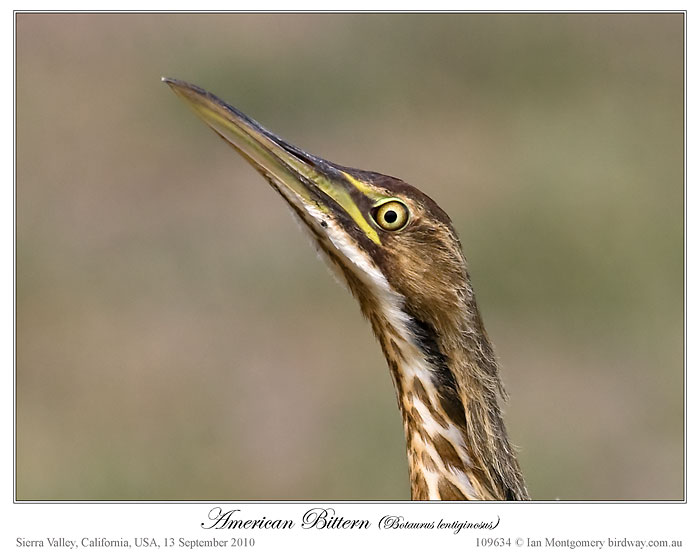
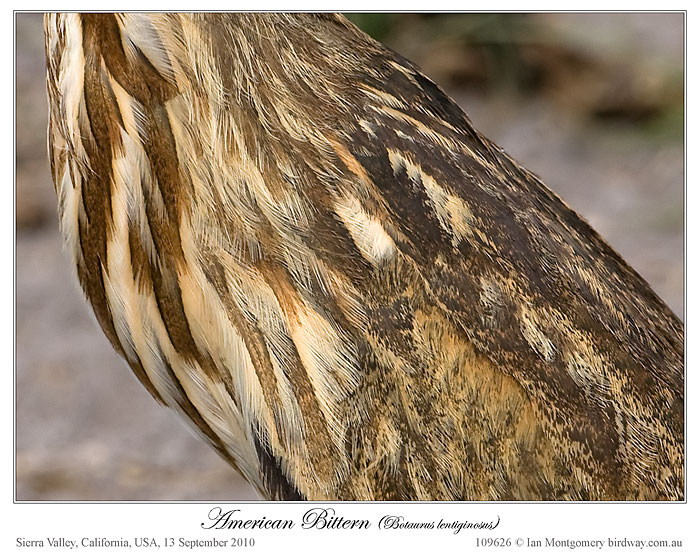
To do the plumage justice, I’ve included cropped enlargements of a couple of photos taken when the bird was behind the barbed wire. The fourth photo shows the gorgeous long neck feathers that drape over the breast and the exquisitely patterned feathers of the wing coverts.

American Bittern (Botaurus lentiginosus) by Ian Montgomery

American Bittern (Botaurus lentiginosus) by Ian Montgomery

Worldwide, there are four closely-related species of large Bitterns, one in North America, one in South America, one in Eurasia and Africa and one in Australasia. All have declined in population, but only the Australasian one is classed as endangered. All live in reed beds, all are mainly nocturnal, skulkers and easier to hear than see, particularly in the breeding season when they emit far-carrying booming sounds: presumably, they find each other easier to hear than see.

Links including recent additions:
Australiasian Bittern
Wrentit
White-breasted Nuthatch
Red-breasted Nuthatch
Red-shouldered Hawk
Sharp-shinned Hawk
Chestnut-backed Chickadee
Black-footed Albatross

On an almost totally unrelated subject, Birds Australian North Queensland has had a request from an Australian, Carolyne Hepi, living in a remote area of Papua New Guinea to support the local school by buying their 2011 Birds of Papua calendar, price 20 Australian Dollars. I think it is a great idea. Her email is carolyne_jon@hotmail.com and, if you want more information, I’ll make a copy of the pdf she sent us (size 3.8MB) available on the Birdway website.

Best wishes,
Iab

Ian Montgomery, Birdway Pty Ltd,
454 Forestry Road, Bluewater, Qld 4818
Phone: +61-7 4751 3115
Preferred Email: ian@birdway.com.au
Website: http://birdway.com.au


Lee’s Addition:

Thanks, Ian, for another great birdwatching adventure for us to read about. Saw an American Bittern in Texas in early 2000 and they are hard to capture in binoculars let alone get a decent photo of them. Great job!

Bitterns are in the Ardeidae- Herons, Bitterns Family which has 14 species world-wide. Also check out Ian’s Ardeidae family photos. The Bitterns are part of the Pelicaniformes Order and are mentioned as a Bird of the Bible.

I will also make it a possession for the bittern, and pools of water: and I will sweep it with the besom(broom) of destruction, saith the LORD of hosts. (Isa 14:23)


Family#26 – Ardeidae
*

Ian’s Bird of the Week – Buller’s Shearwater

Buller's Shearwater (Puffinus bulleri) by Ian

Buller's Shearwater (Puffinus bulleri) by Ian

Ian’s Bird of the Week – Buller’s Shearwater ~ by Ian Montgomery

Newsletter – 09-07-10

Buller's Shearwater (Puffinus bulleri) by Ian

Buller's Shearwater (Puffinus bulleri) by Ian

I went on a pelagic boat trip from Monterey shortly after my arrival in California. Buller’s Shearwater was one of three species of Shearwater that we encountered in quite large numbers. The others were the Sooty and the Pink-footed. All three are on the Australian list, though the Pink-footed, which breeds off the coast of Chile, is extremely rare in Australia. Buller’s breeds on islands off New Zealand and both it and the Sooty (breeds in New Zealand, the Falklands and Tierra del Fuego) are regular visitors to both Australia and California in the their annual circuit around the Pacific. Having myself just endured a flight – with considerable artificial aid – across the Ocean, I couldn’t help but be very impressed.

Buller's Shearwater (Puffinus bulleri) by Ian

Buller's Shearwater (Puffinus bulleri) and Pink-footed Shearwater (Puffinus creatopus) by Ian

I’ve chosen Buller’s as it is the most elegant and distinctive of the three with very white underparts (first photo), a well-defined black cap, and M-shaped dark markings on the otherwise grey upper surface of the wings (second photo). With a length of 46cm/18in and a wingspan of 100cm/40in it is intermediate in size between the smaller Sooty and the slightly larger Pink-footed. Incidentally, Buller’s Shearwater is the 600th Australian species to be included in the website.

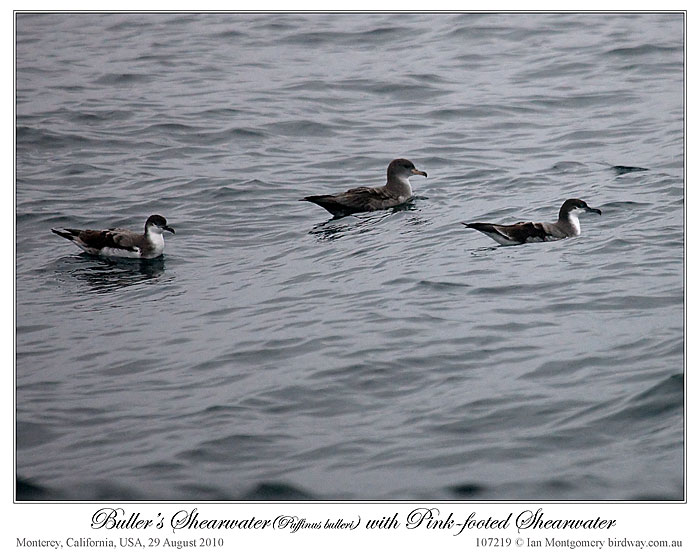
We encountered all three mainly in flight, but also swimming on the surface in mixed flocks. The third photo shows two Buller’s and a Pink-footed. The Pink-footed also has a pale body, but the contrast is less marked and, in flight, the dorsal surface of the wings are relatively uniform in colour. The Sooty, is dark all over except for paler underwing patches.

Buller's Shearwater (Puffinus bulleri) and Black-footed Albatross (Phoebastria nigripes) by Ian

Buller's Shearwater (Puffinus bulleri) and Black-footed Albatross (Phoebastria nigripes) by Ian

Another common bird on the trip was the Black-footed Albatross, which nests on islands off Hawaii. The fourth photo shows one flying alongside a Buller’s Shearwater and it has about double the wingspan – around 2m/80in – and is comparable in size to the Australian Mollymawks such as the Shy Albatross.

Relatively calm seas with a 2m/6ft swell were ideal for the trip, but it was overcast and rather gloomy for photography. Photo of the day wasn’t a bird but a Pacific White-sided Dolphin, fifth photo, which obligingly soared out of the water when I was idly following it underwater in the viewfinder of the camera. Whales were very much in evidence with Hump-backed, Fin and Blue Whales and a few days later I photographed Grey Whales farther up the coast. Consequently, I’ve added a section on Cetaceans to the Other Wildlife part of the website.

Links:

Buller’s Shearwater
Pink-footed Shearwater
Sooty Shearwater

Pacific White-sided Dolphin by Ian

Pacific White-sided Dolphin by Ian

Cetaceans

Blue Whale
Fin Whale
Humpbacked Whale
Grey Whale
White-sided Dolphin

Best wishes,
Ian

Ian Montgomery, Birdway Pty Ltd,
454 Forestry Road, Bluewater, Qld 4818
Phone: +61-7 4751 3115
Preferred Email: ian@birdway.com.au
Website: http://birdway.com.au


Lee’s Addition:

Another great adventure for Ian and what a shot of that Dolphin! Perfect timing. Great bird shots also.

The Buller’s Shearwater is in the Procellariidae – Petrels, Shearwaters Family. At present there are 86 species in the family including the Petrels, Shearwaters, Fulmars, and Prions. They are part of the Procelliiformes Order which also includes the Albatrosses – Diomedeidae Family which has 21 species.

And he looked on the Kenites, and took up his parable, and said, Strong is thy dwellingplace, and thou puttest thy nest in a rock. (Numbers 24:21 KJV)

Most procellariids’ nests are in burrows or on the surface on open ground, with a smaller number nesting under the cover of vegetation (such as in a forest). All the fulmarine petrels bar the Snow Petrel nest in the open, the Snow Petrel instead nesting inside natural crevices. Of the rest of the procellariids the majority nest in burrows or crevices, with a few tropical species nesting in the open. There are several reasons for these differences. The fulmarine petrels are probably precluded from burrowing by their large size (the crevice-nesting Snow Petrel is the smallest fulmarine petrel) and the high latitudes they breed in, where frozen ground is difficult to burrow into. The smaller size of the other species, and their lack of agility on land, mean that even on islands free from mammal predators they are still vulnerable to skuas,[28] gulls and other avian predators, something the aggressive oil-spitting fulmars are not. The chicks of all species are vulnerable to predation, but the chicks of fulmarine petrels can defend themselves in a similar fashion to their parents. In the higher latitudes there are thermal advantages to burrow nesting, as the temperature is more stable than on the surface, and there is no wind-chill to contend with.

Ian’s Bird of the Week – Anna’s Hummingbird

Anna's Hummingbird (Calypte anna) by Ian

Anna's Hummingbird (Calypte anna) by Ian

Ian’s Bird of the Week – Anna’s Hummingbird ~ by Ian Montgomery

Newsletter – 09-01-10

As promised last week, here is Anna’s Hummingbird, the common Hummingbird of gardens and parks along the West coast of the United States. Many houses, including the one I am in, have hummingbird feeders to attract these delightful birds.

Anna's Hummingbird (Calypte anna) by Ian

Anna's Hummingbird (Calypte anna) by Ian

They can be quite inconspicuous, despite the striking colours of the male birds. They alternate between hovering and sudden bursts of very rapid flight which makes them appear and disappear with equal facility. The feathers have, in effect, lots of minute mirrors on them and the bright colour is only visible at exactly the right angle to the light. Otherwise, they look quite dark, dare I say drab, like the male in the first photo hovering at the feeder. The second and third photos, also males, show the claret-coloured head and breast quite well, even though the birds are perched in the shade. Young birds and females are mainly green and grey, though adult females have a small red patch on the throat.

At 12.5cm/4in in length Anna’s is quite large by hummingbird standards. Most of the North American hummingbirds are migrants and spend the winters in Mexico and/or Central America, but Anna’s is an exception and is resident in coastal areas of the western states. They are quite aggressive and males chase other males away from feeders. They also seem quite curious and will check you out by hovering quite closely.

Anna's Hummingbird (Calypte anna) by Ian

Anna's Hummingbird (Calypte anna) by Ian

Hummingbirds occur only in the Americas and there are more than 300 species. 27 of these, mostly photographed in Ecuador and Trinidad, are on the website: http://www.birdway.com.au/trochilidae/index.htm .

I went on a successful pelagic boat trip out of Monterey last Sunday, so next week’s bird will feature a wanderer that is also on the Australian list that I haven’t seen before. Sometimes, you have to travel quite far to track down local birds!

Best wishes,
Ian


Ian Montgomery, Birdway Pty Ltd,
454 Forestry Road, Bluewater, Qld 4818
Phone: +61-7 4751 3115
Preferred Email: ian@birdway.com.au
Website: http://birdway.com.au


Lee’s Addition:

I am glad Ian is getting to see the Hummingbirds up close here. Sure he is as thrilled to see them as we would be watching some of those beautiful birds that they have only in Australia. Welcome to America, Ian.

Where we live, there are very few hummers even in the winter. Other area of the state get some, but not this area. The description of the reflection the hummingbird gives when facing the light reminds me of several verses.

Make thy face to shine upon thy servant: save me for thy mercies’ sake. (Psalms 31:16 KJV)

Make thy face to shine upon thy servant; and teach me thy statutes. (Psalms 119:135 KJV)

And they that be wise shall shine as the brightness of the firmament; and they that turn many to righteousness as the stars for ever and ever. (Daniel 12:3 KJV)

Check out his Trochilidae Family pages and also the Trochilidae – Hummingbird Family page here.

*

Ian’s Bird of the Week – Pacific Loon

Pacific Loon(Gavia pacifica) by Ian

Pacific Loon(Gavia pacifica) by Ian

This week’s choice was based on (a) the fact that I promised an American this week and (b) because I ended up travelling a day late on Air Pacific via Fiji as my V Australia flight was cancelled, and wanted to make a horrible pun along the lines of loons and choice of airline and the ‘meals’ that they provide. I’ve decided to spare you that, as we all know that airline food is terrible and I shouldn’t be surprised when it plumbs new depths.

Anyway, it’s lovely to be back in California and I spent some time this morning trying to photograph the Anna’s Hummingbirds in the backyard. They need to be photographed at exactly the right angle to the light to show the magenta on the head. I haven’t yet done that to my satisfaction, so I’ll keep that for another day.

Pacific Loon (Gavia pacifica) by Ian - from his Website

Pacific Loon (Gavia pacifica) by Ian - from his Website

This Pacific Loon I photographed in Barrow in northern Alaska on my last trip 2 years ago when it was swimming among the ice-floes along the beach where there was some open water in the otherwise frozen sea. ‘Loons’ to Americans and ‘Divers’ to the British form a small northern hemisphere family of 5 species – http://www.birdway.com.au/gaviidae/index.htm – all of which are mostly marine fish-eaters except when breeding when they nest beside freshwater lakes, often far inland. They are brilliantly adapted to an aquatic life and prefer to dive than fly. How sensible.

The Pacific Loon is very closely related and similar in appearance to the Arctic Loon/Diver of Eurasia. The bird in the photo is in breeding plumage (it was mid-summer’s day) and all the loons/divers then have strikingly patterns, while the non-breeding plumage is a rather drab grey and white. They’re big birds, with the Pacific having a length of 64cm/25in.

The enforced leisure of my journey gave me ample opportunities to work on the website, and I have made some additions http://www.birdway.com.au/#updates and finally updated Ian’s Picks:

Black Swan
Andean Cock-of-the-Rock
White-throated Dipper
Northern Brown Bandicoot

Australian Wildlife - Ian

Australian Wildlife

Earlier this year, I provided many photos for a new Brandt guide to Australian Wildlife by Stella Martin and received my copy shortly before I left Australia. I think Stella has done a wonderful job in producing a comprehensive but concise introduction across a broad field which is eminently readable. Being a paperback it’s ideal for the visitor to Australia and great value. Amazon now have it in stock: Australian Wildlife and it is becoming available in book stores. I’ve attached a copy of the cover to whet your appetite!

Best wishes,
Ian

Ian Montgomery, Birdway Pty Ltd,
454 Forestry Road, Bluewater, Qld 4818
Phone: +61-7 4751 3115
Preferred Email: ian@birdway.com.au
Website: http://birdway.com.au


Lee’s Addition:

Since Ian is traveling, I went to his website and got the second photo of the Pacific Loon swimming towards the camera. I am sure Ian won’t mind. As Ian said, the Loons are in the Gaviidae Family which is in the Gaviiformes Order. In other words, they are the only family in that Order.

Their sounds are sad and remind me of wailing.

Behold, he cometh with clouds; and every eye shall see him, and they also which pierced him: and all kindreds of the earth shall wail because of him. Even so, Amen. I am Alpha and Omega, the beginning and the ending, saith the Lord, which is, and which was, and which is to come, the Almighty. (Revelation 1:7-8 KJV)

See:

Ian’s Gaviidae Family,

Birds of the World – Gaviidae Family and the Gaviiformes Order.
*

Ian’s Bird of the Week – Tooth-billed Bowerbird

Tooth-billed Bowerbird (Scenopoeetes dentirostris) by Ian

Tooth-billed Bowerbird (Scenopoeetes dentirostris) by Ian

Ian’s Bird of the Week – Tooth-billed Bowerbird ~ by Ian Montgomery

Newsletter 8-20-10

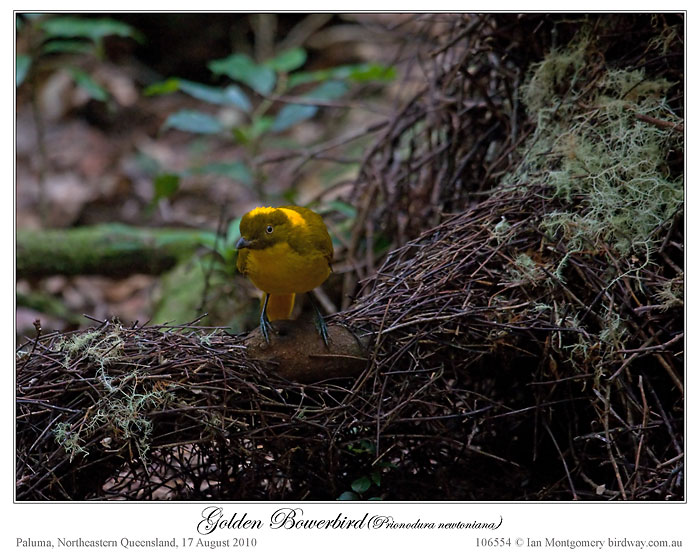
I’m squeezing this bird of the week in between the Birds Australia Congress and Campout, which finished this morning, and my departure for California tomorrow. The Congress and Campout was a great success and ran like clockwork thanks to the preparation, dedication and hard work of our secretary and committee. I had a request from a participant to make the Golden Bowerbird – one of the highlights of the Campout – this week’s bird but this species starred in this role earlier this year. So, instead I’ve chosen the Tooth-billed Bowerbird and included a photo of the Golden Bowerbird, both being endemics of the Queensland wet tropics and inhabiting highland rainforest.

Tooth-billed Bowerbird (Scenopoeetes dentirostris) by Ian

Tooth-billed Bowerbird (Scenopoeetes dentirostris) by Ian

It’s not spectacular in appearance like the Golden Bowerbird, but it’s an interesting bird nevertheless. It doesn’t build a bower; instead it has a display platform consisting of an oval cleared space on the ground around a small tree trunk with a suitable branch used as a perch for singing above the platform. It decorates the platform with large, fresh leaves that the bird collects by using its serrated bill to chew through the leaf stem. The second photo shows a bird in full song and you can see the serrations on the bill, from which it gets the name. Like other bowerbirds, it is an accomplished songster and very good a mimicry. It is also fussy. Most bowerbirds are extraordinarily fussy in their choice of objects and colours to decorate the bowers. Tooth-billed Bowerbirds only use leaves, but the leaves are carefully chosen for appearance and laid upside down, with the paler surface uppermost. Apparently, if you turn them up the other way, the bird will put them back the correct way.

Golden Bowerbird (Prionodura newtoniana) by Ian

Golden Bowerbird (Prionodura newtoniana) by Ian

They usually start attending their display areas in September, so we were a bit early and I don’t think anyone actually saw one, though there were reports of hearing them. There was, however, some early activity and a couple of birds had several leaves in place. At the peak of the season, there may be up to 30 or so leaves, and these are replaced regularly with fresh ones. The Golden Bowerbirds had made an early start to and were decorating their bowers with pieces of lichen. The bird in the third photo, taken last Tuesday, has just added a piece to the bigger pile on the left and he is standing on the display perch between the two piles of twigs – ‘maypoles’ – that make up the typical bower of this species. The display perch is very important as it is where all the real action takes place, and you can see that this one is well worn.

You can expect an American as the next Bird of the Week. I’ve gone right off flying in recent years, so I’m getting the train to Brisbane for my flight to San Francisco. Unfortunately, there isn’t a convenient alternative to flying if you wish to cross the Pacific.

Best wishes,
Ian

Ian Montgomery, Birdway Pty Ltd,
454 Forestry Road, Bluewater, Qld 4818
Phone: +61-7 4751 3115
Preferred Email: ian@birdway.com.au
Website: http://birdway.com.au


Lee’s Addition:

The Bowerbirds are in the Ptilonorhynchidae – Bowerbirds Family. The family has 17 Bowerbirds and 3 Catbirds in it and they are part of the Passeriformes Order (Songbirds).

Previous articles on Bowerbirds:

Ian’s Bird of the Week – Spotted Bowerbird and the Golden Bowerbird

a j mithra’s – Golden Bowerbird


Family#126 – Ptilonorhynchidae
*

Ian’s Bird of the Week – Cape Barren Goose

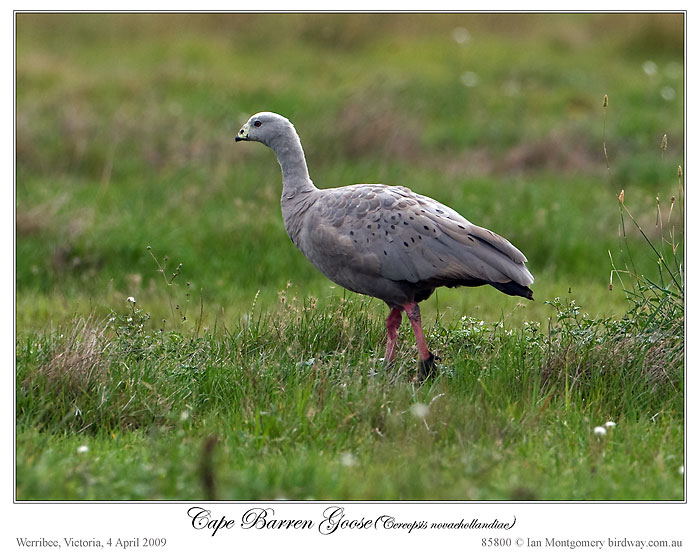
Cape Barren Goose (Cereopsis novaehollandiae) by Ian

Cape Barren Goose (Cereopsis novaehollandiae) by Ian

Ian’s Bird of the Week – Cape Barren Goose ~ by Ian Montgomery

Newsletter 08-14-10

Here’s one, the Cape Barren Goose, from the other end of Australia for a change, taken last year at the euphemistically named Western Treatment Plant at Werribee southwest of Melbourne.

It’s a large goose, to 100cm/40in in length with drooping wing feathers when standing, giving it a slightly 19th Century bustle. It has a large greenish-yellow cere and red legs with black feet. Its range includes Northern Tasmania, the islands of Bass Strait and the south coast of Australia from Victoria in the east to islands near Albany in Western Australia. It’s not particularly common with a population estimated at about 17,000 but the population is stable and it has been introduced to a number of places including Kangaroo Island in South Australia and New Zealand.

Cape Barren Goose (Cereopsis novaehollandiae) by Ian

Cape Barren Goose (Cereopsis novaehollandiae) by Ian

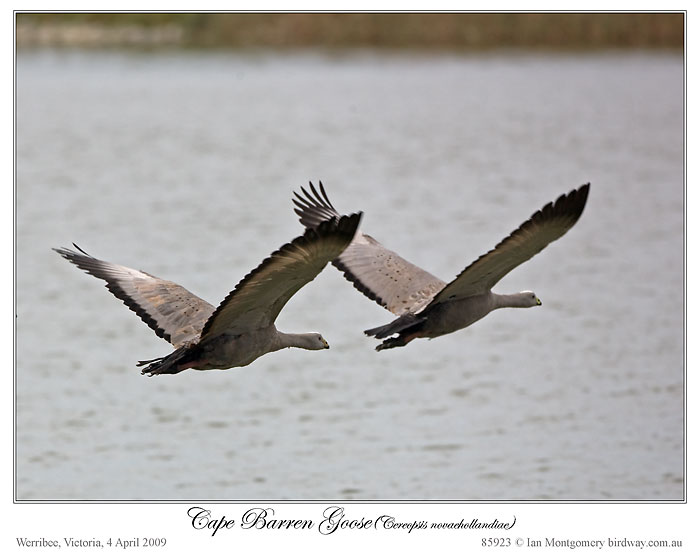
The birds are grazers and feed on grasslands and cultivated pastures. They are wary, and when they take flight they fly strongly, as in the second photo.

The Birds Australia Congress starts in Townsville this evening and the Campout starts next Monday. So, if you’re attending I’ll look forward to catching up with you. In the meantime, in haste, I haven’t updated Ian’s Picks on the website but will do so when I get a moment and will let you know.

Link: http://www.birdway.com.au/anatidae/cape_barren_goose/index.htm

Best wishes,
Ian


Ian Montgomery, Birdway Pty Ltd,
454 Forestry Road, Bluewater, Qld 4818
Phone: +61-7 4751 3115
Preferred Email: ian@birdway.com.au
Website: http://birdway.com.au


Lee’s Addition:

Looks like Ian is off on another one of his adventures down there in Australia. The Cape Barren Goose is in the Anatidae Family along with Ducks, Teals, Shelducks, Mergansers, Geese, Swans and their allies and are part of the  Anseriformes Order.
And to every beast of the earth and to every bird of the heavens and to everything that creeps on the earth, everything that has the breath of life, I have given every green plant for food.” And it was so. And God saw everything that he had made, and behold, it was very good. And there was evening and there was morning, the sixth day. (Genesis 1:30-31)

*

Ian’s Bird of the Week – Banded Lapwing

Banded Lapwing (Vanellus tricolor) by Ian

Banded Lapwing (Vanellus tricolor) by Ian

Ian’s Bird of the Week – Banded Lapwing ~ by Ian Montgomery

Newsletter – 08-05-10

Banded Lapwing (Vanellus tricolor) by Ian

Banded Lapwing (Vanellus tricolor) by Ian

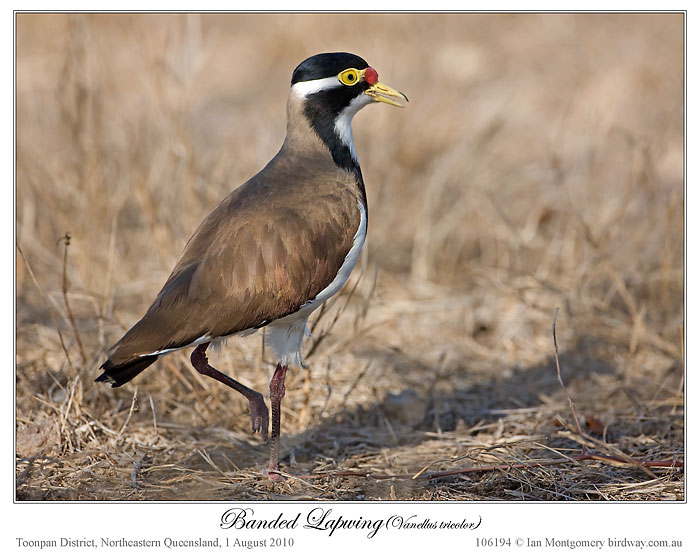
There are two species of Lapwing in Australia. One, the Masked Lapwing, is widespread, common and well-known throughout northern and eastern Australia and Tasmania. It’s familiar because it is at home in populated areas, large, aggressive when nesting, and always noisy when disturbed, even at night, a real larrikin, to use an Australian expression. The other, the Banded Lapwing is the opposite. It’s smaller, quieter, uncommon, not well-known and wary, occurs in drier country away from people, and altogether much more dignified.

Banded Lapwing (Vanellus tricolor) by Ian

Banded Lapwing (Vanellus tricolor) by Ian

It occurs mainly west of the Great Divide and south of the Tropic of the Capricorn, including Tasmania, though there is a small resident population in the dry, cattle-grazing country south of Townsville, north of its usual range. A friend of mine took me there last Sunday so that I could take some photos. Previously, I’d seen them only in Victoria and Western Australia.

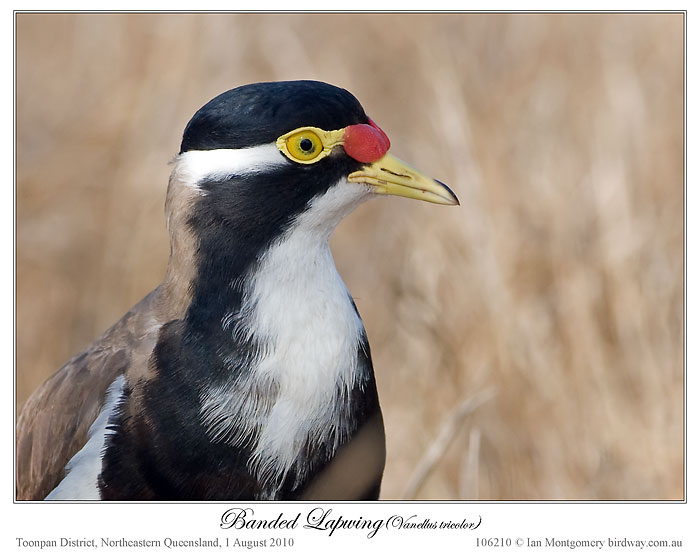
Masked Lapwings have large, pendulous, yellow, facial wattles that make them look rather ridiculous, but larrikins don’t worry about appearances. Banded Lapwings have small discreet red wattles, that combine tastefully with the yellow eyes and bills and black, white and tan plumage; presumably the scientific name tricolor refers only to the plumage. The birds – we found about ten – allowed close approach in the car and eventually seemed to get quite used to my presence, though the curious cattle came over too and got in the way a lot.

Banded Lapwing (Vanellus tricolor) by Ian

Banded Lapwing (Vanellus tricolor) by Ian

I concentrated on a group of 5 birds, one of which was a juvenile – the third photo – so the birds had bred recently. Juveniles have small, pale wattles and camouflaged plumage. One pair of adults came quite close to the car and eventually mated. Banded Lapwings are supposedly monogamous and I wondered whether this pair were the parents of the juvenile bird.

Lapwings form a sub-family within the Plover family and there are about 25 species world-wide in every continent except North and Central America. I’ve chose a pair of Yellow-wattled Lapwings – from India as the current Old World pick for comparison. This pair is also mating, so either Lapwings like doing it in public or I like photographing them doing it: the choice is yours.

Other current picks include:
Australia: Red-capped Robin
New World: Blue-footed Booby
Other Wildlife: Koala

Links:
Masked Lapwing
Banded Lapwing

I recently spent a night at a Bed and Breakfast place in Alligator Creek recently opened by friends of mine, Colin and Helen Holmes. Alligator Creek is about 25km south of Townsville and close to the Mount Elliott section of Bowling Green Bay National Park. Their house is set in several acres of land with plenty of trees and shrubs right on the Creek. It’s a delightful place and very comfortable and you’ll be well looked after and supplied with a lavish breakfast. I can recommend it highly, so if you’re looking for somewhere friendly and peaceful to stay near Townsville check out their website: http://www.alligatorcreekbedandbreakfast.com.au/ .

Best wishes,
Ian

Ian Montgomery, Birdway Pty Ltd,
454 Forestry Road, Bluewater, Qld 4818
Phone: +61-7 4751 3115
Preferred Email: ian@birdway.com.au
Website: http://birdway.com.au


Lee’s Addition:

The Banded Lapwing is part of the Charadriidae  Family which includes not only Lapwings but also Plovers, Dotterels and a Wrybill. There are 67 species in the family. They are in the Charadriiformes Order which has 19 families.

The Lapwing is one of the Birds of the Bible. See the Lapwing page.

And the stork, the heron after her kind, and the lapwing, and the bat. (Lev 11:19 KJV)

See all of Ian’s Birds of the Week

*

Ian’s Bird of the Week – Red-necked Stint

Red-necked Stint (Calidris ruficollis) by Ian

Red-necked Stint (Calidris ruficollis) by Ian

Ian’s Bird of the Week – Red-necked Stint ~ by Ian Montgomery

Newsletter – 04-01-09

This time of the year, almost anywhere in the world, is a good time to go looking for waders. Not only does the (northern) Spring migration mean that unusual species can turn up, but many of these migrants are acquiring their breeding plumages. So, if you’ve ever been faced with the daunting challenge of identifying waders in their drab winter plumage, you could be in for some pleasant surprises.

Red-necked Stint (Calidris ruficollis) by Ian in breeding and non-breeding plumage

Red-necked Stint (Calidris ruficollis) by Ian in breeding and non-breeding plumage

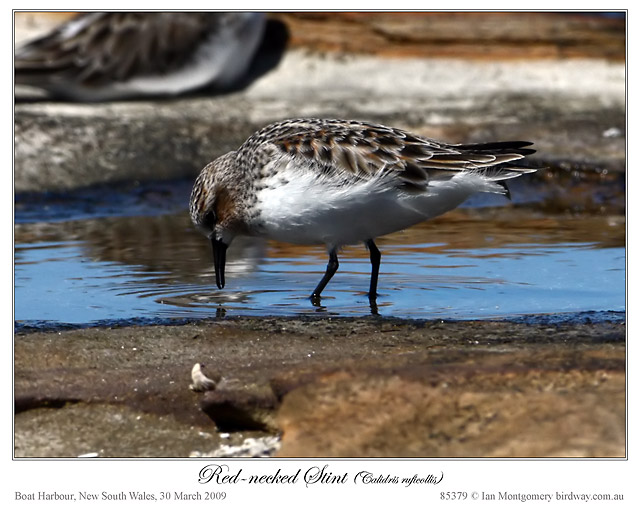
A case in point is the Red-necked Stint, a common non-breeding visitor to Australia, where the plumage is normally anything but red. The bird in the photo is in partial, or ‘pre-breeding’, plumage with the delicate
pinkish-chestnut face and breast and the black and chestnut wing coverts. A dapper little bird by any standards, I think.

‘Little’ is the operative word. Stints – there are 4 species – are the world’s smallest waders and the Red-necked Stint with a length of 13 – 16 cm/5 – 6.3″ is slightly smaller than a House Sparrow (14 – 16 cm). Size doesn’t stop it being one of the champions of migration, breeding in the Arctic tundra of Siberia and northern Alaska and spending the northern winter in Australasia and as far as south as sub-Antarctic islands.

At this time of the year, the birds are feeding madly, building up their fat reserves for the long trip. Apparently, they can lose half of their body weight during the migration.

The sharp-eyed among you will have noticed that the photo was taken at Boat Harbour during a brief visit to the Sydney region earlier this week. It’s tax time and I went to Boat Harbour after a meeting with my accountant in nearby Sutherland. To my friends in Sydney I extend an apology that I didn’t have time to catch up with them.

Best wishes,
Ian

Ian Montgomery, Birdway Pty Ltd,
454 Forestry Road, Bluewater, Qld 4818
Phone: +61-7 4751 3115
Preferred Email: ian@birdway.com.au
Website: http://birdway.com.au


Lee’s Addition:

Storks, doves, swallows, and thrushes all know when it’s time to fly away for the winter and when to come back… (Jer 8:7)

This is one of the catch-up newsletters I am finally finding time to do. Will be releasing several more of these in the next little bit. Finally have some time to work on them. See Ian’s Bird of the Week list to see  Ian’s articles. He will continue to do his current ones also.

The Stint mentioned was getting ready for spring migration, but of course this time of the year, they start preparing for their fall migration. I also went to Ian’s Birdway and found an extra photo. The Stint is in the Scolopacidae Family of Sandpipers and Snipes. The Scolopacidaes are in the Charadriiformes Order which has 19 families.

*

Ian’s Bird of the Week – Red-necked Stint