A Beauty from THE BEAUTY…

A Beauty from THE BEAUTY… – by a j mithra

Grey Crowned Crane (Balearica regulorum) by Bob-Nan

Grey Crowned Crane (Balearica regulorum) by Bob-Nan

The Grey Crowned Crane is a tall, majestic looking bird which sports a crown of sorts, made of tall stiff golden feathers that looks for all the world like a real crown. He has large white patches of feathers on his cheeks with small red patches at the top of them and a slate gray coloring over most of his wings, with a black bill and legs.

The Grey Crowned is quite tall for a Crane, at about three feet high when they are fully mature, with the crown making them appear taller still. They are among the largest of the cranes with a wing span that can reach six and a half or seven feet across when they are in flight.

If GOD can crown these beautiful birds, don’t you think that HE would crown us? It is for us that HE left HIS glory, so that we may be crowned with eternal life…

Blessed is the man that endureth temptation: for when he is tried, he shall receive the crown of life, which the Lord hath promised to them that love him. James 1:12

The one who created these beautiful birds is the only ONE who is the most beautiful of all…

His mouth is most sweet: yea, he is altogether lovely. This is my beloved, and this is my friend, O daughters of Jerusalem. Songs of Solomon 5:16

The ONE who created us in HIS own image became nothing on the cross, so that we would become something for HIS glory..

HE turned ugly on the cross to make us beautiful…

But he was wounded for our transgressions, he was bruised for our iniquities: the chastisement of our peace was upon him; and with his stripes we are healed.

Grey Crowned Crane (Balearica regulorum) by Daves BirdingPix

Grey Crowned Crane (Balearica regulorum) by Daves BirdingPix

The Grey Crowned Crane is found near rivers and wetlands, usually in marshy grasslands near rivers or lakes in Eastern Zaire, Kenya, Tanzania and Uganda.

We are supposed to be found by the Living waters that flow from the cross… Where are we right now? Whom do we trust?

For he shall be as a tree planted by the waters, and that spreadeth out her roots by the river, and shall not see when heat cometh, but her leaf shall be green; and shall not be careful in the year of drought, neither shall cease from yielding fruit. Jeremiah 17:8

Come to the cross, where the blood is still alive to cleanse you… Come to the Living water, which still flows to quench your thirst….

Social and gregarious during most of the year, moving about in flocks of up to 100 and roosting in trees or riverbeds. The cranes’ long legs and necks and excellent peripheral vision help them spot predators in the tall Savannah grasses.

Some of us may have lost our way, in the process may have lost our vision too..

The Bible says,

The statutes of the LORD are right, rejoicing the heart: the commandment of the LORD is pure, enlightening the eyes. Psalm 19:8

In breeding season which is springtime in this area, the pairs of cranes will build nests which are very large, made of grass and vegetation on the lesser wet parts of the marshy ground or even in shallow water. The cranes remain monogamous, and even after the chicks leave the nest the pair remains together, and will breed each season strictly with each other, remaining paired for life.
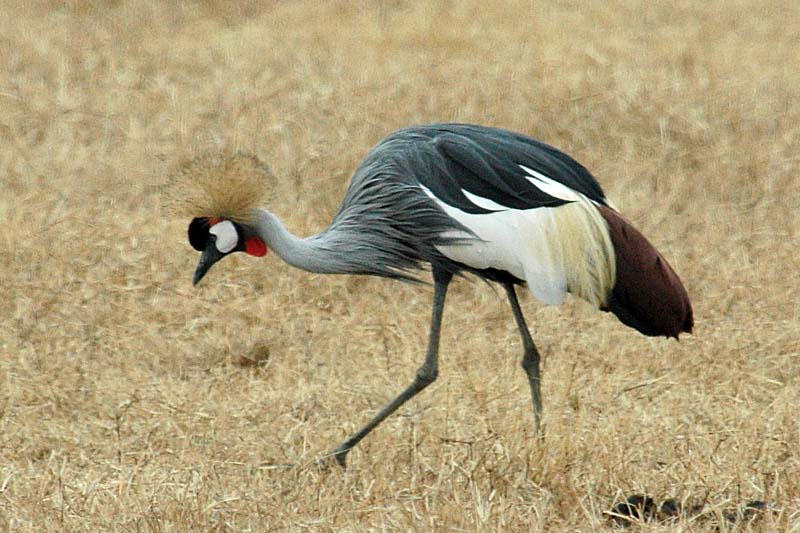
Grey Crowned Crane (Balearica regulorum) by Bob-Nan

Grey Crowned Crane (Balearica regulorum) by Bob-Nan

An omnivore, the crowned crane eats plants, seeds, grain, insects, frogs, worms, snakes, small fish and eggs of water animals. Stamping their feet as they walk, they flush out insects which are quickly caught and eaten. One of the most beautiful of all cranes, and the only crane which will roost in trees.

We too are supposed to be the only tree roosters.. We are those who carry our own tree to roost on the cross tree….

The spectacular dances performed by the adults are not strictly connected with reproductive behavior but are also an expression of joy.

Dancing for the LORD is an act of worship…. He was the King, but still, David danced before the Lord.Eeven though his wife Michal made fun of him, Kind David said,

And I will yet be more vile than thus, and will be base in mine own sight: and of the maidservants which thou hast spoken of, of them shall I be had in honour. 2Samuel 6:14

Do we have the guts to say so?

Both the male and female cooperate in building the nest, and in defending the eggs and the chicks. Crowned crane parents often pretend to be injured to lure predators away from their nestlings…

This quality of pretending is seen in King David’s life too.. You can read that instance in 1Samuel 21:12-15.. But, for us we don’t have to pretend, we just have resist the devil…

Submit yourselves therefore to God. Resist the devil, and he will flee from you. James 4:7

Have a blessed day!

Your’s in YESHUA,
a j mithra

Please visit us at: Crosstree


Lee’s Addition:
Cranes are a Bird of the Bible and are in the Gruidae – Crane Family. There are 15 members in the family. The are part of the Gruiformes Order.

See also: Gospel Message

*

His Eye Is On The Sparrow

His Eye Is On The Sparrow – by a j mithra

A j mithra has done it again. This time he has really made a fantastic video. With help and permission from Jim Greeninger (musician), and our Videographers Keith Blomerley and Nick Talbot, Denise Russell (technical assistance) and Lee (helped get the pieces). The sounds of the birds were put together by a j mostly from sounds from xeno-canto.

I hope you will enjoy this video and praise the Lord for His watch care over the Sparrows and all of His Creation. To see the words go to Birds in Hymns – His Eye Is On The Sparrow.

Look at the birds of the air, for they neither sow nor reap nor gather into barns; yet your heavenly Father feeds them. Are you not of more value than they? (Matthew 6:26 NKJV)

The Mountain Bluebird – The Zealous Bridegroom..

The Mountain Bluebird – The Zealous Bridegroom.. – by a j mithra

Mountain Bluebird (Sialia currucoides) by Daves BirdingPix

Mountain Bluebird (Sialia currucoides) by Daves BirdingPix

The Mountain Bluebird is a common inhabitant of open areas, such as ranchlands, in the Western parts of America. Mountain Bluebirds are a monogamous breed. The males of this specie have been known to assertively guard their mates from other unattached males. When the male mountain bird has to go away to collect food it makes sure that it stays in contact with the female bird by calling out and engaging in various visual displays.

The Mountain Bluebird is known for its strange feeding behavior. In fact their feeding behavior is so unusual that it makes the Mountain Bluebird quite distinguishable from the other species of bluebirds. Mountain bluebirds like to hover low around open fields where they hunt for their food. Upon seeing an insect the hovering birds quickly briefly drops to the ground to snatch their prey and then return to their flight or go to a perch.

Even when seemingly resting on a perch mountain bluebirds are actually usually on the lookout for insects and when they spot one again suddenly briefly drops to the ground to catch the insect before returning to the perch to feed. This strange behavior is called ground sallying. Though other bluebirds hover above ground at times they do not do this as often as mountain bluebirds does.

Mountain Bluebird (Sialia currucoides) by Ian Montgomery

Mountain Bluebird (Sialia currucoides) by Ian Montgomery

The mountain bluebirds diet is primarily made up of insects although they do eat berries too. Insects that mountain bluebirds like to feed on include beetles, weevils, ants, wasps, bees, cicadas, flies, caterpillars, grasshoppers, katydids, and crickets. Mountain bluebirds do eat berries but not as much as other species of bluebirds. They eat more berries during winter since insects are harder to find. The varieties of berries they most prefer to eat come from mistletoe, juniper and hackberry plants.

Mating season starts with the male Mountain bluebird singing loudly on treetops to attract female mountain bluebirds. The mating song though serves another purpose, which is to mark of his territory and warn other male birds nearby. The male bluebird begins its song at dawn just as the sun rises and continues until a female mountain bluebird is spotted.

Our praises would announce our neighbors of the authority JESUS has over our lives…

It is easy to say, “if God be with us, who can be against us”, but the question is, do you think that our Lord would dwell among our silence?

Our Lord dwells among praises and not silence; which means, our praises in the morning invites the presence of the Lord, so that His goodness and mercy would follows us all through the day..

Did you announce your neighbors about the authority JESUS has over your life? Do we praise Him until we spot HIS presence? Or just praise Him for the sake of it? Remember, God has created us to just praise, praise and praise….

This people have I formed for myself; they shall show forth my praise. (Isaiah 43:21)

Once the male bird sees a female mountain bluebird it starts exhibiting various kinds of behaviors as it tries to attract the female bird and entice it to look at the available nesting cavities in the area, so that the female bird can choose one in which to lay eggs.

Some mating behaviors of the male mountain bluebird include flicking its wing(s) open at a moderate pace, poking its head in and out of a nest hole again and again, and perching on the side of a nest showing off with a wing-wave. When a female mountain bluebird is interested it will follow the male bird into the nesting cavities and even enter some of them to inspect those offered. It isn’t until both birds go inside one nesting cavity several times though that they are considered to be paired. They, of course use the nesting cavity that they had entered several times. After choosing the nesting site the female mountain bluebird promptly begins to build the nest….

In the most sensational courting display, our Lord Jesus Christ hung on the cross And poured every single drop of blood, to attract us, His mate…

In spite of this amazing gift of salvation, how many of us really follow Him…

The female Mountain Blue bird follows the male several times, inside one nesting cavity before it builds its nest..

If Eve had been with Adam, she wouldn’t have sinned…

The day she left Adam and went around the garden, she fell into satan’s snare..

Do we, the bride follow Jesus, our eternal bridegroom?

..: let the bridegroom go forth of his chamber, and the bride out of her closet. (Joel 2:16)

Mountain Bluebird (Sialia currucoides) by Ian Montgomery nest

Mountain Bluebird (Sialia currucoides) by Ian Montgomery nest

It is the female mountain bluebird bird that chooses the nesting site and builds the nest. Throughout the entire process the male also keeps himself busy staying close by to guard the female mountain bluebird. They do help sometimes by bringing some nesting material to the female bird but they do not actually participate in the placement of the material on the nest itself. The male mountain bluebird stays attentive during the entire nest building process and stays close by to guard its mate from other unattached males. Male mountain bluebirds are known to be zealous in protecting their mate.

During this time the male also collects food and feeds it to the female bird while spends most of her time just building the nest. This behavior is called mate-feeding.

Like these male birds, Jesus, our Bridegroom is so zealous that He is busy staying close by to guard us and guide us in all that we do for His glory…

Of the increase of his government and peace there shall be no end, upon the throne of David, and upon his kingdom, to order it, and to establish it with judgment and with justice from henceforth even for ever. The zeal of the LORD of hosts will perform this. (Isaiah9:7)

Like these female birds, we the bride, are given the responsibility of building the nest, which is the kingdom of the Lord…

He feeds those who are hungry and quenches those who are thirsty, this privilege is only for the bride, who work on building the Bridegroom’s kingdom…

No weapon that is formed against thee shall prosper; and every tongue that shall rise against thee in judgment thou shalt condemn. This is the heritage of the servants of the LORD, and their righteousness is of me, saith the LORD. (Isaiah 54:17)

Bluebirds are held in very high esteem. This is shown in the many times it is mentioned in poetry and prose. Bluebirds are often depicted as a symbol of love, happiness and renewed hope. As another sign of peoples high regard for the bluebird the Mountain Bluebird was chosen as the state bird of both Idaho and Nevada…

Jesus holds us in very high esteem that is the reason He bought us by His blood…

God expects us to show the love which He showed on the cross of Calvary..

In fact, He sees us the symbol of love, happiness and hope…

That is why He calls us as His love…

He brought me to the banqueting house, and his banner over me was love. (Song of Solomon 2:4)

Have a blessed day!

Your’s in YESHUA,
a j mithra

Please visit us at: Crosstree


The Mountain Bluebird is part of the Turdidae Family which includes not only the Bluebirds but also Thrushes, Geomalia, Omao, Kamao, Puaiohi, Olomao, Solitaires, Veery, Blackbirds, Cochoa, Fruithunter, Shortwings and Alethes, for a total of 184 members. They are Passerines.

The Fairy-bluebirds are in the Irenidae Family.

Island Scrub Jays – The Ultimate Home-makers

Island Scrub Jays – The Ultimate Home-makers – by a j mithra

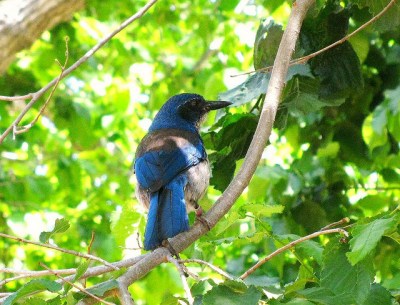
Island Scrub Jay (Aphelocoma insularis) ©WikiC

Island Scrub Jay (Aphelocoma insularis) ©WikiC


Island Scrub Jays are monogamous and may stay with a mate for their entire lives. Unlike some Aphelocoma species, the Island Scrub Jay is not a cooperative breeder, meaning that pairs do not rely on other related jays to help them raise their young…

Divorce has become the order of the day…
Spouses getting separated for flimsy reason, sometimes for no reason has become a fashion..
Even churches encourage divorce..
But,through these birds, GOD shows us that HE has created every spouse to mate for life..

It hath been said, Whosoever shall put away his wife, let him give her a writing of divorcement: But I say unto you, That whosoever shall put away his wife, saving for the cause of fornication, causeth her to commit adultery: and whosoever shall marry her that is divorced committeth adultery. (Mathew 5:31,32)

And most importantly Kids are gifts from GOD..
HE trusts is us that we would take care of these gifts and that is the reason HE has given us kids..
How well do we take care of them?
Or do we rely on some one else to raise them for us?

For if a man know not how to rule his own house, how shall he take care of the church of God? (1Timothy 3:5)

Both the male and the female help build nests three to 25 feet high in trees and shrubs. They use small oak branches that they break off trees and they never use sticks that fall to the ground These branches form the cup of the nest, which the parents line with grass and small roots…

We need to provide a home filled with love and care for our kids and not a house of luxury…

Females lay 3 to 5 eggs in a nest that they incubate for about 20 days. While the female sits on the eggs, the male spends his time hunting and defending the nest from snakes, hawks, foxes, and other Island Scrub Jays.

The male is also responsible for bringing the female food so she can be with the eggs as long as possible each day.

Husbands, love your wives, even as Christ also loved the church, and gave himself for it; (Ephesians 5:25)

Observations suggest that the more time parents spend near their nest, the higher their chances of defending their young ones against nest predators….

Now a days parents spend more time in their offices than with their kids..
The excuse is that they are working hard to give a comfortable future..
But, we parents cannot protect our children if we don’t spend time with them..
How can we claim that GOD has created us in HIS own image when we fail to protect our kids the way HE protects us?
It is time for us to learn from these Island Scrub Jay

s about how to spend time with our children so as to defend them from predators…

Do we have that learning spirit?

Your’s in YESHUA,
a j mithra

Please visit us at: Crosstree


Island Scrub Jays are in the Corvidae Family which has Crows, Jays, Magpies, Treepies, Rooks and Ravens in it. They are in the Passeriformes Order.

*

The Thirsty Sandgrouse…

The Thirsty Sandgrouse… – by a j mithra

Chestnut-belliedSandgrouse (Pterocles exustus) by Nikhil Devasar

Chestnut-belliedSandgrouse (Pterocles exustus) by Nikhil Devasar

The Sandgrouse are a unique set of birds found only in Africa and Eurasia. The relationship of these birds to other groups has been one of the most hotly debated issues over a period of centuries.

They are primarily ground-feeding birds of deserts, scrub, and grasslands, recalling small long-winged grouse — indeed, one of the most desert-loving of all species.

Its beautifully patterned underparts provide fine camouflage amongst its pink & white rocky habitat.

But sandgrouse share several attributes of pigeons, including their long wings and the practice of making long flights daily between breeding or feeding grounds, and pools of water at which they drink.

A sandgrouse could be described as the busiest eater in the bird world. It needs to find several seeds every second to get enough food to survive. To sustain these sorts of feeding rates, it exploits areas with superabundant seed banks. The grouse peck up each seed individually, and look like little sewing machines when feeding. Each bird will consume between 5,000 and 80,000 seeds a day. Some seeds are so small that it takes 5,000 to make up just one gram.

Now the parable is this: The seed is the word of God. (Luke8:11)

Painted Sandgrouse (Pterocles indicus) by Nikhil Devasar

Painted Sandgrouse (Pterocles indicus) by Nikhil Devasar

How many seeds did we eat today? A full crop (up to 24ml volume) of this small bird could hold between 3 000 and 40 000 seeds, depending on seed size. How much are we filled with the word of GOD?

These birds are the busiest eaters of the Avian world…
We too are so busy that we hastily read a chapter from the Bible before we leave home…
Some of us are even more busy that we don’t find time to read the Bible at all …
We do you know the meaning of the word BUSY?
B (being) U (under) S (satan’s) Y (yoke)
Are you BUSY (Being under satan’s yoke)?

Or

BUSY (Being under Savior’s yoke)?
JESUS said, “For my yoke is easy, and my burden is light.” (Mathew 11:30)

One special feature of sandgrouse is their long flights to water holes in desert and semi-desert country where not only do they drink, but during breeding they wet their belly feathers to carry water to the chicks. The male’s belly feathers are specially adapted to hold up to 15-20 ml of water. The nests may be over 25 miles distant, and it may take several trips, but adults carry enough water back to their chicks so that they survive.. (Video of a Pin-tailed Sandgrouse soaking its belly feathers)

By far the best way to see sandgrouse is to await their arrival at waterholes. The flocking behavior helps them avoid predation because not only are individuals in a flock more difficult for a predator to catch, but because some members can always be on the lookout for danger while others drink. The Burchell’s Sandgrouse (Pterocles burchelli) in the Kalahari desert has been known to fly over 100 miles each day to water…

Are you thirsty?
You are so privileged, that you don’t have to move even one step for water…
Just call JESUS, the Living Water, HE will not only quench your thirst but, let the Living Water flow from you…

For I will pour water upon him that is thirsty, and floods upon the dry ground: I will pour my spirit upon thy seed, and my blessing upon thine offspring: (Isaiah 44:3)

He that believeth on me, as the scripture hath said, out of his belly shall flow rivers of living water. (John 7:38)

Have an overflowing day!

Your’s in YESHUA,
a j mithra

Please visit us at: Crosstree

Fusion Unplugged by Boat-tailed Grackles

Boat-tailed Grackle (Quiscalus major) by Dan'sPix

Fusion Unplugged by Boat-tailed Grackles by a j mithra

Well I see a j mithra has been busy again. He has produced another YouTube with the birds. This time he has used the Boat-tailed Grackles. Hope you enjoy watching it.

*

Long-wattled Umbrellabird – The Dawn Dancer..

Long-wattled Umbrellabird – The Dawn Dancer..  – by a j mithra

The Long-wattled Umbrellabird (Cephalopterus penduliger) is large bird that got its name because of its head feathers, which resemble an Elvis Presley hair-do that can be opened like an umbrella surrounding the bird’s head in all directions.

The first half of the name comes from another strange characteristic, the long wattle that hangs from the neck of the bird. This is a fleshy appendage covered in feathers that looks like a long, black tie and it is used for males during their exotic sexual courtship.

Long-wattled Umbrellabird (Cephalopterus penduliger) by Wikipedia

Long-wattled Umbrellabird (Cephalopterus penduliger) by Wikipedia

It is a large, charismatic, midnight-black bird, with a maximum wingspan of about two feet. Males have long crest feathers that, depending on their mood, they can retract like slicked-back pompadours (cool, relaxed) or expand to completely cover their heads (amorous, aroused). With his crest retracted, a male looks like Elvis on a bad hair day; with it expanded, he looks like Liberace on steroids…

During the August-to-February mating season, groups of between five and fifteen males gather every morning and afternoon at special sites called leks, each of which typically covers about 4.5 acres were most males stake out their own territories within a lek.

Beginning in the predawn darkness, the males sit on their favored perches and bellow their moo calls out into the forest around them. Ecuadorians call the bird the pajaro toro, meaning bull-bird, because the male’s song resembles nothing so much as a lost bovine mooing in the forest. The calls travel more than half a mile, to attract females. These males begin their calls at predawn darkness..

Have we ever realized that Jesus loves to talk to us in the predawn darkness?

The Manna would melt and that is the reason Manna collecting became a predawn exercise for the Israelites…
JESUS, the Word is our heavenly Manna…

How many of us have the habit of reading the Word of God as our predawn exercise? Just imagine, if our Bible had melted just like Manna after daybreak, most of us by now, would’ve starved to death isn’t it?

And they gathered it (Manna) every morning, every man according to his eating: and when the sun waxed hot, it melted. (Exodus 16:21)

As the day breaks, they begin to extend and retract their crests. They ruffle the feathers on their wattles and bob them up and down. They spread their wings out in a vulture-like pose and make a strange gurgling sound. They briskly beat their wings against their bodies. Sometimes they pull small branches off their perching trees and beat them against the limbs or trunk.

They spend hours each morning and afternoon in such elaborate displays, often nearly falling off their branches from the exertion. After they mate, the female is all by herself as she flies back to her home area in the forest, sometimes a few miles away and proceeds with the business of nesting.

These birds practice their mating ritual so hard for hours, that they even fall off their branches due to exertion..

JESUS is the copyright owner of the greatest and the most awesome mating ritual ever found on the face of the earth displayed at the Cross of Calvary..

It was not the nails which held Him to the cross but, it was the love that HE had for you and me that held HIM…

But God commendeth his love toward us, in that, while we were yet sinners, Christ died for us. (Romans 5:8)

These birds are endangered due to habitat loss, and their extinction would not only mean the loss of a very interesting-looking animal, but also a disruption for the forest dynamics. This is because Umbrellabirds are one of the few birds large enough to disperse big seeds that are typical of mature forests.

The long-wattled umbrellabird (Cephalopterus penduliger) lays claim to the title of best-dressed dinner guest at fruit-bearing Chapil palm trees..

The mating behavior of umbrellabirds might have important consequences for chapils and other plants whose fruits they disperse…

It takes an hour for these birds to digest the Chapil Palm fruits. So, the males, bring a high proportion of the seeds they eat back to their lek sites. That is where they spend most of their time. But, the females disperse the seeds after they fly back to their home areas, which maybe miles away from the lek…

JESUS, the bride sows HIS seed in the Church…
But, like these birds, it is the duty of the Church-the bride to spread the seeds among their home areas, their family and friends…
We call ourselves as the bride, but, do we carry the seed home to spread it in our home area? Or just leave back the seed in church every Sunday before we get back home?

For he that soweth to his flesh shall of the flesh reap corruption; but he that soweth to the Spirit shall of the Spirit reap life everlasting. (Galatians 6:8)

Your’s in YESHUA,
a j mithra

Please visit us at: Crosstree

The Umbrellabird is part of the Cotingidae – Cotingas Family of the Passeriformes Order

Birds, It’s Coffee-time

Birds, It’s Coffee-time – by a j mithra

Blue-crowned Motmot (Momotus momota) by Ian

Blue-crowned Motmot (Momotus momota) by Ian

You know?

Birds just love coffee..

Shade trees protect the understory coffee plants from rain and sun, help maintain soil quality, reduce the need for weeding, and aid in pest control. Organic matter from the shade trees also provides a natural mulch,which reduces the need for chemical fertilizers, reduces erosion, contributes important nutrients to the soil, and prevents metal toxicities…

That is the reason most birds to migrate to shaded coffee plantations..

Birds know that there is Life under the shadow of trees?

When life turns cruel and we face heat and storm we tend to forget that, we have an everlasting shade..
We forget to remember this verse,

And there shall be a pavilion for a shade in the day-time from the heat, and for a refuge and for a covert from storm and from rain. (Isaiah 4:6)

Why should you run away from your problems?
Don’t you remember that JESUS is your providence?

Jehovah is thy keeper: Jehovah is thy shade upon thy right hand. (Psalm 121:5)

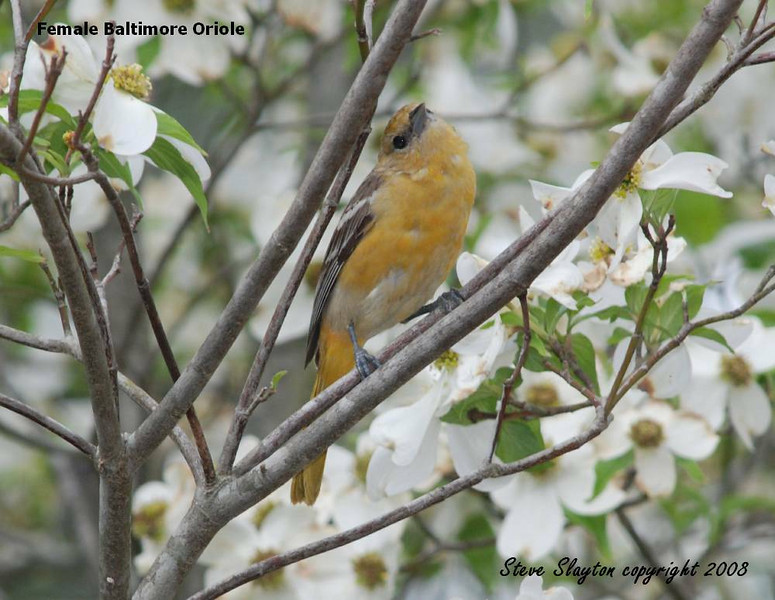
Baltimore Oriole (Icterus galbula) by S Slayton

Baltimore Oriole (Icterus galbula) by S Slayton

When you feel that tough seasons are approaching you, think of these birds and fly over to the everlasting shadow of JESUS, that is where you have perfect providence and protection…

Well, next time when you have coffee, just remember these birds and thank GOD for what HE has taught us through them..

Will you?

But ask now the beasts, and they shall teach thee; And the birds of the heavens, and they shall tell thee: (Job 12:7)

Yours in YESHUA,
a j mithra

Please visit us at: Crosstree


Lee’s Addition:

Here are some interesting articles:
Shade Grown Coffee

The Wompoo Fruit Dove – The Seed distributor

The Wompoo Fruit Dove – The Seed distributor – by a j mithra

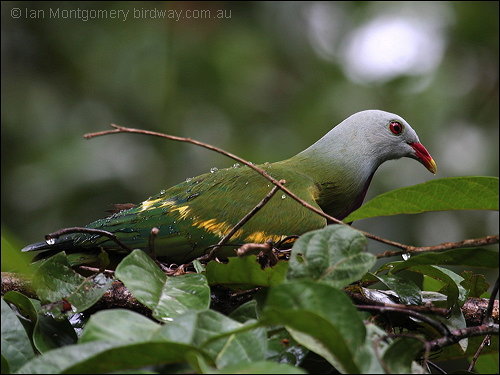
Wompoo Fruit-Dove (Ptilinopus magnificus) by Ian

Wompoo Fruit Dove (Ptilinopus magnificus) by Ian

The Wompoo Fruit Dove is a big rainforest pigeon. A large and dramatically beautiful rainforest pigeon, almost twice the size of other colored fruit-doves, the Wompoo Fruit Dove is identified by its large size, rich purple throat, chest and upper belly,and yellow lower belly.

The most favored habitat of the Wompoo Fruit Dove is rainforest, and birds are rarely seen in other areas. Occurs in, or near rainforest, low elevation moist eucalypt forest and brush box forests.

It is perhaps the most beautiful of all the doves found in Australia….
Did these birds inherit their beauty from dwelling in the rain forest?
The beauty of a believer lies in his heart…
The more we dwell under the Pillar of Clouds, the more we get soaked in the rain of the Holy Spirit…

The more we get wet in the rain of the Holy spirit, the more beautiful we turn..

In the light of the king’s countenance is life; and his favour is as a cloud of the latter rain. (Proverbs 16:13)

Wompoo Fruit-Dove (Ptilinopus magnificus) by Ian

Wompoo Fruit Dove (Ptilinopus magnificus) by Ian

Wompoo Fruit Doves feed on a variety of rainforest fruits. The fruits are eaten whole and may be quite large in size. They may form large feeding flocks where food is plentiful, and the birds acrobatically pluck the fruit from trees and vines high up in the canopy area. Despite their small size, they are able to swallow fruits of 5 cm³ volume, which would translate into a diameter of about 2 cm in spherical fruit. The birds are hard to see when feeding, and are best located by their calls or the sound of falling fruit.

This world may not be able to see you or locate you, but, no matter where you are, the fragrance of your fruit filled life will attract the world towards you…

Wherefore by their fruits ye shall know them. (Mathew 7:20)

Feeds on a diverse range of tree and vine fruits and is locally nomadic following ripening fruit; some of its feed trees rely on species such as this to distribute their seeds…

Figs are preferred in the late dry and wet season (October – March) Fruit of cinnamon trees are preferred whenever available, Arecaceae (palm) fruit in mid-late dry season (August – October) and Annonaceae fruit, such as Ylang-ylanga re preferred whenever available..

The birds do not travel large distances, but move around in small, localized areas in search of fruit-bearing trees. The seeds in the fruit eaten by the Wompoo Fruit Dove are spread a long way in the dove’s droppings so more fruit trees can grow.

We may not be able to travel a long distance to sow the seed of God, but, we can always keep sowing around the place where we dwell..
There is a saying which goes like this,

A missionary’s longest journey is the distance traveled to the next door, to proclaim the good news of Jesus…

Well, ministry starts at home..
Before we reach the others, let us reach the lost in our family….

It was meet that we should make merry, and be glad: for this thy brother was dead, and is alive again; and was lost, and is found. (Luke 15:32)

Have a fruit filled day!

Your’s in YESHUA,
a j mithra

Please visit us at: Crosstree


Lee’s Addition:

Wompoo Fruit Dove is part of the Columbidae Family of the Columbiformes Order.

Here are a couple of videos of the Wompoo by two of our videographers.

Three-wattled Bellbird – The Noise Maker

Three-wattled Bellbird – The Noise Maker  by a j mithra

Three-wattled Bellbird (Procnias tricarunculata) Immature male by Kent Nickell

Three-wattled Bellbird (Procnias tricarunculata) Immature male by Kent Nickell

The Three-wattled Bellbird lives between eastern Honduras and western Panama. In Costa Rica it lives on both slopes of the country..

It breeds in the cloud forests and in the foothill and highland moist forest at 1,200-2,100 m, and occasionally down to 750 m. In the non-breeding season, birds undertake complex migrations ranging up to 3,000 m (in Costa Rica), and then descending to the foothills and lowlands on both the Pacific and Caribbean slopes…

There is protection, anointing and guidance under the Pillar of the Cloud…
These birds seem to know the secret of living a protected life under the clouds..

The Bible says that we are the temple of the Living God, but, can we say that, we dwell under the Pillar of the Cloud?

During the days of Moses, the Pillar of the Cloud hovered above the tabernacle, from where Moses took orders from the Lord…
From where do we take orders? Man or God?

And it came to pass, as Moses entered into the tabernacle, the cloudy pillar descended, and stood at the door of the tabernacle, and the LORD talked with Moses. (Exodus 33:9)

Maybe that is the reason that, we are not able to hear the voice of the Lord…

Three-wattled Bellbird © Pete Morris

Three-wattled Bellbird © Pete Morris

The Three-Wattled Bellbird swallows the fruits of trees, particularly those in the Lauraceae family, of which the avocado is a member. Avocados, known as Butter-fruit in India, have the highest protein content of any fruit. Avocados contain more potassium than bananas. One avocado contains 81 mcg of lutein, an important nutrient for healthy eyes. Leaf and seed extracts have been used for a variety of medical application, including treatment of diarrhea and dysentery and as an antibiotic.

What kind of food do we eat?
These birds not only eat healthy food, but they eat medicinal food too..
People spend more money on medicine rather than on food..

Why?

Is it because, now a days, people don’t eat to live, but they live to eat..

And put a knife to thy throat, if thou be a man given to appetite. (Proverbs 23:2)

At close range, the vocalization of many in Costa Rica is heard as a complex three-part song, is thought to be among the loudest bird calls on Earth, audible to humans from over 0.5 mi (0.80 km) away. The song is different in Nicaragua and in also Panama, and these songs also include an extremely loud, but less bell-like, note.

Based on limited spectral analysis, researchers believe that the Bell-bird makes its unusual anvil-like sound by singing up to three notes simultaneously. This is a trick which takes the young birds a while to perfect. This one seems to be producing pitches of roughly 1280, 1365, and 1450 Hz, approximately E6, F6, and F-sharp6 in the musical scale. These three notes, each a semi-tone apart, produce a very rough, dissonant “bonk” giving the bird its name.

A link to the Three-wattled Bellbird. A male is displaying and you can hear his call, by Max Roth.

http://ibc.lynxeds.com/video/three-wattled-bellbird-procnias-tricarunculatus/male-displaying-treetop-perch

The three-wattled bellbird, which inhabits the cloud forests, is rarely seen in the mist-shrouded treetops, though the male’s eerie call, described as a “ventriloqual bonk!’ haunts the rainforest… as long as the sun is shining.

The purpose for which God created us is to worship and worship alone…
But, are we worshipping the Lord at all times or just in a Sunday morning service?

These Birds may not have a song but still their BONK saves them from predators…

You may not have a good voice but still your noise can frighten the devil..
You know? God loves your NOISE and not your VOICE…

These birds sing as long as the sun is shining..

We, the church too can sing only as long as the Sun of Righteousness shines on us..
Darkness is fast descending, let us keep singing , for the hour of the Lord has come..
If we don’t sing here, how can we sing in heaven?
After all, only practice makes us perfect…

The dead praise not the LORD, neither any that go down into silence. (Psalm 115:17)

Have a blessed day!

Your’s in YESHUA,
a j mithra

Please visit us at:  Crosstree


Lee’s Addition:

The four Bellbirds are in the Cotingidae Family of the Passerifromes Order. The Cotinga family has Bellbirds (4), Cotingas (25), Plantcutter (3), Berryeater (2), Fruiteater (12), Cock-of-the-rock (2), Phia (9), Fruitcrow (4), Capuchinbird (1), and Umbrellabird (3). They all seem to have interesting names.

The Sage in the sagebrush…

The Sage in the sagebrush… – by a j mithra

Hello,

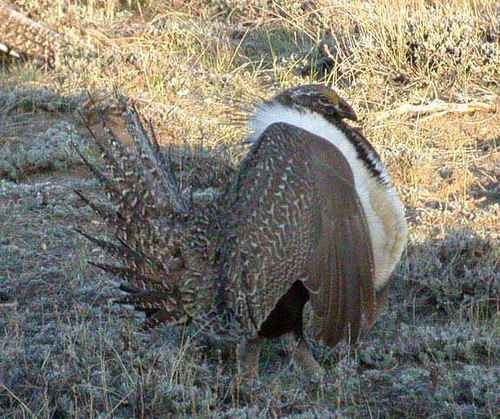
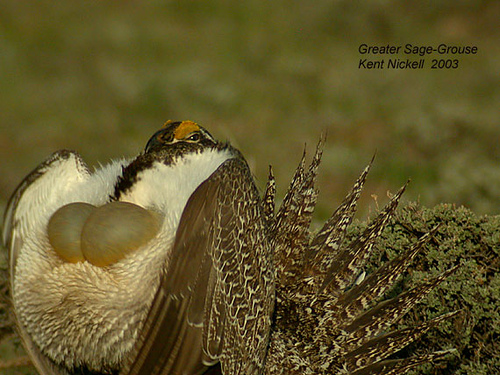
Sage Grouse (Centrocercus urophasianus) by Kent Nickell

Sage Grouse (Centrocercus urophasianus) by Kent Nickell

My name is Mr. Greater Sage Grouse–also known as the sage cock, sage hen, sage chicken, and formerly, western sage grouse which is the largest member of a family of hen-like terrestrial birds known as grouse.

At one time, Washington State had an abundant population of sage grouse. Hunting, loss of habitat because of expanding farm lands and other human development, and devastating wildfires have reduced our population to fewer than 1,500 birds. We are currently a state-threatened species and a federal candidate species.

We, the Sage grouse are herbivores and we eat soft plants, primarily big sagebrush. Big sagebrush is essential to our lives cos, all through our lives, you can find us in or near dense stands of sagebrush. Our female flock nests on the ground under the shrub and seek cover from predators and weather beneath it.

Sage Grouse (Centrocercus urophasianus) by Kent Nickell

Sage Grouse (Centrocercus urophasianus) by Kent Nickell

From fall through spring the leaves and more succulent stems of big sagebrush make up from 90 to 100 percent of the our diet. During summer and early fall, we leave the dense sage and move to scattered patches of sagebrush found near seeps, streams, or irrigated fields where we eat green forbs and insects, both of which are high in protein and allow rapid growth of young chicks.

One of the most interesting aspects about us is nearly complete reliance on sagebrush. Our habitat requirements are so specific that we are frequently referred to as “sagebrush obligates,” that is, we birds cannot survive in areas where the shrub, with which we share the name, has been removed…

Like us, you Christians too, share the name Christ with which you are identified…
We, the Sage Grouse cannot live without Sage brush plants..
We cannot survive if Sage brush plants are removed from our lives…

Christians means CHRIST IN US…
But, there are so many in your church who do not have Christ in their lives, but, they call themselves as Christians…

Your Bible says,

But ye are not in the flesh, but in the Spirit, if so be that the Spirit of God dwell in you. Now if any man have not the Spirit of Christ, he is none of his. (Romans 8:9)

The Bible also says,

Therefore if any man be in Christ, he is a new creature: old things are passed away; behold, all things are become new. (2Corinthians 5:17)

Let your hearts judge if you are worthy of calling yourselves as Christians….

I wish you should know more about the sage brush plant, our eternal home..

Sage Grouse (Centrocercusurophasianus) by Dave's BirdingPix

Sage Grouse (Centrocercusurophasianus) by Dave's BirdingPix

Sagebrush has bacteriostatic, astringent, and antioxidant properties. Sagebrush kills bacteria, inhibits free radicals, and has anti-inflammatory and anti-carcinogenic actions, and so is most useful as a cleansing first aid wash for disinfecting wounds and skin irritations. Tea made from the leaves as a medicine for digestive problems, headache and cold. The leaves can be very useful in your kitchen as a means of protecting stored dried food from insects and rodents…

We have our home, where there is food and protection…
How protected is your home? Do you have a healthy environment?
Do you live a healthy life like the way we live?
Don’t you realize how well you should take care of your health?

Your body is the temple of JESUS, do you know that? Have you not read the following verse in your Bible?

Know ye not that ye are the temple of God, and that the Spirit of God dwelleth in you? If any man defile the temple of God, him shall God destroy; for the temple of God is holy, which temple ye are. (1Corinthians 3:16,17)

Whenever you think of sage brush, think of us, the Greater Sage Grouse..
We need you..

If only you could take care of the environment, this earth will not only protect you, me and all other living thing, but also will provide us food, water and shelter…

By protecting the earth, you are not only protecting us but protecting your race too…

Live and let us live…

Yours,

The Greater Sage Grouse
Have a Thoughtful day!

Your’s in YESHUA,
a j mithra

Please visit us at: Crosstree


Lee’s Addition:

Sage Grouse are in the Phasianidae Family of the Galliformes Order. There are 181 members in the family which also includes Turkeys, Chickens, Ptarmigans, Partridges, Snowcock, Francolins, Spurfowls, Junglefowls, Pheasants, Peafowls and others. None of them are on the “unclean-do not eat” list.

Video of a male Sage Grouse displaying

*

The White-crowned Sparrow – The Restorer

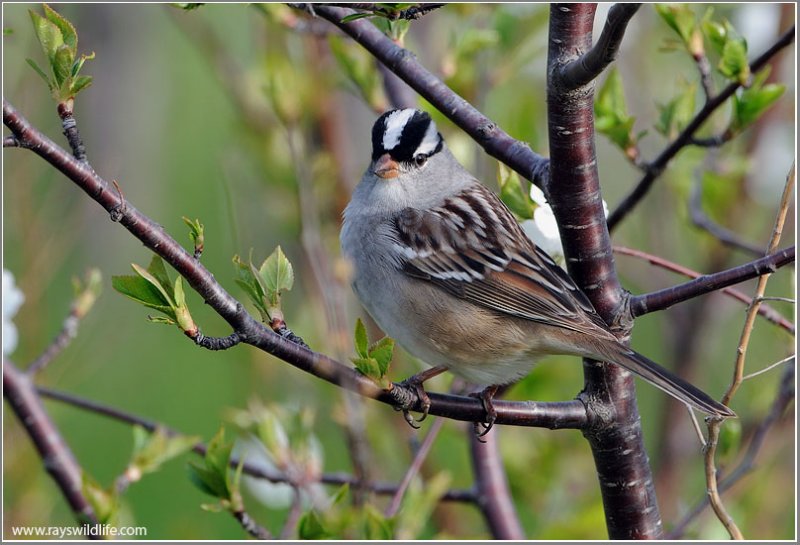
White-crowned Sparrow (Zonotrichia leucophrys) by Ray

White-crowned Sparrow (Zonotrichia leucophrys) by Ray

The White-crowned Sparrow – The Restorer ~ by  a j mithra

Bird watchers who have flocked to north Norfolk, UK, to see a rare sparrow have boosted the funds of a local church. They have donated so much money to Cley church; there are plans to feature the bird in a new stained glass window.

A rare bird’s appearance in a coastal village, which has attracted hoards of twitchers from across the country, has swelled church coffers.

The white-crowned sparrow is normally found in America, but it turned up 3,000 miles off course in Cley in January and is still being spotted feeding and flying around the village. The medium-sized sparrow has only been seen four times before in Britain and Ireland and its appearance in Richard and Sue Bending’s garden prompted an influx of bird watchers.

They have gathered en masse outside the home of Richard and Sue Bending. It was last Thursday that retired clergyman Mr. Bending, 60, and wife, 59, a retired librarian, first spied the bird scratching among leaf litter in their walled garden. The couple – who consider themselves bird-lovers but not die-hard twitchers – thought that the visitor, with its striking black-and-white striped head, was unusual but could not find it in their book of native varieties. We borrowed a book from the library, it was then that we realized it could be a White-crowned Sparrow,” said Mr Bending

Although Cley Reserve, run by the Norfolk Wildlife Trust, attracts thousands of nature lovers, the village visit by the bird – with distinctive black and white stripes on its head – has lifted the village’s profile on the bird-spotting map.

The presence of this rare bird had inspired people to give for God…

Has our presence inspired people to do something for God?

Forasmuch as ye are manifestly declared to be the epistle of Christ ministered by us, written not with ink, but with the Spirit of the living God; not in tables of stone, but in fleshly tables of the heart (2 Corinthians 3:3)

It’s the first occasion a white-crowned sparrow has ever been seen in East Anglia.


Other links to videos of the bird:

http://www.youtube.com/watch?v=hnzgAcuv8Gc&feature=related
http://www.youtube.com/watch?v=MqjRrx8Ft0I

While the influx of twitchers have been keen to get a glimpse of the American migrant, the local vicar believes people have been just as impressed by the sight of the village church.

More than £5,000 has poured in to St Margaret’s restoration fund during the bird’s visit.

“They’re obviously looking at something rare and beautiful and perhaps some of them looked across here and saw something rare and beautiful as well when they saw this church,” said Rev Neil Batcock.

The money is going to be used to restore a stained glass window which will feature the rare visitor’s stay in Cley.

This is an extract from the website of St.Margret’s Church, Cley, West Window
“During the famous visit of the White Crowned Sparrow to Cley in 2008, our many visitors contributed generously to a collection made by Cley Bird Club for St Margaret’s. The Bird Club were keen for the money raised to go to a specific project rather than just added to The Church Restoration Fund. It was suggested that, as the West Window leaks rather badly, and looks over where the White Crowned Sparrow was discovered, perhaps the money could go towards the repair of this magnificent window and in memory of the bird’s visit, a small image of the White Crowned Sparrow be incorporated in the window. This idea was thought to be a very fitting way to commemorate a little bird that brought national fame to St Margaret’s and the village of Cley. We have had to apply for a faculty to do this work, and at last have got the go ahead. Hopefully, with the better weather approaching and the builder, glazier and artist being able to fit the work in, we hope that it won’t be too long before this can start.”

Though this White-crowned Sparrow had come to an unknown land, it still gave a hand to bring restoration to the place where it stayed..

Joseph restored the unknown land of the Pharaoh during famine…
The little slave girl was the reason for restoration of health to the Syrian commander in an unknown land…

GOD will not take us out from our comfort zone without a purpose..

If Joseph had not gone out of his comfort zone, we wouldn’t have had the country of Israel, which gave JESUS to us..
In fact we wouldn’t have had a Savior to save us from our sins…
GOD has given us just one life as a gift, what are we doing with it?
How many lives did we restore for GOD?

If a small sparrow can restore a church, how much GOD will expect of us?

For if thou altogether holdest thy peace at this time, then shall there enlargement and deliverance arise to the Jews from another place; …………. (Esther 4:14)

White-crowned Sparrow (Zonotrichia leucophrys) by S Slayton

White-crowned Sparrow (Zonotrichia leucophrys) by S Slayton

It’s not known how the White-crowned Sparrow ended up so many miles away from home, although Mr. Bending, who first spotted the bird, has his own theories. “No-one knows how it got here but we are speculating that it was caught in a storm while migrating south from the east coast of Canada to the United States,” he said. “It could have become lost or tired and hitched a ride on a boat coming to England. We just feel very privileged that it chose our garden.”

People speculate that a storm would’ve carried this bird this far…

When u face a storm in life and you feel as if you are thrown into a no man’s land, remember that GOD will use you in that new place and glorify His name through you…

Behold, I will make thee a new sharp threshing instrument having teeth: thou shalt thresh the mountains, and beat them small, and shalt make the hills as chaff. ( Isaiah 41:15)

Have a blessed day!

Your’s in YESHUA,
a j mithra

Please visit us at: Crosstree


Lee’s Addition:

The White-crowned Sparrow is in the Emberizidae Family of the Passeriformes Order. The Emberizidae Family includes the Buntings, New World Sparrows and Allies. The Passeridae Family includes the Old World Sparrows and Snowfinches.

All of these Sparrows are Birds of the Bible – Sparrows and we have written several blogs about them. Please check out the articles, photos, and videos of the Sparrows.