Araripe Manakin – The Indicator of Environmental Quality…

Araripe Manakin (Antilophia bokermanni) by ©AGrosset

Araripe Manakin (Antilophia bokermanni) by ©AGrosset

The Araripe Manakin is endemic to a very small ribbon of forest at the foot of the Chapada do Araripe escarpment, in Brazil…

It seems particularly fond of the moist forest near the streams and springs that flow out of the escarpment…

The survival of these birds depends upon the availability of water resources..

Have we ever felt that our survival also depends upon JESUS, the LIVING WATER?

Unfortunately, this supply of water also generates the biggest threat to the species as the area is a bit of an oasis in that region, and the supply of water has led to the development of both agriculture and recreational facilities…

Many of us are dry in spirit, but, instead of looking up to the Pillar of Clouds to wet our spirit,
where are we looking?

JESUS said,

but whosoever drinketh of the water that I shall give him shall never thirst; but the water that I shall give him shall become in him a well of water springing up unto eternal life. (John 4:14)

Araripe Manakin (Antilophia bokermanni) by ©AGrosset

Araripe Manakin (Antilophia bokermanni) by ©AGrosset

Found along the slopes of the chapada (plateau) in the lower and middle stories of tall forests where there are plenty of vines, as well as clearings…

It is associated with water springs and is therefore a good indicator of environmental quality..

If we live on JESUS, THE VINE, the world would look at us as an indicator of the spiritual quality of the church….

For I will pour water upon him that is thirsty, and streams upon the dry ground; I will pour my Spirit upon thy seed, and my blessing upon thine offspring: (Isaiah 44:3)

Your’s in YESHUA,
a j mithra

Please visit us at: Crosstree


Lee’s Addition:

The Araripe Manakin is in the Pipridae Family of the Passeriformes Order.

See:

Araripe Manakin

The American Dipper – The Intercessor

The American Dipper – The Intercessor ~ by a j mithra

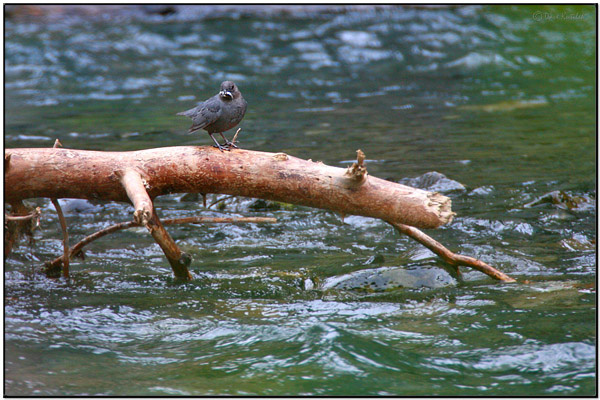
American Dipper (Cinclus mexicanus) by Daves BirdingPix

American Dipper (Cinclus mexicanus) by Daves BirdingPix

A chunky bird of western streams, the American Dipper is North America’s only truly aquatic songbird. It catches all of its food underwater in swiftly flowing streams by swimming and walking on the stream bottom. Dipping may help them deal with a crazy visual field that is constantly in motion…

Maybe the relentless up and down motion changes the light angle, allowing dippers to see into the water. Or it may help them remain oriented next to the forever moving current. Or it may be a way of communicating near noisy streams–except that dippers sometimes dip even when they’re alone….

Unless we are in communion with GOD, the Light, through prayers, we will never be able to deal with the visual field that is constantly in motion. We will never be able to see the Light at the end of the tunnel…

Do we have a personal relationship with GOD?

But thou, when thou prayest, enter into thy closet, and when thou hast shut thy door, pray to thy Father which is in secret; and thy Father which seeth in secret shall reward thee openly. (Mathew 6:6)

Formerly known as the water ouzel, this bird was rechristened by ornithologists several years ago because of its curious habit of dipping, bending and straightening its knees. So who knows?

Maybe their habit of dipping just helps these little birds keep fit for those incredible dives into raging torrents…

They’re absolutely amazing….We can’t even stand up in these streams, but here are these tiny birds that dive right into raging white water.”

Those who kneel before GOD, can stand before anything…

Prayer helps us stay fit and is the secret behind coming out unscathed, even after diving into the raging water…

And all things, whatsoever ye shall ask in prayer, believing, ye shall receive. (Mathew 21:22)

Young birds may practice dipping while still in the nest, and adults do it repeatedly when resting between feeding dives, while courting, during territorial disputes and when alarmed…

The dipping rate tends to rise with the degree of arousal to as many as 60 dips per minute.

Do we teach our children about the importance of prayer when they are young?

How many times do we dip, I mean, kneel before GOD during alarming situations?

…that they shall live upon the earth, and that they may teach their children. (Deuteronomy 4:10)
Watch ye therefore, and pray always, that ye may be accounted worthy to escape all these things that shall come to pass, and to stand before the Son of man. (Luke 21:36)

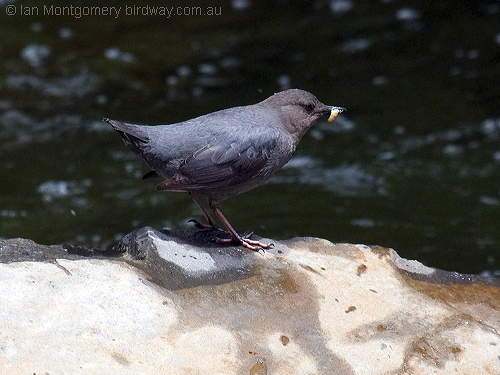
American Dipper (Cinclus mexicanus) by Ian

American Dipper (Cinclus mexicanus) by Ian

The American Dipper chooses a nest site, invariably along a stream, that provides security from floods and predators. Availability of suitable nest sites appears to limit its populations. To be able to survive in cold waters during the winter, the American Dipper has a low metabolic rate, extra oxygen-carrying capacity in its blood, and a thick coat of feathers.

Unlike most other songbirds, but similarly to ducks, the American Dipper molts its wing and tail feathers all at once in the late summer. The bird is flightless during this time.

American dippers occupy an unusual niche in the songbird world. Inextricably tied to racing streams, they routinely feed where few other terrestrial animals dare to go. They rear young just feet from churning whirlpools. They are splendidly adapted for their aquatic life-style, yet even in the wilderness have trouble finding appropriate nest sites. Abundant oil from an oversized gland above the tail keeps dipper feathers virtually waterproof. A flap of skin covers the nostrils while submerged, and translucent eyelids permit underwater sight. Dippers rarely venture more than a few yards from water, and even when airborne they follow a stream’s zigzagging course….

Our lives would be safe when we dare not venture away from the Living Water and just follow the course of JESUS, the Living Water…

My sheep hear my voice, and I know them, and they follow me: (John 10:27)

Dippers build their traditionally elaborate nests over the fastest moving part of a stream normally on mid-stream boulders or rock ledges just above the water….

Researchers discovered that area bridges offered a viable alternative as nesting sites. And in subsequent research, the biologist found that bridge nests in the valley actually produced more young than the natural nests in her study area…

Bridges actually are a key to dipper’s reproductive success in many areas….

We are the key to the extension of GOD’s kingdom… Do you know that?

GOD has called us to bridge the gap between the lost and the LAMB…

The success of populating the flock of GOD depends on our availability…

GOD is searching for someone who would stand in the gap for HIS people, are you ready to bridge the gap?

And I sought for a man among them, that should make up the hedge, and stand in the gap before me for the land, that I should not destroy it: but I found none. ( Ezekiel 22:30)

Have a blessed day!

Your’s in YESHUA,
a j mithra

Please visit us at: Crosstree


Lee’s Addition:

Dippers are in the Cinclidae Family of the Passeriformes Order. There are 5 Dippers in the family; White-throated, Brown, American, White-capped, Rufous-throated Dipper.

Video of an American Dipper

*

The Inspired and the Inspiring Rose-breasted Grosbeak

The Inspired and the Inspiring Rose-breasted Grosbeak – by a j mithra

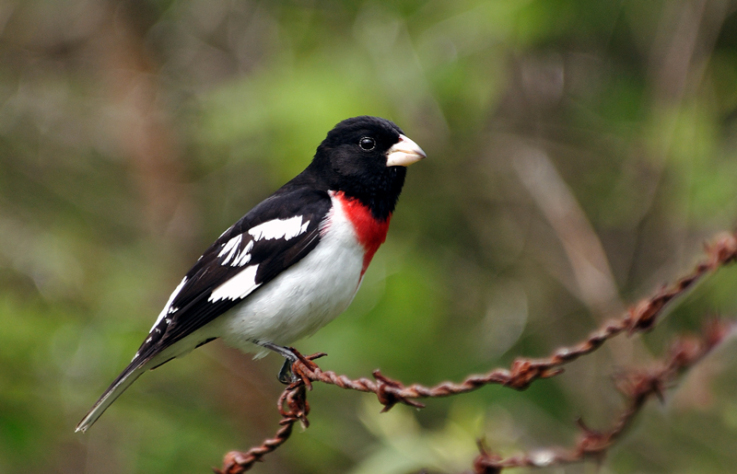
Rose-breasted Grosbeak (Pheucticus ludovicianus) by Rob Fry

Rose-breasted Grosbeak (Pheucticus ludovicianus) by Rob Fry

The Rose-Breasted Grosbeak lives and breeds in North America, but then migrates to Mexico and Central America. East of the Great Plains, the deciduous woodlands belong to the rose-breasted grosbeak with its colossal white bill, an appendage that is often stained with wild berry juice.

This bird is considered as the most stunningly dressed of all our Neotropical migrants.Yet the “rosebird” of olden days is heard more often than seen as it flies through the forest penthouse, whistling and if inspired, it may sing all night. Who is our inspiration?

When JESUS becomes our inspiration, we cannot but sing 24×7….
Why is it hard for us to praise HIM at all times? Is it because we don’t love HIM the way HE does?
Why is it not possible for us to say like David?
Just think!

I will bless the LORD at all times: his praise shall continually be in my mouth. (Psalm 34:1)

Rose-breasted grosbeak nests are so loosely built that it is sometimes possible to count the eggs from below. The parent birds share incubation duties and the male Rose-breasted Grosbeak participates in incubation of the eggs, accounting for about 1/3 of the time during the day, the female incubates over night….

The female bird incubates overnight?
Do we understand what the bird seems to teach us about its overnight incubation?
We feel so nice to call ourselves as the bride.. Isn’t it?
But, the question is, does the church – the so called bride, watch and pray for the lost?

Ye are all the children of light, and the children of the day: we are not of the night, nor of darkness. Therefore let us not sleep, as do others; but let us watch and be sober. (1Thessalonians 5:5,6)

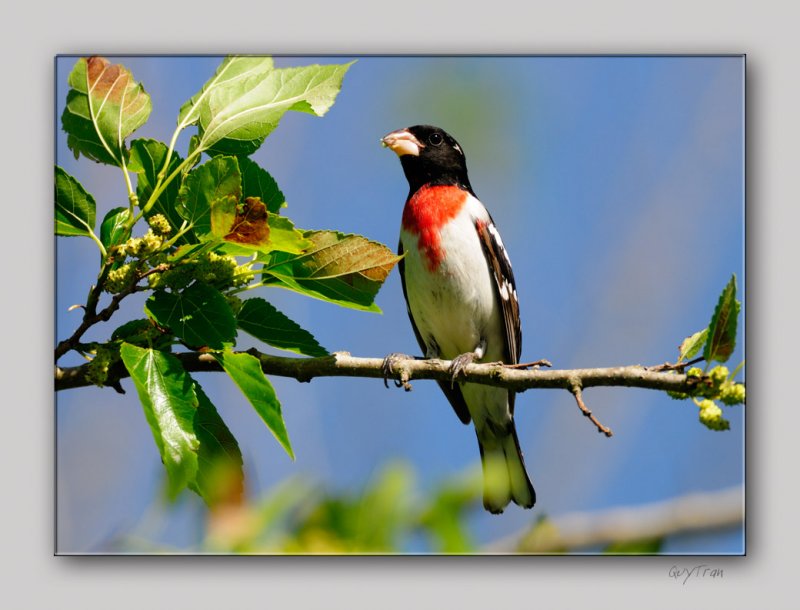
Rose-breasted Grosbeak (Pheucticus ludovicianus) by Quy Tran

Rose-breasted Grosbeak (Pheucticus ludovicianus) by Quy Tran

The male will care for the fledglings while the female starts a second nest. She becomes so possessive of a good mate that other females vying for his attention will be driven away. Both sexes sing quietly to each other when they exchange places. The male will sing his normal song while near or actually on the nest. The female song is generally a simplified version of the male song. Occasionally, the female sings full “male” song, apparently to deceive its mate about the presence of intruders and force him to spend more time at the nest..

Our worship has the power to force JESUS to spend more time with us…
It is easy to praise God when we are in the comfort zone, but singing in times of trouble, not only brings HIS presence, but also deliverance…
After all, our LORD dwells among the praises of the angels in heaven…
Remember, HIS presence is the essence of life…

But thou art holy, O thou that inhabitest the praises of Israel. (Psalm 22:3)
Let every thing that hath breath praise the LORD. Praise ye the LORD.” (Psalm 150:6)

Have a blessed day!

Your’s in YESHUA,
a j mithra

Please visit us at: Crosstree


Lee’s Addition:

The Grosbeaks are in the Cardinalidae Family of the Passeriformes Order. In fact, the Family is the last one in the Passeriformes order. The 45 members of the family include not only the Grosbeaks (17), but the Dickcissel (1), Chats (3), Cardinals (2), Pyrrhuloxia (1), Saltators (14), Buntings (7).

*

The Surrendered Anhinga

The Surrendered Anhinga – by A J Mithra

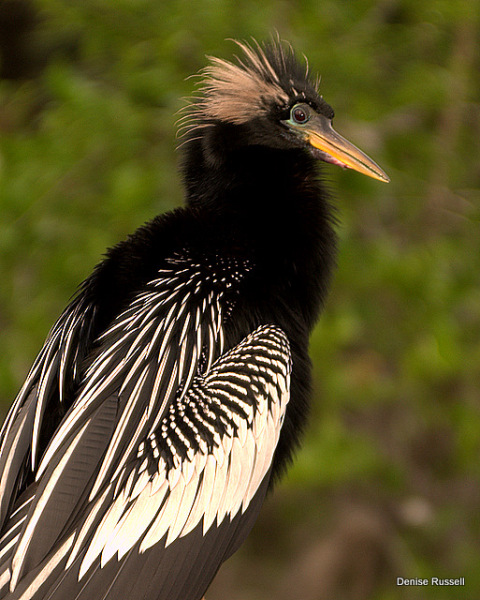
 Anhinga (Anhinga anhinga) By Densie Russell

Anhinga (Anhinga anhinga) By Denise Russell

The Indians who live near the Amazon River in South America call it “Anhinga.” In North America it is called “water turkey,” “snake darter,” or “darter.” This strange bird goes by several names. It has a long tail that accounts for its nickname, “water turkey.”

The Anhinga swims with only its head above the water While swimming, the long neck and the head may be above the surface with its body below and this has resulted in another nickname, “snake bird.”

Some Anhingas live in Asia, in Africa and in Australia and in America, from southern Arkansas to Argentina and they are quite common in Florida.

People may call you by your first name, last name, surname or even nicknames, but,JESUS not only calls you by your name but gives you a new name too…

As long as Jacob was Jacob, he was a wanderer, but, GOD gave him a new name, Israel, only after Jacob accepted that he is a fraud..

After which, Israel was no more a wanderer, but the most powerful nation on the face of the earth…
GOD gives us a new name only when we repent…

He that hath an ear, let him hear what the Spirit saith unto the churches; To him that overcometh will I give to eat of the hidden manna, and will give him a white stone, and in the stone a new name written, which no man knoweth saving he that receiveth it. (Revelation 2:17)

 Anhinga (Anhinga anhinga) By Densie Russell

Anhinga (Anhinga anhinga) By Denise Russell

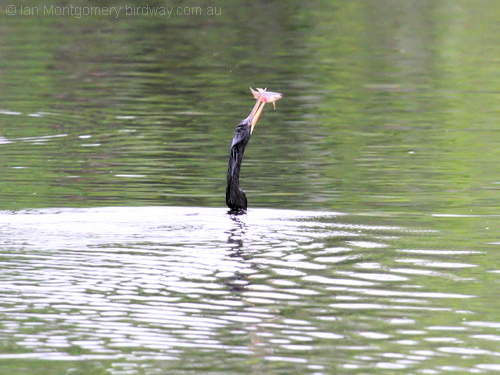
It finds its food in the water. It eats insects, frog eggs, fish and even small alligators. It spears fish with its long beak, so, sometimes it has to swim to shore and pry the fish off its beak by rubbing on a rock or tree limb.

Mating pairs are monogamous. Anhingas have been seen performing rituals when changing egg incubation duties they intertwine necks and pass nesting material when changing positions.

The Anhinga is frequently seen soaring high in the sky overhead. It is a graceful flier and can travel long distances without flapping its wings, much in the manner of a Turkey Vulture.

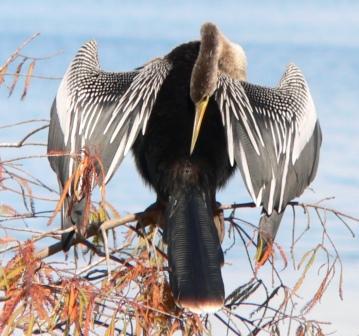
Among birds, the Anhinga is the best fresh-water diver. It goes down quietly and hardly makes a ripple. Unlike like other birds who spend most of their days in water (like a duck), an Anhinga’s feathers are not waterproof. But, this weakness allows the Anhinga to dive deeper than birds with waterproof feathers. But, it also has it downfalls.

When an Anhinga swoops down into a body of water to capture its food, its feathers quickly become water-logged. When an Anhinga is water-logged, it is unable to fly. Thus the Anhinga must dry itself off by holding its wings outstretched, allowing the sun to dry the feathers….

This bird is a good example of “I CAN DO ALL THINGS WITH GOD”

Anhinga Dryed at Lake Hollingsworth by Dan

They are not water proof , yet they dive very deep..
They cannot fly when they are water-logged, but, they look up to the sun, to dry themselves, so that they may soar high and fly long distances…

You may not be quality proof, but still, you can fly high and dive deep…
People may consider you as useless but GOD sees you as “USED LESS”

Whom are you looking for help?

If you are one among those who try to do things with their own strength, its time to look at these birds for awhile before you proceed further in life…

When they spread their wings to dry them, these birds seem to say, LORD I have nothing and I need You, to go down deep into the Living Waters and to lift me high, so that I may fly like an Eagle…

Take away all that is unwanted in me Lord and make me dry, so that,I may say,

I am crucified with Christ: nevertheless I live; yet not I, but Christ liveth in me: and the life which I now live in the flesh I live by the faith of the Son of God, who loved me, and gave himself for me. (Galatians 2:20)

I surrender all, I surrender all,
All to thee my blessed Savior,
I surrender all…

Have a Crucified day with GOD!

Your’s in YESHUA,
A J Mithra

Please visit us at: Crosstree


Anhinga (Anhinga anhinga) with a speared fish by Ian

Anhinga (Anhinga anhinga) with a speared fish by Ian

Lee’s Addition:

Anhingas are in the Anhingidae Family of the Pelecaniformes Order.

A J, nice article and, yes, the Anhingas are a daily occurance here in Florida, by the water.

*

The Purple Gallinule – The Awkward Beauty!

The Purple Gallinule – The Awkward Beauty! ~ by A J Mithra

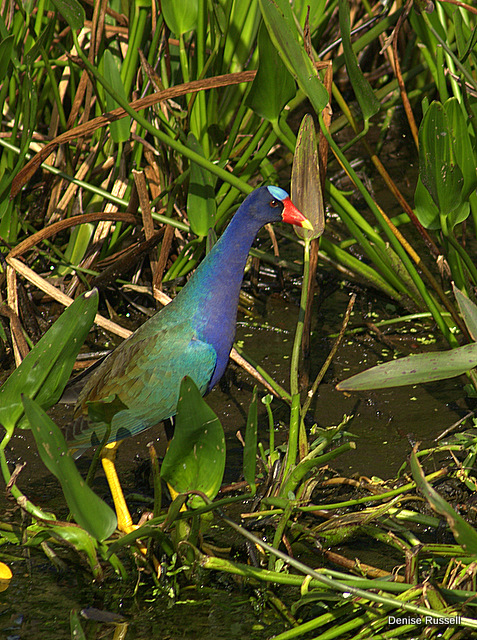
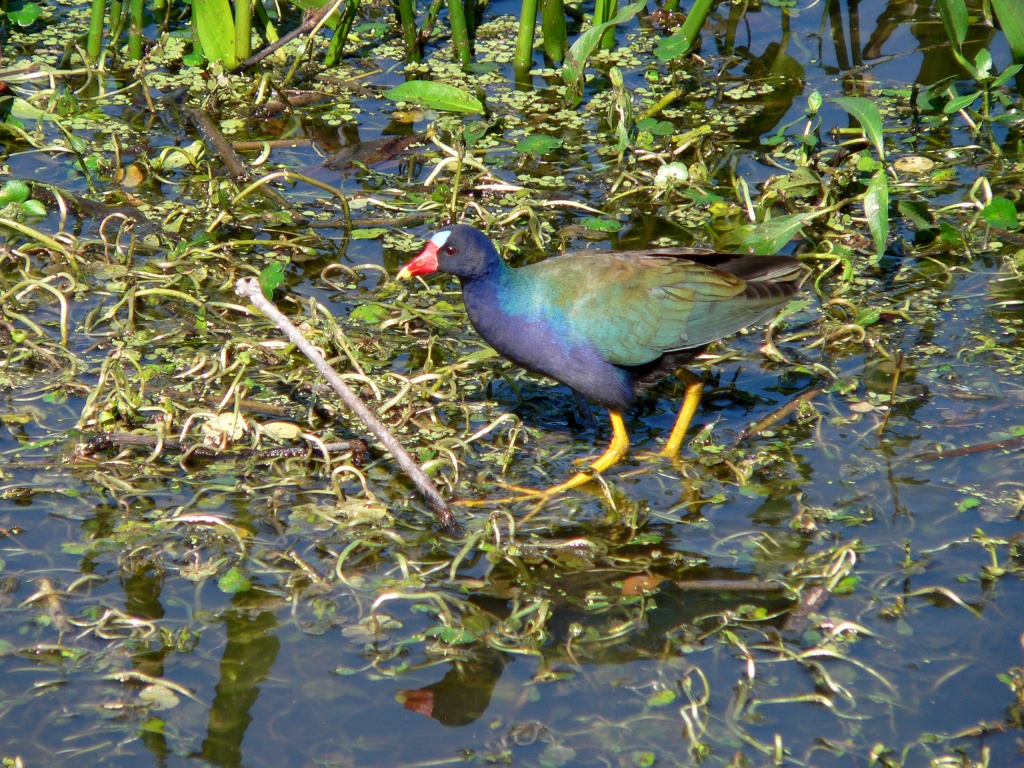
Purple Gallinule (Porphyrio martinica) by Densie Russell

Purple Gallinule (Porphyrio martinica) by Denise Russell

The beautifully colored Purple Gallinule is often known as a ‘swamp hen’. The scientific name is Porphyrio martinica. The Purple Gallinule belongs to the rail (Rallidae) family of birds.

Almost without exception, rails frequent freshwater wetlands such as swamps and marshes. Preferred habitats include lakes, pools, waterways, and wet marshes.

These birds look so beautiful…
Is it because, they prefer to live by the waters?
When we live by the Living Waters we too shall turn beautiful like the Rose of Sharon and the Lilly of the Valley…
After all, GOD created us in HIS own image… Isn’t it?
Remember how Moses’ face shone after his forty day communion with GOD?

Awake, awake; put on thy strength, O Zion; put on thy beautiful garments, O Jerusalem, the holy city: for henceforth there shall no more come into thee the uncircumcised and the unclean. (Isaiah 52: 1)

These birds are omnivorous and eat a wide variety of seeds, leaves and fruits. Insects, frogs, small fish, snails are earthworms are all eaten with relish. It will also steal eggs and eat young ducklings if it gets the opportunity.

The long toes prevent the bird from sinking when walking on floating vegetation or on water-lilies. The toes can also be used to grasp food and it may then use its feet to carry food to the mouth.
The legs are strong and the gallinule can run well on land….

What kind of feet did GOD give us?

He maketh my feet like hinds’ feet: and setteth me upon my high places. (2 Samuel22:34)
Thou shalt tread upon the lion and adder: the young lion and the dragon shalt thou trample under feet.” (Psalm 91:13)

Not only that,

Then shall the lame man leap as an hart,……..” (Isaiah 35:6)

Purple Gallinule by Lee at Lake Hollingsworth

Purple Gallinule by Lee at Lake Hollingsworth

The eggs are laid in a platform or pad constructed of trampled reeds, leaves and grasses. The pad is often situated on a floating ‘island’ of debris in a clump of saw grass or in a secluded thicket. Both parents share the incubation and care of the chicks.

The parents have a ritual which is performed whenever one takes over incubation duties from the other. The incoming bird brings the gift of a leaf to its partner. The bird on the nest takes the leaf and adds it to the nest. It then relinquishes duties to its mate.

GOD has chosen us to finish the good work which HE started when HE was in this earth…

The incoming bird brings the gift of a leaf to its mate…
Fresh Leaf denotes new life..
JESUS gave us a fresh lease of life by giving HIS life on the cross…

Now it is our turn to take up HS duty to reach the unreached till HE returns as KING of kings..

For the wages of sin is death; but the gift of God is eternal life through Jesus Christ our Lord. Romans(6:23)

The Purple Gallinule is essentially a tropical marsh bird that just makes its way into the United States. But some go even farther afield. It has even been found numerous times in Europe and South Africa.
There has even been the occasional American Purple Gallinule turn up in Western Europe.

Framed Purple Gallinule by Dan

Framed Purple Gallinule by Dan

Although it looks quite clumsy in the air, flying as it does with the legs dangling, it nonetheless can cover quite long distances. The Purple Gallinule, despite appearing to be an awkward flier, regularly turns up in northern states and southern Canada. It has even been found numerous times in Europe and South Africa…

People may call us by nicknames but GOD had called us by name…

You may be called clumsy or awkward, but, GOD calls you as HIS crown and a royal diadem…
If JESUS becomes your strength, you will never be weak..
If JESUS becomes your wisdom, you will never be a fool..

These birds may be awkward fliers, but still GOD is able to take them to far off places..

GOD doesn’t judge you by your quality but by your availability…
Are you available for JESUS? 24 x 7?

My beloved is mine, and I am his: he feedeth among the lilies” (Song of Solomon 2:16)

Note: Photograph by Denise Russell

Have a blessed day!

Your’s in YESHUA,
A J Mithra

Please visit us at: Crosstree


Lee’s Addition:
The Purple Gallinule is one of our favorites here in Florida. We see them quite frequently. They can be little beggars when we are feeding the birds at Lake Hollingsworth. They are in the Rails, Crakes, and Coots – Rallidae Family of the Gruiformes Order which also includes Cranes, Flufftails, Finfoots, Trumpeters and Limpkins.

Purple Gallinule walking around on vegetation at Lake Hollingsworth by Lee

Out of the Mouth of Babes…

Out of the Mouth of Babes…  –  by A J Mithra

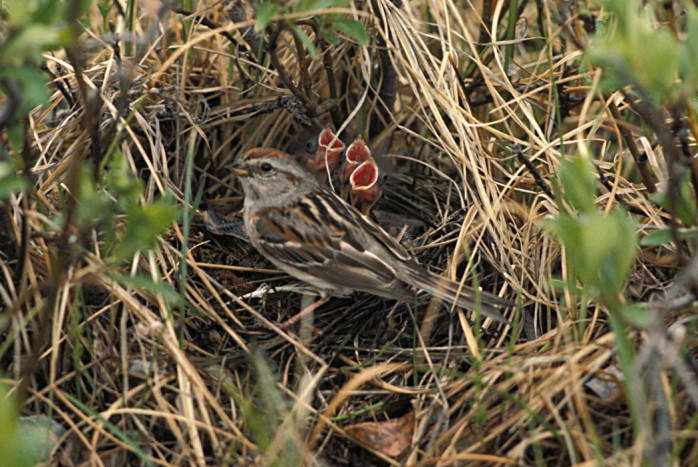
American Tree Sparrow (Spizella arborea) w chicks©USFWS

American Tree Sparrow (Spizella arborea) w chicks©USFWS

A research team from the University of Bristol discovered recently that when a songbird chick opens wide, its parents see ultraviolet areas of the mouth that are invisible to humans. The researchers speculate that the ultraviolet highlights around the edges of the mouth make a more conspicuous target in a dark nest…

Paul and Silas opened their mouth wide in their dark prison cells, and GOD delivered them…
When you are in the dark, just open your mouth wide, and worship JESUS, so that, THE LIGHT may shine on you…

For thou wilt light my lamp: Jehovah my God will lighten my darkness. (Psalms 18:28)

Previous research on begging focused mostly on the colors that humans can see, such as red and yellow. But now, researchers believe that some species can assess their chicks’ hunger based on the color of their gapes. The hungrier a canary chick is, the redder its gape. This is true of some other finches that, like canaries, eat seeds regurgitated by their parents, but it isn’t true of insect-eaters….

Common Waxbill (Estrilda astrild) by Daves BirdingPix

Common Waxbill (Estrilda astrild) by Daves BirdingPix

The reasons for the vivid colors of nestlings’ mouths aren’t fully understood. Estrildid finches, such as these Zebra Waxbill chicks from Africa, have boldly decorated mouth markings whose purpose is still a mystery. The color of the gapes shows the level of chick’s hunger…

GOD knows the hunger of our inner man…
What are we hungry for? Fame or fortune?
Are we hungry for JESUS, the Living Bread?

Blessed are they that hunger and thirst after righteousness: for they shall be filled. (Matthews 5:6)

It’s also a mystery why the insides of the mouths of some nestlings have crazy designs. The nestlings of various species of Estrildid finches in Africa, Australia, and Asia,have bizarre black-and-white patterns inside their mouths, including dots, horseshoe shapes, and blobs.

In Africa, Whydah and Indigo bird species lay their eggs in the nests of Estrildid finches, and their nestlings’ mouths match those of their hosts…

What kind of a design do we have in our mouth?
Do we have an arrogant mouth? (1 Samuel 2:3)
Or a lying mouth? (1Kings 22:22)
Or a deceiving mouth like that of the Whydah and Indigo species?

Let us pray for a GOD taught mouth… (Exodus4:13)
And a mouth which sings the song of witness… (Deuteronomy 31:21)
Let us ask GOD to give us a mouth of a child,
which is the most powerful weapon on earth….

Out of the mouth of babes and sucklings hast thou established strength, Because of thine adversaries, That thou mightest still the enemy and the avenger. (Psalms 8:2)

Have a mouth filling day!

Your’s in YESHUA,
A J Mithra

Please visit us at: Crosstree

*

Thick-billed Murre – Did GOD Create Us To Fall?

Thick-billed Murre – Did GOD create us to fall? – by A J Mithra

Thick-billed Murre (Uria lomvia) by Ian

Thick-billed Murre (Uria lomvia) by Ian

Thick-billed Murres are unique birds..
They are flightless but their swimming migration may span enormous distances when these birds probably swim 1600 km (1000 miles) and they can dive as deep as 100 meters…

The deepest recorded dive of a Thick-billed Murre reached a depth of 210 metres (690 feet). The birds can move at a speed of 2 metres per second (6.5 feet) under water. Diving birds can stay under water for up to three minutes.

Read more at Suite101: The Thick-billed Murre, Arctic Auk: Northern Penguin-like Bird of Sea Cliffs and Continental Shelves

Most of their life is spent on water…

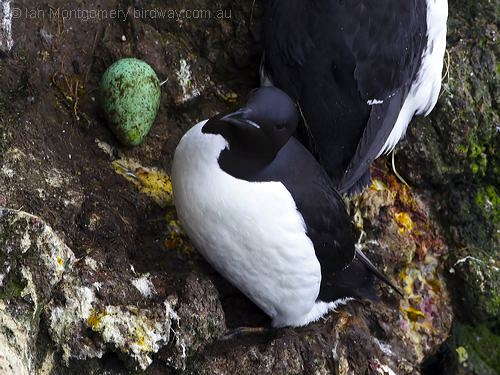
It is only for breeding that they come return to the shore where they lay their eggs on a rock or on the edge of a cliff, without building a nest. The interesting part is their eggs are designed not to roll when disturbed…

Thick-billed Murre (Uria lomvia) with egg by Ian

Thick-billed Murre (Uria lomvia) with egg by Ian

GOD not only takes care of the birds, but,
HE also takes care of its eggs….

HE knows that these birds spend all their lives on water, and so HE designed its eggs to stay still even at the edge of a cliff…

If GOD can care so much for little birds, will HE not care for you?

Did HE not created you in HIS image?
GOD did not create us to fall but, to stand high above the others..

HE not only cares for you but,HE also cares for your future…

HE wants to see the world through you that’s why HE calls you as
THE APPLE OF HIS EYE..
HE wants to work through you, that’s why HE has

CARVED YOU IN HIS PALM..

CHEER UP FOR YOU ARE UNIQUE…

Are not two sparrows sold for a farthing? and one of them shall not fall on the ground without your Father. (Matthew 10:29)

Have a blessed day!

Yours in YESHUA,
A J Mithra

Please visit us at: Crosstree


Lee’s Addition:

The Thick-billed Murre is in the Alcidae – Auks Family of the Charadriiformes Order
See Also:
When I Consider! – Guillemot (In the same family as Murres)

*

Yellow-bellied Sapsucker – Chief Corner Stone’s Keystone

Yellow-bellied Sapsucker – Chief Corner Stone’s Keystone – By A J Mithra

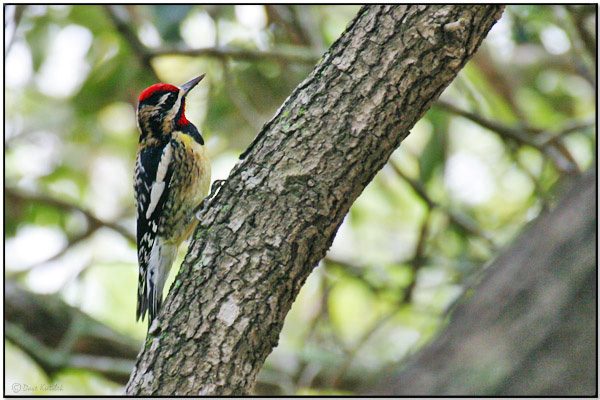
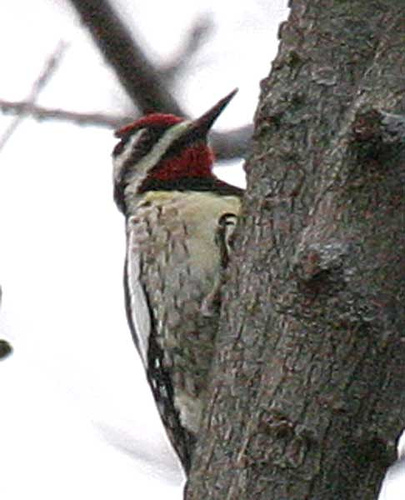
Yellow-bellied Sapsucker (Sphyrapicus varius) by Daves BirdingPix

Yellow-bellied Sapsucker (Sphyrapicus varius) by Daves BirdingPix

Although most non-birders believe that the Yellow-bellied Sapsucker is a fictitious bird created just for the humorous name, in fact it is a widespread species of small woodpecker.
Its habit of making shallow holes in trees to get sap is exploited by other bird species, and the sapsucker can be considered a “keystone” species, one whose existence is vital for the maintenance of a community.
The Yellow-bellied Sapsucker frequently uses human-produced materials to help
in its territorial drumming. Street signs and metal chimney flashing amplify the irregular tapping of a territorial sapsucker.
The sapsucker seems to suffer no ill effects of whacking its bill on metal,
and a bird will return to a favorite sign day after day to pound out
its Morse code-like message.

How much effort do we take to share the message of hope to the hopeless?
How many souls do we touch each day?
These birds don’t seem to bother if, others are listening to its message or not…
It still returns each day to pound out its Morse code-like message…
Are we really taking any effort to pound out the message of Love which
JESUS showed on the Cross of Calvary?

For the preaching of the cross is to them that perish foolishness;
but unto us which are saved it is the power of God. (1 Corinthians 1:18)

Yellow-bellied Sapsucker (Sphyrapicus varius) by Kent Nickell

Yellow-bellied Sapsucker (Sphyrapicus varius) by Kent Nickell

The Yellow-bellied Sapsucker is the only woodpecker in eastern North America that is completely migratory. Although a few individuals remain throughout much of the winter in the southern part of the breeding range, most head farther south, going as far south as Panama. Females tend to migrate farther south than do males. These birds migrate to the Southeastern United States, West Indies and Central America, leaving their summer range. This species has occurred as a very rare vagrant to Ireland and Great Britain.

As the name implies, Sapsuckers drill a series of wells in trees and drink the sap that oozes forth. Forages for insects by gleaning, probing, prying, tapping, and fly catching. Drills series of shallow holes in bark of tree, licks up sap.
They breed in young forests and along streams, especially in aspen and birch.
Winters in variety of forests, especially semi open woods…
They are often quite important ecologically for a given habitat, as several other animal species use sapsucker wells for feeding.

Isaac dug well after well, and the herdsmen of Gerar took it from him…
This incident is found in the book of Genesis 26 : 15 to 22 …
Did someone take possession of your blessings?
Just leave it for GOD to intervene and start digging another well..

And all this assembly shall know that the LORD saveth not with sword and spear: for the battle is the Lord’s, and he will give you into our hands (1 Samuel 17:47)

Early in the spring the sapsucker tests many trees around its selected nesting site by making sample drillings before selecting ones it prefers. These trees, because of quantity or sugar content of the sap, are visited several times a day for the rest of the season and sometimes are used as a food source for several years.

O taste and see that the LORD is good: blessed is the man that trusteth in him (Psalms 34:8)
How sweet are thy words unto my taste! yea, sweeter than honey to my mouth! (Psalm 119:103)

In commercial forests or orchards, favorite feeding trees of the sapsucker are left untreated, so that the birds will concentrate their feeding activities on these favorite trees, which in turn often protects nearby trees from serious injury…

JESUS, the Tree of Life, knew that satan is after us to drill holes of sorrow and holes of hurt, holes of poverty and holes of doubts and suck the life out of us so that we would die of sin than live life eternal..
That is the reason that, JESUS planted HIMSELF beside us on the cross to save us from destruction…

And that he died for all, that they which live should not henceforth live unto themselves, but unto him which died for them, and rose again. ( 2 Corinthians 5:15)

LORD JESUS….
How great thou art, how great thou art….

Have a blessed day!

Your’s in YESHUA,
A J Mithra

Please visit us at:  Crosstree


Sapsuckers are part of the Picidae – Woodpeckers Family of the Piciformes Order.

*

Atlantic Puffin – The Deep Sea-Diver

Atlantic Puffin – The Deep Sea-Diver – by A J Mithra

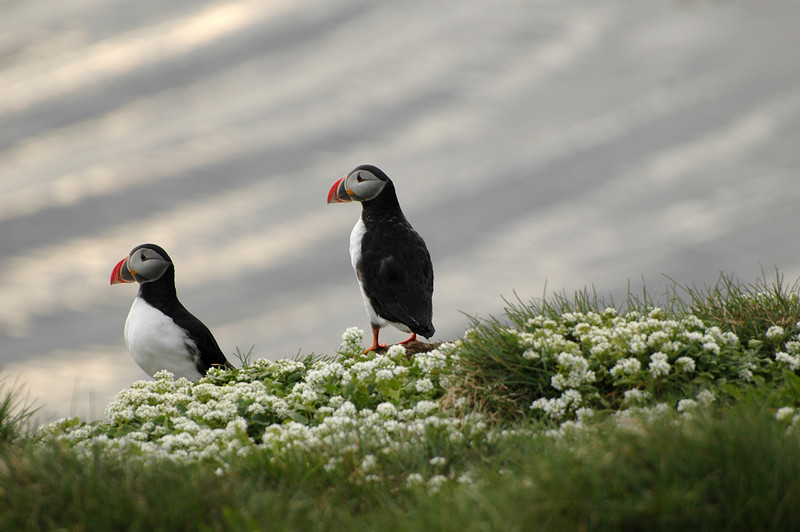
Dubbed “sea parrots” as well as “clowns of the sea,”
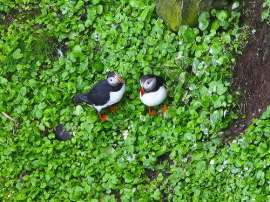
Atlantic puffins sport large, brightly-colored beaks on their substantially-sized heads.

Atlantic Puffin (Fratercula arctica) by Bob-Nan

Atlantic Puffin (Fratercula arctica) by Bob-Nan

Crisp black and white markings on their plumage, as well as superior diving capabilities, have led people to compare the northern seabirds to penguins. It is brilliant in coloration during the summer months, but tends to fade to a deep or olive colored gray during the winter, and bloom like a flower to the same bright colors in the spring. Scientists believe that it might be part of the mating attraction, and helps them to get a mate, since it changes with the seasons.

The bright beaked Atlantic Puffin stay at sea most of their life, and when they are not swimming they ride the waves like a surfboard. They are excellent swimmers, using their wings to stroke the water with a flying motion to propel them along. They have large feet that they use to steer, rather like the rudders on a boat

GOD had created these Birds to surf over the waves…
But, GOD has called us to walk over storm and walk through fire…
We have a GOD who can steer us troubled waters….

When thou passest through the waters, I will be with thee; and through the rivers, they shall not overflow thee: when thou walkest through the fire, thou shalt not be burned; neither shall the flame kindle upon thee. (Isaiah 43:2)

They can dive down to depths of 200 feet or more usually stay underwater for only 20 or 30 seconds to get a meal of small fishes like herring or sand eels. Puffins primarily eat fish, particularly female Capelin, but will also eat crustaceans and squid.

These birds have to dive deep; else they may have starve, because, their favorite food is deep below the sea… Most of us love to pick up shells rather than go deep into the sea and collect pearls,

Is that the reason why, we always prefer to stand by the Living Water, instead of diving deep down?
The treasures lie deep down the sea and not by the beach…. Isn’t it?

He gathereth the waters of the sea together as an heap: he layeth up the depth in storehouses. (Psalm 33:7)

Puffins, although they prefer to ride the waves are incredibly fast fliers, and can flap their wings up to 400 times a minute and reach speeds of about 55-60 miles per hours in the air.

Puffins land on the coasts of North America, and in islands to breed every spring and summer.

Iceland is the place where about 60% of all Puffins breed. They choose rocky cliffs or tops of rocky hills to build the nests which are lined with soft feathers and grass. Puffin burrows are 1 to 2 meters deep, often turning at sharp angles to the right, left, up, and down.

How deep have we burrowed to lay the foundation of lives?

He is like a man which built an house, and digged deep, and laid the foundation on a rock: and when the flood arose, the stream beat vehemently upon that house, and could not shake it: for it was founded upon a rock. (Luke 6:48)
Atlantic Puffin (Fratercula arctica) by Ian

Atlantic Puffin (Fratercula arctica) by Ian

Puffins lay a single egg and rear a single chick each year. The parents take turns sitting on the egg for about 40 days before it hatches. When a chick hatches, its parents take turns feeding it by carrying small fish back to the nest in their bills. Once the chick hatches, the mother and father will take turns bringing it fish to eat several times a day.  To wean their chicks, puffins simply scale back the amount of food they bring them. Once hunger wins out, the chick will journey to the ocean during the night to avoid predators.

Sometimes, GOD will just not answer our prayers, you know why?
HE wants us to conquer new horizons.
GOD could have saved Daniel before he entered the lion’s den.
But, GOD preferred something different and taught the whole mankind, what perseverance is all about…

When you feel that, GOD is not answering your prayers, just know, that you’re going to do what you haven’t done before like Daniel..
When the going gets tough, the tough gets going…

I can do all things through Christ which strengtheneth me. (Philippians 4: 13)

Puffin couples often reunite at the same burrow site each year and mate again although it is unknown how they know where to go. Some believe they use visual reference points, others the moon or stars for navigation.
Broken marriages, broken relationships and broken families, where are we heading to?
Who navigates out lives? Whom do we consider as our guiding star?

NO JESUS NO PEACE…. KNOW JESUS KNOW PEACE….

For unto us a child is born, unto us a son is given: and the government shall be upon his shoulder: and his name shall be called Wonderful, Counsellor, The mighty God, The everlasting Father, The Prince of Peace. (Isaiah 9:6)

Atlantic puffins have the ability to carry several fish in their beaks at one time. They push the fish to the back of their mouth with their tongue, where ridges at the top of their bill secure the fish in place. This allows puffins to keep their mouth open to catch more fish without losing any in the process. In general, they can hold around ten fishes in their beak at once by holding them in an alternating end to end pattern.

GOD has given us Ten Commandments; how many can be seen in our lives?
Though we don’t carry all those Ten Commandments, are we carrying at least the one that JESUS gave us?

And the second is like unto it, Thou shalt love thy neighbour as thyself. (Matthew 22:39)

Some pairs exhibit a special behavior known as “billing” where the two birds rub their beaks together.
This often draws an excited crowd of other puffins to watch..
What sort of testimony do we have among our friends and family?
Does our life attract people towards CHRIST?

Then they that feared the LORD spake often one to another: and the LORD hearkened, and heard it, and a book of remembrance was written before him for them that feared the LORD, and that thought upon his name. (Malachi 3:16)

Atlantic Puffin (Fratercula arctica) by Bob-Nan

Atlantic Puffin (Fratercula arctica) by Bob-Nan

The chick stays in the burrow until it is able to fly. The young puffin uses a toilet area towards the front of the burrow away from the nest to stay clean. It cannot risk getting its feathers soiled and ruining the waterproof protection they provide.

How clean are we in spirit? What sort of life do we lead on week days?
Most of us come for a spiritual bath to church on Sundays.
Do we consider Church as a spiritual bathroom?

7 DAYS without JESUS makes 1 WEAK…

And Joshua said unto the people, Sanctify yourselves: for tomorrow the LORD will do wonders among you. (Joshua 3:5)

After 45 days, the chick leaves the burrow and spends 3-5 years at sea learning about feeding places and choosing a mate. In the wild, puffins can live around 20 years. Their main predator is the great black-backed gull, which can capture a puffin mid-flight  or swoop in on a puffin on the ground. Herring gulls are also a threat because they steal puffins’ fish…

Puffins spend their first three years of life out at sea.  They return to land once they reach maturity. Puffins are insulated from the cold by an oily coating on their feathers. Without this coating, they would never survive Atlantic winters..

Are we insulated by the blood of JESUS?
How to get insulated by the blood of JESUS?
Unless one dies for sins and lives with CHRIST and for CHRIST…

Nicodemus saith unto him, How can a man be born when he is old? can he enter the second time into his mother’s womb, and be born? Jesus answered, Verily, verily, I say unto thee, Except a man be born of water and of the Spirit, he cannot enter into the kingdom of God.(John3:4,5)

Your’s in YESHUA,

A J Mithra

Please visit us at: Crosstree

Puffins are in the Alcidae – Auks Family of the Charadriiformes Order

The Eagle – The Loyal Mate..

The Eagle – The Loyal Mate.. – by A. J. Mithra

Bald eagles are loyal to their mates during their lifetime.
An eagle will usually look for a new mate only if its companion dies.

So many out there still think, that JESUS is a dead god..
Is that the reason why they are on the lookout for a new god?
Well the truth is that, JESUS died for us but, HE rose again from the dead…
And above all, the greatest news is that, HE still lives…
By the way, are we loyal to our Creator?

I am he that liveth, and was dead; and, behold, I am alive for evermore, Amen; and have
the keys of hell and of death. (Revelation 1:18)

Together, they build huge nests known as “aeries” atop tall and strong trees.
They make use of twigs, grasses, soft mosses and feathers in making their nests.
They normally go back to their nests during breeding time and add
new materials to it each year.

Bald Eagle Brings Nesting Material by Aesthetic Photos

A new eagle’s nest measures an average of five feet in width and two feet in depth.
However, as their family grows, the nest also becomes larger reaching
more than ten feet wide and heavier.

A pair of Eagles not only builds so big a nest but also extends them every year…
Before we call ourselves as the bride, let us ask ourselves if we are of any help
to JESUS, our Bride groom, in the extension of HIS kingdom?
GOD has called us and chosen us to go and spell the Gospel to every nation..
What are we doing now? Just warming the Church benches every Sunday?

If any man’s work shall be burned, he shall suffer loss: but he himself shall be saved; yet so as by fire. (1 Corinthians 3 : 14)
We then, as workers together with him, beseech you also that ye receive not the grace of God in vain. (2 Corinthians 6:1 )

Bald Eagle by Ray's Wildlife Photography

By the age of four or five, bald eagles are already sexually mature during which
they look for a mate to have offspring with.
The mating season varies by region.
In the south, it may occur from the later part of September to November while
it may take place from January to March in the Great Plains and Mountain West.
In Alaska, the mating season is usually from late March to early April.
For a long time it was believed that eagles mated in the air,
while they were cart wheeling or sky dancing.
But the aerial displays are really a prelude to mating. Once the eagles are ready to mate,
they will then take to a tree branch or to their nest and then mate there,
using the nest or branch for support.

“JESUS ascended to heavens after HE rose from the grave….

HE will soon swoop down to take HIS bride for an aerial display,
a prelude to HIS marriage with the Church, HIS bride…

Oh Church! It’s time to put on your wedding dress, to meet the Bride-groom
Are you getting ready?

And he saith unto him, Friend, how camest thou in hither not having a wedding garment? And he was speechless. and he saith unto him, Friend, how camest thou in hither not having a wedding-garment? And he was speechless. Then said the king to the servants, Bind him hand and foot, and take him away, and cast him into outer darkness; there shall be weeping and gnashing of teeth. Then the king said to the servants, Bind him hand and foot, and cast him out into the outer darkness; there shall be the weeping and the gnashing of teeth. For many are called, but few are chosen. (Mathew 22: 12-14)

Bald eagles can mate throughout their life starting from the age of four.
Breeding may not occur annually for some eagles by voluntary choice.
They may instinctively realize bad timing because of weather,
nesting site availability, or food.
Eagles will bring fresh leafy sprays to the nest, not for use as part of the structure
or lining of the nest, but as a sort of decoration on top…
They serve as an advertisement that the nest and territory are occupied
and tell interloping eagles to stay away.
The fact that a piece of green and fresh vegetation is kept at the nest
indicates recent activity there.
So the fresh sprays might be a way of saying “This nest is taken.”
Or it might be a ”Gift of love” for its mate…
Or it may be to decorate its nest…

Each new morning, JESUS brings us HIS fresh new grace,
to remind us that in spite of all our shortcomings, HE still loves us…
HE wants to be the decoration of our lives…
Male Eagles bring a fresh new sprig every day as a gift of love to its mate….
But, our Lord JESUS has given HIS life for us to show HIS love…

Are we worthy to be HIS bride?

He that loveth father or mother more than me is not worthy of me: and he that loveth son or daughter more than me is not worthy of me. And he that taketh not his cross, and followeth after me, is not worthy of me. (Mathew 10 : 37,38)

Wish you all a blessed Easter!
Let the resurrected power of JESUS fill every home in every nation…

Your’s in YESHUA,
A. J. Mithra

Please visit us at: Crosstree

Kirtland’s Warbler Reveals…

Kirtland’s Warbler Reveals… – by A. J. Mithra

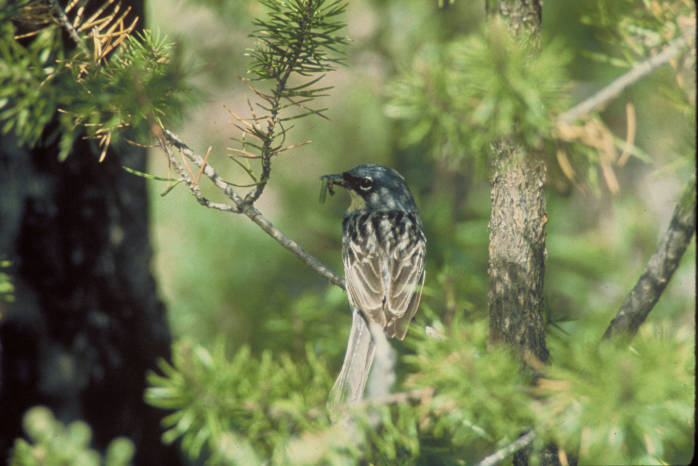
Kirtland's Warbler (Dendroica kirtlandii)©USFWS

Kirtland's Warbler (Dendroica kirtlandii)©USFWS

The Kirtland’s Warbler requires areas
with small jack pines for nesting.
The jack pine requires fire
to open its cones and spread its seeds.
The warbler first appears in an area
about six years after a fire when the new growth
is dense and is about 1.5 to 2.0 meters (5.0-6.5 feet) high.
After about 15 years,
when the trees are 3.0 to 5.0 meters (10.0 to 16.5 feet) high,
the warbler leaves the area…

These birds seem to know the time of GOD..
How do they know the age of those trees?
Is it because we have not tuned ourselves
to the frequency of GOD AND HIS time?
GOD has called us by our names to reveal
HIS plans in our lives..
But, we don’t seem to understand
the time to sow or the time to reap..

A time to be born, and a time to die; a time to plant, and a time to pluck up that which is planted; (Ecclesiastes 3:2)

Kirtland's Warbler (Dendroica kirtlandii) by Kent Nickell

Kirtland's Warbler (Dendroica kirtlandii) by Kent Nickell

The very specific habitat requirements
of this species are the main cause of its threatened status.
Despite nesting on the ground,
Kirtland’s Warbler will only nest amongst
9 – 13 year old jack pines (Pinus banksiana);
taller stands are abandoned for a new site.

Is it because the birds know that
there is going to be another fire very soon?
How amazing our GOD is?
HE has tuned the birds to HIS plans
and that is the reason the birds know,
when to nest among the pines and when to abandon them..
Do we know that we have to abandon this earth?
Do we know that there is going to be an eternal fire very soon?

And the devil that deceived them was cast into the lake of fire and brimstone, where the beast and the false prophet are, and shall be tormented day and night for ever and ever. (Revelation 20:10)

Your’s in YESHUA,

A J Mithra

Please visit us at: Crosstree

White-fronted Bee-eater – The Life Guards

White-fronted Bee-eater – The Life Guards – by A. J. Mithra

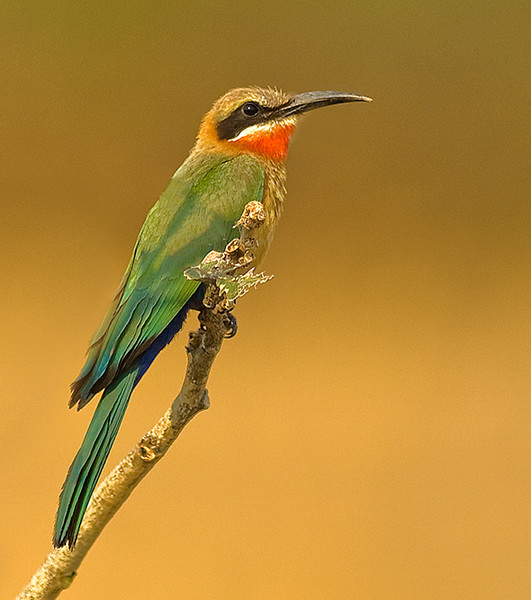
White-fronted Bee-eater (Merops bullockoides) by Bob-Nan

White-fronted Bee-eater (Merops bullockoides) by Bob-Nan

The White-fronted Bee-eater, Merops bullockoides, is a species of Bee-eater
widely distributed in sub-equatorial Africa.
This species, like other bee-eaters, is a richly colored, slender bird,
with a distinctive black mask, white forehead, square tail and a bright red throat.
The upperparts are green, with cinnamon under parts and their call is a deep squeak…
They nest in small colonies, digging holes in cliffs or earthen banks
but can usually be seen in low trees waiting for passing insects..
They hunt either by making quick hawking flights or gliding down
before hovering briefly to catch insects….

Our LORD, the provider and protector of the Universe, can still be seen
hanging on the Cross waiting for those passing souls to accept HIM as their savior…
Remember that HE had taken our place on the cross..
HE became a curse, so that we may be blessed…
What are you waiting for, invite JESUS into your life now, for, this is the day
that the LORD has made for you to invite HIM and rejoice forever and ever…

Who his own self bare our sins in his own body on the tree, that we, being dead to sins, should live unto righteousness: by whose stripes ye were healed. (1 Peter 2:25)
Christ hath redeemed us from the curse of the law, being made a curse for us: for it is written, Cursed is every one that hangeth on a tree: (Galatians 3:13)

Until the 1960s, scientists held that natural selection favors only those behaviors
that boost the survival chance of the individual and its offspring.
A bird that postpones its own reproductive potential to help another would seen doomed
from that evolutionary standpoint, but, many white-fronted bee-eaters
willingly place their relatives’ needs before their own to help close kin survival..

White-fronted Bee-eater (Merops bullockoides) by Africaddict

White-fronted Bee-eater (Merops bullockoides) by Africaddict

Family ties made the difference in nearly every case, with helpers foraging
for the most closely related nestlings 94 percent of the time.
Most in-law bee-eaters are females that have left their natal clan to join
the extended family of a mate and are socially integrated in the mate’s clan
but are genetically unrelated to members other than their own offspring.
These in-laws rarely “lift a feather,” even though their mates may be working hard
to bring in enough bees and other delectables for a related couple’s hungry brood…

In-laws may fly back to their natal clan during times when
the colony experiences a food shortage, and birds temporarily left their partners’ clans
to help their parents, or a parent and a stepparent, raise a family.
All of these helpers returned to their mates after the breeding season.

Though GOD loves the Jews- His chosen people, HE willingly places the needs of us,
the Gentiles, before the needs of HIS own people…
And HE seems to be postponing HIS marriage, so that no one is left out…
Nature is giving out signs to show that these are the last day…
Are we ready to meet THE KING?

Little children, it is the last time: and as ye have heard that antichrist shall come, even now are there many antichrists; whereby we know that it is the last time. (1 John 2: 18)

White-fronted African bee-eaters will face even spitting cobras when it comes to
defending its kin, and forage tirelessly for bees and delay having their own young—
all to help close relatives raise a clutch of baby birds.
Years of direct observation have led researchers to suggest this altruism is an inherited
trait that gives the “helper” bird’s family a survival edge in the harsh African Savannah….

Why would any bird engage in such magnanimous behavior?
Is it courageously noble in mind and heart?
Or is it generous in forgiving; eschewing resentment or revenge; unselfish behavior?

These birds are ready to face poisonous cobras to save the lives of its kin..
Did not our Savior JESUS give HIS life on the Cross to defend us
from the venomous serpent?

Did HE not generously give HIMSELF on the Cross to forgive our sin?
Did HE not show HIS unselfishness to take our place on the Cross?
Shall we all, once again rededicate our lives and run into the
nail-pierced, outstretched hands of our Savior?

Therefore if any man be in Christ, he is a new creature: old things are passed away; behold, all things are become new. (2 Corinthians 5: 17)

Have a Holy Friday..

Your’s in YESHUA,
A J Mithra

Please visit us at: Crosstree

See – The Gospel Message

Inspired by this Bird through an article on Science News by Kathy A Fackelmann http://findarticles.com/p/articles/mi_m1200/is_n23_v135/ai_7680117/ dated June 10th 1989…