Interesting Things – Birds With a Memory to Envy

Birds With a Memory to Envy

Who provideth for the raven his food? when his young ones cry unto God, they wander for lack of meat. (Job 38:41)
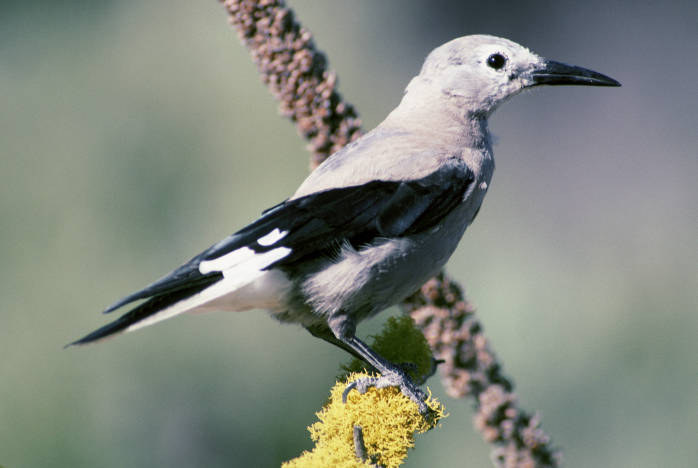
Clark's Nutcracker (Nucifraga columbiana) ©USFWS

Clark's Nutcracker (Nucifraga columbiana) ©USFWS

The shy bird, called Clark’s nutcracker, collects food during the growing season and stores it for the cold winter months. In one year, a bird will store between 22,000 and 33,000 seeds in as many as 2,500 locations, which can be more than ten miles apart. But does the little bird remember where he put all those seeds?

Biologists tracked the activity of Clark’s nutcrackers in the San Francisco Peaks in northern Arizona. A small army of researchers tracked the birds’ seed gathering and storing activities. One of the first things they discovered was that the birds quickly figured out that they were being observed. Some refused to store food when researchers were watching them. Others faked storing seeds when they were watched. Back in the lab, researchers studied the storing activity of Eurasian nutcrackers. After the birds stored seeds in a large sand floor, the birds were removed. Then the seeds they stored were dug up. When the birds were allowed to return, they quickly discovered that their seeds had been stolen, so they refused to store any more seeds. In the end, researchers concluded that the nutcrackers recover as many as two-thirds of their stored seeds within 13 months.

The remarkable memory of these little birds is their gift from God that enables them to be fed all year around.

Prayer: Father, I thank You because You are gracious and generous, not just to the birds, but also to me. Amen.

From Creation Moments©2010 – References: Science News, 2/14: 2004, pp. 103-105, Susan Milius, “Where’d I Put That?”


The Clarke’s and Eurasian Nutcrackers are part of the Corvidae Family of Crows, Jays, and Allies. The Passeriformes Order they are in has at present 123 Families (IOC 2.4).

Wordless Birds

*

Interesting Things – Birds Making Music?

Do Birds Truly Make Music?

The flowers appear on the earth; the time of singing has come, and the voice of the turtledove is heard in our land. (Song of Solomon 2:12)

The Bible speaks of bird calls as songs, as most of us do. However, evolutionary theory has led some scientists to say that we are merely assigning human meanings to the calls of birds. They say that the bird calls have nothing to do with real music.

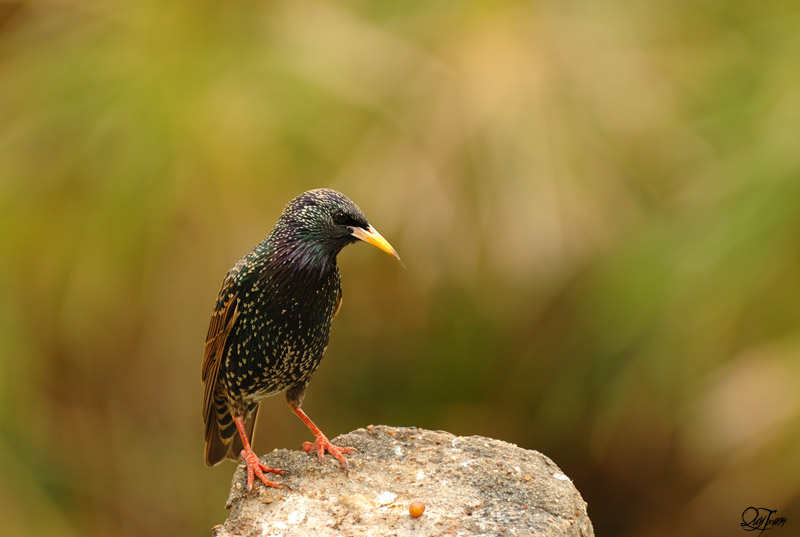
Common Starling (Sturnus vulgaris) by Quy Tran

Common Starling (Sturnus vulgaris) by Quy Tran

Ornithologists have known for some time that bird songs use the same musical scales as our music. Decades ago it was noted that some of Beethoven’s work could be heard from the European blackbird. The music was the same as the opening rondo of Beethoven’s “Violin Concert in D, Opus 61.” Since these birds pass their songs from generation to generation, Beethoven could have gotten the lilting music from the forefathers of today’s European blackbird! The songs of some species, like the song sparrow, follow the form of a sonata, beginning with a strong theme, then the theme is musically played with, and for a finish, the original theme is then repeated.

Song Sparrows song by Chris Parrish (xeno.canto.org)

Mozart had a starling as a pet. Once, having heard Mozart play his “Piano Concerto in C Major,” the starling not only imitated it, but changed the sharps to flats! Mozart exclaimed, “That was beautiful!” When the starling died, Mozart held an elaborate funeral for it. Eight days later he wrote “A Musical Joke,” which contains the same elaborate structure found in starling song.

A Musical Joke by Mozart

Do birds make true music, as the Bible says? Contrary to what some evolutionists say, Beethoven and Mozart certainly thought they did.

Prayer: Lord, I thank You for the gift of music, and I await the music of heaven. Amen.

From (Creation Moments©2010) References: Science News, 4/15/00, pp. 252-254, “Music without Borders.”


Interesting Things – Increasing Numbers Want Equal Time for Creation

Increasing Numbers Want Equal Time for Creation – from Creation Moments

Deceit is in the heart of those who devise evil, but counselors of peace have joy. (Proverbs 12:20)

A few years ago, a news release revealed the result of a poll on what Americans prefer to have taught in public schools about origins. The poll was done for an organization that favors a dogmatic teaching of evolution. The news release stated only that a huge majority of Americans, 83 percent, favor the teaching of evolution in the public schools. We at Creation Moments were led to investigate this poll more closely since this poll result runs contrary to other recent polls.

SmileyCentral.com

The professional polling organization polled 1,500 people about whether creation or evolution should be taught in the public schools. Indeed, 83 percent said they believe that the theory of evolution should be taught in the public schools. However, what was not included in the popular reporting of the poll was that 79 percent of those polled said that creation should also be taught in the schools. Only 20 percent of those polled felt that evolution only should be taught. Clearly, Americans prefer both creation and evolution presented to the students so that they can make up their own minds. Equally notable is that almost half of those polled agreed with the statement that evolution is “far from being proven to be scientific.”

While the statement that 83 percent of those polled favor evolution being taught is true, it leaves out the most important part of the poll’s findings. Clearly, ordinary people want to hear about God’s creation.

Prayer: Dear Father, help us never to be deceived by the forces of darkness. Amen.

References: Christian News, 4/3/00, p. 2.,  Creation Moments ©2010

Interesting Things! – Techy Ants

SmileyCentral.com

High-Tech Ants

Then God saw everything that He had made, and indeed it was very good. So the evening and the morning were the sixth day. (Genesis 1:31)

Ant - Wikipedia

Ant - Wikipedia

Why do ants like electricity and why can they sense microwaves? If evolution were true, how would ants evolve a love for electricity in only the short time that man has been producing it? For what purpose would they have evolved the ability to sense microwave radiation long before man was using it?

It has been well established that ants like to build their nests around electrical equipment. They are often found around electrical meters. They are famous for building their nests around airport runway lights. They seem to be particularly fond of electrical relays. No one knows why. Now we learn that unlike any other multicelled creatures, they can survive inside a running microwave oven, perhaps enjoying your food as it cooks! How can they do this? It seems that ants can detect the invisible wave pattern of microwaves inside the oven. These patterns leave some areas of the oven low in microwave radiation while other areas are high in radiation. Ants simply avoid those areas where the radiation is strong enough to kill them. Incidentally, you can see these patterns by lining the tray on the floor of your microwave oven with marshmallows. You will notice that some will become very cooked while others are barely touched by the microwaves.

If evolution were true, how would ants develop the ability to deal successfully with conditions that did not exist? It makes more sense to conclude that our Creator, Who knows the future, made the ants as He did for reasons we still must discover.

References: Science Frontiers, 1-2/00, p. 2, “Ants Like Microwaves.”
©2010 Creation Moments, Inc.

Interesting Things – Increasingly Tangled Tree of Life

SmileyCentral.com

The Increasingly Tangled Tree of Life

All things were made through Him, and without Him nothing was made that was made. (John 1:3)

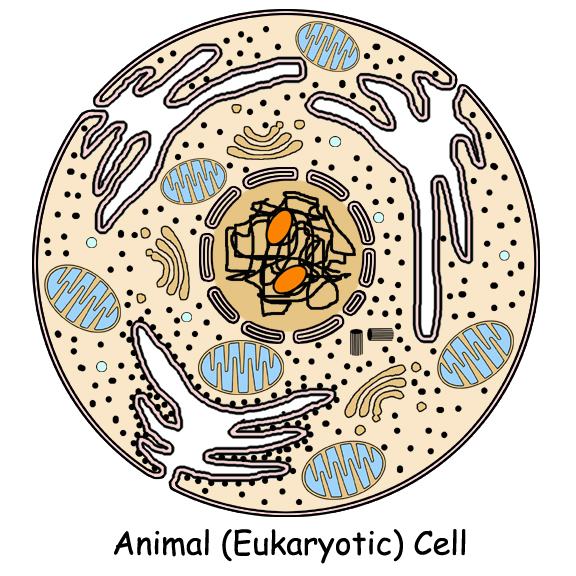
Researchers studying genetics have concluded that the evolutionary tree of life does not reflect the facts of biochemistry.

By the 1960s, biochemists had concluded that living things could be grouped into two distinct types based on their basic structures and genetic information. Eukaryotes have one or more cells and a true nucleus. Prokaryotes have smaller cells with no true nucleus. They are so different from eukaryotes that researchers concluded that they must have developed separately from non living matter. By the late 1970s, a third type of life was recognized – the archaea. Archaea favor extreme environments such as undersea vents. Their biochemistry is unlike prokaryotes or eukaryotes. According to evolutionists, life may have had to develop from non-living material three times. Further, to explain the biochemistry of these three types of creatures, biochemists have to assume that at points these separate types had to exchange genetic material with each other, and with a fourth, unknown and extinct type of living thing!

One logical conclusion of this new evolutionary approach is that life had to arise from non-life many times. Yet, modern biochemistry still has not explained how life could arise from non-life even once. However, this is exactly the pattern we might expect if all living things are the product of a wise Creator Who used similar designs to solve similar problems.

References: Scientific American, 2/00, pp. 90-95, “Uprooting the Tree of Life.”
©2008 Creation Moments, Inc.

Listen to article – Click Here

In the beginning God created the heaven and the earth. (Genesis 1:1 KJV)

Interesting Things – Anna’s Hummingbird

SmileyCentral.com

New Avian Speed Champion Discovered

Which doeth great things past finding out; yea, and wonders without number. (Job 9:10)

“A peregrine falcon diving toward its prey reaches a relative speed of 200 body- lengths per second. This is close to the 207 body-lengths that the space shuttle travels as it enters our atmosphere. Thus, the peregrine falcon was thought to easily be the fastest dare-devil bird on Earth.

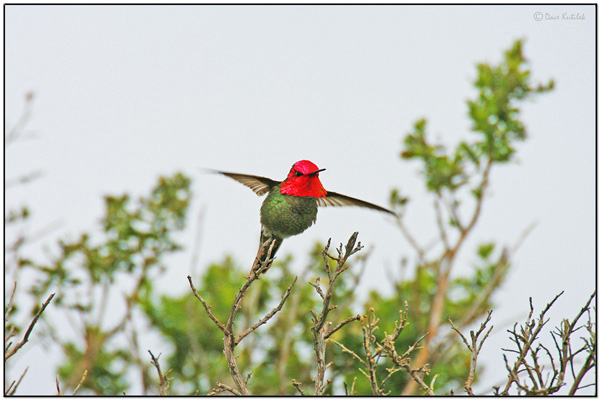
Anna's Hummingbird by Dave's BirdingPix

Anna's Hummingbird by Dave's BirdingPix

Scientists have now discovered that a little pink male hummingbird called Anna’s Hummingbird is the real Top Gun among the birds. As part of its mating ritual, a male hummingbird will try to impress a female with his speed and acrobatics. First, the male will fly up to about 90 feet above the ground. Then, he begins a power dive. As he nears the female, he pulls up, ascending again. During that near-miss pull-up he experiences more than nine times the force of gravity. His relative speed during descent is 385 body-lengths per second. That’s almost twice the peregrine falcon’s relative speed, it’s faster than the space shuttle entering the Earth’s atmosphere and is more than twice the relative speed of a jet fighter running with afterburners!

The wonders of God’s creation are still being discovered, and Creation Moments still loves to make them known to our listeners. But God’s greatest wonder is His love for us though His Son, Jesus Christ. We are thankful that this wonder is revealed to us in the Bible.

Prayer: Father, I give You thanks for the wonders You create, but I especially give You thanks for the wonder of salvation. Amen.

References: Science News, 7/4/09, p. 7, Susan Millius, “Hummingbird pulls Top Gun stunts.”

From Creation Moments ©March 24, 2010

Interesting Things – Birds’ Unique Leg Structure Says No Evolution

SmileyCentral.com

“Birds’ Unique Leg Structure Says No Evolution

And God created great whales, and every living creature that moveth, which the waters brought forth abundantly, after their kind, and every winged fowl after his kind: and God saw that it was good. (Genesis 1:21 KJV)

Countless television programs, museums, textbooks, and popular articles tell us that the birds evolved from dinosaurs. It now appears that this claim is even less credible!

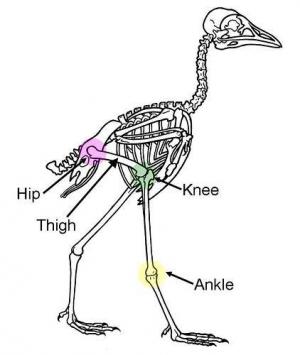
Bird Structure

Bird Structure

Researchers at Oregon State University have made a fundamental discovery about how birds breathe. Unlike other land animals, birds have immovable thigh bones, and they walk and run by bending their knees. All other land creatures can move both their thigh bone as well as bend their knees to walk and run. This included the dinosaurs and other theropods from which birds supposedly evolved. Birds need twenty times as much oxygen as cold-blooded animals. To supply this need, birds are designed with unique lungs and supporting musculature. Researchers found that if birds had the usual muscle structures and could move their thighs, their high-performance lungs would collapse. Even the evolutionists at Oregon State University said that this makes it unlikely that birds evolved from dinosaurs, and they added that birds appear earlier in the fossil record than the theropods from which they supposedly evolved!

There are other transition problems associated with bird evolution that are seldom mentioned. For example, reptiles are cold-blooded and birds are warm blooded; yet, this major transition has seemingly been overlooked.

Of course, the Bible has always taught that birds were specially made by God and did not evolve from any other creature.

Prayer: Lord, You have designed all things well. Do not let Your people be fooled by those who deny Your works. Amen.

References: Oregon State University (2009, June 9), “Discovery Raises New Doubts About Dinosaur -Bird Links. Science Daily. Retrieved June 16, 2009, from http://www.sciencedaily.com/ releases/2009/06/090609092055.htm.”

From Creation Moments ©March 22, 2010

To see more interesting things – CLICK HERE

Interesting Birds – Fairywrens of Australia & New Guinea

Variegated Fairywren (Malurus lamberti) by Ian

Variegated Fairywren (Malurus lamberti) by Ian

Thinking

I know all the birds of the mountains, and the wild beasts of the field are Mine. (Psalm 50:11)

To listen – Fairywrens by Creation Moments

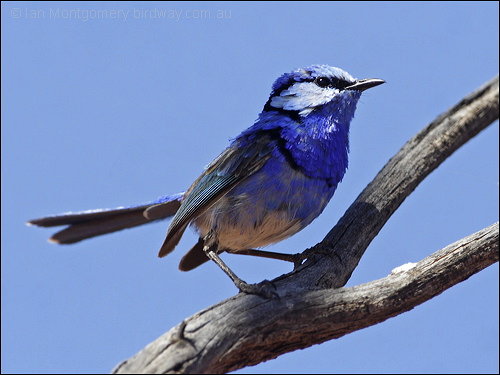
Splendid Fairywren (Malurus splendens) by Ian

Splendid Fairywren (Malurus splendens) by Ian

There are 13 species of a brightly plumed little songbird known as the fairy wren. The birds are found in Australia and New Guinea. So colorful are their feathers that the various species go by names like “superb,” “splendid” and “lovely.” However, even more noteworthy is the birds’ unusual behavior.

A male courting a female will bring her a flower petal. The petal usually matches his color or is a deeply contrasting color. Normally a perky little bird with an upright tail, when courting he lowers his tail and creeps around close to the ground. As he twists his body back and forth, he puffs out his cheek feathers. If the female accepts his courting, she builds their nest alone, lining it with bright parrot feathers. While they mate for life, they are not known for fidelity to their mates. When mature, females will go off on their own, but males may stay with their parents for a year or more. Their main duty is to guard the family nest. If danger approaches the nest, the guard will puff up his wings, lower his tail and scuttle through dry grass, pretending to be a mouse. The idea is to lure the predator away from the nest.

Lovely Fairywren (Malurus amabilis) by Ian

Lovely Fairywren (Malurus amabilis) by Ian

The beauty and unusual behavior of these little birds testifies to more than God’s creativity and love for beauty. They remind us of the beauty that was lost to God’s creation when it was tainted by man’s sin. Thankfully, some of that beauty that was lost can return to our lives through the forgiveness of sins that is found in Jesus Christ.

Prayer: Dear Father, I thank You for the beauty of Your creation and for giving me the forgiveness of sins in Jesus Christ. Amen.

References: Natural History, 11/94, pp. 56-62, “Faithful Philanderers

Copyright © 2010 Creation Moments, Inc., PO Box 839, Foley, MN  56329, www.creationmoments.com.


The Fairywrens are in the Maluridae – Australasian Wrens Family which is part of the Passeriforms Order. They are like in the true wrens (Troglodytidae family) in their shape and the way they cock their long tail. The Maluridae family not only includes the Fairywren, but also the Emu-wren and Grasswren. They range from 5-7.5 in (12-19 cm) to 8-8.5 in (20-22 cm). Most have a short, fine bill, while the Grasswren’s is a little thicker.

Superb Fairywren by Keith Blomerly

Interesting Things – After Their Kinds

SmileyCentral.com

And the earth brought forth grass, and herb yielding seed after his kind, and the tree yielding fruit, whose seed was in itself, after his kind: and God saw that it was good. (Genesis 1:12 KJV)
And God created great whales, and every living creature that moveth, which the waters brought forth abundantly, after their kind, and every winged fowl after his kind: and God saw that it was good. And God blessed them, saying, Be fruitful, and multiply, and fill the waters in the seas, and let fowl multiply in the earth. (Genesis 1:21-22 KJV)


“How wonderful! Your dog has just had puppies! But do you now have to sort through the litter and make sure there are no baby giraffes or kangaroos?

Painted Spurfowl (Galloperdix lunulata) by Nikhil Devasar

Painted Spurfowl (Galloperdix lunulata) by Nikhil Devasar

In God’s account of creation in Genesis 1, we repeatedly read that both plants and animals were created to reproduce “after their kind.” Genesis 1, in speaking about the creation of plants, repeats three times in just two verses that they are to reproduce “after their kind.” We see the same phrase repeated later in the chapter when animals are created. This is not just empty repetition. God is stressing a fundamental principle that all things reproduce “after their kind.” Mother dogs have puppies and mother cats have kittens. You can count on it.

Why does God stress this principle? Even before creation, God knew that humans would eventually sin and then seek to hide their responsibility by trying to explain things without a Creator. God knew that this idea of evolution would capture the faith of millions over the history of the world.

God stresses what our experience shows so that He might be harder for us to hide from. All things do reproduce after their kind. And despite evolutionists’ strong faith in evolution, they cannot offer one established scientific fact to explain how one kind of creature might eventually make a completely different kind!

Egyptian Goose (Alopochen aegyptiaca) by Daves BirdingPix

Egyptian Goose (Alopochen aegyptiaca) by Daves BirdingPix

Prayer: I thank You, Lord, that You have made it hard for men to deny You. Yet men still deny You, seeking explanations and excuses outside of Your Word. I know that I, too, can do this, for I am both saint and sinner. I ask that You would correct me when I seek outside of Your Word what is already so richly provided to me in Your Word. Amen.”

© 2010 Creation Moments • All Rights Reserved

Interesting Things – Stinking Poison Bird – Pitohui

Thinking

But the unbelieving Jews stirred up the Gentiles and poisoned their minds against the brethren. (Acts 14:2)

Another interesting article from Creation Moments:

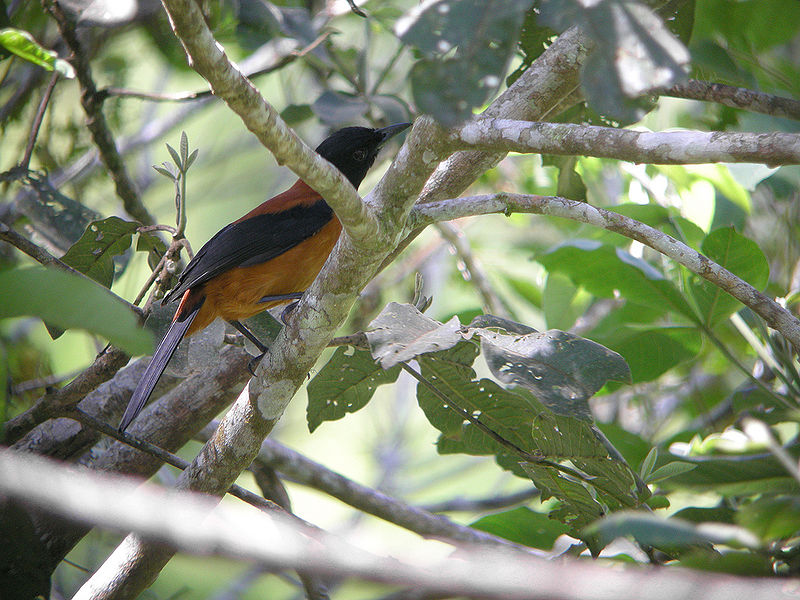
“The hooded pitohui is an evil-smelling, blue jay-sized bird that is native to New Guinea. The bird has been known to science since 1827, but they held a secret that only began to be uncovered in 1989.

Hooded Pitohui (Pitohui dichrous) ©Wikipedia

Hooded Pitohui (Pitohui dichrous) ©Wikipedia

An American graduate student made the discovery while studying another local bird – the bird of paradise. Unfortunately, hooded pitohuis kept getting caught in his nets. As he released the unwanted pitohuis, they would claw and peck at him. After he released the birds, he licked the wounds they had caused. As a result, his mouth began to burn and finally became numb for several hours. This led the graduate student to send dead hooded pitohuis to the National Institutes of Health for further study. The poison they produce was finally identified as one of the most poisonous substances known. It is hundreds of times more poisonous than strychnine. The amount of poison in one bird can kill 500 mice. Most amazing is that only one other creature produces the same poison, the poison dart frog of Central America.

Those who believe in evolution maintain that the ability to produce the poison must have evolved twice. But it’s not that simple. Not only do both bird and frog, half a world apart, have to evolve this unlikely ability twice, but they both had to evolve immunity to their own poison. Ultimately, evolution is a faith. It is a faith that is poisonous to Christianity because it makes death natural rather than a result of the first Adam’s sin. And without the fact of the first Adam, there is no need for the Second Adam, Jesus Christ.

Prayer: Lord, I thank You for Your victory over sin, death and the devil. Amen.”

References: Natural History, 2/94, pp.4 8.

Copyright © 2009 Creation Moments, Inc., PO Box 839, Foley, MN  56329, www.creationmoments.com.

Hooded Pitohui are in the Pachycephalidae – Whistlers and Allies Family in the Passeriformes Order

See AvianWeb.Com’s – Hooded Pitohui

Hooded Pitohui videos by Keith Blomerley

Interesting Things – Cuckoo Deceit

SmileyCentral.com

Deceit Is Cuckoo

Listen to this from Creation Moment

Bread gained by deceit is sweet to a man, but afterward his mouth will be filled with gravel. Proverbs 20:17

Fan-tailed Cuckoo (Cacomantis flabelliformis) by Ian

Fan-tailed Cuckoo (Cacomantis flabelliformis) by Ian

You may be aware that the common cuckoo does not feed or raise its own young. Instead, it lays its eggs in the nests of other birds. The adoptive parents feed and raise the young cuckoo as their own until the cuckoo gets larger than the foster parents and flies away without so much as a “thank you.”

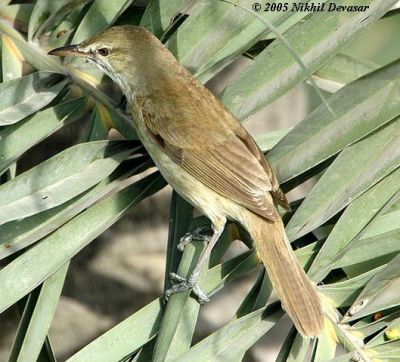
One common adoptive parent for the young cuckoos is the reed warbler, whose behavior pattern is quite different from the cuckoos. For example, reed warbler parents recognize hungry baby birds by their persistent calling. Cuckoos typically lay but one egg in an adoptive nest. Once this egg hatches, the young cuckoo throws the reed warbler eggs out of the nest. So how does one little baby cuckoo manage to convince the parent reed warbler that it is half a dozen reed warbler babies to be fed? Researchers have finally learned the amazing answer to that question. They say that the baby cuckoo fools its adoptive parents by sounding like as many as eight baby reed warblers. The act is so convincing that it gets all the food it wants.

Clamorous Reed Warbler (Acrocephalus stentoreus) by Nikhil

Clamorous Reed Warbler (Acrocephalus stentoreus) by Nikhil

Who teaches the baby cuckoos this trick? Certainly not the mother cuckoo who, incidentally, misses out on all the fulfillment of family life. The cuckoo reminds us that deceit robs us of good experiences in our lives. That ‘s why it is comforting when our perfect God of truth tells us that He never changes.

Prayer: Forgive me, dear Father, for any deceit in my life, and help me to live a life of truth and honesty. InJ esus’ Name. Amen.

References: L.H., Cuckoos beg doggedly to trick hosts, Science News, v.155, p.158, March 6, 1999
Copyright © 2009 Creation Moments, Inc., PO Box 839, Foley, MN 56329, www.creationmoments.com.

To learn more about the Cuckoo – Click Here

Bird Migration Mistakes

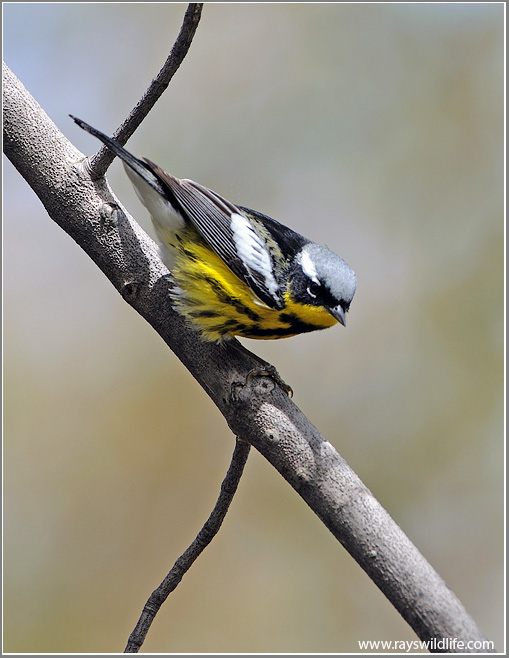
Magnolia Warbler by Ray

For I consider that the sufferings of this present time are not worthy to be compared with the glory that is to be revealed to us. For the anxious longing of the creation waits eagerly for the revealing of the sons of God. For the creation was subjected to futility, not willingly, but because of Him who subjected it, in hope that the creation itself also will be set free from its slavery to corruption into the freedom of the glory of the children of God. For we know that the whole creation groans and suffers the pains of childbirth together until now. (Rom 8:18-22 NASB)

Confused Birds – http://www.creationmoments.net/radio/listen.php?t=476
“Birds that make mistakes in navigation are called vagrants.”
Copyright © 2009 Creation Moments • All Rights Reserved

See: Vagrant Eastern Wood-Warblers

California Vagrant Birds – a set on Flickr