Interesting Things – Dinosaur Blood

Dinosaur Blood by Creation Moments

Job 40:15
“Behold now behemoth, which I made with thee; he eateth grass as an ox.”

A short while ago, Creation Moments reported the case of blood cells being discovered in a fossilized T. rex bone. Today, we report on another case. While most fossil bones have lithified, or turned to stone, occasionally identifiable bones are found that are only partially lithified.

Scientists had been studying the fossilized upper leg bone of a T. rex they date at 68 million years. The study consisted of dissolving the minerals from the fossilized bone with slightly alkaline solutions. They were completely surprised, for what remained was a soft, pliable material that proved to be high in carbon. Closer study of the pliable material revealed what appeared to be a network of blood vessels. Researchers were then amazed to find that this network was very similar to the networks found in modern ostrich bones. What’s more, they found bone cells as well as red blood cells in this material. Such findings would never be expected in 68-million-year-old biological material, but the researchers could offer no other interpretation for what they saw. They are now hoping that the discovery might shed light on dinosaur physiology and metabolism.

Researchers are still puzzled at how 68-million-year-old biological material could be preserved for so long. Of course, the obvious answer is that the material is not nearly that old and that dinosaurs were even part of human history.

Prayer:
Father, I thank You for all the wonders of Your creation, including the great dinosaurs. Amen.
Notes:
Science News, 3/26/05, p. 195, S. Perkins, “Old Softy.”

To see more Interesting Things, check out the PLUS section.

When I Consider! – Dinosaur and Bee DNA

When I Consider!

When I Consider!

Evidence From Microbiology – October 17

Science News, Nov. 18, 1994, reported that dinosaur DNA had been identified within unfossilized dinosaur bones found 2,000 feet below the surface of the earth in a Utah coal mine. The DNA did not match any known creature currently alive on Earth. The find was disputed on the grounds that dinosaur DNA should not have survived the supposed 80 million years. The DNA fragments also had no similarity to bird DNA (from whom the dinosaurs supposedly evolved). Therefore, this evidence has been largely ignored.

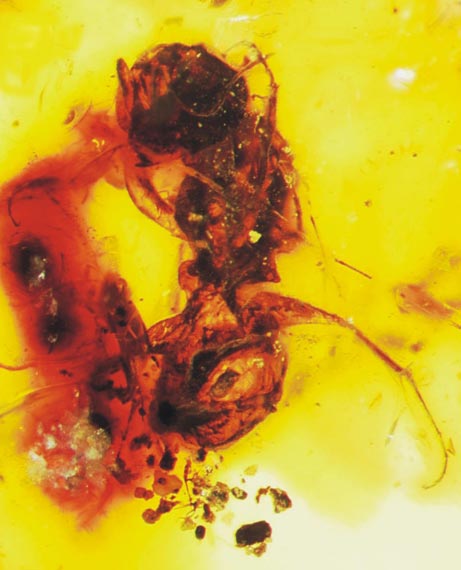
Oldest Bee (in Amber)

Oldest Bee (in Amber)

Science News, May 20, 1995, reported that scientists have extracted and revived live bacteria from the stomach of a bee which was encased in amber “over 25 million years ago.” Although the work was done with the greatest of efforts to prevent any “modern” bacteria from contaminating the results, many biochemists refute the find because, “DNA spontaneously degenerates to short fragments over a period of several thousand years at moderate temperatures.” Thus, this work has also been ignored because it does not fit the old-earth model.

These are just two examples showing how the assumption of evolution hinders the progress of knowledge. Evidence which does not fit into the “evolutionary mold” is ignored on the basis that it shows evolution—with its requirement of an ancient earth-to be wrong. The evidence fits perfectly into the biblical model of Earth history with a relatively recent worldwide burial of organisms. DNA fragments can still be found, because the earth is relatively young.

World By Design Newsletter,
Vol 2, no 6; Vol 3, no.3

The fear of the Lord is the beginning of wisdom and the knowledge of the Holy One is understanding.  Proverbs 9:10

From A Closer Look at the Evidence, by Richard and Tina Kleiss


Some Interesting Links to Articles:
Dinosaur DNA Research: Is the tale wagging the evidence?
Dinosaur Protein Sequences and the Dino-to-Bird Model
Common DNA Sequences: Evidence of Evolution or Efficient Design?
Evolution Wilts in Light of Flowering Plants
Ancient Amber Discovery Contradicts Geologic Timescale


Dinosaur Protein Sequences & Dino-to-Bird Model – Tomkins

Dinosaur Protein Sequences and the Dino-to-Bird Model by Jeffrey Tomkins, Ph.D. is in this months Acts and Fact.

Here is an excerpt from it:

“Evolutionists have maintained that the fossil record supports a long-ages history for earth, but material extracted from dinosaur bones is providing an interesting challenge to that theory. The recent discoveries of soft dinosaur tissues, defined cell matrices, elastic blood vessels, and clearly observable cell microstructures such as cell nuclei have been a source of both shock and excitement to the paleontology community.

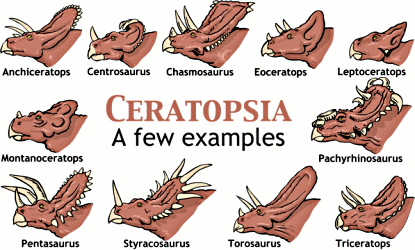
Dinosaurs

Dinosaurs

The shock comes from the fact that degradative processes somehow did not completely destroy all evidence of tissue from the supposedly millions-of-years-old fossils. The excitement comes from the fact that, given the pristine state of these tissues, scientists should be able to extract macromolecules. These would then be used in studies of molecular evolution to bolster the evolutionary ideas that are competing for supremacy in the scientific community, such as the currently touted “dinosaur to bird” transition model.

In fact, soft tissues from the bones of a Tyrannosaurus rex and a Brachylophosaurus canadensis (duck-billed hadrosaur) did yield protein fragments that were subjected to amino acid sequence analysis and then used in theoretical computational analyses.1, 2 But did the data demonstrate a dinosaur to bird transition, or was it possibly manipulated in the spirit of academic politics?”
Click here to read the rest of a very interesting article.

More from the Institute of Creation Research

When I Consider! – DNA in Dinosaurs

When I Consider!

When I Consider!

Evidence from the Fossil Record – from A Closer Look at the Evidence, August 8.

“As soon as a plant or animal dies, its DNA begins to decompose. The oldest accurately known DNA samples are from a 4000-year old mummy. Based on the deterioration of the molecule from samples of this age. it is estimated that essentially no DNA could survive longer than 10,000 years. However, DNA segments have been found in magnolia leaves (dated by evolutionists at 17 million years), dinosaur bones (dated at 80 million years), scales of a fossilized fish (dated at 200 million years) Evolutionary scientists should be asking how DNA could still be contained in samples this old when more recent samples indicate that the DNA molecule is far too sensitive to have lasted this long. Perhaps there is something wrong with the old-earth dating methods and these fossils still contain DNA fragments simply because they are not as old as believed. These samples have been simply dated wrong due to faulty assumptions of radiometric dating methods.

Dinosaur Fossil from OCR.org

Dinosaur Fossil from OCR.org

Evolutionists have a similar problem with protein preserved in dinosaur bones. As with DNA, no protein should last 75 to 150 million years; yet protein has been found in dinosaur bones. These plant and animal remains are simply not as old as evolutionists believe.”

In the Beginning, 7th Ed., p29-30

Listen to Me, O Jacob, And Israel, My called: I am He, I am the First, I am also the Last. Indeed My hand has laid the foundation of the earth, And My right hand has stretched out the heavens; When I call to them, They stand up together. (Isaiah 48:12-13 NKJV)


More When I Consider! articles

See Also:
A Scientist Says He Has Isolated Dinosaur DNA
The Devastating Issue of Dinosaur Tissue, from ICR
Dinosaur Mania and Our Children, by Paul S. Taylor
They’re seeing it by not believing it – Williams: Is science cracking code of dinosaur DNA?
Scientists recover T. rex soft tissue

Birds Aren’t Related to Dinosaurs After All

A recent “Creation Moments” article is worth reading.

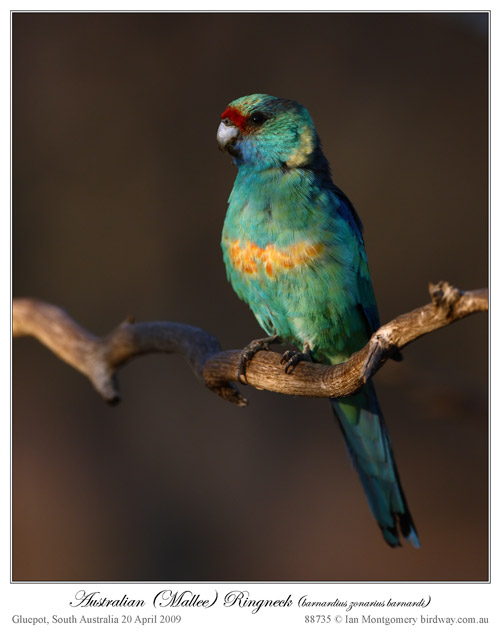
australian_ringneck_88735

Australian Ringneck by Birdway

“Anyone who has seen the film Jurassic Park knows that evolutionists have been telling us that modern-day birds are descended from dinosaurs. Well, it looks like the scientists have recently changed their mind.

According to an article on the ScienceDaily website dated June 9, researchers at Oregon State University have made a fundamental new discovery about how birds breathe and have a lung capacity that allows for flight – and the finding means it’s unlikely that birds descended from any known theropod dinosaurs.

The article goes on to report that the conclusions add to other evolving evidence that may finally force many paleontologists to reconsider their long-held belief that modern birds are the direct descendants of ancient, meat-eating dinosaurs, OSU researchers say.

‘For one thing, birds are found earlier in the fossil record than the dinosaurs they are supposed to have descended from,” said OSU professor of zoology John Ruben. “That’s a pretty serious problem, and there are other inconsistencies with the bird-from-dinosaur theories.’…”

Birds Arent Related to Dinosaurs After All – Continued

Here are some more quotes from the “Discovery Raises New Doubts About Dinosaur-bird Links:

Bird Skeleton“It’s been known for decades that the femur, or thigh bone in birds is largely fixed and makes birds into “knee runners,” unlike virtually all other land animals, the OSU experts say. What was just discovered, however, is that it’s this fixed position of bird bones and musculature that keeps their air-sac lung from collapsing when the bird inhales.”

“This is fundamental to bird physiology,” said Devon Quick, an OSU instructor of zoology who completed this work as part of her doctoral studies. “It’s really strange that no one realized this before. The position of the thigh bone and muscles in birds is critical to their lung function, which in turn is what gives them enough lung capacity for flight.”

“However, every other animal that has walked on land, the scientists said, has a moveable thigh bone that is involved in their motion – including humans, elephants, dogs, lizards and – in the ancient past – dinosaurs.”

“The implication, the researchers said, is that birds almost certainly did not descend from theropod dinosaurs, such as tyrannosaurus or allosaurus. The findings add to a growing body of evidence in the past two decades that challenge some of the most widely-held beliefs about animal evolution.”

For the rest of this article:
Discovery Raises New Doubts About Dinosaur-bird Links – ScienceDaily Article
More Related Articles of Interest:
Warm, Cuddly Dinosaurs?
We Don’t Know More than We Know About Dinosaurs

Did Birds Evolve From Dinosaurs?

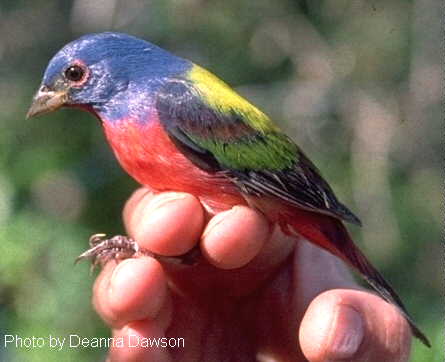
Painted BuntingThis weeks “Answersweekly” has a very interesting article about two Oregon State University scientist who don’t agree with the bird-to-dinosaur theory.  There is a link there for the “Birds Did Not Evolve from Dinosaurs, Say Evolutionists“, with a subtitle of, “Stunning New Research Overturns Widely Held Evolutionary Idea.”

It is worth your time to read the material of both links. As you know, we believe God Created both the Birds and the Dinosaur (that term not used in the Bible – a modern term) during the same Creation Week. That aside, read what these evolutionary scientist say about the anatomy of the two and how the bird could not have evolved from a dinosaur.

All flesh is not the same flesh, but there is one flesh of men, and another flesh of beasts, and another flesh of birds, and another of fish. (1 Corinthians 15:39 NASB)

Fossil Fibers Befuddle Dinosaur Evolution from I.C.R.

Fossil Fibers Befuddle Dinosaur Evolution
by Brian Thomas, M.S.*

Evolutionary museums and textbooks have often portrayed modern birds as the descendants of dinosaurs, a story that has been presented without empirical support. Now, a new “feathered” dinosaur discovery has thrown a wrench into the already dysfunctional machinery of the dino-to-bird tale. This dinosaur fossil with fang-like teeth, Tianyulong confuciusi, has been found with fibers that resemble structures believed by some evolutionists to be the precursors of feathers—the only problem is, it’s the wrong category of dinosaur to have them!

To read the rest of this article, go to I.C.R.

Since this blog is about birds and the other one creation, this article is good reading for both areas.