Ian’s Bird of the Week – Gouldian Finches

#1 Red-headed Gouldian Finch by Ian

#1 Red-headed Gouldian Finch by Ian

Newsletter 10-03-09

I’m now back home in North Queensland, so it’s perhaps appropriate to select as bird of the week one photographed at the farthest point reached during the trip: Wyndham on the Cambridge Gulf in NE Western Australia. I wanted to go to Wyndham, 100 Km from Kununurra, only because it is on the coast and the journey didn’t seem complete without reaching it. When there, we discovered from the locals that 600 Gouldian Finches were coming in at sunrise to drink at sprinklers in the town.
#2 Black-headed Gouldian Finch by Ian

#2 Black-headed Gouldian Finch by Ian

600 of any endangered species is an awful lot and too good to miss, so a couple of days later I got up at 3:45 am and drove the 100 Km to get there just before sunrise. The usual spot for the finches was very quiet – the Gouldian Finch Recovery Team had been banding them there on previous mornings and had probably put them off it – but I found them at another watering hole nearby. It was possible to drive right up to it, so I stayed in the car and photographed them out of the car window to disturb them less. Naturally, I was too busy to count, but 600 was probably a fair estimate and at one point I had two flocks totally maybe 200 birds in attendance. Most of the birds were juveniles, so they would appear to have had a good breeding season. This was also the case at another water hole near Mary River in Kakadu where we saw maybe 50 Gouldians.
#3 Red-headed with Juveniles

#3 Red-headed with Juveniles

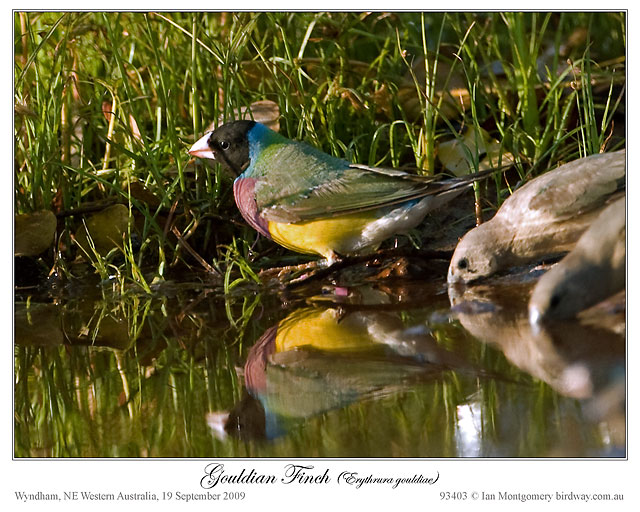
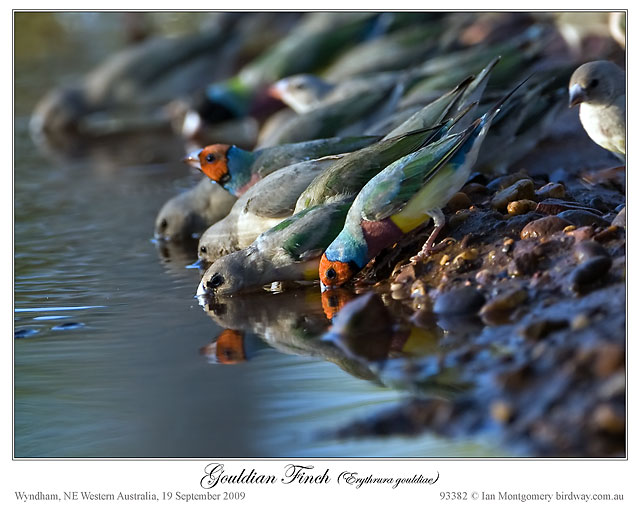
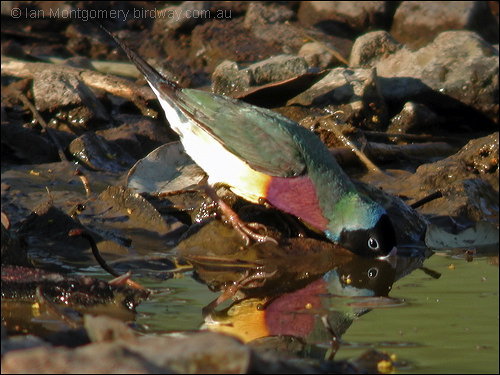
Gouldians come in three forms, depending on the colour of the facial mask. The first photo shows a Red-headed (with, out of focus, a Black-headed in the background and a juvenile in the foreground). The second shows a Black-headed about to drink, beside two juveniles. The third shows two Red-headed birds drinking with juveniles in various degrees of acquiring the adult plumage. The Black-headed is the commonest form (about 75%), then the Red-headed (about 24%) with 1% or less Golden-faced. The females are like the males but less strongly coloured.

I’ve started adding photos from the trip to the website. So far I’ve added:

White-quilled Rock-Pigeon
Chestnut-quilled Rock-Pigeon
Banded Fruit-Dove
Ground Cuckooshrike
Green-backed Gerygone

I’m making a brief visit to Sydney next week to give a talk, with lots of photos, on my 2008 trip to Alaska to Birding NSW on Tuesday 6th Oct. The meeting is open to anyone who would like to attend and is in the Mitchell Theatre, Level 1, Sydney Mechanical School of Arts, 280 Pitt Street, Sydney (between Park and Bathurst): http://www.birdingnsw.org.au/ . The meeting starts at 7:00 pm and my presentation is being preceded by a book launch by author Peter Roberts.

Best wishes,
Ian

Ian Montgomery, Birdway Pty Ltd,
454 Forestry Road, Bluewater, Qld 4818
Phone: +61-7 4751 3115
Preferred Email: ian@birdway.com.au
Website: http://birdway.com.au


Lee’s Addition:
What neat looking finches and what an adventure Ian has been on. I am not sure which was the “earlier bird.” 3:45am is my sleeping time! Thanks, Ian, for getting there so early so we can enjoy your great photos.


Here are some quotes from Wikipedia about the Gouldian Finch:
The Gouldian Finch, Erythrura gouldiae (or Chloebia gouldiae), also known as the Lady Gouldian Finch, Gould’s Finch or Rainbow Finch , is a colourful passerine bird endemic to Australia.”
Gouldian Finch (Erythrura gouldiae) by Ian

Gouldian Finch (Erythrura gouldiae) by Ian

“The Gouldian Finch was described by British ornithological artist John Gould in 1844 and named after his wife Elizabeth. It is also known in America as the Rainbow, Gould, or Lady Gouldian Finch (although Mrs Gould did not hold the title Lady). In Australia it is always called Gouldian Finch. It is a member of the weaver-finch family Estrildidae, which is sometimes considered a subfamily of Passeridae.”
“Gouldian Finches are about 130–140 mm long. Both sexes are brightly coloured with black, green, yellow, red and other colours. The females tend to be less brightly coloured. One major difference between the sexes is that the male’s chest is purple, while the female’s is a lighter mauve colour.

Gouldian Finches’ heads may be red, black, or yellow. People used to think they were three different kinds of finches, but now it is known that they are colour variants that exist in the wild.[1] Selective breeding has also developed mutations (blue, yellow and silver instead of green back) in body colour and breast colour.”

Now Israel loved Joseph more than any other of his sons, because he was the son of his old age. And he made him a robe of many colors. (Genesis 37:3 ESV)

“Juveniles have distinctive colours. Their heads, sides and necks are grey, and their backs, wings and tail feathers are olive green. Their undersides are pale brown. Beaks are blackish with a reddish tip. Their legs and feet are light brown. Newly hatched Gouldian finches are pink and naked until about 12 days old when the beginnings of feathers start to appear. Very young birds also have blue, phosphorescent beads on the sides of their beaks to help their parents see them in the dark.”

“Like other finches, the Gouldian Finch is a seed eater. During the breeding season, Gouldian Finches feed mostly on ripe or half-ripe grass seeds of Sorghum Spc. During the dry season they forage on the ground for fallen seed. During the wet season, Spinifex grass seed [Triodia Spc] is an important component of their diet. So far Gouldians have been recorded as consuming 6 different species of grass seed but during crop analysis researchers have never so far found insects.”

“Gouldian finches generally make their nests in holes in trees, generally within a kilometre or so of water. They usually breed in the early part of the dry season, when there is plenty of food around. The male courtship dance is a fascinating spectacle. When a male is courting a female, he bobs about ruffling his feathers to show off his colours. He expands his chest and fluffs out his forehead feathers. After mating, a female lays a clutch of about 4–8 eggs. Both parents help brood the eggs during the daytime, and the female stays on the eggs at night. When the eggs hatch, both parents help care for the young. Gouldian Finches leave the nest at between 19 and 23 days and are independent at 40 days old.

Young Gouldians are very fragile until their final moult. Some breeders believe parent-raised Gouldians have greater success rearing young than those fostered by other species, such as society or spice finches.

It has been shown scientifically that female finches from Northern Australia are controlling the sex of their offspring, according to the head colour of their male counterpart. Gouldian Finches should not be mated with Gouldian Finches of a different head colour (black-head with red-head etc.) as such a mating will result in an inbalance in the sex ratio of the young, with a greater proportion of male offspring being produced.”

Ian’s Bird of the Week – Grey-crowned Rosy Finch

Grey-crowned Rosy Finch (Leucosticte tephrocotis) by Ian

Grey-crowned Rosy Finch (Leucosticte tephrocotis) by Ian

Newsletter 03-25-09

I have at last finished major changes to the website and can now look forward to turning my attention back to Australian birds. I’m planning trips soon to chase up a few Australian species that haven’t made it to the website yet.

Grey-crowned Rosy Finch (Leucosticte tephrocotis) by Ian

Grey-crowned Rosy Finch (Leucosticte tephrocotis) by Ian

In the meantime, here is yet another bird from St Paul Island in the Bering Sea. Most of the birds there are seabirds or waders and only 4 species of passerine nest there. One is a summer visitor – the Lapland Longspur – while 3 are residents – the Snow Bunting and the Bering Sea races of the Winter Wren and the Gray-crowned Rosy-Finch, both larger than the mainland races. The Rosy-Finch is a startlingly beautiful bird which stands out in the harsh tundra: pink doesn’t mean delicate!

The bird on the rock, in the first photo, is a male, while the second, perched on a garbage container beside the wall of the airport/hotel is a female. This unfortunate bird had just lost its newly fledged offspring to an Arctic Fox which we saw running sneakily away with something in its mouth as we arrived back at the hotel. The mother searched everywhere frantically, calling repeatedly and it was sad to watch.

Artic Fox by Ian

Artic Fox by Ian

Life is tough in the Bering Sea and the foxes have to make do like everyone else. There are no other terrestrial mammals, so their usual diet of Lemmings is missing. Instead they feed all year round on marine invertebrates, particularly sea urchins, and whatever else they can scavenge along the coast including seaweed. In the nesting season, they raid the nests of seabirds and we saw another fox on a cliff top making off with the egg of a Murre (Guillemot). The good news, from an avian point of view, is that there are no resident raptors and the only other scavenger is the resident Glaucous-winged Gull.

The visible changes to the website include a consistent structure for bird families and their index (thumbnail) pages, conforming, as far as possible, to both the Birdlife International taxonomy (definition of families and order of species) for non-Australian birds and to Christidis & Boles (2008) for Australian Birds.

I’ve finished linking all the top-level family indices with Previous and Next buttons so you can now navigate through the more than 130 families represented on the site following the Birdlife International sequence.

Behind the scenes, the changes will make the website easier to maintain and update so I can spend more time taking photographs!

Best wishes,
Ian

Ian Montgomery, Birdway Pty Ltd,
454 Forestry Road, Bluewater, Qld 4818
Phone: +61-7 4751 3115
Preferred Email: ian@birdway.com.au
Website: http://birdway.com.au


Lee’s Additions:


I added links to photos of the birds he mentioned in his newsletter. I always enjoy looking the bird when I see its name.

But we see him who for a little while was made lower than the angels, namely Jesus, crowned with glory and honor because of the suffering of death, so that by the grace of God he might taste death for everyone. (Hebrews 2:9 ESV)

“The Gray-crowned Rosy Finch, Leucosticte tephrocotis, is a medium-sized finch.

Adults are brown on the back and breast and mainly pink on the rest of the underparts and the wings. The forehead and throat are black; the back of the head is grey. They have short black legs and a long forked tail. There is some variability in the amount of grey on the head.

Their breeding habitat is rocky islands and barren areas on mountains from Alaska to the northwestern United States. They build a cup nest in a sheltered location on the ground or on a cliff.

These birds are permanent residents on some islands and in the Canadian Rockies. Other birds migrate south to the western United States.

These birds forage on the ground, many fly to catch insects in flight. They mainly eat seeds from weeds and grasses, and insects. They often feed in small flocks.

At one time, this bird, the Black Rosy Finch and the Brown-capped Rosy Finch were considered to be the same species as the Asian Rosy Finch.”
(From Wikipedia – Gray-crowned Rosy-finch) Gray change to Grey in August 2009

See:  http://rosyfinch.com

Ian’s Bird of the Week – Crested Tern

Newsletter 03-20-09

Crested Tern now Swift Tern (Thalasseus bergii) by Ian

Crested Tern now Swift Tern (Thalasseus bergii) by Ian

Please accept my apologies for a late posting this week.
At the end of January I was in Cairns and we visited Palm Cove, north of the city, to search for an immature Laughing Gull
(http://www.birdway.com.au/larini/laughing_gull/index.htm), that has been spending the Northern winter there. Laughing Gulls are rare trans-Pacific vagrants in Australia and always cause some excitement when they appear.
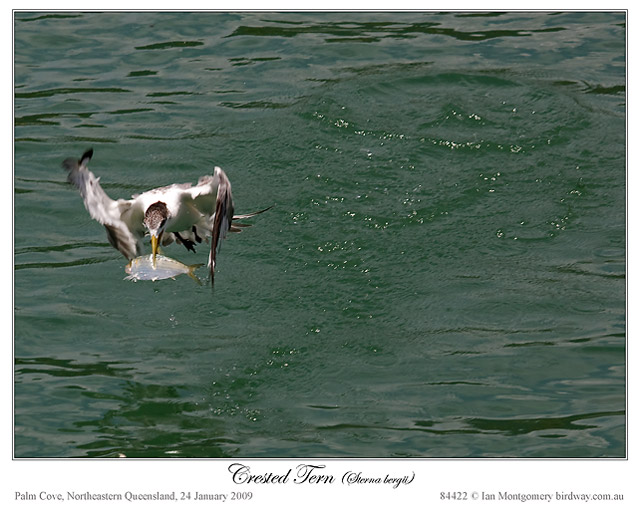
We found, and photographed, the gull okay, but while waiting for it to do its occasional forays for scraps past the fishermen on the wharf, I passed the time by photographing an immature, fishing Crested Tern – right at the other end of the Australian rarity scale and the commonest and most widespread marine tern. As luck would have it, just while I was photographing it flying towards me, it dived and caught, by tern standards anyway, a substantial fish.
Crested Tern now Swift Tern by Ian

Crested Tern now Swift Tern by Ian

In the first photo, you can see the greenish back of the fish at the surface just below the bill of the bird. The tern is braking its fall by spreading its wings and tail and has its feet splayed out in front of it ready for the impact with the water.

In the following photo, less that a second later, the tern has caught the fish expertly over its centre of gravity and is working hard to regain height. It didn’t drop the fish and the tern last disappeared into the distance with its prize.
Terns normally catch quite small fish, so it would be easy to speculate that this was an error of judgment on the part of an inexperienced bird. Or maybe it was just showing off in front of a camera-laden tourist.
One of the reason for a late posting is that I’ve been busy working on the website. The Next and Previous Family links that I mentioned last week now navigate through 30 more families beyond the New World Flycatchers as far as the Swallows. Substantially revised galleries include various Australian families such as:

Recently, I received a copy of a delightful and informative electronic document called ‘How Birds Fly’ by Stuart Cousland that he prepared and presents to schools in Victoria in his role of Education Coordinator for the (Mornington) Peninsula Bird Observers Club (part of BOCA). Some of my photos were used in it. I highly recommend it and copies are available free either on CD or as 5MB email attachment by contacting him on seastar@pac.com.au or (03) 5988 6228.

Best wishes,
Ian

Ian Montgomery, Birdway Pty Ltd,
454 Forestry Road, Bluewater, Qld 4818
Phone: +61-7 4751 3115
Preferred Email: ian@birdway.com.au
Website: http://birdway.com.au


Lee’s Addition:
23-66-1723 Swift Tern (Thalasseus bergii) Breeding by IanThe Crested Tern that Ian mentions was hard to find on the new I.O.C. list. They keep changing names and genus around and the list was update in August this year. The Sterna bergii or Crested Tern was taken out of the Sterna genus and placed in the Thalasseus genus. Then they changed it to Swift Tern. You think that didn’t take some searching to find out it’s new name.
Here are some facts from Wikipedia:”The Greater Crested Tern, Crested Tern or Swift Tern, (Thalasseus bergii), is a seabird in the tern family which nests in dense colonies on coastlines and islands in the tropical and subtropical Old World. Its five subspecies breed in the area from South Africa around the Indian Ocean to the central Pacific and Australia, all populations dispersing widely from the breeding range after nesting. This large tern is closely related to the Royal and Lesser Crested Terns, but can be distinguished by its size and bill colour.”
Swift Tern (Thalasseus bergii) Non-breeding by Ian

Swift Tern (Thalasseus bergii) Non-breeding by Ian

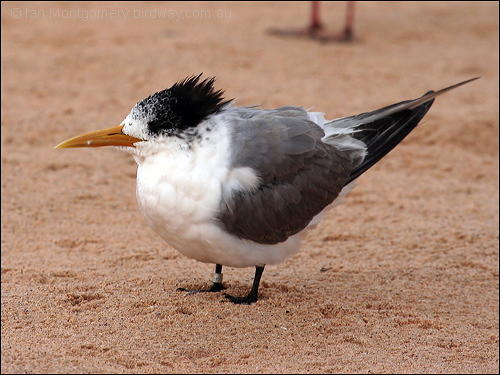
“The Greater Crested Tern has grey upperparts, white underparts, a yellow bill, and a shaggy black crest which recedes in winter. Its young have a distinctive appearance, with strongly patterned grey, brown and white plumage, and rely on their parents for food for several months after they have fledged. Like all members of the genus Thalasseus, the Greater Crested Tern feeds by plunge diving for fish, usually in marine environments; the male offers fish to the female as part of the courtship ritual.”

This is an adaptable species which has learned to follow fishing boats for jettisoned bycatch, and to utilise unusual nest sites such as the roofs of buildings and artificial islands in salt pans and sewage works. Its eggs and young are taken by gulls and ibises, and human activities such as fishing, shooting and egg harvesting have caused local population declines. There are no global conservation concerns for this bird, which has a stable total population of more than 500,000 individuals.”

Swift Tern (Crested) (Thalasseus bergii) by Ian

Swift Tern (Crested) (Thalasseus bergii) by Ian

“The Greater Crested Tern is a large tern with a long (5.4–6.5 cm, 2.1–2.6 in) yellow bill, black legs, and a glossy black crest which is noticeably shaggy at its rear. The breeding adult of the nominate subspecies T. b. bergii is 46–49 cm (18–19 in) long, with a 125–130 cm (49–51 in) wing-span; this subspecies weighs 325–397 g (11.4–14.0 oz). The forehead and the underparts are white, the back and inner wings are dusky-grey. In winter, the upperparts plumage wears to a paler grey, and the crown of the head becomes white, merging at the rear into a peppered black crest and mask.”

The adults of both sexes are identical in appearance, but juvenile birds are distinctive, with a head pattern like the winter adult, and upperparts strongly patterned in grey, brown, and white; the closed wings appear to have dark bars.  The nests are located on low‑lying sandy, rocky, or coral islands, sometimes amongst stunted shrubs, often without any shelter at all. The nest is a shallow scrape in the sand on open, flat or occasionally sloping ground. It is often unlined, but sometimes includes stones or cuttlefish bones.

Fish are the main food of the Greater Crested Tern, found to make up nearly 90% of all prey items with the remainder including cephalopods, crustaceans and insects. Unusual vertebrate prey included agamid lizards and green turtle hatchlings.

“The Great Crested Tern feeds mostly at sea by plunge diving to a depth of up to 1 m (3 ft), or by dipping from the surface, and food is usually swallowed in mid-air. Birds may forage up to 10 km (6 mi) from land in the breeding season.”

The Greater Crested Tern occurs in tropical and warm temperate coastal parts of the Old World from South Africa around the Indian Ocean to the Pacific and Australia.”

Then He said to them, “Follow Me, and I will make you fishers of men.” (Matthew 4:19 NKJV)

Ian’s Bird of the Week – African Penguin

African Penguin by Ian

African Penguin by Ian

Newsletter – 7/16/2009

Well now, as they say, for something completely different here is the African Penguin. I was reviewing the contents of the website a few days ago, and noticed that there weren’t any penguins. Not having yet succeeded in photographing the only resident Penguin resident in mainland Australia, the Little Penguin, I rectified this by digging out some photos of what used to be called Jackass Penguins that I took in South Africa in 2001.

African Penguins strolling by Ian

African Penguins strolling by Ian

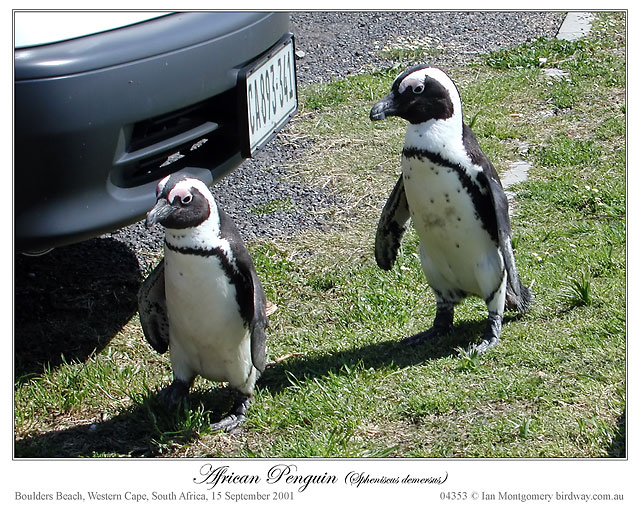
You’re right if you think that the background in the first photo isn’t snow, or even sand for that matter, and your suspicions will be confirmed by the second one – the photos were taken in the car park at Boulders Beach south of Cape Town. (The ‘CA’ of the car number plate refers to the old Cape Province.) The penguin colony is right beside the car park, and I found that the car park itself was the easiest place to photograph these very cooperative subjects.

The name Jackass Penguin refers to the braying sound that these birds make but, as their South American relatives make similar noises and this species is the only one resident in Africa, the name African Penguin is now preferred. Being a cynic, I had thought that the name change was for reasons of political correctness. With a length of 63cm/25in this is a smallish but not tiny penguin – much larger than the Little Penguin (40-45cm/16-18in).

It occurs right around southern Africa from Port Elizabeth in the east to northern Namibia in the west. The colony at Boulders Beach is a tourist attraction, and is something of a bad-news/good-news story. The bad news is that feline predators such as leopards have become less common in populated areas, but the good news is that this has allowed the Penguins to establish mainland colonies at a couple of sites near Cape Town. Two pairs first nested at Boulders Beach in 1982 and there are now over 3,000.

On the website, I recently revised the galleries for Storks, including the Jabiru or Black-necked Stork and Bustards, mainly the Australian Bustard though I’ve added a couple of ancient shots (originally on film!) of the rather similar Kori Bustard of Africa for comparison  .

Best wishes,
Ian

Ian Montgomery, Birdway Pty Ltd,
454 Forestry Road, Bluewater, Qld 4818
Phone: +61-7 4751 3115
Preferred Email: ian@birdway.com.au
Website: http://birdway.com.au


See Spheniscidae – Penguin

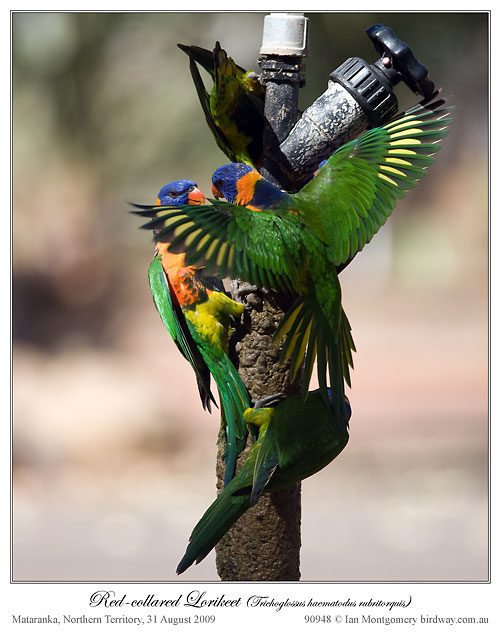
Ian’s Bird of the Week – Red-collared Lorikeet

Red-collared Lorikeet (Trichoglossus rubritorquis) by Ian

Red-collared Lorikeet (Trichoglossus rubritorquis) by Ian

Newsletter 9/3/2009

Here’s the catch-up bird of the week as promised yesterday.

Red-collared Lorikeet (Trichoglossus rubritorquis) by Ian

Red-collared Lorikeet (Trichoglossus rubritorquis) by Ian

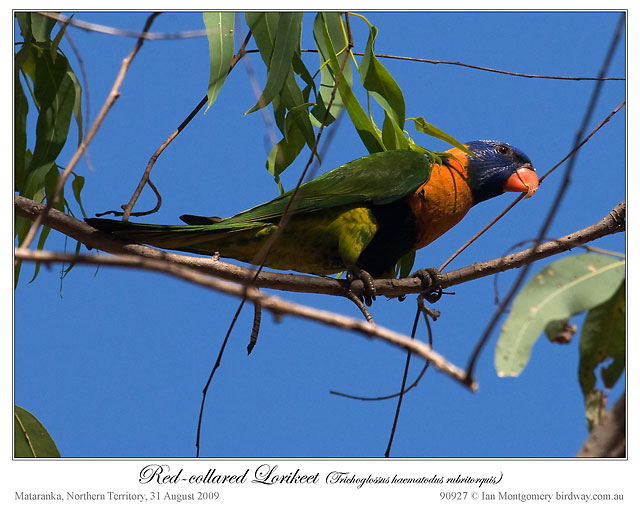
If you looked at the photos and said “that’s just a Rainbow Lorikeet!”, you’d be right, sort of, and if you said “that’s like a Rainbow Lorikeet but different” you’d be right exactly. This is the Northern race (rubritorquis) of the Rainbow Lorikeet and is sufficiently distinct to have once been considered a separate species, the Red-collared Lorikeet. The differences include the orange, rather than yellowish-green nape and the orange, rather than red, breast and black, rather than purple, belly.

It’s range is similar to that of the previous bird of the week, the Green-Backed Gerygone – including both the Kimberley district of NW Western Australia and the Top End of the Northern Territory – but it extends farther east around the Gulf of Carpentaria as far as Western Cape York Peninsula in Queensland.

Like the eastern race, this is a noisy, gregarious and common bird and very easy to take for granted. It took an English birder (thank you, Nigel!) to point out how amazingly beautiful and colourful the Rainbow Lorikeets are, a comment that stopped me in my tracks and made me regard them in a new light.

I took these photos during my stopover in Mataranka. This place is famous for its thermal springs which feed the Roper and Little Roper Rivers with permanent water. The water emerges at a temperature of 34ºC/93ºF which would be wonderful in a cold climate, but is far from refreshing when the air temperature is 37º as it was when I was there. For my second swim, I chose to swim with the (shy) Freshwater Crocodiles http://www.birdway.com.au/crocodylidae/freshwater_crocodile/index.htm farther down the Roper River where the water was cooler.

The permanent water makes Mataranka an oasis in a dry landscape with great stands of Fan Palms and Pandanus. The similarity to :Lawn Hill and Adel’s Grove in Northwestern Queensland is more than just a coincidence, as Lawn Hill Creek is fed by the same giant, subterranean, geological structure as Mataranka, perhaps 600-700 km away. The only thing missing at Mataranka is the Purple-crowned Fairywren http://www.birdway.com.au/maluridae/purple_crowned_fairywren/index.htm .

Anyway, time to pack up and leave Darwin for Kakadu. I hope that I’ll have something more special than a mere subspecies for you next week!

Best wishes,
Ian

Ian Montgomery, Birdway Pty Ltd,
454 Forestry Road, Bluewater, Qld 4818
Phone: +61-7 4751 3115
Preferred Email: ian@birdway.com.au
Website: http://birdway.com.au


Rainbow Lorikeet (Trichoglossus moluccanus) by Ian

Rainbow Lorikeet (Trichoglossus moluccanus) by Ian

Lee’s Addition:
Here is a link to the Rainbow Lorikeet that Ian mentioned. He has some fabulous shots of them.

Some interesting facts about the Lories and Lorikeets from Wikipedia:

“The Red-collared Lorikeet, Trichoglossus rubritorquis, is a species of parrot found in wooded habitats in northern Australia (north-eastern Western Australia, northern Northern Territory and far north-western Queensland). It is sometimes considered a subspecies of the Rainbow Lorikeet, but today most major authorities consider them as separate species.[2][3] No other member of the Rainbow Lorikeet group has an orange-red collar over the nape.”

“Lories and lorikeets are small to medium-sized arboreal parrots characterizedby their specialized brush-tipped tongues for feeding on nectar and soft fruits. The species form a monophyletic group within the parrot family Psittacidae. Traditionally, they were considered one of the two subfamilies in that family (Loriinae), the other being the subfamily Psittacinae, but new insights show that it is placed in the middle of various other groups. To date, this issue has not been resolved scientifically. They are widely distributed throughout the Australasian region, including south-eastern Asia, Polynesia, Papua New Guinea and Australia, and the majority have very brightly colored plumage.”

Morphology

Tongue of a Lory


“Lories and lorikeets have specialized brush-tipped tongues for feeding on nectar and soft fruits. They can feed from the flowers of about 5,000 species of plants and use their specialized tongues to take the nectar. The tip of their tongues have tufts of papillae (extremely fine hairs), which collect nectar and pollen. In the wild, lorikeets feed on nectar and pollen from plants and flowers.

Lorikeets have tapered wings and pointed tails that allow them to fly easily and display great agility. They also have strong feet and legs. They tend to be hyperactive and clownish in personality both in captivity and the wild.”

Its leaves were beautiful and its fruit abundant, and in it was food for all. The beasts of the field found shade under it, and the birds of the heavens lived in its branches, and all flesh was fed from it. (Daniel 4:12 ESV)

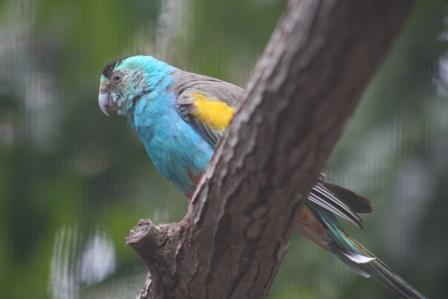
Ian’s Bird of the Week – Hooded Parrot

Hooded Parrot (Psephotus dissimilis) Male by Ian 1

Hooded Parrot (Psephotus dissimilis) Male by Ian 1

Newsletter 9-23-2009
I’m on a very shaky internet connection in Katherine, NT, so there is no guarantee that this will get through!

After Kakadu, we stayed at Pine Creek NT for a couple of days before heading off to Kununurra WA. Pine Creek’s main claim to fame is that it is the best place in the world to see Hooded Parrots.

The Hooded Parrot is one of three species of Psephotus that nest, or nested, in burrows in termite mounds. Of these, the Paradise Parrot is, alas, extinct, the Golden-shouldered of Cape York is, sadly, endangered, and only the Hooded Parrot of the Top End of the Northern Territory is tolerably secure. That said, its range is limited – South Alligator River in the east to Pine Creek in the west and Mataranka in the south – and is more restricted than formerly.

Hooded Parrot (Psephotus dissimilis) Male by Ian 2

Hooded Parrot (Psephotus dissimilis) Male by Ian 2

Pine Creek has, or at least uses, lots of water in a dry landscape and has lots of sprinklers and a Water Garden. Many birds take advantage of this, including the Hooded Parrot and the proprietor of the Lazy
Lizard caravan park told us which sprinkler to turn on at sunrise to attract the parrots. This worked both mornings, and the birds came in to drink at pools forming on the nearby road (the male in photo 1), to
drink and bathe in the wet grass (the male in photo 2) or from the sprinkler itself after it had been turned off (the female in photo 3). We saw 15 – 20 birds each morning, and the proprietor told us that the birds are more numerous than formerly.

Hooded Parrot (Psephotus dissimilis) Female by Ian 3

Hooded Parrot (Psephotus dissimilis) Female by Ian 3

I plan to head back towards Townsville tomorrow. It has been a successful trip: my companion and I are still talking, and I’ve photographed about half of the 35 species on my target list. So, I’ll have some more interesting birds to share with you in the coming weeks.

Best wishes,
Ian

Ian Montgomery, Birdway Pty Ltd,
454 Forestry Road, Bluewater, Qld 4818
Phone: +61-7 4751 3115
Preferred Email: ian@birdway.com.au
Website: http://birdway.com.au


Lee’s Addition:


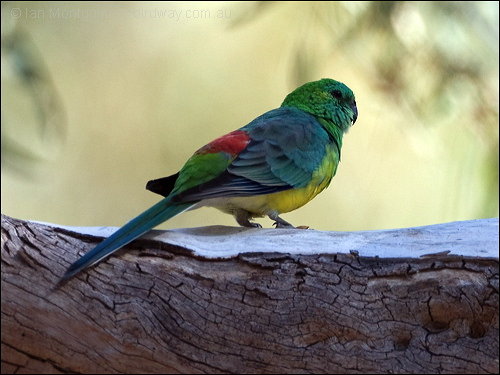
Red-rumped Parrot (Psephotus haematonotus) by Ian

Red-rumped Parrot (Psephotus haematonotus) by Ian

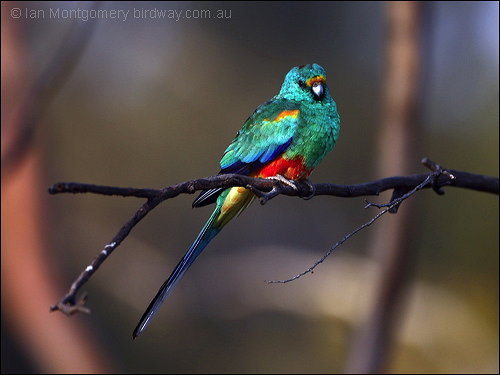
Mulga Parrot (Psephotus varius) by Ian

Mulga Parrot (Psephotus varius) by Ian

Looking at the genus Psephotus, there are only four left in the world and Ian has photos of three of them on his website. Since he is traveling and has a shaky internet connection, I checked his site and found the other two he has. The Red-rumped Parrot and the Mulga Parrot are shown here.

“The Golden-shouldered Parrot lives in open forest, where it feeds on small grass seeds, principally those of firegrass. An important habitat requirement is the provision of terrestrial termite mounds, which the bird uses for nesting in. This has led to the parrot also being known as the Antbed Parrot.and they can fly good.  The

Golden-shouldered Parrot (Psephotus chrysopterygius) Wikipedia

Golden-shouldered Parrot (Psephotus chrysopterygius) Wikipedia

Golden-shouldered Parrot will build a nest in the taller termite mounds (up to 2 m high), and will dig a burrow into them when the mound has been softened by the rains. A long tunnel is dug down into the mound, and capped off by a nesting chamber. The clutch size is between 3–6 eggs, which are incubated for 20 days. The mound regulates the temperature of the nest in the chamber, so that the eggs can be left unattended while the parents feed.” from Wikipedia

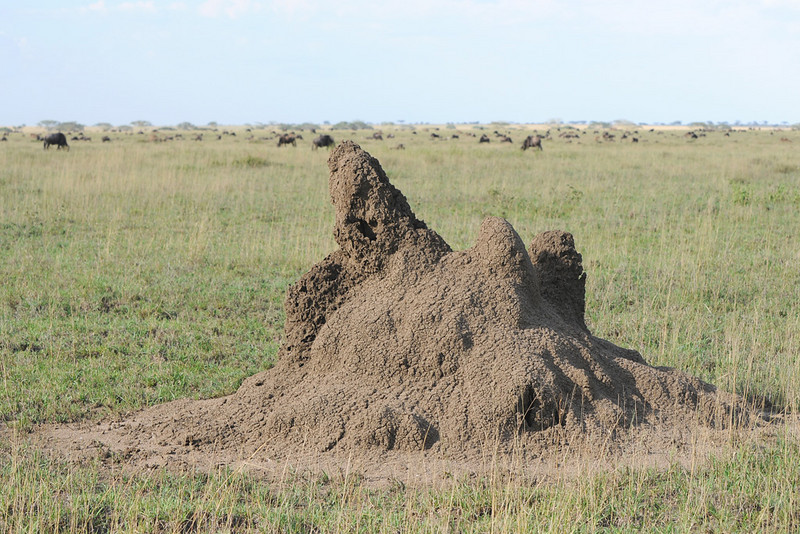
Termite Mound in Tanzania by Bob-Nan

Termite Mound in Tanzania by Bob-Nan

I remembered seeing a termite mound while looking through Bob and Nan’s gallery. This was in Tanzania, but I am sure they are similiar. (I hope)

And Jesus saith unto him, The foxes have holes, and the birds of the air have nests; but the Son of man hath not where to lay his head. (Matthew 8:20 KJV)

Ian’s Bird of the Week – Banded Fruit-Dove

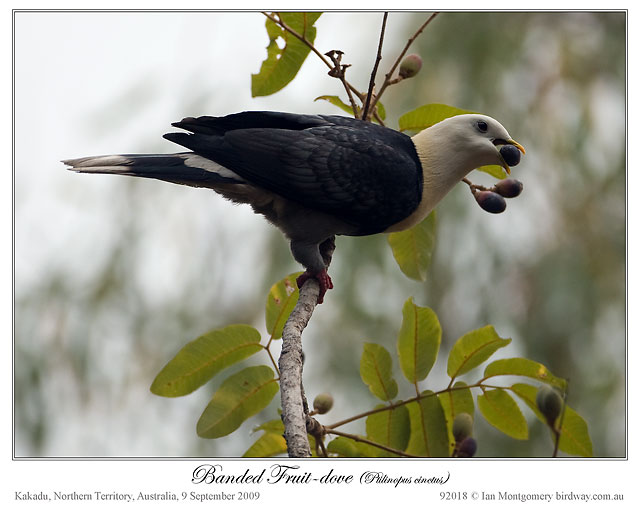
Banded Fruit Dove (Ptilinopus cinctus) by Ian

Banded Fruit Dove (Ptilinopus cinctus) by Ian

Ian’s Newsletter – 09/18/2009

We did, in fact, find and photograph the White-quilled Rock-Pigeon on Wednesday, but rather than send another Rock-Pigeon as Bird of the Week, here is another, perhaps more photogenic, member of the pigeon family, the Banded Fruit-Dove. This was on my secondary target list (seen previously but not photographed) but high-priority none-the-less as it’s a splendid bird, uncommon and with a very restricted range in Australia, though it also occurs in Indonesia.

In Australia it occurs only in relict rain-forest patches in gullies of the sandstone escarpments of Arnhem Land and Kakadu. It’s usually shy and, like other fruit-doves, easier to hear than see as it usually keeps to to the foliage of fruiting trees. This bird, however, was gorging itself on the fruit of a tree with sparse foliage and didn’t seem to take much notice of us. It gets its name from the black band across the breast. The white head and breast makes it look rather like the Pied Imperial-Pigeon but is actually a member of the Ptilinopus genus that includes some of Australia’s most spectacular Fruit-Doves, the Wompoo, Rose-crowned and Superb (all at http://www.birdway.com.au/columbidae/index_aus.htm ).

We are still in Kununurra in Western Australia but start the return journey eastwards tomorrow. The hot weather hasn’t relented: it reached 41ºC yesterday, and it is easy to see why the local tourist season is almost finished – only mad dogs and birders etc.

Best wishes,
Ian

Ian Montgomery, Birdway Pty Ltd,
454 Forestry Road, Bluewater, Qld 4818
Phone: +61-7 4751 3115
Preferred Email: ian@birdway.com.au
Website: http://birdway.com.au


Lee’s Addition:


So I said, “Oh, that I had wings like a dove! I would fly away and be at rest. (Psalms 55:6 NKJV)

I added links to the other birds Ian mentioned above and more photos below:
Pied Imperial-Pigeon (Ducula bicolor)
Wompoo Fruit-Dove (Ptilinopus magnificus)
Rose-crowned Fruit-Dove (Ptilinopus regina)
Superb Fruit-Dove on a nest (Ptilinopus superbus)

Video of a Banded Fruit-Dove by Mark Sutton at IBC

Ptilinopus magnificus

Ian’s Bird of the Week – Chestnut-quilled Rock-Pigeon

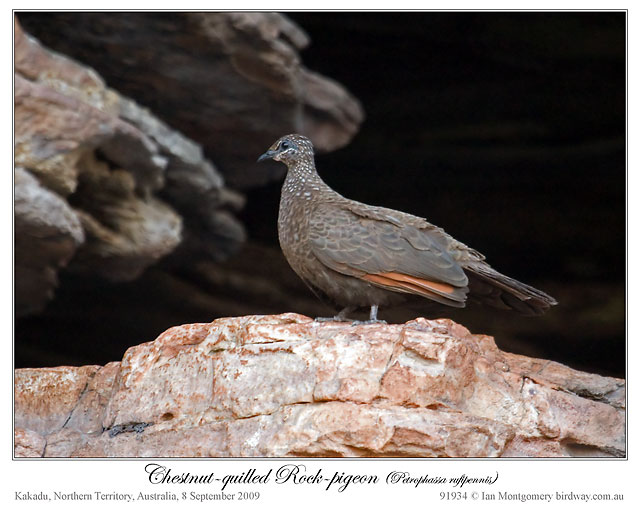
Chestnut-quilled Rock Pigeon (Petrophassa rufipennis) by Ian

Chestnut-quilled Rock Pigeon (Petrophassa rufipennis) by Ian

Ian’s Newsletter – 09/16/2009

This is really the bird of last week as this is the first opportunity I’ve had for internet access for 12 days. We are in Kununurra now in far northeastern Western Australia, having arrived here yesterday from the Northern Territory. We spent most of the time in the Kakadu area, followed by a couple of days in Pine Creek between Darwin and Katherine.

The Chestnut-quilled Rock-Pigeon was on my primary target list – birds that I hadn’t seen before – so I was pleased to find this single bird at Bardedjildidji, a sandstone escarpment in eastern Kakadu near Ubirr on the border with Arhnem Land. It obligingly flew past us before landing in this small cave not too far away and not too inaccessible. You can see the chestnut on the partially open wing.

There are two species of Rock-Pigeon – this one and the closely related White-quilled Rock-Pigeon. Both have limited distributions in northern Australia, the Chestnut-quilled in the Kakadu area and the White-quilled farther west in the Top end of the Northern Territory and across the border into Western Australia. Both are found in very rugged sandstone country where they take refuge in crevices and caves.

The White-quilled is one of the reasons for coming as far as Kununurra and we are going to look for this species later this afternoon when it cools down a bit. It has been very hot for almost our entire stay, reaching 37-38ºC almost every day. So, birding has been hard work a lot of the time.

I’ll send another catch-up bird of the week in a day or two while I have the opportunity here in Kununurra.

Best wishes,
Ian

Ian Montgomery, Birdway Pty Ltd,
454 Forestry Road, Bluewater, Qld 4818
Phone: +61-7 4751 3115
Preferred Email: ian@birdway.com.au
Website: http://birdway.com.au


Lee’s Addition: (bolding by Lee)


You who dwell in Moab, Leave the cities and dwell in the rock, And be like the dove which makes her nest In the sides of the cave’s mouth. (Jeremiah 48:28 NKJV)

One addition for us who use farenheit the 37-38° C is 98.6-100.4 F. Whew! That is hot!

“Description: (Collett 1898); Length 28 cm (12 – 12 1/2 inches). Head, neck, mantle & breast feathers dark sepia or dusky brown having a pale grey bases and buff fringes which form the scaly appearance. The throat & narrow stripe below & extending past the eye is white & is bordered above with a small black stripe extending thru the eye from the bill also bordered above with a thin white stripe. Primaries & secondaries bright chestnut with dark brown tips (chestnut color best seen when bird is in flight or stretching the wing). Belly and undertail dark brown. Eyes, bill, legs & feet dark brown. Female similar; juvenile are duller appearance.” from International Dove Society

Ian’s Bird of the Week – Red-faced Cormorant

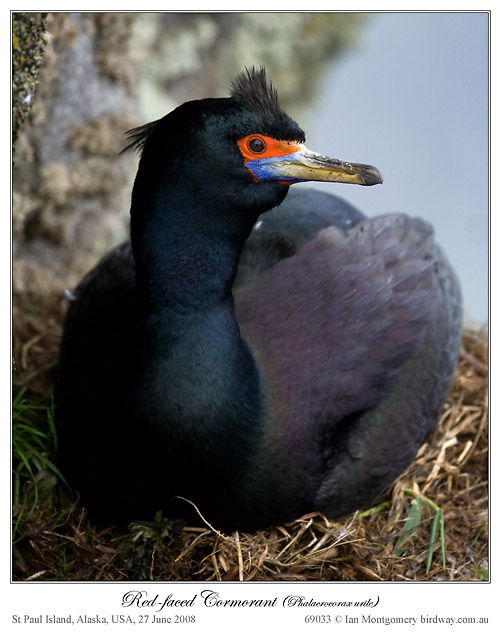
Red-faced Cormorant (Phalacrocorax urile) by Ian

Red-faced Cormorant (Phalacrocorax urile) by Ian

Newsletter 03-10-2009

Cormorants don’t often make it as Bird of the Week. People, particularly fishermen, mostly say or think “Uggh” when you say “cormorant” and even birders probably just tick them off without pausing in silent awe at their beauty. Cormorant, in general, lack style, hence the unflattering expression “like a shag on a rock”.

Well, here’s one that I think makes the grade. I particularly wanted to see Red-faced Cormorants when I was in Alaska last June. I wasn’t disappointed, particular when I got close to nesting birds on the cliffs of St Paul Island, and I give them high marks for their striking red and blue facial patterns, double crests, and startlingly iridescent plumage, worthy of some tropical wonder like a Bird of Paradise.

Red-faced Cormorant (Phalacrocorax urile) by Ian

Red-faced Cormorant (Phalacrocorax urile) by Ian

You have to go out of your way to see them, too. In North America, they occur only in southern Alaska, the Aleutians and the islands of the Bering Sea, though they are common within their restricted range, which extends across the Bering Sea to eastern Siberia and as far south as northern Japan.

On the website, I’ve been concentrating on updating galleries and indices to the latest format. One of the aims of this is to make it easier to navigate from one family to the next. I’m doing this through Previous and Next Family links on the top level (usually Global) thumbnail pages for each family (though not, at the moment, the lower Australian, Old World and New World thumbnail pages). This is progressing well. It is now possible to navigate through all the non-passerine families and I hope to fill the remaining gaps in the passerines (perching birds) soon. So, you can start at the first family, Cassowaries and Emus (http://www.birdway.com.au/casuariidae/index.htm) and follow the Next Family links all the way through 70 families as far as the New World Flycatchers (http://www.birdway.com.au/tyrannidae/index.htm) where the trail currently peters out with the New World Antbirds.

Best wishes,
Ian

Ian Montgomery, Birdway Pty Ltd,
454 Forestry Road, Bluewater, Qld 4818
Phone: +61-7 4751 3115
Preferred Email: ian@birdway.com.au
Website: http://birdway.com.au


Lee’s Addition:

The Cormorant is found in the list of unclean birds that the Israelites were not to eat.

And the pelican, and the gier eagle, and the cormorant, (Deuteronomy 14:17 KJV)

See Also:
Cormorant page
Birds of the Bible – Cormorant
Cormorant Photos
Cormorant Videos
Phalacrocoracidae – Cormorants, shags

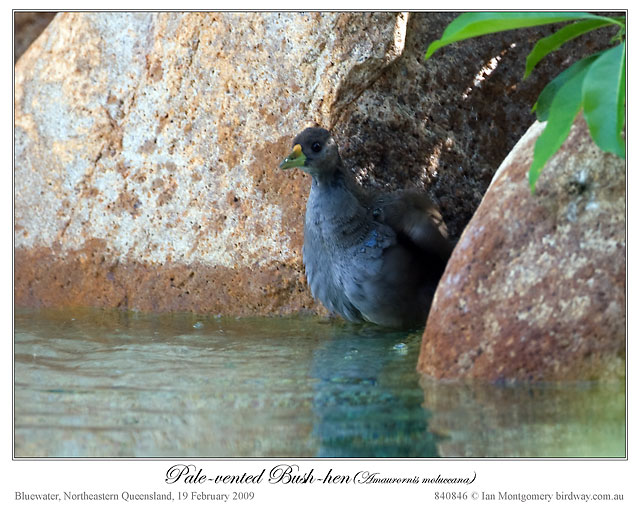
Ian’s Bird of the Week – (Pale-vented) Bush-hen

Pale-vented Bush-hen (Amaurornis moluccana) by Ian

Pale-vented Bush-hen (Amaurornis moluccana) by Ian

Ian’s Newsletter 02-24-2009

Pale-vented Bush-hen (Amaurornis moluccana) by Ian

Pale-vented Bush-hen (Amaurornis moluccana) by Ian

Last week, when discussing Kittiwakes and red legs, I referred obliquely to a common phenomenon in birding when having finally seen what I wanted (red legs) I saw lots of them. Serious birders call these bogey birds, where serious means passionate (oneself) or obsessed (someone else) and bogey means an evil spirit, or species, that leads you on a lengthy wild goose chase. The chase ends when a careless bird breaks the taboo by letting you see it and then, miraculously, the veil is lifted from your eyes and they appear everywhere.

Probably the two most challenging bogey birds in North Queensland, worse than Cassowaries, are unsurprisingly crakes: the (Pale-vented – a la Christidis & Boles, 2008) Bush-hen and the Red-necked Crake. I’d spent 6 years up here before I briefly spotted a startled Bush-hen from a speeding car (I wasn’t driving) and, after 7 years, I still haven’t had a proper view of a Red-necked Crake.

Pale-vented Bush-hen (Amaurornis moluccana) by Ian

Pale-vented Bush-hen (Amaurornis moluccana) by Ian

Typically, two weeks after seeing the Bush-hen (this time last year) a family of them appeared in my back yard, visible from the back verandah. Last Thursday, I was working on the website in the study, and went to make a cup of coffee when I spotted a Bush-hen in full view on the edge of the swimming pool. Unfortunately, the bird saw me move inside the house to get the camera and all I could manage was a shot of a nervous bird sneaking away through the vegetation. I left the camera and tripod set up in the house, just in case, and the bird reappeared a couple of hours later. It had a drink on the left hand side of the pool (photo no. 1) flew across the pool to a shallow spot for a swim (no. 2) and then spent about 10 minutes preening on a rock (no. 3). The bird came back again for another session on Saturday.
Both the days in question were sunny and very hot (33ºC/91ºF) and it was the middle of the day. The field guide says ” . . . secretive . . .emerges on overcast mornings, evenings . . .”, I like to imagine that they’re nesting again and the pool becomes irresistible during a tiresome day incubating eggs.

Back at the website, revised galleries include:
Falcons (http://www.birdway.com.au/falconidae/index.htm)
New World Vultures (http://www.birdway.com.au/cathartidae/index.htm)
Rails and Allies (http://www.birdway.com.au/rallidae/index.htm)
New World Flycatchers (http://www.birdway.com.au/tyrannidae/index.htm)
Cotingas (http://www.birdway.com.au/cotingidae/index.htm).

Best wishes,
Ian

Ian Montgomery, Birdway Pty Ltd,
454 Forestry Road, Bluewater, Qld 4818
Phone: +61-7 4751 3115
Preferred Email: ian@birdway.com.au
Website: http://birdway.com.au


Lee’s Addition:


For I satisfy the weary ones and refresh everyone who languishes. (Jeremiah 31:25 NASB)

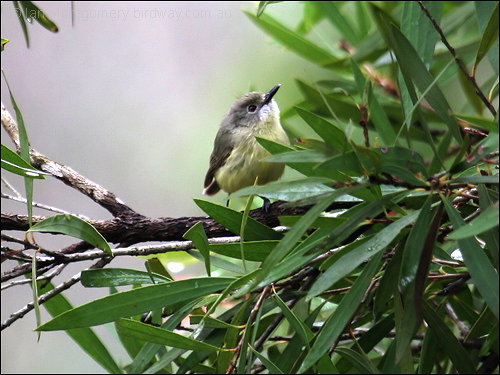
Ian’s Bird of the Week – Green-backed Gerygone

Green-backed Gerygone by Ian

Green-backed Gerygone by Ian

Ian’s 9/3/09 Newsletter – Bird of the Week: Green-backed Gerygone

Once again, my apologies for a late posting. I’ve just spent 5 days – with a 2 night stop at Mataranka – driving the 2,500km from Townsville to Darwin for the photography trip I mentioned last week. I usually prepare a trip wish-list of target species: this one has 35 on it, consisting of 9 that I haven’t seen before (the “tick” list), 9 that I have seen but haven’t photographed (the “click” list) and the remainder are candidates for better photos.

Last week’s bird was the widespread songster the White-throated Gerygone, so maybe it’s appropriate that the first target achieved – one of the 9 potential clicks – was the Green-backed Gerygone. The photo shows its diagnostic features: grey head, greenish-grey back and red eye. It may look rather nondescript but the greenish back is quite noticeable and it has a distinctive song. It feeds in typical gerygone style, foraging in the middle canopy of trees and hovering around foliage. There was a typo in last week’s email: gerugonos, not gerugogos, means something like “born of sound” in Greek but you were all too polite to point it out.

In Australia, it has a restricted distribution, occurring only in the Top End of the Northern Territory and the adjacent Kimberley region of northwest Western Australia. It is, however, quite common and we had no trouble finding it at Buffalo Creek near Darwin, where I’d seen it on a previous trip in 2002. It also occurs in New Guinea. Buffalo Creek is famous among birders as a stake-out for the elusive Chestnut Rail – http://www.birdway.com.au/rallidae/chestnut_rail/index.htm – which proved typically elusive this time even though several were to be heard in the mangroves.

We leave Darwin for Kakadu tomorrow and will probably spend a week there. So, I plan send you a catch-up bird of the week before we leave, as we’ll be camping most of the time and may not have internet access.

Best wishes,
Ian

Ian Montgomery, Birdway Pty Ltd,
454 Forestry Road, Bluewater, Qld 4818
Phone: +61-411 602 737
Preferred Email: ian@birdway.com.au
Website: Birdway


Lee’s Addition:

Fairy Gerygone (Gerygone palpebrosa) by Ian

Fairy Gerygone (Gerygone palpebrosa) by Ian

Gerygones, as one might expect, is not a bird I have enjoyed seeing, except through the lens of Ian and others. With the internet’s ability to share things, you get to learn about and “see” things you would not get the chance to do as easily. Thanks, Ian, for sharing your birding adventures.
Gerygones belong to the Australasian Warbler – Acanthizidae Family and are in the Gerygone species of which there are 19 of them. They are the Brown, Grey, Norfolk, Chatham, Fan-tailed, Treefern, Golden-bellied, Rufous-sided, Mangrove, Plain, Western, Dusky, Large-billed, Biak, Yellow-bellied, Ashy, Green-backed (this one), White-throated (last week’s), and the Fairy Gerygones. The ones with links will take you to Ian’s photos.

It was a little hard to find out much about the Gerygone, but here are some of my finds for the missing birds that Ian still needs to go find.

Grey Gerygone – video ,   Golden-bellied – video ,    Plain-Sound , all at IBC (Internet Bird Collecton)

Sounds like Ian has found a “catch.” It is always exciting when you find and photograph a rare bird. That is a part of the joy of birdwatching. When you search, scan, listen, know it’s there and then finally find that prize.

What do you think? If a man has a hundred sheep, and one of them has gone astray, does he not leave the ninety-nine on the mountains and go in search of the one that went astray? And if he finds it, truly, I say to you, he rejoices over it more than over the ninety-nine that never went astray. (Matthew 18:12-13)

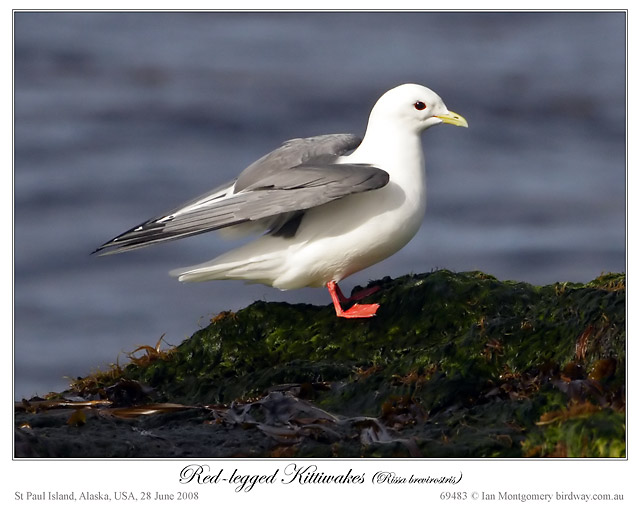
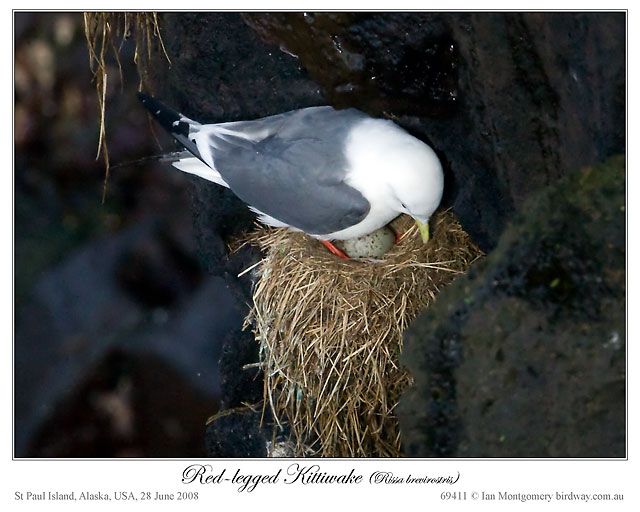
Ian’s Bird of the Week – Red-legged Kittiwake

Red-legged Kittiwake (Rissa brevirostris) by Ian

Red-legged Kittiwake (Rissa brevirostris) by Ian

Ian’s Newsletter 02/17/2009

If, like me, you were a birdwatcher in the British Isles in the 1960s, you would have been been familiar with the Kittiwake, a delightful small gull usually seen at its dense nesting colonies on steep cliffs, and named after its call. You may also have wondered why, as British birdwatchers became less insular, the name was later qualified by the description “Black-legged”. This was done somewhat reluctantly, naturally, and my 1999 Collins Bird Guide still calls it (Black-legged) Kittiwake. Anyway, or as they say now, whatever, here is the reason: the Red-legged Kittiwake.

Red-legged Kittiwake (Rissa brevirostris) by Ian

Red-legged Kittiwake (Rissa brevirostris) by Ian

This was one of my must-see birds on St Paul Island in the Bering Sea on my trip to Alaska last June. Although not nearly as common as its Black-legged relative, it wasn’t hard to find. The red legs were a poor field mark, however, as the birds were either sitting on water, sitting on nests or flying past with their legs tucked snugly and sensibly into their vent feathers. With a little practice, it wasn’t hard to distinguish them by their darker wings and wing-linings, shorter, rather stubby bills and slightly smaller size, as in the photo of the Red-legged Kittiwake on the left sitting on its nest beside its similarly-occupied relative.

In fact red legs became an obsession, so that on the last morning seeing them became my only goal in life, and I set up my camera on a cliff-top with an incubating Red-legged Kittiwake in the sights and waited patiently. Eventually, I was rewarded and a rather stiff bird got up to stretch its legs and check its single egg, as in the second photo. After that, of course, the Kittiwakes came out to play and I saw red legs everywhere both on birds in flight and perched showily on rocks, third photo.

Red-legged and Black-legged Kittiwakes by Ian

Red-legged and Black-legged Kittiwakes by Ian

The Red-legged Kittiwake breeds at only 6 sites in the Bering Sea, the most important of which is St George, near St Paul, with 60% of the estimated world population of 100,000 pairs. It has more specialized feeding habits than the Black-legged, feeding mainly on squid and small fish. Its population is declining, breeding success is poor and it is classed as vulnerable. Commercial trawling is though to be responsible. It’s call is described as a high, falsetto, repeated ‘suWEEEr’, quite different from the ‘kitt-i-waake’ of the Black-legged. Maybe it should be renamed and we can go back to simple “Kittiwake”. Recent website revisions: Thrushes (http://www.birdway.com.au/turdidae/index.htm); Old World Flycatchers (http://www.birdway.com.au/muscicapidae/index.htm); Fringillid Finches (http://www.birdway.com.au/fringillidae/index.htm) and Estrildid Finches (http://www.birdway.com.au/estrildidae/index.htm). Best wishes, Ian — Ian Montgomery, Birdway Pty Ltd, 454 Forestry Road, Bluewater, Qld 4818 Phone: +61-7 4751 3115 Preferred Email: ian@birdway.com.au Website: http://birdway.com.au


Lee’s Addition:


“On the cliff he dwells and lodges, Upon the rocky crag, an inaccessible place. (Job 39:28 NASB)

This verse applied to the Eagle, but it is also applicable to the Kittiwakes.