Christmas Gospel Presentation – 2011

Christmas was only a few days away when this was posted, but this Gospel Presentation is appropriate year round. We just had our third “free shopping day” yesterday at our church, Faith Baptist Church in Winter Haven. This is the 3rd year this presentation has been given before the “free shopping” and meal begins. We, as a church, buy and collect new toys and games and provide a meal for those less fortunate.

This year there were 6 adults and 9 children who accepted the Lord Jesus Christ as their Savior. Praise the Lord!

Have you put your faith and trust in the Lord and accepted Him?

*

*

Jesus saith unto him, I am the way, the truth, and the life: no man cometh unto the Father, but by me. (John 14:6 KJV)

See:

Sharing the Gospel

(This video is narrated by Pastor Nathan Osborne and the music is played by Sean Fielder.)

Shopping Day – 2009

*

Birds of the Bible – Pied Peacock and Allies

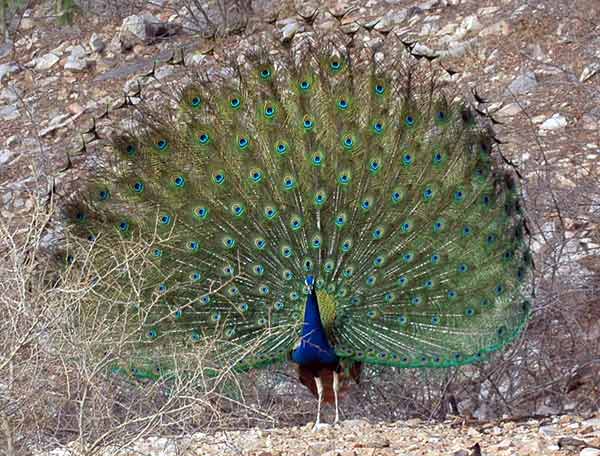
Indian Peafowl (Pavo cristatus) by Nikhil Devasar

Indian Peafowl (Pavo cristatus) by Nikhil

We wrote about Peacocks before in Birds of the Bible – Peacocks, dated April of 2008. This is about the Pied Peacock which is from the jungles of India and Sri Lanka. When Solomon sent for them to be delivered, they were brought by a joint navy of Hiram and the navy of Tharshish.

For the king had at sea a navy of Tharshish with the navy of Hiram: once in three years came the navy of Tharshish, bringing gold, and silver, ivory, and apes, and peacocks. (1 Kings 10:22 KJV) For the king’s ships went to Tarshish with the servants of Huram: every three years once came the ships of Tarshish bringing gold, and silver, ivory, and apes, and peacocks. (2 Chronicles 9:21 KJV)

I received a notice by “bellamoonnature” of a video he made of the Pied Peacock. Decided to share it and bring the peacock article a little more up to date. It is about a Pied Peacock. For more information on how that comes about see India Blue Pied. It is a mutation, but still it is a neat looking Peacock or Peafowl.

Here is his video:

I love the little immature male trying to practice his tail display. He has a way to go before his tail reaches the beauty of the mature male. This peacocks beautiful display goes right along with God’s question to Job.

Gavest thou the goodly wings unto the peacocks? or wings and feathers unto the ostrich? (Job 39:13 KJV)

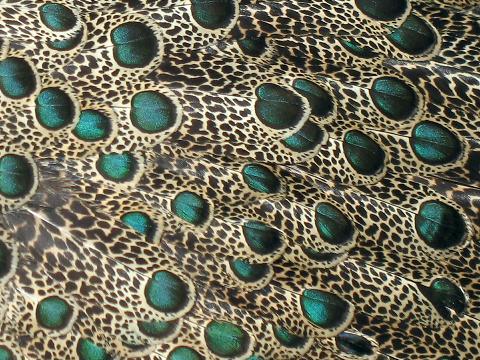
Malayan Peacock-Pheasant (Polyplectron malacense) Feathers ©WikiC

Malayan Peacock-Pheasant (Polyplectron malacense) Feathers ©WikiC

Peacocks and Peafowls are part of the Phasianidae – Pheasants, Fowls & Allies Family which are in the Galliformes Order. There are three Genus in the Pheasants, Fowls & Allies Family that have what we refer to as “Peacocks.”

Palawan Peacock-Pheasant (Polyplectron napoleonis) M ©WikiC

Palawan Peacock-Pheasant (Polyplectron napoleonis) M ©WikiC

The Polyplectron genus is the peacock-pheasants. “The peacock-pheasants are a bird genus, Polyplectron, of the family Phasianidae, consisting of eight species. They are colored inconspicuously, relying on heavily on crypsis to avoid detection. When threatened, peacock-pheasants will alter their shapes utilising specialised plumage that when expanded reveals numerous iridescent orbs. The birds also vibrate their plume quills further accentuating their aposematism (Warning colourataton or signal). Peacock-pheasants exhibit well developed metatarsal spurs. Older individuals may have multiple spurs on each leg. These kicking thorns are used in self-defense.” (Wikipedia)

Polyplectron

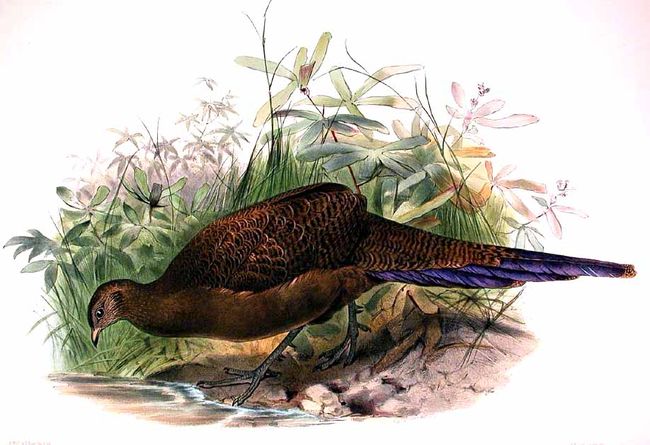
Bronze-tailed Peacock-Pheasant (Polyplectron chalcurum) Drawing ©WikiC – Photo
____ (Polyplectron chalcurum scutulatum)
____ (Polyplectron chalcurum chalcurum)
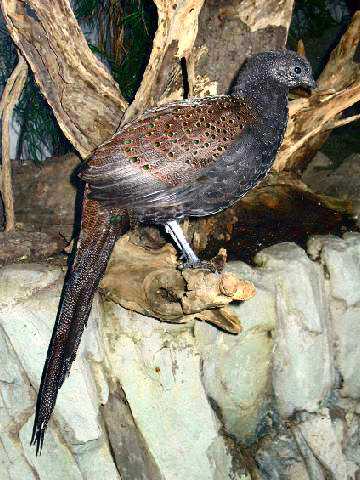
Mountain Peacock-Pheasant (Polyplectron inopinatum) ©WikiC
Germain’s Peacock-Pheasant (Polyplectron germaini) ©WikiC
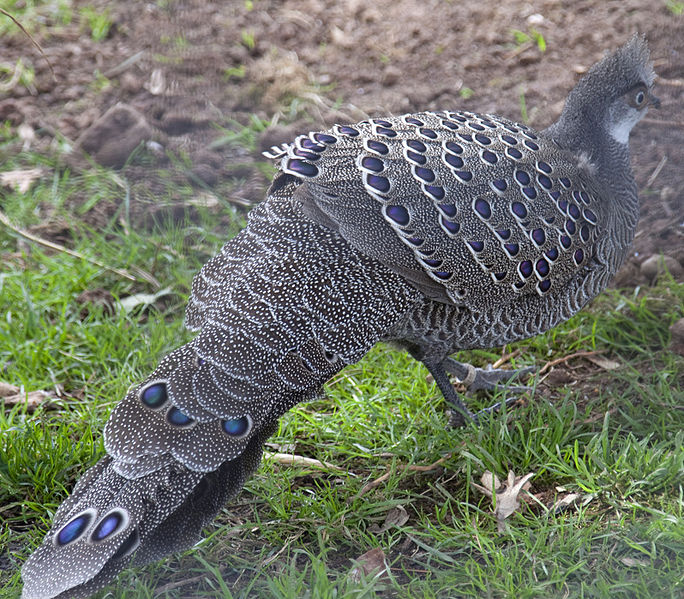
Grey Peacock-Pheasant (Polyplectron bicalcaratum) ©WikiC
____ (Polyplectron bicalcaratum bakeri)
____ (Polyplectron bicalcaratum bicalcaratum)
____ (Polyplectron bicalcaratum ghigii)
Hainan Peacock-Pheasant (Polyplectron katsumatae)
Malayan Peacock-Pheasant (Polyplectron malacense) ©WikiC
Bornean Peacock-Pheasant (Polyplectron schleiermacheri) Video IBC
Palawan Peacock-Pheasant (Polyplectron napoleonis) ©WikiC

Indian Peafowl (Pavocristatus) by Nikhil Devasar

Indian Peafowl (Pavocristatus) by Nikhil Devasar

“Peafowl are two Asiatic species of flying birds in the genus Pavo of the pheasant family, Phasianidae, best known for the male’s extravagant eye-spotted tail, which it displays as part of courtship. The male is called a peacock, the female a peahen, and the offspring peachicks. The adult female peafowl is grey and/or brown. Peachicks can be between yellow and a tawny colour with darker brown patches. The male (peacock) Indian Peafowl has iridescent blue-green or green coloured plumage.

The peacock tail (“train”) is not the tail quill feathers but the highly elongated upper tail coverts. The “eyes” are best seen when the peacock fans its tail. Like a cupped hand behind the ear the erect tail-fan of the male helps direct sound to the ears. Both species have a crest atop the head.

The female (peahen) Indian Peafowl has a mixture of dull green, brown, and grey in her plumage. She lacks the long upper tail coverts of the male but has a crest. The female can also display her plumage to ward off female competition or signal danger to her young.

Green Peafowl (Pavo muticus) by Ian

Green Peafowl (Pavo muticus) by Ian

A male Green Peafowl The Green Peafowl appears different from the Indian Peafowl. The male has green and gold plumage and has an erect crest. The wings are black with a sheen of blue. Unlike the Indian Peafowl, the Green Peahen is similar to the male, only having shorter upper tail coverts and less iridescence. It is difficult to tell a juvenile male from an adult female.

As with many birds, vibrant plumage colours are not primarily pigments, but optical interference Bragg reflections, based on regular, periodic nanostructures of the barbules (fiber-like components) of the feathers. Slight changes to the spacing result in different colours. Brown feathers are a mixture of red and blue: one colour is created by the periodic structure, and the other is a created by a Fabry–Pérot interference peak from reflections from the outer and inner boundaries. Such interference-based structural colour is important for the peacock’s iridescent hues that change and shimmer with viewing angle, since unlike pigments, interference effects depend on light angle. Colour mutations exist through selective breeding, such as the leucistic White Peafowl and the Black-Shouldered Peafowl.”(Wikipedia)

Pavo

Indian Peafowl (Pavo cristatus) by Nikhil Devasar
Green Peafowl (Pavo muticus) by Ian
____ (Pavo muticus spicifer)
____ (Pavo muticus imperator) IBC
____ (Pavo muticus muticus) IBC

Congo Peacock (Afropavo congensis) Head ©WikiC

Congo Peacock (Afropavo congensis) Head ©WikiC

“The Congo Peafowl (Afropavo congensis) is a species of peafowl. It is the only member of the monotypic genus Afropavo. The male is a large bird of up to 70 cm (28 in) in length. Its feathers are deep blue with a metallic green and violet tinge. It has bare red neck skin, grey feet, and a black tail with fourteen feathers. Its head is adorned with vertical white elongated hair-like feathers on its crown. The female is generally a chestnut brown bird with a black abdomen, metallic green back, and a short chestnut brown crest. Both sexes resemble immature Asian Peafowl, with early stuffed birds being erroneously classified as such before they were officially discovered as a unique species. It inhabits and is endemic to lowland rainforests of Congo River Basin in the central part of the Democratic Republic of the Congo.

The diet consists mainly of fruits and invertebrates. The male has a similar display to other peacocks, fanning its tail in this case, while other peacocks fan their upper tail coverts. The male Congo Peafowl is monogamous, though information from the wild is needed. Very little is known about this species.” (Wikipedia)

Afropavo

Congo Peacock (Afropavo congensis) ©WikiC

See Also:

Birds of the Bible

Birds of the Bible – Peacocks

Birds of the World 

Phasianidae – Pheasants, Fowl & Allies

*

Working Behind the Scene – Tanagers

Grass-green Tanager (Chlorornis riefferii) by Michael Woodruff

Grass-green Tanager (Chlorornis riefferii) by Michael Woodruff

But now ask the beasts, and they will teach you; And the birds of the air, and they will tell you; (Job 12:7 NKJV)

I have been busy trying to find photos for the Thraupidae – Tanagers and Allies Family page. The Tanagers are one of Passeriformes (Song Bird) Order. Working on this page and an upcoming series has kept me from writing as many articles.

But, Wow! Tanagers are some very neat birds that are found throughout the Americas; North, Central, and South (60% of them). Some are plain, but many are very colorful. At the present time with the IOC’s Version 2.10 of the Birds of the World list, there are 388 species in the Traupidae family. Needless to say, that is taking me some time to find the photos and then to load them to the site or provide links for the ones that I do not have permission for. I have gotten down to the Diglossa genus of Flowerpiercers. (which is a little past half way)  I am trying to find as many of the supspecies also and that is where a lot of time is getting spent.
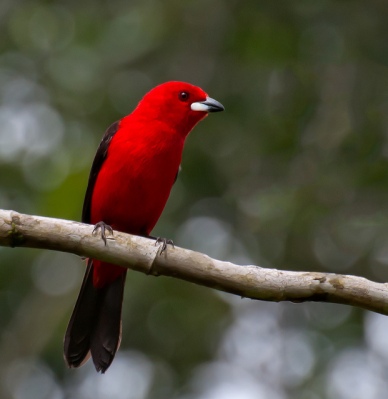
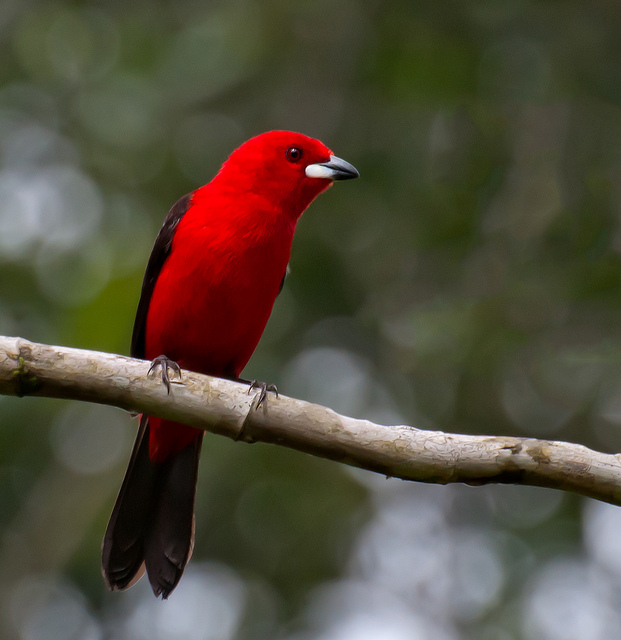
Brazilian Tanager (Ramphocelus bresilius) by Dario Sanches

Brazilian Tanager (Ramphocelus bresilius) by Dario Sanches

The Internet Bird Collection has one of the best collections that list the supspecies. It is a tremendous site that I use quite frequently. As of today, 12/6/2011, they have 56,387 videos, 51,697 photos and 6859 sounds of birds. That represents about 88.67% of all species. When I have problems finding a photo, this place will have it most likely.
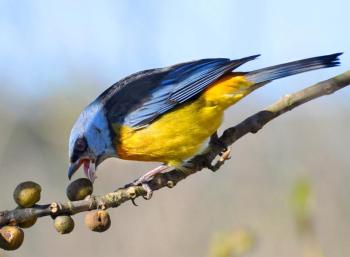
Blue-and-yellow Tanager (Thraupis bonariensis bonariensis) ©BirdPhotos.com

Blue-and-yellow Tanager (Thraupis bonariensis bonariensis) ©BirdPhotos.com

Known to God from eternity are all His works. (Acts 15:18 NKJV)

Back to the tanagers. The family is in flux and some members have been moved to other families, but most are still in the Thraupidae family which has not only Tanagers, but also Hemispingus, Shrike-Tanagers, Mountain Tanagers, Dacnis, Honeycreepers, Conebills, Flowerpiercers, Bush Tanagers, Finches, Reed Finch, Island Finch, Diuca Finch, Inca Finch, Warbling Finch, Grassquit and Orangequits, Seedeaters, Seed Finch, Bullfinch, Ground Finch, Ant Tanagers, Chat-Tanagers, Spindalis and a Plushcap.

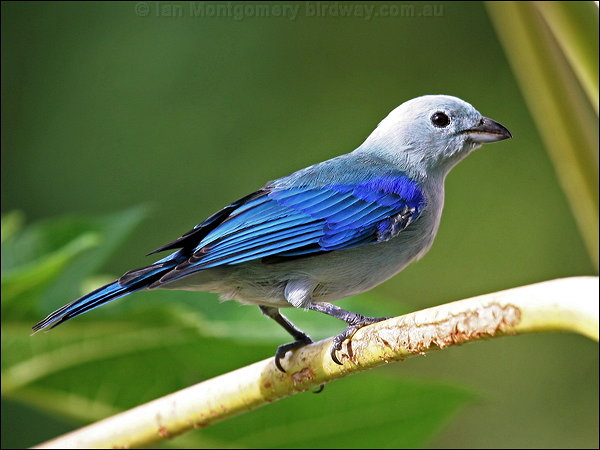
Blue-grey Tanager (Thraupis episcopus) by Ian

Blue-grey Tanager (Thraupis episcopus) by Ian

Tanagers are small to medium-sized birds. The shortest-bodied species, the White-eared Conebill, is 9 cm (3.8 in) long and weighs 7 grams, barely smaller than the Short-billed Honeycreeper. The longest, the Magpie Tanager is 28 cm (11 in) and weighs 76 grams (2.7 oz). The heaviest is the White-capped Tanager which weighs 114 grams (4 oz) and measures about 24 cm (9.5 in). Both sexes are usually the same size and weight. Tanagers are often brightly colored, but some species are black and white. Birds in their first year are often duller or a different color altogether. Males are typically more brightly coloured than females.

Most tanagers have short, rounded wings. The shape of the bill seems to be linked to the species’ foraging habits, which shows forethought and design by their Creator.

Golden-hooded Tanager (Tangara larvata centralis) ©BirdPhotos.com

Golden-hooded Tanager (Tangara larvata centralis) ©BirdPhotos.com

Most tanagers live in pairs or in small groups of 3-5 individuals. These groups may consist simply of parents and their offspring. Birds may also be seen in single species or mixed flocks. Many tanagers are thought to have dull songs, though some are elaborate.

Tanagers are omnivorous, and their diet varies from genus to genus. They have been seen eating fruits, seeds, nectar, flower parts and insects. Many pick insects off branches. Other species look for insects on the underside of leaves. Yet others wait on branches until they see a flying insect and catch it in the air. Many of these particular species inhabit the same areas, but these specializations alleviate competition.

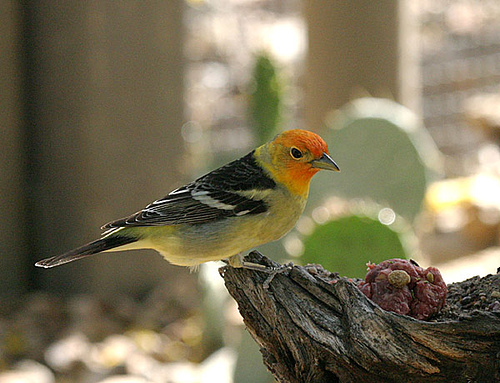
Western Tanager (Piranga ludoviciana) by Kent Nickell

Western Tanager (Piranga ludoviciana) by Kent Nickell

The breeding season begin in March through until June in temperate areas and in September through October in South America. Some species are territorial while others build their nests closer together. There is little information on tanager breeding behavior or whether they are monogamous or polygamous. Males show off their brightest feathers to potential mates and rival males. Some species’ courtship rituals involve bowing and tail lifting.

Most tanagers build cup nests on branches in trees. Some nests are almost globular. Entrances are usually built on the side of the nest. The nests can be shallow or deep. The species of the tree they choose to build their nest in and the nest’s position varies among genera. Most species nest in an area hidden by very dense vegetation. There is still no information on the nests of some species.

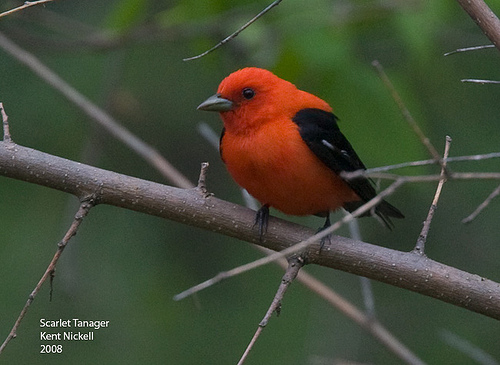
Scarlet Tanager (Piranga olivacea) by Kent Nickell

Scarlet Tanager (Piranga olivacea) by Kent Nickell

The clutch size is 3–5 eggs. The female incubates the eggs and builds the nest, but the male may feed the female while she incubates. Both sexes feed the young. Five species have helpers assist in feeding the young. These helpers are thought to be the previous year’s nestlings.

The Genus I am working on right now is the Diglossa. The Flowerpiercers, The common name refers to their habit of piercing the base of flowers to access nectar that otherwise would be out of reach. This is done with their highly designed bills, although this is greatly reduced in the Bluish Flowerpiercer, which has an almost “normal” bill. Most flowerpiercers are restricted to highlands, especially the Andes, in South America, but two species occur in Central America. See the article – Formed By Him – “Sword and Piercer” Birds

O the depth of the riches both of the wisdom and knowledge of God! how unsearchable are his judgments, and his ways past finding out! (Romans 11:33 KJV)

Well, guess I better get back to work behind the scenes again. Keep checking the page as I work to the bottom. Not sure how many more beautiful birds I’ll find, but it is fun to birdwatch through the cameras of others who go places I’ll never get to. I stay amazed at the paint brush and designs from our Creator.

The Gospel Message

*

(Above mostly from Wikipedia)

*

Formed By Him – Dippers

White-throated Dipper (Cinclus cinclus) by Ian

White-throated Dipper (Cinclus cinclus) by Ian

Dippers are small, stout, short-tailed, short-winged, strong-legged birds. The different species are generally dark brown (sometimes nearly black), or brown and white in colour, apart from the Rufous-throated Dipper which is brown with a reddish-brown throat patch. Sizes range from 14–22 cm in length and 40-90 g in weight, with males larger than females. Their short wings give them a distinctive whirring flight. They have a characteristic bobbing motion when perched beside the water, giving them their name.

White-capped Dipper (Cinclus leucocephalus leuconotus) ©BirdPhotos.com

White-capped Dipper (Cinclus leucocephalus leuconotus) ©BirdPhotos.com

Dippers are found in suitable freshwater habitats in the highlands of the Americas, Europe and Asia. In Africa they are only found in the Atlas Mountains of Morocco. They inhabit the banks of fast-moving upland rivers with cold, clear waters, though, outside the breeding season, they may visit lake shores and sea coasts.

The Lord created them unlike many water birds, dippers are generally similar in form to many terrestrial birds (for example they do not have webbed feet), but they were designed with some morphological and physiological adaptations to their aquatic habits. Their wings are relatively short but strongly muscled, enabling them to be used as flippers underwater. They have dense plumage with a large preen gland for waterproofing their feathers. Relatively long legs and sharp claws enable them to hold onto rocks in swift water. Their eyes have well-developed focus muscles that can change the curvature of the lens to enhance underwater vision. They have nasal flaps to prevent water entering their nostrils. Their blood has a high haemoglobin concentration, allowing a greater capacity to store oxygen than terrestrial birds, and allowing them to remain underwater for up to at least 30 seconds.

Let them praise the name of the LORD: for he commanded, and they were created. (Psalms 148:5 KJV)

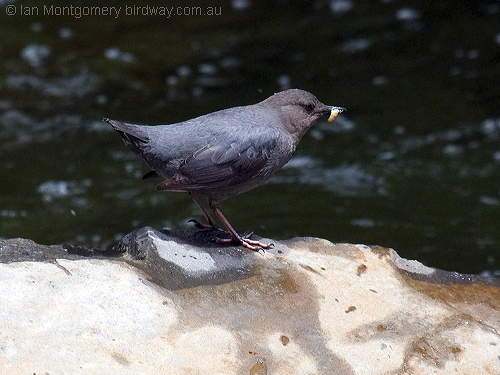
American Dipper (Cinclus mexicanus) by Ian

American Dipper (Cinclus mexicanus) by Ian

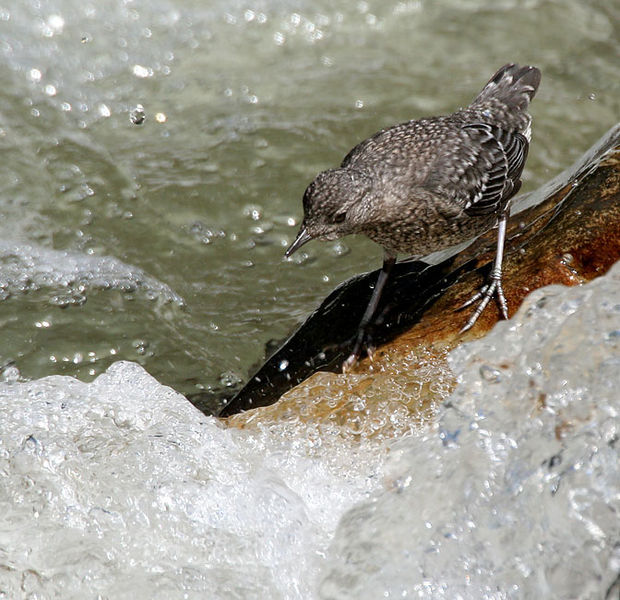
Dippers forage for small animal prey in and along the margins of fast-flowing freshwater streams and rivers. They perch on rocks and feed at the edge of the water, but they often also grip the rocks firmly and walk down them beneath the water until partly or wholly submerged. They then search underwater for prey between and beneath stones and debris; they can also swim with their wings. The two South American species swim and dive less often than the three northern ones. Their prey consists primarily of invertebrates such as the nymphs or larvae of mayflies, blackflies, stoneflies and caddisflies, as well as small fish and fish eggs. Molluscs and crustaceans are also consumed, especially in winter when insect larvae are less available.

White-throated Dipper

Recording Sound of White-throated Dipper by BBC

Video by National Geographic

*

There are five members of the Dipper – Cinclidae Family in the Passeriformes Order. They all are of the Cinclus genus. The Dippers are:

White-throated Dipper (Cinclus cinclus) – Widespread, also nw Africa
Brown Dipper (Cinclus pallasii) – Europe
American Dipper (Cinclus mexicanus) – w Canada to Panama
White-capped Dipper (Cinclus leucocephalus) – Colombia to Bolivia
Rufous-throated Dipper (Cinclus schulzii) – nw Argentina, se Bolivia

What an amazing Creator we have!

Brown Dipper (Cinclus pallasii) ©WikiC

Brown Dipper (Cinclus pallasii) ©WikiC

Several things have been dipped in blood in Scripture:

And they took Joseph’s coat, and killed a kid of the goats, and dipped the coat in the blood; (Genesis 37:31 KJV)

Hyssop was dipped in blood in Exodus 12:22 and put on doorposts; Lev. 4:6,16 and  9:9, 14:16 dipped finger in blood and sprinkled it while at the altar; dipped a bird in blood in Lev. 14:6 (See Birds of the Bible – Purifying Bird); then when Christ is seen in heaven, His vesture is dipped in blood.

And he was clothed with a vesture dipped in blood: and his name is called The Word of God. (Revelation 19:13 KJV)

The one time someone dipped himself in a river, was when Naaman, who had leprosy, finally believed enough to go dip seven times in the Jordan and was healed.

Then went he down, and dipped himself seven times in Jordan, according to the saying of the man of God: and his flesh came again like unto the flesh of a little child, and he was clean. (2 Kings 5:14 KJV)

Gospel Message

See Also:

Formed By Him

The American Dipper – The Intercessor by a j mithra

Birds of the World

(Information from Wikipedia and other internet sources)

*

Formed By Him – “Designed for Flight” by Creation Moments

Mallards flying off by Ian

Mallards flying off by Ian

Doth the hawk fly by thy wisdom, [and] stretch her wings toward the south? (Job 39:26)

When I Consider – “Designed for Flight” by Creation Moments

“Many textbooks tell young people today that birds are modified reptiles. Suppose, they say, that millions of years ago the scales on some reptiles began to fray along the edges. In time, they say, the frayed scales turned into feathers and birds were born.

When I Consider!

Formed By Him

The elegance and beauty of the feather make this story hard to believe. Can sticking a feather on a lizard produce a peacock? The bird’s feather is only a small part of the complete flying system of the bird. Even with very careful planning and redesigning, a reptile doesn’t have what it takes.

A bird needs massive breast muscles for flight. In some birds, 30 percent of the body weight of the bird is breast muscle. By comparison, in humans, breast muscles are only about 1 percent of body weight. A bird also needs an extremely high metabolism and blood pressure to deliver the energy those muscles need for flight. Birds have a higher metabolism than any other creature; they also have the necessary high blood pressure. Finally, as is well known, birds need light skeletons. The man-o’-war has a wingspan of seven feet. But its entire skeleton weighs only a few ounces – less than its feathers!

Even the most clever rebuilding of a reptile cannot produce a bird. In fact, birds have very little in common with reptiles. The entire being of the bird, from body to brain, has been specially designed for flight by a Creator who clearly knows everything there is to know about flight.

Prayer:
Father in heaven, the beauty, grace and huge variety of birds You have created are some of the most beautiful creatures on earth. As I thank You for them, fill me with new wonder over the wonderful work of Your hands. Amen.

Notes:
Vandeman, George. 1991. “The miracle of flight.” Signs of the Times, May. p. 25.”
*


All things were made by him; and without him was not any thing made that was made. (John 1:3 KJV)

More:
Formed By Him
When I Consider
Creation Moments

*

Plus – “Evolutionary ‘Game Changer’ Doesn’t Change” by Brian Thomas, M.S.

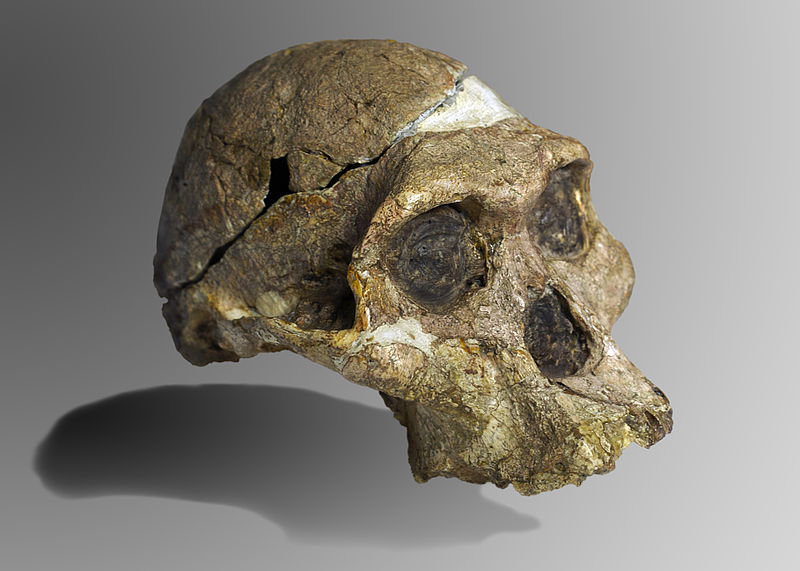
Evolution stuff - Australopithecus sediba-Mrs_Ples

Australopithecus sediba-Mrs_Ples ©WikiC

“Evolutionary ‘Game Changer’ Doesn’t Change” by Brian Thomas, M.S. is an interesting article that is in this month’s Acts and Facts.

It is typical of how hard the evolutionist want to believe in their theory of evolution. Now it is a “creature, called Australopithecus sediba, “could be a key link in the process of evolution that led to modern human beings.”1 One headline read, “Rethinking Human Origins: Fossils Reveal a New Ancestor on the Family Tree.”2 But none of these claims is true, and it’s relatively easy to understand why.”

To read the article – Click Here

Acts and Facts

Institute for Creation Research

They also have a daily devotional called – Days of Praise, which I use along with my Bible reading.

O Timothy, keep that which is committed to thy trust, avoiding profane and vain babblings, and oppositions of science falsely so called: (1 Timothy 6:20 KJV)

See Other Plus items

Birds in Hymns – Hear Me O God, Nor Hide Thy Face

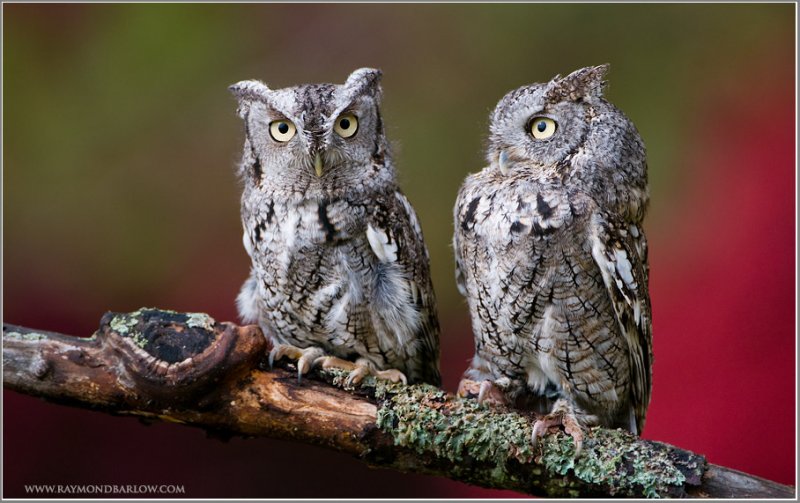
Eastern Screech Owl (Megascops asio) (captive) by Raymond Barlow

Eastern Screech Owl (Megascops asio) (captive) by Raymond Barlow

A Prayer of the afflicted, when he is overwhelmed, and poureth out his complaint before the LORD. Hear my prayer, O LORD, and let my cry come unto thee. Hide not thy face from me in the day when I am in trouble; incline thine ear unto me: in the day when I call answer me speedily. (Psalms 102:1-2 KJV)

Words by Isaac Watts (1674-1748), The Psalms of Da­vid, 1719.

Music: St. Mat­thew, Will­iam Croft (1678-1727), 1708

Al­ter­nate tune: Kings­foldRalph Vaugh­an Will­iams, 1906

Hear Me O God, Nor Hide Thy Face

Alternative

Hear me, O God, nor hide Thy face;
But answer, lest I die;
Hast Thou not built a throne of grace
To hear when sinners cry?

My days are wasted like the smoke
Dissolving in the air;
My strength is dried, my heart is broke,
And sinking in despair.

My spirits flag like withering grass
Burnt with excessive heat;
In secret groans my minutes pass,
And I forget to eat.

As on some lonely building’s top
The sparrow tells her moan,
Far from the tents of joy and hope
I sit and grieve alone.

My soul is like a wilderness
Where beasts of midnight howl;
There the sad raven finds her place
And there the screaming owl.

Dark, dismal thoughts, and boding fears,
Dwell in my troubled breast;
While sharp reproaches wound my ears,
Nor give my spirit rest.

My cup is mingled with my woes,
And tears are my repast;
My daily bread, like ashes, grows
Unpleasant to my taste.

Sense can afford no real joy
To souls that feel Thy frown;
Lord, ’twas Thy hand advanced me high
Thy hand hath cast me down.

My looks like withered leaves appear;
And life’s declining light
Grows faint as evening shadows are
That vanish into night.

But Thou for ever art the same,
O my eternal God;
Ages to come shall know Thy name,
And spread Thy works abroad.

Thou wilt arise and show Thy face,
Nor will my Lord delay
Beyond th’appointed hour of grace,
That long-expected day.

He hears His saints, He knows their cry,
And by mysterious ways
Redeems the prisoners doomed to die,
And fills their tongues with praise.

Jesus Christ the same yesterday, and to day, and for ever. (Hebrews 13:8 KJV)


Northern Raven (Corvus corax) by Ray

Northern Raven (Corvus corax) by Ray

Isaac Watts (1674-1748) – See He That Hath Made His Refuge God

Will­iam Croft (1678-1727)

As a boy, Croft was a chor­is­ter at the Cha­pel Roy­al. From 1700-1712, he was or­gan­ist at St. Anne, So­ho, Lon­don. From 1704 on, he was, joint­ly with Jer­e­m­i­ah Clarke, or­gan­ist of the Cha­pel Roy­al. In 1708 he be­came Mas­ter of the Child­ren at Cha­pel Roy­al and or­gan­ist at West­min­ster Ab­bey. In 1713 he re­ceived a Doc­tor of Mu­sic de­gree from Ox­ford Uni­ver­si­ty. In 1726, the Aca­de­my of Vo­cal Mu­sic (lat­er the Aca­de­my of An­cient Mu­sic) was found­ed by 13 mu­si­cians, in­cluding Croft, Pep­usch, Bo­non­ci­ni, and Gem­i­ni­a­ni.

Croft was com­pos­er to Queen Anne and was rec­og­nized as the fore­most church mu­si­cian of his time. Croft al­so wrote in­stru­ment­al works (e.g., cem­balo and so­na­tas for flute (re­cord­er).

*

More Birds in Hymns

See ~ Wordless Birds

Most information from The Cyber Hymnal  –  Hear Me O God, Nor Hide Thy Face

*

Birds in Hymns – He That Hath Made His Refuge God

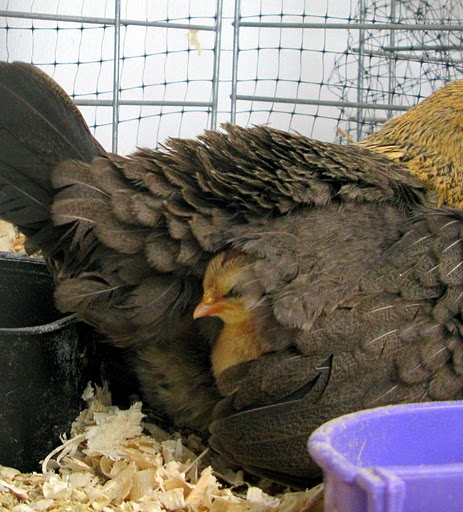
Baby Chick Peeping Out From Under His Mom's Wing - ©CC

Baby Chick Peeping Out From Under His Mom's Wing - ©CC

Because thou hast made the LORD, which is my refuge, even the most High, thy habitation; There shall no evil befall thee, neither shall any plague come nigh thy dwelling. (Psalms 91:9-10 KJV)

Words by Isaac Watts, (1674-1748) The Psalms of Da­vid, 1719.

Music: St. John’s High­lands, anon­y­mous

He That Hath Made His Refuge God

He that hath made his refuge God
Shall find a most secure abode,
Shall walk all day beneath His shade,
And there at night shall rest his head.

Then will I say, My God, Thy power
Shall be my fortress and my tower;
I, that am formed of feeble dust,
Make Thine almighty arm my trust.

Thrice happy man! Thy Maker’s care
Shall keep thee from the fowler’s snare;
Satan, the fowler, who betrays
Unguarded souls a thousand ways.

Just as a hen protects her brood
From birds of prey that seek their blood,
Under her feathers, so the Lord
Makes His own arm His people’s guard.

If burning beams of noon conspire
To dart a pestilential fire,
God is their life; His wings are spread
To shield them with a healthful shade.

If vapors with malignant breath
Rise thick, and scatter midnight death,
Israel is safe; the poisoned air
Grows pure, if Israel’s God be there.

What though a thousand at thy side,
At thy right hand ten thousand died,
Thy God His chosen people saves
Amongst the dead, amidst the graves.

So when He sent His angel down
To make His wrath in Egypt known,
And slew their sons, His careful eye
Passed all the doors of Jacob by.

But if the fire, or plague, or sword,
Receive commission from the Lord
To strike His saints among the rest,
Their very pains and deaths are blest.

The sword, the pestilence, or fire,
Shall but fulfill their best desire;
From sins and sorrows set them free,
And bring Thy children, Lord, to Thee.

Keep me as the apple of the eye, hide me under the shadow of thy wings, (Psalms 17:8 KJV)


Under His Wings - (Dove - photographer unknown)

Under His Wings - (Dove - photographer unknown)

Isaac Watts – (1674-1748)

Watts’ fa­ther was Non­con­form­ist im­pris­oned twice for his re­li­gious views. Isaac learned Greek, Latin, and He­brew un­der Mr. Pin­horn, Rec­tor of All Saints, and head­mas­ter of the Gram­mar School in South­amp­ton. Isaac’s taste for verse showed it­self in ear­ly child­hood, and his prom­ise caused a lo­cal doc­tor and other friends to of­fer him a un­i­ver­si­ty ed­u­ca­tion, as­sum­ing he would be or­dained in the Church of Eng­land. How­ev­er, Isaac de­clined and in­stead en­tered a Non­con­for­mist Acad­e­my at Stoke New­ing­ton in 1690, un­der the care of Thom­as Rowe, pas­tor of the In­de­pen­dent cong­re­ga­tion at Gir­dlers’ Hall; Isaac joined this con­gre­ga­tion in 1693.

Watts left the Acad­e­my at age 20 and spent two years at home; it was dur­ing this per­i­od that he wrote the bulk of his Hymns and Spir­it­u­al Songs. They were sung from man­uscripts in the South­amp­ton Cha­pel, and pub­lished 1707-1709.

The next six years of his life were again spent at Stoke New­ing­ton, work­ing as tu­tor to the son of em­i­nent Pur­i­tan John Har­topp. The in­tense stu­dy of these years is re­flect­ed in the the­o­log­ic­al and phil­o­soph­ic­al ma­ter­i­al he sub­se­quent­ly pub­lished.

Watts preached his first ser­mon at age 24. In the next three years, he preached fre­quent­ly, and in 1702 was or­dained as pas­tor of the In­de­pen­dent con­gre­ga­tion in Mark Lane. At that time he moved in­to the house of a Mr. Hollis in the Mi­nor­ies. His health be­gan to fail the next year, and Sam­u­el Price was ap­point­ed as his as­sist­ant in the min­is­try. In 1712, a fe­ver shat­tered his con­sti­tu­tion, and Price be­came co-pas­tor of the con­gre­ga­tion, which had moved to a new cha­pel in Bu­ry Street. It was at this time that Isaac be­came the guest of Sir Thom­as Ab­ney. He lived with Ab­ney (and lat­er Abney’s wi­dow) the rest of his life, main­ly at The­o­balds in Hert­ford­shire, then for 13 years at Stoke New­ing­ton.

In 1728, the Un­i­ver­si­ty of Ed­in­burgh award­ed Watts a Doc­tor of Di­vin­i­ty de­gree.

More Birds in Hymns

See ~ Wordless Birds

Most information from The Cyber Hymnal  –  He That Hath Made His Refuge God

*

Birds of the World – Pale-billed Woodpecker

Pale-billed Woodpecker (Campephilus guatemalensis) WikiC

Pale-billed Woodpecker (Campephilus guatemalensis) WikiC

The LabofOrnithology produced a great video about the Pale-billed Woodpecker down in Costa Rica. They used a unique wooden “double-knocker” as their most valuable device. Watch the video to see how they talked to the  Woodpecker.

The Pale-billed Woodpecker is in the Campephilus genus of the Picidae – Woodpecker Family. Woodpeckers are one of 9 families in the Piciformes Order.

The Pale-billed Woodpecker (Campephilus guatemalensis) is a very large woodpecker which is a resident breeding bird from northern Mexico to western Panama.

The habitat of this species is wet forests and adjacent second growth or semi-open woodland. Two white eggs are laid in an unlined nest hole 3–30 m high in a tree and incubated by both sexes. The young hatch naked and are fed by both parents.

Lineated Woodpecker (Dryocopus lineatus) by Michael Woodruff

Lineated Woodpecker (Dryocopus lineatus) by Michael Woodruff

The Pale-billed Woodpecker is 14.5 in (37 cm) long and weighs 1.8 oz (255 g). It resembles the Lineated Woodpecker, but is larger and more robust.

The adult is mainly black above with a pale bill, bushy crest, and white lines down the shoulders which almost meet in a V on its back. The throat is black and the rest of the underparts are white, heavily barred with black. The male has a red head and crest; the female is similar, but the crest and throat are black. The female can be distinguished from Lineated Woodpecker by the absence of a white facial stripe.

This bird has a diagnostice drumming with two quick powerful taps. Its call include nasal rattles and a keeu keeu keeu keeu breeding call.

Pale-billed Woodpeckers chip out holes, often quite large, while searching out insects in trees. They mainly eat beetle larvae, with some berries, lizards, or other fruit.

This bird has been adversely affected by deforestation in parts of its range.

Let the heavens rejoice, and let the earth be glad; let the sea roar, and the fulness thereof. Let the field be joyful, and all that is therein: then shall all the trees of the wood rejoice Before the LORD: for he cometh, for he cometh to judge the earth: he shall judge the world with righteousness, and the people with his truth. (Psalms 96:11-13 KJV)

All the Woodpeckers in the Campephilus genus:

Campephilus
Powerful Woodpecker (Campephilus pollens) IBC
____ (Campephilus pollens pollens)Video IBC
____ (Campephilus pollens peruvianus)
Crimson-bellied Woodpecker (Campephilus haematogaster) IBC
____ (Campephilus haematogaster splendens) IBC
____ (Campephilus haematogaster haematogaster) IBC
Red-necked Woodpecker (Campephilus rubricollis) IBC – Video by Keith Blomerley
____ (Campephilus rubricollis rubricollis)Video IBC
____ (Campephilus rubricollis trachelopyrus)
____ (Campephilus rubricollis olallae)
Robust Woodpecker (Campephilus robustus) ©WikiC
Crimson-crested Woodpecker (Campephilus melanoleucos) by Ian
____ (Campephilus melanoleucos malherbii) Video IBC
____ (Campephilus melanoleucos melanoleucos) IBC – Video IBC
____ (Campephilus melanoleucos cearae)
Pale-billed Woodpecker (Campephilus guatemalensis) ©WikiC
____ (Campephilus guatemalensis regius)
____ (Campephilus guatemalensis nelsoni)
____ (Campephilus guatemalensis guatemalensis) IBC
Guayaquil Woodpecker (Campephilus gayaquilensis) IBC
Cream-backed Woodpecker (Campephilus leucopogon) IBC
Magellanic Woodpecker (Campephilus magellanicus) IBC
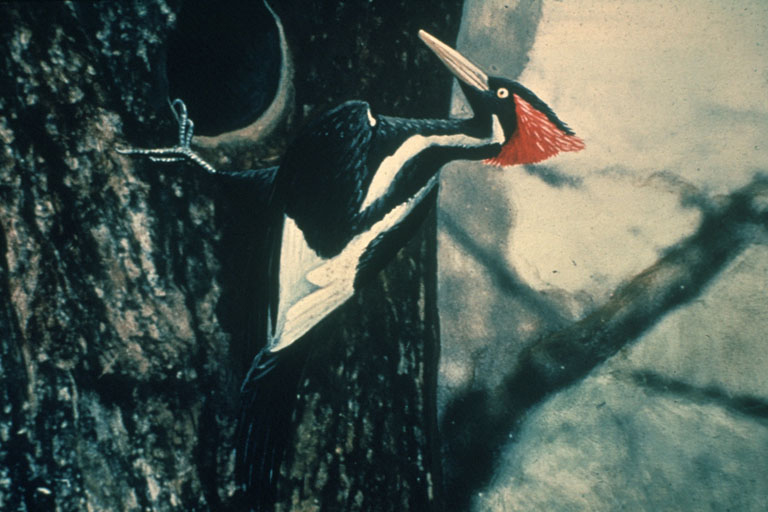
Ivory-billed Woodpecker (Campephilus principalis) ©WikiC
____ (Campephilus principalis principalis)
____ (Campephilus principalis bairdii)
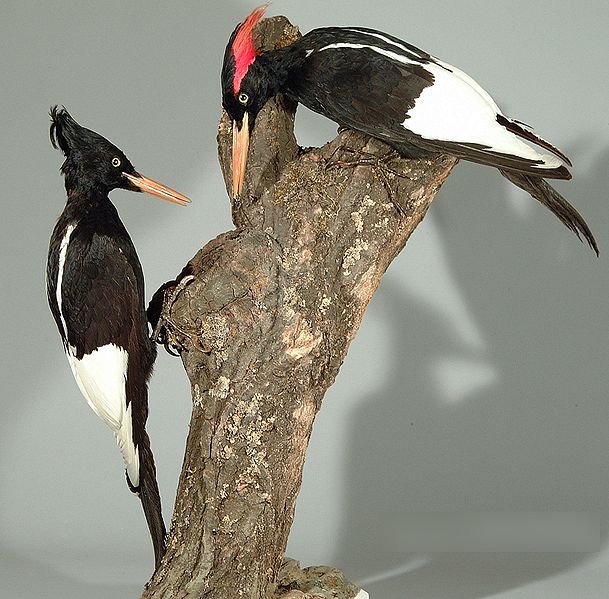
Imperial Woodpecker (Campephilus imperialis) Specimen ©WikiC

*

Wordless Birds

(Sources – Internet Birding Collection, and Wikipedia)

*

Birds of the Bible – Griffon Vulture

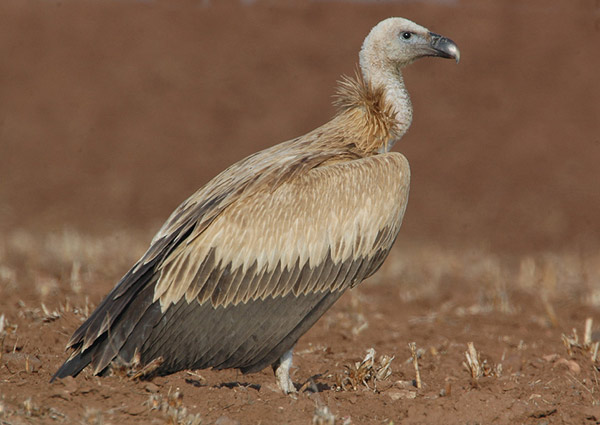
Griffon Vulture (Gyps fulvus) by Nikhil Devasar

Griffon Vulture (Gyps fulvus) by Nikhil Devasar

Of birds these are they which you must not eat, and which are to be avoided by you: The eagle, and the griffon, and the osprey. (Leviticus 11:13 DRB)

The unclean eat not: to wit, the eagle, and the grype, and the osprey, (Deuteronomy 14:12 DRB)

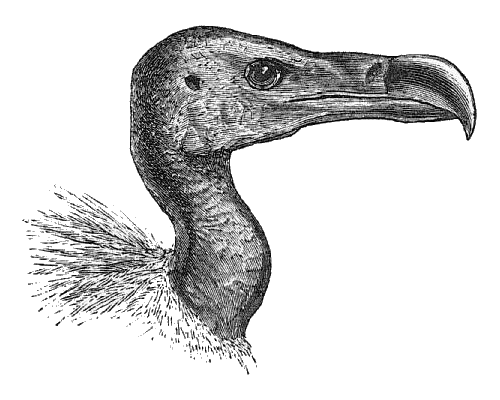
While looking through the list of clean and unclean birds in Leviticus 11 and Deuteronomy 14 to see if I could find a bird to write about, I found the two verses above in the DRB (1899 Douay-Rheims Bible). It is not a Bible I use other than comparing verses. Most of the other versions call it a vulture, ossifrage, gier-eagle, bearded or black vulture, buzzard and a few other things. The KJV calls it the ossifrage and the NKJV the vulture. What caught my eye was the grype. When I looked it up, the Griffon and the “gyps” genus were tied together. So, here is a little about the Griffon Vulture and the Gyps genus.

The Griffon Vulture (Gyps fulvus) is a large Old World vulture in the bird of prey family Accipitridae.

The Griffon Vulture is 93–110 cm (37–43 in) long with a 2.3–2.8 m (7.5–9.2 ft) wingspan. In the nominate race the males weigh 6.2 to 10.5 kg (14 to 23 lb) and females typically weigh 6.5 to 11.3 kg (14 to 25 lb), while in the Indian subspecies (G. f. fulvescens) the vultures average 7.1 kg (16 lb). Extreme adult weights have been reported from 4.5 to 15 kg (9.9 to 33 lb), the latter likely a weight attained in captivity. Hatched naked, it is a typical Old World vulture in appearance, with a very white head, very broad wings and short tail feathers. It has a white neck ruff and yellow bill. The buff body and wing coverts contrast with the dark flight feathers.

Griffon Vulture (Gyps fulvus) Dieren Park Amersfoort -adult and chick WikiC

Griffon Vulture (Gyps fulvus) Dieren Park Amersfoort -adult and chick WikiC

Like other vultures, it is a scavenger, feeding mostly from carcasses of dead animals which it finds by soaring over open areas, often moving in flocks. It grunts and hisses at roosts or when feeding on carrion.

The maximum lifespan recorded for the Griffon Vulture is 41.4 years, for a specimen in captivity. It breeds on crags in mountains in southern Europe, north Africa, and Asia, laying one egg. Griffon Vultures may form loose colonies. The population is mostly resident.

White-backed Vulture (Gyps africanus) by Bob-Nan

White-backed Vulture (Gyps africanus) by Bob-Nan

There are 8 species in the Gyps genus. The Griffon being one of them. They are Old World vultures in the bird family Accipitridae, which also includes eagles, kites, buzzards and hawks.

These are the typical vultures, with bald head, broad wings and mainly dark plumage. They are large scavenging birds, feeding mostly from carcasses of dead animals. Old World vultures find carcasses exclusively by sight. Representatives of this group are found throughout warmer parts of the Old World.

The characteristic featherless head is because a feathered head would become spattered with blood and other fluids, and thus be difficult to keep clean.

These are the members of the Gyps genus:

Gyps

White-backed Vulture (Gyps africanus) by Africaddict – Video
White-rumped Vulture (Gyps bengalensis) by Nikhil Devasar – Video
Indian Vulture (Gyps indicus) by Nikhil – Video
Slender-billed Vulture (Gyps tenuirostris) Drawing ©WikiC
Rüppell’s Vulture (Gyps rueppellii) ©WikiC – Video IBC
____ (Gyps rueppellii rueppellii) IBC
____ (Gyps rueppellii erlangeri)
Himalayan Vulture (Gyps himalayensis) Imm by Nikhil
Griffon Vulture (Gyps fulvus) by Nikhil – Video IBC
____ (Gyps fulvus fulvus) IBC
____ (Gyps fulvus fulvescens) OBI
Cape Vulture (Gyps coprotheres) ©WikiC

Vultures are of course mentioned several times throughout Scripture:

There shall the great owl make her nest, and lay, and hatch, and gather under her shadow: there shall the vultures also be gathered, every one with her mate. (Isaiah 34:15 KJV)

There is a path which no fowl knoweth, and which the vulture’s eye hath not seen: (Job 28:7 KJV)

See other Birds of the Bible Pages:

Birds of the Bible – Vulture

Birds of the Bible

(Various internet sources including Wikipedia)

*

Thankful For The Lord’s Birds

With all the preparations for Thanksgiving and having company here for the holiday, I am re-posting an article that I wrote for our church blog, The Fountain. We were asked to write about only one thing we are thankful for, so, myself and several other writers posted articles of Thanksgiving.

Some of the other articles were:

I’m Thankful for Pastor Jerry (by Stephen Simpson)

Thankful for This Time and Place (by Jonita Barram)

Thankfulness at Thanksgiving (by Lou Gentry)

My article on the blog:

Thankful For The Lord’s Birds (by Lee Dusing)

In view of the Thanksgiving season, I have asked our blog authors to write about one thing they are thankful for.  Lee is up first.

Give thanks unto the LORD, call upon his name, make known his deeds among the people. (1 Chronicles 16:8 KJV)

One thing is all Stephen will let us be thankful for. So I won’t mention the other 9,000 things I am thankful for.

The Lord has given me an interest in our avian friends, the birds, and it has brought so many blessings from it. When observing them, their colors, behavior, the variety, and just the wonder of them, I can’t help but be THANKFUL!

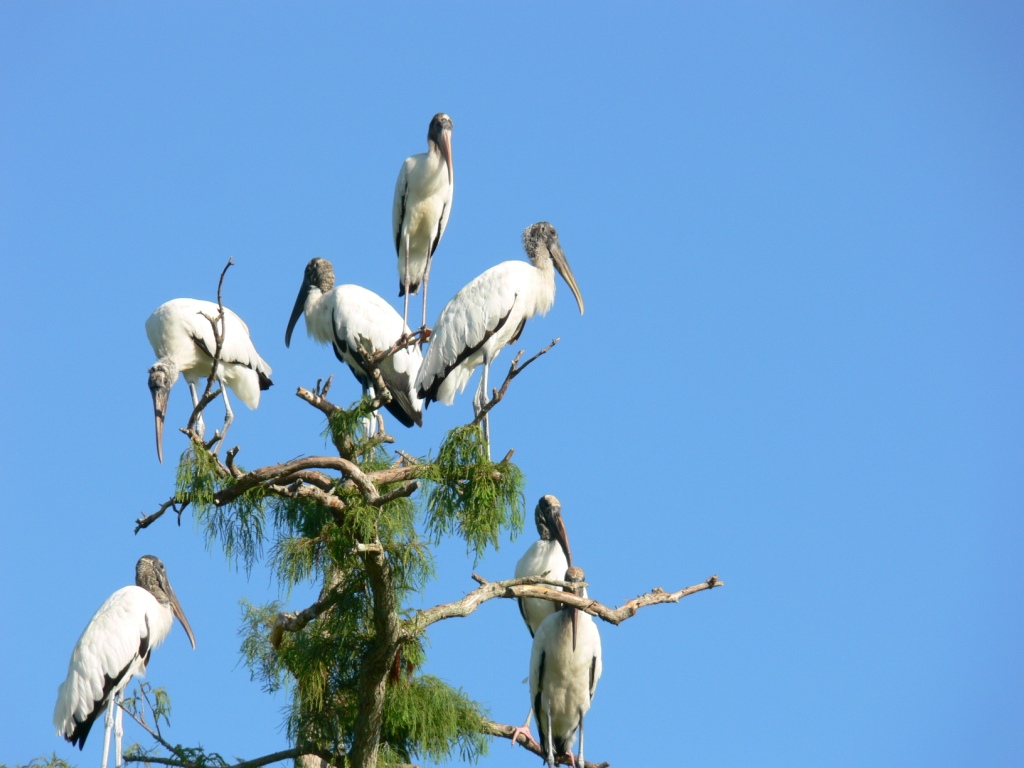
Woodstorks on top of tree at Circle B -7-22-11 by Lee

Woodstorks on top of tree at Circle B -7-22-11 by Lee

The Lord and I have a running conversation when birdwatching or looking for photos of birds for my blog. Here are some of my thought and talks with Him:

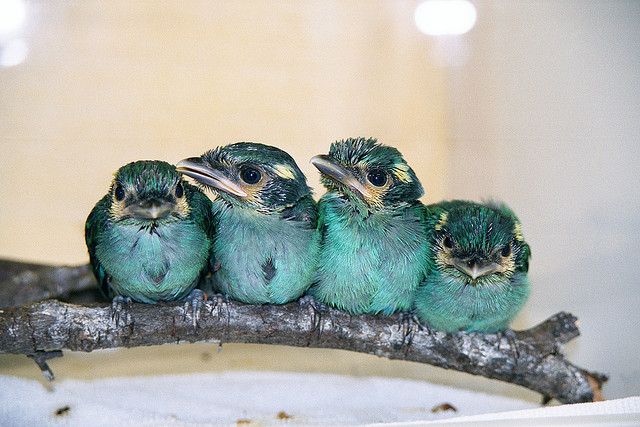
Long-tailed Broadbill (Psarisomus dalhousiae) babies ©©coracii

Long-tailed Broadbill (Psarisomus dalhousiae) babies ©©coracii

“Wow! Look at you! Lord you really created them neat”

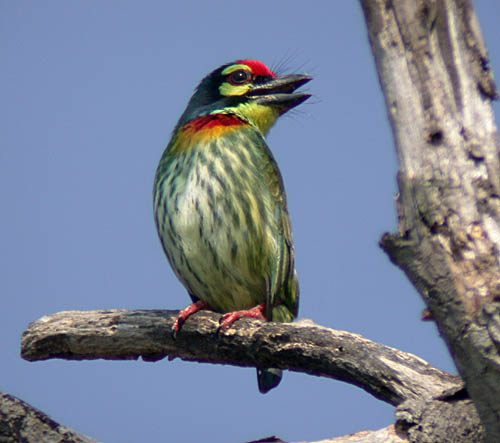
Coppersmith Barbet (Megalaima haemacephala) by Peter Ericsson

Coppersmith Barbet (Megalaima haemacephala) by Peter Ericsson

“Lord, what an amazing coloring.”

Painted Bunting (Passerina ciris) ©©Flickr

Painted Bunting (Passerina ciris) ©©Flickr

“Amazing! How did you think of so many different designs and colors?”

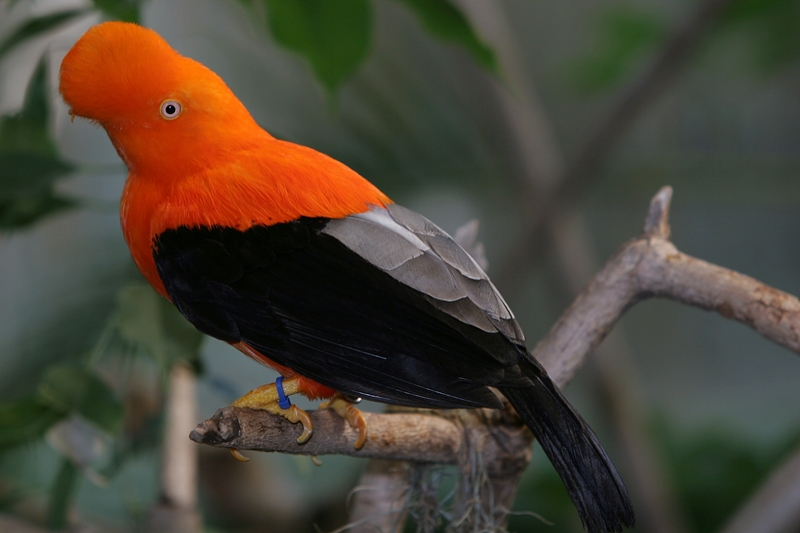
Andean Cock-of-the-rock (Rupicola peruvianus) by SanDiegoZoo

Andean Cock-of-the-rock (Rupicola peruvianus) by SanDiegoZoo

“(Chuckle) Lord you sure have a sense of humor on some of these birds!”

“Lord, you caused the donkey to talk, could you bring that bird out where I can see it.?” (Thankfully, it has worked several times. Thank You Lord.)

On and on the conversations go. I love the Lord and I am so thankful to Him for that interest and the love He has put in me for His Creation, especially the birds.

Giving thanks always for all things unto God and the Father in the name of our Lord Jesus Christ; (Ephesians 5:20 KJV)

Other Thanksgiving 2011 Posts:

Other Posts by Lee:


P.S.

Since this is my blog and it is Thanksgiving today, I can add more things I am thankful for. Of course the thing I am most thankful for is my salvation provided through the shed blood of Jesus Christ on the cross.

Caught Dan on the Boardwalk trying to find a bird

Caught Dan on the Boardwalk trying to find a bird

Next I am thankful for my husband, Dan, who is the other love of my life. I am thankful for the 48 years the Lord has allowed us to spend together. We are both thankful that we share our love for the Lord and enjoy being allowed to serve Him in various ways.

I am thankful for Faith Baptist Church, here in Winter Haven, FL and the others we have attended over the years. What a blessing it is to attend, listen to great preaching, singing, and have great friends. Serving the Lord here is great. As we lived in other places over the years, we have had great blessings and friends there also.

I am thankful for this blog and all of you who stop by and read the articles that are produced. I am very thankful for the writers like ajmithra, Ian Montgomery, Dottie Malcolm, Stephen Simpson, April Lorier and others who have contributed their talents. All the photographers and videographers who have allowed their photos and videos to be used.

Then our families and friends, who could not be thankful for them. On and on I could go for the many blessings in my life, but I will stop there for now. Just the 10, 466 birds in the world would put me past the 9,000 things I am thankful for.

Look around you today and count your many blessings. There are many.
Lord Bless your day and Happy Thanksgiving.

A Psalm of praise. Make a joyful noise unto the LORD, all ye lands. Serve the LORD with gladness: come before his presence with singing. Know ye that the LORD he is God: it is he that hath made us, and not we ourselves; we are his people, and the sheep of his pasture. Enter into his gates with thanksgiving, and into his courts with praise: be thankful unto him, and bless his name. For the LORD is good; his mercy is everlasting; and his truth endureth to all generations. (Psalms 100:1-5 KJV)

Here are other Thanksgiving related posts:
Birds of the Bible – Thanksgiving 2010
Birds of the Bible – Fatted Fowl 2009
Thanksgiving Turkey 2009
Happy Thanksgiving 2008

R.A.Torrey’s Topical Bible – Thanksgiving

*

Birds of the Bible – As the Bird…So Are We

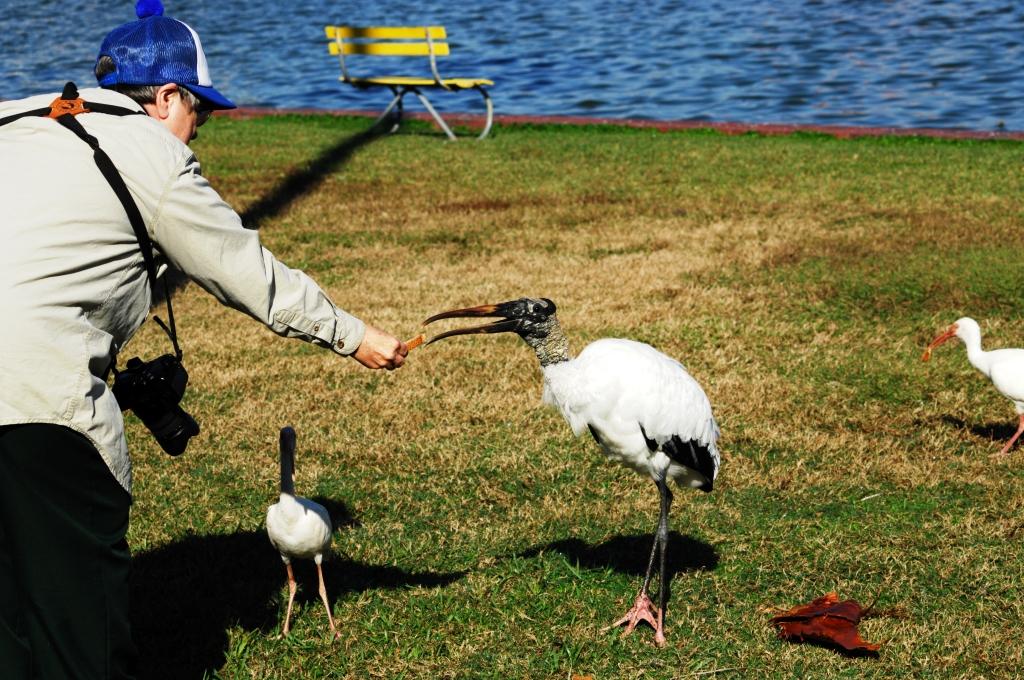
Lee feeding Wood Stork at Lake Morton by Dan Jan 2011

Lee feeding Wood Stork at Lake Morton by Dan Jan 2011

While watching the birds at my feeders and reflecting on what I had just read in my devotions, I started thinking about how the truths of God’s Word applies to the birds and to me. There are differences of course, but there are many similarities. Those are the ones this article is about.

To begin, we are both created. The Lord created the birds and He created humans. We both have bodies and spirits, but humans were given a soul and were created in His Image.

So God created great sea creatures and every living thing that moves, with which the waters abounded, according to their kind, and every winged bird according to its kind. And God saw that it was good. (Genesis 1:21 NKJV)

Then God said, “Let Us make man in Our image, according to Our likeness; let them have dominion over the fish of the sea, over the birds of the air, and over the cattle, over all the earth and over every creeping thing that creeps on the earth.” So God created man in His own image; in the image of God He created him; male and female He created them. (Genesis 1:26-27 NKJV)

There is a difference between us:

All flesh is not the same flesh, but there is one kind of flesh of men, another flesh of animals, another of fish, and another of birds. (1 Corinthians 15:39 NKJV)

Bush Stone-curlew (Burhinus grallarius) with young by Ian

Bush Stone-curlew (Burhinus grallarius) with young by Ian

Then the Lord commanded them to be “Be fruitful and multiply, and fill.” Both were told to reproduce with the difference being that man was given dominion over the critters.

And God blessed them, saying, “Be fruitful and multiply, and fill the waters in the seas, and let birds multiply on the earth.” So the evening and the morning were the fifth day. …And God saw that it was good.(Genesis 1:22-23, 25 NKJV)

Then God blessed them, and God said to them, “Be fruitful and multiply; fill the earth and subdue it; have dominion over the fish of the sea, over the birds of the air, and over every living thing that moves on the earth.” (Genesis 1:28 NKJV)

Cedar Waxwing Eating by Steve Slayton

Cedar Waxwing Eating by Steve Slayton

God gave both the birds and man (humans) every green herb to eat.

And God said, “See, I have given you every herb that yields seed which is on the face of all the earth, and every tree whose fruit yields seed; to you it shall be for food. Also, to every beast of the earth, to every bird of the air, and to everything that creeps on the earth, in which there is life, I have given every green herb for food“; and it was so. (Genesis 1:29-30 NKJV)

Swallow Tanager (Tersina viridis) by Dario Sanches

Swallow Tanager (Tersina viridis) by Dario Sanches

We were both created “very good.”

Then God saw everything that He had made, and indeed it was very good. So the evening and the morning were the sixth day. (Genesis 1:31 NKJV)

Then Adam and Eve disobeyed God and both the birds and myself were placed under a curse. Neither of us enjoy the fellowship and peace that was there in the Garden of Eden. My personal belief is that the animals and birds were very tame, that Adam could call or speak to them and they would come without hesitation. But now, they are afraid of us, and we (humans) need a Savior. (The Gospel Message)

And the fear of you and the dread of you shall be on every beast of the earth, on every bird of the air, on all that move on the earth, and on all the fish of the sea. They are given into your hand. (Genesis 9:2 NKJV)

We all belong to the Lord:

I know all the birds of the mountains, And the wild beasts of the field are Mine. “If I were hungry, I would not tell you; For the world is Mine, and all its fullness. (Psalms 50:11-12 NKJV)

Western Great Egret (Ardea alba) With Fish by AestheticPhotos

Western Great Egret (Ardea alba) With Fish by AestheticPhotos

We and the birds are provided for:

“Therefore I say to you, do not worry about your life, what you will eat or what you will drink; nor about your body, what you will put on. Is not life more than food and the body more than clothing? Look at the birds of the air, for they neither sow nor reap nor gather into barns; yet your heavenly Father feeds them. Are you not of more value than they? (Matthew 6:25-26 NKJV)

God has given each kind of bird different beaks, feet, appetites, habitats, and places to dwell. The Lord has given those of us who have accepted Him as Savior different abilities, gifts, talents, places to live (like missionaries) and jobs to do. He has given both a variety that makes them and us very interesting to behold.

There are more things that could be mentioned, but for now, Praise the Lord that He cares about both the birds and us!

*