The Snow has been turned on again

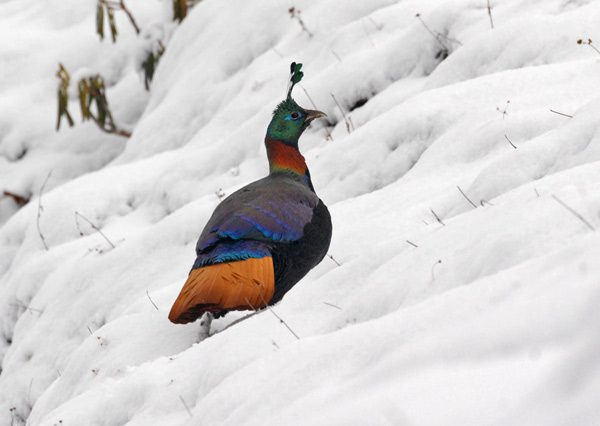
Himalayan Monal (Lophophorus impejanus) by Nikhil Devasar

Himalayan Monal (Lophophorus impejanus) by Nikhil Devasar

Well, WordPress has turned on the snow again this year, so even though it is currently 59 degrees here in Central Florida, IT’S SNOWING.

It’s about the only way we get any down here. They turn it on for about a month, so, if it is a bother, it will be gone soon. For those of us who enjoy looking at it, enjoy it.

Have you entered the treasury of snow, Or have you seen the treasury of hail, (Job 38:22 NKJV)

Chinstrap Penguin (Pygoscelis antarcticus) by Bob-Nan

Chinstrap Penguin (Pygoscelis antarcticus) by Bob-Nan

Come now, and let us reason together,” Says the LORD, “Though your sins are like scarlet, They shall be as white as snow; Though they are red like crimson, They shall be as wool. (Isaiah 1:18 NKJV)

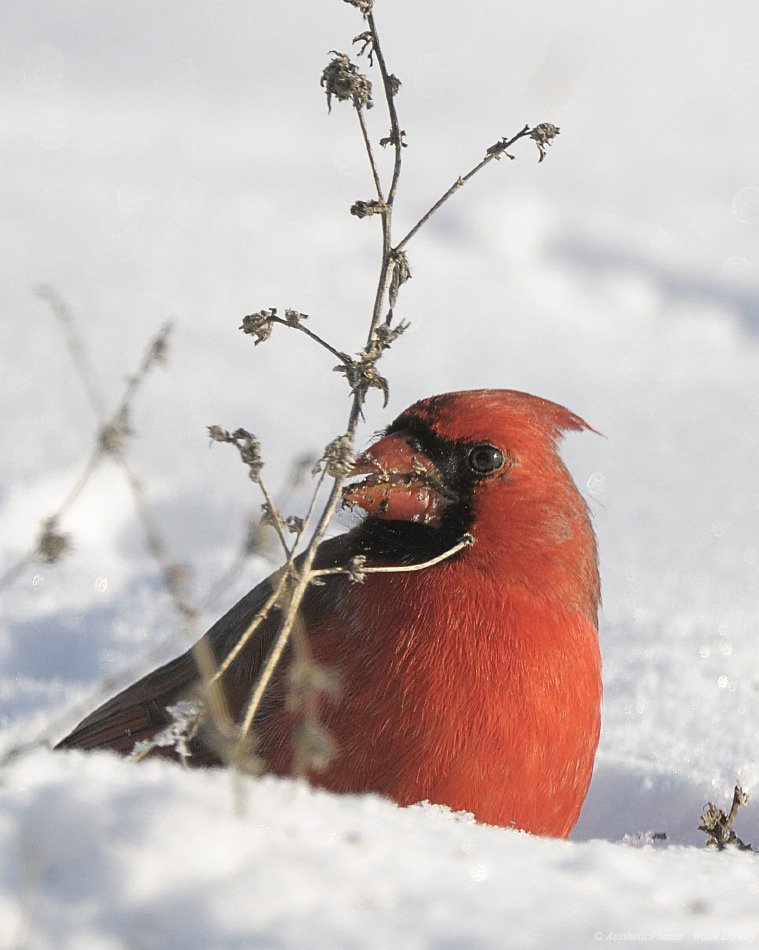
Cardinal by Aestheticphotos

Wordless Birds

Christmas Attacks

Article from Creation Momments:

“Dear Friend of Creation,

Joy to the world, the Lord is come.
Let earth receive her King!

Cardinal by Aestheticphotos

As the great Christmas hymn reminds us, God so loved the world that He gave. Christmas is truly a time when even non-Christians in non-Christian cultures are reminded about the great joys of giving and receiving special gifts, and about doing good to others.

Yet the ACLU, other secular humanists and multiculturalists continue to wage war on Christmas – to try to ban even the mention of the word. Now even “Holiday Tree” is touted instead of “Christmas Tree.” Give me a break! It’s amazing how the worldly spirit of anti-CHRIST affects even the frequency of His respectful mention in our language. There is an attitude that squirms at the mere mention of God.

Where does this attitude come from? Answer: the sinful heart of mankind. And what is used as intellectual justification (subconsciously in many cases) for such an attitude? Answer: the doctrines of evolutionism.

We see in the whole irrational war on Christmas where the bias toward evolution and against creation comes from. Evolution is not propped up by science at all but by the depraved will of mankind to rid himself of accountability to his Maker.” To read the rest – CLICK HERE

Birds in Hymns – Hail to the Lord’s Anointed

Give the king Your judgments, O God, And Your righteousness to the king’s Son. He will judge Your people with righteousness, And Your poor with justice. (Psalms 72:1-2)

James Montgomery 1771-1854

James Montgomery 1771-1854

Words: James Mont­gom­ery, 1821.

Music: Ell­a­combe, Ge­sang­buch der Herz­ogl. Wirt­em­berg­isch­en Ka­thol­isch­en Hof­ka­pel­le (Würt­tem­berg, Ger­ma­ny: 1784); adapt­ed & har­mo­nized by Wil­liam H. Monk in the 1868 ap­pen­dix to Hymns An­cient and Mo­dern, num­ber 366
Al­ter­nate tunes:

* British Gren­a­diers, tra­di­tion­al Eng­lish mel­o­dy
* Crüger, from a chor­ale by Jo­hann Crü­ger, adapt­ed by Wil­liam H. Monk (1823-1889)
* Woodbird, tra­di­tion­al Ger­man mel­o­dy
* Zoan, Will­iam H. Hav­er­gal, 1845

William H. Monk (1823-1889)

[This hymn] is a me­tri­cal ver­sion of the Se­ven­ty-se­cond Psalm. It was writ­ten as a Christ­mas hymn and was first sung on Christ­mas Day, 1821, at a great con­vo­ca­tion of the Mo­ra­vi­ans in their set­tle­ment at Ful­neck. At a Wes­ley­an mis­sion­a­ry meet­ing, held in Li­ver­pool on Ap­ril 14 of the fol­low­ing year, 1822, when Doc­tor Adam Clarke pre­sid­ed, Mont­gom­ery made an ad­dress and closed it by the re­cit­al of this hymn with all of its verses…Doc­tor Clarke lat­er used it in his fa­mous Com­ment­a­ry in con­nect­ion with his dis­cuss­ion of the Se­ven­ty-se­cond Psalm. – Price, p. 103

Hail to the Lord’s Anointed

Hail to the Lord’s anointed, great David’s greater Son!
Hail in the time appointed, His reign on earth begun!
He comes to break oppression, to set the captive free;
To take away transgression and rule in equity.

He comes in succor speedy to those who suffer wrong;
To help the poor and needy, and bid the weak be strong;
To give them songs for sighing, their darkness turn to light,
Whose souls, condemned and dying, were precious in His sight.
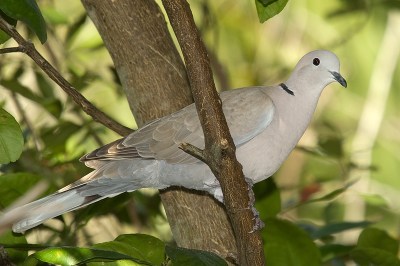
Eurasian Collared Dove (Streptopelia decaocto) by Reinier

Eurasian Collared Dove (Streptopelia decaocto) by Reinier

By such shall He be fearèd while sun and moon endure;
Beloved, obeyed, reverèd; for He shall judge the poor
Through changing generations, with justice, mercy, truth,
While stars maintain their stations, or moons renew their youth.

He shall come down like showers upon the fruitful earth;
Love, joy, and hope, like flowers, spring in His path to birth.
Before Him, on the mountains, shall peace, the herald, go,
And righteousness, in fountains, from hill to valley flow.

Arabia’s desert ranger to Him shall bow the knee;
The Ethiopian stranger His glory come to see;
With offerings of devotion ships from the isles shall meet,
To pour the wealth of oceans in tribute at His feet.

Kings shall fall down before Him, and gold and incense bring;
All nations shall adore Him, His praise all people sing;
For He shall have dominion o’er river, sea and shore,
Far as the eagle’s pinion or dove’s light wing can soar.
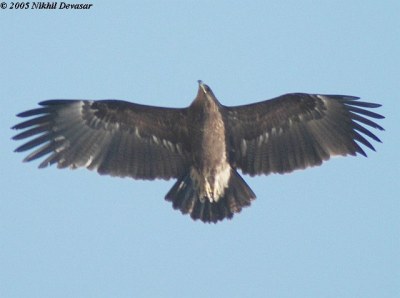
Greater Spotted Eagle (Aquila clanga) by Nikhil

Greater Spotted Eagle (Aquila clanga) by Nikhil

For Him shall prayer unceasing and daily vows ascend;
His kingdom still increasing, a kingdom without end:
The mountain dews shall nourish a seed in weakness sown,
Whose fruit shall spread and flourish and shake like Lebanon.

O’er every foe victorious, He on His throne shall rest;
From age to age more glorious, all blessing and all blest.
The tide of time shall never His covenant remove;
His Name shall stand forever, His Name to us is Love.


What a hymn that is packed full of many of the great truths about Christ.

Most information from The Cyber Hymnal

See ~ Wordless Birds

More ~ Birds in Hymns

*
Birds in Hymns – In God Will I Trust

In the LORD put I my trust: how say ye to my soul, Flee as a bird to your mountain? (Psalms 11:1 KJV)

Words: Par­a­phrase of Psalm 11; au­thor un­known.

Music: Pro­tect­ion, from A Com­pil­a­tion of Gen­u­ine Church Mu­sic, by Jo­seph Funk (Win­ches­ter, Vir­gin­ia: J. W. Holl­is, 1832)

In God Will I Trust

In God will I trust, though my counselors say,
O flee as a bird to your mountain away;
The wicked are strong and the righteous are weak,
Foundations are shaken, yet God will I seek.

The Lord in His temple shall ever abide,
His throne is eternal, whatever betide;
The children of men He beholds from on high,
The wicked to punish, the righteous to try.

The Lord is most righteous, the Lord loves the right,
The evil He hates and will surely requite;
The wicked His anger will drive from their place,
The upright in rapture shall gaze on His face.


Mallards flying off by Ian

Mallards flying off by Ian

Adam Clarke’s Commentary on the Bible says of Psalms 11:1

“In the Lord put I my trust: how say ye – Some of David’s friends seem to have given him this advice when they saw Saul bent on his destruction: “Flee as a bird to your mountain;” you have not a moment to lose; your ruin is determined; escape for your life; get off as swiftly as possible to the hill-country, to some of those inaccessible fortresses best known to yourself; and hide yourself there from the cruelty of Saul. To which advice he answers, “In the Lord put I my trust,” shall I act as if I were conscious of evil, and that my wicked deeds were likely to be discovered? Or shall I act as one who believes he is forsaken of the protection of the Almighty? No: I put my trust in him, and I am sure I shall never be confounded.”

From the Life Application Study Bible:

“David was forced to flee for safety several times. Being God’s anointed king did not make him immune to injustice and hatred from others. He may have written this psalm when he was being hunted by Saul (1 Samuel 18-31) or during the days of Absalom’s rebellion (2 Samuel 15-18). In both instances, David fled, but not as if all was lost. He knew God was in control. While David wisely avoided trouble, he did not fearfully run away from his troubles.

David seems to be speaking to those who are advising him to run from his enemies. David’s faith contrasts dramatically with the fear of the advisers who tell him to flee. Faith in God keeps us from losing hope and helps us resist fear. David’s advisers were afraid because they saw only frightening circumstances and crumbling foundations. David was comforted and optimistic because he knew God was greater than anything his enemies could bring against him (Psalms 7:10; Psalms 16:1; Psalms 31:2-3).”

When I Consider! – Capillary flow, Osmosis and Vacuum pressure

When I Consider!

When I Consider!

Evidence From Botany – January 4

On a hot summer day, one large tree can pump over a thousand gallons—that’s four ton—of water from the ground to it leaves. The water is collected from the soil through the roots. But the real work of pumping four tons of water, often 100 feet in the air, occurs at the top of the tree. The water is suctioned toward the treetop by three remarkably efficient mechanisms—capillary flow, osmosis and vacuum pressure. Osmosis and capillary action act in concert to move the water partway to the top of the tree, but the real driving force is a pressure differential created by the leaves within the vessels of the tree. The pressure differential is a result of water evaporating from the leaves of the tree, creating a suction throughout the vessels. This suction (measured as low as 1/20 of atmospheric pressure) helps to draw water from the roots all the way to the top of the tree. If you were to cut one of these vessels, you could actually hear a hissing sound as air rushed back in.

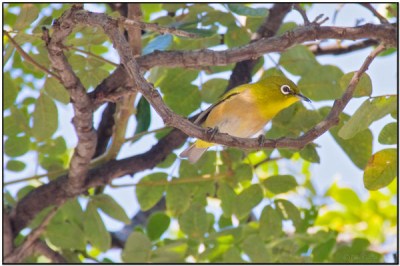
Japanese White-eye (Zosterops japonicus) by Daves BirdingPix

Japanese White-eye (Zosterops japonicus) by Daves BirdingPix up in a tree

The engineering excellence of this silent pumping system which efficiently delivers moisture to the very top of trees, is a not-so-silent witness against the idea that chance evolutionary processes (such as mutations) could have developed it.

Do you not know? Have you not heard? The LORD is the everlasting God, the Creator of the ends of the earth. He will not grow tired or weary, and His understanding no one can fathom. Isaiah 40:28

From A Closer Look at the Evidence, by the Kleiss’

(Typed by Phyllis)

Interesting Things – Cuckoo Deceit

SmileyCentral.com

Deceit Is Cuckoo

Listen to this from Creation Moment

Bread gained by deceit is sweet to a man, but afterward his mouth will be filled with gravel. Proverbs 20:17

Fan-tailed Cuckoo (Cacomantis flabelliformis) by Ian

Fan-tailed Cuckoo (Cacomantis flabelliformis) by Ian

You may be aware that the common cuckoo does not feed or raise its own young. Instead, it lays its eggs in the nests of other birds. The adoptive parents feed and raise the young cuckoo as their own until the cuckoo gets larger than the foster parents and flies away without so much as a “thank you.”

One common adoptive parent for the young cuckoos is the reed warbler, whose behavior pattern is quite different from the cuckoos. For example, reed warbler parents recognize hungry baby birds by their persistent calling. Cuckoos typically lay but one egg in an adoptive nest. Once this egg hatches, the young cuckoo throws the reed warbler eggs out of the nest. So how does one little baby cuckoo manage to convince the parent reed warbler that it is half a dozen reed warbler babies to be fed? Researchers have finally learned the amazing answer to that question. They say that the baby cuckoo fools its adoptive parents by sounding like as many as eight baby reed warblers. The act is so convincing that it gets all the food it wants.

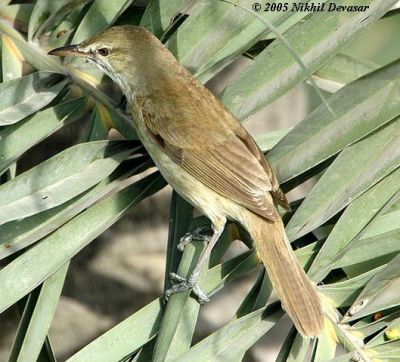
Clamorous Reed Warbler (Acrocephalus stentoreus) by Nikhil

Clamorous Reed Warbler (Acrocephalus stentoreus) by Nikhil

Who teaches the baby cuckoos this trick? Certainly not the mother cuckoo who, incidentally, misses out on all the fulfillment of family life. The cuckoo reminds us that deceit robs us of good experiences in our lives. That ‘s why it is comforting when our perfect God of truth tells us that He never changes.

Prayer: Forgive me, dear Father, for any deceit in my life, and help me to live a life of truth and honesty. InJ esus’ Name. Amen.

References: L.H., Cuckoos beg doggedly to trick hosts, Science News, v.155, p.158, March 6, 1999
Copyright © 2009 Creation Moments, Inc., PO Box 839, Foley, MN 56329, www.creationmoments.com.

To learn more about the Cuckoo – Click Here

When I Consider! – Couch’s Spadefoot Toad

When I Consider!

When I Consider!

Evidence From Biology – January 6

The Couch’s spadefoot toad of the Sonoran Desert is an example of how God takes care of creatures under extreme conditions. This toad lies dormant in the hot desert eleven out of twelve months each year. It has built-in sensors that tell it when a violent desert rainstorm occurs. The toad can detect vibrations of pounding rain miles away. It somehow knows to emerge from the sand when it rains so that the male toads can call for females as soon as pools of water form. Shortly afterwards the egg-laying is completed and the toads return to the sand, safe from the heat of the burning daytime sun. Most of the time the desert pools rapidly dry up, killing the eggs. Only under ideal conditions will some of the eggs hatch nine days later. The young toads have at most a few weeks to eat enough food to survive before burying themselves in the sand for the next eleven months while awaiting the another rainstorm.

Couch's Spadefoot Toad

Couch's Spadefoot Toad

Such survival instincts and mechanisms were probably not required before the Fall, when the world was designed as a paradise. In the current world, with its severe climates, such instincts and abilities seem to have been specifically designed for animals such as the spadefoot toad. How could this ability to adjust to such harsh weather conditions have evolved? Unless all of the abilities, instincts, and timing of the toads’ reproductive cycle were in place, the toads could never have survived the first severe season.

The wild animals honor me…because I provide water in the desert and streams in the wasteland… (Isaiah 43:20)

From A Closer Look at the Evidence, by the Kleiss’

(Typed by Phyllis)

From Wikipedia:
The Couch’s Spadefoot Toad, (Scaphiopus couchii) is a species of North American spadefoot toad native to the southwestern United States and the Baja region of Mexico. The epithet couchii is in honor of American naturalist Darius Nash Couch, who collected the first specimen while on a personal expedition to northern Mexico to collect plant, mineral and animal specimens for the Smithsonian Institution.[1]

These toads can be found throughout the Sonoran Desert, including Arizona. How can you tell the species? True toads have horizontal pupils but the spadefoots have vertical pupils (like cats). Look at the sole of a hind foot. There you’ll find the hard, dark “spade” that gives a spadefoot its name. There are only two spadefoot species in the Sonoran Desert of Arizona and California. If the space is sickleshaped, it’s Couch’s spadefoot, Scaphiopus couchi. If the spade is rounded, it’s the western spadefoot, Scaphiopus hammondii(called the southern spadefoot, Scaphiopus multiplicatus, in some field guides).

Spadefoot Foot by Thomas Eimermacher

Spadefoot Foot by Thomas Eimermacher

Incidentally, the spades really are digging tools–spadefoots use them to burrow backward into the soil.

Once you’ve finished checking the animal, gently put it down where you caught it–it has important things to do–then wash your hands thoroughly in the water. Amphibian skin secretions can be quite toxic; they probably won’t affect your hands, but you won’t want to get them in your eyes, nose, or mouth.

Spadefoots live for the monsoon. They spend the rest of the year underground awaiting their wake-up call: the drumming of raindrops on the soil during a summer thunderstorm. As soon as the males dig out they go looking for rain pools, and when they find them they broadcast the news loudly as they can. The chorus draws silent female spadefoots from far and wide.

Mating is an urgent matter for spadefoots. Their tadpoles must hatch, grow, and change into toadlets before the pool evaporates in the summer sun. That’s why they do most of their mating the first night the pool forms. Couch’s spadefoot toadlets sometimes leave the puddle only nine days after the eggs are laid! Western spadefoots take longer–at least three weeks.

The warmth of the water speeds up the tadpoles’ growth. Meanwhile they devour everything even remotely edible. They scrape algae off rocks. They filter microorganisms from the water as they pump it over their gills. They gather in wriggling masses, stir up the muck on the bottom of the pond, and filter that. And unlike most tadpoles, which are exclusively herbivores and filter-feeders, spadefoot tadpoles are omnivores. They also eat dead insects and tadpoles, and” more.

See Also:

Couch’s Spadefoot

Couch’s Spadefoot Toad by LA Zoo

When I Consider! – Snowshoe Rabbit

When I Consider!

When I Consider!

Evidence From Biology – January 2

Although the original world was created perfect and without death, our fallen world requires creatures to adapt to difficult situations in order to survive. Even in the current world full of death and competition, the smallest of creatures exhibit amazing capabilities for survival in harsh environments. The female snowshoe rabbit is one such creature. During extreme drought or harsh winters, the stress of finding food triggers a chemical process in the pregnant female that stops and embryo’s growth. Her body then responds to this condition of physical weakness with a process called resorption. In this process, the mother completely reabsorbs the growing embryo. This mechanism allows the rabbit to survive by replenishing her own strength. She can later become pregnant during more favorable conditions.

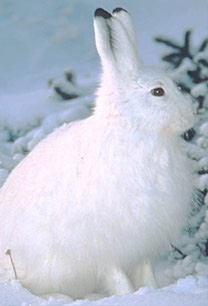
Snowshoe Hare or Rabbit

Snowshoe Hare or Rabbit

The number of chemical and physical changes required for a rabbit to reverse a pregnancy is mind-boggling. There is no scientific evidence which explains how this remarkable resorption process could have evolved. The creativity of God to have provided for the common rabbit in this way is truly amazing!

The LORD is gracious and righteous; our God is full of compassion. Psalm 116:5

From A Closer Look at the Evidence, by the Kleiss’

(Typed by Phyllis)

Birds of the Bible – Fatted Fowl

Ten fat oxen, and twenty oxen out of the pastures, and an hundred sheep, beside harts, and roebucks, and fallowdeer, and fatted fowl. (1 Kings 4:23 KJV)

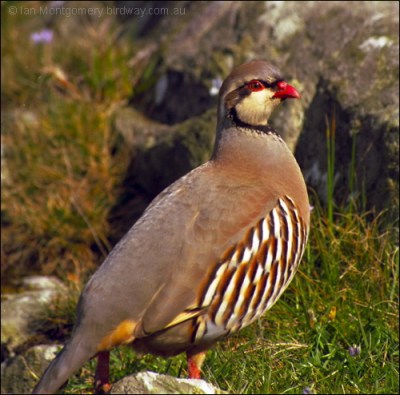
Chukar Partridge (Alectoris chukar) by Ian

While doing a search with my e-Sword Bible program, I came across I Kings 4:23. It is in the midst of the daily provisions needed by Solomon for one day. I had not noticed the “fatted fowl” before and since today is Thanksgiving, it caught my interest. According to what I wrote yesterday about the Thanksgiving Turkey, the Wild Turkey, Ocellated Turkey, and domesticated turkey are from the New World. If Solomon had lived here, I might think that he was eating “turkey” or some fatted goose, duck, or chicken. However, Solomon lived in Israel. So, what was the “fatted fowl”?

According to Strong’s Hebrew and Greek Dictionaries: Fatted = H75 – aw-bas’ – A primitive root; to fodder: – fatted, stalled. Fowl = H1257 – bar-boor’ -By reduplication from H1250; a fowl (as fattened on grain) – fowl. So the fatted fowl was possibly fed grain as was the fatted calf. Here are some of the other translations for the “fatted calf”, fat fowls, geese, poultry, fattened birds, fattened fowl, fatted fowl, and fatted beast of the stalls.

Jamieson, Fausset, and Brown Commentary had this comment. “Solomon’s provision for one day — not for the king’s table only, but for all connected with the court, including, besides the royal establishment, those of his royal consorts, his principal officers, his bodyguards, his foreign visitors, etc. The quantity of fine floor used is estimated at two hundred forty bushels; that of meal or common flour at four hundred eighty. The number of cattle required for consumption, besides poultry and several kinds of game (which were abundant on the mountains) did not exceed in proportion what is needed in other courts of the East.”

Red Junglefowl (Gallus gallus) by NikhilDevasar

Red Junglefowl (Gallus gallus) by NikhilDevasar

John Gill’s commentary said, “and fatted fowl; such as we call capons (a); some Jewish writers (b), because of the likeness of sound in the word here used, take them to be Barbary fowls, or such as were brought from that country: there is a sort of birds called βαρβαροι, which were without a voice, that neither heard men, nor knew their voice (c).

So what was the fatted fowl? It is hard to be exact, but, Scriptures mentions the Quail, Chicken, Hen, and Partridge kinds as being “clean” and thereby they could be eaten. These have also been known to be fattened up. The Barbary fowl according to Wikipedia and others is a Barbary Partridge which looks very much like our Chukar here in North America. The partridge family brings us back to the Turkey, which is in that family. One thing we know for certain. God created the fowls (birds) and we are permitted to eat some of them. (Genesis 1:20 and Genesis 9:2,3).

Being enriched in every thing to all bountifulness, which causeth through us thanksgiving to God. (2 Corinthians 9:11 KJV)

We hope you have a very happy Thanksgiving Day and that you spend time thanking God for all His blessings.

Barbary Partridge video by Josep del Hoyo

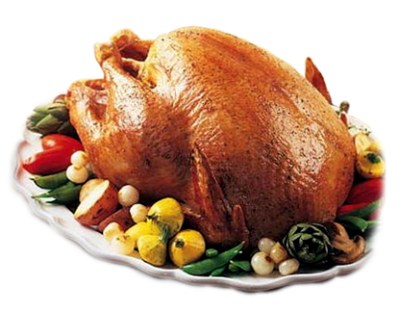
Thanksgiving Turkey

Tomorrow, many of us here in the United States will be eating turkey on Thanksgiving Day. Luckily, many turkeys will survive our holiday and continue to roam around. Here locally in Polk County, Florida, I see a “rafter” of turkeys (name for a group of turkeys – incorrectly called a “gobble” or “flock”) from time to time. Near Bartow I have seen them many times in rafters up to 11 turkeys. Near Circle B Bar Reserve, I have seen other groups up to 8 turkeys.
Wild Turkey (Meleagris gallopavo) by Daves BirdingPix

Wild Turkey (Meleagris gallopavo) by Daves BirdingPix

The domestic turkey is a descendant of the Wild Turkey and features prominently in the menu of the Canadian and U.S. holidays of Thanksgiving and that of Christmas in many countries.

The Turkey is in the Galliformes Order and in the Phasianidae (Pheasants, Fowl & Allies) Family. There are two turkeys – Wild Turkey – Meleagris gallopavo and the Ocellated Turkey – Meleagris ocellata. The Wild is native to North American forrests and the Ocellated is native to the Yucatan Peninsula forrests. They are relatives of the Grouse family. Both Turkeys have a “distinctive fleshy wattle that hangs from the underside of the beak and a fleshy protuberance (flap of skin) that hangs from the top of its beak called a snood.” Turkeys are the heaviest member of the Galliformes order. The females are smaller and duller than the males. The male weighs from 11-24 lbs (5-11 kg) [record=38lbs] and measures 39-49 in (100-125 cm). They also have from 20,000-30,000 feathers.

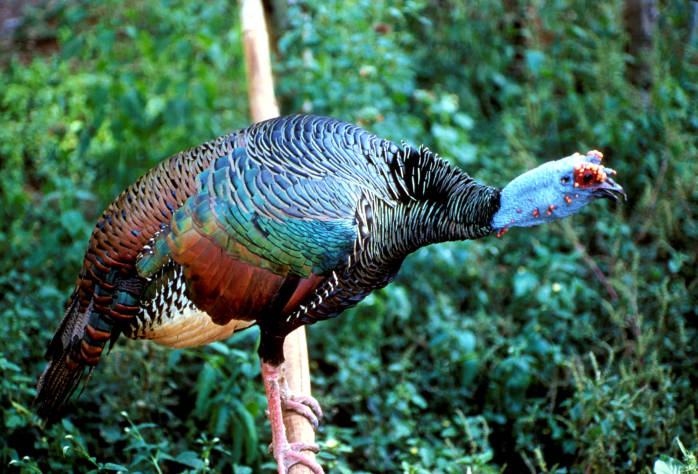
 Ocellated Turkey (Meleagris ocellata) ©USFWS

Ocellated Turkey (Meleagris ocellata) ©USFWS

Congressional Proclamations from CreationWiki.
“The United States Congress set December 18, 1777, as a day of thanksgiving on which the American people “may express the grateful feelings of their hearts and consecrate themselves to the service of their divine benefactor” and on which they might “join the penitent confession of their manifold sins . . . that it may please God, through the merits of Jesus Christ, mercifully to forgive and blot them out of remembrance.” Congress also recommends that Americans petition God “to prosper the means of religion for the promotion and enlargement of that kingdom which consisteth in righteousness, peace and joy in the Holy Ghost.'”[1]
Congress set November 28, 1782, as a day of thanksgiving on which Americans were “to testify their gratitude to God for his goodness, by a cheerful obedience to his laws, and by promoting, each in his station, and by his influence, the practice of true and undefiled religion, which is the great foundation of public prosperity and national happiness.”

Giving thanks always for all things unto God and the Father in the name of our Lord Jesus Christ; (Ephesians 5:20 KJV)

See:
WhatBird’s Wild Turkey
Wikipedia’s Wild Turkey and Ocellated Turkey
Video of an Ocellated Turkey and a Wild Turkey displaying on Internet Bird Collection

Birds of the Bible – Cuckoo II

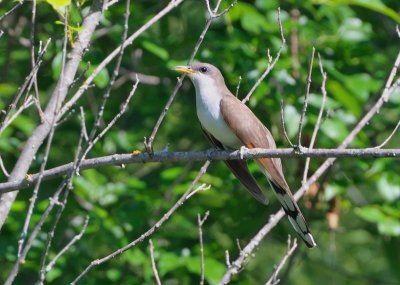
Yellow-billed Cuckoo (Coccyzus americanus) Neal Addy Gallery

And the owl, and the night hawk, and the cuckow, and the hawk after his kind,
(Leviticus 11:16 KJV) and (Deuteronomy 14:15)

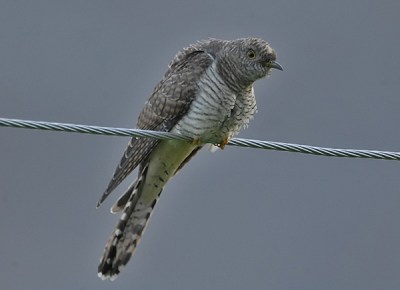
Common Cuckoo (Cuculus canorus) by Nikhil

The verses above are interesting because the cuckow (cuckoo) is taken from the Hebrew word, ” שחף or shachaph” (H7828), and is only used in those two verses. Some translate it as “cuckow” (KJV, Webster), “cuckoo” (YLT), “seamew or sea-mew” (ASV, JPS, RV), “sea-hawk” (BBE), and the rest “sea-gull or sea gull” (Darby, ESV, GW, MKJV, NASB, NKJV). From the Jewish Encyclopedia about the Cuckoo, “The A. V. rendering of (shaḥaf) in Lev. xi. 16 and Deut. xiv. 15. In both places it occurs in the list of unclean birds. This identification, however, is only a conjecture, and there is no certain tradition to support it. The Targum transcribes the Hebrew word. The Septuagint gives λάρος (“sea-gull”). The R. V. rendering is “seamew,” which is accepted by Gesenius, Bertholet, and Driver in their commentaries, and by Baentsch and Lewyson (“Zoologie des Talmuds,” p. 182). The cuckoo, however, is found in Palestine, where it passes the summer. Two varieties are met with—the common and the spotted cuckoo.”

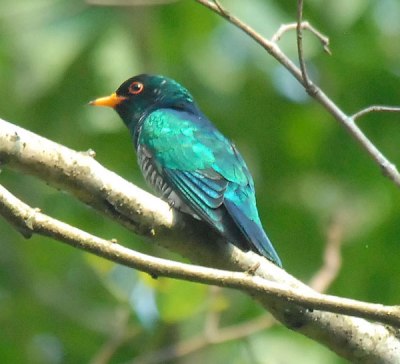
Asian Emerald Cuckoo (Chrysococcyx maculatus) by Nikhil

Asian Emerald Cuckoo (Chrysococcyx maculatus) by Nikhil

Whether it is in the cuckoo or the gull family, it is not clear. What is clear is that it was not to be eaten. For this article, I am going to concentrate on the Cuculidae Family which includes the Cuckoo, Ani, Roadrunner, Coucal, Coua, Malkoha, Koel, Drongo-Cuckoo, and Hawk-Cuckoo. All of these are in the Cuculiformes Order and all were created by the Lord.

“The Cuckoos are medium to large birds some with a long tail; species range in lenght from 6.6-28 in. (16-70 cm). The bill of all species is basically the same, varying only in size: fairly short, strong or stout, and slightly decurved”. (Complete Birds of the World, National Geographical) They are generally medium sized slender birds. The cuckoos feed on insects, insect larvae and a variety of other animals, as well as fruit. Many species are brood parasites, laying their eggs in the nests of other species, but the majority of species raise their own young.

Zygodactyl arrangement of toes – Wikipedia

“One of the most important distinguishing features of the family are the feet, which are zygodactyl, meaning that the two inner toes pointed forward and the two outer backward. There are two basic body forms, arboreal species (like the Common Cuckoo) which are slender and have short tarsi, and terrestrial species (like the roadrunners) which are more heavy set and have long tarsi. Almost all species have long tails which are used for steering in terrestrial species and as a rudder during flight in the arboreal species. The wing shape also varies with lifestyle, with the more migratory species like the Black-billed Cuckoo possessing long narrow wings capable of strong direct flight, and the more terrestrial and sedentary cuckoos like the coucals and malkohas having shorter rounded wings and a more laboured gliding flight.”

Below are photos of some of the birds in the Cuculidae Family in IOC 2009 order.

*

This slideshow requires JavaScript.

*

See Also:
Birds of the Bible – Cuckoo
Cuckoo

Birds of the Bible – Singing Birds

By them the birds of the heavens have their home; They sing among the branches. (Psalms 104:12 NKJV)

Savannah Sparrow

Savannah Sparrow by Ray

Many birds do their singing to either claim their territory, their partner, or sing because of their new young babies. Many just sing because God put a song in their heart.

According to R. A. Torrey’s New Topical Textbook the above verse, birds “Have each their peculiar note or song.” Whereas Nave’s Topical Bible titles the verse as “Songs of, at the break of day.” Referring to a bird singing both refer to Psalms 104:12, Ecclesiastes 12:4 and Song of Solomon 2:12. Not only has God created the different birds, but has given them various voices even amongst their own kind. Warblers, of which there are many kinds, have distinct voices. I have to admit that I enjoy some bird songs much more than others, as you do also.

From the commentaries about Psalm 104:12, here are some of their thoughts:
Albert Barnes’ Notes – “Which sing among the branches – Margin, as in Hebrew, “give a voice.” Their voice is heard – their sweet music – in the foliage of the trees which grow on the margin of the streams and by the fountains. There is scarcely to be found a more beautiful poetic image than this.”
Geneva Bible Translation Notes – “There is no part of the world so barren where most evident signs of God’s blessing do not appear.”
John Gill’s Exposition“By them shall the fowls of the heaven have their habitation,…. Another use of the springs, fountains, and rivers of water; by the sides and on the shores of these, some birds delight to be, and on trees that grow here do they build their nests; and here, having wetted their throats, they sit, and chirp, and sing: to doves, by rivers of water, is the allusion in Son_5:12.”
“Which sing among the branches; of trees that grow by the sides of fountains and rivers; see Eze_17:23. To such birds may saints be compared; being, like them, weak, defenceless, and timorous; liable to be taken in snares, and sometimes wonderfully delivered; as well as given to wanderings and strayings: and to fowls of the heaven, being heaven born souls, and partakers of the heavenly calling. These have their habitation by the fountain of Jacob, by the river of divine love, beside the still waters of the sanctuary; where they sing the songs of Zion, the songs of electing, redeeming, and calling grace.”
Matthew Henry – ” The birds. Some birds, by instinct, make their nests in the bushes near rivers (Psa_104:12): By the springs that run among the hills some of the fowls of heaven have their habitation, which sing among the branches. They sing, according to their capacity, to the honour of their Creator and benefactor, and their singing may shame our silence. Our heavenly Father feeds them (Mat_6:26), and therefore they are easy and cheerful, and take no thought for the morrow. The birds being made to fly above the earth (as we find, Gen_1:20), they make their nests on high, in the tops of trees (Psa_104:17); it should seem as if nature had an eye to this in planting the cedars of Lebanon, that they might be receptacles for the birds. Those that fly heavenward shall not want resting-places.

Oh, give thanks to the LORD! Call upon His name; Make known His deeds among the peoples! Sing to Him, sing psalms to Him; Talk of all His wondrous works! (1 Chronicles 16:8-9 NKJV)

Video of a Willow Warbler singing from a Hawthorn

Last but not least, we have a Song Sparrow singing by Tstormer on YouTube

*