When I Consider! – Snowshoe Rabbit

When I Consider!

When I Consider!

Evidence From Biology – January 2

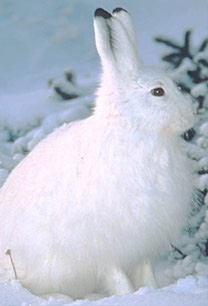
Although the original world was created perfect and without death, our fallen world requires creatures to adapt to difficult situations in order to survive. Even in the current world full of death and competition, the smallest of creatures exhibit amazing capabilities for survival in harsh environments. The female snowshoe rabbit is one such creature. During extreme drought or harsh winters, the stress of finding food triggers a chemical process in the pregnant female that stops and embryo’s growth. Her body then responds to this condition of physical weakness with a process called resorption. In this process, the mother completely reabsorbs the growing embryo. This mechanism allows the rabbit to survive by replenishing her own strength. She can later become pregnant during more favorable conditions.

Snowshoe Hare or Rabbit

Snowshoe Hare or Rabbit

The number of chemical and physical changes required for a rabbit to reverse a pregnancy is mind-boggling. There is no scientific evidence which explains how this remarkable resorption process could have evolved. The creativity of God to have provided for the common rabbit in this way is truly amazing!

The LORD is gracious and righteous; our God is full of compassion. Psalm 116:5

From A Closer Look at the Evidence, by the Kleiss’

(Typed by Phyllis)

Birds of the Bible – Fatted Fowl

Ten fat oxen, and twenty oxen out of the pastures, and an hundred sheep, beside harts, and roebucks, and fallowdeer, and fatted fowl. (1 Kings 4:23 KJV)

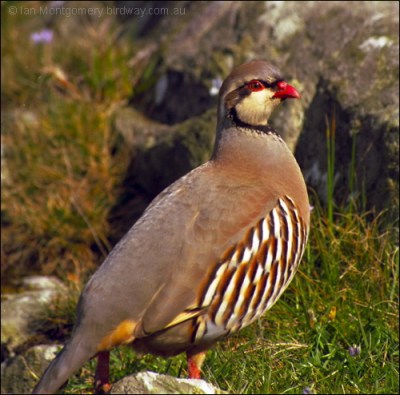
Chukar Partridge (Alectoris chukar) by Ian

While doing a search with my e-Sword Bible program, I came across I Kings 4:23. It is in the midst of the daily provisions needed by Solomon for one day. I had not noticed the “fatted fowl” before and since today is Thanksgiving, it caught my interest. According to what I wrote yesterday about the Thanksgiving Turkey, the Wild Turkey, Ocellated Turkey, and domesticated turkey are from the New World. If Solomon had lived here, I might think that he was eating “turkey” or some fatted goose, duck, or chicken. However, Solomon lived in Israel. So, what was the “fatted fowl”?

According to Strong’s Hebrew and Greek Dictionaries: Fatted = H75 – aw-bas’ – A primitive root; to fodder: – fatted, stalled. Fowl = H1257 – bar-boor’ -By reduplication from H1250; a fowl (as fattened on grain) – fowl. So the fatted fowl was possibly fed grain as was the fatted calf. Here are some of the other translations for the “fatted calf”, fat fowls, geese, poultry, fattened birds, fattened fowl, fatted fowl, and fatted beast of the stalls.

Jamieson, Fausset, and Brown Commentary had this comment. “Solomon’s provision for one day — not for the king’s table only, but for all connected with the court, including, besides the royal establishment, those of his royal consorts, his principal officers, his bodyguards, his foreign visitors, etc. The quantity of fine floor used is estimated at two hundred forty bushels; that of meal or common flour at four hundred eighty. The number of cattle required for consumption, besides poultry and several kinds of game (which were abundant on the mountains) did not exceed in proportion what is needed in other courts of the East.”

Red Junglefowl (Gallus gallus) by NikhilDevasar

Red Junglefowl (Gallus gallus) by NikhilDevasar

John Gill’s commentary said, “and fatted fowl; such as we call capons (a); some Jewish writers (b), because of the likeness of sound in the word here used, take them to be Barbary fowls, or such as were brought from that country: there is a sort of birds called βαρβαροι, which were without a voice, that neither heard men, nor knew their voice (c).

So what was the fatted fowl? It is hard to be exact, but, Scriptures mentions the Quail, Chicken, Hen, and Partridge kinds as being “clean” and thereby they could be eaten. These have also been known to be fattened up. The Barbary fowl according to Wikipedia and others is a Barbary Partridge which looks very much like our Chukar here in North America. The partridge family brings us back to the Turkey, which is in that family. One thing we know for certain. God created the fowls (birds) and we are permitted to eat some of them. (Genesis 1:20 and Genesis 9:2,3).

Being enriched in every thing to all bountifulness, which causeth through us thanksgiving to God. (2 Corinthians 9:11 KJV)

We hope you have a very happy Thanksgiving Day and that you spend time thanking God for all His blessings.

Barbary Partridge video by Josep del Hoyo

Thanksgiving Turkey

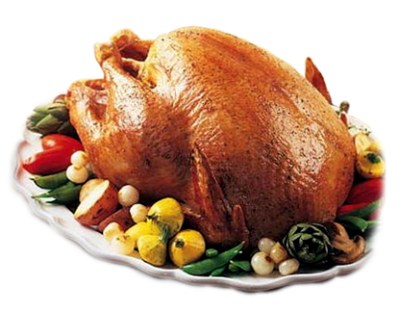
Tomorrow, many of us here in the United States will be eating turkey on Thanksgiving Day. Luckily, many turkeys will survive our holiday and continue to roam around. Here locally in Polk County, Florida, I see a “rafter” of turkeys (name for a group of turkeys – incorrectly called a “gobble” or “flock”) from time to time. Near Bartow I have seen them many times in rafters up to 11 turkeys. Near Circle B Bar Reserve, I have seen other groups up to 8 turkeys.

Wild Turkey (Meleagris gallopavo) by Daves BirdingPix

Wild Turkey (Meleagris gallopavo) by Daves BirdingPix

The domestic turkey is a descendant of the Wild Turkey and features prominently in the menu of the Canadian and U.S. holidays of Thanksgiving and that of Christmas in many countries.

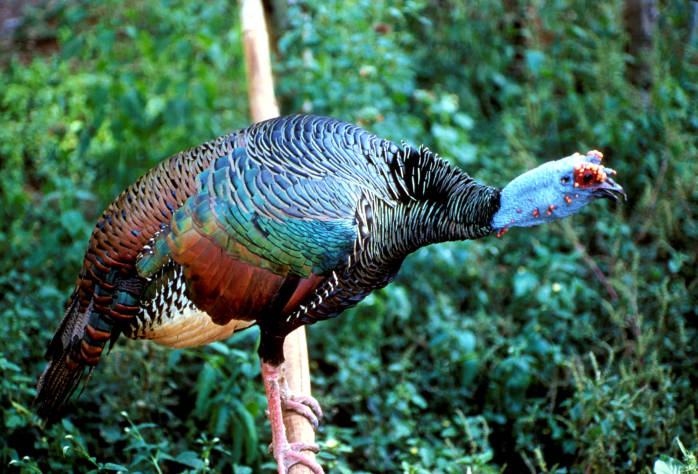
The Turkey is in the Galliformes Order and in the Phasianidae (Pheasants, Fowl & Allies) Family. There are two turkeys – Wild Turkey – Meleagris gallopavo and the Ocellated Turkey – Meleagris ocellata. The Wild is native to North American forrests and the Ocellated is native to the Yucatan Peninsula forrests. They are relatives of the Grouse family. Both Turkeys have a “distinctive fleshy wattle that hangs from the underside of the beak and a fleshy protuberance (flap of skin) that hangs from the top of its beak called a snood.” Turkeys are the heaviest member of the Galliformes order. The females are smaller and duller than the males. The male weighs from 11-24 lbs (5-11 kg) [record=38lbs] and measures 39-49 in (100-125 cm). They also have from 20,000-30,000 feathers.

 Ocellated Turkey (Meleagris ocellata) ©USFWS

Ocellated Turkey (Meleagris ocellata) ©USFWS

Congressional Proclamations from CreationWiki.
“The United States Congress set December 18, 1777, as a day of thanksgiving on which the American people “may express the grateful feelings of their hearts and consecrate themselves to the service of their divine benefactor” and on which they might “join the penitent confession of their manifold sins . . . that it may please God, through the merits of Jesus Christ, mercifully to forgive and blot them out of remembrance.” Congress also recommends that Americans petition God “to prosper the means of religion for the promotion and enlargement of that kingdom which consisteth in righteousness, peace and joy in the Holy Ghost.'”[1]
Congress set November 28, 1782, as a day of thanksgiving on which Americans were “to testify their gratitude to God for his goodness, by a cheerful obedience to his laws, and by promoting, each in his station, and by his influence, the practice of true and undefiled religion, which is the great foundation of public prosperity and national happiness.”

Giving thanks always for all things unto God and the Father in the name of our Lord Jesus Christ; (Ephesians 5:20 KJV)

See:
WhatBird’s Wild Turkey
Wikipedia’s Wild Turkey and Ocellated Turkey
Video of an Ocellated Turkey and a Wild Turkey displaying on Internet Bird Collection

Birds of the Bible – Cuckoo II

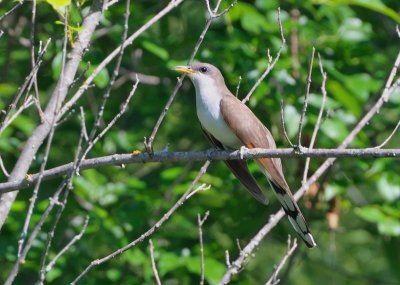
Yellow-billed Cuckoo (Coccyzus americanus) Neal Addy Gallery

And the owl, and the night hawk, and the cuckow, and the hawk after his kind,
(Leviticus 11:16 KJV) and (Deuteronomy 14:15)

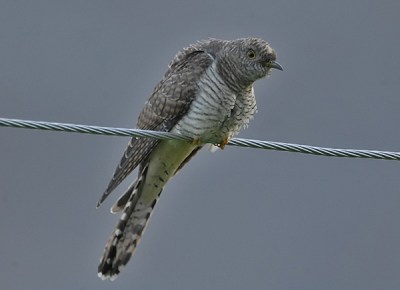
Common Cuckoo (Cuculus canorus) by Nikhil

The verses above are interesting because the cuckow (cuckoo) is taken from the Hebrew word, ” שחף or shachaph” (H7828), and is only used in those two verses. Some translate it as “cuckow” (KJV, Webster), “cuckoo” (YLT), “seamew or sea-mew” (ASV, JPS, RV), “sea-hawk” (BBE), and the rest “sea-gull or sea gull” (Darby, ESV, GW, MKJV, NASB, NKJV). From the Jewish Encyclopedia about the Cuckoo, “The A. V. rendering of (shaḥaf) in Lev. xi. 16 and Deut. xiv. 15. In both places it occurs in the list of unclean birds. This identification, however, is only a conjecture, and there is no certain tradition to support it. The Targum transcribes the Hebrew word. The Septuagint gives λάρος (“sea-gull”). The R. V. rendering is “seamew,” which is accepted by Gesenius, Bertholet, and Driver in their commentaries, and by Baentsch and Lewyson (“Zoologie des Talmuds,” p. 182). The cuckoo, however, is found in Palestine, where it passes the summer. Two varieties are met with—the common and the spotted cuckoo.”

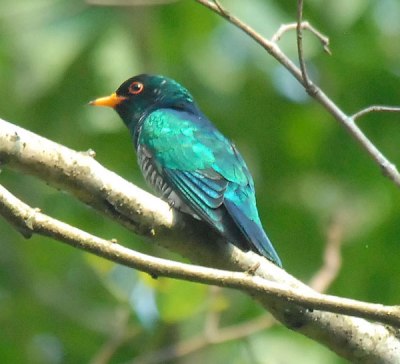
Asian Emerald Cuckoo (Chrysococcyx maculatus) by Nikhil

Asian Emerald Cuckoo (Chrysococcyx maculatus) by Nikhil

Whether it is in the cuckoo or the gull family, it is not clear. What is clear is that it was not to be eaten. For this article, I am going to concentrate on the Cuculidae Family which includes the Cuckoo, Ani, Roadrunner, Coucal, Coua, Malkoha, Koel, Drongo-Cuckoo, and Hawk-Cuckoo. All of these are in the Cuculiformes Order and all were created by the Lord.

“The Cuckoos are medium to large birds some with a long tail; species range in lenght from 6.6-28 in. (16-70 cm). The bill of all species is basically the same, varying only in size: fairly short, strong or stout, and slightly decurved”. (Complete Birds of the World, National Geographical) They are generally medium sized slender birds. The cuckoos feed on insects, insect larvae and a variety of other animals, as well as fruit. Many species are brood parasites, laying their eggs in the nests of other species, but the majority of species raise their own young.

Zygodactyl arrangement of toes – Wikipedia

“One of the most important distinguishing features of the family are the feet, which are zygodactyl, meaning that the two inner toes pointed forward and the two outer backward. There are two basic body forms, arboreal species (like the Common Cuckoo) which are slender and have short tarsi, and terrestrial species (like the roadrunners) which are more heavy set and have long tarsi. Almost all species have long tails which are used for steering in terrestrial species and as a rudder during flight in the arboreal species. The wing shape also varies with lifestyle, with the more migratory species like the Black-billed Cuckoo possessing long narrow wings capable of strong direct flight, and the more terrestrial and sedentary cuckoos like the coucals and malkohas having shorter rounded wings and a more laboured gliding flight.”

Below are photos of some of the birds in the Cuculidae Family in IOC 2009 order.

*

This slideshow requires JavaScript.

*

See Also:
Birds of the Bible – Cuckoo
Cuckoo

Birds of the Bible – Singing Birds

By them the birds of the heavens have their home; They sing among the branches. (Psalms 104:12 NKJV)

Savannah Sparrow

Savannah Sparrow by Ray

Many birds do their singing to either claim their territory, their partner, or sing because of their new young babies. Many just sing because God put a song in their heart.

According to R. A. Torrey’s New Topical Textbook the above verse, birds “Have each their peculiar note or song.” Whereas Nave’s Topical Bible titles the verse as “Songs of, at the break of day.” Referring to a bird singing both refer to Psalms 104:12, Ecclesiastes 12:4 and Song of Solomon 2:12. Not only has God created the different birds, but has given them various voices even amongst their own kind. Warblers, of which there are many kinds, have distinct voices. I have to admit that I enjoy some bird songs much more than others, as you do also.

From the commentaries about Psalm 104:12, here are some of their thoughts:
Albert Barnes’ Notes – “Which sing among the branches – Margin, as in Hebrew, “give a voice.” Their voice is heard – their sweet music – in the foliage of the trees which grow on the margin of the streams and by the fountains. There is scarcely to be found a more beautiful poetic image than this.”
Geneva Bible Translation Notes – “There is no part of the world so barren where most evident signs of God’s blessing do not appear.”
John Gill’s Exposition“By them shall the fowls of the heaven have their habitation,…. Another use of the springs, fountains, and rivers of water; by the sides and on the shores of these, some birds delight to be, and on trees that grow here do they build their nests; and here, having wetted their throats, they sit, and chirp, and sing: to doves, by rivers of water, is the allusion in Son_5:12.”
“Which sing among the branches; of trees that grow by the sides of fountains and rivers; see Eze_17:23. To such birds may saints be compared; being, like them, weak, defenceless, and timorous; liable to be taken in snares, and sometimes wonderfully delivered; as well as given to wanderings and strayings: and to fowls of the heaven, being heaven born souls, and partakers of the heavenly calling. These have their habitation by the fountain of Jacob, by the river of divine love, beside the still waters of the sanctuary; where they sing the songs of Zion, the songs of electing, redeeming, and calling grace.”
Matthew Henry – ” The birds. Some birds, by instinct, make their nests in the bushes near rivers (Psa_104:12): By the springs that run among the hills some of the fowls of heaven have their habitation, which sing among the branches. They sing, according to their capacity, to the honour of their Creator and benefactor, and their singing may shame our silence. Our heavenly Father feeds them (Mat_6:26), and therefore they are easy and cheerful, and take no thought for the morrow. The birds being made to fly above the earth (as we find, Gen_1:20), they make their nests on high, in the tops of trees (Psa_104:17); it should seem as if nature had an eye to this in planting the cedars of Lebanon, that they might be receptacles for the birds. Those that fly heavenward shall not want resting-places.

Oh, give thanks to the LORD! Call upon His name; Make known His deeds among the peoples! Sing to Him, sing psalms to Him; Talk of all His wondrous works! (1 Chronicles 16:8-9 NKJV)

Video of a Willow Warbler singing from a Hawthorn

Last but not least, we have a Song Sparrow singing by Tstormer on YouTube

*

When I Consider! – Dinosaur and Bee DNA

When I Consider!

When I Consider!

Evidence From Microbiology – October 17

Science News, Nov. 18, 1994, reported that dinosaur DNA had been identified within unfossilized dinosaur bones found 2,000 feet below the surface of the earth in a Utah coal mine. The DNA did not match any known creature currently alive on Earth. The find was disputed on the grounds that dinosaur DNA should not have survived the supposed 80 million years. The DNA fragments also had no similarity to bird DNA (from whom the dinosaurs supposedly evolved). Therefore, this evidence has been largely ignored.

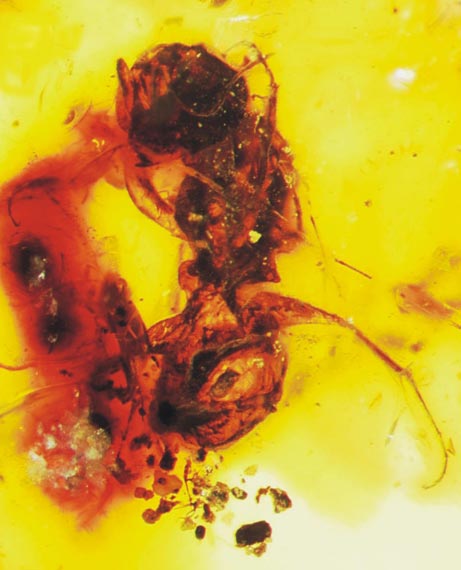
Oldest Bee (in Amber)

Oldest Bee (in Amber)

Science News, May 20, 1995, reported that scientists have extracted and revived live bacteria from the stomach of a bee which was encased in amber “over 25 million years ago.” Although the work was done with the greatest of efforts to prevent any “modern” bacteria from contaminating the results, many biochemists refute the find because, “DNA spontaneously degenerates to short fragments over a period of several thousand years at moderate temperatures.” Thus, this work has also been ignored because it does not fit the old-earth model.

These are just two examples showing how the assumption of evolution hinders the progress of knowledge. Evidence which does not fit into the “evolutionary mold” is ignored on the basis that it shows evolution—with its requirement of an ancient earth-to be wrong. The evidence fits perfectly into the biblical model of Earth history with a relatively recent worldwide burial of organisms. DNA fragments can still be found, because the earth is relatively young.

World By Design Newsletter,
Vol 2, no 6; Vol 3, no.3

The fear of the Lord is the beginning of wisdom and the knowledge of the Holy One is understanding.  Proverbs 9:10

From A Closer Look at the Evidence, by Richard and Tina Kleiss


Some Interesting Links to Articles:
Dinosaur DNA Research: Is the tale wagging the evidence?
Dinosaur Protein Sequences and the Dino-to-Bird Model
Common DNA Sequences: Evidence of Evolution or Efficient Design?
Evolution Wilts in Light of Flowering Plants
Ancient Amber Discovery Contradicts Geologic Timescale


Birds of the Bible – Wayside Sower Birds

Brandt's Mountain Finch (Leucosticte brandti) by Nikhil

By the Wayside – Brandt’s Mountain Finch (Leucosticte brandti) by Nikhil

Have your ever listened to someone talking, but you really didn’t hear them? Maybe your mind was on something else. Have you ever listened to someone, you were hearing them, but you just didn’t get what they were saying? It just didn’t make sense to you. Well, that is where our Bird of the Bible this week gets its food.

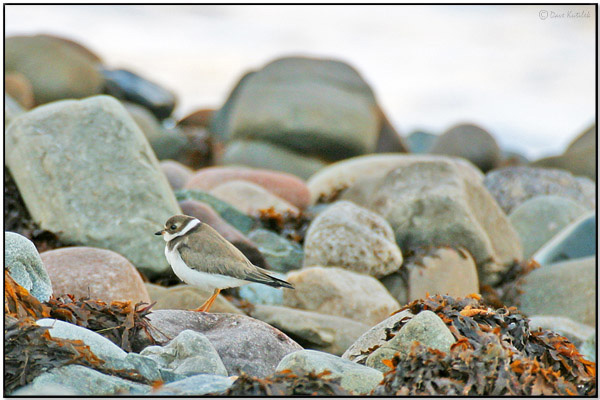
Among rocks - Piping Plover

Among rocks – Piping Plover (Charadrius melodus)

I can see you now trying to find these “Wayside Sower Birds” in your latest, up to date, birding handbook. No, these birds are mentioned in the Bible, in the Parable of the Sower. These birds are not named specifically, so it could be any kind of bird that likes to eat along the wayside of a planted field. Let’s look at what is being said about them.

Then He spoke many things to them in parables, saying: “Behold, a sower went out to sow. And as he sowed, some seed fell by the wayside; and the birds came and devoured them. (Matthew 13:3-4 NKJV)
Listen! Behold, a sower went out to sow. And it happened, as he sowed, that some seed fell by the wayside; and the birds of the air came and devoured it. (Mark 4:3-4 NKJV)
A sower went out to sow his seed. And as he sowed, some fell by the wayside; and it was trampled down, and the birds of the air devoured it.  (Luke 8:5 NKJV)

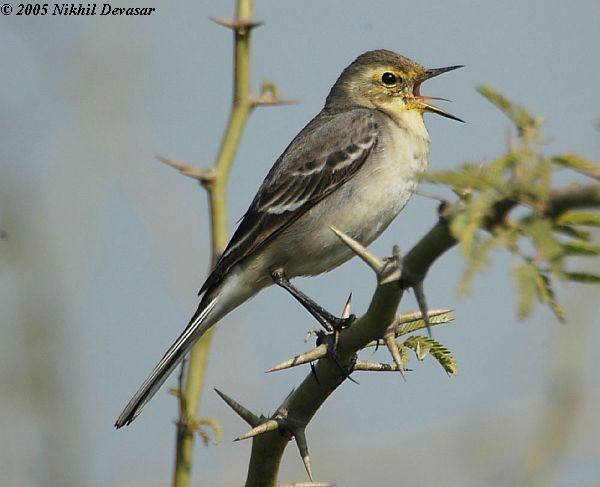
 Citrine Wagtail (Motacilla citreola) by Nikhil

Among thorns – Citrine Wagtail (Motacilla citreola) by Nikhil

The parable goes on and tells of the seed landing on rocks, in thorn bushes and also on good ground. The Lord later explained it to His disciples as:

Therefore hear the parable of the sower: (19) When anyone hears the word of the kingdom, and does not understand it, then the wicked one comes and snatches away what was sown in his heart. This is he who received seed by the wayside. (20) But he who received the seed on stony places, this is he who hears the word and immediately receives it with joy; (21) yet he has no root in himself, but endures only for a while. For when tribulation or persecution arises because of the word, immediately he stumbles. (22) Now he who received seed among the thorns is he who hears the word, and the cares of this world and the deceitfulness of riches choke the word, and he becomes unfruitful. (23) But he who received seed on the good ground is he who hears the word and understands it, who indeed bears fruit and produces: some a hundredfold, some sixty, some thirty. (Matthew 13:18-23 NKJV)

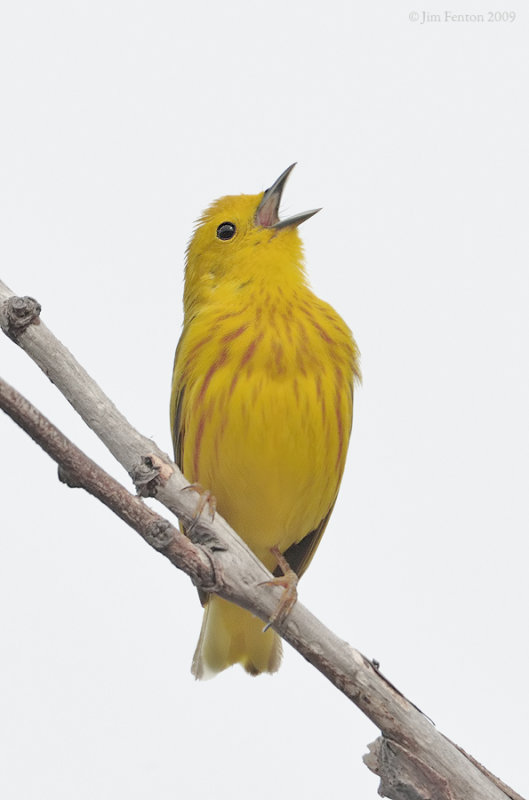
Good ground - American Yellow Warbler (Dendroica aestiva) by J Fenton

Good ground – American Yellow Warbler (Dendroica aestiva) by J Fenton

May we all receive the seed (Word of God) on good ground and not be deaf to the truth of God, letting what you hear fall by the wayside.

Gospel Message

Wordless Birds

*

*

When I Consider! – Complexity

When I Consider!

When I Consider!

Evidence From Biology – October 15

The more we learn about life, the greater the complexity we find. There were no sophisticated microscopes 150 years ago. Consequently, the leap of complexity from single-to-multiple-call organisms was greatly underestimated. The development of the computer has given us an even greater appreciation for the enormous complexity, extreme miniaturization, and vast storage capabilities of the brain. Consider a few other giant leaps that evolutionists must accept in order to hold onto their faith in evolution:

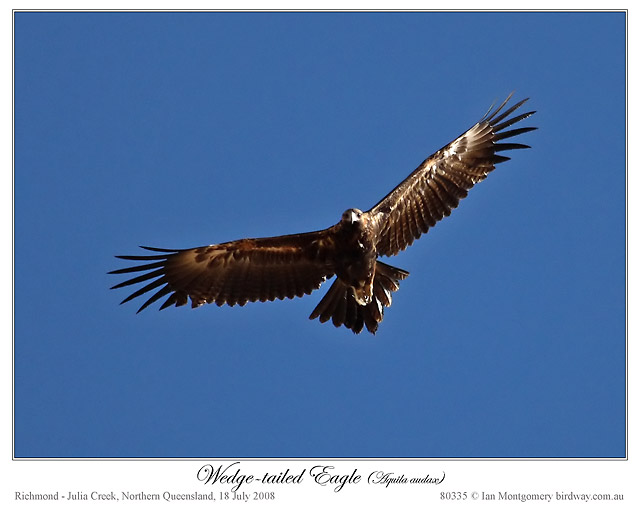
Wedge-tailed Eagles (Aquila audax) by Ian

Wedge-tailed Eagles (Aquila audax) by Ian

1. Flight somehow evolved on at least four different occasions (birds, insects, reptiles, mammals).

2. Photosynthesis somehow developed.

3. Cold-blooded animals somehow turned into warm-blooded animals.

4. Floating marine plants somehow changed into complex plants with roots, stems, and leaf systems.

5. Placental animals (the off-spring develop inside of their mother) somehow turned into marsupial animals (their off-spring develop within a pouch).

6. Egg-laying animals somehow developed the ability to give live births.

7. Insects somehow learned to totally rearrange themselves and change form in a process called metamorphosis (such as a caterpillar transforming into a butterfly).

8. Land mammals and reptiles such as whales, seals, dolphins, ichthyosaurs, and plesiosaurs somehow crawled back into the sea and developed all of the specialized organs needed for sea survival.

In the Beginning, 7th ED., p.17

Blessed is he…whose hope is in the LORD his God, the Maker of heaven and earth, the sea and everything in them… (Psalm 146:5-6)

(Article typed by Phyllis)

See the following articles at Creation Moments:

25 Reasons to Doubt the Theory of Evolution
The Miracle of Photosynthesis
The Insect with Two Brains
The God of Science

Birds of the Bible – More Value

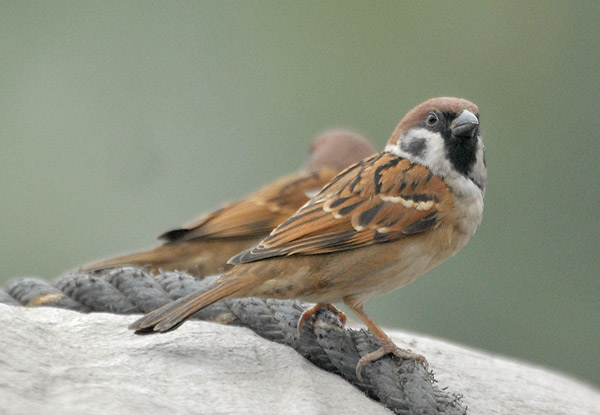
Eurasian Tree Sparrow (Passer montanus) by Nikhil

Eurasian Tree Sparrow (Passer montanus) by Nikhil

We have mentioned the sparrow many times in the blog and about how God takes care of them, as in the following articles:

Birds of the Bible – God’s Care for BirdsSparrow IISparrow I and Eye of the Beholder – House Sparrows

This time, I would like point out the part about being of “more value.” In Matthew 10:29-33, the two sparrows are mentioned as being sold for a farthing, a very small amount. According to A. Barnes’ Notes, “The argument is, that if He takes care of birds of the least value, if He regards so small a thing as the hair of the head, and numbers it, He will certainly protect and provide for you. You need not, therefore, fear what man can do to you.”

Are not two sparrows sold for a farthing? and one of them shall not fall on the ground without your Father. But the very hairs of your head are all numbered. Fear ye not therefore, ye are of more value than many sparrows. Whosoever therefore shall confess me before men, him will I confess also before my Father which is in heaven. But whosoever shall deny me before men, him will I also deny before my Father which is in heaven.(Matthew 10:29-33 KJV)

Northern Raven (Corvus corax) by Ray

Northern Raven (Corvus corax) by Ray

Also: “Indeed, the very hairs of your head are all numbered. Do not fear; you are more valuable than many sparrows.” (Luke 12:7 NASB);  “Consider the ravens, for they neither sow nor reap, which have neither storehouse nor barn; and God feeds them. Of how much more value are you than the birds?” (Luke 12:24 NKJV) and He said to them, “What man is there among you who has a sheep, and if it falls into a pit on the Sabbath, will he not take hold of it and lift it out? “How much more valuable then is a man than a sheep! So then, it is lawful to do good on the Sabbath.” (Matthew 12:11-12 NASB)

We see then that “man” has more value than sparrows, ravens, birds, and sheep just from these few verses. Yet, each of them are greatly valued by their creator. Where else are things of value mentioned in Scripture?

David had the opportunity to kill King Saul, but he valued the life of the king more.

May the LORD repay every man for his righteousness and his faithfulness; for the LORD delivered you into my hand today, but I would not stretch out my hand against the LORD’s anointed. And indeed, as your life was valued much this day in my eyes, so let my life be valued much in the eyes of the LORD, and let Him deliver me out of all tribulation.” (1 Samuel 26:23-24 NKJV)

Wisdom and understanding have great value and Job mentions it in Job 28.

But where can wisdom be found? And where is the place of understanding? “Man does not know its value, Nor is it found in the land of the living. (Job 28:12-13 NASB)

Where then does wisdom come from? And where is the place of understanding? “Thus it is hidden from the eyes of all living And concealed from the birds of the sky. (Job 28:20-21 NASB)

Zechariah in his prophecy of the future, tells about the price of Christ the Lord as 30 shekels (pieces) of silver.

Then the LORD said to me, “Throw it to the potter, that magnificent price at which I was valued by them.” So I took the thirty shekels of silver and threw them to the potter in the house of the LORD. (Zechariah 11:13 NASB)

We are of great value to the Lord, so much so, that He gave His Life for our salvation. If you know the Lord as Savior, then, that “knowing Christ Jesus,” has tremendous value.

More than that, I count all things to be loss in view of the surpassing value of knowing Christ Jesus my Lord, for whom I have suffered the loss of all things, and count them but rubbish so that I may gain Christ, (Philippians 3:8 NASB)

We trust you do know the Lord and realize how much He loves you and cares for you. Much more than the critters, whom he cares for tremendously.

See also Gospel Message

Birdwatching at Circle B Bar Reserve – October

My "Zip" (battery operated)

My "Zip" (battery operated)

Dan and I have been out to the Circle B twice in the last few weeks. We were there on the 14th and again this last Saturday, the 24th. The birds are definitely getting back down here. What an increase in Wood Storks, several hundreds, and the Roseate Spoonbill started arriving this last week, according to one of the volunteers.

The visit on the 14th, which was briefly mentioned in Stork II, was the first time I tried out my new “Zip”. As has been mentioned before, I have a slight handicap and this is a great assist. Anyway, after unloading it, off we went for a nice 73°F birdwatching adventure on a clear day. Just outside there were about 20 Black and Turkey Vultures hanging out at the brook, which is part of the reserve. Overhead a Great Egret, Osprey and some Boat-tailed Grackles flew by. The Blue Jays, Mourning Doves, Red-Bellied, Pileated Woodpecker, Eastern Phoebe,  and the elusive, but calling Carolina Wren greeted us on the way to the marsh. Once we got there I was amazed at all the Wood Storks and the others birds that had arrived.
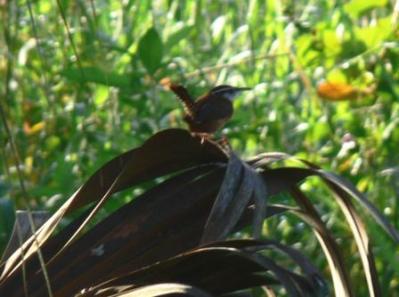
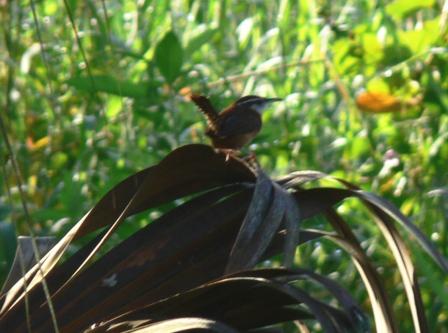
Carolina Wren - Finally

Carolina Wren - Finally

Here is what was spotted (or heard) then in order I spotted them: Turkey and Black Vultures, Blue Jay, Fish Crows, White Egrets, Carolina Wren, Mourning Doves, Red-bellied and Pileated Woodpecker, Eastern Phoebe, Wood Storks – lots, Great Blue Herons, Little Blue Herons, Tufted Titmouse, Green Heron, Downy Woodpecker, Glossy and White Ibises, Tricolored Herons, Moorhens, Mallards, Ospreys, 2 Spoonbills, Double-crested Cormorants, Anhingas, Black-bellied Whistling Ducks-lots, Great Egret, Cardinals, Red-winged Blackbird, Red-Shouldered Hawk, Cattle Egrets, Belted Kingfisher (finally got sort of a picture of it), Northern Mockingbird, Grey Catbird,  Blue-grey Gnatcatchers, Northern Harrier, Yellow-rumped Warbler, Palm Warbler, and the Common and Boat-tailed Grackles. Not a bad 2 hours of birding. A total of 40 identified.

On Saturday, we birded for about an hour before we met a group of about 10-12 AWANA boys from our church. We had been asked to join them as they went birdwatching. We figured we would get pictures before they came, as youngster can be enthusiastic and might spook a few birds. Actually, they did right well and got to see lots of birds. I got to go with them further than normal because my “Zip” was with me.
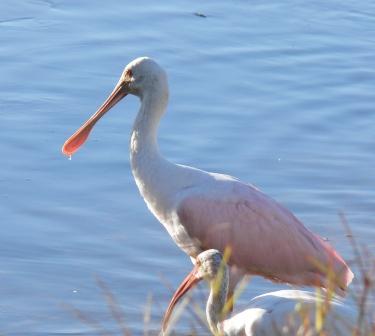
Roseate Spoonbill

Roseate Spoonbill

What we saw were about the same birds as before with the following changes. I finally got a picture of that elusive Carolina Wren. I have heard it for months, but never got a look, let alone a photo. It’s not that good, but it’s a prize for me. Up in a tree we spotted what we thought was a Hawk, but when looking at pictures, realized it was the juvenile Bald Eagle. There were a lot more Roseate Spoonbills (20-30), Tufted Titmouse, Sandhill Cranes, Blue-winged Teals have arrived, Snowy Ibises, Pied-Billed Grebes, possible Mottled Ducks, Purple Gallinules, Bald Eagles (a juvenile and adults-3 in one tree), and more unknowns. So, in the two trips the total is 48, not counting the unknowns. I almost forgot the hugh alligator. Someone said about 14 feet long.

Does the eagle mount up at your command, And make its nest on high? From there it spies out the prey; Its eyes observe from afar. (Job 39:27,29 NKJV)


I haven’t added Dan’s photos yet.

*

This slideshow requires JavaScript.

*

For other birdwatching trips to the Circle B Bar Reserve

*

When I Consider! – Skunk Cabbage

When I Consider!

When I Consider!

Evidence From Botany – August 16

The skunk cabbage is a uniquely designed plant. It generates enough heat to melt the snow around itself so that it can begin to grow and flower. Even if the air temperature drops as low as 10oF, the skunk cabbage produces the heat it needs to maintain a temperature of between 72°F and 74°F. However, if the temperature stays extremely low for more than 24 hours, the hooded blower exhausts its heating ability and the flower dies. The skunk cabbage then prepares more flowers and repeats the process.

Western Skunk Cabbage from Wikipedia

Western Skunk Cabbage from Wikipedia

This amazing plant also has a built-in thermostat. If the flower becomes too cold more heat is summoned. If the flower becomes too warm, the heat is withdrawn. Because of its amazing abilities, the skunk cabbage is one of the first plants to break through the snow in early spring. Normally, honeybees are unable to fly in temperatures below 65°F. However, when the skunk cabbages are in bloom, honeybees can fly when temperatures drop as low as 45°F. Inside the flower’s hood, the bees warm up enough to travel to the next cabbage flower. In cold weather the bees fly from one skunk cabbage to another, warming themselves as they travel back to their hive. Could this intricately designed flower be the result of random-chance mutational changes?

Character Sketches, Vol.III, P.209-212

I will ponder all your work, and meditate on your mighty deeds. Your way, O God, is holy. What god is great like our God? (Psalms 77:12-13 ESV)

(Article typed by Phyllis)

Very interesting article from The Nature Institute, Skunk Cabbage (Symplocarpus foetidus)
Skunk Cabbage by Fairfax County Public Schools

Birds in Hymns – Go Out, My Heart, and Seek Delight

Words: Paul Gerhardt (1607-1676)

Sing to Him, sing psalms to Him; Talk of all His wondrous works! Glory in His holy name; Let the hearts of those rejoice who seek the LORD! (Psalms 105:2-3 NKJV)

An alternative version

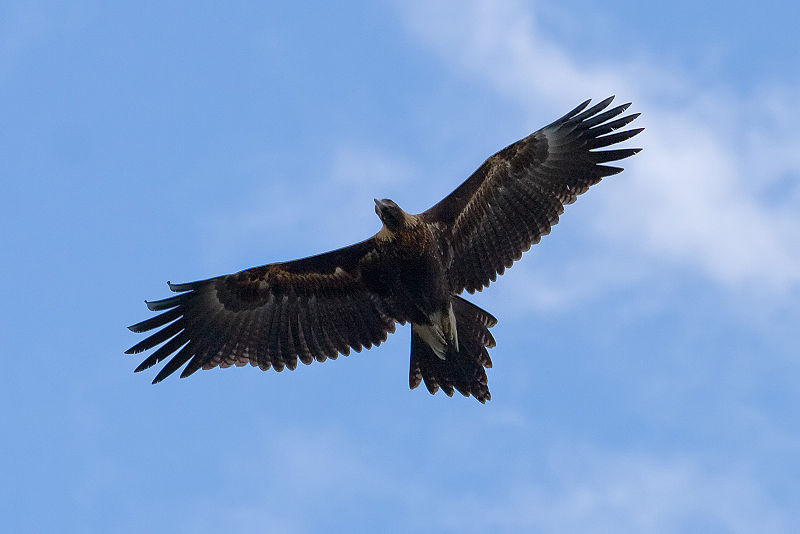
Wedge-tailed Eagle (Aquila audax) ©Wikipedia

Wedge-tailed Eagle (Aquila audax) ©Wikipedia

Go out, my heart, and seek delight
in golden sunshine, summer bright;
rejoice in God’s gifts daily.
See all of nature’s bright display;
it clothes itself in fine array
for you and me so gaily
for you and me so gaily.

The trees with foliage green are blest,
the earth her dusty face has dressed
in herbage young and tender.
The desert rose and wattle fair
are clothed in raiment far more rare
than Solomon in splendour
than Solomon in splendour.

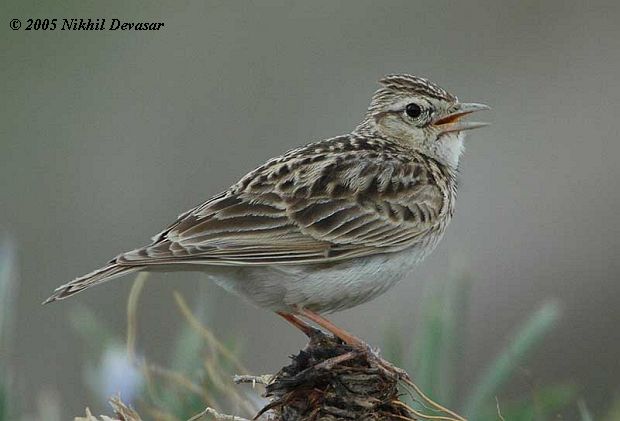
Oriental Skylark (Alauda gulgula) by Nikhil Devasar

Oriental Skylark (Alauda gulgula) by Nikhil Devasar

The wedge-tailed eagle in the sky
surveys the world with questing eye,
in lofty circles winging.
The roaring lark with trilling song
sets mountain gorge and billabong
and all the bushland ringing
and all the bushland ringing.

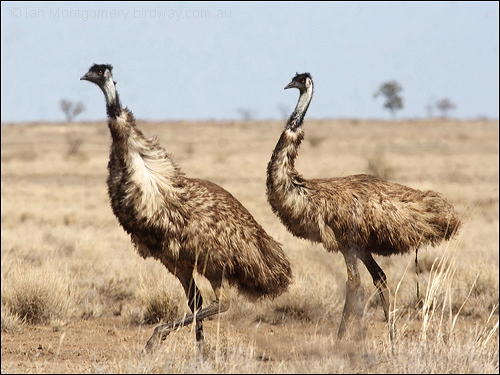
The strutting emu tends his chicks,
the bower-bird gathers twigs and sticks
to arch his glittering treasure.
The flute-call of the butcher-bird
from towering gum tree may be heard
to voice his morning pleasure
to voice his morning pleasure.

Strutting Emu (Dromaius novaehollandiae) by Ian Struting

Strutting Emu (Dromaius novaehollandiae) by Ian Struting

From rock-o’ershaded, rippling pool
the waters trickle, soft and cool,
among the ferns and creepers.
While dragon-flies dart here and there,
cicadas’ droning fills the air
and stirs all insect-sleepers
and stirs all insect-sleepers.

The swarming, busy, tireless bees
in zig-zag flight on summer breeze
seek honey-dew so tender,
as scented shrubs and sugared flowers
lift up their petalled heads for hours
their sweetness to surrender
their sweetness to surrender.

Great Bowerbird (Chlamydera nuchalis) by Ian

Great Bowerbird (Chlamydera nuchalis) by Ian

The desert quandong, orange, plum,
the passion-fruit to ripeness come;
they urge our glad thanksgiving
to him who all these gifts bestows,
and from whom such abandance flows
to gratify our living
to gratify our living.

I cannot, mighty God, be still,
for all your mighty actions fill
my being with elation.
I too must sing when all things sing,
let praises to the Highest ring
which voice my adoration
which voice my adoration.

What a delightful and fantastic hymn. Paul Gerhardt has several more that will be posted later. The last verse is how I also feel about God’s mighty creation and His Love for the critters and especially us.

I cannot, mighty God, be still,
for all your mighty actions fill
my being with elation.
I too must sing when all things sing,
let praises to the Highest ring
which voice my adoration


Most information from The Cyber Hymnal

See ~ Wordless Birds

More ~ Birds in Hymns

*