And the angel said unto them, Fear not: for, behold, I bring you good tidings of great joy, which shall be to all people. (Luke 2:10 KJV)
Words: Birdie Bell (1877-?), 1886.
Music: Boxelder, Asa Hull, 1886
Birds in Christmas Hymns
Welcome To Christmas
Beautiful anthem the first Christmas wakened
Ages ago over Bethlehem’s plain;
Greeting the shepherds with magical accents,
Bringing deliverance from sin’s deep stain.
Refrain
Ring out a welcome to Christmas’ fair morning, Herald its coming, each fresh, youthful voice; Ring out a welcome, a bright cheery welcome! Christmas is dawning, let earth rejoice!
Peerless the singers, and wondrous their singing;
Glorious theme: Lo, a Savior is born!
Royal Deliverer, His praises are ringing,
Hailing with joy the auspicious morn!
Refrain
Ring out a welcome to Christmas’ fair morning, Herald its coming, each fresh, youthful voice; Ring out a welcome, a bright cheery welcome! Christmas is dawning, let earth rejoice!
Shall we not join in the loud, swelling chorus
Sending the message from mountain to sea;
Let fairest Peace spread her dove-like wings o’er us,
Making our hearts His fit home to be.
Refrain
Ring out a welcome to Christmas’ fair morning, Herald its coming, each fresh, youthful voice; Ring out a welcome, a bright cheery welcome! Christmas is dawning, let earth rejoice!
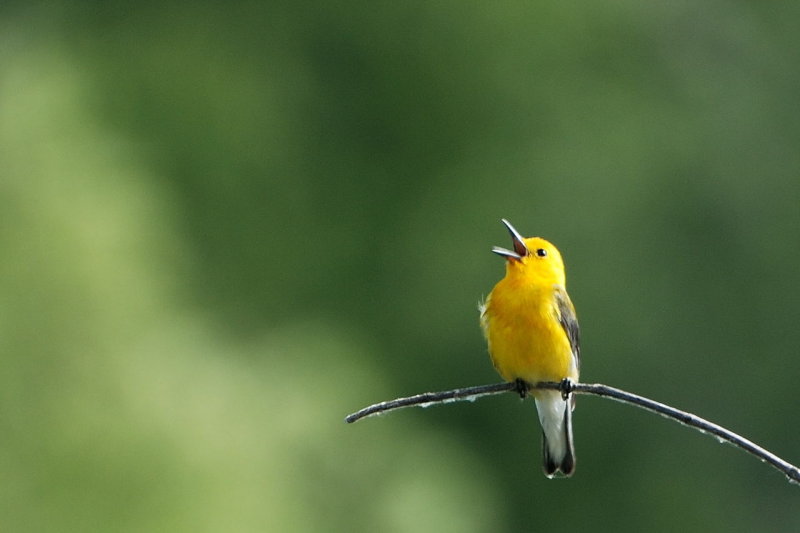
Blue-naped Chlorophonia (Chlorophonia cyanea) by Dario Sanches
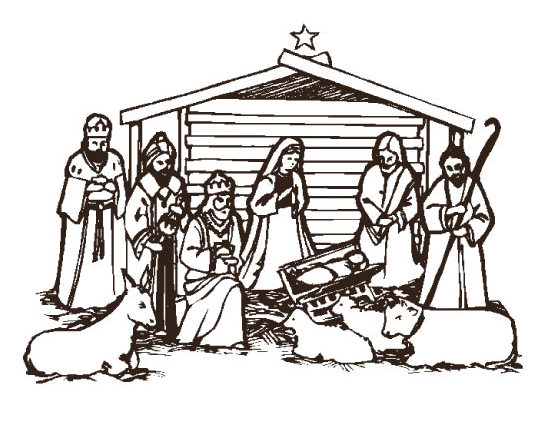
And she brought forth her firstborn son, and wrapped him in swaddling clothes, and laid him in a manger; because there was no room for them in the inn. And there were in the same country shepherds abiding in the field, keeping watch over their flock by night. And, lo, the angel of the Lord came upon them, and the glory of the Lord shone round about them: and they were sore afraid. And the angel said unto them, Fear not: for, behold, I bring you good tidings of great joy, which shall be to all people. For unto you is born this day in the city of David a Saviour, which is Christ the Lord. (Luke 2:7-11 KJV)
Tomorrow, December 15th, a new mini series will begin. From the 15th until Christmas Day, a different Birds in Christmas Hymns will be posted daily. All of these are in the public domain, so they will be some of the older hymns. (There will be other articles added also.)
It is amazing how many times when you are singing that “birds” appear in songs and hymns. These all relate to the birth of Jesus and the nativity. As Christians, this is one of our greatest holidays, with only Easter and the resurrection of our Savior as the Greatest. Without the virgin born birth of the Lord Jesus as the Christ Child, we wouldn’t have a sinless Savior to die and shed His blood for our salvation at Calvary.
May you enjoy this upcoming season and this little mini series. Below is the video of our pastor telling about the birds at Christmas time. This was from our Christmas Cantata a few years ago.
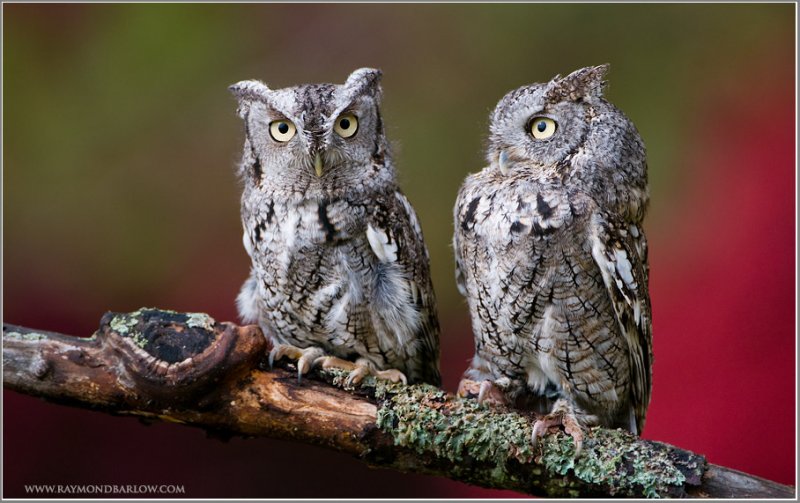
Eastern Screech Owl (Megascops asio) (captive) by Raymond Barlow
A Prayer of the afflicted, when he is overwhelmed, and poureth out his complaint before the LORD. Hear my prayer, O LORD, and let my cry come unto thee. Hide not thy face from me in the day when I am in trouble; incline thine ear unto me: in the day when I call answer me speedily. (Psalms 102:1-2 KJV)
Words by Isaac Watts (1674-1748), The Psalms of David, 1719.
Music: St. Matthew, William Croft (1678-1727), 1708
As a boy, Croft was a chorister at the Chapel Royal. From 1700-1712, he was organist at St. Anne, Soho, London. From 1704 on, he was, jointly with Jeremiah Clarke, organist of the Chapel Royal. In 1708 he became Master of the Children at Chapel Royal and organist at Westminster Abbey. In 1713 he received a Doctor of Music degree from Oxford University. In 1726, the Academy of Vocal Music (later the Academy of Ancient Music) was founded by 13 musicians, including Croft, Pepusch, Bononcini, and Geminiani.
Croft was composer to Queen Anne and was recognized as the foremost church musician of his time. Croft also wrote instrumental works (e.g., cembalo and sonatas for flute (recorder).
Because thou hast made the LORD, which is my refuge, even the most High, thy habitation; There shall no evil befall thee, neither shall any plague come nigh thy dwelling. (Psalms 91:9-10 KJV)
Words by Isaac Watts, (1674-1748) The Psalms of David, 1719.
Music: St. John’s Highlands, anonymous
He That Hath Made His Refuge God
He that hath made his refuge God
Shall find a most secure abode,
Shall walk all day beneath His shade,
And there at night shall rest his head.
Then will I say, My God, Thy power
Shall be my fortress and my tower;
I, that am formed of feeble dust,
Make Thine almighty arm my trust.
Thrice happy man! Thy Maker’s care
Shall keep thee from the fowler’s snare;
Satan, the fowler, who betrays
Unguarded souls a thousand ways.
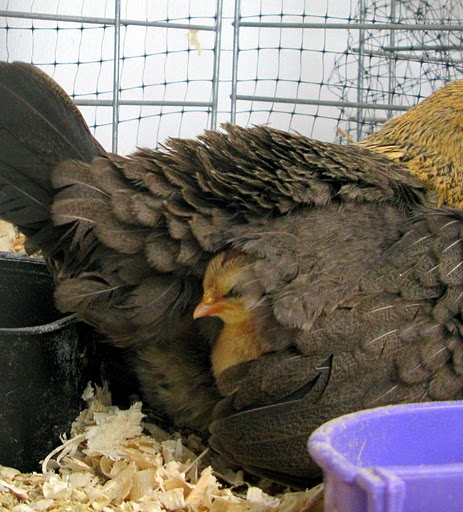
Just as a hen protects her brood From birds of prey that seek their blood, Under her feathers, so the Lord
Makes His own arm His people’s guard.
If burning beams of noon conspire
To dart a pestilential fire,
God is their life; His wings are spread
To shield them with a healthful shade.
If vapors with malignant breath
Rise thick, and scatter midnight death,
Israel is safe; the poisoned air
Grows pure, if Israel’s God be there.
What though a thousand at thy side,
At thy right hand ten thousand died,
Thy God His chosen people saves
Amongst the dead, amidst the graves.
So when He sent His angel down
To make His wrath in Egypt known,
And slew their sons, His careful eye
Passed all the doors of Jacob by.
But if the fire, or plague, or sword,
Receive commission from the Lord
To strike His saints among the rest,
Their very pains and deaths are blest.
The sword, the pestilence, or fire,
Shall but fulfill their best desire;
From sins and sorrows set them free,
And bring Thy children, Lord, to Thee.
Keep me as the apple of the eye, hide me under the shadow of thy wings, (Psalms 17:8 KJV)
Under His Wings - (Dove - photographer unknown)
Isaac Watts – (1674-1748)
Watts’ father was Nonconformist imprisoned twice for his religious views. Isaac learned Greek, Latin, and Hebrew under Mr. Pinhorn, Rector of All Saints, and headmaster of the Grammar School in Southampton. Isaac’s taste for verse showed itself in early childhood, and his promise caused a local doctor and other friends to offer him a university education, assuming he would be ordained in the Church of England. However, Isaac declined and instead entered a Nonconformist Academy at Stoke Newington in 1690, under the care of Thomas Rowe, pastor of the Independent congregation at Girdlers’ Hall; Isaac joined this congregation in 1693.
Watts left the Academy at age 20 and spent two years at home; it was during this period that he wrote the bulk of his Hymns and Spiritual Songs. They were sung from manuscripts in the Southampton Chapel, and published 1707-1709.
The next six years of his life were again spent at Stoke Newington, working as tutor to the son of eminent Puritan John Hartopp. The intense study of these years is reflected in the theological and philosophical material he subsequently published.
Watts preached his first sermon at age 24. In the next three years, he preached frequently, and in 1702 was ordained as pastor of the Independent congregation in Mark Lane. At that time he moved into the house of a Mr. Hollis in the Minories. His health began to fail the next year, and Samuel Price was appointed as his assistant in the ministry. In 1712, a fever shattered his constitution, and Price became co-pastor of the congregation, which had moved to a new chapel in Bury Street. It was at this time that Isaac became the guest of Sir Thomas Abney. He lived with Abney (and later Abney’s widow) the rest of his life, mainly at Theobalds in Hertfordshire, then for 13 years at Stoke Newington.
In 1728, the University of Edinburgh awarded Watts a Doctor of Divinity degree.
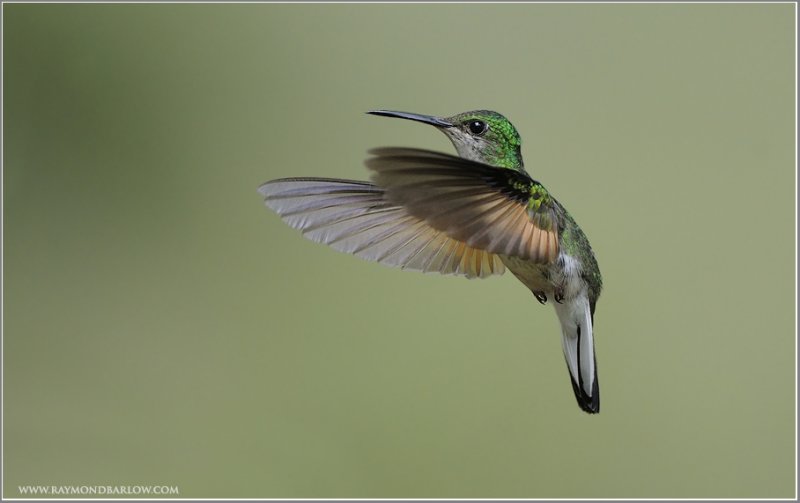
Stripe-tailed Hummingbird (Eupherusa eximia) Female by Raymond Barlow
The heavens declare the glory of God; and the firmament sheweth his handywork. (Psalms 19:1 KJV)
Words by Henry Ware Jr. (1794-1843), 1822
Music – Bethlehem by Gottfried W. Fink (1783-1846)
All Nature’s Works His Praise Declare
All nature’s works His praise declare, to whom they all belong;
There is a voice in every star, in every breeze a song.
Sweet music fills the world abroad with strains of love and power;
The stormy sea sings praise to God, the thunder and the shower.
To God the tribes of ocean cry, and birds upon the wing;
To God the powers that dwell on high their tuneful tribute bring.
Like them, let us the throne surround, with them loud chorus raise,
While instruments of loftier sound assist our feeble praise.
Great God, to Thee we consecrate our voices and our skill;
We bid the pealing organ wait to speak alone Thy will.
Lord, while the music round us floats may earth born passions die;
O grant its rich and swelling notes may lift our souls on high!
Praise ye the LORD. Praise ye the LORD from the heavens: praise him in the heights. (Psalms 148:1 KJV)
Henry Ware, Jr was born April 21, 1794 in Hingham, Massachusetts, Died on September 25, 1843 in Framingham, Massachusetts and was buried in Mount Auburn Cemetery, Cambridge, Massachusetts.
Son of a Unitarian minister, Ware attended Harvard and became an assistant teacher at Exeter Academy in New Hampshire. In 1815, the Boston Unitarian Association licensed him to preach, and in 1817, he was ordained and became pastor of the Second Church in Boston, Massachusetts. He was Professor of Pulpit Eloquence and Pastoral Care at the Harvard Divinity School, 1829-1842. He also edited the Christian Disciple (later renamed the Christian Examiner), and ran the Society for Religious Improvement at Harvard University (his father was on the faculty there, as well). A two volume Memoir and a four volume Works were published three years after his death. Ware wrote this hymn for a service dedicating a new organ (see the last stanza).
Gottfried W. Fink was born onMarch 8, 1783, Sulza on the Ilm, Thuringia and died on August 27, 1846, Leipzig, Germany.
Fink sang as a chorister at Naumburg, and studied theology at Leipzig (1804-8). He became a Professor of Music at Leipzig in 1842. He is remembered for his writings on music history and theory, and his collections of secular and religious songs.
And one cried unto another, and said, Holy, holy, holy, is the LORD of hosts: the whole earth is full of his glory. (Isaiah 6:3 KJV)
Words by Ann T. Gilbert (1782-1852), 1827 (originally, “Spared to Another Spring”).
This hymn appeared, unattributed, in the American School Hymn Book, by Asa Fitz, 1854, and is sometimes incorrectly ascribed to Fitz. The version below was published in the 1882 Collection by Godfrey Thring.
Music: Swabia by Johann M. Spiess (1715-1772) – arranged by William H. Havergal, 1847
Great Giver of All Good
Great Giver of All Good,
To Thee our thanks we yield
For all the beauties of the wood,
Of hill, and dale, and field.
Ten thousand various flowers
To Thee sweet offerings bear, And joyous birds in woodlands bowers
Sing forth Thy tender care.
The fields on every side
The trees on every hill,
The glorious sun, the rolling tide,
Proclaim Thy wonders still.
But trees, and fields, and skies
Still praise a God unknown;
For gratitude and love can rise
From living hearts alone.
These living hearts of ours
Thy holy Name would bless;
The blossoms of the thousand flowers
Would please the Savior less.
While earth itself decays,
Our souls can never die;
O tune them all to sing Thy praise
In better songs on high.
By them shall the fowls of the heaven have their habitation, which sing among the branches. (Psalms 104:12 KJV)
Ann T. Gilbert was the daughter of Isaac Taylor, who at the time of her birth was a London engraver. Her father subsequently became a Congregational minister, living first at Colchester, then at Ongar. In 1813, she married the Rev. Joseph Gilbert, classical and mathematical tutor at the Congregational College, Masborough (near Rotherham), Yorkshire. From Masborough they moved to Hull, and later Nottingham.
Johann M. Spiess taught music at the Gymnasium in Heidelberg, Germany, and played the organ at St. Peter’s Church and (1746-1772) at Berne Cathedral.
But they that wait upon the LORD shall renew their strength; they shall mount up with wings as eagles; they shall run, and not be weary; and they shall walk, and not faint. (Isaiah 40:31 KJV)
Words by Isaac Watts,
Found in Hymns and Spiritual Songs, Book I, 1707, #48.
Born 1674 in Southampton, England.- Died 1748 in Stoke Newington, England
Music: Trell by Lowell Mason and Carmina Sacra, 1844
Alternate tunes:
St. Petersburg, attributed to Dmitri S. Bortniansky, 1825
Samson, arranged from George F. Handel (1685-1759)
Awake, Our Souls; Away, Our Fears
Awake, our souls; away, our fears,
Let every trembling thought be gone;
Awake, and run the heavenly race,
And put a cheerful courage on.
True, ’tis a strait and thorny road,
And mortal spirits tire and faint;
But they forget the mighty God,
That feeds the strength of every saint.
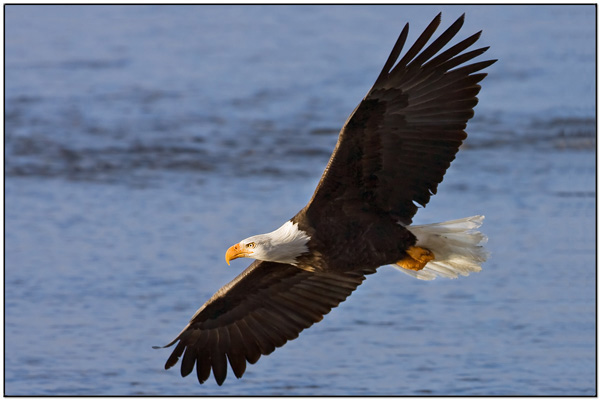
Bald Eagle (Haliaeetus leucocephalus) by AestheticPhotos
Thee, mighty God! whose matchless power
Is ever new, and ever young;
And firm endures, while endless years
Their everlasting circles run.
From Thee, the overflowing spring,
Our souls shall drink a fresh supply;
While such as trust their native strength
Shall melt away, and droop, and die.
Swift as an eagle cuts the air, We’ll mount aloft to Thine abode; On wings of love our souls shall fly, Nor tire amidst the heav’nly road.
Now therefore, if ye will obey my voice indeed, and keep my covenant, then ye shall be a peculiar treasure unto me above all people: for all the earth is mine: (Exodus 19:5 KJV)
Words by Neil Barham, 2005. (1962-)
Music – Protection – from A Compilation of Genuine Church Music, by Joseph Funk (Winchester, Virginia: J. W. Hollis, 1832)
Alternate Tune – St. Denio, by John Roberts, 1839
Being His
His oceans all rumble and batter His shore,
But He will be new when its waves are no more.
His mountains reach skyward to touch His sweet face;
His forests burst forth as He showers their place.
The mighty Leviathan leaps in His seas,
The eagle mounts up on the joy of His breeze.
The creatures of earth borrow life from His hand,
Their days are all numbered by His firm command.
Eternity springs from His Infinite Mind—
All time and all space from His fingers unwind,
His intricate, limitless, unbounded skill
Spins threads of His sovereign, inscrutable will.
The thunder of Sinai resounds in our ears,
The judgment of God stirs the deepest of fears!
But, awesome and wondrous—more staggering still—
The flashes of lightning from Calvary’s hill!
But O! How mighty, how perfect, how free,
How blessèd, how precious, how lovely is He!
And O! How grand, and how sweet to behold
The trophies of grace He has won from of old!
A radiant triumph illumines His face!
He strides to His throne, the Colossus of Grace!
He sits, and His Father proclaims Him True Son!
His strife is now over; His battle is done.
We bow, we adore, we fall down at His throne,
He gathers us into His arms as His own!
He seats us in glory beside Him above,
To crown His achievement with splendors of love!
_____
What a great old hymn that tells of the Lord’s grace to us and the Worship that is due Him.
Neil Barham grew up in Louisiana and has lived all over the southern United States. He was trained as a Presbyterian pastor and served as a teacher in Christian schools in Georgia, Tennessee, and Louisiana. As of 2005, he lived in Miami, Florida, where he, his wife Julie, and his children Hannah, Seth, and Leah are members of the Kendall Presbyterian Church.
Inspired by the example of William Cowper, Neil began writing hymns to combat spiritual depression. He has 19 hymns on Cyber Hymnal.
Teaching them to observe all things whatsoever I have commanded you: and, lo, I am with you alway, even unto the end of the world. Amen. (Matthew 28:20 KJV)
Birds in Hymns – Get Close To Jesus
Words by Alice Larry Woodcock
Music by Alice Larry Woodcock
Get Close To Jesus
Whene’er your trials are too hard for you,
Burdens are heavy, and your friends seem few,
Go to your Savior, kneel to Him in prayer,
He’ll hear you, for He’s always there.
Refrain
Get close to Jesus, He’s your best friend; Get close to Jesus, He’ll comfort send; In times of trial, in times of fear, Get close to Jesus, He’s always near.
He is the friend above all others rare;
Even the sparrow is within His care;
Much more to you will He His love bestow
If to Him you will only go.
Refrain
Get close to Jesus, He’s your best friend; Get close to Jesus, He’ll comfort send; In times of trial, in times of fear, Get close to Jesus, He’s always near.
So for tomorrow and its needs ne’er fear;
Leave all to Him, have faith, be of good cheer;
Then go and help some others’ cross to bear,
And tell them of His wondrous care.
Refrain
Get close to Jesus, He’s your best friend; Get close to Jesus, He’ll comfort send; In times of trial, in times of fear, Get close to Jesus, He’s always near.
Are not five sparrows sold for two farthings, and not one of them is forgotten before God? But even the very hairs of your head are all numbered. Fear not therefore: ye are of more value than many sparrows. (Luke 12:6-7 KJV)
Birds in Hymns – God Sees The Little Sparrow Fall
Words by Maria Straub, 1874 (1838-1898)
Music – Providence, by Solomon W. Straub
God Sees The Little Sparrow Fall
God sees the little sparrow fall,
It meets His tender view;
If God so loves the little birds,
I know He loves me, too.
Refrain
He loves me, too, He loves me, too, I know He loves me, too; Because He loves the little things, I know He loves me, too.
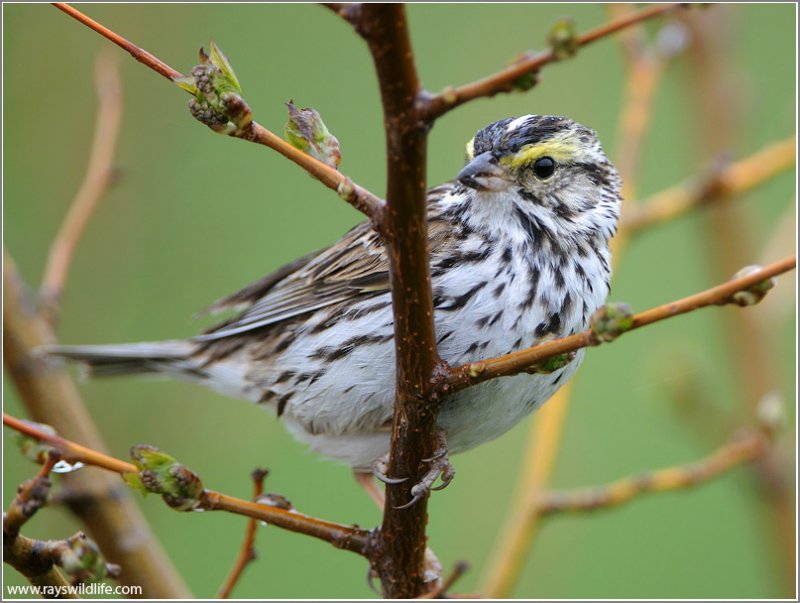
Savannah Sparrow (Passerculus sandwichensis) by Ray
He paints the lily of the field,
Perfumes each lily bell;
If He so loves the little flow’rs,
I know He loves me well.
Refrain
He loves me, too, He loves me, too, I know He loves me, too; Because He loves the little things, I know He loves me, too.
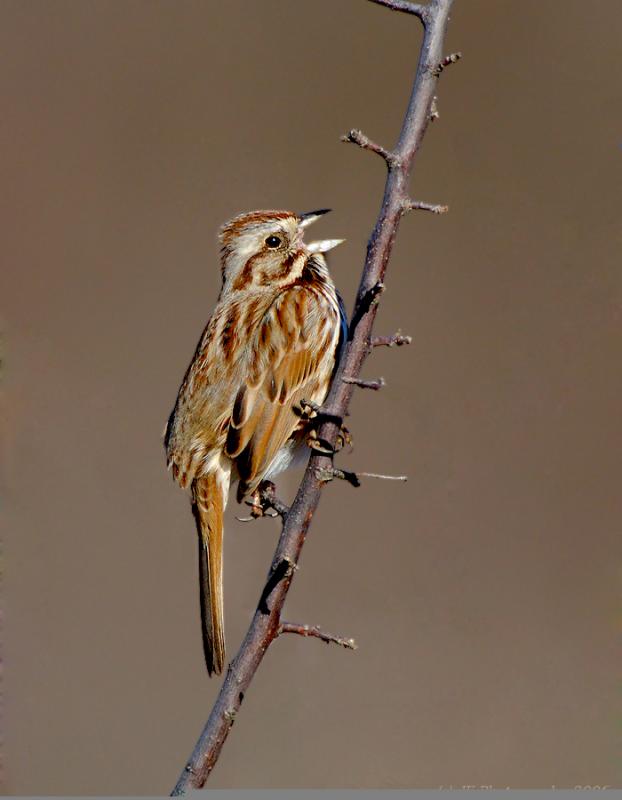
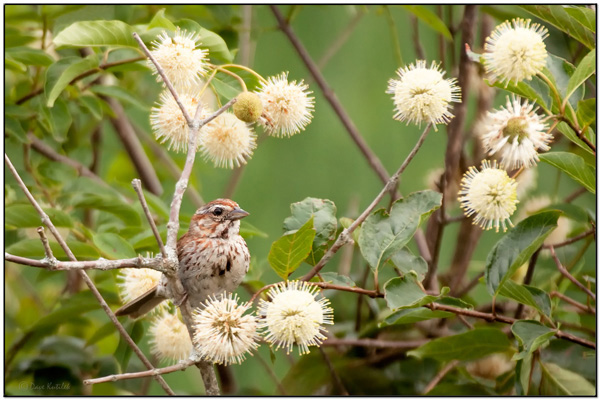
Song Sparrow in white flowers by Daves BirdingPix
God made the little birds and flow’rs,
And all things large and small;
He’ll not forget his little ones,
I know He loves them all.
Refrain
He loves me, too, He loves me, too, I know He loves me, too; Because He loves the little things, I know He loves me, too.
Birds In Hymns – Flee As A Bird ~ by Mary S. Shindler
…A Psalm of David. In the LORD I put my trust; How can you say to my soul, “Flee as a bird to your mountain”? (Psalms 11:1 NKJV)
Words & Music ~ by Mary S. Shindler, 1842
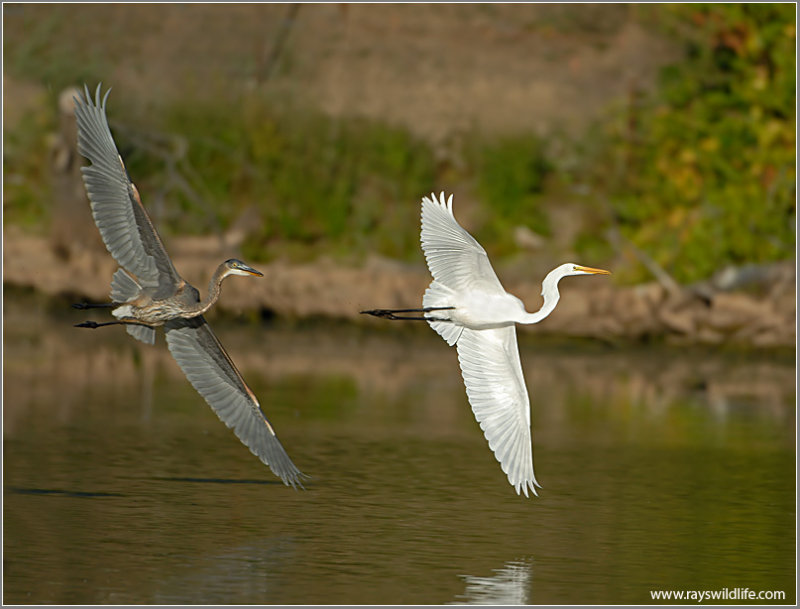
Great Blue Heron (Ardea herodias) chasing Western Great Egret (Ardea alba) by Ray
Flee As A Bird
Flee as a bird to your mountain, thou who art weary of sin;
Go to the clear flowing fountain where you may wash and be clean.
Haste, then, th’Avenger is near thee; call, and the Savior will hear thee;
He on His bosom will bear thee; O thou who art weary of sin,
O thou who art weary of sin.
He will protect thee forever, wipe every falling tear;
He will forsake thee, O never, sheltered so tenderly there.
Haste, then, the hours are flying, spend not the moments in sighing,
Cease from your sorrow and crying: The Savior will wipe every tear,
The Savior will wipe every tear.
*************
He will swallow up death forever, And the Lord GOD will wipe away tears from all faces; The rebuke of His people He will take away from all the earth; For the LORD has spoken. (Isaiah 25:8 NKJV)
for the Lamb who is in the midst of the throne will shepherd them and lead them to living fountains of waters. And God will wipe away every tear from their eyes.” (Revelation 7:17 NKJV)
And God will wipe away every tear from their eyes; there shall be no more death, nor sorrow, nor crying. There shall be no more pain, for the former things have passed away. (Revelation 21:4 NKJV)






 Lee's Birdwatching Adventures Plus