Birds of the Bible – Two Eagles in a Parable

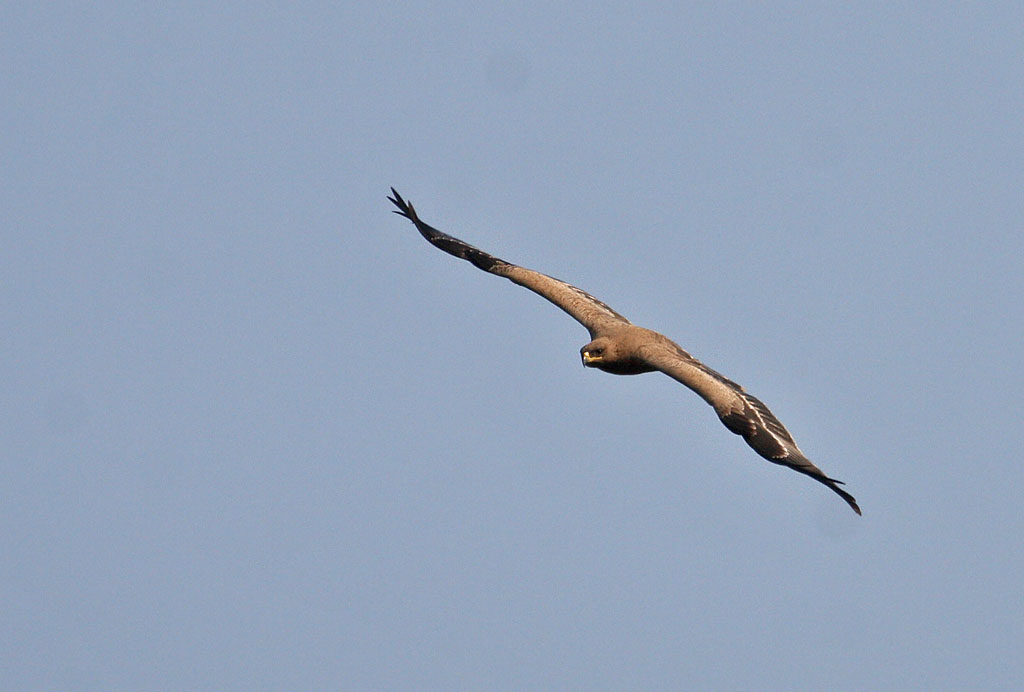
Steppe Eagle (Aquila nipalensis) by Peter Ericsson

Steppe Eagle (Aquila nipalensis) by Peter Ericsson

And the word of the LORD came unto me, saying, Son of man, put forth a riddle, and speak a parable unto the house of Israel; (Ezekiel 17:1-2 KJV)

The Lord God has given the prophet Ezekiel a parable to give to Israel. The parable is in Ezekiel 17:1-10 and it is in here that we find reference to two different eagles.

“The riddle is not the prophet’s, nor the parable his, but the Lord God’s; and exceeding beautiful and apt it is, to signify the things designed by it; the wisdom of God is greatly displayed in it:” (John Gill’s Exposition of the Entire Bible)

And say, Thus saith the Lord GOD; A great eagle with great wings, longwinged, full of feathers, which had divers colours, came unto Lebanon, and took the highest branch of the cedar: (Ezekiel 17:3 KJV)

John Gill says about this first Eagle:

a great eagle; which is Nebuchadnezzar king of Babylon, as it is explained, Eze_17:12; who is compared to an eagle for his power and authority, that being the king of birds, and for his swiftness and voracity in conquering and subduing kingdoms; see Jer_48:40;

with great wings
; so the Babylonish monarchy is signified by a lion with eagle’s wings, Dan_7:4; and the two parts of the Roman empire, into which it was divided at the death of Theodosius, are called two wings of a great eagle, Rev_12:14; and so here it may denote the large kingdoms and provinces which belonged to the Babylonian monarchy; see Est_1:1;

longwinged; or having a “long member” (m); meaning the body of the wing, which was long; and so, as the wings spread, may signify the breadth of his dominion, this the length of them, and both their extensiveness:

full of feathers
; of cities, towns, people, armies, wealth, and riches:

Steppe Eagle (Aquila nipalensis) by Nikhil Devasar

Steppe Eagle (Aquila nipalensis) by Nikhil Devasar

which had divers colours; or an “embroidery” (n); like that of the weaver, only needle work, consisting of various colours; and so it alludes to such eagles as are called the golden eagle, and “asterias”, from their golden colour, and their being spotted like stars, and which are said to be of the largest size, as Bochart, from Aelianus (o), observes; and may signify people of divers languages, customs, manners, and circumstances, subject to the government of the king of Babylon:

came unto Lebanon; the northern border of the land of Judea, and invaded it; where were the mountain and forest of Lebanon, famous for the cedars that grew there, from whence the whole land may here take its name, as being more apt for the allegory used: or the city of Jerusalem, where were the temple built of the cedars of Lebanon, as many of its palaces and houses also were; whither the king of Babylon came, and took it, and who came northward, as Babylon was:

and took the highest branch of the cedar; by the “cedar” is meant, either the nation in general, or the royal family in particular; and by the “highest branch” the then reigning king, Jeconiah with the princes and nobles of the land, who were taken and carried captive by Nebuchadnezzar; see 2Ki_24:14.

Adam Clarke’s Commentary on The Bible summarizes the first eagle:

  • A great eagle – Nebuchadnezzar. See Jer_48:40; Jer_49:22; Dan_7:4. And see here, Dan_7:12, where it is so applied.
  • Great wings – Extensive empire.
  • Long-winged – Rapid in his conquests.
  • Full of feathers – Having multitudes of subjects.
  • Divers colors – People of various nations.
  • Came unto Lebanon – Came against Judea.
  • The highest branch – King Jehoiachin he took captive to Babylon.
  • The cedar – The Jewish state and king.

There was also another great eagle with great wings and many feathers: and, behold, this vine did bend her roots toward him, and shot forth her branches toward him, that he might water it by the furrows of her plantation. (Ezekiel 17:7 KJV)

John Gill says of the second eagle:
Eze 17:7  There was also another great eagle,…. Hophra king of Egypt, a very powerful prince, whom Herodotus (u) calls Apries; and says he was the most happy and fortunate, after Psammitichus, of all the kings that were before; though not so mighty as the king of Babylon; therefore all the same things are not said of the one as of the other:
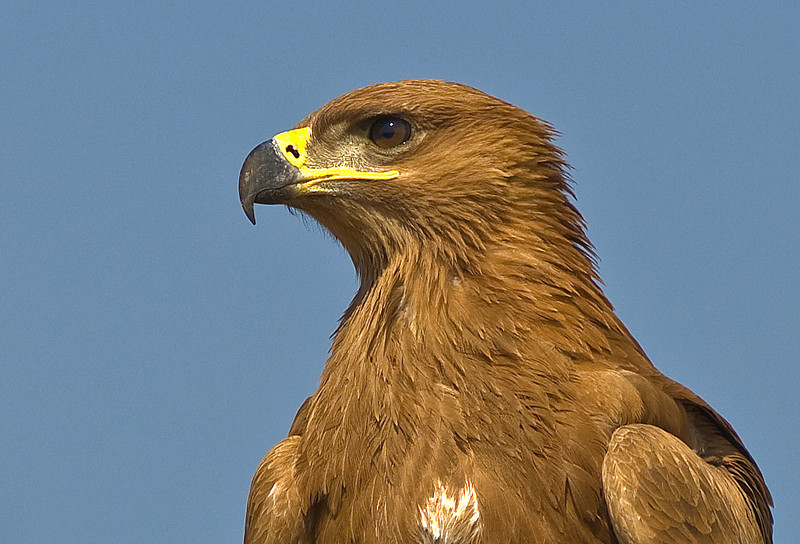
Tawny Eagle by Africaddict

Tawny Eagle by Africaddict

with great wings and many feathers: had large dominions, but not go extensive as the former, and therefore is not said to be “longwinged” as he; and had “many feathers”, but not “full” of them, nor had it such a variety; he had many people, and much wealth, and a large army, but not equal to the king of Babylon:

and, behold, this vine did bend her roots towards him; Zedekiah, and the people of the Jews under him; inclined to an alliance with the king of Egypt, and gave him some private intimations of it:

and shot forth her branches towards him; sent ambassadors to acquaint him with it, Eze_17:15;

that he might water it by the furrows of her plantation; Nebuchadnezzar had planted this vine, and made furrows for the watering of it, and by his means it was become prosperous and flourishing; but Zedekiah, not content with the greatness and glory he had raised him to, sought to the king of Egypt to help him with horses and people, in order to free himself from subjection to the king of Babylon, and to increase his lustre and glory: the allusion is thought to be to the trenches and canals of the river Nile, by which the land of Egypt was watered: the words may be rendered, “out of the rivulets of her plantation” (w) which best agrees with watering.

Adam Clarke’s Commentary on The Bible about the second eagle Ezekiel 17:7

  • Another great eagle – Pharaoh-hophra, or Apries, king of Egypt.
  • With great wings – Extensive dominion.
  • And many feathers – Numerous subjects.
  • Did bend her roots – Looked to him for support in her intended rebellion against Nebuchadnezzar.

This chapter in Ezekiel has a lot in it and I was mainly bringing out the two eagles presented in the parable. A short explanation of this chapter by John Gill follows:

INTRODUCTION TO EZEKIEL 17 – Under the simile of two eagles and a vine are represented the kings of Babylon and Egypt, and the condition of the Jews, who are threatened with ruin for their perfidy; and yet a promise is made of the raising up of the house of Judah, and family of David, in the Messiah. The prophet is bid to deliver a riddle or parable to the house of Israel, Eze_17:1. The riddle or parable is concerning two eagles and a vine, which is delivered, Eze_17:3; and the explanation of it is in Eze_17:11; and then the destruction of the Jews is threatened for their treachery to the king of Babylon, Eze_17:16; and the chapter is closed with a promise of the Messiah, and the prosperity of his kingdom, Eze_17:22.

Looking unto Jesus the author and finisher of our faith; who for the joy that was set before him endured the cross, despising the shame, and is set down at the right hand of the throne of God. (Hebrews 12:2 KJV)


See also:
Birds of the Bible – Eagles
Birds of the Bible – Eagles II
Birds of the Bible – Eagles III
Birds of the Bible – Hair Like Eagles
Eagles

*
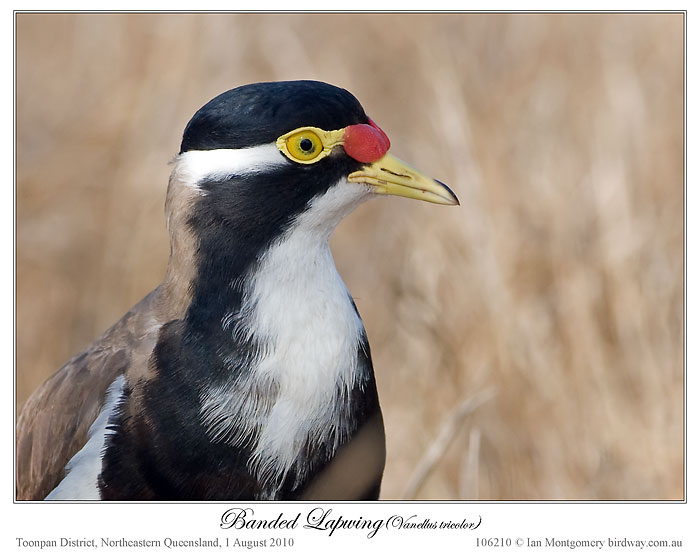
Ian’s Bird of the Week – Banded Lapwing

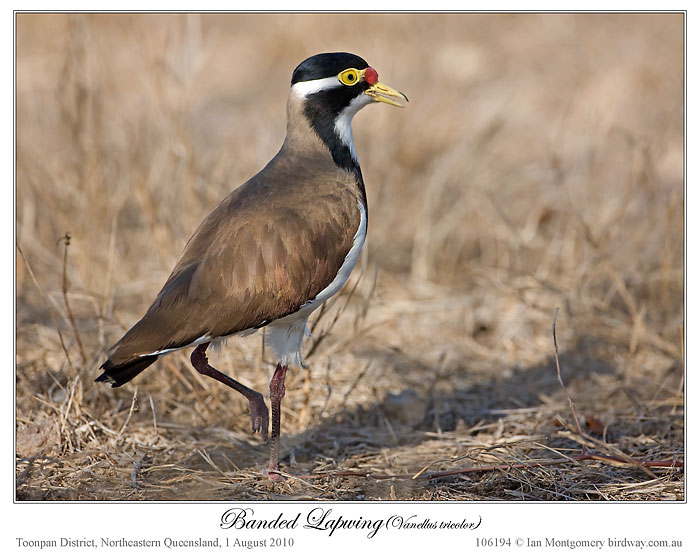
Banded Lapwing (Vanellus tricolor) by Ian

Banded Lapwing (Vanellus tricolor) by Ian

Ian’s Bird of the Week – Banded Lapwing ~ by Ian Montgomery

Newsletter – 08-05-10

Banded Lapwing (Vanellus tricolor) by Ian

Banded Lapwing (Vanellus tricolor) by Ian

There are two species of Lapwing in Australia. One, the Masked Lapwing, is widespread, common and well-known throughout northern and eastern Australia and Tasmania. It’s familiar because it is at home in populated areas, large, aggressive when nesting, and always noisy when disturbed, even at night, a real larrikin, to use an Australian expression. The other, the Banded Lapwing is the opposite. It’s smaller, quieter, uncommon, not well-known and wary, occurs in drier country away from people, and altogether much more dignified.

Banded Lapwing (Vanellus tricolor) by Ian

Banded Lapwing (Vanellus tricolor) by Ian

It occurs mainly west of the Great Divide and south of the Tropic of the Capricorn, including Tasmania, though there is a small resident population in the dry, cattle-grazing country south of Townsville, north of its usual range. A friend of mine took me there last Sunday so that I could take some photos. Previously, I’d seen them only in Victoria and Western Australia.

Masked Lapwings have large, pendulous, yellow, facial wattles that make them look rather ridiculous, but larrikins don’t worry about appearances. Banded Lapwings have small discreet red wattles, that combine tastefully with the yellow eyes and bills and black, white and tan plumage; presumably the scientific name tricolor refers only to the plumage. The birds – we found about ten – allowed close approach in the car and eventually seemed to get quite used to my presence, though the curious cattle came over too and got in the way a lot.

Banded Lapwing (Vanellus tricolor) by Ian

Banded Lapwing (Vanellus tricolor) by Ian

I concentrated on a group of 5 birds, one of which was a juvenile – the third photo – so the birds had bred recently. Juveniles have small, pale wattles and camouflaged plumage. One pair of adults came quite close to the car and eventually mated. Banded Lapwings are supposedly monogamous and I wondered whether this pair were the parents of the juvenile bird.

Lapwings form a sub-family within the Plover family and there are about 25 species world-wide in every continent except North and Central America. I’ve chose a pair of Yellow-wattled Lapwings – from India as the current Old World pick for comparison. This pair is also mating, so either Lapwings like doing it in public or I like photographing them doing it: the choice is yours.

Other current picks include:
Australia: Red-capped Robin
New World: Blue-footed Booby
Other Wildlife: Koala

Links:
Masked Lapwing
Banded Lapwing

I recently spent a night at a Bed and Breakfast place in Alligator Creek recently opened by friends of mine, Colin and Helen Holmes. Alligator Creek is about 25km south of Townsville and close to the Mount Elliott section of Bowling Green Bay National Park. Their house is set in several acres of land with plenty of trees and shrubs right on the Creek. It’s a delightful place and very comfortable and you’ll be well looked after and supplied with a lavish breakfast. I can recommend it highly, so if you’re looking for somewhere friendly and peaceful to stay near Townsville check out their website: http://www.alligatorcreekbedandbreakfast.com.au/ .

Best wishes,
Ian

Ian Montgomery, Birdway Pty Ltd,
454 Forestry Road, Bluewater, Qld 4818
Phone: +61-7 4751 3115
Preferred Email: ian@birdway.com.au
Website: http://birdway.com.au


Lee’s Addition:

The Banded Lapwing is part of the Charadriidae  Family which includes not only Lapwings but also Plovers, Dotterels and a Wrybill. There are 67 species in the family. They are in the Charadriiformes Order which has 19 families.

The Lapwing is one of the Birds of the Bible. See the Lapwing page.

And the stork, the heron after her kind, and the lapwing, and the bat. (Lev 11:19 KJV)

See all of Ian’s Birds of the Week

*

Renewing for Rapture

Renewing for Rapture ~ by a j mithra

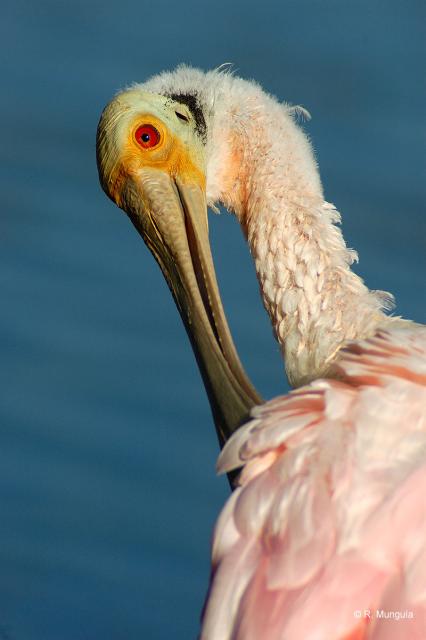
Roseate Spoonbill (Platalea ajaja) Reinier Munguia

Roseate Spoonbill (Platalea ajaja) Reinier Munguia

Before they start
to migrate,
the birds preen
and
grow new feathers
for their long journey…..
We too,
have to go on a
long journey
to be with JESUS…
Have we renewed ourselves
with the blood of JESUS?
The birds,
store their body
with lots of fat
for their long flight…
We too need energy
to fly over
difficult situations..
Have we got filled
ourselves with
The Holy Spirit?
Remember,
the migration,
which we call rapture,
is very near…
Are we getting preening
and renewing
to get ready
for the rapture?

Jesus answered, Verily, verily, I say unto thee, Except a man be born of water and of the Spirit, he cannot enter into the kingdom of God. (John3:5)

A thought from a j mithra

*

The Roseate Spoonbill is in the Threskiornithidae Family.

*

Ian’s Bird of the Week – Red-necked Stint

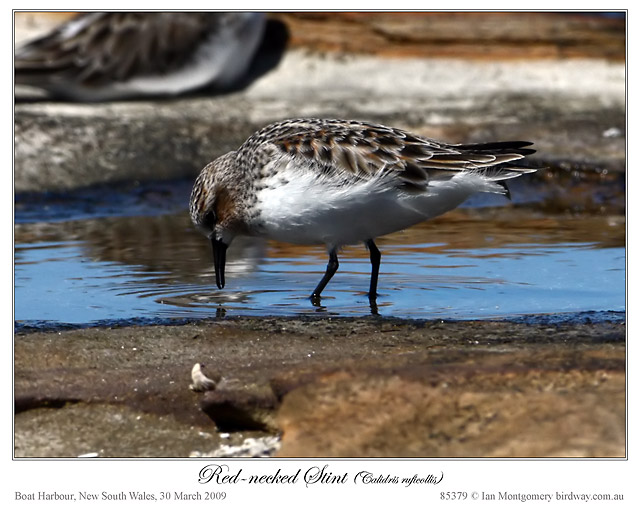
Red-necked Stint (Calidris ruficollis) by Ian

Red-necked Stint (Calidris ruficollis) by Ian

Ian’s Bird of the Week – Red-necked Stint ~ by Ian Montgomery

Newsletter – 04-01-09

This time of the year, almost anywhere in the world, is a good time to go looking for waders. Not only does the (northern) Spring migration mean that unusual species can turn up, but many of these migrants are acquiring their breeding plumages. So, if you’ve ever been faced with the daunting challenge of identifying waders in their drab winter plumage, you could be in for some pleasant surprises.

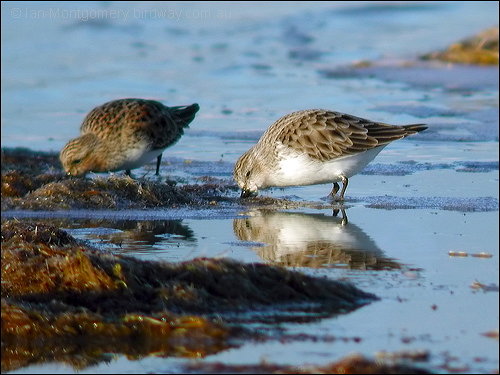
Red-necked Stint (Calidris ruficollis) by Ian in breeding and non-breeding plumage

Red-necked Stint (Calidris ruficollis) by Ian in breeding and non-breeding plumage

A case in point is the Red-necked Stint, a common non-breeding visitor to Australia, where the plumage is normally anything but red. The bird in the photo is in partial, or ‘pre-breeding’, plumage with the delicate
pinkish-chestnut face and breast and the black and chestnut wing coverts. A dapper little bird by any standards, I think.

‘Little’ is the operative word. Stints – there are 4 species – are the world’s smallest waders and the Red-necked Stint with a length of 13 – 16 cm/5 – 6.3″ is slightly smaller than a House Sparrow (14 – 16 cm). Size doesn’t stop it being one of the champions of migration, breeding in the Arctic tundra of Siberia and northern Alaska and spending the northern winter in Australasia and as far as south as sub-Antarctic islands.

At this time of the year, the birds are feeding madly, building up their fat reserves for the long trip. Apparently, they can lose half of their body weight during the migration.

The sharp-eyed among you will have noticed that the photo was taken at Boat Harbour during a brief visit to the Sydney region earlier this week. It’s tax time and I went to Boat Harbour after a meeting with my accountant in nearby Sutherland. To my friends in Sydney I extend an apology that I didn’t have time to catch up with them.

Best wishes,
Ian

Ian Montgomery, Birdway Pty Ltd,
454 Forestry Road, Bluewater, Qld 4818
Phone: +61-7 4751 3115
Preferred Email: ian@birdway.com.au
Website: http://birdway.com.au


Lee’s Addition:

Storks, doves, swallows, and thrushes all know when it’s time to fly away for the winter and when to come back… (Jer 8:7)

This is one of the catch-up newsletters I am finally finding time to do. Will be releasing several more of these in the next little bit. Finally have some time to work on them. See Ian’s Bird of the Week list to see  Ian’s articles. He will continue to do his current ones also.

The Stint mentioned was getting ready for spring migration, but of course this time of the year, they start preparing for their fall migration. I also went to Ian’s Birdway and found an extra photo. The Stint is in the Scolopacidae Family of Sandpipers and Snipes. The Scolopacidaes are in the Charadriiformes Order which has 19 families.

*

Ian’s Bird of the Week – Red-necked Stint

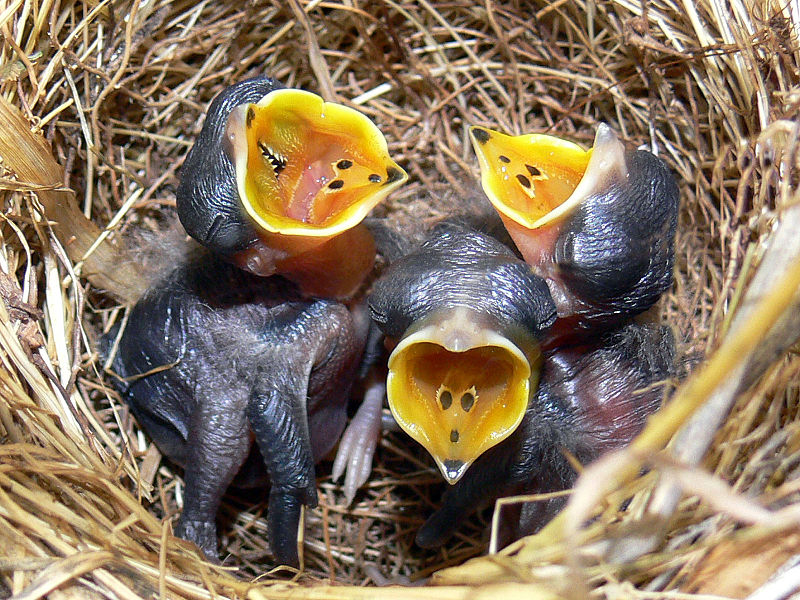
Screeeeeeech

Screeeeeeech  ~ by a j mithra

Australian Pipit (Anthus australis) ©WikiC

Australian Pipit (Anthus australis) ©WikiC

Mother birds
encourage their little ones
to scream loud…..
The one who makes
the most noise
gets its feed first
and
then the next loudest
gets its share
and
it goes on….
It is easier for GOD
to fill those who
open their mouth wide….
It seems like only
the Birds have understood
the secret and they practice,
but,
we only preach…

I am the LORD thy God, which brought thee out of the land of Egypt: open thy mouth wide, and I will fill it. (Psalm 81:10)

A thought from a j mithra

*

The Australian Pipit is in the Motacillidae Family

*

Birds – Purpose filled Singers

Birds – Purpose filled Singers ~ by a j mithra

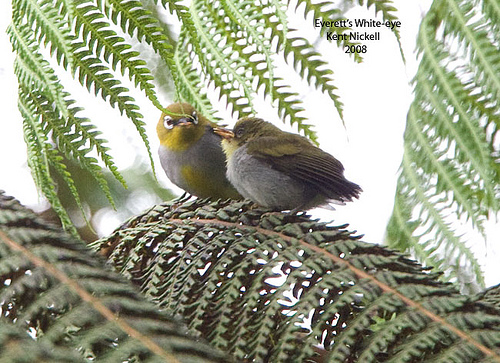
Everett's White-eye (Zosterops everetti) by Kent Nickell

Everett's White-eye (Zosterops everetti) by Kent Nickell

Studies have shown
that,
Birds should learn
the intricate
territorial songs
to gain possession
of the territory
after the death
of its senior…
The mating songs
to get the nod
of the best females around..
That memory
of those songs
will serve the Bird
the rest of its life…
Learn to sing,
only for JESUS
and
that will save you
all through your life…

The beast of the field shall honour me, the dragons and the owls: because I give waters in the wilderness, and rivers in the desert, to give drink to my people, my chosen.

This people have I formed for myself; they shall show forth my praise. (Isaiah 43:20-21)

A thought from a j mithra

*

The  Everett’s White-Eye is part of the Zosteropidae Family.

*

Birds in Hymns – Let There Be Light!

And God said, Let there be light: and there was light. (Genesis 1:3 KJV)

Thou, Whose Almighty Word (or sometimes called – Let There Be Light!)
Author: John Marriott, 1780-1825
Musician: Joan J. Pinkston, b. 1947

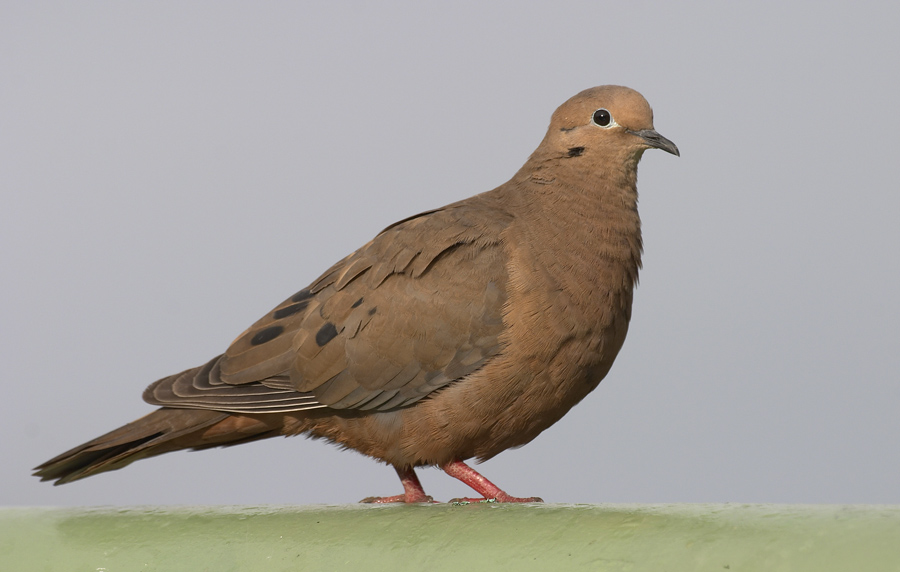
Eared Dove (Zenaida auriculata)  by Robert Scanlon

Eared Dove (Zenaida auriculata) by Robert Scanlon

The Rev. John Marriott was a clergyman of the English Church, a graduate of Rugby, and of Christ Church, Oxford. He took high honors in college, and was then engaged as private tutor by the Duke of Buccleuch, who after two years presented him with the living of Church Lawford, Warwickshire. This he kept to the end of his life. He wrote but three hymns, of which only one is in use. But this one belongs in the first rank, and entitles him to a place among the great hymn-writers:

‘Let there be light!'”

This hymn will richly repay careful study. It is founded on Genesis i. 3, but with a very fine and suggestive reference to the three persons of the Trinity. The Father uttered the original mandate “Let there be light”; the Son declared himself to be the “Light of the World”; the Spirit enlightens the soul. The poem is usually classed with the missionary hymns of the church, and very properly so. It is profoundly pervaded with the missionary spirit, not only in its separate expressions, but also in its majestic undertone. Its metaphors are striking—the “chaos” and “darkness” of creation and of heathenism; the “sick in mind”; the “lamp of grace”; the “ocean’s tide” of Wisdom, Love, and Might, and the like. The action is vigorous—”redeeming wing”; “speed forth thy flight”; “rolling in fullest pride.” The survey and sweep are most comprehensive. Above all, the hymn is a broad, beautiful, and blessed evangel.

Thou whose almighty word
Chaos and darkness heard,
And took their flight,
Hear us, we humbly pray,
And where the gospel day
Sheds not its glorious ray,
Let there be light!

Pied Imperial-pigeon (Ducula bicolor) by Kent Nickell

Pied Imperial-pigeon (Ducula bicolor) by Kent Nickell

Thou who didst come to bring
On Thy redeeming wing
Healing and sight,
Health to the sick in mind,
Sight to the inly blind,
Oh, now to all mankind
Let there be light!

Spirit of truth and love,
Lifegiving, holy Dove,
Speed forth Thy flight;

Move on the waters’ face,
Bearing the lamp of grace,
And in earth’s darkest place
Let there be light!

Blessed and Holy Three,
Glorious Trinity,
Wisdom and Might;
Where guilt and sin abound
Let gospel tidings sound,
Till Thy lost sheep be found,
Let there be light!

Information for various internet sources. CyberHymnal, Google Books and Online Hymnal

See ~ Wordless Birds

More ~ Birds in Hymns

*

Worship- The God Pleaser

Worship- The God Pleaser ~ by a j mithra

White-throated Honeyeater (Melithreptus albogularis) by Tom Tarrant

White-throated Honeyeater (Melithreptus albogularis) by Tom Tarrant

Birds choose to mate
only with those birds
which sing the most
complicated songs…
For,
they believe that
only those birds
which sing different songs,
are good at raising
and
taking care of the family
and the territory…
He worshiped
and
sang for the LORD
at all times…
Is that the reason why
GOD certifies David
as the one who pleases
HIS heart?
Would GOD say of us
like how HE said of David?

And when he had removed him, he raised up unto them David to be their king; to whom also he gave testimony, and said, I have found David the son of Jesse, a man after mine own heart, which shall fulfil all my will. (Acts 13:22)

A thought from a j mithra

*

The White-throated Honeyeater is in the Meliphagidae Family.

*

Birds of the Bible – Turtle Doves

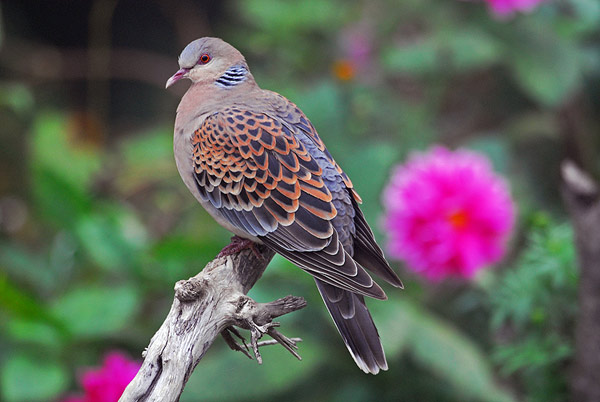
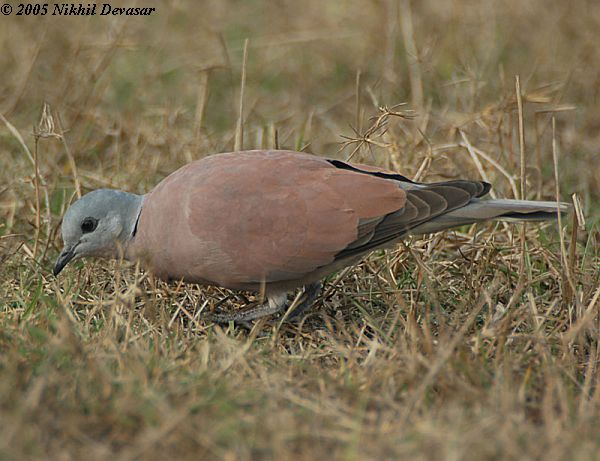
Oriental Turtle Dove (Streptopelia orientalis) by Nikhil

Oriental Turtle Dove (Streptopelia orientalis) by Nikhil

The flowers appear on the earth; the time of the singing of birds is come, and the voice of the turtle is heard in our land; (Song of Solomon 2:12 KJV)

According to the latest list of Turtle Doves by the I.O.C version 2.5 there are only six doves that bear the name “Turtle Dove.” They are in two genus (groups), the Nesoenas and the Streptopelia. That means that they are closely related, but the ornithologist have divided them that way.

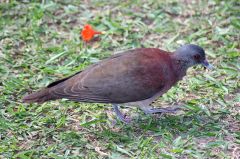
Malagasy Turtle Dove (Nesoenas picturata) ©WikiC

Malagasy Turtle Dove (Nesoenas picturata) ©WikiC

The Malagasy Turtle Dove (Nesoenas picturata) is the only one in the Nesoenas. The Malagasy Turtle-dove (Nesoenas picturata), is also known as the Madagascar Turtle-dove, is a bird species in the pigeon and dove family, Columbidae. It is found in British Indian Ocean Territory, Comoros, Madagascar, Mauritius, Mayotte, Réunion, and Seychelles. Its closest relative a Pink Pigeon together they form a lineage apart from both the typical pigeons (Columba) and the typical turtle-doves (Streptopelia).

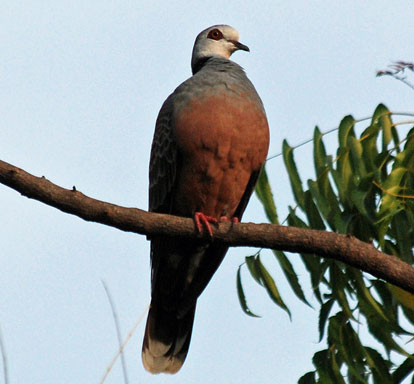
Adamawa Turtle Dove (Streptopelia hypopyrrha) ©WikiC

Adamawa Turtle Dove (Streptopelia hypopyrrha) ©WikiC

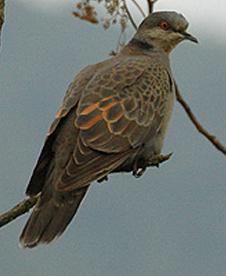
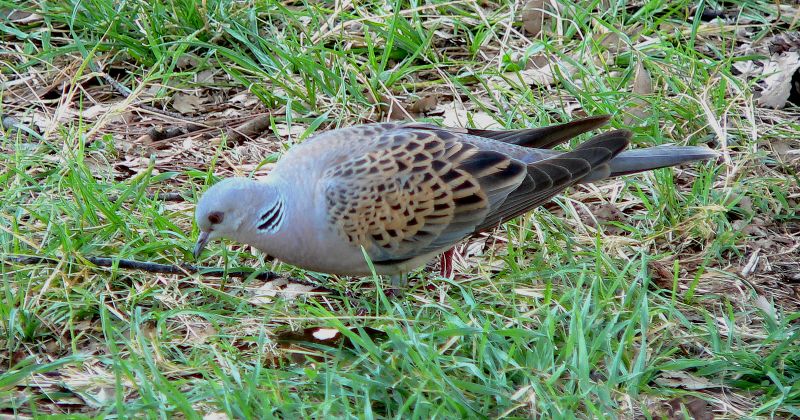
The other five Turtle Doves, the Euopean, Dusky, Adamawa, Oriental, and Red are in the Streptopelia genus. These are mainly slim, small to medium-sized species. The upperparts tend to be pale brown, and the underparts are often a shade of pink. Many have a characteristic black-and-white patch on the neck, and monotonous cooing songs. Mainly in Africa, but several species occur in tropical southern Asia. As a group, this genus is highly successful; many species are abundant in a range of habitats in the tropics, and two now have a much more extensive distribution.

Dusky Turtle Dove (Streptopelia lugens) ©WikiC

Dusky Turtle Dove (Streptopelia lugens) ©WikiC

In Scripture, the Turtle Dove or “turtledove” appears in fifteen verses. Most of those have to do with the turtledove being used as a sacrifice. In Genesis 15:9 the Lord GOD told Abraham to provide one and a pigeon as part of a sacrifice when Abraham was give the covenant of the promised land.

Then in Leviticus a turtledove was used in the burnt offering in Lev. 1:14, two turtledoves for the trespass offering of Lev. 5:7, two for a second burnt offering in Lev. 5:11, for purification after the birth of a child in Lev. 12:6, 8, a sin offering in Lev. 14:22, a sin and a burnt offering in Lev. 14:30, two more offered in Lev. 15:14 and 29.

In Deuteronomy 6:10, two turtledove or pigeons are used for a cleansing.

O deliver not the soul of thy turtledove unto the multitude of the wicked: forget not the congregation of thy poor for ever. (Psalms 74:19 KJV)

European Turtle Dove (Streptopelia turtur) ©WikiC

European Turtle Dove (Streptopelia turtur) ©WikiC

Here is what Albert Barnes Notes on the Bible says about the above verse in Psalms: “Psa 74:19 O deliver not the soul of thy turtle-dove – The “life” of thy turtle-dove; or, thy turtle-dove itself. The turtle-dove is a name of endearment for one beloved, in Son. 2:12, and is thus applied here to the people of Israel. The leading idea in such an application of the word is that of innocence, harmlessness, timidity, gentleness. The thought here is that of a people dear to God, now timid and alarmed. It is the prayer of a people beloved by God that he would not deliver them to their enemies. The prayer may be regarded as one which was used on the occasion referred to in the psalm; or, as a general prayer for the people of God, considered as exposed to ravening enemies.”

John Wesley’s Explanatory Notes says of Song of Son. 2:12 (quoted at top): “The flowers – The communications of God’s grace, the gifts, and graces, and comforts of the Holy Spirit, are vouchsafed unto, and appear in believers, as buds and blossoms do in the spring. The turtle – This seems particularly to be mentioned because it not only gives notice of the spring, but aptly represents the Spirit of God, which even the Chaldee paraphrast understands by this turtle, which appeared in the shape of a dove, and which worketh a dove – like meekness, and chastity, and faithfulness, in believers.”

Jeremiah speaks of the migration of the turtledove.

Yea, the stork in the heaven knoweth her appointed times; and the turtle and the crane and the swallow observe the time of their coming; but my people know not the judgment of the LORD. (Jeremiah 8:7 KJV)

RedTurtle Dove (Streptopelia tranquebarica) by Nikhil Devasar

RedTurtle Dove (Streptopelia tranquebarica) by Nikhil Devasar

Last but not least, Mary offered a pair of turtledove at the end of her purification after Jesus was born. The turtledove are in Luke 2:24, but the whole passage from Luke 2:21-39 is worth reading.

Most of the times, not always, the turtledove or pigeons were use in the sacrifices by someone who could not afford an animal like a lamb or a bullock. I find this very comforting because God did not make salvation only for those who could afford it. In fact, none of us can afford the cost of what took for the purchase of our salvation.

Forasmuch as ye know that ye were not redeemed with corruptible things, as silver and gold, from your vain conversation received by tradition from your fathers; But with the precious blood of Christ, as of a lamb without blemish and without spot: Who verily was foreordained before the foundation of the world, but was manifest in these last times for you, Who by him do believe in God, that raised him up from the dead, and gave him glory; that your faith and hope might be in God. (1 Peter 1:18-21 KJV)

The Gospel Message

(All photos may be clicked on – WikiC = Wiki Commons. Hover mouse over underlined verses.)
*

Ian’s Bird of the Week – White-breasted Woodswallow

White-breasted Woodswallow (Artamus leucorynchus) by Ian

Ian’s Bird of the Week – White-breasted Woodswallow ~ by Ian Montgomery

Newsletter ~ 07-28-10

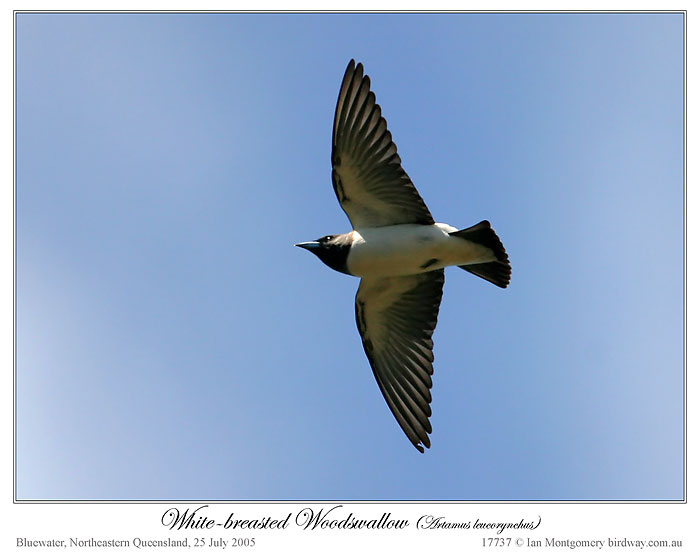
White-breasted Woodswallow (Artamus leucorynchus) by Ian

White-breasted Woodswallow (Artamus leucorynchus) by Ian

Some species are a source of continual pleasure even when they are very common, such as the White-breasted Woodswallow, which is to be seen daily in Northeastern Queensland, perching conspicuously on power-lines or trees and chasing insects, swallow-like, in small flocks. They are attractive birds, fun to watch and courageous, frequently mobbing raptors.

White-breasted Woodswallow (Artamus leucorynchus) by Ian

White-breasted Woodswallows “hanging out” by Ian

Woodswallows get their name from a superficial similarity to true swallows, though in flight they are stockier and lack forked tails as in the second photo. They aren’t related to swallows and form a family, the Artamidae, with the larger more crow-like Australian Magpie, Butcherbirds and Currawongs. The White-breasted Woodswallow is widespread through eastern and northern Australia and is resident in northern coastal areas but migratory or nomadic in other parts of its range.

They are sociable birds, as can be seen in the third photo, and often roost together in large numbers. The fourth photo shows a roost on power-lines near a set of traffic lights on a busy Townsville intersection. When I took the photo, at dusk, about 200 birds were present and the one looking down towards the camera had just elbowed its way into the middle of the row after landing on birds already in place.

White-breasted Woodswallow (Artamus leucorynchus) by Ian

White-breasted Woodswallow “Squeezed in” by Ian

Back at the website, the ‘Current Picks’ (Australian, New World, Old World and Other Wildlife) are:
Shy Albatross
Purple Honeycreeper
Razorbill
and Platypus

I’ve reformatted the Image Purchases page and published a scale of prices for digital images for the conservation- and/or education-related projects that account for most of the Birdway business: http://www.birdway.com.au/printpurchases.htm

Best wishes,
Ian

Ian Montgomery, Birdway Pty Ltd,
454 Forestry Road, Bluewater, Qld 4818
Phone: +61-7 4751 3115
Preferred Email: ian@birdway.com.au
Website: http://birdway.com.au


Lee’s Addition:

Love that last photo, Ian! Can they breathe?  :)

As Ian said, the Woodswallows belong to the Artamidae Family. There are 11 members and they live mainly in Australia and New Zealand. They are part of the Passeriformes Order and “they are among the very few passerines birds that soar, and can often be seen feeding just above the treetops.”

“The woodswallows have an Australasian distribution, with most species occurring in Australia and New Guinea. The Ashy Woodswallow has an exclusively Asian distribution, ranging from India and Sri Lanka through South East Asia to China, and the most widespread species is the White-breasted Woodswallow, which ranges from Peninsular Malaysia through to Australia in the south and Vanuatu and New Caledonia. The group reaches the easternmost extent of its distribution in Fiji with the endemic Fiji Woodswallow.” (Wikipedia)

Even the sparrow has found a home, And the swallow a nest for herself, Where she may lay her young— Even Your altars, O LORD of hosts, My King and my God. (Psalms 84:3 NKJV)

See:

Ian’s Birds of the Week

*

Birds-Advertisers of Life..

Birds-Advertisers of Life..

Graceful Prinia (Prinia gracilis) by Nikhil Devasar

Graceful Prinia (Prinia gracilis) by Nikhil Devasar

If they
do not eat well
the night before,
they would surely die…That’s why,
the birds sing
at dawn,
to advertise to the world
that,
they are still alive
and that,
they are ready to face
another tough day ahead
in life…
Did you sing
for the LORD
this morning?
Why I ask you this
is cos,
those who are dead
never sing..
Do they?

Wilt thou show wonders to the dead? shall the dead arise and praise thee? Selah. (Psalm 88:10)

A thought from a j mithra.

*

The Graceful Prinia is in the Cisticolidae Family.

*

Birds of the Bible – Honeyguide?

Brown-backed (Wahlberg's) Honeybird (Prodotiscus regulus) byWiki

Brown-backed (Wahlberg’s) Honeybird (Prodotiscus regulus) byWiki

The Honeyguide is an interesting bird. They are not mentioned specifically in the Bible by “name”, but all birds are mentioned whether named or not. The Lord God created all of them on the fifth day and declared them good.

And God created great whales, and every living creature that moveth, which the waters brought forth abundantly, after their kind, and every winged fowl after his kind: and God saw that it was good. And God blessed them, saying, Be fruitful, and multiply, and fill the waters in the seas, and let fowl multiply in the earth. And the evening and the morning were the fifth day. (Genesis 1:21-23 KJV)

Honeyguides love the honey, wax, larvae or whatever else is found in the honeycomb. In fact, it was created with such a cooperative instinct, that it helps others find the honey and in return, it gets fed also. The scientist today call it “mutualism” or “sembiotic relationship”. There is a Honey Badger (Ratal) that can’t see so well but loves the same things in the honeycomb and the Honeyguide “guides” it to the honey source. The bird first finds the bee’s nest, but since it is too weak to tear the comb apart, it finds the badger. Then by flitting its wings and making a fuss, it slowly leads the critter to the nest. He or she, does the hard work. The badger tears the bee’s nest apart with its paws and enjoys the meal. There is always enough left over that the bird gets its share of the meal also. Of course God has given the badger its instinct to let the bird lead it to honey also. They both need each other to make this work.

The bird has also been known to lead humans to a honey source. “One researcher found use of honeyguides by the Boran people of East Africa reduces the search time of people for honey by approximately two-thirds. Because of this benefit, the Boran use a specific loud whistle, known as the “Fuulido”, when a search for honey is about to begin. The “Fuulido” doubles the encounter rate with honeyguides” (Wikipedia)

Pleasant words are as an honeycomb, sweet to the soul, and health to the bones. (Proverbs 16:24 KJV)
My son, eat thou honey, because it is good; and the honeycomb, which is sweet to thy taste: (Proverbs 24:13 KJV)

The Lord Jesus even was served fish and a honeycomb after His resurrection.

And they gave him a piece of a broiled fish, and of an honeycomb. (Luke 24:42 KJV)

Yellow-rumped Honeyguide (Indicator xanthonotus) by A Grosset

Yellow-rumped Honeyguide (Indicator xanthonotus) by A Grosset

The Honeyguide is in the Indicatoridae Family which has 17 members and are in the Piciformes Order. Recently three of the birds were changed from Honeyguides to Honeybirds, but they all love honey. Most honeyguides are dull-colored, though a few have bright yellow in the plumage. All have light outer tail feathers, which are white in all the African species. The two honeyguides, the Greater Honeyguide and the Scaly-throated Honeyguide, are the most studied for this behavior.

The fear of the LORD is clean, enduring for ever: the judgments of the LORD are true and righteous altogether. More to be desired are they than gold, yea, than much fine gold: sweeter also than honey and the honeycomb. (Psalms 19:9-10 KJV)

See Also:

Birds of the Bible

Creation Moments – Helpful Honeyguide

Wikipedia – Honeyguides
Don Roberson’s Bird Families of the World – Honeyguides Indicatoridae

*