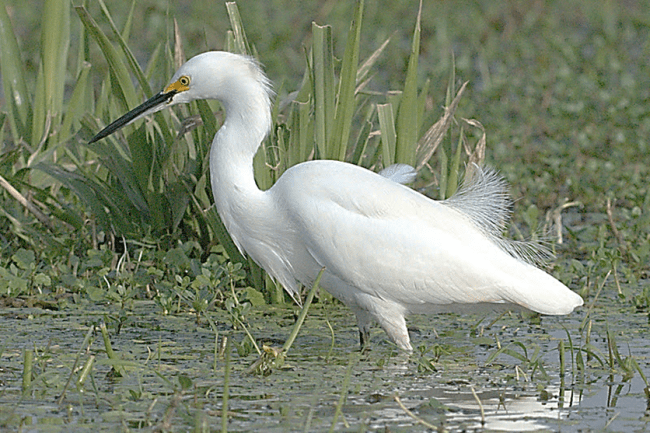
So, what are they wading for, in South Florida?

Dr. James J. S. Johnson

“To everything there is a season, and a time to every purpose under the heaven … Everything He [i.e., God] has made beautiful, in its time: also He hath set eternity in their heart, so that no man can find [i.e., fully find/discover] the work that God has done from the beginning to the end.” (Ecclesiastes 3:1 & 3:11)

Lately I’ve been investigating birds of South Florida, especially those of the Everglades and the Florida Keys. God willing, I expect to be part of a scientific/educational tour of those parts of Florida, later this year (more on that later, D.v., if that trip becomes a reality!). Meanwhile, a few of those Florida birds are on my mind, so it’s timely to post a bit on some of these beauties. For starters, let’s consider some heron-like wading birds, the kinds that have long skinny legs, perfect for hunting food in shallow waters.

Interestingly, there is an “albino” version (endemic subspecies) of the Great Blue Heron, called the “Great White Heron”. In other words, this version of the Great Blue Heron is white, but it’s not a Great White Egret. It’s seen in the Florida Keys. In fact, there is a national wildlife refuge named for it: Great White Heron National Wildlife Refuge, just west of national Key Deer Refuge.

The face of a “Great White Heron” looks a lot like that of a regular Great Blue Heron — to compare, consider this mugshot of a Great Blue Heron.

Of course, South Florida has lots of inland and coastal waters, so the opportunities for hunting and eating aquatic prey seems boundless, as a practical matter (to a hungry heron). Consider this Great Blue Heron, eating what looks like a catfish. Of course, there are many other heron-like birds in South Florida. For another example, consider the Little Blue Heron, which is often found in the Everglades. The Little Blue Heron has bluish-grey plumage, ivory white legs and feet, and a whitish dagger-like bill.

For another wading bird of South Florida, consider the Roseate Spoonbill. Well-named, this rose-feathered wader has a distinctively spoon-shaped bill, used for capturing prey (and securing it as the bill-shaking bird drains out excess water before swallowing.

For another example, consider the American Flamingo (a/k/a Pink Flamingo), an icon of South Florida’s colorful wildlife. If the flamingo gets the right diet, and thus gets lots of carotenoid pigment, the red-to-pink color is vivid!

And we should not forget the Wood Stork, which Buddy Davis calls “the only stork of North America” (see SWAMP MAN, Buddy’s classic wildlife DVD produced by Answers in Genesis ministry).

WOOD STORK (“Iron-head”): Nat’l Park Service photo

The clunky-looking Wood Stork is nicknamed “Iron-hHead” (and “Flint-head”) due to its grey scaly neck and head.

Of course, the Snowy Egret is a Florida favorite — especially to LEESBIRD.COM visitors. Snowy legs are black, but look at those yellow feet! Some call them “golden slippers”, since they walk, strut, and amble upon their feet; others say “golden gloves” since snowies use them as prehensile fingers, grasping things.

One of my (this is JJSJ talking) all-time favorite wading birds, of Florida, is the White Ibis. Some become accustomed to eating bread crumbs provided by birdwatchers, e.g., in the Webels’ pondside backyard (St. Petersburg). And, in some public parks, white ibises might even eat bread crumbs out of your hand!

That’s it for now . . . please appreciate that God has providentially equipped the habitats of Florida to be bird’s havens, so those habitats are likewise birder’s havens! Yes, the Lord has made all of these birds “beautiful in their times”–and in ours too!

“To everything there is a season, and a time to every purpose under the heaven … Everything He [i.e., God] has made beautiful, in its time: also He hath set eternity in their heart, so that no man can find [i.e., fully find/discover] the work that God has done from the beginning to the end.” (Ecclesiastes 3:1 & 3:11)

Hey! Is that an egret standing atop my head? (Photo by Marcia Webel)

Tundra Swans Return, in November, to Chesapeake Bay

Swans Return, in November, for Chesapeake Bay Over-wintering

Dr. James J. S. Johnson

To every thing there is a season, and a time to every purpose under the heaven . . . .  He hath made every thing beautiful in his time; also He has set the world in their heart, so that no man can find out the work that God makes from the beginning to the end. (Ecclesiastes 3:1 & 3:11)
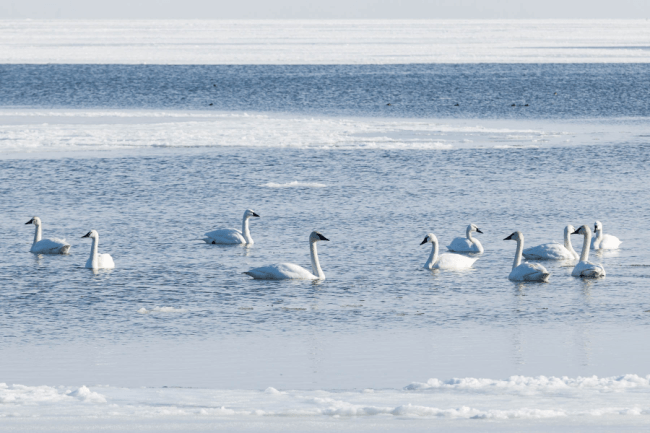
TUNDRA SWANS as “Winter Marylanders”
(Will Parson/Chesapeake Bay Program photo credit)

Seasons come and seasons go, demonstrating the faithfulness of God’s post-Flood promise to Noah and Noah’s Ark passengers:

While the earth remains, seedtime and harvest, and cold and heat, and summer and winter, and day and night shall not cease. (Genesis 8:22)

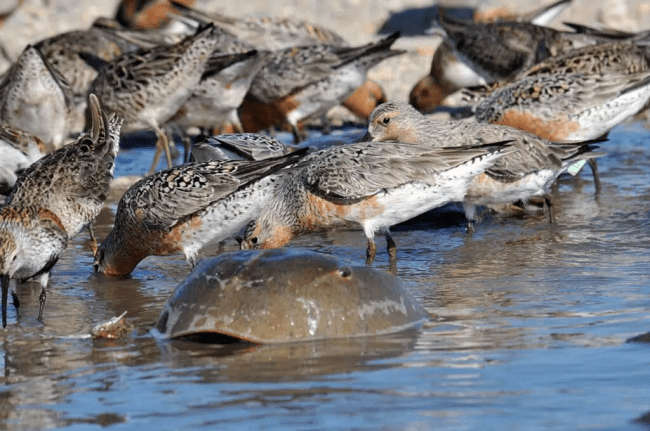
RED KNOTS eating horseshoe crab eggs
(USF&WS / Gregory Breese photo credit)

Only a half-year ago the May migrants were blanketing shorelands of the Delmarva [Delaware-Maryland-Virginia] Peninsula, and other parts of the the Chesapeake Bay’s watershed shorelands, here and there:

In May we were tramping the saltmarshes and beaches of the lower Delmarva Peninsula with biologists from the Nature Conservancy, collecting vital data on a variety of shorebirds, from willets to whimbrels, plovers to dunlins, red knots to ruddy turnstones. Some, like the curved-beaked whimbrels, may be airborne without stopping for up to five days, arriving at the lush marshes and mudflats of our region famished from their winter haunts in South America. For several weeks they will refuel here, nonstop, chowing down on fiddler crabs. Then, one spring evening, something in them stirs, and they are aloft by the thousands, not to alight before reaching breeding grounds that stretch from Hudson Bay to far northwest Canada’s Mackenzie River Delta. [Quoting Tom Horton, CHESAPEAKE BAY JOURNAL, 34(5):30 (July -August 2024).]

But now, in November, the phenological reverse occurs — because, during May (and earlier), migrant birds fly northward, to seek out their summer breeding grounds; whereas, during November (and earlier), migrant birds are flying southbound, leaving their breeding grounds behind, as they emigrate by air to their over-wintering grounds.

Come this autumn we’ll be on Deer Creek on the Susquehanna River . . . [including] days in the wet and snow over the winter, filming tundra swans, one of the largest long-distance migrators of the bird world. They [i.e., tundra swans] spend a good portion of their lives on the wing, moving from breeding grounds across Alaska’s North Slope and the Yukon each fall into the Chesapeake and North Carolina — a 9,000-mile round trip. . . . . In November, not long after the last monarch [butterfly, emigrating southward to Mexico] has passed through, and as the silver eels [migrating snake-shaped ray-finned fish] stream from the Chesapeake’s mouth toward Sargasso depths, there will come the lovely, wild hallooing of “swanfall” — the descent of the tundra swans from on high to grace our winter. [Quoting Tom Horton, CHESAPEAKE BAY JOURNAL, 34(5):30 (July -August 2024).]

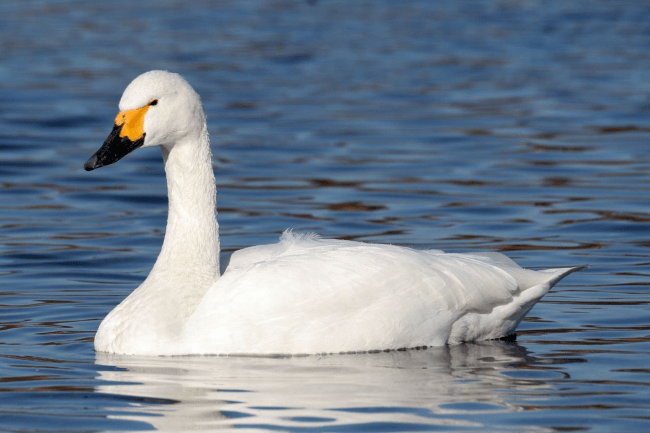
TUNDRA SWAN (Wikipedia / Maga-chan photo credit)

Tundra swans — they are huge [some would say “yooge”] geese-like birds.

So, what kinds of waterfowl are phenologically (and providentially) programmed, by the Lord Jesus Christ, to winter in ice-free estuaries like the Chesapeake Bay? 

“Duck, duck, goose!”—and swans (such as Tundra Swans), just to name the most obvious.  For example, Tundra Swans—being “yooge” birds—are easy to observe, especially if they are afloat in waters of an estuarial (or lacustrine) habitat that you may be visiting.

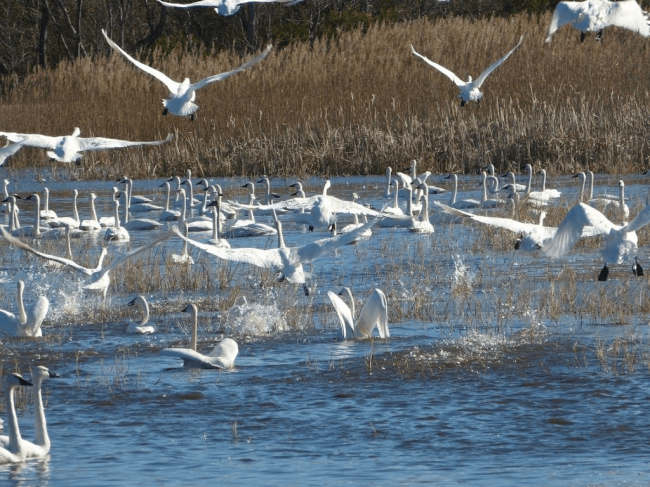
TUNDRA SWANS in North Carolina
(USF&WS photo / public domain)

Swans are the largest waterfowl, and the tundra swans travel the farthest, more than 4,000 miles in some cases. They winter primarily on the Delmarva [Delaware-Maryland-Virginia] Peninsula and the estuarine edges of North Carolina. These large white birds are easily recognized by their black bills and straight or nearly straight necks. Tundra swans often form flocks on shallow ponds. [Quoting Kathy Reshetiloff, “Chesapeake’s Abundance Lures Wintering Waterfowl”, CHESAPEAKE BAY JOURNAL, 33(9):40 (December 2023), posted at http://www.bayjournal.com/columns/bay_naturalist/chesapeake-s-abundance-lures-wintering-waterfowl/article_4463317a-887f-11ee-a208-8768dc34c5a7.html .]

Wow! — what a wonder these wintering waterfowl are!

Or, more appropriately said, Hallelujah! — what a treasure of phenological providence these wonderful waterbirds are, showing God’s handiwork and caring kindness for His own creatures. May God bless them all, as they faithfully do their respective parts to “be fruitful, and multiply upon the earth” (Genesis 8:17).

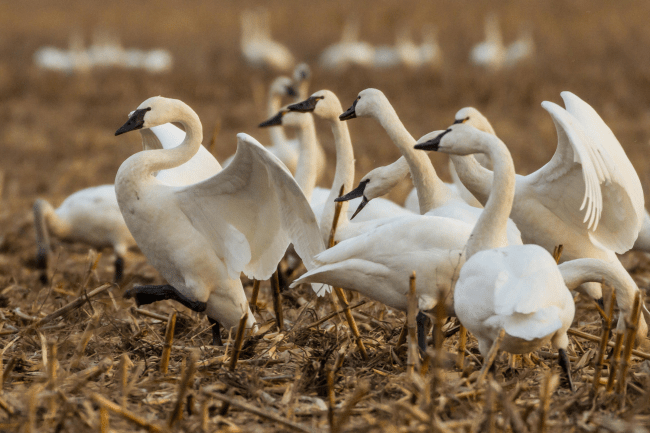
TUNDRA SWANS
(Audubon Field Guide photo credit)

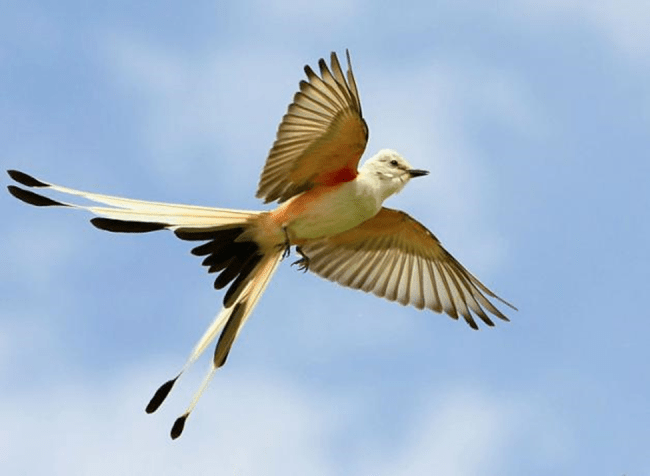
Hallelujah! — A Beautiful Scissortail!

Hallelujah! — A Beautiful Scissortail!

Dr. James J. S. Johnson

He [i.e., God] hath made every thing beautiful in His time; also He hath set the world in their heart, so that no man can find out the work that God maketh from the beginning to the end.

Ecclesiastes 3:11
SCISSOR-TAILED FLYCATCHER
Ken Slade / BirdNote.org photo credit

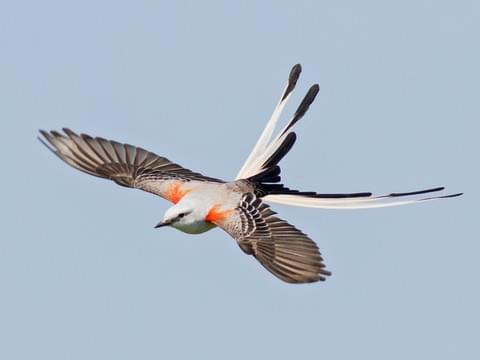
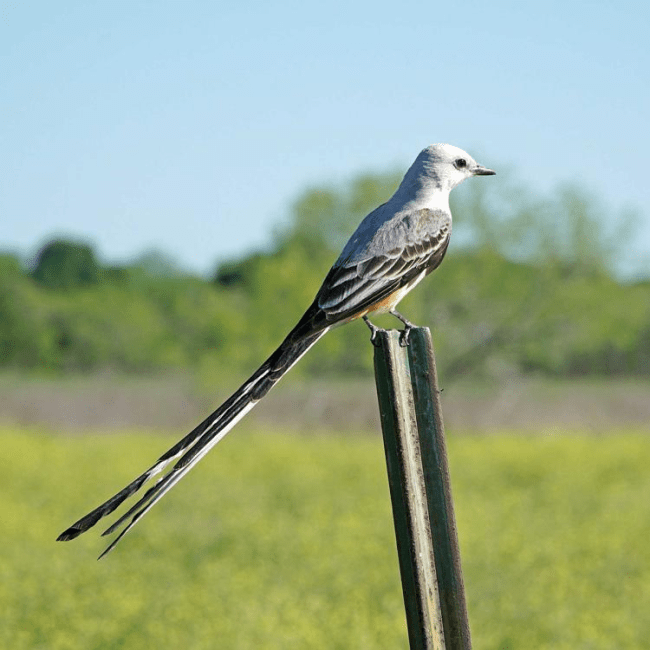
It was a welcome sight to see a beautiful Scissor-tailed Flycatcher, last week, when my wife and I were returning home, in our van, near the Elm Fork of Texas’s Trinity River. The scissortail was perched upon a utility line, paralleling the roadside, near the edge of a forested area–and what a beautiful bird the scissor tail is!

For relevant information (and pictures) of the Scissor-tailed Flycatcher, see my earlier blogpost, “SCISSOR-TAILED FLYCATCHER: the Texas Bird of Paradise”, posted at https://leesbird.com/2022/06/17/scissor-tailed-flycatcher-the-texas-bird-of-paradise/ .

SCISSORTAIL in flight (Cornell photo credit)

Enjoying even a quick view, of what Lee Dusing calls “God’s avian wonders”, is a reminder that we need to get outside more often, especially as the weather permits. (Can I get an “Amen” on that?)

The need to enjoy nature is recognized by many folks, including non-Christians (as is evidenced by the quote below), yet Christians especially should be enjoying God’s interactive handwork–especially “God’s avian wonders”.

Tracking a white-tailed deer through a forest, hooking a smallmouth bass or rockfish, feeding ruby-throated hummingbirds in your backyard, or just watching a beautiful butterfly visit flower after flower in your garden — these are all activities that connect us not only to nature but to each other. And a growing body of research shows that we are healthier and happier when we spend more time outdoors.

This passion for wildlife and wild places is reflected in the preliminary findings of the 2022 National Survey of Fishing, Hunting and Wildlife-Associated Recreation, coordinated by my employer, the U.S. Fish and Wildlife Service. First conducted in 1955 — and every five or six years since — this survey is based on interviews with thousands of citizens from all walks of life.

In 2022, more than 259 million Americans participated in some form of wildlife-associated recreation including fishing, hunting, birdwatching, photography and more. Watching wildlife was most popular (148 million), followed by fishing (almost 40 million) and hunting (14 million). This translates into 57% of Americans spending time observing wildlife. About 15% fished, and 6% hunted. The Mid-Atlantic region mimicked this trend with 17.8 million (54%) citizens engaged in wildlife watching, while 4 million fished (13%) and 1.5 million hunted (5%).

The survey defines wildlife watching primarily as taking a special interest in wildlife around homes or taking a trip for the primary purpose of seeing animals of one kind or another. But it also includes feeding animals (mainly birds), photographing them and maintaining or planting natural areas for the benefit of wildlife. Most people did these things around or near their homes (146 million). A comparison of results from the 2022 survey with those of the 2016 survey revealed there was a 72% increase in the number of Americans engaged in wildlife watching.

Kathy Reshetiloff, “More Than Ever, we like to go where the wild things are”, CHESAPEAKE BAY JOURNAL, 33(7):40 (October 2023), emphasis added.
MALE SCISSORTAIL perching
Forrest Mims III / Seguin Gazette photo credit

Wow! Wildlife watching is really a big deal!

And the most popular form of wildlife watching is birdwatching. (THANKS, LEE, for hosting this Christian birdwatching blog–all these many years–so that we can cyber-share in these beautiful birdwatching experiences, with all of those who–in God’s providence–visit this wonderful blog.)

Of course, of all those who enjoy birdwatching (in the wild or via cyber “watching”), surely Christians should enjoy birdwatching the most, because Christians personally know the marvelous Maker of all the beautiful birds (John 17:3; 2nd Corinthians 10:17; Jeremiah 9:23-24), including scissortails!

FLORIDA POND-SHORE REPORT, PART 3

FLORIDA POND-SHORE REPORT, PART 3

Dr. James J. S. Johnson

He hath made everything beautiful in his time….

(Ecclesiastes 3:11a)

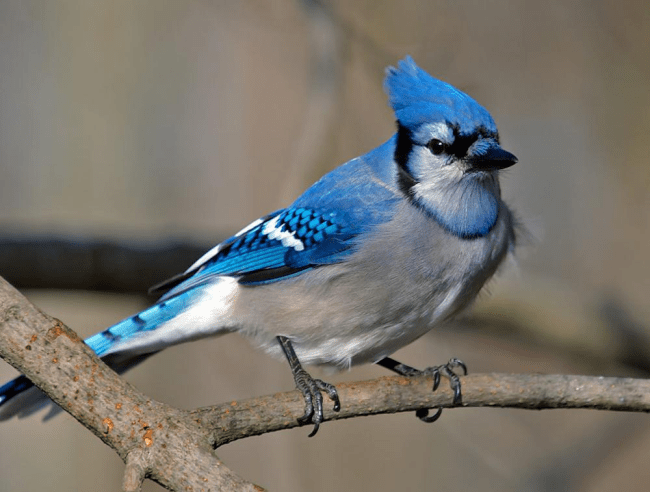
BLUE JAY (photo credit: Rob Hanson/ Wikipedia)

As reported in 2 recent blogposts   —  ( see https://leesbird.com/2023/01/20/florida-pond-shore-report-part-1/  and https://leesbird.com/2023/01/23/florida-pond-shore-report-part-2/ )  —  the pond-shore birds were plentiful (except not ducks, for some odd reasons) in St. Petersburg, Florida, at the home of Chaplain Bob and Marcia Webel, on the morning of Monday, January 16th (A.D.2023, as Chaplain Bob and I sat in lawn chairs in the Webels’ backyard that adjoins the pond-shore (of what Floridians call a “lake”), drinking our coffee (and eating toasted rye bread). 

In that prior-reported blogposts I described reported (in Part 1) seeing Bald Eagle, White Ibis, and Common Grackle, as well as seeing (in Part 2) Great Blue Heron, Great White Egret, and Double-crested Cormorant.

In this report (Part 3) the birds to be featured are Snowy Egret, Mockingbird, Mourning Dove, and Blue Jay.

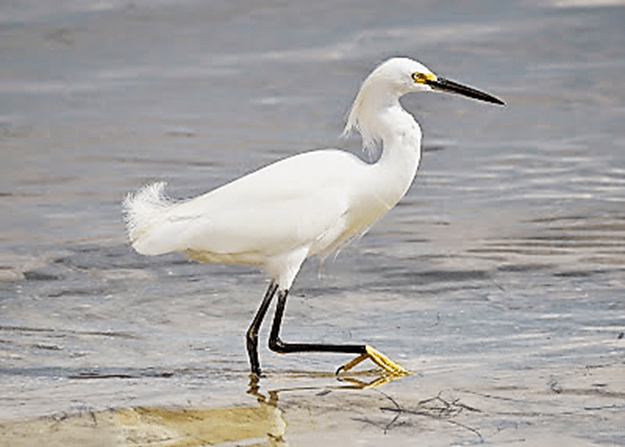
SNOWY EGRET in St. Petersburg  (Joan and Dan’s Birding Blog image, q.v.)

SNOWY EGRET.  The Snowy Egret has previously been described on this blog by ornithologist Lee Dusing, documenting this splendidly plumed wader (seen in St. Petersburg), in her blogpost “Walking Snowy Egret Showing Off Yellow Feet”, posted  at https://leesbird.com/2019/01/04/walking-snowy-egret-showing-off-yellow-feet/ , on January 4th of A.D.2019, — as well as in “’E’ is for Egrets and Emus: ‘E Birds’, Part 2” (posted at https://leesbird.com/2016/11/08/eis-for-egrets-and-emus-e-birds-part-2/ , on November 11th of AD2018).   Snowy Egrets (Egretta thula) are reported to hybridize with Little Egret (Egretta garzetta) and Cattle Egret (Bubulcus ibis), according to Eugene M. McCarthy, HANDBOOK OF AVIAN HYBRIDS FO THE WORLD (Oxford, UK: Oxford University Press, 2006), pages 189-191.  The Snowy Egret, as a member of the “heron-egret” subfamily Ardeinae, is a distant “cousin” to the Great White Egret that is described in “Egret Feathers, Worth More than Gold!” (posted at https://leesbird.com/2018/08/17/egret-feathers-worth-more-than-gold/ , dated August 17th of AD2018).

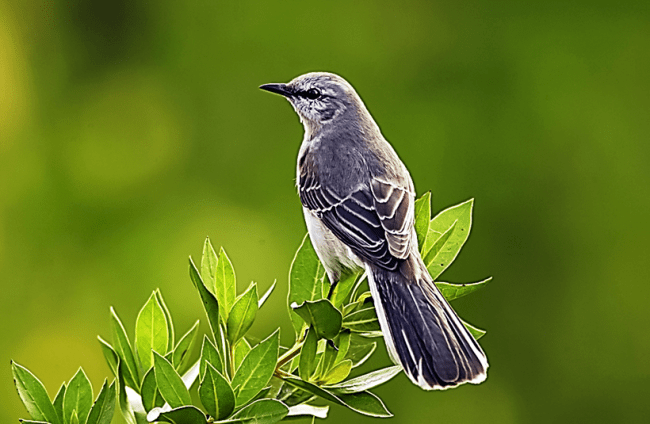
NORTHERN MOCKINGBIRD    ( U.S. Fish & Wildlife Service image / Wikipedia, q.v.)

MOCKINGBIRD.  The Northern Mockingbird (whose ability to “mock” the vocal sounds of others, reminding us of the wisdom in Ecclesiastes 10:20) has previously been described on this birdwatching blog  –  see “Mockingbirds: Versatile Voices in Plain Plumage”, posted at https://leesbird.com/2017/08/16/mockingbirds-versatile-voices-in-plain-plumage/  (on August 16th of AD2016).  See also ornithologist Lee Dusing’s video-enhanced blogpost (“Northern Mockingbird”), posted March 19th of AD2009, at https://leesbird.com/2009/03/19/northern-mockingbird/ , citing the Peterson Field Guide Video Series, q.v., at https://www.youtube.com/user/petersonfieldguides .

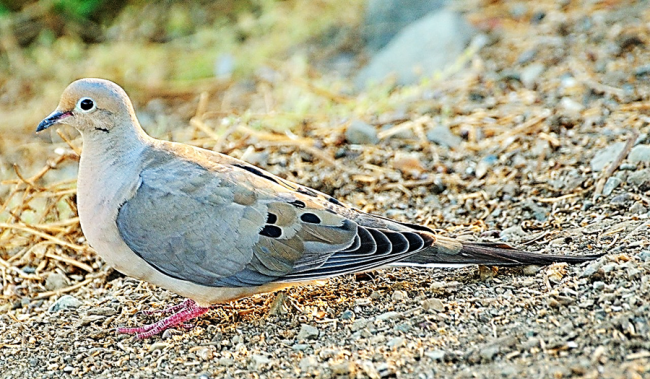
MOURNING DOVE, ( Don BeBold image / Wikipedia, q.v.)

MOURNING DOVE.  The Mourning Dove has previously been described on this birdwatching blog  –  see “The Ghost Army – Repost”, posted November 2nd of AD2015, at https://leesbird.com/2015/11/02/the-ghost-army-repost/  —  citing https://www.icr.org/article/8990 (from the November AD2015 issue of ACTS & FACTS magazine), — as well as in “Pond-side Birdwatching in Florida, Part III”, posted March 5th of AD2015 (at https://leesbird.com/2015/03/05/pond-side-birdwatching-in-florida-iii/ ).  See also ornithologist Lee Dusing’s interesting report on doves in her blogpost “Birds of the Bible:  Dove and Turtledove”, posted May 16th of AD2008 (at https://leesbird.com/2008/05/16/birds-of-the-bible-dove-and-turtle-dove/ ), noting that our Mourning Dove matches the prophet’s lamentation in Isaiah 38:14.  Of course, just because you hear mourning-like cooing—that sounds like a dove—it might be another bird!  (See “So, Who Coos from the Rooftop?” — posted June 9th of AD2022, at https://leesbird.com/2022/06/09/so-who-coos-from-the-rooftop/ ), noting that Roadrunners can make sounds like those of Mourning Doves!  Amazing!

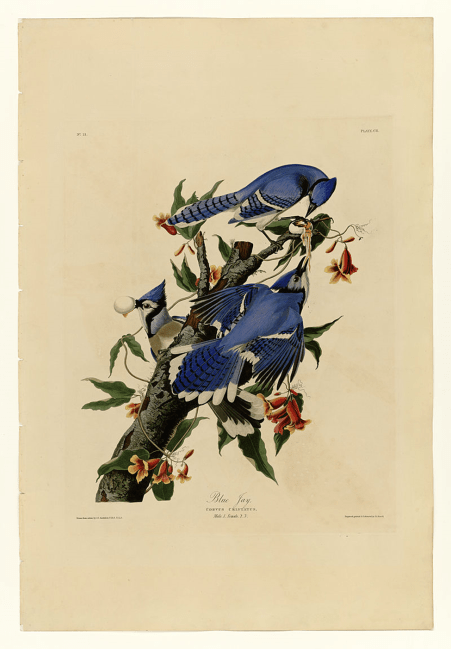
BLUE JAY (John James Audubon painting, ~AD1830s / public domain)

BLUE JAY.  The Blue Jay, which can be a neighborhood bully, has been described on this birding blog  –  see “Bird Brains, Amazing Evidence of God’s Genius”, posted on March 7th of AD2013 (at https://leesbird.com/2013/03/07/48484/ ).  When ranges overlap, such as in Rocky Mountain states, Blue Jays sometimes hybridize with Steller’s Jays — see “Jaybirds Mix It Up in Colorado”, posted on November 12th of AD2018 (at  https://leesbird.com/2018/11/12/jaybirds-mix-it-up-in-colorado/ ). The behavioral habits of Blue Jays, which include eating sunflower seeds, are noted within the poetic blogpost titled “Here’s Seed for Thought”, posted on July 4th of AD2015 (at https://leesbird.com/2015/07/04/heres-seed-for-thought/ ).  Another jaybird adventure that comes to mind is the birdwatching joy (on July 7th of AD2006, with my wife, while approaching a rural restaurant) of seeing a Eurasian Jay in a wooded field outside of Porvoo, Finland – see  “Eurasian Jay: ‘Jay of the Oaks’ Admired in Finland”, posted on October 10th of AD2016 (at https://leesbird.com/2016/10/10/eurasian-jay-jay-of-the-oaks-admired-in-finland/  ). Truly amazing!

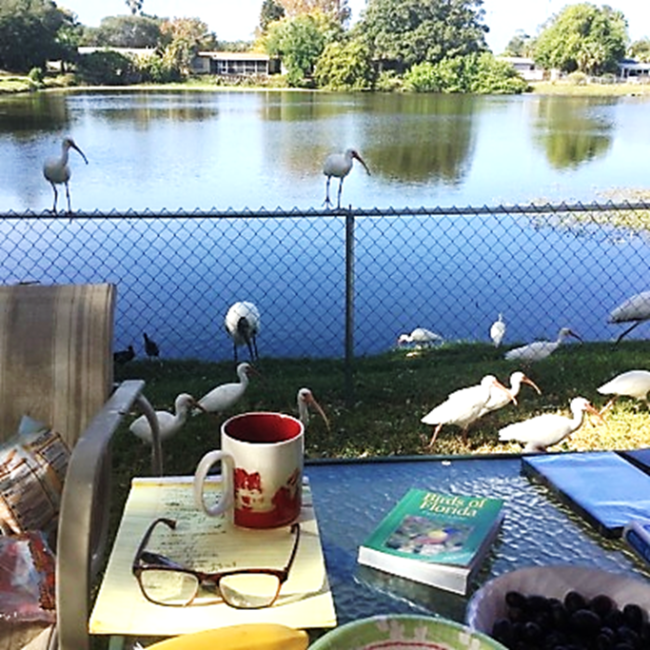
WEBELS’ BACKYARD BIRDWATCHING    (Marcia Webel photo, AD2016)

Meanwhile, the other pond-shore visiting birds  —  i.e., Florida Gallinule (a/k/a Common Moorhen), Anhinga (a/k/a Snakebird), Tufted Titmouse, Limpkin, Red-bellied Woodpecker, and Muscovy Duck (the last being seen on grass of neighbor’s front-yard)  —   on the morning of Monday, January 16th of A.D.2023), must wait for another day to be reported here, Deo volente.  Thank the Lord for such good memories!

Also, thanks be unto the LORD for His creative and artistic bioengineering as our great Creator, including His Creatorship as exhibited in His making of Snowy Egrets (like the one below shown) and of all of Earth’s other magnificent birds!

><> JJSJ profjjsj@aol.com

SNOWY EGRET   (Rich Vial / Clearly Confused Blog photo credit)