Spirit of God, that moved of old
Upon the waters’ darkened face,
Come, when our faithless hearts are cold,
And stir them with an inward grace.
Thou that art power and peace combined,
All highest strength, all purest love,
The rushing of the mighty wind,
The brooding of the gentle dove.
Come, give us still Thy powerful aid,
And urge us on, and make us Thine;
Nor leave the hearts that once were made
Fit temples for Thy grace divine.
Nor let us quench Thy sev’nfold light;
But still with softest breathings stir
Our wayward souls, and lead us right,
O Holy Ghost, the Comforter.
And I will bring the blind by a way that they knew not; I will lead them in paths that they have not known: I will make darkness light before them, and crooked things straight. These things will I do unto them, and not forsake them. (Isaiah 42:16 KJV)
Cecil F. Alexander Born-Early April 1818 in Redcross, County Wicklow, Ireland. Died on October 12, 1895 in Londonderry, Northern Ireland. She was Buried at the City Cemetery, Londonderry, Northern Ireland.
Alexander’s husband was William Alexander, bishop of Derry and Raphoe, and later the Anglican primate for Ireland. Cecil and her sister founded a school for the deaf, and she set up the Girls’ Friendly Society in Londonderry. Cecil Alexander wrote about 400 hymns in her lifetime.
Geystliche Gesangk Buchleyn (actually a hymn book, maybe)- No information
We hail thee, glorious summer,
We welcome thee today,
With all thy flowery legions
And all thy songbirds gay.
The happy rills to meet thee
With merry laughter run;
While woodland banners greet thee,
Beneath a smiling sun.
Refrain
We hail thee, joyous summer! We welcome thee today! With all thy flowery legion, And all thy songbirds gay.
We hail thy smile of gladness
O Summer fair and sweet;
O let us lay all sadness
And sighing at thy feet.
The woodland ways are ringing
With many a merry lay;
Oh let us join in singing
With nature’s choir today.
We hail thee, joyous summer! We welcome thee today! With all thy flowery legion, And all thy songbirds gay.
O Summer, thou hast brought us
A message sweet and fair;
O Summer, thou hast taught us
Of Heaven’s brooding care.
Thy gleaming skies of glory
Watch o’er the world in love;
They tell a glad, sweet story
Of summer lands above.
We hail thee, joyous summer! We welcome thee today! With all thy flowery legion, And all thy songbirds gay.
Thus hath the Lord GOD shewed unto me: and behold a basket of summer fruit. (Amos 8:1 KJV)
Alice J. Cleator, Born in Andreas, Isle of Man, England and died April 27, 1926 in Cleveland, Ohio.
Cleator’s family evidently emigrated to America in the 1870’s. She was living in Claridon, Ohio, in 1880, & Geauga County, Ohio, in 1900, 1910, & 1920. She taught school in New York City, retiring some time before 1915.
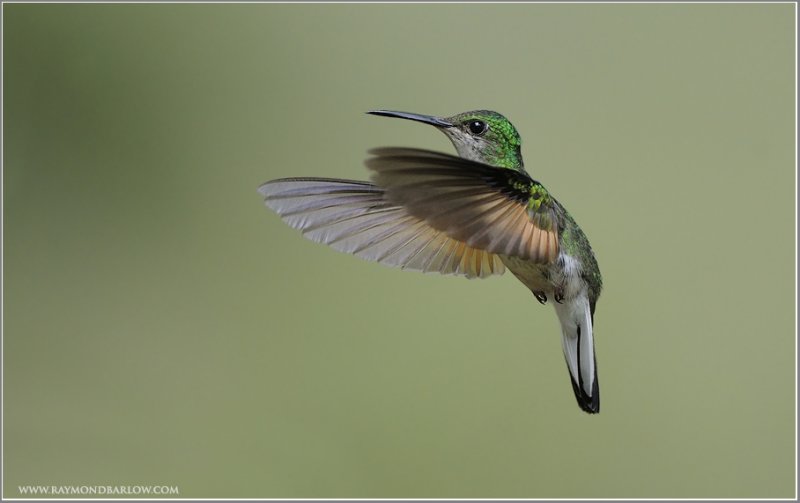
Stripe-tailed Hummingbird (Eupherusa eximia) Female by Raymond Barlow
The heavens declare the glory of God; and the firmament sheweth his handywork. (Psalms 19:1 KJV)
Words by Henry Ware Jr. (1794-1843), 1822
Music – Bethlehem by Gottfried W. Fink (1783-1846)
All Nature’s Works His Praise Declare
All nature’s works His praise declare, to whom they all belong;
There is a voice in every star, in every breeze a song.
Sweet music fills the world abroad with strains of love and power;
The stormy sea sings praise to God, the thunder and the shower.
To God the tribes of ocean cry, and birds upon the wing;
To God the powers that dwell on high their tuneful tribute bring.
Like them, let us the throne surround, with them loud chorus raise,
While instruments of loftier sound assist our feeble praise.
Great God, to Thee we consecrate our voices and our skill;
We bid the pealing organ wait to speak alone Thy will.
Lord, while the music round us floats may earth born passions die;
O grant its rich and swelling notes may lift our souls on high!
Praise ye the LORD. Praise ye the LORD from the heavens: praise him in the heights. (Psalms 148:1 KJV)
Henry Ware, Jr was born April 21, 1794 in Hingham, Massachusetts, Died on September 25, 1843 in Framingham, Massachusetts and was buried in Mount Auburn Cemetery, Cambridge, Massachusetts.
Son of a Unitarian minister, Ware attended Harvard and became an assistant teacher at Exeter Academy in New Hampshire. In 1815, the Boston Unitarian Association licensed him to preach, and in 1817, he was ordained and became pastor of the Second Church in Boston, Massachusetts. He was Professor of Pulpit Eloquence and Pastoral Care at the Harvard Divinity School, 1829-1842. He also edited the Christian Disciple (later renamed the Christian Examiner), and ran the Society for Religious Improvement at Harvard University (his father was on the faculty there, as well). A two volume Memoir and a four volume Works were published three years after his death. Ware wrote this hymn for a service dedicating a new organ (see the last stanza).
Gottfried W. Fink was born onMarch 8, 1783, Sulza on the Ilm, Thuringia and died on August 27, 1846, Leipzig, Germany.
Fink sang as a chorister at Naumburg, and studied theology at Leipzig (1804-8). He became a Professor of Music at Leipzig in 1842. He is remembered for his writings on music history and theory, and his collections of secular and religious songs.
And one cried unto another, and said, Holy, holy, holy, is the LORD of hosts: the whole earth is full of his glory. (Isaiah 6:3 KJV)
Words by Ann T. Gilbert (1782-1852), 1827 (originally, “Spared to Another Spring”).
This hymn appeared, unattributed, in the American School Hymn Book, by Asa Fitz, 1854, and is sometimes incorrectly ascribed to Fitz. The version below was published in the 1882 Collection by Godfrey Thring.
Music: Swabia by Johann M. Spiess (1715-1772) – arranged by William H. Havergal, 1847
Great Giver of All Good
Great Giver of All Good,
To Thee our thanks we yield
For all the beauties of the wood,
Of hill, and dale, and field.
Ten thousand various flowers
To Thee sweet offerings bear, And joyous birds in woodlands bowers
Sing forth Thy tender care.
The fields on every side
The trees on every hill,
The glorious sun, the rolling tide,
Proclaim Thy wonders still.
But trees, and fields, and skies
Still praise a God unknown;
For gratitude and love can rise
From living hearts alone.
These living hearts of ours
Thy holy Name would bless;
The blossoms of the thousand flowers
Would please the Savior less.
While earth itself decays,
Our souls can never die;
O tune them all to sing Thy praise
In better songs on high.
By them shall the fowls of the heaven have their habitation, which sing among the branches. (Psalms 104:12 KJV)
Ann T. Gilbert was the daughter of Isaac Taylor, who at the time of her birth was a London engraver. Her father subsequently became a Congregational minister, living first at Colchester, then at Ongar. In 1813, she married the Rev. Joseph Gilbert, classical and mathematical tutor at the Congregational College, Masborough (near Rotherham), Yorkshire. From Masborough they moved to Hull, and later Nottingham.
Johann M. Spiess taught music at the Gymnasium in Heidelberg, Germany, and played the organ at St. Peter’s Church and (1746-1772) at Berne Cathedral.
Black-headed Heron (Ardea melanocephala) by Lee Lowry Pk Zoo
Based on:
All things were made by him; and without him was not any thing made that was made. (John 1:3 KJV)
Words by ~ Josiah Conder (1789-1855), in The Congregational Hymn Book, 1836.
Music ~ “Dix” ~by~ Conrad Kocher, Stimmen aus dem Reiche Gottes, 1838
O Give Thanks To Him Who Made
O give thanks to Him Who made
Morning light and evening shade;
Source and Giver of all good,
Nightly sleep and daily food;
Quickener of our wearied powers,
Guard of our unconscious hours.
O give thanks to nature’s King,
Who made every breathing thing;
His, our warm and sentient frame,
His, the mind’s immortal flame.
O how close the ties that bind
Spirits to the Eternal Mind!
O give thanks with heart and lip,
For we are His workmanship;
And all creatures are His care: Not a bird that cleaves the air
Falls unnoticed; but who can
Speak the Father’s love to man?
O give thanks to Him Who came
In a mortal, suffering frame—
Temple of the Deity—
Came for rebel man to die;
In the path Himself hath trod
Leading back His saints to God.
Green-billed Toucan (Ramphastos dicolorus) by Dario Sanches
Based on:
But God forbid that I should glory, save in the cross of our Lord Jesus Christ, by whom the world is crucified unto me, and I unto the world. (Galatians 6:14 KJV)
Words by Isaac Watts, 1707. Charles Wesley reportedly said he would give up all his other hymns to have written this one.
Music is Hamburg, by Lowell Mason, 1824;
Alternate tune: Rockingham (Miller), Edward Miller, 1790
When I Survey The Wondrous Cross
When I survey the wondrous cross
On which the Prince of glory died,
My richest gain I count but loss,
And pour contempt on all my pride.
Forbid it, Lord, that I should boast,
Save in the death of Christ my God!
All the vain things that charm me most,
I sacrifice them to His blood.
See from His head, His hands, His feet,
Sorrow and love flow mingled down!
Did e’er such love and sorrow meet,
Or thorns compose so rich a crown?
His dying crimson, like a robe,
Spreads o’er His body on the tree;
Then I am dead to all the globe,
And all the globe is dead to me.
Were the whole realm of nature mine,,
That were a present far too small;
Love so amazing, so divine,
Demands my soul, my life, my all.
To Christ, who won for sinners grace
By bitter grief and anguish sore,
Be praise from all the ransomed race
Forever and forevermore.
This hymn was used even though a bird is not mentioned specifically. The verse with “Were the whole realm of nature mine,” always reminds me of all the birds and other critters that God created. To me, it belongs in with the Birds in Hymns section. Also, the message of the whole hymn tells of the Savior’s love and death on the cross for our salvation.
But they that wait upon the LORD shall renew their strength; they shall mount up with wings as eagles; they shall run, and not be weary; and they shall walk, and not faint. (Isaiah 40:31 KJV)
Words by Isaac Watts,
Found in Hymns and Spiritual Songs, Book I, 1707, #48.
Born 1674 in Southampton, England.- Died 1748 in Stoke Newington, England
Music: Trell by Lowell Mason and Carmina Sacra, 1844
Alternate tunes:
St. Petersburg, attributed to Dmitri S. Bortniansky, 1825
Samson, arranged from George F. Handel (1685-1759)
Awake, Our Souls; Away, Our Fears
Awake, our souls; away, our fears,
Let every trembling thought be gone;
Awake, and run the heavenly race,
And put a cheerful courage on.
True, ’tis a strait and thorny road,
And mortal spirits tire and faint;
But they forget the mighty God,
That feeds the strength of every saint.
Bald Eagle (Haliaeetus leucocephalus) by AestheticPhotos
Thee, mighty God! whose matchless power
Is ever new, and ever young;
And firm endures, while endless years
Their everlasting circles run.
From Thee, the overflowing spring,
Our souls shall drink a fresh supply;
While such as trust their native strength
Shall melt away, and droop, and die.
Swift as an eagle cuts the air, We’ll mount aloft to Thine abode; On wings of love our souls shall fly, Nor tire amidst the heav’nly road.
But Jesus answered and said, Ye know not what ye ask. Are ye able to drink of the cup that I shall drink of, and to be baptized with the baptism that I am baptized with? They say unto him, We are able. (Matthew 20:22 KJV)
Words: Reginald Heber, 1812.
(This hymn was sung in the 1975 movie The Man Who Would Be King, which was nominated for several Academy Awards.)
Music: All Saints, Henry S. Cutler, in The Hymnal with Tunes Old and New, by John Ireland Tucker, 1872
Alternate tunes:
Old 81st, Day’s Psalter, 1562
St. Anne, William Croft, 1708
Warrior, Archibald MacDonald, 1877
In Mrs. Ewing’ Story of a Short Life it is the favorite hymn in the barracks, where the soldiers call it the ‘tug of war’ hymn. The officer’s son, who had been crippled for life by an accident, begs just before his death that the soldiers will sing it again. They go under his window, and when in the midst of the verse, ‘A noble army, men and boys,’ a hand is seen at the window pulling down the blind. The brave sufferer is gone. The story made the hymn widely popular among children as the ‘tug of war’ hymn. Telford, p. 410
The Son of God Goes Forth to War
*
The Son of God goes forth to war,
A kingly crown to gain;
His blood red banner streams afar:
Who follows in His train?
Who best can drink His cup of woe,
Triumphant over pain,
Who patient bears his cross below,
He follows in His train.
That martyr first, whose eagle eye
Could pierce beyond the grave;
Who saw his Master in the sky,
And called on Him to save.
Like Him, with pardon on His tongue,
In midst of mortal pain,
He prayed for them that did the wrong:
Who follows in his train?
A glorious band, the chosen few
On whom the Spirit came;
Twelve valiant saints, their hope they knew,
And mocked the cross and flame.
They met the tyrant’s brandished steel,
The lion’s gory mane;
They bowed their heads the death to feel:
Who follows in their train?
A noble army, men and boys,
The matron and the maid,
Around the Savior’s throne rejoice,
In robes of light arrayed.
They climbed the steep ascent of Heav’n,
Through peril, toil and pain;
O God, to us may grace be giv’n,
To follow in their train.
*
Silver-breasted Broadbill (Serilophus lunatus) by Peter Ericsson
We love him, because he first loved us. (1 John 4:19 KJV)
Here is another hymn from the past. This time written by Stopford A. Brooke (1832-1916) and composed by George W. Chadwick (1854-1931)
Words by Stopford A. Brooke, Christian Hymns, 1881.
Music is called “Armstrong” (Chadwick) by George W. Chadwick , 1888
When The Lord Of Love Was Here
**
When the Lord of Love was here,
Happy hearts to Him were dear,
Though His heart was sad;
Worn and lonesome for our sake,
Yet he turned aside to make
All the weary glad.
Meek and lowly were His ways,
From His loving grew His praise,
From His giving, prayer;
All the outcast thronged to hear,
All the sorrowful drew near
To enjoy His care.
When he walked the fields, He drew
From the flowers and birds and dew
Parables of God;
For within His heart of love
All the soul of man did move,
God had His abode.
Lord, be ours Thy power to keep
In the very heart of grief,
And in trial, love;
In our meekness to be wise,
And through sorrows to arise
To our God above.
Fill us with Thy deep desire
All the sinful to inspire
With the Father’s life;
Free us from the cares that press
On the heart of worldliness
From the fret and strife.
And, when in the fields and woods
Were are filled with Nature’s moods,
May the grace be given
With Thy faithful heart to say,
“All I see and feel today
Is my Father’s Heaven.”
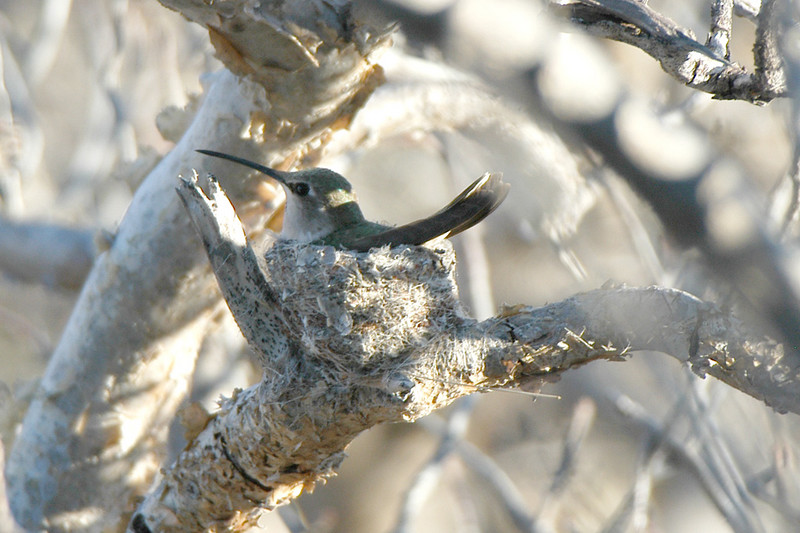
Costa's Hummingbird on Nest (Calypte costae) by Bob-Nan
Based on:
Let us be glad and rejoice, and give honour to him: for the marriage of the Lamb is come, and his wife hath made herself ready. (Revelation 19:7 KJV)
Words by – Anne R. Cousin, in The Christian Treasury, 1857.
From this hymn came the title of Cousin’s 1876 work, Immanuel’s Land and Other Pieces by A. R. C.
Music: Rutherford, Chrétien d’Urhan, 1834; arranged by Edward F. Rimbault, 1867
The Sands of Time Are Sinking
The sands of time are sinking, the dawn of Heaven breaks;
The summer morn I’ve sighed for—the fair, sweet morn awakes:
Dark, dark hath been the midnight, but dayspring is at hand,
And glory, glory dwelleth in Immanuel’s land.
O Christ, He is the fountain, the deep, sweet well of love!
The streams on earth I’ve tasted more deep I’ll drink above:
There to an ocean fullness His mercy doth expand,
And glory, glory dwelleth in Immanuel’s land.
Oh! Well it is forever, Oh! well forevermore,
My nest hung in no forest of all this death doomed shore:
Yea, let the vain world vanish, as from the ship the strand,
While glory—glory dwelleth in Immanuel’s land.
There the red rose of Sharon unfolds its heartsome bloom
And fills the air of Heaven with ravishing perfume:
Oh! To behold it blossom, while by its fragrance fanned
Where glory—glory dwelleth in Immanuel’s land.
The King there in His beauty, without a veil is seen:
It were a well spent journey, though seven deaths lay between:
The Lamb with His fair army, doth on Mount Zion stand,
And glory—glory dwelleth in Immanuel’s land.
Oft in yon sea beat prison My Lord and I held tryst,
For Anwoth was not Heaven, and preaching was not Christ:
And aye, my murkiest storm cloud was by a rainbow spanned,
Caught from the glory dwelling in Immanuel’s land.
But that He built a Heaven of His surpassing love,
A little new Jerusalem, like to the one above,
“Lord take me over the water” hath been my loud demand,
Take me to my love’s own country, unto Immanuel’s land.
But flowers need night’s cool darkness, the moonlight and the dew;
So Christ, from one who loved it, His shining oft withdrew:
And then, for cause of absence my troubled soul I scanned
But glory shadeless shineth in Immanuel’s land.
The little birds of Anwoth, I used to count them blessed,
Now, beside happier altars I go to build my nest:
Over these there broods no silence, no graves around them stand,
For glory, deathless, dwelleth in Immanuel’s land.
Fair Anwoth by the Solway, to me thou still art dear,
Even from the verge of Heaven, I drop for thee a tear.
Oh! If one soul from Anwoth meet me at God’s right hand,
My heaven will be two heavens, In Immanuel’s land.
I’ve wrestled on towards Heaven, against storm and wind and tide,
Now, like a weary traveler that leaneth on his guide,
Amid the shades of evening, while sinks life’s lingering sand,
I hail the glory dawning from Immanuel’s land.
Deep waters crossed life’s pathway, the hedge of thorns was sharp;
Now, these lie all behind me Oh! for a well tuned harp!
Oh! To join hallelujah with yon triumphant band,
Who sing where glory dwelleth in Immanuel’s land.
With mercy and with judgment my web of time He wove,
And aye, the dews of sorrow were lustered with His love;
I’ll bless the hand that guided, I’ll bless the heart that planned
When throned where glory dwelleth in Immanuel’s land.
Soon shall the cup of glory wash down earth’s bitterest woes,
Soon shall the desert briar break into Eden’s rose;
The curse shall change to blessing the name on earth that’s banned
Be graven on the white stone in Immanuel’s land.
O I am my Beloved’s and my Beloved’s mine!
He brings a poor vile sinner into His “house of wine.”
I stand upon His merit—I know no other stand,
Not even where glory dwelleth in Immanuel’s land.
I shall sleep sound in Jesus, filled with His likeness rise,
To love and to adore Him, to see Him with these eyes:
’Tween me and resurrection but paradise doth stand;
Then—then for glory dwelling in Immanuel’s land.
The bride eyes not her garment, but her dear bridegroom’s face;
I will not gaze at glory but on my king of grace.
Not at the crown He giveth but on His piercèd hand;
The Lamb is all the glory of Immanuel’s land.
I have borne scorn and hatred, I have borne wrong and shame,
Earth’s proud ones have reproached me for Christ’s thrice blessed name:
Where God His seal set fairest they’ve stamped the foulest brand,
But judgment shines like noonday in Immanuel’s land.
They’ve summoned me before them, but there I may not come,
My Lord says “Come up hither,” My Lord says “Welcome home!”
My king, at His white throne, my presence doth command
Where glory—glory dwelleth in Immanuel’s land.
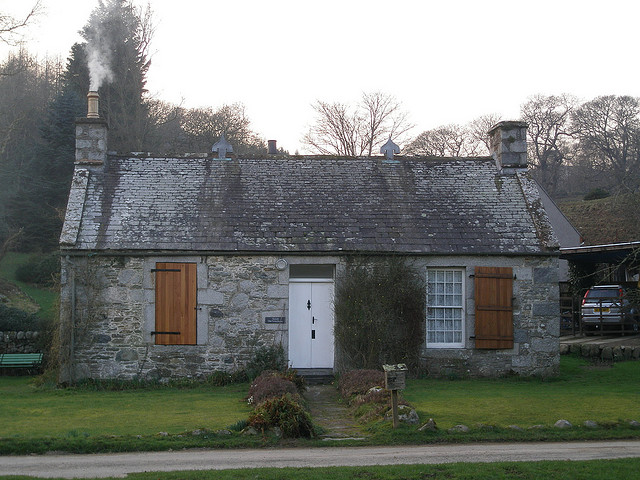
Old School House in Anwoth, Scotland
Anwoth is a settlement near the Solway Firth in the Stewarty of Kirkcudbright, in South West Scotland, within a parish of the same name in the Vale of Fleet, Dumfries and Galloway. Anwoth lies a mile (1.5 km) to the west of Gatehouse of Fleet.
Anwoth’s most famous inhabitant was the Rev. Samuel Rutherford (1600? – 1661), who was the minister at Anwoth Old Kirk from 1627 until 1636 when he was banished to Aberdeen. On a nearby hill, there is Rutherford’s Monument, a 55 foot high granite obelisk erected in 1842. A millennium cairn opposite the monument lists the names of all the ministers of Anwoth and Girthon until the year 2000 when it was erected. The Old Kirk was in use until 1825, but is now just a ruin.
West Anwoth Parish Church was built in 1826–1827. It is a Walter Newall Gothic box style church with tower and hood-moulded windows. It closed in 2002.
The Church of Scotland sold the Church to a neighbouring family who now keep it as a hall fo ceremonies and parties. The church was re-roofed in 2007 and is being kept in the best of condition.
An ancient fort on nearby Trusty’s Hill was occupied by Iron Age people and may have been attacked and burned by a Pictish raiding party, who carved a series of symbol stones in a rock beside the entrance passage.
Anne Ross Cousin’s hymn, The Sands of Time are Sinking, mentions Anwoth, because of its historic spiritual connection with Samuel Rutherford. Verses 9 & 10 of her original nineteen stanza poem are:
The little birds of Anwoth, I used to count them blessed,
Now, beside happier altars I go to build my nest:
Over these there broods no silence, no graves around them stand,
For glory, deathless, dwelleth in Immanuel’s land.
Fair Anwoth by the Solway, to me thou still art dear,
Even from the verge of heaven, I drop for thee a tear.
Oh! If one soul from Anwoth meet me at God’s right hand,
My heaven will be two heavens, In Immanuel’s land.
Sources – CyberHymnal and Wikipedia
*
Another great hymn by Anne R. Cousin is worth listening to an meditating on the words. She sums up what we desire for all who visit this blog.
Is Jesus Able To Redeem?
Based on:
Come unto me, all ye that labour and are heavy laden, and I will give you rest. (Matthew 11:28 KJV)
Words: Anne R. Cousin (1824-1906).
Music: Esrom, Ira D. Sankey (1840-1908)
Is Jesus able to redeem
A sinner lost, like me?
My sins so great, so many seem!
O sinner, “come and see.”
The blood that Jesus shed of old
Was shed for you and me:
And there is room within the fold—
O “come to Him and see.”
Is Jesus willing to forgive
A rebel child, like me?
Who would not in His favor live?
O rebel, “come and see.”
The blood that Jesus shed of old
Was shed for you and me:
And there is room within the fold—
O “come to Him and see.”
Is Jesus waiting to relieve
A wanderer, like me,
Who chose the Father’s house to leave?
O wanderer, “come and see.”
The blood that Jesus shed of old
Was shed for you and me:
And there is room within the fold—
O “come to Him and see.”
Is Jesus ready now to save
A guilty one, like me,
Who brought Him to the cross and grave?
Come, guilty one, and see.
The blood that Jesus shed of old
Was shed for you and me:
And there is room within the fold—
O “come to Him and see.”
*
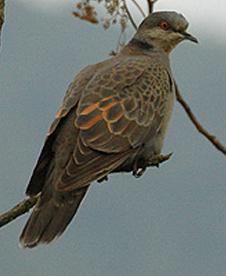
The flowers appear on the earth, the time of singing has come, and the voice of the turtledove is heard in our land. (Song of Solomon 2:12 ESV)
Words by Reginald Heber (1783-1826).
Music – Gosterwood, English melody, arranged by Ralph Vaughan Williams
In The English Hymnal (London: Oxford University Press, 1906), number 299
When Spring Unlocks The Flowers
When spring unlocks the flowers to paint the laughing soil;
When summer’s balmy showers refresh the mower’s toil;
When winter binds in frosty chains the fallow and the flood;
In God the earth rejoiceth still and owns his maker good.
The birds that wake the morning and those that love the shade;
The winds that sweep the mountain or lull the drowsy glade;
The sun that from his amber bower rejoiceth on his way,
The moon and stars their master’s name in silent pomp display.
Shall man, the lord of nature, expectant of the sky,
Shall man alone, unthankful, his little praise deny?
No; let the year forsake his course, the seasons cease to be,
Thee, Master, must we always love, and Savior, honor Thee.
The flowers of spring may wither, the hope of summer fade,
The autumn droop in winter, the birds forsake the shade;
The winds be lulled, the sun and moon forget their old decree;
But we, in nature’s latest hour, O Lord, will cling to Thee!







 Lee's Birdwatching Adventures Plus