Interesting Things – Dinosaur Blood

Dinosaur Blood by Creation Moments

Job 40:15
“Behold now behemoth, which I made with thee; he eateth grass as an ox.”

A short while ago, Creation Moments reported the case of blood cells being discovered in a fossilized T. rex bone. Today, we report on another case. While most fossil bones have lithified, or turned to stone, occasionally identifiable bones are found that are only partially lithified.

Scientists had been studying the fossilized upper leg bone of a T. rex they date at 68 million years. The study consisted of dissolving the minerals from the fossilized bone with slightly alkaline solutions. They were completely surprised, for what remained was a soft, pliable material that proved to be high in carbon. Closer study of the pliable material revealed what appeared to be a network of blood vessels. Researchers were then amazed to find that this network was very similar to the networks found in modern ostrich bones. What’s more, they found bone cells as well as red blood cells in this material. Such findings would never be expected in 68-million-year-old biological material, but the researchers could offer no other interpretation for what they saw. They are now hoping that the discovery might shed light on dinosaur physiology and metabolism.

Researchers are still puzzled at how 68-million-year-old biological material could be preserved for so long. Of course, the obvious answer is that the material is not nearly that old and that dinosaurs were even part of human history.

Prayer:
Father, I thank You for all the wonders of Your creation, including the great dinosaurs. Amen.
Notes:
Science News, 3/26/05, p. 195, S. Perkins, “Old Softy.”

To see more Interesting Things, check out the PLUS section.

Interesting Things – Butterfly Colors

White Peacock Butterfly by Herman1944

White Peacock Butterfly by Herman1944

One thing I have desired of the LORD, That will I seek; That I may dwell in the house of the LORD all the days of my life, to behold the beauty of the LORD, and to inquire in His temple. (Psalm 27:4)

More Butterfly Colors than You Can See – from Creation Moments

ThinkingThe Amazing Butterfly

The beautiful wing of the butterfly has a lesson to teach everyone who believes living things were created by chance. The design of the butterfly wing involves much more than just intricate complexity. In addition to showing a knowledge of flight, each wing design is the product of very precise specifications built around the specific wavelengths of visible light.

The iridescent colors you admire on a butterfly’s wing are created by the scales of the wings. Each square centimeter of wing has tens of thousands of these scales, each attached to the wing by tiny stems and overlapping each other like cedar shakes. Each one of these scales was a living cell until a day or two before the butterfly emerged from its pupa. Each tiny scale is made of a vertical and horizontal framing within which are found various sacks of pigment hanging from the framework.

Monarch Butterfly at the Butterfly World©©

Monarch Butterfly at the Butterfly World©©

Butterfly wings that seem to glow with iridescent blues and greens have scales with tiny lattices and ribbed walls that are designed to cause interference patterns in light waves within the 300 700 nanometer range – exactly the range humans see as color. That interference pattern is what our eyes interpret as iridescence.

It takes a good knowledge of physics as well as micro architecture to design and build an iridescent butterfly wing! Science clearly teaches us that such ability and knowledge does not come from chance. Let’s be bold to admit the truth – there is a Creator!

Prayer:

Father in heaven, a child can see the beauty of Your handiwork in the wing of the butterfly. Through my witness, help those who have been fooled by evolution to see You in Your creation and our salvation

From  More Butterfly Colors than You Can See ©Creation Moments 2010


See also:

Interesting Things

Interesting Things – The Amazing Butterfly

Butterflies – God’s Flying Flowers

The Creation of New Butterfly Species Before Our Eyes, Stephen Caesar

*

The Cat and the Crow

Just received an email from a friend today with this YouTube Video. Thought I would share it. It is really amazing.

From ozricus

The wolf also shall dwell with the lamb, and the leopard shall lie down with the kid; and the calf and the young lion and the fatling together; and a little child shall lead them. And the cow and the bear shall feed; their young ones shall lie down together: and the lion shall eat straw like the ox. … They shall not hurt nor destroy in all my holy mountain: for the earth shall be full of the knowledge of the LORD, as the waters cover the sea. (Isaiah 11:6-9 KJV)

Interesting Things – Similar Features Show Design

Gilbert Sturart's Portrait of George Washington©WikiC

Gilbert Sturart's Portrait of George Washington©WikiC

Chimpanzee at Lowry Park Zoo by Lee

Chimpanzee at Lowry Park Zoo

Similar Features Show Design, Not Universal Common Descent by Randy J. Guliuzza, P.E., M.D. is a very interesting article from the October issue of the Acts and Facts from Institute for Creation Research.

“I’m related to George Washington,” an acquaintance announced after searching his genealogical record. He also believes he is closely related to chimpanzees. Though he doesn’t really look like either, all three do share a lot of similar features.

So, are similar looks or features enough to establish whether these three are related closely, remotely, or not at all in regard to their ancestry? No. Similar looks and features can be very deceiving. A true relationship is actually a fact-based connection. A line of connected birth certificates is factual evidence that can be verified. Just comparing similar features—or even DNA—to determine related ancestry is always an inference with a probability of being right ranging from high to zero.

For the rest of the article – Click Here. It is a very good article.

*

Interesting Things – Loving Poison Dart Frog

Poison Dart Frog - (Epipedobates tricolor)close ©Wiki

Poison Dart Frog - (Epipedobates tricolor)close ©Wiki

The Loving Poison Dart Frog – from Creation Moments

We love Him because He first loved us. (1 John 4:19)

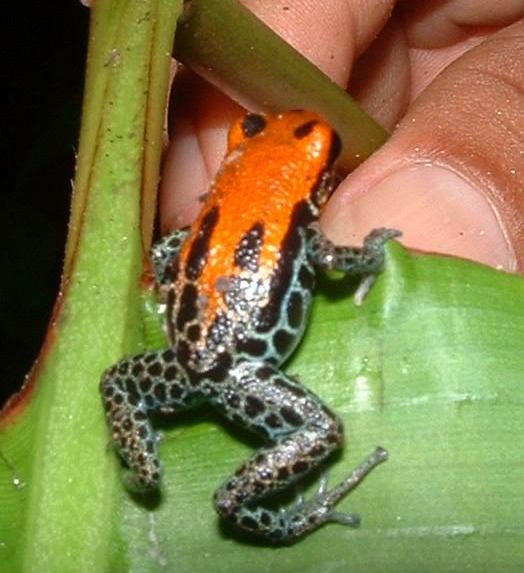
SmileyCentral.comThe Choco Indians of Panama and Colombia use the poison from the skin of the beautiful poison dart frog to make their lethal darts. The bright orange and deep blue skin of this frog serves to warn predators that it is best left alone and its poisonous skin untouched.
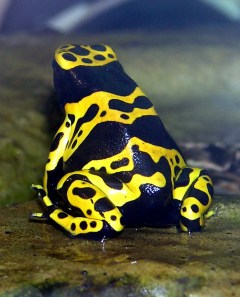
Poison Dart Frog - (Epipedobates tricolor)close ©Wiki

Poison Dart Frog - (Epipedobates tricolor)close ©Wiki

Although it is deadly, the poison dart frog is one of the most loving parents in the entire amphibian world. The female will lay about a dozen eggs in the leaf litter within her mate’s territory. Both parents will stand watch over the eggs, keeping them moist, until the tadpoles emerge. Then the female allows each tadpole, one at a time, to wriggle onto her back. She takes each tadpole, in its turn, to its own miniature pond created by water trapped in the fronds of jungle plants. The mother poison dart frog remembers where each one of her tadpoles is and returns on a regular schedule to lay infertile eggs for the growing youngster to eat.

I would prefer to think that the care of the adult poison dart frogs for their children grows out of a sense of love for their off-spring, and we know that God is the author of all love. But even if this care is programmed instinct, we must still find the “programmer” – and that takes us back to the Creator once again. Such wisdom cannot be said to come from nowhere.
Prayer:
Dear Heavenly Father, the source of all love and wisdom, grant wisdom to Your people so that they may effectively witness to those around them who are being misled to believe that love is merely instinct and that wisdom can come from nowhere. In Jesus’ Name. Amen.

Notes:
Brownlee, Shannon, 1985, Discover, May, p. 55. ©Creation Moments 2010


Poison Dart Frog - Dendrobatid Frog-Peru ©WikiC

Poison Dart Frog - Dendrobatid Frog-Peru ©WikiC

From Wikipedia:
“Most species of poison dart frogs are small, sometimes less than 1.5 centimetres (0.59 in) in adult length, although a few are up to 6 centimetres (2.4 in) in length. They weigh about 2 grams, depending on the size of the frog. Most poison dart frogs are brightly colored, displaying aposematic patterns to warn potential predators. Their bright coloration is associated with their toxicity and levels of alkaloids. Frogs like the ones of Dendrobates species have high levels of alkaloids, whereas the Colostethus species are cryptically colored and are non-toxic.[5] Unlike most other frogs, they are diurnal, rather than being primarily nocturnal or crepuscular.[6] When born and raised in captivity, poison frogs do not produce the skin toxins which they retain in their native habitat.[7]

They lay their eggs in moist places, including on leaves, in plants, among exposed roots, and elsewhere, and allow the tadpoles to wriggle onto their backs shortly after they hatch. They then carry the piggy-backed tadpoles to water, where the larva remain until metamorphosis. The water is typically a pool, but some species use the water gathered in bromeliads or other plants; and some species provide food, supplying the tadpoles with unfertilized eggs to eat.[6]

Many species of poison dart frog are dedicated parents. The red-and-blue poison-arrow frog (Dendrobates pumilio) carry their newly hatched tadpoles into the canopy. The tadpoles stick to the mucus on the back of their parents. Once in the upper reaches of the rainforest trees the parents deposit their young in the pools of water that accumulate in epiphytic plants such as bromeliads. The tadpoles feed on invertebrates in their arboreal nursery and their mother will even supplement their diet by depositing eggs into the water. Other poison frogs lay their eggs on the forest floor, hidden beneath the leaf litter.”
*

Interesting Things – Most Interesting Sounds Never Heard

Northern Lights - ©WikiC

Northern Lights - ©WikiC

The Most Interesting Sounds You’ve Never Heard – from Creation Moments

The clouds poured out water: the skies sent out a sound: thine arrows also went abroad. (Psalm 77:17)

Northern Lights ©WikiC

Northern Lights ©WikiC

We are surrounded by sounds, some of which can be louder than an airliner taking off. Yet, we never hear these sounds. It’s called infrasound. It’s real sound that can be recorded if you have the right equipment.

Infrasound waves are below 20 hertz, the lowest frequency we can hear. Because the sound waves are long, they can travel hundreds or even thousands of miles. Volcanic eruptions regularly generate infrasound and so does the wind. But, perhaps most interestingly, those beautiful Northern Lights that often color the night sky also generate infrasound. The sound is produced when the incoming solar particles push the air outward. While we are not able to hear infrasound, it does influence us. Researchers in England placed an infrasound generator in a concert hall and, during the performance, infrasound was added at selected points. After the concert, the audience was asked about their emotions during certain passages of music, or if they had had experienced any strange feelings during the concert. Researchers concluded that infrasound intensified whatever emotional state the music had produced in people. So, if you have ever watched the Northern Lights and thought you were almost hearing something, it was likely the infrasound you were sensing.

Northern Lights at Fort McMurray©WikiC

Northern Lights at Fort McMurray©WikiC

The more we learn about the creation God has given us, the more we find to marvel at how excellent is His workmanship.

Prayer:
Father, You have been so generous to us, not only in the creation You have given us, but also in Your love in Christ.

Notes:
Science News, 1/10: 2004, pp. 26-28, Kate Ramsayer, “Infrasonic Symphony.”

*

Interesting Things – Ron DiCianni’s Painting of the Resurrection

And said unto them, Thus it is written, and thus it behoved Christ to suffer, and to rise from the dead the third day: (Luke 24:46 KJV)

Resurrection Painting

Resurrection Painting

The following link tells about a great painting that is being done by Ron DiCianni about the Ressurection. I know it is not bird related, but I have had several emails about it and decided to share it here. It is worth watching the video.

The mural will be 12 feet by 40 feet wide. It is to be placed in the Museum of Biblical Arts in Dallas.

Ron DiCianni: Painting the Resurrection.

*

Hummingbird Video Making from NATURE

Thought you might enjoy this video that a friend told me about. It is loaded with great shots of hummers. They belong to the Trochilidae Family of the Apodiformes Order. There are over 330 members in the family.

O LORD, how manifold are thy works! in wisdom hast thou made them all: the earth is full of thy riches. (Psalms 104:24 KJV)

*

Interesting Things – “Darwin’s Finches” – No Proof of Evolution

SmileyCentral.com

“Darwin’s Finches” – No Proof of Evolution

Genesis 1:21 So God created… every winged bird according to its kind. And God saw that it was good.

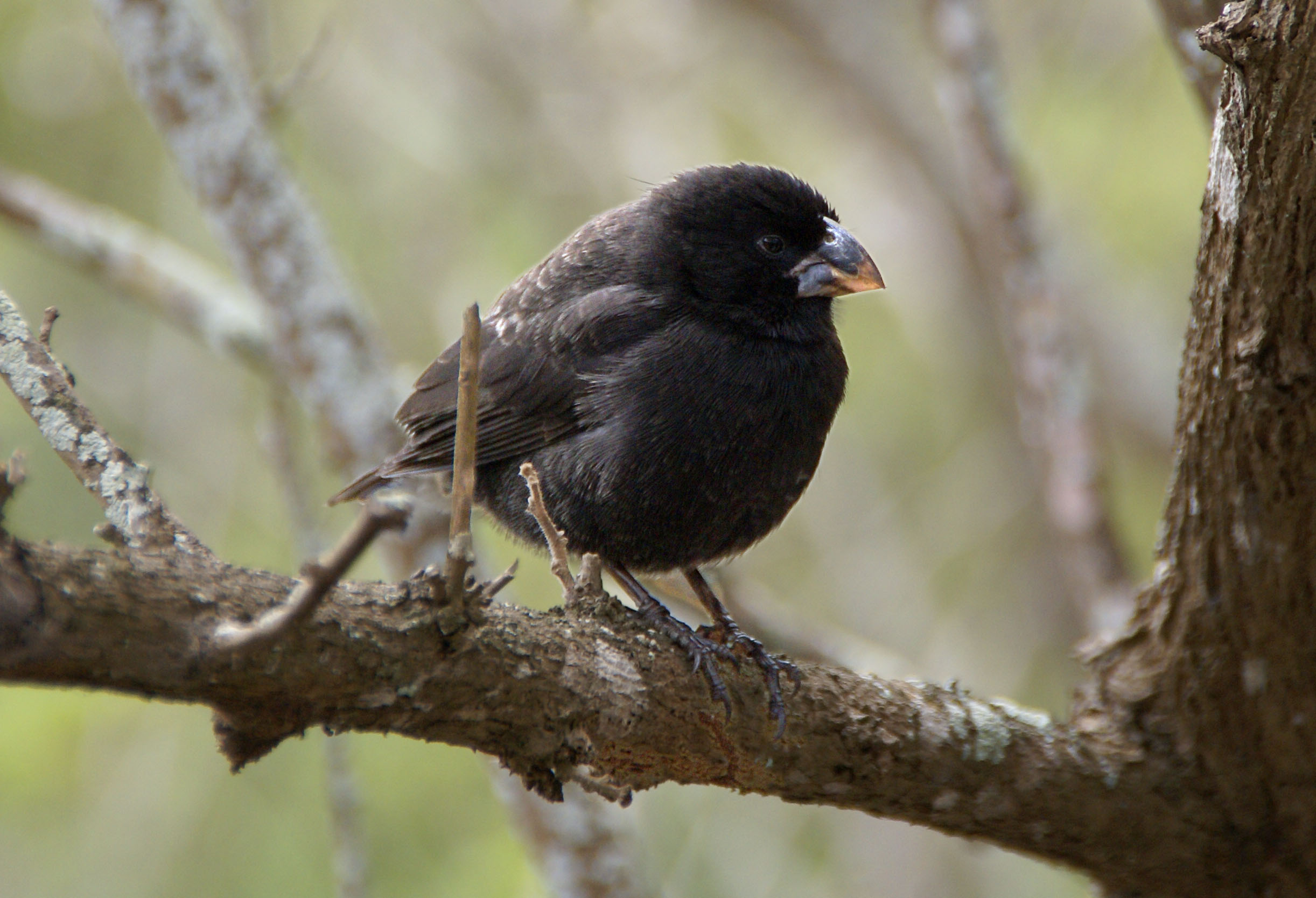
Medium Ground Finch (Geospiza fortis) by ©Wiki

Medium Ground Finch (Geospiza fortis) by ©Wiki

During his visit to the Galapagos Islands, Charles Darwin saw that each island was populated by a little finch. These birds were all very similar; yet, from one island to another there were some differences in the size and shape of the beak. Darwin reasonably concluded that in the distant past a pair of these birds had been blown 600 miles from the mainland and had since multiplied and spread. The environment on each island was slightly different, and the birds had developed specialized beaks to exploit the different food sources. It seemed to Darwin that here was a unique example of evolution in action where 13 different species had arisen from just one mating pair. A species is defined by the ability to reproduce; thus, a sterility barrier separates one species from another. Textbooks use Darwin’s finches to claim that new species have been produced, demonstrating evolution in action. However, the facts are that at least six of these different birds are known to interbreed and thus by definition are not new species at all but simply varieties within a single species. Moreover, DNA studies reveal very little difference between any of these birds, and there is no evidence of new genetic material, which is essential if evolution actually took place. Darwin’s finches offer no support for evolution. However, they do support the Bible when it teaches that, like every other creature, the birds have simply reproduced “after their own kind.” God has so designed His Creation that while it is possible for creatures to adapt perfectly to individual environments, there is still stability of the basic “kind.”

Prayer:
Dear Father, I thank You for Your Word that tells me of salvation. Amen.
Notes:
Creation Matters, (CRS), pp. 5-6, “Quiz.”
Copyright (C) 2010 Creation Moments, Inc


“Darwins Finches” are part of the Tanagers and Allies-Thraupidae Family in the Passeriformes Order.

See also:

Galapagos: Showcase for Creation

*

Interesting Things – Birds With a Memory to Envy

Birds With a Memory to Envy

Who provideth for the raven his food? when his young ones cry unto God, they wander for lack of meat. (Job 38:41)

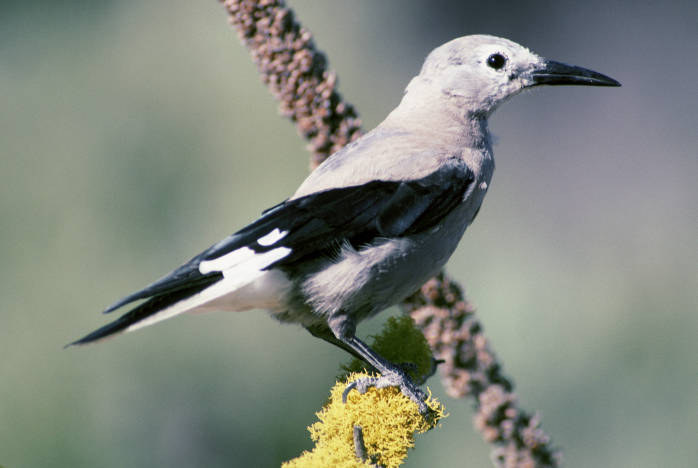
Clark's Nutcracker (Nucifraga columbiana) ©USFWS

Clark's Nutcracker (Nucifraga columbiana) ©USFWS

The shy bird, called Clark’s nutcracker, collects food during the growing season and stores it for the cold winter months. In one year, a bird will store between 22,000 and 33,000 seeds in as many as 2,500 locations, which can be more than ten miles apart. But does the little bird remember where he put all those seeds?

Biologists tracked the activity of Clark’s nutcrackers in the San Francisco Peaks in northern Arizona. A small army of researchers tracked the birds’ seed gathering and storing activities. One of the first things they discovered was that the birds quickly figured out that they were being observed. Some refused to store food when researchers were watching them. Others faked storing seeds when they were watched. Back in the lab, researchers studied the storing activity of Eurasian nutcrackers. After the birds stored seeds in a large sand floor, the birds were removed. Then the seeds they stored were dug up. When the birds were allowed to return, they quickly discovered that their seeds had been stolen, so they refused to store any more seeds. In the end, researchers concluded that the nutcrackers recover as many as two-thirds of their stored seeds within 13 months.

The remarkable memory of these little birds is their gift from God that enables them to be fed all year around.

Prayer: Father, I thank You because You are gracious and generous, not just to the birds, but also to me. Amen.

From Creation Moments©2010 – References: Science News, 2/14: 2004, pp. 103-105, Susan Milius, “Where’d I Put That?”


The Clarke’s and Eurasian Nutcrackers are part of the Corvidae Family of Crows, Jays, and Allies. The Passeriformes Order they are in has at present 123 Families (IOC 2.4).

Wordless Birds

*

Interesting Things – Birds Making Music?

Do Birds Truly Make Music?

The flowers appear on the earth; the time of singing has come, and the voice of the turtledove is heard in our land. (Song of Solomon 2:12)

The Bible speaks of bird calls as songs, as most of us do. However, evolutionary theory has led some scientists to say that we are merely assigning human meanings to the calls of birds. They say that the bird calls have nothing to do with real music.

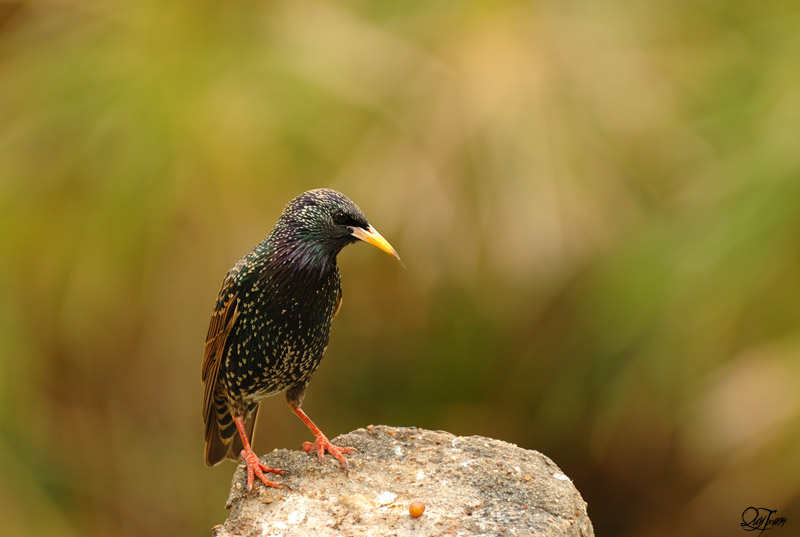
Common Starling (Sturnus vulgaris) by Quy Tran

Common Starling (Sturnus vulgaris) by Quy Tran

Ornithologists have known for some time that bird songs use the same musical scales as our music. Decades ago it was noted that some of Beethoven’s work could be heard from the European blackbird. The music was the same as the opening rondo of Beethoven’s “Violin Concert in D, Opus 61.” Since these birds pass their songs from generation to generation, Beethoven could have gotten the lilting music from the forefathers of today’s European blackbird! The songs of some species, like the song sparrow, follow the form of a sonata, beginning with a strong theme, then the theme is musically played with, and for a finish, the original theme is then repeated.

Song Sparrows song by Chris Parrish (xeno.canto.org)

Mozart had a starling as a pet. Once, having heard Mozart play his “Piano Concerto in C Major,” the starling not only imitated it, but changed the sharps to flats! Mozart exclaimed, “That was beautiful!” When the starling died, Mozart held an elaborate funeral for it. Eight days later he wrote “A Musical Joke,” which contains the same elaborate structure found in starling song.

A Musical Joke by Mozart

Do birds make true music, as the Bible says? Contrary to what some evolutionists say, Beethoven and Mozart certainly thought they did.

Prayer: Lord, I thank You for the gift of music, and I await the music of heaven. Amen.

From (Creation Moments©2010) References: Science News, 4/15/00, pp. 252-254, “Music without Borders.”


Pigeons and Their Pecking Order

Hill Pigeon (Columba rupestris) by Nikhil Devasar

Hill Pigeon (Columba rupestris) by Nikhil Devasar

The April 7th issue of NatureNews has an interesting article called, “Airborne pigeons obey the pecking order.” According to the studies they did on flying pigeons that were strapped with tiny GPSs, they change directions by responding to the leaders, not just any member of the flock.

“”It is the first study demonstrating hierarchical decision-making in a group of free-flying birds,” says Tamás Vicsek, a biophysicist at Eötvös Loránd University in Budapest who led the study…”

Another interesting thing they found out was, “Although pigeons have an almost 340º field of view, the researchers found that the birds at the front of a flock tended to make the navigational decisions. Moreover, birds responded more readily to a leader’s movements if the leader was on their left side. These findings concur with previous work that indicated that social cues entering a bird’s left eye receive preferential processing in the brain2.”

The article is very interesting and worth reading. Of course, I don’t agree with the last sentence of the article because they give the credit to evolution. We believe that the Lord created the pigeons with this ability from the first day they were created.

Hast thou not known? hast thou not heard, that the everlasting God, the LORD, the Creator of the ends of the earth, fainteth not, neither is weary? there is no searching of his understanding. (Isaiah 40:28 KJV)

Who are these that fly as a cloud, and as the doves to their windows? Isa 60:8

Doth the hawk fly by thy wisdom… (Job 39:26a) God was asking Job about the hawk, but it could be any bird including the pigeon.

To read the complete article – Click Here

*