When I Consider! – Capillary flow, Osmosis and Vacuum pressure

When I Consider!

When I Consider!

Evidence From Botany – January 4

On a hot summer day, one large tree can pump over a thousand gallons—that’s four ton—of water from the ground to it leaves. The water is collected from the soil through the roots. But the real work of pumping four tons of water, often 100 feet in the air, occurs at the top of the tree. The water is suctioned toward the treetop by three remarkably efficient mechanisms—capillary flow, osmosis and vacuum pressure. Osmosis and capillary action act in concert to move the water partway to the top of the tree, but the real driving force is a pressure differential created by the leaves within the vessels of the tree. The pressure differential is a result of water evaporating from the leaves of the tree, creating a suction throughout the vessels. This suction (measured as low as 1/20 of atmospheric pressure) helps to draw water from the roots all the way to the top of the tree. If you were to cut one of these vessels, you could actually hear a hissing sound as air rushed back in.

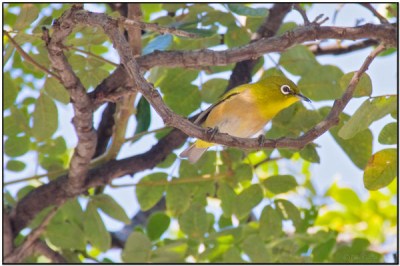
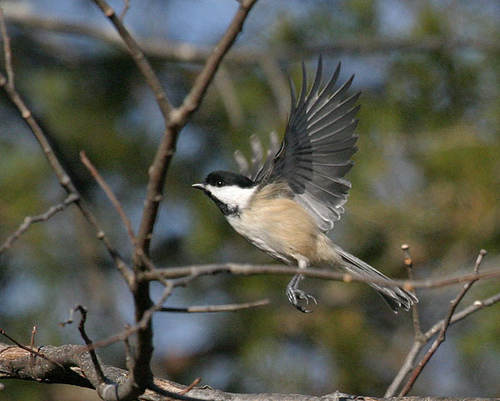
Japanese White-eye (Zosterops japonicus) by Daves BirdingPix

Japanese White-eye (Zosterops japonicus) by Daves BirdingPix up in a tree

The engineering excellence of this silent pumping system which efficiently delivers moisture to the very top of trees, is a not-so-silent witness against the idea that chance evolutionary processes (such as mutations) could have developed it.

Do you not know? Have you not heard? The LORD is the everlasting God, the Creator of the ends of the earth. He will not grow tired or weary, and His understanding no one can fathom. Isaiah 40:28

From A Closer Look at the Evidence, by the Kleiss’

(Typed by Phyllis)

Interesting Things – Cuckoo Deceit

SmileyCentral.com

Deceit Is Cuckoo

Listen to this from Creation Moment

Bread gained by deceit is sweet to a man, but afterward his mouth will be filled with gravel. Proverbs 20:17

Fan-tailed Cuckoo (Cacomantis flabelliformis) by Ian

Fan-tailed Cuckoo (Cacomantis flabelliformis) by Ian

You may be aware that the common cuckoo does not feed or raise its own young. Instead, it lays its eggs in the nests of other birds. The adoptive parents feed and raise the young cuckoo as their own until the cuckoo gets larger than the foster parents and flies away without so much as a “thank you.”

One common adoptive parent for the young cuckoos is the reed warbler, whose behavior pattern is quite different from the cuckoos. For example, reed warbler parents recognize hungry baby birds by their persistent calling. Cuckoos typically lay but one egg in an adoptive nest. Once this egg hatches, the young cuckoo throws the reed warbler eggs out of the nest. So how does one little baby cuckoo manage to convince the parent reed warbler that it is half a dozen reed warbler babies to be fed? Researchers have finally learned the amazing answer to that question. They say that the baby cuckoo fools its adoptive parents by sounding like as many as eight baby reed warblers. The act is so convincing that it gets all the food it wants.

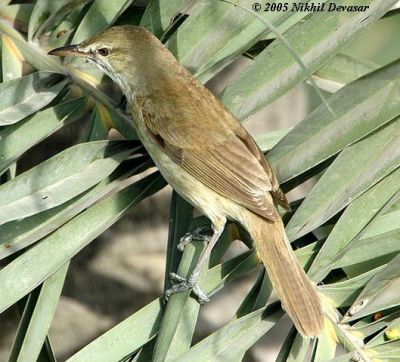
Clamorous Reed Warbler (Acrocephalus stentoreus) by Nikhil

Clamorous Reed Warbler (Acrocephalus stentoreus) by Nikhil

Who teaches the baby cuckoos this trick? Certainly not the mother cuckoo who, incidentally, misses out on all the fulfillment of family life. The cuckoo reminds us that deceit robs us of good experiences in our lives. That ‘s why it is comforting when our perfect God of truth tells us that He never changes.

Prayer: Forgive me, dear Father, for any deceit in my life, and help me to live a life of truth and honesty. InJ esus’ Name. Amen.

References: L.H., Cuckoos beg doggedly to trick hosts, Science News, v.155, p.158, March 6, 1999
Copyright © 2009 Creation Moments, Inc., PO Box 839, Foley, MN 56329, www.creationmoments.com.

To learn more about the Cuckoo – Click Here

When I Consider! – Couch’s Spadefoot Toad

When I Consider!

When I Consider!

Evidence From Biology – January 6

The Couch’s spadefoot toad of the Sonoran Desert is an example of how God takes care of creatures under extreme conditions. This toad lies dormant in the hot desert eleven out of twelve months each year. It has built-in sensors that tell it when a violent desert rainstorm occurs. The toad can detect vibrations of pounding rain miles away. It somehow knows to emerge from the sand when it rains so that the male toads can call for females as soon as pools of water form. Shortly afterwards the egg-laying is completed and the toads return to the sand, safe from the heat of the burning daytime sun. Most of the time the desert pools rapidly dry up, killing the eggs. Only under ideal conditions will some of the eggs hatch nine days later. The young toads have at most a few weeks to eat enough food to survive before burying themselves in the sand for the next eleven months while awaiting the another rainstorm.

Couch's Spadefoot Toad

Couch's Spadefoot Toad

Such survival instincts and mechanisms were probably not required before the Fall, when the world was designed as a paradise. In the current world, with its severe climates, such instincts and abilities seem to have been specifically designed for animals such as the spadefoot toad. How could this ability to adjust to such harsh weather conditions have evolved? Unless all of the abilities, instincts, and timing of the toads’ reproductive cycle were in place, the toads could never have survived the first severe season.

The wild animals honor me…because I provide water in the desert and streams in the wasteland… (Isaiah 43:20)

From A Closer Look at the Evidence, by the Kleiss’

(Typed by Phyllis)

From Wikipedia:
The Couch’s Spadefoot Toad, (Scaphiopus couchii) is a species of North American spadefoot toad native to the southwestern United States and the Baja region of Mexico. The epithet couchii is in honor of American naturalist Darius Nash Couch, who collected the first specimen while on a personal expedition to northern Mexico to collect plant, mineral and animal specimens for the Smithsonian Institution.[1]

These toads can be found throughout the Sonoran Desert, including Arizona. How can you tell the species? True toads have horizontal pupils but the spadefoots have vertical pupils (like cats). Look at the sole of a hind foot. There you’ll find the hard, dark “spade” that gives a spadefoot its name. There are only two spadefoot species in the Sonoran Desert of Arizona and California. If the space is sickleshaped, it’s Couch’s spadefoot, Scaphiopus couchi. If the spade is rounded, it’s the western spadefoot, Scaphiopus hammondii(called the southern spadefoot, Scaphiopus multiplicatus, in some field guides).

Spadefoot Foot by Thomas Eimermacher

Spadefoot Foot by Thomas Eimermacher

Incidentally, the spades really are digging tools–spadefoots use them to burrow backward into the soil.

Once you’ve finished checking the animal, gently put it down where you caught it–it has important things to do–then wash your hands thoroughly in the water. Amphibian skin secretions can be quite toxic; they probably won’t affect your hands, but you won’t want to get them in your eyes, nose, or mouth.

Spadefoots live for the monsoon. They spend the rest of the year underground awaiting their wake-up call: the drumming of raindrops on the soil during a summer thunderstorm. As soon as the males dig out they go looking for rain pools, and when they find them they broadcast the news loudly as they can. The chorus draws silent female spadefoots from far and wide.

Mating is an urgent matter for spadefoots. Their tadpoles must hatch, grow, and change into toadlets before the pool evaporates in the summer sun. That’s why they do most of their mating the first night the pool forms. Couch’s spadefoot toadlets sometimes leave the puddle only nine days after the eggs are laid! Western spadefoots take longer–at least three weeks.

The warmth of the water speeds up the tadpoles’ growth. Meanwhile they devour everything even remotely edible. They scrape algae off rocks. They filter microorganisms from the water as they pump it over their gills. They gather in wriggling masses, stir up the muck on the bottom of the pond, and filter that. And unlike most tadpoles, which are exclusively herbivores and filter-feeders, spadefoot tadpoles are omnivores. They also eat dead insects and tadpoles, and” more.

See Also:

Couch’s Spadefoot

Couch’s Spadefoot Toad by LA Zoo

When I Consider! – Snowshoe Rabbit

When I Consider!

When I Consider!

Evidence From Biology – January 2

Although the original world was created perfect and without death, our fallen world requires creatures to adapt to difficult situations in order to survive. Even in the current world full of death and competition, the smallest of creatures exhibit amazing capabilities for survival in harsh environments. The female snowshoe rabbit is one such creature. During extreme drought or harsh winters, the stress of finding food triggers a chemical process in the pregnant female that stops and embryo’s growth. Her body then responds to this condition of physical weakness with a process called resorption. In this process, the mother completely reabsorbs the growing embryo. This mechanism allows the rabbit to survive by replenishing her own strength. She can later become pregnant during more favorable conditions.

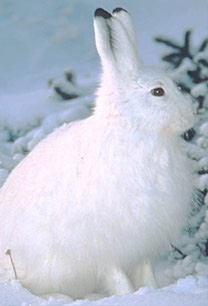
Snowshoe Hare or Rabbit

Snowshoe Hare or Rabbit

The number of chemical and physical changes required for a rabbit to reverse a pregnancy is mind-boggling. There is no scientific evidence which explains how this remarkable resorption process could have evolved. The creativity of God to have provided for the common rabbit in this way is truly amazing!

The LORD is gracious and righteous; our God is full of compassion. Psalm 116:5

From A Closer Look at the Evidence, by the Kleiss’

(Typed by Phyllis)

When I Consider! – Complexity

When I Consider!

When I Consider!

Evidence From Biology – October 15

The more we learn about life, the greater the complexity we find. There were no sophisticated microscopes 150 years ago. Consequently, the leap of complexity from single-to-multiple-call organisms was greatly underestimated. The development of the computer has given us an even greater appreciation for the enormous complexity, extreme miniaturization, and vast storage capabilities of the brain. Consider a few other giant leaps that evolutionists must accept in order to hold onto their faith in evolution:

Wedge-tailed Eagles (Aquila audax) by Ian

Wedge-tailed Eagles (Aquila audax) by Ian

1. Flight somehow evolved on at least four different occasions (birds, insects, reptiles, mammals).

2. Photosynthesis somehow developed.

3. Cold-blooded animals somehow turned into warm-blooded animals.

4. Floating marine plants somehow changed into complex plants with roots, stems, and leaf systems.

5. Placental animals (the off-spring develop inside of their mother) somehow turned into marsupial animals (their off-spring develop within a pouch).

6. Egg-laying animals somehow developed the ability to give live births.

7. Insects somehow learned to totally rearrange themselves and change form in a process called metamorphosis (such as a caterpillar transforming into a butterfly).

8. Land mammals and reptiles such as whales, seals, dolphins, ichthyosaurs, and plesiosaurs somehow crawled back into the sea and developed all of the specialized organs needed for sea survival.

In the Beginning, 7th ED., p.17

Blessed is he…whose hope is in the LORD his God, the Maker of heaven and earth, the sea and everything in them… (Psalm 146:5-6)

(Article typed by Phyllis)

See the following articles at Creation Moments:

25 Reasons to Doubt the Theory of Evolution
The Miracle of Photosynthesis
The Insect with Two Brains
The God of Science

When I Consider! – Skunk Cabbage

When I Consider!

When I Consider!

Evidence From Botany – August 16

The skunk cabbage is a uniquely designed plant. It generates enough heat to melt the snow around itself so that it can begin to grow and flower. Even if the air temperature drops as low as 10oF, the skunk cabbage produces the heat it needs to maintain a temperature of between 72°F and 74°F. However, if the temperature stays extremely low for more than 24 hours, the hooded blower exhausts its heating ability and the flower dies. The skunk cabbage then prepares more flowers and repeats the process.

Western Skunk Cabbage from Wikipedia

Western Skunk Cabbage from Wikipedia

This amazing plant also has a built-in thermostat. If the flower becomes too cold more heat is summoned. If the flower becomes too warm, the heat is withdrawn. Because of its amazing abilities, the skunk cabbage is one of the first plants to break through the snow in early spring. Normally, honeybees are unable to fly in temperatures below 65°F. However, when the skunk cabbages are in bloom, honeybees can fly when temperatures drop as low as 45°F. Inside the flower’s hood, the bees warm up enough to travel to the next cabbage flower. In cold weather the bees fly from one skunk cabbage to another, warming themselves as they travel back to their hive. Could this intricately designed flower be the result of random-chance mutational changes?

Character Sketches, Vol.III, P.209-212

I will ponder all your work, and meditate on your mighty deeds. Your way, O God, is holy. What god is great like our God? (Psalms 77:12-13 ESV)

(Article typed by Phyllis)

Very interesting article from The Nature Institute, Skunk Cabbage (Symplocarpus foetidus)
Skunk Cabbage by Fairfax County Public Schools

When I Consider! – Mount St. Helens

When I Consider!

When I Consider!

Evidence from Geology – October 13

“When Mount St. Helens erupted on May 18, 1980, the resulting blast cloud snapped off huge trees for 150 square miles around the mountain. At the same time an avalanche of mud sped down from the top of the mountain into Spirit Lake, causing a wave almost 900 feet high which scraped trees from the slopes adjacent to the lake. Many of these trees ended up in Spirit Lake buried at various levels on the bottom as they slowly sank in an upright position after becoming water-logged. Scuba investigations and side-scanning sonar have identified up to 100,000 upright deposited tree stumps buried a various levels of ash and peat deposits at the bottom of Spirit Lake.

Mount St. Helens Eruption by USGS

Mount St. Helens Eruption by USGS

Since Mount St. Helens continues to be active (depositing more material in the lake with time) these trees will be buried in what looks like separate geological layers, even though they all came from the same forest.

Years from now if sediment were to fill the lake and bury the trees in such a way that they became petrified in their present positions, these trees would look like multiple forest buried on top of each other over tens of thousand years. This is exactly what was assumed to be the origin of the petrified forest at Yellowstone National Park’s Specimen Ridge. Many geologists now acknowledge that the Yellowstone petrified trees were from the same standing forest, transported into their current position by a massive flood catastrophe.”

The Young Earth, p. 115-116 and Search for the Truth, II-9

So He destroyed all living things which were on the face of the ground: both man and cattle, creeping thing and bird of the air. They were destroyed from the earth. Only Noah and those who were with him in the ark remained alive. And the waters prevailed on the earth one hundred and fifty days. (Genesis 7:23-24)


Additions:
Mount St. Helens – Creation Wiki
Mt. St. Helens Evidence in Support of Biblical Catastrophe
“Is the Lava Dome at Mount St. Helens Really a Million Years Old?” by Keith Swenson
MOUNT ST. HELENS AND SPIRIT LAKE Geoscience Research Institute

More When I Consider!

Creation Moments – Columbus Day article

B. C. – Before Columbus

King Solomon also built a fleet of ships at Ezion Geber, which is near Elath on the shore of the Red Sea, in the land of Edom. (1 Kings 9:26)

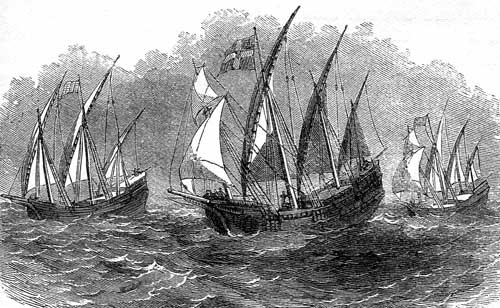
Columbus' ships

Columbus’ ships

Normally, it would not be unusual to find a stone with engraving on it in South America. But a stone found in 1872 in Brazil is unusual, since Aztec, Mayan and Incan civilizations never lived in that region. Besides, the engraving on the stone was in Phoenician. Its discoverer, who did not know Phoenician, sent it to authorities who gave it to the head of the national museum. He recognized the ancient language and translated it. It reads, “We are the Sons of Canaan from Sidon, the city of the King. Commerce has cast us on this distant shore, a land of mountains.”

Could 7th century B.C. Phoenicians have sailed as far as South America in search of commerce? In the ancient world, Phoenicians were known as the greatest commercial sailors of their day. But there is a modern bias against seeing ancient peoples as being as smart and resourceful as we are today, so the inscription has generally been considered a hoax. Then, in the 1960s, the original rubbing made of the inscription turned up at a scholarly auction in the United States. A modern expert on ancient languages studied the rubbing and concluded that the inscription must be authentic. It contains quirks of the Phoenician language that were unknown even to scholars in the 19th century.

While we today may know more facts, the ancients were no less intelligent and resourceful than we are today. That’s consistent with the Bible’s picture of man as God’s highest visible creation, rather than evolution’s gradually improving creature.

Prayer: I glorify Your Name, O Lord, for making us the way You have. Amen.

References: Archeology, “Before Columbus or the Vikings,” Science, May 1968.

©2009 Creation Moments

See Also:
Phoenicians in Brazil
Archeology: Before Columbus or the Vikings,” Time, Friday, May. 24, 1968

Ian Juby’s Newsletter – Oct 2009

Ian Juby just sent out his latest newsletter and it is also available at his blog. The article features the new “Ardi” that is suppose to prove our ancestors were related to this fossil. Personally, I believe it will become another hoax like “Luci,” but time will tell.

So God created man in his own image, in the image of God created he him; male and female created he them. (Genesis 1:27 KJV)

1) Ardi ar arrr…


Artist’s best guess as to what Ardipithecus ramidus may have looked like.
Okay, so maybe it didn’t stand upright like that, and maybe it didn’t have human eyes like that, and maybe it was a male and not a female, and maybe it….well, it’s close at least!
Drawing by J.H. Matternes

The propaganda machine goes into overdrive:
Got a barrage of emails this week from my honourable news watch team regarding a supposed “Missing link” found this week which “proves” our ancestral relationship to the apes.
In fact, Science magazine even ran a special issue just on this fossil, CBC’s “Quirks and Quarks” devoted a segment of their program to it (downloadable as a 22 meg MP3), National Geographic had a spread on it as well.
Seeing as how there’s been so much fuss over this fossil, I thought I’d devote a newsletter in response.

As is typical, this “missing link” is presented with impressive pomp and circumstance before the emporer comes out wearing no clothes. We’ve seen this before time and again with Ida, Puijila, and even Archaeoraptor – the fraudulent fossil that was brazenly heralded with many bold claims as “proof of evolution” before it was quietly sidelined after it was discovered to be a fake.  I still, to this day, occasionally have people bring up Archaeoraptor as proof of evolution.  This is the power of propaganda.

Same old, same old.
Before proceeding, it’s probably a good idea to point you to my previous response to the SciAm write up on our supposed “hominid” fossil lineage.  In this article, I dealt with dozens of these supposed “half-ape/half-human” fossils that evolutionists often hurl at us:  “The Human Pedigree”

As you can see, the whole “science” behind these “hominid” fossils is so speculative and subjective it isn’t funny!
1) Start with the assumption that evolution is true.
2) Interpret the fossil within an evolutionary paradigm
3) Use the interpretation as proof that evolution is true.
4) Return to step #1.

The New Old Find
The “new” find (actually found back in ‘92) is attributed to Ardipithecus ramidus.  The famous ‘flintstone fossil’ “Ardipithecus ramidus kadaba-daba-doooooo!” (thanks Teno Groppi), Ardipithecus has now been divided into two fossils, Ardipithecus ramidus, and Ardipithecus kadaba.  Good grief – there was barely enough fossil fragments for one fossil reconstruction, let alone two!  See my response to SciAm for more details.

So with the unveiling of  more of the fossils this week, once again … To see the rest of the article –  CLICK HERE

To see more here by Ian Juby – CLICK HERE

Interesting Things – Reshaped Wings, Forest Birds, Evolution?

I came across an interesting article in Science News, September 12, 2009, called, “Rapid evolution may be reshaping forest birds’ wings,” by Susan Millius. Subtitle – “Trend for pointier appendages in heavily logged boreal forests, with blunter, rounder ones in reforested parts of New England.”

Boreal Chickadee (Poecile hudsonicus) by Daves BirdingPix

Boreal Chickadee (Poecile hudsonicus) by Daves BirdingPix

Records have been kept on birds that live in the boreal forest of Canada and parts of New England for the past centrury. These areas were heavily logged and left bare or reforested as in parts of New England.

When the records were analyzed, a trend developed. Wings of forest birds where the trees were logged and left bare were longer (approximately by 2 cm) and more pointed, whereas, the forest birds that had the trees replanted and the forest renewed, had shorter (by 2 cm) and rounder wings. They are comparing the same species of birds in both places.

“Mature-woodland species showed the clearest change in pointiness regardless of body size, Desrochers said. During the past century, their long wing feathers, or primary feathers, overall gained about 2.23 millimeters on average. That uptick roughly matches the magnitude of differences between sexes. For example, a female boreal chickadee’s wing today is about the length of a male’s in 1900, he said.

Desrochers also included more southerly species on his list, such as the scarlet tanager and hooded warbler. These birds had experienced a very different century. The landscape of New England, deforested during previous years, rebounded into green woodland again. And here, Desrochers found a trend back toward rounder wing tips. The eight mature-woodland species he studied typically had lost, on average, some 2.37 millimeters on those long primary feathers.

These species aren’t passive victims of environmental change, Desrochers said. As bird species face new challenges, they respond to the extent they can. “Birds are not like sitting ducks,” he said.”

David Winkler said, “It’s surprising that there’s so much change so fast.” He also noted, “doesn’t explicitly address whether the wings change by evolution or by some other process. Winkler said that in observing changes and invoking evolution, “we need to be careful.”

Black-capped Chickadee (Poecile atricapillus) by Kent Nickell

Black-capped Chickadee (Poecile atricapillus) by Kent Nickell

Well, of course, those statements caught my interest. I believe in a Creator who supplies his creation with tremendous capability to adapt and have their needs supplied. I believe in natural selection and variation, but not something turning into something else or “macro-evolution.” I think the bird changed “by some other process,” namely, God’s protective watch-care.

Reading through the comments left, several were of note:

“I wonder what the “evolution might be directed by the species itself” refers to. It’s obvious here that the evolutionary selection of birds with appropriately shaped wings is caused by external forces, nothing the bird is doing. Those birds in areas that are opened up which have slightly longer wings are able to raise more chicks, while those in areas that are being reforested that have more rounded wings are able to raise more chicks. The reason is that distance flying is done more efficiently with longer (and therefore pointier) wings, while maneuverability is required in heavily branched areas and is done with shorter wings.

As for whether the wings are being worn out by contact with branches, this would be evident because the wear at the tip would be obvious. Feather shafts don’t go the whole way to the end of the feather, so if the tips were worn off, it would be noticed”  by DM (very good comment)

“Could the shorter wings of birds in denser forests be due to greater feather wear from brushing against branches and foliage? Maybe all wing feathers start out pointy and simply wear into a rounded shape.” by KC

More searching on the internet turned up a remark about this article at Answers in Genesis with this very interesting statement:  “The report notes that “as bird species face new challenges, they respond to the extent they can.” This comports with the creationist view: God included a range of genetic information and adaptability in organisms to allow them to live properly in a range of habitats.

The scientists aren’t certain how significant a role genes play in the wing tip changes. Still, Cornell University ornithologist David Winkler noted, “It’s surprising that there’s so much change so fast,” and Desrochers calls “rapid evolution” the most direct explanation. The speed of the changes indicates how the created kinds could have speciated rapidly after the Flood. Centuries of accumulated changes between some populations from the same created kinds resulted in sexual incompatibility. However, in other kinds (such as canids; see above), populations retain the ability even if interbreeding is uncommon.”

Consider the ravens: they neither sow nor reap, they have neither storehouse nor barn, and yet God feeds them. Of how much more value are you than the birds! (Luke 12:24 ESV)

God is providing for the birds and we know He will provide for us, especially if we belong to Him.

Bolding is by Lee.

When I Consider! – Elephant Ears and Scarab Beetles

When I Consider!

When I Consider!

Evidence From Biology – September 12

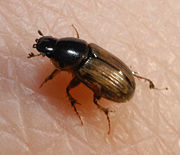
180px-Aphodius_specThere is an amazing relationship between certain types of elephant ear and the scarab beetle. It has only been recently learned that many elephant ear plants depend completely on the scarab beetle for pollination. Elephant ears make a flower stalk, called a spadix, which has three different kinds of flowers: male, female, and sterile. The beetles are drawn to help in the pollination process of crawling around on the spadix to get to the sterile flowers, which they love to eat. In the process of crawling around on the spadix to get to the sterile flowers, the beetles also pick up pollen from the male flowers and pollinate the female flowers.

Elephant-Ear-Plant

Elephant-Ear-Plant

It is amazing that none of the male or female flowers are ever eaten though they look exactly like the sterile flowers! The plant has produced a sacrificial look-alike in order to attract a specific pollinating insect which has no interest in its productive flowers. How could the plant have known to do this? Why would it ever produce a flower useless except for the actions of another creature? This miraculous interdependency had to have been specifically designed.

Letting God Create Your Day, Vol. 4, p29

O Lord GOD, You have begun to show Your servant Your greatness and Your mighty hand, for what god is there in heaven or on earth who can do anything like Your works and Your mighty deeds? (Deuteronomy 3:24 NKJV)

From A Closer Look at the Evidence, September 12, by Richard and Tina Kleiss

See Also:
Mystery of the Elephant Ears at ©Creation Moments

Elephant Ear Story from Cloudbridge Nature Reserve
Miniature Elephant Ear Surprise by A Neotropical Savanna
Xanthosoma Giant Elephant Ear Plants by Central Florida Farms

More  “When I Consider!”  articles.