The Red-breasted Goose – Wise Nester

Red-breasted Goose (Branta ruficollis) ©©Maxfear

Red-breasted Goose (Branta ruficollis) ©©Maxfear

The Red-breasted Goose – Wise Nester ~ by a j mithra

The Red-breasted Goose (Branta ruficollis) is a goose of the genus Branta. It is sometimes separated in Rufibrenta but appears close enough to the Brent Goose (Branta bernicla) to make this unnecessary, despite its distinct appearance.

Breeding on the Taimyr, Gydan and Yamal peninsulas of Russia, with beautifully defined blocks of colour, the red-breasted goose is one of the most attractive goose species in the world, but also one of the rarest. The fore-neck, breast and sides of the head are chestnut red bordered with white. The wings, back and fore-belly are charcoal black, with a bright white stripe running down the side to the white rear belly. The short neck and dark belly stand out in flight, and when seen from above two crescent-shaped stripes are visible on each wing. Juveniles are less well defined, and duller in colour.

Adults make repeated ‘kik-yoik, kik-yik’ sounds in flight. You may not like the way you look, but you are the most attractive for God, for He has created you in His own image and above all, He has blown His spirit into your nostrils..

And that is the reason you are rare, and He has never tried to create another one like you..

So God created man in his [own] image, in the image of God created he him; male and female created he them. (Genesis 1:27)

Red-breasted Goose (Branta ruficollis) ©WikiC

Red-breasted Goose (Branta ruficollis) ©WikiC

Majority of the population of red-breasted geese migrate through Bulgaria, Romania and to the Black Sea for winter. Small numbers winter in Ukraine, or in Greece if it is particularly cold. Until the 1950s, most red-breasted geese wintered in Azerbaijan, but the habitat is no longer suitable…

Red-breasted geese nest in tundra, and less often, in open parts of shrub tundra, where high and dry areas are favored, such as steep river banks, rocky slopes, rocky crags and gullies. These birds prefer rocky banks, rocky slopes, rocky crags and rocky gullies..

Where is our dwelling place?

  • Christian life doesn’t end with just propagating that Jesus is the rock of our salvation.
  • But it has got more to it..
  • We need to dwell on the Rock, by the Rock, with the Rock and for the Rock..
  • The Rock not only protects us but He also provides us.
  • He not only provides us, He also promotes us..

The LORD is my rock, my fortress and my deliverer; my God is my rock, in whom I take refuge. He is my shield and the horn of my salvation, my stronghold. (Psalm 18:2)
He should have fed them also with the finest of the wheat: and with honey out of the rock should I have satisfied thee. (Psalm 81:16)

He made him ride on the high places of the earth, that he might eat the increase of the fields; and he made him to suck honey out of the rock, and oil out of the flinty rock;

For in the day of trouble he will keep me safe in his dwelling; he will hide me in the shelter of his tabernacle and set me high upon a rock. (Psalm 27:5)
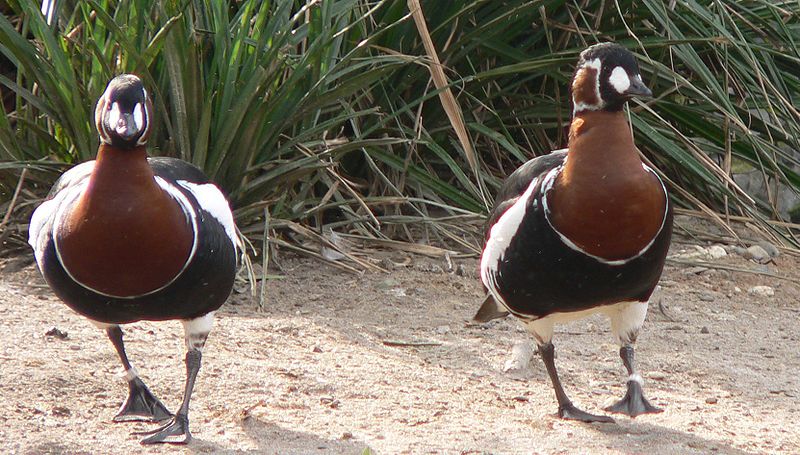
Red-breasted Goose (Branta ruficollis) ©WikiC

Red-breasted Goose (Branta ruficollis) ©WikiC

Throughout the day it flies to coastal and freshwater lakes to drink. Occasionally it also roosts at these lakes, using the middle of the water or remote shallow areas and muddy and sandy beaches with low aquatic vegetation. It will also roost on frozen lakes or on the sea..

When not breeding, red breasted geese are found in steppe habitats, where they feed on agricultural land and drink from coastal lakes. Throughout the day these birds fly to coastal and freshwater lakes to drink water..

  • They seem to know the importance of water to maintain their health..
  • Water not only heals but also prevents most disease, which is a scientifically proven fact..
  • We have the Living Water which cleanses, heals and strengthens..
  • Still most of us are weak and weary, why?

Is it cos we don’t have the habit of seeking THE WATER all through the day like these birds?

But whosoever drinketh of the water that I shall give him shall never thirst; but the water that I shall give him shall be in him a well of water springing up into everlasting life. (John 4:14)

During winter, red-breasted geese also roost on lakes, or in remote wetlands. In winter, the red-breasted goose feeds on winter wheat, barley, maize, pasture grasses and natural grassland. When it moves to the breeding grounds in early June, the diet changes, and consists primarily of grass leaves and shoots. In the second half of June, females lay between three and ten eggs, which are incubated for around 25 days.

  • How well these birds choose to change their diet just before migration…
  • How well they submit themselves to the will of God..
  • Where birds haven’t changed man has…
  • These birds know what to, what not to eat and when to eat before setting out on migration..

We are going to migrate once and for all, but sadly, most of us are yet to eat the food for migration. Is it because, we still have no idea when we need to migrate or is it because we think that what we have eaten thus far can take us home?

  • I am reminded of the ten bridesmaids who were waiting for the arrival of the Bridegroom..
  • We know not the arrival of our Bridegroom, are we getting ready or just sleeping over it?

Therefore keep watch, because you do not know the day or the hour. (Mathew 25:13)

Nests are built in close proximity to other red-breasted goose nests, and also to the nests of peregrine falcons (Falco peregrinus) and snowy owls (Nyctea scandiaca), as these birds provide protection from predators, improving breeding success of the geese. The chicks fledge at between five to six weeks of age.

A female incubating on a rocky island, taking off during the clutch control, then the nest with four eggs. (Internet Bird Collection)

In mid-September, the red-breasted geese begin their migration back to the western Black Sea coast, arriving in October or November.

  • Goose is normally thought to be dumb head..
  • Well, that is how we correlate Goose to stupidity..

But look at the wisdom of these birds, building their nests near the nests of Peregrine Falcons and Snowy owls!! They know that the rate of the breeding success depends upon the place where they nest…

  • Are we successful in life?
  • Do we eat the fruit of the works of our hands or is it being stolen or devoured?
  • Is our household protected from the enemy or are we being tormented by the enemy?

If the answer is negative, we need to look around to see if we have nested at the right place…

  • There is no use just saying that Jesus is our refuge and shelter..
  • He is there for us to protect us but do we nest beside Him?

And I set my tabernacle among you: and my soul shall not abhor you. And I will walk among you, and will be your God, and ye shall be my people. (Leviticus 26:11,12)

God is willing to shift His dwelling place among us, but, the question is, are we willing to co-dwell with Him?

Have a blessed day!

Your’s in YESHUA,
a j mithra

please visit us at:
Crosstree

ajmithra (Now with the Lord)

See more of a j mithra’s articles.

Anatidae Family

*

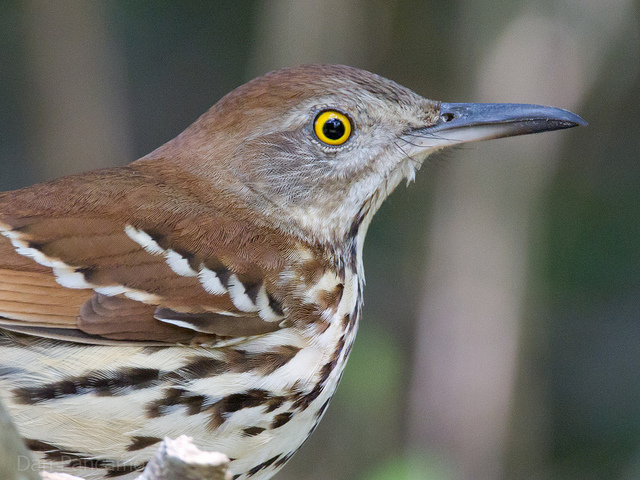
Brown Thrasher – The Singing Assasin..

Brown Thrasher (Toxostoma rufum) By Dan'sPix

Brown Thrasher (Toxostoma rufum) By Dan'sPix

Brown Thrasher – The Singing Assasin.. ~ by a j mithra

The Brown Thrasher (Toxostoma rufum), sometimes erroneously called the Brown Thrush, is a bird in the Mimidae family, a group that also includes the New World catbirds and mockingbirds.

The Brown Thrasher is bright reddish-brown above with thin, dark streaks on its buffy underparts. Its long rufous tail is rounded with paler corners. Eyes are a brilliant gold.

  • God had created gold colored eyes for these birds but sadly most church goers have set their eyes on gold…
  • Achan set his eyes on gold and was stoned to death…
  • If the church had followed the same law, there would have been more requisition letters for death certificates than for birth certificates…

Let us set our eyes on our glorious God…

Set your affection on things above, not on things on the earth. (Colossians 3:2)

Brown Thrasher (Toxostoma rufum) ©DanPancamo

Brown Thrasher (Toxostoma rufum) ©DanPancamo

Adults average about 11.5 in (29 cm) long with a wingspan of 13 in (33 cm), and have an average mass of 2.4 oz (68 g). It is found in thickets and dense brush, often searching for food in dry leaves on the ground. Thrashers also enjoy the convergence of mowed to unmowed lawns, particularly if there are ample shrubs or shrubby trees, i.e., fruit orchards that the undergrowth is left undisturbed. It also enjoys perennial gardens and can be seen jumping from the ground to catch insects on flowers and foliage.

It is a partial migrant, with northern birds wintering in the southern USA, where it occurs throughout the year. The Brown Thrasher is considered a short-distance migrant, but two individuals have been recorded of this unlikely transatlantic vagrant in Europe: one in England and another in Germany.

This bird is omnivorous, eating insects, berries, nuts and seeds, as well as earthworms, snails, and sometimes lizards.

The Brown Thrasher is the official state bird of Georgia, and the inspiration for the name of Atlanta’s National Hockey League team, the Atlanta Thrashers

  • We are the official worshippers of the God who created heaven and earth….

This people have I formed for myself; they shall shew forth my praise. (Isaiah 43:21)

Brown Thrasher (Toxostoma rufum) by Judd Patterson

Brown Thrasher (Toxostoma rufum) by Judd Patterson

Its breeding range includes the United States and Canada east of the Rocky Mountains. The female lays 3 to 5 eggs in a twiggy nest lined with grass. The nest is built in a dense shrub or low in a tree. Both parents incubate and feed the young. These birds raise two or three broods in a year. Brown Thrashers leave the nest at only 9 to 13 days old, earlier than either of its smaller relatives, the Northern Mockingbird or Gray Catbird. Brown Thrasher likes to bath in the water and in the sand of the roads. It bathes in small paddles during the heat of the sun, and removes to the sandy paths to roll it, for drying its plumage and freeing it of insects.

They are able to call in up to 3000 distinct songs. The male sings a series of short repeated melodious phrases from an open perch to defend his territory and an aggressive defender of its nest, the Brown Thrasher is known to strike people and dogs hard enough to draw blood.

Brown Thrasher songs by xeno-canto

Brown Thrasher singing – Video

  • These birds exercise their singing talent to defend its territories..
  • God has created us to sing for His glory….
  • How, when and why do we exercise our singing?
  • It hurts to see Christian names use this talent to make money than to please God..
  • If not for their singing talent, they would’ve been discarded even by their own house hold…
  • If only the church could learn from these tiny birds to defend their territory, there would be more people singing for God than for money…

Remember, these birds sing about 3000 song…

  • Is it not a shame that we, whom God created to worship Him, don’t even sing a dozen a day?

But, still God chose to die for us and not for these birds,

I will extol the Lord at all times; his praise will always be on my lips. My soul will boast in the Lord; let the afflicted hear and rejoice. Glorify the Lord with me; let us exalt his name together. (Psalm 34:1-3)

Well, at least from now on rain or shine let us just sing, sing and sing all through our lives for the One who gave His life..

We don’t even have to strike the predator like how these birds do. Instead, just keep singing, as our singing has the power to bring God down from His throne and His presence would turn satan, the predator into a prey…

Hallelujah!

Submit yourselves therefore to God. Resist the devil, and he will flee from you. (James 4:7)

Yours in YESHUA,
a j mithra

Please visit us at:
Crosstree

ajmithra21

A j’s other articles – Click Here

*

Island Scrub Jay – The Fallen One Yet The Chosen One..

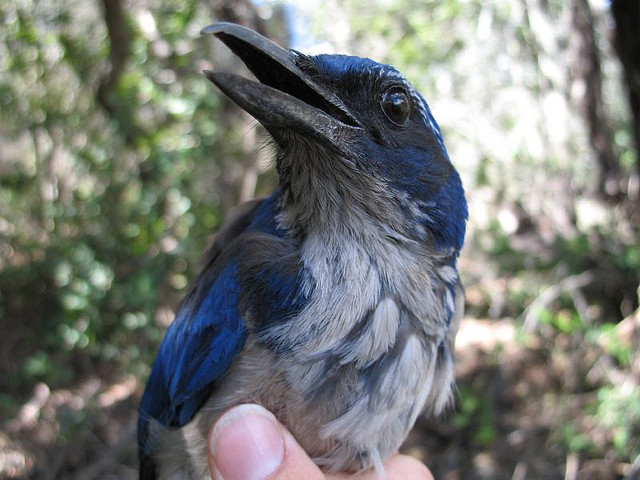
Island Scrub Jay (Aphelocoma insularis) ©WikiC

Island Scrub Jay (Aphelocoma insularis) ©WikiC

Island Scrub Jay – The Fallen One Yet The Chosen One.. ~ by a j mithra

Both the male and the female Island Scrub Jay help build nests three to twenty feet high in trees and shrubs. They use small oak branches that they break off trees and they never use sticks that fall to the ground..

If God had used the same criteria to build His kingdom, how many of us would’ve have got qualified to fit in?

Remember, we all have fallen into earthly desires and we all have committed sin only to fall from glorious position of being called the child of God to be caught in the devil’s trap….

But, in spite of falling time and again GOD still chose us from the cross..

Thank You Jesus….

Yours in YESHUA,
a j mithra

Please visit us at:
Crosstree

ajmithra21


Lee’s Addition:

Island Scrub Jay (Aphelocoma insularis) close-up ©WikiC

Island Scrub Jay (Aphelocoma insularis) close-up ©WikiC

Thanks, a j. Even when we fall, if you know the Lord as your personal Savior, when we ask forgiveness, just as this Scrub Jay is picked up, so the Lord picks us up and forgives us.

If we confess our sins, he is faithful and just to forgive us our sins, and to cleanse us from all unrighteousness. (1 John 1:9 KJV)

The Gospel Message


The Island Scrub Jay is in the Crows, Jays – Corvidae Family.

See a j’s other article about the Island Scrub Jay – Island Scrub Jays – The Ultimate Home-makers

a j mithra’s other articles – Click Here

*

The Broad-billed Prion – The well oiled night mates..

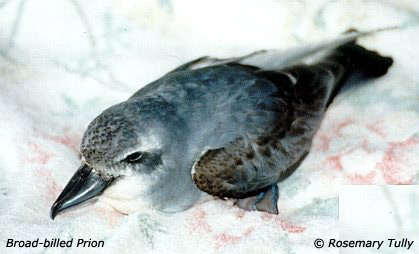
Broad-billed Prion (Pachyptila vittata) ©WikiC

Broad-billed Prion (Pachyptila vittata) ©WikiC

The Broad-billed Prion – The well oiled night mates.. ~ by a j mithra

The Broad-billed Prion (Pachyptila vittata) is a small seabird, but the largest Prion, with grey upperparts plumage, and white underparts. This species is found throughout oceans and coastal areas in the Southern Hemisphere.

Photo of Broad-billed Prion at the World Bird Guide

Photo from famkefonae (Shows the broad bill up close)

Another great photo up close – IBC

Its colonies can be found on Gough Island, Tristan da Cunha, South Island, Chatham Islands, on the sub-antarctic Antipodes Islands, and other islands off the coast of New Zealand and south of New Zealand’s south island. Adults are thought to remain in waters adjacent to colonies; however young birds occur north of the colonies to Australia and South Africa…

It has many other names that have been used such as Blue-billed Dove-petrel, Broad-billed Dove-petrel, Long-billed Prion, Common Prion, Icebird, and Whalebird. The Broad-billed Prion is a member of the Pachyptila genus, and along with five more Prions. They in turn are members of the Procellariidae family, and the Procellariiformes order.

The prions are small and typically eat just zooplankton; however as a member of the Procellariiformes, they share certain identifying features:

First, they have nasal passages that attach to the upper bill called naricorns. Although the nostrils on the Prion are on top of the upper bill. bills of Procellariiformes are also unique in that they are split into between 7 and 9 horny plates. It has a broad flat bill with comb-like fringes called lamellae. These birds have 7 and 9 horny plates..

  • In Hebrew, seven is shevah. It is from the root savah, to be full or satisfied, have enough of.
  • Hence the meaning of the word “seven” is dominated by this root, for on the seventh day God rested from the work of Creation.
  • It was full and complete, and good and perfect. Nothing could be added to it or taken from it without marring it.

Hence the word Shavath, to cease, desist, rest, and Shabbath, Sabbath, or day of rest. God expects perfect words from our mouth, words of faith and healing, words which would give hope and rest to people around us..

How do we use our mouth?

A man’s belly shall be satisfied with the fruit of his mouth; and with the increase of his lips shall he be filled. Death and life are in the power of the tongue: and they that love it shall eat the fruit thereof. (Proverbs 18:20,21)

The solemn amhn (ameen), amen, or “verily,” of our Lord,amounts also to 99, summing up and ending His words. The sum of the 22 letters of the Hebrew alphabet is 4995 (5×999). It is stamped, therefore, with the numbers of grace and finality.

  • God not only expects perfect words from our mouth, but also words of grace..
  • Number nine not only denotes summing up and ending His words Amen, but also the gifts and fruit of the Holy spirit.
  • Physicist say that the most powerful energy is Grace, whose energy is calculated as infinite…

Do we have words of perfect grace in our mouth…

But to each one is given the manifestation of the Spirit for the common good. For to one is given the word of wisdom through the Spirit, and to another the word of knowledge according to the same Spirit; to another faith by the same Spirit, and to another gifts of healing by the one Spirit, and to another the effecting of (miracles, and to another prophecy, and to another the distinguishing of spirits, to another various kinds of tongues, and to another the interpretation of tongues. But one and the same Spirit works all these things, distributing to each one individually just as He wills. (1 Corinthians 12:7-11)

Broad-billed Prion (Pachyptila vittata) ©www.TeAra.govt.nz

Broad-billed Prion (Pachyptila vittata) ©www.TeAra.govt.nz

This is a large prion measuring 25 to 30 cm (9.8 to 12 in) long, with a wingspan of 57 to 66 cm (22 to 26 in) and weighing on average 160 to 235 g. They produce a stomach oil made up of wax esters and triglycerides that is stored in the proventriculus. This is used against predators as well as an energy rich food source for chicks and for the adults during their long flights.

  • The oil which these birds produce reminds us of how we need to have oil when the bridegroom arrives, like the wise virgins..
  • The Bridegroom is on His way and these birds remind us to be prepared to meet Him..

Are we really ready?

Watch therefore, for ye know neither the day nor the hour wherein the Son of man cometh. (Mathew 25:13)

Finally, they also have a salt gland that is situated above the nasal passage and helps desalinate their bodies, due to the high amount of ocean water that they imbibe. It excretes a high saline solution from their nose.

  • God calls us as the salt of the earth..
  • As salt which gives taste and as salt which preserves..

It is time for us to switch on the search light and check if we our life is really the salt of the earth…

Ye are the salt of the earth: but if the salt have lost his savour, wherewith shall it be salted? it is thenceforth good for nothing, but to be cast out, and to be trodden under foot of men. (Mathew 5:13)

They are gregarious, and they eat crustaceans (copepods, squid, and fish. They utilize a technique called hydroplaning, which is where the bird flies with its bill in the water and it skims water in, and then filters the food. They also surface-seize.

Breeding begins on the coastal slopes, lava fields, or cliffs of the breeding islands in July or August, as they lay their single egg in a burrow type nest. Both parents avian incubation |incubate] the egg for 50 days, and then spend another 50 days raising the chick.

Prion Chick by

The main predators are skuas, although on some islands, cats and rats have reduced this prion’s numbers drastically. Colonies disperse from December onwards, although some adults remain in the vicinity of the breeding islands and may visit their burrows in winter..

They are a social bird; however their courtship displays happen at night or in their burrows. When they need to defend their nest they are very aggressive with calling, posturing, and neck-biting.

  • God wants us to have an encounter with Him at night and that is the reason
  • He asks us to watch and pray..

Jesus Himself set an example of how we need to watch and pray..

And it came to pass in those days, that he went out into a mountain to pray, and continued all night in prayer to God. “Watch and pray, that ye enter not into temptation: the spirit indeed [is] willing, but the flesh [is] weak. (Mathew 26:41)

Even before He was arrested, He was praying. Which means, we need to pray before every important event…?

Jesus went out as usual to the Mount of Olives, and his disciples followed him. On reaching the place, he said to them, ‘Pray that you will not fall into temptation.’ He withdrew about a stone’s throw beyond them, knelt down and prayed, Father, if you are willing, take this cup from me; yet not my will, but yours be done.” An angel from heaven appeared to him and strengthened him. And being in anguish, he prayed more earnestly, and his sweat was like drops of blood falling to the ground. (Luke 22:39-46)

The greatest event of all times, the return of the King of kings is yet to occur and the whole world is waiting for that, but, do we watch and pray before this important event or are we sleeping like the disciples in the garden of Gethsemane?

Have a blessed day!

Your’s in YESHUA, a j mithra

Please visit us at:
Crosstree
a j mithra 21

(Various internet resources including Wikipedia)

Lee’s Addition: (a j gave me a challenge on this one trying to find photos that we have permission to use.)

*

Cedar Waxwing – Fruit Passer…

Cedar Waxwing (Bombycilla cedrorum) by J Fenton

Cedar Waxwing (Bombycilla cedrorum) by J Fenton

Cedar Waxwing – Fruit passer… ~ by a j mithra

As for the living bird, he shall take it, and the cedar wood, and the scarlet, and the hyssop, and shall dip them and the living bird in the blood of the bird that was killed over the running water: (Leviticus 14:6)

Historians say that the cross that Jesus carried was made from Cedar wood. Of all the trees why did Jesus choose the cedar? The verse above which says about two birds, the cedar wood, the scarlet and the Hyssop does clearly reflects the crucifixion of Jesus on the cross. The two birds reflect Jesus and Barabas. One bird was sacrificed and the other was let free. Jesus was crucified and Barabas freed. The Cedar wood reflects the cross which Jesus carried. The scarlet reflects our sins. The hyssop reflects of how vinegar was soaked in a sponge and stuck in hyssop’s branch and offered to Jesus, when He said that He was thirsty.

Now there was set a vessel full of vinegar: and they filled a sponge with vinegar, and put it upon hyssop, and put it to his mouth. (John 19:29)

And they stripped him, and put on him a scarlet robe. (Mathew 27:28)

Twigs of Cedar placed with lingerie and kept in cupboards containing fur can keep away moth. The cross has the power to keep away all evil from our lives.

The Cedar is used to build the skeleton of the canoe. The cross has the power to take us through flood, fire and wilderness.

The most valuable constituent of Cedar oil is thujone. Native Americans of the eastern United States and Canada used thujone for generations to treat menstrual problems, headaches, and heart ailments. Loggers drank tea made from white cedar twigs to relieve rheumatism. During the seventeenth century, some people called the eastern white cedar the “tree of life,” because they believed that its sap had healing powers. In the late 1800s, the US Pharmacopoeia (the US compendium of quality control test and information on drugs) listed thujone as a treatment to stimulate the uterus and as a diuretic to increase urine flow. The leaves have the power to heal rheumatic, pulmonary, burns and prevent paralytic movement. It is also used as dye.

This tree is called the “Tree of Life”. Is that the reason Jesus, the life chose to carry a Cedar cross.. It was on the Cedar cross that Jesus, took the stripes to heal us from all disease.

For he shall grow up before him as a tender plant, and as a root out of a dry ground: he hath no form nor comeliness; and when we shall see him, there is no beauty that we should desire him.

He is despised and rejected of men; a man of sorrows, and acquainted with grief: and we hid as it were our faces from him; he was despised, and we esteemed him not.

Surely he hath borne our griefs, and carried our sorrows: yet we did esteem him stricken, smitten of God, and afflicted.

But he was wounded for our transgressions, he was bruised for our iniquities: the chastisement of our peace was upon him; and with his stripes we are healed. (Isaiah 53:2-5)

Cedar Waxwing Eating by Steve Slayton

Cedar Waxwing Eating by Steve Slayton

The Cedar waxwing may have been inspired by the qualities of Cedar from where it has borrowed its name. There is so much to read about this bird in this interesting website. But, one interesting quality of this bird stands apart. These birds are communal feeders. As we all know, the Cedar Waxwing eats berries and sugary fruit year-round, with insects becoming an important part of the diet in the breeding season. Its fondness for the small cones of the Eastern Redcedar (a kind of juniper) gave this bird its common name.

When the end of a twig holds a supply of berries that only one bird at a time can reach, members of a flock may line up along the twig and pass berries beak to beak down the line so that each bird gets a chance to eat. This reminds us of how we need pronounce the love of Jesus to the others so that they too may taste and see that the Lord is good..

Cedar Waxwing (Bombycilla cedrorum) by Daves BirdingPix

Cedar Waxwing (Bombycilla cedrorum) by Daves BirdingPix

But, the sad part is we have never thought of doing this, spreading the gospel to the unreached. If only we all had done this, by this time our churches would be overflowing. If only we carry the cross…..?

At least on this Good Friday, the day which denotes the sacrifice of Jesus on the cross for you and me, shall we make up our mind to do what we haven’t done for the Lord all these years? Shall we pass the fruit of the Holy spirit, so that those who haven’t tasted the Lord yet, may taste the goodness and mercy of our Lord?

These birds share the fruits, but, we call ourselves as Christians, borrowing the name from Christ, but when are we going to share the fruit of the Holy Spirit?

O taste and see that the LORD is good: blessed is the man that trusteth in him. (Psalm 34:8)

Have an awesome day at the feet of Jesus on the cross…

Your’s in YESHUA,
a j mithra

please visit us at:
Crosstree
ajmithra21

To see more of a j mithra’s articles – Click Here
*

Red-billed Quelea – Unity Unplugged

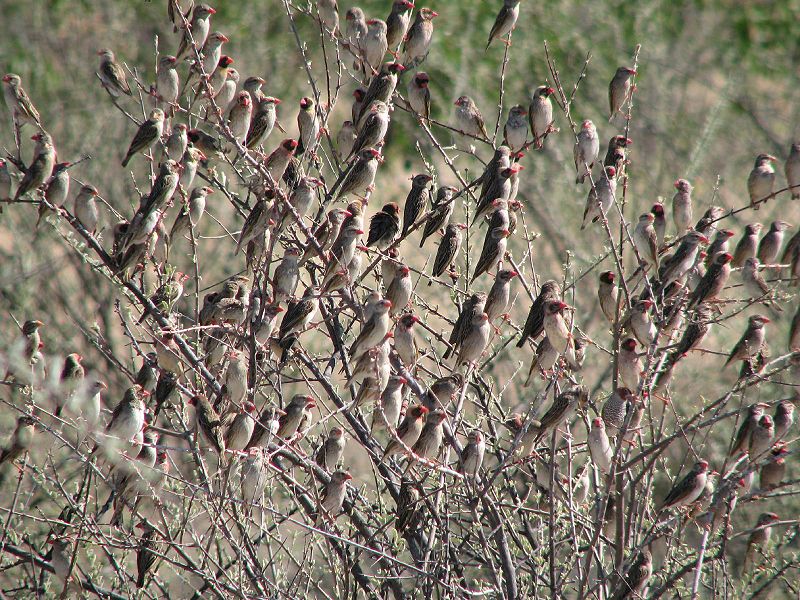
Red-billed Quelea (Quelea quelea) ©©JoMur

Red-billed Quelea (Quelea quelea) ©©JoMur

Red-billed Quelea – Unity Unplugged ~ by a j mithra

The term quelea bird usually refers to the species Quelea quelea, the Red-billed Quelea, native to bush, grasslands, and savannahs of sub-Saharan Africa. Red-billed Quelea is one of the weavers, birds that build elaborate enclosed nests by weaving together strands of grass and other plant materials. There are more than one hundred species of weavers—most of them live in Africa, but others are found in the Arabian Peninsula, India, Southeast Asia, China, and Indonesia.

Most weavers don’t clash with humans, but a flock of Red-billed Quelea, sometimes called locust birds, is a flock of pest birds that African farmers fear. Red-billed Quelea live and breed in huge flocks which can take up to 5 hours to fly past.

Red-billed Quelea (Quelea quelea) ©WikiC flocking_at_waterhole

Red-billed Quelea (Quelea quelea) ©WikiC flocking_at_waterhole

They live mostly in steppe and savanna regions, but do not avoid human settlements. While foraging for food they may fly large distances each day without tiring. Their life expectancy is two to three years.

  • The unity found in these birds is amazing…
  • Sometimes it takes about five hours for a single flock to fly past..
  • How many seats are filled in our churches every Sunday?
  • Though we say that we live as a family, unity is found wanting in most Christian families..
  • If only each family is bound together by the chord of His love, there would be a great revival in our churches…

After all ministry starts at home isn’t it?

I appeal to you, brothers, in the name of our Lord Jesus Christ, that all of you agree with one another so that there may be no divisions among you and that you may be perfectly united in mind and thought. (1 Corinthians 1:10)

  • They never tire to fly long distances each day in search of food…
  • How far do we seek as a family in search of spiritual food?

This is the thing which the LORD hath commanded, Gather of it every man according to his eating, an omer for every man, according to the number of your persons; take ye every man for them which are in his tents. And the children of Israel did so, and gathered, some more, some less. And when they did mete it with an omer, he that gathered much had nothing over, and he that gathered little had no lack; they gathered every man according to his eating. (Exodus 16:16-18)

  • Each person’s daily quota of manna is about 2 litres..
  • How much of spiritual manna do we have each day?

If our spiritual strength depends upon the intake of spiritual manna, we need to check how strong we’re in spirit…

Red-billed Quelea (Quelea quelea) ©WikiC

Red-billed Quelea (Quelea quelea) ©WikiC

Found in bush, grassland, cultivation and savannah this is one of Kenya’s most studied birds. It is, to put it bluntly, the greatest avian agricultural pest in the whole of the Afrotropical region. Being highly gregarious as well as nomadic, flocks containing hundreds of thousands and sometimes even millions of individuals can devastate cereal crops. They roost in such massive numbers that they can break thick tree branches.

These small 20 gram birds can break thick tree branches, but, God doesn’t need a big army to bring Deliverance to His people…

  • The unity of Jonathan and his arm bearer brought deliverance to Israel..
  • The unity of just 300 of Gideon’s men was enough to bring deliverance to his people..
  • We as a church are not able to break satan’s plans, why?
  • It is not because of the dwindling number in our churches or the lack of unity?

If unity is lost, how is it possible to overcome the enemy and how is it possible to extend the kingdom of God?

For where two or three are gathered together in my name, there am I in the midst of them. (Mathew 18:20)

When God comes amongst us, we can surely say,

And those he predestined, he also called; those he called, he also justified; those he justified, he also glorified. What, then, shall we say in response to these things? If God is for us, who can be against us? (Romans 8:30-31)

At first light the flocks leave their roost to go for water and from a distance it looks as though a grass fire has started. The Queleas form into dense, highly synchronised flocks which look like clouds of smoke, and then, as the flock approaches you, the numbers are so vast their wing-beats sound like a high wind.

  • These birds go in search of water at the first light of the day..
  • We say that Jesus is the living water, but do we drink Him at the first light of the day?
  • Doctors say that drinking water the first thing in the morning, heals a lot of ailments from diabetes to ulcer..
  • If water can bring healing to our body, how much healing can the Living water bring to our body, mind and soul?

Jesus answered and said unto her, Whosoever drinketh of this water shall thirst again: But whosoever drinketh of the water that I shall give him shall never thirst; but the water that I shall give him shall be in him a well of water springing up into everlasting life. (John 4:13-14)

The flock breeds at times of abundant rainfall and young are ready to move with the nomadic flock within six weeks—often coinciding with the ripening of grain crops. A nesting colony of Red-billed Quelea can extend over hundreds of acres, and a single flock may number millions of birds, moving together in a synchronized fashion.

Red-billed Quelea (Quelea quelea) Flock ©©AlastairRae

Red-billed Quelea (Quelea quelea) Flock ©©AlastairRae

A flock of Red-billed Quelea has been described as looking like a rolling cloud passing over a grain field or a grass fire sweeping over the grassland. It might as well be a grass fire, for when a huge flock of these bird pests leaves a field of millet, sorghum, or other cereal crop, scarcely a grain will be left behind. Grasses and cultivated wheat crops are highly attractive to them, and wherever there is grain and a source of water in Africa, there is a risk of a quelea bird outbreak.

The food of the Red-billed Quelea consists of annual grasses, seeds and grain. As soon as the sun comes up, they come together in their huge flocks and co-operate in finding a suitable feeding place.

Every day the Sun of Righteousness comes up in our lives, but, the question is, do we come together and most importantly co-operate in finding a suitable feeding place..

  • It has become a fashion for the members of a family to go to different churches on Sundays..
  • Where is the co-operation?
  • It has become a thing of the past for a family to sit together during taking part in the breaking of bread…
  • Should we not learn from these birds about finding a suitable feeding place together?
  • The Bible encourages corporate feeding..

Well, Jesus Himself set an example of corporate feeding when He fed the multitudes and also during the last supper…

And he commanded them to make all sit down by companies upon the green grass. And they sat down in ranks, by hundreds, and by fifties. And when he had taken the five loaves and the two fishes, he looked up to heaven, and blessed, and brake the loaves, and gave them to his disciples to set before them; and the two fishes divided he among them all. And they did all eat, and were filled. (Mark 6:39-42)

After a successful search, they settle rapidly and can cause serious damage to crops. In the middle part of the day they rest in shady areas near water and preen. Birds seem to prefer drinking at least twice a day. In the evening they once again fly in search of food.

  • How much we can learn from these birds…
  • They search for food together, seek water together twice every day, they preen together, and even fly again in the evening in search of food..
  • They are so sure about the power of staying together…

The Bible tells us so much about the power of staying together, but do we live like these bird? Let us live together like Psalm 133.

Red-billed Quelea (Quelea quelea) ©©pegash

Red-billed Quelea (Quelea quelea) ©©pegash

Breeding is localized and erratic but often colonies include tens of thousands to millions of pairs. The breeding season begins with the seasonal rains, which come at different times in different parts of their range – starting at the north-western edge around the beginning of November. The breeding males first weave half-complete ovoid nests from grass and straw. After the female has examined the construction and the mating has occurred, This mating style of these birds remind us of what Jesus said before ascending to heaven..

And if I go and prepare a place for you, I will come again, and receive you unto myself; that where I am, [there] ye may be also. (John 14:3)

The female lays two to four light blue eggs, and incubates them for twelve days. After the chicks hatch, they are nourished for some days with caterpillars and protein-rich insects. After this time parents change to mainly feeding seeds.

The young birds fledge and become independent enough to leave their parents after approximately two weeks in the nest. They are sexually mature after just one year, but many birds die before reaching this stage and males may weave nests that go unused if the female dies.

  • These males weave the nest that go unused if the female dies..
  • Is the church dead or alive?
  • Let us not be complacent for Jesus may use the unused if His bride, the church is dead…
  • Let us examine if we still have life or if we live like white washed graves…

The dead praise not the LORD, neither any that go down into silence. (Psalm 115:17

Have a blessed day!

Your’s in YESHUA,
a j mithra

Please visit us at:
Crosstree
ajmithra21


Weavers, Widowbirds – Ploceidae Family
Passeriformes Order

*

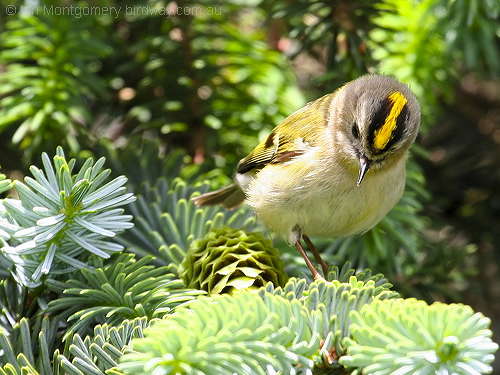
Goldcrest – The Royal Crown

Goldcrest (Regulus regulus) by Ian

Goldcrest (Regulus regulus) by Ian

Goldcrest – The Royal Crown ~ by a j mithra

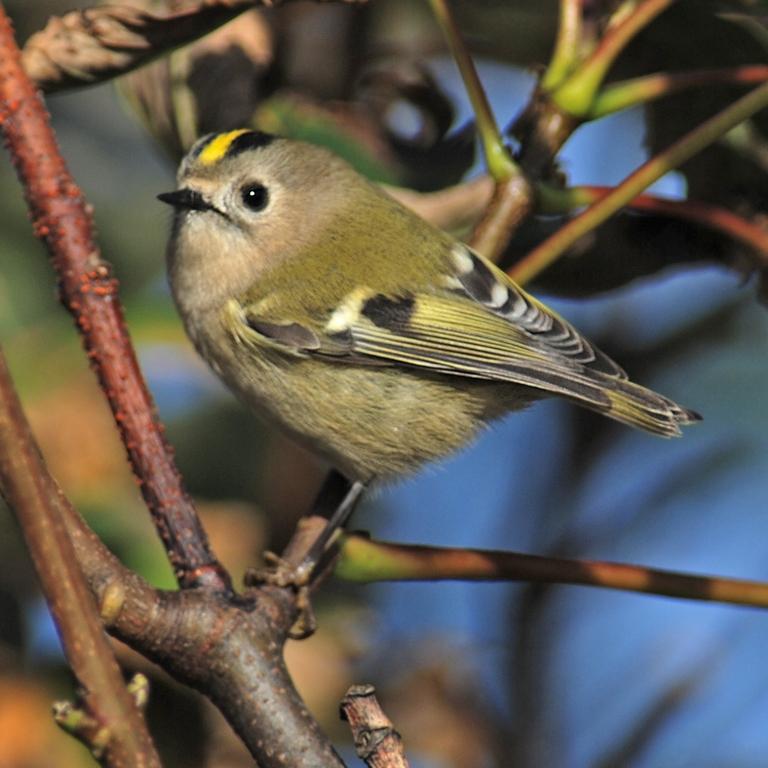
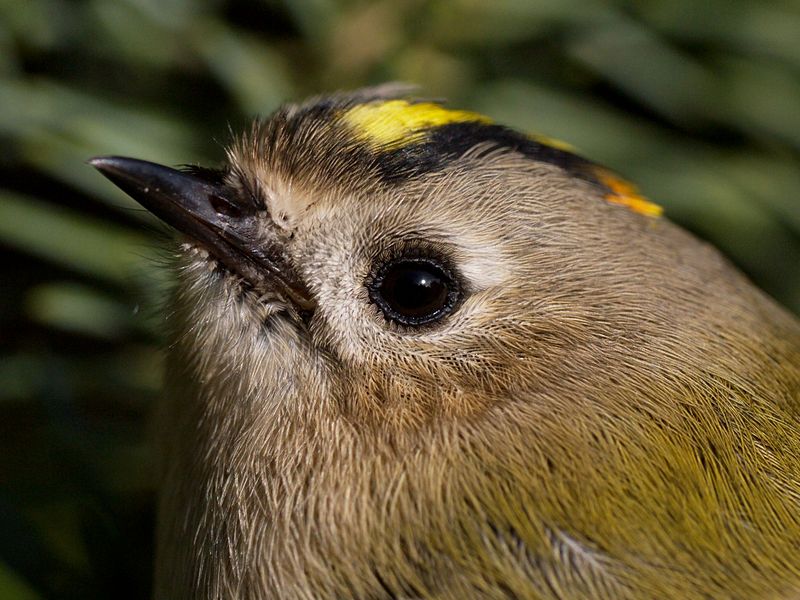
The Goldcrest, Regulus regulus, is a very small passerine bird in the kinglet family. Its colourful golden crest feathers gives rise to its English and scientific names, and possibly to it being called the “king of the birds” in European folklore. It has a plain face contrasting black irises and a bright head crest, orange and yellow in the male and yellow in the female, which is displayed during breeding.

  • God has created us in His own image and that is why He loves to call us as the Royal Priest..
  • The yellow crest is displayed during breeding season..
  • But, God calls us as His crown and we shall be a crown to our Jesus, our bridegroom, face to face…

“Thou shalt also be a crown of glory in the hand of the LORD, and a royal diadem in the hand of thy God.” Isaiah 62:3

The typical contact call of the Goldcrest is a thin, high-pitched zee given at intervals of 1–4 seconds, with all the notes at the same pitch. It sometimes has a more clipped ending, or is delivered more rapidly. The call is higher and less rough than that of the Firecrest. The song of the male Goldcrest is a very high, thin double note cedar, repeated 5–7 times and ending in a flourish, cedar­cedar-cedar-cedar-cedar-stichi-see-pee. The entire song lasts 3–4 seconds and is repeated 5–7 times a minute. This song, often uttered while the male is foraging, can be heard in most months of the year. The song is a repetition of high thin notes, slightly higher-pitched than those of its relative. The songs of mainland Goldcrests vary only slightly across their range and consist of a single song type, but much more divergence has occurred the isolated Macaronesian populations.

Not only are there variations between islands and within an island, but individual males on the Azores can have up to three song types. The dialects on the Azores fall into two main groups, neither of which elicited a response from male European Goldcrests in playback experiments. There are also two main dialect groups on the Canary islands, a widespread group similar to the European version, and another which is restricted to the mountains of Tenerife. The song variations have been used to investigate the colonisation pattern of the Macaronesian islands by Goldcrests, and identified a previously unknown subspecies.

  • Though these birds have a thin high two note song, they still have different song dialects for different places and can be heard most of the year..
  • We may be from different places but still we have one song which we all are singing and would be singing over and over again..

That songs is , “ALLELUIA”

1) And after these things I heard a great voice of much people in heaven, saying, Alleluia; Salvation, and glory, and honour, and power, unto the Lord our God:
2) For true and righteous are his judgments: for he hath judged the great whore, which did corrupt the earth with her fornication, and hath avenged the blood of his servants at her hand.
3)And again they said, Alleluia. And her smoke rose up for ever and ever.
4) And the four and twenty elders and the four beasts fell down and worshipped God that sat on the throne, saying, Amen; Alleluia.
5) And a voice came out of the throne, saying, Praise our God, all ye his servants, and ye that fear him, both small and great.
6) And I heard as it were the voice of a great multitude, and as the voice of many waters, and as the voice of mighty thunderings, saying, Alleluia: for the Lord God omnipotent reigneth.” Revelations 19:1 – 6

Goldcrest (Regulus regulus) Male displaying ©WikiC

Goldcrest (Regulus regulus) Male displaying ©WikiC

The Goldcrest breeds in mature lowland and mountain coniferous woodlands, mainly up to 3,000 m (9,800 ft), and occasionally to 4,800 m (15,800 ft). It uses spruce, Larch, Scots Pine, Silver Fir and Mountain Pine. Though this bird is just about 4.5 to 7.0 grams in weight, it breeds so high…

  • If these small 8.5 to 9.5 cm long birds can fly that high, how far should we be able to fly?
  • We all want to fly like an Eagle, but are we willing to pay the price of waiting upon the Lord?

But they that wait upon the LORD shall renew their strength; they shall mount up with wings as eagles; they shall run, and not be weary; and they shall walk, and not faint. (Isaiah 40:31)

A study in the Baltic region showed that northern Goldcrests were more likely to migrate, and increased their body mass beforehand; non-migratory
southern birds did not increase their fat reserves. The travel speed of migrating Goldcrests increased for those leaving later in the autumn, and was greater for the northernmost populations. Migration was faster on routes that crossed the Baltic Sea than on coastal routes, the birds with the largest fat reserves travelled at the highest speeds. The ability to lay down fat is adversely affected in this tiny bird by poor health Goldcrests can fly 250–800 km (150–500 mi) in one day, although they keep at a lower level in heavy headwinds.

  • These birds seem to know how to tackle the heavy wind, by flying at a lower level..
  • Here is a secret these birds seem to teach us..
  • They seem to tell us that we need to fly at a lower level, to fly long and fast…
  • Believers find it so difficult to fly low, everyone wants to be seen high..

But, God’s expects us to be different…

And whosoever shall exalt himself shall be abased; and he that shall humble himself shall be exalted. (Mathew 23:12)

The Goldcrest is monogamous. The male sings during the breeding season, usually while foraging rather than from a perch. It has a display which involves bowing its head towards another bird and raising the coloured crest. A male Goldcrest will defend his territory against either species, sometimes including some Firecrest phrases in his song.

  • Goldcrest’s songs, helps in defending its territory from other species…
  • Our songs too has the power to defend us from all evil..
  • It is in our praises that our Lord loves to dwell…
  • Remember, our God is in spirit, so, where there is spirit there is liberty and our praise has the power to bring THE SPIRIT in our midst to liberate us..

So let’s sing and not let GOD dwell in heaven but amongst our praises..

But thou art holy, O thou that inhabitest the praises of Israel. (Psalm 22:3)

The Goldcrest’s nest is a well-insulated cup-shaped structure built in three layers. The nest’s outer layer is made from moss, small twigs, cobwebs and lichen, the cobwebs also being used to attach the nest to the thin branches that support it. The middle layer is moss, which is lined by an inner layer of feathers and hair. The nest is larger, shallower and less compact than that of the Firecrest, with an internal diameter of about 9.0 cm (3.5 in), and is constructed by both sexes, although the female does most of the work. Laying starts at the end of April into early May. The eggs are whitish with very indistinct buff, grey or brown markings at the broad end. The eggs are 14 × 10 mm (0.55 × 0.34 in) and weigh 0.8 g (0.028 oz), of which 5% is shell.

The clutch size in Europe is typically 9–11 eggs, but ranges from 6–13. The eggs are piled up in the nest and the female keeps the eggs warm with her brood patch and also by putting her warm legs into the middle of the pile between the eggs. Within a clutch the size of eggs increases gradually and the last laid egg may be 20% larger than the first egg. Second clutches, which are common, are laid usually while the first nest still has young. The male builds the second nest, then feeds the young in the first nest while the female is incubating in the second; when the first brood has fledged, he joins the female in feeding the second brood.

Goldcrest (Regulus regulus) female ©WikiC

Goldcrest (Regulus regulus) female ©WikiC

The female Goldcrest is not normally fed by her mate while incubating. She is a tight sitter, reluctant to leave the nest when disturbed, and has been recorded as continuing to attend the nest when it has been moved, or even when it is being held. The eggs are maintained at 36.5 °C (97.7 °F), the female regulating the temperature of the eggs by varying the time spent sitting. She leaves the nest more with increasing air temperature, and incubates more tightly when the light intensity is lower early and late in the day.

  • The female bird sits tight when the light intensity is lower…
  • When darkness surrounds, we need to be still and wait until THE LIGHT shines on us..
  • It also regulates the temperature of the eggs at 36.5 °C (97.7 °F)…
  • Is the intensity of the spiritual fire in us constant?
  • Or is God upset over us for having left our first love?

Nevertheless I have somewhat against thee, because thou hast left thy first love.: (Revelation 2: 4)

Let us walk as children of light before eternal darkness fall over…

Then spake Jesus again unto them, saying, I am the light of the world: he that followeth me shall not walk in darkness, but shall have the light of life. (John 8:12)

The female incubates the eggs for 16 to 19 days to hatching, and broods the chicks, which fledge in a further 17 to 22 days later. Both parents feed the chicks and fledged young, and in very hot weather, the female has been noted as taking drops of water to her chicks in her bill.

  • To carry water in its tiny bill to its tiny chick is incredible…
  • What a thoughtful mother this bird could be!
  • If this bird could be so incredible, how incredible its creator would be?

These birds carry water only to its chicks but, listen to what our God says…

For I will pour water upon him that is thirsty, and floods upon the dry ground: I will pour my spirit upon thy seed, and my blessing upon thine offspring: (Isaiah 44:3)

He also says,

And it shall come to pass afterward, that I will pour out my spirit upon all flesh; and your sons and your daughters shall prophesy, your old men shall dream dreams, your young men shall see visions. And also upon the servants and upon the handmaids in those days will I pour out my spirit (Joel 2:28)

Goldcrest (Regulus regulus regulus) ©WikiC

Goldcrest (Regulus regulus regulus) ©WikiC

The Goldcrest takes a wide variety of prey, especially spiders, caterpillars, bugs, springtails and flies. Larger prey such as oak bush crickets and tortrix moths may sometimes be taken. Goldcrests will occasionally feed on the ground amongst leaf-litter with tits. Non-animal food is rare, although Goldcrests have been seen drinking sap from broken birch twigs together with tits and nuthatches. Flying insects are taken in hovering flight but not nomally pursued; there is a record of a Goldcrest attacking a large dragonfly in flight, only to be dragged along by the insect before releasing it unharmed.

  • The devil may try to drag you, but it can never ever harm you, for you are carved in His palm ..
  • God doesn’t want to go blind for you are the apple of His eye…

No weapon that is formed against thee shall prosper; and every tongue that shall rise against thee in judgment thou shalt condemn. This is the heritage of the servants of the LORD, and their righteousness is of me, saith the LORD. (Isaiah 54:17)

But we need to pay a price to inherit this the promise..

Serve the Lord and He shall save you from every weapon and every tongue..

Several small passerine species survive freezing winter nights by inducing a lower metabolic rate and hypothermia, of a maximum of 10 °C (18 °F) below normal body temperature,in order to reduce energy consumption overnight. However, in freezing conditions, it may be that for very small birds, including the tiny Goldcrest, the energy economies of induced hypothermia may be insufficient to counterbalance the negative effects of hypothermia including the energy required to raise body temperature back to normal at dawn.

Observations of five well-fed birds suggest that they maintain normal body temperatures during cold nights by metabolising fat laid down during the day, and that they actually use behavioural thermoregulation strategies, such as collective roosting in dense foliage or snow holes to survive winter nights. Two birds roosting together reduce their heat loss by a quarter, and three birds by a third. During an 18 hour winter night, with temperatures as low as −25 °C (−13 °F) in the north of its range,

  • Goldcrests huddled together can each burn off fat equivalent to 20% of body weight to keep warm…
  • Did someone preach the word of God or give them a Bible to read?
  • How come they know that they can keep themselves warm by staying together?
  • Who taught them?
  • Does the church stay together to keep themselves on fire?

Again, if two lie together, then they have heat: but how can one be warm alone? And if one prevail against him, two shall withstand him; and a threefold cord is not quickly broken.” Ecclesiastes (4:11-12)

Aristotle (384 BC – 322 BC) and Pliny (23 AD – 79) both wrote about the legend of a contest amongst the birds to see who should be their king, the title to be awardedto the one that could fly highest. Initially, it looked as though the eagle would win easily, but as he began to tire, a small bird which had hidden under the eagle’s tail feathers, emerged to fly even higher and claimed the title.

  • This may sound like a folklore but there is point for us to remember..
  • God carries us like an Eagle in His wings….

Jesus said. “Verily, verily, I say unto you, He that believeth on me, the works that I do shall he do also; and greater works than these shall he do; because I go unto my Father.” (John 14:12)

God has called us to do greater things, come, let us hide under His wings…

Have a blessed day!

Your’s in YESHUA,
a j mithra

Please visit us at:
Crosstree
ajmithra21


Lee’s Addition:

The Goldcrest are in the Regulidae Family of the Passeriformes Order.

See Also:
Goldcrests and Kinglets – Regulidae Family – It has a video of Goldcrest building a nest by Keith Blomerley.

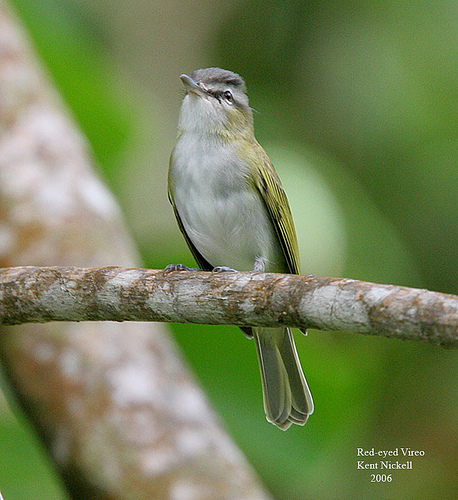
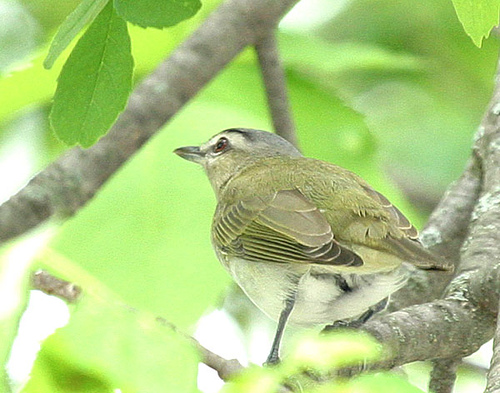
The Red-eyed Vireo – The Persistent Singer…

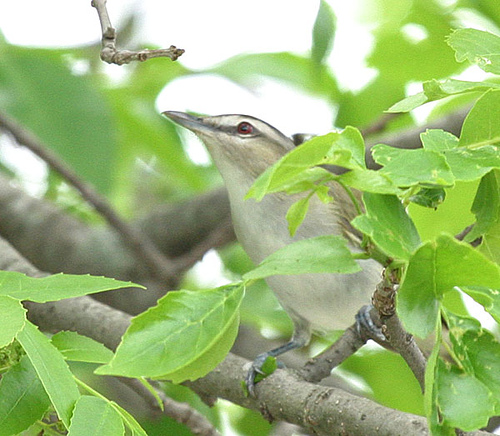
Red-eyed Vireo (Vireo olivaceus) by Kent Nickell

Red-eyed Vireo (Vireo olivaceus) by Kent Nickell

The Red-eyed Vireo – The Persistent Singer… ~ by a j mithra

The Red-eyed Vireo, Vireo olivaceus, is a small American songbird, 13–14 cm (5.1-5.5 in) in length. It is somewhat warbler-like but not closely related to the New World warblers (Parulidae).

The Red-eyed Vireo is a Neotropical migrant that makes its way from its home in Central and South America to the deciduous woodlands of North America to select a territory, win a mate and raise its young.

Throughout the eastern United States, Red-eyed Vireos are common in deciduous woodlands. However in Washington they are largely confined to stream and lakeside woodlands and cottonwood stands.

  • These small birds migrate long distances to win a mate and raise their younger ones..
  • Though they are birds, they still take so much effort to raise a family..

God has created us in His own image, its good, but, how much effort do we take to win a mate and raise a family?

Isaac was meditating when his father’s servant Eliezer was returning with a bride for Isaac as per Abraham’s instructions….

Now Isaac had come from Beer Lahai Roi, for he was living in the Negev.
He went out to the field one evening to meditate,and as he looked up, he saw camels approaching.
Rebekah also looked up and saw Isaac. She got down from her camel and asked the servant, “Who is that man in the field coming to meet us?”
“He is my master,” the servant answered. So she took her veil and covered herself.
Then the servant told Isaac all he had done. Isaac brought her into the tent of his mother Sarah, and he married Rebekah. So she became his wife, and he loved her; and Isaac was comforted after his mother’s death. (Genesis 24:62-66)

How many men meditate on the word of God before they get married?

  • Is it because of lack of meditation on the word that marriages are not successful these days?
  • Recent study shows that the rate of divorce is much more than marriages…
  • Is it because of we lack the fear of the Lord?

God holds marriage in high esteem that is the reason He calls Himself as the bridegroom and the church as His bride..

  • How much does the church honor the relationship of a husband and wife?

So the LORD God caused the man to fall into a deep sleep; and while he was sleeping, he took one of the man’s ribs[a] and then closed up the place with flesh.
Then the LORD God made a woman from the rib he had taken out of the man, and he brought her to the man.
The man said, “This is now bone of my bones and flesh of my flesh; she shall be called ‘woman,’ for she was taken out of man.”
That is why a man leaves his father and mother and is united to his wife, and they become one flesh. (Genesis 2:21-24)

Red-eyed vireo is difficult to see because it forages high in the canopy, picking food from the undersides of foliage, hopping or hovering in the leaves. It is an arboreal bird of the canopy, where it is very active although rather heavy in its movements, maintaining a horizontal posture.

Red-eyed Vireo (Vireo olivaceus) by Kent Nickell

Red-eyed Vireo (Vireo olivaceus) by Kent Nickell

This species migrates over long distances, and mostly at night. Red-eyed Vireo is relatively heavy when moving over short distances, but it can be very active too. Its flight is altogether performed in a gliding manner, and when it is engaged in pursuit of a rival or an enemy, it passes through the woods with remarkable swiftness. The small territory of this species consists of a cylinder extending from the forest canopy to the low understory.

Red-eyed Vireos can also be difficult to see because they forage high in the canopy, where they pick food from the undersides of foliage, hopping about or hovering in the leaves.

During courtship and nesting seasons, their prominent, repeated calls readily reveal their presence.

  • No one can see us when we hide under the shadow of its wings…
  • But they can hear us worship His holy name..
  • Well, do we really worship Him all the days of our lives?

The purpose of God creating us is not fulfilled unless we worship Him. After all, God created us to put us in satan’s place to worship Him and Him alone..

  • If we don’t worship now, the stones will…

And he answered and said unto them, I tell you that, if these should hold their peace, the stones would immediately cry out. (Luke 19:40)

Red-eyed Vireo (Vireo olivaceus) by Kent Nickell

Red-eyed Vireo (Vireo olivaceus) by Kent Nickell

These birds are important to maintaining the health of our forests. They consume large quantities of insects and caterpillars harmful to tree foliage. It is an effective predator on gypsy moths, fall webworms, tree hoppers, scale insects and others.

  • The way we live is important in maintaining the health of our fellow being…
  • These birds consume large quantities of harmful insects….
  • God expects our prayerful presence to consume the evil works of satan among our family and friends….

Job prayed for his friends amidst disaster and God blessed him double fold….

  • Do we pray for our friends like Job?

And the LORD turned the captivity of Job, when he prayed for his friends: also the LORD gave Job twice as much as he had before. (Job 42:10)

Red-eyed Vireos glean insects from tree foliage, favoring caterpillars and aphids and sometimes hovering while foraging. In some tropical regions, they are commonly seen to attend mixed-species feeding flocks, moving through the forest higher up in the trees than the bulk of such flocks.

They also eat berries, especially before migration, and in the winter quarters, where trees bearing popular fruit like Tamanqueiro (Alchornea glandulosa) or Gumbo-limbo (Bursera simaruba) will even attract them to parks and gardens. Fruit are typically not picked up from a hover, but the birds often quite acrobatically reach for them, even hanging upside down.

Although animal food makes up 85 percent of its summer diet, the Red-eyed Vireo may be completely frugivorous (fruit-eating) during the winter and late summer. In summer, Red-eyed Vireos feed mostly on adult insects and larvae, especially caterpillars.

During the courtship, male performs displays, flicking on its legs, with fluffy feathers and fan-shaped tail.

Red-eyed Vireo (Vireo olivaceus) by Kent Nickell

Red-eyed Vireo (Vireo olivaceus) by Kent Nickell

During incubation, the male sings faster, 50/60 phrases a minute. When it stops, female comes off the nest and it feeds her, or they feed together. They are monogamous. Which means, the female birds is willing to even starve and will not leave its nest until the male bird stops singing..

Do we wait to know God’s will in our lives or do we wait for God’s direction in our lives or do we set about doing what we wish to do?

  • God became a signpost on the cross of Calvary to show us where to go..
  • Are we willing to look up to the cross for direction?

Come, ye children, hearken unto me: I will teach you the fear of the LORD. (Psalm 34:11)

Red-eyed Vireo is highly territorial on breeding areas, and it’s very noisy. When it’s wintering in South America, it does not sing.

The breeding habitat is open wooded, deciduous and mixed deciduous forest areas across Canada and the eastern and northwestern United States.

These birds migrate to South America, where they spend the winter. The Latin American population occur in virtually any wooded habitat in their range. Most of these are residents, but the populations breeding in the far southern part of this species’ range (e.g. most of its range in Argentina, Uruguay, Paraguay and Bolivia) migrate north as far as Central America.

This vireo is one of the more frequent American passerine vagrants to western Europe, with more than one hundred records, mainly in Ireland and Great Britain.

In northern Ohio, it seems to return to breed at about the same time as one century ago; intriguingly, it might actually leave for winter quarters one or two weeks earlier at present than it did in the past..

Red-eyed Vireo (Vireo olivaceus) ©WikiC in nest

Red-eyed Vireo (Vireo olivaceus) ©WikiC in nest

Nest is built 1, 5 to 20 metres above the ground. Female builds the nest in five days, without assistance from the male. Nest is made of vine-bark strips, grass, needles and twigs. The outer parts are firmly attached to the twigs, the fibres being warped around them in various directions. The lining is beautifully disposed. It consists of fibrous roots, grasses, and sometimes the hair of grey squirrel and raccoon. It is covered on the outside with wasp’s nest paper, and spider webbing. It is a typical vireo nest, suspended by its rim from a horizontally forked twig, or the corner of a tree trunk, and two radiating branches.

Female lays 3 to 4 eggs. Incubation lasts about 11 to 14 days only by female. Both parents feed the young during 10 to 12 days when they are in the nest. Female and perhaps male, continue to feed them for up to two weeks after they leave the nest.

Most likely call to be heard is a nasal, querulous “tshay” or “chway”, although migrants are usually silent.

(Red-eyed Vireo (Vireo olivaceus) song-by xeno-canto)

Calls include a nasal whining “quee”.

(Red-eyed Vireo subspecies chivi – from xeno-canto.)

Video of a Red-eyed Vireo singing by Robert Schaefer

Persistent song, sung all day, a variable series of deliberate, short phrases.

During courtship and nesting seasons, their repeated calls reveal their presence.

Their persistent song is legendary. It is repeated as often as 40 times a minute, all through the day..

Red-eyed Vireos were once considered one of the three most abundant birds of the forests of Eastern North America.

Their persistent song is legendary. A single individual was once heard to sing 22,197 songs during a single day (Lawrence 1953).

  • How long and how much do we sing for the Lord?
  • David sang praises to the Lord at all times and that was the reason God loved him so much..
  • David sang new songs like these birds that may be another reason for the favours that he won from God..

If these 13 to 14 cm long birds can sing up to 22,197 songs in about ten hours which comes to roughly about 2200 songs per hour which in turn comes to about 37 songs per minute, how much we should sing?

O sing unto the LORD a new song: sing unto the LORD, all the earth (Psalm 96:1)

This verse was written for God’s own people, but, sadly this bird has taken the cue and we have chosen to shut our mouth rather than to shout to the King…

Come let us sing to win favour from THE KING…

Have a blessed day!

Your’s in YESHUA,

a j mithra please visit us at:

Crosstree

ajmithra21


Lee’s Addition:
Thanks, aj. I enjoyed putting the photos and sound in this one. They are in this area, but I have not seen one yet.

Also, when a j sent in his draft, he included a note to me that I thought was worth placing here. He has been adding great articles for a year now, so this is sort of a “mile-stone article” for him. From the e-mail:

“Hello Sister.Lee,
Its been a great learning experience and a great honor to serve the Lord  though your website.. I am thrilled when I turned back and looked at how God has been so full of mercy and an inspiration which He gives us often through Birds.. Its been a year since you published my first article on 4th March 2010.. I just want to say a BIG THANK YOU for letting me be a part of this great site..
Thank you once again..
Regards and prayers to you and yours,
aj mithra”

The Red-eyed Vireo is in the Vireonidae, Vireos and Greenlets Family and is a Passerine or perching bird. There are 63 members in the family.

*
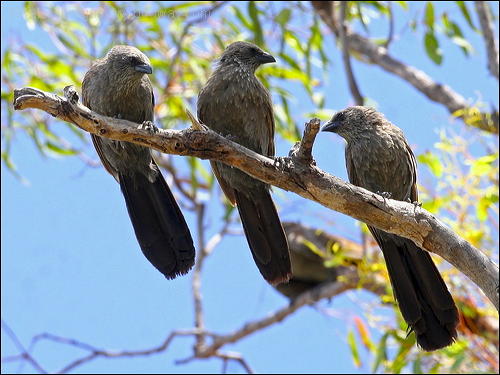
The Apostlebird – The ground dwellers…


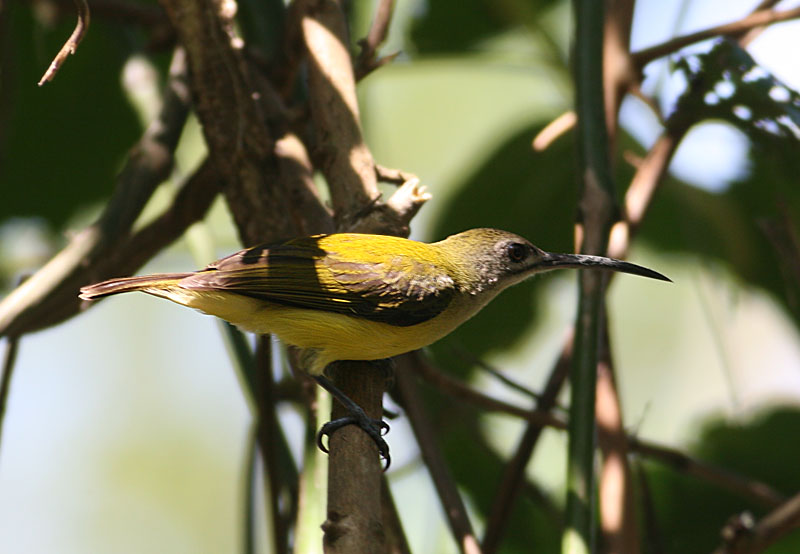
Apostlebird (Struthidea cinerea) by Ian

Apostlebird (Struthidea cinerea) by Ian

The Apostlebird – The ground dwellers…  ~ by a j mithra

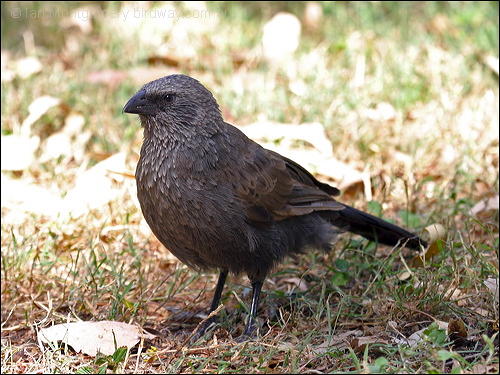
The Apostlebird (Struthidea cinerea), also known as the Grey Jumper, is a quick-moving, gray or black bird about 13 inches (33 centimetres) long. It is a native to Australia where it roams woodlands, eating insects and seeds at, or near, ground level.

Apostlebirds often travel in groups of about 12; for this reason they were named after the Biblical apostles, the twelve chief followers of Jesus Christ. In fact, the species travel in family groups of between 6 and 20, which may coalesce with other family groups into large feeding flocks of over 40.

Their gregarious nature and harsh scolding/grating calls have led to a plethora of colloquial names. They can be known locally as Lousy Jacks (due to heavy louse infestations), Happy Jacks, happy Families and CWA Birds. The latter name is mildly derogatory, referring to the supposed resemblance of Apostlebird’s constant chatter, to a Country Women’s Association meeting.

Apostlebird (Struthidea cinerea) by Ian

Apostlebird (Struthidea cinerea) by Ian

Grey Jumper is an alternate name. The Apostlebird is highly gregarious and garrulous, occurring in small, sedentary, co-operatively breeding groups throughout the year. Apostlebirds sometimes occur in larger congregations during the non-breeding season at abundant sources of food; they are seldom seen singly or in twos. In winter, after the breeding season, these groups may combine in larger flocks of up to 50 or 100 birds.

  • Jesus said that He will be there, where two or three have gathered in His name…
  • We call ourselves as apostles of Christ Jesus, but, do we congregate in large numbers?
  • Most families have more than three members, but do they congregate?
  • How many families go to church together as a family?
  • How many families have family prayer, where every member of the family is present?

These birds don’t go to church, but they are called Apostle birds..

Others call us as Christians, which means “Christ in us”, but, they seldom call us as apostles, why?

And if one prevail against him, two shall withstand him; and a threefold cord is not quickly broken. (Ecclesiastes 4:12)

These birds seem to have read this verse from the Bible..

A family group will hold a territory of 15 to 30 hectares defending it against other groups. Family groups roost clustered closely together in a row on a branch.

Apostlebirds are usually active and conspicuous, seldom silent, and usually bold and tame..

These birds are bold and tame as well…

These birds seem to have taken this character from the Bible…

Behold, I send you forth as sheep in the midst of wolves: be ye therefore wise as serpents, and harmless as doves. (Matthew 10:16)

The groups often move quickly along the ground as the birds forage for seeds and insects picking up items from the ground and not probing and digging as other ground foragers do. Adopts a predominantly terrestrial lifestyle walking with long strides and often running or hopping. Group members maintain a stream of twittering and chatter among themselves while foraging.

Feeding on the word of God should be considered as having a grand feast with our family and not to be considered as a ritual…

  • How often do we discuss about our worldly affairs over every meal on the dining table!
  • How often do we meditate and discuss on the word of God as a family?
  • We eat, but, never seem to exercise.. Isn’t it?

Then they that feared the LORD spake often one to another: and the LORD hearkened, and heard it, and a book of remembrance was written before him for them that feared the LORD, and that thought upon his name. (Malachi 3:16)

The species spends most time on the ground, but when disturbed, birds fly low to cover, often giving noisy, harsh scolding calls, with wing-beats that are broken by short glides with upswept wing-tips.

They often leap from branch to branch with their tails cocked and partly spread, often making long glides (of up to 50 metres) from a perch to the ground, or from tree to tree.

When on the ground, Apostlebirds walk and run strongly, with a steady gait, walking quickly with the tail swaying from side to side, just above the ground, but with no forward jerking of head (unlike the White-winged Chough), and run in short, quick bursts; they sometimes also hop, with tails flicked upwards, and then slowly subsiding; hops can be as long as twice the length of the bird.


Apostlebird (Struthidea cinerea) by Ian

Apostlebird (Struthidea cinerea) by Ian

Foraging is almost always on the ground, where they mainly take insects and seeds, using their bill to scratch at the ground and among litter, though they also occasionally forage in trees and shrubs.

When Jesus was on this earth, His ministry was always on the ground level..

  • He made sure that He brought people down to the ground level before dealing with them.
  • Remember Zacchaeus had to come down from the sycamore tree before he had an encounter with God…
  • Though Manna and Quails came from above, the Israelites had to gather them from the ground..

Jesus our manna too came from above so that we may meet Him on earth..

  • Where are we right now?
  • Are trying to meet God from our high position?
  • Those who humble are the ones who win favour from God..
  • God humbled Him to the ground level and expects the same from us…

Humble yourselves in the sight of the Lord, and he shall lift you up. (James 4:10)

They are often seen preening each other.

  • We loved to be preened in the radiance of public flattery as told in Mathew 23:7-17.
  • But God’s expectations on preening among the church is quite different…

Be kind to one another, tenderhearted, forgiving one another, as God in Christ forgave you. (Ephesians 4:32)

Inhabits open, fairly dry country never far from water which they visit several times a day in warm weather.

  • God is there to fill our cup when it is dry..

These birds have to frequent water bodies during warm weather, but, Our Lord is able fills us wherever we are..

  • But, it depends on how much we thirst for the Living water…

Our God is faithful to fill us, well, are we willing to be drenched by THE LIVING WATER?

For I will pour water upon him that is thirsty, and floods upon the dry ground: I will pour my spirit upon thy seed, and my blessing upon thine offspring: (Isaiah 44:3)

Groups are seen in open forest, woodland, river margins and roadside tree belts. Distributed through central Queensland, New South Wales and in south-east South Australia..

Their distinctive mud nests often indicate presence in an area. Apostlebirds build a medium-sized bowl-shaped mud nest.

  • Our homes should act as an indicator of the presence of God for the people living around us..
  • If Jesus becomes the door of our house, all those who enter our home would leave our home as a changed person..

I am the door: by me if any man enter in, he shall be saved, and shall go in and out, and find pasture. (John 10:9)

Apostlebirds can sometimes tolerate high levels of habitat degradation, as groups have been recorded in highly degraded woodlands with a high proportion of exotic plants in the ground layer, heavy grazing pressure, no tree regeneration and no understorey; and they can persist in small patches of remnant vegetation of just a few hectares in extent, though these may need to be near other, larger patches of suitable habitat.


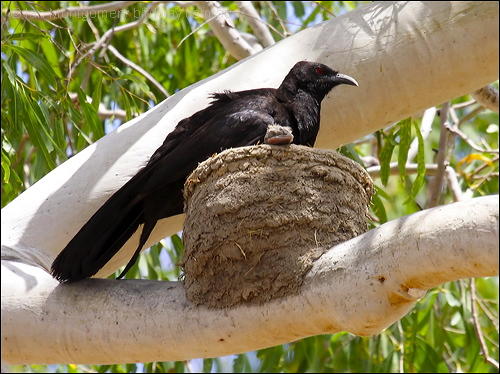
White-winged Chough (Corcorax melanoramphos) in mud nest by Ian

White-winged Chough (Corcorax melanoramphos) in mud nest by Ian

Breeding season is from August to December. The nest is a deep cup-shaped structure made of grasses held together with mud or sometimes manure in a tree fork up to seven or eight meters above the ground. Three to five pale blue-white eggs sparsely splotched with brown and lavender shades are laid measuring 22 mm x 29 mm. They are tapered oval in shape They build substantially larger nests, weighing up to five pounds, located as much as fifty feet above the ground. But even these scaled-up versions of the adobe cup with their inch-thick walls are manufactured with the same jiggled-mud strategy that seems to be universal among birds that build with wet earth. But then vibration is a key feature in the insertion of twigs and grasses into conventional nests, so this may be a bit of behavioral recycling.

Apostlebirds are a communal species with each family group generally containing only one breeding pair, the rest being their helper offspring. All family members help construct a mud nest, and share in incubation of the eggs. Once the eggs are hatched, all members of the family group also help feed the chicks and keep the nest clean.

  • We have a God who has shed His precious blood to cleanse our nest…
  • Well, we are not ordinary people; we are God’s nest…
  • That is the reason God wants to dwell is us..

God has taught these bird to build their nest with mud high above on tree forks..

Jesus too chose to dwell in a nest made of mud that was the reason He chose you and me?

Know ye not that ye are the temple of God, and that the Spirit of God dwelleth in you? (1 Corinthians 3:16)

Have a blessed day!

Your’s in YESHUA,
a j mithra

Please visit us at:
Crosstree

ajmithra21


Lee’s Addition:

To see a j mithra’s other articles – Click Here

Thanks, a j, for another interesting article and a thanks to Ian Montgomery, one of  our great photographers for the permission to use his photos.

The Apostlebird (Struthidea cinerea) is in the Corcoracidae – Australian Mudnesters Family of the Passeriformes Order. There are two subspecies; the cinerea and dalyi. The other Mudnester is the White-winged Chough (Corcorax melanoramphos) which also has two subspecies.

Video links to Apostlebirds:

A group of birds foraging and calling.

A close-up of an Apostlebird

*

The Pompadour Cotinga – Concealed Incubators…

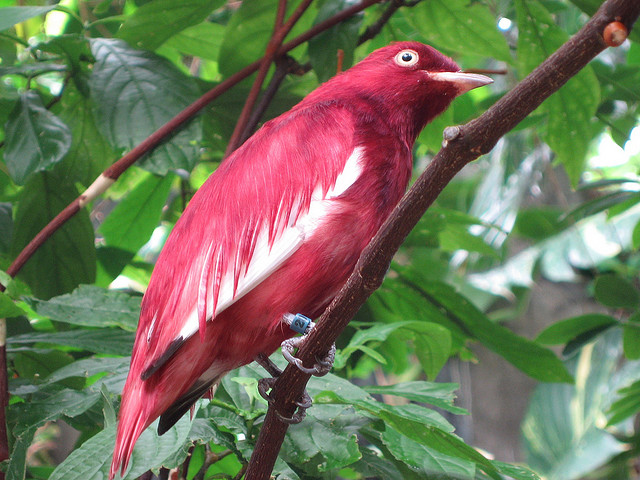
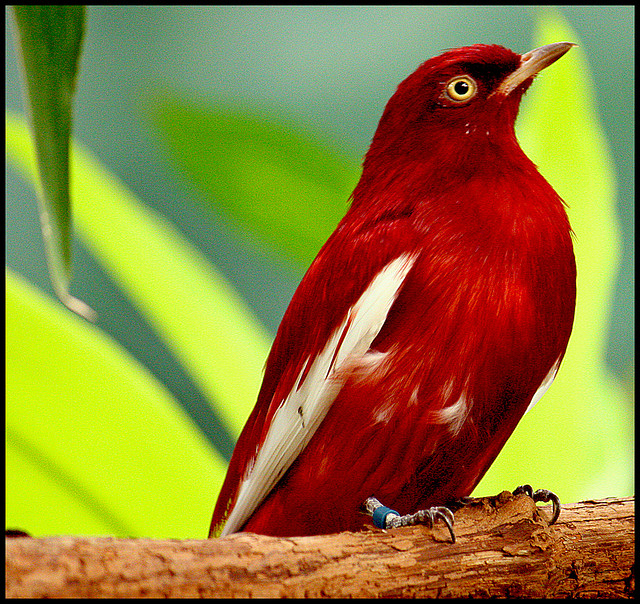
Pompadour Cotinga (Xipholena punicea) ©© Miami_Metrozoo male

Pompadour Cotinga (Xipholena punicea) ©© Miami_Metrozoo male

The Pompadour Cotinga – Concealed incubators… ~ by a j mithra

The Pompadour Cotingas are South American birds from the Cotingidae family. They are found in Brazil, Columbia, French Guiana, Guyana, Peru, Suriname, and Venezuela.

They reside in elevations to 1300 m which occur throughout Amazonia. The primary range extends from Columbia eastward to French Guiana and south to north-west Brazil. It is found in the canopy of humid forest and seems to be more numerous in areas of sandy soil forest.


Pompadour Cotinga (Xipholena punicea) ©©beautifulcataya Flickr

Pompadour Cotinga (Xipholena punicea) ©©beautifulcataya Flickr

Sand is used most often as a symbol of countless multitudes; especially of the children of Israel and of God’s thoughts on us and also of the wisdom and understanding that God gave King Solomon..

  • Is that the reason why these beautiful birds are more numerous in areas of sandy soil forest?
  • They know that Their creator is so mindful of them…

How precious also are thy thoughts unto me, O God! how great is the sum of them! If I should count them, they are more in number than the sand: when I awake, I am still with thee. (Psalm 139:17, 18)

During breeding season males gather to perform a ritualized flight display to attract a female. Two or three males will chase each other around a group of tree tops, keeping above the trees so that their white wings flashing against the dark foliage are visible for a great distance. The males are relatively easy to see even at a distance with their white wings flashing as they fly from tree to tree. Females sometimes join mixed canopy flocks but males appear to be more solitary…


Pompadour Cotinga (Xipholena punicea) female by AGrosset

Pompadour Cotinga (Xipholena punicea) female by AGrosset

It is not uncommon for the clutch to contain a single egg. The eggs are a greenish gray with drab spotting. Frail open nests of curly wood tendrils completely conceal the female while she incubates. Little is known about their breeding habits because it occurs high up in the forest canopy.

  • God closed the door of the Ark and concealed Noah his family and the wildlife as well..
  • God’s plan in our lives are planned high above in the heavens where no one can see..
  • His ways are not our ways and our ways are not His..

Please read through Isaiah 39 and you will learn how King Hezekiah brought curse over his family when he showed off all his treasure to the envoys of Babylon so as to win favour from them..

  • Do not show off God’s blessings over your life to the others to win favour but just conceal yourself like these birds..
  • God has concealed us in His palm so wait until He shows us off to the world..

Humble yourselves therefore under the mighty hand of God, that he may exalt you in due time: (I Peter 5:6)

The bride, the Church, needs to completely conceal itself while it incubates God’s will…

But you, when you pray, enter into your closet, and when you have shut your door, pray to your Father which is in secret; and your Father which sees in secret shall reward you openly. (Mathew 6:6)

A considerable number of these birds are remarkable for the extraordinarily abnormal form of some of their wing-quills, and occasionally of their wing-coverts – a feature in the former case observable also among the Pipridae, and, where existing, generally confined to the male bird.


Pompadour Cotinga (Xipholena punicea) ©©holyknight33 Flickr

Pompadour Cotinga (Xipholena punicea) ©©holyknight33 Flickr

Many of them also are brilliantly coloured, and at least one, today known as the Pompadour Cotinga (Xipholena punicea) but known as the Pompadour Chatterer in the 19th Century (and had a latin name of Xipholena pompadora at that time) was given its 19th Century name by Edwards (Gleanings, ii. p. 275, pl. 341) after the celebrated Madame de Pompadour, to whom these birds and other birds were sent, when the ship that bore them from Cayenne fell a prize to a British cruiser.

The Pompadour Cotinga is of a hue scarcely to be seen in any other bird. The coloration of the Cotingas is from true pigmentation, not the more common prismatic feather structure. The males are a glistening wine red color with white flight feathers narrowly tipped in black. The elongated and stiff greater wing coverts are wine red with white shafts partly covering the flight feathers. The females are mainly gray and paler below. The throat and belly are grayish white, with the wings and tail dusky. Greater wing coverts and inner flight feathers are broadly edged in white. The juveniles are like the female but with dark eyes.

With glistening wine red color with white flight feathers, reminds us of the wine soaked garment of our Lord isn’t it?

My beloved is white and ruddy, the chiefest among ten thousand. (Song of Solomon 5:10)

  • About 2000 years back He came to redeem us and was battered and bruised made it look like His garment was soaked in wine…
  • This time around He is going to come again to turn His garment into red..
  • Not with His blood though…

Who is this that cometh from Edom, with dyed garments from Bozrah? this that is glorious in his apparel, travelling in the greatness of his strength? I that speak in righteousness, mighty to save.
Wherefore art thou red in thine apparel, and thy garments like him that treadeth in the winefat?
I have trodden the winepress alone; and of the people there was none with me: for I will tread them in mine anger, and trample them in my fury; and their blood shall be sprinkled upon my garments, and I will stain all my raiment
For the day of vengeance is in mine heart, and the year of my redeemed is come. (Isaiah 63:1-4)

Are we ready to meet the King?

Have a blessed day!

Your’s in YESHUA,
a j mithra

Please visit us at:
Crosstree

ajmithra21

(Common) Pauraque – Big Mouth…

Pauraque (Nyctidromus albicollis) by Ian

Pauraque (Nyctidromus albicollis) by Ian

Pauraque – Big Mouth… ~ by a j mithra

Pauraque is a medium nightjar with dark-streaked, mottled gray upperparts, white throat, black chin, rufous face, pale gray-brown underparts. Wings have brown and black bars, white band at base of primaries visible in flight. The gray tail is long, with dark edges and white patches.

Pauraque is a resident from extreme southern Texas to the American tropics; frequents semi-open scrub country with thickets and woodland clearings. Central Americans know the “white-necked night-runner” as “Don Pucuyo” or “Cabellero de la Noche” (“Gentleman of the Night”)—names reflecting its association with love and presumed amorous influence over young women.

The common name for the order and family (Caprimulgidae) in Europe and Asia it is the Goatsucker. This name is ancient and recalls a myth that these birds came down and fed at night by sucking the milk from goats.

In hot weather, they often open their mouths wide and vibrate the throat area, a behavior known as gular-fluttering. Like panting, it’s a thermoregulation behavior that helps to cool the body by increasing the rate of evaporation through the mouth..

The Bible says,

I [am] the LORD thy God, which brought thee out of the land of Egypt: open thy mouth wide, and I will fill it. (Psalm 81:10)

There is a saying in one of the south Indian states, Tamil Nadu, which says, “A child who can mouth will survive..” meaning, a child who can orate is able to survive better than the others…


Pauraque (Nyctidromus albicollis) ©Flickr

Pauraque (Nyctidromus albicollis) ©Flickr

The survival of these birds depends on how well they thermo regulate to cool their body..

  • Our survival as a child of God depends on how wide we open our mouth in the presence of God..

Remember the Bible says so much about how to use our mouth and when to use it and how powerful our mouth can be…

Death and life are in the power of the tongue: and they that love it shall eat the fruit thereof. (Psalm 18:21)

In general it prefers mixed habitat which offers densely vegetated hiding places – ideally forest – for the day, as well as open landscape – perhaps even rivers or wetlands – to hunt at night.

The Pauraques are strange birds with huge mouths that feed on the wing by opening their mouths and scooping in flying insects. It has rictal bristles, which are modified feathers resembling stiff hairs alongside its mouth. Highly tactile and controlled by specialized muscles, they are thought to aid in night feeding, and protect the bird’s eyes from flailing insect legs and wings.

Like its relatives, it feeds on insects caught in flight, usually by fly catching from a low perch, but also by foraging over open ground. These birds open their mouth wide even during their flight in the darkness of the night.

Are we willing to learn a lesson from these birds?

  • Why not for a change, open our mouth wide during our darkest times?
  • As these birds open their mouth wide, God fills them with insects…
  • How wonderful is the creation of our Lord!


Pauraque (Nyctidromus albicollis) ©Flickr

Pauraque (Nyctidromus albicollis) ©Flickr

How much care He has taken to create this unique bird! He has created specialized muscles for night feeding and rectal bristles alongside its mouth so that the insects does not get into its eyes..

  • When God takes so much care for a small little bird, will He not meet all our needs?

If we were like these birds, we would’ve surely questioned God about why He created those bristles alongside our mouth. Who knows we may have had a plastic surgery to look better…  We fail to understand why God had created us in a particular shape, size and colour..

Our God is so particular that, even though He created us in His own image, He had taken so much care to create us in a unique way, so that no one on the face of this earth would resemble us..

So let us all unite with King David and say,

I will praise you; for I am fearfully and wonderfully made: marvelous are your works; and that my soul knows right well. (Psalm 139:14)

The genus and species names reflect the Pauraque’s appearance and behavior.

  • Nyctidromus means “night-runner,” in reference to the bird’s nocturnal, low-to-the-ground foraging.
  • The species name, albicollis, describes the white, bib-like splotch on the pauraque’s throat.

Although the legs of a Pauraque are so small as to be nearly impossible to see under normal conditions, the pauraque can leap half a meter off the ground to catch low-flying insects, and has been observed running on the ground during foraging.

Pauraque (Nyctidromus albicollis) by ©AGrosset

Pauraque (Nyctidromus albicollis) by ©AGrosset

With a small pair of legs these birds can leap half a meter…

Though Hind’s feet is weaker than a horse’s feet, God says that He will give us the hind’s feet to lift us high..

He makes my feet like hinds’ feet, and sets me on my high places. (Psalm 18:33)

He does not set strong horse’s feet on high but the weak hind’s feet..

Thank God if you feel that you are weak..

Shall horses run upon the rock?….. (Amos 6:12)

The male Pauraque’s song is very variable, but includes a whistled weeeow wheeooo, (“who-r-you”), soft puk puk and a whip given in the courtship flight as he flutters around the female. Her call is a rapid succession of whip sounds. If disturbed, it will sometimes run rather than fly, and it frequently rests on roads and tracks.

  • Where do we run when we are disturbed?

These birds runs and rests on roads and tracks..

  • Don’t we see a secret in its character?
  • When disturbed let us run to the road to rest…

Road?

Yea, JESUS is the road, I mean THE WAY, where there is rest and relief…

The name of the LORD is a strong tower: the righteous runneth into it, and is safe. (Proverbs 18:10)

Have a blessed day!

Your’s in YESHUA,
a j mithra

Please visit us at:
Crosstree

ajmithra21


Lee’s Addition:

YouTube Video by baco1970

The Pauraque is one of the 93 species in the Caprimulgidae – Nightjars Family. The Caprimulgidaes are one of four families in the Caprimulgiformes Order.

Other articles from this family include:
Futuristic Whip-poor-wills by a j mithra
Birds of the Bible – Nighthawk
Scripture Alphabet of Animals: The Night-Hawk

*
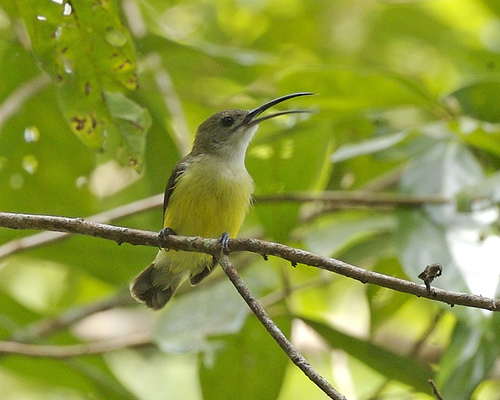
The Little Spiderhunter – The Praising Pollinator

Little Spiderhunter (Arachnothera longirostra) by Peter Ericsson

Little Spiderhunter (Arachnothera longirostra) by Peter Ericsson

The Little Spiderhunter – The Praising Pollinator ~ by a j mithra

The Little Spiderhunter (Arachnothera longirostra) is a species of long-billed nectar feeding bird in the Nectariniidae family found in the moist forests of South and Southeast Asia.

Unlike typical Sunbirds, males and females are very similar in plumage.

They are usually seen in ones or twos and frequently make a “tzeck” call and are most often found near flowering plants where they obtain nectar. They are found close to their favorite nectar bearing trees, often species of wild Musaceae or flowers in gardens.

We too have Jesus, the Rose of Sharon and the Lilly of the valley, who is sweeter than honey..

But, where is our dwelling place? Is it near Jesus?

Though these birds are called spider eaters, a lesson can be learned from them who dwell among the flowers to obtain nectar…

Though we are sinners, the WORD, which is sweeter than honey, is able to make us holy when we prefer to dwell among The Rose of Sharon…

These birds have to go in search of their favorite flowers..

But, we have the most amazing privilege of bringing the Rose of Sharon, the Lilly of the Valley, among us through our praise…

But thou art holy, O thou that inhabitest the praises of Israel. (Psalm 22:3)

The distinctive long beak sets it apart from other Sunbirds. The sexes are alike except for a paler base to lower mandible in the female. The male has an all black beak.
They have a buzzy “zick-zick” call that is made regularly when disturbed or when foraging. The song is series of rapid chipping notes and these can go on for long periods… While dwelling near its favorite nectar bearing trees, these birds sing for long period of time particularly when they are disturbed…

  • King Jehoshaphat disturbed God with praise when he was disturbed by his enemies..
  • Peter and Silas, disturbed God with their praise when they were disturbed by the soldiers…
  • Jonah disturbed God with his praise when he was disturbed inside the whale’s belly..
  • King Nebuchadnezzar disturbed God with his praise when his pride disturbed him..
  • The best way to disturb God when we are disturbed is to praise Him…

Do we murmur or sing praise to the Lord when we are disturbed?

Praise ye the LORD. Sing unto the LORD a new song, and his praise in the congregation of saints.
Let Israel rejoice in him that made him: let the children of Zion be joyful in their King.
Let them praise his name in the dance: let them sing praises unto him with the timbrel and harp.
For the LORD taketh pleasure in his people: he will beautify the meek with salvation.
Let the saints be joyful in glory: let them sing aloud upon their beds.
Let the high praises of God be in their mouth, and a two edged sword in their hand;
To execute vengeance upon the heathen, and punishments upon the people;
To bind their kings with chains, and their nobles with fetters of iron;
To execute upon them the judgment written: this honour have all his saints. Praise ye the LORD. (Psalm 149)

Little Spiderhunter (Arachnothera longirostra) ©©Flickr

Little Spiderhunter (Arachnothera longirostra) ©©Flickr

The genus name Arachnothera means “spider hunter” and the species epithet refers to the long beak. About thirteen geographic races are recognized. The nominate race longirostra (Latham, 1790) is found in southwestern India, central and northeastern India, foothills of the Himalayas and into Thailand and Yunnan. Race sordida La Touche, 1921 is found in southern China and northeastern Thailand. Race pallida Delacour, 1932 is found in southeastern Thailand and C & S Indochina. The species is found in Bangladesh, Bhutan, Brunei, Cambodia, China, India, Indonesia, Laos, Malaysia, Myanmar, Nepal, the Philippines, Thailand, and Vietnam.

Within India, there are disjunct populations in the Eastern Ghats from Lamasinghi, Vishakapatnam and parts of Orissa and the Western Ghats apart from the main distribution in north-east India that extends into Southeast Asia. A record from the Nicobar Islands is considered doubtful.

Its natural habitats are subtropical or tropical moist lowland forests, subtropical or tropical mangrove forests, and subtropical or tropical moist montanes. It is usually found below the canopy.

They have been noted as good pollinators of wild banana species and several species of the ginger family and often visit Indian silk cotton tree and Indian coral tree for nectar.

These birds are good pollinators…

  • The extension of kingdom of God depends upon pollinators of His word…
  • Are we good pollinators of the Rose of Sharon and the Lilly of the valley?
  • Or are we just honey suckers?

It is time for us to think and rethink of our status in the kingdom of God…

Now then we are ambassadors for Christ … (II Corinthians 5:20)

Little Spiderhunter (Arachnothera longirostra) ©©

Little Spiderhunter (Arachnothera longirostra) ©©

They are often seen in plantations in forest areas. Although they are more often seen in secondary forests or in clearings and appear to be tolerant of human activities, they have become extinct in some forest fragments. In Singapore they have gone locally extinct within the botanical garden.

The breeding season in northeastern India is March to September but mainly May to August and in southern India it breeds from December to August.

The nest is a compact cup attached under a banana or similar broad leaved plant suspended by cobwebs and vegetable fibre. Two eggs are the usual clutch.

In Sarawak, the Kayan, Kenyah and Punan people consider it a bird of good omen and when they are out collecting camphor, the men would wait until they heard the “sit” call of one of these spiderhunters.

  • As we call His name, He sure will deliver the undelivered…
  • God is waiting for our call before He separates the husk from the grains…
  • There are millions out there who have not even head the name Jesus..

What are we going to do to reach them before the King returns?

Call unto me, and I will answer thee, and show thee great and mighty things, which thou knowest not. (Jeremiah 33:3)

Have a blessed day!

Your’s in YESHUA,
a j mithra

Please visit us at:

Crosstree

http://ajmithra21.wordpress.com/


Lee’s Addition:

The Little Spiderhunter is in the Nectariniidae – Sunbirds Family of the Passeriformes Order.

See more of a j mithra’s articles
More Birds of the World