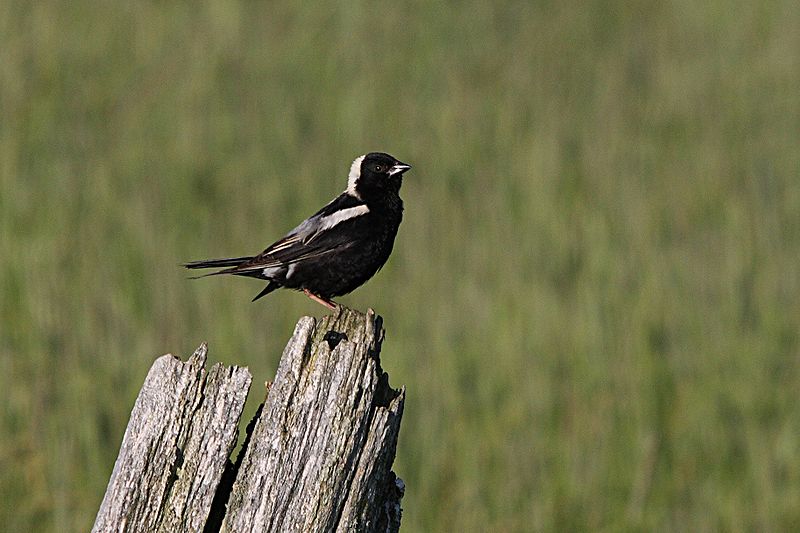
Avian Worship…

Avian Worship…

~  by a j mithra and Lee

The Bible says,” But ask now the beasts, and they shall teach thee; And the birds of the heavens, and they shall tell thee” Job 12:6

Birds are the most beautiful of all creations… Aren’t they? Of course they are.. If we have the heart to learn, there is indeed so much that we can learn from them; from living an organized lifestyle with what little they have and the way they take themselves and their homes and kids in times of adversities… Above all, we can learn a lot about music, about music and the most important part played by music in its life….

Birds have never been to a university. But the fact is that, most of the universities around the world are behind birds, learning new things everyday about them.

Out of all that we can learn from birds, the most amazing habit is their singing, what the birders call as bird calls of bird songs.  Singing is their habit and way of living, but for us, singing is a hobby and we try to earn a living out of it… Remember God had created us to worship..

Birds are the only creations which start their day with singing and end their day with singing… You know why birds sing at dawn? It is just that they want to advertise to this world that they are still alive..

We call ourselves as Christians.. But do we really have Christ in us? How many mornings did we advertise to this world that JESUS – THE LIFE dwells in us? If we don’t sing praises in the morning, we should definitely scan our heart and soul to see if we are dead or alive.  For the Bible says,

The dead praise not the LORD, neither any that go down into silence.  (Psalms 115:17)

Oh! What joy they should have in their life to do so?  A small Sun bird’s call can be heard as far as 300 to 400 meters. If a bird is as big as a human and if it sings,
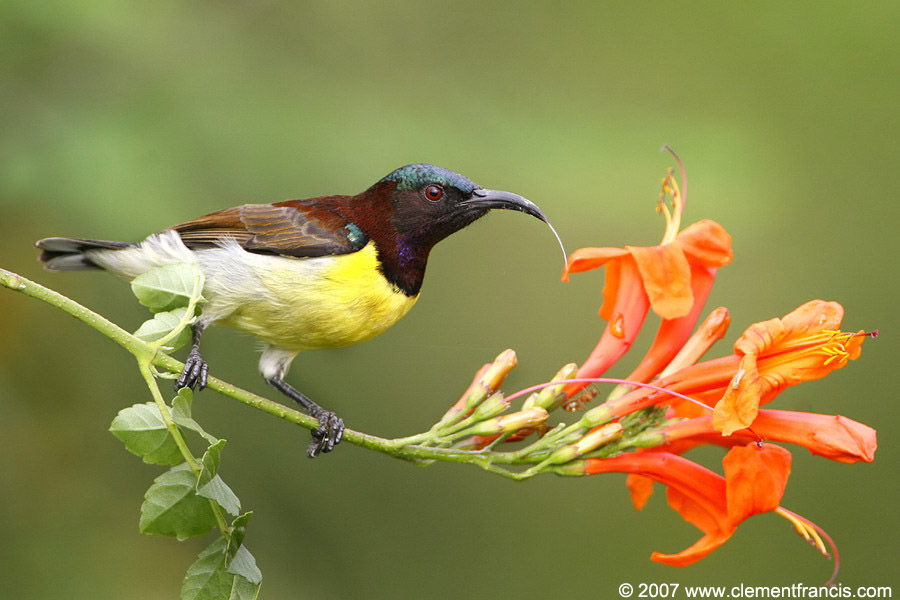
Purple-rumped Sunbird (Leptocoma zeylonica) by Clement Francis

Purple-rumped Sunbird (Leptocoma zeylonica) by Clement Francis

(PURPLE-RUMPED SUNBIRD)

its song can be heard as far as 3 to 4 kilometers… Well, that is what Ornithologists say… To sing that powerful, birds need lots of energy. Hence, they need to eat very often, because birds burn lot of calories on singing…

How loud do we sing in Church? Or do we sing at all in our personal prayer? Or do we act as if we are worshiping the Lord will all our heart in Church? Bible says, “Make a joyful noise,” it did not say voice, it says NOISE. Joshua and his men made NOISE and the fort of Jericho crumbled. Let us do it the Joshua way.

Maybe their early morning singing is the reason that they are able to fly hundreds of miles every day in search of food and water and yet returns home with so much of energy to end their day with another open-air concert …  There is a saying which goes like this “Laughter is the best medicine.” Birds can’t laugh… Is that why they sing to show their joy? Where there is joy, there is strength…  Prophet Nehemiah knew that secret that is why he says,

….: for the joy of the Lord is your strength  (Nehemiah 8:10)

Is that the reason why the birds are so strong that they can fly and we can’t? Birds never go to a doctor because they know that their music can heal them… Music has the power to heal you know?

Kind David’s music healed King Saul isn’t it? Your worship can heal people’s body, mind and soul. After all, GOD has kept life and death in our tongue. Let us use it for HIS glory..

Well, how many of us start or dare to start our day with singing? Where there is singing there is joy and where there is joy there is strength… It sounds so simple isn’t it? And it’s not just simple but, it’s powerful too… Birds know this secret and that’s why they bring so much joy through their singing…

No matter what the situation is, it is time for us to start our day with singing, for the KING is returning very soon. If we do not have the practice of singing here, we would never be able to sing in heaven along with the angels.

Birds sing in perfect pitch and perfect rhythm… Musicians use a software called “NEUNDO” for recording and the default set for the Tempo is 120 BPM (beats per minute)… The rhythm of the song of most birds is set to the tempo of 120 BPM… It sounds as if they had invented NEUNDO…Isn’t it quite astonishing or amazing or whatever you may call it?  The syncopation of bird songs has intricate patterns and most of them are new to men… They sing very short phrases compared to human singing, but, their syncopation has complicated but complete rhythmic patterns…

Once as I was birding, I saw a Chestnut-headed Bee-eater

Chestnut-headed Bee-eater (Merops leschenaulti) by Nikhil Devasar

Chestnut-headed Bee-eater (Merops leschenaulti) by Nikhil Devasar

(CHESTNUT-HEADED BEE-EATER)

perched on a dry tree. Suddenly the bird flew as far as about 50 meters and flew back to the same place where it was perched with a dragon-fly stuffed into its beak.. The dragon-fly was still alive. So, the little bird whacked its beak. Tak, tak, tak, tak, tak, five times on either side on the branch where it was perched to kill the dragon-fly all in one motion… Was just wondering, why it whacked five times… Then I found that, in music a rhythmic phrase always ends on the first beat of the next bar… Don’t we sing in a funeral? That’s what the Bee-eater did?  Hm

Plain wren,
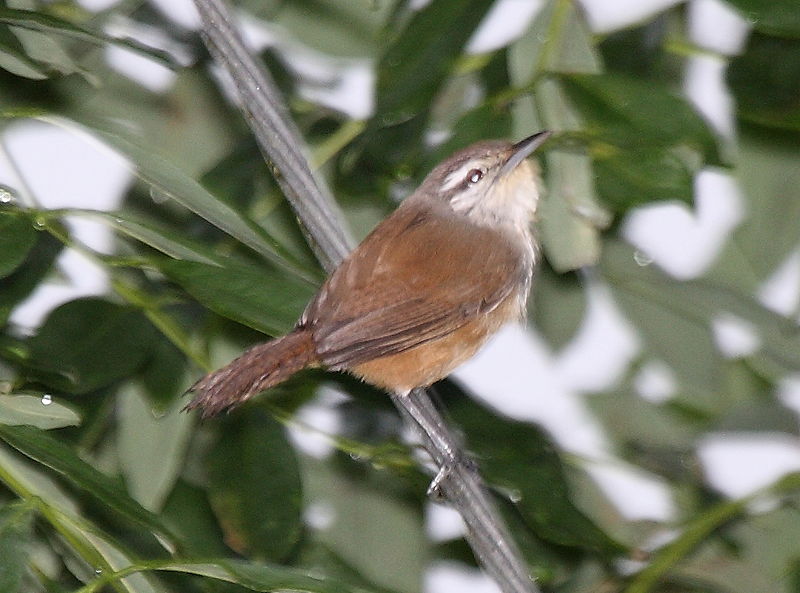
Plain Wren (Cantorchilus modestus) ©WikiC

Plain Wren (Cantorchilus modestus) ©WikiC

(PLAIN WREN)

Atherton Scrubwren,
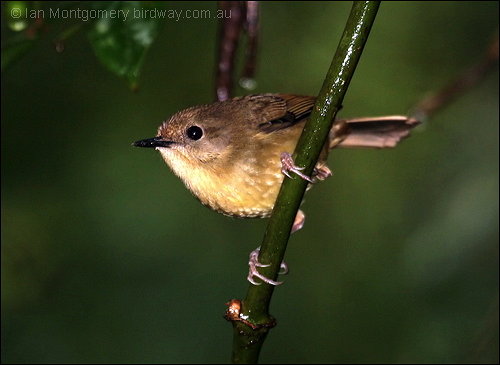
Atherton Scrubwren (Sericornis keri) by Ian

Atherton Scrubwren (Sericornis keri) by Ian

(ATHERTON SCRUB WREN) – Video by KeithB

Carolina Wren
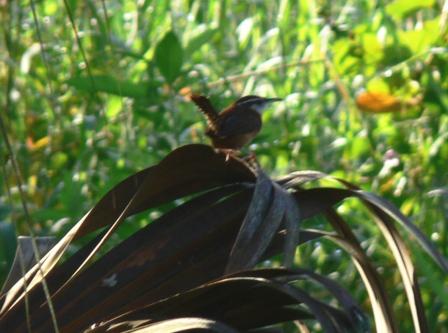
Carolina Wren (Thryothorus ludovicianus) by Lee at Circle B

Carolina Wren (Thryothorus ludovicianus) by Lee at Circle B

(CAROLINA WREN)

and even Babblers,
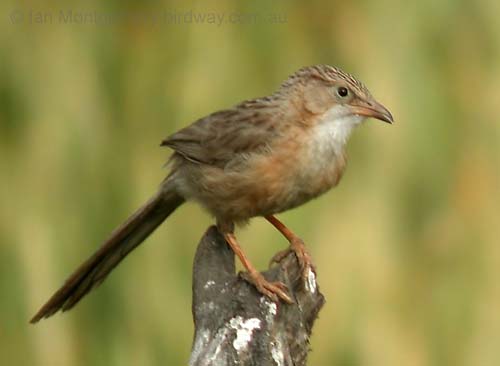
Common Babbler (Turdoides caudata) by Ian

Common Babbler (Turdoides caudata) by Ian

(COMMON BABBLER) – Video

they spontaneously sing complicated rhythmic patterns like a seasoned jazz player… Most composers avoid composing on 5/8 rhythm because of its limitation and the complications involved in the execution of a song in this rhythm…

But, I’ve heard a Rustic Bunting’s bird call

Rustic Bunting (Emberiza rustica) ©WikiC

Rustic Bunting (Emberiza rustica) ©WikiC

(RUSTIC BUNTING)

from the Macaulay’s Library of Cornell’s lab of ornithology, sing in 5/8 rhythmic pattern… I felt so small in front of this small little bird when I heard that song… How it is possible for this little bird to sing in this one of the most complicated rhythmic pattern so spontaneously?

Each individual of Oriental Magpie Robin
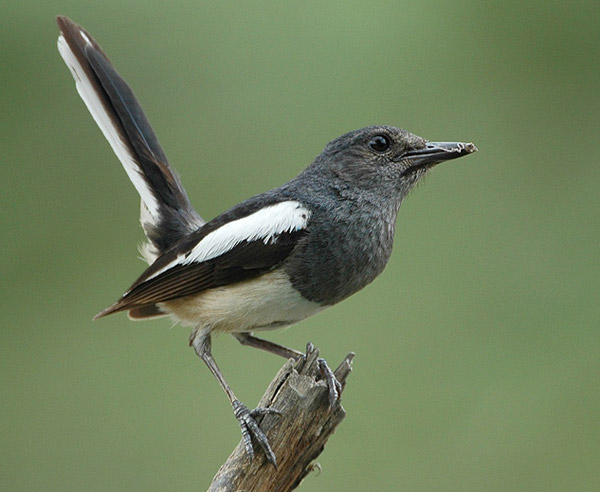
Oriental Magpie-Robin (Copsychus saularis) by Nikhil Devasar

Oriental Magpie-Robin (Copsychus saularis) by Nikhil Devasar

(ORIENTAL MAGPIE ROBIN)

can sing more than fifteen songs per individual and each one is different… Just imagine how much competition would be there to impress upon the females?

There are birds like the Malabar Whistling Thrush,
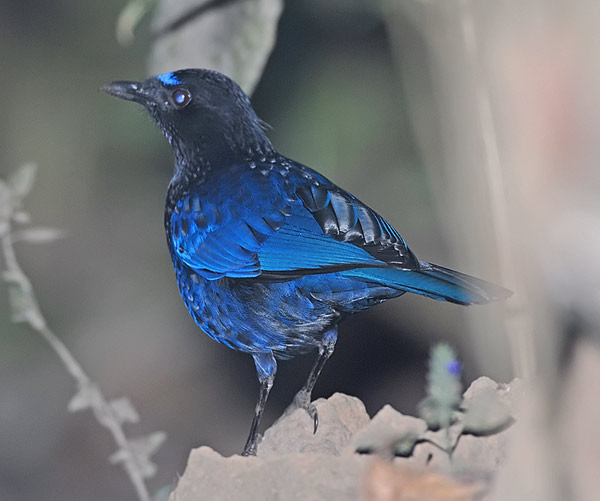
Malabar Whistling Thrush (Myophonus horsfieldii) by Nikhil Devasar

Malabar Whistling Thrush (Myophonus horsfieldii) by Nikhil Devasar

(MALABAR WHISTLING THRUSH)

which is considered as one of the best singers of the bird community… Bird call specialists say that you would mistake its singing for a human whistling a song… But, I personally feel that, that statement shows human ego… If I sound arrogant, please forgive me for that, because, I personally feel that the song of the Malabar Whistling Thrush or any other bird on planet earth is ORIGINAL… NO COMPARISONS PLEASE… Each bird’s songs are special and they know that too.. That is why birds never get jealous of each other’s singing… Do they?

Researchers say that, if a bird doesn’t learn to sing early, the percentage of survival is minimized…  This means Birds sings for survival… The mother bird feeds the chick which shouts the most first… So, the louder you sing the more you eat…

God said,

I am the LORD thy God, which brought thee out of the land of Egypt: open thy mouth wide, and I will fill it. (Psalms 81:10)

Imagine if the same rule applies for mankind, how many of us would still be alive? Most would’ve starved to death and Churches would be empty isn’t it? How long are we going to zip our mouth in the presence of the Lord? Let us open our mouth and He shall open the windows of heaven and fill us and we shall over flow..

Birds sing to attract their mate… A bird which sings the best gets the most attractive mate… If again, the same rule applies to us, scores of us would still be bachelors isn’t it?  If again, we don’t sing, our eternal bridegroom would never come near us. Because, our GOD dwells among our praises..

But thou art holy, O thou that inhabitest the praises of Israel. (Psalms 22:3)

Remember, most of us prefer to sing in the bathroom rather than in the church! We sing for applause, name, fame and money. If we start applauding, each time a bird sings, I wonder if any bird could live near us, for they will fly away and never venture to sing before a man again… But, Birds sing for the sheer joy of singing… When would we learn to live like them?

An African bird called the Slate colored Bou Bou
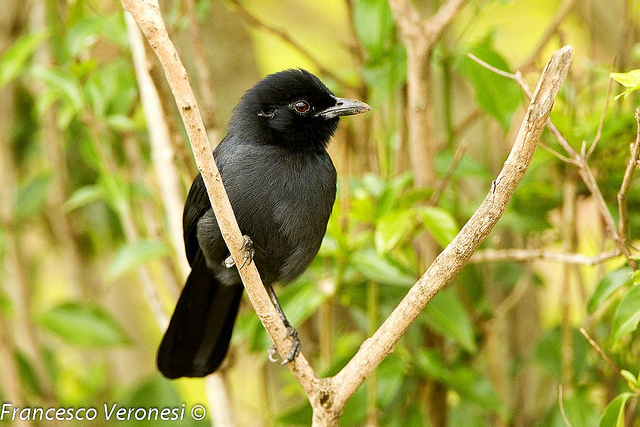
Slate-colored Boubou (Laniarius funebris) ©©

Slate-colored Boubou (Laniarius funebris) ©©

(SLATE COLORED BOU BOU) – Video

has a sound which resembles the wood block, a percussion instrument, which originated from Africa… Maybe the Africans were inspired by the bird’s call… There are tales after tales that say how man was inspired by nightingales and sparrows and cuckoos for their inspiring songs…

Birds never keep singing the same old songs all through their lives… To impress upon their mates they try to outwit their male subordinates by improvising their songs time and again… After all, female birds feel that, the males which sing the most complicated songs are the ones which are capable of taking care of their families better…  Is that why, great teachers like Socrates and Pythagoras taught music first before they taught mathematics and astronomy?

King David knew God’s heart that is why he says,

I will sing a new song unto thee, O God: upon a psaltery and an instrument of ten strings will I sing praises unto thee. (Psalms 144:9)

We stop teaching our kids with rhymes than music; and that too only till the kindergarten level… If only we had been singing all through our lives, this world would’ve been rid of jealousy, ego, hatred, terrorism and the list may go on and on… If Osama Bin Laden had practiced music, he would’ve been a carrying a 4-stringed Oudh – an Arabian stringed instrument plucked with the Quill of an Eagle’s feather, instead of an AK47…

Birds live in perfect harmony not only among themselves but also with the flow of nature… Once I heard a territorial call of an Indian bird called Common Iora.
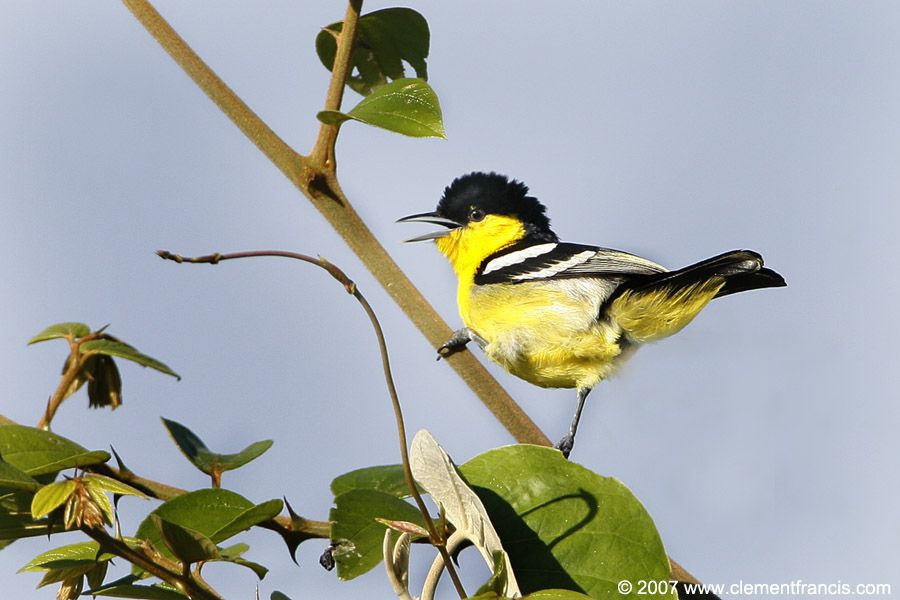
Common Iora (Aegithina tiphia) by Clement Francis

Common Iora (Aegithina tiphia) by Clement Francis

(COMMON IORA)

Each one was answering one another’s territorial calls. They both were singing similar phrase. Slowly, the calls turned a bit aggressive I thought; because, one was answering before the other could finish singing its phrase. At one particular point when one overlapped the other’s call, like what we call singing cannon in music, it turned into a harmony. As a musician, I know it was perfect harmony. But, I don’t know if it was intentional or accident. All that I heard was perfect harmony. They are in harmony with time and season. Rain or shine, no matter what happens around them the birds are able to sing.

Do we find harmony at home, in school, in our office, in our church? If only we knew the power of harmony, we Christians will not have thousands of denominations. If we knew the effect of harmony, by this time every soul would have accepted Christ as their savior… If we had learned to live in harmony, this world would be a better place to live.

A home or a street or a town or a city or a state or a country which encourages and practices music will live in PERFECT HARMONY…  After all music is all about harmony and perfection of body, mind and soul… Most Christian families do not have family prayer and worship.. We think that Sunday worship in Church is suffice. Unless we live in perfect harmony at home, would it be possible to have harmony in the places where we go. Well, ministry starts at home.

It is because of us trying to move against the flow of nature that the world is facing severe biological catastrophe. If only we could learn to live in harmony with nature? This world would be the same as it was in the beginning. It may be too late and too hard to live in harmony with nature right now. But, we can surely postpone the inevitable to a certain extent. This can happen only when we unite together in harmony and save earth so that they Birds can sing and sing and sing forever and ever… Come on, rain or shine, let us all learn to sing like birds at all times and live in PERFECT HARMONY with GOD and HIS creations..…

(a j mithra wrote the article and Lee supplied some photos, videos and the sounds-not all recordings match his descriptions)

*
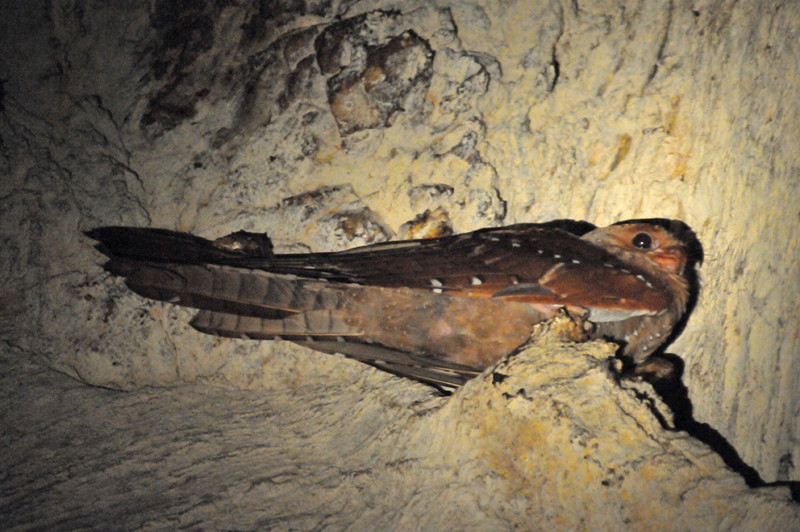
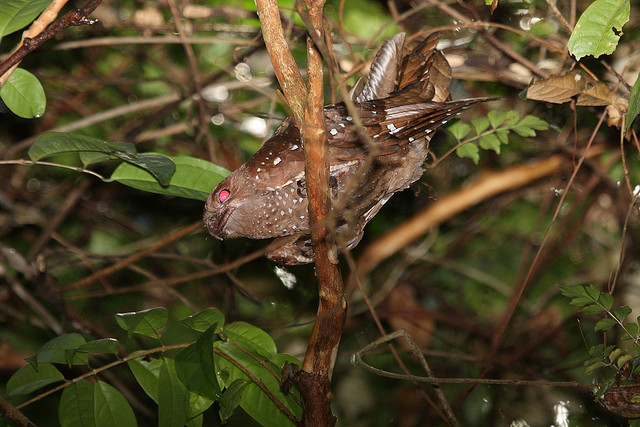
Oilbird – Mission With A Vision

Oilbird (Steatornis caripensis) by Bob-Nan

Oilbird (Steatornis caripensis) by Bob-Nan

Oilbird – Mission With A Vision ~ by a j mithra

Oilbird or Guacharo lives in northern South America from Guyana to Peru. The Oilbird ranges locally across much northern South America and down the Andes all the way to Bolivia.

Their plumage is cinnamon brown, with small, white spots. The Oilbird presents a somewhat “hen-ish” or owlish appearance, observant and hesitant when trolling branches; puffy and somnolent when asleep. It is mainly reddish-brown with white spots on the nape and wings. Lower Oilbird parts are brownish color to neutral white. The stiff tail feathers are a rich chestnut brown spotted with white on either side.

This is a large bird at sixteen to nineteen inches with a wing span of three feet. The Oilbird’s flattened hooked bill is surrounded by dark brown bristles up to two inches long.

Oilbird (Steatornis caripensis) by Ian

Oilbird (Steatornis caripensis) by Ian

It is a bird of tropical and subtropical primary forests. Colonies leave the caves at night to fly to fruiting trees. Figs are often consumed but the Trinidad population has been documented eating over 36 different kinds of fruit. The seeds of these fruit are spread widely after passing through the bird’s system, and the Oilbird is thus an important component of the tropical ecosystems. The forest depends on these fruit eaters — and other animals with similar behavior such as fruit bats — to continue in existence.

  • The existence of Church depends on how far and wide we sow the word of God…
  • God has asked us to spread the gospel over all the earth…

But, the question is have we touched lives which dwell next door or at least to the person who sits next to our table in office ? First of all, we don’t even know the person who sits next to us in church, isn’t it? We’ve been hearing a lot about brotherly love and love your neighbor as thy selves..

  • But, have we ever asked ourselves if we truly love our self?
  • Most so called believers are going through self inflicted injuries and self pity…
  • Maybe that is the reason we are not able to lead a fruitful life..
  • Our fruits are not the fruits which God expects from us…
  • Unless we are fruitful and our lives testify God’s work in us, we may not be able to sow seeds of faith among our fellow beings…

A good tree cannot bring forth evil fruit, neither can a corrupt tree bring forth good fruit. Every tree that bringeth not forth good fruit is hewn down, and cast into the fire. Wherefore by their fruits ye shall know them (Mathew 7:18-20)

It is a seasonal migrant, moving from breeding caves to fertile wild land fruit trees. Oilbirds plump up possibly half their body weight again before the breeding migration, an intelligent habit as caves will provide little nutrition and parents will not want to leave the nest.

Oilbird (Steatornis caripensis) by Judd Patterson

Oilbird (Steatornis caripensis) by Judd Patterson

Seasonally, the oilbird lives in forests to gather nutrition and store up for breeding. Then the oilbird will migrate from the forest and woodland to within breeding areas within caves. Both parents share the task of incubating the clutch of two to four eggs for about 33 days, and the nestlings stay put for up to four months.

Oilbirds feed their young exclusively on fruit pulp. This is very unusual because an all-fruit diet would not normally provide adequate nutrition or baby birds. The young nestlings grow fat (even half as heavy again as their parents)—causing the literal downfall of many!

These birds seem to know the importance of storing nutrition for migration and breeding that’s why they provide adequate nutrition for their babies…

  • We as Christian parents, do we take care to nourish our children with spiritual food?
  • We tell them stories about the five who went to buy oil at the last minute..
  • But are we insisting upon our kids to get ready to meet the King?

These young oilbirds are heavier than their parents, how healthy are our children in spirituality?

I have no greater joy than to hear that my children walk in truth. (III John : 1)

The wings of the oilbird control aerial maneuvers. The Oilbird’s small feet are somewhat useless, other than for positioning and alignment to vertical surfaces.  The oilbird’s hovering, twisting flight allows the bird to navigate the route and “hallways” of the caves. Oilbirds echo-locate (like bats) inside caves but use their huge eyes once they leave the communal roosts.

Oilbird (Steatornis caripensis) ©©Flickr - dominic sherony

Oilbird (Steatornis caripensis) ©©d.sherony

They apparently have excellent night vision. Rows of bristles protect the eyes both above and below. They fly with fast with primary tips widely spaced (like New World vultures) but have the ability to fly slowly or even hover. They can range quite a distance in search of fruit. Radio telemetry studies have shown their normal range per night is 40 kms (25 mi) but they have traveled as far as 150 km (93 mi) in a single night. They may find fruit by smell. These birds travel so long in a single night in search of fruits..

This reminds of how Jesus had come from heaven to earth in search of fruits from us isn’t it?

  • He expects us to give fruits at all seasons…
  • Do we have fruits to offer 24 x 7 or just seasonal?

And now also the ax is laid unto the root of the trees: therefore every tree which bringeth not forth good fruit is hewn down, and cast into the fire. (Matthew 3:10)

Studies have shown that all the fruit they eat is spicy or aromatic when ripe. Oilbirds nest in large colonies on high, rocky ledges, often a good distance into the cave. They build their cone-shape nests from a mixture of regurgitated fruit pulp, their droppings and undigested seeds. Oilbird nestlings retain food in their intestines for longer than normal, enabling them to extract all the nutrients which they need in order to thrive on fruit. For instance, they are able to extract 80% of the lipids (fats) from their diet.

  • We eat lots of the THE FIRST, which is the WORD OF GOD…
  • But, do we extract all the nutrients of THE WORD by meditating on what we read?
  • Do we eat THE WORD in haste? Or is it a ritual that we need to practice every day?
  • The Word of God has the power to heal, to cleanse, and to encourage and so on…
  • How do we handle it?

For the word of God is quick, and powerful, and sharper than any twoedged sword, piercing even to the dividing asunder of soul and spirit, and of the joints and marrow, and is a discerner of the thoughts and intents of the heart. (Hebrews 4: 12)

Just like bats (and many sea mammals), Oilbirds emit clicking calls in rapid succession and listen to the returning echoes. This means that, in the pitch blackness of their cave home, they can fly around without bumping into the cave walls or each other.

Oilbird (Steatornis caripensis) by Bob-Nan

Oilbird (Steatornis caripensis) by Bob-Nan

At dusk, they leave the cave to find food and their echolocation system works together with their keen smell and super-sensitive vision, helping them to snatch nuts and small fruits in mid-flight without needing to land. In fact it is thought that they never perch during foraging trips, using instead their ability to hover while feeding.

The eyes of oilbirds are highly specialized for their unique lifestyle. While not apparently designed for distinguishing colour, it has recently been discovered that they are extraordinarily sensitive to light—a great advantage to a bird that ‘breaks all the rules’ by being nocturnal. This incredible light-sensitivity is achieved by each of the oilbird’s eyes having a large pupil, enabling them to gather the maximum amount of light and millions of densely packed rods, the  photoreceptor cells.

God had created these birds with excellent night vision for them to travel long distance in search of food..

But, we are so privileged that we have God Himself as our light to show us the way during our dark times..

Then spake Jesus again unto them, saying, I am the light of the world: he that followeth me shall not walk in darkness, but shall have the light of life. (John 8:12)

These unique Oilbirds dwell in caves, has dolphin-like sonar, navigates like a bat, has eyes like a deep-sea fish, can hover like a kingfisher, finds its food by smell and can be boiled up to make oil…

The eyes of these birds are extremely sensitive to light and that is the reason that they are able to break all rules by being a nocturnal…

This world will see us also as very special when we are sensitive to THE LIGHT..

The light of the body is the eye: therefore when thine eye is single, thy whole body also is full of light; but when thine eye is evil, thy body also is full of darkness If thy whole body therefore be full of light, having no part dark, the whole shall be full of light, as when the bright shining of a candle doth give thee light. Take heed therefore that the light which is in thee be not darkness. (Luke 11:34-36)

Have a blessed day!

Your’s in YESHUA,
a j mithra

Please visit us at: Crosstree


What a neat bird, a j. I am also going to add this to the “Formed By Him” series. The Creator has really designed this very unique and useful bird for His Glory.

The Oilbirds are the only family members of the Steatornithidae – Oilbird Family which are in the Caprimulgiformes Order. They keep company there with the Frogmouths, Potoos and Nightjar families.

Macrocephalon Maleo – The Mute Missionary…

Maleo (Macrocephalon maleo) ©NowPublic

Maleo (Macrocephalon maleo) ©NowPublic

Macrocephalon Maleo – The Mute Missionary… ~ by a j mithra

The Maleo, Macrocephalon maleo, is a medium-sized (approximately 55cm long) blackish megapode with bare yellow facial skin, reddish-brown iris, reddish-orange beak and rosy salmon underparts. The crown is ornamented with a black helmet casque. The greyish blue feet have four long sharp claws, separated by a membranous web. The sexes are almost identical with a slightly smaller and duller female.

Voice several different vocalisations, including extraordinary loud braying, series of disyllabic rolls, and, in disputes, a duck-like quacking. Usually shy and often silent, except around nesting grounds, where occasionally crepuscular or nocturnal.

What can we learn from these birds? Silence?

  • Well, silence is the most powerful language..
  • If Jesus had not been silent on the cross, we wouldn’t have had redemption..
  • His silence has given us the assurance of life eternal…
  • How silent are we during our prayer time?
  • God says that there is a time to talk and a time to be silent…
Maleo (Macrocephalon maleo) ©©Wong Dermayu

Maleo (Macrocephalon maleo) ©©Wong Dermayu

The God who created us in His own image is able to turn our silence into a powerful weapon you know?

Keep silence before me, O islands; and let the people renew their strength: let them come near; then let them speak: let us come near together to judgment. Isaiah 41:1
Be silent, O all flesh, before the LORD: for he is raised up out of his holy habitation. Zechariah 2:13

Like these birds, we as body of Christ need to be crepuscular and nocturnal as well..

  • David sought the Lord at all times and that was the reason he won favour from the Lord..
  • How is our relationship with God?
  • Do we seek Him at all times are only in times of trouble?

…….I will bless the LORD at all times: his praise shall continually be in my mouth. Psalm 34:1

The only member of the monotypic genus Macrocephalon, the Maleo is endemic to the Indonesian island of Sulawesi. The Maleo is monogamous, and members of a pair stay close to each other all the time. Its diet consists mainly of fruits, seeds, ants, termites, beetles and other small invertebrates..

Maleo (Macrocephalon maleo) egg©©Wong Dermayu

Maleo (Macrocephalon maleo) egg©©Wong Dermayu

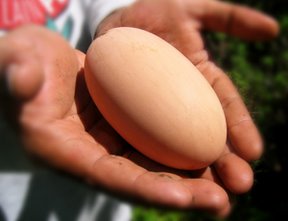
It is found in the tropical lowland and hill forests, but nests in the open sandy areas, volcanic soils or beaches that are heated by the sun or geothermal energy for incubation. There are also megapode species that use fermenting compost to incubate their eggs. The Maleo’s egg is large, about five times as large as that of the domestic chicken’s.

Maleo (Macrocephalon maleo) pair digging©Mongabay.com

Maleo (Macrocephalon maleo) pair digging©Mongabay.com

The female lays and covers each egg in a deep hole in the sand and allows the incubation to take place through solar or volcanic heating. After the eggs hatch, the young birds work their way up through the sand and hide in the forest. The young birds are able to fly and are totally independent. They must find food and defend themselves from predators such as lizards, pythons wild pigs or cats.

  • Though these birds live close to active volcanoes, they still survive..
  • They did not run away from the heat of the volcano..
  • In fact they use the heat of the sand to incubate their eggs..
  • You may be in the midst of a hot situation..

Remember:

  • That God is not bent upon burning us but He wants to show how much He cares for us..
  • The same God who walked with Shadrach, Meshach and Abednego is still alive and is still an unchanging God..
  • Joseph’s brother did evil, but God turned him into a blessing to his brothers…

Our God is still able to change all the evil that had been done against us into blessings..

But as for you, ye thought evil against me; but God meant it unto good, to bring to pass, as it is this day, to save much people alive. Genesis 50:

Have blessed day!

Your’s in YESHUA,
a j mithra

Please visit us at:  Crosstree


Lee’s Addition:

Good job, a j, but you sure gave me a challenge trying to find photos for this bird. They are becoming extinct and I think the photographers who are willing to share their photos of the Maleo are also becoming extinct.

The Maleo is in the Megapodiidae – Megapodes Family of the Galliformes Order.

*

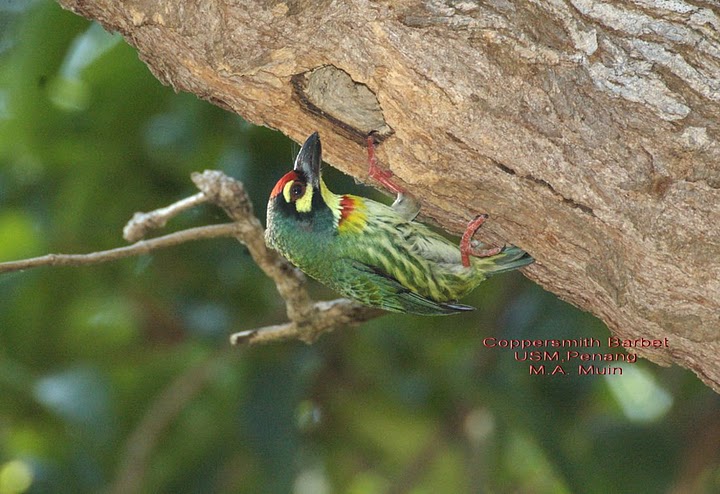
Coppersmith Barbet – The Fruit-giver

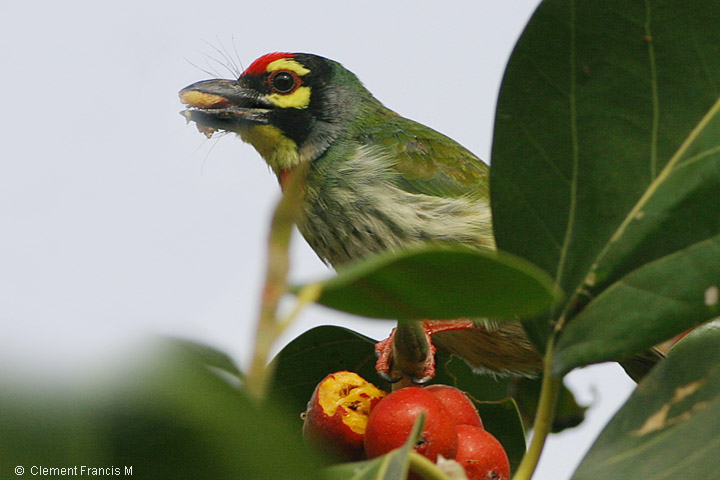
Coppersmith Barbet (Megalaima haemacephala) by MAMuin

Coppersmith Barbet (Megalaima haemacephala) by MAMuin

Coppersmith Barbet – The Fruit-giver ~ by a j mithra

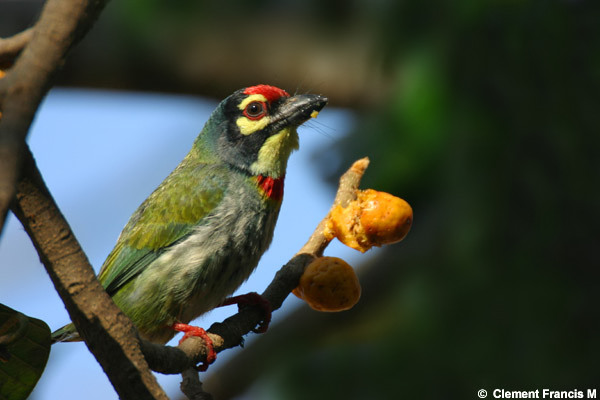
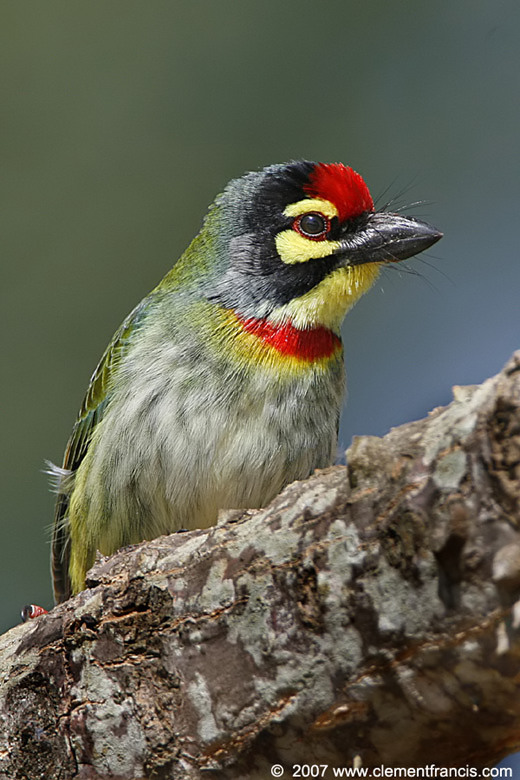
The Coppersmith Barbet or Crimson-breasted Barbet or Coppersmith (Megalaima haemacephala) is a bird with crimson forehead and throat which is best known for its metronomic call that has been likened to a coppersmith striking metal with a hammer.

It is a resident found in South Asia and parts of Southeast Asia. Throughout their wide range they are found in gardens, groves and sparse woodland. Habitats with trees having dead wood suitable for excavation is said to be important but these birds nest and roost in cavities too. In the Palni Hills of southern India it is said to occur below 4000 feet. In the Himalayas it is found mainly in the valleys of the outer Himalayas up to 3000 feet. They are rare in the dry desert zones and the very wet forests.

Coppersmith Barbet (Megalaima haemacephala) by Clement Francis

Coppersmith Barbet (Megalaima haemacephala) by Clement Francis

Keeps solitary, pairs, or small groups; larger parties occasionally on abundantly fruiting Ficus trees.

Fond of sunning themselves in the morning on bare top branches of tall trees, often flitting about to sit next to each other.

  • These birds are fond of sun and they never miss sitting in the sun every morning at an appointed time…
  • We know that His grace is new every morning….
  • But do we have an appointed time with the Sun of Righteousness each morning?

…..and those that seek me early shall find me.” Proverbs 8:17

The flight is straight, with rapid flaps. They compete with other cavity nesting birds and frugivores.

Megalaima asiatica have been noted to evict them from their nest holes, while Red-vented Bullbuls have been seen to indulge in Kleptoparasitism robbing the male of berries brought to the female at the nest.

  • The devil is out there to steal our fruit, to bring division between God and man…
  • Let us stand firm in prayer and praise to ward of the devil’s plan in our lives..
  • Prayer brings protection and praise brings the Protector Himself…

Take ye heed, watch and pray: for ye know not when the time is. Mark 13:33

Coppersmith Barbet (Megalaima haemacephala) by Clement Francis

Coppersmith Barbet (Megalaima haemacephala) by Clement Francis

The nest holes are also used for roosting and some birds roost alone in cavities and these often roost during part of the day. Immatures will roost with the parents but often return to roost early so as not to be prevented by the parents from entering the roost cavity.

The younger ones often return early, so that their parents do not prevent them from entering their home..

Here is something for the younger generation to learn from these birds…

  • Returning home late has become a practice for the nex-gen…
  • They do not understand how worried their parents would be, if they don’t return early from school or college or even work for that matter…
  • They never seem to realize how dangerous it is to stay away late from home…

As a bird that wandereth from her nest, so is a man that wandereth from his place. Proverbs 27:8

Dinah went out all alone from her house to see the land but, what happened later, brought shame to her whole family… That story is told in Genesis chapter 34..

Most youngsters go late night outing with friends after work and some even after school or college without the knowledge of their parents..

  • It is during one of these outing that they get into drugs and fall into pre-marital sex and even commit murder..
  • Poor parents think, that their children are so innocent..
  • Parents too are to be held responsible…
  • How many parents spend quality time with their children…

Remember, children are a gift from God…

  • Are we handling those gifts with love and care..
  • They don’t need your money, all that they need is your loving care dear parents..
  • Most crime takes place in the dark, so let us protect our children from darkness and lead them to eternal life…
Coppersmith Barbet (Megalaima haemacephala) by Clement Francis

Coppersmith Barbet (Megalaima haemacephala) by Clement Francis

The Bible also says,

Thou makest darkness, and it is night: wherein all the beasts of the forest do creep forth. The young lions roar after their prey, and seek their meat from God. The sun ariseth, they gather themselves together, and lay them down in their dens. Man goeth forth unto his work and to his labour until the evening. Psalm 104:19-23

The call is a loud rather metallic tuk…tuk…tuk (or tunk), reminiscent of a copper sheet being beaten, giving the bird its name. Repeated monotonously for long periods, starting with a subdued tuk and building up to an even volume and tempo, the latter varying from 108 to 121 per minute and can continue with as many as 204 notes. They are silent and do not call in winter. The beak remains shut during each call – a patch of bare skin on both sides of the throat inflates and collapses with each tuk like a rubber bulb and the head is bobbed.

Prefers Banyan, Peepul, and other wild figs, various drupes and berries, and the occasional insect, caught in aerial sallies. Petals of flowers may also be included in their diet. They eat nearly 1.5 to nearly 3 times their body weight in berries each day.

Courtship involves singing, puffing of the throat, bobbing of the head, flicking of the tail, ritual feeding and allopreening. They breed through much of the year with local variation. The breeding season is mainly February to April in India and December to September in Sri Lanka.

Both sexes excavate the nest on the underside of a narrow horizontal branch. They may also roost inside the nest holes. Three or four eggs are laid and like in many hole nesting birds the incubation period is not well known but has been estimated to be about 2 weeks. Both sexes incubate. Often two broods are raised in quick succession.

During courtship the male bird offers a fruit and if the female receives it, they raise a family..

Imagine if the same rule is set for us, how many of us God would accept as His bride?

Therefore say I unto you, The kingdom of God shall be taken from you, and given to a nation bringing forth the fruits thereof. Mathew 21:43

Bring forth therefore fruits worthy of repentance, and begin not to say within yourselves, We have Abraham to our father: for I say unto you, That God is able of these stones to raise up children unto Abraham. Luke 3:8

Have a blessed day!

Your’s in YESHUA,
a j mithra

Please visit us at: Crosstree


Lee’s Addition:

The Coppersmith Barbet is in the Asian Barbets – Megalimidae Family of the Piciformes Order.

*

The Smooth-billed Ani – The Corporates…

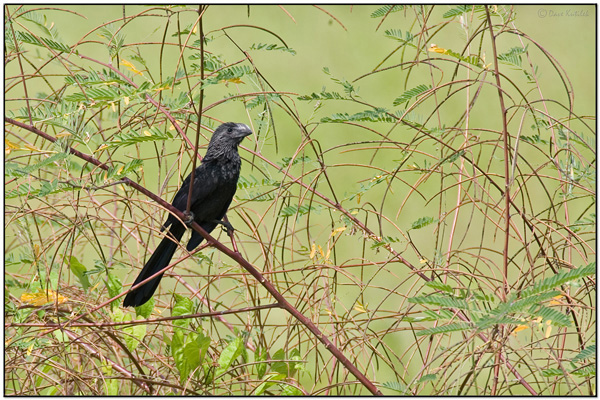
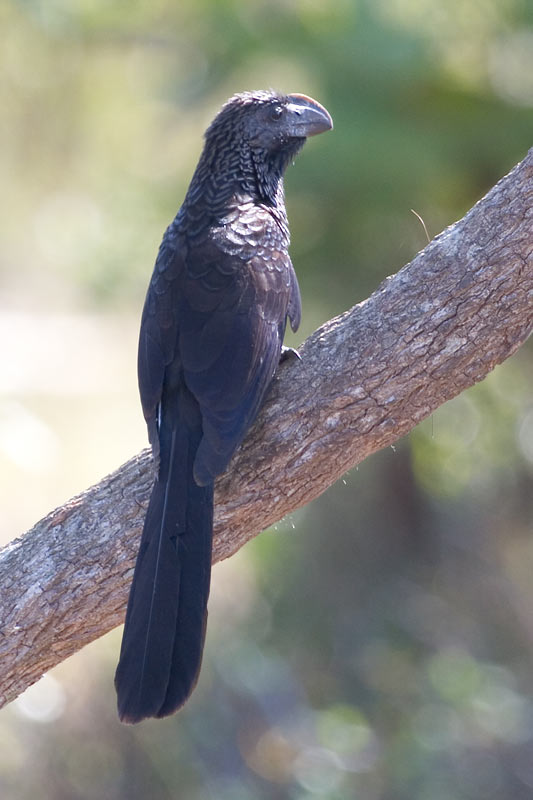
Smooth-billed Ani (Crotophaga ani) by Daves BirdingPix

Smooth-billed Ani (Crotophaga ani) by Daves BirdingPix

The Smooth-billed Ani – The Corporates… ~ by a j mithra

The Smooth-billed Ani (Crotophaga ani) is a large near passerine bird in the cuckoo family. It is a resident breeding species from southern Florida, the Bahamas, the Caribbean, parts of Central America, south to western Ecuador, Brazil, and northern Argentina. This ani is found in open and semi-open country and areas under cultivation.

The Smooth-billed Ani is about 33 cm (13 in) long and weighs 95 g (3.4 oz). The adult is mainly flat black, with a long tail, deep ridged black bill and a brown iris. The flight is weak and wobbly, but the bird runs well and usually feeds on the ground. This bird’s flight maybe weak, but, God had created it to run well..

  • You may not be able to do what other can do…
  • At the same time, you have realize that you too can do something what the other can’t do..
  • God had not created anyone like you.. You are unique..
  • David did not know how to use a sword, but still, God gave him victory over the giant,
  • with what he had..

You may have very little to offer, but, remember that, you have an awesome God..

Go with what little you have, cos, you can do all things through Christ who strengthens you…

All things are possible with God…

Not by might, nor by power, but by my spirit, saith the LORD of hosts. Zechariah 4:6

Smooth-billed Ani (Crotophaga ani) by Ian

Smooth-billed Ani (Crotophaga ani) by Ian

This is a very gregarious species, always found in noisy groups. Smooth-billed Ani is often seen in pairs or in small groups. They climb and flutter in bushes, hop on the ground with loosely cocked tail. When they roost together during cold nights, they perform mutual preening during long moments.

One member of a Smooth-billed Ani group often sits on a high perch and watches for danger while the rest forage. These birds know the importance togetherness..

  • Did not the Bible ask us to be in peace with one another?
  • Did not the Bible advocate brotherhood?

Look at these birds, they take time to preen one another and take turns to watch out for danger..

We say that the churches are the body of Christ…

  • Does one church care for another?
  • Does the church practice what it preaches?

We are the church, who needs to change our attitude and care for our fellow being…

Unless churches unite together as one, it would be hard to defeat satan..

Two are better than one; because they have a good reward for their labour.
For if they fall, the one will lift up his fellow: but woe to him that is alone when he falleth; for he hath not another to help him up.
Again, if two lie together, then they have heat: but how can one be warm alone?
And if one prevail against him, two shall withstand him; and a threefold cord is not quickly broken. Ecclesiastes 4 :9-12

Smooth-billed Ani (Crotophaga ani) ©ArthurGrosset

Smooth-billed Ani (Crotophaga ani) ©ArthurGrosset

The nest of the Smooth-billed Ani is built communally by several pairs. Eggs are laid by several females, deposited in layers separated by leaves or grass. Several Smooth-billed Ani females typically lay eggs and incubate in the same nest. Late-laying females bury the eggs of early-laying females with twigs and leaves, which can create a number of layers of eggs; only the top layer eventually hatches. As many as 36 eggs may be found in a single nest.

This bird species is a classic example of corporate living… Communal nest building, communal incubation, communal feeding, communal preening and communal territorial guarding is not seen among many species..

  • We as church have so much differences in faith, worship, teaching and so on..
  • Corporate worship and corporate prayer has brought victories to the early church…
  • We say that we are the church but, are we as powerful as the early church?
  • It’s time to switch on the search lights to see where we went wrong…

A Song of degrees of David. Behold, how good and how pleasant it is for brethren to dwell together in unity!
It is like the precious ointment upon the head, that ran down upon the beard, even Aaron’s beard: that went down to the skirts of his garments;
As the dew of Hermon, and as the dew that descended upon the mountains of Zion: for there the LORD commanded the blessing, even life for evermore.  Psalm 133

Have a blessed day!

Your’s in YESHUA, a j mithra

Please visit us at: Crosstree

Tasty household…

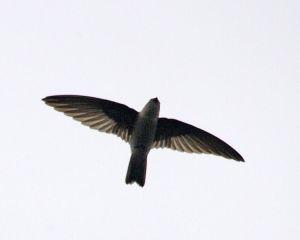
Edible-nest Swiftlet (Aerodramus fuciphagus) ©WikiC

Edible-nest Swiftlet (Aerodramus fuciphagus) ©WikiC

Tasty household… ~ by a j mithra

Edible-nests Swiftlets
build their nests
with their saliva..

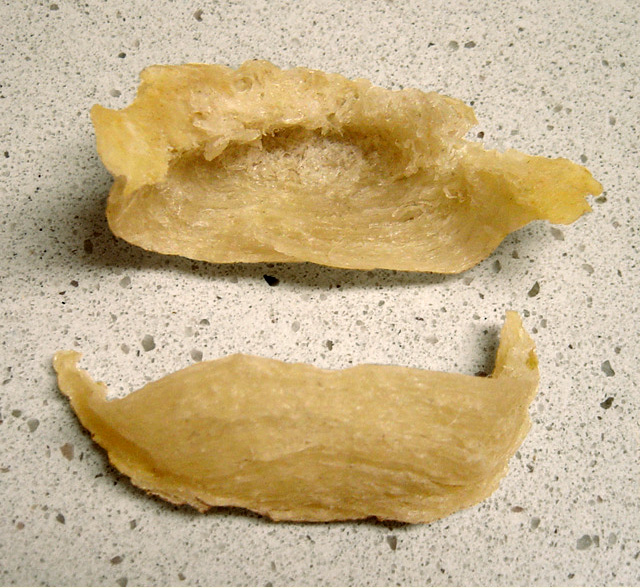
Edible-nest Swiftlets - Swiftlet Bird Nests©WikiC

Edible-nest Swiftlets - Swiftlet Bird Nests©WikiC

Its nests are considered
as the costliest delicacy
in the world..
The nests are known
for its nutrients…
How do we build our nests?
Do people find
that our household
nutrient and tasty?
Does our household
reflect the Love of JESUS?

‘We are fearfully
and
wonderfully made by GOD…”
But,
the question is,
how wonderful is our household,
our Nest for people around us?

…:but as for me and my house, we will serve the LORD. (Joshua 24:15)

Have a blessed day!

Thoughts from a j mithra


The Edible-Nest Swiftlet is in the Apodidae Family of the Apodiformes Order.


*

Mysterious Sungrebe…

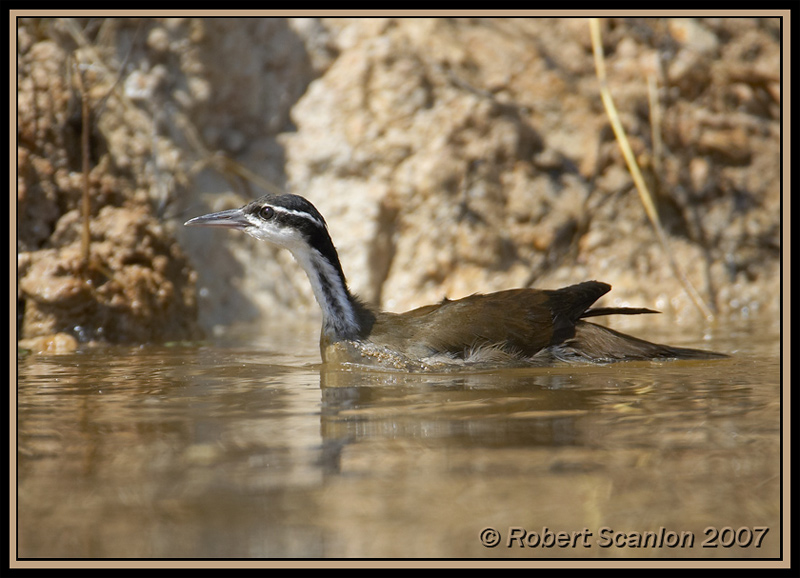
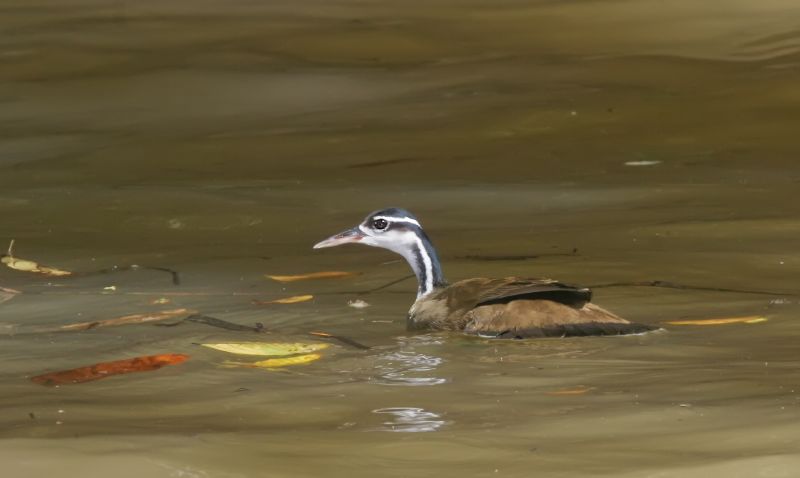
Sungrebe (Heliornis fulica) by Robert Scanlan

Sungrebe (Heliornis fulica) by Robert Scanlan

Mysterious Sungrebe… ~ by a j mithra

Sungrebe, common name for a tropical, mainly aquatic bird of the family Heliornithidae. Sungrebes, also called finfoots, are remarkable for their colorful, puffy-toed, webbed feet, which may serve as lures for fish and other aquatic animals.

The Sungrebe is a small slim-bodied water bird, typically 28-31 cm long and weighing 130 g.

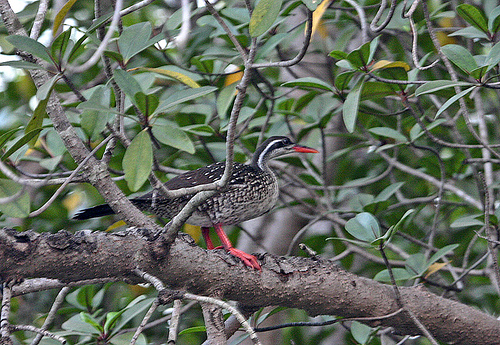
African Finfoot with puffy feet ©WikiC

African Finfoot with puffy feet ©WikiC

Once widely distributed, they (Heliornithidae) are now limited to three species.

The largest of these is the Masked Finfoot (Heliopais personata) measuring up to 20 in. (51 cm) in length, and found from Bengal to Malaya and Sumatra. Its body is olive-brown above, with a black head and throat, a yellow bill, and bright green legs with white stripes.

At 16 in. (41 cm), the African Finfoot (Podica senegalis) is dark brown with black and white spots above, a white belly, and bright red feet and legs. It is thought to be more of a climber than the other species.

Only a third to a quarter as bulky as the Asian Sungrebe and measuring less than 12 in. (30 cm) in length is the Sungrebe (Heliornis fulica) of South and Central America. its plumage is colored similarly to that of the Asian sun grebe, but it is scarlet-billed with yellow, black-striped legs.

All three species are marked by a white band running from eye to neck. Sun grebes are classified in the phylum Chordata subphylum Vertebrata, class Aves, order Gruiformes, family Heliornithidae. It is mainly brown, with a long neck and blackish tail, and a long red bill. The crown and neck are strikingly patterned with black and white stripe, and the feet are black and yellow.

The sexes differ in the colour of the cheeks, buff in the female and white for the male. Sungrebes are shy birds rarely seen by people. They usually swim close to cover and may hide either in vegetation or in the water, with their bodies underwater and their heads lowered, when they are disturbed.

What do we do when we are disturbed in life?

  • Look up towards mortal men or the immortal God?
  • These birds teach us the best way to turn our focus from a mess to a message…
  • Instead of facing the problem, it would be better to get immersed in to the Living water…
  • As long as Peter’s focus was on the Lord, he was able to walk over the water…
  • Once he shifted his focus from the Lord to the water, he sunk…
  • Let our focus be on the One whose focus is always on us…

The name of the LORD is a strong tower: the righteous runneth into it, and is safe. (Psalm 18:10)

They are not just good swimmers but capable walkers and climbers too. Sungrebes tend to roost, or spend the night, in trees or bushes. This bird is unique that it is able to do everything; fly, swim, walk and climb..

We are unique too, for, God has created us in His image..

So, lets stop talking low of ourselves and start praising God for His purpose in our lives..

I can do all things through Christ which strengtheneth me. (Philippians 4:13)

Masked Finfoot (Heliopais personatus) Wikipedia

Masked Finfoot (Heliopais personatus) ©Wikipedia

Sungrebes may be solitary, that is, may live by themselves, or are found in pairs, generally male and female breeding partners, or family groups. Sungrebes are permanently territorial, meaning they defend their territories from other individuals of the same species during the breeding season as well as the nonbreeding season.

Although all three sungrebe species have distinctive calls, these are not often heard. The African Finfoot makes a loud booming sound during breeding. The Masked Finfoot has a bubbling call. The Sungrebe has a “eeyoo” call that it makes to warn other sungrebes away from its territory.

Though these birds have distinctive calls, they are not often heard..

Our grumbling and complaining is heard ever so often, which makes it easier for satan to locate us easily..

The Bible says,

I am the LORD thy God, which brought thee out of the land of Egypt: open thy mouth wide, and I will fill it. (Psalm 81:10)

God did not ask us to open our mouth to complain and grumble, but, to sing praises…

  • The next time you feel like a looser and want to grumble or complain, just remember that, you are giving away your location to satan…
  • Our praises has the power to vacate God from heaven, to dwell with us..
  • At the same time grumble and complaints has the power to bring satan among us…
  • Remember, Israelites grumbled and fell dead in the wilderness…
  • But, Joshua and Caleb worshiped their way into the land of milk and honey…

Death and life are in the power of the tongue: and they that love it shall eat the fruit thereof. (Proverbs 18:21)

African Finfoot (Podica senegalensis) Wikipedia

African Finfoot (Podica senegalensis) Wikipedia

Sungrebes feed primarily on insects, particularly midgets, mayflies, and dragonflies. They may also eat beetles, grasshoppers, and flies, as well as some mollusks, crustaceans, worms, millipedes, and spiders. Occasionally they can eat larger animals such as frogs, tadpoles, or small fish. Sungrebes are also known to eat a small amount of plant material, such as seeds and leaves. Most of their food is found on the water surface, but Sungrebes also forage in overhanging vegetation or along banks.

It nests from August to April building a bowl shaped nest from reeds, course grass and shiny leaves which it places on a sloping branch overhanging the water often in driftwood caught in branches. The eggs are pale buffy green streaked with brown and purple and 1 to 2 are laid and incubated for about eleven days. The chicks hatch naked, blind, and defenseless.

When our dwelling place is near the Living waters, we have providence in abundance and protection and deliverance..

Where are we planted?

Blessed is the man that walketh not in the counsel of the ungodly, nor standeth in the way of sinners, nor sitteth in the seat of the scornful.

But his delight is in the law of the LORD; and in his law doth he meditate day and night.

And he shall be like a tree planted by the rivers of water, that bringeth forth his fruit in his season; his leaf also shall not wither; and whatsoever he doeth shall prosper. (Psalm 1:1-3)

The Sungrebe is already very strange in having a very short incubation period (10-11 days, matching some small passerines) but has an astonishing behavior entirely unique in the bird world: the male Sungrebe is able to transport these helpless offspring, even in flight! The male has a shallow pocket under each wing into which the two young can fit. The pocket is formed by a pleat of skin, and made more secure by the feathers on the side of the body just below. The heads of the chicks could be seen from below as the bird flew. This adaptation is unique among birds: in no other species is there any mechanism whereby altricial young can be transported.

Our God not only carries us under His mighty wings but has carved us in His palms too…

  • But, most of us seem to find the temporary comforts of the world better suited for us…
  • Maybe that is the reason we are unable to be successful in life…
  • As long as Eve was with Adam, the serpent couldn’t be near her..
  • The day she went alone around the garden of Eden, she was deceived by satan..
  • Where are we right now?
  • It’s time for us to get back to our basics, our first love…

As an eagle stirreth up her nest, fluttereth over her young, spreadeth abroad her wings, taketh them, beareth them on her wings: (Deuteronomy 32:11)

Sungrebe (Heliornis fulica) ©Wikipedia

Sungrebe (Heliornis fulica) ©Wikipedia

Of course, the precocial young of some swans and grebes may hitch rides on their swimming parents’ backs, and a male jaçana can transport his chicks about holding them between his wings and body, but neither of these cases applies when the adults are in flight….

The transport system of the Sungrebe raises numerous further questions. How do the chicks get into the pocket? Are they put in by the male? Does he feed them in there? Do they stay inside, or get in and out? Why does the female not have similar pockets? …

Yes, the Sungrebe and the Finfoots are mystery birds indeed…

Our God is not mysterious but His ways are…

  • He makes ways only where there seems to be no way….
  • He makes ways over the waters and over the sky…
  • He brings waters in the wilderness and rivers into the desert…
  • You may not see rain or wind yet, He is capable of bring rain….
  • He can win a battle with a pebble..
  • He can even win a war without a fight…
  • He can make the waters stand up tall and mighty walls to lie flat..

Our God is able…

Great in counsel, and mighty in work: for thine eyes are open upon all the ways of the sons of men: to give every one according to his ways, and according to the fruit of his doings: (Jeremiah 32:19)

Have a blessed day!

Your’s in YESHUA,
a j mithra

Please visit us at: Crosstree


Heliornithidae Family

Gruiformes Order

Light Rain…

Nicobar Pigeon sunbathing at Lowry Park Zoo by Lee

Nicobar Pigeon sunbathing at Lowry Park Zoo by Lee

Light Rain… by a j mithra

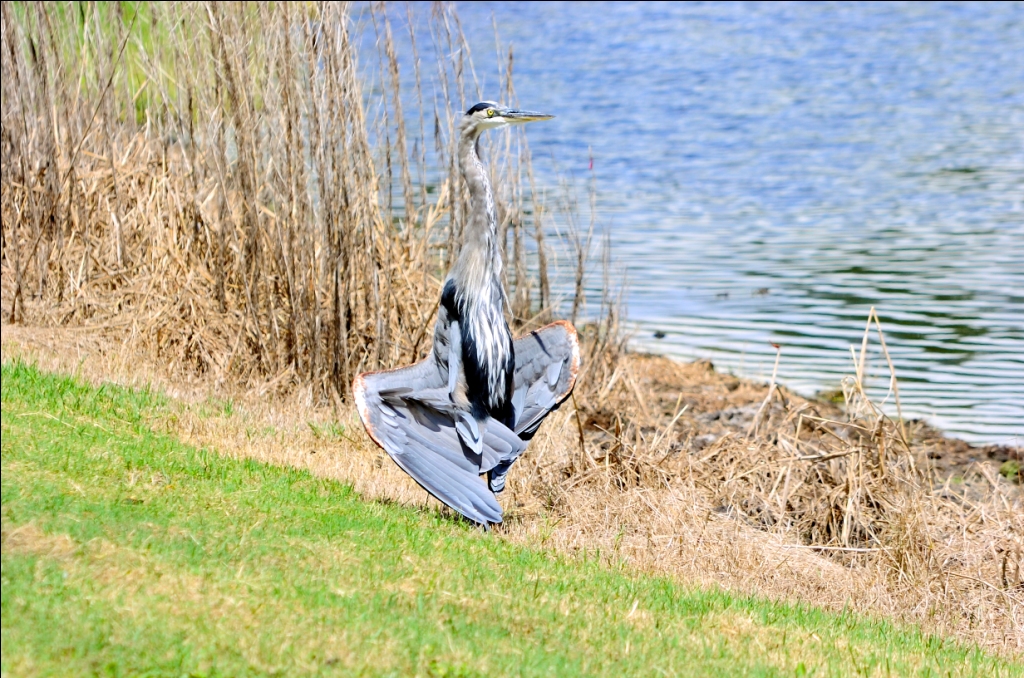
Numerous Bird species
know that

Great Blue Heron sunning by Dan

Great Blue Heron sunning by Dan

Sun light and heavy rains
would support
a tremendous food source
for all of them…
That’s the reason
we can see lots of birds
having sunbath
just after rains….
Most of us
have failed to realize that,
it is impossible
to survive
without THE LIGHT
of the SUN OF RIGHTEOUSNESS
and
the rain of THE HOLY SPIRIT…
JESUS had told that
HE will pour the latter rain
on all flesh..
Thank GOD we are made of flesh
so,
lets get soaked in the rain
and walk in THE LIGHT…

Ask ye of the LORD rain in the time of the latter rain; so the LORD shall make bright clouds, and give them showers of rain, to every one grass in the field. (Zechariah 10:1)

Have a blessed day!

Thoughts from a j mithra

Wordless Birds

*

Launching pad…

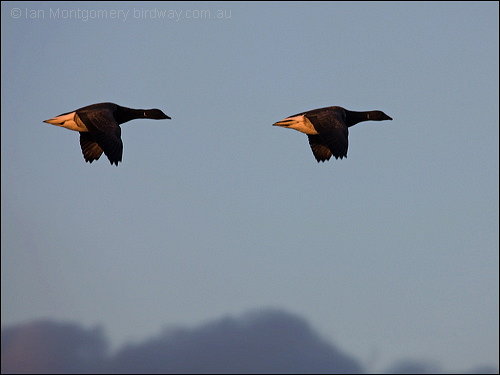
Brant Goose (Branta bernicla) by Ian

Brant Goose (Branta bernicla) by Ian

Launching pad… ~ a j mithra

Brant Geese (Branta bernicla) by Ian

Brant Geese (Branta bernicla) by Ian

The small Arctic Goose
called Brant Goose,
would wait
for the storm system
to come,
so that,
it would catch
the storm’s tail wind
and
migrate during winter…
GOD doesn’t give
the storm to destroy you,
but,
to take you
to a better place…
Remember,
storm is surely
a launching pad…

The LORD is slow to anger, and great in power, and will not at all acquit the wicked: the LORD hath his way in the whirlwind and in the storm, and the clouds are the dust of his feet. (Nahum 1:3)

Have a blessed day!

A thought from ~ a j mithra

*

Mrs. Mom…

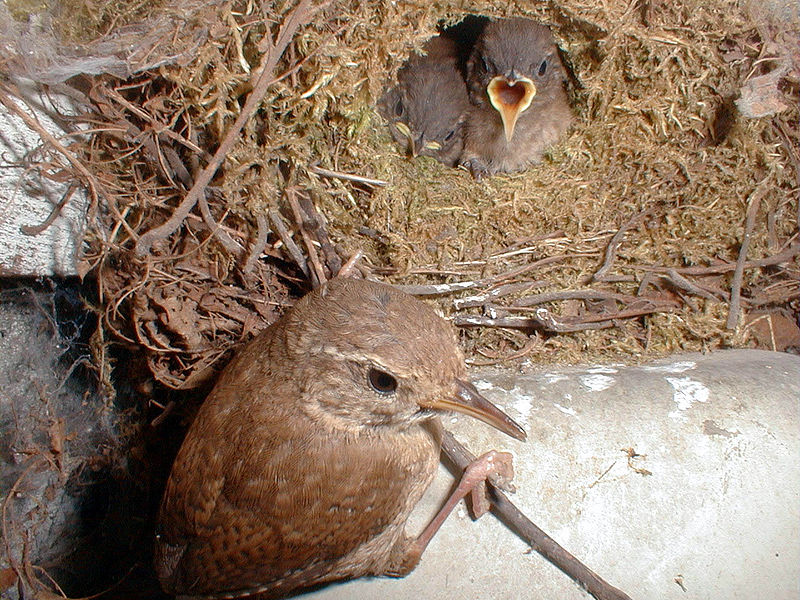
Northern Wren by Peter Ericsson

Northern Wren by Peter Ericsson

Mrs. Mom… ~ by a j mithra

Scientists have found
that mother Wrens

Winter Wren Female and chick ©Wikipedia

Winter Wren Female and chick ©Wikipedia

make at least 1200 visits
to its nest
to feed its chicks…
Amazing isn’t it?
If a small little bird
could take
so much care
of its chicks,
how much would
our LORD,
who gave HIS life
care for you and me?
If the creation is
so amazing,
what would you say
about the CREATOR?

When my father and my mother forsake me, then the LORD will take me up. (Psalm 27:10)

Have a Blessed day!

Thoughts from a j mithra

*

Seeker…

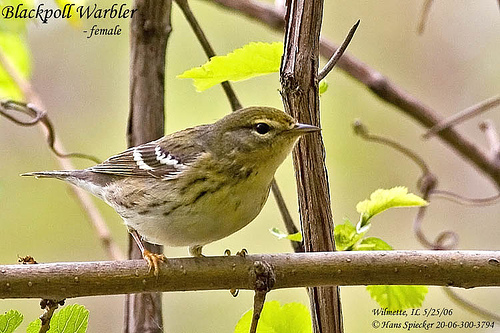
Blackpoll Warbler (Setophaga striata) ©Flickr Scott Heron

Seeker… ~ by a j mithra

A small
North American bird,
the size of a sparrow
called the Blackpoll Warbler,
flies about 2,500 miles
on a nonstop 90 hr.
journey during migration
every year..

Blackpoll Warbler (Dendroica striata) female by Kent Nickell

Blackpoll Warbler (Dendroica striata) female by Kent Nickell

If such a small little bird
could fly that long
and that far,
How far
and how long
should we seek the presence
of the LORD?

But seek ye first the kingdom of God, and his righteousness; and all these things shall be added unto you. (Mathew 6:33)

Have a blessed day!

Thoughts from a j mithra

Bobolink – Extraordinary Migrant…

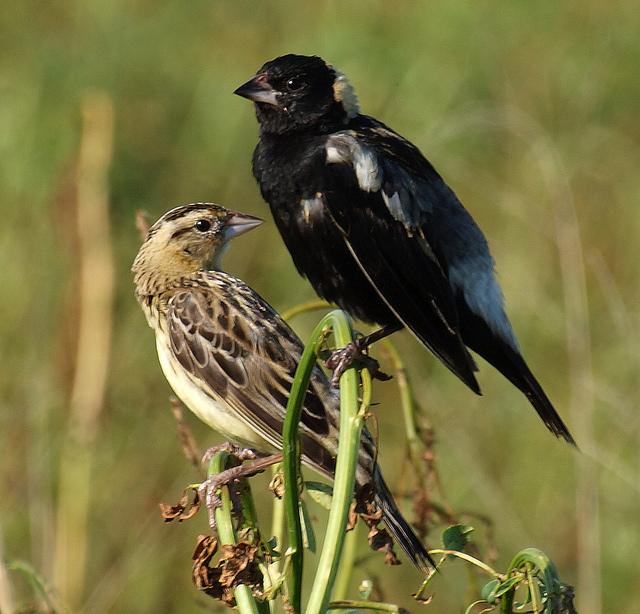
Bobolink (Dolichonyx oryzivorus) Pair ©©ramendan

Bobolink (Dolichonyx oryzivorus) Pair ©©ramendan

Bobolink – Extraordinary Migrant… ~ by a j mithra

Rice bird, meadow-wink, skunk blackbird, reed bird, butter bird—these various names for the member of the blackbird family most commonly known as the Bobolink reflect the diversity of ways in which humans have looked upon this gregarious songbird.

Nesting in the prairies and cultivated land of south Canada and the northern United States and wintering in the grasslands and marshes of Argentina, the Bobolink migrates at least 5,000 miles each way.

Bobolink Migration Route©WikiC

Bobolink Migration Route©WikiC

The Bobolink is an extraordinary migrant, traveling to south of the equator each autumn and making a round-trip of approximately 20,000 kilometers (12,500 mi). One female, known to be at least 9 years old, presumably made this trip annually, a total distance equal to traveling 4.5 times around the earth at the equator! These birds migrate to Argentina, Bolivia and Paraguay. One bird was tracked flying 12,000 miles (19,000 km) over the course of the year, and up to 1,100 miles (1,800 km) in one day. The vast distance is more impressive in relation to the Bobolink’s diminutive size, averaging 7 inches in length, 11.5 inches in wingspan, and 1.5 ounces. in weight.

  • Feeling small?
  • Get ready to do greater things for God…
  • You know, God does not use boulders to stop the waves of the sea from entering the land..
  • But, He uses tiny grains of sand to do it..

God has designed this bird to travel long distances to encourage us that we too can do great and mighty things for God..

A little one shall become a thousand, and a small one a strong nation: I the LORD will hasten it in his time. (Isaiah 6:21)

God seems to have a liking to use small things to fulfill great missions..

  • He chose the small Miriam to find a way to take care of Moses..
  • He chose a small slave girl to bring healing to a Commander of an army..
  • He chose a little shepherd boy David to bring down a mighty giant..
  • He chose a small boy to feed the multitudes…

Here again, this small bird He uses to inspire us to do great things for God..

If this small bird can travel 4.5 times around the world at the equator in its life time, how much more God will expect from us? Most of rely on our strength that is the reason we find it so difficult to travel next door to share the gospel isn’t it?

What sense does it make to say, I can do all things through Christ who strengthens me when we find it so difficult to stand for God?

But be ye doers of the word, and not hearers only, deceiving your own selves. For if any be a hearer of the word, and not a doer, he is like unto a man beholding his natural face in a glass: For he beholdeth himself, and goeth his way, and straightway forgetteth what manner of man he was. But whoso looketh into the perfect law of liberty, and continueth therein, he being not a forgetful hearer, but a doer of the work, this man shall be blessed in his deed. (James 1:22-25)

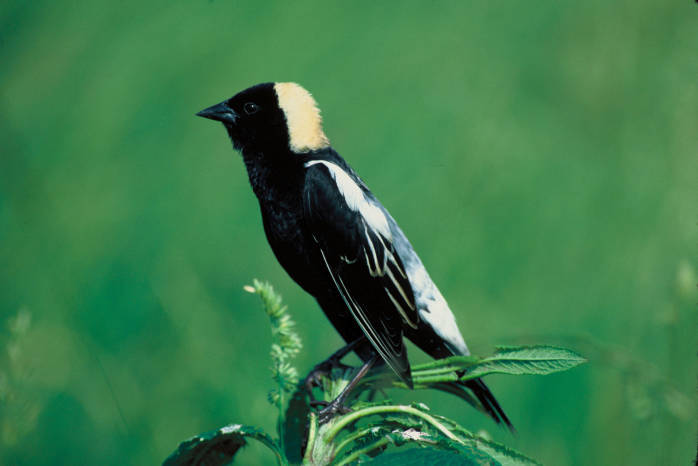
Bobolink (Dolichonyx oryzivorus) ©USFWS

Bobolink (Dolichonyx oryzivorus) ©USFWS

Bobolinks begin their journey northward in South America in early March, reaching Colombia and Venezuela in late April. From there, most take a route over the Caribbean Sea to the Florida peninsula, although some will cross the Gulf of Mexico from the Yucatan Peninsula to Louisiana and Texas. From there they fan northward and westward, arriving on the breeding grounds in May. These Birds breed in open grasslands and hay fields.

Bobolinks migrate at night. The distinctive “clink” notes of these nocturnal travelers can be heard as they pass overhead in large flocks, apparently using the earth’s magnetic field as a compass and the locations of the stars as a map.

  • Human race boasts about technology, innovation and inventions…
  • We feel great pride in finding unknown routes with the help of satellites and compass…

But, these birds use the earth’s magnetic field as compass and locations of the stars as a map…

  • How difficult it is for us to tread on unknown path?
  • When we worship in church we feel so good to call Jesus as the Brightest Morning Star…
  • Do we really turn towards this Morning Star to seek direction in life?
  • Who is our inspiration in life?

If God be with us who can be against us? But the million dollar question is, are we with God?

Great in counsel, and mighty in work: for thine eyes are open upon all the ways of the sons of men: to give every one according to his ways, and according to the fruit of his doings: (Jeremiah 32:19)

Bobolink (Dolichonyx oryzivorus) ©WikiC

Bobolink (Dolichonyx oryzivorus) ©WikiC

In summer, Bobolinks feed primarily on insects switching to grain crops as they migrate south. In migration and in winter uses freshwater marshes, grasslands, rice and sorghum fields.

Although the Bobolink typically feeds during the day, in migration, while building fat reserves for its long over water flight, it has been observed feeding in rice fields after dark on bright nights.

We all know that we are on the verge of migrating once and for all to heaven..

  • Have we stored reserves to migrate that long?
  • His words has the power to heal the broken and strengthen the weak…
  • His words shall never return empty…

My son, forget not my law; but let thine heart keep my commandments: For length of days, and long life, and peace, shall they add to thee. Let not mercy and truth forsake thee: bind them about thy neck; write them upon the table of thine heart: So shalt thou find favour and good understanding in the sight of God and man.

Trust in the LORD with all thine heart; and lean not unto thine own understanding. In all thy ways acknowledge him, and he shall direct thy paths. Be not wise in thine own eyes: fear the LORD, and depart from evil. It shall be health to thy navel, and marrow to thy bones. (Proverbs 3:1-8)

Bobolink (Dolichonyx oryzivorus) by J Fenton

Bobolink (Dolichonyx oryzivorus) by J Fenton

How many times do we read His words in a day? Maybe we should learn from these birds to eat His words even during our dark hours.

Thy word is a lamp unto my feet, and a light unto my path. (Psalm 119:105)

Judging by sight or sound, the Bobolink is a bird of distinction. Their song has been vividly described as

  • “a bubbling delirium of ecstatic music that flows from the gifted throat of the bird like sparkling champagne,”
  • “a mad, reckless song-fantasia, and outbreak of pent-up, irrepressible glee,” and as
  • “a tinkle of fairy music, like the strains of an old Greek harp.”

We may not be a good singer, yet, God loves to hear us sing. The reason for creating us is to sing, glorify and thank Him.  But, we seem to do every other thing except thanking Him…  Many of our prayers are unanswered, because, we have failed to thank when we pray..

Be careful for nothing; but in every thing by prayer and supplication with thanksgiving let your requests be made known unto God. (Philippians 4:6)

Have a blessed day!

Your’s in YESHUA,
a j mithra

Please visit us at: Crosstree


The Bobolink is in the Icteridae Family of the Passeriformes Order

*