Prayer Request for a j mithra

In Our Thoughts and PrayersYou may have noticed that our fine inspirational and insightful writer, a j mithra, has not had any of his usual articles lately. a j (he prefers to have his name in lower case) slipped and fell recently and has dislocated his shoulder. He was already getting very busy with a new school year starting, (he teaches music there in India) and doing special presentations. Now he is slowed down with his shoulder.

Please pray for a j that he heals quickly and has no complications. We miss his articles.

You can catch up on the articles you might have missed by going to his page here – a j mithra plus he has his own website at – Crosstree

a j loves the Lord and is serving Him greatly. Please do keep him in your thoughts and prayers.

*

Interesting Things – Ron DiCianni’s Painting of the Resurrection

And said unto them, Thus it is written, and thus it behoved Christ to suffer, and to rise from the dead the third day: (Luke 24:46 KJV)

Resurrection Painting

Resurrection Painting

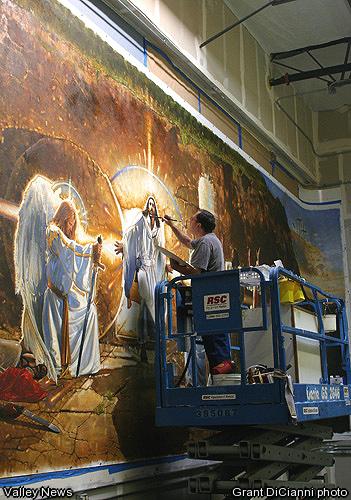
The following link tells about a great painting that is being done by Ron DiCianni about the Ressurection. I know it is not bird related, but I have had several emails about it and decided to share it here. It is worth watching the video.

The mural will be 12 feet by 40 feet wide. It is to be placed in the Museum of Biblical Arts in Dallas.

Ron DiCianni: Painting the Resurrection.

*

Sandhill Crane Juveniles in Backyard

Sandhill Crane "colts"

Sandhill Crane "colts"

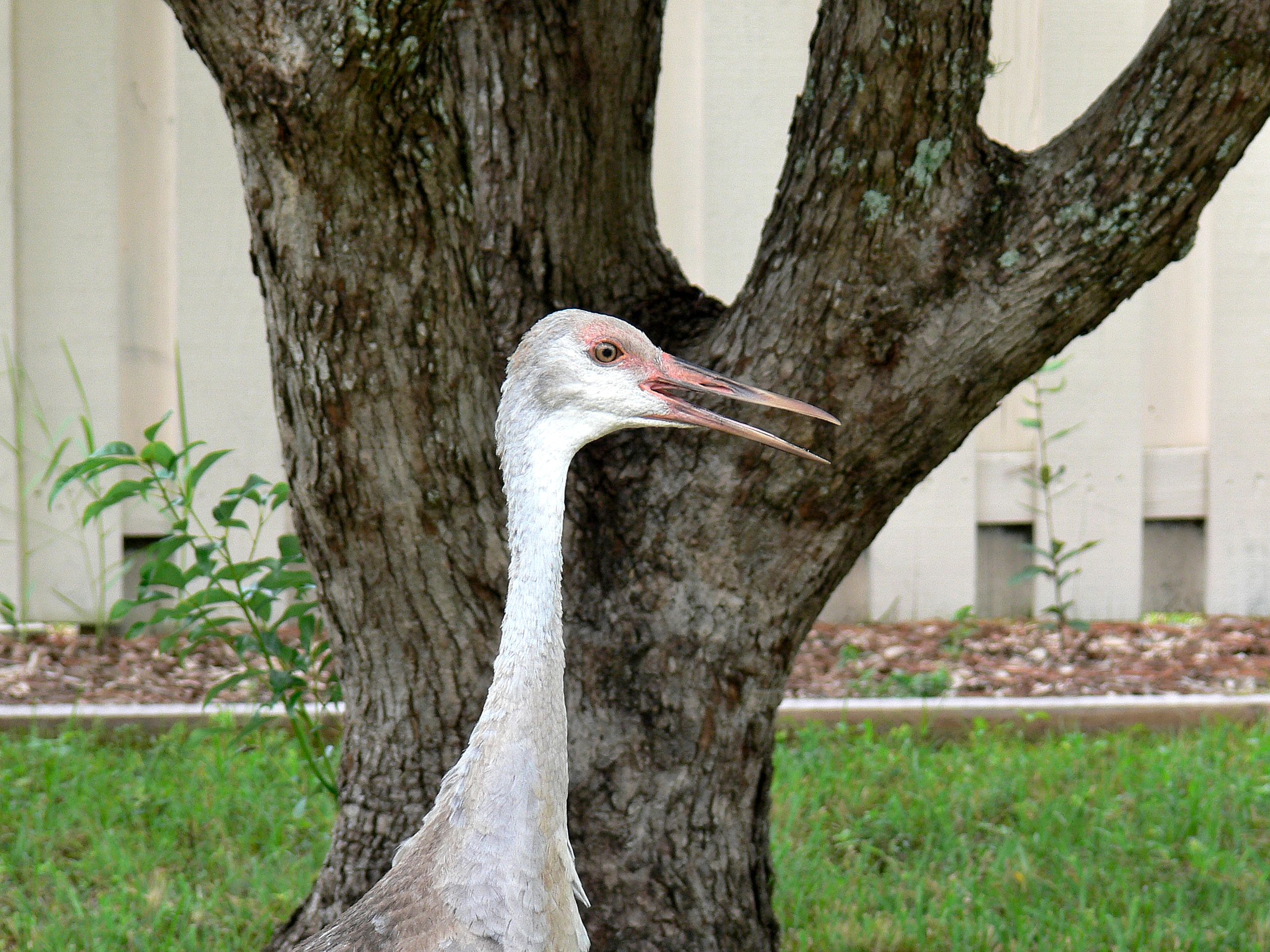
Do you remember the blog about the Sandhill Crane “Colt” Birdwatching? The little baby Sandhills were just a day old then on March 14th of this year. Today is August 27th of 2010 and they were visiting in my backyard with their parents. As you can see, they are growing up quite well. We have been watching them over the last five months. Couldn’t resist getting the camera out and updating their progress.

Sandhill Juvenile - 5 months old

Sandhill Juvenile - 5 months old in backyard

They still don’t have all their color yet, but they are just about as tall as the parents. It is neat to be able to watch them grow. Hope you enjoy the photos.

Sandhill Cranes (Grus canadensis) are in the Gruidae Family of the Gruiformes Order.

Even the stork in the heavens knows her times, and the turtledove, swallow, and crane keep the time of their coming, but my people know not the rules of the LORD. (Jeremiah 8:7 ESV)

*

This slideshow requires JavaScript.

*

Birds of the Bible – At the National Aviary

Wattled Curassow (Crax globulosa) by Lee at National Aviary

Wattled Curassow (Crax globulosa) by Lee at National Aviary

Birds of the Bible – at the National Aviary in Pittsburgh, PA seems like a logical topic if you have been reading the blog lately. As you may be aware, Dan and I, visited the Aviary a few weeks ago. What a fantastic place to see birds from all around the world. With over 800 birds, there had to be some of the birds mentioned in the Bible.

The Bible says that all birds were created by the Lord, so technically, they all qualify. For this blog, I will confine it to named types of birds. Birds mentioned below are in the same family of the named bird, at least according to the IOC list of Families and Orders.

I know all the birds of the hills, and all that moves in the field is mine. (Psalms 50:11 ESV)

And these are they which ye shall have in abomination among the fowls; they shall not be eaten, they are an abomination: the eagle, and the ossifrage, and the ospray, And the vulture, and the kite after his kind; Every raven after his kind; And the owl, and the night hawk, and the cuckow, and the hawk after his kind, And the little owl, and the cormorant, and the great owl, And the swan, and the pelican, and the gier eagle, And the stork, the heron after her kind, and the lapwing, … (Leviticus 11:13-19 KJV)

Birds of the Bible

Their birds change from time to time and what is seen will change. We saw many more birds, but these are only the Birds mentioned by name in Scripture.

More photos will be added to the slide show as we get more IDs and convert Dan’s to JPG format.

This slideshow requires JavaScript.

*

National Aviary – Penguin Encounter

African Penguin (Spheniscus demersus) at NA by Lee

African Penguin (Spheniscus demersus) by Dome at NA by Lee

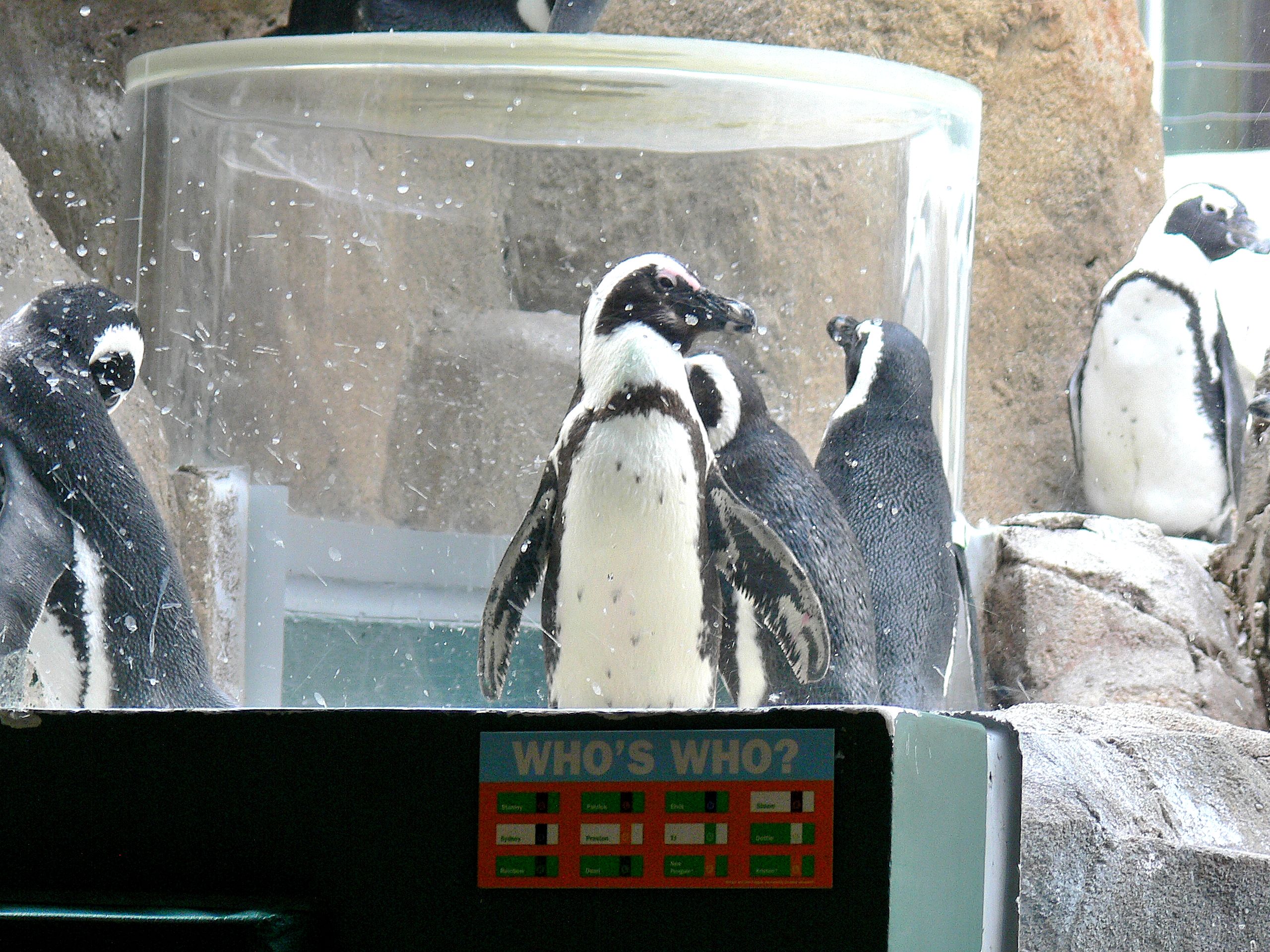
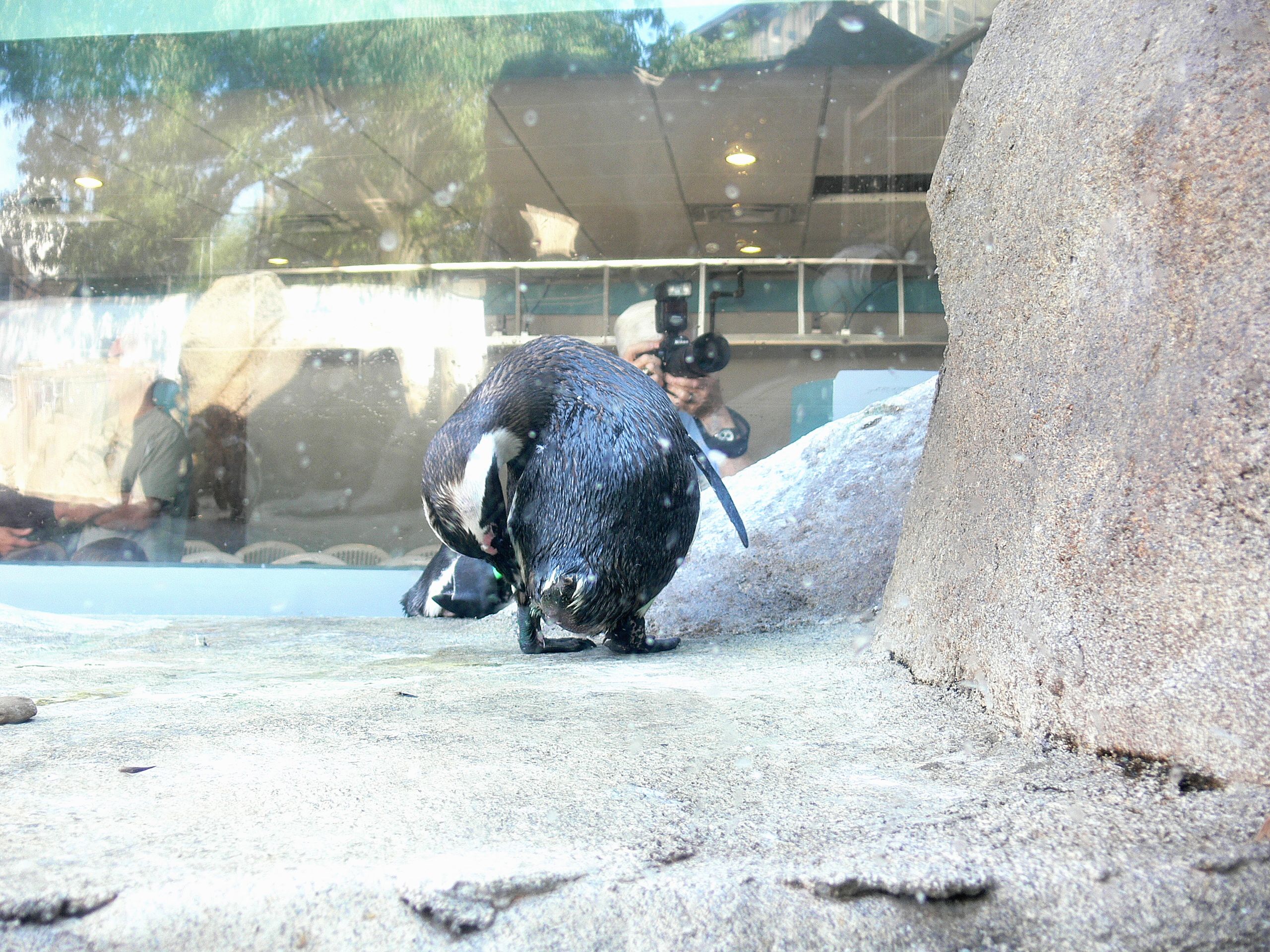
The National Aviary’s Penguin Point area is home to Stanley, Elvis, Patrick, Simon, Sidney, Preston, Dotty, Kristen, TJ, and Rainbow. At least that is the names of the ones listed on the African Penguin page. We enjoyed taking pictures of them, but did not figure out who was who. The area has a dome that sticks up and you can make your way to it and look at the penguins up “close and personal.” Of course, I had to go check it out. Even caught Dan taking pictures of the penguins while I was inside looking out.

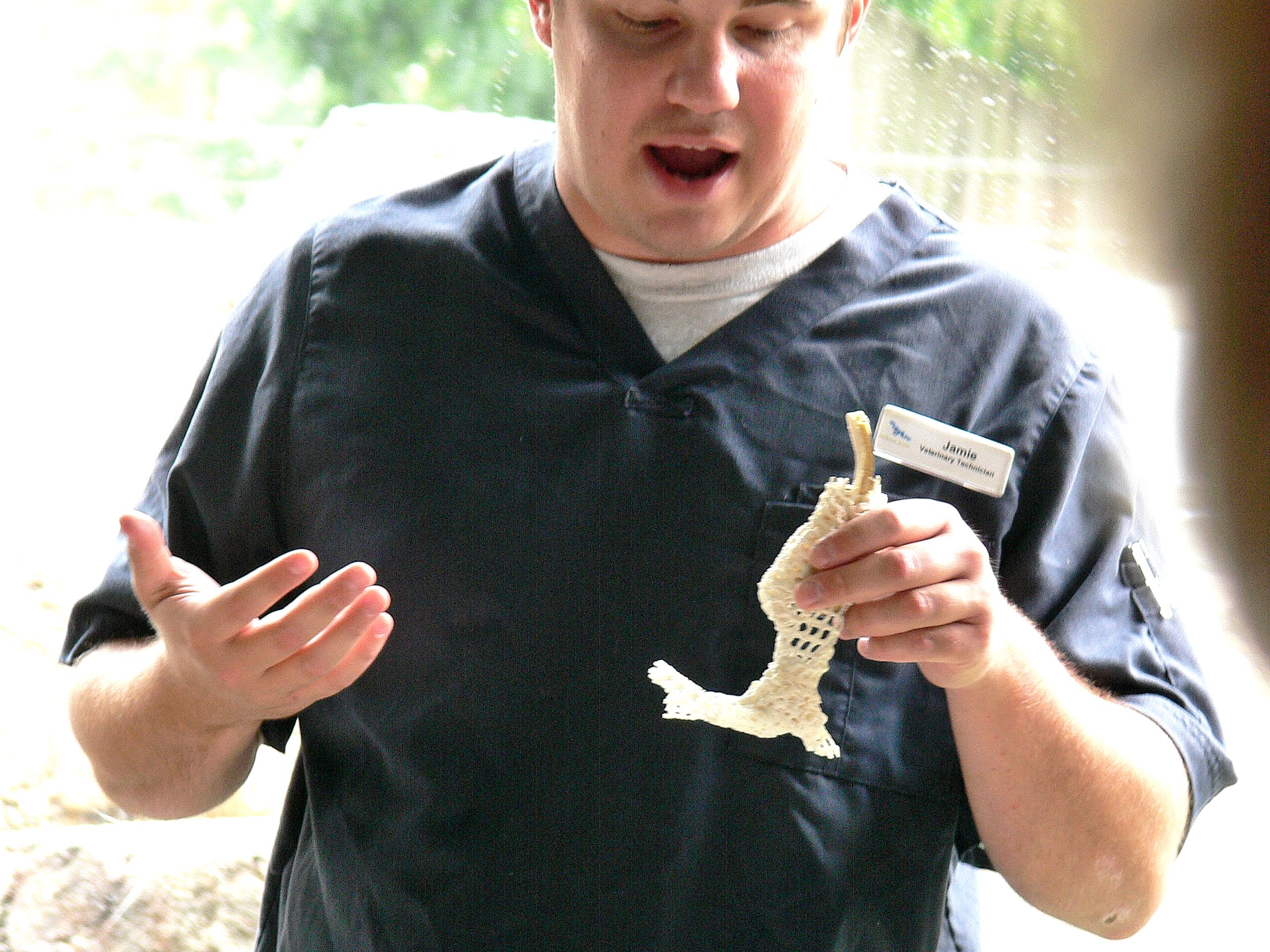
National Aviary Meet a patient - Jamie-Vet Tech with leg cast

Meet a patient – Jamie-Vet Tech with leg cast

They have several penguin feeding times during the day and a penguin talk – to learn more about the penguins. In the Penguin Point Vestibule they have a “Meet a Patient” talk by one of the “bird medical” staff. There you are told about one of the patients in their hospital. Jamie, the Veterinarian Technician was telling about one of the ducks. He showed a cast used for a broken leg. Unfortunately, we missed most of the talk and only got in on the last part of his presentation.

The African Penguins (Spheniscus demersus), which they have at the Aviary, are the only penguins that breed in Africa. They are also known as Black-footed Penguins. Their home is on the “south-western coast of Africa, living in colonies on 24 islands between Namibia and Algoa Bay, near Port Elizabeth, South Africa, with the largest colony on Dyer Island, near Kleinbaai. Because of their donkey-like braying call they were previously named Jackass Penguins. Since several species of South American penguins produce the same sound, the African species has been renamed African Penguin, as it is the only penguin species that breeds in Africa. The presence of the penguin gave name to the Penguin Islands.” (Wikipedia)

African Penguin (Spheniscus demersus) at NA by Lee

African Penguin from inside the dome at NA by Lee

African Penguins are 68-70 cm (26.7-27.5in) tall and weigh 2-5 kg or 4.4-11 lbs. “They have a black stripe and black spots on the chest, the pattern of spots being unique for every penguin, like human fingerprints. They have pink glands above their eyes. The hotter the penguin gets, the more blood is sent to these glands so it may be cooled by the surrounding air, thus making the glands more pink. The males are larger than the females and have larger beaks, but their beaks are more pointed than those of the Humboldt. Their distinctive black and white colouring is a vital form of camouflage–white for underwater predators looking upwards and black for predators looking down onto the dark water.” (Wikipedia) Our Creator has provided a built-in air conditioner and protection for them.

I know all the fowls of the mountains: and the wild beasts of the field are mine. (Psalms 50:11 KJV)

At one time the African Penguin population had 1.5 million members, but because of threats such as egg gathering, or egg smashing, taking their burrowing material for fertilizer, oil spills and other threats, the number was only 10% of that by 2000. The natural predators include “sharks, cape fur seals and, on occasion, orcas. Land-based enemies include mongoose, genet, domestic cats and dogs – and the kelp gulls which steal their eggs and new born chicks. I don’t know for a fact, but their decline to a “vulnerable species” is probably why they are at the National Aviary and also the Lowry Park Zoo in Tampa, Florida (we saw some there also). They are trying to protect and breed them.

How long shall the land mourn, and the herbs of every field wither, for the wickedness of them that dwell therein? the beasts are consumed, and the birds; because they said, He shall not see our last end. (Jeremiah 12:4 KJV)

African Penguins are in the  Spheniscidae Family of the Sphenisciformes Order. They are the only family in the Order and have 19 species of penguins.

See Also:

Ian’s Bird of the Week – African Penguin

Interesting Things – Why Birds Don’t Wear Socks

Here are the pictures we took of the penguins at the National Aviary.

This slideshow requires JavaScript.

Information from Wikipedia and National Aviary website.

*

(Spheniscus demersus)

Birdwatching at the National Aviary – Introduction

Fountain at National Aviary

Fountain at National Aviary

Dan and I visited the National Aviary in Pittsburgh, PA two weeks ago. What a fantastic place. Waited until we were back home and could sort through our photos. I took over 600 in the 2 days we visited and not sure how many Dan took. (His are better, of course.)

National Aviary Hospital - Sarah the "Bird Nurse"

National Aviary Hospital – Sarah the “Bird Nurse”

We arrived early the day before and could not check in to the motel, so we had some time to look around. After lunch, we ended up in a bookstore, where we met, Sarah, the “Bird Nurse” at the National Aviary. When she found out we had come up there just to see the Aviary, she offered to show us things behind the scenes when we got there the next day. I was more excited that a child waiting for Christmas morning to arrive. Hardly slept that night. I praise the Lord for letting us meet up with her and know it was not just an “accident.”

By the time we arrived, the Director, Steven, had been informed about our visit and offered to show us around also. Thanks to all of the staff and volunteers there that made our visit so special. The National Aviary is definitely a “Must See” for birdwatchers.

It is hard to know where to begin, so I’ve decided to break our visit up into the different areas and do a blog on each one. This blog is an introduction to the National Aviary itself.

The history of the Aviary tells of its growth from a conservatory at an old Penitentiary site, with an Aviary added later. It was the first zoo to have free-flight rooms. In the 80’s they began focusing on “wildlife conservation through captive breeding of rare and endangered birds.” The 90’s saw the aviary closed, then re-open as a private nonprofit corporation. In 1992, “By declaration of the U.S. Congress, the Pittsburgh Aviary was designated honorary national status and renamed the National Aviary in Pittsburgh.

Throughout the day they have various events going on, depending on the day of the week and weather or other conditions. We were able to take in the Wetlands Feeding and Rainstorm, Feed the Lories, FliteZone – Raptors and the Parrots (missed some of the birds due to an activity outside the aviary that was unsettling the birds), Tropical Forest Feeding, Meet a Patient, We missed some things, but got to see things others don’t get to see (more on that later).

Inca Tern (Larosterna inca) at NA by Dan

Inca Tern (Larosterna inca) at NA by Dan

The Aviary has over 600 birds from different parts of the world. See: Our Birds. Since I have worked with the Birds of the World here on this site, it was great to be able to see many of the birds in person that were just names and photos. Many, close-up!

When you arrive at the Aviary, you are welcomed by some sculptures, a fountain, and a Rose Garden. There were also some local birds hanging around like sparrows and pigeons. I am sure at other times of the year there are other avian visitors.

The Laughing Kookaburra was also outside to greet the visitors to the Aviary. One of the workers help me get a short clip of him laughing.

What a joy we had visiting! It was much more than I thought it would be.

Ask, and it shall be given you; seek, and ye shall find; knock, and it shall be opened unto you: (Matthew 7:7 KJV)

Give, and it will be given to you: good measure, pressed down, shaken together, and running over will be put into your bosom. For with the same measure that you use, it will be measured back to you.” (Luke 6:38 NKJV)

See:

Dan’s Photos so far on his Website – Dan’sPix

Happy Birthday-  Skippy at National Aviary

These photos are of some of the shows and the outside area.

This slideshow requires JavaScript.

*

Birds in Hymns – Great God, The World Is Full Of Thee

For the word of the LORD is right; and all his works are done in truth. He loveth righteousness and judgment: the earth is full of the goodness of the LORD. (Psalms 33:4-5 KJV)

Words: Hen­ry Bate­man, Sun­day Sun­shine: New Hymns and Po­ems for the Young (Lon­don: Nis­bet & Co., 1858).
Music: Home­land (Bate­man), Jo­si­ah Booth (1852-1929)

Great God, the World is Full of Thee

Great God, the world is full of Thee,
Thy kindness, and Thy power;
The bright blue sky, and rolling sea,
Green tree, and summer flower.

House Sparrows watching Parrot show at National Aviary by Lee

House Sparrows at National Aviary by Lee

And every day, and everywhere,
Thou watchest everything;
The tender lamb enjoys Thy care;
The little birds that sing.

And very, very kind indeed
Thou art, O God, to me;
Supplying all my daily need;
And helping patiently.

Teach my young heart to yield its love
Through Jesus Christ, Thy Son;
That I may dwell with Thee above,
When life below is done.

Most information from The Cyber Hymnal

See ~ Wordless Birds

More ~ Birds in Hymns

*

Birds of the Bible – Eye Hath Seen

For since the beginning of the world men have not heard, nor perceived by the ear, neither hath the eye seen, O God, beside thee, what he hath prepared for him that waiteth for him. Thou meetest him that rejoiceth and worketh righteousness, those that remember thee in thy ways: behold, thou art wroth; for we have sinned: in those is continuance, and we shall be saved. (Isaiah 64:4-5 KJV)

Wood Duck by Dan at Lake Hollingsworth

Wood Duck by Dan at Lake Hollingsworth

When I think of the verses above and the next verse, I think of the neat birds that the Lord has created. Even though they are under the curse, some of them have fantastic colors and markings. Their sounds are so sweet (well, most of them). I imagine the Lord with the most beautiful paintbrush. What must heaven look like when many of the things we experience here are so awesome? Once the curse is removed, what will things look like then?

But as it is written, Eye hath not seen, nor ear heard, neither have entered into the heart of man, the things which God hath prepared for them that love him. (1 Corinthians 2:9 KJV)

The photos below are just of birds and it was difficult to narrow the selection, but what of all the beautiful flowers, sunsets, sunrises, scenery, and on and on. What must heaven be like? Like many of you, I am looking forward to arriving and seeing things that I can’t even imagine as the verses say.

It is not automatic to go there. A person needs to accept the Lord Jesus Christ as their personal Saviour. Please see either or all of the following:

The Gospel Message, or the Wordless Birds

(A little short this week as we are just arriving home after a two week vacation – blogs about the trip to follow later. )

I will let the Lord’s Creative Hand reveal what we see here and it is fantastic.

*

This slideshow requires JavaScript.

*

Thanks to all the great photographers who have given permission to use their photos.

*

Birds in Hymns – Prayer For Creation

I do set my bow in the cloud, and it shall be for a token of a covenant between me and the earth. (Genesis 9:13 )

Words: Cathy Yost, 2000. This hymn was the win­ning ent­ry in Oc­to­ber, 2000, of a na­tion­al Cre­a­tion Hymn Com­pe­ti­tion spon­sored by the Cent­ral Pres­by­ter­i­an Church of Hous­ton, Tex­as.
Music: Beach Spring, from the Sac­red Harp, by Ben­ja­min F. White, 1844
Benjamin F. White (1800-1879)

PRAYER FOR CREATION © 2001 Cathy Yost
The author gives permission for use in worship services and gatherings to celebrate God’s Creation.
For further information contact: Cathy Yost, First Presbyterian Church,
100 East Adams Avenue, Kirkwood, MO 63122, USA

Prayer for Creation

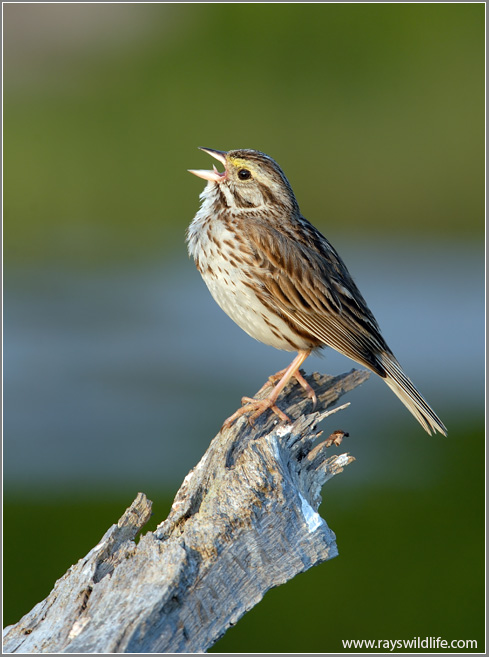
Savannah Sparrow singing by Ray

Savannah Sparrow singing by Ray

O, Creator of the cosmos, we present our hearts in prayer.
We are awestruck by your glory, which surrounds us everywhere.
From the birdsong of the morning to a stormy sky at night,
You reveal yourself in Nature, in its gentleness and might.

Through each rainbow that you send us you renew your covenant
With the earth and all life on it, telling us of your intent
That each living thing should flourish, in its own way, in its place.
You call us to new awareness of our neighbors and their space.

In our eagerness to prosper, we have ravaged what was good.
Using more than what was needed, taking everything we could.
We have changed the gentle order you intended for the earth.
Now we humbly ask the wisdom to be part of its re-birth.

We seek mercy, we seek vision, and the courage we will need
As we work to help the victims of the sins of human greed.
By our choices, in our actions, may we be part of your plans.
Help us gently till the Garden you’ve entrusted to our hands.

Prayer For Creation

Most information from The Cyber Hymnal

See ~ Wordless Birds

More ~ Birds in Hymns

*

Love and Sorrow

Many of my friends have sent me the photos of the Swallow that was hit by a car and then how her mate reacted. I found this YouTube by kirchiman1000 of that email and decided to post it. It shows the feelings and concern that birds have for each other.

The post of Skippy’s birthday a few days ago also shows how the death of their mate affects them. When the Lord created the creatures, he put the ability to love in them. We should learn from them.

But ask the beasts, and they will teach you; the birds of the heavens, and they will tell you; (Job 12:7 ESV)

As the Father hath loved me, so have I loved you: continue ye in my love. If ye keep my commandments, ye shall abide in my love; even as I have kept my Father’s commandments, and abide in his love. These things have I spoken unto you, that my joy might remain in you, and that your joy might be full. This is my commandment, That ye love one another, as I have loved you. Greater love hath no man than this, that a man lay down his life for his friends… These things I command you, that ye love one another. (John 15:9-13, 17  KJV)

He that loveth not knoweth not God; for God is love. (1 John 4:8 KJV)

Birds of the Bible – The Thrush

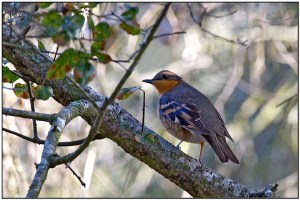
Varied Thrush (Ixoreus naevius) by Daves BirdingPix

Varied Thrush (Ixoreus naevius) by Daves BirdingPix

Even the stork in the sky Knows her seasons; And the turtledove and the swift and the thrush Observe the time of their migration; But My people do not know The ordinance of the LORD. (Jeremiah 8:7 NASB)

The Thrush is only used in one verse and then in only the CEV, (ERV), GNB, LITV, NASB, and the NAS77 versions of the Bible.
The other versions translate the word “עגוּר or ‛âgûr” (H5693), pronounced “aw-goor’, as a swallow. H5693 is only used in 2 verses in the Bible, Jeremiah 8:7 and Isaiah 38:14. In Isaiah, the different versions all translate it as a “swallow.”

At any rate, this gives the opportunity to introduce the Thrush. Jeremiah is referring to the migration of the birds and how they know when to go and when to come back, but God’s people don’t always know what is expected of them.

There are two Thrush families, Turdidae Family (184) – most of them and the Muscicapidae Family (297) has some thrushes in it.

Thrushes are plump, soft-plumaged, small to medium-sized birds, inhabiting wooded areas, and often feed on the ground or eat small fruit. They range in size from the Forest Rock-thrush, at 21 g (0.74 oz) and 14.5 cm (5.7 in), to the Blue Whistling-thrush, at 178 g (6.3 oz) and 33 cm (13 in). Most species are grey or brown in colour, often with speckled underparts.

They are insectivorous, but most species also eat worms, snails, and fruit. Many species are permanently resident in warm climes, while others migrate to higher latitudes during summer, often over considerable distances. Our well know American Robin and Bluebirds are part of the Thrush family and are migratory.
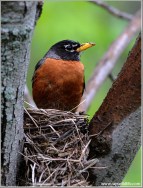
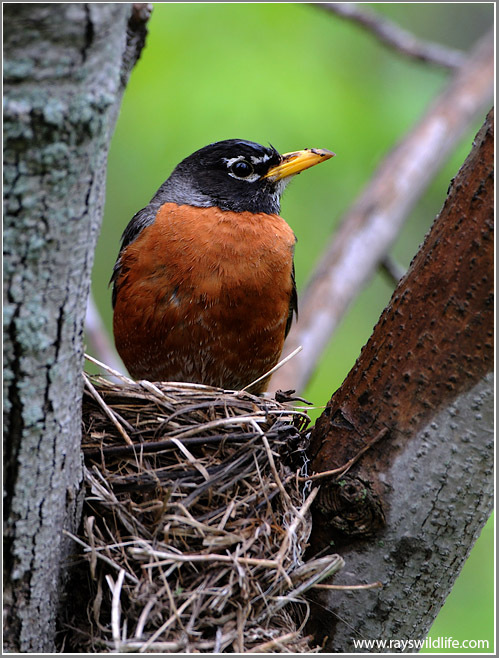
American Robin (Turdus migratorius) in nest by Ray

American Robin (Turdus migratorius) in nest by Ray

Thrushes build nest that are cup-shaped and line them with different things including mud. Both parent help in raising the young,  which normally number two to five per brood. Many have two broods a year.

According to Wikipedia the Turdus Genus has the “true thrushes” and it has 65 species in that genus. According to Scripture, I would venture to say that they are all in the same “kind” and have just been busy obeying the command given them to when they came off the Ark.

Bring out with you every living thing of all flesh that is with you, birds and animals and every creeping thing that creeps on the earth, that they may breed abundantly on the earth, and be fruitful and multiply on the earth. (Genesis 8:17 NASB)

Some examples of their migration:

  • Some species show circuitous migratory routes that reflect historical range expansions and are far from optimal in ecological terms. An example is the migration of continental populations of Swainson’s Thrush, which fly far east across North America before turning south via Florida to reach northern South America
  • The Himalayan Kashmir Flycatcher and Pied Thrush both move as far south as the highlands of Sri Lanka.
  • The Song Thrush breeds in forests, gardens and parks, and is partially migratory with many birds wintering in southern Europe, North Africa and the Middle East;
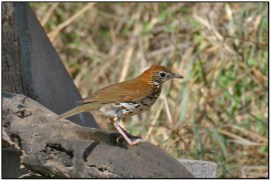
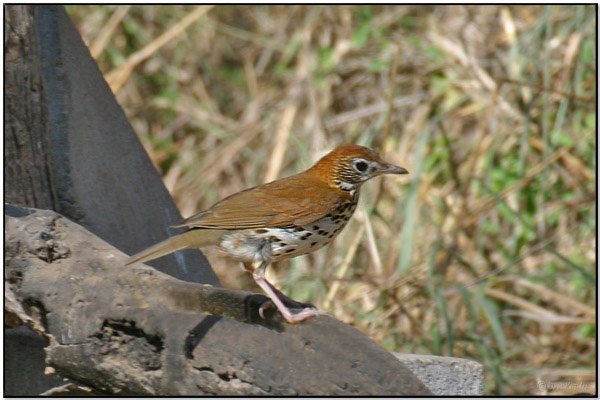
Wood Thrush (Hylocichla mustelina) by Daves BirdingPix

Wood Thrush (Hylocichla mustelina) by Daves BirdingPix

  • The Wood Thrush’s breeding range extends from Manitoba, Ontario and Nova Scotia in southern Canada to northern Florida and from the Atlantic coast to the Missouri River and the eastern Great Plains. It migrates to southern Mexico through to Panama in Central America in the winter, mostly in the lowlands along the Atlantic and Pacific coasts. It generally arrives on the U.S. Gulf Coast during the first week of April. Fall migration usually begins in mid-August and continues through mid-September. Migration takes place at night,[9] allowing them to find their direction from the stars and orient themselves by detecting the Earth’s magnetic field.
  • The Grey-cheeked Thrush migrates to northern South America. This species is a rare vagrant to Europe. Its northerly breeding range and long-distance migration make it one of the more regular North American passerine migrants to cross the Atlantic.
  • The Northern Wheatear makes one of the longest journeys of any small bird, crossing ocean, ice, and desert. It migrates from Sub-Saharan Africa in Spring over a vast area of the northern hemisphere that includes northern and central Asia, Europe, Greenland, Alaska, and parts of Canada. In Autumn all return to Africa, where their ancestors had wintered. Arguably, some of the birds that breed in north Asia could take a shorter route and winter in south Asia; however, their inherited inclination to migrate takes them back to Africa.

The Thrush families are very interesting birds and they definitely migrate. When they were created, their Creator put a destination and a great ability for them to migrate to those places.

For by Him all things were created that are in heaven and that are on earth, visible and invisible, whether thrones or dominions or principalities or powers. All things were created through Him and for Him. And He is before all things, and in Him all things consist. (Colossians 1:16-17 NKJV)

Back to our verse in Jeremiah. The last part of the verse says, “But My people do not know The ordinance of the LORD.”

I like what Matthew Henry said about the whole passage in which the verse is found. Jeremiah 8:4-13:
“What brought this ruin? 1. The people would not attend to reason; they would not act in the affairs of their souls with common prudence. Sin is backsliding; it is going back from the way that leads to life, to that which leads to destruction. 2. They would not attend to the warning of conscience. They did not take the first step towards repentance: true repentance begins in serious inquiry as to what we have done, from conviction that we have done amiss. 3. They would not attend to the ways of providence, nor understand the voice of God in them, Jer_8:7. They know not how to improve the seasons of grace, which God affords. Many boast of their religious knowledge, yet, unless taught by the Spirit of God, the instinct of brutes is a more sure guide than their supposed wisdom. 4. They would not attend to the written word. Many enjoy abundance of the means of grace, have Bibles and ministers, but they have them in vain. They will soon be ashamed of their devices. The pretenders to wisdom were the priests and the false prophets. They flattered people in sin, and so flattered them into destruction, silencing their fears and complaints with, All is well. Selfish teachers may promise peace when there is no peace; and thus men encourage each other in committing evil; but in the day of visitation they will have no refuge to flee unto.”


Wordless Birds

See:

Birds of the Bible – Thrushes (Added 3/14/11)

Birds of the Bible

Birds of the Bible – Thrush Songs

Birds of the World – Turdidae FamilyMuscicapidae Family

*

The Seasons Are Fixed By Wisdom Divine

The trees of the LORD are full of sap; the cedars of Lebanon, which he hath planted; Where the birds make their nests: as for the stork, the fir trees are her house. The high hills are a refuge for the wild goats; and the rocks for the conies. He appointed the moon for seasons: the sun knoweth his going down. (Psa 104:16-19)

Charles H. Gabriel (1856-1932)
Words: Paraphrase of Psalm 104; author un­known.
Music: As­pin­wall, Charles H. Gab­ri­el (1856-1932)

The seasons are fixed by wisdom divine,
The slow-changing moon show forth God’s design;
The sun in his circuit his Maker obeys,
And running his journey hastes not nor delays.

The Lord makes the night, when, leaving their lair,
The lions creep forth, God’s bounty to share;
The Lord makes the morning, when beasts steal away
And men are beginning the work of the day.

Graceful Prinia (Prinia gracilis) by Nikhil Devasar

Graceful Prinia (Prinia gracilis) by Nikhil Devasar

How many and wise Thy works are, O Lord!
The earth with the wealth of wisdom is stored;
The sea bears in safety the ships to and fro,
And creatures unnumbered it shelters below.

Thy creatures all look to Thee for their food;
Thy hands open wide, they gather the good;

Thy face Thou concealest, in anguish they yearn;
Their breath Thou withholdest, to dust they return.

Thy Spirit, O Lord, makes life to abound,
The earth is renewed, and fruitful the ground;
To God ascribe glory and wisdom and might,
Let God in His creatures forever delight.

Before the Lord’s might earth trembles and quakes,
The mountains are rent, and smoke from them breaks;
The Lord I will worship through all of my days,
Yea, while I have being my God I will praise.

Rejoicing in God, my thought shall be sweet,
While sinners depart in ruin complete;
My soul, bless Jehovah, His Name be adored,
Come, praise Him, ye people, and worship the Lord.

**

Most information from The Cyber Hymnal

Graceful Prinia is in the Cisticolidae Family

Look at the birds of the air, for they neither sow nor reap nor gather into barns; yet your heavenly Father feeds them. Are you not of more value than they? (NKJV)

Birds are not exactly mentioned, but they are in Psalm 104 and the Lord does provide for them freely. This is a great hymn and felt it needed to be included.

*