The White-crowned Sparrow – The Restorer

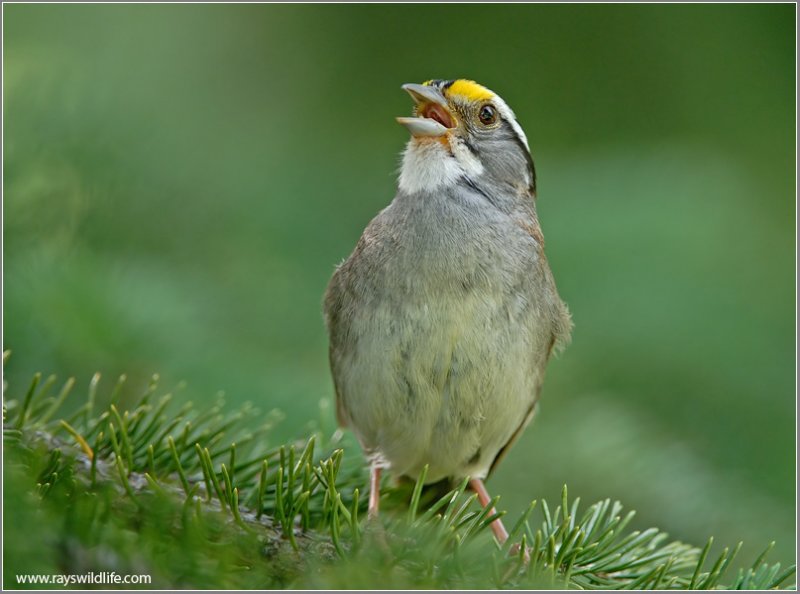
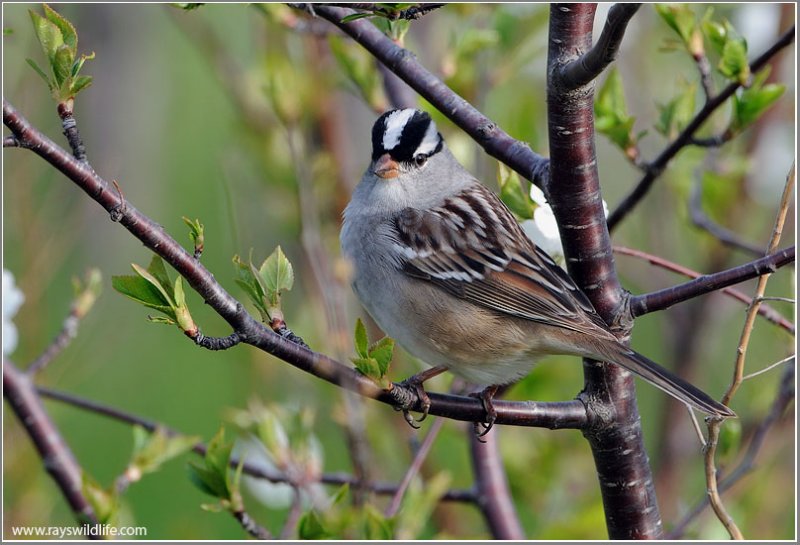
White-crowned Sparrow (Zonotrichia leucophrys) by Ray

White-crowned Sparrow (Zonotrichia leucophrys) by Ray

The White-crowned Sparrow – The Restorer ~ by  a j mithra

Bird watchers who have flocked to north Norfolk, UK, to see a rare sparrow have boosted the funds of a local church. They have donated so much money to Cley church; there are plans to feature the bird in a new stained glass window.

A rare bird’s appearance in a coastal village, which has attracted hoards of twitchers from across the country, has swelled church coffers.

The white-crowned sparrow is normally found in America, but it turned up 3,000 miles off course in Cley in January and is still being spotted feeding and flying around the village. The medium-sized sparrow has only been seen four times before in Britain and Ireland and its appearance in Richard and Sue Bending’s garden prompted an influx of bird watchers.

They have gathered en masse outside the home of Richard and Sue Bending. It was last Thursday that retired clergyman Mr. Bending, 60, and wife, 59, a retired librarian, first spied the bird scratching among leaf litter in their walled garden. The couple – who consider themselves bird-lovers but not die-hard twitchers – thought that the visitor, with its striking black-and-white striped head, was unusual but could not find it in their book of native varieties. We borrowed a book from the library, it was then that we realized it could be a White-crowned Sparrow,” said Mr Bending

Although Cley Reserve, run by the Norfolk Wildlife Trust, attracts thousands of nature lovers, the village visit by the bird – with distinctive black and white stripes on its head – has lifted the village’s profile on the bird-spotting map.

The presence of this rare bird had inspired people to give for God…

Has our presence inspired people to do something for God?

Forasmuch as ye are manifestly declared to be the epistle of Christ ministered by us, written not with ink, but with the Spirit of the living God; not in tables of stone, but in fleshly tables of the heart (2 Corinthians 3:3)

It’s the first occasion a white-crowned sparrow has ever been seen in East Anglia.


Other links to videos of the bird:

http://www.youtube.com/watch?v=hnzgAcuv8Gc&feature=related
http://www.youtube.com/watch?v=MqjRrx8Ft0I

While the influx of twitchers have been keen to get a glimpse of the American migrant, the local vicar believes people have been just as impressed by the sight of the village church.

More than £5,000 has poured in to St Margaret’s restoration fund during the bird’s visit.

“They’re obviously looking at something rare and beautiful and perhaps some of them looked across here and saw something rare and beautiful as well when they saw this church,” said Rev Neil Batcock.

The money is going to be used to restore a stained glass window which will feature the rare visitor’s stay in Cley.

This is an extract from the website of St.Margret’s Church, Cley, West Window
“During the famous visit of the White Crowned Sparrow to Cley in 2008, our many visitors contributed generously to a collection made by Cley Bird Club for St Margaret’s. The Bird Club were keen for the money raised to go to a specific project rather than just added to The Church Restoration Fund. It was suggested that, as the West Window leaks rather badly, and looks over where the White Crowned Sparrow was discovered, perhaps the money could go towards the repair of this magnificent window and in memory of the bird’s visit, a small image of the White Crowned Sparrow be incorporated in the window. This idea was thought to be a very fitting way to commemorate a little bird that brought national fame to St Margaret’s and the village of Cley. We have had to apply for a faculty to do this work, and at last have got the go ahead. Hopefully, with the better weather approaching and the builder, glazier and artist being able to fit the work in, we hope that it won’t be too long before this can start.”

Though this White-crowned Sparrow had come to an unknown land, it still gave a hand to bring restoration to the place where it stayed..

Joseph restored the unknown land of the Pharaoh during famine…
The little slave girl was the reason for restoration of health to the Syrian commander in an unknown land…

GOD will not take us out from our comfort zone without a purpose..

If Joseph had not gone out of his comfort zone, we wouldn’t have had the country of Israel, which gave JESUS to us..
In fact we wouldn’t have had a Savior to save us from our sins…
GOD has given us just one life as a gift, what are we doing with it?
How many lives did we restore for GOD?

If a small sparrow can restore a church, how much GOD will expect of us?

For if thou altogether holdest thy peace at this time, then shall there enlargement and deliverance arise to the Jews from another place; …………. (Esther 4:14)

White-crowned Sparrow (Zonotrichia leucophrys) by S Slayton

White-crowned Sparrow (Zonotrichia leucophrys) by S Slayton

It’s not known how the White-crowned Sparrow ended up so many miles away from home, although Mr. Bending, who first spotted the bird, has his own theories. “No-one knows how it got here but we are speculating that it was caught in a storm while migrating south from the east coast of Canada to the United States,” he said. “It could have become lost or tired and hitched a ride on a boat coming to England. We just feel very privileged that it chose our garden.”

People speculate that a storm would’ve carried this bird this far…

When u face a storm in life and you feel as if you are thrown into a no man’s land, remember that GOD will use you in that new place and glorify His name through you…

Behold, I will make thee a new sharp threshing instrument having teeth: thou shalt thresh the mountains, and beat them small, and shalt make the hills as chaff. ( Isaiah 41:15)

Have a blessed day!

Your’s in YESHUA,
a j mithra

Please visit us at: Crosstree


Lee’s Addition:

The White-crowned Sparrow is in the Emberizidae Family of the Passeriformes Order. The Emberizidae Family includes the Buntings, New World Sparrows and Allies. The Passeridae Family includes the Old World Sparrows and Snowfinches.

All of these Sparrows are Birds of the Bible – Sparrows and we have written several blogs about them. Please check out the articles, photos, and videos of the Sparrows.
Peterson Field Guide Videos Updated

Below are some of the latest updated Peterson Field Guide Videos. These 2010 versions have been updated on the following pages. The videos are very informative and well done.

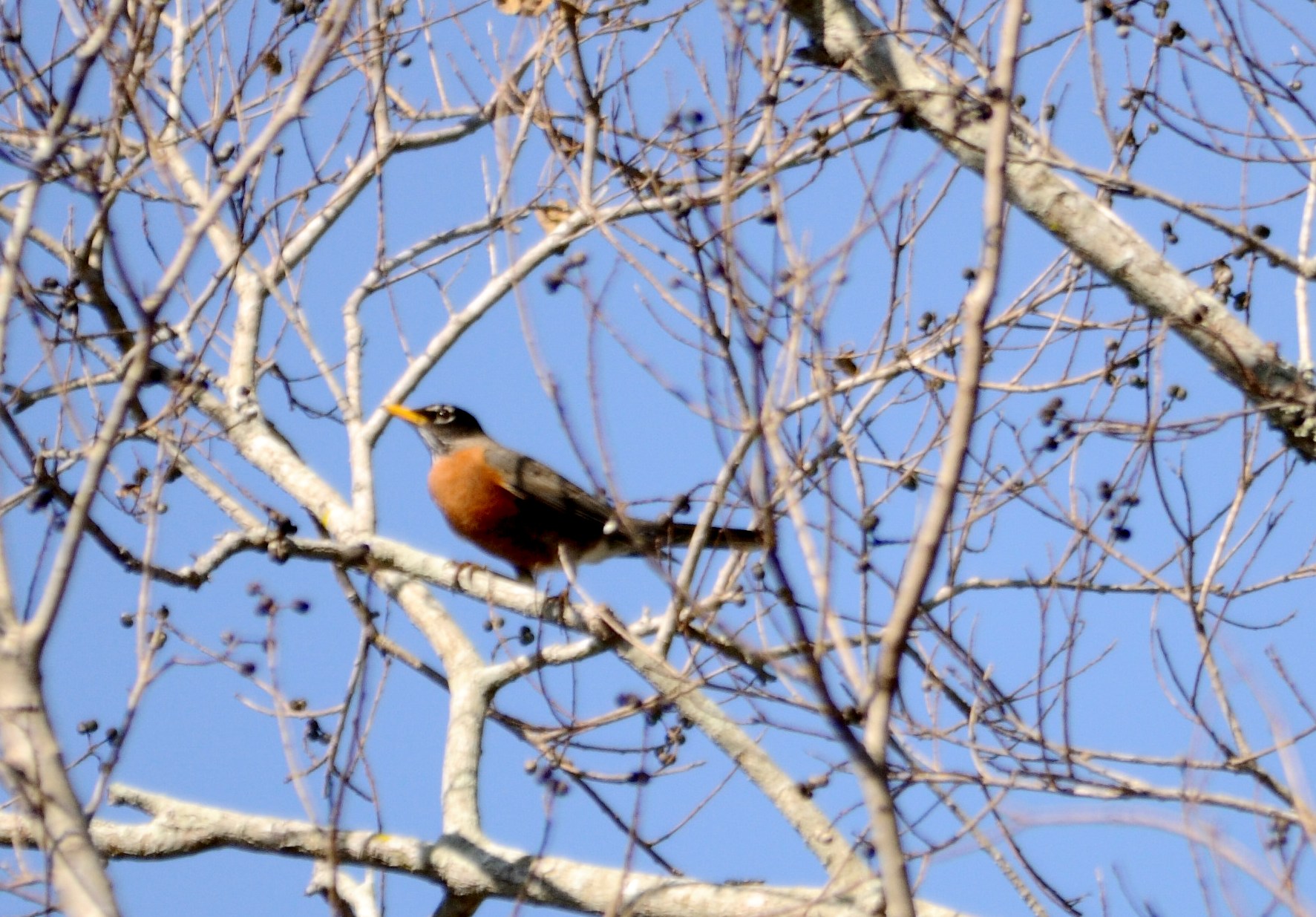
American Robin by Dan

Greater Roadrunner

Flycatchers

Finches

Common Loon

Bald Eagle

Atlantic Puffin

American Robin

Ducks, Geese, Swans

Araripe Manakin – The Indicator of Environmental Quality…

Araripe Manakin (Antilophia bokermanni) by ©AGrosset

Araripe Manakin (Antilophia bokermanni) by ©AGrosset

The Araripe Manakin is endemic to a very small ribbon of forest at the foot of the Chapada do Araripe escarpment, in Brazil…

It seems particularly fond of the moist forest near the streams and springs that flow out of the escarpment…

The survival of these birds depends upon the availability of water resources..

Have we ever felt that our survival also depends upon JESUS, the LIVING WATER?

Unfortunately, this supply of water also generates the biggest threat to the species as the area is a bit of an oasis in that region, and the supply of water has led to the development of both agriculture and recreational facilities…

Many of us are dry in spirit, but, instead of looking up to the Pillar of Clouds to wet our spirit,
where are we looking?

JESUS said,

but whosoever drinketh of the water that I shall give him shall never thirst; but the water that I shall give him shall become in him a well of water springing up unto eternal life. (John 4:14)

Araripe Manakin (Antilophia bokermanni) by ©AGrosset

Araripe Manakin (Antilophia bokermanni) by ©AGrosset

Found along the slopes of the chapada (plateau) in the lower and middle stories of tall forests where there are plenty of vines, as well as clearings…

It is associated with water springs and is therefore a good indicator of environmental quality..

If we live on JESUS, THE VINE, the world would look at us as an indicator of the spiritual quality of the church….

For I will pour water upon him that is thirsty, and streams upon the dry ground; I will pour my Spirit upon thy seed, and my blessing upon thine offspring: (Isaiah 44:3)

Your’s in YESHUA,
a j mithra

Please visit us at: Crosstree


Lee’s Addition:

The Araripe Manakin is in the Pipridae Family of the Passeriformes Order.

See:

Araripe Manakin

Birds of the Bible – Church Camp In Philippines

Wanted to share some information on what the Lord has done through this website. This will be a two part article. I just heard about some of the results of a church camp that took place a few weeks ago. The ECBF Junior camp in Daraitan, Tanay, Philippines. Below is a video they just released on YouTube.

I got involved when Myra left a comment on our site at Birdwatching From A Christian Perspective. She asked permission to use some of the material for an upcoming camp. Of course, permission was granted and we have communicated several times since then through comments and e-mails.

I’ve asked her to do a write-up about the camp and that will be in Part II. Here are some things that I have learned through our contacts. I am sure Myra won’t mind me sharing these.

“I learned about birdwatching from an American missionary several years ago.  I didn’t know it was possible to birdwatch where I live — Taytay,  Rizal, a rather crowded town east of Manila. The missionary said they could birdwatch where they live which was not far from where I live. So have been a casual birdwatcher ever since.  I watch butterflies too.”, by Myra
Then as camp grew near, she sent me a partial section of the camp manual. When I received it, I wept from the knowledge that the Lord was using my small efforts on this blog to help others around the world. Here is part of that manual:

Let’s Be Bird Watchers!

Bakit mabuting libangan ang bird watching?

“Ang ibon at mga hayop ay marunong pa sa iyo, Sa kanila ay magtanong at ikaw ay matututo.” Job 12:7
Masdan ninyo ang mga ibon: hindi sila naghahasik ni nag-aani o kaya’y nagtitipon sa bangan. Gayunman,pinakakain sila ng inyong Amang nasa langit. Hindi ba’t higit kayong mahalaga kaysa mga ibon. (Mateo 6:26)
Sapagkat ang buhay ay higit na mahalaga kaysa pagkain, at katawan kaysa pananamit. Isipin na lang ninyo ang mga uwak: hindi sila naghahasik ni nag-aani man; wala silang bangan ni kamalig, gayunma’y pinakakain sila ng Diyos. Gaano pa kayo – higit kayong mahalaga kaysa mga ibon. (Lucas 12:23-24 )
Para maging birdwatcher:

  • Look around – magmasid.
  • Look for birds that are common near you. Where? Sa ibabaw ng mga poste, sa mga linya ng kuryente, sa mga parke, sa garden spots ng resort o subdivision.
  • Listen! Each bird has the own different note or song: Psalm 104:12(birds sing) ; Ecclesiastes 12:4 (birds make sounds); Song of Solomon 2:12 (birds have voices)
  • Some birds -maganda ang boses
  • Some birds- sintonado / malakas / masakit sa tenga ang boses
  • Some birds- madaldal.
  • Some birds- madakdak.

After you find birds to watch, observe them.
How? Take note of their:

  • Colors
  • Size (Tiny, Small, Medium, Large, Very Big)
  • Sounds
  • Beak (Pahaba, deretso lang, naka-curve, matulis, etc.)
  • Posture (hukot, deretso, laging nakatingala)
  • Wings (mahaba, maiksi, matulis, pabilog, etc.)
  • Tail (long, short, patulis, parang fork, parang pamaypay, etc.

Movements. What are they doing? Kumakain / naghahanap ng makakain / gumagawa ng pugad / may dala-dalang damo. Malikot, sa lupa naglalakad, sa bukid nakatayo , nakatayo sa ibabaw ng kalabaw

Assignment: Use some of your free time during this camp to bird watch. Describe below some of the birds you see or hear.

Like many of you, I can not read much of it, but they could and so can our Omnipresent and Omniscient Creator who knows all languages.

One more excerpt from her email I received this morning and then you can see how their camp went.

“There are a few pictures in the video that show us under some trees on a hill. That’s where I asked the kids to be absolutely silent for ten minutes and just try to listen to as many bird calls as possible. I heard at least five bird calls coming from all directions and so did many of the kids. One of the staff said those ten minutes took away months of stress. You helped in more ways than you thought you did!”

Listen to this, O Job; Stand still and consider the wondrous works of God. (Job 37:14 NKJV)

The American Dipper – The Intercessor

The American Dipper – The Intercessor ~ by a j mithra

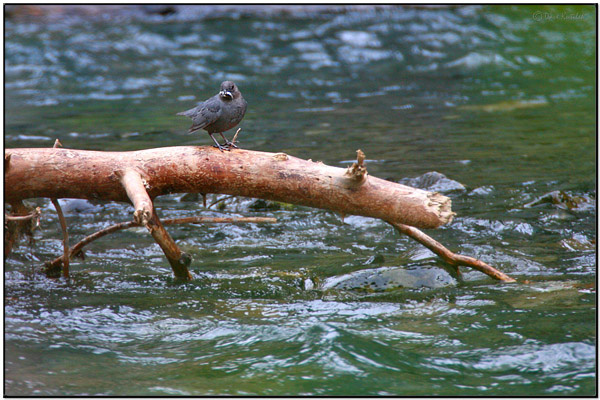
American Dipper (Cinclus mexicanus) by Daves BirdingPix

American Dipper (Cinclus mexicanus) by Daves BirdingPix

A chunky bird of western streams, the American Dipper is North America’s only truly aquatic songbird. It catches all of its food underwater in swiftly flowing streams by swimming and walking on the stream bottom. Dipping may help them deal with a crazy visual field that is constantly in motion…

Maybe the relentless up and down motion changes the light angle, allowing dippers to see into the water. Or it may help them remain oriented next to the forever moving current. Or it may be a way of communicating near noisy streams–except that dippers sometimes dip even when they’re alone….

Unless we are in communion with GOD, the Light, through prayers, we will never be able to deal with the visual field that is constantly in motion. We will never be able to see the Light at the end of the tunnel…

Do we have a personal relationship with GOD?

But thou, when thou prayest, enter into thy closet, and when thou hast shut thy door, pray to thy Father which is in secret; and thy Father which seeth in secret shall reward thee openly. (Mathew 6:6)

Formerly known as the water ouzel, this bird was rechristened by ornithologists several years ago because of its curious habit of dipping, bending and straightening its knees. So who knows?

Maybe their habit of dipping just helps these little birds keep fit for those incredible dives into raging torrents…

They’re absolutely amazing….We can’t even stand up in these streams, but here are these tiny birds that dive right into raging white water.”

Those who kneel before GOD, can stand before anything…

Prayer helps us stay fit and is the secret behind coming out unscathed, even after diving into the raging water…

And all things, whatsoever ye shall ask in prayer, believing, ye shall receive. (Mathew 21:22)

Young birds may practice dipping while still in the nest, and adults do it repeatedly when resting between feeding dives, while courting, during territorial disputes and when alarmed…

The dipping rate tends to rise with the degree of arousal to as many as 60 dips per minute.

Do we teach our children about the importance of prayer when they are young?

How many times do we dip, I mean, kneel before GOD during alarming situations?

…that they shall live upon the earth, and that they may teach their children. (Deuteronomy 4:10)
Watch ye therefore, and pray always, that ye may be accounted worthy to escape all these things that shall come to pass, and to stand before the Son of man. (Luke 21:36)

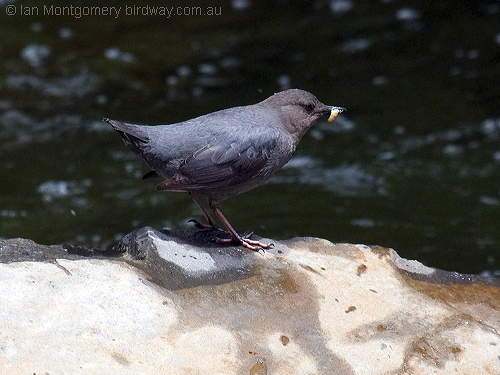
American Dipper (Cinclus mexicanus) by Ian

American Dipper (Cinclus mexicanus) by Ian

The American Dipper chooses a nest site, invariably along a stream, that provides security from floods and predators. Availability of suitable nest sites appears to limit its populations. To be able to survive in cold waters during the winter, the American Dipper has a low metabolic rate, extra oxygen-carrying capacity in its blood, and a thick coat of feathers.

Unlike most other songbirds, but similarly to ducks, the American Dipper molts its wing and tail feathers all at once in the late summer. The bird is flightless during this time.

American dippers occupy an unusual niche in the songbird world. Inextricably tied to racing streams, they routinely feed where few other terrestrial animals dare to go. They rear young just feet from churning whirlpools. They are splendidly adapted for their aquatic life-style, yet even in the wilderness have trouble finding appropriate nest sites. Abundant oil from an oversized gland above the tail keeps dipper feathers virtually waterproof. A flap of skin covers the nostrils while submerged, and translucent eyelids permit underwater sight. Dippers rarely venture more than a few yards from water, and even when airborne they follow a stream’s zigzagging course….

Our lives would be safe when we dare not venture away from the Living Water and just follow the course of JESUS, the Living Water…

My sheep hear my voice, and I know them, and they follow me: (John 10:27)

Dippers build their traditionally elaborate nests over the fastest moving part of a stream normally on mid-stream boulders or rock ledges just above the water….

Researchers discovered that area bridges offered a viable alternative as nesting sites. And in subsequent research, the biologist found that bridge nests in the valley actually produced more young than the natural nests in her study area…

Bridges actually are a key to dipper’s reproductive success in many areas….

We are the key to the extension of GOD’s kingdom… Do you know that?

GOD has called us to bridge the gap between the lost and the LAMB…

The success of populating the flock of GOD depends on our availability…

GOD is searching for someone who would stand in the gap for HIS people, are you ready to bridge the gap?

And I sought for a man among them, that should make up the hedge, and stand in the gap before me for the land, that I should not destroy it: but I found none. ( Ezekiel 22:30)

Have a blessed day!

Your’s in YESHUA,
a j mithra

Please visit us at: Crosstree


Lee’s Addition:

Dippers are in the Cinclidae Family of the Passeriformes Order. There are 5 Dippers in the family; White-throated, Brown, American, White-capped, Rufous-throated Dipper.

Video of an American Dipper

*

The Inspired and the Inspiring Rose-breasted Grosbeak

The Inspired and the Inspiring Rose-breasted Grosbeak – by a j mithra

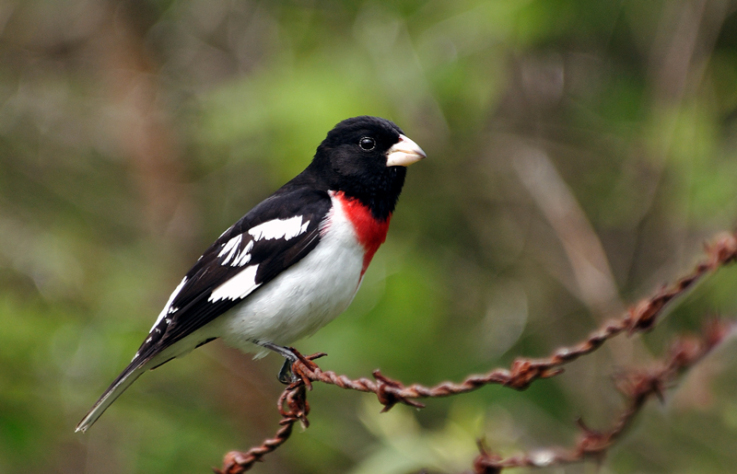
Rose-breasted Grosbeak (Pheucticus ludovicianus) by Rob Fry

Rose-breasted Grosbeak (Pheucticus ludovicianus) by Rob Fry

The Rose-Breasted Grosbeak lives and breeds in North America, but then migrates to Mexico and Central America. East of the Great Plains, the deciduous woodlands belong to the rose-breasted grosbeak with its colossal white bill, an appendage that is often stained with wild berry juice.

This bird is considered as the most stunningly dressed of all our Neotropical migrants.Yet the “rosebird” of olden days is heard more often than seen as it flies through the forest penthouse, whistling and if inspired, it may sing all night. Who is our inspiration?

When JESUS becomes our inspiration, we cannot but sing 24×7….
Why is it hard for us to praise HIM at all times? Is it because we don’t love HIM the way HE does?
Why is it not possible for us to say like David?
Just think!

I will bless the LORD at all times: his praise shall continually be in my mouth. (Psalm 34:1)

Rose-breasted grosbeak nests are so loosely built that it is sometimes possible to count the eggs from below. The parent birds share incubation duties and the male Rose-breasted Grosbeak participates in incubation of the eggs, accounting for about 1/3 of the time during the day, the female incubates over night….

The female bird incubates overnight?
Do we understand what the bird seems to teach us about its overnight incubation?
We feel so nice to call ourselves as the bride.. Isn’t it?
But, the question is, does the church – the so called bride, watch and pray for the lost?

Ye are all the children of light, and the children of the day: we are not of the night, nor of darkness. Therefore let us not sleep, as do others; but let us watch and be sober. (1Thessalonians 5:5,6)

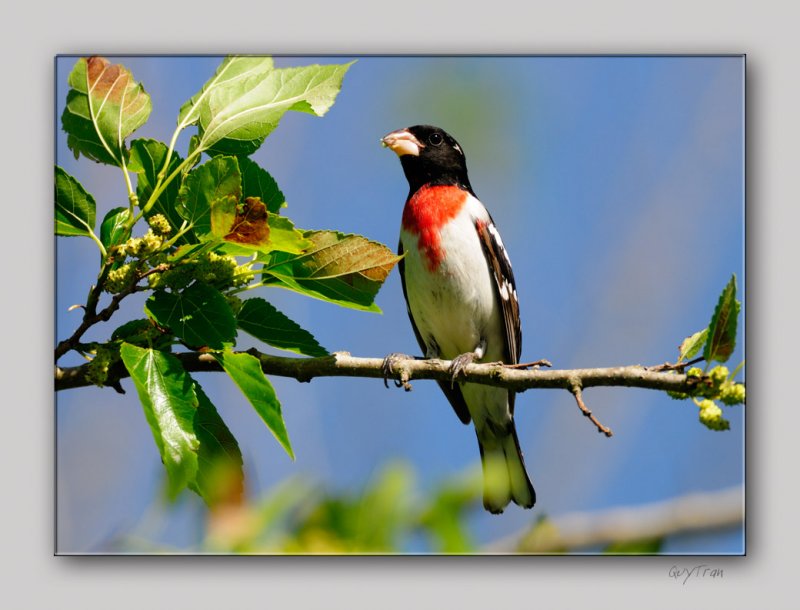
Rose-breasted Grosbeak (Pheucticus ludovicianus) by Quy Tran

Rose-breasted Grosbeak (Pheucticus ludovicianus) by Quy Tran

The male will care for the fledglings while the female starts a second nest. She becomes so possessive of a good mate that other females vying for his attention will be driven away. Both sexes sing quietly to each other when they exchange places. The male will sing his normal song while near or actually on the nest. The female song is generally a simplified version of the male song. Occasionally, the female sings full “male” song, apparently to deceive its mate about the presence of intruders and force him to spend more time at the nest..

Our worship has the power to force JESUS to spend more time with us…
It is easy to praise God when we are in the comfort zone, but singing in times of trouble, not only brings HIS presence, but also deliverance…
After all, our LORD dwells among the praises of the angels in heaven…
Remember, HIS presence is the essence of life…

But thou art holy, O thou that inhabitest the praises of Israel. (Psalm 22:3)
Let every thing that hath breath praise the LORD. Praise ye the LORD.” (Psalm 150:6)

Have a blessed day!

Your’s in YESHUA,
a j mithra

Please visit us at: Crosstree


Lee’s Addition:

The Grosbeaks are in the Cardinalidae Family of the Passeriformes Order. In fact, the Family is the last one in the Passeriformes order. The 45 members of the family include not only the Grosbeaks (17), but the Dickcissel (1), Chats (3), Cardinals (2), Pyrrhuloxia (1), Saltators (14), Buntings (7).

*

Heard, But Not Seen

Caught Dan on the Boardwalk trying to find a bird

Caught Dan on the Boardwalk trying to find a bird

Yesterday Dan and I went birdwatching at the Mosaic Peace River Park in Homeland, FL. It was a gorgeous morning and the temperature was around 73° when we got there around 10 am. While we were getting our gear out a Northern Cardinal landed nearby. I aimed my camera and realized I had not taken the lens cap off yet. By the time I did remove it, you guessed it, he flew away into the trees. That was the story of our trip. The birds were “heard, but not seen.”

For those that may be new to birdwatching, when a bird is heard even though not seen, it can be counted on your list. Some are not aware of that fact. The problem is, knowing what the birds sound like. I was sorry yesterday that I had not spent enough time practicing hearing sounds. My list would have been much longer. Where we were has a boardwalk winding between the trees and ends up at the Peace River. Other than that Cardinal and the ones flying way overhead, no birds were seen. Yet, our list included 16 species.

I have decided to test you some and help you learn. Below are the sounds of some of the birds we heard, but I won’t  ID until later in the article.

Sound #1

Sound #2

Sound #3

Sound #4

Sound #5

So, have you figured them all out. They are fairly common to this area of the US. To help you out, here is a link to their photos:
Bird #1 ~ ~ Bird #2 ~ ~ Bird #3 ~ ~ Bird #4 ~ ~ Bird #5

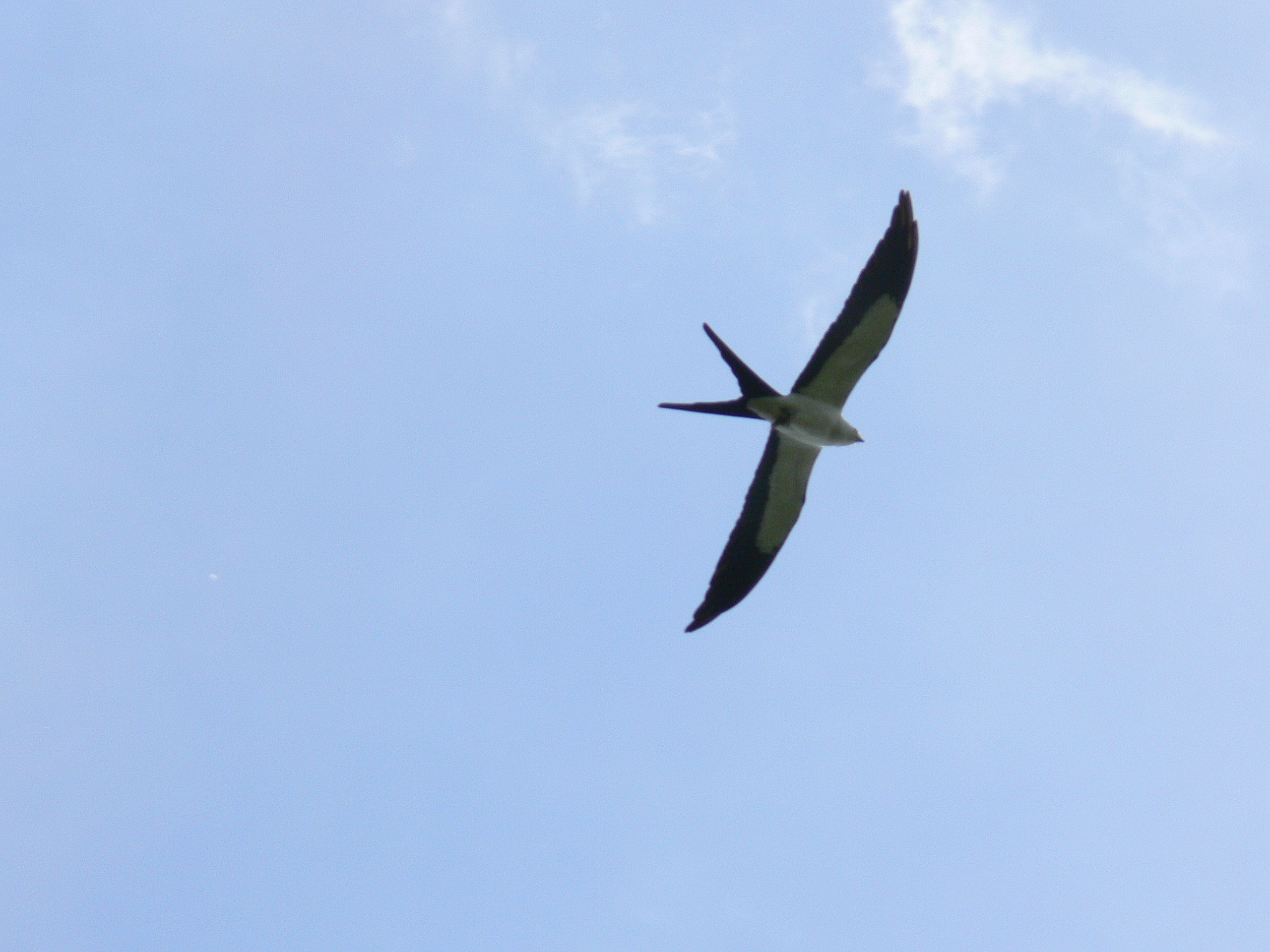
Swallow-tailed Kite - the one bird I got a photo of as it flew overhead

Swallow-tailed Kite – the one bird I got a photo of as it flew overhead

That Bird #5 had given me a test of my memory. I wrote down on my list “squeeky wheel bird.” I knew I had heard it before and planned to look it up when we got home. Luckily, on the way back to the car, we met a group of birdwatchers from Martin county Audubon. We compared lists, which is normal for birdwatchers, and then I asked about the “squeeky wheel bird” and they gave me it’s name right off. (I should have been birding with them) I checked out my recordings at home and sure enough, that is what it was.

All the sound recording came from xeno-canto.org and there are numerous other places to find the sounds of birds. Birding by Ear Basics from About.com/Birds has good tips. Cornell Lab of Ornithology is one of the best for seeing and hearing the birds.

We hear the birds and know they are there even though we do not see them. In the Christian realm, we do not see the Lord in person today, but we know He is alive and speaks to us through the things He has created and most of all by His Word.

He who is of God hears God’s words; …” (John 8:47a NKJV)

Now to the King eternal, immortal, invisible, to God who alone is wise, be honor and glory forever and ever. Amen. (1 Timothy 1:17 NKJV)

For since the creation of the world His invisible attributes are clearly seen, being understood by the things that are made, even His eternal power and Godhead, so that they are without excuse, (Romans 1:20 NKJV)

*

Birds of the Bible – Little Brown Jobs

An interesting video from YouTube by SmellLikeDirt caught my interest. Take a look and then I’ll comment on it.

*

The Sparrow has been written about before, but it is always nice to find out something else new about them. We know that the Lord created all the birds, but it seems as though the Sparrow just doesn’t get the attention like the more colorful birds. After watching the video, I trust you saw how God has provided for them to keep their species alive.

White-throated Sparrow by Ray

It is interesting about the behavior patterns of the different patterns of coloration. The White-throated Sparrow is a passerine bird of the American sparrow family Emberizidae. The White-throated Sparrow is 17 cm (6.75 inches) in length with a wingspan of 23 cm (9 inches) Typical weight is 26 grams (0.91 oz).

There are two adult plumage variations known as the tan-striped and white-striped forms. On the white-striped form the crown is black with a white central stripe. The supercilium is white as well. The auriculars are gray with the upper edge forming a black eye line.

On the tan form, the crown is dark brown with a tan central stripe. The supercilium is tan as well. The auriculars are gray/light brown with the upper edge forming a brown eye line. Both variations feature dark eyes, a white throat, yellow lores and gray bill. There is variation and some individuals may show dark lateral stripes of each side of the throat.

Most of us are just average people and sometimes may feel like you are not that important to others. But God loves us, even more than the sparrows and He hasn’t forgotten them.

Are not five sparrows sold for two copper coins? And not one of them is forgotten before God. (Luke 12:6 NKJV)

It’s true that the Sparrows are looked down on and sometimes just called, “Little Brown Jobs,” but they are created the way God wanted them in His plan for them. As Christians, not everyone can be the leader or the one in the “lime-light.” If that were true, then where would the followers be?

For in fact the body is not one member but many. If the foot should say, “Because I am not a hand, I am not of the body,” is it therefore not of the body? And if the ear should say, “Because I am not an eye, I am not of the body,” is it therefore not of the body? If the whole body were an eye, where would be the hearing? If the whole were hearing, where would be the smelling? But now God has set the members, each one of them, in the body just as He pleased. (1 Corinthians 12:14-18 NKJV)

See also:

Sparrows

*

The Surrendered Anhinga

The Surrendered Anhinga – by A J Mithra

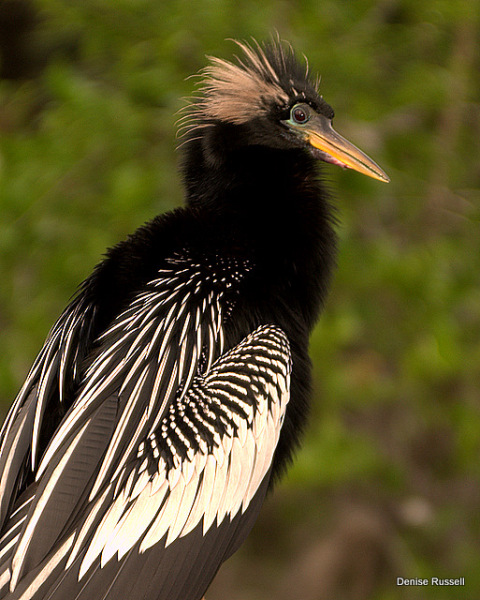
 Anhinga (Anhinga anhinga) By Densie Russell

Anhinga (Anhinga anhinga) By Denise Russell

The Indians who live near the Amazon River in South America call it “Anhinga.” In North America it is called “water turkey,” “snake darter,” or “darter.” This strange bird goes by several names. It has a long tail that accounts for its nickname, “water turkey.”

The Anhinga swims with only its head above the water While swimming, the long neck and the head may be above the surface with its body below and this has resulted in another nickname, “snake bird.”

Some Anhingas live in Asia, in Africa and in Australia and in America, from southern Arkansas to Argentina and they are quite common in Florida.

People may call you by your first name, last name, surname or even nicknames, but,JESUS not only calls you by your name but gives you a new name too…

As long as Jacob was Jacob, he was a wanderer, but, GOD gave him a new name, Israel, only after Jacob accepted that he is a fraud..

After which, Israel was no more a wanderer, but the most powerful nation on the face of the earth…
GOD gives us a new name only when we repent…

He that hath an ear, let him hear what the Spirit saith unto the churches; To him that overcometh will I give to eat of the hidden manna, and will give him a white stone, and in the stone a new name written, which no man knoweth saving he that receiveth it. (Revelation 2:17)

 Anhinga (Anhinga anhinga) By Densie Russell

Anhinga (Anhinga anhinga) By Denise Russell

It finds its food in the water. It eats insects, frog eggs, fish and even small alligators. It spears fish with its long beak, so, sometimes it has to swim to shore and pry the fish off its beak by rubbing on a rock or tree limb.

Mating pairs are monogamous. Anhingas have been seen performing rituals when changing egg incubation duties they intertwine necks and pass nesting material when changing positions.

The Anhinga is frequently seen soaring high in the sky overhead. It is a graceful flier and can travel long distances without flapping its wings, much in the manner of a Turkey Vulture.

Among birds, the Anhinga is the best fresh-water diver. It goes down quietly and hardly makes a ripple. Unlike like other birds who spend most of their days in water (like a duck), an Anhinga’s feathers are not waterproof. But, this weakness allows the Anhinga to dive deeper than birds with waterproof feathers. But, it also has it downfalls.

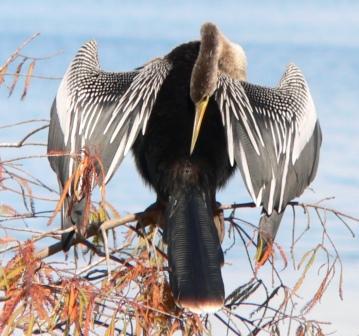
When an Anhinga swoops down into a body of water to capture its food, its feathers quickly become water-logged. When an Anhinga is water-logged, it is unable to fly. Thus the Anhinga must dry itself off by holding its wings outstretched, allowing the sun to dry the feathers….

This bird is a good example of “I CAN DO ALL THINGS WITH GOD”

Anhinga Dryed at Lake Hollingsworth by Dan

They are not water proof , yet they dive very deep..
They cannot fly when they are water-logged, but, they look up to the sun, to dry themselves, so that they may soar high and fly long distances…

You may not be quality proof, but still, you can fly high and dive deep…
People may consider you as useless but GOD sees you as “USED LESS”

Whom are you looking for help?

If you are one among those who try to do things with their own strength, its time to look at these birds for awhile before you proceed further in life…

When they spread their wings to dry them, these birds seem to say, LORD I have nothing and I need You, to go down deep into the Living Waters and to lift me high, so that I may fly like an Eagle…

Take away all that is unwanted in me Lord and make me dry, so that,I may say,

I am crucified with Christ: nevertheless I live; yet not I, but Christ liveth in me: and the life which I now live in the flesh I live by the faith of the Son of God, who loved me, and gave himself for me. (Galatians 2:20)

I surrender all, I surrender all,
All to thee my blessed Savior,
I surrender all…

Have a Crucified day with GOD!

Your’s in YESHUA,
A J Mithra

Please visit us at: Crosstree


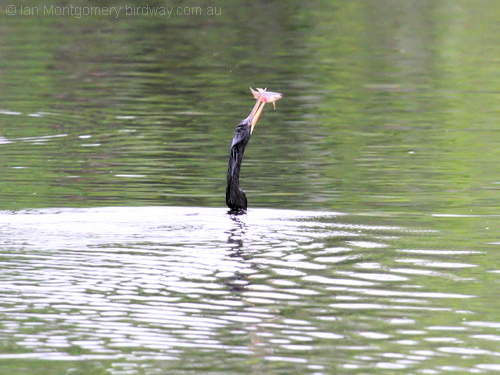
Anhinga (Anhinga anhinga) with a speared fish by Ian

Anhinga (Anhinga anhinga) with a speared fish by Ian

Lee’s Addition:

Anhingas are in the Anhingidae Family of the Pelecaniformes Order.

A J, nice article and, yes, the Anhingas are a daily occurance here in Florida, by the water.

*

The Purple Gallinule – The Awkward Beauty!

The Purple Gallinule – The Awkward Beauty! ~ by A J Mithra

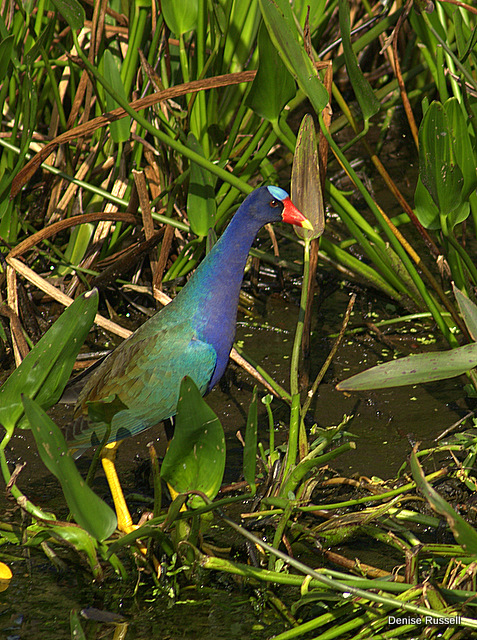
Purple Gallinule (Porphyrio martinica) by Densie Russell

Purple Gallinule (Porphyrio martinica) by Denise Russell

The beautifully colored Purple Gallinule is often known as a ‘swamp hen’. The scientific name is Porphyrio martinica. The Purple Gallinule belongs to the rail (Rallidae) family of birds.

Almost without exception, rails frequent freshwater wetlands such as swamps and marshes. Preferred habitats include lakes, pools, waterways, and wet marshes.

These birds look so beautiful…
Is it because, they prefer to live by the waters?
When we live by the Living Waters we too shall turn beautiful like the Rose of Sharon and the Lilly of the Valley…
After all, GOD created us in HIS own image… Isn’t it?
Remember how Moses’ face shone after his forty day communion with GOD?

Awake, awake; put on thy strength, O Zion; put on thy beautiful garments, O Jerusalem, the holy city: for henceforth there shall no more come into thee the uncircumcised and the unclean. (Isaiah 52: 1)

These birds are omnivorous and eat a wide variety of seeds, leaves and fruits. Insects, frogs, small fish, snails are earthworms are all eaten with relish. It will also steal eggs and eat young ducklings if it gets the opportunity.

The long toes prevent the bird from sinking when walking on floating vegetation or on water-lilies. The toes can also be used to grasp food and it may then use its feet to carry food to the mouth.
The legs are strong and the gallinule can run well on land….

What kind of feet did GOD give us?

He maketh my feet like hinds’ feet: and setteth me upon my high places. (2 Samuel22:34)
Thou shalt tread upon the lion and adder: the young lion and the dragon shalt thou trample under feet.” (Psalm 91:13)

Not only that,

Then shall the lame man leap as an hart,……..” (Isaiah 35:6)

Purple Gallinule by Lee at Lake Hollingsworth

Purple Gallinule by Lee at Lake Hollingsworth

The eggs are laid in a platform or pad constructed of trampled reeds, leaves and grasses. The pad is often situated on a floating ‘island’ of debris in a clump of saw grass or in a secluded thicket. Both parents share the incubation and care of the chicks.

The parents have a ritual which is performed whenever one takes over incubation duties from the other. The incoming bird brings the gift of a leaf to its partner. The bird on the nest takes the leaf and adds it to the nest. It then relinquishes duties to its mate.

GOD has chosen us to finish the good work which HE started when HE was in this earth…

The incoming bird brings the gift of a leaf to its mate…
Fresh Leaf denotes new life..
JESUS gave us a fresh lease of life by giving HIS life on the cross…

Now it is our turn to take up HS duty to reach the unreached till HE returns as KING of kings..

For the wages of sin is death; but the gift of God is eternal life through Jesus Christ our Lord. Romans(6:23)

The Purple Gallinule is essentially a tropical marsh bird that just makes its way into the United States. But some go even farther afield. It has even been found numerous times in Europe and South Africa.
There has even been the occasional American Purple Gallinule turn up in Western Europe.

Framed Purple Gallinule by Dan

Framed Purple Gallinule by Dan

Although it looks quite clumsy in the air, flying as it does with the legs dangling, it nonetheless can cover quite long distances. The Purple Gallinule, despite appearing to be an awkward flier, regularly turns up in northern states and southern Canada. It has even been found numerous times in Europe and South Africa…

People may call us by nicknames but GOD had called us by name…

You may be called clumsy or awkward, but, GOD calls you as HIS crown and a royal diadem…
If JESUS becomes your strength, you will never be weak..
If JESUS becomes your wisdom, you will never be a fool..

These birds may be awkward fliers, but still GOD is able to take them to far off places..

GOD doesn’t judge you by your quality but by your availability…
Are you available for JESUS? 24 x 7?

My beloved is mine, and I am his: he feedeth among the lilies” (Song of Solomon 2:16)

Note: Photograph by Denise Russell

Have a blessed day!

Your’s in YESHUA,
A J Mithra

Please visit us at: Crosstree


Lee’s Addition:
The Purple Gallinule is one of our favorites here in Florida. We see them quite frequently. They can be little beggars when we are feeding the birds at Lake Hollingsworth. They are in the Rails, Crakes, and Coots – Rallidae Family of the Gruiformes Order which also includes Cranes, Flufftails, Finfoots, Trumpeters and Limpkins.

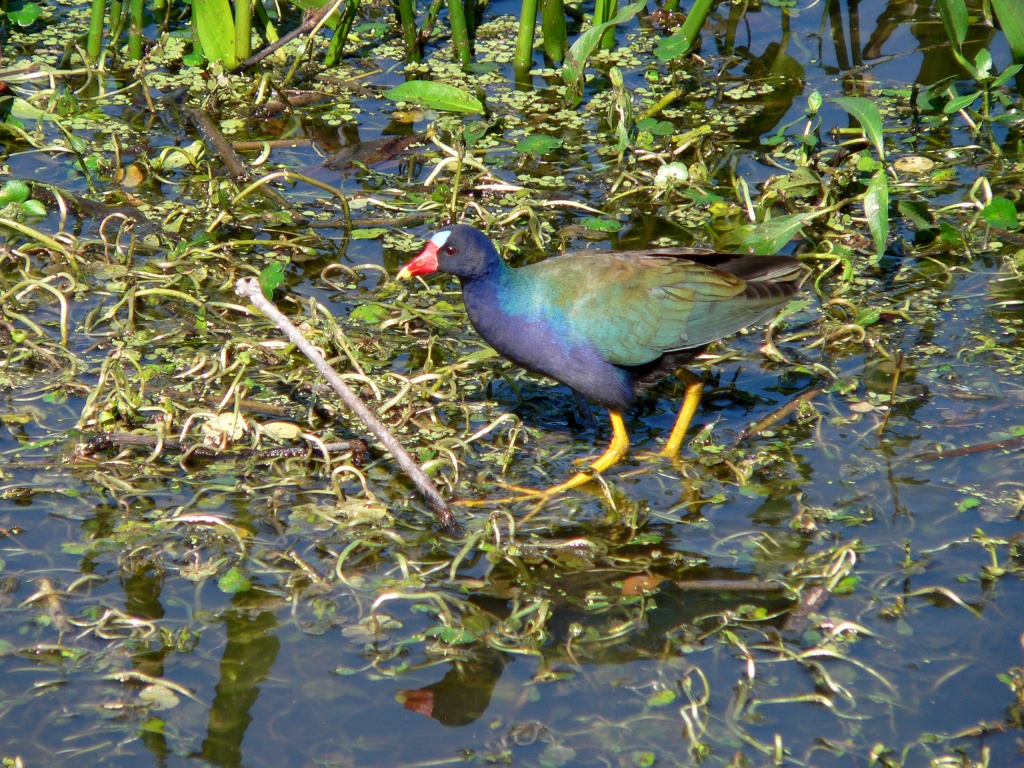
Purple Gallinule walking around on vegetation at Lake Hollingsworth by Lee

Background Sounds

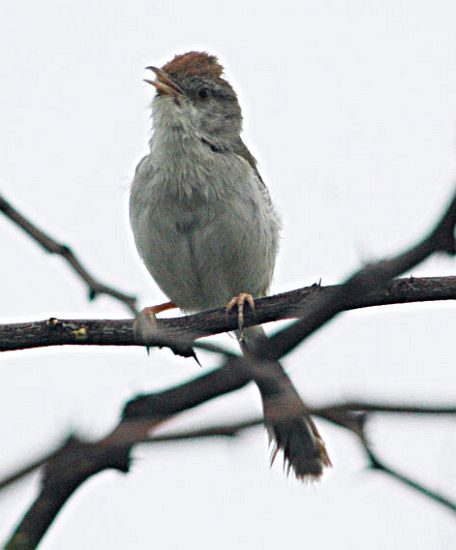
Rufous-fronted Prinia (Prinia buchanani) by Nikhil D

Rufous-fronted Prinia (Prinia buchanani) by Nikhil D

We are trying something new. At the top of the sidebar there is now a place to click to listen to background sounds of birds as you view this blog. It can be turned on and off as you desire. If you were to watch a video or recording, the background sound can be stopped. Our goal is to change the recording periodically and as we can get permission for recordings.

As always, this is a work in progress. We would like your comments on this. Yes, No, or whatever. Let us know by leaving a comment.

Out of the Mouth of Babes…

Out of the Mouth of Babes…  –  by A J Mithra

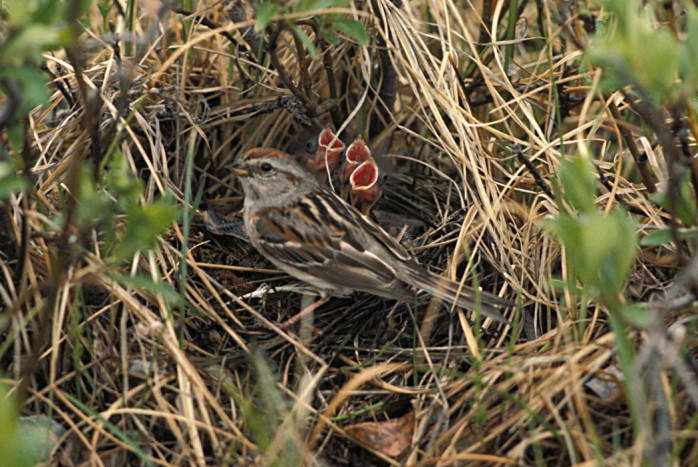
American Tree Sparrow (Spizella arborea) w chicks©USFWS

American Tree Sparrow (Spizella arborea) w chicks©USFWS

A research team from the University of Bristol discovered recently that when a songbird chick opens wide, its parents see ultraviolet areas of the mouth that are invisible to humans. The researchers speculate that the ultraviolet highlights around the edges of the mouth make a more conspicuous target in a dark nest…

Paul and Silas opened their mouth wide in their dark prison cells, and GOD delivered them…
When you are in the dark, just open your mouth wide, and worship JESUS, so that, THE LIGHT may shine on you…

For thou wilt light my lamp: Jehovah my God will lighten my darkness. (Psalms 18:28)

Previous research on begging focused mostly on the colors that humans can see, such as red and yellow. But now, researchers believe that some species can assess their chicks’ hunger based on the color of their gapes. The hungrier a canary chick is, the redder its gape. This is true of some other finches that, like canaries, eat seeds regurgitated by their parents, but it isn’t true of insect-eaters….

Common Waxbill (Estrilda astrild) by Daves BirdingPix

Common Waxbill (Estrilda astrild) by Daves BirdingPix

The reasons for the vivid colors of nestlings’ mouths aren’t fully understood. Estrildid finches, such as these Zebra Waxbill chicks from Africa, have boldly decorated mouth markings whose purpose is still a mystery. The color of the gapes shows the level of chick’s hunger…

GOD knows the hunger of our inner man…
What are we hungry for? Fame or fortune?
Are we hungry for JESUS, the Living Bread?

Blessed are they that hunger and thirst after righteousness: for they shall be filled. (Matthews 5:6)

It’s also a mystery why the insides of the mouths of some nestlings have crazy designs. The nestlings of various species of Estrildid finches in Africa, Australia, and Asia,have bizarre black-and-white patterns inside their mouths, including dots, horseshoe shapes, and blobs.

In Africa, Whydah and Indigo bird species lay their eggs in the nests of Estrildid finches, and their nestlings’ mouths match those of their hosts…

What kind of a design do we have in our mouth?
Do we have an arrogant mouth? (1 Samuel 2:3)
Or a lying mouth? (1Kings 22:22)
Or a deceiving mouth like that of the Whydah and Indigo species?

Let us pray for a GOD taught mouth… (Exodus4:13)
And a mouth which sings the song of witness… (Deuteronomy 31:21)
Let us ask GOD to give us a mouth of a child,
which is the most powerful weapon on earth….

Out of the mouth of babes and sucklings hast thou established strength, Because of thine adversaries, That thou mightest still the enemy and the avenger. (Psalms 8:2)

Have a mouth filling day!

Your’s in YESHUA,
A J Mithra

Please visit us at: Crosstree

*