Yea, the stork in the heaven knows her appointed times; and the turtledove and the crane and the swallow observe the time of their return; but My people know not the judgment of the LORD. (Jeremiah 8:7)
The Bible mentions migratory birds – for examples, storks, turtledoves, cranes, and swallows are mentioned as faithfully migratory birds in Jeremiah 8:7. (See JJSJ’s “A Lesson from the Stork”, at http://www.icr.org/article/lesson-from-stork .)
CANADA GOOSE in flight (Wikipedia photo credit)
Avian migrations are truly a wonderful recurrence in God’s phenological providences.
With that in mind, I observed a flock of Canada geese (Branta canadensis) in my neighborhood, not far from my mailbox—they were grazing among the grasses by my rain-runoff drainage ditch.
CANADA GEESE IN GRASS (HumaneActionPittsburgh.org photo credit)
But not long afterwards they were off again, in the air, southbound, toward wherever they go for winter. Today’s limerick follows.
CHIMNEY SWIFT near Cleveland, Ohio, by Lake Erie (Adam Jackson / Wikipedia photo credit)
Make a joyful noise unto the LORD, all ye lands. (Psalm 100:1)
SWIFT is a fitting name for the swallow-like birds that swiftly dart, here-and-there, zigzagging and zipping and catching flying fast-food on the wing. Also, they are known for nesting inside traditional chimneys.
CHIMNEY SWIFT nesting (Wikipedia photo)
One of the well-known varieties of swifts are the Chimney Swifts (Chaetura pelagica), whose breeding ranges fill America’s eastern half plus some of the central prairie states. Swifts resemble swallows so closely, in morphology and in behavior, that swifts were originally categorized as swallows, e.g., by Carl Linnaeus, and later by ornithologists Mark Catesby and John James Audubon.
AMERICAN SWIFT by John James Audubon
Alonso Abugattas, on behalf of the CHESAPEAKE BAY JOURNAL, has recently reported on the Eastern seaboard’s Chimney Swifts, noting that these insectivorous birds are, as their name suggests, swift:
The twittering, darting flight of the chimney swift is a common sight in the skies of cities and towns in the Chesapeake Bay region during the warmer months. These birds are often best identified by their peculiar silhouettes even when they are high up in the air — looking like a “cigar with wings,” to borrow the description given to them by famed birding writer Roger Tory Peterson.
Male and female chimney swifts are identical in coloration, though the males may be slightly larger. These 5.5-inch birds are dark brownish gray with pale throats, short necks and round heads. Their tails are short, usually tucked to a point when in flight but sometimes spread out and square-ended. Their curved, scimitar-like wings extend far from the cigar-shaped body, giving them a wingspan more than twice their head-to-tail length. Surprisingly, swifts are not closely related to swallows, appearances notwithstanding.
Chimney swifts are true to their name, being very fast in the air, and their flight is fairly distinctive with rapid wing beats followed by a short glide. They are built to be aerial acrobats, rarely touching down except to nest and roost. They do every-thing else airborne. They feed, mate, drink, bathe and even snooze on the wing. Feeding is easy, because 95% of their diet is flying insects, using their short but wide bills to capture prey. They skim across water to drink and sometimes scoop up aquatic bugs the same way. . . . .
The chimney swift (Chaetura pelagica) is part of the swift family Apodidae, meaning “without feet.” They do have feet, of course, but very short and inept ones, making them clumsy on land and unable to land adroitly on branches. They are built to hang vertically inside hollow trees, chimneys and confined walls (sometimes even upside down, giving them the nickname “chimney bat”).
[Quoting Alonso Abugattas, “Roosting of Flying, the Chimney Swift Lives Up to its Name”, CHESAPEAKE BAY JOURNAL, 34(7):39 (October 2024).]
CHIMNEY SWIFTS flying over brick-and-mortar chimney (Ben Cvengros / Travis Audubon Society photo credit)
Thus, the Chimney Swift is at home in the air, winging it—rather than casually perching somewhere, waiting for the next crawling bug to creep by—and so they are easily seen when they perform their aerial acrobatics.
Make a joyful noise unto the LORD, all ye lands. (Psalm 100:1)
What is making a “joyful noise”? It is commanded is Scripture, whatever it is – see Psalm 66:1; 81:1; 95:1-2; 98:4; 98:4; 100:1.
To many, the noise of circuitous swifts is just that, a screeching-like screaming noise — not the kind of “music” that King David would have included in his orchestra-supported choir (1st Chronicles 15:16). But to a bird-lover, the aerial call of this air-zooming insectivore is a “joyful noise”, installed and directed by the Composer and Giver of all birdsong (and other avian vocalizations). Yes, as others ignore them, I enjoy hearing the energetic calls of Common Swifts (Apus apus), as they zip around, in hunting packs, de-bugging the lower airspace during the bug-filled days of summer.
CHIMNEY SWIFT (Greg Harber / Alabama Birding Trails photo credit)
The Chimney Swift’s migratory behavior, as well as their propensity for flying (rather than perching) is described by ornithologist Donald Stokes:
The arrival of swifts in late spring is an exciting moment. You will probably first hear their chittering calls, then look up and see their small bodies and curved, bladelike wings slicing through the air in graceful arcs. Their constant flight throughout the day makes them both physically and experientially remote from our earthbound living. But even so, bending back your neck to see only sky and these streamlined birds gliding about can draw you into their world of flight—so much so that when you again look down it may take you a moment to reorient yourself to the world of the flightless.
More than any of our other common birds, the Swift’s life is lived on the wing. As migration gets under way, large flocks can be seen in the early morning flying in formation over possible roosting sites and calling loudly all the time. Then, as it starts to get dark, they begin to dive into the roost, sometimes forming a steady stream out of the airborne flock.
[quoting Donald W. Stokes, STOKES NATURE GUIDES (A GUIDE TO BIRD BEHAVIOR), volume I (Boston, MA: Little Brown & Company, 1979), page 85.]
So, like busy Chimney Swifts, we should be busy at our daily activities, making a joyful noise –whistling (or singing)—while we work.
Make a joyful noise unto the Lord, all the earth: make a loud noise, and rejoice, and sing praise. (Psalm 98:4)
As a range map (see below, from Wikipedia) shows, Chimney Swifts are migratory birds, using the eastern half of America’s Lower 48 as their summer breeding grounds – yet where do they go for over-wintering?
By the fall, the swifts are in migration. For years, it was a mystery where they went — until 1943, when 13 leg bands were turned in by [native] people in eastern Peru, with eight of them having been banded in Tennessee. Since then, they have been found to overwinter in parts of Ecuador, Chile, Brazil and recently in Colombia.
[Quoting Alonso Abugattas, “Roosting of Flying, the Chimney Swift Lives Up to its Name”, CHESAPEAKE BAY JOURNAL, 34(7):39 (October 2024).]
RANGE MAP of CHIMNEY SWIFTS (Wikipedia map)
So, there! Chimney Swifts are long-distance migrants, geographically resourceful in accordance with the providential phenology that God designed and installed into their software/hardware systems, fitting them to fill and flourish the habitats of God’s design.
What a wonder! Think of that, and how swarms of swifts silently glorify God, the next time that you see a brick-and-mortar chimney. Who knows? Maybe you are looking at a chimney that houses the nest of a Chimney Swift family.
Who hath divided a watercourse for the overflowing of waters, or a way for the lightning of thunder? To cause it to rain on the earth, where no man is, on the wilderness, wherein there is no man? To satisfy the desolate and waste ground, and to cause the bud of the tender herb to spring forth? (Job 38:25-27)
Welcome to the wonderful world of Grand Canyon wildlife! Inside the Grand Canyon, and atop its ledge-like rims, live many creatures that God has fitted to flourish in that extreme habitat — including many precious birds! Much of Grand Canyon is hot and dry, so many of its animals need to be designed and equipped for desert life, in order to thrive there generation after generation, season after season (Genesis 8:22). However, atop the rims it can get quite cold in winter, with freezing temperatures, frigid winds, and snowfall – so not all of Grand Canyon’s wildlife are desert denizens.
[JJSJ’s ASIDE: this summer I’m privileged to participate in a GRAND CANYON EXPEDITION (September 3rd-7th, A.D.2024 — https://landmarkevents.org/gc5/ ), hosted by LANDMARK EVENTS ( http://www.LandmarkEvents.org ), God willing, river-rafting on a scenic stretch of the Colorado River, inside the inner gorge of the Grand Canyon, giving special attention to the wildlife that God provides for in that unique and astonishingly interesting habitat. The best Christ-honoring vacation/tour/adventure opportunities, that I can imagine (based on years of personal experiences), are those hosted by Landmark Events — check them out, early, to plan your next vacation/adventure, in America or beyond.]
So, some of Grand Canyon’s birds are not stereotypical “desert birds”, though many that live below are.
And, as the patriarch Job learned many centuries ago, God caringly provides for creatures that live in “wastelands” not dominated by humans — in extreme deserts, unattractive habitats for humans — God has provided for the physiological and metabolic nutrition needs of such desert denizens, including birds of such xeric and torrid lands, such as much of Grand Canyon (especially its Inner Gorge).
GRAND CANYON, showing COLORADO RIVER (Wallpapers13.com photo credit)
So, what kinds of birds call Grand Canyon “home”, or, at least, treat that canyon as a temporary home according to seasonal migration journeys?
Grand Canyon has many large birds of prey, such as eagles (Golden Eagles and wintering Bald Eagles), hawks (Red-tailed Hawk, Sharp-shinned Hawk, Goshawk), falcons (Peregrine Falcon, American Kestrel), and owls (Great Horned Owl, Northern Pygmy Owl, Mexican Spotted Owl).
PEREGRINE FALCON flying (Indianapolis Star photo credit)
Although not classified as a “bird of prey”, the Roadrunner is proficient at killing and eating frogs, lizards, and even snakes!
Some owl-sounding birds are actually Mourning Doves (Hoooo! Hoooo! Hoooo!), so they “bluff” at being predators of rodents (who actually threaten their eggs).
Grand Canyon’s rims and interiors have trees, so woodpeckers are to be expected. Resident woodpeckers include Lewis Woodpecker, Hairy Woodpecker, and Northern Flicker.
(Many other birds love to dwell in evergreen trees, such as pinyon pines or ponderosa pines. (Even wild Blue Peafowl are found in the Grand Canyon’s conifers.)
Scavenger birds of the canyon include the California Condor and Turkey Vulture, both serving as garbage pickup birds.
Galliformes (i.e., chicken-like ground-fowl) include Wild Turkey.
Corvids include Common Raven, Steller’s Jay, Pinyon Jay, Scrub Jay, etc.
RAVEN at GRAND CANYON (National Park Service photo credit)
STELLER’S JAY (National Park Service photo credit)
Other perching birds include Phainopepla, Dark-eyed Junco, European Starling, Western Tanager, Scott’s Oriole, Canyon Wren, Rock Wren, Mountain Chickadee, Common Grackle, Violet-green Swallow, Cliff Swallow, Brown Creeper, Western Bluebird, hummingbirds, etc.
In short, Grand Canyon illustrate4s avian biodiversity — some specific examples of which will be, hopefully, inspected in future blogposts of this series.
There is so much more! This is just an introduction, D.v. — meanwhile, welcome to the wonderful world of Grand Canyon’s avian wildlife!
Merlin, the Squealing-Laughter Falcon of Saskatchewan
Dr. James J. S. Johnson
MERLIN perching (Animalia-life.club photo credit)
These things be of (the) fowls which ye shall not eat, and shall be eschewed of you (and shall be shunned by you); an eagle, and a gripe [i.e., gryphon], [and] an aliet [or “merlyon”, as in some early Wycliffite Bible copies of the late AD1380s]… (Leviticus 11:13)
Merlin chasing Blue Jay (Wikipedia/John Harrison photo credit)
Saskatchewan (an interior province of Canada) is mostly a grassland, prairies (dominated by agriculture) with occasional hills and trees, here and there punctuated by lakes, ponds, and rivers – a wonderful habitat for birds — such as falcons.
Earlier this month (August 2-7th AD2024), by God’s grace, my wife and I attended a Christian family camp in Saskatchewan (near Fort Qu’Appelle), and the most memorable bird that I observed (on the 6th of August, AD2024), there, was a Merlin (Falco columbarius), a resident falcon also known as the Pigeon Hawk, who was circuitously flying near the lakeshore; it eventually landed upon a shoreline tree’s branch, conveniently perching there for me to see it, almost as if it was politely and patiently posing for me (as I compared its shape and plumage to my Saskatchewan bird chart).
MERLINS portrayed in the wild (public domain image)
The merlin’s squeaking laughter-like call, which I heard on multiple days at that family camp property in Saskatchewan, reminded me of seagull laughter, although the Merlin’s calls seemed more repetitive – a staccato laughter — almost like rhythmic squealing.
The fancy scientific name for the Merlin is Falco columbarius, meaning “dove falcon” – perhaps because the Merlin is a falcon shaped (and colored) somewhat like an over-sized mourning dove or pigeon. The males have wingspans almost 2 feet wide; the females are slightly larger.
MERLIN juvenile (Wikipedia image credit)
But, from the perspective of prey seized by this falcon’s sickle-shaped talons, the Merlin is no laughing matter.
Merlins — like other falcons (e.g., peregrines), hawks, and kites — are feathered predators, zooming down upon their next meal with sudden bursts of aerial speed. Like “sparrow-hawks” (i.e., kestrels, which are also a type of falcon), merlins ambush and seize smaller birds, for food, some as little as sparrows and others as large as grouse. In the same cluster of trees, by the lakeside where the Merlin was perching, I repeatedly saw an American Robin, as well as several gulls (perhaps they were Ring-billed Gulls?). Hopefully that robin escaped the merlin’s hungry hunting.
Merlins are flexible in adapting to various ranges, with different biome habitats.
Merlins are often found in northern forests and grasslands, including birch scrubland country (e.g., in Saskatchewan’s birch-studded prairies) and willow-prominent wet woods, from sea level to timberline. Many of their summer breeding ranges are in North America’s boreal forests and prairies, as well as in Eurasia’s taiga forests and steppes. Most merlins migrate, seasonally, with warm winter ranges in mild grasslands, woodlands, and coastlands.
SUMMER & WINTER RANGES of Merlin migrants.
Laughter makes life more livable. And seeing a squealing-laughter-calling Merlin, as a “lifer”, while attending a precious Christian family camp in rural Saskatchewan, was an unexpected blessing, to say the least. (So was visiting the fish hatchery that serves Fort Qu’Appelle – but I digress.)
The Lord has many beautiful places on earth, plus many beautiful birds therein – and Saskatchewan’s Merlin illustrates that beauty. No surprise, because the ultimate source of all beauty is God Himself (Psalm 27:4).
MERLIN in flight (U.S. National Park Service photo credit)
LAUGHING GULL at tidewater shore, Virgin Islands (Wikipedia image)
To everything there is a season, and a time for every purpose under the heaven … a time to weep and a time to laugh….
(Ecclesiastes 3:1 & 3:4a)
When you think about seagull conservation, you might feel like laughing.
Years ago, in AD2015, I wrote about an avian conservation success, the comeback of the Trumpeter Swan—specifically, increasing the American population of Trumpeter Swans from less than 70 to well beyond 46,000! (See “Trumpeter Swans: Trumpeting a Wildlife Conservation Comeback”, posted at https://leesbird.com/2015/08/21/trumpeting-a-wildlife-conservation-comeback/ .)
Today, however, we can also appreciate another such avian conservation success, the Laughing Gull (Leucophaeus atricilla), now well-populated in coastlands of both North and South America. This seagull is recognized by its laughter-like call, as well as (during summer) by its black-hooded head and its white eye-liner-like crescents (above and below its eyes); otherwise, this gull’s plumage is mostly white below and mostly grey above.
RANGE of LAUGHING GULL (Wikipedia image credit)
Alonso Abugattas, writing for the CHESAPEAKE BAY JOURNAL [volume, 34, issue 5, page 39 (July-August 2024)], notes this Laughing Gull population rebound:
By the late 1800s and very early 1900s, the coast-hugging laughing gull (Leucophaeus atricilla) had been all but wiped out by hunters and poachers who profited from their feathers and eggs. At the beginning of the new [20th] century, a series of federal laws—the 1900 Lacy Act, followed in 1913 by the Weeks-McLean Act and finally the Migratory Bird Treaty Act of 1918—afforded enough protection to laughing gulls that they gradually recovered. Fast forward to this [21st] century, and the [Laughing Gulls] are no longer threatened but have become the most abundant seabirds breeding in the eastern U.S., with 528,000—538,000 breeding pairs, according to the North American Waterbird Conservation Plan. . . .
Laughing gulls have recovered extremely well. They are quite adaptable, can feed on so many things besides fish or mollusks, and have no trouble living near people. Indeed, for many of us, they are the soundtrack of a day at the beach. [Quoting Alonso Abugattas, cited above]
Population recovery success, and then some!
And that fetches happy memories of dozens of times at the beach, in Florida, near St. Petersburg (where Laughing Gulls reside, year-round), when I would visit those white-sandy beaches with Chaplain Bob and Marcia Webel, who now reside in Missouri. Happy memories!
As the Irish say, you need to laugh to keep from crying. That’s often true; yet it’s also true that it’s good to laugh at other times (Proverbs 17:22; Psalm 126:2), even if you don’t feel like weeping. As Solomon observed, in Ecclesiastes 3:4a (quoted above), sometimes it’s just a good time to laugh.
LAUGHING GULL in summer plumage (Ben Keen photograph, via Wikipedia)
And God blessed them, saying, Be fruitful, and multiply, and fill the waters in the seas, and let fowl multiply in the earth. (Genesis 1:22)
Winter is a welcome season for many birdwatchers, especially those of us who live south enough to see wintering migrants, such as the “winter Texans” who congregate in the Lone Star State where I currently reside.
SNOW GEESE as “winter Texans” (Moreno/Hagerman NWR photo credit)
Of course, some regions see southbound flocks, in transient stop-over mode, as pass-through migrants who refuel and rest and then resume their southbound migrations. However, another variant of the north-south migratory cycle is the migratory pattern often seen in waterfowl demographics—where waterfowl from to-be-frozen lakes and ponds migrate to warm-water estuaries, such as the never-frozen water of the Chesapeake Bay. It is this latter category of winter migration, to avoid iced-over lakes and ponds (and rivers), that naturalist Kathy Reshetiloff (of the U.S. Fish & Wildlife Service) describes in her “Bay Naturalist” column:
Every fall, a great migration begins as thousands of ducks, geese and swans leave northern breeding grounds and begin to fly south for the winter. Waterfowl from the northernmost U.S. and Canada — even tundra swans and snow geese from the shores of the Arctic Ocean — seek the open water of the Chesapeake Bay, its rivers and wetlands for habitat and food critical to their survival. Roughly one-third of the waterfowl that winter along the Atlantic Coast do so on the [Chesapeake] Bay. Most people are familiar with mallard ducks and Canada geese but may not realize how many other seasonal visitors we get. Venture out this winter to a park along waterways or wetlands, or to a National Wildlife Refuge, and you’ll be surprised by the variety of waterfowl.
[ Quoting CHESAPEAKE BAY JOURNAL, 33(9):40 (December 2023), posted at www.BayJournal.com ]
SNOW GEESE flock in flight (Pottsboro Chamber of Commerce photo credit)
So, what kinds of waterfowl are phenologically (and providentially) programmed, by the Lord Jesus Christ, to winter in ice-free estuaries like the Chesapeake Bay? “Duck, duck, goose!”—and swans, just to name the obvious.
For example, swans—being huge birds—are easy to observe if they are afloat in waters of an estuarial (or lacustrine) habitat that you may be visiting.
TUNDRA SWANS (Audubon Field Guide photo credit)
Swans are the largest waterfowl, and the tundra swans travel the farthest, more than 4,000 miles in some cases. They winter primarily on the Delmarva Peninsula and the estuarine edges of North Carolina. These large white birds are easily recognized by their black bills and straight or nearly straight necks. Tundra swans often form flocks on shallow ponds.
[ Quoting CHESAPEAKE BAY JOURNAL, 33(9):40 (December 2023), posted at www.BayJournal.com ]
Next, consider the noisy geese that we see both inland, often on ponds or in nearby fields, and at coastal shorelines, such as Canada geese.
CANADA GEESE (Wikipedia photo credit0
Constant honking signals the arrival of the familiar Canada goose, with its black and white head, brown back and pale breast. A favorite quarry of hunters and bird watchers, Canada geese feed in wetlands and farm fields. But keep your eye out for a lesser-known visitor, the snow goose — another guest from the far, far north, easily distinguished by its white body, black wingtips and pink feet and bills.
[ Quoting CHESAPEAKE BAY JOURNAL, 33(9):40 (December 2023), posted at www.BayJournal.com ]
But, of course, the waterfowl most likely to be seen, statistically speaking, are DUCKS—both dabbler ducks and diving ducks.
The greatest variety of waterfowl, by far, is seen in duck species, which fall into two broad categories based on their feeding method: dabbling or diving.
[ Quoting CHESAPEAKE BAY JOURNAL, 33(9):40 (December 2023), posted at www.BayJournal.com ]
What about dabbler ducks?
MALLARD male & female (Wikipedia photo credit)
Dabbling ducks feed by straining food from the water’s surface or by submerging their heads while their tails remain out of the water. Male dabblers are usually brightly colored while females are drab. Plants make up most dabblers’ diets. Their method of taking flight is a sort of leap from the water’s surface. Look for them on rivers and close to shorelines. The most widely known dabbler duck is the mallard. The male has a dark green head while the female is dusky brown. Another dabbler species is the American black duck. Both male and female American black ducks look similar to mallard hens, only darker. Other dabblers include the American wigeon, green-winged teal, northern pintail (the male has long black tail feathers), and northern shoveler (named for its large, spatula-like bill).
[ Quoting CHESAPEAKE BAY JOURNAL, 33(9):40 (December 2023), posted at www.BayJournal.com ]
What about diving ducks?
Diving ducks have legs located near the rear of the body, which makes them more efficient swimmers and divers but not terribly graceful on terra firma [i.e., dry land]. Diving ducks pursue their food underwater, chasing fish and searching the bottom for small animals — or the roots and seeds of Bay grasses. They take flight by first running along the surface of the water. But the categorizing doesn’t stop there; diving ducks are further separated into bay, sea and river ducks.
[ Quoting CHESAPEAKE BAY JOURNAL, 33(9):40 (December 2023), posted at www.BayJournal.com ]
Of the Chesapeake Bay’s diving ducks, what about bay ducks?
CANVASBACK (Audubon Field Guide photo credit)
Bay ducks feed in shallow water, foraging for plants and animals. Males have contrasting head and body colors while females are dark or brown. One of the most striking bay ducks is the canvasback, with its sloping black bill, red eyes and head, and white back. Canvasbacks congregate on the water in large flocks known as rafts. Other bay ducks include the greater and lesser scaups.
[ Quoting CHESAPEAKE BAY JOURNAL, 33(9):40 (December 2023), posted at www.BayJournal.com ]
Of the Chesapeake Bay’s diving ducks, what about sea ducks?
BUFFLEHEADS (Craig Lemon / N.J. Division of Fish &Wildlife photo credit)
Sea ducks are commonly found in deeper, open waters of the Bay, feeding on crabs, clams and barnacles. The so-called long-tailed duck sports contrasting brown and white colors and, you guessed it, long tail feathers. The small black and white bufflehead duck also gets its name from a prominent physical feature of the male: it’s outsized head. The male’s head has a very prominent wedge-shaped patch of white on the sides of its head. The three species of scoters — white-winged, surf and black — can be identified by their sloping foreheads.
[ Quoting CHESAPEAKE BAY JOURNAL, 33(9):40 (December 2023), posted at www.BayJournal.com ]
Of the Chesapeake Bay area’s diving ducks, what about river ducks? River-waters are more turbulent adn fast-moving, compared to estuarial or lacustrine bodies of water, so it’s not surprising that some ducks prefer rivers and streams over bays and lakes, and vice versa.
COMMON MERGANSER male & female (Maryland Biodiversity Project photo credit)
The three species of river ducks are all mergansers. Mergansers prey on fish caught in fresh and brackish water. They are identified by long thin serrated bills and crested heads. The red-breasted, hooded, and common merganser overwinter in the Chesapeake area.
There you have it, at least what to expect if you visit the Chesapeake Bay area during winter.
So, thanks to Kathy Reshetiloff, we have an introductory summary of the waterfowl that winters in the Chesapeake Bay area. Of course, if you live elsewhere—as I do—the populations of waterfowl, both winter visitors and year-round residents, will be different. However, a lot of the information will be relevant, overlapping other regions, because migratory waterfowl often have huge migratory ranges.
SNOW GEESE resting at Hagerman NWR in Texas (Trent Ledbetter photo credit)
Meanwhile, whatever winter visitors you have, go see them while you can!
And don’t forget to thank the Lord Jesus Christ for making these beautiful flying creatures (on Day #4 of Creation Week); each and every one of them is a living exhibit of His wisdom, care, power, and glory!
There shall the great owl make her nest, and lay, and hatch, and gather under her shadow.
(Isaiah 34:15a)
BALTIMORE ORIOLE upon its nest Sharon Friends of Conservation photo credit
NEST — this simple word “nest” represents an enormously important context for a bird’s early life, and for bird parents, so bird nests are critically important for the life of entire bird families. A baby bird’s beginning is experienced inside a nest. From embryonic egg to hatchling, from hatchling to fledgling, a baby bird’s life adventures are “hatched” inside a nest of some kind. Consequently, nests are the childhood homes to young nestling birds, plus parent birds repeat their multi-generational nest life as they reproduce and nurture the next generation of their own kind.
For most birds, springtime means mating, and mating time means nesting. As soon as nesting begins in earnest, everything changes. The earth becomes quieter, the sight of a bird [displaying to attract a prospective mate] rarer. Despite the seeming tranquility, there’s much ado and excitement among the birds. The joy of expressing the springtime, of finding or reclaiming a mate, has been exchanged for the silence and secrecy of very private moments as birds begin the work of creating their homes.
[Quoting Cohen, 1993, page 7.]
Do you recall the first times you ever saw a bird nest, close up? Did you realize, then, that the nest was “home” to the birds who resided therein?
rooftop nest of WHITE STORK pixy.org photo credit
And what a variety of nests there are, because God has programmed different birds to build and indwell different types of nests!
The variety of nests in the world of birds is fascinating. Numerous species build elaborate structures. The Dark-necked Tailorbird (Orthotomus atrogularis) builds its nest out of vegetable matter inside two leaves sewn together or in a single large leaf that is also sewn up with a thin length of thread; weaverbirds, and in particular the Sociable Weaverbirds (Philetarius socius), build large collective nests … certain Australian moundbirds (Megapodidae) build huge nests of earth and vegetable matter, using the heat produced as it decomposes to incubate the [compost-buried] eggs. Many species build rudimentary nests, others lay their eggs on the ground, in sand and among pebbles. … The nest is a structure used almost exclusively for reproductive purposes [or as a resting-place] …. The influences of the hormonal system combined with the physiological changes that take place in the bird’s body in the reproductive period determine the construction of the nest. The choice of the site, the materials used and the time taken to build it, and the activity of the male or female in the construction, all vary from species to species.
These nests must accommodate the bird family’s collective weight and activities, as well as tolerate foul weather, such as winds and precipitation. Of course, nests constructed upon or inside the ground, such as the mound-nests of the Megapode “incubator bird” (Martin, 1994, pages 43-46), need not be concerned with the weight of the nest.
Some nests are mere scrapes upon a strategic patch of ground. The Arctic Tern (Sterna paradisaea) is famous for its record-breaking migration treks, from the Arctic regions to the Antarctic regions, and vice versa (Egevang et al., 2010, page 2078), so the Artic Tern cannot afford a nest-building habit, during its breeding season (in the Arctic), that would invest too much time or material in nest-building.
ARCTIC TERN on simple nest WeForAnimals.com photo credit
Since the Arctic summer is so brief, a simple scrape that does not shorten brooding time is the best solution.
[Quoting Cohen, 1993, page 46].
Other bird nests are burrowed underground or into the side of a muddy riverbank [Peterson & Chalif, 1973, page 112; Cohen, 1993, 50-53]. In Texas prairies, for example, one such underground-dwelling bird is the Burrowing Owl (Speotyto cunicularia).
One of the strangest and most beguiling members of the owl family is the burrowing owl. It lives in a hole in the ground, often on a treeless prairie or desert, and is most frequently seen standing beside its burrow or perched on a nearby fence post. … These charming little owls breed locally in the [Texas] Panhandle and West Texas, frequently associated with prairie dog villages, where they [i.e., the burrowing owls] utilize the ready-made burrows and tunnel systems. Other adapt abandoned homes of ground squirrels and pocket gophers, enlarging them by kicking dirt backwards with their feet.
[Quoting Tveten, 1993, page 173]
Many are designed to be camouflaged or otherwise hidden. Some such tree cavities are claimed by house wrens or certain types of owls, after they are abandoned by the original tree-hole excavators (Cohen, 1993, page 58; Bologna, 1981, pages 52 & 418). However, other tree cavity nests are the products of the birds who inhabit them after they peck them into existence, in the sides of trees or cacti (Shunk, 2016, page 15), such as tree cavity nests of the Pileated Woodpecker (Dryocopus pileatus).
PILEATED WOODPECKERS in tree cavity nest Steve large’s Wildlife Blog photo credit
For secrecy, few hiding places can compare to a tree cavity. … Usually, the foliage of surrounding trees provides ample camouflage; sometimes height is the great advantage. No matter the case, birds nesting in tree cavities are safe from most predators—except tree-climbing snakes and an occasional agile mammal. A tree must be large and structurally sound enough to support a cavity, especially when carved by the Pileated Woodpecker [Dryocopus pileatus]. The Pileated digs a hollow up to two feet into the tree, although the 3½-inch entranceway is only a fraction [of] that size. The Pileated Woodpecker is [providentially] equipped with one of the strongest beaks of all birds, yet excavating comes as no easy chore. The process takes days, and is completed mostly by the male with some assistance from his mate. Many choose dead trees, but even so their efforts may be frustrated by a particularly recalcitrant tree.
[Quoting Cohen, 1993, page 54]
Some bird nests are tree-nestled demitasses, such as large cup-shaped nests of the American Crow (Corvus brachyrynchos), the medium-sized cup-nests of the Magnolia Warbler (Dendroica magnolia), and the fragile mini-nests of most hummingbirds, including the Rufous Hummingbird (Selasphorus rufus).
RUFOUS HUMMINGBIRD in nest AnimalSpot.net photo credit
RUFOUS HUMMINGBIRD: Nest of downy plant fibers and moss, covered with lichens, held together with spider’s silk; placed on downward-sloping limb of tree or shrub.
[Quoting Stokes & Stokes, 1996, page 263]
Even the most careful observer would be challenged to locate a hummingbird’s nest. This smallest of [bird] nests is nearly impossible to find, not only because of its size [~2 inches diameter/width of nest exterior, with ~1 inch diameter/width of nest’s inner cup], but as a result of the plant camouflage the female incorporates into the structure. Because of the importance of camouflage, males are not welcome visitors to the hummingbird nest. Their bright colors draw too much attention and might endanger the offspring, so they take no part in nest-building, incubation, or chick-rearing. Often they return after the chicks are fledged and help produce a second brood in the same season. … Not every bird could manage a cup nest. Because of the high walls [which prevent the nestling young from tumbling out by accident], a cup must be entered from above, a feat best accomplished by skilled aviators such as songbirds. Master of wing control [as demonstrated by multi-directional flight and hovering], the hummingbird is a natural cup nester.
[Quoting Cohen, 1993, page 64]
Since hummingbirds are tiny birds, it is unsurprising that their nests are likewise (realtively) tiny. However, hatchling hummingbird young do more than eat in those tiny nests—they also learn about life, especially from parental teaching:
The staff at ICR [i.e., the Institute for Creation Research] … noticed months ago that an adult bird was weaving a nest on a palm frond. Being a science organization and lovers of God’s living creation, we closely followed the maternal events as they unfolded. The tiny eggs hatched and in due time, the two rapidly-growing hatchlings were literally bursting from the confines of their nest. It was interesting that the mother, perched on a nearby branch (always the same one), would intently watch her little ones in the nest. She would occasionally zoom around the nest, showing her crouching, bewildered offspring that “this is how you do it!”
[Sherwin, 2006]
Other bird nests are quite roomy, resembling hanging sacks or book-bags, such as the pocket-like sack-nest of the Baltimore Oriole (Icterus galbula).
BALTIMORE ORIOLE above nest Carol Smith / Carol’s View of New England photo credit
Orioles are as well known for their nests as they are for any other aspect of their behavior. The nest is a long woven sack, suspended from the tip of a drooping branch. These nests are obvious in winter, especially hanging over roads, and it’s always interesting to see how many Orioles actually nested in your area, even though you were unaware of them during the breeding season [which is when the orioles’ family privacy is most important!]. Usually the female builds the nest. First a few long fibers are attached to the branch and looped underneath. After that, she brings other fibers one at a time and pushes them through one side, and then arbitrarily pulls fibers in from the other side. The actions [appear] random … [yet] she gradually creates a suspended mass of material. Then, entering from near the top, she lines it with soft material such as feathers, grasses, wool, and dandelion or willow fuzz. The nest can take from five to eight or more days to complete. Orioles usually build a new nest each year, but in some instances they have been known to repair old nests. When building a new nest, they frequently take [and recycle] material from one of their old nests or some other bird’s nest.
[Quoting Stokes & Stokes, 1983, page 231]
Some bird nests are mostly reshaped mud, such as the pottery-like mud-ness of the Rufous Ovenbird (Firnarius rufus), the Cliff Swallow (Hirundo pyrrhonota), the Bank Swallow (Riparia riparia), and the Greater Flamingo (Phoenicopterus ruber).
BANK SWALLOWS with nesting bank-side cavities Annandale Advocate photo credit
BANK SWALLOW (a/k/a SAND MARTIN): It usually nests near water in holes in steep banks [e.g., inside a nesting hole within a muddy riverbank], either natural or artificial, of earth or sand. The hole is made by both adults and ends in a wider space [e.g., a pocketed riparian mudbank cavity], where the female lays clutches of 3-7 eggs (most often 4 or 5). Both sexes incubate the eggs for 12-16 days. The nidicolous [i.e., nesting for a long time before fledging] nestlings are reared by both parents and stay in the nest for about 19 days [which is a relatively long time before fledging]. They feed on flying insects.
[Quoting Bologna, 1981, page 353]
Mud is an excellent choice of nesting material. When it is cemented into place, mud creates a sturdy nest that is nearly impermeable to any threat but rain, at least for the time needed to raise a family of chicks. Cliff SwallowsHirundo pyrrhonota) build their nests as do most other mud-nesters, in stages. As many as one thousand [1,000!] mud pellets, each carried separately to the site and placed in layers, are needed to complete the task. Before each succeeding [mud-nest] layer can be added, the previous one must dry completely [unlike brick masonry courses constructed by human bricklayers!]. Too much weight, and the nest could topple over. The whole tasks needs about two weeks to complete and may take even longer during periods of drought or too much rain. A mud hole seems almost alive when dozens of Cliff Swallows are jockeying for the choicest mud they can find.
[Quoting Cohen, 1993, page 74]
Some bird nests are located on shorelines of freshwater or brackish water, such as nests of Great Blue Heron (Ardea herodias) and nests of Common Loon (Gavia immer). Likewise, some birds nests are located on oceanic beaches and rocky seashore cliffsides, such as nests of Red-legged Kittiwakes (Rissa brevirostris) and nests of Thick-billed Murres (Uria lomvia).
Many aquatic birds build their nests very close to or just on top of the water. Some birds, such as coots, build their own private nest islands on the water, while grebes anchor floating platforms to a nearby water plant. As long as the eggs stay dry (and out of the jaws of a predator), the unhatched chicks remain safe. … Though loons fish in both fresh and salt water, they nest near fresh water [usually lentic freshwater, such as ponds and lakes] only. Free of the currents and tidal motion of seawater, the calmer waters of inland lakes are easier for neonates to negotiate while learning the diving techniques crucial for their adult survival.
[Quoting Cohen, 1993, page 78]
The [Common Loon] nests are usually sheltered by surrounding vegetation and upon first being built are right at the water’s edge. …. Nests are built of earth, grasses, moss, [and/or] dense floating vegetation. Little in the way of a nest is built before the eggs are laid. The nest at this time is usually only a little depression in the substrate with a small amount of [added] material collected around it.
[Quoting Stokes & Stokes, 1989, page 18]
They [i.e., Double-crested Cormorants] nest in colonies, their stick nests usually in cottonwoods near or over water. Cormorants are abundant on the lakes and reservoirs of eastern Colorado in summer; a few remain in winter.
[Quoting Gray, 1998, page 27]
Some bird nests are in rocks, often at high altitudes.
The vivid description in [verses 27-28] Job 39 must surely refer to the griffon-vulture [Gyps fulvus]: ‘Doth the eagle mount up at thy command, and make her nest on high? She dwelleth and abideth on the rock, upon the crag of the rock, and the strong place.’ This passage well describes a typical nesting-site.
[Quoting Cansdale, 1976, page 144].
The size of Bald Eagle (Haliaeetus leucocephalus) nests is impressive—some eagle nests are built to colossal sizes, more than 12 feet deep, 8 feet wide, and weighing up to a ton!
[Cohen, 1993, pages 62-63].
The Bald Eagle (Haliaeetus leucocephalus) uses a platform nest as its base and then builds a more complicated cup nest into the surface. If disturbed during egg-laying or early chick-rearing, a Bald Eagle pair may abandon tis nest. [Quoting Cohen, 1993, page 62]
[Quoting Cohen, 1993, page 62]
Eagles—like many other territorial birds of prey—often nest far from other eagles, yet this is obviously not characteristic of Bald Eagle populations along the coasts of Southeastern Alaska (Kavanaugh, 1997, page 59; personal observations during summer itineraries aboard cruise ships, serving a historian/naturalist, during AD2000, AD2001, and after).
Thousands [of Bald Eagles, migrating seasonally to the Alaska Chilkat Bald Eagle Preserve] congregate to feed on spawning salmon in the Chilkat [River] Valley in autumn and early winter.
[Quoting Kavanaugh, 1997, page 59]
Many bird populations nest in colonies, with some wading bird colonies called “rookeries” (Griggs, 1997, page 41), in keeping with other gregarious habits that justify the old saying: “birds of a feather flock together”. Such gregarious behavior certainly includes the wonderful icterids we call grackles, often seen congregating in or above parking lots, such as the Common Grackle (Quiscalus quiscula) and the Great-tailed Grackle (Quiscalus mexicanus).
Grackle nest-building may occur over a period of up to six weeks or even more, and in these extended cases seems to be closely tied with pair formation. Grackles are somewhat colonial in their nesting habits, many pairs often nesting in the same area. After a pair have become established they spend most of their time at a breeding site, first just exploring: visiting old nests and hopping about prospective nest sites. During these activities [as with similar activities by human pairs] the female is always in the lead.
[Quoting Stokes,1979, page 296]
Thus, for God’s multitude of bird varieties God programmed those birds to make and to use a prodigious variety of bird nests. This fits God’s Genesis Mandate, for birds to be fruitful, multiply, and fill the earth — because biodiversity is enhanced by a variety of habitats to house that biodiversity (Johnson, 2012a, pages 10-12).
Many bird nests (such as hummingbird nests) go unnoticed by human eyes, yet our Heavenly Father always notices and cares about bird nests, everywhere and at all times, because He cares about the birds whose needs are met by those nests.
Are not two sparrows sold for a farthing? And one of them shall not fall on the ground without your Father.
(Matthew 10:29)
The diversity of avian nesting habits displays God’s love for variety (Johnson, 2012b, pages 8-9), as one would expect, since we see countless proofs of God’s love of variety in how animals (including birds of all kinds) are fruitful, multiply, and fill niches all over the earth (Johnson, 2012a, pages 10-12).
Accordingly, expect to find variety in bird nests.
A hummingbird hovers over a spider’s web, spending several seconds latching onto a thread of silk [to be incorporated as stabilizing material for the hummer’s coin-sized nest]. A woodpecker suspends his tree-drumming and instead works on excavating a nest hole with his mate. A shorebird slinks into a quiet area unnoticed and lays her single egg on [a strategically selected patch of] bare sand. In the privacy of their own world[s], often far beyond human ken, birds settle down to build their nests and breed young.
[Quoting Cohen, 1993, page 7.]
The importance of bird nests is no surprise, because nest life is at the heart of a bird population’s critical habitat. Nest life is where a parental generation of birds facilitate the launching of the next (i.e., filial) generation of those birds [Bologna, 1981, pages 37-45; Cohen, 1993, pages 7-8.]
But, the physiology of birds requires a nest life that differs from many non-birds, because birds (including pre-hatched birds) are warm-blooded animals.
What makes birds different from other egg-laying creatures is that the embryo inside each egg is as warm-blooded as a human, and like a human, requires the warmth provided by its parent, or by an adequate substitute, to develop and to thrive. Because it is so fragile, the egg must be coddled in a secure place until its occupant is ready to leave and face the rigors of the outside world. Encased in its [calcium carbonate-structured] shell, the tiny chick’s only hope is that its parents [or foster-parents] do know what is best. The nest the adult birds provide furnishes the warmth and protection necessary for the chicks’ survival.
[Quoting Cohen, 1993, page 8.]
Nests are so important, because God made them to have useful value, so we should expect them to be mentioned within the HOLY BIBLE’s pages. And, sure enough, the holy Scriptures refer to bird nests, repeatedly. A few such examples follow.
Before reviewing those examples, however, it is worth noticing that the usual Hebrew noun translated “nest” is qên (Wigram, 20123, page 1111), which first appears in Genesis 6:14 (referring to “homes” aboard Noah’s Ark), where the King James Version of the English Bible translates it as “rooms”. Yet, even in that Ark housing context, a qên was one of many temporal “homes” (i.e., onboard chambers, like “cabins” or “staterooms” within an ocean-faring cruise ship), used for security and protection from hostile external conditions.
Based upon etymologically related Hebrew words (Wigram, 20123, pages 1111-1112), it appears that the underlying connotation is the idea of specifically claimed property (i.e., acquired and possessed as “private” property) that belongs to a specific individual, or to a specific group (such as a specific family).
Accordingly, the Hebrew words for “nest” (both as a noun and as a verb) denote the structural home of a bird family, that belongs to that bird family—the family nest is specifically claimed property (i.e., acquired and possessed as “private” property), situated within the bird family’s ecological neighborhood.
Location, location, location: where you nest matters!
Where a bird nest is positioned is important. Maybe the best place for a nest—such as an Osprey nest—is high upon a relatively inaccessible rocky clifftop, or within the higher branches of a tall tree (Stokes & Stokes, 1989, page 163).
And he looked on the Kenites, and took up his parable, and said, ‘Strong is thy dwelling-place, and thou puttest [i.e., you position] thy nest in a rock.’
(Numbers 24:21, with “nest” [qên] as noun)
And for many large birds of prey, such as eagles, nesting in high places is the way to go. (Perhaps such birds feel “high and mighty”!)
Thy terribleness hath deceived thee, and the pride of thine heart, O thou that dwellest in the clefts of the rock, who holds the height of the hill; though thou shouldest make thy nest as high as the eagle, I will bring thee down from thence, saith the Lord.
(Jeremiah 49:16, with “nest” [qên] as noun)
Though thou exalt thyself as the eagle, and though thou set thy nest among the stars, thence will I bring thee down, saith the Lord.
(Obadiah 1:4, with “nest” [qên] as noun)
Woe to him that covets an evil covetousness to his house, that he may set his nest on high, that he may be delivered from the power of evil! )
(Habakkuk 2:9, with “nest” [qên] as noun)
No need for humans to feel “high and mighty” – God resists the proud but he upholds the humble-hearted. (And pride routinely “goeth” before a fall.)
2. Multi-generational reproductive success is priority!
Birds of prey include hawks, eagles, owls, and more.
Yet birds themselves are often prey to predators of many kinds, including humans who eat birds, both domesticated and wild—such as chicken, turkey, goose, and the eggs fo many kinds of birds. But if one generation of predators greedily consumes all of a prey population, the next generation of those predators would be deprived of a food source, which would be harmful to both the predator population and the prey population.
Accordingly, it is good for a generation of predators to only eat a limited amount of a prey population, so that future generations of both predators and prey can benefit (from continued reproductive success of the prey population. That stewardship principle—applying restraint in lieu of greedy wastefulness—is what Moses commanded the Israelites as a conservation law for their future entry into and settlement in the Promised Land of Canaan.
If a bird’s nest chance to be before thee in the way in any tree, or on the ground, whether they be young ones, or eggs, and the mother sitting upon the young, or upon the eggs, thou shalt not take the mother with the young; but thou shalt in any wise let the mother go, and take the young to thee; that it may be well with thee, and that thou mayest prolong days. (Deuteronomy 22:6-7, with “nest” [qên] as noun)
(Deuteronomy 22:6-7, with “nest” [qên] as noun)
3. Nests are where good parenting is needed!
How eagle parents treat their young has been a subject of some confusion over the years, due to a less-than-clear-and-accurate translation of Deuteronomy 32:11. That confusion has already been addressed in an earlier article (Johnson, 2020, pages 57-59) examining that all-too-often misinterpreted passage, so that discussion will not be repeated here.
Suffice it to say, here, that eagle parents care for their young! Like many (but not all) animal parents, eagle parents go to great efforts to raise their nestling children, training them, from hatchlings unto fledglings, for their future lives.
As an eagle, he [i.e., God, in relation to His people Israel] stirs up his [i.e., God’s] nest, he {i.e., God] flutters over his [i.e., God’s] young, he [I.e., God] spreads abroad his [i.e., God’s] wings, he [i.e., God] taketh them, he [i.e., God] bears them [i.e., the Israelites as God’s people] on his [i.e., God’s] wings….
(Deuteronomy 32:11, literal translation, with editorial clarifications: “nest” [qên] as metaphoric noun)
This is comparable to how the Lord Jesus Christ compared His willingness to protect Jews to a mother hen’s protectiveness, as demonstrated in her welcoming and refuge-providing wingspread, noted in Matthew 23:37 and also in Luke 13:34.
4. Nests should be places of domestic security: “home sweet home”.
Then I said, I shall die in my nest, and I shall multiply my days as the sand.
(Job 29:18, with “nest” [qên] as noun)
The patriarch Job, unto his “friendly” counsellors, once lamented his former life of blessing, before his torturous trials were suddenly dumped upon his head. Job related how he expected to live a long life of uninterrupted blessing, ultimately dying at peace in his own “nest” (i.e., “home sweet home”). But, God had other plans—ultimately better (albeit bumpier) plans for Job’s earthly pilgrimage.
5. The ability, of birds to make nests, is God-given, i.e., God-programmed.
Doth the eagle mount up at thy command, and make her nest on high?
(Job 39:27, with “nest” [qên] as noun)
The eagle was designed (i.e., pre-programmed) with built-in abilities and inclinations, endowed at creation by the Lord Jesus Christ, to make its nest in high places (Obadiah 1:4), and to mount up into the air suing thermal air currents.
The eagle did not invent these purposeful traits; God designed the eagle’s physical traits and its pre-programmed abilities, including the know-how (and the how-to) needed for successfully building eyries atop high montane places or in tall trees. For more on this Scripture about eagle behavior, see an earlier CRSQ article (Johnson, 2021, page 290).
6. Nests are for raising children, i.e., the next generation.
Yea, the sparrow hath found a house, and the swallow a nest for herself, where she may lay her young, even thine altars, O Lord of hosts, my King, and my God.
(Psalm 84:3, with “nest” [qên] as noun)
Notice that the sparrow’s “house” is parallel in meaning to the “nest’ of the swallow. In other words, a “nest” is a “house” for dwelling in, and especially for raising young in.
7. Particular types of nests are selected according who will be living therein.
Where the birds make their nests: as for the stork, the fir trees are her house.
(Psalm 104:17, with “nest” [qânan] as verb)
In the above-quoted psalm we are reminded that storks are known to make their homes within the branches of fir trees. Storks are also known as predictable migrants—see Jeremiah 8:7 (Johnson, 2013).
8. Wandering from the security of the nest can lead to many dangers.
As a bird that wanders from her nest, so is a man that wanders from his place.
(Proverbs 27:8, with “nest” [qên] as noun)
For it shall be, that, as a wandering bird cast out of the nest, so the daughters of Moab shall be at the fords of Arnon. (Isaiah 16:2, with “nest” [qên] as noun)
One of the advantages of many bird nests is camouflage—being hidden from the sight of hungry predators. There is a security that comes with staying inside one’s proper home. Not that any home (or nest) is “bulletproof” from danger, but there are often many more dangers lurking about, the farther that one wanders away from home. (The same is true for young who are expelled from home.)
Consequently, the high mortality rate is why birds routinely try to raise more hatchlings than themselves. In other words, two parent birds need to strive for replacing themselves with more than just two children, in order to mitigate the risks that their progeny will become prey (literally “dead meat”) before they progeny can successfully reproduce the next generation.
[NOTE: the overall concept of multi-generational replacement, as a matter of population biology, is discussed in my population biology article “Post-Flood Repopulation: From 8 to 8,000,000,000!” posted at www.icr.org/article/post-flood-repopulation-from-8-8000000000.]
9. Bird eggs are a valuable source of good (i.e., nutritionally rich) food.
And my hand hath found as a nest the riches of the people: and as one gathers eggs that are left, have I gathered all the earth; and there was none that moved the wing, or opened the mouth, or peeped.
(Isaiah 10:14, with “nest” [qên] as noun)
Isaiah stated the obvious—eggs are valuable; in fact, they are like a store of “riches”, nutritionally speaking. This nutrition fact concurs with the mention of eggs as a “good” food, in contrast to bad food. See Luke 11:11-13, where giving eggs to eat is recognized (by the Lord Jesus Christ Himself, the Creator of all food) as “good gifts to your children”.
10. Places are recognized as “wild places”, if dominated by many predators.
There shall the great owl make her nest, and lay, and hatch, and gather under her shadow; there shall the vultures also be gathered, everyone with her mate.
(Isaiah 34:15, with “nest” [qânan] as verb)
Isaiah’s somber prophecy warns that God will be judging (i.e., punishing) the Edomites, because of the Edomites’ wicked mistreatment of Israelites (see Isaiah 34:6-8); the resultant judgment includes severe desolation of the Edomites’ land—which desolation shall include Edomite lands becoming overtaken by birds of prey (see Isaiah 34:10-16). Because Edomite lands, in the prophesied future, will be dominated by nests of predatory animals—including predatory birds—such lands will become “wild places” (i.e., wildernesses), not fit for human habitation.
11. Flexibility increases opportunities to “fit” and “fill” different situations.
O ye that dwell in Moab, leave the cities, and dwell in the rock, and be like the dove that makes her nest in the sides of the hole’s mouth.
(Jeremiah 48:28, with “nest” [qânan] as verb)
For example, doves (which include pigeons), are famous for resiliently adjusting themselves to the most diverse of habitats–this is a behavioral trait that this writer has observed frequently, over the years–even in the most unlikely of habitats. Decades ago, this writer (with family members) was exploring an underground “lava tube” cave at Craters of the Moon–a park (designated as a “national monument”), in Idaho. Inside this most ecologically inhospitable venue, perched within a crack in the cavernous ceiling, there was a nest with two pigeons therein! Doves can live successfully almost anywhere – they are peaceful, yet flexible and opportunistic “generalists”.
12. Tree branches are often a hospitable home for nesting birds.
All the fowls of heaven made their nests in his boughs, and under his branches did all the beasts of the field bring forth their young, and under his shadow dwelt all great nations.
(Ezekiel 31:6, with “nest” [qânan] as verb)
The tree that thou sawest, which grew, and was strong, whose height reached unto the heaven, and the sight thereof to all the earth, whose leaves were fair, and the fruit thereof much, and in it was meat for all; under which the beasts of the field dwelt, and upon whose branches the fowls of the heaven had their habitation.
(Daniel 4:20-21)
Even in Nebuchadnezzar’s dream he recognized that tree branches (a/k/a boughs) are good sites for bird nests!
13. Nests, although sturdy and secure, are only temporal.
Though thou exalt thyself as the eagle, and though thou set thy nest among the stars, thence will I bring thee down, saith the Lord.
(Obadiah 1:4, with “nest” [qên] as noun)
Eagle nests are sturdy and secure – setting records for their size and weight (as noted above) – yet they too are, after all, only temporal. This provides a good reminder about this passing world. This world will “groan” till the Lord Jesus cancels the curse of sin and death (Romans 8:22-23; 1st Corinthians 15). Till then, we too “groan” (2nd Corinthians 5:2-4).
14. Christ prepared for bird homes via nesting habitats and nesting skills.
And Jesus saith unto him, The foxes have holes, and the birds of the air have nests; but the Son of man hath not where to lay his head.
(Matthew 8:20, with “nests” [κατασκηνωσεις] as noun)
And Jesus said unto him, Foxes have holes, and birds of the air have nests; but the Son of man hath not where to lay his head.
(Luke 9:58, with “nest” [κατασκηνωσεις] as noun)
Behold the kindness of our Lord Jesus Christ: He did not insist on having a “home” when He came to Earth to be our Savior. Christ was goal-oriented, undistracted, and not fixated on the things of this passing world.
However, as our kind Creator, He even prepared fitting homes for His multifarious animal creatures, such as foxes and “birds of the air”. Speaking of “home”, it is the very Creator-Redeemer, our Lord Jesus Christ, Who is our true home.
Accordingly, settling (domesticating) specific niches in the earth—even migratory stopover homes—and utilizing home bases for family life activities is needful to fill the multitude of Earth’s multifarious habitats. To achieve this goal, God has providentially equipped creatures with physical bodies (with helpful anatomies and physiologies) and programmed bio-informational instructions (coding and equipping for habitat-interactive behaviors) that are fitted to the dynamic challenges of physical environments (and biotic communities) all over the globe. As earthbound pilgrims, we pass through this mortal life (Hebrews 11:13; 1 Peter 2:11), interfacing with an all-too-often hostile culture (Hebrews 11:36-38). We long for a truly secure home—where we really belong. But, as Christians, what is our true home? It is not residential real estate housing (Philippians 3:20; Hebrews 11:8-14). Our true homes are not even the earthly bodies that we temporally inhabit, although they are the “tents” we know best (2 Corinthians 5:1-4; 2 Peter 1:13). For Christians, ultimately, our real eternal home is God Himself (Psalm 90:1; 2 Corinthians 5:6; John 14:2-6). As our Creator, He started us. As our Redeemer, we finish with Him. What a homecoming we wait for!
{Quoting Johnson, 2015, page 20)
Maybe there are more examples, of bird nests being mentioned in Scripture. But, at least, the examples listed above show that bird nests are important, so important (to God) that they merit repeated mention, in the only book that God Himself wrote.
REFERENCES
Bologna, Gianfranco. 1981. A Guide to Birds of the World. English translation by Arnoldo Mondadori. Fireside Books / Simon & Schuster, New York, NY.
Cansdale, George S. 1976. All the Animals of the Bible Lands. Zondervan, Grand Rapids, MI.
Cohen, Sharon A. 1993. Bird Nests. Harper Collins, San Francisco, CA.
Egevang, Carsten, Iain J. Stenhouse, Richard A. Phillips, & Janet R. D. Silk. 2010. Tracking of Arctic terns (Sterna paradisaea) reveals longest animal migration. Proceedings of the National Academy of Sciences. 107(5):2078-2081.
Gray, Mary Taylor. 1998. The Guide to Colorado Birds. Westcliffe Press, Englewood, CO.
Griggs, Jack. 1997. All the Birds of North America. Harper Collins, New York, NY.
Johnson, James J. S. 2020. Clarifying Confusion about Eagles’ Wings. CRSQ. 57(1):57-59 (summer 2020).
Johnson, James J. S. 2021. Doxological Biodiversity in Job Chapter 39: God’s Wisdom and Providence as the Caring Creator, Exhibited in the Creation Ecology of Wildlife. CRSQ. 57(4):286-291 (spring 2021).
Kavanaugh, James. 1997. The Nature of Alaska: An Introduction to Familiar Plants and Animals and Natural Attractions. Waterford Press, Blaine, WA.
Martin, Jobe. 1994. The Evolution of a Creationist. Biblicla Discipleship Ministries, Rockwall, TX.
Peterson, Roger Tory, & Edward L. Chalif. 1973. A Field Guide to Mexican Birds Houghton Mifflin, Boston, MA.
Sherwin, Frank. 2006. Hummingbirds at ICR. Acts & Facts. 35(9):unpaginated.
Shunk, Stephen A. 2016. Peterson Reference Guide to Woodpeckers of North America. Houghton Mifflin Harcourt, Boston, MA.
Stokes, Donald. 1979. Stokes Guide to Bird Behavior, Volume I. Little, Brown & Company, Boston, MA.
Stokes, Donald, & Lillian Stokes. 1983. Stokes Guide to Bird Behavior, Volume II. Little, Brown & Company, Boston, MA.
Stokes, Donald, & Lillian Stokes. 1989. Stokes Guide to Bird Behavior, Volume III. Little, Brown & Company, Boston, MA.
Stokes, Donald, & Lillian Stokes. 1996. Stokes Field Guide to Birds: Western Region. Little, Brown & Company, Boston, MA.
Tveten, John L. 1993. The Birds of Texas. Shearer Publishing, Fredericksburg, TX.
Wigram, George V. 2013. The Englishman’s Hebrew Concordance of the Old Testament, 3rd edition. Hendrickson Publishers, Peabody, MA (originally published in 1874, by Samuel Bagster & Sons, London, UK).
BALTIMORE ORIOLE female weaving a nest (BirdNote.org photo credit)
MOURNING DOVES in nest (Photo credit: DFWurbanWildlife.com)
And I said, Oh that I had wings like a dove! for then would I fly away, and be at rest.
(Psalm 55:6)
Doves are known for their fluttering flight (Psalm 55:6a), and their peaceful disposition (Matthew 10:16); yet they are also known for resting upon their nests (Psalm 55:6b & Jeremiah 48:28).
As recently noted (see my previous Leesbird.com blogpost, “Bird Nests are Important — the Bible Says So”, posted https://leesbird.com/2023/09/15/bird-nests-are-important-the-bible-says-so/ ), bird nests are very important–to nesting birds, and even to God Himself, because God chose to refer to bird nests several times in Scripture.
And, to human birdwatchers–such as Dr. Bill Boothe–nesting birds are worth watching, and nesting birds are worth photographing, too, so that other birdwatchers can appreciate these precious winged wonders that God chose to create.
For a recent example, see the nesting Mourning Doves at the residence of Dr. William (“Bill”) Boothe. Now that’s a precious Mourning Dove family! (No “gutter-man” jokes here.)
MOURNING DOVE family in nest on gutter (photograph by Dr. Bill Boothe, used by permission)
Dr. Boothe reports that his Mourning Dove family now includes 2 babies—-how wonderful! Hidden in plain view are so many of God’s “wonders without number” (Job 9:10).
Mourning Doves have a habit of building their nests in sheltered areas, according to nest-building wisdom that God has programmed into them (see Jeremiah 48:28).
Of course, even when Mourning Doves are not seen, by humans, their mourning voices are often heard, which is how they got to be called “mourning” doves. Regarding how doves “mourn” (or “moan”), see Isaiah 38:14 & 59:11 (as well as Nahum 2:7 & Ezekiel 7:16). Providentially speaking, the doves’ mourning noises somewhat resemble the low hooting of owls, i.e., owls that prey on rodents—-rodents who are potential predators of doves—-so owl-like noises are an advantage to doves who benefit from scaring away hungry rodents. (See JJSJ, “The Ghost Army”, posted at http://www.icr.org/article/ghost-army .)
So, there you have it, hidden in plain view: Mourning Doves, in their own peaceful ways, just by being themselves, honor the Lord Jesus Christ, their Creator.
MOURNING DOVE on nest (photo credit: DFWurbanWildlife.com)
And Jesus said unto him, Foxes have holes, and birds of the air have nests; but the Son of man hath not where to lay his head. (Luke 9:58)
Hungry nestlings! (WhirlyBird photo credit)
NEST – this simple word “nest” represents an enormously important part of a bird’s life.
Do you recall the first times you ever saw a bird nest, close up? Did you realize, then, that the nest was “home” to the birds who resided therein?
A baby bird’s beginning is experienced inside a nest. From embryonic egg to hatchling, from hatchling to fledgling, a baby bird’s life adventures are “hatched” inside a nest of some kind. Consequently, nests are the childhood homes to young nestling birds, plus parent birds repeat their multi-generational nest life as they reproduce and nurture their own next generation of their kind.
For most birds, springtime means mating, and mating time means nesting. As soon as nesting begins in earnest, everything changes. The earth becomes quieter, the sight of a bird [displaying to attract a prospective mate] rarer. Despite the seeming tranquility, there’s much ado and excitement among the birds. The joy of expressing the springtime, of finding or reclaiming a mate, has been exchanged for the silence and secrecy of very private moments as birds begin the work of creating their homes.
And what a variety of nests there are, because God has programmed different birds to build and indwell different types of nests.
Some nests are mere scrapes upon a strategic patch of ground. Other nests are burrowed underground. Many are designed to be camouflaged or otherwise hidden. Some nests are tree-nestled demitasses. Some nests are holes on the sides fo trees or cacti. Some nests are mostly reshaped mud. Some nests are located on shorelines of freshwater, brackish water, or oceanic seashores. Some nests are in rocks, often at high altitudes.
Many bird nests go unnoticed by human eyes, yet our Heavenly Father always notices and cares about bird nests, everywhere and at all times.
Are not two sparrows sold for a farthing? And one of them shall not fall on the ground without your Father. (Matthew 10:29)
The diversity of avian nesting habits displays God’s love for variety, as one would expect, since we see countless proofs of God’s love of variety in how animals (including birds of all kinds) are fruitful, multiply, and fill niches all over the earth. [See JJSJ, “Valuing God’s Variety”, posted at www.icr.org/article/valuing-gods-variety — see also JJSJ, “God Fitted Habitats for Biodiversity”, posted at www.icr.org/article/god-fitted-habitats-for-biodiversity .]
ROBIN NEST (Bird Barrier photo credit)
Accordingly, expect to find variety in bird nests.
A hummingbird hovers over a spider’s web, spending several seconds latching onto a thread of silk [to be incorporated as stabilizing material for the hummer’s coin-sized nest]. A woodpecker suspends his tree-drumming and instead works on excavating a nest hole with his mate. A shorebird slinks into a quiet area unnoticed and lays her single egg on [a strategically selected patch of] bare sand. In the privacy of their own world[s], often far beyond human ken, birds settle down to build their nests and breed young. After mating takes place, attracting attention is no longer a priority. Instead it is protecting the nest and incubating eggs that matter. All living beings are driven to reproduce, and most lay eggs. What makes birds different form other egg-laying creatures is that the embryo inside each egg is as warm-blooded as a human, and like a human, requires the warmth provided by its parent, or by an adequate substitute, to develop and to thrive. Because it is so fragile, the egg must be coddled in a secure place until its occupant is ready to leave and face the rigors of the outside world. Encased in its [calcium carbonate-structured] shell, the tiny chick’s only hope is that its parents [or foster-parents] do know what is best. The nest the adult birds provide furnishes the warmth and protection necessary for the chicks’ survival.
Nest are so important – because God made them to have value — that we should expect them to be mentioned within the HOLY BIBLE’s pages.
Sure enough, the holy Scriptures refer to bird nests, repeatedly. A few such examples follow.
Before reviewing those examples, however, it is worth noticing that the usual Hebrew noun translated “nest” is qên, which first appears in Genesis 6:14 (referring to “homes” aboard Noah’s Ark), where the King James Version of the English Bible translates it as “rooms”. Yet, even in that Ark housing context, a qên was one of many temporal “homes” (i.e., onboard chambers, like “cabins” or “staterooms” within an ocean-faring cruise ship), used for security and protection from hostile external conditions. Based upon etymologically related Hebrew words it appears that the underlying connotation is the idea of specifically claimed property (i.e., acquired and possessed as “private” property) that belongs to a specific individual, or to a specific group (such as a specific family).
Location, location, location — where you nest matters!
Where a bird nest is positioned is important. Maybe the best place for a nest—such as an Osprey nest—is high upon a relatively inaccessible rocky clifftop, or within the higher branches of a tall tree. [See Donald Stokes & Lillian Stokes, A GUIDE TO BIRD BEHAVIOR, Volume III (Little Brown & Co., 1989), page 163.]
And he looked on the Kenites, and took up his parable, and said, ‘Strong is thy dwelling-place, and thou puttest [i.e., you position] thy nest in a rock.’ (Numbers 24:21, with “nest” [qên] as noun)
And for many large birds of prey, such as eagles, nesting in high places is the way to go. (Perhaps such birds feel “high and mighty”!)
Thy terribleness hath deceived thee, and the pride of thine heart, O thou that dwellest in the clefts of the rock, that holdest the height of the hill: though thou shouldest make thy nest as high as the eagle, I will bring thee down from thence, saith the Lord. (Jeremiah 49:16, with “nest” [qên] as noun)
Though thou exalt thyself as the eagle, and though thou set thy nest among the stars, thence will I bring thee down, saith the Lord. (Obadiah 1:4)
Woe to him that covets an evil covetousness to his house, that he may set his nest on high, that he may be delivered from the power of evil! (Habakkuk 2:9, with “nest” [qên] as noun)
No need for humans to feel “high and mighty” – God resists the proud but he upholds the humble-hearted. (And pride routinely “goeth” before a fall.)
2. Multi-generational reproductive success is priority!
Birds of prey include hawks, eagles, owls, and more. Yet birds themselves are often prey to predators of many kinds, including humans who eat birds, both domesticated and wild—such as chicken, turkey, goose, and the eggs fo many kinds of birds. But if one generation of predators greedily consumes all of a prey population, the next generation of those predators would be deprived of a food source, which would be harmful to both the predator population and the prey population. Accordingly, it is good for a generation of predators to only eat a limited amount of a prey population, so that future generations of both predators and prey can benefit (form continued reproductive success of the prey population. That stewardship principle—applying restraint in lieu of greedy wastefulness—is what Moses commanded the Israelites as a conservation law for their future entry into and settlement in the Promised Land of Canaan.
If a bird’s nest chance to be before thee in the way in any tree, or on the ground, whether they be young ones, or eggs, and the mother sitting upon the young, or upon the eggs, thou shalt not take the mother with the young; but thou shalt in any wise let the mother go, and take the young to thee; that it may be well with thee, and that thou mayest prolong days. (Deuteronomy 22:6-7, with “nest” [qên] as noun)
3. Nests are where good parenting is needed!
How eagle parents treat their young has been a subject of some confusion over the years, due to a less-than-clear-and-accurate translation of Deuteronomy 32:11. That confusion has already been addressed in “Clarifying Confusion about Eagles’ Wings”, posted at https://leesbird.com/2022/09/27/clarifying-confusion-about-eagles-wings/ — so that discussion will not be repeated here. Suffice it to say, here, that eagle parents care for their young! Like many—but not all—animal parents, eagle parents go to great efforts to raise their nestling children, training them for life as fledglings.
As an eagle, he [i.e., God, in relation to His people Israel] stirs up his [i.e., God’s] nest, he {i.e., God] flutters over his [i.e., God’s] young, he [I.e., God] spreads abroad his [i.e., God’s] wings, he [i.e., God] taketh them, he [i.e., God] bears them [i.e., the Israelites as God’s people] on his [i.e., God’s] wings…. (Deuteronomy 32:11, literal translation, with editorial clarifications, with “nest” [qên] as a metaphoric noun)
This is comparable to how the Lord Jesus Christ compared His willingness to protect Jews to a mother hen’s protectiveness, as demonstrated in her welcoming and refuge-providing wingspread, noted in Matthew 23:37 and also in Luke 13:34.
4. Nests should be places of domestic security: “home sweet home”.
Then I said, I shall die in my nest, and I shall multiply my days as the sand. (Job 29:18, with “nest” [qên] as noun)
The patriarch Job, unto his “friendly” counsellors, once lamented his former life of blessing, before his torturous trials were suddenly dumped upon his head. Job related how he expected to live a long life of uninterrupted blessing, ultimately dying at peace in his own “nest” (i.e., “home sweet home”). But, God had other plans—ultimately better (albeit bumpier) plans for Job’s earthly pilgrimage.
5. The ability, of birds to make nests, is God-given, i.e., God-programmed.
Doth the eagle mount up at thy command, and make her nest on high? (Job 39:27, with “nest” [qên] as noun)
The eagle has designed (i.e., pre-programmed) abilities and inclinations to make its nest in high places, and to mount up into the air suing thermal air currents. The eagle did not invent these designed traits – God designed the eagle’s physical traits and pre-programmed abilities, including the know-how (and the how-to) needed for successfully building eyries atop high montane places or in trees. [For more on this Scripture about eagle behavior, see “JOB Chapter 39: God’s Wisdom and Providence, Exhibited in Wildlife Pair””, posted at ttps://rockdoveblog.wordpress.com/?s=Job+39%3A27 .]
6. Nests are for raising children, i.e., the next generation.
Yea, the sparrow hath found a house, and the swallow a nest for herself, where she may lay her young, even thine altars, O Lord of hosts, my King, and my God. (Psalm 84:3, with “nest” [qên] as noun)
Notice that the sparrow’s “house” is parallel in meaning to the “nest’ of the swallow. In other words, a “nest” is a “house” for dwelling in, and especially for raising young in.
7. Particular types of nests are selected according who will be living therein.
Where the birds make their nests: as for the stork, the fir trees are her house. (Psalm 104:17, with “nest” [qânan] as verb)
In the above-quoted psalm we are reminded that storks are known to make their homes within the branches of fir trees. (Storks are also known as predictable migrants—see Jeremiah 8:7, described in “A Lesson from the Stork”, posted at www.icr.org/article/lesson-from-stork .)
8. Wandering from the security of the nest can lead to many dangers.
As a bird that wanders from her nest, so is a man that wanders from his place. (Proverbs 27:8, with “nest” [qên] as noun)
For it shall be, that, as a wandering bird cast out of the nest, so the daughters of Moab shall be at the fords of Arnon. (Isaiah 16:2, with “nest” [qên] as noun)
One of the advantages of many bird nests is camouflage—being hidden form the sight of hungry predators. There is a security that comes with staying inside one’s proper home. Not that any home (or nest) is “bulletproof” from danger, but there are often many more dangers lurking about, the farther that one wanders away from home. (The same is true for young who are expelled from home.) Consequently, the high mortality rate is why birds routinely try to raise more hatchlings than themselves. In other words, two parent birds need to strive for replacing themselves with more than just two children, in order to mitigate the risks that their progeny will become prey (literally “dead meat”) before they progeny can successfully reproduce the next generation.
9. Bird eggs are a valuable source of good (i.e., nutritionally rich) food.
And my hand hath found as a nest the riches of the people: and as one gathers eggs that are left, have I gathered all the earth; and there was none that moved the wing, or opened the mouth, or peeped. (Isaiah 10:14, with “nest” [qên] as noun)
Isaiah stated the obvious—eggs are valuable; in fact, they are like a store of “riches”, nutritionally speaking. This nutrition fact concurs with the mention of eggs as a “good” food, in contrast to bad food. See Luke 11:11-13, where giving eggs to eat is recognized (by Christ Himself, the Creator of all food) as “good gifts to your children”.
10. Places are recognized as “wild places”, if dominated by many predators.
There shall the great owl make her nest, and lay, and hatch, and gather under her shadow; there shall the vultures also be gathered, everyone with her mate. (Isaiah 34:15, with “nest” [qânan] as verb)
The context of this somber prophecy, of Isaiah, is God judging (i.e., punishing) the Edomites, because of the Edomites’ wicked mistreatment of Israelites (see Isaiah 34:6-8), with the resultant desolation of the Edomites’ land—which punitive desolation to include Edomite lands becoming overtaken by birds of prey (se Isaiah 34:10-16). Thus, if Edomite lands are, in the prophesied future, dominated by the nests of predatory animals—including predatory birds—such lands are to be recognized as “wild places” (wildernesses), not fit for human habitation.
11. Flexibility increases opportunities to “fit” and “fill” different situations
O ye that dwell in Moab, leave the cities, and dwell in the rock, and be like the dove that makes her nest in the sides of the hole’s mouth. (Jeremiah 48:28, with “nest” [qânan] as verb)
Doves, which include pigeons, are famous for adjusting themselves to the most diverse of habitats. Years ago, this writer (with family) was exploring an underground “lava tube” cave at Craters of the Moon park, in Idaho. Inside this most inhospitable venue, perched within a crack in the cavernous ceiling, there was a nest with two pigeons therein! Doves can live successfully almost anywhere – they are peaceful, yet flexible and opportunistic.
12. Tree branches are often a hospitable home for nesting birds.
All the fowls of heaven made their nests in his boughs, and under his branches did all the beasts of the field bring forth their young, and under his shadow dwelt all great nations. (Ezekiel 31:6, with “nest” [qânan] as verb)
The tree that thou sawest, which grew, and was strong, whose height reached unto the heaven, and the sight thereof to all the earth, whose leaves were fair, and the fruit thereof much, and in it was meat for all; under which the beasts of the field dwelt, and upon whose branches the fowls of the heaven had their habitation. (Daniel 4:20-21)
Even in Nebuchadnezzar’s dream he recognized that tree branches (a/k/a boughs) are good sites for bird nests!
Saving the best for last: Christ prepared for bird homes via nesting habitats and nesting skills.
And Jesus saith unto him, The foxes have holes, and the birds of the air have nests; but the Son of man hath not where to lay his head. (Matthew 8:20, with “nests” [κατασκηνωσεις] as noun)
And Jesus said unto him, Foxes have holes, and birds of the air have nests; but the Son of man hath not where to lay his head. (Luke 9:58, with “nest” [κατασκηνωσεις] as noun)
Behold the kindness of our Lord Jesus Christ: He did not insist on having a “home” when He came to Earth to be our Savior. However, as our kind Creator He even prepared fitting homes fo His animal creatures, such as foxes and “birds of the air”.
Speaking of “home”, it is the very Creator-Redeemer, our Lord Jesus Christ, Who is our true home.
Accordingly, settling (domesticating) specific niches in the earth—even migratory stopover homes—and utilizing home bases for family life activities is needful to fill the multitude of Earth’s multifarious habitats. To achieve this goal, God has providentially equipped creatures with physical bodies (with helpful anatomies and physiologies) and programmed bio-informational instructions (coding and equipping for habitat-interactive behaviors) that are fitted to the dynamic challenges of physical environments (and biotic communities) all over the globe. As earthbound pilgrims, we pass through this mortal life (Hebrews 11:13; 1 Peter 2:11), interfacing with an all-too-often hostile culture (Hebrews 11:36-38). We long for a truly secure home—where we really belong.
But, as Christians, what is our true home? It is not residential real estate housing (Philippians 3:20; Hebrews 11:8-14). Our true homes are not even the earthly bodies that we temporally inhabit, although they are the “tents” we know best (2 Corinthians 5:1-4; 2 Peter 1:13). For Christians, ultimately, our real eternal home is God Himself (Psalm 90:1; 2 Corinthians 5:6; John 14:2-6). As our Creator, He started us. As our Redeemer, we finish with Him. What a homecoming we wait for!
Maybe there are more examples, of bird nests being mentioned in Scripture. But, at least, the examples listed above show that bird nests are important, so important (to God) that they merit repeated mention, in the only book that God Himself wrote.
Cormorants are Great; Great Cormorants are Really Great!
Dr. James J. S. Johnson
“But the cormorant [shalak] and the bittern shall possess it [i.e., the land of Idumea, a/k/a Edom]; the owl also and the raven shall dwell in it; and He [i.e., the LORD, in judgment] shall stretch out upon it the line of confusion, and the stones of emptiness.“
Isaiah 34:11
GREAT CORMORANTS in flight (Minnesota) photo credit: Bryce Gaudian
In some contexts, CORMORANTS are not deemed as indicators of blessing — as in Isaiah 34;11, where it is prophetically mentioned as an indicator that the land of Edom is catastrophically destroyed. However, in many other contexts, these magnificent birds are recognized as wonderful creatures whom God has equipped to live by bodies of water, both freshwater and seawater.
GREAT CORMORANT aloft (Minnesota) photo credit: Bryce Gaudian
Cormorants love to live by bodies of water. Cormorants are found busy hunting — darting (befitting the Hebrew noun shalak, in Leviticus 11:17 & Deuteronomy 14:17, translated “cormorant”, which matches the darting-like targeting movements) for food over and near coastlines, including the coasts of islands, such as the Hebridean isle of Staffa, which was reported earlier (on this Christian birdwatching blog), in the report titled “Birdwatching at Staffa: Puffins, Shags, and more”, posted at https://leesbird.com/2019/07/22/birdwatching-at-staffa-puffins-shags-more/ (July 22nd A.D.2019), citing Isaiah 42:12. [Regarding “cormorants” in the Holy Bible, see George S. Cansdale, ALL THE ANIMALS OF THE BIBLE LANDS (Zondervan, 1976), at page 175.]
Cormorants constitute a large “family” of birds; the mix of “cousins” include Crowned Cormorant (Phalacrocorax coronatus), Brandt’s Cormorant (Phalacrocorax penicillatus), Galapagos Cormorant (Phalacrocorax harrisi), Bank Cormorant (Phalacrocorax neglectus), Neo-tropic Cormorant (Phalacrocorax brasilianus), Double-crested Cormorant (Phalacrocorax auritus), Indian Cormorant Phalacrocorax fuscicollis), Socotra Cormorant (Phalacrocorax nigrogularis), Cape Cormorant (Phalacrocorax capensis), Guanay Cormorant (Phalacrocorax bougainvillii, a/k/a Guanay Shag), Kerguelen Shag (Phalacrocorax verrucosus), Imperial Shag (Phalacrocorax atriceps), Antarctic Shag (Phalacrocorax bransfieldensis). South Georgia Shag (Phalacrocorax georgianus), Campbell Island Shag (Phalacrocorax campbelli), New Zealand King Shag (Phalacrocorax carunculatus), Bronze Shag (Phalacrocorax chalconous), Chatham Island Shag (Phalacrocorax onslowi), Auckland Island Shag (Phalacrocorax colensoi), Rock Shag (Phalacrocorax magellanicus), Bounty Island Shag (Phalacrocorax ranfurlyi), Red-faced Cormorant (Phalacrocorax urile, a/k/a Red-faced Shag), European Shag (Phalacrocorax aristotelis), Pelagic Cormorant (Phalacrocorax pelagicus, a/k/a Pelagic Shag), Red-legged Cormorant (Phalacrocorax gaimardi), Spotted Shag (Phalacrocorax punctatus), Pied Cormorant (Phalacrocorax varius), Great Cormorant (Phalacrocorax carbo), Japanese Cormorant (Phalacrocorax capillatus), Olivaceous Cormorant (Phalacrocoraxolivaceus, a/k/a Mexican Cormorant), and Pitt Island Shag (Phalacrocorax featherstoni).
That’s a lot of cormorant “cousins”, worldwide! [For details on each of these “cousins”, see pages 116-136 of Jim Enticott & David Tipling, SEABIRDS OF THE WORLD: THE COMPLETE REFERENCE (Stackpole Books, 1997).]
SHAG (a type of Cormorant), at Staffa, Hebrides (Scotland) photo credit: Public Insta
Cormorants are famous “fishermen” along ocean coastlines, yet cormorants also thrive in inland freshwater habitats, such as over and near ponds and lakes, such as the Double-crested Cormorants that frequent inland ponds in Denton County, Texas, where they catch “fish of the day”.
DOUBLE-CRESTED CORMORANT with fish photo credit: Bruce J. Robinson
Cormorants are generally described, by ornithologist Roger Tory Peterson, as follows:
Large, blackish, slender-billed water birds. Often confused with loons, but tail longer, bill hook-tipped. In flight, wing action is more rapid and axis of body and neck is tilted upward slightly (loon’s neck droops). Young birds are browner, with a pale or whitish breast. Flocks [of cormorants] fly in line or wedge formation very much like geese but they are silent. Cormorants often perch in uprightpositions on buoys or posts with neck in an S [posture]; sometimes strike a “spread eagle” pose. Swimming, they lie low like loons, but with necks more erect and snakelike, and bills tilted upward at an angle. Food: Fish (chiefly non-game). Nearly cosmopolitan [in range].
[Quoting Roger Tory Peterson, cited below]
[See Roger Tory Peterson, A FIELD GUIDE TO THE BIRDS OF TEXAS AND ADJACENT STATES (Houghton Mifflin, 1988), page 10.]
Specifically, the Double-crested Cormorant (Phalacrocorax auritis) is perhaps the most common winter migrant of the cormorants; also, the Double-crested Cormorant is often seen in the coastline areas of Texas’ Gulf of Mexico shores.
GREAT CORMORANTS descending (Minnesota) photo credit: Bryce Gaudian
Have you ever watching a silhouetted cormorant — or two — or three — winging their way across the late afternoon sky? It is a wonder to behold!
GREAT CORMORANTS silhouetted against the sky photo credit: Bryce Gaudian
Now, try to imagine a dozen, or more, cormorants, flying in series. That’s a wondrous wonder to behold! That constitutes one of the “wonders without number” that Scripture refers to (in Job 9:10).
serial “line” of GREAT CORMORANTS in flight (Texas) photo credit: Bryce Gaudian
And now here is my closing limerick, about cormorants:
APPRECIATING HUMBLE CORMORANTS (AND SHAGS)
Cormorants are not known to brag,
If they’re so-called, or called “shag”;
They oft fly, in a line,
And on fish, they oft dine —
But cormorants aren’t known to brag.
DOUBLE-CRESTED CORMORANTS perching on posts photo credit: Mark Eising Birding
(Dr. Jim Johnson formerly taught ornithology and avian conservation at Dallas Christian College, among other subjects, and he has served as a naturalist-historian guest lecturer aboard 9 international cruise ships, some of which sailed in seawaters frequented by cormorants and shags. Jim was introduced to Christian birdwatching as an 8-year-old, by his godly 2nd grade teacher, Mrs. Thelma Bumgardner.)
Yellow-headed Blackbirds [Xanthocephalus xanthocephalus] remind me of our need to stay close to God. That takes a bit of explaining, but there is actually a simple connection between staying close to God and the behavior of Yellow-headed Blackbirds (when then gather on the edge of a cattail-encompassed pond).
Yellow-headed Blackbirds are found in marshy areas west of the Mississippi River.
Male much larger than the female; head, neck, and upper breast bright yellow, blackish elsewhere; and conspicuous white markings on the wings. Female duller and lighter, yellow on the chest, throat, and face, no white marks. … Visiting a [yellow-headed blackbird] colony in a marsh or slough in spring is an exciting experience. Some males are always in display flight, with head stooped, feet and tail drooped, wings beating in a slow accentuated way. Some quarrel with neighbors over boundaries while others fly out to feed.
[William A. Niering, WETLANDS (New York, NY: Chanticleer Press / National Audubon Society Nature Guides, 1998), page 600.]
The first time, that I saw Yellow-headed Blackbirds, was in Jackson Hole, Wyoming — near the base of the Grand Teton Mountains, not far from the Snake River (and also not far from Yellowstone National Park). It was summer, yet the temperatures were mild — even relatively cool — especially if compared to the scorching hot summers of Texas.
YELLOW-HEADED BLACKBIRD in flight (photo credit: Bryce Gaudian)
Thus, as part of a working/family vacation — that combined family vacation time (in Grand Teton National Park and Yellowstone National Park) with attending a Continuing Legal Education seminar for federal bankruptcy litigators — I was able to enjoy many hours of wildlife viewing (including wonderful birdwatching, plus bull moose — but that’s another story!) in that beautiful part of western Wyoming.
YELLOW-HEADED BLACKBIRD in cattails (photo credit: Bryce Gaudian)
There was a ponded area near the Jackson Hole visitors’ center, and the ponded area featured flourishing cattails (a wetland plant mentioned in a previous blogpost, “Red-winged Blackbirds: Marsh-loving Icterids”, posted at https://leesbird.com/2023/07/28/red-winged-blackbirds-marsh-loving-icterids/ ). Interestingly the cattail-fringed pond-shore had many perching blackbird “neighbors”; some were red-winged and others were yellow-headed.
Pond-marsh near Jackson Hole visitors’ center (photo credit: Lee & Mary Benfield / Gypsies @ Heart)
Yet there was a noticeable pattern — most of the perching blackbirds, closer into the pond-marsh waters, were yellow-headed, in contrast to the redwings who perched farther away from the wetland pond-shoreline, on the shallower sides of the pond-marsh waters.
This group behavior observation is corroborated by a report posted on the National Wildlife Federation (NWF) website:
The yellow-headed blackbird and red-winged blackbird are often found in the same habitat in the western United States, but yellow-headed blackbirds [being robin-sized] are the larger, more dominant species. They generally nest in deeper water near the center of larger wetlands, while red-winged blackbirds nest along the edges in shallower water.
So, reconsider the observation made by the NWF author, above: Yellowheads “generally nest in deeper water near the center of larger wetlands”, while redwings “nest along the edges of shallower [i.e., more peripheral] water”. In other words, Yellow-headed Blackbirds congregate closer in, while Red-winged Blackbirds settle farther out.
YELLOW-HEADED BLACKBIRD in marsh vegetation (photo credit: Roads End Naturalist)
Ornithologist Ellen Horowitz, of the Flathead Audubon Society, gives a more detailed description of this habitat-sharing dynamic, between Yellow-headed blackbirds and their redwing cousins:
Yellow-headed Blackbirds, larger than their red-winged cousins, dominate in areas where both are present. Redwing Blackbirds appear early in spring and exploit all areas of a marsh until the yellow-heads arrive. Territorial interactions between the two are an easily observed bird behavior that is part of the springtime ritual at a marsh. Yellow-headed Blackbirds take over the prime real estate, often located near the center of large wetlands, and oust the redwings to shallower water near the edges.
Nesting colonies of Yellow-headed Blackbirds are found where dense cattails and bulrushes grow in two to four feet of water and where insect life is rich. Some colonies contain as many as 25 to 30 nests within a 15 square foot area. Each adult male stakes his claim within the larger framework of the colony. A polygynous breeder, he mates with several females who nest within his defended territory. The female weaves long strands of wet vegetation around cattails or other tall aquatic plants to form her nest. As the basket-like structure dries, it pulls the supports taught. The location of a nest ranges from 10 to 30 inches above the water. Deep water protects the nest and its occupants from prowling predators — skunks, raccoons and foxes. Tall, thick vegetation hides them from northern harriers and other birds of prey.
During the breeding season, the diet of yellow-headed blackbirds consists primarily of insects and spiders. The birds glean them from the ground, plants, or hawk them from the air. Seeds, including grain, form a major portion of their diet during the rest of the year. Like all Icterids, the yellow-head has a strong, straight, pointed bill and powerful muscles that control its opening and closing. After inserting its bill into the ground or matted vegetation, the yellow-head spreads its bill, which presses against the surrounding substrate to form a cavity. The behavior, known as “gaping,” allows access to hidden food sources.
Yellow-headed blackbirds feed in freshly plowed lands, cultivated fields and pastures during migration. Although they cause some damage to agricultural crops by pulling up seedlings and eating grain, the insects and weed seeds they consume prove more beneficial than harmful.
Now, with those background facts in mind, consider who some Christians try—in their daily walking through this earthly life—to stay close to God. Think of how the Lord Jesus Christ spoke to multitudes, yet He had only a dozen close disciples (Matthew 10:1-4; Mark 3:13-19; Luke 6:12-16), and even one of those was a money-embezzling fake! (John 6:70), — and, from among those 12 disciples, Christ had 3 who were closest to Him: Peter and 2 sons of Zebedee, James and John (Matthew 17:1).
YELLOW-HEADED BLACKBIRD in cattails (photo credit: Bryce Gaudian)
Yet many Christians are satisfied with rather worldly lives, not trying very seriously to walk through life close to God. That’s like living at a distance, spiritually speaking, on the “shallow” side, so to speak — like Red-winged Blackbirds who settle for settling in cattails of the shallower pond-marsh waters.
RED-WINGED BLACKBIRD perching on cattail (photo credit: Bryce Gaudian)
Just as Yellow-headed Blackbirds prefer to be closer to the center of a Jackson Hole pond-marsh, I prefer to live closer to the Lord Jesus Christ–Who is my revered and appreciated Creator, Redeemer, and Shepherd. Reminds me of an old Fanny Crosby hymn:
Draw nigh to God, and He will draw nigh to you.
(James 4:8a)
How about you?
YELLOW-HEADED BLACKBIRDS, with other blackbirds, in flight (photo credit: Bryce Gaudian)
Can the rush grow up without mire? can the flag grow without water?
(Job 8:11)
Speaking of birdwatching in Texas, ornithologist Stan Tekiela says, “It’s a sure sign of spring when [migratory] Red-winged Blackbirds return to the marshes.” [Quoting from Tekiela’s BIRDS OF TEXAS FIELD GUIDE (Cambridge, MN: Adventure Publications, Inc., 2004), page 9.]
RED-WINGED BLACKBIRD MALE, front view, on budding plants (photo credit: Bryce Gaudian)
Of course, Minnesota hosts Redwinged Blackbirds in early springtime, weeks before the last snowdrifts melt away with warming spring temperatures.
“CLOUD” of RED-WINGED BLACKBIRDS, Minnesota (photo credit: Bryce Gaudian)
Of course, what could be a more iconic marshland plants than cattails, which Redwings love to perch upon, all over America’s Lower 48 states (as well as much of Mexico and Canada)?
And where you have cattails, you often have Red-winged Blackbirds, known to ornithologists as Agelaius phoeniceus, sometimes nicknamed “Redwings” (but not to be confused with the Eurasia’s thrush that is also nicknamed “redwing”), , as was noted in a previous blogpost “Redwing Pond”, posted at https://leesbird.com/2019/11/04/redwing-pond/.
The most successful way to observe the behavior of Red-winged Blackbirds is to locate a marshy area where a number of them can be regularly found, pick one or two of the more active birds, and follow their movements for about a half hour. A characteristic of Redwings is that they alternate periods of active displaying with periods of quiet and feeding, so you cannot just show up at a marsh and expect immediately to see all of their marvelous displays.
Donald Stokes, A GUIDE TO BIRD BEHAVIOR, Vol. I (Boston: Little, Brown & Company / Stokes Nature Guides, 1979), page 275.
Red-winged Blackbirds are one of my favorite icterid (blackbird family) birds. The males sport colorful epaulets (i.e., shoulder-wing feather “bars”) of pale yellow and red stripes, which contrast strikingly against their otherwise glossy black plumage. The females have a more camouflage-hued brownish plumage, accenting the brown feathers with ivory-white mottling and outlining (and “eyebrows”).
Above and below are some splendid photographs taken by Christian/creationist wildlife photographer (in Minnesota), showing how beautiful (and plentiful) these Red-winged Blackbirds can be.
Red-winged blackbirds are not picky eaters — although they mostly eat plant material, such as seeds (including seeds from various weeds, from birdfeeders, as well as from rice or other grain seeds) and available berries (including blackberries and blueberries). Redwings also eat a mix of small animals, especially insect adults and larvae (including flies, moths, butterflies, dragonflies), spiders, earthworms, periodical cicadas, and even snails.
RED-WINGED BLACKBIRD FEMALE, perching with prey (photo credit: BRYCE GAUDIAN)
How nice it would be to see Red-winged Blackbirds perching upon cattails that constitute a fence-like edge along a pond-shore or a drainage ditch!
Thank You, Lord, for making these marsh-loving icterids.
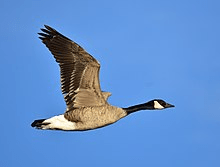
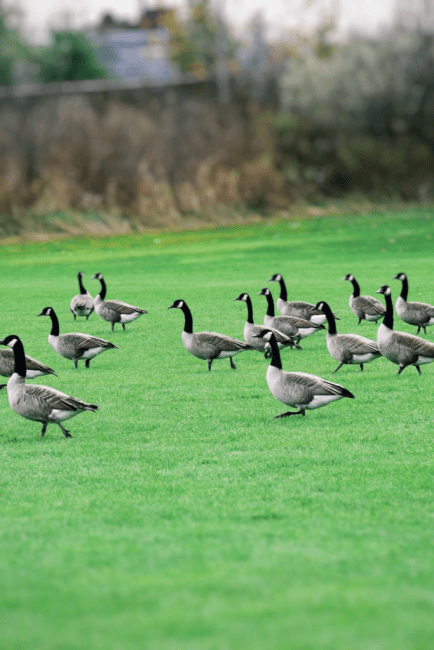
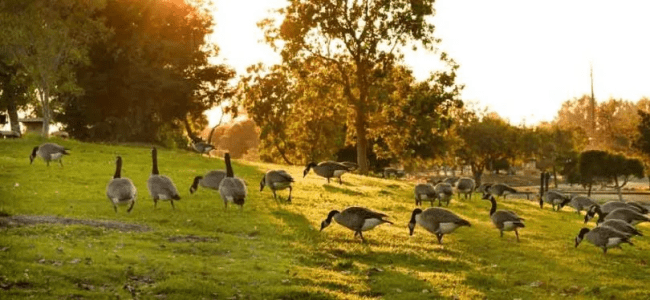
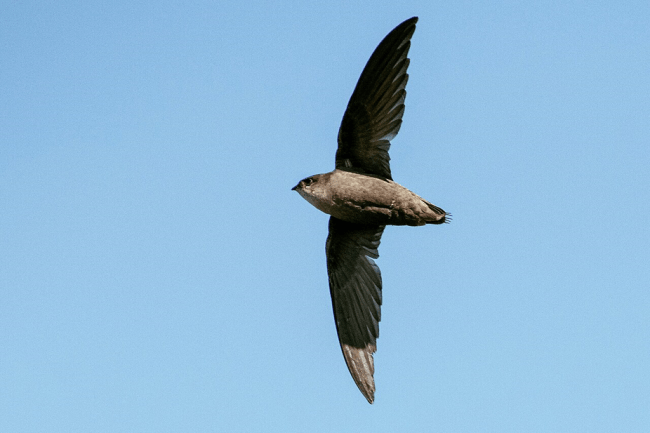
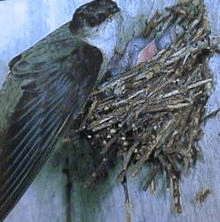
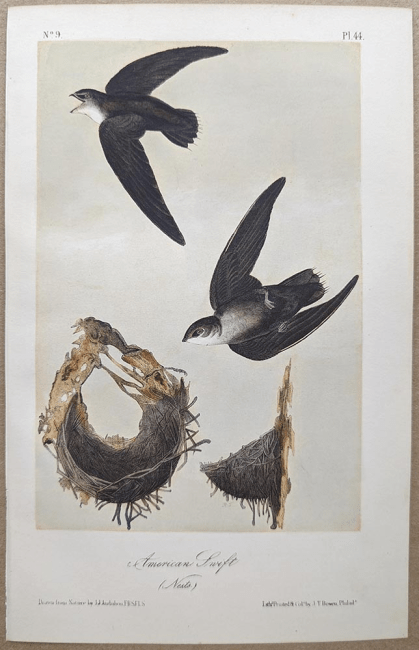
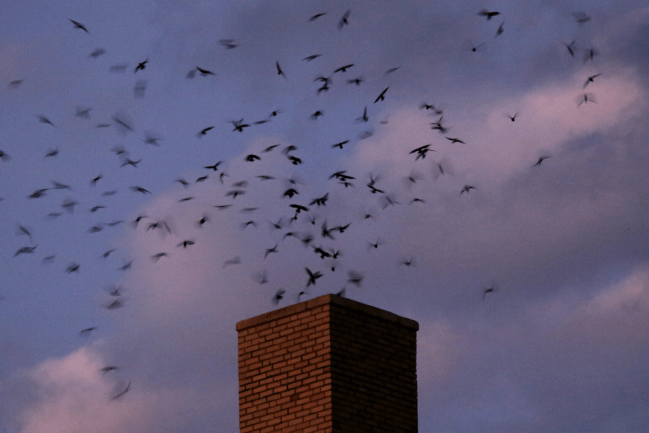
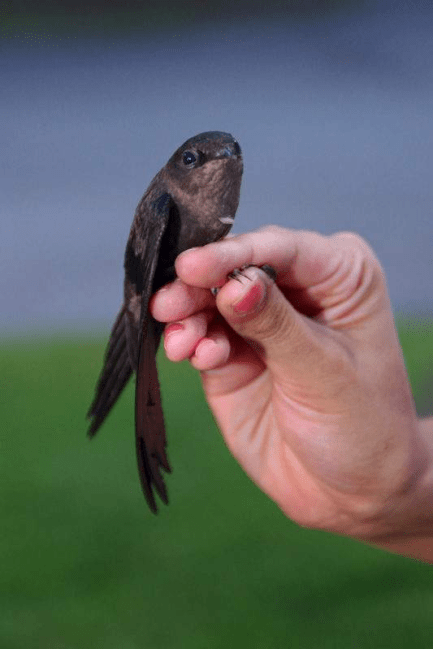
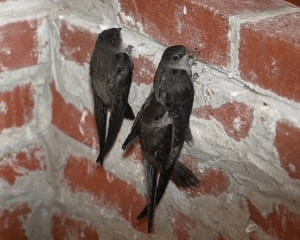
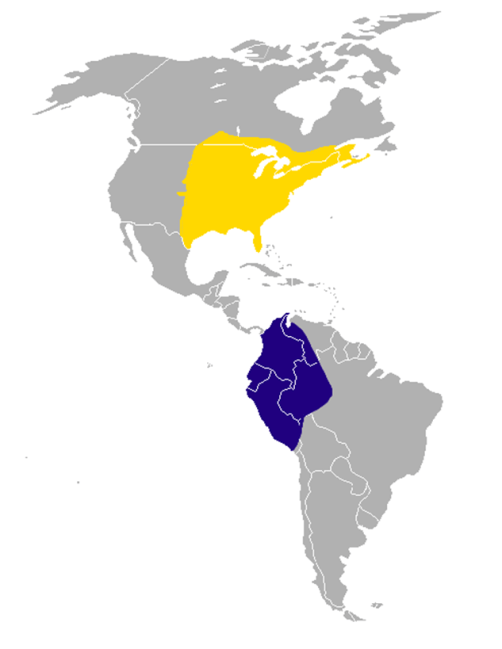
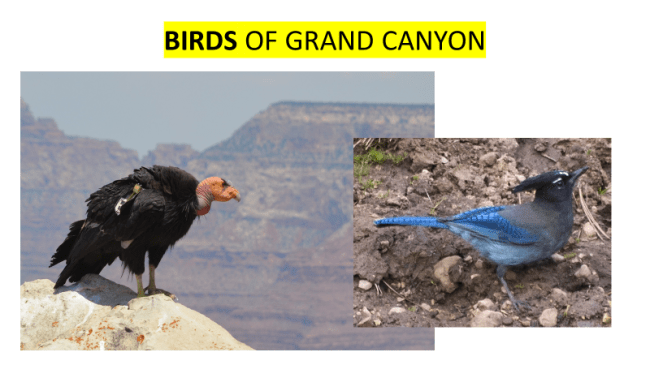

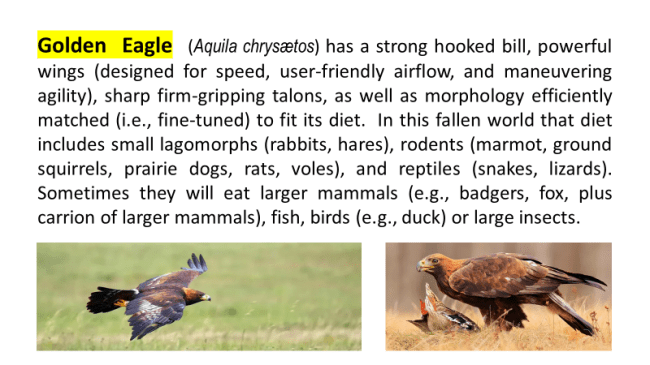
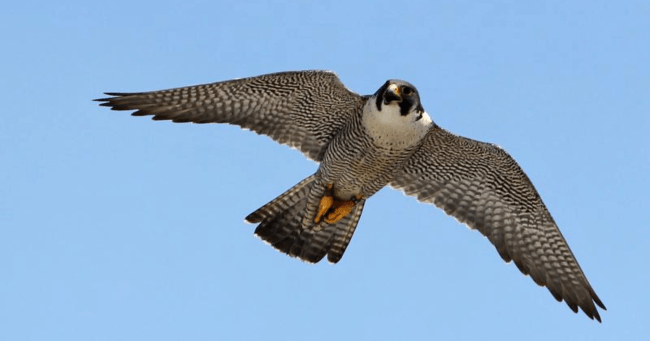
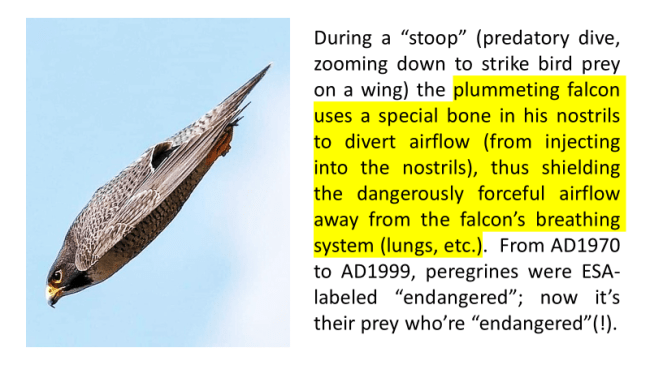
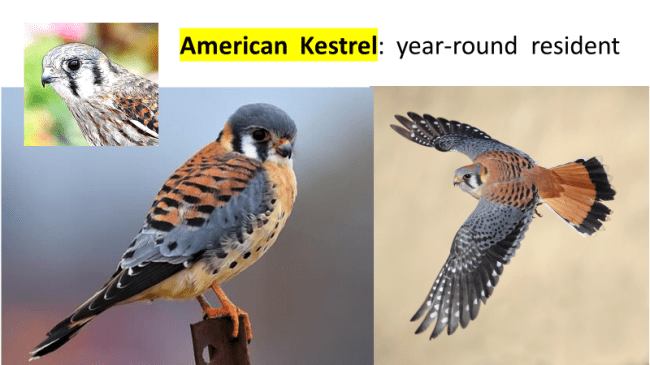
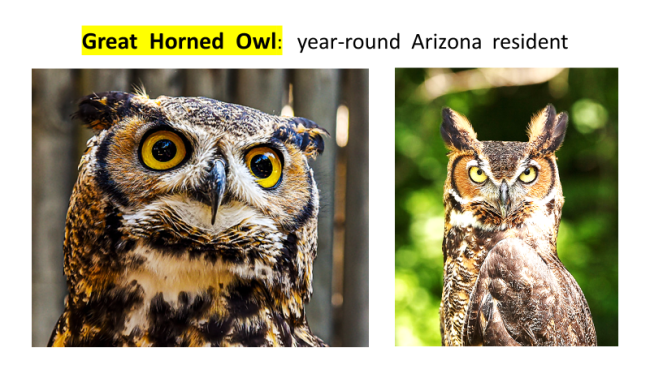
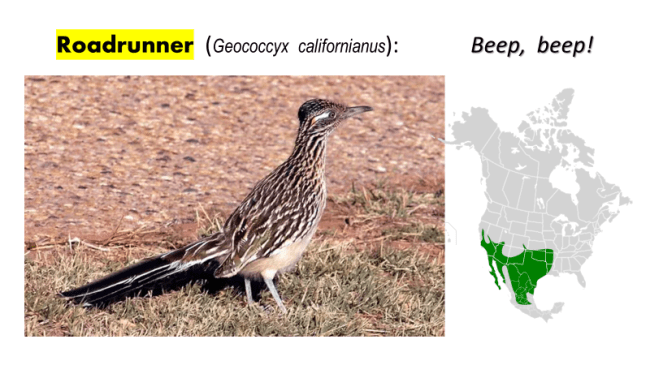
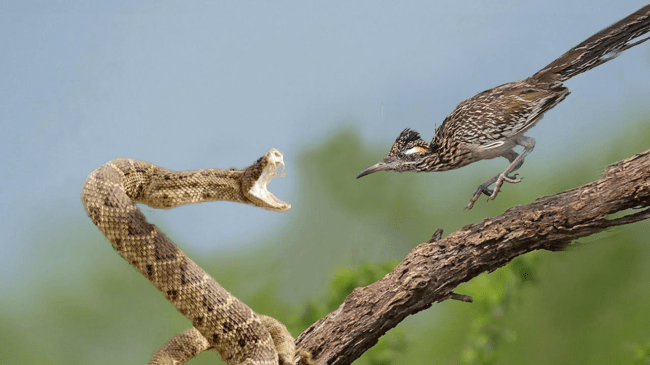
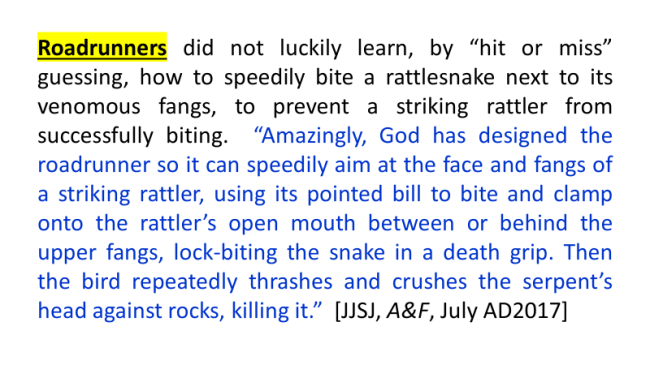
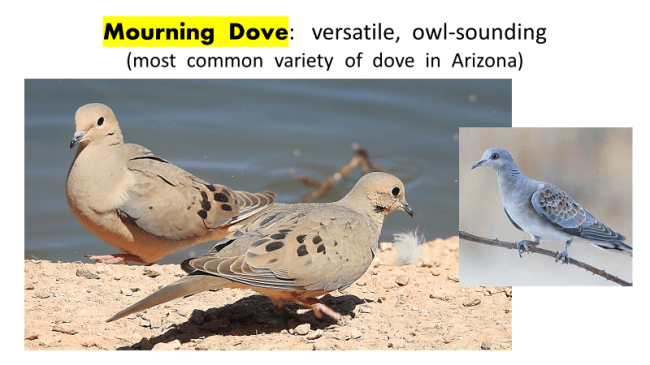
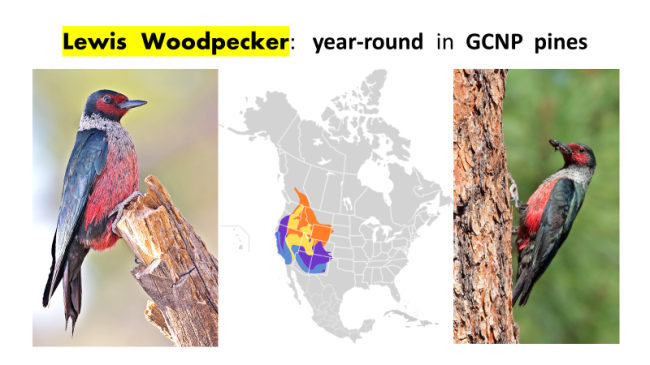
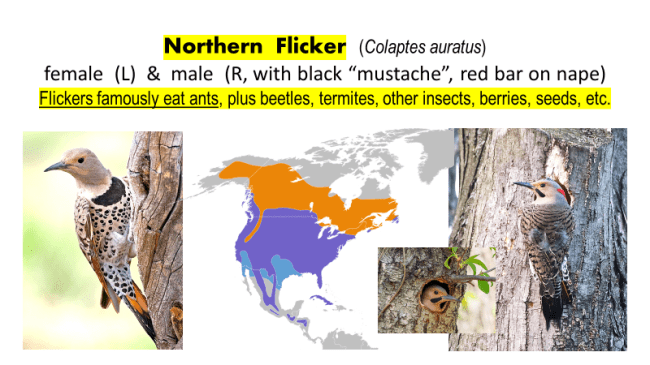
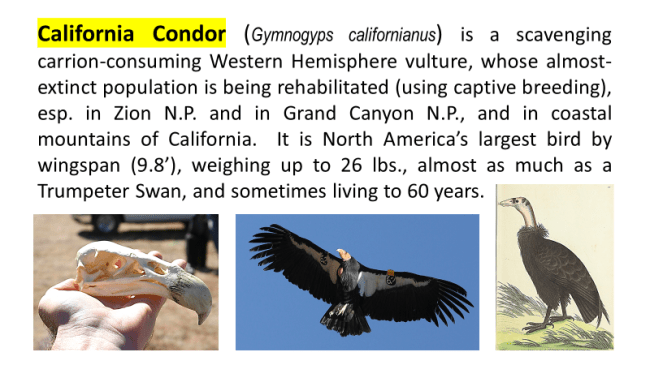
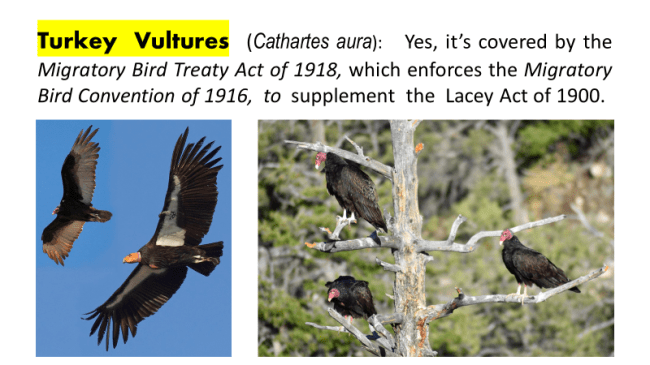
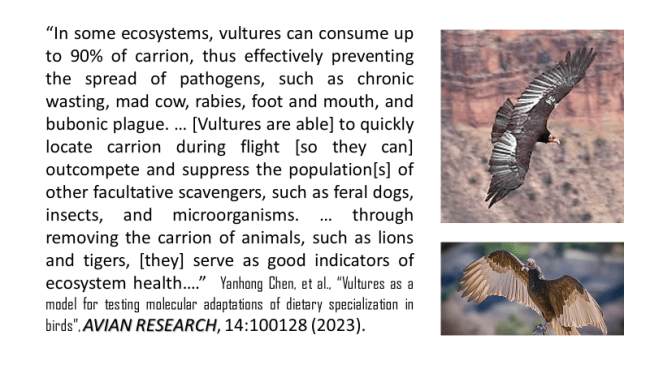
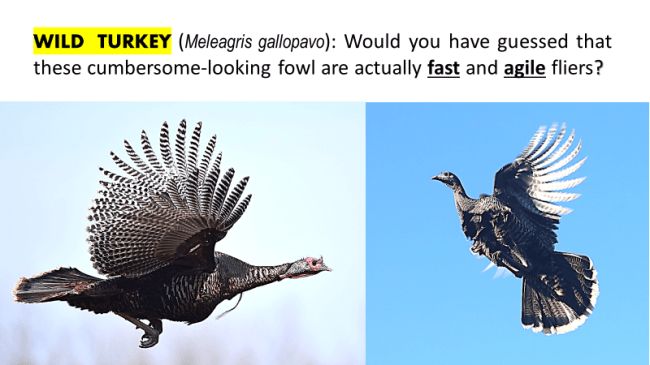
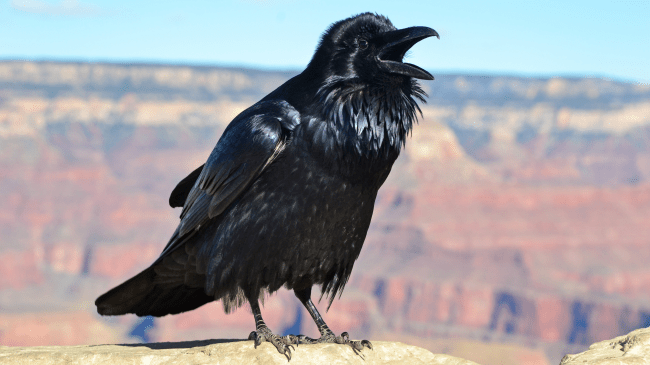
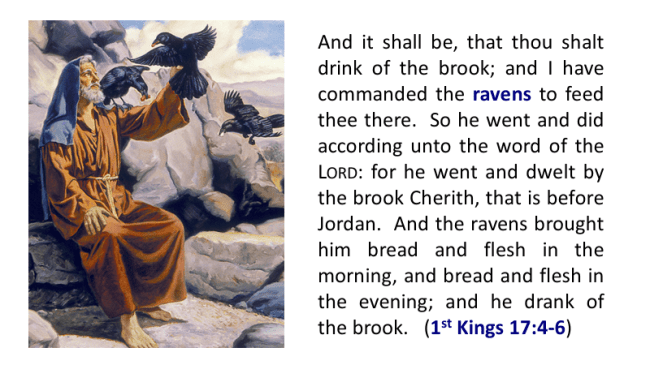
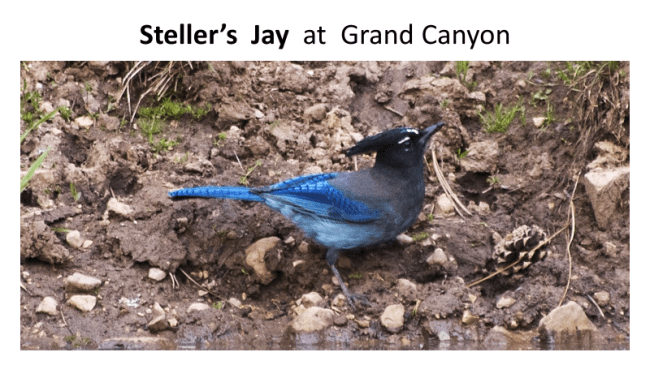
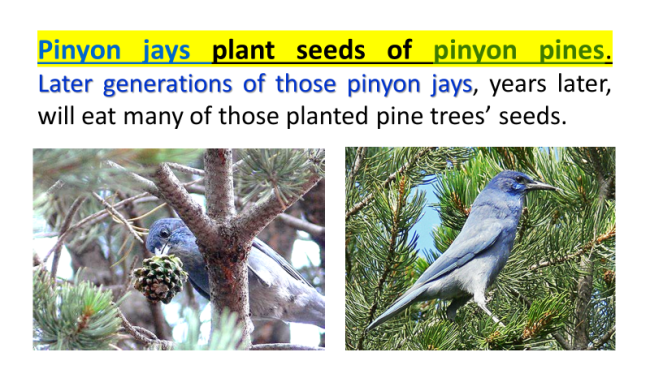
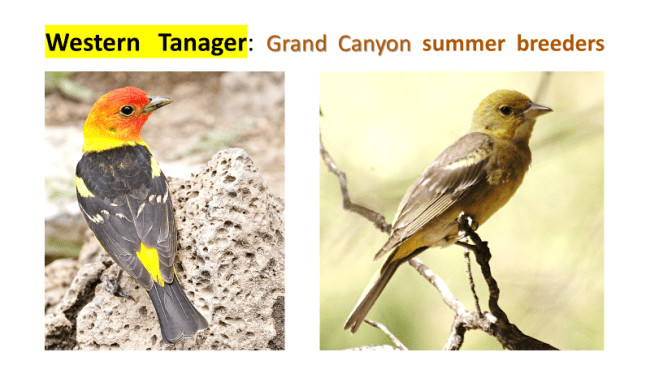
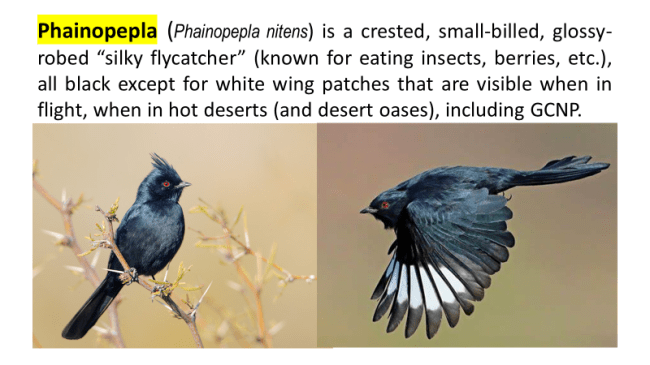
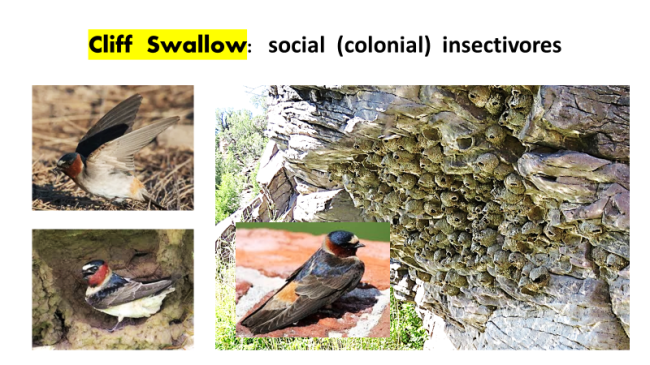
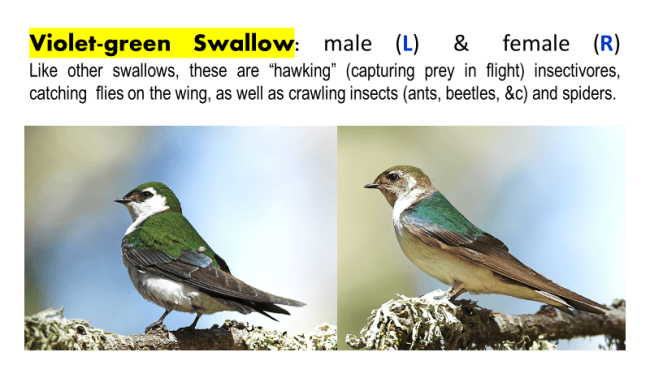

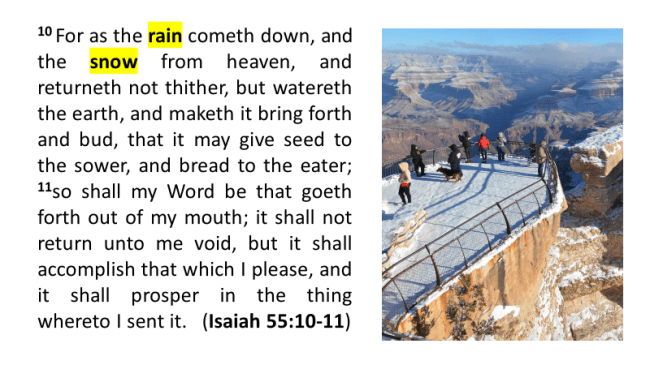
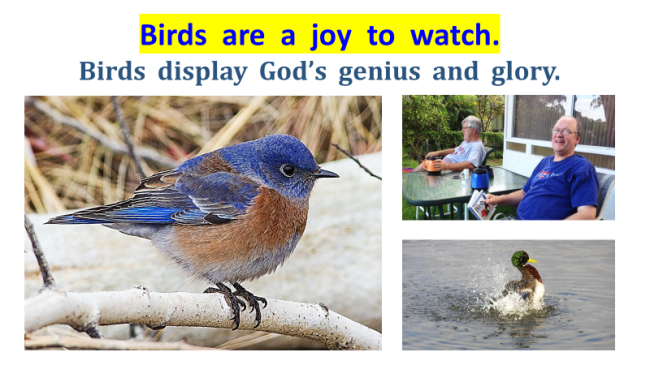
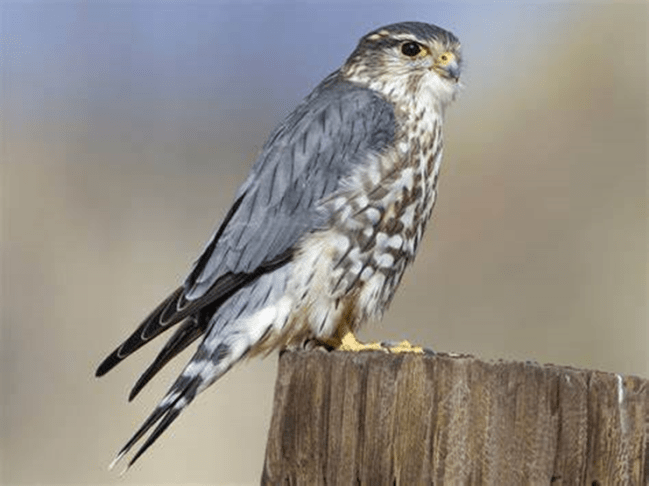
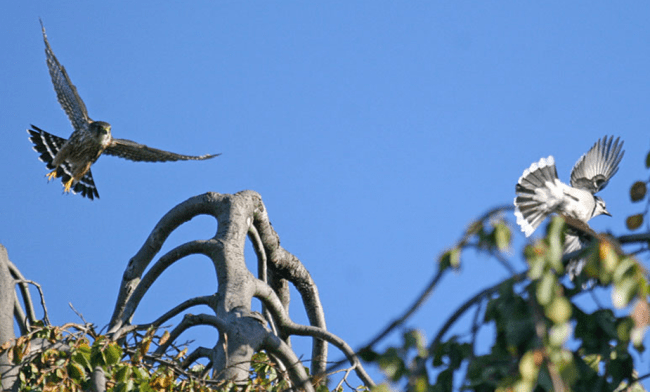
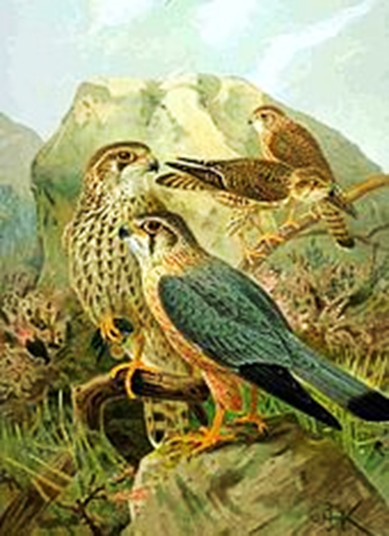
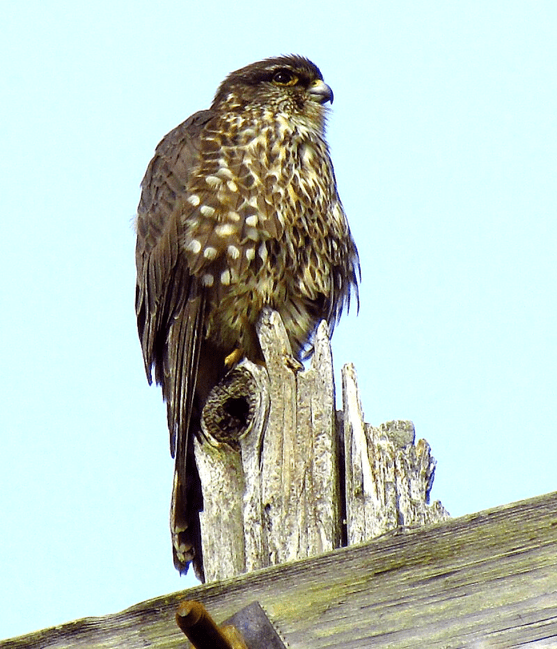
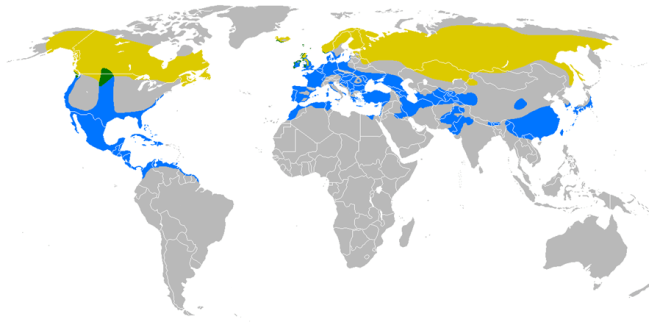
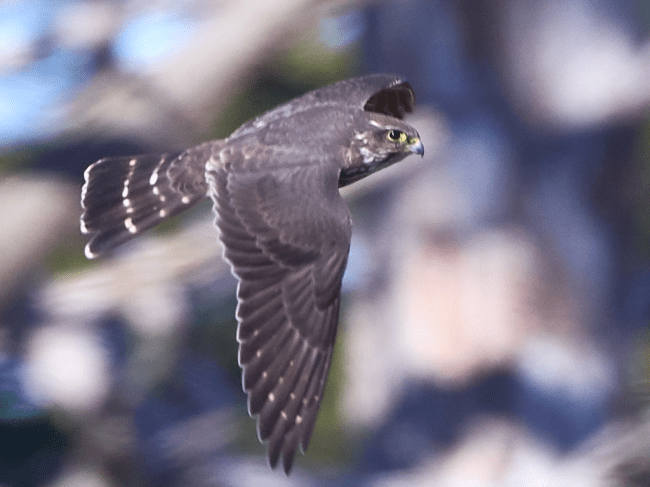
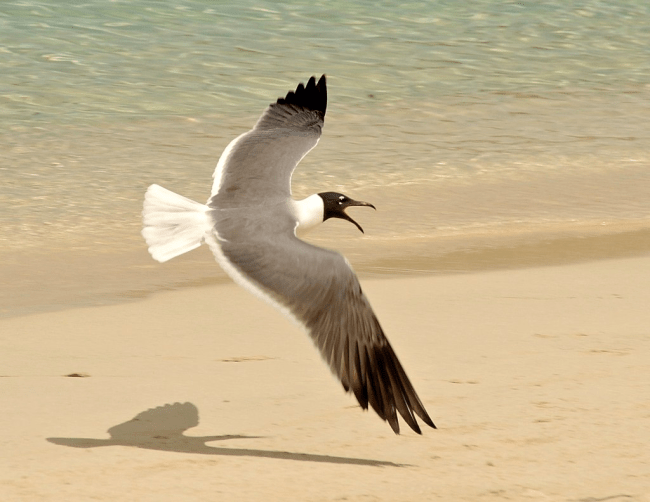
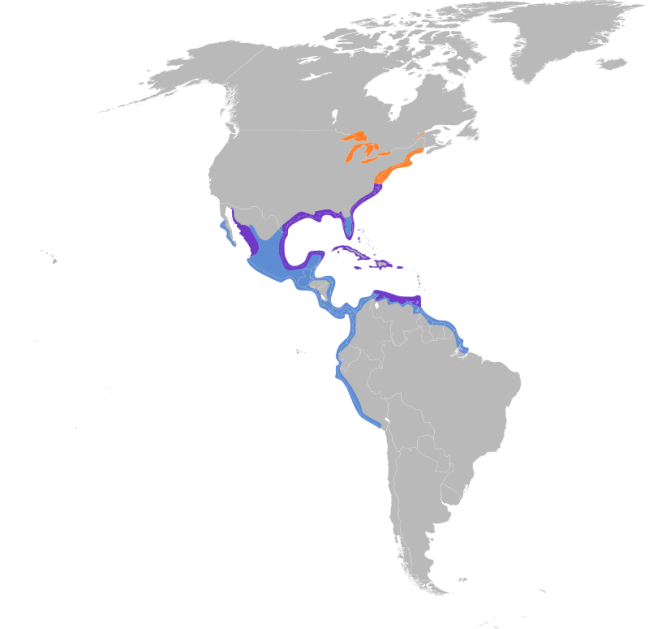
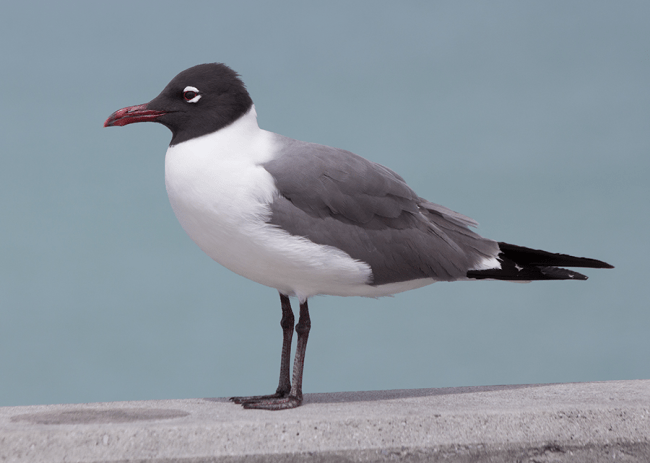

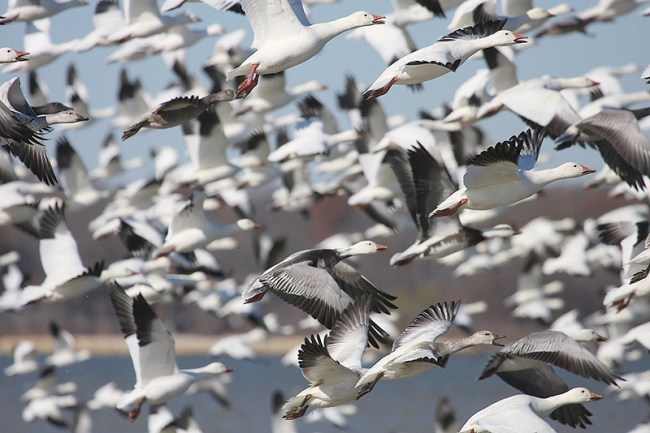


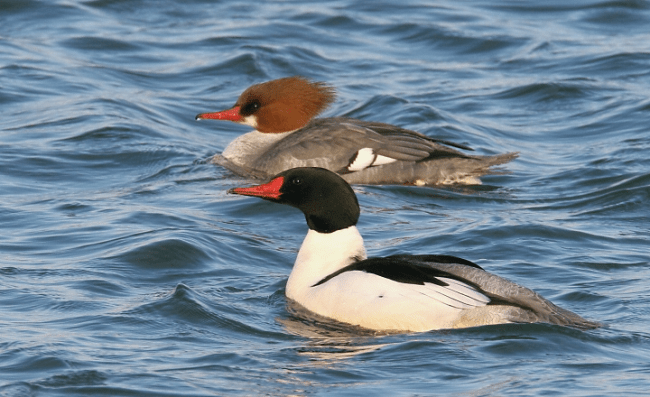
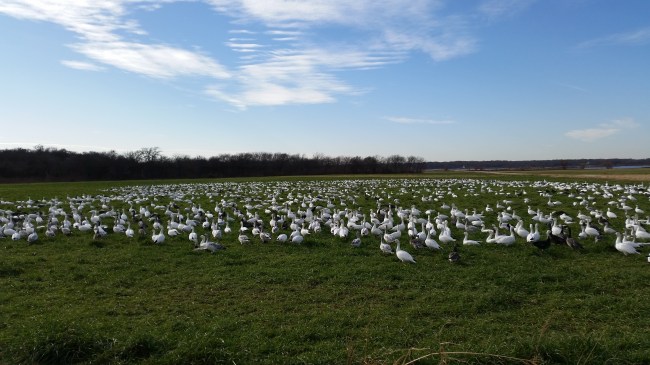
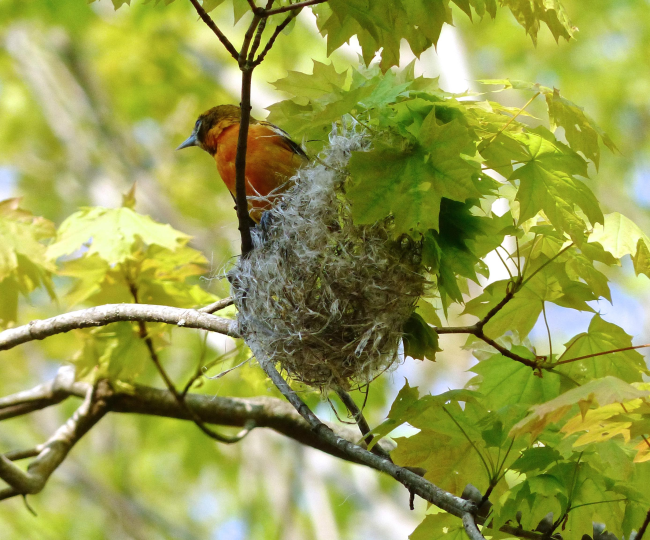


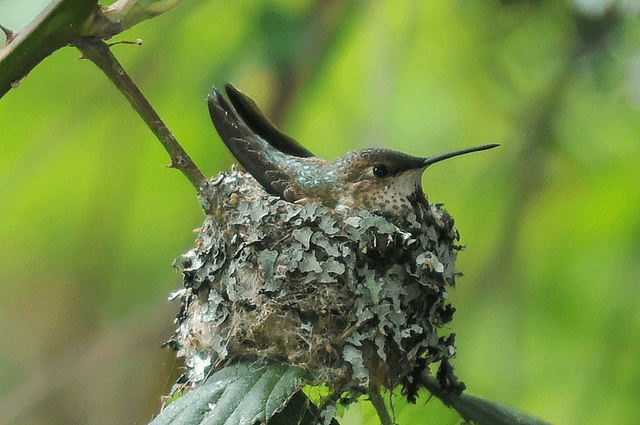
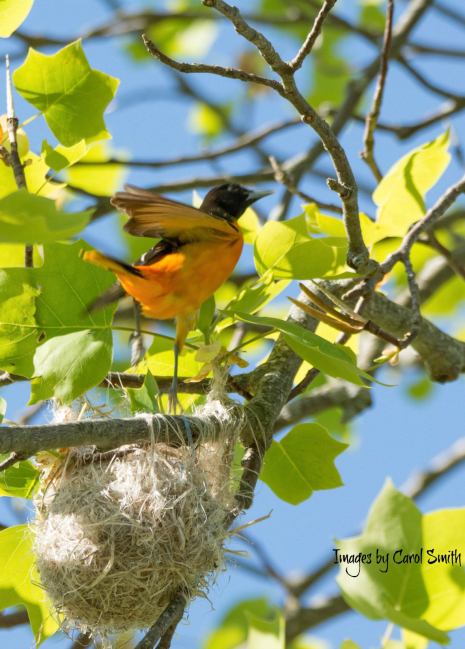


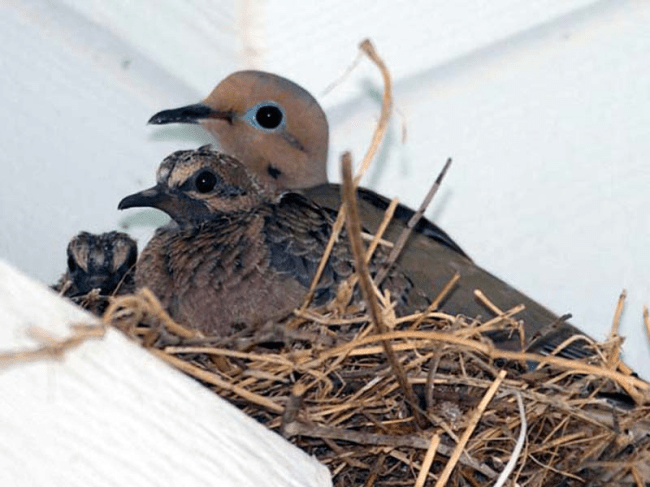

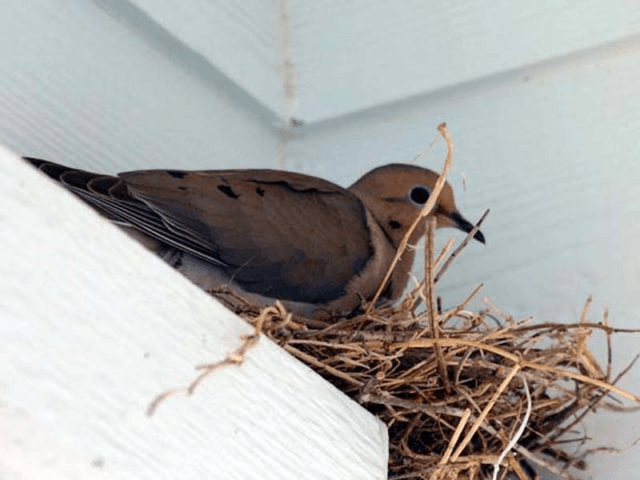
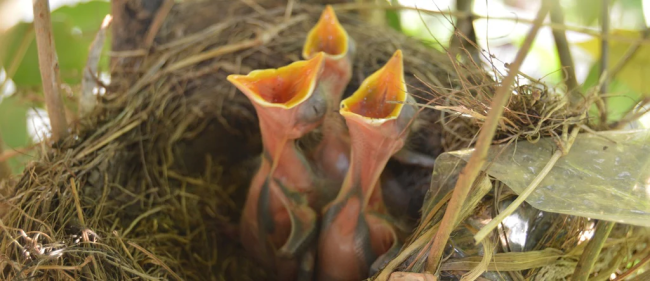
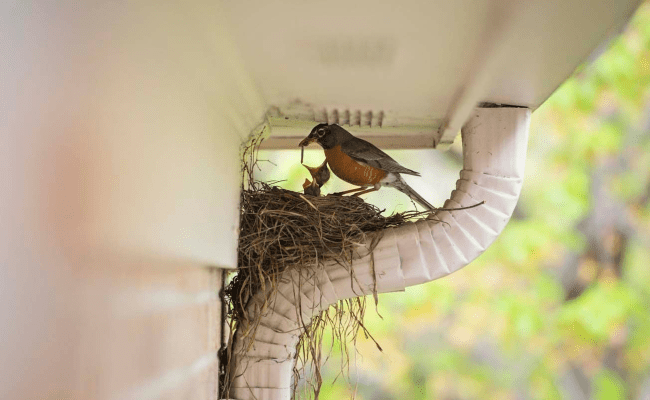
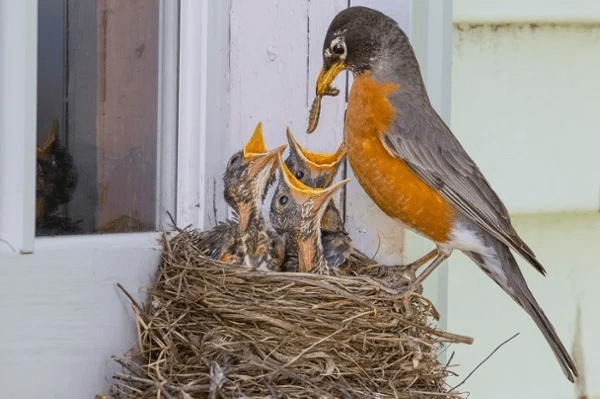

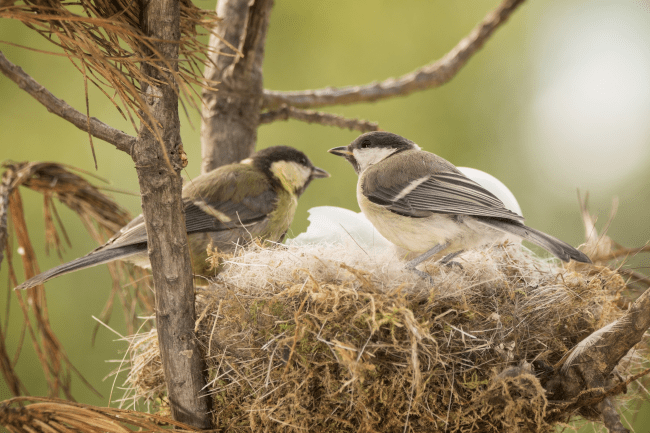
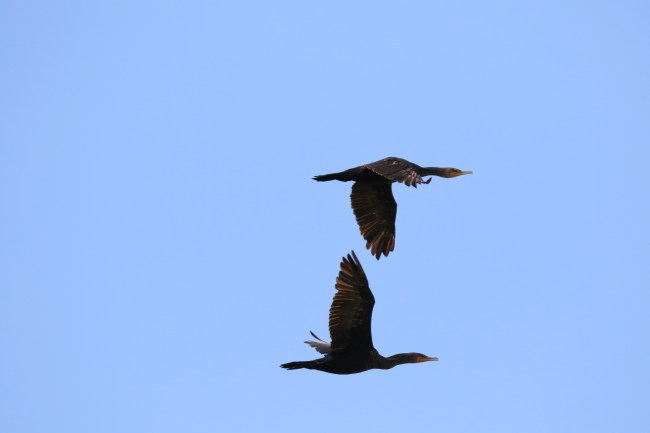

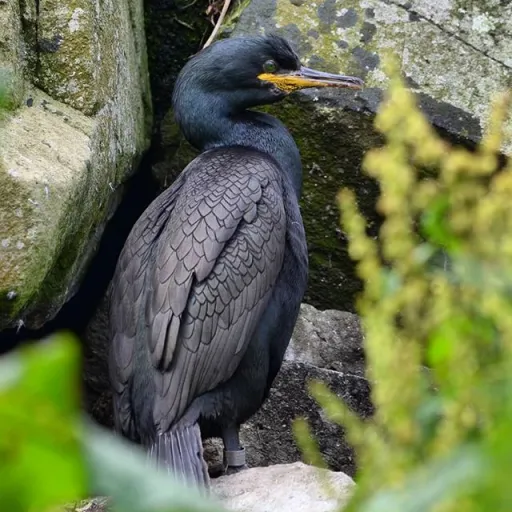
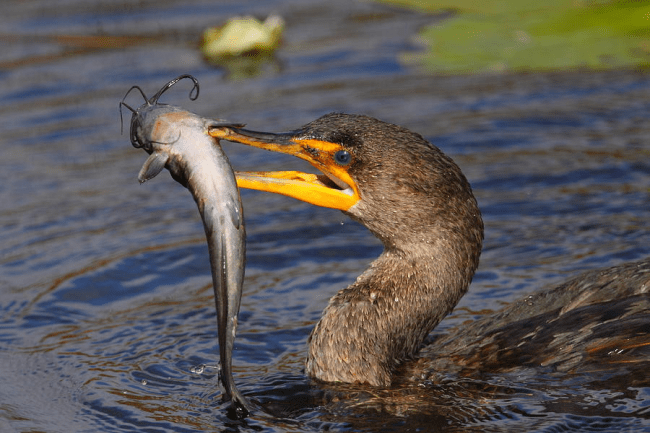


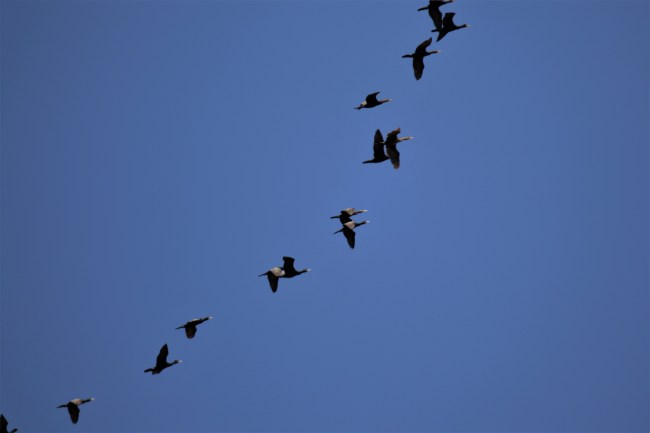
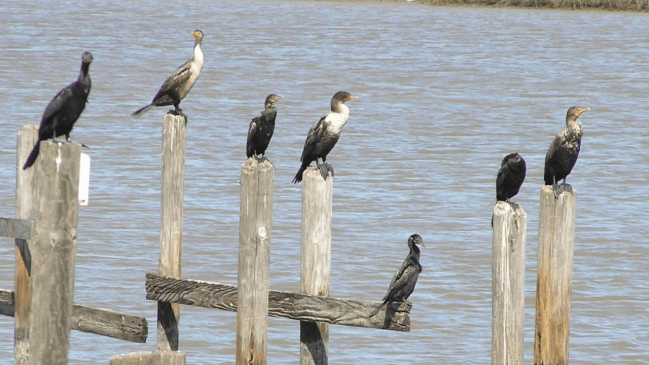


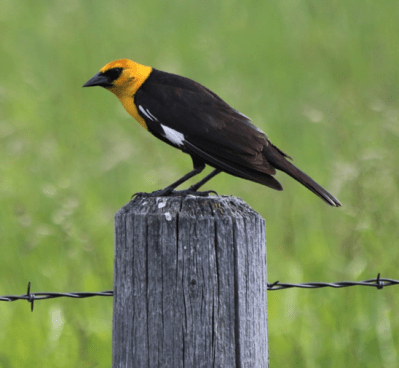
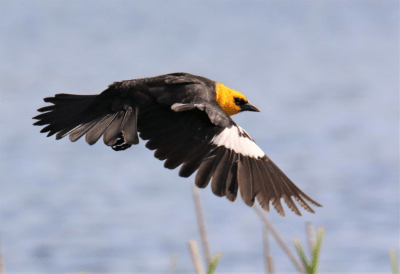

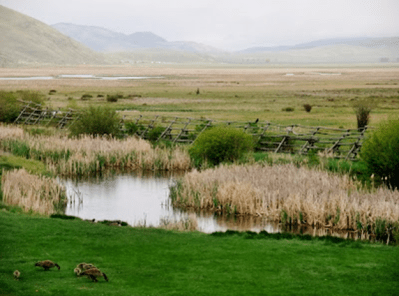


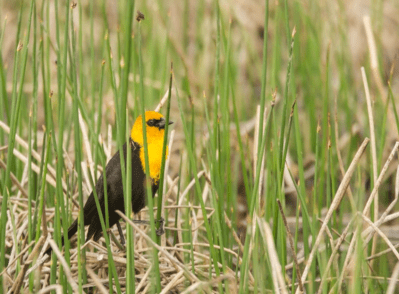
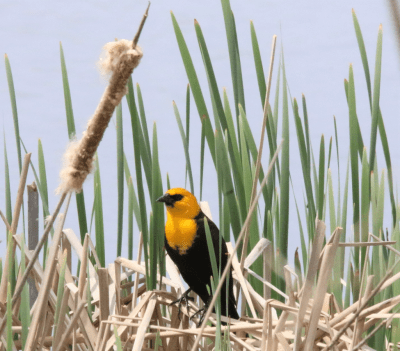


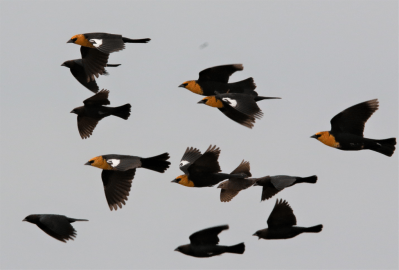
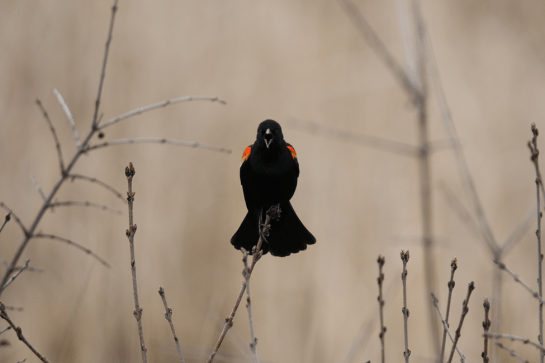

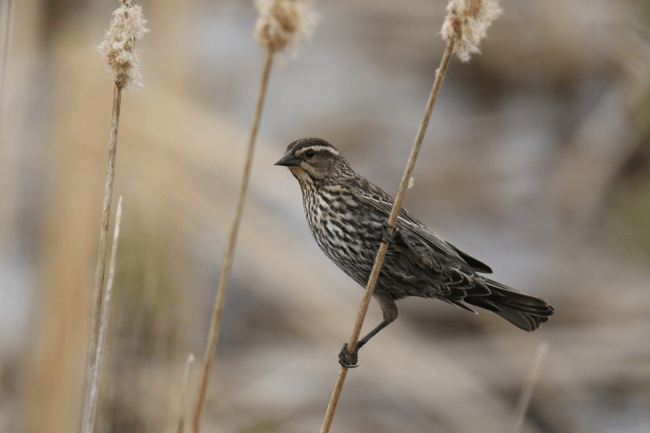
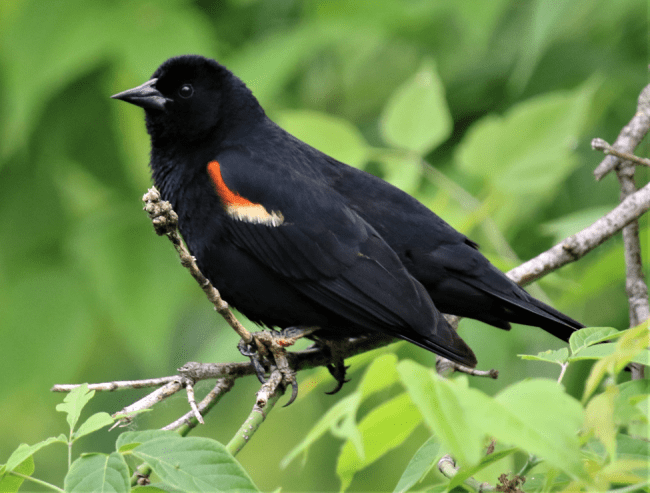
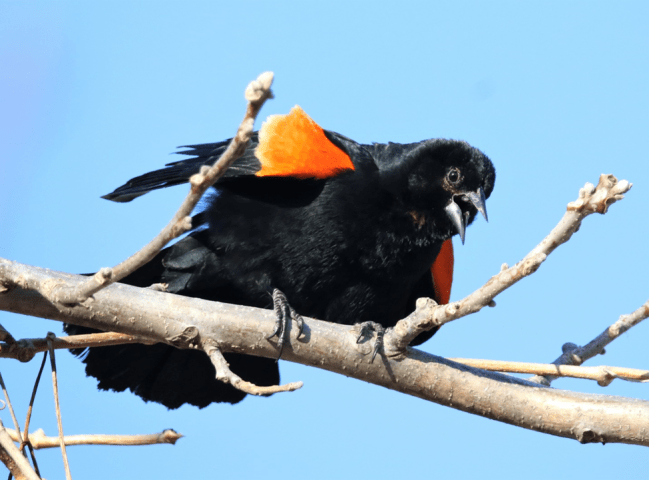
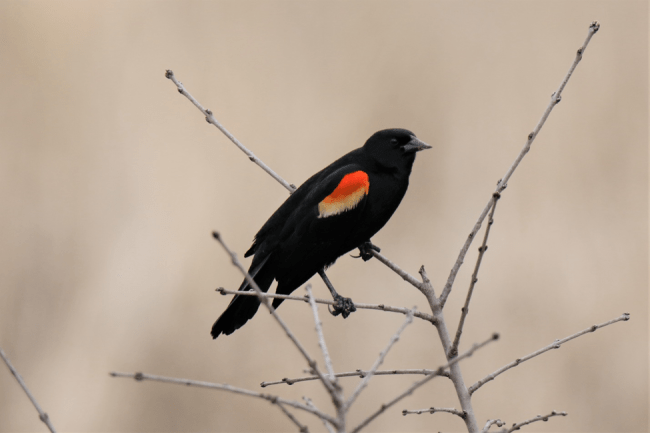
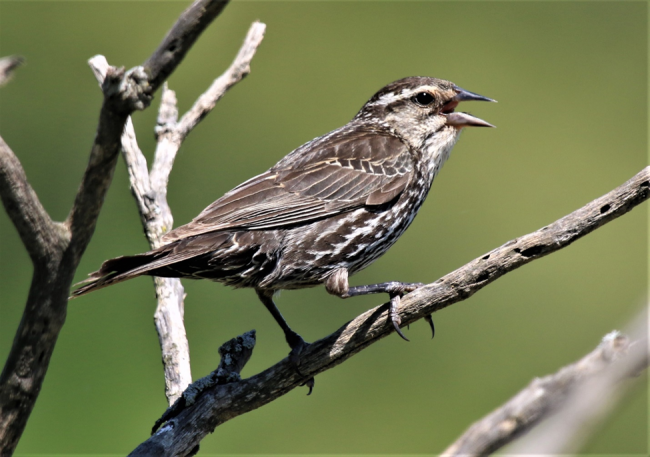
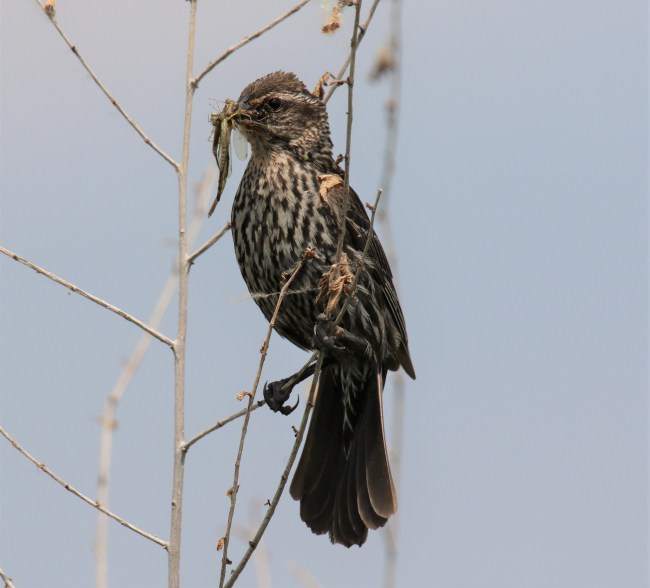
 Lee's Birdwatching Adventures Plus