Birds in Hymns – O Maker of the Sea and Sky

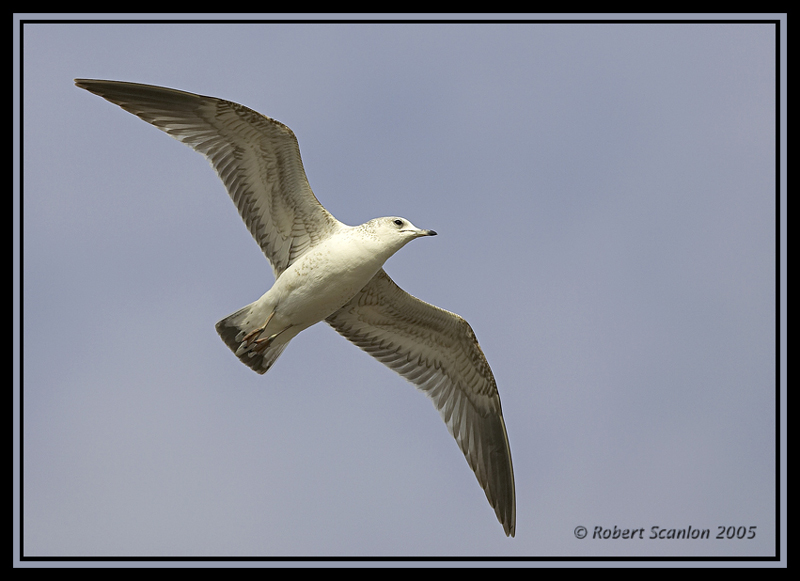
Common Gull (Larus canus) by Robert Scanlon

Common Gull (Larus canus) by Robert Scanlon

Happy is he that hath the God of Jacob for his help, whose hope is in the LORD his God: Which made heaven, and earth, the sea, and all that therein is: which keepeth truth for ever: (Psalms 146:5-6 KJV)

Words by Hen­ry Bur­ton, 1905. (1840-1930)
Music – Santa Trin­i­ta by E. V. Pier­ac­ci­ni (1828-1902)

O Maker of the Sea and Sky


* * *
O Maker of the sea and sky,
Whose word the stormy winds fulfill,
On the wide ocean Thou art nigh,
Bidding these hearts of ours be still.

What if Thy footsteps are not known?
We know Thy way is in the sea;
We trace the shadow of Thy throne,
Constant amid inconstancy.

Shy Albatross (Thalassarche cauta) by Ian

Shy Albatross (Thalassarche cauta) by Ian

Thou bidd’st the north or south wind blow;
The lonely sea bird is Thy care;
And in the clouds which come and go,
We see Thy chariots everywhere.

The sun that lights the homeland dear
Spreads the new morning o’er the deep;
And in the dark Thy stars appear,
Keeping their watches while we sleep.

And so, secure from all alarms,
Thy seas beneath, Thy skies above,
Clasped in the everlasting arms,
We rest in Thine unslumbering love.

My help cometh from the LORD, which made heaven and earth. He will not suffer thy foot to be moved: he that keepeth thee will not slumber. (Psalms 121:2-3 KJV)

Most information from The Cyber Hymnal

More Birds in Hymns

Wordless Birds

*

Formed By Him – Sea Birds That Drink Seawater

Buller's Shearwater (Puffinus bulleri) by Ian

Buller’s Shearwater (Puffinus bulleri) by Ian

An interesting article by Donna L. O’Daniel provided the background for this blog. You can see her complete article at: Water, Water Everywhere . . . And Not A Drop To Drink. See the article for some of the more technical aspects of this.

Birds that are at sea for months and even years must have a way to quench their thirst. How can they do that? If we drink seawater, which is loaded with salt, we would be in deep trouble. Most regular birds would also suffer harm if they were to drink the salty water all the time. Birds like the Albatrosses, Petrels, Tubenoses and Shearwaters do, in fact, drink saltwater.

Laysan Albatross (Phoebastria immutabilis) by Daves BirdingPix

You would know that the Lord God, the Creator God, would have already prepared these birds for this situation. And so He did.

For My thoughts are not your thoughts, Nor are your ways My ways,” says the LORD. “For as the heavens are higher than the earth, So are My ways higher than your ways, And My thoughts than your thoughts. (Isaiah 55:8-9 NKJV)
Have you not known? Have you not heard? The everlasting God, the LORD, The Creator of the ends of the earth, Neither faints nor is weary. His understanding is unsearchable. (Isaiah 40:28 NKJV)

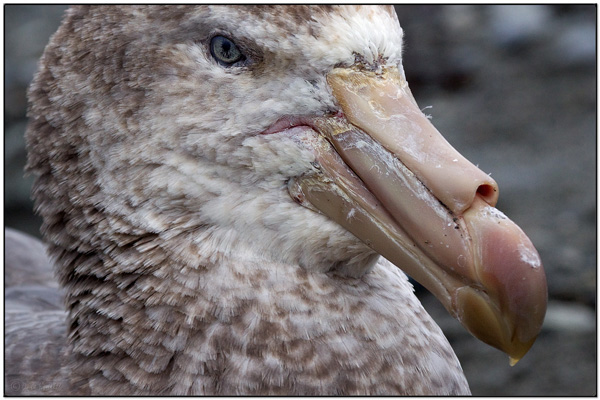
Northern Giant Petrel (Macronectes halli) by Dave's BirdingPix

Northern Giant Petrel (Macronectes halli) by Dave’s BirdingPix

“Sea birds like the albatross drink freely from sea water but never seem to suffer any ill effects. They manage this because their physiology has become adapted to the sea environment. They have special glands just behind their eyes that actively pump salt out of their blood and into narrow tubes that lead into the bird’s nostril. The excess salt drips harmlessly out of the body, restoring the blood salt level back to normal.” “Seabirds can drink seawater and have salt glands inside the head that eliminate excess salt out of the nostrils.” (Internet)

Wikipedia has this to say about the Albatrosses: “Albatrosses, along with all Procellariiformes have a need to lower their salt content due to their drinking of ocean water. All birds have an enlarged nasal gland at the base of the bill, above their eyes. This gland is inactive in species that don’t require it; however the Procellariiformes do require its use. Scientists are uncertain as to its exact processes, but do know in general terms that it removes salt that forms a 5% saline solution that drips out of their nose or is forcibly ejected in some birds.

Northern Giant Petrel head close-up by Daves BirdingPix

Northern Giant Petrel head close-up by Daves BirdingPix

About the Tubenoses and Shearwaters: “They also have a uniquely structured bill, with seven to nine distinct horny plates.. Finally, they have a salt gland that is located above their nasal passages and helps desalinate their body, as they drink seawater. They excrete the salty waste out their nose. As members of Procellariiformes, they share certain characteristics. First they have tubular nostrils called nariorns. This feature gives them their common name, Tubenoses. The opening to the nostril is located differently in some birds. These birds have the opening on top of the upper bill.”

For since the creation of the world His invisible attributes are clearly seen, being understood by the things that are made, even His eternal power and Godhead, so that they are without excuse, because, although they knew God, they did not glorify Him as God, nor were thankful, but became futile in their thoughts, and their foolish hearts were darkened. (Romans 1:20-21 NKJV)

Wandering Albatross (Diomedea exulans) by Ian

Wandering Albatross (Diomedea exulans) by Ian

“The creation model for the origin of avian salt glands states that an intelligent Creator created this class of vertebrates complete with all of the complex systems within their bodies to survive in and adapt to their given environments, including salt glands to rid their bodies of excess salt. Perhaps the strongest argument in favor of the creation model for the origin of avian salt glands, aside from the lack of transitional forms in the fossil record, is one consisting of purpose and interdependence of purposeful parts.

Given the complexity of the functioning of avian salt glands, their existence by design can hardly be denied. The evidence for design that is obvious in the avian salt gland suggests a Designer who not only created the gland, but the entire animal, the earth, and the entire universe.” From Donna’s Article (see above)

And He said to me, “It is done! I am the Alpha and the Omega, the Beginning and the End. I will give of the fountain of the water of life freely to him who thirsts. (Revelation 21:6 NKJV)
And the Spirit and the bride say, “Come!” And let him who hears say, “Come!” And let him who thirsts come. Whoever desires, let him take the water of life freely. (Revelation 22:17 NKJV)

The Procellariiformes Order includes these Families:
Albatrosses – Diomedeidae – 21 species
Petrels, Shearwaters – Procellariidae – 86 species
Storm Petrels – Hydroatidae – 23 species
Diving Petrels – Pelecanoididae – 4 species

More Formed By Him articles

*

Birds of the Bible – Seven By Seven

Northern Pintail (Anas acuta) pair by Ray

Northern Pintail (Anas acuta) pair by Ray

When the birds and animals came to Noah and the Ark, the “clean critters” came “seven by seven.” Noah was told in Genesis 7:1-3:

And the LORD said unto Noah, Come thou and all thy house into the ark; for thee have I seen righteous before me in this generation. Of every clean beast thou shalt take to thee by sevens, the male and his female: and of beasts that are not clean by two, the male and his female. Of fowls also of the air by sevens, the male and the female; to keep seed alive upon the face of all the earth. (Genesis 7:1-3 KJV)

Indian Scops Owl (Otus bakkamoena) pair by Nikhil Devasar

Indian Scops Owl (Otus bakkamoena) pair by Nikhil Devasar

Take with you seven pairs of all clean animals, the male and his mate, and a pair of the animals that are not clean, the male and his mate, and seven pairs of the birds of the heavens also, male and female, to keep their offspring alive on the face of all the earth. (Genesis 7:2-3 ESV)

Pair of Sandhill Cranes by Mike Bader

Pair of Sandhill Cranes by Mike Bader

And from the winged creatures of the heaven, of the clean, seven by seven, male and female; and from all the winged creatures of the ones not clean, two by two, male and female, to maintain seed upon all the earth. (Genesis 7:3 APG)

These verses are interesting to look at because they give two different ideas about what the LORD said to Noah. The APG (Apostolic Bible Polyglot), from which I took the “seven by seven” for the title, indicates that the birds came in as seven pairs of “clean birds” and one pair of “unclean birds.” Most of the other translations seem to indicate that all the birds came in with seven pairs.

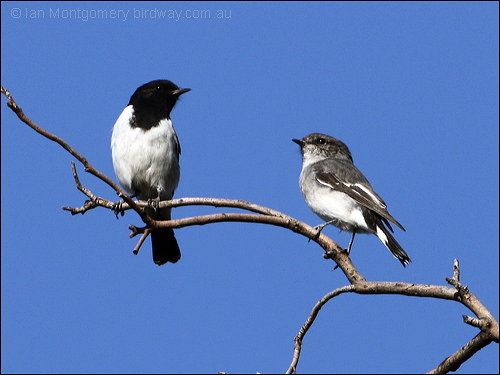
Hooded Robin (Melanodryas cucullata) by Ian

Hooded Robin (Melanodryas cucullata) by Ian

The King James and the English Standard Versions quoted above do not specify “clean or unclean”, only that there are to be seven pairs, the male and his female. I am inclined to lean toward this understanding of these verses. Birds are more fragile than the beast or land animals and that could be why the LORD would have protected them more. Also, reading the commentary by Matthew Henry about why there were more “clean than unclean”, I almost had to chuckle.

“3. Yet more of the clean were preserved than of the unclean. (1.) Because the clean were most for the service of man; and therefore, in favour to him, more of them were preserved and are still propagated. Thanks be to God, there are not herds of lions as there are of oxen, nor flocks of tigers as there are of sheep. (2.) Because the clean were for sacrifice to God; and therefore, in honour to him, more of them were preserved, three couple for breed, and the odd seventh (pair) for sacrifice, Gen_8:20. God gives us six for one in earthly things, as in the distribution of the days of the week, that in spiritual things we should be all for him. What is devoted to God’s honour, and used in his service, is particularly blessed and increased.” (Matthew Henry’s Commentary on Gen 7:2)

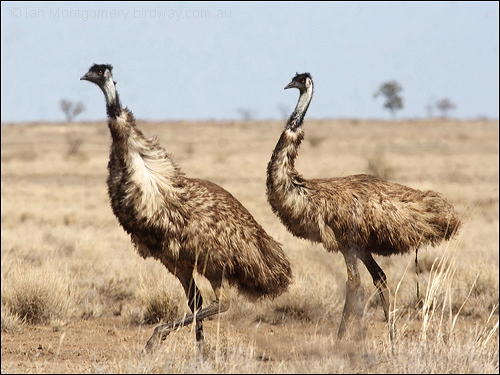
Emu (Dromaius novaehollandiae) by Ian-2

Strutting Emu (Dromaius novaehollandiae) by Ian

Digging into my e-Sword Bible Program to see about this difference, here are how the different versions describe Gen 7:3 –

Those indicating all birds and seven pairs of them:
(ASV) of the birds also of the heavens, seven and seven, male and female, to keep seed alive upon the face of all the earth.
(BBE) And of the birds of the air, seven males and seven females, so that their seed may still be living on the face of the earth.
(CEV) Also take seven pairs of every kind of bird with you. Do this so there will always be animals and birds on the earth.
(Darby) Also of the fowl of the heavens by sevens, male and female; to keep seed alive on the face of all the earth.
(DRB) But of the beasts that are unclean two and two, the male and the female. Of the fowls also of the air seven and seven, the male and the female: that seed may be saved upon the face of the whole earth.
(ERV) Get seven pairs (seven males and seven females) of all the birds. This will allow all these animals to continue living on the earth after the other animals are destroyed.
(ESV) and seven pairs of the birds of the heavens also, male and female, to keep their offspring alive on the face of all the earth.
(GNB) Take also seven pairs of each kind of bird. Do this so that every kind of animal and bird will be kept alive to reproduce again on the earth.
(GW) Also, take seven pairs of every kind of bird (a male and a female of each) to preserve animal life all over the earth after the flood.
(JPS) of the fowl also of the air, seven and seven, male and female; to keep seed alive upon the face of all the earth.
(KJV) Of fowls also of the air by sevens, the male and the female; to keep seed alive upon the face of all the earth.
(KJV-1611) Of fowles also of the aire, by seuens, the male & the female; to keepe seed aliue vpon the face of all the earth.
(LITV) And take of the fowl of the heavens by sevens, male and female, to keep alive seed on the face of the earth.
(MKJV) Also take of the fowls of the air by sevens, the male and the female, to keep seed alive upon the face of all the earth.
(NAS77) also of the birds of the sky, by sevens, male and female, to keep offspring alive on the face of all the earth.
(NASB) also of the birds of the sky, by sevens, male and female, to keep offspring alive on the face of all the earth.
(NKJV) also seven each of birds of the air, male and female, to keep the species alive on the face of all the earth.
(RV) of the fowl also of the air, seven and seven, male and female: to keep seed alive upon the face of all the earth.
(Webster) Of fowls of the air also by sevens, the male and the female; to keep seed alive on the face of all the earth.
(YLT) also, of fowl of the heavens seven pairs, a male and a female, to keep alive seed on the face of all the earth;

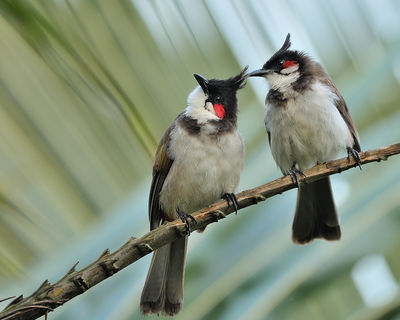
Red-whiskered Bulbul Proud Parents by TAJA

Red-whiskered Bulbul Proud Parents by TAJA

Those indicating “clean and unclean”
(APG) And from the winged creatures of the heaven, of the clean, seven by seven, male and female; and from all the winged creatures of the ones not clean, two by two, male and female, to maintain seed upon all the earth.
(Brenton) And of clean flying creatures of the sky sevens, male and female, and of all unclean flying creatures pairs, male and female, to maintain seed on all the earth.

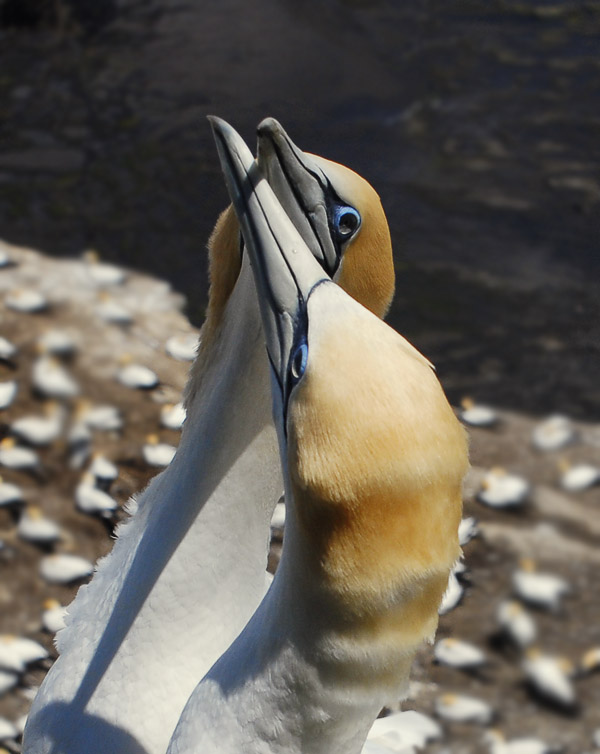
Northern Gannet (Morus bassanus) by W Kwong

Northern Gannet (Morus bassanus) by W Kwong

All of the translations agree on two things for sure. They all agree that they came by male and female pairs. Not male and male pairs or female and female pairs. They also all agree that they were being preserved to keep the species and their future offspring alive. When they left the ark, they were told:

Then God spoke to Noah, saying, “Go out of the ark, you and your wife, and your sons and your sons’ wives with you. Bring out with you every living thing of all flesh that is with you: birds and cattle and every creeping thing that creeps on the earth, so that they may abound on the earth, and be fruitful and multiply on the earth.” So Noah went out, and his sons and his wife and his sons’ wives with him. Every animal, every creeping thing, every bird, and whatever creeps on the earth, according to their families, went out of the ark. (Genesis 8:15-19 NKJV)

See also: Birds of the Bible – Foundation #3
More Birds of the Bible Articles

*

Birds In Hymns – There Seems A Voice In Every Gale

…The heavens declare the glory of God; and the firmament sheweth his handywork. Day unto day uttereth speech, and night unto night sheweth knowledge. There is no speech nor language, where their voice is not heard. (Psalms 19:1-3 KJV)

Words by Amel­ia A. Opie (1769-1853)
Music: Ar­ling­ton – by Thom­as A. Arne, 1762; ar­ranged by Ralph Har­ris­on, 1784
Thomas A. Arne (1710-1778)

Red-tailed Tropicbird (Phaethon rubricauda) by Bob-Nan

Red-tailed Tropicbird (Phaethon rubricauda) by Bob-Nan

There Seems A Voice In Every Gale


There seems a voice in every gale,
A tongue in every flower,
Which tells, O Lord, the wondrous tale
Of Thy almighty power.

The birds, that rise on quivering wing,
Proclaim their Maker’s praise,
And all the mingling sounds of spring
To Thee an anthem raise.

Shall I be mute, great God, alone
’Midst nature’s loud acclaim?
Shall not my heart, with answering tone,
Breathe forth Thy holy Name?

All nature’s debt is small to mine;
Nature shall cease to be;
Thou gavest proof of love divine,
Immortal life to me.

Another great hymn from the past. We just returned from the second funeral of the week. For some, the death of a loved one may seem like a gale. The Lord speaks to us through our trials and gives us a comfort and peace as we go through them. That is, considering the person is in fellowship with the Savior. Both of these dear saints of the Lord, one here and one 200 miles away, were believers in the Lord Jesus Christ and their families also. They have comfort in knowing their loved ones are in the “presence of the Lord,” but they will have grief and sorrow, but the Lord will speak to them and they will come through the “Gale” they are going through. Our hearts and prayers are with both families.

Most information from The Cyber Hymnal

See ~ Wordless Birds

More ~ Birds in Hymns

*

Birds of the Bible – Stork III

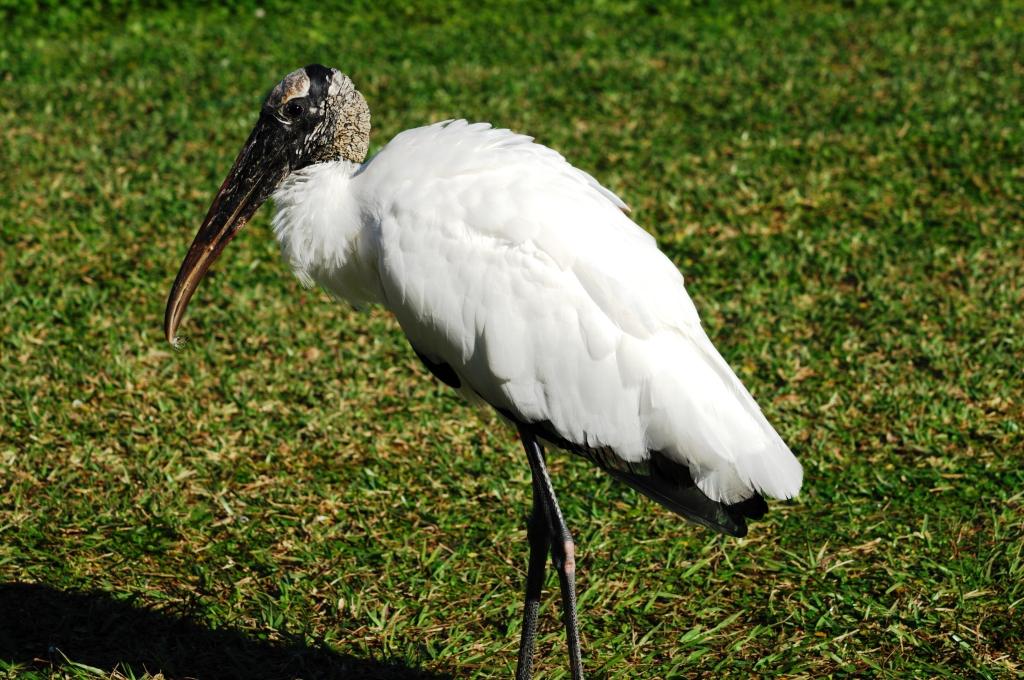
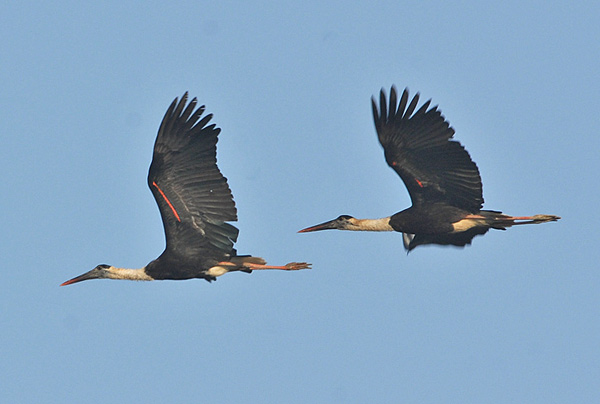
Wood Stork by Dan at Lake Morton Jan 2011

Wood Stork by Dan at Lake Morton Jan 2011

Dan and I were out birdwatching this last week several times. We have the privilege of seeing the Wood Storks quite frequently. The Birds of the Bible – Stork and the  Birds of the Bible – Stork II articles have covered different aspects of the Stork. This time, the Bible passage in Job 39:13 is going to be covered.

The wings of the ostrich wave proudly, But are her wings and pinions like the kindly stork’s? (Job 39:13 NKJV)

The idea of the verse is that the Ostrich waves or flaps her wings proudly, but she lacks several things that the Stork has like the feathers and wings of a stork and nor the care for her young as the Stork show its young.

God has created them both, but they do not behave the same. Each has it’s own design and place to fill.

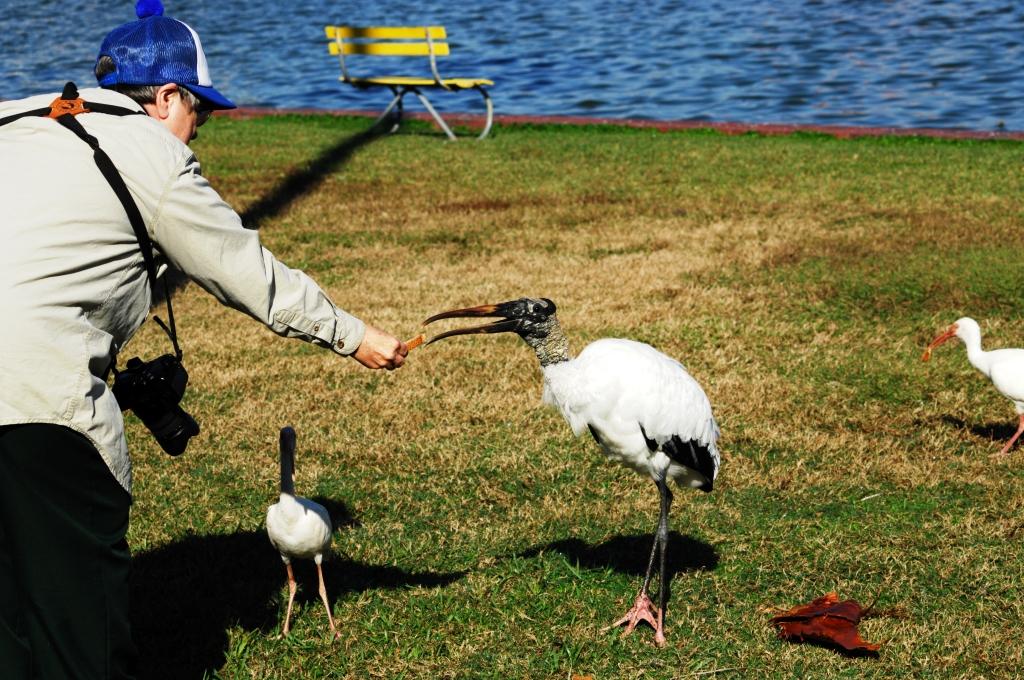
Lee feeding Wood Stork at Lake Morton by Dan Jan 2011

Lee feeding Wood Stork at Lake Morton by Dan Jan 2011

What is interesting is the different translations of Job 39:13. I use the e-Sword Bible program and have loaded every one of the free (English) Bibles and also have the New American Standard Bible and New King James Versions installed, which we purchased. One of the neat things you can do is select a verse and then choose “Compare” and every one of the Bible versions of that verse shows. It never ceases to amaze me that the versions can vary some times so much. This is one of those verses. (If you haven’t tried out the e-Sword Bible, it is worth loading and using and it is free for most of it. They also have the Bible in different languages.)

For now, I am going to show some of the versions that show the Stork:

(Brenton)  The peacock has a beautiful wing: if the stork and the ostrich conceive, it is worthy of notice,
(Darby)  The wing of the ostrich beats joyously–But is it the stork’s pinion and plumage?
(ERV) “An ostrich gets excited and flaps its wings, but it cannot fly. Its wings and feathers are not like the wings of a stork.
(GNB) How fast the wings of an ostrich beat! But no ostrich can fly like a stork.
(JPS) The wing of the ostrich beateth joyously; but are her pinions and feathers the kindly stork’s?
(LITV) The wing of the ostriches flap joyously, though not like the stork’s pinions for flight.
(MKJV) The wing of the ostrich beats joyously; though not like the stork’s pinions for flight.
(NKJV) “The wings of the ostrich wave proudly, But are her wings and pinions like the kindly stork’s?

Storks Shadowing Baby in Lakeland by Dan

Some of the other versions either mention a hawk, heron, or just the pinion and plumage of love. Ostriches are known for abandoning their young (Job 39:13-18 Birds of the Bible – Ostrich I) and the Storks are protective of their young (Stork II). The Ostriches don’t fly particularly, but the Storks have great wings and migrate good distances (Stork II).

Here are some facts about the Storks wings from various books and internet sites:

“Stork’s wings are built in a way, which allows them to take advantage of the streams of upward moving air. They are long and, compared to other birds, very wide – similar to these of vultures, condors, pelicans and the closest relatives of storks. Large wings of a stork “catch” the up going streams of air. Storks travel like gliders, taking advantage of the air movement.”

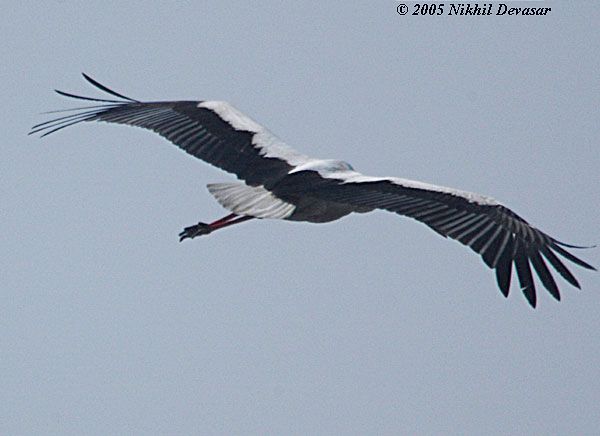
White Stork (Ciconia ciconia) by Nikhil Devasar

White Stork (Ciconia ciconia) by Nikhil Devasar

“Storks tend to use soaring, gliding flight, which conserves energy. Soaring requires thermal air currents. Ottomar Anschütz’s famous 1884 album of photographs of storks inspired the design of Otto Lilienthal’s experimental Gliders of the late 19th century. Storks are heavy, with wide wingspans: the Marabou Stork, with a wingspan of 3.2 m (10.5 ft), joins the Andean Condor in having the widest wingspan of all living land birds.” (Wikipedia)

“White Storks rely on the uplift of air thermals for long distance flight, taking great advantage of them during annual migrations between Europe and Sub-Saharan Africa. The shortest route south would take them over the Mediterranean, but since thermals only form over land, storks take a detour and avoid long water crossings. It has been estimated that storks metabolize the same amount of body fat to travel a distance in flapping flight as 23 times further by soaring, so they usually avoid prolonged wing flapping flight. Long flights over water may occasionally be undertaken. ”

To facilitate the sea crossing, birds from central Europe can take an eastern migration corridor, crossing the straits of Bosphorus to Turkey, traversing the Levant, and then bypassing the Sahara Desert by following the Nile, or follow a western route over the straits of Gibraltar. These corridors maximize the help from the thermals and thus save energy. The eastern route is by far the more important, with 530,000 birds taking this crossing, making this stork the second commonest migrant after the Honey Buzzard. The flocks of raptors, storks and Great White Pelicans can stretch for 200 km (125 mi). The eastern route is twice as long as the western, but storks take the same time to reach the wintering grounds by either route. Juvenile storks set of on their first southward migration in an inherited direction, but if displaced from that bearing by weather conditions, they are unable to compensate, and may end up in a new wintering location. Adults can compensate for strong winds and adjust their direction to finish at their normal winter sites, because they are familiar with the location. For the same reason, all spring migrants, even those from displaced wintering locations, can find their way back to the traditional breeding sites. Once in Africa, the storks spend the winter in savanna from Kenya and Uganda south to the Cape Province of South Africa. In these areas they congregate in large flocks which may reach a thousand individuals or more.” (Wikipedia)

Woolly-necked Stork (Ciconia episcopus) by Nikhil Devasar

Woolly-necked Stork (Ciconia episcopus) by Nikhil Devasar

(From Matthew Henry’s Commentary) – “Job 39:13-18
The ostrich is a wonderful animal, a very large bird, but it never flies. Some have called it a winged camel. God here gives an account of it, and observes,
I. Something that it has in common with the peacock, that is, beautiful feathers (Job_39:13): Gavest thou proud wings unto the peacocks? so some read it. Fine feathers make proud birds. The peacock is an emblem of pride; when he struts, and shows his fine feathers, Solomon in all his glory is not arrayed like him. The ostrich too has goodly feathers, and yet is a foolish bird; for wisdom does not always go along with beauty and gaiety. Other birds do not envy the peacock or the ostrich their gaudy colours, nor complain for want of them; why then should we repine if we see others wear better clothes than we can afford to wear? God gives his gifts variously, and those gifts are not always the most valuable that make the finest show. Who would not rather have the voice of the nightingale than the tail of the peacock, the eye of the eagle and her soaring wing, and the natural affection of the stork, than the beautiful wings and feathers of the ostrich, which can never rise above the earth, and is without natural affection?

Storks are in the Ciconiidae Family (slideshow) and there are 19 species of them around the world. The Storks are the only family in the Ciconiiformes Order. See the Storks Page.

*

Birds In Hymns – Flee As A Bird

Birds In Hymns – Flee As A Bird ~ by Mary S. Shindler

A Psalm of David. In the LORD I put my trust; How can you say to my soul, “Flee as a bird to your mountain”? (Psalms 11:1 NKJV)

Words & Music ~ by Mary S. Shindler, 1842

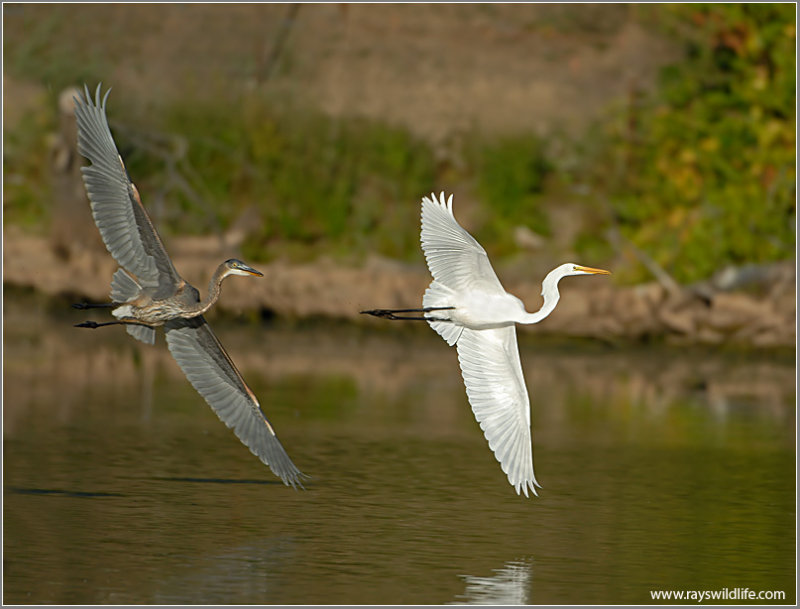
Great Blue Heron (Ardea herodias) chasing Western Great Egret (Ardea alba) by Ray

Great Blue Heron (Ardea herodias) chasing Western Great Egret (Ardea alba) by Ray

Flee As A Bird


Flee as a bird to your mountain, thou who art weary of sin;
Go to the clear flowing fountain where you may wash and be clean.
Haste, then, th’Avenger is near thee; call, and the Savior will hear thee;
He on His bosom will bear thee; O thou who art weary of sin,
O thou who art weary of sin.

He will protect thee forever, wipe every falling tear;
He will forsake thee, O never, sheltered so tenderly there.
Haste, then, the hours are flying, spend not the moments in sighing,
Cease from your sorrow and crying: The Savior will wipe every tear,
The Savior will wipe every tear.

*************

He will swallow up death forever, And the Lord GOD will wipe away tears from all faces; The rebuke of His people He will take away from all the earth; For the LORD has spoken. (Isaiah 25:8 NKJV)

for the Lamb who is in the midst of the throne will shepherd them and lead them to living fountains of waters. And God will wipe away every tear from their eyes.” (Revelation 7:17 NKJV)

And God will wipe away every tear from their eyes; there shall be no more death, nor sorrow, nor crying. There shall be no more pain, for the former things have passed away. (Revelation 21:4 NKJV)

Most information from The Cyber Hymnal

See ~ Wordless Birds

More ~ Birds in Hymns

*

Miami University Professors Essentially Admit Evolution Has Connections to Dismal Science and Math Scores

Here is an interesting article from Ken Ham at Answers in Genesis. Thought it was very interesting and worth reading. – Lee

Miami University Professors Essentially Admit Evolution Has Connections to Dismal Science and Math Scores.

Birds In Hymns – With Songs and Honors Sounding Loud

Birds In Hymns – With Songs and Honors Sounding Loud – Isaac Watts

Praise the LORD! For it is good to sing praises to our God; For it is pleasant, and praise is beautiful. (Psalms 147:1 NKJV)

Words – By Isaac Watts, The Psalms of David, 1719
Music – By Bedford, William Wheale, 1729
Alternate Tune Belfield by William Gilchrist, 1895

With Songs and Honors Sounding Loud


With songs and honors sounding loud,
Address the Lord on high;
Over the heav’ns He spreads His cloud,
And waters veil the sky.

He sends His showers of blessing down
To cheer the plains below;
He makes the grass the mountains crown,
And corn in valleys grow.

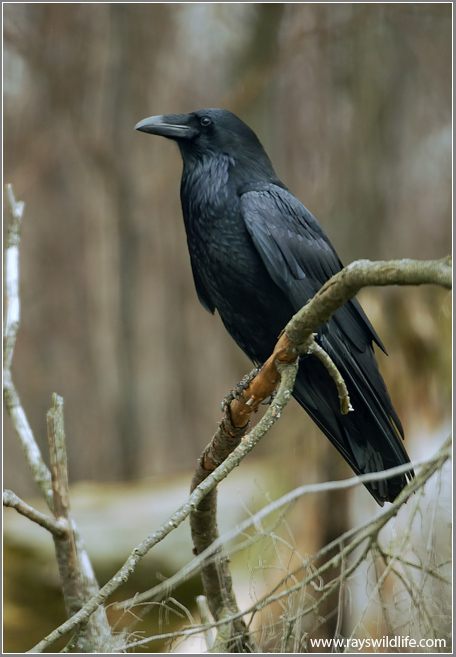
Northern Raven (Corvus corax) by Ray

Northern Raven (Corvus corax) by Ray

He gives the grazing ox his meat,
He hears the raven’s cry;
But man, who tastes His finest wheat,
Should raise His honors high.

His steady counsels change the face
Of the declining year;
He bids the sun cut short his race,
And wintry days appear.

His hoary frost, His fleecy snow,
Descend and clothe the ground;
The liquid streams forbear to flow,
In icy fetters bound.

When from the dreadful stores on high
He pours the rattling hail,
The wretch that dares this God defy
Shall find his courage fail.

He sends His Word, and melts the snow,
The fields no longer mourn;
He calls the warmer gales to blow,
And bids the spring return.

The changing wind, the flying cloud,
Obey His mighty Word:
With songs and honors sounding loud,
Praise ye the sovereign Lord.

*************

a Psalm of David. I will praise You, O LORD, with my whole heart; I will tell of all Your marvelous works. I will be glad and rejoice in You; I will sing praise to Your name, O Most High. (Psalms 9:1-2 NKJV)

Be exalted, O LORD, in Your own strength! We will sing and praise Your power. (Psalms 21:13 NKJV)

Be exalted, O LORD, in Your own strength! We will sing and praise Your power. (Psalms 21:13 NKJV)

Most information from The Cyber Hymnal

See ~ Wordless Birds

More ~ Birds in Hymns

*

Formed By Him – Silver Birds

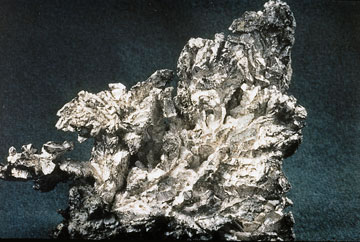
Silver ©USGOV

Silver ©USGOV

Silver is a metallic chemical element with the chemical symbol Ag (Latin: argentum, from the Indo-European root *arg- for “grey” or “shining”) and atomic number 47. A soft, white, lustrous transition metal, it has the highest electrical conductivity of any element and the highest thermal conductivity of any metal.

Silver has long been valued as a precious metal, and it is used to make ornaments, jewelry, high-value tableware, utensils (hence the term silverware), and currency coins. Today, silver metal is also used in electrical contacts and conductors, in mirrors and in catalysis of chemical reactions.

Silver, in the form of electrum (a gold-silver alloy), was coined to produce money in around 700 BC by the Lydians. Later, silver was refined and coined in its pure form. Many nations used silver as the basic unit of monetary value. In the modern world, silver bullion has the ISO currency code XAG. The name of the United Kingdom monetary unit “pound” (£) reflects the fact that it originally represented the value of one troy pound of sterling silver.

Jewelry and silverware are traditionally made from sterling silver (standard silver), an alloy of 92.5% silver with 7.5% copper. In the US, only an alloy consisting of at least 90.0% fine silver can be marketed as “silver” (thus frequently stamped 900). Sterling silver (stamped 925) is harder than pure silver, and has a lower melting point (893 °C) than either pure silver or pure copper.

We know that Adam named the animals and birds starting in Genesis and people are still naming them. Silver has been known about for centuries and it is no wonder that critters and birds have their silver color described with “silver” in their names. Checking out the latest I.O.C. list of birds (Ver 2.6) you will find 32 birds with “silver” eyes, beaks, bills, backed, breasted, capped, crowned, eared, rumped, throated, and tipped. Also found are “silvery” cheeked, flanked, fronted, and throated birds. Below is a list of the 32 “Silver Birds”, plus a slideshow of the photos of them that I could obtain.
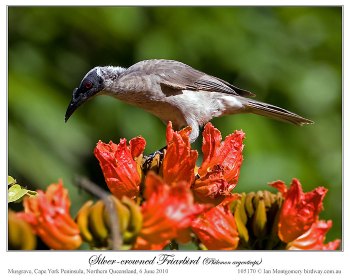
Silver-crowned Friarbird (Philemon argenticeps) by Ian

Silver-crowned Friarbird (Philemon argenticeps) by Ian

In the King James Version of the Bible, there are 282 verses that have silver mentioned 320 times. (per e-Sword). Abraham and Sarah are the first mentioned to be rich in silver and jewels of silver (Gen 23), Joseph was sold for 20 pieces of silver (Gen 37:28), and it was a silver cup that was in found in Benjamin’s bag when he had been taken to Joseph in Egypt many years later (Gen 44:2).

In Exodus, they were warned not to make gods of silver or of gold (Ex. 20:23), they used silver to make sockets and fillets for the tabernacle (Ex. 26, 27), they made cunning works in gold and silver (Ex. 31) and they were to give it with willing heart.

Take ye from among you an offering unto the LORD: whosoever is of a willing heart, let him bring it, an offering of the LORD; gold, and silver, and brass, (Exodus 35:5 KJV)

Many other articles were made of silver in the service of the LORD throughout the Bible. King Solomon had the navy bring gold, silver, ivory, apes, and peacocks to him (1 King 10:22). Even the mining of silver is mentioned in Job 28:1.

Maybe because silver is used and referred to so often that the Lord, when He Created the birds, wanted us to see Silver Birds and think of Him, His Word, His Creation, His Son, and the price of His betrayal. Verses like:

The words of the LORD are pure words: as silver tried in a furnace of earth, purified seven times. (Psalms 12:6 KJV)

The law of thy mouth is better unto me than thousands of gold and silver. (Psalms 119:72 KJV)

If thou seekest her as silver, and searchest for her as for hid treasures; Then shalt thou understand the fear of the LORD, and find the knowledge of God. (Proverbs 2:4-5 KJV)

Receive my instruction, and not silver; and knowledge rather than choice gold. For wisdom is better than rubies; and all the things that may be desired are not to be compared to it. (Proverbs 8:10-11 KJV)

Receive my instruction, and not silver; and knowledge rather than choice gold. For wisdom is better than rubies; and all the things that may be desired are not to be compared to it. (Proverbs 8:10-11 KJV)

A word fitly spoken is like apples of gold in pictures of silver. (Proverbs 25:11 KJV)

Silver-eared Leiothrix (Leiothrix argentauris) by Ian

Silver-eared Leiothrix (Leiothrix argentauris) brightly colored-by Ian

And I said unto them, If ye think good, give me my price; and if not, forbear. So they weighed for my price thirty pieces of silver. And the LORD said unto me, Cast it unto the potter: a goodly price that I was prised at of them. And I took the thirty pieces of silver, and cast them to the potter in the house of the LORD. (Zechariah 11:12-13 KJV)

Fullfilled: And said unto them, What will ye give me, and I will deliver him unto you? And they covenanted with him for thirty pieces of silver. (Matthew 26:15 KJV)
Then Judas, which had betrayed him, when he saw that he was condemned, repented himself, and brought again the thirty pieces of silver to the chief priests and elders, Saying, I have sinned in that I have betrayed the innocent blood. And they said, What is that to us? see thou to that. And he cast down the pieces of silver in the temple, and departed, and went and hanged himself. And the chief priests took the silver pieces, and said, It is not lawful for to put them into the treasury, because it is the price of blood. And they took counsel, and bought with them the potter’s field, to bury strangers in. Wherefore that field was called, The field of blood, unto this day. (Matthew 27:3-8 KJV)

Then Peter said, Silver and gold have I none; but such as I have give I thee: In the name of Jesus Christ of Nazareth rise up and walk. (Acts 3:6 KJV)

For other foundation can no man lay than that is laid, which is Jesus Christ. Now if any man build upon this foundation gold, silver, precious stones, wood, hay, stubble; (1 Corinthians 3:11-12 KJV)

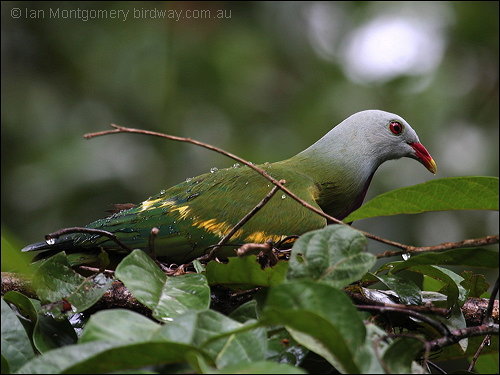
Wompoo Fruit-Dove (Ptilinopus magnificus) by Ian

Wompoo Fruit-Dove (Ptilinopus magnificus) by Ian

In Doves and Pigeon Updated this verse was mentioned: “Though ye have lien among the pots, yet shall ye be as the wings of a dove covered with silver, and her feathers with yellow gold.” (Psalms 68:13 KJV) Even though today this bird, the Wompoo Fruit-Dove, doesn’t have “Silver” in it’s name, maybe the Lord gave them their colors so we would remember the following verses and truth.

Forasmuch as ye know that ye were not redeemed with corruptible things, as silver and gold, from your vain conversation received by tradition from your fathers; But with the precious blood of Christ, as of a lamb without blemish and without spot: Who verily was foreordained before the foundation of the world, but was manifest in these last times for you, Who by him do believe in God, that raised him up from the dead, and gave him glory; that your faith and hope might be in God. (1 Peter 1:18-21 KJV)

This slideshow requires JavaScript.

Silver Gull Chroicocephalus novaehollandiae
Silver Oriole Oriolus mellianus
Silver Pheasant Lophura nycthemera
Silver Teal Anas versicolor
Silver-backed Needletail Hirundapus cochinchinensis
Silver-backed Tanager Tangara viridicollis
Silver-beaked Tanager Ramphocelus carbo
Silverbird Empidornis semipartitus
Silver-breasted Broadbill Serilophus lunatus
Silver-capped Fruit Dove Ptilinopus richardsii
Silver-crowned Friarbird Philemon argenticeps
Silver-eared Honeyeater Lichmera alboauricularis
Silver-eared Laughingthrush Trochalopteron melanostigma
Silver-eared Leiothrix Leiothrix argentauris
Silvered Antbird Sclateria naevia
Silvereye Zosterops lateralis
Silver-rumped Spinetail Rhaphidura leucopygialis
Silver-throated Bushtit Aegithalos glaucogularis
Silver-throated Tanager Tangara icterocephala
Silver-tipped Imperial Pigeon Ducula luctuosa
Silvery Grebe Podiceps occipitalis
Silvery Kingfisher Ceyx argentatus
Silvery Pigeon Columba argentina
Silvery-cheeked Antshrike Sakesphorus cristatus
Silvery-cheeked Hornbill Bycanistes brevis
Silvery-flanked Antwren Myrmotherula luctuosa
Silvery-fronted Tapaculo Scytalopus argentifrons
Silvery-throated Jay Cyanolyca argentigula
Silvery-throated Spinetail Synallaxis subpudica
African Silverbill Euodice cantans
Grey-headed Silverbill Odontospiza griseicapilla
Indian Silverbill Euodice malabarica

Best I can do for the Silver-capped Fruit Dove is a video by del Hoyo on Internet Bird Collection.

Wordless Birds

More Formed By Him Articles

*
Interesting Things – Dinosaur Blood

Dinosaur Blood by Creation Moments

Job 40:15
“Behold now behemoth, which I made with thee; he eateth grass as an ox.”

A short while ago, Creation Moments reported the case of blood cells being discovered in a fossilized T. rex bone. Today, we report on another case. While most fossil bones have lithified, or turned to stone, occasionally identifiable bones are found that are only partially lithified.

Scientists had been studying the fossilized upper leg bone of a T. rex they date at 68 million years. The study consisted of dissolving the minerals from the fossilized bone with slightly alkaline solutions. They were completely surprised, for what remained was a soft, pliable material that proved to be high in carbon. Closer study of the pliable material revealed what appeared to be a network of blood vessels. Researchers were then amazed to find that this network was very similar to the networks found in modern ostrich bones. What’s more, they found bone cells as well as red blood cells in this material. Such findings would never be expected in 68-million-year-old biological material, but the researchers could offer no other interpretation for what they saw. They are now hoping that the discovery might shed light on dinosaur physiology and metabolism.

Researchers are still puzzled at how 68-million-year-old biological material could be preserved for so long. Of course, the obvious answer is that the material is not nearly that old and that dinosaurs were even part of human history.

Prayer:
Father, I thank You for all the wonders of Your creation, including the great dinosaurs. Amen.
Notes:
Science News, 3/26/05, p. 195, S. Perkins, “Old Softy.”

To see more Interesting Things, check out the PLUS section.

Birds of the Bible – Falcon – Caracara

Northern Crested Caracara (Caracara cheriway) by Dan at Viera Wetland

Northern Crested Caracara (Caracara cheriway) by Dan at Viera Wetlands

The first Birds of the Bible – Falcons blog introduced the North American members of the Falcon – Falconidae Family. Then the next article, Birds of the Bible – Falcons II, introduced more of the 65 Falcon family members, mainly just the falcons, and provided links to videos of them.

The Caracaras are a part of the Falcon – Falconidae family and these would also be included in the references given in the Bible. The Falcons and their kind are on the “do not eat” list in Leviticus and Deuteronomy and again mentioned in Job.

And these you shall detest among the birds; they shall not be eaten; they are detestable: the eagle, the bearded vulture, the black vulture, the kite, the falcon of any kind, (Leviticus 11:13-14 ESV)

the kite, the falcon of any kind; (Deuteronomy 14:13 ESV)

That path no bird knows, Nor has the falcon’s eye seen it. (Job 28:7 NKJV)

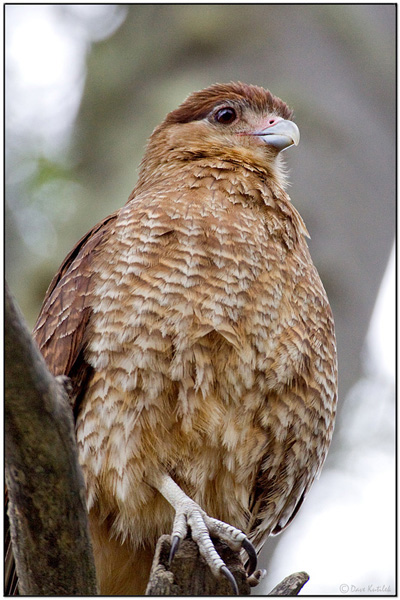
Chimango Caracara by Daves Birding Pix

Chimango Caracara by Daves Birding Pix

Caracaras, there are 10 of them, are also included  in the birds of prey category. We saw our first Northern Crested Caracara along the interstate in Texas, not far from the well-known King Ranch. The Northern Crested Caracara is 23 inches long and has a 50 inch wingspan. The wings are broad and it has a long tail. They have long necks and long legs. They spend much of their time perched or walking on the ground, but can run swiftly. They hang out with vultures at carcasses and many times steal their food.

Male and females are similar. We have these here in central Florida. They are seen on the ground or perching on fence posts and tops of trees. Often seen walking along roadsides. Scratches like chicken for insects. The AOU split this species in July, 2000 from the South American species, Caracara plancus.

The Caracaras are:

Black Caracara (Daptrius ater) – S. America
Red-throated Caracara (Ibycter americanus) – C. & S. America
Carunculated Caracara (Phalcoboenus carunculatus) – Ecuador & Colombia
Mountain Caracara (Phalcoboenus megalopterus) ©WikiC – S. America
White-throated Caracara (Phalcoboenus albogularis) – S. America
Striated Caracara (Phalcoboenus australis) – S. America
Northern Crested Caracara (Caracara cheriway) by Dan – N. America
Southern Crested Caracara (Caracara plancus) – S. America
Yellow-headed Caracara (Milvago chimachima) – C. & S. America
Chimango Caracara (Milvago chimango) – S. America

***

As you can see above, they are only in the Western Hemisphere

***

Some information from Thayer Birding Software

Falcon Page

Caracara – Wikipedia

Gospel Message

*

Merry Christmas 2010

For unto you is born this day in the city of David a Saviour, which is Christ the Lord. (Luke 2:11 KJV)

We had our Christmas concert Sunday night at Faith Baptist and the final song was “Listen to the Hammer Ring.” Below is the video of that song.

Christmas is the celebration of the Birth of Christ, but the ultimate reason He was born of a virgin was so He could be Our Perfect Sinless Savior. Christmas and Easter both go “hand-in-hand” because they are about the Lord Jesus Christ, the Creator of the world and all that is in it (including our beautiful birds). The world is doing everything it can to remove Christ from both of those holidays. But:

For God so loved the world, that he gave his only begotten Son, that whosoever believeth in him should not perish, but have everlasting life. (John 3:16 KJV)

Wordless Birds and the Gospel Message

*