Bufflehead Ducks’ Dependable Migration Timing

BUFFLEHEAD DUCKS’ DEPENDABLE MIGRATION TIMING

Dr. James J. S. Johnson

Seest thou a man diligent in his business? he shall stand before kings; he shall not stand before mean men.  (Proverbs 22:29)
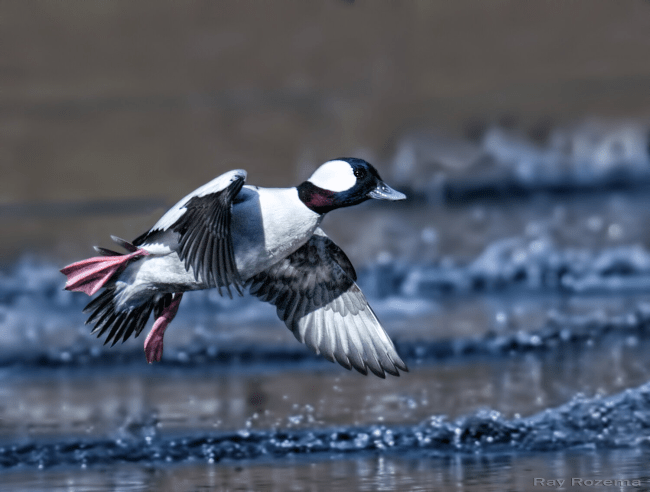
BUFFLEHEAD IN FLIGHT
Sacramento Audubon Society / Ray Rozema photo credit

When I think of Bufflehead ducks (Bucephala albeola), I am reminded of the authoritative advice (“words of the wise”) of Proverbs 22:29, regarding reputations for dependable “diligence”.  Why?
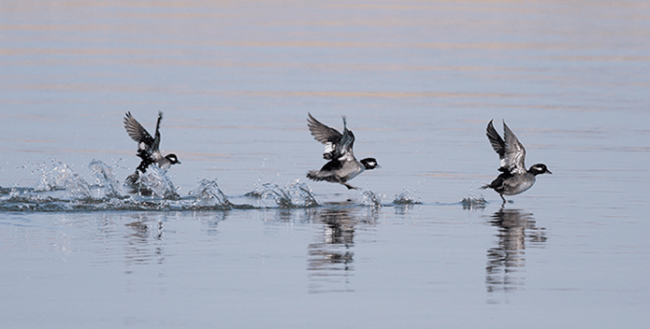
BUFFLEHEADS in migration
Jonathan Maher Kresge / Chesapeake bay Foundation photo credit

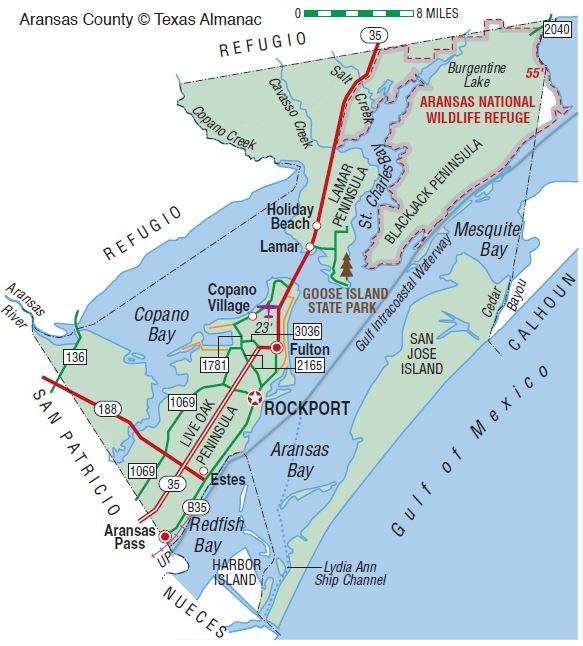
The first time that this author observed a Bufflehead, in the wild, was on March 11th of A.D.1996, while visiting the Texas Gulf Coast’s Aransas Bay (which is protected as Aransas Bay National Wildlife Refuge), as part of ornithological research (eventually) leading to a doctoral degree in creation science (applied to wildlife ecology). [See “Bufflehead Duck, One of Diverse Divers at Aransas Bay” (posted at https://leesbird.com/2018/01/26/bufflehead-duck-one-of-diverse-divers-at-aransas-bay/ .]
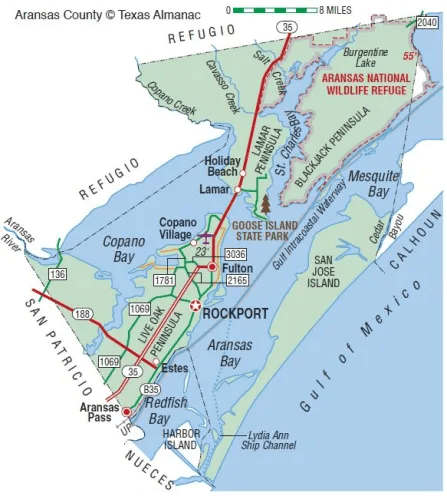
ARANSAS BAY MAP
Aransas County in TEXAS ALMANAC image credit

What conspicuously beautiful ducks those Buffleheads were (and are)!
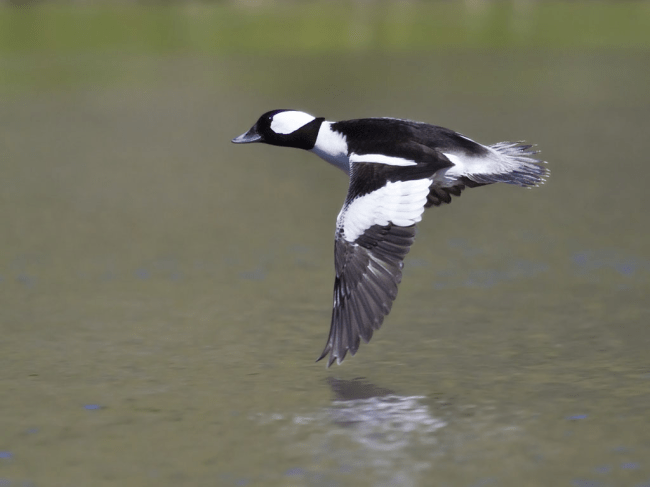
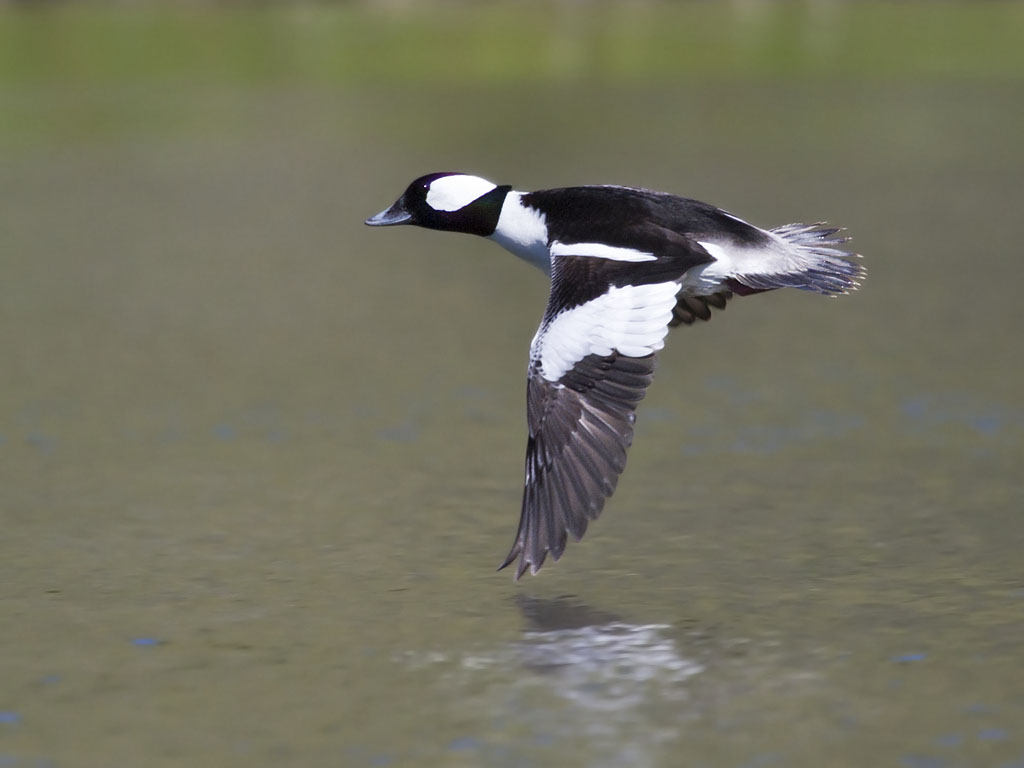
BUFFLEHEAD DUCK in flight
Bill Bouton photo credit

Consider the reputation that the Bufflehead duck has, for dependability punctuality, as was recently observed by Alonso Abugattas, the Chesapeake Bay area’s “Capital Naturalist”:

The bufflehead is nothing if not punctual.  Few other ducks are known to arrive in our neighborhood every winter within a few delays of the date they arrived the previous year.  The smallest of North America’s diving ducks, the bufflehead … [can] nest in the tree cavities of woodpeckers, most commonly northern flickers, according to Canadian zoologist Gilles Gauthier. . . . .

After forming their pair bonds over the winter, the birds head back to their breeding grounds in early April and early May, migrating at night. They’re among the last ducks to leave their winter territory.  The greatest concentration of breeding grounds, according to abundance maps maintained by the Cornell Lab of Ornithology, are in northwestern Canada, in a wide swath crossing through Saskatchewan, Alberta and Northwest Territory… petering out in Alaska. . . .

Buffleheads start leaving [their breeding grounds] for the wintering grounds in October, settling mostly across [the U.S.A.’s Lower 48] but sometimes going as far [south] as Central America.

[Quoting CHESAPEAKE BAY JOURNAL, 34(8): 39 (November 2024).]
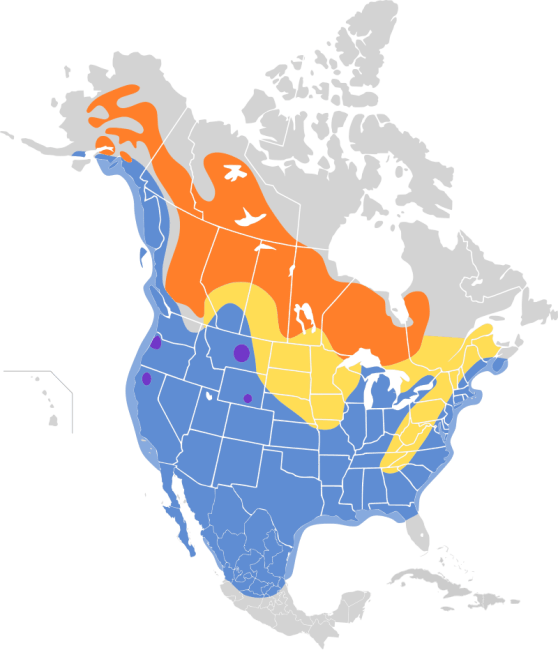
BUFFLEHEAD RANGE MAP
(Cephas / BirdLife Internat’l / Wikipedia image credit)

So much for the Bufflehead’s predictable-because-dependable migration movements. 

Yet is there a lesson for us humans, as we consider the Bufflehead’s phenological reliability?  Yes, there is – especially if we look at the details of Proverbs 22:29.
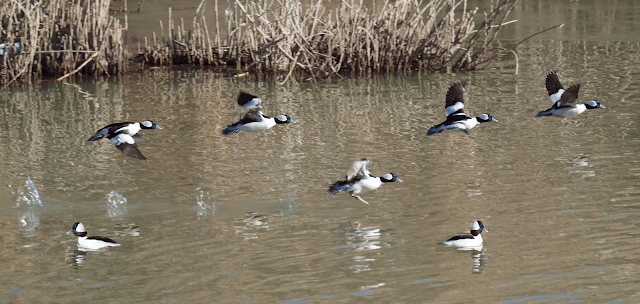
BUFFLEHEADS in wetland habitat
Robert Mortensen / BirdingIsFun.com composite photo credit

Of course, it is good to earn a reputation for dependable punctuality. In fact, that is similar to having a reputation for quickly fulfilling one’s responsibility — as opposed to having a reputation for dilatory procrastination.  Some folks can be expected to do sloppy work – who needs that kind of “help”?

Yet other folks are famous for delivering extremely careful (almost perfectionist) work, but only in an all-too-often impractically slow response time, so slow that the perfectionist work is of diminished practical value (because the need for timely results was compromised and disappointed).

How is all that relevant to understanding Proverbs 22:29?  That proverb is translated into English as follows:

Seest thou a man diligent in his business? he shall stand before kings; he shall not stand before mean men.  (Proverbs 22:29)

In that sentence the phrase “man diligent” is a translation of ’îš mâhîr, with ’îš being a generic word for “man”—but what does the Hebrew word mâhîr (translated as “diligent” in the KJV) mean?

Consider that the masculine singular adjective mâhîr is translated by several English words in our English Bible.  For example, mâhîr is translated “ready” in Ezra 7:6 and also in Psalm 45:1 (which is Psalm 45:2 in Hebrew verse numbering]). Also, mâhîr is translated “hasting” in Isaiah 16:5.  But there is more to consider, because Hebrew adjectives are routinely related in meaning to similarly spelled nouns, verbs, and/or adverbs. 

Therefore, to better understand what the Hebrew adjective mâhîr means, in Proverbs 22:29, consider also the following (non-exhaustive) listing of illustrative (etymologically related) verbs and adverbs:

ROOT VERB mâhar

“hasten”, “haste”, “make haste”, etc. (Genesis 18:6-7 & 19:22 & 24:18,20,46 & 41:32 & 43:30 & 45:9,13; Exodus 34:8; Joshua 4:10 & 8:14,19; Judges 9:48 & 13:10; 1st Samuel 9:12 & 17:48 & 23:27 & 25:18,23,34,42 & 28:24; 1st Kings 20:41 & 22:9;  2nd Kings 9:13; 2nd Chronicles 24:5; Esther 5:5 & 6:10; Psalm 16:4; Proverbs 1:16 & 7:23; Isaiah 49:17 & 51:14 & 59:7)

“make ready quickly” (Genesis 18:6)

“make speed” (2nd Samuel 15:14)

“fetch quickly” (2nd Chronicles 18:8)

RELATED MASCULINE ADVERB mahêr

“quickly” (Exodus 32:8; Deuteronomy 9:3,12[twice],16 & 26:20; Joshua 2:5; Judges 2:17,23)

“speedily” (Psalm 69:17 [69:81 in Hebrew verse numbering] & 79:8 & 102:2 [102:3 in Hebrew verse numbering]; 143:7)

“hastily” (Judges 2:23; Proverbs 25:8)

“suddenly” (Deuteronomy 7:4)

RELATED FEMININE ADVERB mehêrâh

“quickly” (Numbers 16:46 [17:11 in Hebrew verse numbering]; Deuteronomy 11:17; Joshua 8:19 & 10:6 & 23:16; 2nd Samuel 17:16,18,21; 2nd Kings 1:11; Ecclesiastes 4:12)

“hastily” (Judges 9:54)

“speedily” (Psalm 31:2 [31:3 in Hebrew verse numbering]; Ecclesiastes 8:11; Isaiah 58:8)

“swiftly” (Psalm 147:15)

[See generally George V. Wigram’s ENGLISHMAN’S HEBREW CONCORDANCE OF THE OLD TESTAMENT (Hendrickson’s 2001 reprint of the 1874 London-published 3rd edition), page 669.]

The listing above is incomplete—but the pattern is already clear—the adjective mâhîr denotes the trait of being speedy, swift, quick!  

RAPIDLY RUNNING A RACE!
Scottish Gov’t / Parent Club photo credit

In other words, a person who consistently and dependably does his or her work fastly is appreciated—and (eventually) will “stand before kings” (i.e., not be limited to serving before low-ranking individuals).

So, just as the phenological punctuality of the returning-from-winter Bufflehead duck is dependably predictable (as is also the migratory return of Israel’s faithful stork—see www.icr.org/article/lesson-from-stork — which is noted in Jeremiah 8:7), a truly diligent human will be prompt (i.e., give quick turnaround) in his or her work responsibilities. 

Careful work is appreciated, yes, but only if it is contextually timely. Promptness is really appreciated! 

><> JJSJ  profjjsj@aol.com  😊
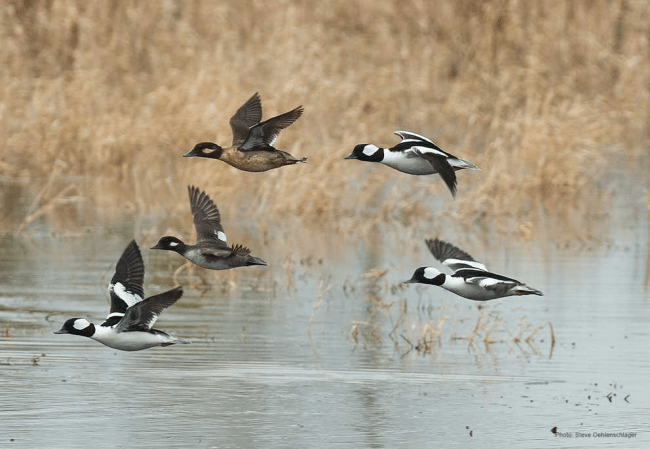
BUFFLEHEADS in flight
Ducks Unlimited photo credit
A Pleasant Surprise – II

BJU Bird Collection 2018

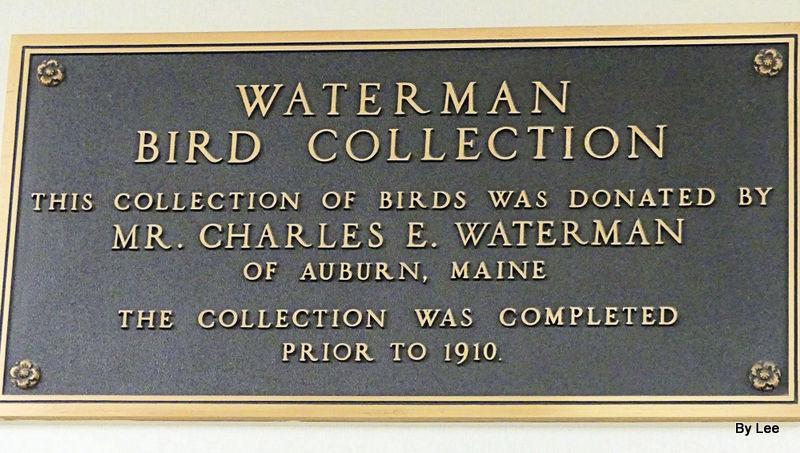
In A Pleasant Surprise At The BJU Homecoming the Waterman Bird Collection, in the Science building, was introduced. This post will start introducing you to these wonderfully preserved specimens of birds that lived over a hundred years ago.

BJU Waterman Bird Collection 2018

At first, it bothered me about the use of birds in this manner, even though many museums have displays of birds. Yet, when you look back 100 plus years, they didn’t have the technology, nor the modern color cameras or slow motion videos to capture images of them. John Audubon did excellent drawing, with detailed colors. He also studied live birds and specimens.

“John James Audubon’s Birds of America is a portal into the natural world. Printed between 1827 and 1838, it contains 435 life-size watercolors of North American birds (Havell edition), all reproduced from hand-engraved plates, and is considered to be the archetype of wildlife illustration.” Birds of America

When the Lord first created the birds, there were no specimens until sin entered. How must those first birds have appeared? Photos, movies, and even specimens would have given us quite a sight. Today, we have fossils, but they do not show the beautiful feathers and features that those original avian wonders must have been adorned with.

“So God created great sea creatures and every living thing that moves, with which the waters abounded, according to their kind, and every winged bird according to its kind. And God saw that it was good. And God blessed them, saying, “Be fruitful and multiply, and fill the waters in the seas, and let birds multiply on the earth.” So the evening and the morning were the fifth day.” (Genesis 1:21-23 NKJV)

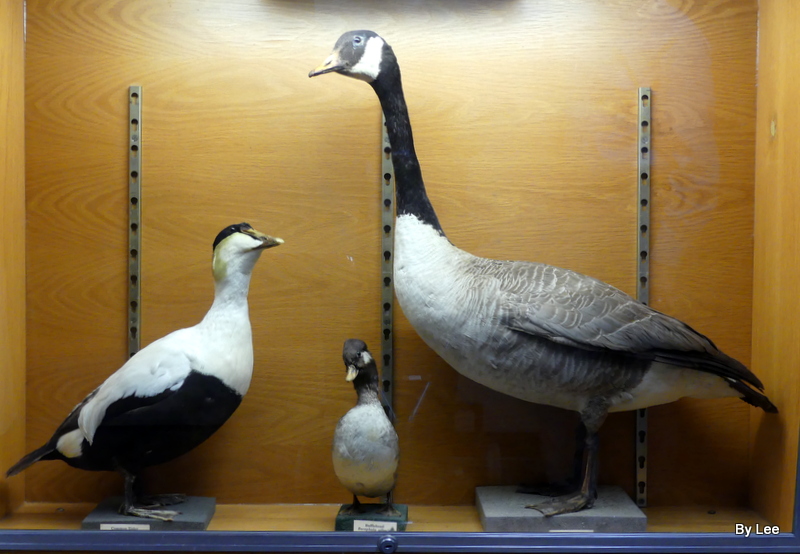
Common Eider, Bufflehead, and Canada Goose

The birds in the right hand side of the display above is where we will begin. On the top shelf is an Eider, a Bufflehead and a Goose. It is nice to see them together to get a size perspective.

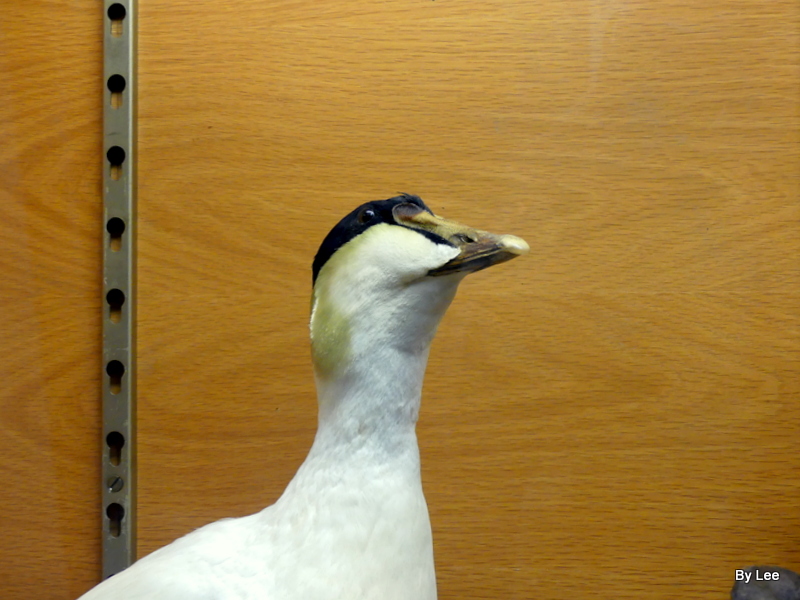
Common Eider (Somateria mollissima) BJU Bird Collection 2018

The Common Eider (pronounced /ˈaɪ.dər/) (Somateria mollissima) is a large (50–71 cm (20–28 in) in body length) sea-duck that is distributed over the northern coasts of Europe, North America and eastern Siberia. It breeds in Arctic and some northern temperate regions, but winters somewhat farther south in temperate zones, when it can form large flocks on coastal waters. It can fly at speeds up to 113 km/h (70 mph) Part of the Anatidae Family. Common Eider – Wikipedia and All About Birds

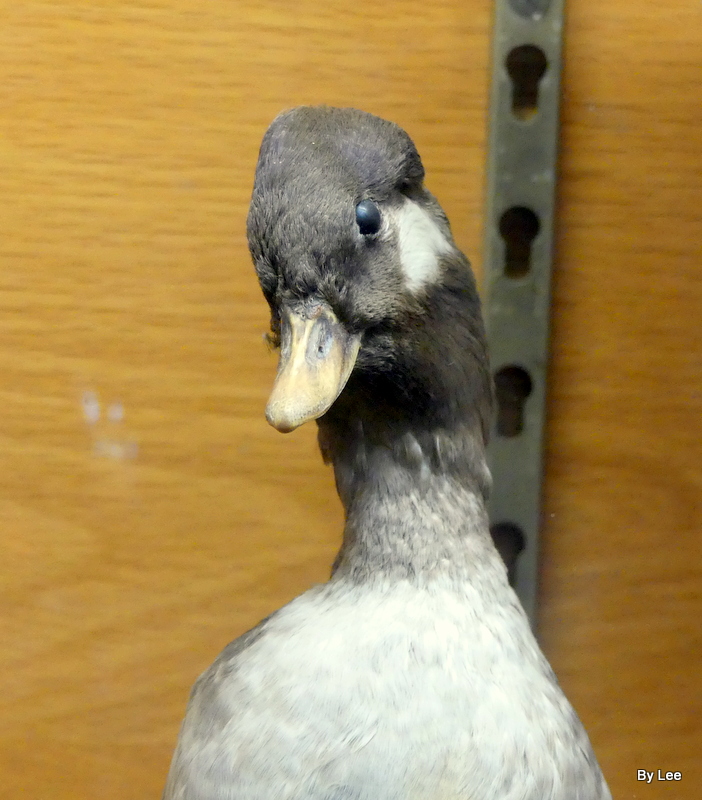
Bufflehead (Bucephala albeola) BJU Bird Collection 2018

The Bufflehead (Bucephala albeola) is a small sea duck of the genus Bucephala, the goldeneyes. This species was first described by Linnaeus in his Systema naturae in 1758 as Anas albeola.

The genus name is derived from Ancient Greek boukephalos, “bullheaded”, from bous, “bull ” and kephale, “head“, a reference to the oddly bulbous head shape of the species. The species name albeola is from Latin albus, “white”. The English name is a combination of buffalo and head, again referring to the head shape. This is most noticeable when the male puffs out the feathers on the head, thus greatly increasing the apparent size of the head.

Canada Goose (Branta canadensis) BJU Bird Collection 2018

All of these three birds are in the Anatidae Family. The photo shows how much larger the Goose is than the Bufflehead.

The Canada Goose (Branta canadensis) is a large wild goose species with a black head and neck, white cheeks, white under its chin, and a brown body. Native to arctic and temperate regions of North America, its migration occasionally reaches northern Europe. It has been introduced to the United Kingdom, New Zealand, Argentina, Chile, and the Falkland Islands. Like most geese, the Canada goose is primarily herbivorous and normally migratory; it tends to be found on or close to fresh water. Canada Goose Wikipedia and All About Birds

I trust you will enjoy meeting the various birds through this series. The links provided give much more information, and photos of these species.

“The works of the LORD are great, Studied by all who have pleasure in them.” (Psalms 111:2 NKJV)


Bufflehead Duck, One of Diverse Divers at Aransas Bay

 Bufflehead Duck, One of Diverse Divers at Aransas Bay

Dr. James J. S. Johnson

Bufflehead-male.TorontoCanada-Wikipedia

BUFFLEHEAD male (Wikipedia)

And God blessed them, saying, Be fruitful, and multiply, and fill the waters in the seas, and let fowl multiply in the earth. (Genesis 1:22)

Diverse birds have lived and thrived upon planet Earth ever since God created bird-life on Day #5 of Creation Week. One of the major categories of God’s avian inventory are the waterfowl we call “ducks”, some of which dive to get their food. The Bufflehead duck is one such diving duck (in contrast to perching duck, dabbling ducks, and whistling ducks), and is described on the Sea Duck Joint Venture website as follows:

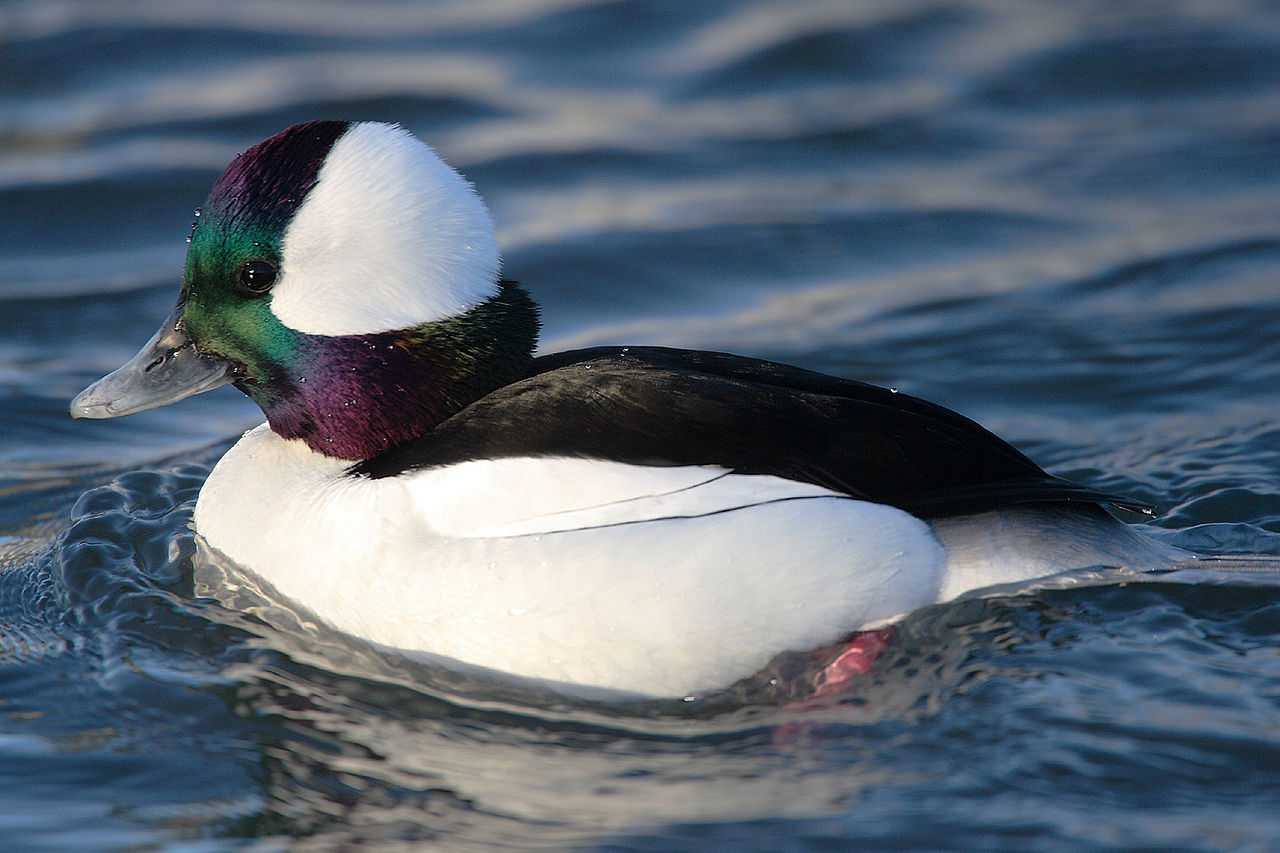
Bufflehead  [Bucephala albeola] The bufflehead is the smallest diving duck in North America. Males weigh about 450 g (1 lb.) and females 325 g (11 oz.). Breeding males are striking with a black head glossed green and purple, a large white patch covering the back of the head, a black back, white underparts, and black wings with a large white patch covering most of the inner wing.

[Quoting from https://seaduckjv.org/meet-the-sea-ducks/bufflehead/ .]

Bufflehead-female.TorontoCanada-Wikipedia

BUFFLEHEAD female (Wikipedia)

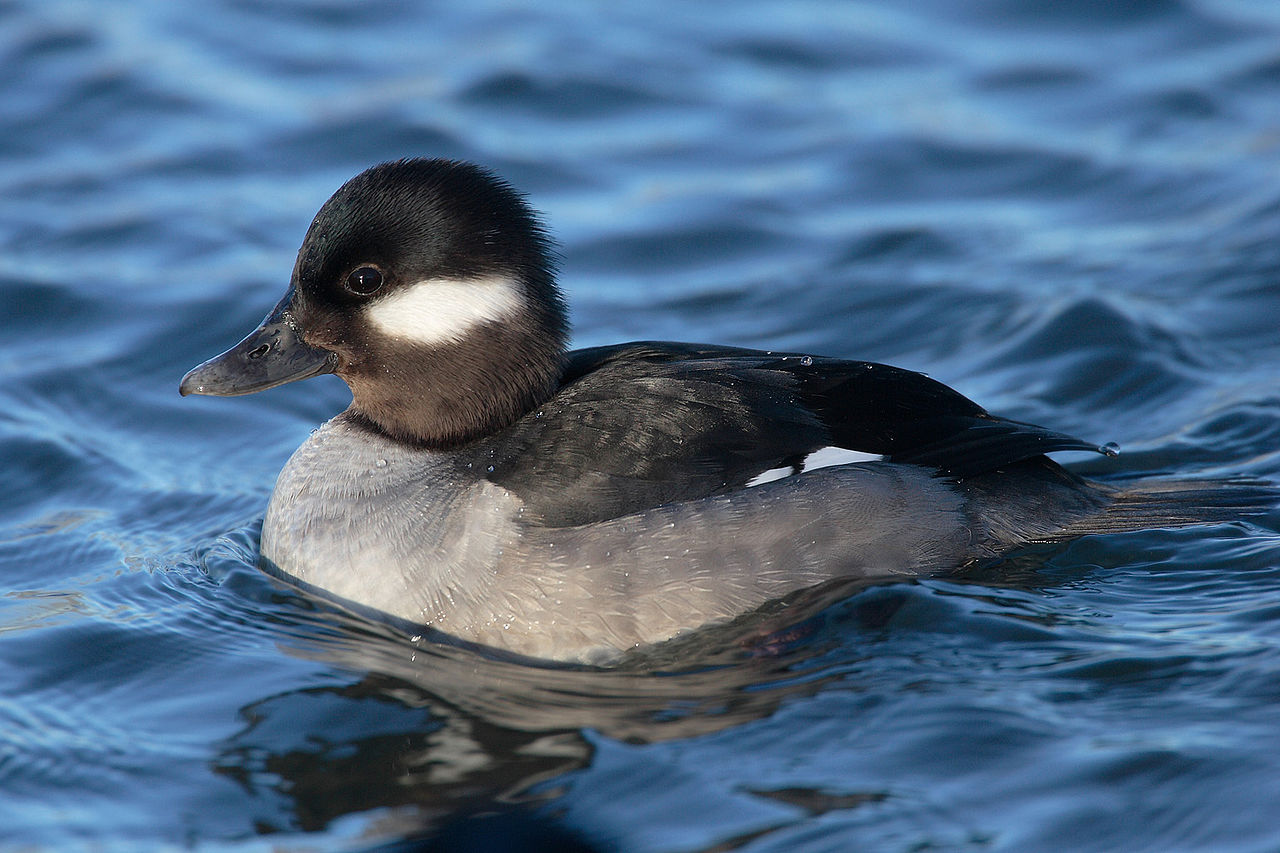
The Bufflehead female, however, is mostly brownish-hued, with grey sides and breast, white underside, and a white cheek patch that is shaped like an oval, almost like the shape of a fallen bowling pin. [See Kevin T. Karlson, “Waterfowl of North America:  A Comprehensive Guide to All Species”, page 10.]

The Bufflehead’s cousins include the goldeneye ducks, such as the Common Goldeneye (Bucephala clangula) and Barrow’s Goldeneye (Bucephala islandica).

As the range map below shows, the Bufflehead breeds mostly in Alaska and Canada, migrating south into more than half of America’s Lower 48 for over-wintering.

Bufflehead-range.SeaDuckJV.org-map

BUFFLEHEAD range map / North America (Sea Duck Joint Venture photo)

During an over-wintering season, on March 11th of AD1996, I first saw a Bufflehead duck – it was in the part of Aransas Bay (part of the Texas Gulf coast), while visiting Aransas Bay and Aransas Bay National Wildlife Refuge.

That same day my family and I saw many other “winter Texan” migrants (as well as some year-round residents), including several “lifers”:  Whooping Crane, Brown Pelican, Pelican, Least Tern, Bonaparte’s Gull, Herring Gull, Laughing Gull, American Coot,  Short-billed Dowitcher, Western Sandpiper, Black Skimmer, Black-necked Stilt, American Oystercatcher, Common Goldeneye, Green-winged Teal, Cinnamon Teal, Louisiana Heron, Roseate Spoonbill, White Ibis, and Western Kingbird —  not to mention many other birds seen previously elsewhere (e.g., Sandhill Crane, Blue-winged Teal, Great Blue Heron, White Pelican, Double-crested Cormorant, Common Grackle, Western Kingbird, Loggerhead Shrike, etc.)!

Aransas-County-map.TexasAlmanac

Obviously, early March (and winter in general) is a good time for coastal wetland birdwatching at Aransas Bay! What a pleasant time it was, hour after hour, witnessing Gods’ love of variety, exhibited in those beautiful bayside birds!

God loves variety — so should we!  (For more on this, see my article “Valuing God’s Variety”, ACTS & FACTS, 42(9):8-9 (September 2012), posted at  http://www.icr.org/article/6939 .]

So, if you get the opportunity, check out Aransas Bay National Wildlife Refuge for yourself — unless a hurricane is approaching.  (It’s always good to check the weather forecast before you undertake a serious birding adventure.)

Bufflehead-flying.SanLuisObispo-California-BillBouton

BUFFLEHEAD male in flight (Bill Bouton photo)