Coppersmith Barbet – The Fruit-giver

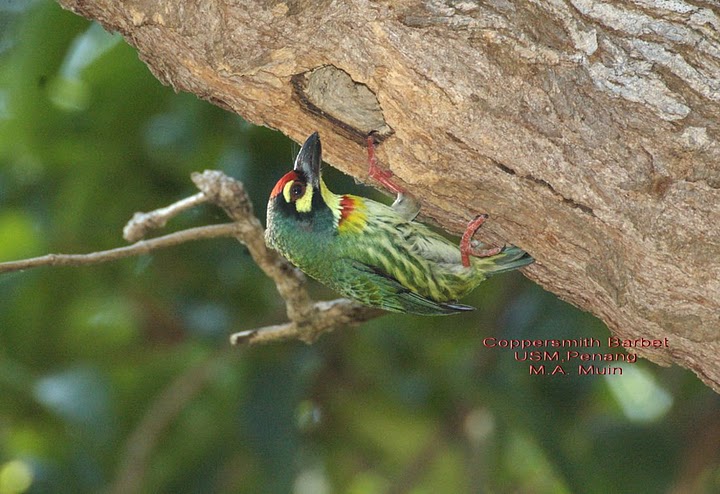
Coppersmith Barbet (Megalaima haemacephala) by MAMuin

Coppersmith Barbet (Megalaima haemacephala) by MAMuin

Coppersmith Barbet – The Fruit-giver ~ by a j mithra

The Coppersmith Barbet or Crimson-breasted Barbet or Coppersmith (Megalaima haemacephala) is a bird with crimson forehead and throat which is best known for its metronomic call that has been likened to a coppersmith striking metal with a hammer.

It is a resident found in South Asia and parts of Southeast Asia. Throughout their wide range they are found in gardens, groves and sparse woodland. Habitats with trees having dead wood suitable for excavation is said to be important but these birds nest and roost in cavities too. In the Palni Hills of southern India it is said to occur below 4000 feet. In the Himalayas it is found mainly in the valleys of the outer Himalayas up to 3000 feet. They are rare in the dry desert zones and the very wet forests.
Coppersmith Barbet (Megalaima haemacephala) by Clement Francis

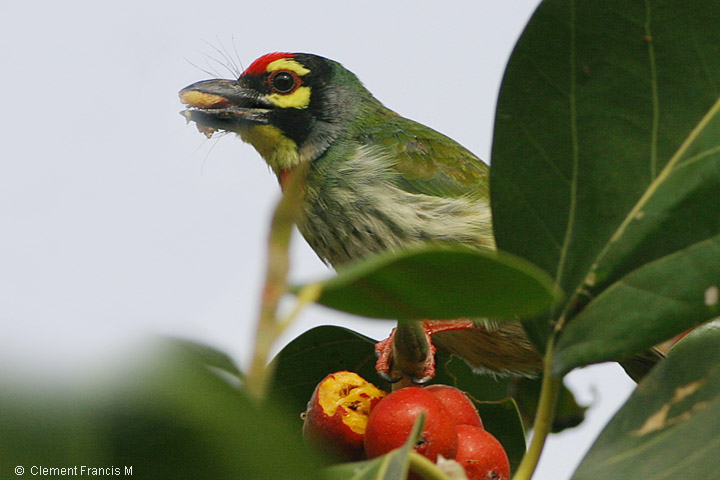
Coppersmith Barbet (Megalaima haemacephala) by Clement Francis

Keeps solitary, pairs, or small groups; larger parties occasionally on abundantly fruiting Ficus trees.

Fond of sunning themselves in the morning on bare top branches of tall trees, often flitting about to sit next to each other.

  • These birds are fond of sun and they never miss sitting in the sun every morning at an appointed time…
  • We know that His grace is new every morning….
  • But do we have an appointed time with the Sun of Righteousness each morning?

…..and those that seek me early shall find me.” Proverbs 8:17

The flight is straight, with rapid flaps. They compete with other cavity nesting birds and frugivores.

Megalaima asiatica have been noted to evict them from their nest holes, while Red-vented Bullbuls have been seen to indulge in Kleptoparasitism robbing the male of berries brought to the female at the nest.

  • The devil is out there to steal our fruit, to bring division between God and man…
  • Let us stand firm in prayer and praise to ward of the devil’s plan in our lives..
  • Prayer brings protection and praise brings the Protector Himself…

Take ye heed, watch and pray: for ye know not when the time is. Mark 13:33
Coppersmith Barbet (Megalaima haemacephala) by Clement Francis

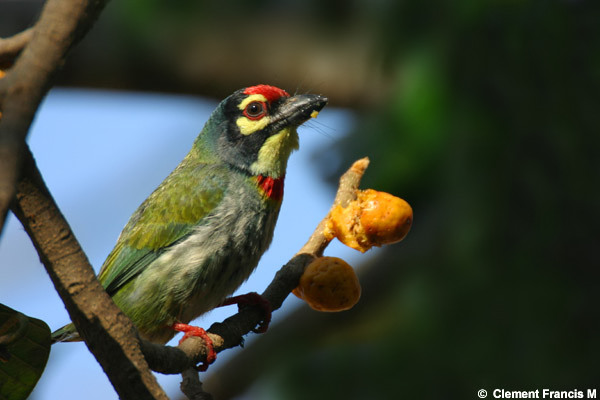
Coppersmith Barbet (Megalaima haemacephala) by Clement Francis

The nest holes are also used for roosting and some birds roost alone in cavities and these often roost during part of the day. Immatures will roost with the parents but often return to roost early so as not to be prevented by the parents from entering the roost cavity.

The younger ones often return early, so that their parents do not prevent them from entering their home..

Here is something for the younger generation to learn from these birds…

  • Returning home late has become a practice for the nex-gen…
  • They do not understand how worried their parents would be, if they don’t return early from school or college or even work for that matter…
  • They never seem to realize how dangerous it is to stay away late from home…

As a bird that wandereth from her nest, so is a man that wandereth from his place. Proverbs 27:8

Dinah went out all alone from her house to see the land but, what happened later, brought shame to her whole family… That story is told in Genesis chapter 34..

Most youngsters go late night outing with friends after work and some even after school or college without the knowledge of their parents..

  • It is during one of these outing that they get into drugs and fall into pre-marital sex and even commit murder..
  • Poor parents think, that their children are so innocent..
  • Parents too are to be held responsible…
  • How many parents spend quality time with their children…

Remember, children are a gift from God…

  • Are we handling those gifts with love and care..
  • They don’t need your money, all that they need is your loving care dear parents..
  • Most crime takes place in the dark, so let us protect our children from darkness and lead them to eternal life…
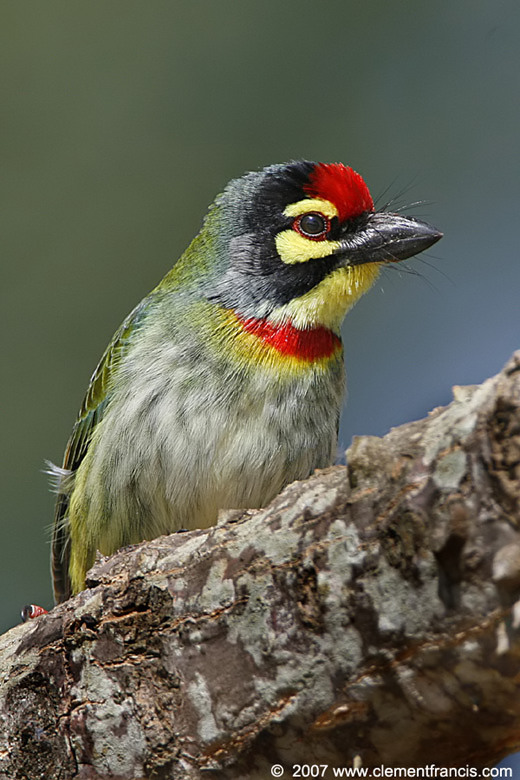
Coppersmith Barbet (Megalaima haemacephala) by Clement Francis

Coppersmith Barbet (Megalaima haemacephala) by Clement Francis

The Bible also says,

Thou makest darkness, and it is night: wherein all the beasts of the forest do creep forth. The young lions roar after their prey, and seek their meat from God. The sun ariseth, they gather themselves together, and lay them down in their dens. Man goeth forth unto his work and to his labour until the evening. Psalm 104:19-23

The call is a loud rather metallic tuk…tuk…tuk (or tunk), reminiscent of a copper sheet being beaten, giving the bird its name. Repeated monotonously for long periods, starting with a subdued tuk and building up to an even volume and tempo, the latter varying from 108 to 121 per minute and can continue with as many as 204 notes. They are silent and do not call in winter. The beak remains shut during each call – a patch of bare skin on both sides of the throat inflates and collapses with each tuk like a rubber bulb and the head is bobbed.

Prefers Banyan, Peepul, and other wild figs, various drupes and berries, and the occasional insect, caught in aerial sallies. Petals of flowers may also be included in their diet. They eat nearly 1.5 to nearly 3 times their body weight in berries each day.

Courtship involves singing, puffing of the throat, bobbing of the head, flicking of the tail, ritual feeding and allopreening. They breed through much of the year with local variation. The breeding season is mainly February to April in India and December to September in Sri Lanka.

Both sexes excavate the nest on the underside of a narrow horizontal branch. They may also roost inside the nest holes. Three or four eggs are laid and like in many hole nesting birds the incubation period is not well known but has been estimated to be about 2 weeks. Both sexes incubate. Often two broods are raised in quick succession.

During courtship the male bird offers a fruit and if the female receives it, they raise a family..

Imagine if the same rule is set for us, how many of us God would accept as His bride?

Therefore say I unto you, The kingdom of God shall be taken from you, and given to a nation bringing forth the fruits thereof. Mathew 21:43

Bring forth therefore fruits worthy of repentance, and begin not to say within yourselves, We have Abraham to our father: for I say unto you, That God is able of these stones to raise up children unto Abraham. Luke 3:8

Have a blessed day!

Your’s in YESHUA,
a j mithra

Please visit us at: Crosstree


Lee’s Addition:

The Coppersmith Barbet is in the Asian Barbets – Megalimidae Family of the Piciformes Order.

*
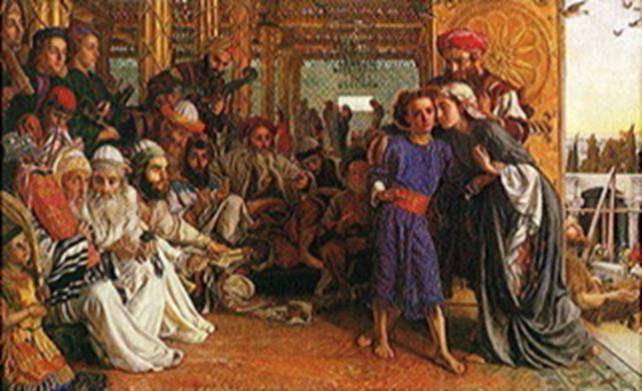
In the Temple

Jesus in the Temple (e-mail source unknown)

Jesus in the Temple (e-mail source unknown)

Luke 2:40-52 KJV
(40) And the child grew, and waxed strong in spirit, filled with wisdom: and the grace of God was upon him.
(41) Now his parents went to Jerusalem every year at the feast of the passover.
(42) And when he was twelve years old, they went up to Jerusalem after the custom of the feast.
(43) And when they had fulfilled the days, as they returned, the child Jesus tarried behind in Jerusalem; and Joseph and his mother knew not of it.
(44) But they, supposing him to have been in the company, went a day’s journey; and they sought him among their kinsfolk and acquaintance.
(45) And when they found him not, they turned back again to Jerusalem, seeking him.
(46) And it came to pass, that after three days they found him in the temple, sitting in the midst of the doctors, both hearing them, and asking them questions.
(47) And all that heard him were astonished at his understanding and answers.
(48) And when they saw him, they were amazed: and his mother said unto him, Son, why hast thou thus dealt with us? behold, thy father and I have sought thee sorrowing.
(49) And he said unto them, How is it that ye sought me? wist ye not that I must be about my Father’s business?
(50) And they understood not the saying which he spake unto them.
(51) And he went down with them, and came to Nazareth, and was subject unto them: but his mother kept all these sayings in her heart.
(52) And Jesus increased in wisdom and stature, and in favour with God and man.

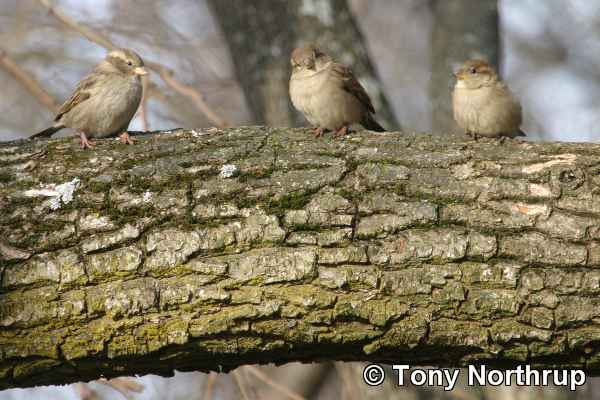
House Sparrow by Ray

House Sparrow by Ray

The Sparrows also like to make their homes in the tabernacle or temple.

…How amiable are thy tabernacles, O LORD of hosts! My soul longeth, yea, even fainteth for the courts of the LORD: my heart and my flesh crieth out for the living God. Yea, the sparrow hath found an house, and the swallow a nest for herself, where she may lay her young, even thine altars, O LORD of hosts, my King, and my God. Blessed are they that dwell in thy house: they will be still praising thee. Selah. (Psalms 84:1-4 KJV)

Some Christmas Birds

Christmas White-eye (Zosterops natalis) by Ian

Christmas White-eye (Zosterops natalis) by Ian

Luke 2:15-20 KJV

(15) And it came to pass, as the angels were gone away from them into heaven, the shepherds said one to another, Let us now go even unto Bethlehem, and see this thing which is come to pass, which the Lord hath made known unto us.

(16) And they came with haste, and found Mary, and Joseph, and the babe lying in a manger.

(17) And when they had seen it, they made known abroad the saying which was told them concerning this child.

(18) And all they that heard it wondered at those things which were told them by the shepherds.

(19) But Mary kept all these things, and pondered them in her heart.

(20) And the shepherds returned, glorifying and praising God for all the things that they had heard and seen, as it was told unto them.

Flag of Christmas Island

Flag of Christmas Island©WikiC

While searching to find birds to write about with a Christmas theme, I came across the Territory of Christmas Island which belongs to Australia. It is in the Indian Ocean and only has a population of 1,403 residents who live in a number of “settlement areas” on the northern tip of the island.

*

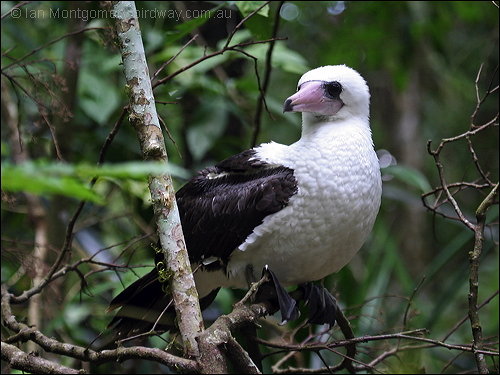
Abbott's Booby (Papasula abbotti) by Ian

Abbott's Booby (Papasula abbotti) by Ian

The island’s geographic isolation and history of minimal human disturbance has led to a high level of endemism (or state of being unique to a defined geographic location, such as an island, nation or other defined zone, or habitat type, and found only there) among its flora and fauna, which is of significant interest to scientists and naturalists. 63% of its 135 square kilometres (52 sq mi) is an Australian national park. There exist large areas of primary monsoonal forest.

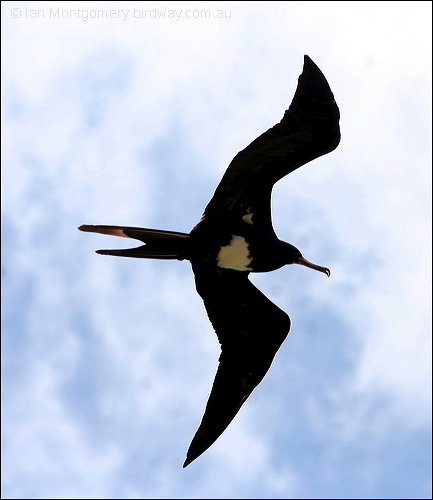
Christmas Frigatebird (Fregata andrewsi) by Ian

Christmas Frigatebird (Fregata andrewsi) by Ian

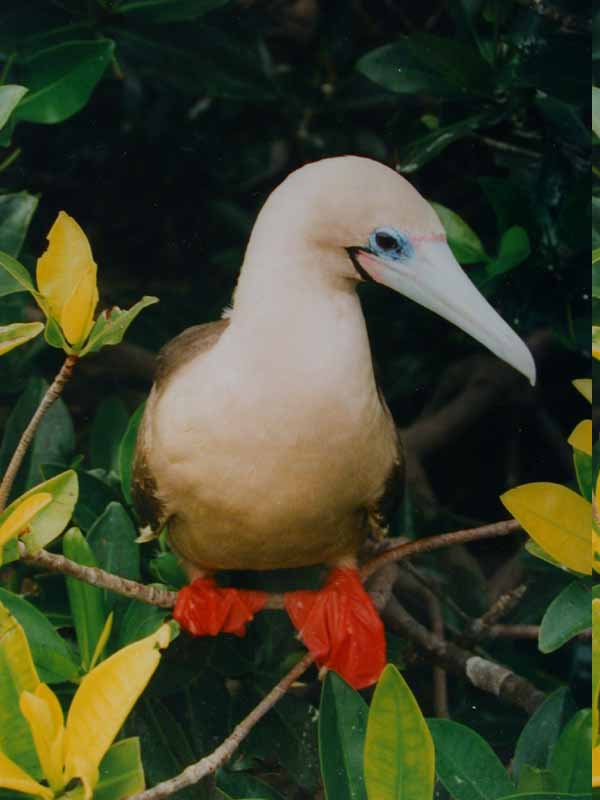
Christmas Island is a focal point for sea birds of various species. Eight species or subspecies of sea birds nest on the island. The most numerous is the Red-footed Booby that nests in colonies, in trees, on many parts of the shore terrace. The widespread Brown Booby nests on the ground near the edge of the seacliff and inland cliffs. Abbott’s Booby nests on tall emergent trees of the western, northern and southern plateau rainforest. The Christmas Island forest is the only nesting habitat of the Abbott’s Booby left in the world. The endemic Christmas Island Frigatebird (listed as endangered) has nesting areas on the north-eastern shore terraces and the more widespread Great Frigatebirds nest in semi-deciduous trees on the shore terrace with the greatest concentrations being in the North West and South Point areas. The Common Noddy and two species of bosuns or tropicbirds, with their brilliant gold or silver plumage and distinctive streamer tail feathers, also nest on the island.

Christmas Imperial Pigeon (Ducula whartoni) by Ian Montgomery

Christmas Imperial Pigeon (Ducula whartoni) by Ian Montgomery

Of the ten native land birds and shorebirds, seven are endemic species or subspecies. This includes the Christmas Island Thrush, and the Christmas Island Imperial Pigeon. Some 86 migrant bird species have been recorded as visitors to the Island.

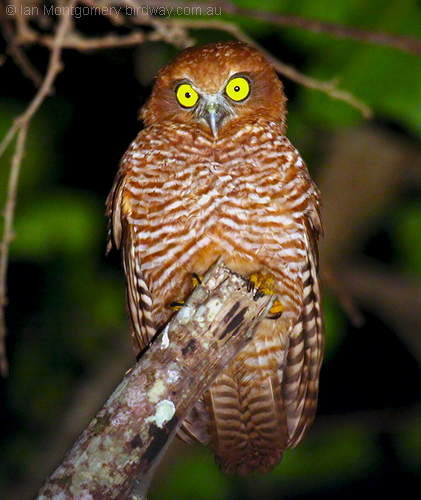
Christmas Boobook (Ninox natalis) by Ian

Christmas Boobook (Ninox natalis) by Ian

The list of birds from the I.O.C., which I use, lists five birds starting with Christmas. The Christmas Boobook (or Christmas Island Hawk-Owl), Christmas Frigatebird, Christmas Imperial Pigeon, Christmas Shearwater, and the Christmas White-eye.

Christmas Shearwater (Puffinus nativitatis) ©WikiC

Christmas Shearwater (Puffinus nativitatis) ©WikiC


Red-footed Booby (Sula sula) by Bob-Nan

Red-footed Booby (Sula sula) by Bob-Nan

*

*


Some information from Wikipedia and other internet sources.

See Also:

Christmas Island – Wikipedia

*

Formed By Him – Bearded Barbet

Bearded Barbet (Lybius dubius) ©WikiC Head

Bearded Barbet (Lybius dubius) ©WikiC Head

I know all the birds of the hills, and all that moves in the field is mine. (Psalms 50:11 ESV)

Formed By Him – Bearded Barbet

The Bearded Barbet (Lybius dubius) is an African barbet of the western and central parts. Barbets and toucans are a group of near passerine birds with a worldwide tropical distribution. The Bearded Barbets get their name from the bristles which fringe their heavy bills. All the barbets get their name from the bristles or tufts of feathers. The Bearded Barbet has the greatest beard.

Bearded Barbet (Lybius dubius) ©WikiC

Bearded Barbet (Lybius dubius) ©WikiC

I gave my back to those who strike, and my cheeks to those who pull out the beard; I hid not my face from disgrace and spitting. (Isaiah 50:6 ESV)

The Bearded Barbet is a common resident breeder in tropical west Africa. It is an arboreal species of gardens and wooded country which eats fruit, although the young are fed also insects. It’s sharp beak, not as hard as a woodpecker’s, is not only used for eating but also for pounding in stumps or dead trees to make nests.The have tooth-like grooves in their beaks.

The courtship of tail-flicking, food offerings and some special sounds precede. It nests in the tree hole, laying 2 white eggs. The birds are incubated for 16 days and “helper” birds also share in the incubation and care of the young birds.

Bearded Barbet (Lybius dubius) ©© Passing food

Bearded Barbet (Lybius dubius) ©© Passing food

This is a conspicuous, large barbet at 10.2 in (26 cm). It is fairly plump (2.8-3.8 oz/80-108 gm), with a short neck, large head and a shortish tail. The adult has a black crown, back, tail and breast band. The throat and belly are red and there is a yellow eye patch. The rump is white. The massive bill is very thick and yellow, and the well developed clump or tuft of bristles at its base give the species its name. Sexes are similar in appearance. The call is a growling scrawk.

The Bearded Barbet is found in well-wooded areas with plentiful fig trees. It will enter gardens for fruit and also capture insect for their young. It forms social groups of 4-5 birds and pairs or groups roost together in a tree cavity. They are known to drink nearly every chance they get, usually from a tree crevice.

The Lord has formed these birds so that they have their needs provided for by His Creative Hand. The beak appears to help in the excavation for nests and eating figs and other fruits. Not exactly sure about the beard, but some times those face bristles help keep wood chips out of their eyes or nostrils. Couldn’t get a definitive answer to that part, though it is no mystery to its Creator.

There are other Bearded birds around the world and one is mentioned in the Bible. There is the Bearded Bellbird, Guan, Helmetcrest, Mountaineer, Reedling, Screech Owl, Scrub Robin, Tachuri, Vulture, Wood Partridge, and Woodpecker, Manakin, Thornbill, 3 Bee-eaters, Hermit.

Bearded Vulture (Gypaetus barbatus) ©WikiC

Bearded Vulture (Gypaetus barbatus) ©WikiC

But these are the ones that you shall not eat: the eagle, the bearded vulture, the black vulture, (Deuteronomy 14:12 ESV)

The Bearded Barbet is in the African Barbet – Lybiidae Family and are in the Piciformes Order which is the Woodpeckers and their Allies.

Info from various internet sources including, Wikipedia, St. Louis Zoo, and others.

Wordless Birds

Birds in Hymns – O For A Closer Walk With God

Mourning Dove (Zenaida macroura) by Quy Tran

Mourning Dove (Zenaida macroura) by Quy Tran

… and they shall walk with me in white: for they are worthy. (Rev 3:4)

Author: William Cowper, 1731-1800
Musician: Old Irish Tune

O For A Closer Walk With God

O for a closer walk with God,
A calm and heav’nly frame,
A light to shine upon the road
That leads me to the Lamb!

Where is that blessedness I knew
When first I saw the Lord?
Where is the soulrefreshing view
Of Jesus and His Word?

Mourning Dove by Reinier

What peaceful hours I once enjoyed!
How sweet their mem’ry still!
But they have left an aching void
The world can never fill.

Return, O holy Dove! return,
Sweet messenger of rest!
I hate the sins that made Thee mourn,
And drove Thee from my breast.

The dearest idol I have known,
Whate’er that idol be,
Help me to tear it from Thy throne,
And worship only Thee.

So shall my walk be close with God,
Serene and calm my frame;
So purer light shall mark the road
That leads me to the Lamb.

___
May we all desire to walk closer to God.

Go near and hear all that the LORD our God will say and speak to us all that the LORD our God will speak to you, and we will hear and do it.’ (Deuteronomy 5:27 ESV)

For what great nation is there that has a god so near to it as the LORD our God is to us, whenever we call upon him? (Deuteronomy 4:7 ESV)

But for me it is good to be near God; I have made the Lord GOD my refuge, that I may tell of all your works. (Psalms 73:28 ESV)

Draw nigh to God, and he will draw nigh to you. Cleanse your hands, ye sinners; and purify your hearts, ye double minded.
(James 4:8 KJV)

Most information from The Cyber Hymnal

See ~ Wordless Birds

More ~ Birds in Hymns

*

Birds of the Bible – Thanksgiving

When Stephen, at our church, asked me to write about 10 (+ or -) things we are thankful for on our church blog, I am sure he knew that I would write about the birds. Here is what I am posting on that blog.

How can we be thankful for the birds?

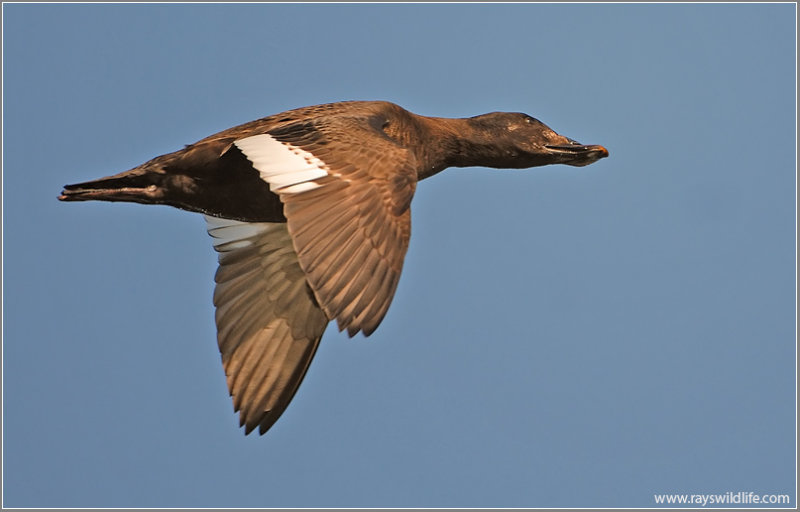
White-winged Scoter (Melanitta deglandi) by Ray

White-winged Scoter (Melanitta deglandi) by Ray

So God created the great sea creatures and every living creature that moves, with which the waters swarm, according to their kinds, and every winged bird according to its kind. And God saw that it was good. (Genesis 1:21 ESV)

I am thankful for a Creator God, the Lord, who made not only the birds, but all of us as well. “Know ye that the LORD he is God: it is he that hath made us, and not we ourselves; we are his people, and the sheep of his pasture. ” (Psa 100:3)

Channel-billed Toucan (Ramphastos vitellinus) by Ian

Channel-billed Toucan (Ramphastos vitellinus) by Ian

Now out of the ground the LORD God had formed every beast of the field and every bird of the heavens and brought them to the man to see what he would call them. And whatever the man called every living creature, that was its name. (Genesis 2:19 ESV)

I am thankful that the LORD God gave Adam the privilege and the knowledge to name the birds. We were created with intellect and didn’t have to progress up through evolution to finally get “smart enough” to name the birds. Adam wasn’t even a week old.

The fear of you and the dread of you shall be upon every beast of the earth and upon every bird of the heavens, upon everything that creeps on the ground and all the fish of the sea. Into your hand they are delivered. Every moving thing that lives shall be food for you. And as I gave you the green plants, I give you everything. (Genesis 9:2-3 ESV)

Wild Turkey (Meleagris gallopavo) by Daves BirdingPix

Wild Turkey (Meleagris gallopavo) by Daves BirdingPix

I am thankful for the food the Lord has allowed us to eat. Many of us will be eating Turkey this Thanksgiving Day. (Even if it is sometimes sad to think about.)

I know all the birds of the hills, and all that moves in the field is mine. (Psalms 50:11 ESV)

I am thankful that just as God knows all the birds, He knows us. “Because he hath set his love upon me, therefore will I deliver him: I will set him on high, because he hath known my name.” (Psalms 91:14 KJV)

Greater Painted Snipe (Rostratula benghalensis) by W Kwong

Greater Painted Snipe (Rostratula benghalensis) by W Kwong

Therefore I tell you, do not be anxious about your life, what you will eat or what you will drink, nor about your body, what you will put on. Is not life more than food, and the body more than clothing? Look at the birds of the air: they neither sow nor reap nor gather into barns, and yet your heavenly Father feeds them. Are you not of more value than they? And which of you by being anxious can add a single hour to his span of life? And why are you anxious about clothing? Consider the lilies of the field, how they grow: they neither toil nor spin, (Matthew 6:25-28 ESV)

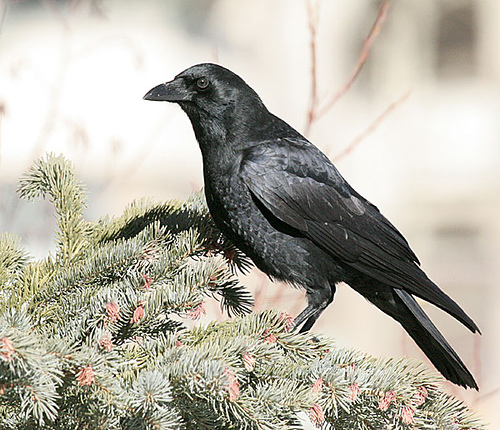
Chihuahuan Raven (Corvus cryptoleucus)Raven (Corvus corax) by Kent Nickell

Chihuahuan Raven (Corvus cryptoleucus)Raven (Corvus corax) by Kent Nickell

For life is more than food, and the body more than clothing. Consider the ravens: they neither sow nor reap, they have neither storehouse nor barn, and yet God feeds them. Of how much more value are you than the birds! And which of you by being anxious can add a single hour to his span of life? If then you are not able to do as small a thing as that, why are you anxious about the rest? (Luke 12:23-26 ESV)

Three Sparrows

Are not two sparrows sold for a penny? And not one of them will fall to the ground apart from your Father. But even the hairs of your head are all numbered. Fear not, therefore; you are of more value than many sparrows.
(Matthew 10:29-31 ESV)

I am thankful for these three parallel verses that remind us that God cares about not only every need of the birds, but also for ours. We are more valuable than them and He provides everything for them and knows all about them. Why do we need to be anxious?

Common Starling (Sturnus vulgaris) at Nest by Anthony747

Common Starling (Sturnus vulgaris) at Nest by Anthony747

And Jesus said to him, “Foxes have holes, and birds of the air have nests, but the Son of Man has nowhere to lay his head.” (Matthew 8:20 ESV)

I am very thankful that the Lord Jesus Christ, became my Savior.

Who, being in the form of God, thought it not robbery to be equal with God: But made himself of no reputation, and took upon him the form of a servant, and was made in the likeness of men: And being found in fashion as a man, he humbled himself, and became obedient unto death, even the death of the cross. (Philippians 2:6-8 KJV)

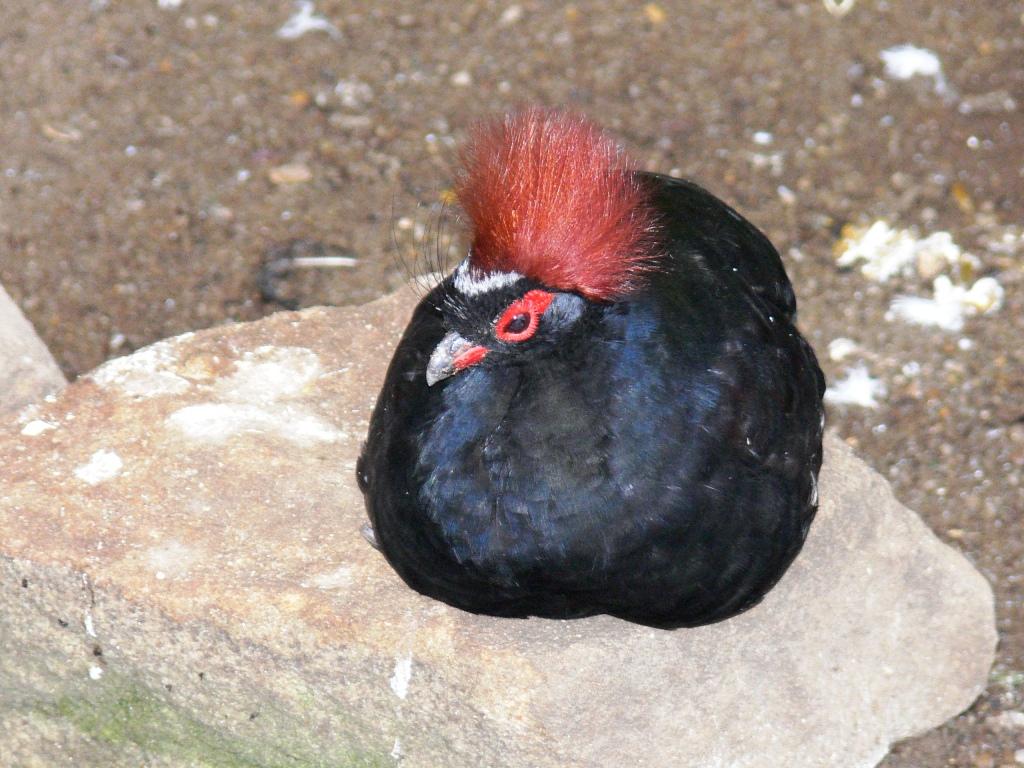
Crested Partridge (Rollulus rouloul) at NA by Lee

Crested Partridge (Rollulus rouloul) at National Aviary by Lee

The heart is deceitful above all things, and desperately wicked: who can know it? I the LORD search the heart, I try the reins, even to give every man according to his ways, and according to the fruit of his doings. As the partridge sitteth on eggs, and hatcheth them not; so he that getteth riches, and not by right, shall leave them in the midst of his days, and at his end shall be a fool. (Jeremiah 17:9-11 KJV)

I am thankful for the partridge that reminds me not to seek earthly riches unjustly.

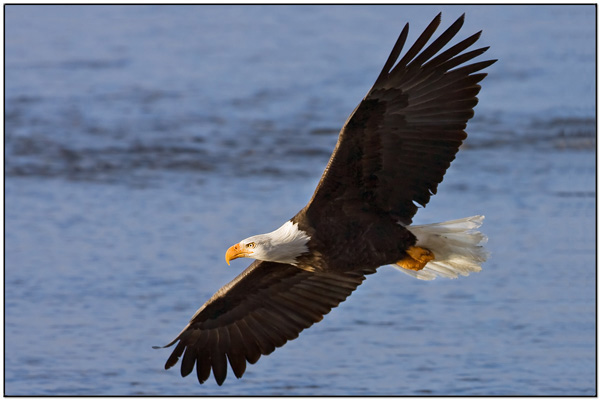
Bald Eagle flying by Dave's BirdingPix

Bald Eagle flying by Dave’s BirdingPix

Have you not known? Have you not heard? The LORD is the everlasting God, the Creator of the ends of the earth. He does not faint or grow weary; his understanding is unsearchable. He gives power to the faint, and to him who has no might he increases strength. Even youths shall faint and be weary, and young men shall fall exhausted; but they who wait for the LORD shall renew their strength; they shall mount up with wings like eagles; they shall run and not be weary; they shall walk and not faint. (Isaiah 40:28-31 ESV)

I am thankful for the wings of the Eagle to remind me of all the promises in this passage. Our God is the everlasting God, doesn’t faint or grow weary, omniscient, omnipotent, omnipresent and the Creator. Awesome!

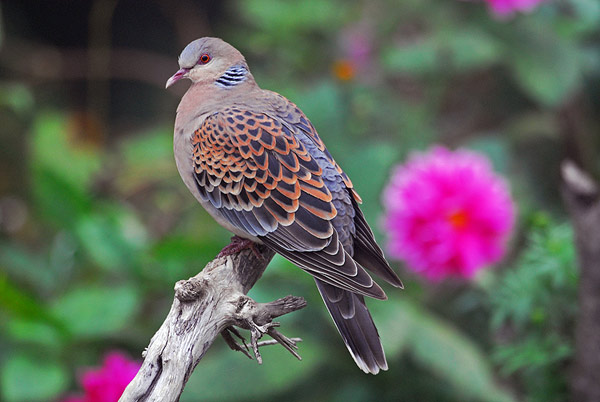
Oriental Turtle Dove (Streptopelia orientalis) by Nikhil

Oriental Turtle Dove (Streptopelia orientalis) by Nikhil

But if he cannot afford two turtledoves or two pigeons, then he shall bring as his offering for the sin that he has committed a tenth of an ephah of fine flour for a sin offering. He shall put no oil on it and shall put no frankincense on it, for it is a sin offering. (Leviticus 5:11 ESV)

I am thankful for doves and pigeons because they remind me that in the Old Testament they were innocently sacrificed for a person’s sin. That was looking forward to the death of Christ on the cross. I am thankful for my salvation in Jesus Christ.

We know that Christ, being raised from the dead, will never die again; death no longer has dominion over him. For the death he died he died to sin, once for all, but the life he lives he lives to God. (Romans 6:9-10 ESV)

My little children, these things write I unto you, that ye sin not. And if any man sin, we have an advocate with the Father, Jesus Christ the righteous: And he is the propitiation for our sins: and not for ours only, but also for the sins of the whole world. (1 John 2:1-2 KJV)

Beloved, let us love one another: for love is of God; and every one that loveth is born of God, and knoweth God. He that loveth not knoweth not God; for God is love. In this was manifested the love of God toward us, because that God sent his only begotten Son into the world, that we might live through him. Herein is love, not that we loved God, but that he loved us, and sent his Son to be the propitiation for our sins. Beloved, if God so loved us, we ought also to love one another.
(1 John 4:7-11 KJV)

The Gospel Message

*

Not By Chance

Not a Chance by Creation Moments – 11/17/10

Psalm 148:7-8 “Praise the LORD from the earth, You great sea creatures and all the depths; fire and hail, snow and clouds; stormy wind, fulfilling His word…”

Is there any such thing as chance or luck? Does anything ever happen randomly? Many people don’t realize that the Bible speaks to these questions.

In late August 1992, a tornado swept through a small Wisconsin town and caused a great deal of destruction. That made it newsworthy enough. However, the destruction it wrought on one church in town received special notice on some national newscasts. Pictures showed the church in ruins. But the altar still stood, barely visible in the rubble. Most astonishing was the fact that the Bible still stood on its stand in its customary place on the altar. The undamaged Bible was open to where Psalm 77 reads,

The clouds poured out water, the skies sent out a sound; your arrows also flashed about. The voice of your thunder was in the whirlwind; the lightnings lit up the world; the earth trembled and shook.

Does that sound like chance?

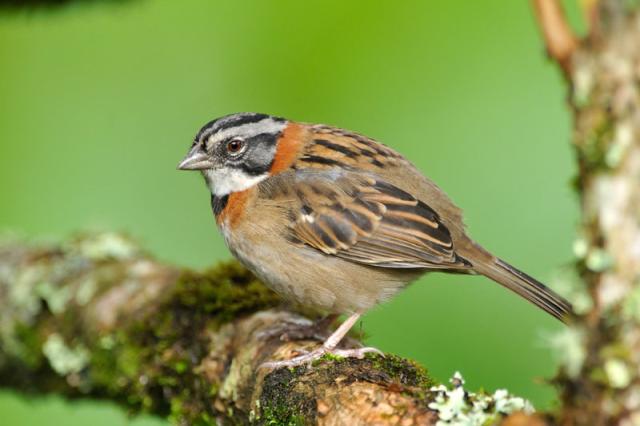
Rufous-collared Sparrow (Zonotrichia capensis) Reinier Munguia

Rufous-collared Sparrow (Zonotrichia capensis) Reinier Munguia

In Matthew 10, Jesus tells us that God is so involved in His creation that not one of the billions of sparrows in the world falls to the ground without His knowledge. Psalm 148 tells us that the entire creation praises God in everything that happens. God is so personally involved in the creation that He even instructs each wind about the speed and direction to take.

Was it simply luck that the altar was spared and the Bible was open to Psalm 77? God is involved in every detail of the creation. Let’s praise God that there is no such thing as luck!

Prayer:
Dear Father, I thank You that there is no such thing as luck because You are so intimately involved in the creation. Help me to cleanse my mind and speech of the pagan ideas of chance and luck. In Jesus’ Name. Amen.

Birds in Hymns – Speed For Thy Life

Birds in Hymns – Speed For Thy Life by Fanny Crosby

Based on Psalm 11:1

In the LORD I put my trust; How can you say to my soul, “Flee as a bird to your mountain”? (Psalm 11:1 NKJV)

Words: Fan­ny Cros­by, 1903.

Music: W. How­ard Doane

https://leesbird.com/wp-content/uploads/2008/11/speed_for_thy_life-fanny-crosby.mp3%20
Indian Cormorant (Phalacrocorax fuscicollis) on nest by Nikhil

Indian Cormorant (Phalacrocorax fuscicollis) on nest by Nikhil

Speed for thy life to the mountain,
Slight not the message divine,
Danger and death are before thee,
Haste, while the hours are thine.

Refrain

Speed thee, speed thee;
Shadows around thee are falling;
Speed thee, speed thee;
Come while the Savior is calling.

Speed for thy life to the mountain,
List to the warning again;
Forward, and look not behind thee,
Stay not in all the plain.

Refrain

Speed, for the day is declining,
Soon its bright moments will fade;
What if a storm should o’ertake thee,
Where would thou turn for aid?

Refrain

Common Starling (Sturnus vulgaris) at Nest by Anthony747

Common Starling (Sturnus vulgaris) at Nest by Anthony747

Speed for thy life to the mountain,
Fly like a bird to its nest,
Fly to the arms of the Savior:
There is thy only rest.

Refrain

___

What a great encouragement for us to make
sure we speed to the Savior.

Most information from The Cyber Hymnal

See ~ Wordless Birds

More ~ Birds in Hymns

*

Birds of the Bible – Spain

Eurasian Hoopoe (Upupa epops) by Ian

Eurasian Hoopoe (Upupa epops) by Ian

I have enjoyed getting to know the Tim and Pam Darling, our missionaries, while they have been in transition from the field of Venezuela to Spain. We have all been praying for them to get their Resident Visas so they can get on over to Spain to start their new ministry. They now have the Visas in hand, which is a great answer to prayer. They are busy getting packed up and will go to Spain around the 10th of November.

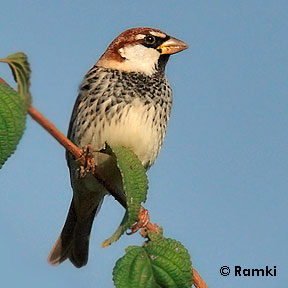
Spanish Sparrow (Passer hispaniolensis) by Nikhil Devasar

Spanish Sparrow (Passer hispaniolensis) by Nikhil Devasar

This blog is in honor of their friendship and to help them get to know the birds they may encounter in Spain. Thanks, Tim and Pam, for your friendship and our prayers will follow you as you travel and reach those in Spain for our Lord Jesus Christ.

Of course the Sparrows will be over there. The House Sparrow, Spanish Sparrow, Eurasian Tree Sparrow, Rock Sparrow and the White-throated Sparrows will help you to remember

Even the sparrow finds a home, and the swallow a nest for herself, where she may lay her young, at your altars, O LORD of hosts, my King and my God. Blessed are those who dwell in your house, ever singing your praise! Selah (Psalms 84:3-4 ESV)

Along with them you will get to meet the Eurasian Hoopoe. A favorite of mine. There will be Swifts – Common, White-rumped, Little, Pallid and Plain Swifts. Also the Swallows – Red-rumped and the Barn.

Yea, the stork in the heaven knoweth her appointed times; and the turtle(dove) and the crane and the swallow observe the time of their coming; but my people know not the judgment of the LORD. (Jeremiah 8:7 KJV)

Lots of Doves and Pigeons to be on the lookout for – Rock Dove (pigeon), Eurasian Collared-Dove, Oriental Turtle-Dove, Laughing Dove, European Turtle-Dove, Bolle’s Pigeon, Laurel Pigeon and a Stock Pigeon. Only found the Common Crane listed there.

There are 9 kinds of Owls, 10 in Falcon family, 3 Kites, 3 Bitterns, 2 Cormorants, 4 Herons, 3 Storks, 2 Hawks, 2 Lapwings, the Osprey, 3 Partridges, 2 Quails and the Bobwhite, and 4 Swans.

There is the Common Raven and you know what the Word says about the Ravens.

Consider the ravens: for they neither sow nor reap; which neither have storehouse nor barn; and God feedeth them: how much more are ye better than the fowls? (Luke 12:24 KJV)

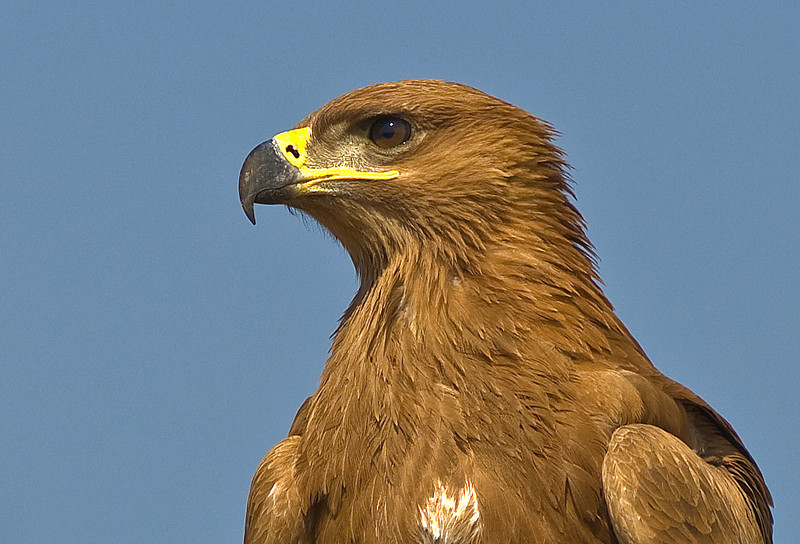
Tawny Eagle by Africaddict

Tawny Eagle by Africaddict

Saved the Eagles for last, not because they are bad, but because of the promises that use them as examples. In Spain they have the Adalbert’s, Golden, Greater Spotted, Imperial, Lesser Spotted, Tawny, Short-toed Snake-Eagle, White-tailed Eagle, Bonelli’s Eagle and the Booted Eagles.

Wilt thou set thine eyes upon that which is not? for riches certainly make themselves wings; they fly away as an eagle toward heaven. (Proverbs 23:5 KJV)

The Darling’s are definitely not going to Spain to obtain earthly gains, but to gain heavenly rewards.

But they that wait upon the LORD shall renew their strength; they shall mount up with wings as eagles; they shall run, and not be weary; and they shall walk, and not faint. (Isaiah 40:31 KJV)

Tim and Pam, our collective prayers will go with you.

(Updated 8-04-12) We have had the privilege of spending some time with Tim and Pam for the last few weeks while they have been on a short furlough. Her parents belong to our church and live in the area. I have tried to encourage them to send me some photos of the birds in Spain. Stay tuned, maybe we can have another update.)

*

This slideshow requires JavaScript.

*

Launching pad…

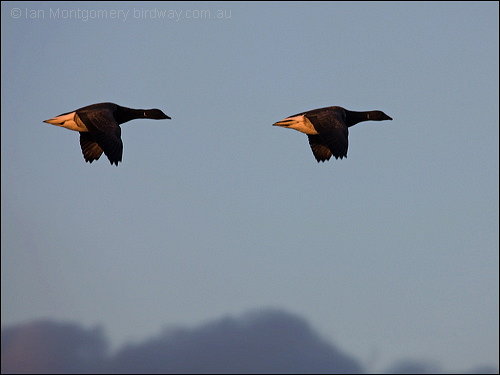
Brant Goose (Branta bernicla) by Ian

Brant Goose (Branta bernicla) by Ian

Launching pad… ~ a j mithra

Brant Geese (Branta bernicla) by Ian

Brant Geese (Branta bernicla) by Ian

The small Arctic Goose
called Brant Goose,
would wait
for the storm system
to come,
so that,
it would catch
the storm’s tail wind
and
migrate during winter…
GOD doesn’t give
the storm to destroy you,
but,
to take you
to a better place…
Remember,
storm is surely
a launching pad…

The LORD is slow to anger, and great in power, and will not at all acquit the wicked: the LORD hath his way in the whirlwind and in the storm, and the clouds are the dust of his feet. (Nahum 1:3)

Have a blessed day!

A thought from ~ a j mithra

*

Those Ugly Shirts

I don’t know if you were glued to your TV when the miners in Chile were taken up from their 69 day entrapment, but I was. I prayed for them that nothing would go wrong as they brought each one up and for them personally to know the Lord.

Today I received an email with a YouTube about the shirts that many were wearing. I too was curious as to what they said. Here is a great video that tells about those “ugly shirts.”

Video by iranmojdeh.

Wordless Birds

Learning from the Birds – Overwhelmed

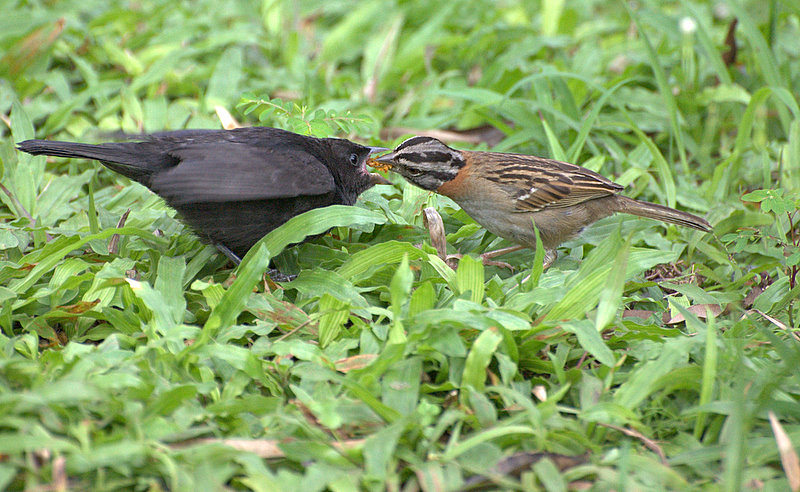
A Shiny Cowbird (Molothrus bonariensis) chick being fed by a Rufous-collared Sparrow (Zonotrichia Capensis)

A Shiny Cowbird (Molothrus bonariensis) chick being fed by a Rufous-collared Sparrow (Zonotrichia Capensis)

But now ask the beasts, and they will teach you; And the birds of the air, and they will tell you; (Job 12:7 NKJV)

Brood parasites are organisms that use the strategy of brood parasitism, found among birds, fish or insects, involving the manipulation and use of host individuals either of the same or different species to raise the young of the brood-parasite. This relieves the parasitic parent from the investment of rearing young or building nests, enabling them to spend more time foraging, producing offspring etc. Additionally, the risk of egg loss to raiders such as raccoons is mitigated, by having distributed the eggs amongst a number of different nests. As this behavior is damaging to the host, it will often result conflict between parasite and host.

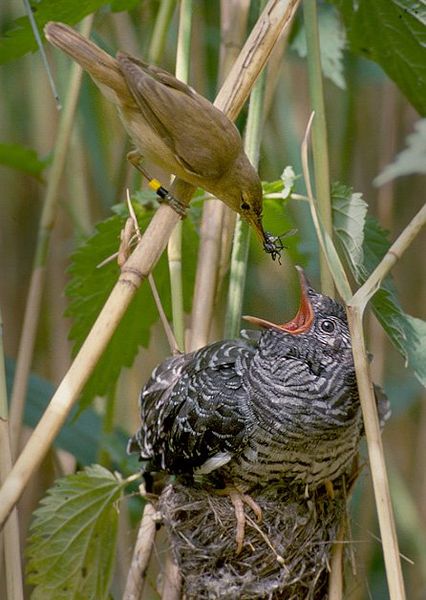
Common Cuckoo (Cuculus canorus) being raised by a Reed Warbler©WikiC

Common Cuckoo (Cuculus canorus) being raised by a Reed Warbler©WikiC

Interspecific brood-parasites include the Old World Cuckoos in Eurasia and Australia, Cowbirds and Black-headed Ducks in the Americas, and Indigobirds, Whydahs, and the Honeyguides in Africa.

Among specialist avian brood parasites, mimetic eggs are a nearly universal adaptation. There is even some evidence that the generalist Brown-headed Cowbird may have developed an egg coloration mimicking a number of their hosts.

Most avian brood parasites will remove a host egg when they lay one of their own in a nest. Depending upon the species, this can happen either in the same visit to the host nest or in a separate visit before or after the parasitism. This both prevents the host species from realizing their nest has been parasitized and reduces competition for the parasitic nestling once it hatches.

Most avian brood parasites have very short egg incubation periods and rapid nestling growth. This gives the parasitic nestling a head start on growth over its nestmates, allowing it to outcompete them. In cases where the host nestlings are significantly smaller than the parasite nestling, the host nestlings will often starve to death. Some brood parasites will eliminate all their nestmates shortly after hatching, either by ejecting them from the nest or killing them with sharp mandible hooks which fall off after a few days.

Whoa! This is NOT NICE! What is so amazing is that if not detected in time, many times the birds do find the intruding egg and toss it out, but most times, the unsuspecting parents raise this young bird as if it were it’s own.

What can we, as observers of this behavior, learn from the birds? I want to consider the host birds who have quite a challenge to face. They either fix the problem or they could be very “overwhelmed” with situation at hand.

My first thoughts were from a physical need. When faced with a health problem, we pray and visit the doctors and try to remedy the situation. Sometimes the ailment is not cured and we may be faced with an “overwhelming” need. Do we accept whatever the outcome and:

Not that I speak in regard to need, for I have learned in whatever state I am, to be content: (Philippians 4:11 NKJV)

Another lesson that could by learned by observing this “overwhelming” task might be in sharing the load. Often in churches, the ones who are willing to serve the Lord become very involved because of others not volunteering or helping. They keep taking on more responsibilities, not complaining, but in time they could become “overwhelmed.” We should find a way to:

Bear one another’s burdens, and so fulfill the law of Christ. (Galatians 6:2 NKJV)

Though one may be overpowered by another, two can withstand him. And a threefold cord is not quickly broken. (Ecclesiastes 4:12 NKJV)

Bald Eagle flying by Dave's BirdingPix

Bald Eagle flying by Dave's BirdingPix

The host birds accept the situation and do the best they can to raise the young bird. How do they do that? One worm at a time! When we become “overwhelmed,” that is just what we need do. No! Not by catching worms, but by taking one step at a time and harkening to the following promises:

But ye, brethren, be not weary in well doing. (2 Thessalonians 3:13 KJV)

And let us not be weary in well doing: for in due season we shall reap, if we faint not. (Galatians 6:9 KJV)

I can do all things through Christ which strengtheneth me.
(Philippians 4:13 KJV)

But they that wait upon the LORD shall renew their strength; they shall mount up with wings as eagles; they shall run, and not be weary; and they shall walk, and not faint. (Isaiah 40:31 KJV)

(Some information from Wikipedia)
*