Others May, You Cannot – G. D. Watson

The following challenge was on the inside cover of this month’s “Acts & Facts” from the Institute for Creation Research. It is worth sharing and is a challenge for me that I would like to live up to, with the Lord’s help. As Christians, we should strive to live for the Lord. This article was an inspiration for Dr. Henry Morris and has been for others. George Douglas Watson lived from 1845-1924 and the following is in public domain.

If anyone wishes to come after Me, he must deny himself, and take up his cross and follow Me. For whoever wishes to save his life will lose it; but whoever loses his life for My sake will find it. (Matthew 16:24-25)

“If God has called you to be truly like Jesus in all your spirit, He will draw you into a life of crucifixion and humility. He will put on you such demands of obedience that you will not be allowed to follow other Christians. In many ways, He seems to let other good people do things which He will not let you do.

Others who seem to be very religious and useful may push themselves, pull wires, and scheme to carry out their plans, but you cannot. If you attempt it, you will meet with such failure and rebuke from the Lord as to make you sorely penitent.

Others can brag about themselves, their work, their successes, their writings, but the Holy Spirit will not allow you to do any such thing. If you begin to do so, He will lead you into some deep mortification that will make you despise yourself and all your good works.

G. D. Watson (1845-1924)

Others will be allowed to succeed in making great sums of money, or having a legacy left to them, or in having luxuries, but God may supply you only on a day-to-day basis, because He wants you to have something far better than gold, a helpless dependence on Him and His unseen treasury.

The Lord may let others be honored and put forward while keeping you hidden in obscurity because He wants to produce some choice, fragrant fruit for His coming glory, which can only be produced in the shade.

God may let others be great, but keep you small. He will let others do a work for Him and get the credit, but He will make you work and toil without knowing how much you are doing. Then, to make your work still more precious, He will let others get the credit for the work which you have done; this to teach you the message of the Cross, humility, and something of the value of being cloaked with His nature.

The Holy Spirit will put a strict watch on you, and with a jealous love rebuke you for careless words and feelings, or for wasting your time, which other Christians never seem distressed over.

So make up your mind that God is an infinite Sovereign and has a right to do as He pleases with His own, and that He may not explain to you a thousand things which may puzzle your reason in His dealings with you.

God will take you at your word. If you absolutely sell yourself to be His slave, He will wrap you up in a jealous love and let other people say and do many things that you cannot. Settle it forever; you are to deal directly with the Holy Spirit, He is to have the privilege of tying your tongue or chaining your hand or closing your eyes in ways which others are not dealt with. However, know this great secret of the Kingdom: When you are so completely possessed with the Living God that you are, in your secret heart, pleased and delighted over this peculiar, personal, private, jealous guardianship and management of the Holy Spirit over your life, you will have found the vestibule of heaven, the high calling of God.”

Quote taken from Christian Articles – G.D.Watson page

*

Using Whatever Talent the Lord Has Given You

Thought I would share an article that I wrote for our church blog (The Fountain).

As many of you know, around Faith Baptist, I am known as the “Bird Lady.” Also many have read the “Birds of the Bible” articles of the past. How did this come about?

When I was 16 years old (1960) I accepted the Lord as my Saviour and thus began my journey with the Lord. The Lord allowed me to attend Bob Jones University through the War Orphans Fund (my father died as a result of the war and my mother died when I was 13). Not being from an educational family (D+ average in high school), I struggled academically, but the desire to finish was strong. I finished my degree 16 years after I started with a Bible major. I had tried many majors, but never found what I wanted.

While we were on vacation this summer, we attended a friend’s church and they were questioning things that became a turning point in our lives. There were various testimonies given and then I remembered one that changed me. In 1979, Dan and I purchased our first computer, a Radio Shack Model I. I spent hours teaching myself all about it and learning to program. That computer and the many since gave me a direction and a niche for me to fill. I always told the Lord that I just didn’t have any talents to offer Him. Long story short, I became a computer teacher and ended up even getting a Masters degree in Computer Education.

Sunbittern at Lowry Park Zoo by Dan

In the late 80’s I became a birdwatcher. A naturalist at our local park became my mentor. I had always loved the out of doors and enjoyed watching God’s creation, but could not put many names on what I saw. Birds are just so beautiful and show the Lord’s creative hand so much. I am just amazed and love watching them. Another niche!

Now there were three important parts to my life; the Lord, computers and birds. (Of course Dan is there also) My desire and prayers were that the Lord would let me blend those three things into some sort of ministry for Him. It began by doing five-minute presentations to a junior Sunday School class each week. When we moved up here to Faith, I couldn’t find an outlet to do my bird presentations until the Lord, through Stephen, let me start doing the “Birds of the Bible” on the blog here.

I started my own blog to learn how to do the articles. Now, the Lord is blessing my blog by letting the “Birds of the Bible” and many other Christian birdwatching articles be read by people all over the world. And, now, I am the “Bird Lady” and I thank the Lord for His Love and Grace to let me be called by that name.

Call unto me, and I will answer thee, and shew thee great and mighty things, which thou knowest not. (Jeremiah 33:3 KJV)

My prayer and challenge for the readers is that you also will let the Lord use what ever talent or gift you have for Him. Maybe you love bugs, flowers, music, or whatever. Maybe you are an encourager, good cook, child sitter, nursery worker, like to visit the sick, etc. We all have something that the Lord has given us. Let the Lord use what you have for Him so that we can help reach others with the Gospel and God’s Love.

Gospel Message

Wordless Birds

*

Birds of the Bible – Speckled Bird

Speckled Pigeon (Columba guinea) ©WikiC

Speckled Pigeon (Columba guinea) ©WikiC

Mine heritage is unto me as a speckled bird, the birds round about are against her; come ye, assemble all the beasts of the field, come to devour. (Jeremiah 12:9 KJV)

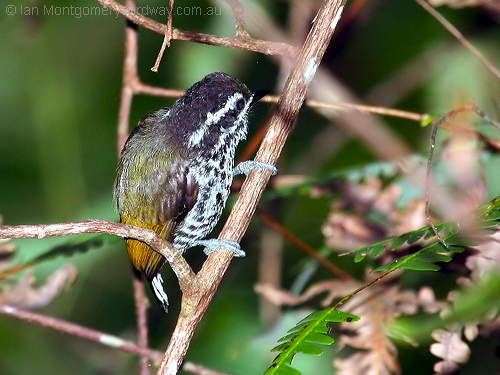
Speckled Piculet (Picumnus innominatus) by Ian

Speckled Piculet (Picumnus innominatus) by Ian

The Speckled Bird is not the name of a specific bird, but it describes how it looks. Of course the commentaries do not agree exactly as to what is meant by the bird or hyena, but they do seem to agree that the Lord’s house is being corrupted. They agree that there is to be a judgment and that birds of prey will be present. Let’s look at some of their interpretations.

Albert Barnes’ Notes on the Bible – “Rather, “Is My heritage unto Me as a speckled bird? Are the birds upon her round about? Come, assemble all the wild beasts: bring them to devour her.” By “a speckled” or parti-colored “bird” is probably meant some kind of vulture.”

Speckled Hummingbird (Adelomyia melanogenys) by Ian

Speckled Hummingbird (Adelomyia melanogenys) by Ian

Jamieson, Fausset and Brown – “speckled bird — Many translate, “a ravenous beast, the hyena”; the corresponding Arabic word means hyena; so the Septuagint. But the Hebrew always elsewhere means “a bird of prey.” The Hebrew for “speckled” is from a root “to color”; answering to the Jewish blending together with paganism the altogether diverse Mosaic ritual. The neighboring nations, birds of prey like herself (for she had sinfully assimilated herself to them), were ready to pounce upon her.”

Matthew Henry’s Condensed Commentary says, “God’s people had been the dearly-beloved of his soul, precious in his sight, but they acted so, that he gave them up to their enemies. Many professing churches become like speckled birds, presenting a mixture of religion and the world, with its vain fashions, pursuits, and pollutions. God’s people are as men wondered at, as a speckled bird; but this people had by their own folly made themselves so; and the beasts and birds are called to prey upon them. The whole land would be made desolate. But until the judgments were actually inflicted, none of the people would lay the warning to heart. When God’s hand is lifted up, and men will not see, they shall be made to feel. Silver and gold shall not profit in the day of the Lord’s anger. And the efforts of sinners to escape misery, without repentance and works answerable thereto, will end in confusion.”

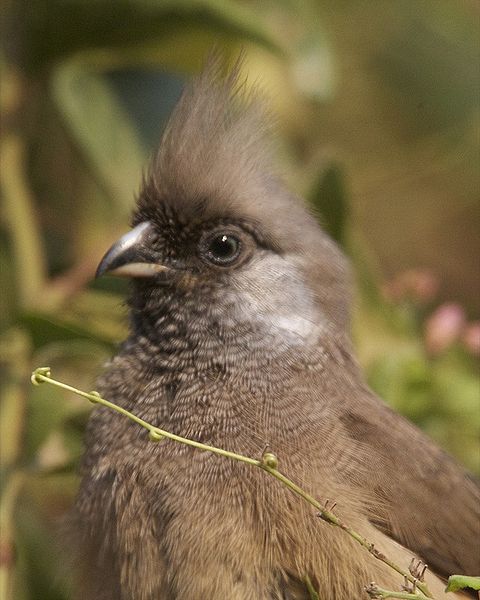
Speckled Mousebird (Colius striatus) ©WikiC

Speckled Mousebird (Colius striatus) ©WikiC

Adam Clarke seems to agree – “Is unto me as a speckled bird – A bird of divers colors. This is a people who have corrupted the worship of the true God with heathenish rites and ceremonies; therefore, the different nations, (see Jer_12:10; whose gods and forms of worship they have adopted shall come and spoil them. As far as you have followed the surrounding nations in their worship, so far shall they prevail over your state. Every one shall take that which is his own; and wherever he finds his own gods, he will consider the land consecrated to them, and take it as his property, because those very gods are the objects of his worship. The fable of the daw and borrowed plumes is no mean illustration of this passage.
Dahler translates the whole verse thus: –

Birds of prey! inundate with blood my heritage.
Birds of prey! come against her from all sides.
Run together in crowds, ye savage beasts!
Come to the carnage!”

Speckled Tanager (Tangara guttata) ©WikiC

Speckled Tanager (Tangara guttata) ©WikiC

The “speckled birds” I have shown here show a mixture of colors. The Bible has made clear many times that we are to be separate and not mix the world with the church, yet it is being done repeatedly unfortunately. Even when the list of clean and unclean birds and animals were given, the LORD was trying to make a distinction between the two.

What a great promise the Lord God has given us in 2nd Corinthians 6:

And what agreement hath the temple of God with idols? for ye are the temple of the living God; as God hath said, I will dwell in them, and walk in them; and I will be their God, and they shall be my people. Wherefore come out from among them, and be ye separate, saith the Lord, and touch not the unclean thing; and I will receive you, And will be a Father unto you, and ye shall be my sons and daughters, saith the Lord Almighty. (2 Corinthians 6:16-18 KJV)

(These birds are being used as examples and please don’t condemn them for being speckled. The Lord may have very well created them that way so we can see an example of a truth. I am just using them for illustrational purposes.)

But ask now the beasts, and they shall teach thee; and the fowls of the air, and they shall tell thee: (Job 12:7 KJV)

Speckled Tanager (Tangara guttata) -by Keith Blomerley – A bird sitting on a branch then flying away.

*

Birds of the Bible – Eye Hath Seen

For since the beginning of the world men have not heard, nor perceived by the ear, neither hath the eye seen, O God, beside thee, what he hath prepared for him that waiteth for him. Thou meetest him that rejoiceth and worketh righteousness, those that remember thee in thy ways: behold, thou art wroth; for we have sinned: in those is continuance, and we shall be saved. (Isaiah 64:4-5 KJV)

Wood Duck by Dan at Lake Hollingsworth

Wood Duck by Dan at Lake Hollingsworth

When I think of the verses above and the next verse, I think of the neat birds that the Lord has created. Even though they are under the curse, some of them have fantastic colors and markings. Their sounds are so sweet (well, most of them). I imagine the Lord with the most beautiful paintbrush. What must heaven look like when many of the things we experience here are so awesome? Once the curse is removed, what will things look like then?

But as it is written, Eye hath not seen, nor ear heard, neither have entered into the heart of man, the things which God hath prepared for them that love him. (1 Corinthians 2:9 KJV)

The photos below are just of birds and it was difficult to narrow the selection, but what of all the beautiful flowers, sunsets, sunrises, scenery, and on and on. What must heaven be like? Like many of you, I am looking forward to arriving and seeing things that I can’t even imagine as the verses say.

It is not automatic to go there. A person needs to accept the Lord Jesus Christ as their personal Saviour. Please see either or all of the following:

The Gospel Message, or the Wordless Birds

(A little short this week as we are just arriving home after a two week vacation – blogs about the trip to follow later. )

I will let the Lord’s Creative Hand reveal what we see here and it is fantastic.

*

This slideshow requires JavaScript.

*

Thanks to all the great photographers who have given permission to use their photos.

*

Worship – Our Mating Song

Worship – Our Mating Song  ~ by a j mithra

Indian Scops Owl (Otus bakkamoena) pairby Nikhil Devasar

Indian Scops Owl (Otus bakkamoena) pairby Nikhil Devasar

If birds
don’t sing,
they wouldn’t find
a mate
and
if they don’t find a mate,
there would be
no reproduction…
If there is no reproduction,
there would a major
Ecological disaster…
If we don’t worship,
the presence of the LORD
wouldn’t be there,
if the presence of the LORD
is missing,
the church would be empty,
if the churches are empty
there would be a
Spiritual catastrophe…

But thou art holy, O thou that inhabitest the praises of Israel. (Psalm 22:3)

A thought from a j mithra

*

The Indian Scops Owl is in the Strigidae Family.

*

Birds of the Bible – The Thrush

Varied Thrush (Ixoreus naevius) by Daves BirdingPix

Varied Thrush (Ixoreus naevius) by Daves BirdingPix

Even the stork in the sky Knows her seasons; And the turtledove and the swift and the thrush Observe the time of their migration; But My people do not know The ordinance of the LORD. (Jeremiah 8:7 NASB)

The Thrush is only used in one verse and then in only the CEV, (ERV), GNB, LITV, NASB, and the NAS77 versions of the Bible.
The other versions translate the word “עגוּר or ‛âgûr” (H5693), pronounced “aw-goor’, as a swallow. H5693 is only used in 2 verses in the Bible, Jeremiah 8:7 and Isaiah 38:14. In Isaiah, the different versions all translate it as a “swallow.”

At any rate, this gives the opportunity to introduce the Thrush. Jeremiah is referring to the migration of the birds and how they know when to go and when to come back, but God’s people don’t always know what is expected of them.

There are two Thrush families, Turdidae Family (184) – most of them and the Muscicapidae Family (297) has some thrushes in it.

Thrushes are plump, soft-plumaged, small to medium-sized birds, inhabiting wooded areas, and often feed on the ground or eat small fruit. They range in size from the Forest Rock-thrush, at 21 g (0.74 oz) and 14.5 cm (5.7 in), to the Blue Whistling-thrush, at 178 g (6.3 oz) and 33 cm (13 in). Most species are grey or brown in colour, often with speckled underparts.

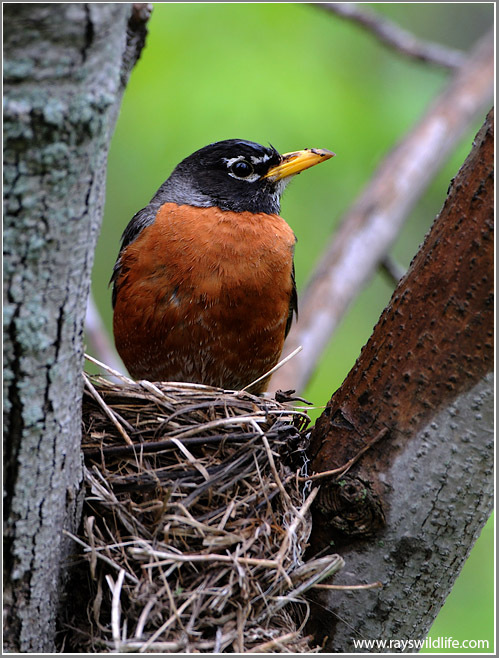
They are insectivorous, but most species also eat worms, snails, and fruit. Many species are permanently resident in warm climes, while others migrate to higher latitudes during summer, often over considerable distances. Our well know American Robin and Bluebirds are part of the Thrush family and are migratory.

American Robin (Turdus migratorius) in nest by Ray

American Robin (Turdus migratorius) in nest by Ray

Thrushes build nest that are cup-shaped and line them with different things including mud. Both parent help in raising the young,  which normally number two to five per brood. Many have two broods a year.

According to Wikipedia the Turdus Genus has the “true thrushes” and it has 65 species in that genus. According to Scripture, I would venture to say that they are all in the same “kind” and have just been busy obeying the command given them to when they came off the Ark.

Bring out with you every living thing of all flesh that is with you, birds and animals and every creeping thing that creeps on the earth, that they may breed abundantly on the earth, and be fruitful and multiply on the earth. (Genesis 8:17 NASB)

Some examples of their migration:

  • Some species show circuitous migratory routes that reflect historical range expansions and are far from optimal in ecological terms. An example is the migration of continental populations of Swainson’s Thrush, which fly far east across North America before turning south via Florida to reach northern South America
  • The Himalayan Kashmir Flycatcher and Pied Thrush both move as far south as the highlands of Sri Lanka.
  • The Song Thrush breeds in forests, gardens and parks, and is partially migratory with many birds wintering in southern Europe, North Africa and the Middle East;
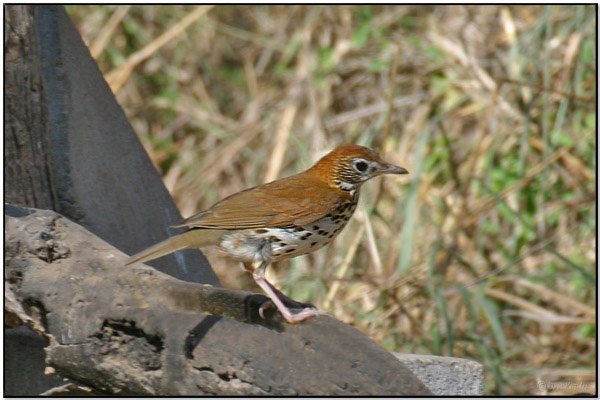
Wood Thrush (Hylocichla mustelina) by Daves BirdingPix

Wood Thrush (Hylocichla mustelina) by Daves BirdingPix

  • The Wood Thrush’s breeding range extends from Manitoba, Ontario and Nova Scotia in southern Canada to northern Florida and from the Atlantic coast to the Missouri River and the eastern Great Plains. It migrates to southern Mexico through to Panama in Central America in the winter, mostly in the lowlands along the Atlantic and Pacific coasts. It generally arrives on the U.S. Gulf Coast during the first week of April. Fall migration usually begins in mid-August and continues through mid-September. Migration takes place at night,[9] allowing them to find their direction from the stars and orient themselves by detecting the Earth’s magnetic field.
  • The Grey-cheeked Thrush migrates to northern South America. This species is a rare vagrant to Europe. Its northerly breeding range and long-distance migration make it one of the more regular North American passerine migrants to cross the Atlantic.
  • The Northern Wheatear makes one of the longest journeys of any small bird, crossing ocean, ice, and desert. It migrates from Sub-Saharan Africa in Spring over a vast area of the northern hemisphere that includes northern and central Asia, Europe, Greenland, Alaska, and parts of Canada. In Autumn all return to Africa, where their ancestors had wintered. Arguably, some of the birds that breed in north Asia could take a shorter route and winter in south Asia; however, their inherited inclination to migrate takes them back to Africa.

The Thrush families are very interesting birds and they definitely migrate. When they were created, their Creator put a destination and a great ability for them to migrate to those places.

For by Him all things were created that are in heaven and that are on earth, visible and invisible, whether thrones or dominions or principalities or powers. All things were created through Him and for Him. And He is before all things, and in Him all things consist. (Colossians 1:16-17 NKJV)

Back to our verse in Jeremiah. The last part of the verse says, “But My people do not know The ordinance of the LORD.”

I like what Matthew Henry said about the whole passage in which the verse is found. Jeremiah 8:4-13:
“What brought this ruin? 1. The people would not attend to reason; they would not act in the affairs of their souls with common prudence. Sin is backsliding; it is going back from the way that leads to life, to that which leads to destruction. 2. They would not attend to the warning of conscience. They did not take the first step towards repentance: true repentance begins in serious inquiry as to what we have done, from conviction that we have done amiss. 3. They would not attend to the ways of providence, nor understand the voice of God in them, Jer_8:7. They know not how to improve the seasons of grace, which God affords. Many boast of their religious knowledge, yet, unless taught by the Spirit of God, the instinct of brutes is a more sure guide than their supposed wisdom. 4. They would not attend to the written word. Many enjoy abundance of the means of grace, have Bibles and ministers, but they have them in vain. They will soon be ashamed of their devices. The pretenders to wisdom were the priests and the false prophets. They flattered people in sin, and so flattered them into destruction, silencing their fears and complaints with, All is well. Selfish teachers may promise peace when there is no peace; and thus men encourage each other in committing evil; but in the day of visitation they will have no refuge to flee unto.”


Wordless Birds

See:

Birds of the Bible – Thrushes (Added 3/14/11)

Birds of the Bible

Birds of the Bible – Thrush Songs

Birds of the World – Turdidae FamilyMuscicapidae Family

*

Birds of the Bible – Two Eagles in a Parable

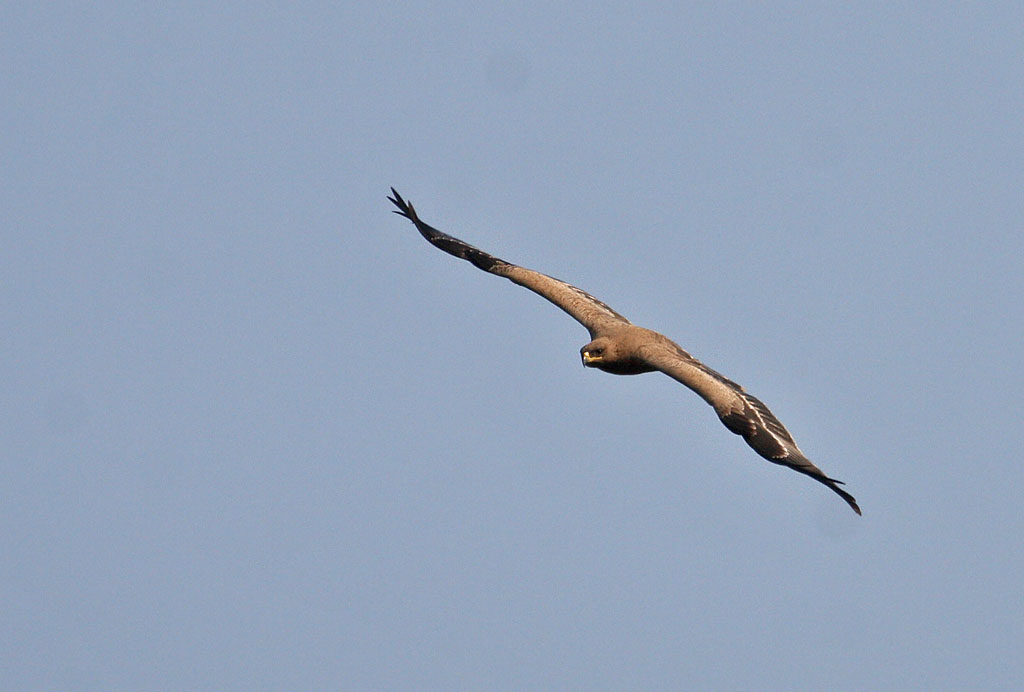
Steppe Eagle (Aquila nipalensis) by Peter Ericsson

Steppe Eagle (Aquila nipalensis) by Peter Ericsson

And the word of the LORD came unto me, saying, Son of man, put forth a riddle, and speak a parable unto the house of Israel; (Ezekiel 17:1-2 KJV)

The Lord God has given the prophet Ezekiel a parable to give to Israel. The parable is in Ezekiel 17:1-10 and it is in here that we find reference to two different eagles.

“The riddle is not the prophet’s, nor the parable his, but the Lord God’s; and exceeding beautiful and apt it is, to signify the things designed by it; the wisdom of God is greatly displayed in it:” (John Gill’s Exposition of the Entire Bible)

And say, Thus saith the Lord GOD; A great eagle with great wings, longwinged, full of feathers, which had divers colours, came unto Lebanon, and took the highest branch of the cedar: (Ezekiel 17:3 KJV)

John Gill says about this first Eagle:

a great eagle; which is Nebuchadnezzar king of Babylon, as it is explained, Eze_17:12; who is compared to an eagle for his power and authority, that being the king of birds, and for his swiftness and voracity in conquering and subduing kingdoms; see Jer_48:40;

with great wings
; so the Babylonish monarchy is signified by a lion with eagle’s wings, Dan_7:4; and the two parts of the Roman empire, into which it was divided at the death of Theodosius, are called two wings of a great eagle, Rev_12:14; and so here it may denote the large kingdoms and provinces which belonged to the Babylonian monarchy; see Est_1:1;

longwinged; or having a “long member” (m); meaning the body of the wing, which was long; and so, as the wings spread, may signify the breadth of his dominion, this the length of them, and both their extensiveness:

full of feathers
; of cities, towns, people, armies, wealth, and riches:

Steppe Eagle (Aquila nipalensis) by Nikhil Devasar

Steppe Eagle (Aquila nipalensis) by Nikhil Devasar

which had divers colours; or an “embroidery” (n); like that of the weaver, only needle work, consisting of various colours; and so it alludes to such eagles as are called the golden eagle, and “asterias”, from their golden colour, and their being spotted like stars, and which are said to be of the largest size, as Bochart, from Aelianus (o), observes; and may signify people of divers languages, customs, manners, and circumstances, subject to the government of the king of Babylon:

came unto Lebanon; the northern border of the land of Judea, and invaded it; where were the mountain and forest of Lebanon, famous for the cedars that grew there, from whence the whole land may here take its name, as being more apt for the allegory used: or the city of Jerusalem, where were the temple built of the cedars of Lebanon, as many of its palaces and houses also were; whither the king of Babylon came, and took it, and who came northward, as Babylon was:

and took the highest branch of the cedar; by the “cedar” is meant, either the nation in general, or the royal family in particular; and by the “highest branch” the then reigning king, Jeconiah with the princes and nobles of the land, who were taken and carried captive by Nebuchadnezzar; see 2Ki_24:14.

Adam Clarke’s Commentary on The Bible summarizes the first eagle:

  • A great eagle – Nebuchadnezzar. See Jer_48:40; Jer_49:22; Dan_7:4. And see here, Dan_7:12, where it is so applied.
  • Great wings – Extensive empire.
  • Long-winged – Rapid in his conquests.
  • Full of feathers – Having multitudes of subjects.
  • Divers colors – People of various nations.
  • Came unto Lebanon – Came against Judea.
  • The highest branch – King Jehoiachin he took captive to Babylon.
  • The cedar – The Jewish state and king.

There was also another great eagle with great wings and many feathers: and, behold, this vine did bend her roots toward him, and shot forth her branches toward him, that he might water it by the furrows of her plantation. (Ezekiel 17:7 KJV)

John Gill says of the second eagle:
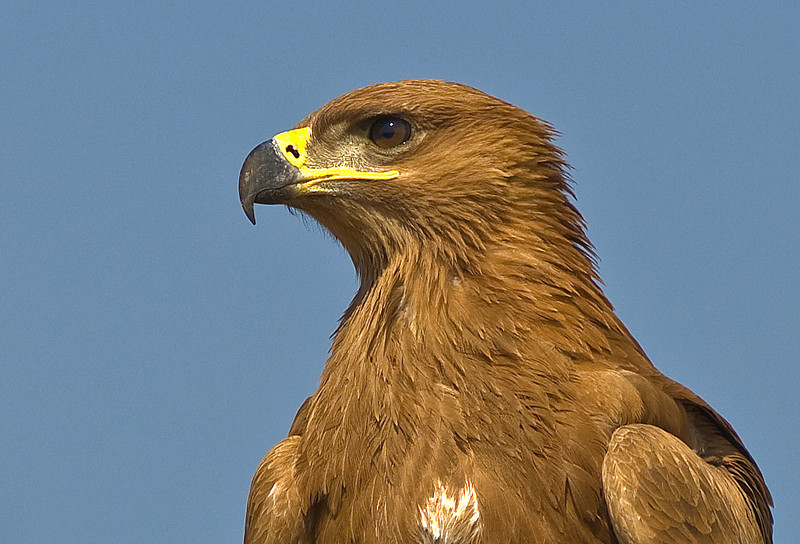
Eze 17:7  There was also another great eagle,…. Hophra king of Egypt, a very powerful prince, whom Herodotus (u) calls Apries; and says he was the most happy and fortunate, after Psammitichus, of all the kings that were before; though not so mighty as the king of Babylon; therefore all the same things are not said of the one as of the other:

Tawny Eagle by Africaddict

Tawny Eagle by Africaddict

with great wings and many feathers: had large dominions, but not go extensive as the former, and therefore is not said to be “longwinged” as he; and had “many feathers”, but not “full” of them, nor had it such a variety; he had many people, and much wealth, and a large army, but not equal to the king of Babylon:

and, behold, this vine did bend her roots towards him; Zedekiah, and the people of the Jews under him; inclined to an alliance with the king of Egypt, and gave him some private intimations of it:

and shot forth her branches towards him; sent ambassadors to acquaint him with it, Eze_17:15;

that he might water it by the furrows of her plantation; Nebuchadnezzar had planted this vine, and made furrows for the watering of it, and by his means it was become prosperous and flourishing; but Zedekiah, not content with the greatness and glory he had raised him to, sought to the king of Egypt to help him with horses and people, in order to free himself from subjection to the king of Babylon, and to increase his lustre and glory: the allusion is thought to be to the trenches and canals of the river Nile, by which the land of Egypt was watered: the words may be rendered, “out of the rivulets of her plantation” (w) which best agrees with watering.

Adam Clarke’s Commentary on The Bible about the second eagle Ezekiel 17:7

  • Another great eagle – Pharaoh-hophra, or Apries, king of Egypt.
  • With great wings – Extensive dominion.
  • And many feathers – Numerous subjects.
  • Did bend her roots – Looked to him for support in her intended rebellion against Nebuchadnezzar.

This chapter in Ezekiel has a lot in it and I was mainly bringing out the two eagles presented in the parable. A short explanation of this chapter by John Gill follows:

INTRODUCTION TO EZEKIEL 17 – Under the simile of two eagles and a vine are represented the kings of Babylon and Egypt, and the condition of the Jews, who are threatened with ruin for their perfidy; and yet a promise is made of the raising up of the house of Judah, and family of David, in the Messiah. The prophet is bid to deliver a riddle or parable to the house of Israel, Eze_17:1. The riddle or parable is concerning two eagles and a vine, which is delivered, Eze_17:3; and the explanation of it is in Eze_17:11; and then the destruction of the Jews is threatened for their treachery to the king of Babylon, Eze_17:16; and the chapter is closed with a promise of the Messiah, and the prosperity of his kingdom, Eze_17:22.

Looking unto Jesus the author and finisher of our faith; who for the joy that was set before him endured the cross, despising the shame, and is set down at the right hand of the throne of God. (Hebrews 12:2 KJV)


See also:
Birds of the Bible – Eagles
Birds of the Bible – Eagles II
Birds of the Bible – Eagles III
Birds of the Bible – Hair Like Eagles
Eagles

*

Renewing for Rapture

Renewing for Rapture ~ by a j mithra

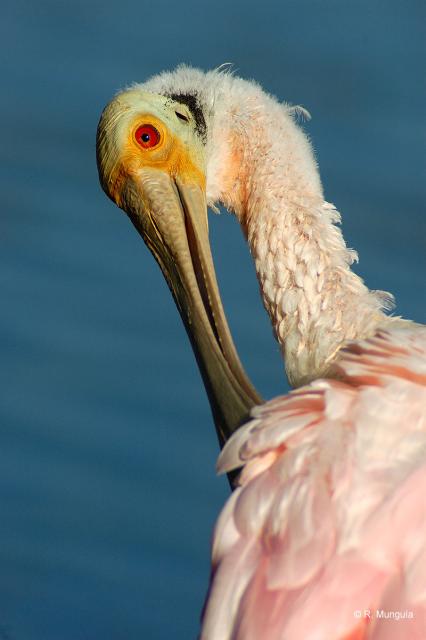
Roseate Spoonbill (Platalea ajaja) Reinier Munguia

Roseate Spoonbill (Platalea ajaja) Reinier Munguia

Before they start
to migrate,
the birds preen
and
grow new feathers
for their long journey…..
We too,
have to go on a
long journey
to be with JESUS…
Have we renewed ourselves
with the blood of JESUS?
The birds,
store their body
with lots of fat
for their long flight…
We too need energy
to fly over
difficult situations..
Have we got filled
ourselves with
The Holy Spirit?
Remember,
the migration,
which we call rapture,
is very near…
Are we getting preening
and renewing
to get ready
for the rapture?

Jesus answered, Verily, verily, I say unto thee, Except a man be born of water and of the Spirit, he cannot enter into the kingdom of God. (John3:5)

A thought from a j mithra

*

The Roseate Spoonbill is in the Threskiornithidae Family.

*

Worship- The God Pleaser

Worship- The God Pleaser ~ by a j mithra

White-throated Honeyeater (Melithreptus albogularis) by Tom Tarrant

White-throated Honeyeater (Melithreptus albogularis) by Tom Tarrant

Birds choose to mate
only with those birds
which sing the most
complicated songs…
For,
they believe that
only those birds
which sing different songs,
are good at raising
and
taking care of the family
and the territory…
He worshiped
and
sang for the LORD
at all times…
Is that the reason why
GOD certifies David
as the one who pleases
HIS heart?
Would GOD say of us
like how HE said of David?

And when he had removed him, he raised up unto them David to be their king; to whom also he gave testimony, and said, I have found David the son of Jesse, a man after mine own heart, which shall fulfil all my will. (Acts 13:22)

A thought from a j mithra

*

The White-throated Honeyeater is in the Meliphagidae Family.

*

Birds of the Bible – Turtle Doves

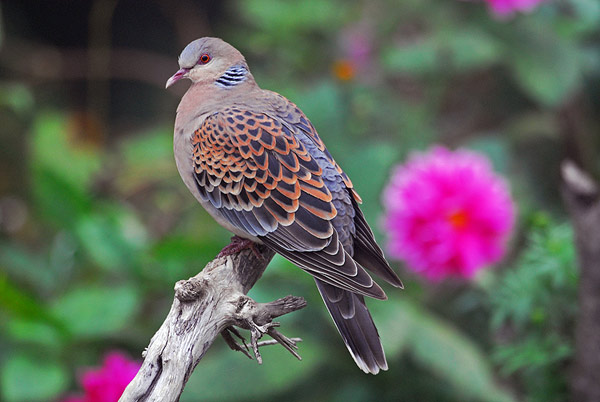
Oriental Turtle Dove (Streptopelia orientalis) by Nikhil

Oriental Turtle Dove (Streptopelia orientalis) by Nikhil

The flowers appear on the earth; the time of the singing of birds is come, and the voice of the turtle is heard in our land; (Song of Solomon 2:12 KJV)

According to the latest list of Turtle Doves by the I.O.C version 2.5 there are only six doves that bear the name “Turtle Dove.” They are in two genus (groups), the Nesoenas and the Streptopelia. That means that they are closely related, but the ornithologist have divided them that way.

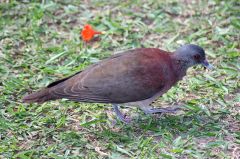
Malagasy Turtle Dove (Nesoenas picturata) ©WikiC

Malagasy Turtle Dove (Nesoenas picturata) ©WikiC

The Malagasy Turtle Dove (Nesoenas picturata) is the only one in the Nesoenas. The Malagasy Turtle-dove (Nesoenas picturata), is also known as the Madagascar Turtle-dove, is a bird species in the pigeon and dove family, Columbidae. It is found in British Indian Ocean Territory, Comoros, Madagascar, Mauritius, Mayotte, Réunion, and Seychelles. Its closest relative a Pink Pigeon together they form a lineage apart from both the typical pigeons (Columba) and the typical turtle-doves (Streptopelia).

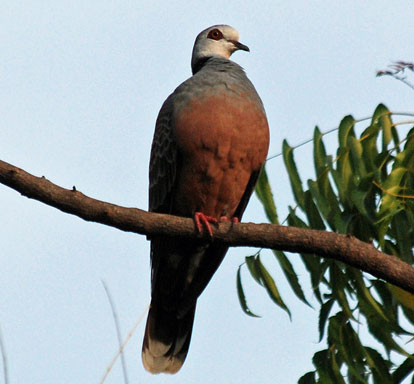
Adamawa Turtle Dove (Streptopelia hypopyrrha) ©WikiC

Adamawa Turtle Dove (Streptopelia hypopyrrha) ©WikiC

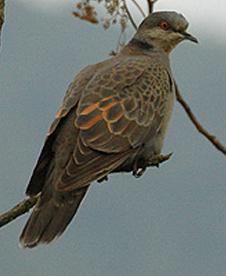
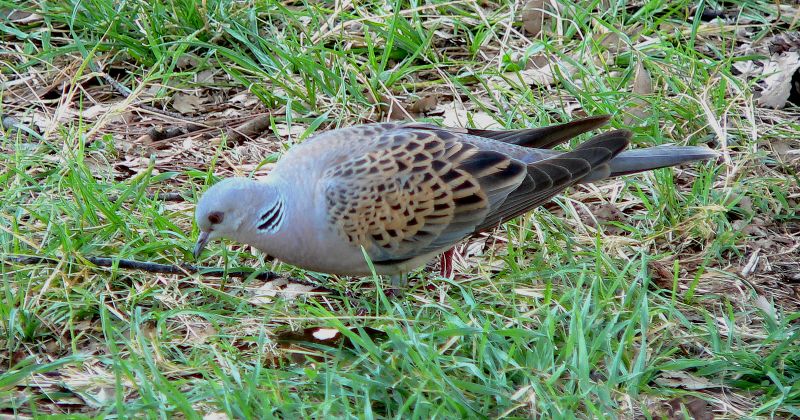
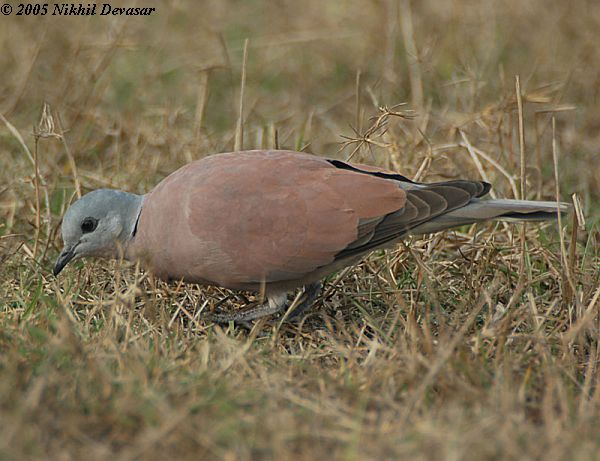
The other five Turtle Doves, the Euopean, Dusky, Adamawa, Oriental, and Red are in the Streptopelia genus. These are mainly slim, small to medium-sized species. The upperparts tend to be pale brown, and the underparts are often a shade of pink. Many have a characteristic black-and-white patch on the neck, and monotonous cooing songs. Mainly in Africa, but several species occur in tropical southern Asia. As a group, this genus is highly successful; many species are abundant in a range of habitats in the tropics, and two now have a much more extensive distribution.

Dusky Turtle Dove (Streptopelia lugens) ©WikiC

Dusky Turtle Dove (Streptopelia lugens) ©WikiC

In Scripture, the Turtle Dove or “turtledove” appears in fifteen verses. Most of those have to do with the turtledove being used as a sacrifice. In Genesis 15:9 the Lord GOD told Abraham to provide one and a pigeon as part of a sacrifice when Abraham was give the covenant of the promised land.

Then in Leviticus a turtledove was used in the burnt offering in Lev. 1:14, two turtledoves for the trespass offering of Lev. 5:7, two for a second burnt offering in Lev. 5:11, for purification after the birth of a child in Lev. 12:6, 8, a sin offering in Lev. 14:22, a sin and a burnt offering in Lev. 14:30, two more offered in Lev. 15:14 and 29.

In Deuteronomy 6:10, two turtledove or pigeons are used for a cleansing.

O deliver not the soul of thy turtledove unto the multitude of the wicked: forget not the congregation of thy poor for ever. (Psalms 74:19 KJV)

European Turtle Dove (Streptopelia turtur) ©WikiC

European Turtle Dove (Streptopelia turtur) ©WikiC

Here is what Albert Barnes Notes on the Bible says about the above verse in Psalms: “Psa 74:19 O deliver not the soul of thy turtle-dove – The “life” of thy turtle-dove; or, thy turtle-dove itself. The turtle-dove is a name of endearment for one beloved, in Son. 2:12, and is thus applied here to the people of Israel. The leading idea in such an application of the word is that of innocence, harmlessness, timidity, gentleness. The thought here is that of a people dear to God, now timid and alarmed. It is the prayer of a people beloved by God that he would not deliver them to their enemies. The prayer may be regarded as one which was used on the occasion referred to in the psalm; or, as a general prayer for the people of God, considered as exposed to ravening enemies.”

John Wesley’s Explanatory Notes says of Song of Son. 2:12 (quoted at top): “The flowers – The communications of God’s grace, the gifts, and graces, and comforts of the Holy Spirit, are vouchsafed unto, and appear in believers, as buds and blossoms do in the spring. The turtle – This seems particularly to be mentioned because it not only gives notice of the spring, but aptly represents the Spirit of God, which even the Chaldee paraphrast understands by this turtle, which appeared in the shape of a dove, and which worketh a dove – like meekness, and chastity, and faithfulness, in believers.”

Jeremiah speaks of the migration of the turtledove.

Yea, the stork in the heaven knoweth her appointed times; and the turtle and the crane and the swallow observe the time of their coming; but my people know not the judgment of the LORD. (Jeremiah 8:7 KJV)

RedTurtle Dove (Streptopelia tranquebarica) by Nikhil Devasar

RedTurtle Dove (Streptopelia tranquebarica) by Nikhil Devasar

Last but not least, Mary offered a pair of turtledove at the end of her purification after Jesus was born. The turtledove are in Luke 2:24, but the whole passage from Luke 2:21-39 is worth reading.

Most of the times, not always, the turtledove or pigeons were use in the sacrifices by someone who could not afford an animal like a lamb or a bullock. I find this very comforting because God did not make salvation only for those who could afford it. In fact, none of us can afford the cost of what took for the purchase of our salvation.

Forasmuch as ye know that ye were not redeemed with corruptible things, as silver and gold, from your vain conversation received by tradition from your fathers; But with the precious blood of Christ, as of a lamb without blemish and without spot: Who verily was foreordained before the foundation of the world, but was manifest in these last times for you, Who by him do believe in God, that raised him up from the dead, and gave him glory; that your faith and hope might be in God. (1 Peter 1:18-21 KJV)

The Gospel Message

(All photos may be clicked on – WikiC = Wiki Commons. Hover mouse over underlined verses.)
*

Birds-Advertisers of Life..

Birds-Advertisers of Life..

Graceful Prinia (Prinia gracilis) by Nikhil Devasar

Graceful Prinia (Prinia gracilis) by Nikhil Devasar

If they
do not eat well
the night before,
they would surely die…That’s why,
the birds sing
at dawn,
to advertise to the world
that,
they are still alive
and that,
they are ready to face
another tough day ahead
in life…
Did you sing
for the LORD
this morning?
Why I ask you this
is cos,
those who are dead
never sing..
Do they?

Wilt thou show wonders to the dead? shall the dead arise and praise thee? Selah. (Psalm 88:10)

A thought from a j mithra.

*

The Graceful Prinia is in the Cisticolidae Family.

*

Birds in Hymns – He Waters The Hills

He sendeth the springs into the valleys, which run among the hills. They give drink to every beast of the field: the wild asses quench their thirst. (Psalm 104:10-11)

Johann M. Haydn (1737-1806)

Words: From The Psal­ter (Pitts­burgh, Penn­syl­van­ia: The Unit­ed Pres­by­ter­i­an Board of Pub­li­ca­tion, 1912), num­ber 286.

Music: Ly­ons, at­trib­ut­ed to Jo­hann M. Hay­dn (1737-1806); ar­ranged by Wil­liam Gar­din­er, Sac­red Mel­odies (Lon­don: 1815)

HE WATERS THE HILLS

Pileated and Red-bellied on same tree - turkey point by Ray

Pileated and Red-bellied on same tree - turkey point by Ray

He waters the hills with rain from the skies,
And plentiful grass and herbs He supplies,
Supplying the cattle, and blessing man’s toil
With bread in abundance, with wine and with oil.

The trees which the Lord has planted are fed,
And over the earth their branches are spread;
They keep in their shelter the birds of the air,
The life of each creature the Lord makes His care.

The seasons are fixed by wisdom divine,
The slow changing moon show forth God’s design;
The sun in his circuit his Maker obeys,
And running his journey hastes not nor delays.

The Lord makes the night, when leaving their lair,
The lions creep forth, God’s bounty to share;
The Lord makes the morning, when beasts steal away
And men are beginning the work of the day.

How many and wise Thy works are, O Lord!
The earth with the wealth of wisdom is stored;
The sea bears in safety the ships to and fro,
And creatures unnumbered it shelters below.

The creatures all look to Thee for their food;
Thy hands open wide, they gather the good;
Thy face Thou concealest, in anguish they yearn;
Their breath Thou withholdest, to dust they return.


Another parable put he forth unto them, saying, The kingdom of heaven is like to a grain of mustard seed, which a man took, and sowed in his field: Which indeed is the least of all seeds: but when it is grown, it is the greatest among herbs, and becometh a tree, so that the birds of the air come and lodge in the branches thereof. (Matthew 13:31-32 KJV)

Sing to the LORD with thanksgiving; Sing praises on the harp to our God, Who covers the heavens with clouds, Who prepares rain for the earth, Who makes grass to grow on the mountains. He gives to the beast its food, And to the young ravens that cry. (Psalms 147:7-9 NKJV)

Most information from The Cyber Hymnal

See ~ Wordless Birds

More ~ Birds in Hymns

*