And God created great whales, and every living creature that moveth, which the waters brought forth abundantly, after their kind, and every winged fowl after his kind: and God saw that [it was] good.” (Genesis 1:21)
“According to evolution, life began in the sea. However, because the land was better for life, evolution developed land life from sea life. It was on land that mammals evolved, according to evolution. Here, though, evolution has painted itself into a corner. Or perhaps it is better to say that evolutionists have fallen into one of the traps set for them by the Creator. You see, the
largest creatures on Earth live in the sea – and they are mammals!
The great whales are mammals like many land animals. However, it is very clear that they never lived on land – nor do they resemble any land creature. Whales provide clear evidence that, contrary to evolution’s claims, not even all mammals are related to each other. And if mammals are so different that they cannot be related to each other through evolution, neither is it likely that bugs and trees and cows and humans could be related by evolution. As Genesis so clearly tells us, living things were originally made in distinct kinds, and they continue to reproduce after their kinds.
One wants to ask the evolutionist, if the drive to live on land was so great it moved sea creatures to become land creatures, why did some mammals go to all the trouble to move back into the sea? To say the least, whales offer Bible-believing Christians a great testimony to our Creator and a good argument against evolution. For evolutionists, mammals who live in the sea are a whale of a problem!”
Prayer:
Your majesty and power are truly seen to all in the magnificent whales You have created, Lord. I ask that we would be successful in preserving these great creatures who witness so grandly to You. Amen.
Notes:
Bartz, Paul A. 1984. “It takes more than this to make a whale transition.” Bible-Science Newsletter, Feb. p. 1.
I am not worthy of the least of all the mercies, and of all the truth, which thou hast shewed unto thy servant…” (Genesis 32:10a)
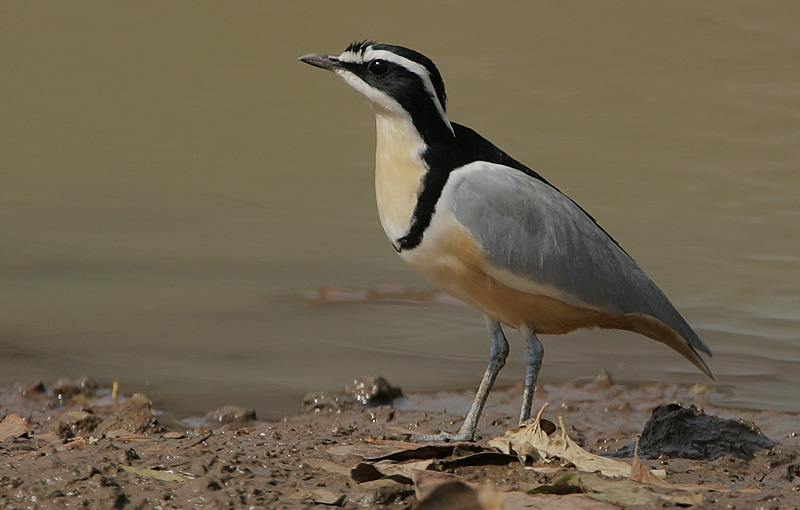
How would you like to be a dental hygienist for a crocodile? That’s how the crocodile bird makes his living.
Of course, you do need to know that the crocodile bird doesn’t show up to do his work with any drills or needles. He and the crocodile are on good terms with each other. After eating, the crocodile climbs the river bank and relaxes with his mouth open. The little crocodile bird enters the crocodile’s mouth to clean up the scraps that are left. While the crocodile bird makes most of his living as sort of a crocodile dental hygienist, he also helps keep the crocodile free of pesky insects that lodge in his skin.
The crocodile also receives one other service from the crocodile bird. Whenever the bird senses approaching danger, he gives his sharp warning call and flies off. The crocodile, now warned, can quickly roll over into the water where virtually no animal can get the best of him.
This is but one of many unlikely cooperative arrangements that we find in the plant and animal kingdoms. Every one of these relationships speaks for a Creator and against the idea that either these creatures, or their cooperation, evolved naturally. Evolutionists have written whole books on the subject. Yet they don’t seem satisfied that they have explained how these relationships could develop through evolution. We agree that they have no explanation. Nor are they likely to find one as long as they deny a Creator who cares for His creation.
Prayer:
Father, because of the innocent suffering and death of Your Son, Jesus Christ, I know that Your love for me is certain and sure. I thank You for this. In Jesus’ Name. Amen.
The “Crocodile Bird” is actually the “Egyptian Plover, Pluvianus aegyptius, is a wader, the only member of the genus Pluvianus. Formerly placed in the pratincole and courser family, Glareolidae, it is now regarded as the sole member of its own monotypic family”, Pluvianidae – Egyptian Plover. This Plover is in the Charadriiformes – Shorebirds & Allies Order that has 19 families including other Plovers, Painted Snipes, Jacanas, Oystercatchers, Sanderpiper, Snipes and related birds.
It is also sometimes referred to as the Crocodile Bird because it is famous for its symbiotic relationship with crocodiles (National Geographic 1986). According to a story dating to Herodotus, the crocodiles lie on the shore with their mouths open, and the plovers fly into the crocodiles’ mouths so as to feed on bits of decaying meat that are lodged between the crocodiles’ teeth. This is questioned by some. One from Harvard talks about Symbiosis as a fact.
The Egyptian Plover is a localised resident in tropical sub-Saharan Africa. It breeds on sandbars in large rivers. Its two or three eggs are not incubated, but are buried in warm sand, temperature control being achieved by the adult sitting on the eggs with a water-soaked belly to cool them. If the adult leaves the nest, it smooths sand over the eggs, though if it is frightened the job may be hasty.
The chicks are precocial, and can run as soon as they are hatched and feed themselves shortly afterwards. The adults cool the chicks in the same way as with the eggs. The chicks may drink water from the adult’s belly feathers. The adults bury the chicks in the sand temporarily if danger threatens.
Egyptian Plover is a striking and unmistakable species. The 19-21 cm long adult has a black crown, back, eye-mask and breast band. The rest of the head is white. The remaining upperpart plumage is blue-grey, and the underparts are orange. The longish legs are blue-grey.
In flight, it is even more spectacular, with the black crown and back contrasting with the grey of the upperparts and wings. The flight feathers are brilliant white crossed by a black bar. From below, the flying bird is entirely white, apart from the orange belly and black wing bar. After landing, members of a pair greet each other by raising their wings in an elaborate ceremony that shows off the black and white markings. The sexes are similar, but juveniles are duller and the black marking are intermixed with brown.
Just for fun, watch these two videos about the “crocodile bird.”
(Thought you might enjoy reading this interesting fact from the Lord’s Creative Hand. What love He shows to us and to the world of critters and nature. Omnipotence and omniscience is definitely seen all around us, if we but look and give the credit to Whom it is do.)
For we are his workmanship, created in Christ Jesus unto good works, which God hath before ordained that we should walk in them. (Ephesians 2:10)
“It’s a warm day on the Amazon River. A small fish swims near the surface, looking among the natural floating river debris for some food. As he looks among the occasional leaf or twig in the water, he sees no danger. At the same time, one of the floating “leaves” is waiting for the little fish to move just a bit closer. Then, without warning, the floating “leaf” comes to life, grabs the fish and eats it!
What the little fish thought was simply another floating leaf was actually another fish. The Amazonian leaf fish is carefully designed not only to look like a leaf, but to act like one as well. It has a flat body, very much like a leaf. A black line runs the length of its body, giving the appearance of the midrib of a leaf. A fleshy growth in its lower jaw looks like a leaf stem.
Beyond looking like a leaf, the leaf fish also acts like a leaf. It lies still in the water, drifting with the current. To hide its identity further, it draws its fins close to its body, removing any last hint that it is indeed a hungry fish looking for lunch.
The leaf fish combines deceptive coloring, appearance and behavior into one design so that it, too, can make its living. In this, the leaf fish shows that the Creator makes nothing without also designing a special purpose for that creature. According to the Bible, the same can be said even more emphatically for each human being He has made. Your Creator has a special purpose for you, too, and it begins with His plan of salvation for you through His Son, Jesus Christ.
Prayer:
Dear Father in heaven, through the instruction of Your Word, help me to better learn how to define who and what I am more completely in the knowledge of Your forgiving love to me in Jesus Christ. Amen.”
Notes:
Hanson, Jeanne K., and Deane Morrison. 1990. “The wonderful weird of flora and fauna.” Star Tribune First Sunday, Dec. 2. p. 17.
Lee’s Addition:
“Leaffishes are small freshwater fishes of the Polycentridae family, from South America.
They usually have large heads, cryptic colors and very large protractile mouths. Those features, along with their peculiar movements help them to catch fairly large prey for the size of their bodies, including small fish, aquatic insects and other invertebrates. Their odd leaf-like appearance make them interesting fishes for aquarium hobbyists. That is likely because of their unique lifestyle, hanging around in the upper story of the tank imitating the leaves that commonly fall in temperate rivers were it typically lives. They are extremely agile hunters, capable of consuming prey within a quarter of a second (0.2 seconds) making them one of the worlds fastest fish.” (Wikipedia)
“Asian leaffishes are small freshwater fishes of the Nandidae family, from Southern Asia. There are only four genera in this group. These fish usually have small heads, coloration that appears to resemble leaves and very large protractile mouths. Those features, along with their peculiar movements (seemingly intended to resemble a leaf innocently moving through the water) help them to catch fairly large prey compared to their body size, including small fish, aquatic insects and other invertebrates. They tend to stay in one place and wait for prey–they are “lie-in-wait-predators.” (Wikipedia with editing)
Here is an interesting video about the leaffish from VinLWJ
Oh, the depth of the riches both of the wisdom and knowledge of God! How unsearchable are His judgments and unfathomable His ways! (Romans 11:33 NASB)
Hornbills that Understand Monkey
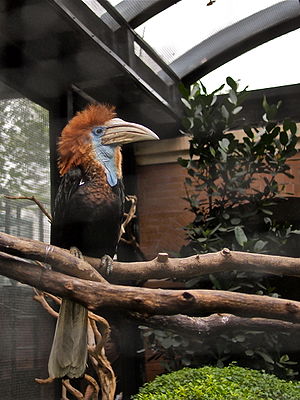
The Yellow-casqued Hornbill (Ceratogymna elata) is found in the primeval rain forest of coastal regions of West Africa, for example in Côte d’Ivoire.
Yellow-casqued Hornbills are one of the largest birds of the forest, with adults weighing up to 2 kg. They live mainly in the forest canopy, feeding on the ground only rarely. They live in small family groups containing at least one adult male and female, with one or two immature birds, though they sometimes gather in larger flocks to exploit a major food supply such as an ant or termite nest.
“The birds are occasionally preyed upon by Crowned Eagles, and they respond to the presence of an eagle (sometimes indicated by its characteristic shriek) by mobbing, i.e. approaching it and emitting calls. Since the eagles depend on surprise to make a catch, this frequently causes them to leave the area.” (Wikipedia edited)
“With the exception of basic messages such as aggression, communication between two entirely different species has seldom been observed among animals in the wild. We know that many animals among the same species give each other specific warnings about an impending danger.” One example is “researchers have found that a downy woodpecker responds to alarm calls from chickadees.” “However, scientists have never noted one species recognizing the specific warning given by a second species.
Diana monkeys on the Ivory Coast of Africa face two primary threats, leopards and crowned eagles. When one of these threats appears, the spotter gives a very specific bark-like call depending on the type of threat. Of course, the monkeys need to respond differently to each threat whether it comes from the leopard below or the eagle above. So it helps them to know what they are facing. On the other hand, a bird named the yellow hornbill is threatened only by the crowned eagles. Researchers noted that these birds ignored the monkeys’ warning about the leopards. But when the monkeys signaled danger from the eagle, the bird took defensive measures. Researchers confirmed their observations using tape recorded monkey calls. The researchers were amazed that these birds understood the monkey warnings in an intelligent manner.”
Such intelligence comes from the Creator, Who has given the gift of such intelligence to His creatures in a way that provides for their survival. This shows His loving care for His creation.
“Behold now behemoth, which I made with thee; he eateth grass as an ox.”
A short while ago, Creation Moments reported the case of blood cells being discovered in a fossilized T. rex bone. Today, we report on another case. While most fossil bones have lithified, or turned to stone, occasionally identifiable bones are found that are only partially lithified.
Scientists had been studying the fossilized upper leg bone of a T. rex they date at 68 million years. The study consisted of dissolving the minerals from the fossilized bone with slightly alkaline solutions. They were completely surprised, for what remained was a soft, pliable material that proved to be high in carbon. Closer study of the pliable material revealed what appeared to be a network of blood vessels. Researchers were then amazed to find that this network was very similar to the networks found in modern ostrich bones. What’s more, they found bone cells as well as red blood cells in this material. Such findings would never be expected in 68-million-year-old biological material, but the researchers could offer no other interpretation for what they saw. They are now hoping that the discovery might shed light on dinosaur physiology and metabolism.
Researchers are still puzzled at how 68-million-year-old biological material could be preserved for so long. Of course, the obvious answer is that the material is not nearly that old and that dinosaurs were even part of human history.
Prayer:
Father, I thank You for all the wonders of Your creation, including the great dinosaurs. Amen.
Notes:
Science News, 3/26/05, p. 195, S. Perkins, “Old Softy.”
By them the birds of the heavens have their home; They sing among the branches. (Psalms 104:12 NKJV)
BereanBeacon contacted me to obtain permission to use some of the photographers we have here. This video used some of the great photos from Ray (Raymond J. Barlow’s Wildlife Photography)
One thing I have desired of the LORD, That will I seek; That I may dwell in the house of the LORD all the days of my life, to behold the beauty of the LORD, and to inquire in His temple. (Psalm 27:4)
The beautiful wing of the butterfly has a lesson to teach everyone who believes living things were created by chance. The design of the butterfly wing involves much more than just intricate complexity. In addition to showing a knowledge of flight, each wing design is the product of very precise specifications built around the specific wavelengths of visible light.
The iridescent colors you admire on a butterfly’s wing are created by the scales of the wings. Each square centimeter of wing has tens of thousands of these scales, each attached to the wing by tiny stems and overlapping each other like cedar shakes. Each one of these scales was a living cell until a day or two before the butterfly emerged from its pupa. Each tiny scale is made of a vertical and horizontal framing within which are found various sacks of pigment hanging from the framework.
Butterfly wings that seem to glow with iridescent blues and greens have scales with tiny lattices and ribbed walls that are designed to cause interference patterns in light waves within the 300 700 nanometer range – exactly the range humans see as color. That interference pattern is what our eyes interpret as iridescence.
It takes a good knowledge of physics as well as micro architecture to design and build an iridescent butterfly wing! Science clearly teaches us that such ability and knowledge does not come from chance. Let’s be bold to admit the truth – there is a Creator!
Prayer:
Father in heaven, a child can see the beauty of Your handiwork in the wing of the butterfly. Through my witness, help those who have been fooled by evolution to see You in Your creation and our salvation
In that day the LORD of hosts will be for a crown of glory and a diadem of beauty to the remnant of His people. (Isaiah 28:5)
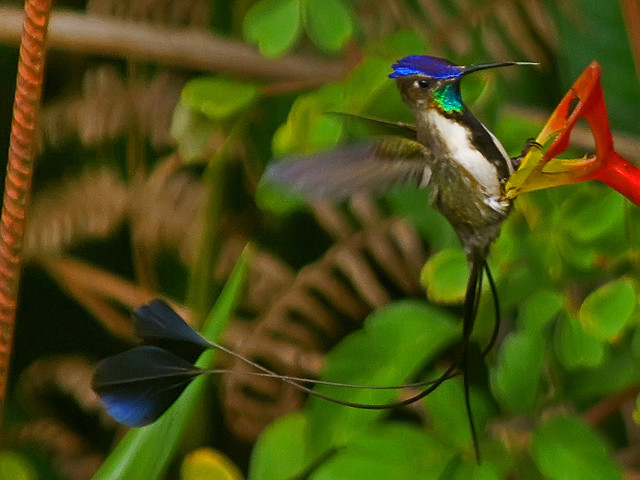
In 1835, when scientists first saw Peru’s most unusual hummingbird, they were so overcome with its beauty that they gave it the name “Marvellous.” This little bird treats the eye to iridescent green, yellow, orange, and purple feathers. But its most unusual feature is its tail. While most birds have eight to twelve tail feathers, the Marvellous hummingbird has only four. Two of these are long, pointed, thorn-like feathers that don’t seem to help much in flying or landing. The other two feathers are truly marvellous. They are six inches long, three times the length of the bird’s two-inch body. On the end of these two long narrow feathers are large feather fans that nearly equal the surface area of its wings.
Astonishingly, the Marvelous hummingbird has complete control of these feathers. At rest, the bird perches with these two feathers hanging down an inch or so from its body, and then crossing them until they are horizontal. In flight and landing they provide remarkable maneuverability. During mating, the hummingbird moves them as semaphores. Interestingly enough, evolutionists admit that they are stumped as to why these unusual feathers should have evolved.
One look at our creation clearly shows that our Creator appreciates beauty. But even the beautiful Marvelous hummingbird is but a poor and cloudy hint of the beauty of our Creator Himself.
Prayer:
Dear Father, help me treat the beauty You have created as You would have me to do. Let me be filled with thanksgiving to You for it, and let it remind me that You are the source of all that is truly beautiful. In Jesus’ Name. Amen.
Notes:
Crawford H. Greenewalt. The Marvelous Hummingbird Rediscovered. National Geographic, Vol. 130, No. 1. P. 98-101.”
The Marvelous (also Marvellous) Spatuletail (hummingbird), Loddigesia mirabilis, is a medium-sized (up to 5.9 in/15 cm long) white, green and bronze hummingbird adorned with blue crest feathers, a brilliant turquoise gorget, and a black line on its white underparts. It is the only member of the monotypic genus Loddigesia.
A Peruvian endemic, this species is found in the forest edge of the Río Utcubamba region. It was first reported in 1835 by the bird collector Andrew Matthews for George Loddiges. The Marvellous Spatuletail is unique among birds, for it has just four feathers in its tail. Its most remarkable feature is the male’s two long racquet-shaped outer tail feathers that cross each other and end in large violet-blue discs or “spatules”. He can move them independently.
Information gathered from Creation Moments, Wikipedia, and YouTube.
Psalm 148:7-8 “Praise the LORD from the earth, You great sea creatures and all the depths; fire and hail, snow and clouds; stormy wind, fulfilling His word…”
Is there any such thing as chance or luck? Does anything ever happen randomly? Many people don’t realize that the Bible speaks to these questions.
In late August 1992, a tornado swept through a small Wisconsin town and caused a great deal of destruction. That made it newsworthy enough. However, the destruction it wrought on one church in town received special notice on some national newscasts. Pictures showed the church in ruins. But the altar still stood, barely visible in the rubble. Most astonishing was the fact that the Bible still stood on its stand in its customary place on the altar. The undamaged Bible was open to where Psalm 77 reads,
The clouds poured out water, the skies sent out a sound; your arrows also flashed about. The voice of your thunder was in the whirlwind; the lightnings lit up the world; the earth trembled and shook.
In Matthew 10, Jesus tells us that God is so involved in His creation that not one of the billions of sparrows in the world falls to the ground without His knowledge. Psalm 148 tells us that the entire creation praises God in everything that happens. God is so personally involved in the creation that He even instructs each wind about the speed and direction to take.
Was it simply luck that the altar was spared and the Bible was open to Psalm 77? God is involved in every detail of the creation. Let’s praise God that there is no such thing as luck!
Prayer:
Dear Father, I thank You that there is no such thing as luck because You are so intimately involved in the creation. Help me to cleanse my mind and speech of the pagan ideas of chance and luck. In Jesus’ Name. Amen.
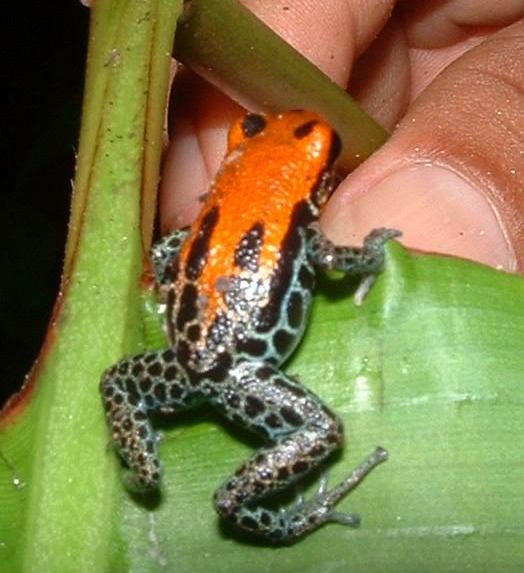
The Loving Poison Dart Frog – from Creation Moments
We love Him because He first loved us. (1 John 4:19)
The Choco Indians of Panama and Colombia use the poison from the skin of the beautiful poison dart frog to make their lethal darts. The bright orange and deep blue skin of this frog serves to warn predators that it is best left alone and its poisonous skin untouched.
Although it is deadly, the poison dart frog is one of the most loving parents in the entire amphibian world. The female will lay about a dozen eggs in the leaf litter within her mate’s territory. Both parents will stand watch over the eggs, keeping them moist, until the tadpoles emerge. Then the female allows each tadpole, one at a time, to wriggle onto her back. She takes each tadpole, in its turn, to its own miniature pond created by water trapped in the fronds of jungle plants. The mother poison dart frog remembers where each one of her tadpoles is and returns on a regular schedule to lay infertile eggs for the growing youngster to eat.
I would prefer to think that the care of the adult poison dart frogs for their children grows out of a sense of love for their off-spring, and we know that God is the author of all love. But even if this care is programmed instinct, we must still find the “programmer” – and that takes us back to the Creator once again. Such wisdom cannot be said to come from nowhere.
Prayer:
Dear Heavenly Father, the source of all love and wisdom, grant wisdom to Your people so that they may effectively witness to those around them who are being misled to believe that love is merely instinct and that wisdom can come from nowhere. In Jesus’ Name. Amen.
From Wikipedia:
“Most species of poison dart frogs are small, sometimes less than 1.5 centimetres (0.59 in) in adult length, although a few are up to 6 centimetres (2.4 in) in length. They weigh about 2 grams, depending on the size of the frog. Most poison dart frogs are brightly colored, displaying aposematic patterns to warn potential predators. Their bright coloration is associated with their toxicity and levels of alkaloids. Frogs like the ones of Dendrobates species have high levels of alkaloids, whereas the Colostethus species are cryptically colored and are non-toxic.[5] Unlike most other frogs, they are diurnal, rather than being primarily nocturnal or crepuscular.[6] When born and raised in captivity, poison frogs do not produce the skin toxins which they retain in their native habitat.[7]
They lay their eggs in moist places, including on leaves, in plants, among exposed roots, and elsewhere, and allow the tadpoles to wriggle onto their backs shortly after they hatch. They then carry the piggy-backed tadpoles to water, where the larva remain until metamorphosis. The water is typically a pool, but some species use the water gathered in bromeliads or other plants; and some species provide food, supplying the tadpoles with unfertilized eggs to eat.[6]
Many species of poison dart frog are dedicated parents. The red-and-blue poison-arrow frog (Dendrobates pumilio) carry their newly hatched tadpoles into the canopy. The tadpoles stick to the mucus on the back of their parents. Once in the upper reaches of the rainforest trees the parents deposit their young in the pools of water that accumulate in epiphytic plants such as bromeliads. The tadpoles feed on invertebrates in their arboreal nursery and their mother will even supplement their diet by depositing eggs into the water. Other poison frogs lay their eggs on the forest floor, hidden beneath the leaf litter.”
*
We are surrounded by sounds, some of which can be louder than an airliner taking off. Yet, we never hear these sounds. It’s called infrasound. It’s real sound that can be recorded if you have the right equipment.
Infrasound waves are below 20 hertz, the lowest frequency we can hear. Because the sound waves are long, they can travel hundreds or even thousands of miles. Volcanic eruptions regularly generate infrasound and so does the wind. But, perhaps most interestingly, those beautiful Northern Lights that often color the night sky also generate infrasound. The sound is produced when the incoming solar particles push the air outward. While we are not able to hear infrasound, it does influence us. Researchers in England placed an infrasound generator in a concert hall and, during the performance, infrasound was added at selected points. After the concert, the audience was asked about their emotions during certain passages of music, or if they had had experienced any strange feelings during the concert. Researchers concluded that infrasound intensified whatever emotional state the music had produced in people. So, if you have ever watched the Northern Lights and thought you were almost hearing something, it was likely the infrasound you were sensing.
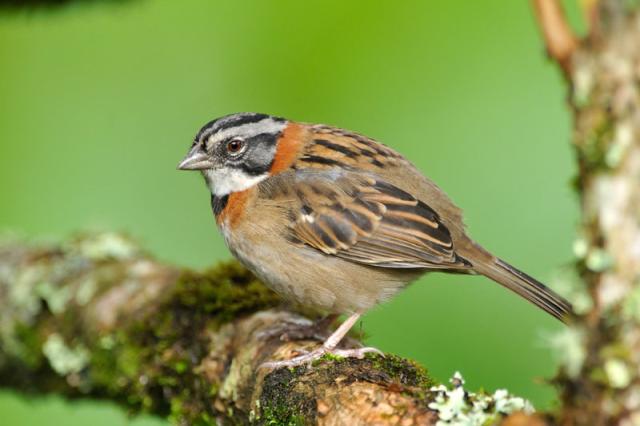
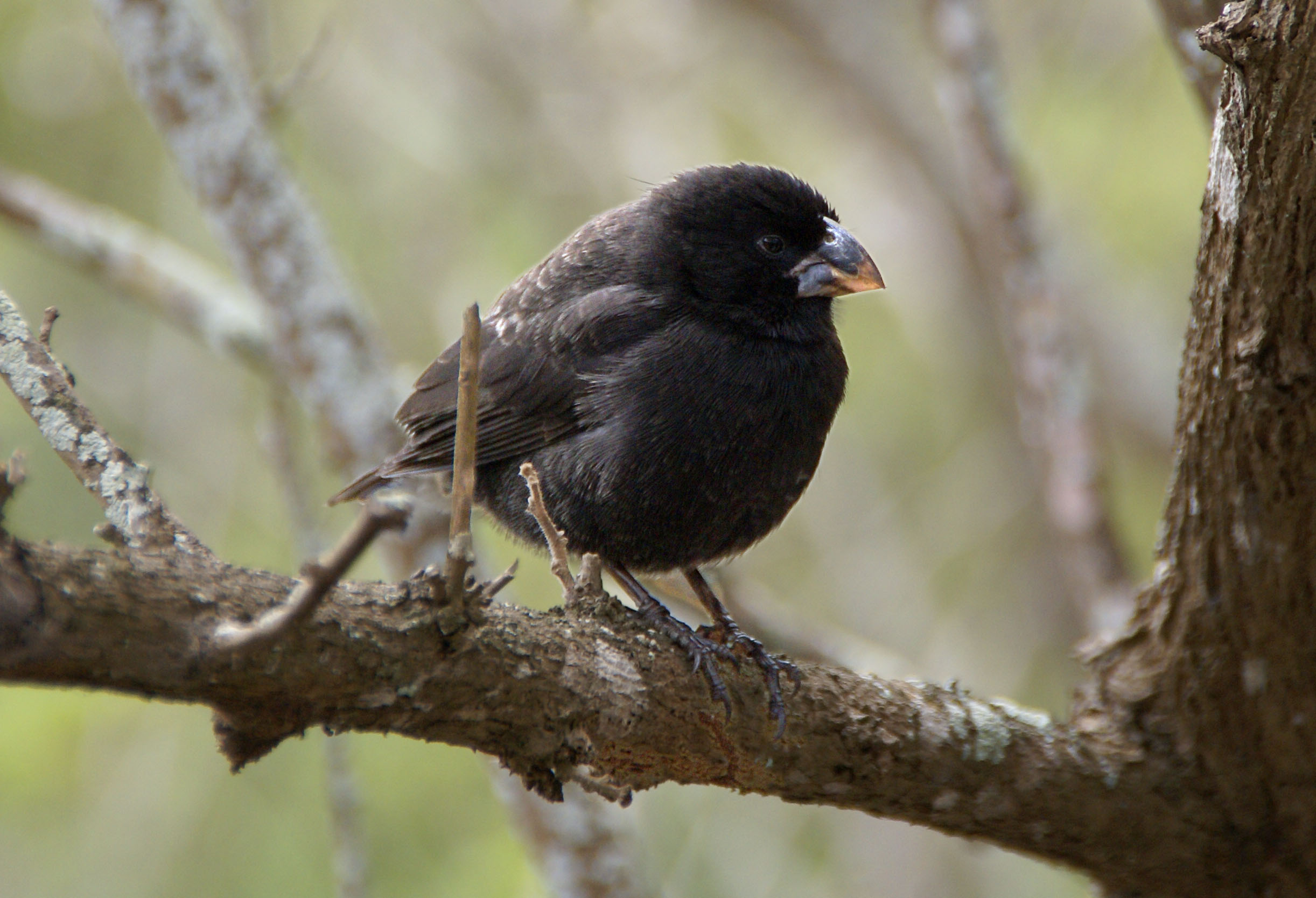
During his visit to the Galapagos Islands, Charles Darwin saw that each island was populated by a little finch. These birds were all very similar; yet, from one island to another there were some differences in the size and shape of the beak. Darwin reasonably concluded that in the distant past a pair of these birds had been blown 600 miles from the mainland and had since multiplied and spread. The environment on each island was slightly different, and the birds had developed specialized beaks to exploit the different food sources. It seemed to Darwin that here was a unique example of evolution in action where 13 different species had arisen from just one mating pair. A species is defined by the ability to reproduce; thus, a sterility barrier separates one species from another. Textbooks use Darwin’s finches to claim that new species have been produced, demonstrating evolution in action. However, the facts are that at least six of these different birds are known to interbreed and thus by definition are not new species at all but simply varieties within a single species. Moreover, DNA studies reveal very little difference between any of these birds, and there is no evidence of new genetic material, which is essential if evolution actually took place. Darwin’s finches offer no support for evolution. However, they do support the Bible when it teaches that, like every other creature, the birds have simply reproduced “after their own kind.” God has so designed His Creation that while it is possible for creatures to adapt perfectly to individual environments, there is still stability of the basic “kind.”
Prayer:
Dear Father, I thank You for Your Word that tells me of salvation. Amen.
Notes:
Creation Matters, (CRS), pp. 5-6, “Quiz.”
Copyright (C) 2010 Creation Moments, Inc



 How would you like to be a dental hygienist for a crocodile? That’s how the crocodile bird makes his living.










 Lee's Birdwatching Adventures Plus