Island Scrub Jays – The Ultimate Home-makers

Island Scrub Jays – The Ultimate Home-makers – by a j mithra

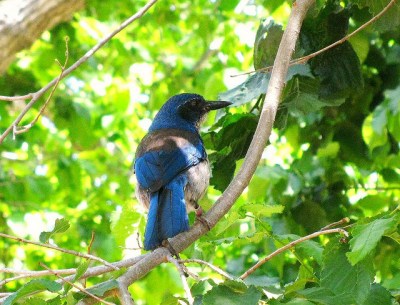
Island Scrub Jay (Aphelocoma insularis) ©WikiC

Island Scrub Jay (Aphelocoma insularis) ©WikiC


Island Scrub Jays are monogamous and may stay with a mate for their entire lives. Unlike some Aphelocoma species, the Island Scrub Jay is not a cooperative breeder, meaning that pairs do not rely on other related jays to help them raise their young…

Divorce has become the order of the day…
Spouses getting separated for flimsy reason, sometimes for no reason has become a fashion..
Even churches encourage divorce..
But,through these birds, GOD shows us that HE has created every spouse to mate for life..

It hath been said, Whosoever shall put away his wife, let him give her a writing of divorcement: But I say unto you, That whosoever shall put away his wife, saving for the cause of fornication, causeth her to commit adultery: and whosoever shall marry her that is divorced committeth adultery. (Mathew 5:31,32)

And most importantly Kids are gifts from GOD..
HE trusts is us that we would take care of these gifts and that is the reason HE has given us kids..
How well do we take care of them?
Or do we rely on some one else to raise them for us?

For if a man know not how to rule his own house, how shall he take care of the church of God? (1Timothy 3:5)

Both the male and the female help build nests three to 25 feet high in trees and shrubs. They use small oak branches that they break off trees and they never use sticks that fall to the ground These branches form the cup of the nest, which the parents line with grass and small roots…

We need to provide a home filled with love and care for our kids and not a house of luxury…

Females lay 3 to 5 eggs in a nest that they incubate for about 20 days. While the female sits on the eggs, the male spends his time hunting and defending the nest from snakes, hawks, foxes, and other Island Scrub Jays.

The male is also responsible for bringing the female food so she can be with the eggs as long as possible each day.

Husbands, love your wives, even as Christ also loved the church, and gave himself for it; (Ephesians 5:25)

Observations suggest that the more time parents spend near their nest, the higher their chances of defending their young ones against nest predators….

Now a days parents spend more time in their offices than with their kids..
The excuse is that they are working hard to give a comfortable future..
But, we parents cannot protect our children if we don’t spend time with them..
How can we claim that GOD has created us in HIS own image when we fail to protect our kids the way HE protects us?
It is time for us to learn from these Island Scrub Jay

s about how to spend time with our children so as to defend them from predators…

Do we have that learning spirit?

Your’s in YESHUA,
a j mithra

Please visit us at: Crosstree


Island Scrub Jays are in the Corvidae Family which has Crows, Jays, Magpies, Treepies, Rooks and Ravens in it. They are in the Passeriformes Order.

*

The Thirsty Sandgrouse…

The Thirsty Sandgrouse… – by a j mithra

Chestnut-belliedSandgrouse (Pterocles exustus) by Nikhil Devasar

Chestnut-belliedSandgrouse (Pterocles exustus) by Nikhil Devasar

The Sandgrouse are a unique set of birds found only in Africa and Eurasia. The relationship of these birds to other groups has been one of the most hotly debated issues over a period of centuries.

They are primarily ground-feeding birds of deserts, scrub, and grasslands, recalling small long-winged grouse — indeed, one of the most desert-loving of all species.

Its beautifully patterned underparts provide fine camouflage amongst its pink & white rocky habitat.

But sandgrouse share several attributes of pigeons, including their long wings and the practice of making long flights daily between breeding or feeding grounds, and pools of water at which they drink.

A sandgrouse could be described as the busiest eater in the bird world. It needs to find several seeds every second to get enough food to survive. To sustain these sorts of feeding rates, it exploits areas with superabundant seed banks. The grouse peck up each seed individually, and look like little sewing machines when feeding. Each bird will consume between 5,000 and 80,000 seeds a day. Some seeds are so small that it takes 5,000 to make up just one gram.

Now the parable is this: The seed is the word of God. (Luke8:11)

Painted Sandgrouse (Pterocles indicus) by Nikhil Devasar

Painted Sandgrouse (Pterocles indicus) by Nikhil Devasar

How many seeds did we eat today? A full crop (up to 24ml volume) of this small bird could hold between 3 000 and 40 000 seeds, depending on seed size. How much are we filled with the word of GOD?

These birds are the busiest eaters of the Avian world…
We too are so busy that we hastily read a chapter from the Bible before we leave home…
Some of us are even more busy that we don’t find time to read the Bible at all …
We do you know the meaning of the word BUSY?
B (being) U (under) S (satan’s) Y (yoke)
Are you BUSY (Being under satan’s yoke)?

Or

BUSY (Being under Savior’s yoke)?
JESUS said, “For my yoke is easy, and my burden is light.” (Mathew 11:30)

One special feature of sandgrouse is their long flights to water holes in desert and semi-desert country where not only do they drink, but during breeding they wet their belly feathers to carry water to the chicks. The male’s belly feathers are specially adapted to hold up to 15-20 ml of water. The nests may be over 25 miles distant, and it may take several trips, but adults carry enough water back to their chicks so that they survive.. (Video of a Pin-tailed Sandgrouse soaking its belly feathers)

By far the best way to see sandgrouse is to await their arrival at waterholes. The flocking behavior helps them avoid predation because not only are individuals in a flock more difficult for a predator to catch, but because some members can always be on the lookout for danger while others drink. The Burchell’s Sandgrouse (Pterocles burchelli) in the Kalahari desert has been known to fly over 100 miles each day to water…

Are you thirsty?
You are so privileged, that you don’t have to move even one step for water…
Just call JESUS, the Living Water, HE will not only quench your thirst but, let the Living Water flow from you…

For I will pour water upon him that is thirsty, and floods upon the dry ground: I will pour my spirit upon thy seed, and my blessing upon thine offspring: (Isaiah 44:3)

He that believeth on me, as the scripture hath said, out of his belly shall flow rivers of living water. (John 7:38)

Have an overflowing day!

Your’s in YESHUA,
a j mithra

Please visit us at: Crosstree

I Don’t Show Off – The Great Horned Owl

I Don’t Show Off – The Great Horned Owl – by a j mithra

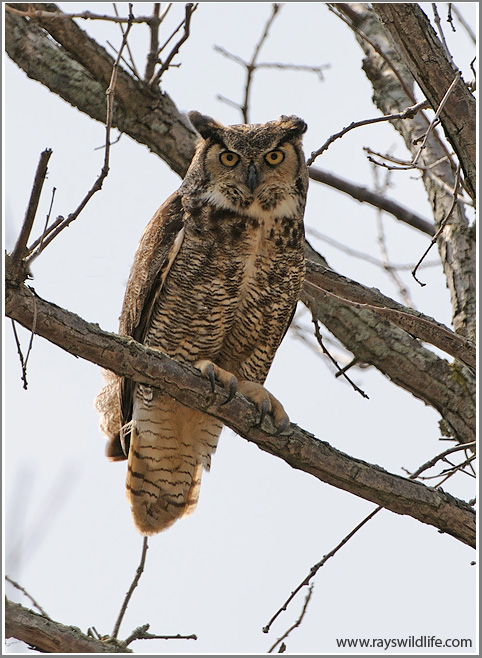
Great Horned Owl (Bubo virginianus) by Ray

Great Horned Owl (Bubo virginianus) by Ray

Great Horned owls can fly silently because the ends of their flight feathers don’t have barbules, those tiny hooks that most all other bird feathers have. When birds fly, the rubbing barbules is what makes the noise…

If GOD has not created these owls to fly silent, it would’ve turned into a prey instead of being a predator..

It doesn’t show-off its presence..

Please read through Isaiah chapter 39, you will see how King Hezekiah showed every treasure he had to the king of Babylon and how it brought curse over his family…

Talents and treasures from GOD
are not to show off but to glorify HIM…

On the faces of Great Horned owls and most other owls there are very short feather in a rounded pattern that form a facial disk. This facial dish acts like a satellite dish, receiving sounds and funneling them to the ears, which are hidden beneath feathers on the sides of the skull…

Its one ear is slightly higher and positioned at a slightly different angle on the head
than the other, it is able to use a kind of “sound triangulation” process to judge the location of its prey with amazing accuracy…

These owls can hear even the slightest movement of its prey within leaves or undergrowth or even in snow…
Such is its hearing ability..

Most of us tend to grumble about prayers unanswered..
We say that GOD doesn’t talk to us..
What sort of prayer time do we have?
Do we take time to be silent in HIS presence?

If these birds didn’t maintain silence, they may have to starve to death..

Most of us are spiritually starved cos, we go with a shopping list to the presence of GOD, instead of taking orders from the LORD..

Unless we learn to be still, we will never know our LORD..

Be still, and know that I am God: I will be exalted among the heathen, I will be exalted in the earth. (Psalm 46:10)

Note: Thank you, Ms Val, for the inspiration.. I’ve learnt loads from your article about THE GREAT HORNED OWL.. May GOD richly bless you in all that you do for HIS glory..

Have a blessed day!

Your’s in YESHUA,
a j mithra

Please visit us at: Crosstree

*

Birds in Hymns – Updated

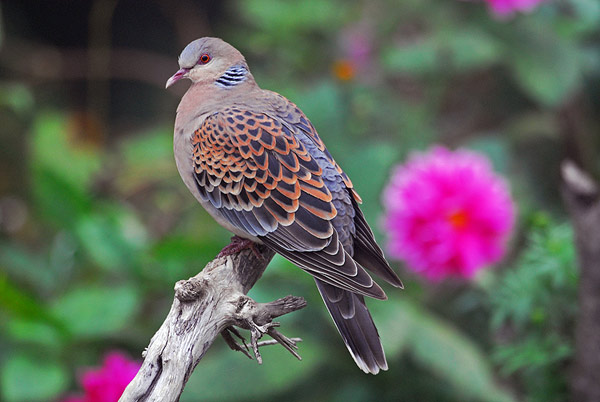
Oriental Turtle Dove (Streptopelia orientalis) by Nikhil

Oriental Turtle Dove (Streptopelia orientalis) by Nikhil

While updating the Birds in Hymns page, I had to read through the hymns to find the references to the birds. What struck me, is the depth of the writings of these hymn writers. Many of these were written in the 1,700 and 1,800s. These are not the shallow words of today, but are filled with great doctrinal truths, praise and worship for our Savior.

We here on the blog use the birds that God has created to teach you about them, but also to make applications that will help us with our lives. That is how many of the birds are used in Scripture, to learn from them by way of illustrations of truths to help make us better Christians or to become Christians.

I will sing of the mercies of the LORD forever; With my mouth will I make known Your faithfulness to all generations. (Psalms 89:1 NKJV)

Below are just some of the examples I pulled out. Time spent reading through the hymns, will be a blessing to you.

Jesus, Holy, Undefiled by Emily M. Shapcole wrote these words:

Now the little birds arise,
Chirping gaily in the skies;
Thee their tiny voices praise,
In the early songs they raise.

Thou, by Whom the birds are fed,
Give to me my daily bread;
And Thy holy Spirit give,
Without Whom I cannot live.

Speed For Thy Life by Fanny Crosby

Speed for thy life to the mountain,
Fly like a bird to its nest,
Fly to the arms of the Savior:
There is thy only rest.

There Seems A Voice In Every Gale by Amelia A. Opie

The birds, that rise on quivering wing,
Proclaim their Maker’s praise,
And all the mingling sounds of spring
To Thee an anthem raise.

This is My Father’s World by Maltbie B. Babcock

This is my Father’s world, the birds their carols raise,
The morning light, the lily white, declare their Maker’s praise.
This is my Father’s world: He shines in all that’s fair;
In the rustling grass I hear Him pass;
He speaks to me everywhere.

Yes, God is Good by John H. Gurney

The merry birds prolong the strain,
Their song with every spring renewed;
And balmy air, and falling rain,
Each softly whispers, “God is good.”

Jesus, I Come by William T. Sleeper

Out of unrest and arrogant pride,
Jesus, I come, Jesus, I come;
Into Thy blessèd will to abide,
Jesus, I come to Thee.
Out of myself to dwell in Thy love,
Out of despair into raptures above,
Upward for aye on wings like a dove,
Jesus, I come to Thee.

Let Him Come In by C. W. Ray

To thy barred and bolted door,
Gently as a wooing dove,
Jesus comes as oft before,
Pleading in His tender love.

Refrain

Let Him in; let Him in;
Sinner, why not make Him room?
Let Him in; let Him in;
Lest He never more may come.

See ~ Wordless Birds

More ~ Birds in Hymns

*

Birds, It’s Coffee-time

Birds, It’s Coffee-time – by a j mithra

Blue-crowned Motmot (Momotus momota) by Ian

Blue-crowned Motmot (Momotus momota) by Ian

You know?

Birds just love coffee..

Shade trees protect the understory coffee plants from rain and sun, help maintain soil quality, reduce the need for weeding, and aid in pest control. Organic matter from the shade trees also provides a natural mulch,which reduces the need for chemical fertilizers, reduces erosion, contributes important nutrients to the soil, and prevents metal toxicities…

That is the reason most birds to migrate to shaded coffee plantations..

Birds know that there is Life under the shadow of trees?

When life turns cruel and we face heat and storm we tend to forget that, we have an everlasting shade..
We forget to remember this verse,

And there shall be a pavilion for a shade in the day-time from the heat, and for a refuge and for a covert from storm and from rain. (Isaiah 4:6)

Why should you run away from your problems?
Don’t you remember that JESUS is your providence?

Jehovah is thy keeper: Jehovah is thy shade upon thy right hand. (Psalm 121:5)

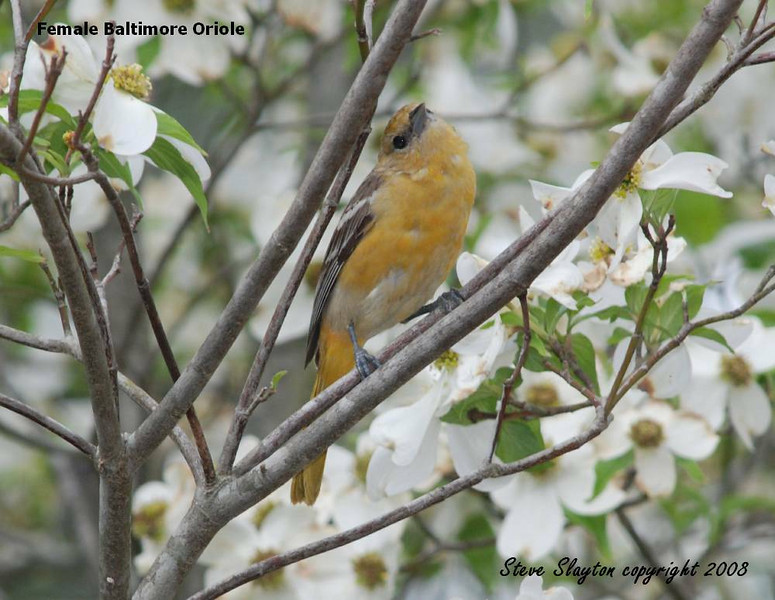
Baltimore Oriole (Icterus galbula) by S Slayton

Baltimore Oriole (Icterus galbula) by S Slayton

When you feel that tough seasons are approaching you, think of these birds and fly over to the everlasting shadow of JESUS, that is where you have perfect providence and protection…

Well, next time when you have coffee, just remember these birds and thank GOD for what HE has taught us through them..

Will you?

But ask now the beasts, and they shall teach thee; And the birds of the heavens, and they shall tell thee: (Job 12:7)

Yours in YESHUA,
a j mithra

Please visit us at: Crosstree


Lee’s Addition:

Here are some interesting articles:
Shade Grown Coffee

The Wompoo Fruit Dove – The Seed distributor

The Wompoo Fruit Dove – The Seed distributor – by a j mithra

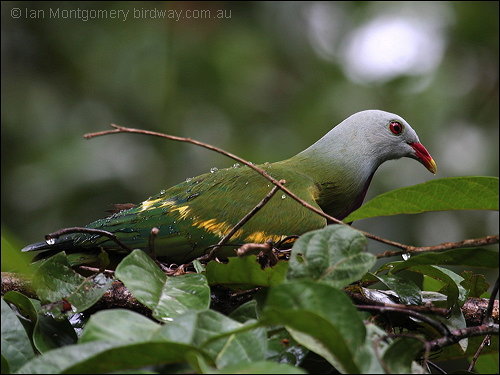
Wompoo Fruit-Dove (Ptilinopus magnificus) by Ian

Wompoo Fruit Dove (Ptilinopus magnificus) by Ian

The Wompoo Fruit Dove is a big rainforest pigeon. A large and dramatically beautiful rainforest pigeon, almost twice the size of other colored fruit-doves, the Wompoo Fruit Dove is identified by its large size, rich purple throat, chest and upper belly,and yellow lower belly.

The most favored habitat of the Wompoo Fruit Dove is rainforest, and birds are rarely seen in other areas. Occurs in, or near rainforest, low elevation moist eucalypt forest and brush box forests.

It is perhaps the most beautiful of all the doves found in Australia….
Did these birds inherit their beauty from dwelling in the rain forest?
The beauty of a believer lies in his heart…
The more we dwell under the Pillar of Clouds, the more we get soaked in the rain of the Holy Spirit…

The more we get wet in the rain of the Holy spirit, the more beautiful we turn..

In the light of the king’s countenance is life; and his favour is as a cloud of the latter rain. (Proverbs 16:13)

Wompoo Fruit-Dove (Ptilinopus magnificus) by Ian

Wompoo Fruit Dove (Ptilinopus magnificus) by Ian

Wompoo Fruit Doves feed on a variety of rainforest fruits. The fruits are eaten whole and may be quite large in size. They may form large feeding flocks where food is plentiful, and the birds acrobatically pluck the fruit from trees and vines high up in the canopy area. Despite their small size, they are able to swallow fruits of 5 cm³ volume, which would translate into a diameter of about 2 cm in spherical fruit. The birds are hard to see when feeding, and are best located by their calls or the sound of falling fruit.

This world may not be able to see you or locate you, but, no matter where you are, the fragrance of your fruit filled life will attract the world towards you…

Wherefore by their fruits ye shall know them. (Mathew 7:20)

Feeds on a diverse range of tree and vine fruits and is locally nomadic following ripening fruit; some of its feed trees rely on species such as this to distribute their seeds…

Figs are preferred in the late dry and wet season (October – March) Fruit of cinnamon trees are preferred whenever available, Arecaceae (palm) fruit in mid-late dry season (August – October) and Annonaceae fruit, such as Ylang-ylanga re preferred whenever available..

The birds do not travel large distances, but move around in small, localized areas in search of fruit-bearing trees. The seeds in the fruit eaten by the Wompoo Fruit Dove are spread a long way in the dove’s droppings so more fruit trees can grow.

We may not be able to travel a long distance to sow the seed of God, but, we can always keep sowing around the place where we dwell..
There is a saying which goes like this,

A missionary’s longest journey is the distance traveled to the next door, to proclaim the good news of Jesus…

Well, ministry starts at home..
Before we reach the others, let us reach the lost in our family….

It was meet that we should make merry, and be glad: for this thy brother was dead, and is alive again; and was lost, and is found. (Luke 15:32)

Have a fruit filled day!

Your’s in YESHUA,
a j mithra

Please visit us at: Crosstree


Lee’s Addition:

Wompoo Fruit Dove is part of the Columbidae Family of the Columbiformes Order.

Here are a couple of videos of the Wompoo by two of our videographers.

Kagu – The High Profile Endemic Emblem

The Kagu – The High Profile Endemic Emblem – by a j mithra

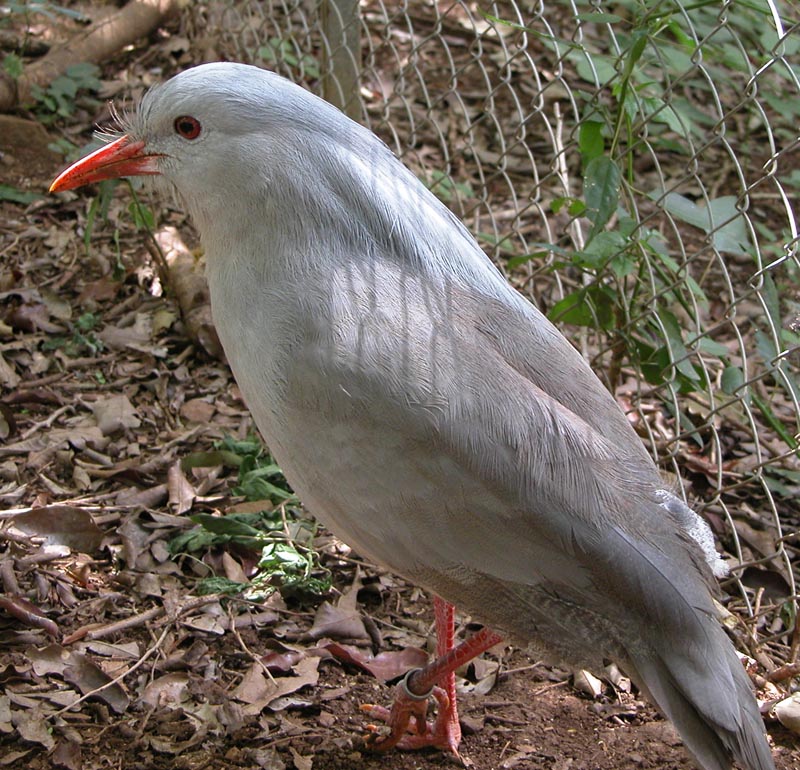
Kagu (Rhynochetos jubatus) Wikipedia

Kagu (Rhynochetos jubatus) Wikipedia

Kagus (Rhynochetos jubatus) are rather oddballs among birds because they are a mixed bag of physical characteristics, some of which are unique to Rhynochetidae, but most of which are shared with other bird families.

The name “Rhynochetos” refers to the unique rolled corns or nasal flaps that cover its nostrils.

Kagus look like rails (Rallidae) and occupy a niche similar to Rallidae; however, Kagus also exhibit light coloration and abundant, widely distributed powder-downs, much like herons (Ardeidae).

Kagus have a unique blood composition compared to other bird species, consisting of one-third the number of red blood cells and three times the hemoglobin content…

Our life is unique compared to the others, for we are not only brought by the blood of Jesus, but also protected by His precious blood..

Take heed therefore unto yourselves, and to all the flock, over the which the Holy Ghost hath made you overseers, to feed the church of God, which he hath purchased with his own blood. (Acts 20:28)

Although flightless, Kagus have large wings. They are medium-sized quite compact and agile birds that move surprisingly fast. Their dark-red eyes and orange-red, long legs and large bill contrast with their ash-gray and white plumage. A striking feature of the Kagu’s appearance, and usually concealed, is the patterning on the wings, which somewhat resembles that on the Sunbittern‘s wings. The patterning consists of a dominant design of black-and-white cross-bands with a smaller area of brown “overlay” also running across the primaries. Their long crest feathers extend to the lower back and are difficult to spot unless raised. The pattern on the wings of these birds resembles that of the Sunbittern’s wings…

Do we have the life pattern of The Sun of Righteousness in our lives? God has created us in His image; do we carry His image wherever we go?

So God created man in his own image, in the image of God created he him; (Genesis 1:27)

The Kagu is exclusively carnivorous, feeding on a variety of animals with annelid worms, snails and lizards being amongst the most important prey items…

Also taken are larvae, spiders, centipedes and insects such as grasshoppers, bugs, and beetles. The majority of the diet is obtained from the leaf litter or soil, with other prey items found in vegetation, old logs and rocks.

It possesses bright red legs and a similarly coloured bill, and has large eyes, positioned so that they give good binocular which is helpful in finding prey in the leaf litter and seeing in the gloom of the forest.

Their hunting technique is to stand still on the ground or from an elevated perch, and silently watch for moving prey. they must also use other means, like vibration and/or sound, to pinpoint out-of-sight prey in soil that they capture.

Sometimes Kagus will hunt small animals in shallow water. They may stand on one foot and move the leaf litter with the other foot in order to flush prey. Victory is not a guarantee, no matter how technically qualified we are.

Like the Kagu, our battle technique ought to stand still and watch God win the battle for us…

And all this assembly shall know that the LORD saveth not with sword and spear: for the battle is the Lord’s, and he will give you into our hands. (1 Samuel 17:47)

In addition to their song, Kagus are best known for their distinctive displays. For defense, the wings are opened to reveal their patterning and positioned forward-facing in an attention-grabbing display that might have acted to confuse past predators. This display is remarkably similar in form and function to the “frontal display” of the Sunbittern..

Kagus use a “strutting” display in courtship and in disputes with other birds. They take an upright pose with the crest raised and fanned and the wings held down and forward in the form of a cape. They then slowly circle around each other in a ballet-like dance.

A captured bird held by the feet will also instinctively open its wings to reveal the patterning and bring them together as “shields” to cover its head….

The Kagu played a part in some indigenous Kanak cultures; for example, Kagu feathers were worn by the chiefs and their song was used in war dances.

Kagus are considered very important in New Caledonia, it is a high profile endemic emblem for the Territory.

Its distinctive song used to be played to the nation every night as the island’s TV station signed off the air.

Kagus make a range of different sounds, most commonly duetting in the morning, each duet lasting about 15 minutes. Its survival is considered important for the nation’s economy and image…

Kagus seem to know the importance of corporate worship, is that why they sing duets every morning?

We may not be able to have corporate worship every morning, but, how many of us realize the importance of corporate worship at least on a Sunday morning?

Jesus said,

For where two or three are gathered together in my name, there am I in the midst of them. (Mathew 18:20)

This is what the Bible says about corporate worship…

Not forsaking the assembling of ourselves together, as the manner of some is; but exhorting one another: and so much the more, as ye see the day approaching. (Hebrew 10:25)

Our survival is important for the extension of God’s kingdom,so, let us live like JESUS and for JESUS…

Have a blessed day!

Your’s in YESHUA,
a j mithra

Please visit us at: Crosstree

Three-wattled Bellbird – The Noise Maker

Three-wattled Bellbird – The Noise Maker  by a j mithra

Three-wattled Bellbird (Procnias tricarunculata) Immature male by Kent Nickell

Three-wattled Bellbird (Procnias tricarunculata) Immature male by Kent Nickell

The Three-wattled Bellbird lives between eastern Honduras and western Panama. In Costa Rica it lives on both slopes of the country..

It breeds in the cloud forests and in the foothill and highland moist forest at 1,200-2,100 m, and occasionally down to 750 m. In the non-breeding season, birds undertake complex migrations ranging up to 3,000 m (in Costa Rica), and then descending to the foothills and lowlands on both the Pacific and Caribbean slopes…

There is protection, anointing and guidance under the Pillar of the Cloud…
These birds seem to know the secret of living a protected life under the clouds..

The Bible says that we are the temple of the Living God, but, can we say that, we dwell under the Pillar of the Cloud?

During the days of Moses, the Pillar of the Cloud hovered above the tabernacle, from where Moses took orders from the Lord…
From where do we take orders? Man or God?

And it came to pass, as Moses entered into the tabernacle, the cloudy pillar descended, and stood at the door of the tabernacle, and the LORD talked with Moses. (Exodus 33:9)

Maybe that is the reason that, we are not able to hear the voice of the Lord…

Three-wattled Bellbird © Pete Morris

Three-wattled Bellbird © Pete Morris

The Three-Wattled Bellbird swallows the fruits of trees, particularly those in the Lauraceae family, of which the avocado is a member. Avocados, known as Butter-fruit in India, have the highest protein content of any fruit. Avocados contain more potassium than bananas. One avocado contains 81 mcg of lutein, an important nutrient for healthy eyes. Leaf and seed extracts have been used for a variety of medical application, including treatment of diarrhea and dysentery and as an antibiotic.

What kind of food do we eat?
These birds not only eat healthy food, but they eat medicinal food too..
People spend more money on medicine rather than on food..

Why?

Is it because, now a days, people don’t eat to live, but they live to eat..

And put a knife to thy throat, if thou be a man given to appetite. (Proverbs 23:2)

At close range, the vocalization of many in Costa Rica is heard as a complex three-part song, is thought to be among the loudest bird calls on Earth, audible to humans from over 0.5 mi (0.80 km) away. The song is different in Nicaragua and in also Panama, and these songs also include an extremely loud, but less bell-like, note.

Based on limited spectral analysis, researchers believe that the Bell-bird makes its unusual anvil-like sound by singing up to three notes simultaneously. This is a trick which takes the young birds a while to perfect. This one seems to be producing pitches of roughly 1280, 1365, and 1450 Hz, approximately E6, F6, and F-sharp6 in the musical scale. These three notes, each a semi-tone apart, produce a very rough, dissonant “bonk” giving the bird its name.

A link to the Three-wattled Bellbird. A male is displaying and you can hear his call, by Max Roth.

http://ibc.lynxeds.com/video/three-wattled-bellbird-procnias-tricarunculatus/male-displaying-treetop-perch

The three-wattled bellbird, which inhabits the cloud forests, is rarely seen in the mist-shrouded treetops, though the male’s eerie call, described as a “ventriloqual bonk!’ haunts the rainforest… as long as the sun is shining.

The purpose for which God created us is to worship and worship alone…
But, are we worshipping the Lord at all times or just in a Sunday morning service?

These Birds may not have a song but still their BONK saves them from predators…

You may not have a good voice but still your noise can frighten the devil..
You know? God loves your NOISE and not your VOICE…

These birds sing as long as the sun is shining..

We, the church too can sing only as long as the Sun of Righteousness shines on us..
Darkness is fast descending, let us keep singing , for the hour of the Lord has come..
If we don’t sing here, how can we sing in heaven?
After all, only practice makes us perfect…

The dead praise not the LORD, neither any that go down into silence. (Psalm 115:17)

Have a blessed day!

Your’s in YESHUA,
a j mithra

Please visit us at:  Crosstree


Lee’s Addition:

The four Bellbirds are in the Cotingidae Family of the Passerifromes Order. The Cotinga family has Bellbirds (4), Cotingas (25), Plantcutter (3), Berryeater (2), Fruiteater (12), Cock-of-the-rock (2), Phia (9), Fruitcrow (4), Capuchinbird (1), and Umbrellabird (3). They all seem to have interesting names.

The Sage in the sagebrush…

The Sage in the sagebrush… – by a j mithra

Hello,

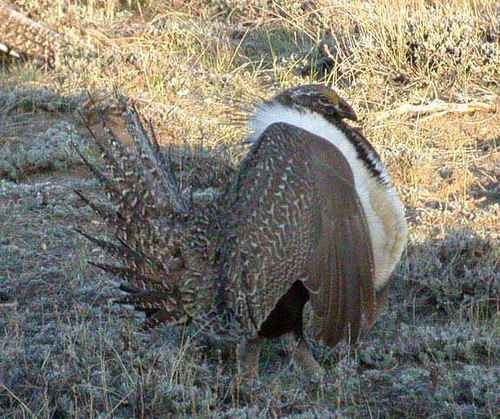
Sage Grouse (Centrocercus urophasianus) by Kent Nickell

Sage Grouse (Centrocercus urophasianus) by Kent Nickell

My name is Mr. Greater Sage Grouse–also known as the sage cock, sage hen, sage chicken, and formerly, western sage grouse which is the largest member of a family of hen-like terrestrial birds known as grouse.

At one time, Washington State had an abundant population of sage grouse. Hunting, loss of habitat because of expanding farm lands and other human development, and devastating wildfires have reduced our population to fewer than 1,500 birds. We are currently a state-threatened species and a federal candidate species.

We, the Sage grouse are herbivores and we eat soft plants, primarily big sagebrush. Big sagebrush is essential to our lives cos, all through our lives, you can find us in or near dense stands of sagebrush. Our female flock nests on the ground under the shrub and seek cover from predators and weather beneath it.

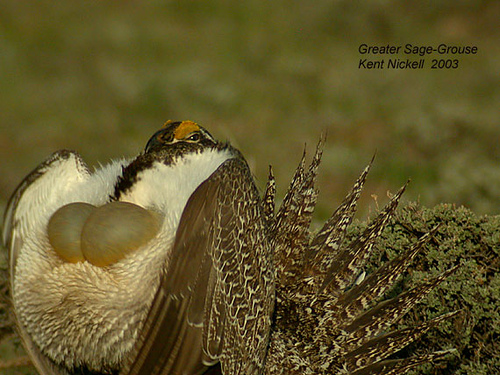
Sage Grouse (Centrocercus urophasianus) by Kent Nickell

Sage Grouse (Centrocercus urophasianus) by Kent Nickell

From fall through spring the leaves and more succulent stems of big sagebrush make up from 90 to 100 percent of the our diet. During summer and early fall, we leave the dense sage and move to scattered patches of sagebrush found near seeps, streams, or irrigated fields where we eat green forbs and insects, both of which are high in protein and allow rapid growth of young chicks.

One of the most interesting aspects about us is nearly complete reliance on sagebrush. Our habitat requirements are so specific that we are frequently referred to as “sagebrush obligates,” that is, we birds cannot survive in areas where the shrub, with which we share the name, has been removed…

Like us, you Christians too, share the name Christ with which you are identified…
We, the Sage Grouse cannot live without Sage brush plants..
We cannot survive if Sage brush plants are removed from our lives…

Christians means CHRIST IN US…
But, there are so many in your church who do not have Christ in their lives, but, they call themselves as Christians…

Your Bible says,

But ye are not in the flesh, but in the Spirit, if so be that the Spirit of God dwell in you. Now if any man have not the Spirit of Christ, he is none of his. (Romans 8:9)

The Bible also says,

Therefore if any man be in Christ, he is a new creature: old things are passed away; behold, all things are become new. (2Corinthians 5:17)

Let your hearts judge if you are worthy of calling yourselves as Christians….

I wish you should know more about the sage brush plant, our eternal home..

Sage Grouse (Centrocercusurophasianus) by Dave's BirdingPix

Sage Grouse (Centrocercusurophasianus) by Dave's BirdingPix

Sagebrush has bacteriostatic, astringent, and antioxidant properties. Sagebrush kills bacteria, inhibits free radicals, and has anti-inflammatory and anti-carcinogenic actions, and so is most useful as a cleansing first aid wash for disinfecting wounds and skin irritations. Tea made from the leaves as a medicine for digestive problems, headache and cold. The leaves can be very useful in your kitchen as a means of protecting stored dried food from insects and rodents…

We have our home, where there is food and protection…
How protected is your home? Do you have a healthy environment?
Do you live a healthy life like the way we live?
Don’t you realize how well you should take care of your health?

Your body is the temple of JESUS, do you know that? Have you not read the following verse in your Bible?

Know ye not that ye are the temple of God, and that the Spirit of God dwelleth in you? If any man defile the temple of God, him shall God destroy; for the temple of God is holy, which temple ye are. (1Corinthians 3:16,17)

Whenever you think of sage brush, think of us, the Greater Sage Grouse..
We need you..

If only you could take care of the environment, this earth will not only protect you, me and all other living thing, but also will provide us food, water and shelter…

By protecting the earth, you are not only protecting us but protecting your race too…

Live and let us live…

Yours,

The Greater Sage Grouse
Have a Thoughtful day!

Your’s in YESHUA,
a j mithra

Please visit us at: Crosstree


Lee’s Addition:

Sage Grouse are in the Phasianidae Family of the Galliformes Order. There are 181 members in the family which also includes Turkeys, Chickens, Ptarmigans, Partridges, Snowcock, Francolins, Spurfowls, Junglefowls, Pheasants, Peafowls and others. None of them are on the “unclean-do not eat” list.

Video of a male Sage Grouse displaying

*

Flight 7…

Flight 7… – by a j mithra

Number seven signifies completeness and that is the reason GOD took rest on the seventh after creation..

The wing shape of birds has its basis in survival value…
There are Seven Basic Wing Shapes and arrangements for different flying styles;

1.  FAST TAKEOFF AND DODGING WINGS

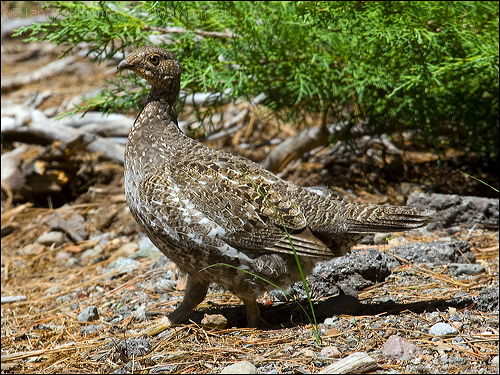
Sooty(Blue) Grouse (Dendragapusfuliginosus) byIan

Sooty (Blue) Grouse (Dendragapusfuliginosus) byIan

Birds such as pheasants and grouse that usually inhabit dense cover and need to dodge quickly between obstructions have wings that allow twisting flight at short distances..

Built for fast takeoff and dodging, this type of wing is relatively short but broad and cupped,
with flexible tips that can be set at varied angles without twisting the whole wing.

GOD expects us to be swift to hear, swift to lend a helping hand to the poor and the needy..

Wherefore, my beloved brethren, let every man be swift to hear, …….. (James 1:19)

2.  SOARING BIRD’S WINGS

Andean Condor (Vultur gryphus) by Daves BirdingPix

Andean Condor (Vultur gryphus) by Daves BirdingPix

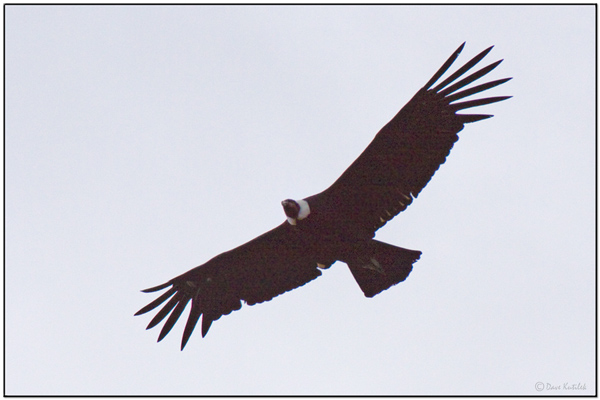
Soaring Birds tend to have broad wings. The Turkey Vulture has extremely broad wings for soaring. The breath of this wing type and the arrangement of the slotted primary feathers make it most efficient for soaring over land.

Black and Turkey Vultures, Red-tailed Hawks, Broad-winged hawks, Northern Harriers, Condors, Ravens, and some gulls have this kind of wings.

GOD wants us to wait in HIS presence and get wings of an Eagle to soar high even above storms… How long do we wait in HIS presence?

But they that wait upon the LORD shall renew their strength; they shall mount up with wings as eagles; they shall run, and not be weary; and they shall walk, and not faint. (Isaiah 40:31)

3.  HIGH SPEED AND MANEUVERABILITY FLIGHT WINGS

White-throated Swift by Dave's BirdingPix

White-throated Swift by Dave's BirdingPix

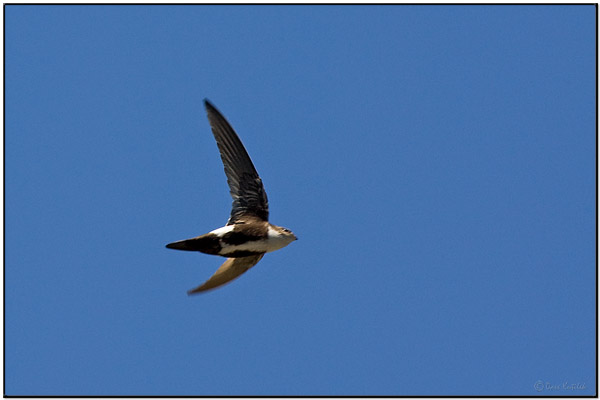
Some birds of prey and most other fast-flying birdshave developed High Speed Maneuverable wings. These wings of swifts, swallows, shorebirds, and waterfowl, and other small-to-medium-sized birds with rapid flight. Are extremely flat, moderately long narrow, and triangular, and tend to be swept backwards, like the wings of a high-speed jet fighter.

How many of us hasten to give our tithe and offering?
How many of us hasten to honor the servants of GOD?

Look at Abraham,

And Abraham hastened into the tent unto Sarah, and said, Make ready quickly three measures of fine meal, knead it, and make cakes upon the hearth. (Genesis 18:6)

Grey Heron (Ardea cinerea) by W Kwong

Grey Heron (Ardea cinerea) by W Kwong

4. SLOW FLAPPING FLIGHT WINGS

The kind of wings characteristic of Slow Flapping Flight are large and distinctly arched.

Herons, Egrets, and Ibises have this type of wing, and their style makes them immediately recognizable as belonging to one of those families, even when see from a distance.

GOD expects of us to be

….slow to speak, slow to wrath: (James 1:19)

5.  LONG DISTANCE OCEANIC SOARING WINGS

Christmas Frigatebird (Fregata andrewsi) by Ian

Christmas Frigatebird (Fregata andrewsi) by Ian

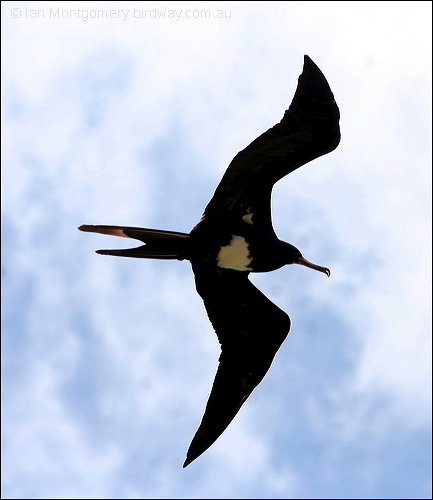
Seabirds, such as Shearwaters and Albatrosses, have a high-aspect wing, but one that is adapted for Long Distance Gliding — long, narrow, flat, and pointed, with no slotting of the primary feathers. The longest feathers are the outermost primaries.

Pointed wings like these are best suited for Long Distance Oceanic Soaring. Other birds with this type of wings are Gulls and Frigatebirds, which glide almost endlessly above the sea.

God wants to set us on high place; HE wants us to be high above everyone around us… But, not until we love HIM the way HE loves us…

Because he hath set his love upon me, therefore will I deliver him: I will set him on high, because he hath known my name.

6.  LONG DISTANCE GLIDING WINGS

Black-necked Stork (Jabiru) (Ephippiorhynchus asiaticus) by Ian

Black-necked Stork (Jabiru) (Ephippiorhynchus asiaticus) by Ian

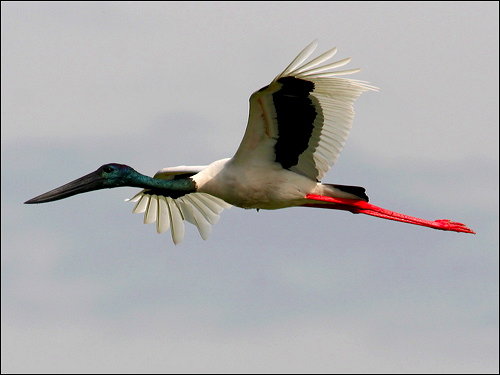
Still another Long Distance Gliding variation is found in the type of wing typical of storks and some vultures, a slotted, high-lifting structure. The wings are broad to provide more wing surface and short to make use of subtle variations in air currents.

We are on a very long journey; a journey of righteousness, a journey of perseverance, a journey of faithfulness and a journey of love…How calm are we on our journey?

And whosoever shall compel thee to go a mile, go with him twain. (Mathew 5:41)

7.  MOTIONLESS FLIGHT

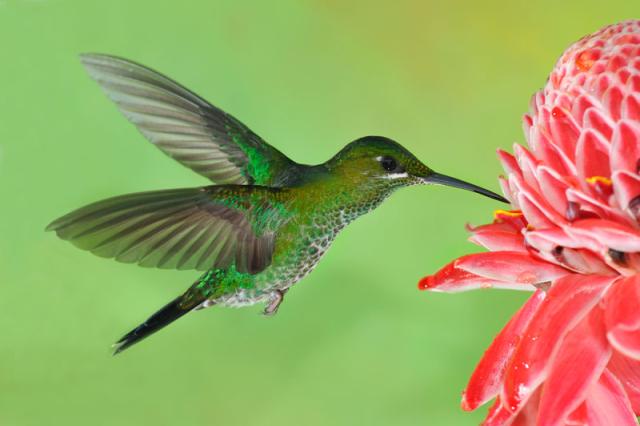
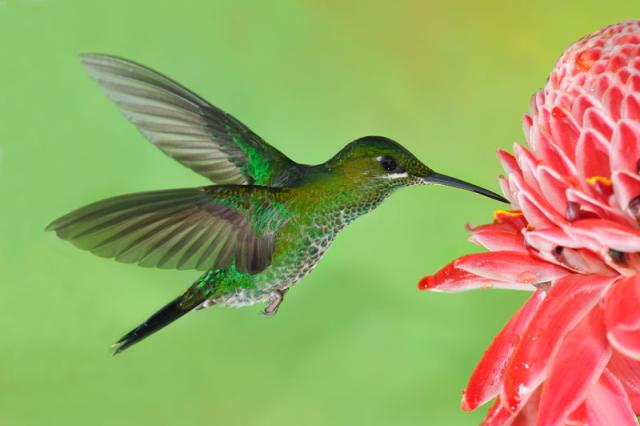
Green-crowned Brilliant (Heliodoxa jacula) Reinier Munguia

Green-crowned Brilliant (Heliodoxa jacula) Reinier Munguia

Hummingbirds’ wings are pointed and swept back, and they rotate at the shoulder, not at the wrist, as do those of most other birds. This allows the wing to be turned over in midstroke, so that backward motion cancels forward motion and the bird remains motionlessly poised in the air to sip the nectar of flowers. This bird then can execute Motionless Flight.

GOD created everything and took rest on the seventh day… HE created man on the sixth day so that, man shall worship HIM on the seventh day which is the first day for man on this earth…

Even in the list of flying styles of birds, the seventh flying style is MOTIONLESS FLIGHT… The birds seem to lay emphasis on the importance of the seventh day isn’t it?

Be still, and know that I am God: I will be exalted among the heathen, I will be exalted in the earth. (Psalms 46:10)

Have a blessed day!

Your’s in YESHUA,
a j mithra

Please visit us at: Crosstree


Updated on 8/8/11
Sorry about not crediting Paul Noll’s explanations and quotes of wing types. (Per comment)
See Bird Wing Shapes, by Paul Noll.
Lee

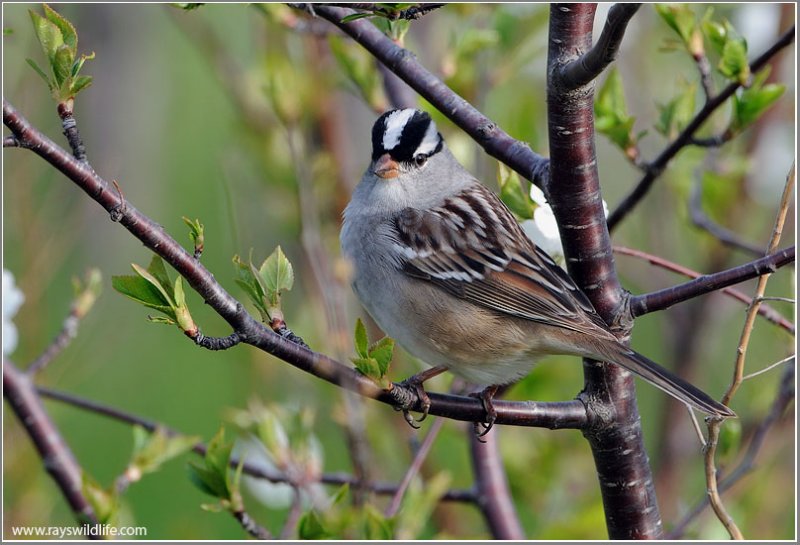
The White-crowned Sparrow – The Restorer

White-crowned Sparrow (Zonotrichia leucophrys) by Ray

White-crowned Sparrow (Zonotrichia leucophrys) by Ray

The White-crowned Sparrow – The Restorer ~ by  a j mithra

Bird watchers who have flocked to north Norfolk, UK, to see a rare sparrow have boosted the funds of a local church. They have donated so much money to Cley church; there are plans to feature the bird in a new stained glass window.

A rare bird’s appearance in a coastal village, which has attracted hoards of twitchers from across the country, has swelled church coffers.

The white-crowned sparrow is normally found in America, but it turned up 3,000 miles off course in Cley in January and is still being spotted feeding and flying around the village. The medium-sized sparrow has only been seen four times before in Britain and Ireland and its appearance in Richard and Sue Bending’s garden prompted an influx of bird watchers.

They have gathered en masse outside the home of Richard and Sue Bending. It was last Thursday that retired clergyman Mr. Bending, 60, and wife, 59, a retired librarian, first spied the bird scratching among leaf litter in their walled garden. The couple – who consider themselves bird-lovers but not die-hard twitchers – thought that the visitor, with its striking black-and-white striped head, was unusual but could not find it in their book of native varieties. We borrowed a book from the library, it was then that we realized it could be a White-crowned Sparrow,” said Mr Bending

Although Cley Reserve, run by the Norfolk Wildlife Trust, attracts thousands of nature lovers, the village visit by the bird – with distinctive black and white stripes on its head – has lifted the village’s profile on the bird-spotting map.

The presence of this rare bird had inspired people to give for God…

Has our presence inspired people to do something for God?

Forasmuch as ye are manifestly declared to be the epistle of Christ ministered by us, written not with ink, but with the Spirit of the living God; not in tables of stone, but in fleshly tables of the heart (2 Corinthians 3:3)

It’s the first occasion a white-crowned sparrow has ever been seen in East Anglia.


Other links to videos of the bird:

http://www.youtube.com/watch?v=hnzgAcuv8Gc&feature=related
http://www.youtube.com/watch?v=MqjRrx8Ft0I

While the influx of twitchers have been keen to get a glimpse of the American migrant, the local vicar believes people have been just as impressed by the sight of the village church.

More than £5,000 has poured in to St Margaret’s restoration fund during the bird’s visit.

“They’re obviously looking at something rare and beautiful and perhaps some of them looked across here and saw something rare and beautiful as well when they saw this church,” said Rev Neil Batcock.

The money is going to be used to restore a stained glass window which will feature the rare visitor’s stay in Cley.

This is an extract from the website of St.Margret’s Church, Cley, West Window
“During the famous visit of the White Crowned Sparrow to Cley in 2008, our many visitors contributed generously to a collection made by Cley Bird Club for St Margaret’s. The Bird Club were keen for the money raised to go to a specific project rather than just added to The Church Restoration Fund. It was suggested that, as the West Window leaks rather badly, and looks over where the White Crowned Sparrow was discovered, perhaps the money could go towards the repair of this magnificent window and in memory of the bird’s visit, a small image of the White Crowned Sparrow be incorporated in the window. This idea was thought to be a very fitting way to commemorate a little bird that brought national fame to St Margaret’s and the village of Cley. We have had to apply for a faculty to do this work, and at last have got the go ahead. Hopefully, with the better weather approaching and the builder, glazier and artist being able to fit the work in, we hope that it won’t be too long before this can start.”

Though this White-crowned Sparrow had come to an unknown land, it still gave a hand to bring restoration to the place where it stayed..

Joseph restored the unknown land of the Pharaoh during famine…
The little slave girl was the reason for restoration of health to the Syrian commander in an unknown land…

GOD will not take us out from our comfort zone without a purpose..

If Joseph had not gone out of his comfort zone, we wouldn’t have had the country of Israel, which gave JESUS to us..
In fact we wouldn’t have had a Savior to save us from our sins…
GOD has given us just one life as a gift, what are we doing with it?
How many lives did we restore for GOD?

If a small sparrow can restore a church, how much GOD will expect of us?

For if thou altogether holdest thy peace at this time, then shall there enlargement and deliverance arise to the Jews from another place; …………. (Esther 4:14)

White-crowned Sparrow (Zonotrichia leucophrys) by S Slayton

White-crowned Sparrow (Zonotrichia leucophrys) by S Slayton

It’s not known how the White-crowned Sparrow ended up so many miles away from home, although Mr. Bending, who first spotted the bird, has his own theories. “No-one knows how it got here but we are speculating that it was caught in a storm while migrating south from the east coast of Canada to the United States,” he said. “It could have become lost or tired and hitched a ride on a boat coming to England. We just feel very privileged that it chose our garden.”

People speculate that a storm would’ve carried this bird this far…

When u face a storm in life and you feel as if you are thrown into a no man’s land, remember that GOD will use you in that new place and glorify His name through you…

Behold, I will make thee a new sharp threshing instrument having teeth: thou shalt thresh the mountains, and beat them small, and shalt make the hills as chaff. ( Isaiah 41:15)

Have a blessed day!

Your’s in YESHUA,
a j mithra

Please visit us at: Crosstree


Lee’s Addition:

The White-crowned Sparrow is in the Emberizidae Family of the Passeriformes Order. The Emberizidae Family includes the Buntings, New World Sparrows and Allies. The Passeridae Family includes the Old World Sparrows and Snowfinches.

All of these Sparrows are Birds of the Bible – Sparrows and we have written several blogs about them. Please check out the articles, photos, and videos of the Sparrows.

Araripe Manakin – The Indicator of Environmental Quality…

Araripe Manakin (Antilophia bokermanni) by ©AGrosset

Araripe Manakin (Antilophia bokermanni) by ©AGrosset

The Araripe Manakin is endemic to a very small ribbon of forest at the foot of the Chapada do Araripe escarpment, in Brazil…

It seems particularly fond of the moist forest near the streams and springs that flow out of the escarpment…

The survival of these birds depends upon the availability of water resources..

Have we ever felt that our survival also depends upon JESUS, the LIVING WATER?

Unfortunately, this supply of water also generates the biggest threat to the species as the area is a bit of an oasis in that region, and the supply of water has led to the development of both agriculture and recreational facilities…

Many of us are dry in spirit, but, instead of looking up to the Pillar of Clouds to wet our spirit,
where are we looking?

JESUS said,

but whosoever drinketh of the water that I shall give him shall never thirst; but the water that I shall give him shall become in him a well of water springing up unto eternal life. (John 4:14)

Araripe Manakin (Antilophia bokermanni) by ©AGrosset

Araripe Manakin (Antilophia bokermanni) by ©AGrosset

Found along the slopes of the chapada (plateau) in the lower and middle stories of tall forests where there are plenty of vines, as well as clearings…

It is associated with water springs and is therefore a good indicator of environmental quality..

If we live on JESUS, THE VINE, the world would look at us as an indicator of the spiritual quality of the church….

For I will pour water upon him that is thirsty, and streams upon the dry ground; I will pour my Spirit upon thy seed, and my blessing upon thine offspring: (Isaiah 44:3)

Your’s in YESHUA,
a j mithra

Please visit us at: Crosstree


Lee’s Addition:

The Araripe Manakin is in the Pipridae Family of the Passeriformes Order.

See:

Araripe Manakin