Ian’s Bird of the Week – Light-mantled Albatross

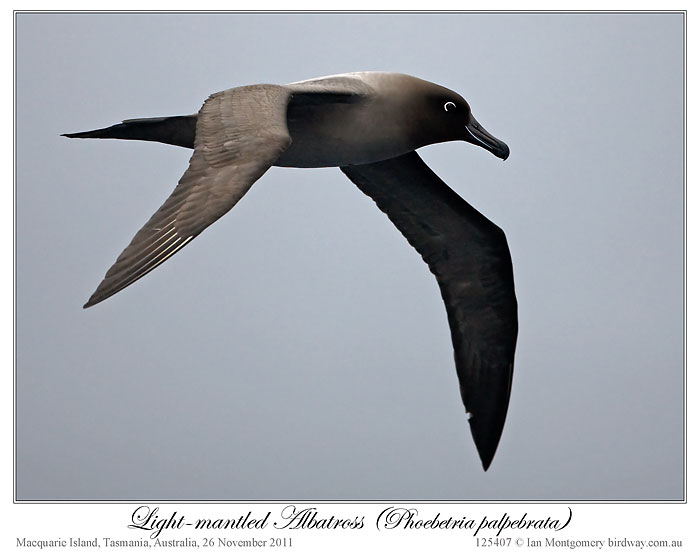
Light-mantled Albatross (Phoebetria palpebrata) by Ian 1

Light-mantled Albatross (Phoebetria palpebrata) by Ian 1

Ian’s Bird of the Week – Light-mantled Albatross ~ by Ian Montgomery

Newsletter ~ 12/1/11

We arrived in Hobart today at the end of successful visit to the Sub-antarctic Islands between New Zealand and Australia. We had a lot of very rough weather in the Southern Ocean but the weather was kinder to us at the various destinations and we managed make all the planned landings (Auckland Islands, Campbell and Macquarie Islands) and view the Snares from the zodiacs (where actual landings are not permitted). I managed to photograph most of the species on my target list and the highlight for most of us was Macquarie Island and its four nesting species of penguin.

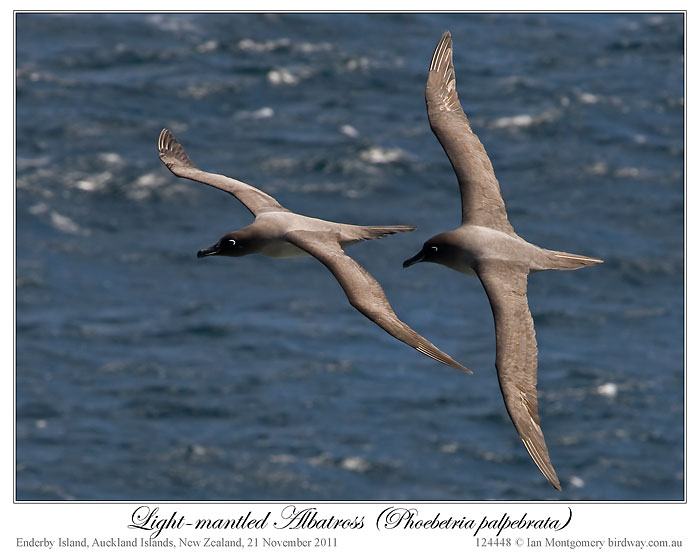
As the last Bird of the Week was the Yellow-eyed Penguin, I’ve chosen an albatross, the Light-mantled (Sooty) Albatross, for this week and will return to penguins later. This was the Albatross that I most wanted to see and also very popular with everyone else. My interest in it had been aroused when I’d heard it likened to a Siamese cat, a seal point in particular. The comparison is apt given the chocolate brown head and latte-coloured body, and the silky texture of the plumage is quite feline in appearance. The white partial eye-ring is striking and sets off the dark head colour very well.
Light-mantled Albatross (Phoebetria palpebrata) by Ian 2

Light-mantled Albatross (Phoebetria palpebrata) by Ian 2

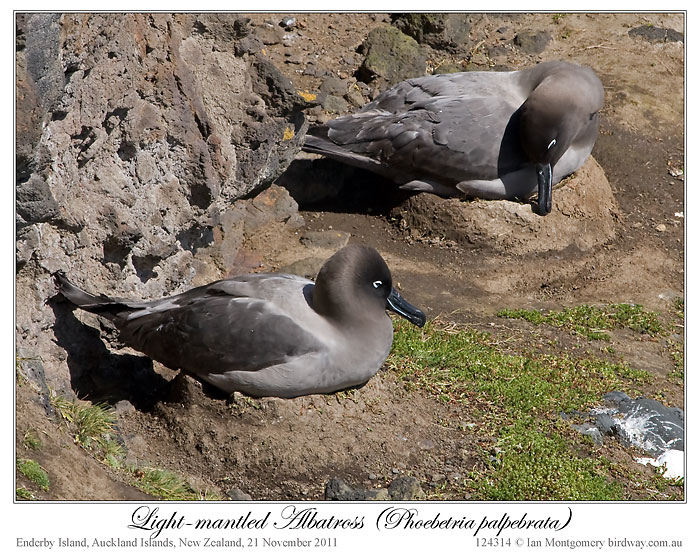
We saw Light-mantled Albatrosses quite frequently until we got close to Tasmania, encountering them first and best on Enderby Island, one of the Auckland Islands, as in the first photo but also at sea and at Macquarie Island as in the second photo. Macquarie Island is administratively part of the State of Tasmania even though it is a long way away and, as one of the Kiwis on board pointed out, geographically part of New Zealand. The Albatrosses were nesting on Enderby Island and it was here that we saw pairs indulging in their beautiful courtship flights, quite an aerial ballet, as in the third photo.
Light-mantled Albatross (Phoebetria palpebrata) by Ian 3

Light-mantled Albatross (Phoebetria palpebrata) by Ian 3

At this point, I though that the comparison with Siamese Cats broke down. I used to have a pair and. when the female was on heat, her behaviour was anything but elegant; demented would have been more like it.
Light-mantled Albatross (Phoebetria palpebrata) by Ian 4

Light-mantled Albatross (Phoebetria palpebrata) by Ian 4

Some pairs were already nesting and incubating eggs. They chose small platforms on quite rocky cliffs and often nested in close proximity to each other, as in the fourth photo. Light-mantled are quite small by albatross standards, measuring about 84cm/33in in length with a wingspan of 215cm/85in. Their range is circumpolar in the colder waters of the Southern Ocean and are seen only rarely in the waters of mainland Australia and Tasmania proper.
Light-mantled Albatross (Phoebetria palpebrata) by Ian 5

Light-mantled Albatross (Phoebetria palpebrata) by Ian 5

On close inspection of the head of a Light-mantled, as in the last photo, the eyes are bluish and, as a final touch, the pale stripe on the bill is also blue. Yes, I know, same colour scheme as a Siamese Cat!
During the rougher parts of the voyage I had the opportunity to work on some of the photos and I have added the following species to the website: Snares, Fiordland and Yellow-eyed Penguins:
Best wishes
Ian

Ian Montgomery, Birdway Pty Ltd,
454 Forestry Road, Bluewater, Qld 4818
Phone: 0411 602 737 +61-411 602 737
Preferred Email: ian@birdway.com.au
Website: http://birdway.com.au


Lee’s Addition:

The hearing ear, and the seeing eye, the LORD hath made even both of them. (Proverbs 20:12 KJV)

What an absolutely neat looking bird. I love that eye ring. Makes the eyes very expressive. Looks like they built nests of mud.

It will be interesting to see what other neat birds that Ian has found on this trip. Not so sure I would have enjoyed those rough seas.

The Albatross are found in the Diomedeidae Family of the Procellariiformes Order. That order includes Petrel, Shearwater, Storm Petrel and Diving Petrel families.

Check out:

Ian’s Albatross Photos

Bird of the Week Newsletters

*

Birds in Hymns – He That Hath Made His Refuge God

Baby Chick Peeping Out From Under His Mom's Wing - ©CC

Baby Chick Peeping Out From Under His Mom's Wing - ©CC

Because thou hast made the LORD, which is my refuge, even the most High, thy habitation; There shall no evil befall thee, neither shall any plague come nigh thy dwelling. (Psalms 91:9-10 KJV)

Words by Isaac Watts, (1674-1748) The Psalms of Da­vid, 1719.

Music: St. John’s High­lands, anon­y­mous

He That Hath Made His Refuge God

He that hath made his refuge God
Shall find a most secure abode,
Shall walk all day beneath His shade,
And there at night shall rest his head.

Then will I say, My God, Thy power
Shall be my fortress and my tower;
I, that am formed of feeble dust,
Make Thine almighty arm my trust.

Thrice happy man! Thy Maker’s care
Shall keep thee from the fowler’s snare;
Satan, the fowler, who betrays
Unguarded souls a thousand ways.

Just as a hen protects her brood
From birds of prey that seek their blood,
Under her feathers, so the Lord
Makes His own arm His people’s guard.

If burning beams of noon conspire
To dart a pestilential fire,
God is their life; His wings are spread
To shield them with a healthful shade.

If vapors with malignant breath
Rise thick, and scatter midnight death,
Israel is safe; the poisoned air
Grows pure, if Israel’s God be there.

What though a thousand at thy side,
At thy right hand ten thousand died,
Thy God His chosen people saves
Amongst the dead, amidst the graves.

So when He sent His angel down
To make His wrath in Egypt known,
And slew their sons, His careful eye
Passed all the doors of Jacob by.

But if the fire, or plague, or sword,
Receive commission from the Lord
To strike His saints among the rest,
Their very pains and deaths are blest.

The sword, the pestilence, or fire,
Shall but fulfill their best desire;
From sins and sorrows set them free,
And bring Thy children, Lord, to Thee.

Keep me as the apple of the eye, hide me under the shadow of thy wings, (Psalms 17:8 KJV)


Under His Wings - (Dove - photographer unknown)

Under His Wings - (Dove - photographer unknown)

Isaac Watts – (1674-1748)

Watts’ fa­ther was Non­con­form­ist im­pris­oned twice for his re­li­gious views. Isaac learned Greek, Latin, and He­brew un­der Mr. Pin­horn, Rec­tor of All Saints, and head­mas­ter of the Gram­mar School in South­amp­ton. Isaac’s taste for verse showed it­self in ear­ly child­hood, and his prom­ise caused a lo­cal doc­tor and other friends to of­fer him a un­i­ver­si­ty ed­u­ca­tion, as­sum­ing he would be or­dained in the Church of Eng­land. How­ev­er, Isaac de­clined and in­stead en­tered a Non­con­for­mist Acad­e­my at Stoke New­ing­ton in 1690, un­der the care of Thom­as Rowe, pas­tor of the In­de­pen­dent cong­re­ga­tion at Gir­dlers’ Hall; Isaac joined this con­gre­ga­tion in 1693.

Watts left the Acad­e­my at age 20 and spent two years at home; it was dur­ing this per­i­od that he wrote the bulk of his Hymns and Spir­it­u­al Songs. They were sung from man­uscripts in the South­amp­ton Cha­pel, and pub­lished 1707-1709.

The next six years of his life were again spent at Stoke New­ing­ton, work­ing as tu­tor to the son of em­i­nent Pur­i­tan John Har­topp. The in­tense stu­dy of these years is re­flect­ed in the the­o­log­ic­al and phil­o­soph­ic­al ma­ter­i­al he sub­se­quent­ly pub­lished.

Watts preached his first ser­mon at age 24. In the next three years, he preached fre­quent­ly, and in 1702 was or­dained as pas­tor of the In­de­pen­dent con­gre­ga­tion in Mark Lane. At that time he moved in­to the house of a Mr. Hollis in the Mi­nor­ies. His health be­gan to fail the next year, and Sam­u­el Price was ap­point­ed as his as­sist­ant in the min­is­try. In 1712, a fe­ver shat­tered his con­sti­tu­tion, and Price be­came co-pas­tor of the con­gre­ga­tion, which had moved to a new cha­pel in Bu­ry Street. It was at this time that Isaac be­came the guest of Sir Thom­as Ab­ney. He lived with Ab­ney (and lat­er Abney’s wi­dow) the rest of his life, main­ly at The­o­balds in Hert­ford­shire, then for 13 years at Stoke New­ing­ton.

In 1728, the Un­i­ver­si­ty of Ed­in­burgh award­ed Watts a Doc­tor of Di­vin­i­ty de­gree.

More Birds in Hymns

See ~ Wordless Birds

Most information from The Cyber Hymnal  –  He That Hath Made His Refuge God

*

Ian’s Bird of the Week – Yellow-eyed Penguin

Yellow-eyed Penguin (Megadyptes antipodes) by Ian 1

Yellow-eyed Penguin (Megadyptes antipodes) by Ian 1

Ian’s Bird of the Week – Yellow-eyed Penguin ~ by Ian Montgomery

Newsletter – 11/22/11
I had intended the Fiordland Crested Penguin at Milford Sound to be the next bird of the week, but since then I have photographed the unusual and rarer Yellow-eyed Penguin at the well-known colony on the Otago Peninsula near Dunedin and chosen it instead.

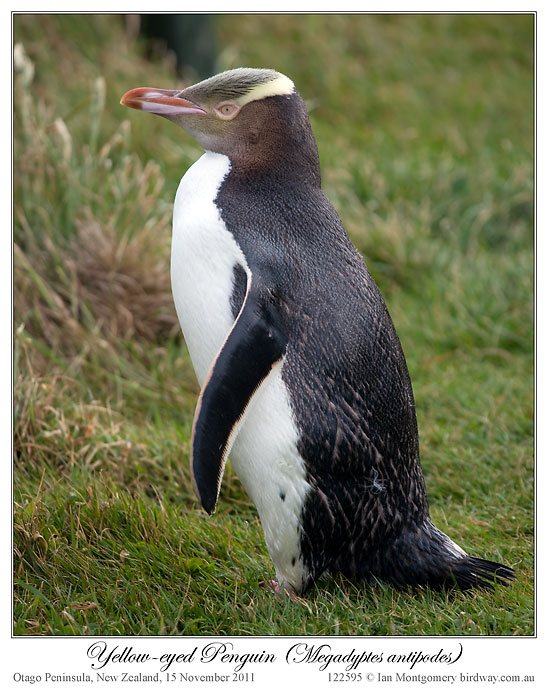
I went there in the evening as this is the time when the fishing member of the breeding pairs returns to relieve the incubating or baby-sitting member. The bird in the first photo is an adult that has just returned to the colony. The adults are distinguishable by having the yellow band joining the eyes around the nape of the head.
Yellow-eyed Penguin (Megadyptes antipodes) by Ian 2

Yellow-eyed Penguin (Megadyptes antipodes) by Ian 2

The bird in the second photo is another adult. Yellow-eyed Penguins are quite large, up to 79cm/31in in length and weighing up to 8kg. The males are larger than the females and penguins in general have heavy bones by bird standards to help them dive. When the pairs are reunited they typically perform mutual preening as in the third photo.
Yellow-eyed Penguin (Megadyptes antipodes) by Ian 3

Yellow-eyed Penguin (Megadyptes antipodes) by Ian 3

The total population of the species is about 2,000 pairs, mainly on Auckland and Campbell Islands, with about 150 pairs on Stewart Island and about 500 on the South Island. It has suffered from loss of coastal forest and still suffers from predation by introduced mammals such as feral cats. It is classified as endangered, but the population has been relatively stable over the last 30 years.
Yellow-eyed Penguin (Megadyptes antipodes) by Ian 4 juvenile

Yellow-eyed Penguin (Megadyptes antipodes) by Ian 4 juvenile

The bird in the fourth photo is a juvenile (they don’t breed until they are 3 or 4 years old) and lacks the yellow band on the back of the head.
More than 20 years ago, when on Stewart Island, I booked to go on a boat trip to an island that had both Yellow-eyed Penguins and Wekas, a large flightless rail. The weather was so bad that the trip was cancelled and both these species had represented unfinished business. On this trip I encountered Wekas at Milford Sound.
I’m in Dunedin for a second time now, having needed to drive to Christchurch to return the camper and then flown back. This produced a strangely disorientating feeling of deja-vu, as you quite reasonably expect to end up somewhere else after a flight, not where you’ve just been the day before. I have met up with my 3 travelling companions from Victoria and we are all excited at the prospect of sailing for the Sub-Antarctic Islands tomorrow. So, don’t expect another bird of the week or any communication for that matter until we reach Hobart where we are due on 1 December. I hope that by then I’ll have many more photos to share with you.
Best wishes
Ian

Ian Montgomery, Birdway Pty Ltd,
454 Forestry Road, Bluewater, Qld 4818
Phone: 0411 602 737 +61-411 602 737
Preferred Email: ian@birdway.com.au
Website: http://birdway.com.au


Lee’s Addition:

Ian has been putting out his newsletters close together lately. Most likely since he knows he will be away from an internet connection for awhile. This newsletter was received several days ago, but decided to space it to fill the gap of time before his next one arrives. I am looking forward to what this next part of his trip produces.

Penguins are in the Sphenisciformes Order. The family, Spheniscidae, is the only one in the order. The 18 Penguins are in 5 genera; Aptenodytes, Pygoscelis, Eudyptes, Megadyptes and Spheniscus. Check out Ian’s Penguins and the the complete Spheniscidae family here.

Let heaven and earth praise Him, The seas and everything that moves in them. (Psalms 69:34 NKJV)

*

Ian’s Bird of the Week – Black Stilt

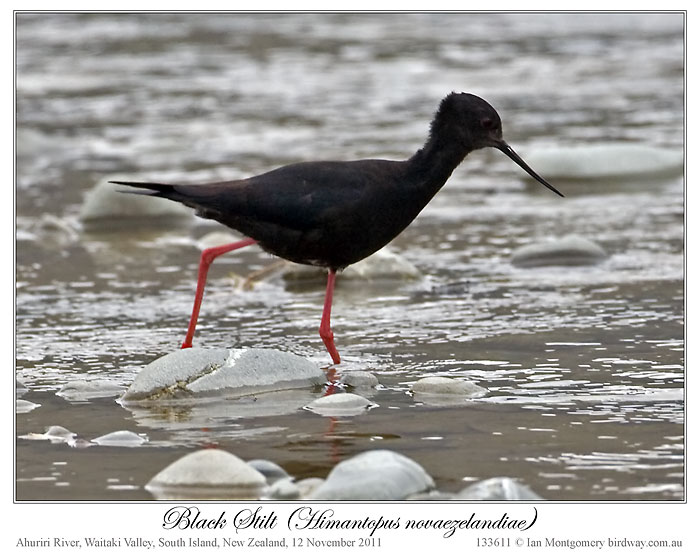
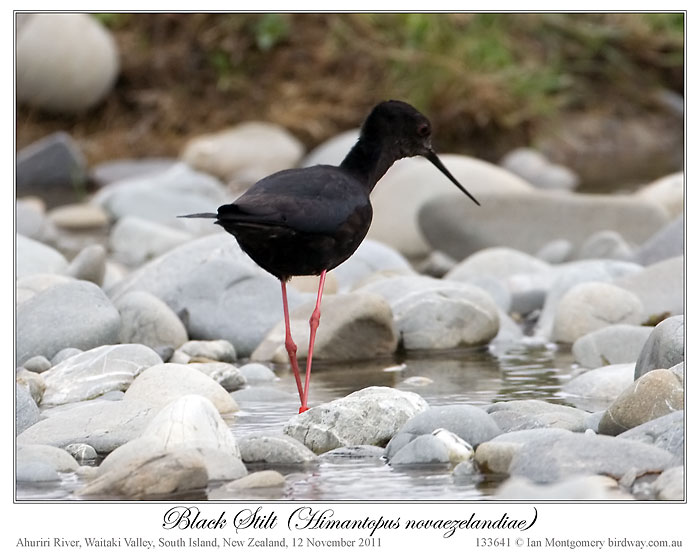
Black Stilt (Himantopus novaezelandiae) 1 by Ian

Black Stilt (Himantopus novaezelandiae) 1 by Ian

Ian’s Bird of the Week – Black Stilt ~ by Ian Montgomery

Newsletter – 11/15/11

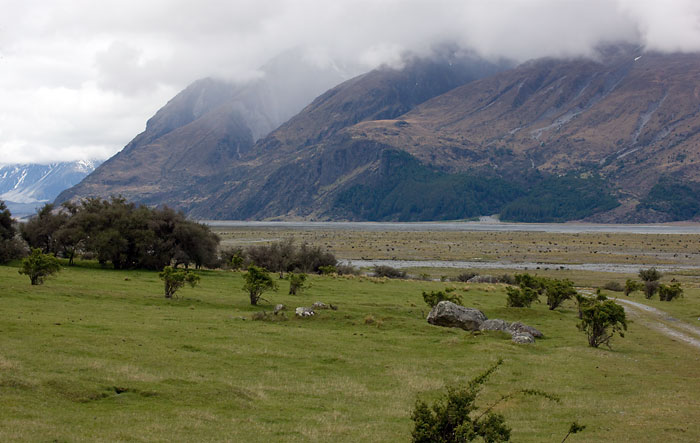
You’ve done it again! Your collective goodwill and spiritual energy have provided yet another special, this time very special bird, the critically endangered and recently saved from extinction Black Stilt. I did have to do a little work as well to find a couple in their favoured habitat of often inaccessible, so-called braided rivers of the South Island. At the second potential site, see photo, the task seemed impossible – that’s all river bed between the foreground and the mountains – and I almost gave up.

Tasman River by Ian

Tasman River by Ian

The third site wasn’t any better, but the fourth and last was a bridge over another river and you could have knocked me over with a feather when, having just stepped onto the bridge, I spotted two Black Stilts feeding a couple of hundred meters away close to the river bank.
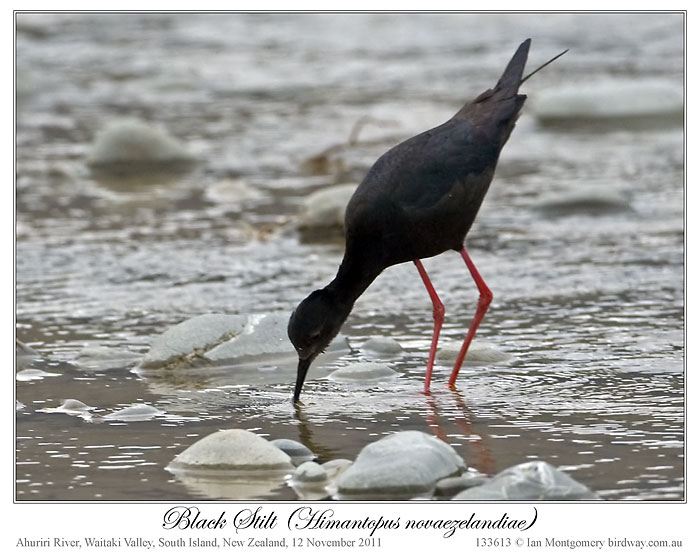
One flew away when I approached but the other was much more cooperative and continued feeding.
Black Stilt (Himantopus novaezelandiae) 2 by Ian

Black Stilt (Himantopus novaezelandiae) 2 by Ian

Eventually it flew off too, but it landed not far away, close to a breeding colony of 3 or 4 pairs of Black-fronted Terns, another species on my wanted list.
Black Stilt (Himantopus novaezelandiae) 3 by Ian

Black Stilt (Himantopus novaezelandiae) 3 by Ian

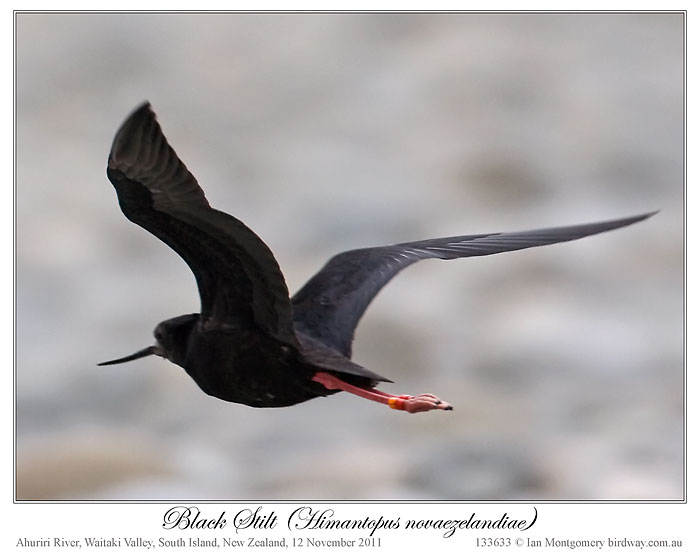
It stayed for a little while longer, until the terns chased it off. If you look carefully in the last photo, you can see a coloured band on the right leg and bird is presumably one of the captive-bred and released birds.
Black Stilt (Himantopus novaezelandiae) 4 by Ian

Black Stilt (Himantopus novaezelandiae) 4 by Ian

The population of Black Stilts in the wild reached a low of 23 adults in 1981 when the program started, making it the rarest wading bird in the world. There are now probably 200 birds in the wild and the program continues. Lets keep our fingers crossed!
I’ve had a great time so far in New Zealand and yesterday I went on a successful boat trip on Milford Sound in lovely weather for another wanted species, another potential bird of the week. I’m now on my way back to Christchurch to return my splendid campervan – I shall be reluctant to return it.
Best wishes
Ian


Ian Montgomery, Birdway Pty Ltd,
454 Forestry Road, Bluewater, Qld 4818
Phone: 0411 602 737 +61-411 602 737
Preferred Email: ian@birdway.com.au
Website: http://birdway.com.au


Lee’s Addition:

Glad to see the Lord answers prayers. (See Addition –  NZ/Australasian Shoveler) What a neat bird, glad you found it and didn’t give up. With them so few in numbers, that is a Great Catch!

I love them that love me; and those that seek me early shall find me. (Proverbs 8:17 KJV)

The Black Stilt is in the Recurviostridae Family of the Charadriiformes Order. There are 6 Stilts and 4 Avocets. Check out Ian’s Recurviostridae photos.

“Avocets and stilts range in length from 30 to 46 centimetres (12 to 18 in) and in weight from 140 to 435 grams (4.9 to 15.3 oz); males are usually slightly bigger than females.[1] All possess long, thin legs, necks, and bills. The bills of avocets are curved upwards, and are swept from side to side when the bird is feeding in the brackish or saline wetlands they prefer. The bills of stilts, in contrast, are straight. The front toes are webbed, partially in most stilts, fully in avocets and the Banded Stilt, which swim more. The majority of species’ plumage has contrasting areas of black and white, with some species having patches of buff or brown on the head or chest. The sexes are similar.” (Wikipedia)

Interesting Things – Dragonfly (from Creation Moments)

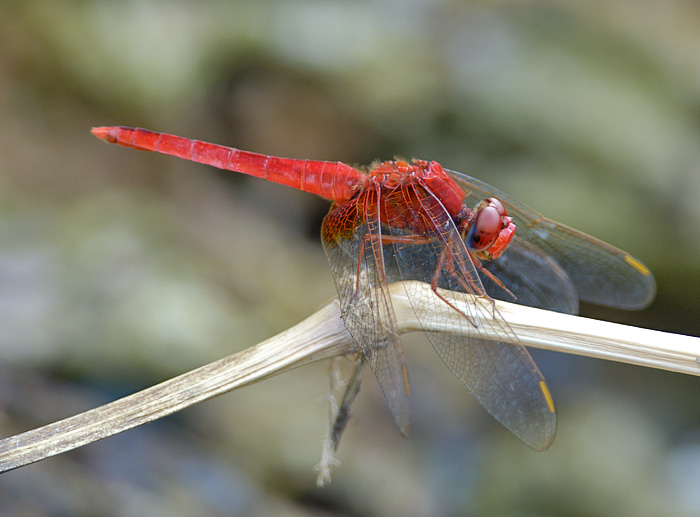
Dragonfly by Phil Kwong

Dragonfly by ©Phil Kwong

Come, ye children, hearken unto me: I will teach you the fear of the LORD. (Psalm 34:11 )

Evolutionary naturalism paints the picture of life as if it were a haphazard series of accidents that just barely resulted in a range of living things that just manage to survive. This fanciful picture destroys our sense of wonder over the sophisticated engineering designs in nature.

SmileyCentral.com

Consider the mystery of flight, for example. Some evolutionists suggest that perhaps birds are descended from lizards that fell out of trees a lot. Other evolutionists say that birds came from lizards who grew wings, not for flight but to chase down and catch insects. Yet, they have little to say about the fact that we humans have come by most of our sophisticated knowledge about flight from studying the birds.

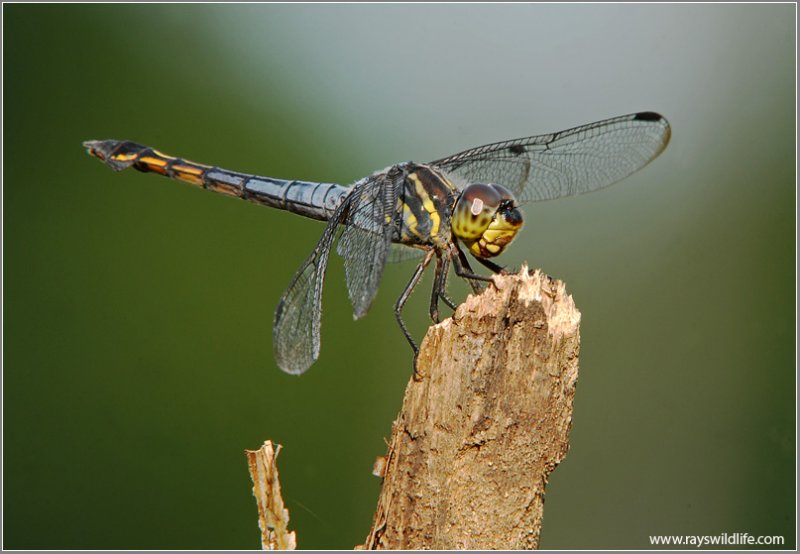
Then there is the problem, for the evolutionist, of how flight accidentally evolved so many times for so many creatures. Scientists studying the dragonfly are learning even more secrets of flight. Our best high-performance aircraft can barely lift themselves off the ground. However, the dragonfly can lift 15 times his own weight into the air. Scientists have learned that this is because the dragonfly’s wings are designed to create little whirlwinds over their top surfaces. These whirlwinds are the secret to creating incredible lifting power. Ways are now being planned to apply this secret to new aircraft designs.

Dragonfly by ©Raymond Barlow

Dragonfly by ©Raymond Barlow

The engineering excellence found in nature and from which we have learned so much even in this day of interplanetary probes is not witness to a mindless process of evolution, but to a wise and mindful Creator.

Prayer:
Father, it seems a shame that humans learned about flight from the dragonfly and fail to see a witness to You. Yet, I know that I don’t learn from You as I should, either. Forgive me for Jesus’ sake and make me a better learner. Amen.

Notes:
“Dragonfly model for future wings.” Science Digest, Mar. 1984. p. 87. ©Creation Moments, 2011

***

The lessons being learned about the dragonfly’s wings are a good example of:

But now ask the beasts, and they will teach you; And the birds of the air, and they will tell you; (Job 12:7 NKJV)

We can learn much from the critters by learning about how the Lord created them and then applying those lessons to better our lives.

More Interesting Things

*

Ian’s Bird of the Week – NZ/Australasian Shoveler

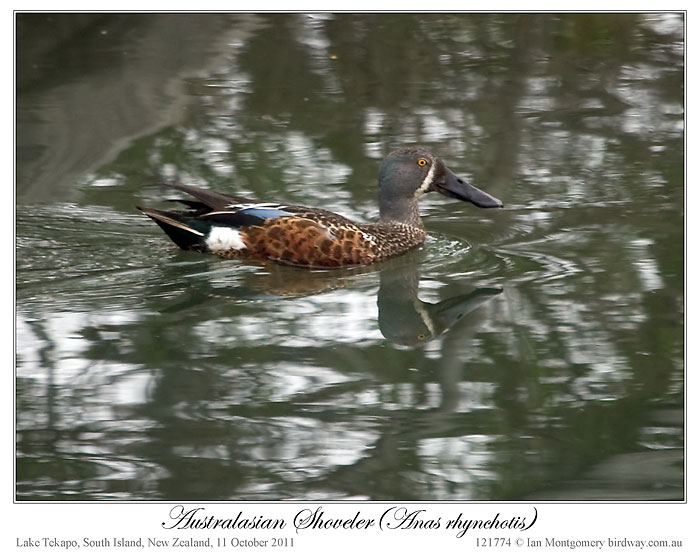
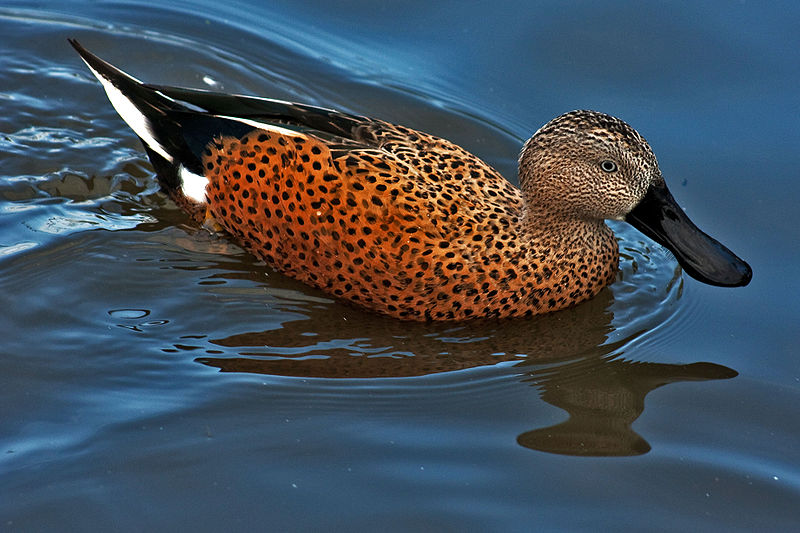
Australasian Shoveler (Anas rhynchotis) by Ian Montgomery

Australasian Shoveler (Anas rhynchotis) by Ian Montgomery

Ian’s Bird of the Week – Australian Shoveler

Newsletter – 11/11/11

This is really just a token bird of the week as an apology for being late, having been busy preparing, packing and travelling. I’m now on the South Island of New Zealand and surrounded by introduced birds such as Eurasian Chaffinches and Blackbirds. I had a look for Black Stilt yesterday without success so here’s a male New Zealand Shoveler instead. At least that’s what they’re called here, even though they are the same species as the Australasian Shoveler. What ever, they’re gorgeous ducks.

Australasian Shoveler (Anas rhynchotis) by Ian

Australasian Shoveler (Anas rhynchotis) by Ian

I’m going to have another try at the Black Stilt today so wish me luck: your collective goodwill has worked in the past! After that, I plan to head south towards Fiordland to see what I can find there.

Best wishes

Ian

Ian Montgomery, Birdway Pty Ltd,
454 Forestry Road, Bluewater, Qld 4818
Phone: 0411 602 737 +61-411 602 737
Preferred Email: ian@birdway.com.au
Website: http://birdway.com.au


Lee’s Addition:

Since Ian wrote a short note, I added a second one of his Australasian Shovelers to the newsletter. Click see his other Australasian Shoveler photos. Ian, will be praying you find your birds and for your safety. Trust you find your Black Stilts so we can have a look at them also.

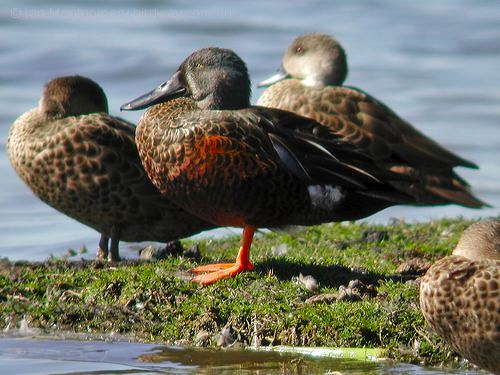
The Shovelers are in the Anas genus of the Anatidae – Ducks, Geese & Swans Family. Ian’s Anatidae Index Page.

Cape Shoveler (Anas smithii) by Ian
Red Shoveler (Anas platalea) ©WikiC
Australasian Shoveler (Anas rhynchotis) by Ian
Northern Shoveler (Anas clypeata) by Ian

Even though these birds could be eaten, many people like duck, I prefer to watch them instead. They are protected by:

If a bird’s nest happens to be before you along the way, in any tree or on the ground, with young ones or eggs, with the mother sitting on the young or on the eggs, you shall not take the mother with the young; you shall surely let the mother go, and take the young for yourself, that it may be well with you and that you may prolong your days. (Deuteronomy 22:6-7 NKJV)

*

Birds in Hymns – All Nature’s Works His Praise Declare

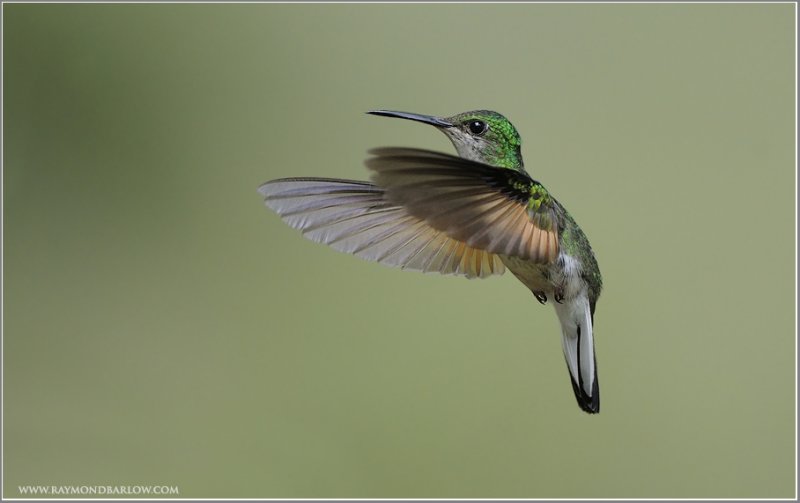
Stripe-tailed Hummingbird (Eupherusa eximia) Female by Raymond Barlow

Stripe-tailed Hummingbird (Eupherusa eximia) Female by Raymond Barlow

The heavens declare the glory of God; and the firmament sheweth his handywork. (Psalms 19:1 KJV)

Words by Henry Ware Jr. (1794-1843), 1822

Music – Bethlehem by Gottfried W. Fink (1783-1846)

All Nature’s Works His Praise Declare

All nature’s works His praise declare, to whom they all belong;
There is a voice in every star, in every breeze a song.
Sweet music fills the world abroad with strains of love and power;
The stormy sea sings praise to God, the thunder and the shower.

To God the tribes of ocean cry, and birds upon the wing;
To God the powers that dwell on high their tuneful tribute bring.
Like them, let us the throne surround, with them loud chorus raise,
While instruments of loftier sound assist our feeble praise.

Great God, to Thee we consecrate our voices and our skill;
We bid the pealing organ wait to speak alone Thy will.
Lord, while the music round us floats may earth born passions die;
O grant its rich and swelling notes may lift our souls on high!

Praise ye the LORD. Praise ye the LORD from the heavens: praise him in the heights. (Psalms 148:1 KJV)


Henry Ware, Jr was born Ap­ril 21, 1794 in Hing­ham, Mass­a­chu­setts, Died on Sep­tem­ber 25, 1843 in Fram­ing­ham, Mass­a­chu­setts and was buried in Mount Au­burn Cem­e­te­ry, Cam­bridge, Mass­a­chu­setts.

Son of a Un­i­tar­i­an min­is­ter, Ware at­tend­ed Har­vard and be­came an as­sist­ant teach­er at Ex­e­ter Acad­e­my in New Hamp­shire. In 1815, the Bos­ton Un­i­tar­i­an As­so­ci­a­tion li­censed him to preach, and in 1817, he was or­dained and be­came pas­tor of the Se­cond Church in Bos­ton, Mass­a­chu­setts. He was Pro­fess­or of Pul­pit El­o­quence and Pas­tor­al Care at the Har­vard Div­in­i­ty School, 1829-1842. He al­so ed­it­ed the Christ­ian Di­sci­ple (lat­er re­named the Christ­ian Ex­amin­er), and ran the So­ci­e­ty for Re­li­gious Im­prove­ment at Har­vard Un­i­ver­si­ty (his fa­ther was on the fa­cul­ty there, as well). A two vol­ume Mem­oir and a four vol­ume Works were pub­lished three years af­ter his death. Ware wrote this hymn for a ser­vice ded­i­cat­ing a new or­gan (see the last stan­za).

Gottfried W. Fink was born onMarch 8, 1783, Sul­za on the Ilm, Thu­rin­gia and died on Au­gust 27, 1846, Leip­zig, Ger­ma­ny.

Fink sang as a chor­is­ter at Naum­burg, and stu­died the­ol­o­gy at Leip­zig (1804-8). He be­came a Pro­fess­or of Mu­sic at Leip­zig in 1842. He is re­mem­bered for his writ­ings on mu­sic his­to­ry and the­o­ry, and his col­lect­ions of se­cu­lar and re­li­gious songs.

More Birds in Hymns

Most information from The Cyber Hymnal – All Nature’s Works His Praise Declare

*

Birds of the World – Hyliota

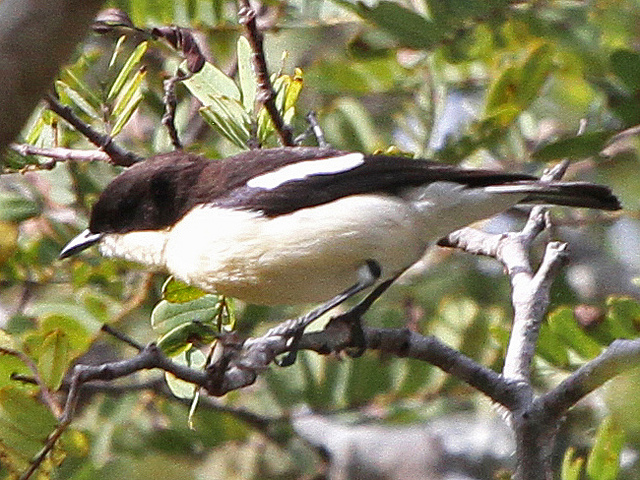
Violet-backed Hyliota (Hyliota violacea) ©WikiC
Violet-backed Hyliota (Hyliota violacea) ©WikiC

While working on the update to the IOC Version 2.10, I noticed that of the 233 pages for the Families of Birds of the World, I do not have a photo for the top of the Family page of the Hyliota – Hyliotas Family. I have written all of my great photographers and videographers to see if they have a photo. So far, none has sent me one that I can use with permission. I have written several others who have photos on the internet, but so far no permission there either. (Update 11/5/11 Just got permission from Dave Appleton to use his Southern Hyliota. The Family page now has a picture at the top. Thanks Dave.)

I can link to photos on other sites, but to put that photo here, I need permission.

If this bird is so rare, then what is it? My curiosity has taken over and while awaiting a photo, decided to find out about those 4 birds. Here are some of those findings:

Genus Hyliota – hyliotas. Basal Passerida with no known relatives, perhaps somewhat closer to Promeropidae (sugarbirds) (from Internet)

  • Yellow-bellied (Hyliota flavigaster)
  • Southern Hyliota (Hyliota australis)
  • Usambara Hyliota (Hyliota usambarae)
  • Violet-backed Hyliota (Hyliota violacea)
Southern Hyliota (Hyliota australis) © by DaveAppleton

Southern Hyliota (Hyliota australis) © by DaveAppleton

None of the books I own, which cover birds around the world, mention the Hyliota. Humm!

This is the total of Wikipedia’s articles on the family:
Hyliota is a genus of passerine bird. Formerly regarded as Old World warblers in the Sylviidae family, they are now often regarded as a family in their own right, the Hyliotidae.” Humm! Not much there.
Let’s see what it says about the individual birds in the family:

The Southern Hyliota (Hyliota australis) is a species of Old World warbler in the Sylviidae family. It is found in Angola, Cameroon, Democratic Republic of the Congo, Kenya, Malawi, Mozambique, South Africa, Tanzania, Uganda, Zambia, and Zimbabwe. Its natural habitats are subtropical or tropical dry forests and dry savanna. (No photo)
The Yellow-Bellied Hyliota (Hyliota flavigaster) is a species of Old World warbler in the Sylviidae family. It is found in Angola, Burkina Faso, Burundi, Cameroon, Central African Republic, Republic of the Congo, Democratic Republic of the Congo, Ivory Coast, Ethiopia, Gabon, Gambia, Ghana, Guinea, Guinea-Bissau, Kenya, Malawi, Mali, Mozambique, Nigeria, Rwanda, Senegal, Sierra Leone, Sudan, Tanzania, Togo, Uganda, and Zambia. Its natural habitat is subtropical or tropical dry forests. (No photo)
The Usambara Hyliota (Hyliota usambara) is a species of Old World warbler in the Sylviidae family. It is found only in Tanzania.
Its natural habitats are subtropical or tropical moist lowland forests, subtropical or tropical moist montanes, and plantations. It is threatened by habitat loss. (No Photo)
The Violet-Backed Hyliota (Hyliota violacea) is a species of Old World warbler in the Sylviidae family. It is found in Benin, Cameroon, Central African Republic, Republic of the Congo, Democratic Republic of the Congo, Ivory Coast, Equatorial Guinea, Gabon, Ghana, Guinea, Liberia, Nigeria, Rwanda, Sierra Leone, and Togo. Its natural habitats are subtropical or tropical dry forests and subtropical or tropical moist lowland forests. (No photo, but they have a drawing. Aha!)

According to the IOC Worldbirdnames.org website, where the IOC Version 2.10 comes from:

“Move Hyliotas from the Sylviidae to their own family Hyliotidae, a basal lineage of the Passerida without known modern relatives ”

They are now in their own Hyliota – Hyliotidae Family. They placed them in the taxonomy between the Goldcrests, kinglets – Regulidae Family and the Wrens – Troglodytidae Family.

From the Internet Bird Collection (IBC), which still has the Hyliotas in the Sylviidae Family,:
“Genus has in the past been placed variously with the Old World flycatchers (in family Muscicapidae), with the monarch-flycatchers (Monarchidae) or with the batises and wattle-eyes (Platysteiridae); although plumage resembles that of some muscicapid flycatchers of genus Ficedula, and nest is like that of platysteirids, the nestling mouth spots, the unspotted juvenile plumage and behaviour are all typical of present family. Proposed race marginalis (S Tanzania and Mozambique) considered inseparable from barbozae. Two subspecies recognized.” That quote was put by all four species of Hyliotas. Seems no one knows exactly where they belong.

They have one photo for the Yellow-bellied Hyliota (Hyliota flavigaster flavigaster) and the Violet-backed Hyliota (Hyliota violacea) has  4 video available to view.

Here is the best photo on the internet that I can find of the Southern Hyliota.

Seems to be a bit of a mystery bird. So little is said about it on the internet and so few pictures of them are available. When their DNA was tested after trying to figure out where to place it, here is the abstract from the US National Library of Medicine – National Institutes of Health:

Abstract

The African genus Hyliota includes three or four species of warbler-like birds of uncertain phylogenetic affinities, as it has historically been placed in different avian families that are now known to represent unrelated lineages: Malaconotidae (bush-shrikes), Platysteiridae (batises and wattle-eyes), Muscicapidae (Old World flycatchers) and Sylviidae (Old-World Warblers). To assess the affinities of Hyliota we sequenced a mitochondrial protein-coding gene (ND2, 1018bp) and a nuclear intron (myoglobin intron-2, 685bp). Our analyses suggest that all previous hypotheses concerning the affinities of Hyliota are erroneous. Instead, Hyliota represents a basal branch in the Passerida radiation with no close relatives. Our results, which also include analyses of relationships among other of other atypical songbird genera, lend support to an African origin of the Passerida songbird radiation.” (Italics mine)

One thing is for sure, the Lord knows all about them since He created them. Maybe they are a “kind” of their own.

So God created great sea creatures and every living thing that moves, with which the waters abounded, according to their kind, and every winged bird according to its kind. And God saw that it was good. (Genesis 1:21 NKJV)
I know all the birds of the mountains, And the wild beasts of the field are Mine. (Psalms 50:11 NKJV)

*

This page will be updated, if and when photos are made available. If anyone has a photo of any of these birds and would be willing to give permission for it to be used, please leave a comment.

Birds of the World – Discolor Birds

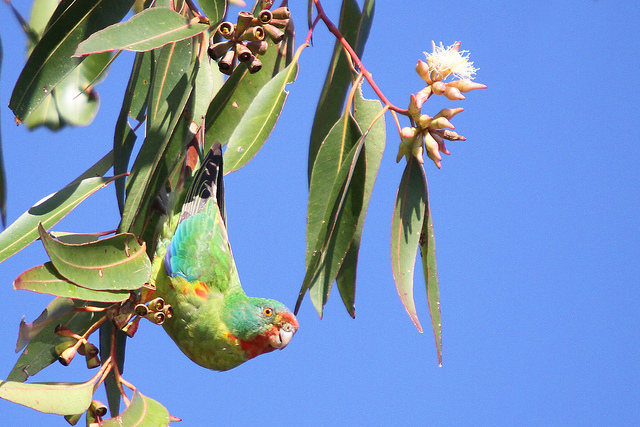
Swift Parrot (Lathamus discolor) ©© marj k

Swift Parrot (Lathamus discolor) ©© marj k

While working on the new updates for the IOC 2.10 Version, I kept noticing the word “color” in the scientific names as I sorted and resorted the Excel spreadsheet. This is a second of the “color” articles. There are concolor, bicolor, tricolor, unicolor, quadricolor, versicolor, decolor, sitticolor, nocticolor, etc. Those will come later. For now, let’s see what the “discolor” birds are.

According to the Free Dictionary, “discolor” means:

dis·col·or  (ds-klr)

v. dis·col·oreddis·col·or·ingdis·col·ors

v.tr.

To alter or spoil the color of; stain.

v.intr.

To become altered or spoiled in color.

Also – discolor – lose color or turn colorless; cause to lose or change color; change color, often in an undesired manner
Webster’s Revised Unabridged Dictionary, published 1913 by C. & G. Merriam Co.

Species with “discolor”:

Swift Parrot (Lathamus discolor) Bird roosting with head on back by Nick Talbot

Swift Parrot (Lathamus discolor) by Nick Talbot

Swift Parrot (Lathamus discolor) by NickT

Cuckoo Roller (Leptosomus discolor) from Wikipedia

Cuckoo Roller (Leptosomus discolor) from Wikipedia

Cuckoo Roller (Leptosomus discolor) ©WikiC – Video IBC
____ (Leptosomus discolor discolor) IBC

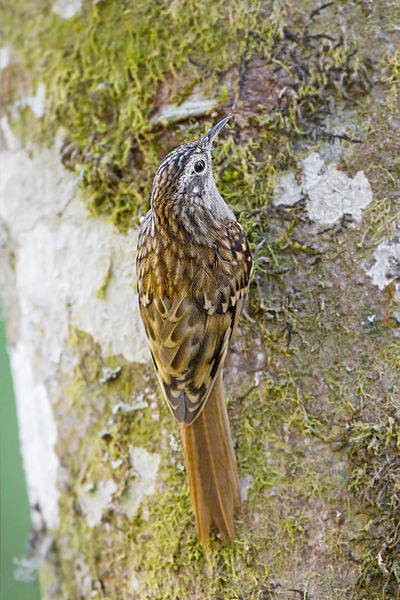
Brown-throated Treecreeper (Certhia discolor) ©WikiC

Brown-throated Treecreeper (Certhia discolor) ©WikiC

Brown-throated Treecreeper (Certhia discolor) ©WikiC

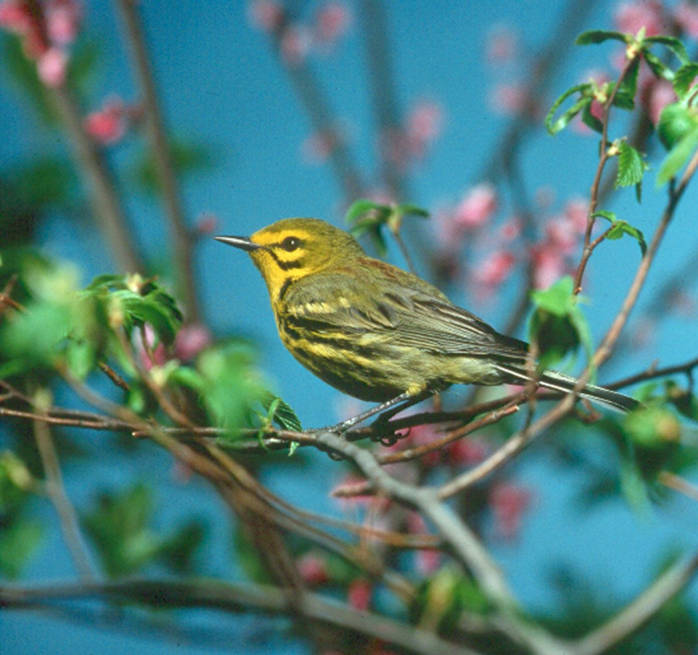
Prairie Warbler (Dendroica discolor) ©USFWS

Prairie Warbler (Dendroica discolor) ©USFWS

Prairie Warbler (Dendroica discolor) ©WikiC – Video IBC
____ (Dendroica discolor discolor) None

Subspecies with “discolor”:

Light-crowned Spinetail (Cranioleuca albiceps) – Video by Keith Blomerley
____ (Cranioleuca albiceps albiceps)
____ (Cranioleuca albiceps discolor) IBC

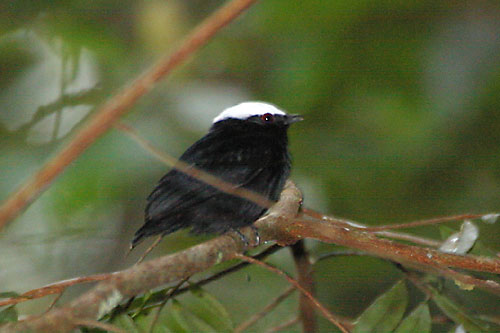
White-crowned Manakin (Dixiphia pipra) by ©AGrosset

White-crowned Manakin (Dixiphia pipra) by ©AGrosset

White-crowned Manakin (Dixiphia pipra)
____ (Dixiphia pipra discolor) None

 Little Shrikethrush (Colluricincla megarhyncha) ©WikiC

Little Shrikethrush (Colluricincla megarhyncha) ©WikiC

Little Shrikethrush (Colluricincla megarhyncha) ©WikiC
____ (Colluricincla megarhyncha discolor) None

Chubb's Cisticola (Cisticola chubbi) by Tom Tarrant

Chubb’s Cisticola (Cisticola chubbi chubbi) by Tom Tarrant

Chubb’s Cisticola (Cisticola chubbi) by Tom Tarrant – Video IBC
____ (Cisticola chubbi discolor) None

Rusty Sparrow (Aimophila rufescens) IBC – Video IBC
____ (Aimophila rufescens discolor)

Red-throated Ant Tanager (Habia fuscicauda) by Michael Woodruff

Red-throated Ant Tanager (Habia fuscicauda) by Michael Woodruff

Red-throated Ant Tanager (Habia fuscicauda) by M Woodruff – Video IBC
____ (Habia fuscicauda discolor)

As you can see by most of these birds with “discolor” in their name, have a sort of “washed-out” look. Not a very distinct color. I am sure that the Lord created them this way to help them blend in with their surroundings. Protection is important. These thoughts sort of remind me of several verses:

Ye are the salt of the earth: but if the salt have lost his savour, wherewith shall it be salted? it is thenceforth good for nothing, but to be cast out, and to be trodden under foot of men. (Matthew 5:13 KJV)

And when the chief Shepherd shall appear, ye shall receive a crown of glory that fadeth not away. (1 Peter 5:4 KJV)

*

See: Birds of the World

The Gospel Message

*

Birds of the World – Concolor Birds

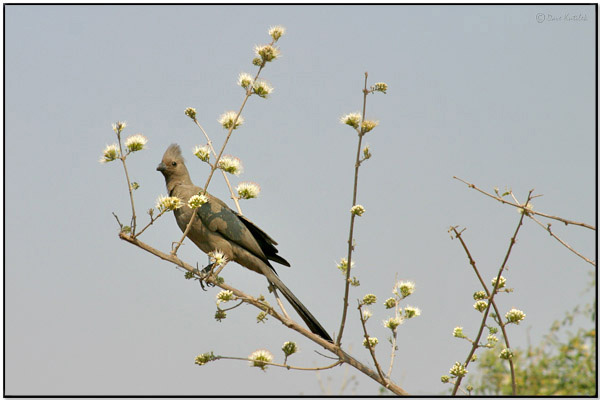
Grey Go-away-bird (Corythaixoides concolor) by Daves BirdingPix

Grey Go-away-bird (Corythaixoides concolor) by Daves BirdingPix

While working on the new updates for the IOC 2.10 Version, I kept noticing the word “color” in the scientific names as I sorted and resorted the Excel spreadsheet. This is a first of the “color” articles. There are bicolor, tricolor, unicolor, quadricolor, versicolor, decolor, sitticolor, nocticolor, etc. Those will come later. For now, let’s see what the “concolor” birds are.

According to the Free Dictionary, “concolor” means:

Con´col`or
a. 1. Of the same color; of uniform color.
Webster’s Revised Unabridged Dictionary, published 1913 by C. & G. Merriam Co.

Species and their subspecies with “concolor”:

Sooty Falcon (Falco concolor) ©WikiC

Sooty Falcon (Falco concolor) ©WikiC

Sooty Falcon (Falco concolor)

Uniform Crake (Amaurolimnas concolor) IBC
____ (Amaurolimnas concolor concolor †)

Grey Go-away-bird (Corythaixoides concolor) See Above – Video IBC
____ (Corythaixoides concolor concolor)

Dusky Crag Martin (Ptyonoprogne concolor) ©WikiC

Dusky Crag Martin (Ptyonoprogne concolor) ©WikiC

Dusky Crag Martin (Ptyonoprogne concolor) IBC
____ (Ptyonoprogne concolor concolor) IBC

Grey Longbill (Macrosphenus concolor) – Video IBC

Nilgiri Flowerpecker (Dicaeum concolor) ©WikiC

Nilgiri Flowerpecker (Dicaeum concolor) ©WikiC

Nilgiri Flowerpecker (Dicaeum concolor) IBC

Sao Tome Grosbeak (Neospiza concolor) IBC

Blue Seedeater (Amaurospiza concolor) IBC
____ (Amaurospiza concolor concolor)

Subspecies with “concolor”:

Amazonian Barred Woodcreeper (Dendrocolaptes certhia) by Kent Nickell

Amazonian Barred Woodcreeper (Dendrocolaptes certhia) by Kent Nickell

Amazonian Barred Woodcreeper (Dendrocolaptes certhia)
____ (Dendrocolaptes certhia concolor) – Video IBC

Unicolored Jay (Aphelocoma unicolor)
____ (Aphelocoma unicolor concolor) – Video IBC
____ (Aphelocoma unicolor unicolor)

Indochinese Green Magpie (Cissa hypoleuca concolor) ©WikiC

Indochinese Green Magpie (Cissa hypoleuca concolor) ©WikiC

Indochinese Green Magpie (Cissa hypoleuca)
____ (Cissa hypoleuca concolor)

Black Bulbul (Hypsipetes leucocephalus) WikiC

Black Bulbul (Hypsipetes leucocephalus) WikiC

Black Bulbul (Hypsipetes leucocephalus)
____ (Hypsipetes leucocephalus concolor)

Yellow-bellied Bush Warbler (Cettia acanthizoides)
____ (Cettia acanthizoides concolor) IBC

Singing Cisticola (Cisticola cantans) juvenile ©WikiC

Singing Cisticola (Cisticola cantans) juvenile ©WikiC

Singing Cisticola (Cisticola cantans) IBC
____ (Cisticola cantans concolor)

Plain Laughingthrush (Garrulax davidi)
____ (Garrulax davidi concolor)

Grey-breasted Spiderhunter (Arachnothera modesta) IBC – Video WikiC
____ (Arachnothera modesta concolor)

Red-collared Widowbird (Euplectes ardens)
____ (Euplectes ardens concolor) – Video IBC

For every beast of the woodland is mine, and the cattle on a thousand hills. I see all the birds of the mountains, and the beasts of the field are mine. If I had need of food, I would not give you word of it; for the earth is mine and all its wealth. (Psalms 50:10-12 BBE)

Other than the Indochinese Green Magpie, the “concolor” makes sense in that the birds are pretty well just plain birds with very little color variation. As the definition above said they are of the same or uniform color. Even though we may think these “concolor” birds are a bit dull or plain, their Creator knows all about them and cares for them. How about us?

Look at the birds of the air, for they neither sow nor reap nor gather into barns; yet your heavenly Father feeds them. Are you not of more value than they? (Matthew 6:26 NKJV)

*
Birds of the World

Ian’s Bird of the Week – Black-tailed Treecreeper

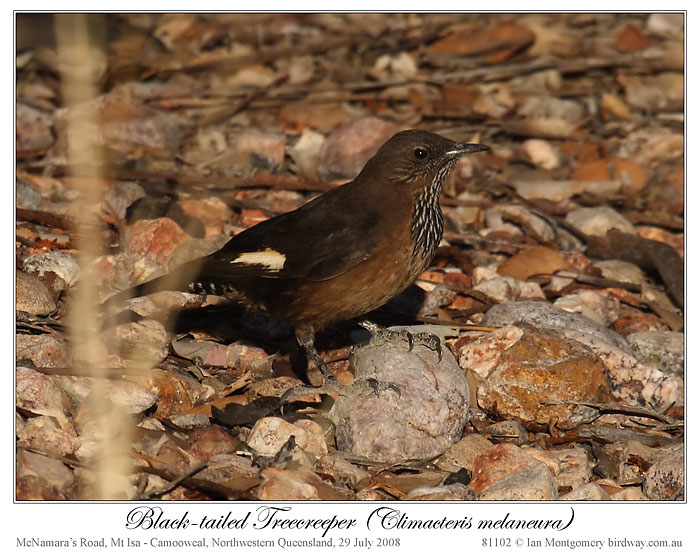
Black-tailed Treecreeper (Climacteris melanurus) by Ian

Black-tailed Treecreeper (Climacteris melanurus) by Ian

Ian’s Bird of the Week – Black-tailed Treecreeper ~ by Ian Montgomery

Newsletter – 10/28/11

I hope you like albatrosses and penguins as I leave in less than 2 weeks for a boat-trip to the so-called Sub-Antarctic island south of New Zealand and Australia and seabirds will, I hope, dominate the bird of the week for some time to come. In the meantime, here is a real landlubber, the Black-tailed Treecreeper, from northwestern Australia. It’s range extends from northwestern Queensland (Cloncurry district) through the Top End of the Northern Territory to the Kimberley region of northern Western Australia, with an isolated population of a paler race slightly farther south in the Pilbara region.

Black-tailed Treecreeper (Climacteris melanurus) by Ian

Black-tailed Treecreeper (Climacteris melanurus) by Ian

This bird is a male with a black throat with white streaks and the photo shows well the huge rear claws that it uses to climb trees. The photo also shows that Australo-Papuan Treecreepers (Climacteridae Family) usually don’t rely on their tails as a prop, unlike the unrelated Northern Hemisphere Treecreepers (Certhiidae) and Woodpeckers (Picidae). This photo was taken in tropical forest in Kakadu but this species also occurs in much more arid country with only scattered trees and it will feed on the ground, as in the second photo, taken at McNamara’s Road between Mount Isa and Camooweal. This bird is also a male: females have pale throats, but I haven’t got a good photo of one.

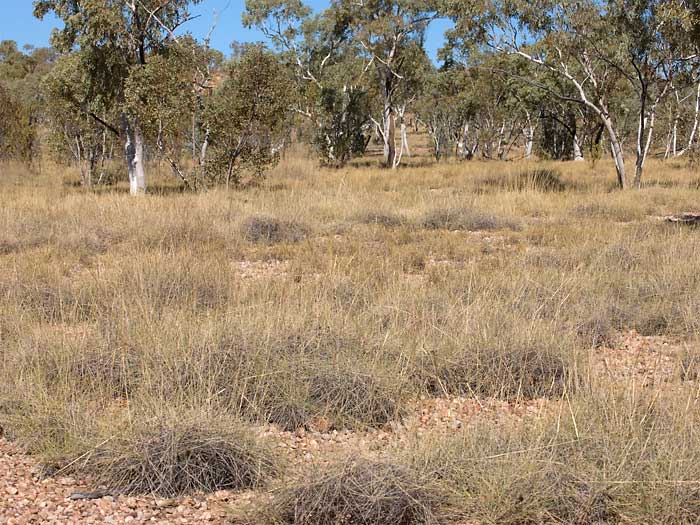
McNamaras Road by Ian

McNamaras Road by Ian

The main ground cover here is a prickly grass usually called spinifex (Triodia) and this site, third photo, is famous for its Carpentarian Grasswrens, but I remember it better for a hard night’s camping with a punctured airbed on this fourth-failed and final foray here in search of these elusive grasswrens – final because I was shown the grasswrens at another site two days later by Brian Venables who has much better hearing than I have! (Carpentarian Grasswren)

Best wishes
Ian

Ian Montgomery, Birdway Pty Ltd,
454 Forestry Road, Bluewater, Qld 4818
Phone: 0411 602 737 +61-411 602 737
Preferred Email: ian@birdway.com.au
Website: http://birdway.com.au


Lee’s Addition:

I am glad Ian is the one camping in an area like that last photo. That prickly grass doesn’t look too inviting. Those neat photos of the Treecreeper are worth it though. Thanks for sacrificing your airbed for them.

In them the birds build their nests; the stork has her home in the fir trees. (Psalms 104:17 ESV)

The Climacteridae- Australian Treecreeper Family and the Certhiidae – Treecreepers Family are in the Passeriformes Order and the Picidae – Woodpeckers Family is in the Piciformes Order.

*

Birds of the World – Vermilion Cardinal

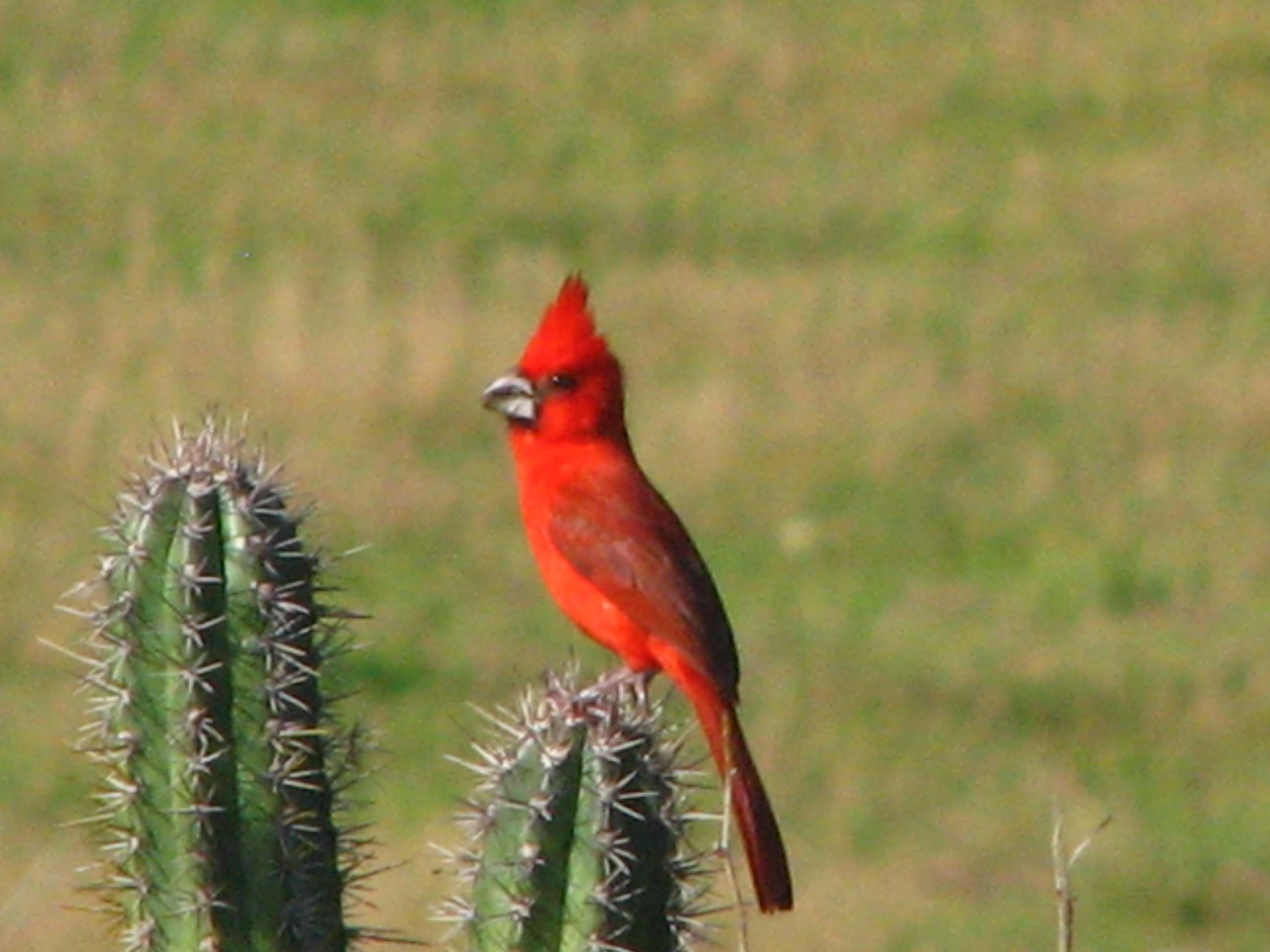
Vermilion Cardinal (Cardinalis phoeniceus) ©WikiC

Vermilion Cardinal (Cardinalis phoeniceus) ©WikiC

Why is Your apparel red, And Your garments like one who treads in the winepress? (Isaiah 63:2 NKJV)

The Cardinalis genus of the Cardinalidae – Grosbeaks, Saltators & Allies Family includes three species. Oswaldtanager of YouTube caught a great video of the Vermilion Cardinal (Cardinalis phoeniceus) and I wanted to share it. These are only found in  Colombia and Venezuela.

*

*

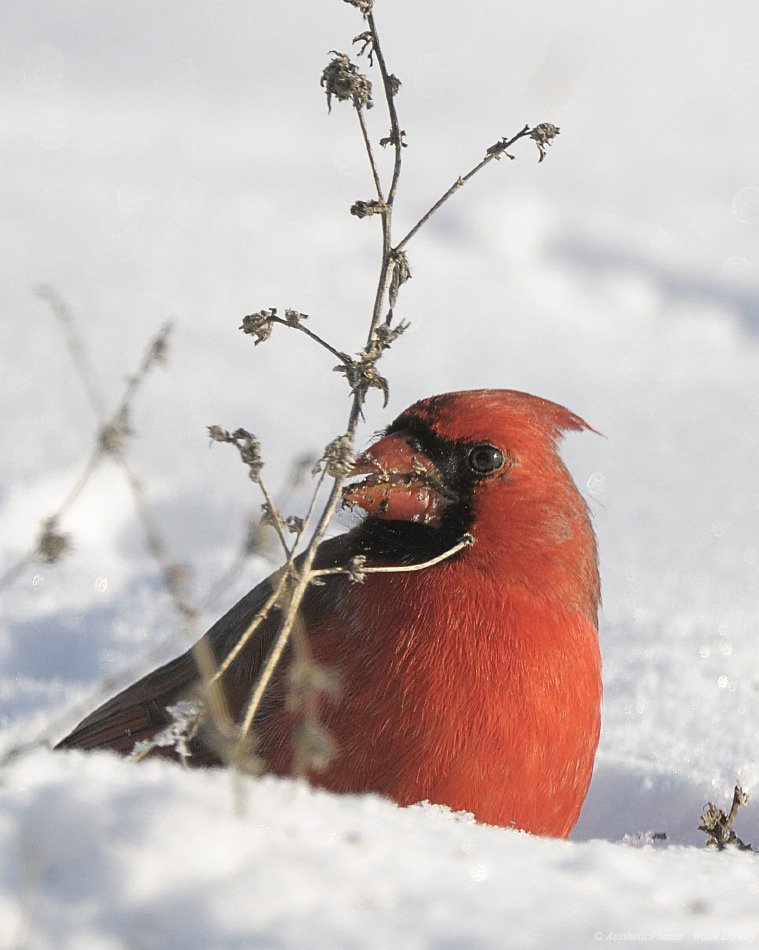
Here in the United States, we get to see the Northern Cardinal (Cardinalis cardinalis)

Northern Cardinal by Aestheticphotos

Northern Cardinal (Cardinalis cardinalis) by Aestheticphotos

and the Pyrrhuloxia (Cardinalis sinuatus). These are the other two genus members.

Pyrrhuloxia (Cardinalis sinuatus) ©WikiC

Pyrrhuloxia (Cardinalis sinuatus) ©WikiC

These are robust, seed-eating birds with strong bills. They are typically associated with open woodland. The sexes usually have distinctive appearances; the family is named for the red plumage (colored cardinal like the color of a Catholic cardinal’s vestments) of males of the type species, the Northern Cardinal.

The Cardinals or Cardinalidae are a family of passerine birds found in North and South America. The South American cardinals in the genus Paroaria are placed in another family, the Emberizidae.

Paroaria
Red-crested Cardinal (Paroaria coronata) by DavesBP – Video
Red-cowled Cardinal (Paroaria dominicana)– Video 
Red-capped Cardinal (Paroaria gularis) by DavesBP-Video by Keith
Masked Cardinal (Paroaria nigrogenis)
Crimson-fronted Cardinal (Paroaria baeri)
Yellow-billed Cardinal (Paroaria capitata) – Video

And they stripped Him and put a scarlet robe on Him. (Matthew 27:28 NKJV)

See:

Birds of the World

*