Swans Return, in November, for Chesapeake Bay Over-wintering
Dr. James J. S. Johnson
To every thing there is a season, and a time to every purpose under the heaven . . . . He hath made every thing beautiful in his time; also He has set the world in their heart, so that no man can find out the work that God makes from the beginning to the end. (Ecclesiastes 3:1 & 3:11)
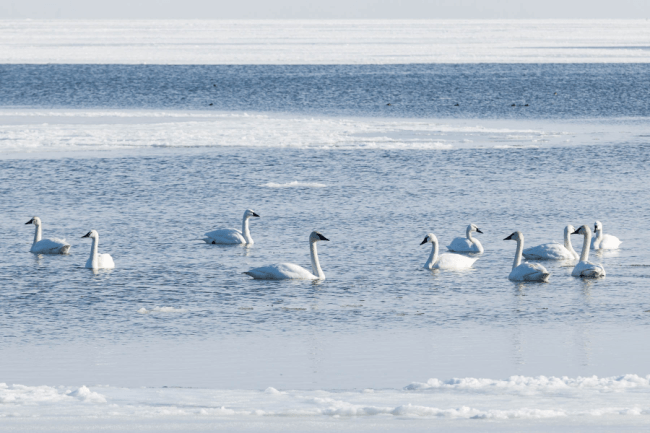
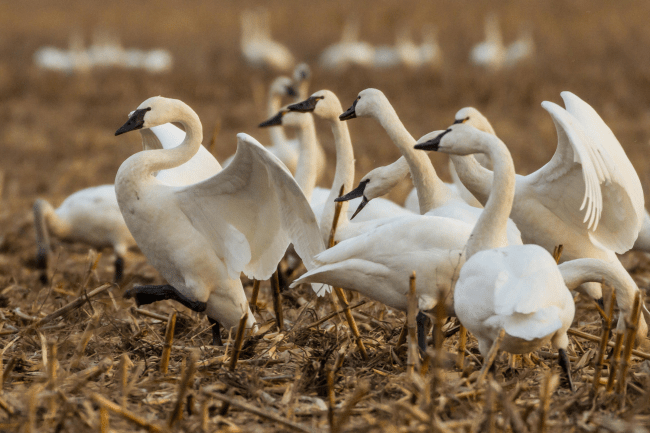
TUNDRA SWANS as “Winter Marylanders” (Will Parson/Chesapeake Bay Program photo credit)
Seasons come and seasons go, demonstrating the faithfulness of God’s post-Flood promise to Noah and Noah’s Ark passengers:
While the earth remains, seedtime and harvest, and cold and heat, and summer and winter, and day and night shall not cease. (Genesis 8:22)
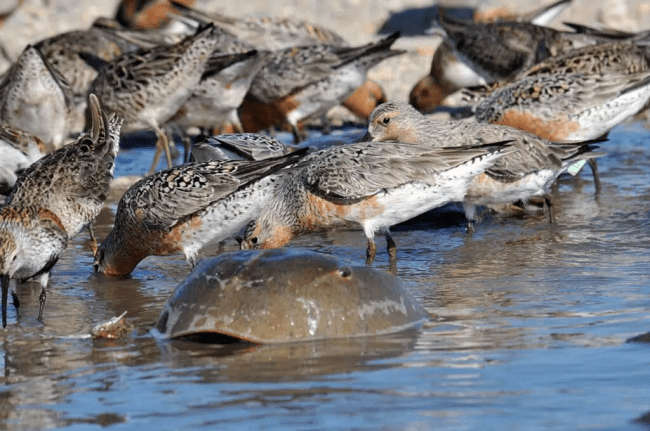
Only a half-year ago the May migrants were blanketing shorelands of the Delmarva [Delaware-Maryland-Virginia] Peninsula, and other parts of the the Chesapeake Bay’s watershed shorelands, here and there:
In May we were tramping the saltmarshes and beaches of the lower Delmarva Peninsula with biologists from the Nature Conservancy, collecting vital data on a variety of shorebirds, from willets to whimbrels, plovers to dunlins, red knots to ruddy turnstones. Some, like the curved-beaked whimbrels, may be airborne without stopping for up to five days, arriving at the lush marshes and mudflats of our region famished from their winter haunts in South America. For several weeks they will refuel here, nonstop, chowing down on fiddler crabs. Then, one spring evening, something in them stirs, and they are aloft by the thousands, not to alight before reaching breeding grounds that stretch from Hudson Bay to far northwest Canada’s Mackenzie River Delta. [Quoting Tom Horton, CHESAPEAKE BAY JOURNAL, 34(5):30 (July -August 2024).]
But now, in November, the phenological reverse occurs — because, during May (and earlier), migrant birds fly northward, to seek out their summer breeding grounds; whereas, during November (and earlier), migrant birds are flying southbound, leaving their breeding grounds behind, as they emigrate by air to their over-wintering grounds.
Come this autumn we’ll be on Deer Creek on the Susquehanna River . . . [including] days in the wet and snow over the winter, filming tundra swans, one of the largest long-distance migrators of the bird world. They [i.e., tundra swans] spend a good portion of their lives on the wing, moving from breeding grounds across Alaska’s North Slope and the Yukon each fall into the Chesapeake and North Carolina — a 9,000-mile round trip. . . . . In November, not long after the last monarch [butterfly, emigrating southward to Mexico] has passed through, and as the silver eels [migrating snake-shaped ray-finned fish] stream from the Chesapeake’s mouth toward Sargasso depths, there will come the lovely, wild hallooing of “swanfall” — the descent of the tundra swans from on high to grace our winter. [Quoting Tom Horton, CHESAPEAKE BAY JOURNAL, 34(5):30 (July -August 2024).]
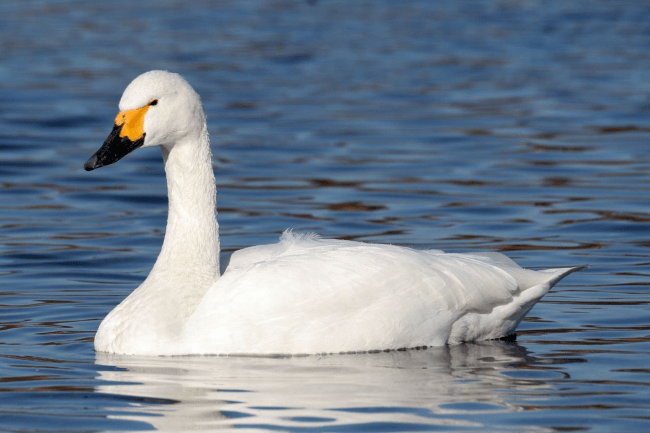
TUNDRA SWAN (Wikipedia / Maga-chan photo credit)
Tundra swans — they are huge [some would say “yooge”] geese-like birds.
So, what kinds of waterfowl are phenologically (and providentially) programmed, by the Lord Jesus Christ, to winter in ice-free estuaries like the Chesapeake Bay?
“Duck, duck, goose!”—and swans (such as Tundra Swans), just to name the most obvious. For example, Tundra Swans—being “yooge” birds—are easy to observe, especially if they are afloat in waters of an estuarial (or lacustrine) habitat that you may be visiting.
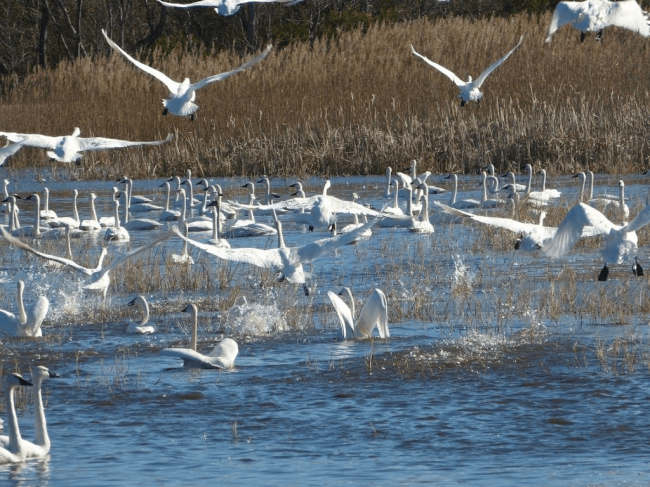
TUNDRA SWANS in North Carolina (USF&WS photo / public domain)
Swans are the largest waterfowl, and the tundra swans travel the farthest, more than 4,000 miles in some cases. They winter primarily on the Delmarva [Delaware-Maryland-Virginia] Peninsula and the estuarine edges of North Carolina. These large white birds are easily recognized by their black bills and straight or nearly straight necks. Tundra swans often form flocks on shallow ponds. [Quoting Kathy Reshetiloff, “Chesapeake’s Abundance Lures Wintering Waterfowl”, CHESAPEAKE BAY JOURNAL, 33(9):40 (December 2023), posted at http://www.bayjournal.com/columns/bay_naturalist/chesapeake-s-abundance-lures-wintering-waterfowl/article_4463317a-887f-11ee-a208-8768dc34c5a7.html .]
Wow! — what a wonder these wintering waterfowl are!
Or, more appropriately said, Hallelujah! — what a treasure of phenological providence these wonderful waterbirds are, showing God’s handiwork and caring kindness for His own creatures. May God bless them all, as they faithfully do their respective parts to “be fruitful, and multiply upon the earth” (Genesis 8:17).
Yea, the stork in the heaven knows her appointed times; and the turtledove and the crane and the swallow observe the time of their return; but My people know not the judgment of the LORD. (Jeremiah 8:7)
The Bible mentions migratory birds – for examples, storks, turtledoves, cranes, and swallows are mentioned as faithfully migratory birds in Jeremiah 8:7. (See JJSJ’s “A Lesson from the Stork”, at http://www.icr.org/article/lesson-from-stork .)
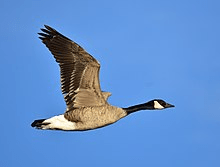
CANADA GOOSE in flight (Wikipedia photo credit)
Avian migrations are truly a wonderful recurrence in God’s phenological providences.
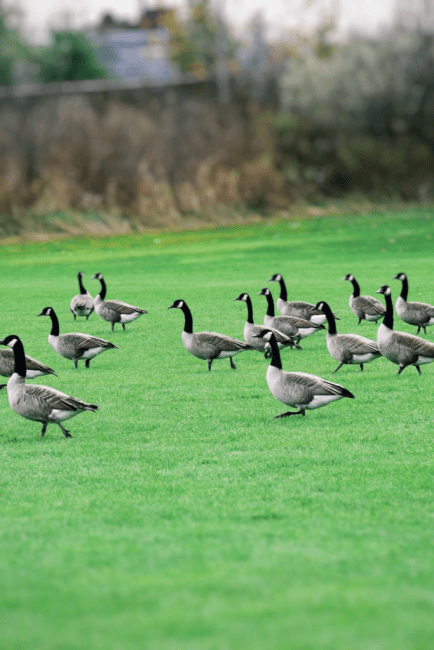
With that in mind, I observed a flock of Canada geese (Branta canadensis) in my neighborhood, not far from my mailbox—they were grazing among the grasses by my rain-runoff drainage ditch.
CANADA GEESE IN GRASS (HumaneActionPittsburgh.org photo credit)
But not long afterwards they were off again, in the air, southbound, toward wherever they go for winter. Today’s limerick follows.
DUELING WITH A DIAMONDBACK IN THE DESERT:ROADRUNNER vs. RATTLESNAKE!
Dr. James J. S. Johnson
Let their table become a snare before them; and that which should have been for their welfare, let it become a trap. (Psalm 69:22)
Sometimes hunting backfires: the hunter becomes the hunted!
Recall how Haman, in the Book of Esther, plotted to persecuted the Jews, to death, during his heyday in the Persian Empire? The result was the opposite of his diabolical scheme, however – and it was the Jews who deftly ended as victors (over their persecutors), with Haman himself being hanged to death, on the very gallows that he had constructed for hanging his Jewish rival, Mordecai!(1)
Amazingly, the animal kingdom sometimes sees something comparable happen – such as the scrubland showdown that sometimes occurs when a rattlesnake decides to prey upon a roadrunner. For an action-packed documentation of such a do-or-die duel, see the National Geographic video footage (“Roadrunner vs. Rattlesnake”) posted at http://video.nationalgeographic.com/tv/roadrunner-vs-rattlesnake (slightly longer than 2 minutes).
Hence, here is a poetic tribute (in limerick format) to the roadrunner, whom God caringly designed to “hold its own”, and then some (!), when dueling with a diamondback in the desert!
RATTLESNAKE ATTACKS MAMA ROADRUNNER!
(JJSJ’s poetic review of predator-prey turnabout)
A rattlesnake, hunting for prey,
Met Mama Roadrunner that day;
The coiled snake grinned with glee,
But the fowl did not flee —
Thus, a bird, the snake aimed to slay.
The roadrunner brave, the snake brash;
Twin fangs lunged – but no gash!
The bird’s flesh he had missed —
The bird jumped, the snake hissed;
Again, the snake struck in a flash!
Missed again! – the bird jumped aside!
Once again, snake-fangs were denied;
So the shrewd snake re-set,
As the bird watched the threat —
Then a target the roadrunner eyed.
The roadrunner now used her skill,
To bite the snake hard, with her bill!
Between the fangs, she had bit —
Vise-clamped bite! – she won’t quit!
Fangs dangling, the snake couldn’t kill!
Struggle, wiggle, — the trapped snake did strain,
To loose the bird’s grip, but in vain!
The bird’s bite, firm and fierce —
The snake’s fangs, naught could pierce;
The snake’s plight, now dire, with pain!
The bird aims – the snake’s head now bashed
On rocks, the snake’s head, thrashed and smashed.
Hammering the snake’s head,
Till it’s broken and dead —
The snake’s crown is thus cracked and crashed.
This showdown, so furious and fast,
Ends with the rattler breathing his last;
The snake thought he found prey,
But on that fateful day,
‘Twas the snake as roadrunner’s repast!
Of this duel, the moral is clear
(If, your own life, you would hold dear):
A predator, one day,
On the next, may be prey!
And Mama Roadrunner, you’d best fear!
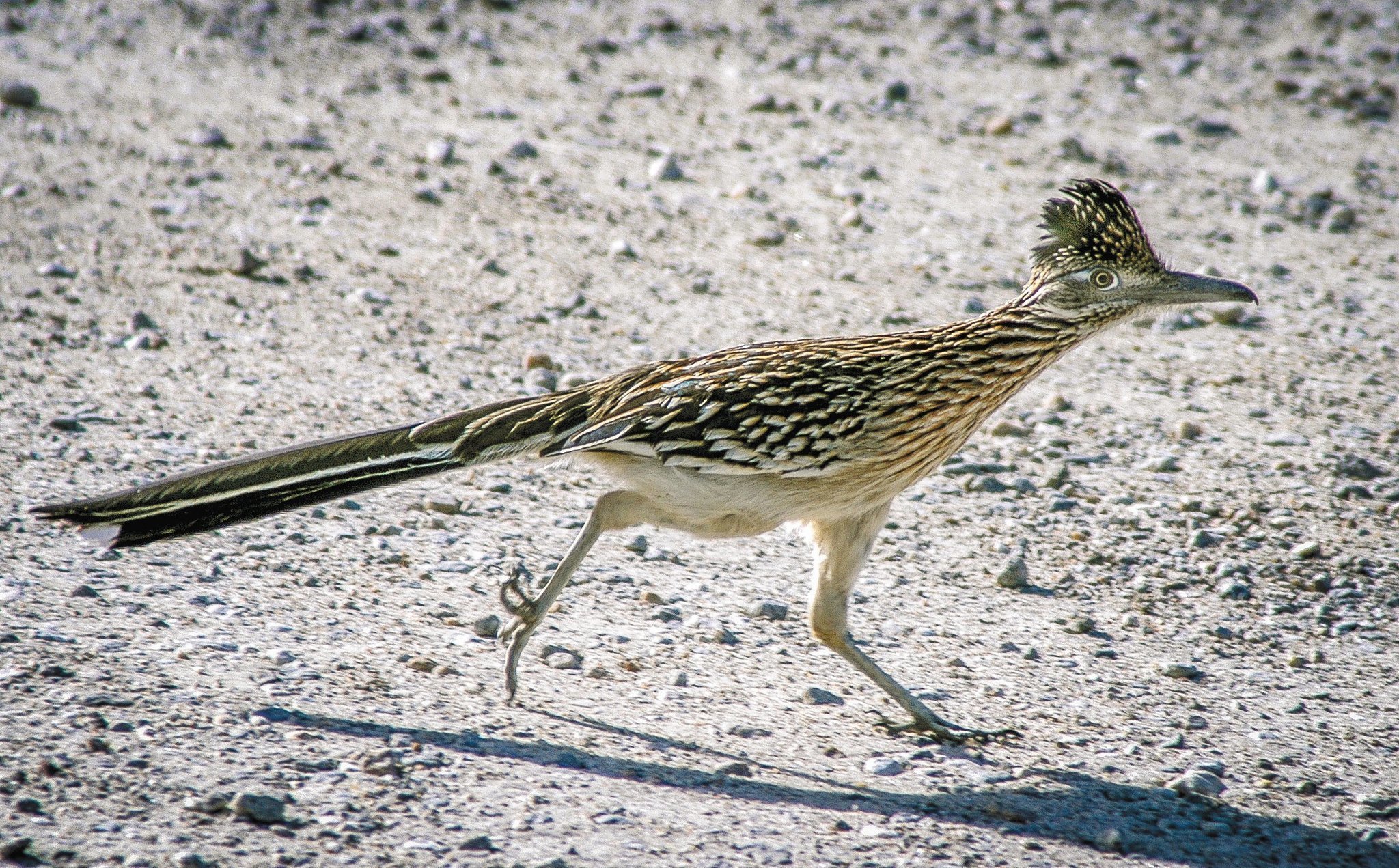
Roadrunners are fast. These chaparral birds live in deserts and xeric scrub (such as sage-dominated scrublands), and in other rural and semi-rural regions of America’s Southwest, feeding on bugs, scorpions, lizards, and snakes.
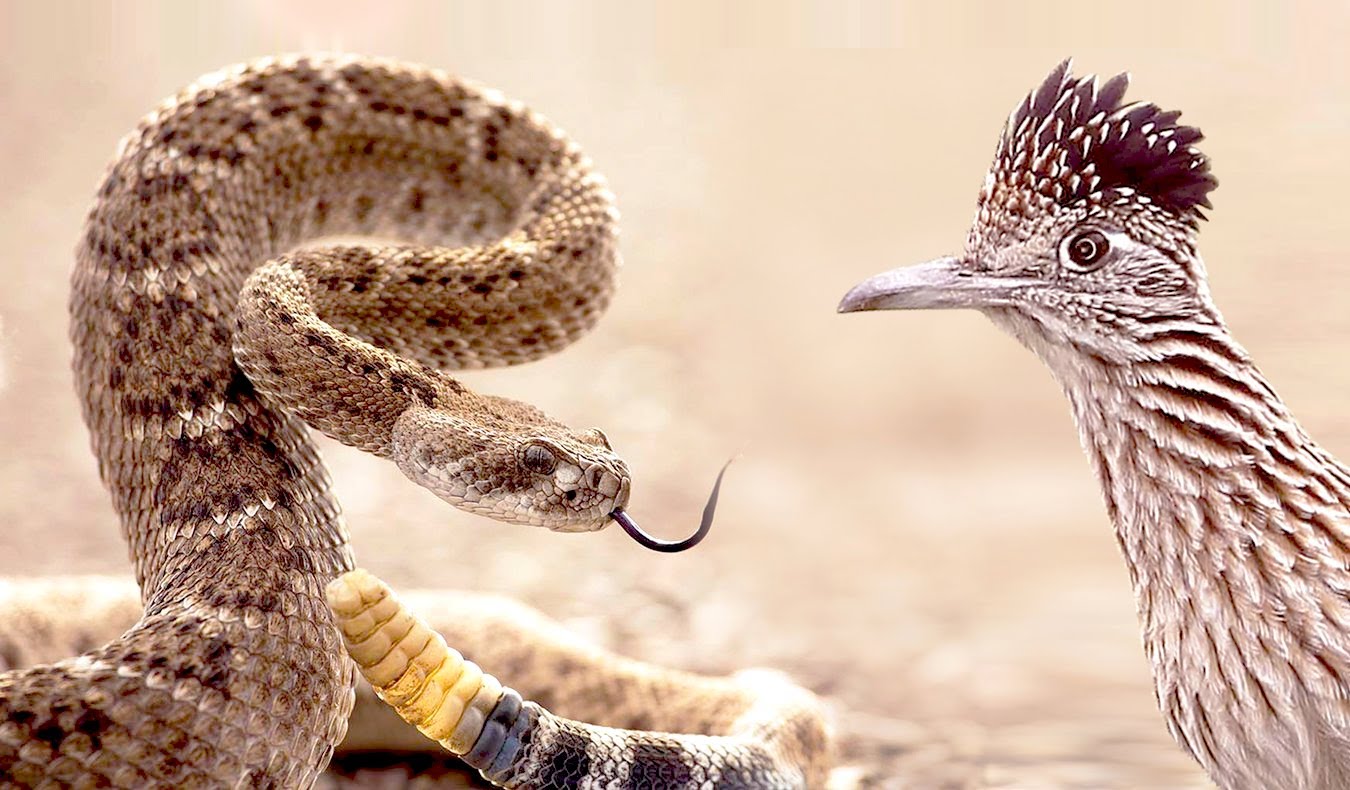
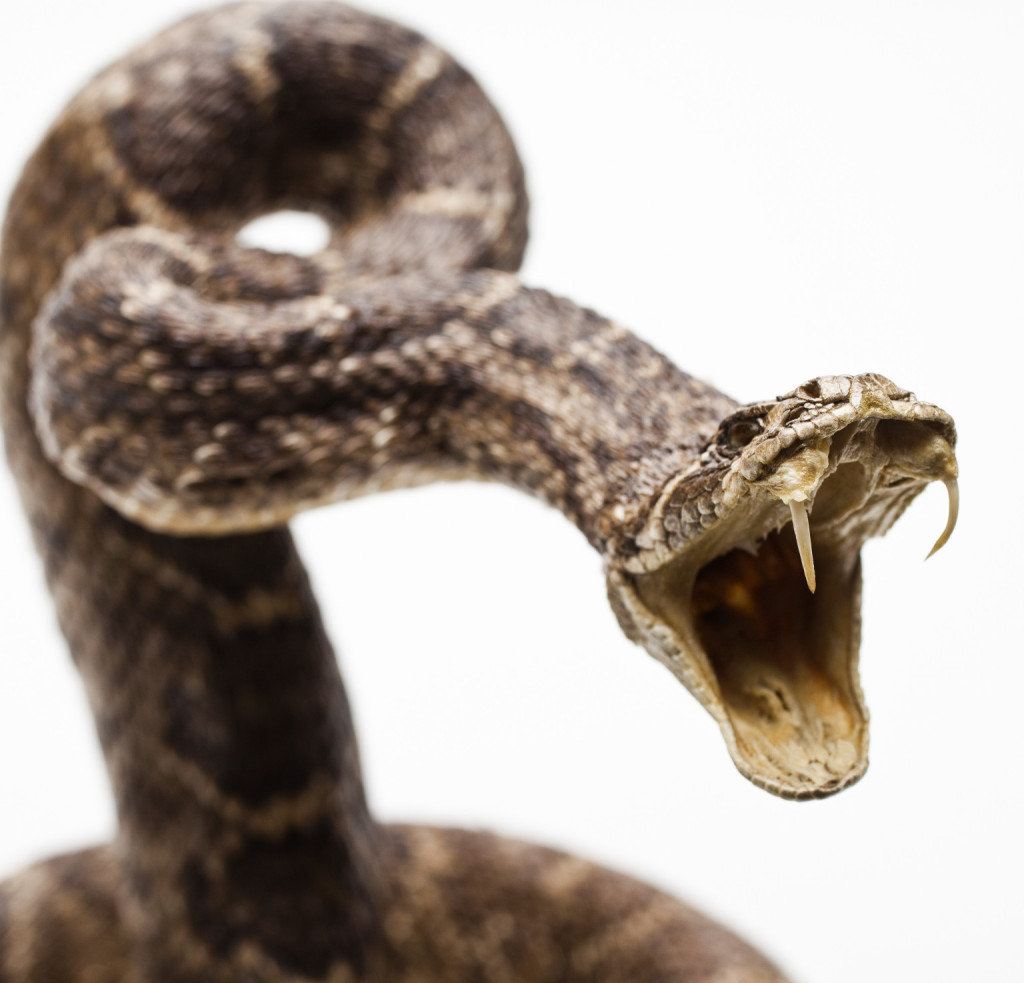
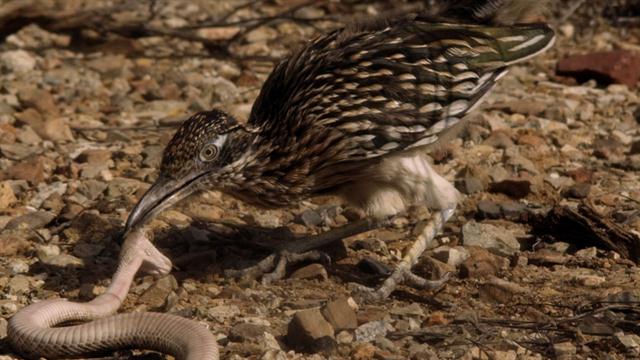
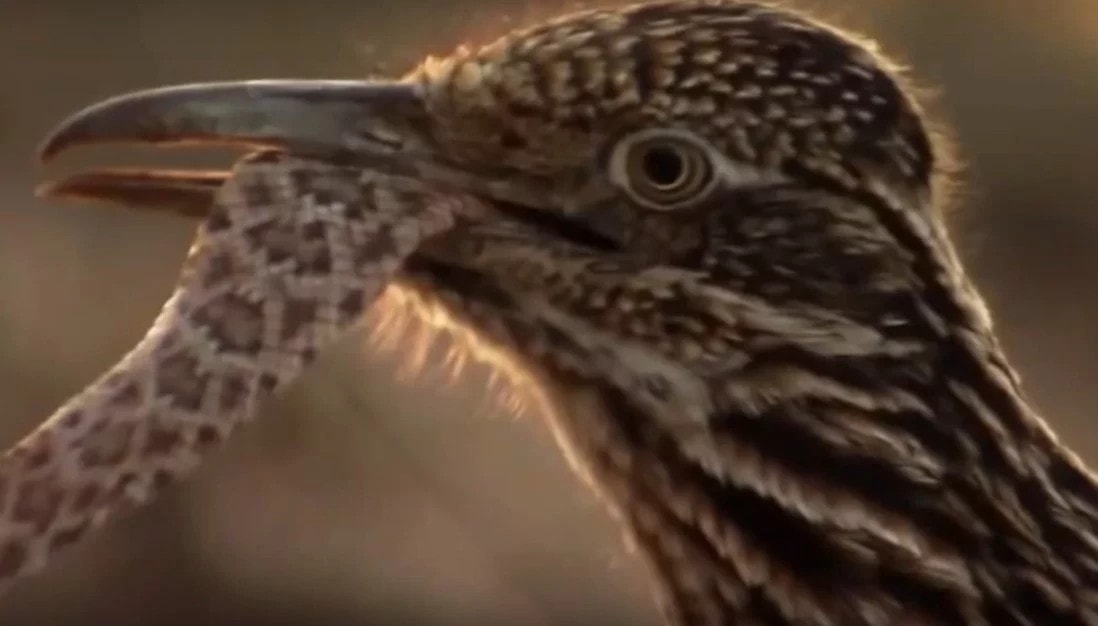
But can roadrunners survive showdowns with diamondback rattlesnakes? Yes! Although roadrunners are famous for running from danger, they aggressively attack rattlesnakes, face to face—i.e., bill to fangs! Amazingly, God has so designed the roadrunner that it can speedily aim at the face and fangs of a striking rattle, using its pointed bill to bite (and clamp) onto the rattler’s open mouth, between the upper fangs, rapidly lock-biting the snake in a death-grip. Then the bird repeatedly thrashes and crushes the serpent’s head against rocks—killing the rattlesnake. The victorious roadrunner then eats the dead diamondback!(2)
The arid, torrid wastelands that we call deserts are relatively inhospitable, for most creatures, yet God has providentially fitted some animals to fill desert habitats—such as desert rats, rabbits, roadrunners, and rattlesnakes.(3)
Desert-dwelling creatures — like Roadrunners (or Diamondback Rattlesnakes!) — daily demonstrate that fact, for those who have eyes to see. And sometimes, if you happen to live in the America’s Southwest, you need not journey all the way out to a desert, to see such God-created marvels as the resilient roadrunner. (Meep, meep!)
(3) Many creatures are providentially fitted to fill hot or cold desert (and similar xeric scrub) habitats, e.g., the Sage Grouse, named for its sagebrush-nesting habits and for eating sagebrush buds and leaves. See James A. MacMahon, Deserts (Alfred A. Knopf, 1986), especially page 583 & plate 545. See also, generally, Knut Schmidt-Nielsen, Desert Animals: Physiological Problems of Heat and Water (Dover Publications, 1979), especially pages 204-224 (desert birds) & pages 225-251 (desert reptiles).
PHOTO CREDITS:
Rattlesnake showdown with Roadrunner: National Geographic video
Roadrunner approaching Rattlesnake: Viral Portal
Roadrunner bites Rattlesnake: Pinterest
Roadrunner biting/smashing Rattler: Viral Portal
Roadrunner thrashing/crushing Rattler’s head: National Geographic video
Roadrunner running in desert: San Diego Union Tribune
Roadrunner eating Rattle: Kami.com
Roadrunner on patio table: original source unknown / RockDoveBlog
What an interesting article that James J. S. Johnson wrote on his blog. I thought you might enjoy it. The video of an actual dog slide ride is really challenging.
Celebrating the Life-Saving Heroism of Alaskan Dog Mushers (and their Sled Dogs)
James J. S. Johnson, JD, ThD, CNHG
As we have therefore opportunity, let us do good unto all men, especially unto them who are of the household of faith. Galatians 6:10
Imagine a celebration of Siberian husky sled dogs, harnessed together as a racing team, guided by their human driver (called a “musher”), zooming across frigid snow trails in rural Alaska: this is what happens in a commemorative festival/event called the IDITAROD TRAIL RACE. (See the YouTube video footage below.)
The Iditarod is an outdoors reenactment-like celebration of dogsled mushing, to remember the heroic relay race – through day and night, blizzard winds, snow, and ice – to save human lives, during a life-or-death crisis in January-February AD1925, when a highly contagious diphtheria plague struck like a serial killer, menacing the almost-unreachable population of Nome, Alaska.
Are not five sparrows sold for two farthings, and not one of them is forgotten before God? But even the very hairs of your head are all numbered. Fear not therefore: ye are of more value than many sparrows. (Luke 12:6-7 KJV)
Birds in Hymns – God Sees The Little Sparrow Fall
Words by Maria Straub, 1874 (1838-1898)
Music – Providence, by Solomon W. Straub
God Sees The Little Sparrow Fall
God sees the little sparrow fall,
It meets His tender view;
If God so loves the little birds,
I know He loves me, too.
Refrain
He loves me, too, He loves me, too, I know He loves me, too; Because He loves the little things, I know He loves me, too.
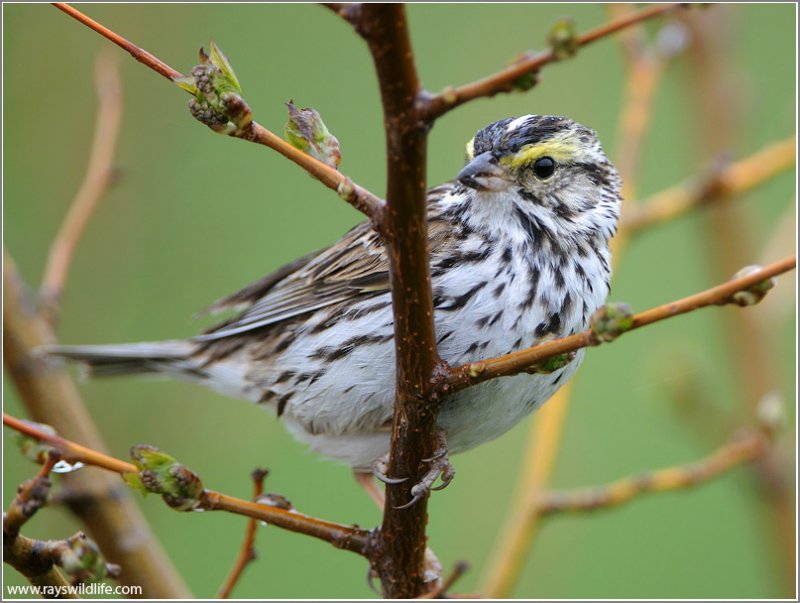
Savannah Sparrow (Passerculus sandwichensis) by Ray
He paints the lily of the field,
Perfumes each lily bell;
If He so loves the little flow’rs,
I know He loves me well.
Refrain
He loves me, too, He loves me, too, I know He loves me, too; Because He loves the little things, I know He loves me, too.
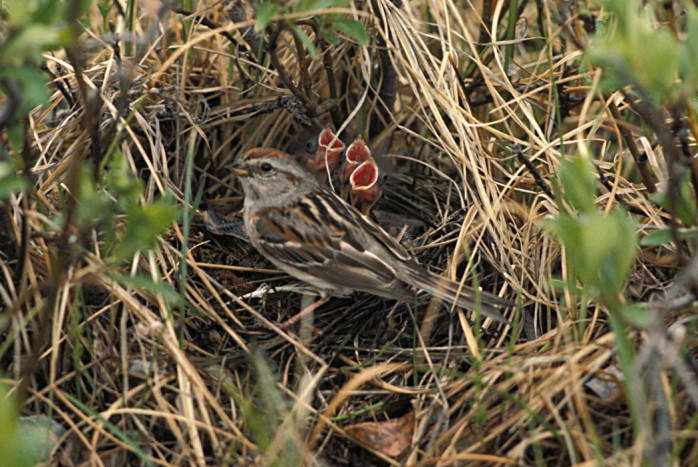
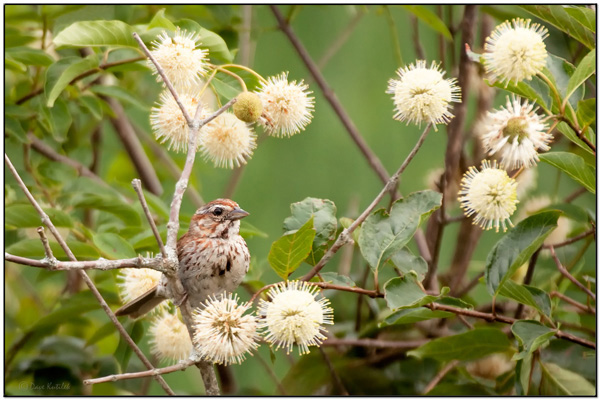
Song Sparrow in white flowers by Daves BirdingPix
God made the little birds and flow’rs,
And all things large and small;
He’ll not forget his little ones,
I know He loves them all.
Refrain
He loves me, too, He loves me, too, I know He loves me, too; Because He loves the little things, I know He loves me, too.
Lilian's Lovebird (Agapornis lilianae) by Africaddict
You alone are the LORD; You have made heaven, The heaven of heavens, with all their host, The earth and everything on it, The seas and all that is in them, And You preserve them all. The host of heaven worships You. (Nehemiah 9:6 NKJV)
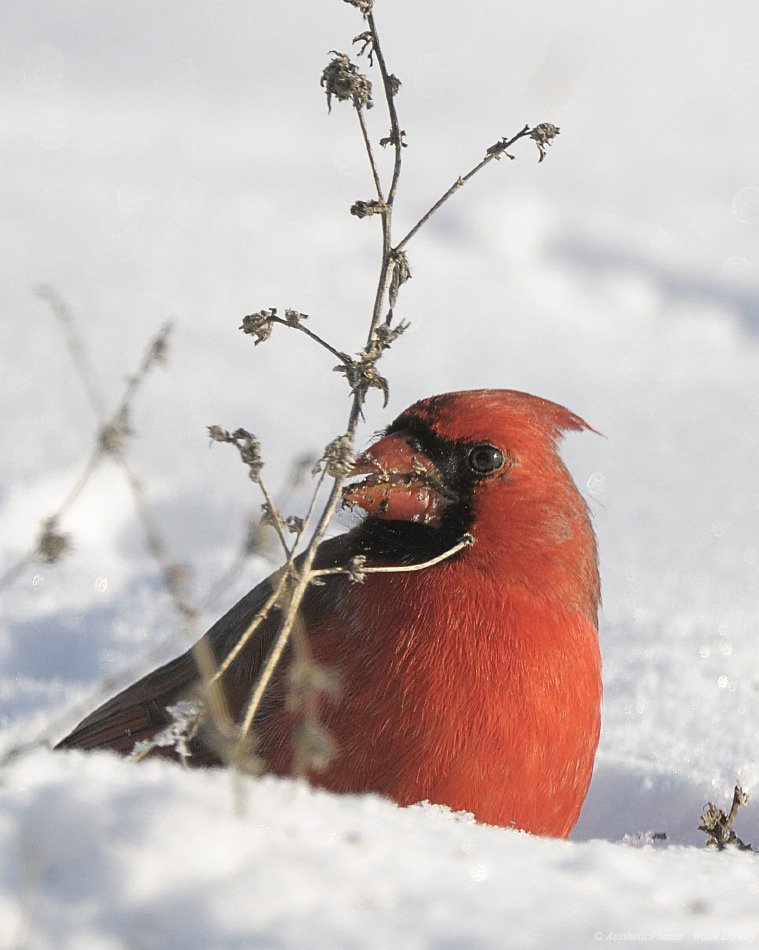
Northern Cardinal by Aestheticphotos
Your righteousness is like the great mountains; Your judgments are a great deep; O LORD, You preserve man and beast. (Psalms 36:6 NKJV)
House Sparrow (Passer domesticus) by Nikhil Devasar
Are not two sparrows sold for a copper coin? And not one of them falls to the ground apart from your Father’s will. (Matthew 10:29 NKJV)
These all wait for You, That You may give them their food in due season. What You give them they gather in; You open Your hand, they are filled with good. (Psalms 104:27-28 NKJV)
Western Great Egret (Ardea alba) With Fish by AestheticPhotos
Who giveth food to all flesh: for his mercy endureth for ever. (Psalms 136:25 KJV)
Northern Raven (Corvus corax) by Ray
He giveth to the beast his food, and to the young ravens which cry. (Psalms 147:9 KJV)
Seashore at MacDill AFB by Lee
Look at the birds of the air, for they neither sow nor reap nor gather into barns; yet your heavenly Father feeds them. Are you not of more value than they? (Matthew 6:26 NKJV)
But seek first the kingdom of God and His righteousness, and all these things shall be added to you. Therefore do not worry about tomorrow, for tomorrow will worry about its own things. Sufficient for the day is its own trouble. (Matthew 6:33-34 NKJV)









 Lee's Birdwatching Adventures Plus