Birds of the Bible – Quail II


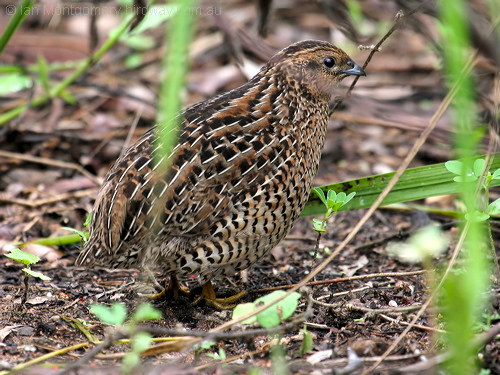
Brown Quail (Coturnix ypsilophora) by Ian

Brown Quail (Coturnix ypsilophora) by Ian

It has been almost two years since the Quail have been written about. Birds of the Bible – Quail was early in this blogs history, so decided to write more about them.

The Bible has four references to quail and they are all found in the Old Testament. They refer to the time that the Israelites were in the desert after they had left Egypt by way of the Red Sea. They had been complaining about their lack of food, so the LORD answered them with:

And the LORD spake unto Moses, saying, I have heard the murmurings of the children of Israel: speak unto them, saying, At even ye shall eat flesh, and in the morning ye shall be filled with bread; and ye shall know that I am the LORD your God. And it came to pass, that at even the quails came up, and covered the camp: and in the morning the dew lay round about the host. (Exodus 16:11-13 KJV)

So, their request was taken care of every morning and evening. Just as today, we have a promise:

But my God shall supply all your need according to his riches in glory by Christ Jesus. (Philippians 4:19 KJV)

That incident took place on the 15th day of the second month after coming out of Egypt. Then right around the 20th day of the second month of the second year, they started complaining again about not having flesh to eat.

We remember the fish, which we did eat in Egypt freely; the cucumbers, and the melons, and the leeks, and the onions, and the garlick: But now our soul is dried away: there is nothing at all, beside this manna, before our eyes. (Numbers 11:5-6 KJV)

“Poor me! All we have to eat is manna, manna, manna.” Can you hear them? God wanted them to trust Him. God promises to meet our needs, not necessarily our wants. This is where the incident written about in the first article came about. They were well taken care of, even their shoes did not wear out in the 40 years they spent in the wilderness. Read Psalm 105 where it tells about all the LORD did for them. In Psalm 105:40 it says, “The people asked, and he brought quails, and satisfied them with the bread of heaven.”

Are we satisfied with what the Lord has provided or do we go around with a protruding lower lip saying, “Poor me!” I trust your lip is normal and that you can say along with Paul:

Not that I speak in respect of want: for I have learned, in whatsoever state I am, therewith to be content. (Philippians 4:11 KJV)

King Quail (Excalfactoria chinensis) Asian Blue by Kent Nickell

King Quail (Excalfactoria chinensis) by Kent Nickell

The Quail are numerous around the world and they are found in several families of birds. The Odontophoridae – New World Quail Family (34 members) includes not only Quails, but also 4 Bobwhites, 1 Francolin, and 4 Partridges. The Phasianidae – Pheasants, Fowl & Allies Family has 181 members. That is probably where the Quails mentioned in the wilderness came from because they are of the Old World area. That family has 13 Quail and a mix of other related birds including Turkeys, Pheasants and Peacocks. Both of these families are in the Galliformes Order.

Old World quail are the smallest birds in their family and are about 5 in (12-13 cm). The New World ones are 7-15 in (17-37 cm) long. They are very similar but are placed in the two families by ornithologists. They have short thick beaks with chunky bodies. Most do not make long flights and mainly fly when flushed. They are mostly seed and vegetation eaters, but some do eat insects.

Here in the U.S., the Northern Bobwhite’s call is very familiar.

*

Updated Family Pages to IOC Ver. 2.5

California (Western) Scrub Jay (Aphelocoma californica) by Daves BirdingPix

California Scrub Jay (Aphelocoma californica ) was Western by Daves BirdingPix

The IOC World Bird List Version 2.5 was just released on July 4th. I have been busy updating the Family pages and just finished.

They have made 19 changes to the English Names, added 13 new birds and deleted 1. They also made 93 changes to the Taxonomy, and made 12 changes to the Ranges. Now they will get busy and start planning the changes to the 2.6 list, but that will give me a 3-4 month rest before they release that one.

With all the DNA studies going on and other proposals, the number of birds and where they come from, stay in a constant flux. Here, we know where they came from, the Lord created them, but as to how they have “multiplied and plenished the earth” is what keeps the ornithologists busy. All this changing gives me something to do every few months.

So God created great sea creatures and every living thing that moves, with which the waters abounded, according to their kind, and every winged bird according to its kind. And God saw that it was good. (Genesis 1:21 NKJV)

I still have to update the indexes, but for now the Family pages are up to date.

To see the Family Pages – Click Here.

*

Kookaburra – Chattery Birds With A Merry Heart

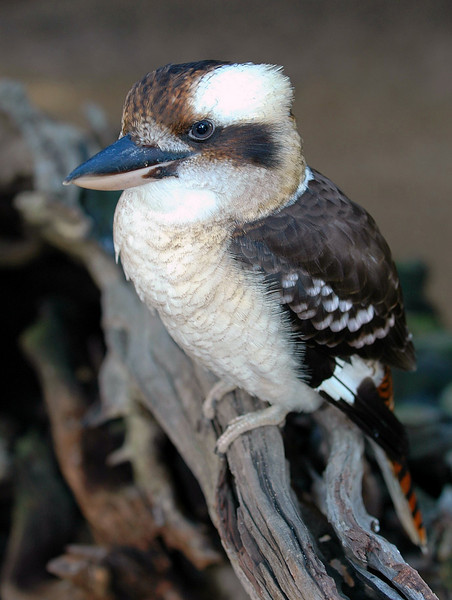
Laughing Kookaburra (Dacelo novaeguineae) by Africaddict

Laughing Kookaburra (Dacelo novaeguineae) by Africaddict

A merry heart maketh a cheerful countenance: but by sorrow of the heart the spirit is broken. (Proverbs 15:13 KJV)

Blue-winged Kookaburra (Dacelo leachii) by Ian

Blue-winged Kookaburra (Dacelo leachii) by Ian

While updating the Kingfisher pages, I came across these videos about the Kookaburras that are in the same Alcedinidae Family. Thought you might enjoy watching them.

There are five Kookaburras. The Laughing Kookaburra (Dacelo novaeguineae) is probably the most well known, but there is also a Shovel-billed Kookaburra (Clytoceyx rex), Blue-winged Kookaburra (Dacelo leachii), Spangled Kookaburra (Dacelo tyro), Rufous-bellied Kookaburra (Dacelo gaudichaud).

Kookaburras are best known for their unmistakable call, which sounds uncannily like loud, echoing human laughter — good-natured, but rather hysterical, merriment in the case of the renowned Laughing Kookaburra (Dacelo novaeguineae); and maniacal cackling in the case of the slightly smaller Blue-winged Kookaburra (D. leachii). They are generally not closely associated with water, and can be found in habitats ranging from humid forest to arid savanna, but also in suburban and residential areas near running water and where food can be searched for easily.

This video is about the Laughing Kookaburra from the Blank Park Zoo

Kookaburra calls from the Cincinnati Zoo

A merry heart doeth good like a medicine: but a broken spirit drieth the bones. (Proverbs 17:22 KJV)

Some information from internet sources

Wordless Birds

*

Pied Kingfisher – Concentrated Diver

Pied Kingfisher (Ceryle rudis) by Peter Ericsson

Pied Kingfisher (Ceryle rudis) by Peter Ericsson

While having the privilege of obtaining some photos for future blogs from Peter Ericsson’s Galleries, I obtained a few photos of the Pied Kingfisher. I thought this Kingfisher was very pretty. Then I found this amazing video from BBC Worldwide and decided to share these. Another reason, my attempts to photograph our Belted Kingfishers is never very successful. Thankfully Peter and the videographers had better success.

When the Lord created the birds, He gave them so many amazing abilities. The way the Kingfisher keeps his head so steady is absolutely fantastic.

O the depth of the riches both of the wisdom and knowledge of God! how unsearchable are his judgments, and his ways past finding out! For who hath known the mind of the Lord? or who hath been his counsellor? (Romans 11:33-34 KJV)

The Pied Kingfisher is about 7 – 10 in or 17-25 cm long with a white with a black mask, a white supercilium and black breast bands. The female has only one breast band. The crest is neat and the upperparts are barred in black. There are several subspecies. It is common throughout sub-Saharan Africa and southern Asia from Turkey to India to China. It is resident, and most birds do not migrate, other than short-distance seasonal movements. In India it is distributed mainly on the plains. It is thought to be the world’s 3rd most common kingfisher and a noisy bird.


Fish is its main diet, though it will eat other aquatic invertebrates. It usually hunts by hovering over the water to detect prey and diving vertically down bill-first to capture fish. When not foraging, they have a straight rapid flight and have been observed flying at nearly 32 mph.

Pied Kingfisher from BBC Worldwide – Shows this diving ability

In the beginning God created the heavens and the earth. The earth was without form, and void; and darkness was on the face of the deep. And the Spirit of God was hovering over the face of the waters. (Genesis 1:1-2 NKJV)

During breeding season (February to April), they make its nest in a hole excavated in a vertical mud bank about five feet above water. The nest tunnel is 4 to 5 feet long and ends in a chamber. Several birds may nest in the same vicinity. The usual clutch is 3-6 white eggs. The pied kingfisher sometimes reproduces co-operatively, with young non-breeding birds from an earlier brood assisting parents (helpers) or even unrelated older birds.

And Jesus said to him, “Foxes have holes and birds of the air have nests, but the Son of Man has nowhere to lay His head. (Matthew 8:20 NKJV)

Kingfishers “are monogamous, teritorial, and sometimes colonial.”  Courtship displays are noisy and the displays are in duet as they raise their wings or spiral in flight. Recent suggestion is that the Pied Kingfisher and the American green kingfishers are derived from an Old World species (kind), with the Pied Kingfisher or its ancestor losing the metallic colouration afterwards. The Alcedinidae Family is where the Kingfishers and Kookaburras are found. At present there are 95 of them. They belong to the Coraciiformes Order. The Order includes Rollers, Ground Rollers, Kingfishers, Todies, Motmots, and Bee-eaters.

Pied Piper up close by IndiaVideo.org

Which doeth great things past finding out; yea, and wonders without number. (Job 9:10 KJV)

Peter Ericsson is in Thailand and is a Christian photographer. His two sites are Peter Ericsson’s Photo Galleries and his blog Thaibirder . Please visit his sites for some fantastic photagraphy.

Information taken from Wikipedia,  Complete Birds of the World, and Bird

*

Birds of the Bible – Non-Protected Nest

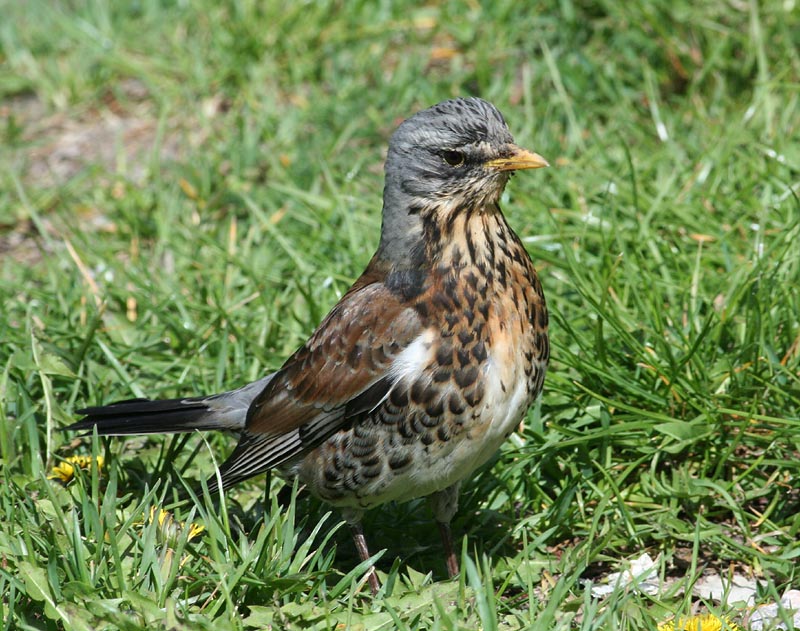
When birds have babies, they do all they can to protect them from predators. The birds spend time building and then filling their nest with eggs. The nest is protected almost constantly from the time the bird lays the eggs until the fledglings depart. That is normal behavior and the video below of the Fieldfare shows one way they do it. The video is by BBC Worldwide.

And my hand hath found as a nest the riches of the people: and as one gathereth eggs that are left, have I gathered all the earth; and there was none that moved the wing, or opened the mouth, or peeped. (Isaiah 10:14 KJV)

In the verse above, the nest has not been protected, nor has a wing been flapped to chase the aggressor away, nor did they open their mouth in peeps or chirping alarm calls. If the nest is abandoned; whether by desertion, having been chased off, or other reason, it is easy to take the eggs or chicks.

This verse is found in the book  of Isaiah and is referring to the King of Assyria. The kings pride, arrogant heart, and boastful look in his eyes cause him to state:

For he says: By the strength of my hand I have done it, and by my wisdom, for I have understanding; I remove the boundaries of peoples, and plunder their treasures; like a bull I bring down those who sit on thrones. My hand has found like a nest the wealth of the peoples; and as one gathers eggs that have been forsaken, so I have gathered all the earth; and there was none that moved a wing or opened the mouth or chirped. (Isaiah 10:13-14 ESV)

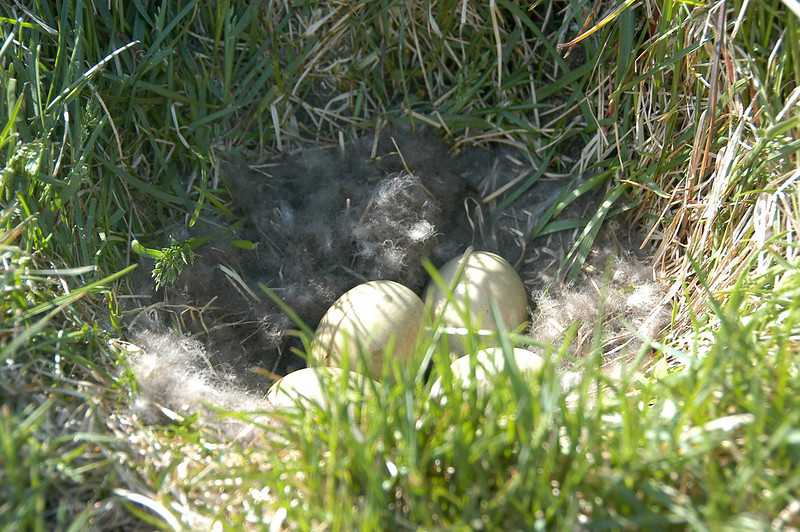
Common Eider (Somateria mollissima) nest by Bob-Nan

Common Eider (Somateria mollissima) nest by Bob-Nan

I like what Albert Barnes Notes On The Bible says,
“Isa 10:14
And my hand hath found, as a nest
– By a beautiful and striking figure here, the Assyrian monarch is represented as describing the ease with which he had subdued kingdoms, and rifled them of their treasures. No resistance had been offered. He had taken them with as little opposition as a rustic takes possession of a nest, with its eggs or young, when the parent bird is away.
Eggs that are left – That is, eggs that are left of the parent bird; when the bird from fright, or any other cause, has gone, and when no resistance is offered.
Have I gathered all the earth – That is, I have subdued and plundered it. This shows the height of his self-confidence and his arrogant assumptions.
That moved the wing – Keeping up the figure of the nest. There was none that offered resistance; as an angry bird does when her nest is about to be robbed.
Or opened the mouth – To make a noise in alarm. The dread of him produced perfect silence and submission.
Or peeped – Or that chirped – the noise made by young birds; the note at Isa_8:19. The idea is, that such was the dread of his name and power that there was universal silence. None dared to resist the terror of his arms.”

Shall the axe boast over him who hews with it, or the saw magnify itself against him who wields it? As if a rod should wield him who lifts it, or as if a staff should lift him who is not wood! (Isaiah 10:15 ESV)

Living Application Study Bible – “The ax – How absurd is it, for thee, who art but an instrument in God’s hand, to blaspheme thy Lord and master, who has as great power over thee, as a man hath over the ax wherewith he heweth?”

Fieldfare (Turdus pilaris) by Peter Ericsson

Fieldfare (Turdus pilaris) by Peter Ericsson

Gill’s Exposition – “Shall the axe boast itself against him that heweth therewith?…. Hitherto are the words of the Assyrian monarch; and here begin the words of the prophet, rebuking him for his pride, and deriding his vain boasting, in attributing that to himself, to his wisdom and power, who was but an instrument, which belonged to God, the sole Governor and wise orderer of all things; which was all one as if an axe should ascribe the cutting down of trees to itself, and insist on it that the man that cut with it had no share in the action, nor was it to be ascribed to him; than which nothing is more absurd. The sense is, that the king of Assyria, in taking cities, and conquering kingdoms, and adding them to his own, was only an instrument in the hand of God, like an axe in the hand of one that hews down trees; and therefore it was vain and ridiculous to take that to himself which belonged to the Lord, on whom he depended as an instrument, as to motion, operation, and effect; from whom he had all power to act, all fitness for it, and efficacy in it, as the axe has from the person that makes and uses it, or any other instrument”

It is interesting to try to find out what is behind the verses we read about the birds in the Bible. God uses many illustrations of things around us to teach us His Truth. In these verses, self-pride, arrogance and denying Who is in control of our lives.

Hear ye, and give ear; be not proud: for the LORD hath spoken. (Jeremiah 13:15 KJV)

Wordless Birds
*

The Bird With The Broken Wing

Our soul is escaped as a bird out of the snare of the fowlers: the snare is broken, and we are escaped. (Psalms 124:7 KJV)

Words: He­ze­ki­ah But­ter­worth (1839-1905).

Music: Dan­i­el B. Town­er, 1919

The Bird With The Broken Wing

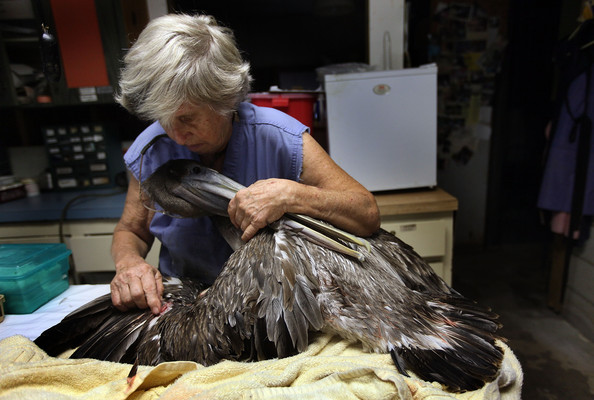
Broken Wing of Pelican-Florida Keys Wild Bird Rehab Center

Broken Wing of Pelican-Florida Keys Wild Bird Rehab Center

I walked in the woodland meadows,
Where sweet the thrushes sing,
And found on a bed of mosses,
A bird with a broken wing;
I healed its wing, and each morning
It sang its old sweet strain,
But the bird with the broken pinion,
Never soared as high again,
Never soared as high again.

I found a young life broken
By sin’s seductive art,
And, touched with a Christlike pity,
I took him to my heart;
He lived with a nobler purpose,
And struggled not in vain,
But the life that sin had stricken,
Never soared as high again,
Never soared as high again.

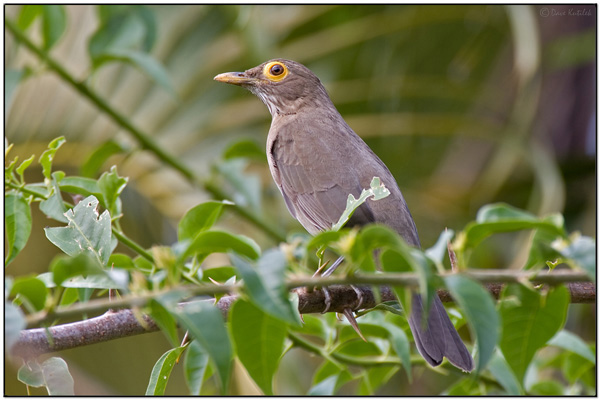
Bare-eyed Thrush (Turdus tephronotus) by Daves BirdingPix

Bare-eyed Thrush (Turdus tephronotus) by Daves BirdingPix

But the bird with the broken pinion
Kept another from the snare,
The life that sin had stricken,
Raised another from despair;
Each loss has its own compensation,
There’s healing for each pain,
But the bird with the broken pinion
Never soared as high again,
Never soared as high again.


Now I rejoice, not that you were made sorry, but that your sorrow led to repentance. For you were made sorry in a godly manner, that you might suffer loss from us in nothing. For godly sorrow produces repentance leading to salvation, not to be regretted; but the sorrow of the world produces death.
(2 Corinthians 7:9-10 NKJV)

This hymn reminds me of a story I have heard numerous times about the effects of sin in our lives. We may repent, but the scars are still there. I found a copy, it’s a little long, but I hope you’ll read it.

“That was a significant, story of the man who gave his little son a hammer and some nails, and told him that whenever he did anything that was wrong he might drive one of the nails into the barn door. The boy was honest and diligent too, and in a few days he came to his father saying that the last nail was in its place well driven down. ” And now,” said the father, “whenever you do any specially good deed, you may draw out one of the nails.” This pleased the son. He was as diligent in goodness now as he had been in badness before. He carried his little sister over the rough places, and then went and drew a nail. He sawed some wood for a poor widow and drew another nail. He ran on willing errands for his mother that he might have a chance to draw more nails. In a few days the last one was removed, and he came with pride to tell his father.

“What, all drawn so soon?” said the father.

” Every one,” responded the son.

” Let us go and see,” said the father.

” Come, then,” said the son, and he led the way. ” See, see,” said the eager boy, ” there is not a nail left in the door, and I assure you that I did something good for every nail I drew.”

” I am glad, my dear son,” said the father, ” that the task of removing them is so quickly done, but then,” continued he sadly, ” don’t you see how you have marred and injured the door? The nails are gone, but the scars remain.” (A. J. Paterson)

The Gospel Message

*

Birds in Hymns – Like A Bird To Thee

…In the LORD put I my trust: how say ye to my soul, Flee as a bird to your mountain? (Psalms 11:1 KJV)

Words & Music: W. How­ard Doane (1832-1915)

Like A Bird To Thee

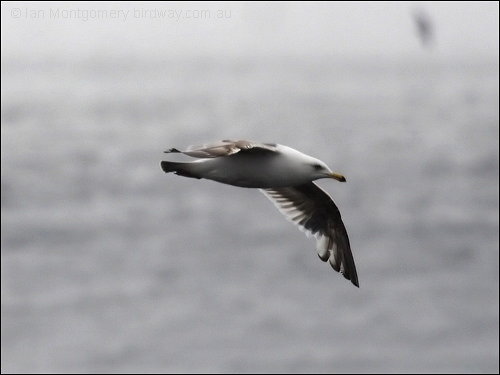
Slaty-backed Gull (Larus schistisagus) by Ian

Slaty-backed Gull (Larus schistisagus) by Ian

Savior, like a bird to Thee,
Weary and wounded my soul would flee;
O let me fold my wings and rest
Peacefully, trustingly, on Thy breast.

Refrain

Like a bird let me fly to Thee,
In Thine arms kindly shelter me;
Then my soul no more shall roam
Far, far away from home.

Savior, Thou my grief hast borne,
Thou hast a balm for the hearts that mourn;
One gentle word, and I shall rest
Hopefully, lovingly, on Thy breast.

Refrain

Like a bird let me fly to Thee,
In Thine arms kindly shelter me;
Then my soul no more shall roam
Far, far away from home.

Slender-billed Gull (Chroicocephalus genei) by Nikhil Devasar

Slender-billed Gull (Chroicocephalus genei) by Nikhil Devasar

I was lost till found by Thee;
Thine, blessèd Savior, the glory be;
Gladly I fold my wings and rest,
Lovingly, tenderly, on Thy breast.

Refrain

Like a bird let me fly to Thee,
In Thine arms kindly shelter me;
Then my soul no more shall roam
Far, far away from home.


What a great hymn. As you read or sing the words, think about the words. What a comfort and rest we receive as we settle down, rest and lean on our Loving Savior.

Most information from The Cyber Hymnal

See ~ Wordless Birds

More ~ Birds in Hymns

*

Birds of the Bible – Purifying Bird

Below is an interesting passage of Scripture.

Eurasian-collared Dove in Israel

Eurasian-collared Dove in Israel

The LORD spoke to Moses, saying, “This shall be the law of the leprous person for the day of his cleansing. He shall be brought to the priest, and the priest shall go out of the camp, and the priest shall look. Then, if the case of leprous disease is healed in the leprous person, the priest shall command them to take for him who is to be cleansed two live clean birds and cedarwood and scarlet yarn and hyssop. And the priest shall command them to kill one of the birds in an earthenware vessel over fresh water. He shall take the live bird with the cedarwood and the scarlet yarn and the hyssop, and dip them and the live bird in the blood of the bird that was killed over the fresh water. And he shall sprinkle it seven times on him who is to be cleansed of the leprous disease. Then he shall pronounce him clean and shall let the living bird go into the open field. (Leviticus 14:1-7 ESV)

It seems that when a person was declared clean from their leprosy, that a purification needed to be performed. The same was true for the house. They gathered two birds and then the priest would kill one bird, but the second was set free after he took “the cedarwood and the hyssop and the scarlet yarn, along with the live bird, and dip them in the blood of the bird that was killed and in the fresh water and sprinkle the house seven times.” The live bird was then taken out side the city and turned loose.

When you first read that passage, you wonder what it is all about. The live bird being turned loose with blood on it? Some of the commentators have helped explain the significance of this. Here are some of their thoughts:

House Sparrow (Passer domesticus) Female by Nikhil

Matthew Henry – Lev 14:1-9  – The priests could not cleanse the lepers; but when the Lord removed the plague, various rules were to be observed in admitting them again to the ordinances of God, and the society of his people. They represent many duties and exercises of truly repenting sinners, and the duties of ministers respecting them. If we apply this to the spiritual leprosy of sin, it intimates that when we withdraw from those who walk disorderly, we must not count them as enemies, but admonish them as brethren. And also that when God by his grace has brought to repentance, they ought with tenderness and joy, and sincere affection, to be received again. Care should always be taken that sinners may not be encouraged, nor penitents discouraged. If it were found that the leprosy was healed, the priest must declare it with the particular solemnities here described. The two birds, one killed, and the other dipped in the blood of the bird that was killed, and then let loose, may signify Christ shedding his blood for sinners, and rising and ascending into heaven. The priest having pronounced the leper clean from the disease, he must make himself clean from all remains of it. Thus those who have comfort of the remission of their sins, must with care and caution cleanse themselves from sins; for every one that has this hope in him, will be concerned to purify himself.

Gill – “and shall let the living bird loose into the open field; as a token of the freedom of the leper, and that he was at liberty to go where he pleased: the Misnic doctors say, when he came to let go the living bird, he did not turn its face neither to the sea, nor to the city, nor to the wilderness, as it is said, “but he shall let go the living bird out of the city into the open field”, as in Lev. 14:53;… this may be a figure of the resurrection of Christ from the dead, and of his justification upon it, as the head and representative of his people, and of their free and full discharge from guilt, condemnation, and death, through him, and of his and their being received up into heaven, and whither their hearts should be directed, in affection and thankfulness for their great deliverance and salvation; see 1Timothy 3:16. ”

Hill Pigeon (Columba rupestris) by Nikhil Devasar

Clarke – “Shall let the living bird loose – The Jews teach that wild birds were employed on this occasion, no tame or domestic animal was used. Mr. Ainsworth piously conjectures that the living and dead birds were intended to represent the death and resurrection of Christ, by which an atonement was made to purify the soul from its spiritual leprosy. The bird let loose bears a near analogy to the scapegoat. See Leviticus 16.”

They all seem to see the cleansing as not only for the current situation, by also, representing the future sacrifice of Christ for our sins and the cleansing (forgiveness of sin) that comes from His shed blood. I praise the Lord that He has given His life for us and that we no longer have to go through sacrifices like they did prior to Christ. I am sure the animals and birds also feel blessed.

Consequently, he is able to save to the uttermost those who draw near to God through him, since he always lives to make intercession for them. For it was indeed fitting that we should have such a high priest, holy, innocent, unstained, separated from sinners, and exalted above the heavens. He has no need, like those high priests, to offer sacrifices daily, first for his own sins and then for those of the people, since he did this once for all when he offered up himself. For the law appoints men in their weakness as high priests, but the word of the oath, which came later than the law, appoints a Son who has been made perfect forever. (Hebrews 7:25-28 ESV)

The Gospel Message

See more Birds of the Bible

*

Goldcrests and Kinglets – Regulidae Family

Golden-crowned Kinglet (Regulus satrapa) by Kent Nickell

Blessed is the man who endures temptation; for when he has been approved, he will receive the crown of life which the Lord has promised to those who love Him. (James 1:12 NKJV)

Goldcrests and Kinglets – Regulidae Family

The Regulidae Family is in the Passeriformes Order (Songbirds). The kinglets or crests are a small group of birds sometimes included in the Old World warblers, but are frequently given family status because they also resemble the titmice. The scientific name Regulidae is derived from the Latin word regulus for “petty king” or prince, and comes from the coloured crowns of adult birds. This family has representatives in North America and Eurasia. There are seven species in this family; one, the Madeira Firecrest, Regulus madeirensis, was only recently split from Firecrest as a separate species. One species, the Ruby-crowned Kinglet, differs sufficiently in its voice and plumage to occasionally be afforded its own genus, Corthylio.

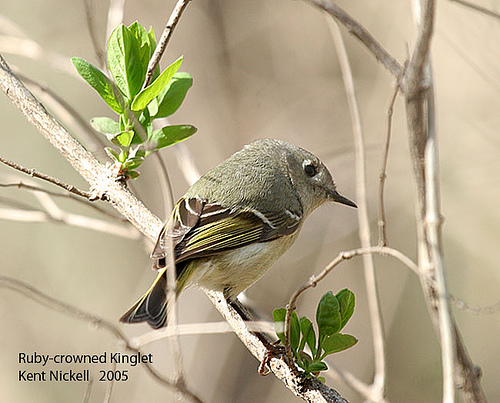
Ruby-crowned Kinglet (Regulus calendula) by Kent Nickell

Ruby-crowned Kinglet (Regulus calendula) by Kent Nickell

The Latin name regulus means “little king“. It is connected with a fable of the election of the “king of birds“. The bird who could fly the longest distance would be made king. The eagle outflew all other birds, but he was beaten by a small bird who had hidden itself in his plumage. This legend is already known to Aristotle (Hist. animalium 9.11) and Plinius (Naturalis hist. 10.74). The motivation of the name is the yellow “crown” of regulus. Because of the legend’s reference to the “smallest of birds” becoming king, the title was however also transferred to the true wren in some languages.[1] The firecrest and goldcrest are also commonly known as “fire-crested wren” and “golden-crested wren”, respectively, reinforcing the association of the kinglet with the (true) wren. The English name kinglet is a 19th century translation of the Latin name.

And He has on His robe and on His thigh a name written: KING OF KINGS AND LORD OF LORDS. (Revelation 19:16 NKJV)

Kinglets range in size from 9 to 11 cm and are amongst the smallest of the passerines, and indeed of all birds. They have medium-sized wings and tails, and the tails of all species are incised at the tip. The bill is small and needle-like. The plumage is overall grey-green. Most have an eye-ring or a stripe at the supercilium, although the slightly atypical Ruby-crowned Kinglet lacks this. The males possess a colourful crown patch. They have one specific feather which projects forward over the nares (again lacking in the Ruby-crowned Kinglet).

Generally kinglets prefer conifer forests, although there is a certain amount of adaptability and most species will use other habitats, particularly during migration. They have a distribution that takes in the northern boreal forests, but also extend down as far as the subtropics in places. A number of insular populations have evolved into separate species and subspecies.

Golden-crowned Kinglet (Regulus satrapa) ©Wiki

Golden-crowned Kinglet (Regulus satrapa) ©Wiki

The tiny size and rapid metabolism of kinglets means that they must constantly forage in order to provide their energy needs. They will continue feeding even when nest building. Kinglets prevented from feeding may lose a third of their body weight in twenty minutes and may starve to death in an hour. Kinglets are insectivores, preferentially feeding on insects such as aphids and springtails that have soft cuticles. Prey is generally gleaned from the branches and leaves of trees, although in some circumstances prey may be taken on the wing or from the leaf litter on the ground.

The nest are small, very neat cups, almost spherical in shape, made of moss and lichen held together with spiderwebs and hung from twigs near the end of a high branch of a conifer. They are lined with hair and feathers, and a few feathers are placed over the opening. These characteristics provide good insulation against the cold environment. The female lays 7 to 12 eggs, which are white or pale buff, some having fine dark brown spots. Because the nest is small, they are stacked in layers. The female incubates; she pushes her legs (which are well supplied with blood vessels, hence warm) down among the eggs. The eggs hatch after 15 to 17 days. The young stay in the nest for 19 to 24 days. After being fed, nestlings make their way down to the bottom of the nest, pushing their still-hungry siblings up to be fed in their turn (but also to be cold).

Their song, especially the Ruby-throated is “remarkably full and loud.”

Ruby-crowned Kinglet call by Chris Parrish and Firecrest call by Stuart Fisher

Tenerife Goldcrest or Orangecrest, Regulus teneriffae, split from Goldcrest as separate species – in western Canary Islands. (Currently they are part of the Goldcrest Regulus regulus. IOC 2.4)

Wordless Birds

Birds of the World – Regulidae Family

*

White-eyes – Zosteropidae Family

Silvereye (Zosterops lateralis) by Ian

Silvereye (Zosterops lateralis) by Ian

I find the White-eyes fascinating little birds that have such a neat visible eye. The Lord has created another bird kind that has been obeying the command that it was given.

So God created great sea creatures and every living thing that moves, with which the waters abounded, according to their kind, and every winged bird according to its kind. And God saw that it was good. And God blessed them, saying, “Be fruitful and multiply, and fill the waters in the seas, and let birds multiply on the earth.” (Genesis 1:21-22 NKJV)

Cape White-eye (Zosterops pallidus) by Ian

Cape White-eye (Zosterops pallidus) by Ian

The white-eyes are small passerine birds native to tropical, subtropical and temperate Sub-Saharan Africa, southern and eastern Asia, and Australasia. White-eyes inhabit most tropical islands in the Indian Ocean, the western Pacific Ocean, and the Gulf of Guinea. Discounting some widespread members of the genus Zosterops, most species are endemic to single islands or archipelagos. The Silvereye, Zosterops lateralis, naturally colonised New Zealand, where it is known as the “Wax-eye” or Tauhau (“stranger”), from 1855. The Silvereye has also been introduced to Hawaii as well as the Society Islands in French Polynesia.

White-eyes are mostly of undistinguished appearance, the plumage being generally greenish olive above, and pale grey below. Some species have a white or bright yellow throat, breast or lower parts, and several have buff flanks. As their common name implies, many species have a conspicuous ring of tiny white feathers around their eyes. The scientific name of the group also reflects this latter feature, being derived from the Ancient Greek for “girdle-eye”. They have rounded wings and strong legs. Like many other nectivorous birds, they have slender, pointed bills, and brush-tipped tongues. The size ranges up to 15 cm (6 in.) in length.

Matthew 6:26 says, “…yet your heavenly Father feeds them.” He has made a special tongue for them to accomplish this feat.

(YouTube by Ichiro0402Nakano)

All the species of white-eyes are sociable, forming large flocks which only separate on the approach of the breeding season. They build tree nests and lay 2-4 unspotted pale blue eggs. Though mainly insectivorous, they eat nectar and fruits of various kinds. The Silvereye can be a problem in Australian vineyards, through piercing the grape allowing infection or insect damage to follow.

The White-eyes were in the Timaliidae (Babblers) Family but now are in the Zosteropidae (White-eyes) Family. (They are  constantly shuffling the families around and it is hard to maintain the web pages.) At the present time the Yuhinas and Babblers are not in with them. One thing that has kept this busy is that the White-eyes have been diversifying with rapid speciation.

“…the scientists suggest, white-eyes form new species rapidly because of their sociability, ability to survive in a variety of habitats, and a short time between generations relative to other birds. Some white-eye species may also have minimized further dispersal and gene flow by becoming sedentary over the course of evolution, similar to historically dispersive human populations that ‘settled down,’ the researchers said. “Our results indicate that high rates of diversification may have as much to do with a species’ ‘personality’ as they have to do with more classical geographic or geological drivers of ‘speciation,’ Filardi said.” (From National Geographic)

According to National Geographic’s Complete Birds of the World, the Silver-eye has migrated across 1,250 miles of open sea from between southeast Australia to Tasmania, New Zealand. That is quite a feat for birds that are only 3-6 inches long. Again, God has created much ability in these little birds.

Behold, the eye of the LORD is on those who fear Him, On those who hope in His mercy, (Psalms 33:18 NKJV)

Below is a video by Keith Blomerley of a Cape White-eye.

Birds of the World – Zosteropidae Family

*

Birds of the Bible – Raven II

Northern Raven (Corvus corax) by Ray

Northern Raven (Corvus corax) by Ray

The first Birds of the Bible – Raven article covered many aspects of the Raven. It was written in February of 2008 when I first started writing about the Birds of the Bible. There is always more to learn about birds or the Lord for that matter. We never “arrive” in our learning.

Some verses about the Raven that are interesting have to do with the Lord or God providing for them.

Who provideth for the raven his food? when his young ones cry unto God, they wander for lack of meat. (Job 38:41 KJV)

He giveth to the beast his food, and to the young ravens which cry. (Psalms 147:9 KJV)

Consider the ravens: for they neither sow nor reap; which neither have storehouse nor barn; and God feedeth them: how much more are ye better than the fowls? (Luke 12:24 KJV)

With all the providing by the LORD God for the Raven, He (LORD God) then uses the Ravens to feed Elijah during a drought. Elijah was told to go to the brook Cherith and there he would be fed. Notice that the ravens came twice a day and brought “bread and flesh.”

Get thee hence, and turn thee eastward, and hide thyself by the brook Cherith, that is before Jordan. And it shall be, that thou shalt drink of the brook; and I have commanded the ravens to feed thee there. So he went and did according unto the word of the LORD: for he went and dwelt by the brook Cherith, that is before Jordan. And the ravens brought him bread and flesh in the morning, and bread and flesh in the evening; and he drank of the brook. (1 Kings 17:3-6 KJV)

Australian Raven (Corvus coronoides) by Ian

Australian Raven (Corvus coronoides) by Ian

Here are some interesting remarks from commentators about this:
Wesley – 1Ki 17:4,6 “God is said to command both brute creatures, and senseless things; when he causeth them to do the things which he intends to effect by them. The ravens – Which he chuseth for this work; to shew his care and power in providing for the prophet by those creatures, which are noted for their greediness, that by this strange experiment he might be taught to trust God in those many and great difficulties to which he was to be exposed. God could have sent angels to minister to him. But he chose winged messengers of another kind to shew he can serve his own purposes as effectually, by the meanest creatures as by the mightiest. Ravens neglect their own young, and do not feed them: yet when God pleaseth, they shall feed his prophet.”
“And flesh – Not raw, but boiled by the ministry of some angel or man, and left in some place ’till the ravens came for it: in all which, there is nothing incredible, considering the power and providence of God.”

K&D – “Through this miracle, which unbelievers reject, because they do not acknowledge a living God, by whom, as the Creator and Lord of all creatures, even the voracious ravens are made subservient to His plans of salvation, Elijah was not only cut off from (interaction) with men, who might have betrayed his place of abode to the king, but was mightily strengthened himself, through the confidence inspired in the almighty assistance of his God, for his approaching contests with the worshippers of idols, and for the privations and sufferings which awaited him in the fulfilment of his vocation.”


Common Raven (Corvus corax) by Kent Nickell

Matthew Henry – “Elijah was commanded to hide himself. If Providence calls us to solitude and retirement, it becomes us to go: when we cannot be useful, we must be patient; and when we cannot work for God, we must sit still quietly for him. The ravens were appointed to bring him meat, and did so. Let those who have but from hand to mouth, learn to live upon Providence, and trust it for the bread of the day, in the day. God could have sent angels to minister to him; but he chose to show that he can serve his own purposes by the meanest creatures, as effectually as by the mightiest. Elijah seems to have continued thus above a year. The natural supply of water, which came by common providence, failed; but the miraculous supply of food, made sure to him by promise, failed not. If the heavens fail, the earth fails of course; such are all our creature-comforts: we lose them when we most need them, like brooks in summer. But there is a river which makes glad the city of God, that never runs dry, a well of water that springs up to eternal life. Lord, give us that living water!”

Gill – “…it seems better to interpret them of ravens, as we do, these creatures delighting to be in solitary places, in valleys, and by brooks; nor need it be any objection that they were unclean creatures by the law, since Elijah did not feed upon them, but was fed by them; and supposing any uncleanness by touch, the ceremonial law might be dispensed with in an extraordinary case, as it sometimes was; though it is very remarkable that such creatures should be employed in this way, which are birds of prey, seize on anything they can, live on carrion, and neglect their own young, and yet feed a prophet of the Lord; which shows the power and providence of God in it.”

Elijah and the ravens help illustrate the following verse:

But seek ye first the kingdom of God, and his righteousness; and all these things shall be added unto you. (Matthew 6:33 KJV)

Hovering Hummingbirds by Nature

Below is another amazing video of hummingbirds. This time they are showing their capability to hover.

What an amazing bird that the Lord has created.

The LORD by wisdom hath founded the earth; by understanding hath he established the heavens. (Proverbs 3:19 KJV)

*