Shoebill – Balaenicipitadae Page Updated

Shoebill by Dan

Shoebill by Dan

We went to the Lowry Park Zoo this week and were able to get some photos of the Shoebill. What an interesting bird. I was amazed at how large they really are. My shots were through a fence, but Keith’s video was taken in a swamp.

Shoebills are in the Balaenicipitadae Family of the Pelicaniformes Order.

“The Shoebill, Balaeniceps rex, also known as Whalehead, is a very large stork-like bird. It derives its name from its massive shoe-shaped bill.

The Shoebill is a very large bird. The adult is 115-150 cm (45-64 in) tall, 100-140 cm (40-60in) long, 230-260 cm (91-125 in) across the wings and weighs 4 to 7 kg (8.8-15.5 lbs). The adult is mainly grey while the juveniles are browner. It lives in tropical east Africa in large swamps from Sudan to Zambia.”

Interesting Articles about the Shoebill

Shoebill by African Bird Club

Shoebill – Wikipedia

Birds of the Bible – Sunbittern

Sunbittern (Eurypyga helias) by Lee at Lowry Park Zoo 2-4-10

Sunbittern (Eurypyga helias) by Lee at Lowry Park Zoo 2-4-10

Let them praise the name of the LORD: for his name alone is excellent; his glory is above the earth and heaven. (Psalms 148:13 KJV)

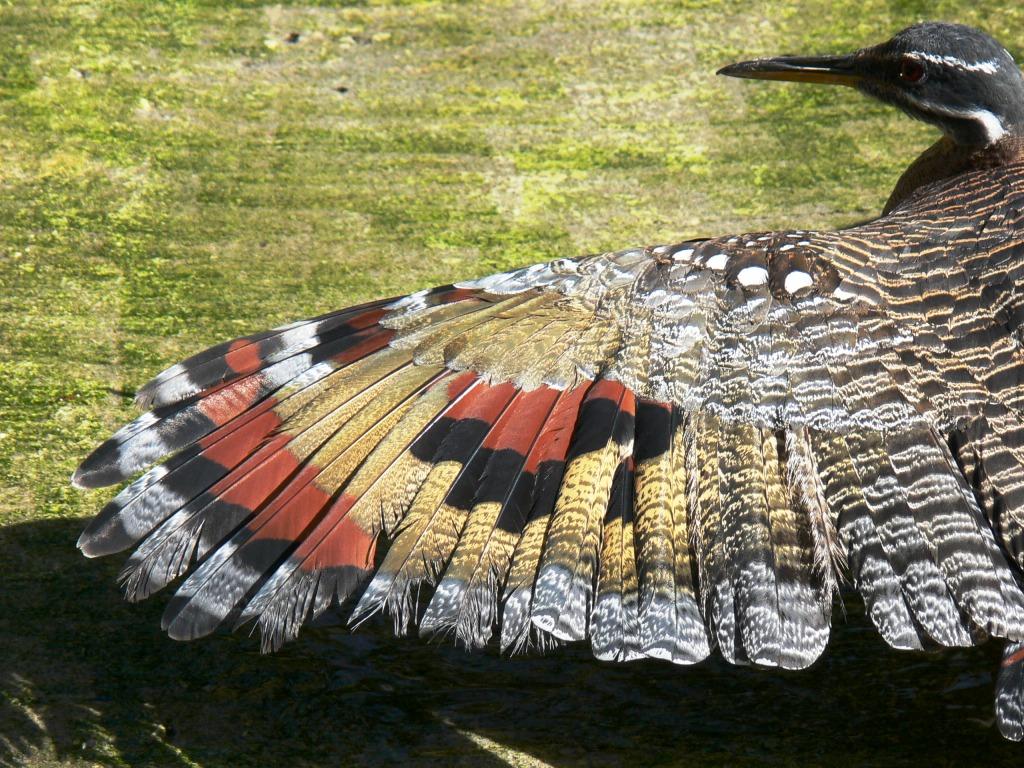
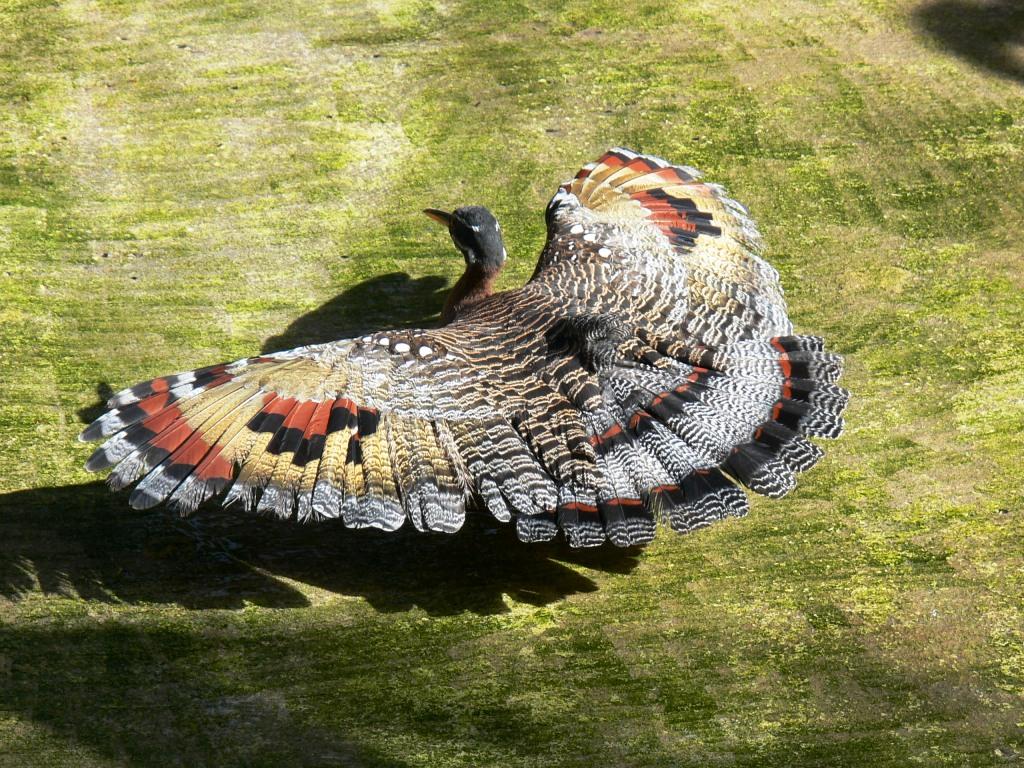
Today, Dan and I went to the Lowry Park Zoo in Tampa, Florida. I was thrilled to see some of the birds in person that I have been entering into the Birds of the World section. This Sunbittern caught my attention when he spread its wings out into the beautiful display shown below. I could not but think of the Lord’s magnificent creative power, details, and love that He gave His creatures. No, this bird is not specifically named in the Bible, but God’s Glory sure is.

Sunbittern (Eurypyga helias) by Lee at Lowry Park Zoo

Sunbittern (Eurypyga helias) by Lee at Lowry Park Zoo

The Sunbittern is similar to a heron or bittern because it has a long straight pointed bill, long legs and a thin neck, but it is in the Eurypygidae family of the Eurypygiformes Order. Most likely they are of the same “kind”, but they like to separate them and then declare “convergent evolution” caused them to develop the “same but different.” They totally deny creation by our Creator God.

They are 17-19 inches (43-48 cm) and have “soft, lax flight feathers, which account for the species being almost silent in flight.” (Bird the Definitive Guide, p.208) They make their nests with leaves, grass, mud and she usually lays 2 eggs. Both parents feed the chicks. “Remarkably, the young molt directly into adult plumage, while still in the nest, which is extremely unusual…” They leave in 3-4 weeks. The wings are spread for displaying (to win their sweetheart’s attention) or for defense (to make them look larger), but the Lord also lets them spread their wings so we can enjoy them and behold His Creative designs.

O LORD, how manifold are thy works! in wisdom hast thou made them all: the earth is full of thy riches. (Psalms 104:24 KJV)

Sunbittern (Eurypyga helias) Left Wing by Lee at Lowry Park Zoo

Sunbittern (Eurypyga helias) Left Wing by Lee at Lowry Park Zoo

All photos can be clicked-on to enlarge.

Interesting Things – Cruel God of Evolution

Thinking

For as in Adam all die, even so in Christ all shall be made alive. (1 Corinthians 15:22 NKJV)

Today’s Creation Moments:

Some people think that they can believe in Jesus Christ as their Savior and at the same time believe God created through evolution. These people are called theistic evolutionists or progressive creationists. What kind of nature would a god have who creates through the death that is essential to evolution?

First, death would have to have begun from the very moment of creation. Death, disease, pain and suffering would have had to originate with this god. Long before man, according to evolution, dinosaurs were eating other dinosaurs, and entire species were dying out. Rather than loving us, such a god would be indifferent and capricious. The god that would use evolution to make living things would have no right to punish sin. He would have had no right to bring a worldwide Flood to punish sinful man. This kind of god would be nothing more than a bully. Such a god would not be likely to have given us his word. And nothing the Bible says about him could be true. If the Bible really is from him, it is full of untrue claims. Any god who created using evolution is not the God of the Bible. If you think about it, the god of evolution sounds surprisingly like the devil.

What’s wrong with believing that God created through evolution over millions of years? Any god that uses evolution and death to make us is extremely cruel. More importantly, if there was no first Adam to bring sin and death into the world, there was no need for Christ, Whom the Bible calls the last Adam, to die and save us from sin and death.

Prayer: I rejoice, dear Father, because you are gracious and merciful to me. Amen.

References: Creation, 9-11/99. pp. 42-45, “The god of an old Earth.”

Cracidae – Chachalacas, Curassows and Guans – Updated

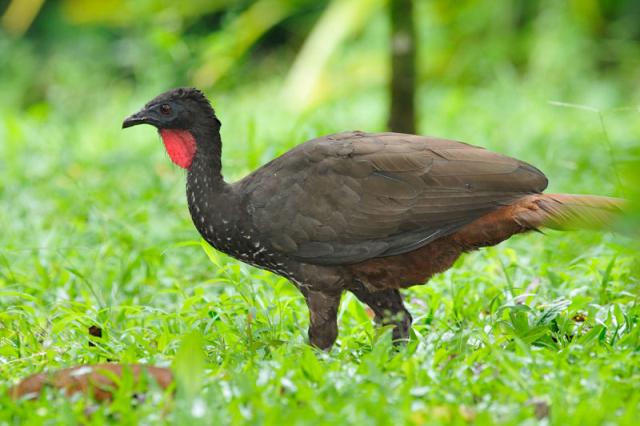
Crested Guan (Penelope purpurascens) by Reinier Munguia

Crested Guan (Penelope purpurascens) by Reinier Munguia

I have been updating the Cracidae Family page which includes Chachalacas, Curassows and Guans. They are in the Galliformes Order. That Order not only includes the Cracidaes, but also the Megapodidae (Megapodes), the Numidae (Guineafowl), Odontophoridae (New World Quails) and the Phasianidae (Pheasants, Fowl & Allies).

The Cracidae family are chicken-like birds which are medium to large. They are Neotropical, in that you find them from South California and South Texas down through Mexico, Central and South America. We encountered our first bird in the family at Santa Ana Wildlife Refuge in south Texas. We saw the Plain Chachalaca. (That is the only one in the family we have seen outside of zoos and photos).

Birdwatching – Late January 2010

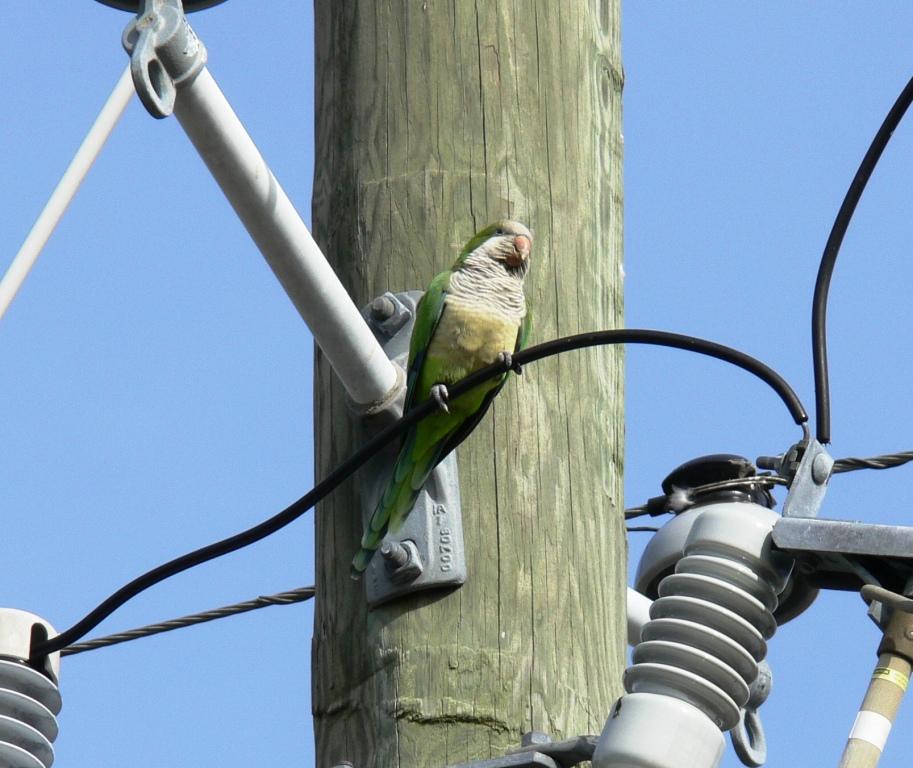
Monk Parakeet (myiopsitta-monachus) by Lee

Monk Parakeet (myiopsitta-monachus) by Lee

The last two days have been interesting for birdwatching. I have been sick and we finally were able to get out to see the birds. Today, while getting the mail out of the box, we looked up and saw 3 Sandhill Cranes with a Whooping Crane flying by. Wow! We have been seeing 1 Whooping Crane in with lots of Sandhills lately on the way to Bartow on the same hill side. But to have it fly over our house was amazing. They were headed toward that hill which is about 1.5 miles south of us. (Old Bartow Road)

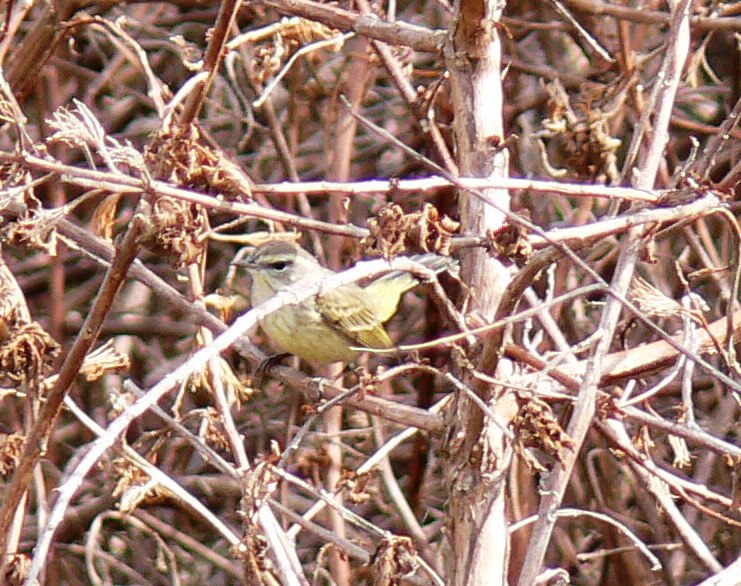
Palm Warbler - yellow

Palm Warbler - yellow

Yesterday, Dan wanted to check out something on his camera, so we took our cameras and stopped by South Lake Howard Nature Park again. I think he was having “cabin fever” more than me. Most of what we saw were the normal birds for there, only less of them. They cleaned out an area and planted grass, but that “improvement” has not been welcomed by the birds. (nor us birdwatchers either)

What we saw were: Boat-tailed and Common Grackles, White and Glossy Ibises, Anhingas, a White-winged Dove, Monk or Quaker Parakeets building their nests-Condo on the power pole, Palm Warblers (yellow), many Tree Swallows, the Bald Eagle on the tower, Osprey, Turkey Vultures, White Pelicans flying by, Fish Crows, Tri-colored and Little Blue Herons, Eastern Phoebe, Cattle Egrets, and others.

These are mine and Dan’s photos.

*

This slideshow requires JavaScript.

*

Birds of the Bible – Vulture Eyesight

Turkey Vulture at Circle B by Lee

Black Vulture (New World Vulture) at Circle B by Lee

In the first Birds of the Bible – Vulture the fact that the vulture was on the “unclean list” and possible why they were on that list. Now, I would like to explore another verse:

There is a path which no fowl knoweth, and which the vulture’s eye hath not seen: (Job 28:7 KJV)

This is found in a passage that is talking about finding gold and silver underground, as in mining underground. In the darkness, no matter how superb their eyes are, they are ineffective in darkness.

We know that the Lord created everything and what amazing capabilities the eye has.

The hearing ear, and the seeing eye, the LORD hath made even both of them. (Proverbs 20:12 KJV)

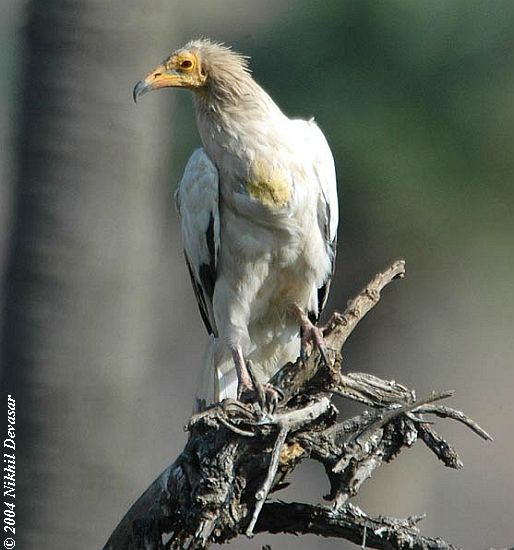
Egyptian Vulture (Neophron percnopterus) by Nikhil

Egyptian Vulture (Neophron percnopterus) {Old World} by Nikhil

“The vulture has a very keen eye, and, like the eagle, can see what is on the ground, even when it is very high in the air. This is referred to in the book of Job. “There is a path which no fowl knoweth, and which the vulture’s eye hath not seen.” It often happens in those countries that almost as soon as an ox, or a horse, or any other large animal has been killed, great multitudes of vultures will gather around, though not one could be seen in the sky before. they seem to fly down from every part of the heavens, and begin to pull and struggle for the flesh of the animal; until in the course of a few hours nothing is left but the bones. We read in Isaiah, “There shall the vultures be gathered, every one with her mate.” This must have been written by one who had seen these birds coming together, as they do in great flocks or companies.” (From The Vulture, Bible Study Tools)

“Vultures have keen eyesight. It is believed they are able to spot a three-foot carcass from four miles away on the open plains. In some species, when an individual sees a carcass it begins to circle above it. This draws the attention of other vultures that then join in.” (From Animals Vulture)

Old World Vultures (Accipitridae) unlike the New World Vultures (Cathartidae), do not have agood sense of smell and therefore do find their carcasses by sight or watching other birds to see what they are doing and have found to eat. Some of the species eat collectively while others use “kleptoparasitism” (stealing from others).

The Lord has created all the birds and has given them fantastic abilities that let them adapt to their role (carrion eaters) He has made for them. How well do we adapt to the ministries or jobs we have to do, even if it is only “taking out the trash?”

Whatsoever thy hand findeth to do, do it with thy might; for there is no work, nor device, nor knowledge, nor wisdom, in the grave, whither thou goest.  (Ecclesiastes 9:10 KJV)

See also:
Vulture Pages

Updated the Alcidae – Auks Family Page

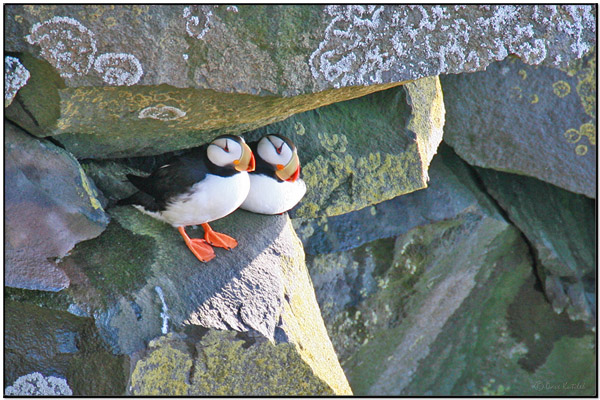
Horned Puffin (Fratercula corniculata) by Daves BirdingPix

Horned Puffin (Fratercula corniculata) by Daves BirdingPix

I have just update the Alcidae – Auks Family page in Lee’s Birds of the World section. The family includes Auks, Murres, Razorbill, Guillemots, Murrelets, Auklets, and Puffins.

The Alcidae family is in the Charadriiiformes Order

Birds Displaying

And God blessed them, saying, “Be fruitful and multiply, and fill the waters in the seas, and let birds multiply on the earth.” (Genesis 1:22 NKJV) (Displaying helps)

Here are some more birds displaying. Yesterday the Superb Lyrebird was doing his displaying in Ian’s Bird of the Week.

This video is from BBC wildlife and shows the Bulwer’s Pheasant, Temmincks Tragopan, Himalayan Monal, (Argus Pheasant) – Great Argus, Peacock, all pheasants and the (African) Long-tailed Widowbird.

~ by BBC Wildlife

The Plumed Bird of Paradise is another bird trying to impress the females with his displaying. (They are also known as six-plumed birds of paradise, due to their six head quills. These birds were featured prominently in the BBC series Planet Earth.)

The King Bird of Paradise – the smallest of the family.

Birds of the Bible – Johannesburg, South Africa

Since I have written about the Birds of the Bible that our missionaries in Niami, Niger, WA and Paraiba, Brazil, it is now time to see what our missionary down in Johannesburg, SA might possible see.

Checking the internet for the birds in that area, I was able to get a list of sorts. Since all birds were created by the Lord, I decided to show more than just the named ones.

So God created the great sea creatures and every living creature that moves, with which the waters swarm, according to their kinds, and every winged bird according to its kind. And God saw that it was good. And God blessed them, saying, “Be fruitful and multiply and fill the waters in the seas, and let birds multiply on the earth.” And there was evening and there was morning, the fifth day. (Genesis 1:21-23 ESV)

So they have been multiplying and here are some of those in the Johannesburg area.
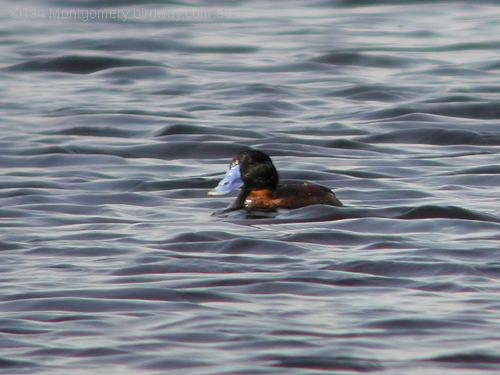
Maccoa Duck (Oxyura maccoa) by Ian

Maccoa Duck (Oxyura maccoa) by Ian

Con Joubert Bird Park
The Con Joubert Bird Park can be found on Desert Road in residential Randfontein and contains a permanent pan with a good bird hide. One can walk around the pan on the inside of the perimeter fence (1/2hr). Species to be seen include, Maccoa Duck, Black-necked Grebe, Little Grebe, Cape Shoveler, African Purple Swamphen, Red-knobbed Coot and Common Moorhen. Lesser Swamp-Warbler, African Reed-Warbler and African Reed-Warbler may be seen in the reedbeds and sometimes Ruff, Wood Sandpiper and Little Stint occur in summer.


Northern Farm (Diepsloot)
This nature reserve is one of Johannesburg’s best kept secrets, with over 300 recorded species.
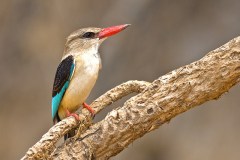
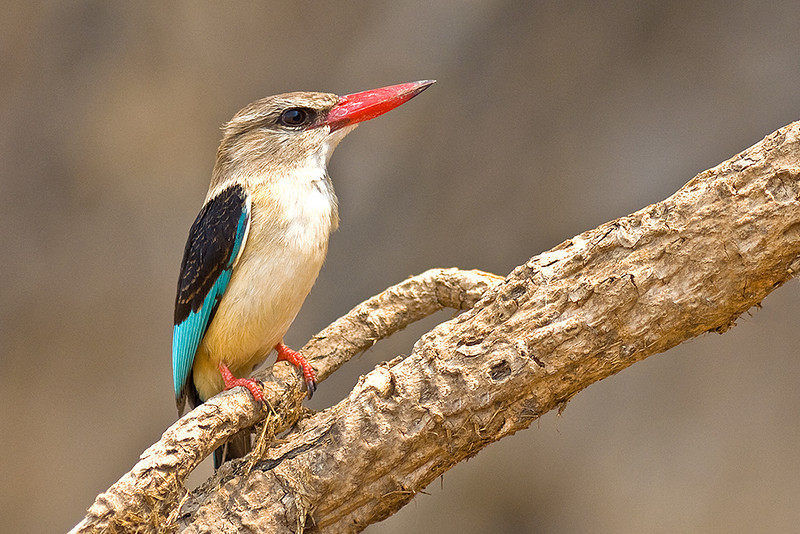
Brown-hooded Kingfisher (Halcyon albiventris) by Africaddict

Brown-hooded Kingfisher (Halcyon albiventris) by Africaddict

Yellow Wagtail, Goliath Heron, Little Bittern, Cape Longclaw, Red-capped Lark, African Fish-Eagle, African Goshawk, Osprey, African Purple Swamphen, Green-backed Heron, African Black Duck, Black-winged Pratincole and African Spoonbill. African Snipe, Red-chested Flufftail, Bar-throated Apalis, Lesser Striped Swallow, Black Crake, Chestnut-backed Sparrowlark, Maccoa Duck, Cape Shoveler and Southern Pochard are found as well. There are several other species that are hard to find in urban Johannesburg like the Orange-breasted Waxbill. Giant Kingfisher, Pied Kingfisher, Malachite Kingfisher and Brown-hooded Kingfisher are also resident in the reserve. The summer migrants also include Sedge Warbler, Great Reed-Warbler, African Reed-Warbler, Amur Falcon and Steppe Buzzard. White Stork are also seen over wintering in the reserve too.


Korsman Bird Sanctuary
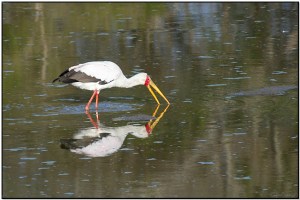
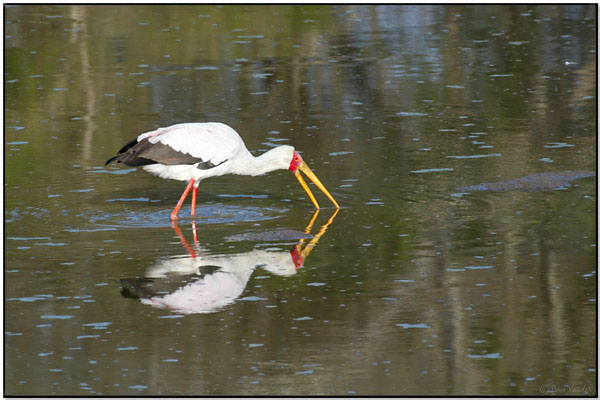
Yellow-billed Stork (Mycteria ibis) by Daves BirdingPix

Yellow-billed Stork (Mycteria ibis) by Daves BirdingPix

This sanctuary is often prolific with a variety of waterfowl. The hides are no longer accessible, but good views are available from “The Drive”, a 2km circular road which surrounds the pan. A spotting scope is recommended, as the area is fenced. Notable visitors are Black Heron, Greater Flamingo, Lesser Flamingo and Great Crested Grebe. There are several active heronries with Goliath Heron, African Spoonbill, Black-headed Heron, Grey Heron, Great Egret, Reed Cormorant and Little Bittern. The reedbeds and their edges should be actively searched for African Purple Swamphen, Black Crake, African Rail, Little Bittern and roosting Black-crowned Night-Heron. The open stretches of the pan almost always have Spur-winged Goose, Red-billed Teal, and numbers of Egyptian Goose and Yellow-billed Duck. A central island supports a colony of White-breasted Cormorant. The shore edges often hide Glossy Ibis, Hadeda Ibis and African Sacred Ibis. Black-winged Stilt and Pied Avocet are regulars and during the wader migration there are sometimes irregular visits from Wood Sandpiper, Common Sandpiper and Eurasian Curlew sandpiper. Spotted Thick-knee hide in the surrounding grasslands.


Florence Bloom bird Sanctuary
Florence Bloom Bird Sanctuary is found within Delta Park, with the entrance at the intersection of Road No.3 and Road No.5 in Victory Park. Species to be seen on the dam include African Black Duck, Little Grebe, Red-knobbed Coot and Common Moorhen. The surrounding reeds and trees is host to Willow Warbler, Great Reed-Warbler, Little Rush-Warbler and Tawny-flanked Prinia. Little Sparrowhawk, European Bee-eater, Red-throated Wryneck and African Palm-Swift have also been spotted.


Krugersdorp Game Reserve
The habitat is mainly grassveld with small dams and reedbeds at the northern-most end. The vast areas of open grassland in the reserve provide the visitor the opportunity to observe many of the grassland species of Gauteng. A densely wooded valley runs through the reserve and includes a selection of bushveld birds. Approximately 200 species have been recorded. There is a good network of roads and walking is not permitted, so one has to bird from the car.
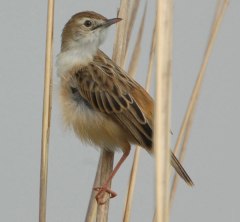
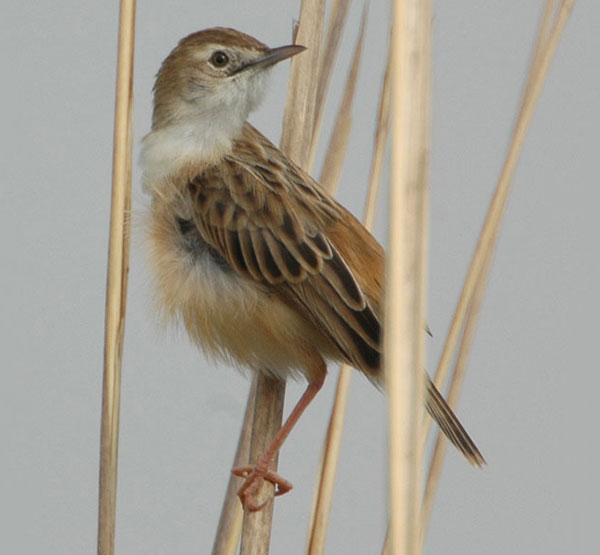
Zitting Cisticola (Cisticola juncidis) by Nikhil

Zitting Cisticola (Cisticola juncidis) by Nikhil

Birding
1) Grassveld areas include most of the reserve and the following species may occur; Wing-snapping Cisticola, Cloud Cisticola, Desert Cisticola, and Zitting Cisticola, Rufous-naped Lark, Ant-eating Chat and African Pipit. Several pairs of Southern Black Korhaan can be seen while the more secretive Kurrichane Buttonquail also occur. In summer Montagu’s Harrier have been recorded quartering over the grasslands.
2) The reedbeds house Southern Red Bishop, White-winged Widowbird, Red-collared Widowbird and Cape Grassbird.
3) The dam usually has Black-headed Heron, Cattle Egret, Glossy Ibis and African Sacred Ibis around it, with Yellow-billed Duck, White-faced Duck, Red-knobbed Coot and Egyptian Goose.
4) An exiting new feature is a large walk through aviary which boasts a wide variety of species. The aviary is built into an old quarry and provides natural vegetation for the birds.


Rondebult Bird Sanctuary, Germiston (Too numerous to list.)
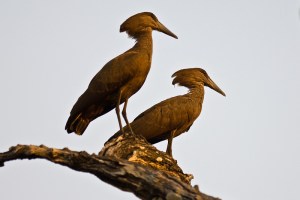
Hamerkop (Scopus umbretta) by Africaddict

Hamerkop (Scopus umbretta) by Africaddict

Walter Sisulu National Botanical Garden
The Walter Sisulu National Botanical Garden is an outstanding birding locality close to the urban centre of Johannesburg. The relatively small area, virtually surrounded by urban development, is managed by the National Botanical Institute (NBI) and includes a diverse array of habitat types which ranges from steep cliffs surrounding a magnificent waterfall to open scrubland and riverine woodland. Several short walks run through the garden and the surrounding natural areas. The JCI Geological Trail has recently been developed and gives visitors the opportunity to not only walk along the Roodekrans Ridge and in the Nature Reserve portion of the garden, but also to learn something about the fascinating geology of the area. Guided tours can be arranged for groups. Information brochures, a map and a bird list are available at the gate or NBI office. A morning’s birding in the garden during summer can easily produce a list of 70 species. A total of 230 species have been recorded in the garden.
Birding
1) The Verreauxs’ Eagle is an icon of the area and attract visitors from all over. Generations of Verreauxs’ Eagle have bred on the steep cliff face next to the waterfall for many years. This is definitely one of the best sites in the country to view these masters of the african skies.

These pictures were taken by John Kormendy on trips to Johannesburg and Cape Town. Fantastic shots.
http://chandra.as.utexas.edu/~kormendy/southafricabirds.html


Birds of the Bible – Nests

Birds have been building nests since they were created and told to multiply and fill the earth. There are many verses (17 with “nest” and 4 with “nests”) telling about the nest in the Bible, and probably the one most know is either Matthew 8:20 or Luke 9:58:

And Jesus saith unto him, The foxes have holes, and the birds of the air have nests; but the Son of man hath not where to lay his head.

The other two verses with “nests” are Psalms 104:17
and Ezekiel 31:6 NKJV

Many of the verses about nests do not even apply to birds, one refers to a snake’s nest, but all of them have an application applied to them.
The aim here is not to go into all those verses, but to introduce the bird’s nest; where they are and how they are constructed through the slide presentation below. Later in other blogs, those applications will be emphasized.
*

This slideshow requires JavaScript.

*
The application I would like to make about these nests, is this; as you observe the nest, think about our homes. Some homes are huge, some are very tiny (hummingbirds), some are elaborate (weaver nests), some are so small with little square-footage (those on the ledge), some are only out in the open, etc. Notice that the birds have a task and that is to raise their young. They don’t seem to be complaining or whining because they want more. In other words, they are content. Are we?

Not that I speak in regard to need, for I have learned in whatever state I am, to be content: (Philippians 4:11 NKJV)
For we brought nothing into this world, and it is certain we can carry nothing out. And having food and clothing, with these we shall be content. (1 Timothy 6:7-8 NKJV)

Dan Has Updated His Site

Framed Purple Gallinule by Dan

Framed Purple Gallinule by Dan

Dan at work-Tricolored and Stork

Dan at work-Tricolored and Stork

My favorite photographer, Dan, has updated his website and I thought you might want to look at some of his photos. Both of us enjoy our birdwatching adventures, just from different angles. His is through his camera lens and his editing of them and mine is with different lenses. (Camera, Scope, Binoculars, or Eye Lens) Sure makes for a great retirement activity.

We are very thankful for our Creator creating the eye so that we can enjoy all the fantastic birds and critters He has created. The ear also, so we can enjoy their songs and sounds.

I will instruct thee and teach thee in the way which thou shalt go: I will guide thee with mine eye. (Psalms 32:8 KJV)

The hearing ear, and the seeing eye, the LORD hath made even both of them.
(Proverbs 20:12 KJV)

To visit Dan’sPix – Click Here

White Pelican at Lake Hollingsworth by Dan

White Pelican at Lake Hollingsworth by Dan