Birds of the Bible – Paraiba, Brazil

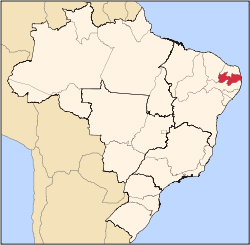
Paraiba state in Brazil

Paraiba state in Brazil

Because one of our men left for Brazil to become a missionary and we already have a missionary there, I was wondering if they might see different Birds of the Bible than we see up here in North America. So, this is the result of that search. The first thing I found out is that “Brazil has one of the richest bird diversities in the world, with more than 1700 species of birds, about 57% of the bird species recorded for all of South America. That fact was enough to make me realize I might be busy for awhile doing this. With the help of “Avibase – the world bird database” I was able to narrow the list down to Paraiba, a State, in Brazil, which is the area of both our missionaries.

Technically all birds are mentioned in the Bible because the Lord created them on the fifth day of creation. The list here is only of the “named” kinds in the Bible.

*

  • Quails – Spot-winged Wood-Quail
  • Cormorants – Neotropic Cormorant (here)
  • Bitterns – Pinnated Bitterns
  • Heron – Cocoi, Tricolored (here), Little Blue (here),  Striated, Black-crowned and Yellow-crowned Night-Herons (here), Boat-billed Heron, Rufescent Tiger-Herons, and Zigzag Heron
  • Storks – Wood Stork (here) and Jabiru
  • Vultures – American Black and Turkey (here), Lesser Yellow-headed Vulture, Andean Condor, King Vulture
  • Osprey – Osprey (here)
  • Kites – Gray-headed, Swallow-tailed (here), Pearl, White-tailed (here), Snail (here), Slender-billed, Double-toothed, Plumbeous Kites
  • Hawks – Tiny, Sharp-shinned, Bicolored , Crane, White-necked, Mantled, Rufous Crab-Hawk, Great Black-Hawk, Savanna,  Harris’s , Black-collared, Gray, Roadside, Short-tailed (here), White-tailed (here), Zone-tailed (here)
  • Eagles – Black-chested Buzzard-Eagle, Crested, Harpy, Black-and-white Hawk-Eagle, Black Hawk-Eagle, Ornate Hawk-Eagle
  • Falcons Family – Laughing, Barred Forest-Falcon, Lined Forest-Falcon, Collared Forest-Falcon, American Kestrel (here), Aplomado and Peregrine Falcon (here), Bat Falcon and Orange-breasted Falcon, Southern and Yellow-headed Caracara
  • Lapwings – Pied and Southern Lapwing
  • Doves – Eared, Scaled, White-tipped (here), and Grey-fronted Doves
  • Ground-Doves – Common, Plain-breasted, Ruddy (here), Picui, Blue
  • Quail-Doves – Violaceous and Ruddy (here)
  • Pigeons – Rock (here), Picazuro, Pale-vented
  • Cuckoos – Yellow-billed Cuckoo, Pearly-breasted Cuckoo, Mangrove Cuckoo, Dark-billed Cuckoo, Squirrel Cuckoo, Little Cuckoo, Guira Cuckoo, Striped Cuckoo,
  • Owls – Barn Owl (here), Great Horned (here), Mottled, Crested, Spectacled, Burrowing (here), Buff-fronted, Striped Owls
  • Screech Owls – Tropical
  • Pygmy-Owls – Ferruginous Pygmy-Owl
  • Nighthawks and Nightjars – Short-tailed Nighthawk, Least Nighthawk, Least Nighthawk,  Lesser Nighthawk (here), Common Nighthawk (here), Nacunda Nighthawk, Common Pauraque, Ocellated Poorwill, Rufous Nightjar, Little Nightjar, Scissor-tailed Nightjar, Pygmy Nightjar
  • Swifts – White-collared (here), Biscutate, Fork-tailed Palm-Swift and Lesser Swallow-tailed Swift
  • Swallows – Brown-chested Martin, Gray-breasted Martin;  White-winged, Blue-and-white, Southern Rough-winged, Collared Sand Martin/Bank Swallow (here), Barn (here) Swallows
  • Sparrows – Pectoral, Saffron-billed, Grassland, Rufous-collared and House (here) Sparrows

Birds of the Bible that are missing in Paraiba, Brazil are the Cranes, Hoopoe, Partridge, Peacock, Pelicans, Ravens, Swan, Pelicans. At least from what I can find out so far.
Did Birds Evolve From Dinosaurs?

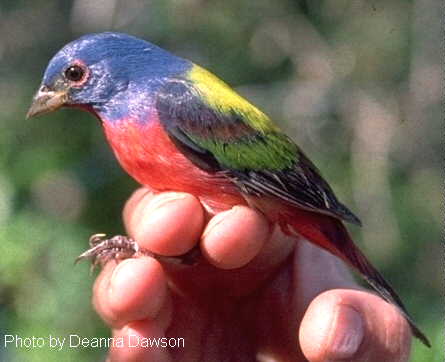
Painted BuntingThis weeks “Answersweekly” has a very interesting article about two Oregon State University scientist who don’t agree with the bird-to-dinosaur theory.  There is a link there for the “Birds Did Not Evolve from Dinosaurs, Say Evolutionists“, with a subtitle of, “Stunning New Research Overturns Widely Held Evolutionary Idea.”

It is worth your time to read the material of both links. As you know, we believe God Created both the Birds and the Dinosaur (that term not used in the Bible – a modern term) during the same Creation Week. That aside, read what these evolutionary scientist say about the anatomy of the two and how the bird could not have evolved from a dinosaur.

All flesh is not the same flesh, but there is one flesh of men, and another flesh of beasts, and another flesh of birds, and another of fish. (1 Corinthians 15:39 NASB)

Birds of the Bible – Study Tips

When the Birds of the Bible were introduced in February, 2008, “Introduction to Birds of the Bible“, the goal was to acquaint you with each bird that is mentioned in the Bible and for you to learn of God’s great handiwork in their creation. These blogs have grown greatly since then.  I would like to share some of the methods that I use to produce these articles and to study God’s Word.

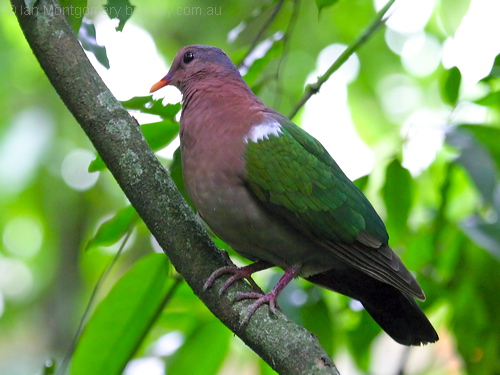
Emerald Dove by Birdway

Emerald Dove by Birdway

As you are reading along in your Bible, you may come across the mention of a particular bird (or any other topic)  in a verse. You see a bird and are wondering whether it is mentioned in Scripture. Your curiosity is caught and you want to find out more. What do you do?

  • As a “birdwatcher,” you can pull our your handy bird handbooks like: Peterson Field Guide for Birds, Smithsonian Field Guide to the Birds, The Sibley Guide to Birds, etc.
  • As an “internet birdwatcher,” you can “Google” that bird and get instant information (more than you can ever read) and learn many interesting things.
  • As a “Bible birdwatcher,” you can look in your concordance for references to that bird and if you have a Bible software program, such as “e-Sword” (free), you can search for the bird.
  • Also as a “Bible birdwatcher,” you may want to see why the bird is mentioned and what applications can be made by that passage of Scripture used. I like to use the Topical references, like Nave’s Topical Bible and Torrey’s New Topical Textbook. That is one reason that they are available here to help in the study of the “Birds of the Bible.” The ones here are different in that I put a picture of the bird on its page.

But now ask the beasts, and they will teach you; And the birds of the air, and they will tell you; (Job 12:7 NKJV)

This verse has been quoted many times in these blogs and we have tried to apply it to the lessons to be learned. Also, there are many other verses that give encouragement to study God’s Word.

These were more noble than those in Thessalonica, in that they received the word with all readiness of mind, and searched the scriptures daily, whether those things were so. (Acts 17:11 KJV)
Study to shew thyself approved unto God, a workman that needeth not to be ashamed, rightly dividing the word of truth. (2 Timothy 2:15 KJV)

As you study about the birds (or whatever in the Bible), I trust you will:

Let the word of Christ dwell in you richly in all wisdom; teaching and admonishing one another in psalms and hymns and spiritual songs, singing with grace in your hearts to the Lord. (Colossians 3:16 KJV)

Opening Site For Scripture and References

(Updated 12/3/09) Today I am opening up a section to be used for references. It will be  used for storing some study references to use in the study of God’s Wondrous Creation. Whether it is for creation, critters or birds, I trust you will find them beneficial. One difference is that the Bird pages have pictures of the birds and in time, my desire is to add more photos to other critters and things that God has created.

I have only taken selective topics because of time and space usages. As time permits, more topics will be added. I will post some links to the full-blown versions of them. All of these are in the public domain and may be copied freely.

If a Bible reference is green, place your mouse over the verse and it will show the verse(s). I am starting with the Bird pages first. This is a work in progress.

Lord Bless you as you study His Word and about His magnificent creation.

Study to shew thyself approved unto God, a workman that needeth not to be ashamed, rightly dividing the word of truth. (2 Timothy 2:15)

All scripture is given by inspiration of God, and is profitable for doctrine, for reproof, for correction, for instruction in righteousness: (2 Timothy 3:16)

References:

Nave’s Topical Bible

R. A. Torrey’s New Topical Textbook

Treasure of Scripture Knowledge- Under Construction

Birds of the Bible – For His Pleasure II

Oh, the depth of the riches both of the wisdom and knowledge of God! How unsearchable are His judgments and His ways past finding out!  (Romans 11:33 NKJV)

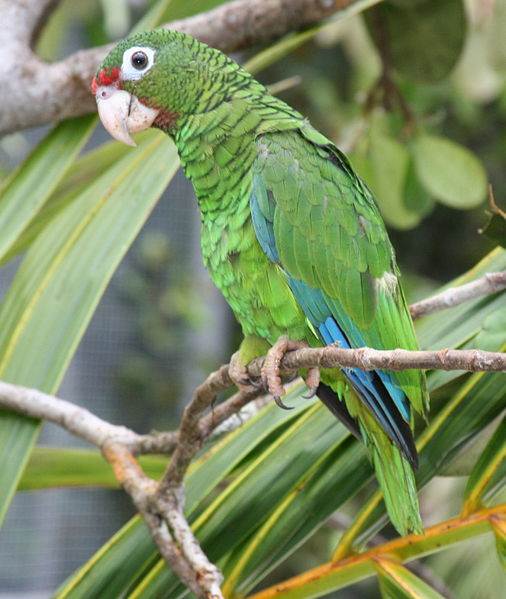
Puerto Rican Parrot

Puerto Rican Parrot

Last week the “Birds of the Bible – For His Pleasure”  that I wrote was about the Lord’s Handiwork with the colors and markings of the Birds. This time, how the Lord designed their bill or beak will be considered.

It is truly amazing to observe the birds around us. They come in all kinds of sizes, shapes and colors. Have you really noticed their bills or beaks. God has designed them with various shaped bills, different length, and uses for them. Depending on what niche they fill, they have just the perfect bill for that food that they need to partake of. Some times the food that they consume is not available and they either adapt to what is available, they move on to find that food, or they become endangered or extinct. Let’s look at some of the variety of bills and the birds attached to them.

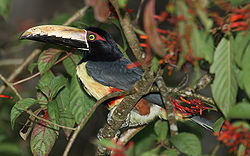
Collared Aracari

Collared Aracari

Toucan – “The colorful, giant bill, which in some large species measure more than half the length of the body, is the hallmark of toucans. Despite its size it is very light, being composed of bone struts with little solid material between them. The bill has forward-facing serrations resembling teeth,” which is used for eating fruit. “It does aid in their feeding behavior (as they sit in one spot and reach for all fruit in range, thereby reducing energy expenditure)…Also, the beak allows the bird to reach deep into treeholes to access food unavailable to other birds, and also to depredate suspended nests built by smaller birds.”

Hummingbird with beak in flower

Hummingbird with beak in flower

Hummingbirds – Their thin long bills are used for collecting nectar and to protect their split tongues.

Egrets and Herons – They have long pointed bills that can be used to spear the fish they catch. They also catch them by a quick closing of the beak.

Woodpeckers – Their beaks are use to peck and tear off the bark of trees to catch bugs hidden there.

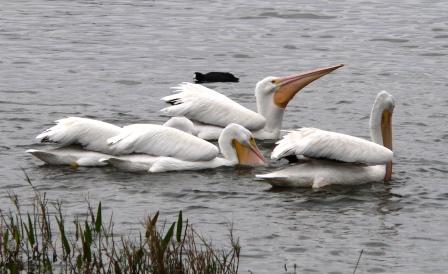
Pelican – They have a big beak with a pouch that they can hold the fish they catch.

Gnatcatcher – A very fine and small beak helps them catch gnat and other tiny insects.

American White Pelicans at Lake Hollingsworth

American White Pelicans at Lake Hollingsworth

Sparrows and similiar – They have a cone shape bill that allows them to crack open seeds.

Parrots – Have even a bigger cone like beak that can open larger seeds and nuts.

Spoonbills – Have what looks like a spoon for a bill. They use it to swing back and forth in the water and have a very sensitive touch that will snap the paddles together when something gets in between them. Video

Bird Beaks from Wikipedia

Bird Beaks from Wikipedia

The list goes on and on and you will find in each case, that the bill and the bird match-up shows the infinite wisdom of our God and the Lord Jesus Christ, the Creator of them all.

As Christians, we also each have some niche that the Lord wants us to fill. He has given us the talents, abilities, gifts, etc. to do that task or ministry. Our problem sometimes is the will to do His Will with what He has provided for us. Again, let us learn from watching the birds and how they use what was designed for them.

See also: Beak from Wikipedia

Interesting – “Animals Can Tell Right From Wrong”

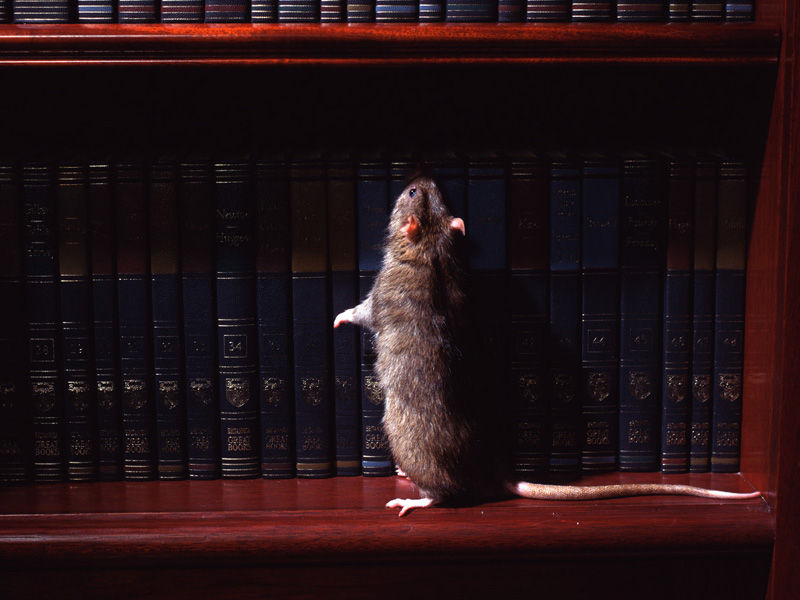
Rodent - Mouse

Rodent - Mouse

But now ask the beasts, and they will teach you; And the birds of the air, and they will tell you; (Job 12:7 NKJV)
The ox knows its owner And the donkey its master’s crib; But Israel does not know, My people do not consider. (Isaiah 1:3 NKJV)

Here is an interesting article, “Animals Can Tell Right From Wrong.” This was in the Telegraph.co.uk and is by Richard Gray. “Animals possess a sense of morality that allows them to tell the difference between right and wrong,…”

The scientist have been studying animal behavior and are finding that a variety of species are “governed by moral codes of conduct in the same way as humans.” They thought that only humans could have “complex emotions and have a sense of morality.”

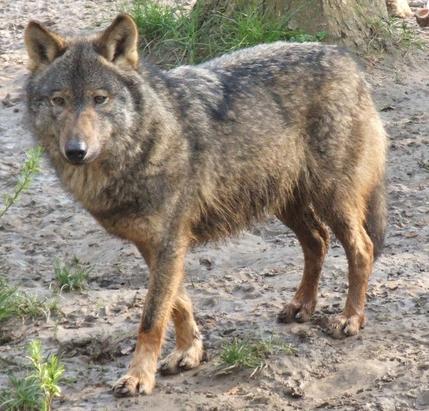
Wolf from Wikipedia

Wolf from Wikipedia

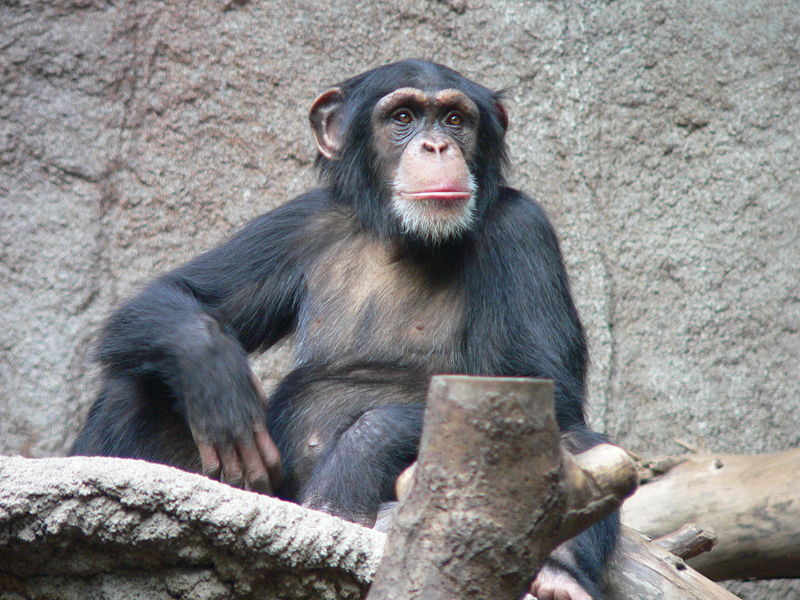
What they are finding out is that various animals have a built-in (instinct) for fairness, can feel empathy, and help other animals that are having difficulties, have a social responsibility, and moral codes – depending on the species. They go on to give examples from wolves (have strict rules), coyotes (a sense of fairness), elephants (help another when it’s sick and sadness if it dies), Diana monkeys (doing a task for another), chimpanzees (sense of justice and treating an ill one less agressively), rodents (not causing another pain), bats  (sharing and teaching) and whales (“empathy and understanding the feelings of others”).

They concluded with this remark, “This finding has suggested that complex emotional judgements such as empathy may have evolved considerably earlier in history than previously thought and could be widespread in the animal kingdom.”

Chimpanze

Chimpanzee

As you know, I believe that God created animals with instincts that He put there. The verses above reminds us that we can learn from the animals and birds. Many today, as Israel did then, do not know nor do they consider things that even the critters know. Again, we have the evidence of how these animals behave, but it depends on whether you believe in God or not, as to how you interpret these findings.

To see the whole article, see: “Animals Can Tell Right From Wrong.”

To see more Interesting Things

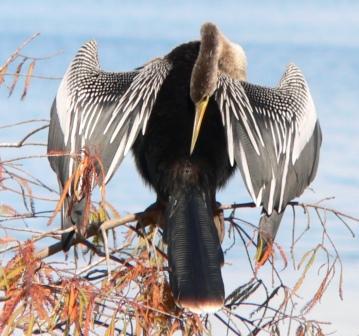
Eye of the Beholder – Anhinga

Anhinga Outstretched by Dan

Anhinga Just out of the Water by Dan

The Anhinga (Anhinga anhinga) is a interesting bird to watch here in Florida. They are very easy to spot with their outstretched wings. It is harder to spot them when they are in the water and swimming with only their heads stuck out. This is where the nickname, “Snake Bird,” comes from. We were watching them the other day when we visited Lake Hollingsworth and it reminded me of some verses.

1. The Anhinga must be tired after all that diving and is quite water-logged (heavy-laden) and needs to rest while its wings dry out. The Anhinga does not have an oil gland like most birds and must dry its feathers before it can get airborne again. The Lord designed it this way so that it can dive deep to catch fish, which is about 99% of its prey. If the feathers are oily, the bird has a tendancy to pop back up to the surface.
“Come to Me, all who are weary and heavy-laden, and I will give you rest. Take My yoke upon you and learn from Me, for I am gentle and humble in heart, and YOU WILL FIND REST FOR YOUR SOULS.” (Matthew 11:28-29 NASB)

Anhinga Dryed at Lake Hollingsworth

Anhinga Dryed at Lake Hollingsworth

For us, we can come to the Lord when things are “getting us down” and He will give us rest. When we pray and ask the Lord to help us and we leave the burden with Him, our souls are refreshed and we feel rested.

2. When the Anhinga first comes out of the water, they look all black and you do not see the white in its feathers. As the feathers dry, the color lightens up, and eventually the white shows up.
“Come now, and let us reason together, saith the LORD: though your sins be as scarlet, they shall be as white as snow; though they be red like crimson, they shall be as wool.” (Isaiah 1:18 KJV)
The Wordless Book song that Child Evangelism uses:

My heart was black with sin,
Until the Savior came in.
His Precious Blood I know,
Will wash me whiter than snow.
And in God’s Word I’m told
I’ll walk the streets of gold.
I’ll read my Bible and pray,
And Grow in Him every day!

Other Eye of the Beholder blogs

Birdwatching at Lake Hollingsworth 05-28-09

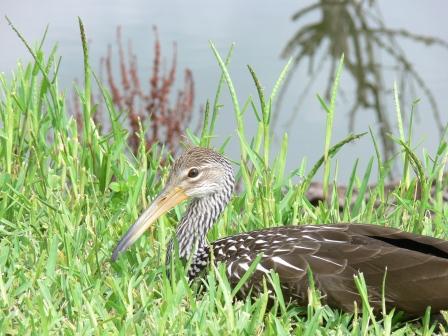
Immature Limpkin

Immature Limpkin

Instruct those who are rich in this present world not to be conceited or to fix their hope on the uncertainty of riches, but on God, who richly supplies us with all things to enjoy. (1 Timothy 6:17 NASB)

Well, today we finally got to go birdwatching for the first time in almost two months. With me being sick for almost a month and having rain for the last two weeks, we made a short visit today to Lake Hollingsworth in Lakeland. I am definitely not complaining about the rain. We have been in drought conditions here in central Florida. We have had 9 1/2 inches in our yard in the last two weeks. Our grass is finally green. The rain has refilled the lakes around here also. The picture I use at the top of the blog was taken at South Lake Howard Nature Park. Until the rains began, that stream was about 2 feet wide. It now looks like the picture again. Praise the Lord for the rain.

Here is a list of the birds we spotted today. On the drive to the lake we saw Ospreys, Cattle Egrets, 4 Wood Storks, a duck (mallard I think) with at least 10 babies in tow, a Great Egret, 10 Rock Pigeons and some Starlings.

Baby Geese by Dan

Baby Geese by Dan

At the lake, I had to feed the local beggars, which I enjoy doing. And then I checked out the local birds which included – White Ibises, Osprey, Wood Ducks, Great Egret, Great Blue Heron, Anhingas, 5 Limpkins, Boat-tailed Grackles, Geese and their babies, Mallards and their babies, Common Moorhens and their babies, Fish Crow, Muscovys, Purple Gallinule and a Pied-billed Grebe. As we knew, all our winter visiting birds have all gone back north to raise their young and enjoy their summer. Lord willing, I’ll be awaiting them in the fall.

This video is of an Anhinga and then I zoomed in on the Limpkin. Just testing out the video part of my camera.


Birds of the Bible – For His Pleasure

Thou art worthy, O Lord, to receive glory and honor and power: for thou hast created all things, and for thy pleasure they are and were created. (Revelation 4:11)

The Lord has created some fantastically beautiful birds amongst His Creation. This blog is just to show you some of those birds. As you watch the photos, realize that they are under a curse, (“For we know that the whole creation groaneth and travaileth in pain together until now.” Romans 8:22) and yet they are so neat. What must the first birds have been like when they were created? The Lord must have the neatest Paint Brush!

These photos were chosen to show colors and markings. In another blog, I’ll feature another of God’s Creative Handiwork.

All of these photos are copyrighted © by the photographers and used with their permission. Please honor their copyrights. Visit their galleries (see sidebar Photography).

*

This slideshow requires JavaScript.

*

Birds in Hymns – He Abides

And I will pray the Father, and he shall give you another Comforter, that he may abide with you forever; (John 14:16)

Words: Her­bert Buff­um (1879-1939), written 1922
Music: Doc M. Shanks

I’m rejoicing night and day
As I walk the narrow way,
For the hand of God in all my life I see.
And the reason of my bliss,
Yes, the secret all is this:
That the Comforter abides with me.

Long-billed Corella by Birdway (Australia)

Long-billed Corella by Birdway (Australia)

Refrain

He abides, He abides.
Hallelujah, He abides with me!
I’m rejoicing night and day
As I walk the narrow way,
For the Comforter abides with me.

Once my heart was full of sin,
Once I had no peace within,
Till I heard how Jesus died upon the tree.
Then I fell down at His feet,
And there came a peace so sweet.
Now the Comforter abides with me.

Refrain

He is with me everywhere,
And He knows my ev’ry care;
I’m as happy as a bird and just as free.
For the Spirit has control;
Jesus satisfies my soul,
Since the Comforter abides with me.

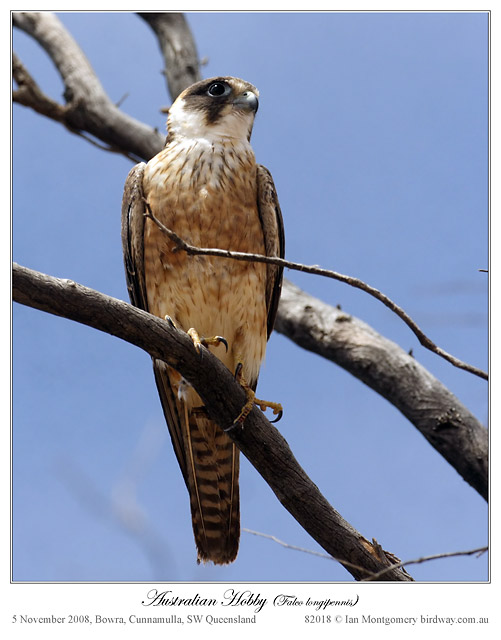
Australian Hobby by Ian Montgomery

Australian Hobby by Ian Montgomery

Refrain

There’s no thirsting for the things
Of the world—they’ve taken wings.
Long ago I gave them up, and instantly
All my night was turned to day,
All my burdens rolled away.
Now the Comforter abides with me.

Refrain


He Abides – CyberHymnal

Most information from The Cyber Hymnal

See ~ Wordless Birds

More ~ Birds in Hymns

*

Fotobirder by Steve Slayton

White-tailed Kite by SSlayton

White-tailed Kite by SSlayton

While looking for some more photos for the Birds of the Bible pages I am updating, I again came to “Fotobirder” at Smugbug by Steve Slayton. Steve is the brother-in-law of a very good friend of mine in South Carolina. He has been busy adding lots of new photos. Steve is one of the photographers who has given his permission to use his photos. Thanks, Steve. [update: His site is now removed.]

Steve is a Christian and loves to put a Scripture verse with most of his photos. He gives credit to the Creator for what He has created.

Anna's Hummingbird - The earth is the LORD's, and everything in it, the world and all who live in it. PSALM 24 verse 1

Anna’s Hummingbird – The earth is the LORD’s, and everything in it, the world and all who live in it. PSALM 24 verse 1

Cedar Waxwing Eating by Steve Slayton

Cedar Waxwing Eating by Steve Slayton

Here are a few of his photos: