Ian’s Bird of the Week – Scintillant Hummingbird

Scintillant Hummingbird (Selasphorus scintilla) by Ian

Scintillant Hummingbird (Selasphorus scintilla) by Ian

Ian’s Bird of the Week – Scintillant Hummingbird ~ by Ian Montgomery

Newsletter – 11/25/10

At the Hotel Savegre (http://www.savegre.co.cr/) where I stayed in the highlands in Costa Rica in pursuit of the Resplendent Quetzal, a variety of Hummingbirds were regular visitors to the hummingbird feeders and the flowers in the garden. The largest of these was the Magnificent Hummingbird, up to 14cm/5.5in in length and 10g in weight – sparrow sized – as in the first photo.

Magnificent Hummingbird (Eugenes fulgens) by Ian

Magnificent Hummingbird (Eugenes fulgens) by Ian

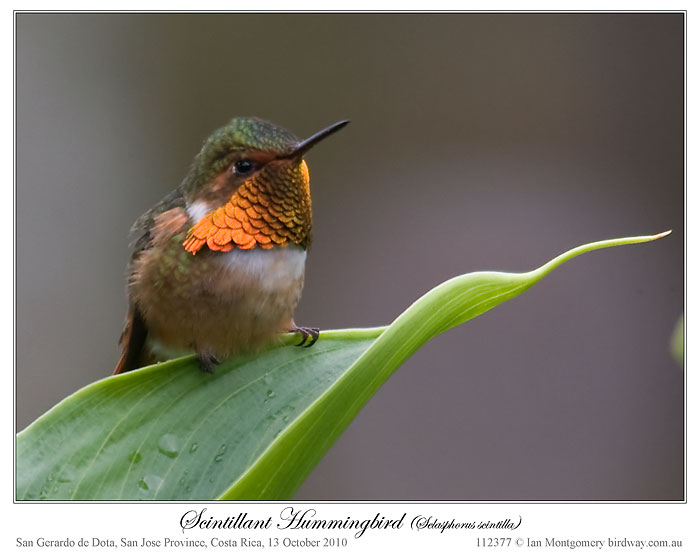
Size, however, isn’t everything particularly in hummingbirds and big ones risk looking like, dare I say it, mere ordinary birds. Much of the fascination in hummingbirds is how insect-like they are, so the smaller the better, and my favourite was the tiny Scintillant Hummingbird. The males, second and third photo, tip the scales at 2.1g with a length of 6.5cm/2.6in (the females average 2.3g and 7cm) and perched, seemingly weightless, on the tips and edges of the leaves of Zantedeschia plants. Their over-sized orange gorgets are very striking and this species is endemic to the mountain slopes of Costa Rica and Western Panama.

Scintillant Hummingbird (Selasphorus scintilla) by Ian

Scintillant Hummingbird (Selasphorus scintilla) by Ian

Incidentally, the smallest hummingbird of all, in fact the smallest bird of all, is the Bee Hummingbird of Cuba with the males, again smaller than the females, averaging 1.6g and 5cm/2in, not that much smaller the Scintillant Hummingbird. The largest is the Giant Hummingbird of the Andes, up to 23g in weight and 22cm/8.7in long and apparently swift-like in flight. Not surprisingly, the Bee Hummingbird is on my bucket list, the Giant isn’t.

Our premature wet season continues in North Queensland, so the website has received plenty of attention. I’ve revised the Thrush galleries with the addition of 6 Central American species, added a couple of swallows and the badly-named Long-tailed Silky-flycatcher – it may be silky but it’s not a flycatcher and it mostly eats fruit:

Ruddy-capped Nightingale-Thrush

Black-faced Solitaire

Mangrove Swallow

Long-tailed Silky-flycatcher

Best wishes,

Ian

Ian Montgomery, Birdway Pty Ltd,

454 Forestry Road, Bluewater, Qld 4818

Phone: +61-7 4751 3115

Preferred Email: ian@birdway.com.au

Website: http://birdway.com.au


Lee’s Addition:

Wow! What gorgeous Hummingbirds. Love that Scintillant’s colors, but the Magnificent is also magnificent. What a creative Hand the Lord used when they were created.

Who does great things, and unsearchable, Marvelous things without number. (Job 5:9 NKJV)

The Hummingbirds belong to the Trochilidae Family of the Apodiformes Order. That Order not only has Hummingbirds, but also Owlet-nightjars, Treeswifts and Swifts.

The colors of the Scintillant fit right in with today’s day of Thanksgiving here in America.

Happy Thanksgiving from all of us on this blog!

Oh that men would praise the LORD for his goodness, and for his wonderful works to the children of men! (Psalms 107:8 KJV)

*

Birdwatching at South Lake Howard Nature Pk 11-24-10

Reflective View at South Lake Howard Nature Park

Reflective View at South Lake Howard Nature Park

Today we finally had a chance to go birdwatching for a little while. We drove to South Lake Howard Nature Park here in Winter Haven, FL. With all that has been going on, it has been almost a month since we have had a chance to bird watch (A little in Tennessee, come to think of it). I didn’t walk very far because of back and leg pains, but Dan was doing his photography while I just walked slow or sat and just enjoyed birdwatching. Not bad for about an hour and a half of watching. We counted 25 birds at the park or on the lake and a House Sparrow in the bush at the grocery store. There weren’t many groups of birds. Most of the birds were by themselves or with just one other member of their species. The water was very reflective this morning.

SLkHwd-Anhinga (Anhinga anhinga) by Lee

Anhinga (Anhinga anhinga) by Lee

Here is a list of the birds spotted, most having their picture taken:

At the Park

  • Anhinga – Sitting on a tree facing us. Normally you only get photos of their backs.
  • Wood Storks – 3 adults and 1 immature
  • White Ibises – 4
  • Wilson’s Snipe-1
  • Snowy Egret – 1
  • Yellow-rumped Warbler (need to figure which kind) “Butterbutts” – 7
  • Limpkin – 1 sitting on a Wood Duck’s house, another flew by
  • Fish Crows – 5 flying by making their racket
  • Redwing Blackbird – 1 on a treetop
  • Palm Warblers – 4 or so
  • Great Egret – 2
  • Little Blue Heron – 4
  • Tricolored Heron – 1
  • Cattle Egret – 2
  • Blue Jay – 1 heard carrying on about something
  • Osprey – 3 – 1 being chased by a Bald Eagle, 1 sitting on the tower with the moon sitting behind it.
  • Bald Eagle – 1
Wood Stork (Mycteria americana) Immature by Lee

Wood Stork (Mycteria americana) Immature by Lee

By the Lake (Howard)

  • Pied-billed Grebe – 2
  • Purple Gallinule – 6
  • Common Gallinule (Moorhen) – 5
  • Rock Pigeon – 4
  • American Coot – 6
  • Great Blue Heron – 2
  • Boat-tailed Grackle – 10
  • Muscovy Duck – 8
  • White Ibis – 30+

Publix

  • House Sparrow – 1

Look at the birds of the air, for they neither sow nor reap nor gather into barns; yet your heavenly Father feeds them. Are you not of more value than they? (Matthew 6:26 NKJV)

All in all it was a great morning for birdwatching here in Florida.

*

I.O.C. World Bird List Version 2.6 Update Complete

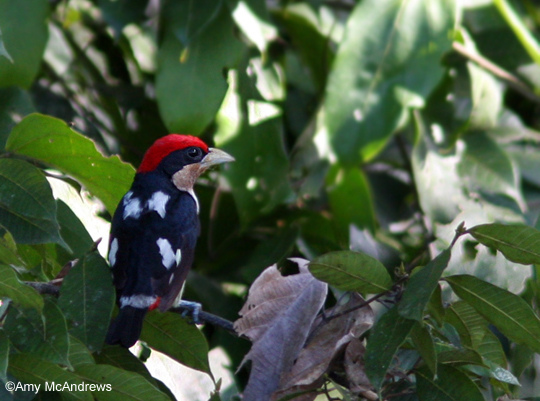
Black-girdled Barbet (Capito dayi) ©CC

Black-girdled Barbet (Capito dayi) ©CC

Finally got the site updated to the I.O.C. World Bird List Version 2.6. Fell behind because of our trip to Indiana. Now it is up to date. (I think!)

With the IOC adding a new Order:

Suliformes which pulled the Frigatebirds, Gannets, Cormorants and Anhingas out of the Pelecaniformes Order

and adding new Families:

Capitonidae-New World Barbets

Semnornithidae-Toucan Barbets

Pnoepygidae-Wren-babblers

Macrosphenidae-Crombecs and African Warblers

Pellorneidae-Fulvettas & Ground Babblers

Leiothrichidae-Laughingthrushes

With all those changes and the others they made, I trust this site is functioning with out too many errors. Had to add new pages and rearrange lots of  others. Tried to be cautious, but if you find any errors on the links, please leave a comment so it can be fixed.

Thanks for any understanding of mistakes. Haven’t arrived yet to perfection.

But thanks be to God, which giveth us the victory through our Lord Jesus Christ. Therefore, my beloved brethren, be ye stedfast, unmoveable, always abounding in the work of the Lord, forasmuch as ye know that your labour is not in vain in the Lord. (1 Corinthians 15:57-58 KJV)

Ian’s Bird of the Week – Violaceous Trogon

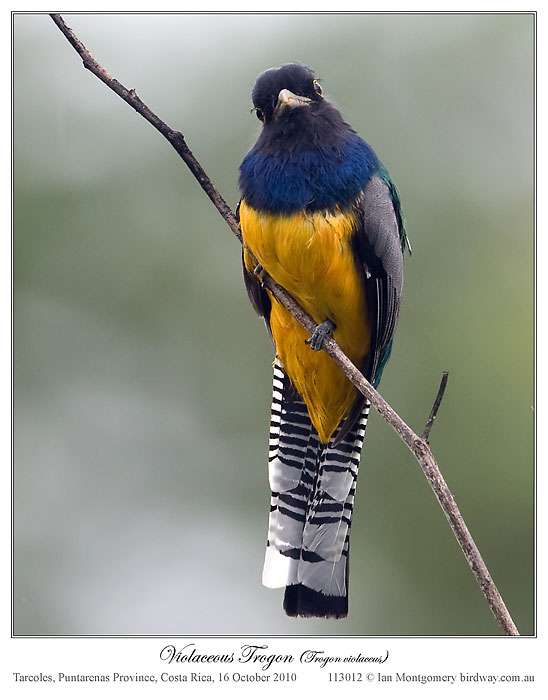
Violaceous Trogon (Trogon violaceus) by Ian

Violaceous Trogon (Trogon violaceus) by Ian

Ian’s Bird of the Week – Violaceous Trogon ~ by Ian Montgomery

Newsletter – 11/17/10

When the Resplendent Quetzal featured as bird of the week in October, I mentioned that Quetzals are members of the Trogon family, the Trogonidae. So they belong to a splendid lineage as typical Trogons are quite gorgeous in their own right and among my favourite birds. Here is the Violaceous Trogon, also from the Costa Rican trip, though it has a wide range in Central and South America (I have also photographed it in Trinidad).

Violaceous Trogon (Trogon violaceus) by Ian

Violaceous Trogon (Trogon violaceus) by Ian

Trogons, the males in particular, are very colourful and the different species come in an extraordinary variety of colours, invariably in aesthetically pleasing and frequently complementary combinations, i.e. red-green, blue-yellow, purple-orange. Male Trogons with red and green breasts include the Slaty-tailed, Black-tailed, Collared and Masked, while both the Violaceous and the White-tailed are somewhere between blue-yellow and purple-orange, perhaps violet-chrome yellow, first photo. Non-complementary but still lovely are the red-brown male Crimson-rumped  and female Masked. (I’ve chosen these examples as all seven are on the Birdway website.)
Their backs are green, bluish or brown, as in the second photo, and if all this is not enough, the upper wing coverts often have subtle and intricate scroll patterns and beautifully barred black and white tails, as in the third photo. If you wanted to design a fantastically beautiful bird yourself, it would be hard to come up with something better: female Trogons clearly have impeccable taste.
Violaceous Trogon (Trogon violaceus) by Ian

Violaceous Trogon (Trogon violaceus) by Ian

Despite their rich colours, Trogons can be hard to spot as they tend to sit fairly motionless in leafy trees in tropical rainforest, occurring in both the New and the Old Worlds. They have distinctive repeated calls that reveal their presence, but hearing one in thick forest is no guarantee of being able to see it. They sit tight, so if you do find them they are fairly approachable but you have to be lucky to find one in clear view.

Related link:
Recent additions to the website include:
and additional photos of
(and a couple of other Costa Rican species that I’m keeping up my sleeve as future birds of the week!).
Best wishes,
Ian

Ian Montgomery, Birdway Pty Ltd,
454 Forestry Road, Bluewater, Qld 4818
Phone: +61-7 4751 3115
Preferred Email: ian@birdway.com.au
Website: http://birdway.com.au

Lee’s Addition:
Thanks again for another informative article and photos, Ian. Dan and I were able to see a White-tailed Trogon at the National Aviary. They are very colorful like Ian said. They belong to the Trogonidae Family of the Trogoniformes Order.     There are 42 species in the family.

Now Israel loved Joseph more than any other of his sons, because he was the son of his old age. And he made him a robe of many colors.
(Genesis 37:3 ESV)

Birds of the Bible – Thanksgiving

When Stephen, at our church, asked me to write about 10 (+ or -) things we are thankful for on our church blog, I am sure he knew that I would write about the birds. Here is what I am posting on that blog.

How can we be thankful for the birds?
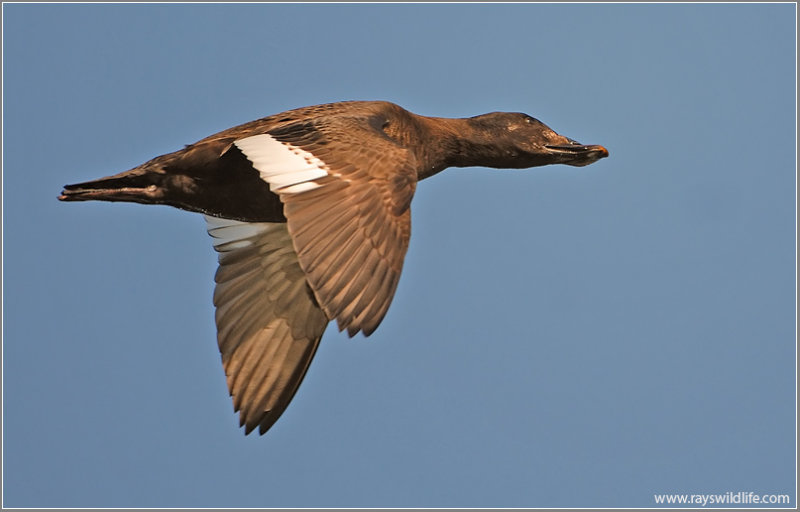
White-winged Scoter (Melanitta deglandi) by Ray

White-winged Scoter (Melanitta deglandi) by Ray

So God created the great sea creatures and every living creature that moves, with which the waters swarm, according to their kinds, and every winged bird according to its kind. And God saw that it was good. (Genesis 1:21 ESV)

I am thankful for a Creator God, the Lord, who made not only the birds, but all of us as well. “Know ye that the LORD he is God: it is he that hath made us, and not we ourselves; we are his people, and the sheep of his pasture. ” (Psa 100:3)
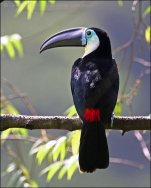
Channel-billed Toucan (Ramphastos vitellinus) by Ian

Channel-billed Toucan (Ramphastos vitellinus) by Ian

Now out of the ground the LORD God had formed every beast of the field and every bird of the heavens and brought them to the man to see what he would call them. And whatever the man called every living creature, that was its name. (Genesis 2:19 ESV)

I am thankful that the LORD God gave Adam the privilege and the knowledge to name the birds. We were created with intellect and didn’t have to progress up through evolution to finally get “smart enough” to name the birds. Adam wasn’t even a week old.

The fear of you and the dread of you shall be upon every beast of the earth and upon every bird of the heavens, upon everything that creeps on the ground and all the fish of the sea. Into your hand they are delivered. Every moving thing that lives shall be food for you. And as I gave you the green plants, I give you everything. (Genesis 9:2-3 ESV)
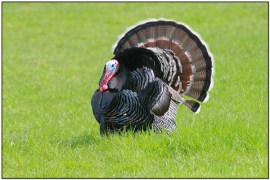
Wild Turkey (Meleagris gallopavo) by Daves BirdingPix

Wild Turkey (Meleagris gallopavo) by Daves BirdingPix

I am thankful for the food the Lord has allowed us to eat. Many of us will be eating Turkey this Thanksgiving Day. (Even if it is sometimes sad to think about.)

I know all the birds of the hills, and all that moves in the field is mine. (Psalms 50:11 ESV)

I am thankful that just as God knows all the birds, He knows us. “Because he hath set his love upon me, therefore will I deliver him: I will set him on high, because he hath known my name.” (Psalms 91:14 KJV)
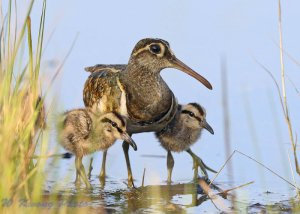
Greater Painted Snipe (Rostratula benghalensis) by W Kwong

Greater Painted Snipe (Rostratula benghalensis) by W Kwong

Therefore I tell you, do not be anxious about your life, what you will eat or what you will drink, nor about your body, what you will put on. Is not life more than food, and the body more than clothing? Look at the birds of the air: they neither sow nor reap nor gather into barns, and yet your heavenly Father feeds them. Are you not of more value than they? And which of you by being anxious can add a single hour to his span of life? And why are you anxious about clothing? Consider the lilies of the field, how they grow: they neither toil nor spin, (Matthew 6:25-28 ESV)
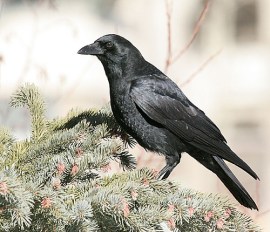
Chihuahuan Raven (Corvus cryptoleucus)Raven (Corvus corax) by Kent Nickell

Chihuahuan Raven (Corvus cryptoleucus)Raven (Corvus corax) by Kent Nickell

For life is more than food, and the body more than clothing. Consider the ravens: they neither sow nor reap, they have neither storehouse nor barn, and yet God feeds them. Of how much more value are you than the birds! And which of you by being anxious can add a single hour to his span of life? If then you are not able to do as small a thing as that, why are you anxious about the rest? (Luke 12:23-26 ESV)

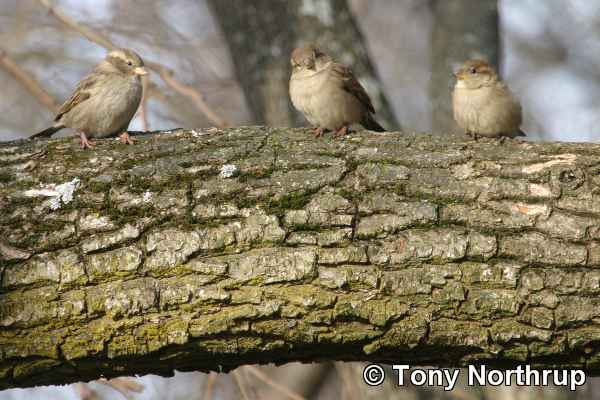
Three Sparrows

Are not two sparrows sold for a penny? And not one of them will fall to the ground apart from your Father. But even the hairs of your head are all numbered. Fear not, therefore; you are of more value than many sparrows.
(Matthew 10:29-31 ESV)

I am thankful for these three parallel verses that remind us that God cares about not only every need of the birds, but also for ours. We are more valuable than them and He provides everything for them and knows all about them. Why do we need to be anxious?

Common Starling (Sturnus vulgaris) at Nest by Anthony747

Common Starling (Sturnus vulgaris) at Nest by Anthony747

And Jesus said to him, “Foxes have holes, and birds of the air have nests, but the Son of Man has nowhere to lay his head.” (Matthew 8:20 ESV)

I am very thankful that the Lord Jesus Christ, became my Savior.

Who, being in the form of God, thought it not robbery to be equal with God: But made himself of no reputation, and took upon him the form of a servant, and was made in the likeness of men: And being found in fashion as a man, he humbled himself, and became obedient unto death, even the death of the cross. (Philippians 2:6-8 KJV)
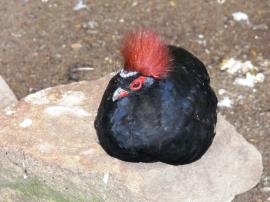
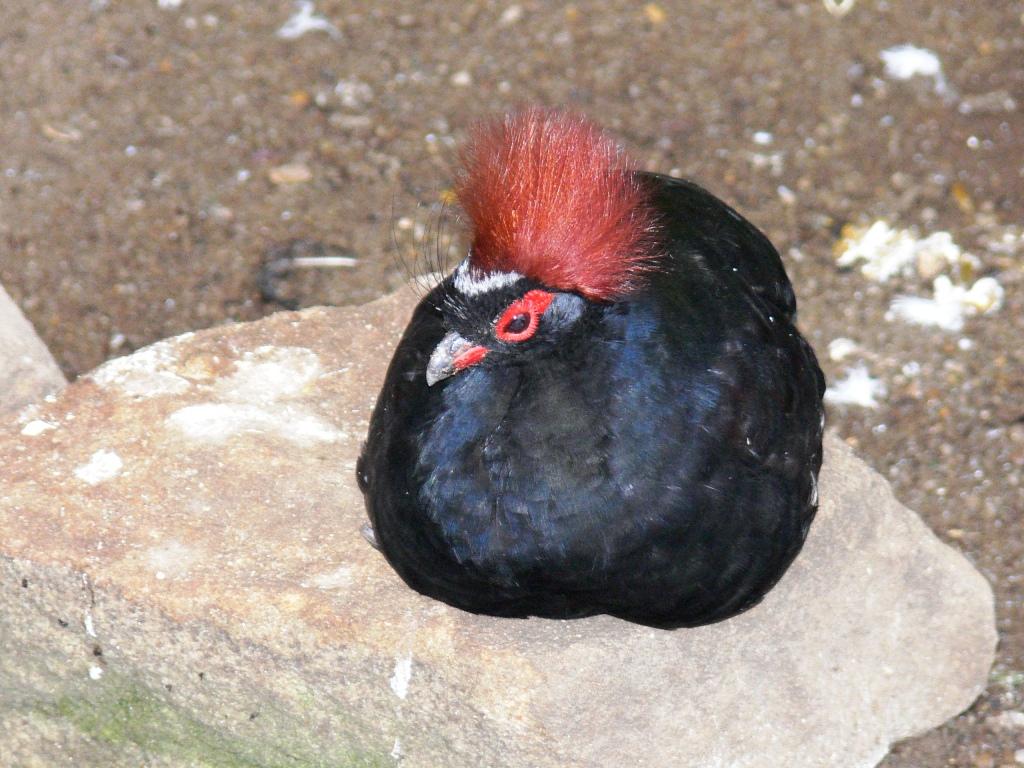
Crested Partridge (Rollulus rouloul) at NA by Lee

Crested Partridge (Rollulus rouloul) at National Aviary by Lee

The heart is deceitful above all things, and desperately wicked: who can know it? I the LORD search the heart, I try the reins, even to give every man according to his ways, and according to the fruit of his doings. As the partridge sitteth on eggs, and hatcheth them not; so he that getteth riches, and not by right, shall leave them in the midst of his days, and at his end shall be a fool. (Jeremiah 17:9-11 KJV)

I am thankful for the partridge that reminds me not to seek earthly riches unjustly.

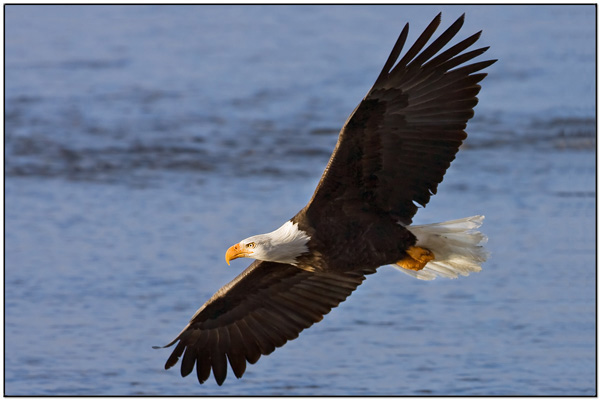
Bald Eagle flying by Dave's BirdingPix

Bald Eagle flying by Dave’s BirdingPix

Have you not known? Have you not heard? The LORD is the everlasting God, the Creator of the ends of the earth. He does not faint or grow weary; his understanding is unsearchable. He gives power to the faint, and to him who has no might he increases strength. Even youths shall faint and be weary, and young men shall fall exhausted; but they who wait for the LORD shall renew their strength; they shall mount up with wings like eagles; they shall run and not be weary; they shall walk and not faint. (Isaiah 40:28-31 ESV)

I am thankful for the wings of the Eagle to remind me of all the promises in this passage. Our God is the everlasting God, doesn’t faint or grow weary, omniscient, omnipotent, omnipresent and the Creator. Awesome!

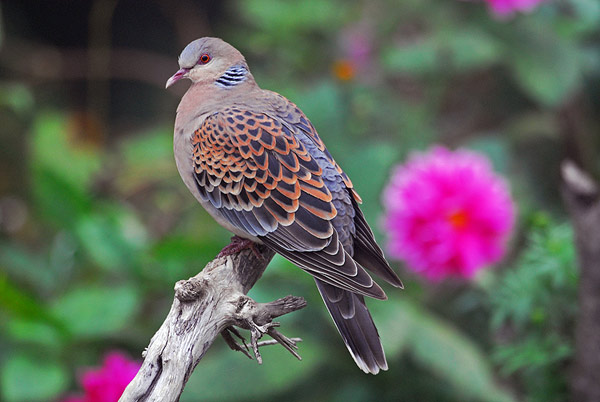
Oriental Turtle Dove (Streptopelia orientalis) by Nikhil

Oriental Turtle Dove (Streptopelia orientalis) by Nikhil

But if he cannot afford two turtledoves or two pigeons, then he shall bring as his offering for the sin that he has committed a tenth of an ephah of fine flour for a sin offering. He shall put no oil on it and shall put no frankincense on it, for it is a sin offering. (Leviticus 5:11 ESV)

I am thankful for doves and pigeons because they remind me that in the Old Testament they were innocently sacrificed for a person’s sin. That was looking forward to the death of Christ on the cross. I am thankful for my salvation in Jesus Christ.

We know that Christ, being raised from the dead, will never die again; death no longer has dominion over him. For the death he died he died to sin, once for all, but the life he lives he lives to God. (Romans 6:9-10 ESV)

My little children, these things write I unto you, that ye sin not. And if any man sin, we have an advocate with the Father, Jesus Christ the righteous: And he is the propitiation for our sins: and not for ours only, but also for the sins of the whole world. (1 John 2:1-2 KJV)

Beloved, let us love one another: for love is of God; and every one that loveth is born of God, and knoweth God. He that loveth not knoweth not God; for God is love. In this was manifested the love of God toward us, because that God sent his only begotten Son into the world, that we might live through him. Herein is love, not that we loved God, but that he loved us, and sent his Son to be the propitiation for our sins. Beloved, if God so loved us, we ought also to love one another.
(1 John 4:7-11 KJV)

The Gospel Message

*
Birds in Hymns – Speed For Thy Life

Birds in Hymns – Speed For Thy Life by Fanny Crosby

Based on Psalm 11:1

In the LORD I put my trust; How can you say to my soul, “Flee as a bird to your mountain”? (Psalm 11:1 NKJV)

Words: Fan­ny Cros­by, 1903.

Music: W. How­ard Doane

https://leesbird.com/wp-content/uploads/2008/11/speed_for_thy_life-fanny-crosby.mp3%20
Indian Cormorant (Phalacrocorax fuscicollis) on nest by Nikhil

Indian Cormorant (Phalacrocorax fuscicollis) on nest by Nikhil

Speed for thy life to the mountain,
Slight not the message divine,
Danger and death are before thee,
Haste, while the hours are thine.

Refrain

Speed thee, speed thee;
Shadows around thee are falling;
Speed thee, speed thee;
Come while the Savior is calling.

Speed for thy life to the mountain,
List to the warning again;
Forward, and look not behind thee,
Stay not in all the plain.

Refrain

Speed, for the day is declining,
Soon its bright moments will fade;
What if a storm should o’ertake thee,
Where would thou turn for aid?

Refrain

Common Starling (Sturnus vulgaris) at Nest by Anthony747

Common Starling (Sturnus vulgaris) at Nest by Anthony747

Speed for thy life to the mountain,
Fly like a bird to its nest,
Fly to the arms of the Savior:
There is thy only rest.

Refrain

___

What a great encouragement for us to make
sure we speed to the Savior.

Most information from The Cyber Hymnal

See ~ Wordless Birds

More ~ Birds in Hymns

*

Birds in Hymns – A Living Stream, As Crystal Clear

Eared Dove (Zenaida auriculata) by Robert Scanlon

Eared Dove (Zenaida auriculata) by Robert Scanlon

Based on:

…proceeding out of the throne of God and of the Lamb. (Revelation 22:1)

Words: John Ma­son, Songs of Praise, 1683; adapt­ed by John Ke­ble.
Music: Stock­ton (Wright), Thom­as Wright (1763-1829)

A Living Stream, As Crystal Clear

A living stream, as crystal clear,
Welling from out the throne,
Of God and of the Lamb on high,
The Lord to man hath shown.

This stream doth water Paradise,
It makes the angels sing:
One precious drop within the heart
Is of all joy the spring:

Joy past all speech, of glory full,
But stored where none may know,
As manna hid in dewy heaven,
As pearls in ocean low.

Eye hath not seen, nor ear hath heard,
Nor to man’s heart hath come
What for those loving Thee in truth
Thou hast in love’s own home.

But by His Spirit He to us
The secret doth reveal:
Faith sees and hears: but O for wings
That we might taste, and feel;

Wings like a dove to waft us on
High o’er the flood of sin!
Lord of the Ark, put forth Thine hand,
And take Thy wanderers in.

O praise the Father, praise the Son,
The Lamb for sinners given,
And Holy Ghost, through Whom alone
Our hearts are raised to Heav’n.

Most information from The Cyber Hymnal

See ~ Wordless Birds

More ~ Birds in Hymns

*

The Smooth-billed Ani – The Corporates…

Smooth-billed Ani (Crotophaga ani) by Daves BirdingPix

Smooth-billed Ani (Crotophaga ani) by Daves BirdingPix

The Smooth-billed Ani – The Corporates… ~ by a j mithra

The Smooth-billed Ani (Crotophaga ani) is a large near passerine bird in the cuckoo family. It is a resident breeding species from southern Florida, the Bahamas, the Caribbean, parts of Central America, south to western Ecuador, Brazil, and northern Argentina. This ani is found in open and semi-open country and areas under cultivation.

The Smooth-billed Ani is about 33 cm (13 in) long and weighs 95 g (3.4 oz). The adult is mainly flat black, with a long tail, deep ridged black bill and a brown iris. The flight is weak and wobbly, but the bird runs well and usually feeds on the ground. This bird’s flight maybe weak, but, God had created it to run well..

  • You may not be able to do what other can do…
  • At the same time, you have realize that you too can do something what the other can’t do..
  • God had not created anyone like you.. You are unique..
  • David did not know how to use a sword, but still, God gave him victory over the giant,
  • with what he had..

You may have very little to offer, but, remember that, you have an awesome God..

Go with what little you have, cos, you can do all things through Christ who strengthens you…

All things are possible with God…

Not by might, nor by power, but by my spirit, saith the LORD of hosts. Zechariah 4:6

Smooth-billed Ani (Crotophaga ani) by Ian

Smooth-billed Ani (Crotophaga ani) by Ian

This is a very gregarious species, always found in noisy groups. Smooth-billed Ani is often seen in pairs or in small groups. They climb and flutter in bushes, hop on the ground with loosely cocked tail. When they roost together during cold nights, they perform mutual preening during long moments.

One member of a Smooth-billed Ani group often sits on a high perch and watches for danger while the rest forage. These birds know the importance togetherness..

  • Did not the Bible ask us to be in peace with one another?
  • Did not the Bible advocate brotherhood?

Look at these birds, they take time to preen one another and take turns to watch out for danger..

We say that the churches are the body of Christ…

  • Does one church care for another?
  • Does the church practice what it preaches?

We are the church, who needs to change our attitude and care for our fellow being…

Unless churches unite together as one, it would be hard to defeat satan..

Two are better than one; because they have a good reward for their labour.
For if they fall, the one will lift up his fellow: but woe to him that is alone when he falleth; for he hath not another to help him up.
Again, if two lie together, then they have heat: but how can one be warm alone?
And if one prevail against him, two shall withstand him; and a threefold cord is not quickly broken. Ecclesiastes 4 :9-12

Smooth-billed Ani (Crotophaga ani) ©ArthurGrosset

Smooth-billed Ani (Crotophaga ani) ©ArthurGrosset

The nest of the Smooth-billed Ani is built communally by several pairs. Eggs are laid by several females, deposited in layers separated by leaves or grass. Several Smooth-billed Ani females typically lay eggs and incubate in the same nest. Late-laying females bury the eggs of early-laying females with twigs and leaves, which can create a number of layers of eggs; only the top layer eventually hatches. As many as 36 eggs may be found in a single nest.

This bird species is a classic example of corporate living… Communal nest building, communal incubation, communal feeding, communal preening and communal territorial guarding is not seen among many species..

  • We as church have so much differences in faith, worship, teaching and so on..
  • Corporate worship and corporate prayer has brought victories to the early church…
  • We say that we are the church but, are we as powerful as the early church?
  • It’s time to switch on the search lights to see where we went wrong…

A Song of degrees of David. Behold, how good and how pleasant it is for brethren to dwell together in unity!
It is like the precious ointment upon the head, that ran down upon the beard, even Aaron’s beard: that went down to the skirts of his garments;
As the dew of Hermon, and as the dew that descended upon the mountains of Zion: for there the LORD commanded the blessing, even life for evermore.  Psalm 133

Have a blessed day!

Your’s in YESHUA, a j mithra

Please visit us at: Crosstree

Ian’s Bird of the Week – White-whiskered Puffbird

White-necked Puffbird (Notharchus hyperrhynchus) by Ian

White-necked Puffbird (Notharchus hyperrhynchus) by Ian

Ian’s Bird of the Week – White-whiskered Puffbird ~ by Ian Montgomery

Newsletter – 11/11/10

Last week’s Asian Dowitcher prompted an amusing comment about bird names (‘Dowitcher Princess’) from a friend of mine on the list, thank you Peter, so how about the White-whiskered Puffbird, encountered in Carara Reserve on the Pacific Coast of Costa Rica? Puffbirds get their name from their fluffy plumage and along with Nunbirds (black), Monklets (smaller and brown) and Nunlets (oddly, also small and brown) comprise a small Central and South America family of 22 species, all with slightly hooked bills, called the Bucconidae, related to the iridescent Jacamars (Galbulidae).

White-necked Puffbird (Notharchus hyperrhynchus) by Ian

White-necked Puffbird (Notharchus hyperrhynchus) by Ian

All these bird sit around quietly in forests, and are easily overlooked, waiting for their invertebrate prey to appear, which they then pounce on. The White-whiskered Puffbird, 20cm/8in in length, usually perches close to the understory at a height of 1 to 6m/3 – 30ft and have the reputation of being tame. It nests in holes in the ground, either on a slope or in a bank, and supposedly blocks the entrance to the nest hollow at night with green leaves. It prefers the lowlands and ranges from southern Mexico to the western side of the Andes in Colombia and Ecuador.

Related links:
Black-fronted Nunbird
White-fronted Nunbird
Rufous-tailed Jacamar

Other Costa Rican additions to the website include:
Scarlet Macaw
Double-striped thick-knee
Magnificent Hummingbird

And, for the wader-lovers, more photos of:
Terek Sandpiper
Curlew Sandpiper
Short-billed Dowitcher
Marbled Godwit

Best wishes,
Ian

Ian Montgomery, Birdway Pty Ltd,
454 Forestry Road, Bluewater, Qld 4818
Phone: +61-7 4751 3115
Preferred Email: ian@birdway.com.au
Website: http://birdway.com.au


Lee’s Addition:
Bucconidae – Puffbirds are in the Piciformes Order which includes not only the Puffbirds, but also Jacamars, 3 families of Barbets, Honeyguides and Woodpeckers.

With all those new birds added from Costa Rica, you can discern that Ian had a great time on his visit. Now we have some more great photos for us armchair birdwatchers to view.

… we know that “all of us possess knowledge.” This “knowledge” puffs up, but love builds up. If anyone imagines that he knows something, he does not yet know as he ought to know. But if anyone loves God, he is known by God. (1 Corinthians 8:1-3 ESV)

*

Our Salute to the Veterans

Dan served 30 years in the Navy, regular and reserve. He along with the many men and women have served our country through the years. We salute you!

Today is the funeral for Dan’s mother, so I am not writing much. We saw Challenger on TV this morning and I remembered the blog I had done about him. So, I am re-posting the YouTube of the eagle in honor of our active and veteran men and women.

Amazing Flying Bald Eagle – Challenger – Article

Turn on your speakers and click on link below.”

Birds of the Bible – Partridge II


Crested Partridge (Rollulus rouloul) at NA by Lee

Crested Partridge (Rollulus rouloul) at National Aviary by Lee

Since the first Birds of the Bible – Partridge was written two and a half years ago a few facts have changed.

1.  At that time there were 155 species in the Phasianidae family. Now they are counting 181 members in the family and we have the Birds of the World listed here. Also, the blog was only a month or so old. I am not so sure that new birds were found as much as to how they classify the birds. Some lists count them one way and another counts them differently. As for this site, we use the I.O.C. list of world birds. The 2.6 Version shows 181 and so do we.

2.  The verse:

Now therefore, let not my blood fall to the earth before the face of the LORD: for the king of Israel is come out to seek a flea, as when one doth hunt a partridge in the mountains. (1 Samuel 26:20 KJV)

was not explained at all. I was still new to blogging and afraid to explain it. So now, let’s see what the verse is referring to with its reference to the partridge.

Chukar Partridge (Alectoris chukar) by Ian

Chukar Partridge (Alectoris chukar) by Ian

According to I Samuel 26, Saul, with his elite soldiers, was pursuing David to kill him. Saul and his army camped for the night and the Lord put them into a deep sleep. While asleep, David, sneaked in and took took the items, but would not kill Saul, even though he had the opportunity.

The LORD forbid that I should stretch forth mine hand against the LORD’S anointed: but, I pray thee, take thou now the spear that is at his bolster, and the cruse of water, and let us go. So David took the spear and the cruse of water from Saul’s bolster; and they gat them away, and no man saw it, nor knew it, neither awaked: for they were all asleep; because a deep sleep from the LORD was fallen upon them. (1 Samuel 26:11-12 KJV)

Later, after awaking, the two talk to each other across a great distance. (V.14) Saul recognizes David’s voice (V.17), and then starting in verse 18, David is asking why the King is pursuing him. David is not his enemy, is blameless, and not trying to cause the problem.

When we get to the 20th verse, his reference is to a bird that is a harmless, non-aggressive, non-confrontational bird – the partridge.
“as when one doth hunt a partridge in the mountains”
When hunted, a partridge will try to walk away. If that doesn’t work, the bird will fly a short distance and land, again trying to avoid the captor. To catch the bird, some keep this up until they wear the partridge down and then walk up to them and bludgeon them.

Barbary Partridge (Alectoris barbara)©WikiC

Barbary Partridge (Alectoris barbara)©WikiC

Matthew Henry says, “a poor game for the king of Israel to pursue. He compares himself to a partridge, a vert innocent harmless bird, which, when attempts are made upon its life, flies if it can, but makes no resistance. And would Saul bring the flower of his army into the field only to hunt one poor partridge? What a disparagement was this to his honour! What a stain would it be on his memory to trample upon so weak and patient as well as so innocent an enemy! James 5:6, You have killed the just, and he doth not resist you.”

Jamieson, Fausset, and Brown Commentary, “as when one doth hunt a partridge — People in the East, in hunting the partridge and other game birds, pursue them, till observing them becoming languid and fatigued after they have been put up two or three times, they rush upon the birds stealthily and knock them down with bludgeons [Shaw, Travels]. It was exactly in this manner that Saul was pursuing David. He drove him from time to time from his hiding-place, hoping to render him weary of his life, or obtain an opportunity of accomplishing his destruction.”

David later said in the Psalms:

But let all those that put their trust in thee rejoice: let them ever shout for joy, because thou defendest them: let them also that love thy name be joyful in thee. For thou, LORD, wilt bless the righteous; with favour wilt thou compass him as with a shield. (Psalms 5:11-12 KJV)

See also:
Partridge

*

The Cat and the Crow

Just received an email from a friend today with this YouTube Video. Thought I would share it. It is really amazing.

From ozricus

The wolf also shall dwell with the lamb, and the leopard shall lie down with the kid; and the calf and the young lion and the fatling together; and a little child shall lead them. And the cow and the bear shall feed; their young ones shall lie down together: and the lion shall eat straw like the ox. … They shall not hurt nor destroy in all my holy mountain: for the earth shall be full of the knowledge of the LORD, as the waters cover the sea. (Isaiah 11:6-9 KJV)