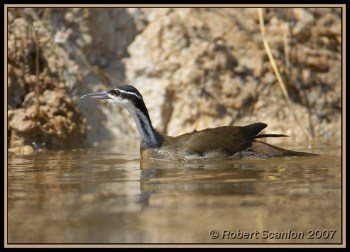
Ian’s Bird of the Week – Asian Dowitcher

Asian Dowitcher (Limnodromus semipalmatus) by Ian

Asian Dowitcher (Limnodromus semipalmatus) by Ian

Ian’s Bird of the Week – Asian Dowitcher ~ by Ian Montgomery

This is something of a postscript to a presentation on wader identification that I gave last Saturday to a workshop organized by the Townsville Region Bird Observers Club as part of the Shorebirds 2020 Project ( http://www.shorebirds.org.au/ ). Of the 45 species that we considered, I lacked photos of just one: the Asian Dowitcher. So you’ll understand why I and a friend jumped into the car after the practical session at Bushland Beach, near Townsville, on Sunday and drove to Cairns, where an Asian Dowitcher had recently been reported, for an overnight visit. They are regular visitors in small numbers to northwestern Australia (e.g. Broome in Western Australia) but occur only as irregular vagrants on the east coast.

Asian Dowitcher (Limnodromus semipalmatus) by Ian

Asian Dowitcher (Limnodromus semipalmatus) by Ian

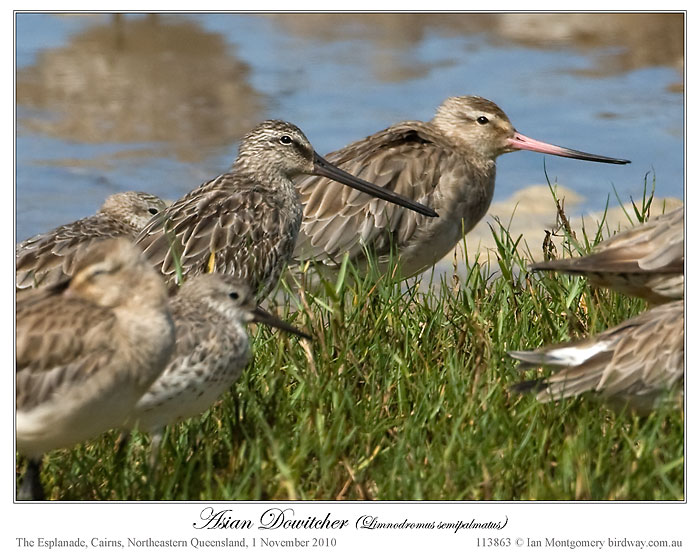
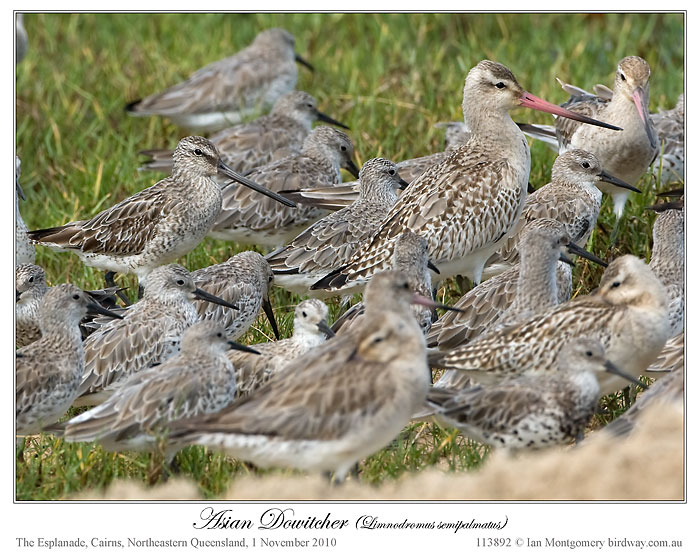
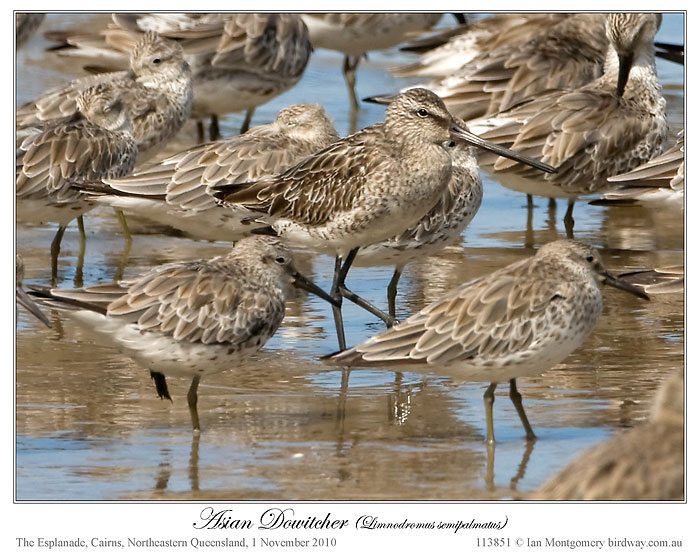
The mudflats on the Esplanade are very flat, so the window of opportunity provided by an incoming tide is very short and it wasn’t until Monday afternoon that that happened. Even so, I would probably have missed it if Guy Dutson hadn’t alerted me to its location. It’s a bird that’s easy to overlook among the Great Knots and Bar-tailed Godwits when they’re all in non-breeding plumage, thank you, Guy! The first photo shows it among Great Knots. The body size is similar, so the key Asian Dowitcher features are the very long, straight, dark bill with a bulbous tip rather like that of a snipe, long dark legs and dark loral stripe (between the bill and the eye). Body length in waders is confounded by bill and leg length, so weight and wing-span are more useful. These are – Asian Dowitcher: 127-245g and 59cm/23.2in; Great Knot: 115-248g and 58cm/22.8in.

The second photo shows the Asian Dowitcher on the left with a smallish – probably male – Bar-tailed Godwit on the right (Bar-tailed Godwit male 190-400g female 262-630g, span 70-80cm/28-32in) and the third photo shows the Dowitcher with a larger Bar-tailed Godwit and lots of Great Knots and in this photo you can see the barred flanks of the Dowitcher compared with the plain flanks of the Godwit. The bill of the Dowitcher was always the most obvious distinguishing feature, but the bird would often have a snooze, tucking its bill under a wing, and magically disappear. What’s more, the mud on the Cairns Esplanade is very gluggy, so the pink bases of Godwit bills are often covered, but the different shape is usually still apparent.

Asian Dowitcher (Limnodromus semipalmatus) by Ian

Asian Dowitcher (Limnodromus semipalmatus) by Ian

When I was preparing the presentation and checking carefully on distinguishing features, I found that a wader that I’d photographed in India in 2003 and posted to the website as a Wood Sandpiper was actually a Green Sandpiper. This a bird, rare in Australia, that I had long wanted to photograph, so I was pleased to find and correct the error: http://www.birdway.com.au/scolopacidae/green_sandpiper/index.htm .

Best wishes,
Ian

Ian Montgomery, Birdway Pty Ltd,
454 Forestry Road, Bluewater, Qld 4818
Phone: +61-7 4751 3115
Preferred Email: ian@birdway.com.au
Website: http://birdway.com.au


Lee’s Addition:

The Asian Dowitcher is part of the Scolopacidae Family which is in the Charadriiformes Order that consists of Shorebirds and their allies. To see Ian’s Birdway website of the Scolopacidae – Click Here.

He answered, “The man called Jesus made mud and anointed my eyes and said to me, ‘Go to Siloam and wash.’ So I went and washed and received my sight.” (John 9:11 ESV)

*

Tasty household…

Edible-nest Swiftlet (Aerodramus fuciphagus) ©WikiC

Edible-nest Swiftlet (Aerodramus fuciphagus) ©WikiC

Tasty household… ~ by a j mithra

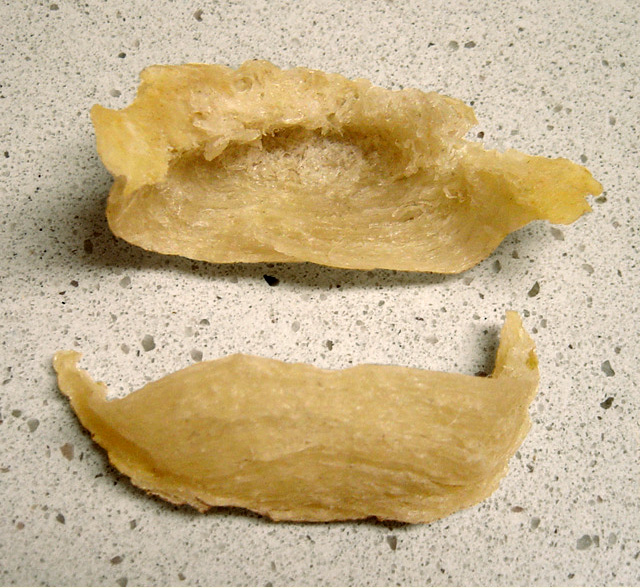
Edible-nests Swiftlets
build their nests
with their saliva..

Edible-nest Swiftlets - Swiftlet Bird Nests©WikiC

Edible-nest Swiftlets - Swiftlet Bird Nests©WikiC

Its nests are considered
as the costliest delicacy
in the world..
The nests are known
for its nutrients…
How do we build our nests?
Do people find
that our household
nutrient and tasty?
Does our household
reflect the Love of JESUS?

‘We are fearfully
and
wonderfully made by GOD…”
But,
the question is,
how wonderful is our household,
our Nest for people around us?

…:but as for me and my house, we will serve the LORD. (Joshua 24:15)

Have a blessed day!

Thoughts from a j mithra


The Edible-Nest Swiftlet is in the Apodidae Family of the Apodiformes Order.


*

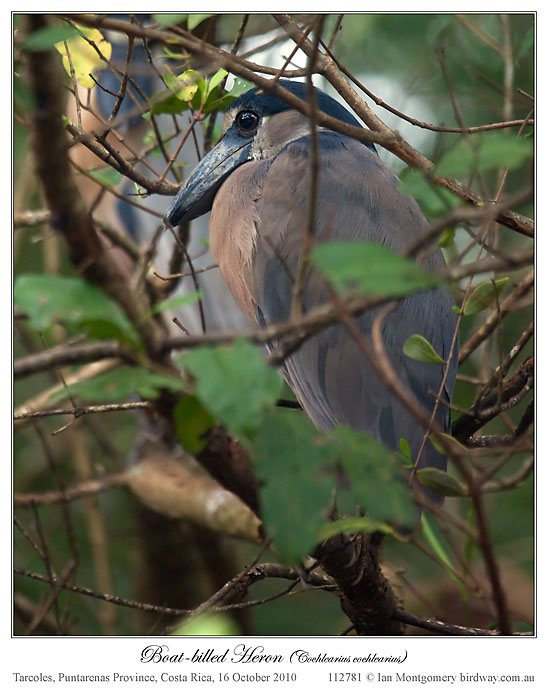
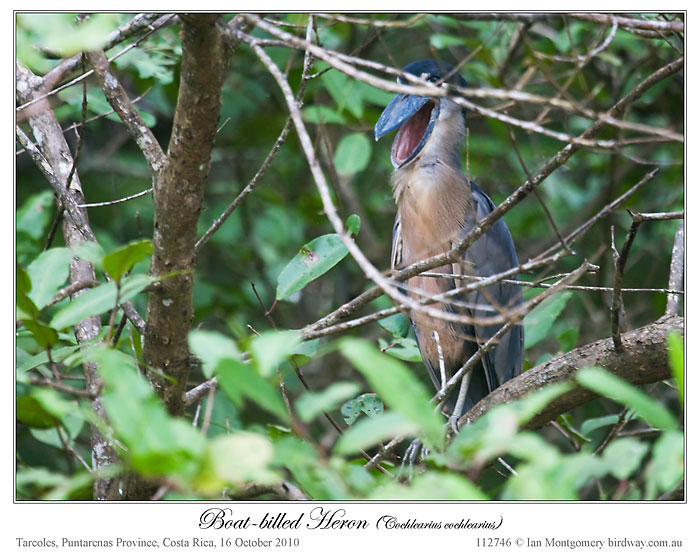
Ian’s Bird of the Week – Boat-billed Heron

Boat-billed Heron (Cochlearius cochlearius) by Ian

Boat-billed Heron (Cochlearius cochlearius) by Ian

Ian’s Bird of the Week – Boat-billed Heron 

After I’d photographed the Resplendent Quetzal, my immediate reaction was one of relief: ‘Now I can just relax and enjoy the rest of my time in Costa Rica!’. Needless to say, that didn’t last long and I decided to chase a couple of other species on my bucket list including Scarlet Macaw and Boat-billed Heron. If you’re not familiar with bucket lists, have a look here http://www.imdb.com/title/tt0825232/ – and I hasten to add that I’m not terminally ill!. I enquired at the Hotel Savegre, where I was staying, and they booked me into the Villa Lapas, another eco-lodge-style hotel, but in the lowlands on Puntarenas Province on the Pacific Coast.

Boat-billed Heron (Cochlearius cochlearius) by Ian

Boat-billed Heron (Cochlearius cochlearius) by Ian

‘Lapas’ is the Spanish for Macaw, and that seemed like a good omen, particularly as the hotel is adjacent to the Carara Biological Reserve, supposedly one of the best places in Costa Rica for Scarlet Macaws. Anyway, I checked into the hotel and booked myself on an early morning wildlife boat trip on the Tarcoles River. I was the only passenger, so the crew of two were only too happy to try to satisfying my wishes. Sure enough, within minutes of starting, we got distant views of a pair of Scarlet Macaws feeding on Beach Almonds and after a trip up the river we went down to the mangroves for the climax of the trip, three Boat-billed Herons roosting in the mangroves.

Boat-billed Heron (Cochlearius cochlearius) by Ian

Boat-billed Heron (Cochlearius cochlearius) by Ian

There have got to be the strangest looking herons, with their huge bills, though otherwise they show some resemblance to Night-Herons and are also nocturnal – hence the large eyes. The bill looks it’s designed a heavy duty task like crushing crabs, but in fact it is used rather passively as a scoop and Boat-bills eat a variety of invertebrates and small vertebrates unlucky enough to get in the way. In the past they have been given their own mono-typic family, but DNA research has shown that they are related to both the Tiger-Herons and the Night-Herons.

I first got interested them when reading about them in Trinidad in 2005 where they are rare. Elsewhere in South America they are reasonably common with a range extending from Mexico to northern Argentina. There are five sub-species, sometimes treated as two species, Northern and Southern, but the Costa Rican race (panamensis) is intermediate between the two extremes and it is usual now to treat them as a single species.

I’m enjoying being back home in North Queensland, though the first week here has been a busy one as I’ve been preparing material for a workshop on wader identification tomorrow. When that is out of the way, I can get back to the website and the rest of my domestic routine in earnest.

Best wishes,
Ian

Ian Montgomery, Birdway Pty Ltd,
454 Forestry Road, Bluewater, Qld 4818
Phone: +61-7 4751 3115
Preferred Email: ian@birdway.com.au
Website: http://birdway.com.au


Lee’s Addition:

the stork, the heron after its kind, and the hoopoe and the bat. (Deuteronomy 14:18 NKJV)

Boat-billed Herons belong to the Ardeidae Family of the Pelecaniformes Order. I am glad Ian managed to get photos of it. We were able to get photos at the National Aviary in Pittsburgh and a Lowry Park Zoo in Tampa, FL. It is really an interesting beak that the Boat-billed has. The Heron is one of the Birds of the Bible.

*

Birds of the Bible – Spain

Eurasian Hoopoe (Upupa epops) by Ian

Eurasian Hoopoe (Upupa epops) by Ian

I have enjoyed getting to know the Tim and Pam Darling, our missionaries, while they have been in transition from the field of Venezuela to Spain. We have all been praying for them to get their Resident Visas so they can get on over to Spain to start their new ministry. They now have the Visas in hand, which is a great answer to prayer. They are busy getting packed up and will go to Spain around the 10th of November.

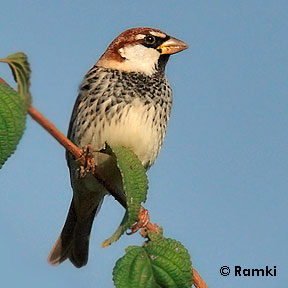
Spanish Sparrow (Passer hispaniolensis) by Nikhil Devasar

Spanish Sparrow (Passer hispaniolensis) by Nikhil Devasar

This blog is in honor of their friendship and to help them get to know the birds they may encounter in Spain. Thanks, Tim and Pam, for your friendship and our prayers will follow you as you travel and reach those in Spain for our Lord Jesus Christ.

Of course the Sparrows will be over there. The House Sparrow, Spanish Sparrow, Eurasian Tree Sparrow, Rock Sparrow and the White-throated Sparrows will help you to remember

Even the sparrow finds a home, and the swallow a nest for herself, where she may lay her young, at your altars, O LORD of hosts, my King and my God. Blessed are those who dwell in your house, ever singing your praise! Selah (Psalms 84:3-4 ESV)

Along with them you will get to meet the Eurasian Hoopoe. A favorite of mine. There will be Swifts – Common, White-rumped, Little, Pallid and Plain Swifts. Also the Swallows – Red-rumped and the Barn.

Yea, the stork in the heaven knoweth her appointed times; and the turtle(dove) and the crane and the swallow observe the time of their coming; but my people know not the judgment of the LORD. (Jeremiah 8:7 KJV)

Lots of Doves and Pigeons to be on the lookout for – Rock Dove (pigeon), Eurasian Collared-Dove, Oriental Turtle-Dove, Laughing Dove, European Turtle-Dove, Bolle’s Pigeon, Laurel Pigeon and a Stock Pigeon. Only found the Common Crane listed there.

There are 9 kinds of Owls, 10 in Falcon family, 3 Kites, 3 Bitterns, 2 Cormorants, 4 Herons, 3 Storks, 2 Hawks, 2 Lapwings, the Osprey, 3 Partridges, 2 Quails and the Bobwhite, and 4 Swans.

There is the Common Raven and you know what the Word says about the Ravens.

Consider the ravens: for they neither sow nor reap; which neither have storehouse nor barn; and God feedeth them: how much more are ye better than the fowls? (Luke 12:24 KJV)

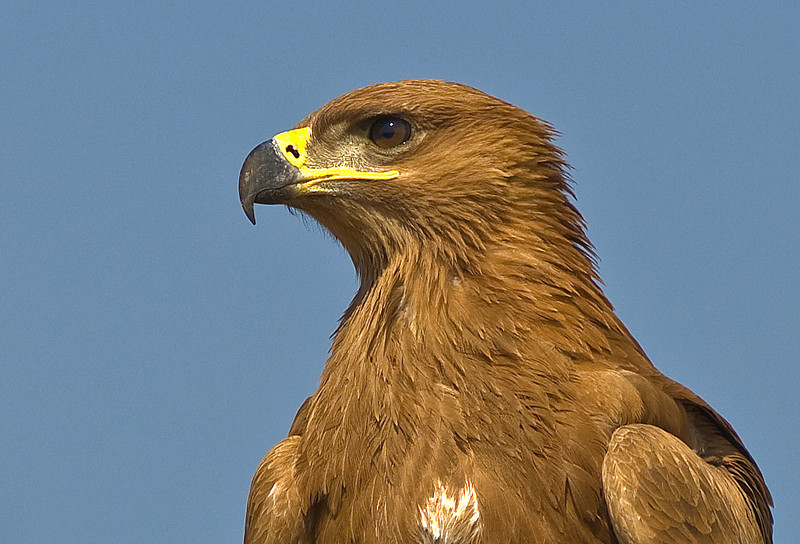
Tawny Eagle by Africaddict

Tawny Eagle by Africaddict

Saved the Eagles for last, not because they are bad, but because of the promises that use them as examples. In Spain they have the Adalbert’s, Golden, Greater Spotted, Imperial, Lesser Spotted, Tawny, Short-toed Snake-Eagle, White-tailed Eagle, Bonelli’s Eagle and the Booted Eagles.

Wilt thou set thine eyes upon that which is not? for riches certainly make themselves wings; they fly away as an eagle toward heaven. (Proverbs 23:5 KJV)

The Darling’s are definitely not going to Spain to obtain earthly gains, but to gain heavenly rewards.

But they that wait upon the LORD shall renew their strength; they shall mount up with wings as eagles; they shall run, and not be weary; and they shall walk, and not faint. (Isaiah 40:31 KJV)

Tim and Pam, our collective prayers will go with you.

(Updated 8-04-12) We have had the privilege of spending some time with Tim and Pam for the last few weeks while they have been on a short furlough. Her parents belong to our church and live in the area. I have tried to encourage them to send me some photos of the birds in Spain. Stay tuned, maybe we can have another update.)

*

This slideshow requires JavaScript.

*

Mysterious Sungrebe…

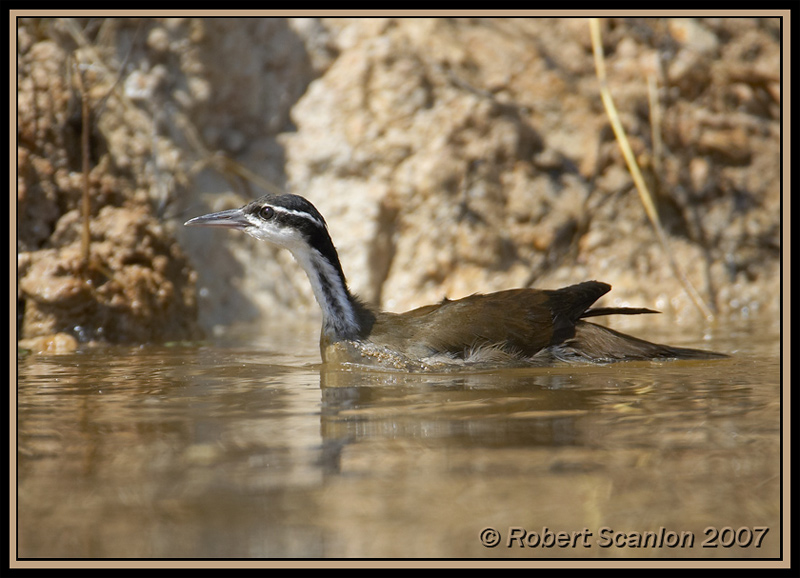
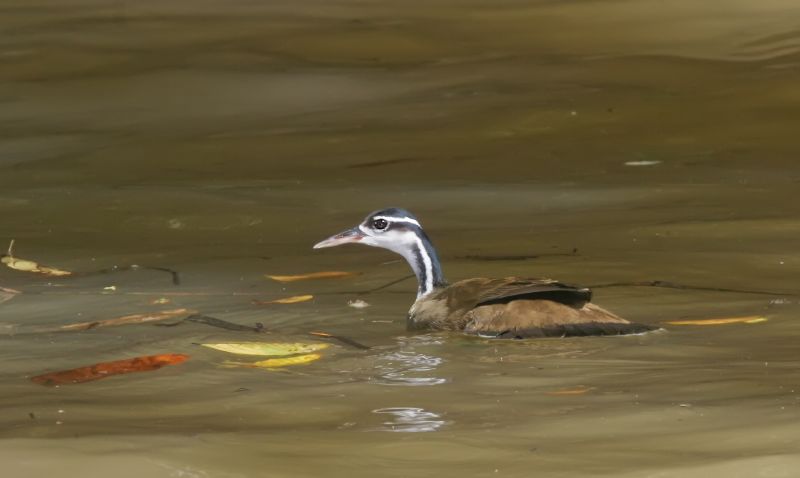
Sungrebe (Heliornis fulica) by Robert Scanlan

Sungrebe (Heliornis fulica) by Robert Scanlan

Mysterious Sungrebe… ~ by a j mithra

Sungrebe, common name for a tropical, mainly aquatic bird of the family Heliornithidae. Sungrebes, also called finfoots, are remarkable for their colorful, puffy-toed, webbed feet, which may serve as lures for fish and other aquatic animals.

The Sungrebe is a small slim-bodied water bird, typically 28-31 cm long and weighing 130 g.
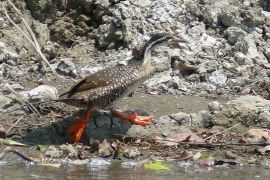
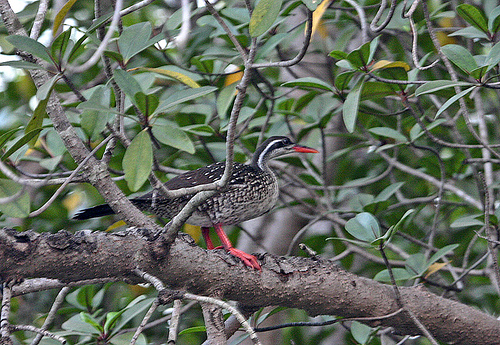
African Finfoot with puffy feet ©WikiC

African Finfoot with puffy feet ©WikiC

Once widely distributed, they (Heliornithidae) are now limited to three species.

The largest of these is the Masked Finfoot (Heliopais personata) measuring up to 20 in. (51 cm) in length, and found from Bengal to Malaya and Sumatra. Its body is olive-brown above, with a black head and throat, a yellow bill, and bright green legs with white stripes.

At 16 in. (41 cm), the African Finfoot (Podica senegalis) is dark brown with black and white spots above, a white belly, and bright red feet and legs. It is thought to be more of a climber than the other species.

Only a third to a quarter as bulky as the Asian Sungrebe and measuring less than 12 in. (30 cm) in length is the Sungrebe (Heliornis fulica) of South and Central America. its plumage is colored similarly to that of the Asian sun grebe, but it is scarlet-billed with yellow, black-striped legs.

All three species are marked by a white band running from eye to neck. Sun grebes are classified in the phylum Chordata subphylum Vertebrata, class Aves, order Gruiformes, family Heliornithidae. It is mainly brown, with a long neck and blackish tail, and a long red bill. The crown and neck are strikingly patterned with black and white stripe, and the feet are black and yellow.

The sexes differ in the colour of the cheeks, buff in the female and white for the male. Sungrebes are shy birds rarely seen by people. They usually swim close to cover and may hide either in vegetation or in the water, with their bodies underwater and their heads lowered, when they are disturbed.

What do we do when we are disturbed in life?

  • Look up towards mortal men or the immortal God?
  • These birds teach us the best way to turn our focus from a mess to a message…
  • Instead of facing the problem, it would be better to get immersed in to the Living water…
  • As long as Peter’s focus was on the Lord, he was able to walk over the water…
  • Once he shifted his focus from the Lord to the water, he sunk…
  • Let our focus be on the One whose focus is always on us…

The name of the LORD is a strong tower: the righteous runneth into it, and is safe. (Psalm 18:10)

They are not just good swimmers but capable walkers and climbers too. Sungrebes tend to roost, or spend the night, in trees or bushes. This bird is unique that it is able to do everything; fly, swim, walk and climb..

We are unique too, for, God has created us in His image..

So, lets stop talking low of ourselves and start praising God for His purpose in our lives..

I can do all things through Christ which strengtheneth me. (Philippians 4:13)

Masked Finfoot (Heliopais personatus) Wikipedia

Masked Finfoot (Heliopais personatus) ©Wikipedia

Sungrebes may be solitary, that is, may live by themselves, or are found in pairs, generally male and female breeding partners, or family groups. Sungrebes are permanently territorial, meaning they defend their territories from other individuals of the same species during the breeding season as well as the nonbreeding season.

Although all three sungrebe species have distinctive calls, these are not often heard. The African Finfoot makes a loud booming sound during breeding. The Masked Finfoot has a bubbling call. The Sungrebe has a “eeyoo” call that it makes to warn other sungrebes away from its territory.

Though these birds have distinctive calls, they are not often heard..

Our grumbling and complaining is heard ever so often, which makes it easier for satan to locate us easily..

The Bible says,

I am the LORD thy God, which brought thee out of the land of Egypt: open thy mouth wide, and I will fill it. (Psalm 81:10)

God did not ask us to open our mouth to complain and grumble, but, to sing praises…

  • The next time you feel like a looser and want to grumble or complain, just remember that, you are giving away your location to satan…
  • Our praises has the power to vacate God from heaven, to dwell with us..
  • At the same time grumble and complaints has the power to bring satan among us…
  • Remember, Israelites grumbled and fell dead in the wilderness…
  • But, Joshua and Caleb worshiped their way into the land of milk and honey…

Death and life are in the power of the tongue: and they that love it shall eat the fruit thereof. (Proverbs 18:21)

African Finfoot (Podica senegalensis) Wikipedia

African Finfoot (Podica senegalensis) Wikipedia

Sungrebes feed primarily on insects, particularly midgets, mayflies, and dragonflies. They may also eat beetles, grasshoppers, and flies, as well as some mollusks, crustaceans, worms, millipedes, and spiders. Occasionally they can eat larger animals such as frogs, tadpoles, or small fish. Sungrebes are also known to eat a small amount of plant material, such as seeds and leaves. Most of their food is found on the water surface, but Sungrebes also forage in overhanging vegetation or along banks.

It nests from August to April building a bowl shaped nest from reeds, course grass and shiny leaves which it places on a sloping branch overhanging the water often in driftwood caught in branches. The eggs are pale buffy green streaked with brown and purple and 1 to 2 are laid and incubated for about eleven days. The chicks hatch naked, blind, and defenseless.

When our dwelling place is near the Living waters, we have providence in abundance and protection and deliverance..

Where are we planted?

Blessed is the man that walketh not in the counsel of the ungodly, nor standeth in the way of sinners, nor sitteth in the seat of the scornful.

But his delight is in the law of the LORD; and in his law doth he meditate day and night.

And he shall be like a tree planted by the rivers of water, that bringeth forth his fruit in his season; his leaf also shall not wither; and whatsoever he doeth shall prosper. (Psalm 1:1-3)

The Sungrebe is already very strange in having a very short incubation period (10-11 days, matching some small passerines) but has an astonishing behavior entirely unique in the bird world: the male Sungrebe is able to transport these helpless offspring, even in flight! The male has a shallow pocket under each wing into which the two young can fit. The pocket is formed by a pleat of skin, and made more secure by the feathers on the side of the body just below. The heads of the chicks could be seen from below as the bird flew. This adaptation is unique among birds: in no other species is there any mechanism whereby altricial young can be transported.

Our God not only carries us under His mighty wings but has carved us in His palms too…

  • But, most of us seem to find the temporary comforts of the world better suited for us…
  • Maybe that is the reason we are unable to be successful in life…
  • As long as Eve was with Adam, the serpent couldn’t be near her..
  • The day she went alone around the garden of Eden, she was deceived by satan..
  • Where are we right now?
  • It’s time for us to get back to our basics, our first love…

As an eagle stirreth up her nest, fluttereth over her young, spreadeth abroad her wings, taketh them, beareth them on her wings: (Deuteronomy 32:11)
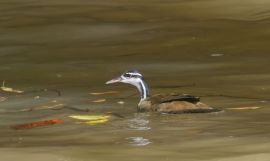
Sungrebe (Heliornis fulica) ©Wikipedia

Sungrebe (Heliornis fulica) ©Wikipedia

Of course, the precocial young of some swans and grebes may hitch rides on their swimming parents’ backs, and a male jaçana can transport his chicks about holding them between his wings and body, but neither of these cases applies when the adults are in flight….

The transport system of the Sungrebe raises numerous further questions. How do the chicks get into the pocket? Are they put in by the male? Does he feed them in there? Do they stay inside, or get in and out? Why does the female not have similar pockets? …

Yes, the Sungrebe and the Finfoots are mystery birds indeed…

Our God is not mysterious but His ways are…

  • He makes ways only where there seems to be no way….
  • He makes ways over the waters and over the sky…
  • He brings waters in the wilderness and rivers into the desert…
  • You may not see rain or wind yet, He is capable of bring rain….
  • He can win a battle with a pebble..
  • He can even win a war without a fight…
  • He can make the waters stand up tall and mighty walls to lie flat..

Our God is able…

Great in counsel, and mighty in work: for thine eyes are open upon all the ways of the sons of men: to give every one according to his ways, and according to the fruit of his doings: (Jeremiah 32:19)

Have a blessed day!

Your’s in YESHUA,
a j mithra

Please visit us at: Crosstree


Heliornithidae Family

Gruiformes Order
New I.O.C. 2.6 Version is Out

Large Grey Babbler (Turdoides malcolmi) by Ian

Large Grey Babbler (Turdoides malcolmi) by Ian

The newest version of the I.O.C list of birds has been released. Version 2.6 has made quite a few changes. It was released on October 23rd and I have started making the changes to the Birds of the World pages. (One reason I haven’t posted much.) Also making “Kindle-friendly” changes (see below).

When I started with version 2.1 there were 10,340 birds and now they have 10,417 (up from 10,396-ver. 2.5) The families have been increasing also from 224 to 222 to now 233. The ornithologist love to change things around and split and lump the species. Now they have added a new Order (from 39 to 40).
They have already start planning for the 2.7 version. Talk about change. For every change they make every 3 months or so, I have to update this website. This new version is going to call for new pages to be made for that new Order and the new Families, plus the spelling changes. Not complaining, just explaining why the guest writers may be posting more than me.

As for the birds, they are for the most part, the same. It is just how the ornithologist look at them. Some grew a new colored feather and they gave it a new name, and some lost a feather and now it is put back into another group. (Just kidding.) They do work very hard in trying to figure what bird belongs where. The DNA studies that are ongoing are letting them see that the birds are related in different ways than they thought.

So God created … every winged bird according to its kind. And God saw that it was good. And God blessed them, saying, “Be fruitful and let birds multiply on the earth.” And there was evening and there was morning, the fifth day. (Genesis 1:21-23 ESV)

We do know that God told the birds to multiply and fill the earth and they are doing that within their kinds. Luckily, they don’t have to keep up with charts and list and web pages. They just keep looking for the next meal and raising their families.

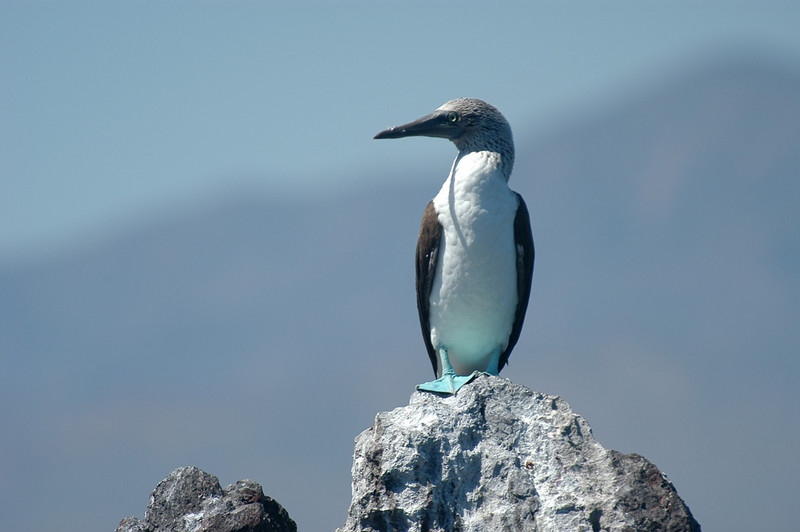
Blue-footed Booby (Sula nebouxii) by Bob-Nan

Blue-footed Booby (Sula nebouxii) by Bob-Nan

The new Order is Suliformes which includes the Frigatebirds-Fregatidae; Gannets, Boobies-Sulidae; Cormorants, Shags-Phalacrocoracidae; and the Anhingas, Darters-Anhingidae Families. (As I make the pages, a link will be provided here)

Another major change is they divided the Babblers into 5 Families -(Timaliidae, Pellorneidae, Leiothrichidae, Sylviidae, Zosteropidae). So I will be busy making and changing pages for awhile. All together the IOC: added 22 species, deleted 1; made 19 English Name changes; changed 16 Ranges; and made 180 Taxonomy changes including the new Order and the new Families mentioned.

Also, as I am making changes, I am making the pages “Kindle-friendly.” I recently got a Kindle that has 3G on it and found out that it will not let you open links, photos, or articles in a New Tab or New Window. As the pages are reworked, I am fixing those links, photos, and articles that link (internal) to this site so that they will Open in the Same Window. All the new articles in the last week or so have also been made “Kindle-friendly.” There are over 1,000 blogs and pages here, so don’t expect it to be changed over night.

Birds of the World (Internal link)

I.O.C Worldbirdnames.org (Not internal link)

*

Light Rain…

Nicobar Pigeon sunbathing at Lowry Park Zoo by Lee

Nicobar Pigeon sunbathing at Lowry Park Zoo by Lee

Light Rain… by a j mithra

Numerous Bird species
know that

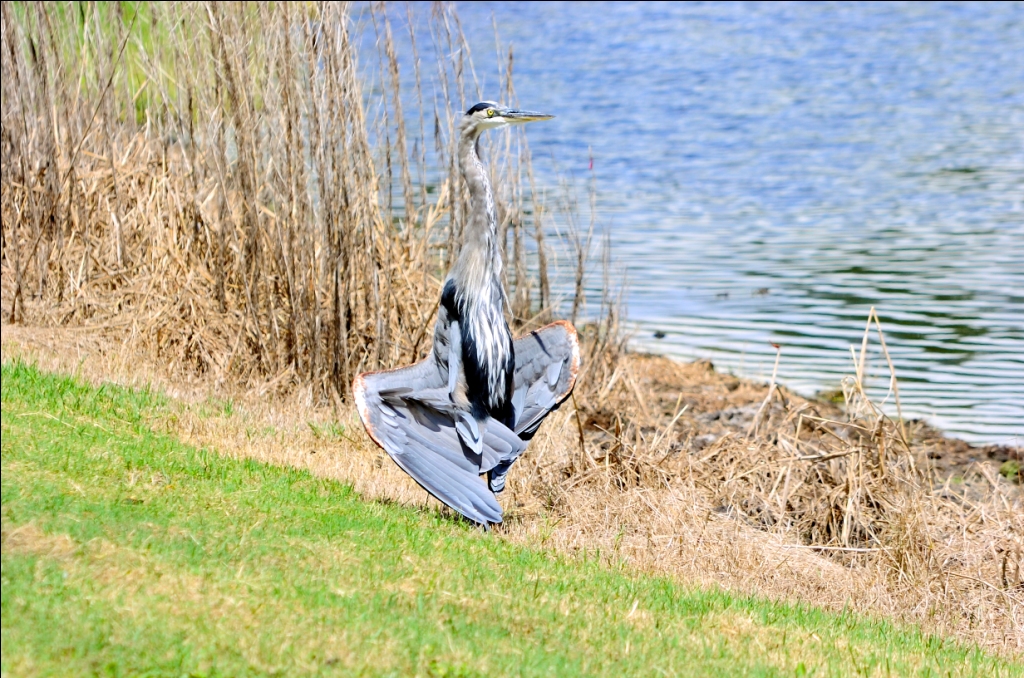
Great Blue Heron sunning by Dan

Great Blue Heron sunning by Dan

Sun light and heavy rains
would support
a tremendous food source
for all of them…
That’s the reason
we can see lots of birds
having sunbath
just after rains….
Most of us
have failed to realize that,
it is impossible
to survive
without THE LIGHT
of the SUN OF RIGHTEOUSNESS
and
the rain of THE HOLY SPIRIT…
JESUS had told that
HE will pour the latter rain
on all flesh..
Thank GOD we are made of flesh
so,
lets get soaked in the rain
and walk in THE LIGHT…

Ask ye of the LORD rain in the time of the latter rain; so the LORD shall make bright clouds, and give them showers of rain, to every one grass in the field. (Zechariah 10:1)

Have a blessed day!

Thoughts from a j mithra

Wordless Birds

*

Launching pad…

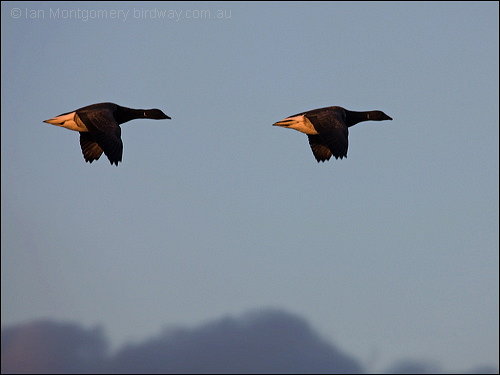
Brant Goose (Branta bernicla) by Ian

Brant Goose (Branta bernicla) by Ian

Launching pad… ~ a j mithra

Brant Geese (Branta bernicla) by Ian

Brant Geese (Branta bernicla) by Ian

The small Arctic Goose
called Brant Goose,
would wait
for the storm system
to come,
so that,
it would catch
the storm’s tail wind
and
migrate during winter…
GOD doesn’t give
the storm to destroy you,
but,
to take you
to a better place…
Remember,
storm is surely
a launching pad…

The LORD is slow to anger, and great in power, and will not at all acquit the wicked: the LORD hath his way in the whirlwind and in the storm, and the clouds are the dust of his feet. (Nahum 1:3)

Have a blessed day!

A thought from ~ a j mithra

*

Birds of the Bible – Ostrich II

Common Ostrich (Struthio camelus) Memphis Zoo by Lee

Common Ostrich (Struthio camelus) Memphis Zoo by Lee

Even a mother wolf will nurse her cubs, but my people are like ostriches, cruel to their young. (Lamentations 4:3 GNB)
Even jackals nurse their young, but my people are like ostriches that abandon their own. (Lamentations 4:3 CEV)

The two versions of Lamentations 4:3 are interesting. In Birds of the Bible – Ostrich, the facts about the Ostriches behavior toward their young were mentioned. Her lack of interest in raising her young by putting them in a communal nest, her “big feet”, and her lack of knowledge.

This verse in Lamentations 4, again mentions how the ostriches are cruel to their young. This time the context is referring to the punishment of Israel and how they have gone from having much and now suffering with little or nothing. Verse 2 says,

These are Zion’s people, worth more than purest gold; yet they are counted worthless like dishes of clay.

May we serve the Lord with a clean heart and keep a “short list” of things that need to be confessed. May we never get so far away from the Lord that we have to have judgment come into our lives to “wake us up.”

Luckily, those of us who know the Lord as our personal Saviour, know:

Let your conversation be without covetousness; and be content with such things as ye have: for he hath said, I will never leave thee, nor forsake thee. (Hebrews 13:5 KJV)

Somali Ostrich (Struthio molybdophanes) by P Kwong

Somali Ostrich (Struthio molybdophanes) by P Kwong

The Ostrich, Struthio camelus, is actually an interesting bird that is flightless and native to Africa. It is the only living species of its family, Struthionidae and its genus, Struthio. Ostriches share the order Struthioniformes with the kiwis, emus, and other ratites. It is distinctive in its appearance, with a long neck and legs and the ability to run at maximum speeds of about 45 mph, the top land speed of any bird. The Ostrich is the largest living species of bird and lays the largest egg of any living bird (extinct elephant birds of Madagascar and the giant moa of New Zealand laid larger eggs).

Ostriches usually weigh from 63 to 130 kilograms (140–290 lb), with exceptional male Ostriches weighing up to 155 kilograms (340 lb). The feathers of adult males are mostly black, with white primaries and a white tail. However, the tail of one subspecies is buff. Females and young males are greyish-brown and white. The head and neck of both male and female Ostriches is nearly bare, with a thin layer of down.[4][6] The skin of the females neck and thighs is pinkish gray, while the male’s is blue-gray, gray or pink dependent on subspecies.
Claws on the wings

The long neck and legs keep their head 6 to 9 ft above the ground, and their eyes are said to be the largest of any land vertebrate – 50 millimetres (2.0 in) in diameter; they can therefore perceive predators at a great distance. The eyes are shaded from sun light falling from above.

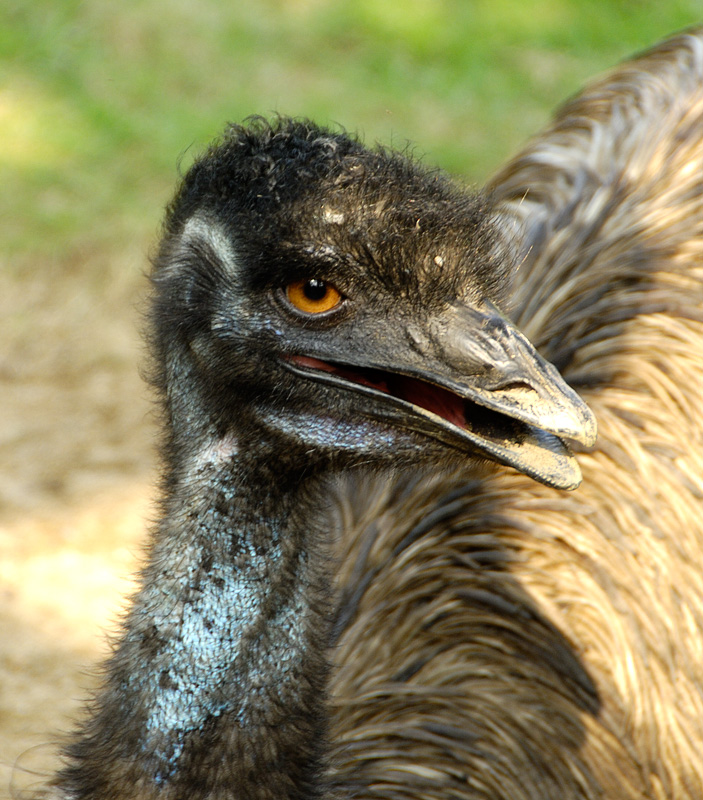
Emu Foot Lowry Pk Zoo

Emu Foot Lowry Pk Zoo

At sexual maturity (two to four years), male Ostriches can be from 5 ft 11 in to 9 ft 2 in in height, while female Ostriches range from 5 ft 7 in to 6 ft 7 in. During the first year of life, chicks grow 10 in per month. At one year of age, Ostriches weigh around 100 lb. Their lifespan is up to 40–45 years.

Yesterday, Dan and I were at the Lowry Park Zoo and were watching the Emu pair they have there. Took pictures of their feet and though smaller than the Ostrich, they have “big feet” also.

See Also:

Birds of the Bible – Ostrich

Ostrich

Struthionidae – Ostriches

Struthioniformes – Ostriches

*

Mrs. Mom…

Northern Wren by Peter Ericsson

Northern Wren by Peter Ericsson

Mrs. Mom… ~ by a j mithra

Scientists have found
that mother Wrens

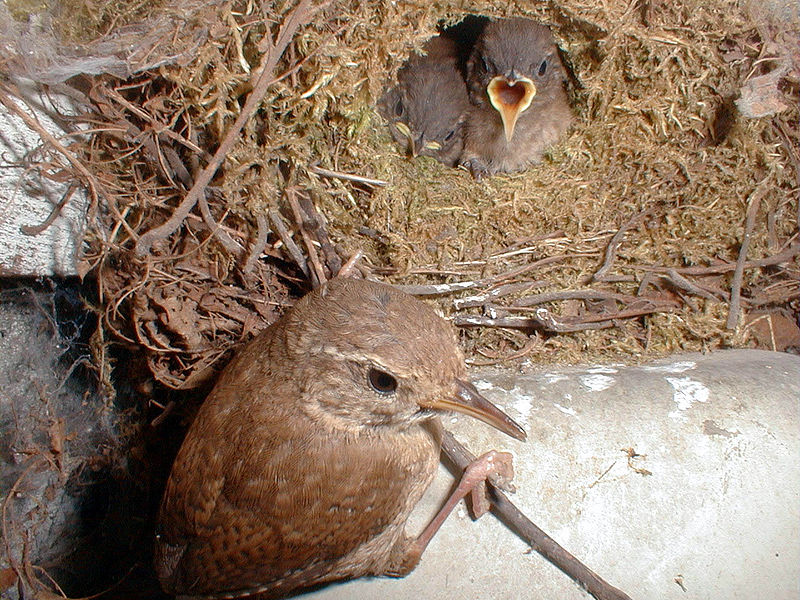
Winter Wren Female and chick ©Wikipedia

Winter Wren Female and chick ©Wikipedia

make at least 1200 visits
to its nest
to feed its chicks…
Amazing isn’t it?
If a small little bird
could take
so much care
of its chicks,
how much would
our LORD,
who gave HIS life
care for you and me?
If the creation is
so amazing,
what would you say
about the CREATOR?

When my father and my mother forsake me, then the LORD will take me up. (Psalm 27:10)

Have a Blessed day!

Thoughts from a j mithra

*

Ian’s Bird of the Week – Resplendent Quetzal

Resplendent Quetzal (Pharomachrus mocinno) by Ian

Resplendent Quetzal (Pharomachrus mocinno) by Ian

Ian’s Bird of the Week – Resplendent Quetzal ~ Ian Montgomery

Newsletter 10-18-10

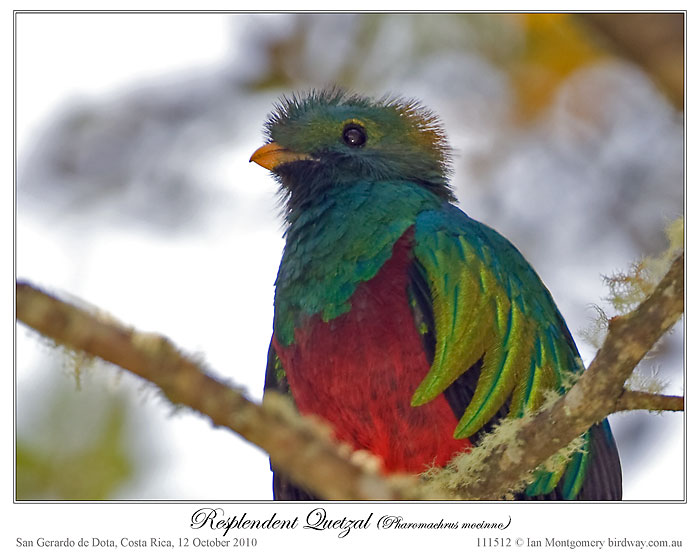
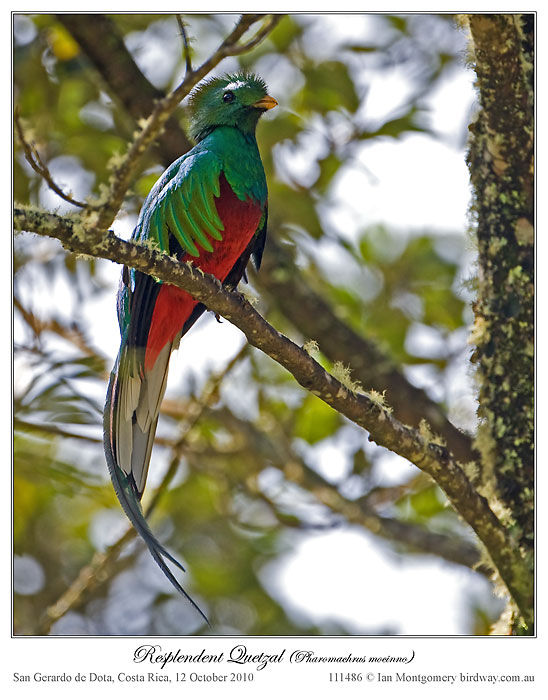
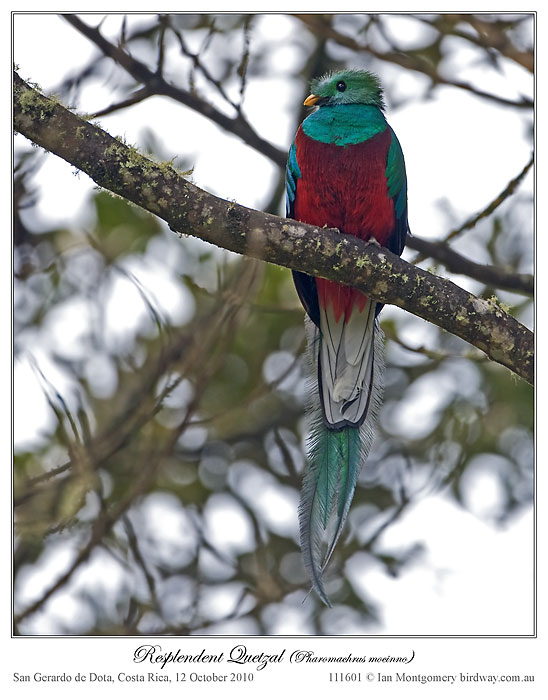
It looks like your collective prayers worked, thank you very much, so here is the legendary Resplendent Quetzal, the main goal of my visit to Costa Rica.

Resplendent Quetzal (Pharomachrus mocinno) by Ian2

Resplendent Quetzal (Pharomachrus mocinno) by Ian2

After a post-flight night in a hotel in the capital, San Jose, I drove to hotel called the Hotel Savegre ( http://www.savegre.co.cr/ ) in a town called San Gerardo de Dota in a valley in the mountains often now called Quetzal valley. On the following morning, I went out with an excellent guide called Melvin Fernandez who is attached to the hotel ( birdwatchersavegre@hotmail.com ) and within two hours he had taken me to a Quetzal-favoured avocado tree containing two pairs of Quetzals and I had taken photos to my hearts content.

Resplendent Quetzal (Pharomachrus mocinno) by Ian3

Resplendent Quetzal (Pharomachrus mocinno) by Ian3

The Resplendent Quetzal is regarded as the most spectacular bird in the Americas, and it would be easy to agree. The males are just sensational as you can see in the first three photos. At this time of the year the tail streamers are short, which actually makes photographing them easier as you can fit the whole bird in more easily. They shed the streamers in July and they gradually grow back month by month to their maximum extent of up to 64cm/25in in time for the breeding season.

Resplendent Quetzal (Pharomachrus mocinno) by Ian Female

Resplendent Quetzal (Pharomachrus mocinno) by Ian Female

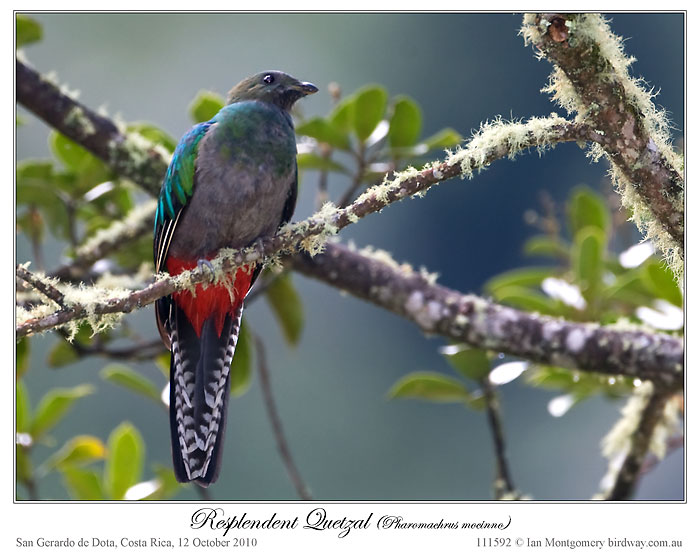
The female, fourth photo, shows the birds Trogon affinities – they are members of the Trogon family, Trogonidae – and she is quite gorgeous in her own right, though completely eclipsed by her amazing partner.

The adjective legendary is literally the case and the legends and myths focus on three aspects: the divine nature of the bird, the the defeat of the Mayans by the Spanish and its symbolic representation of liberty. You can read all about it here http://en.wikipedia.org/wiki/Resplendent_Quetzal and here http://blog.guatemalangenes.com/2009/03/legend-of-quetzal.html so I won’t repeat the details but just say that they add to the magic of the bird.

Resplendent Quetzal (Pharomachrus mocinno) by Ian5

Resplendent Quetzal (Pharomachrus mocinno) by Ian5

The tail streamers are not tail feathers – the tail is quite trogon-like – but erectible extensions of four of the feathers of the tail coverts, as you can see in the fifth photo. Similarly, the cloak-like feathers across the breast are the wing coverts.

Having photographed these amazing birds, mision completa as they say in Spanish, I was then free to relax and enjoy the rest of my stay in Costa Rica. The adventure, however, had just started and I have plenty of other interesting material for future birds of the week.

If you want to see the Quetzal, I highly recommend the Savegre Hotel. It’s family owned, has delightful gardens and its own primary cloud forest (the hotel is at 2,200m 7,200ft) and lots of trails, is on the Savegre River and Melvin tells me the best months for the Quetzal are February and March – I was there in the wet season and it rained heavily every afternoon.

I’m now back in California, due, flights permitting, to return to Australia tonight and looking forward to getting home.

Best wishes,
Ian

Ian Montgomery, Birdway Pty Ltd,
454 Forestry Road, Bluewater, Qld 4818
Phone: +61-7 4751 3115
Preferred Email: ian@birdway.com.au
Website: http://birdway.com.au


Lee’s Addition:

I am glad our prayers for your Quetzal were so speedily answered as were the ones for traveling mercies. That bird is a prize catch for most birdwatchers heading to Costa Rica.

Delight thyself also in the LORD; and he shall give thee the desires of thine heart. Commit thy way unto the LORD; trust also in him; and he shall bring it to pass. (Psalms 37:4-5 KJV)

To see Ian’s Trogonidae photos – Click Here

The Quetzals are part of the Trogonidae Family in the Trogoniformes Order.

Seeker…

Blackpoll Warbler (Setophaga striata) ©Flickr Scott Heron

Seeker… ~ by a j mithra

A small
North American bird,
the size of a sparrow
called the Blackpoll Warbler,
flies about 2,500 miles
on a nonstop 90 hr.
journey during migration
every year..

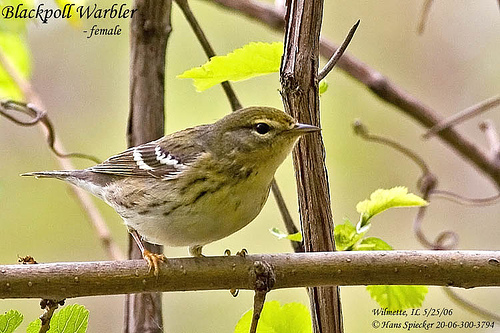
Blackpoll Warbler (Dendroica striata) female by Kent Nickell

Blackpoll Warbler (Dendroica striata) female by Kent Nickell

If such a small little bird
could fly that long
and that far,
How far
and how long
should we seek the presence
of the LORD?

But seek ye first the kingdom of God, and his righteousness; and all these things shall be added unto you. (Mathew 6:33)

Have a blessed day!

Thoughts from a j mithra