Birds of the Bible – Raven II

Northern Raven (Corvus corax) by Ray

Northern Raven (Corvus corax) by Ray

The first Birds of the Bible – Raven article covered many aspects of the Raven. It was written in February of 2008 when I first started writing about the Birds of the Bible. There is always more to learn about birds or the Lord for that matter. We never “arrive” in our learning.

Some verses about the Raven that are interesting have to do with the Lord or God providing for them.

Who provideth for the raven his food? when his young ones cry unto God, they wander for lack of meat. (Job 38:41 KJV)

He giveth to the beast his food, and to the young ravens which cry. (Psalms 147:9 KJV)

Consider the ravens: for they neither sow nor reap; which neither have storehouse nor barn; and God feedeth them: how much more are ye better than the fowls? (Luke 12:24 KJV)

With all the providing by the LORD God for the Raven, He (LORD God) then uses the Ravens to feed Elijah during a drought. Elijah was told to go to the brook Cherith and there he would be fed. Notice that the ravens came twice a day and brought “bread and flesh.”

Get thee hence, and turn thee eastward, and hide thyself by the brook Cherith, that is before Jordan. And it shall be, that thou shalt drink of the brook; and I have commanded the ravens to feed thee there. So he went and did according unto the word of the LORD: for he went and dwelt by the brook Cherith, that is before Jordan. And the ravens brought him bread and flesh in the morning, and bread and flesh in the evening; and he drank of the brook. (1 Kings 17:3-6 KJV)
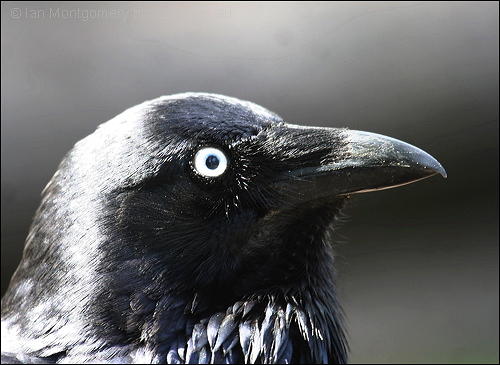
Australian Raven (Corvus coronoides) by Ian

Australian Raven (Corvus coronoides) by Ian

Here are some interesting remarks from commentators about this:
Wesley – 1Ki 17:4,6 “God is said to command both brute creatures, and senseless things; when he causeth them to do the things which he intends to effect by them. The ravens – Which he chuseth for this work; to shew his care and power in providing for the prophet by those creatures, which are noted for their greediness, that by this strange experiment he might be taught to trust God in those many and great difficulties to which he was to be exposed. God could have sent angels to minister to him. But he chose winged messengers of another kind to shew he can serve his own purposes as effectually, by the meanest creatures as by the mightiest. Ravens neglect their own young, and do not feed them: yet when God pleaseth, they shall feed his prophet.”
“And flesh – Not raw, but boiled by the ministry of some angel or man, and left in some place ’till the ravens came for it: in all which, there is nothing incredible, considering the power and providence of God.”

K&D – “Through this miracle, which unbelievers reject, because they do not acknowledge a living God, by whom, as the Creator and Lord of all creatures, even the voracious ravens are made subservient to His plans of salvation, Elijah was not only cut off from (interaction) with men, who might have betrayed his place of abode to the king, but was mightily strengthened himself, through the confidence inspired in the almighty assistance of his God, for his approaching contests with the worshippers of idols, and for the privations and sufferings which awaited him in the fulfilment of his vocation.”
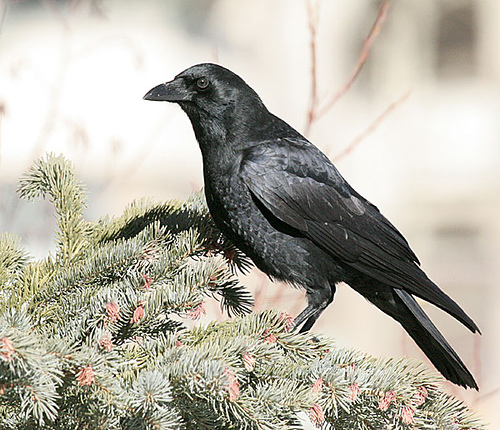
 

Common Raven (Corvus corax) by Kent Nickell

Matthew Henry – “Elijah was commanded to hide himself. If Providence calls us to solitude and retirement, it becomes us to go: when we cannot be useful, we must be patient; and when we cannot work for God, we must sit still quietly for him. The ravens were appointed to bring him meat, and did so. Let those who have but from hand to mouth, learn to live upon Providence, and trust it for the bread of the day, in the day. God could have sent angels to minister to him; but he chose to show that he can serve his own purposes by the meanest creatures, as effectually as by the mightiest. Elijah seems to have continued thus above a year. The natural supply of water, which came by common providence, failed; but the miraculous supply of food, made sure to him by promise, failed not. If the heavens fail, the earth fails of course; such are all our creature-comforts: we lose them when we most need them, like brooks in summer. But there is a river which makes glad the city of God, that never runs dry, a well of water that springs up to eternal life. Lord, give us that living water!”

Gill – “…it seems better to interpret them of ravens, as we do, these creatures delighting to be in solitary places, in valleys, and by brooks; nor need it be any objection that they were unclean creatures by the law, since Elijah did not feed upon them, but was fed by them; and supposing any uncleanness by touch, the ceremonial law might be dispensed with in an extraordinary case, as it sometimes was; though it is very remarkable that such creatures should be employed in this way, which are birds of prey, seize on anything they can, live on carrion, and neglect their own young, and yet feed a prophet of the Lord; which shows the power and providence of God in it.”

Elijah and the ravens help illustrate the following verse:

But seek ye first the kingdom of God, and his righteousness; and all these things shall be added unto you. (Matthew 6:33 KJV)
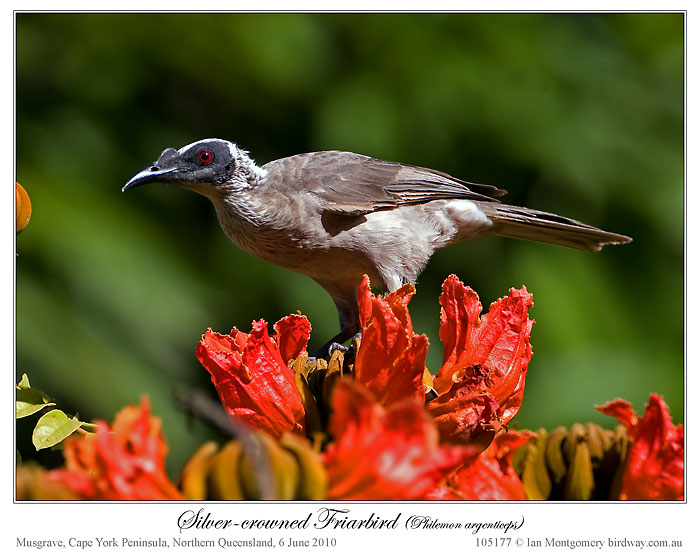
Ian’s Bird of the Week – Silver-crowned Friarbird

Silver-crowned Friarbird (Philemon argenticeps) by Ian

Silver-crowned Friarbird (Philemon argenticeps) by Ian

Ian’s Bird of the Week – Silver-crowned Friarbird ~ by Ian Montgomery

Last week, we had the splendid Palm Cockatoo at Mungkan Kandju National Park. On the way home, I spent the night at Musgrave, Cape York Peninsula, so that I could look for Golden-shouldered Parrots at Artemis Station where the owners, the Shephards, have worked tirelessly to save this utterly beautiful but endangered parrot. This featured as Bird of the Week last December, so I’ve chosen the Silver-crowned Friarbird as the main species this week.

Silver-crowned Friarbird (Philemon argenticeps) by Ian

Silver-crowned Friarbird (Philemon argenticeps) by Ian

At Musgrave, I camped under an African tulip tree, a popular ornamental introduction in northern Australia but now branded as a Class 3 weed in Queensland (may not be supplied or sold and removal may be required from environmentally sensitive areas). It is, however, very popular with the larger honeyeaters and after returning from Artemis, I noticed a smallish Friarbird feeding in the tree and making unfamiliar sounds, this Silver-crowned Friarbird, a species I’ve seen in the Northern Territory but not previously in northern Queensland, where the similar Helmeted Friarbird is much commoner.

The north Queensland race of the Helmeted Friarbird (yorki) also has a silver crown and frequently mid-identified. The Silver-crowned is better identified by its smaller size (27-32cm/11-12.6in compared with 32.5-37cm/12.8-14.6in), the shape of the bare patch on the cheek and the shape of the bill-knob. In the Silver-crowned Friarbird the black facial skin forms an angular point behind the eye but is rounded in the Helmeted. This isn’t always easy to see, so I have included the second photo which shows it better. The Silver-crowned has a more prominent bill-knob, but the knob is less obvious in juvenile birds of both species and variable in shape in the races of the Helmeted. The call is perhaps more reliable as the tone of the Silver-crowned is noticeably more nasal, sometimes described as ‘cat-like’ and also likened to the calls of the Koel. I’m rather deaf, but even I noticed the difference.

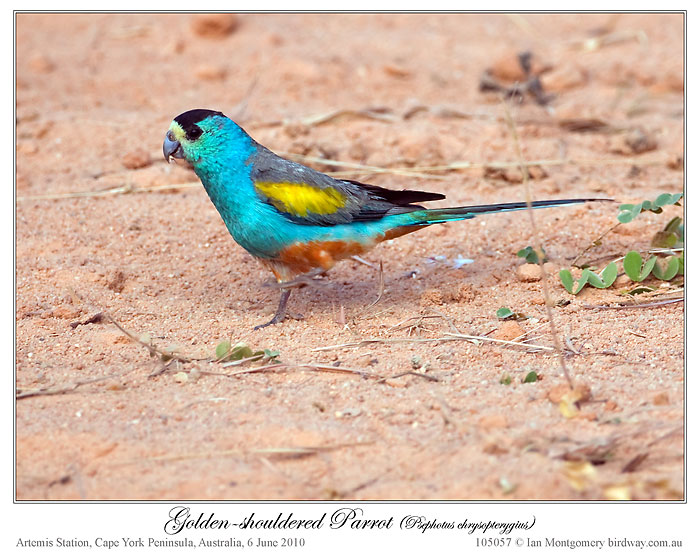
Golden-shouldered Parrot (Psephotus chrysopterygius) by Ian

Golden-shouldered Parrot (Psephotus chrysopterygius) by Ian

Sue Shephard found me a pair of Golden-shouldered Parrots feeding on the roadside and the male was quite approachable, so I’ve included a photo of this amazing parrot.

Back at the website, I’ve been labouring to fix the formatting problems discovered with old versions of Internet Explorer. I’ve fixed the home page and all the new format family index pages and am now updating the actual photo galleries. I’ve started with the galleries birds that appear at the top of the home page as ‘Ian’s Picks’, normally updated weekly, though I’ll leave the current crop for a few days longer.

As part of the reformatting, I’m adding a few refinements. In the family index pages, I’ve included ‘place-holders’ for regional thumbnail links that don’t apply (eg Australian Thumbnails for Woodpeckers) so that the regional thumbnail links always appear in the same location in both the family index pages and the species galleries and I’m including the other applicable regional thumbnail links in the regional index pages so that, for example, you can go straight from the Old World Woodpecker thumbnails to the New World Woodpecker thumbnails without having to go through the Global thumbnails.

I’ve also including the previous and next family pointers (and the names of the families) in the regional index pages so that, again, you don’t have to go to the Global level of thumbnails to get to the next or previous family. This all sounds more complicated that it actually is, so, if you are interested, have a look at the Woodpeckers: http://www.birdway.com.au/picidae/index.htm .

Best wishes,
Ian


Ian Montgomery, Birdway Pty Ltd,
454 Forestry Road, Bluewater, Qld 4818
Phone: +61-7 4751 3115

Preferred Email: ian@birdway.com.au
Website: http://birdway.com.au


Lee’s Addition:

Again, Ian has captured some fantastic photos of the birds. He has such a talent for his photography. Thanks again, Ian.

The Friarbirds are in the Meliphagidae Family of the Passeriformes Order.

The crown of the wise is their riches: but the foolishness of fools is folly. (Proverbs 14:24 KJV)

See also:
Ian’s Bird of the Week – Helmeted Friarbird

*

Montserrat Oriole – The Super Survivor

Montserrat Oriole – The Super Survivor ~ by a j mithra

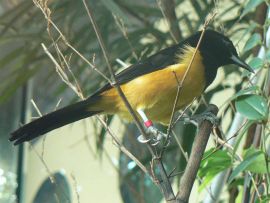
Montserrat Oriole (Icterus oberi) by Wiki

Montserrat Oriole (Icterus oberi) by Wiki

A British led expedition has discovered one of the world’s rarest species of bird surviving yards from the crater of the volcano that devastated the Caribbean island of Montserrat four years ago. Led by a scientist from the Royal Society for the Protection of Birds, the research team found at least 25 pairs of Montserrat Orioles (Icterus oberi) living beneath the rim of the Soufriere Hills volcano.

Since 1997, the birds have remained hidden, marooned by ash in a square-mile patch of forest less than a mile from the crater. They have survived regular showers of volcanic debris and frequently endured rock falls caused by the active crater.

Your life may be marooned by ash and debirs…  People may think that you will not survive and your chapter is over…  But, when you start serving the Lord, He will start everything afresh for you..

No weapon that is formed against thee shall prosper; and every tongue that shall rise against thee in judgment thou shalt condemn. This is the heritage of the servants of the LORD, and their righteousness is of me, saith the LORD. (Isaiah54:17)

This promise from God is not for everyone you know? It is the heritage of the servants of the Lord…

Start serving the Lord and claim the promise of God…

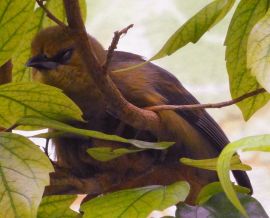
Montserrat Oriole (Icterus oberi) by Wiki female Zoo Frankfurt

Montserrat Oriole (Icterus oberi) by Wiki female Zoo Frankfurt

Chris Bowden, the RSPB biologist who led the expedition, said, “It’s incredible to think that one of the last remaining havens for a bird teetering on the verge of extinction is so close to the crater of an exploding volcano. These birds live near the crater of an exploding volcano, and they still survive..

But, no matter how close you’re from danger, remember that, nothing can harm you when Jesus becomes your refugee…

The fiery fire couldn’t consume even a single hair of Shadrach, Meshach and Abednego, when they were thrown inside the furnace..

When thou passest through the waters, I will be with thee; and through the rivers, they shall not overflow thee: when thou walkest through the fire, thou shalt not be burned; neither shall the flame kindle upon thee. ” (Isaiah 43:2)

The oriole once was found in three main areas: the bamboo forest east of Galways Soufrière, the leeward slopes of the Chances Peak mountain and the Centre Hills (especially the Runaway Ghaut area). The diet of the bird consists mainly of insects and fruits…

If God can provide fruits and insects to these birds which lives near a volcano, will He not take care of your needs?

Remember you, whom God created in His own image are more precious than these birds aren’t you?

Heliconia Caribaea ©Wiki

Heliconia Caribaea ©Wiki

In common with other members of its genus, the Montserrat Oriole expertly weaves a basket nest which is suspended beneath a leaf of a broad leaved plant. More unusual, the Centre Hills population of orioles uses almost exclusively the leaves of Heliconia caribbaea as a nest plant. Appropriately enough, this is the national plant of Montserrat. This preference is a distinct oddity. It is unusual for a bird to be so specialised on one plant species, and the orioles take it even further, as they avoid both young and old leaves, selecting those that are of intermediate age.

The use of Heliconia leaves is convenient for researchers, making nests rather easy to find, but perhaps an imperfect strategy for the birds. Heliconia leaves are vulnerable to falling over in droughts and under ash fall… And how these leaves are able to hold the nest of these birds in spite of being vulnerable to falling over in droughts and under ash fall?

How these birds are able to select leaves of intermediate age, though it is considered as an imperfect strategy?

We have a God who brings everything from nothing…  Human knowledge cannot comprehend His wisdom…

And base things of the world, and things which are despised, hath God chosen, yea, and things which are not, to bring to nought things that are: That no flesh should glory in his presence. (1 Corinthians 1:28,29)

The Montserrat Oriole has a curious relationship with the people of its island home. It is the national bird, and a ubiquitous symbol, seen all over the island in arts, crafts and advertising and is a source of pride and great interest. Yet most Montserratians confess to never having seen one in the wild. Having become Montserrat’s only endemic bird species it has shown a remarkable longevity.

Its ability to withstand the various assaults of volcanic eruptions and hurricanes is undoubtedly one of the reasons for its popularity and it symbolizes the resilience that the people of Montserrat have demonstrated in abundance in recent years.

God has called you to inspire people around you by your presence…

They should see Christ in you and they should say,

… These that have turned the world upside down are come hither also; (Acts 17:6)

Have a blessed day!

Your’s in YESHUA,
a j mithra

Please visit us at: Crosstree


The Montserrat Oriole is part of the Icteridae Family of Oropendolas, Orioles and Blackbirds.
See Also:

Bird of the Month – April 2007

Hovering Hummingbirds by Nature

Below is another amazing video of hummingbirds. This time they are showing their capability to hover.

What an amazing bird that the Lord has created.

The LORD by wisdom hath founded the earth; by understanding hath he established the heavens. (Proverbs 3:19 KJV)

*

Hummingbird Video Making from NATURE

Thought you might enjoy this video that a friend told me about. It is loaded with great shots of hummers. They belong to the Trochilidae Family of the Apodiformes Order. There are over 330 members in the family.

O LORD, how manifold are thy works! in wisdom hast thou made them all: the earth is full of thy riches. (Psalms 104:24 KJV)

*

The Space sharing seed storing Redpoll…

The Space sharing seed storing Redpoll… ~ by a j mithra

Common Rosefinch (Carpodacus erythrinus) by Nikhil Devasar

Common Rosefinch (Carpodacus erythrinus) by Nikhil Devasar

Common Redpolls live year round in open boreal and tundra habitats near the Arctic circle and throughout northern Canada and Alaska. While only the northernmost populations migrate, this species does have periodic irruptions that takes it as far south as northern  Montana, Minnesota, Wisconsin, North Dakota, Michigan, New York and the northern New England states.

Common Redpolls have a similar distribution throughout northern Europe and Asia, and they have also been introduced to New Zealand, where they can be commonly found. Breeds in open subarctic coniferous forest and scrub and avoids dense forests. Winters in open woodland and scrub, weedy fields, and suburban and urban areas. They form flocks throughout the year, and they flock even during the nesting season…

Unlike many small birds, Common Redpolls are not aggressive and easily share space with other small bird species…

Do we flock together as one?

The Bible says,

And if one prevail against him, two shall withstand him; and a threefold cord is not quickly broken (Eccleciastes 4:12)

These birds seem to know the secret of staying together. They not only flock together but also share space with the other small birds…

Do we share the blessings which God has showered upon us? We cannot resemble Christ unless we share like how He shared His everything on the cross..

And whosoever shall give to drink unto one of these little ones a cup of cold water only in the name of a disciple, verily I say unto you, he shall in no wise lose his reward. (Mathew 10:42)

Redpolls have throat pouches for temporarily storing seeds. They may fill their pouches with seeds quickly then fly away to swallow the seeds in a more protected, warmer spot.

Do we fill our hearts everyday with the word of God and store them? The kingdom of God is like a seed? How can we sow, if we have not stored enough seeds in our lives? Do you know that the devil also can quote the word of God to deceive us?

Please read Mathew 4:1-11 to know how Jesus was tempted by the devil and how He spoke the word of God to overcome the devil…

When you are pushed into the dark, the word will give you light..

Thy word is a lamp unto my feet, and a light unto my path. (Psalm119:105)

When you are sick, the word will heal you. He sent his word, and healed them, and delivered them from their destructions. (Psalm 107:20)

Now get filled with His Word for Jesus is the Word…

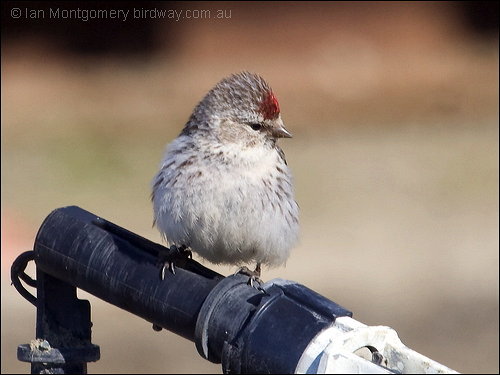
Hoary Redpoll (Carduelis hornemanni) by Ian

Hoary Redpoll (Carduelis hornemanni) by Ian

The Hoary Redpoll has very fluffy body feathers that help it stay warm in extremely cold temperatures. It has feathers on areas of its body that are bare in most other birds. If temperatures get too warm, it may pluck out some of its body feathers. These feathers will grow back in a few days.

God has given each one of a unique identity to show how special we are.. But, sometimes we may have to get rid of our identity to be elevated to a higher place…

Joseph was the overseer of the household of Potiphar, an officer of Pharaoh… But, when his master’s wife held his garment and asked him to lie with her, Joseph left behind his garment got rid of his identity and ran away… That was the turning point and the launching pad which lifted Joseph to become The Prime Minister of Egypt…

Please read Genesis 39:1to13

Redpolls eat their favorite niger seed or sunflower seeds, seeds of trees such as birch, and of grasses and other plants. On their breeding grounds redpolls also feast on the explosion of buzzing insects that emerge, seemingly without respite in the Arctic summer….

Redpolls feed on small branches, often hanging upside down and uses its feet to hold food items….

A Redpoll finch, or (Common Redpoll – carduelis flammea, bearing a ring with Chinese inscriptions has made a “sensational” trip all the way to Sweden.. The bird, a small finch with a red crown and black chin weighing about 10.5 grams (0.37 ounces), was found on December 29 west of  Stockholm, some 6,670 kilometers (4,144.5 miles) from where it was marked in China… While this is the first time a bird marked in China has been found in Sweden, a Redpoll bearing Chinese markings was found in neighboring Norway in 2003 and three birds of the same species marked in Europe have turned up in China.

“This shows that there is some kind of pattern here and that this bird didn’t just happen to fly astray …

If God can take these 10.5 gramme birds as far as 4,114.5miles, will He not carry you to greater heights? When people look at your life they would wonder what kind of pattern did God use, to lift you? Remember, you are much more precious than these birds….

He brought me up also out of an horrible pit, out of the miry clay, and set my feet upon a rock, and established my goings. (Psalm 40:2)

Have a blessed day!

Your’s in YESHUA,
a j mithra

Please visit us at: Crosstree


Redpolls are in the Fringillidae Family of Passeriformes (Song Birds). That family has at present 207 members.

Interesting Things – “Darwin’s Finches” – No Proof of Evolution

SmileyCentral.com

“Darwin’s Finches” – No Proof of Evolution

Genesis 1:21 So God created… every winged bird according to its kind. And God saw that it was good.

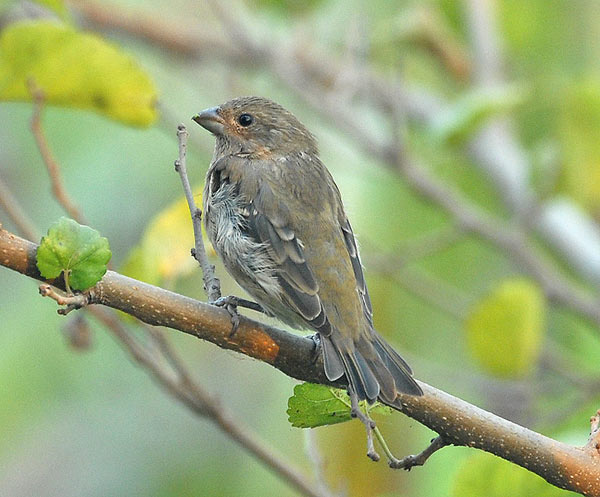
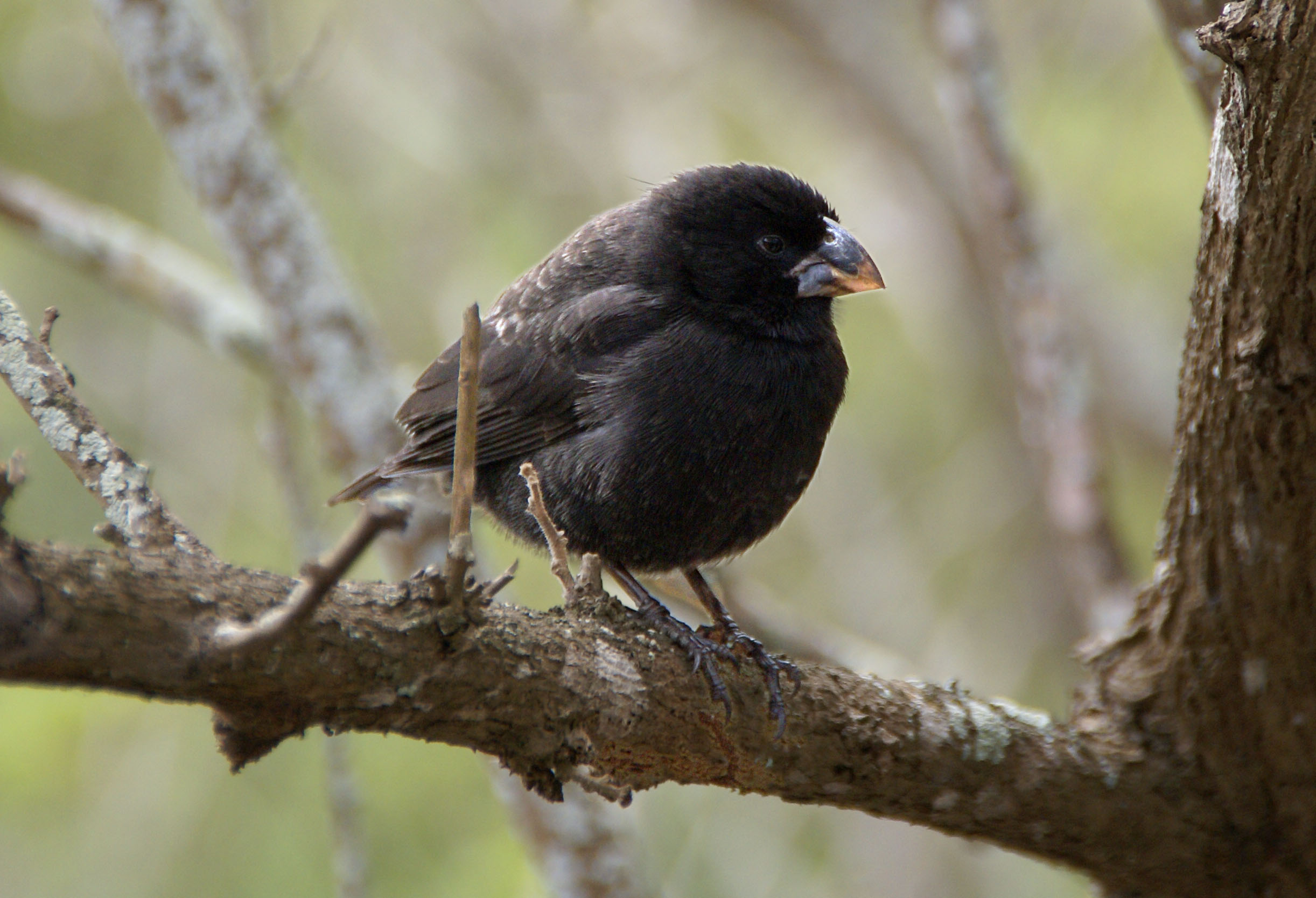
Medium Ground Finch (Geospiza fortis) by ©Wiki

Medium Ground Finch (Geospiza fortis) by ©Wiki

During his visit to the Galapagos Islands, Charles Darwin saw that each island was populated by a little finch. These birds were all very similar; yet, from one island to another there were some differences in the size and shape of the beak. Darwin reasonably concluded that in the distant past a pair of these birds had been blown 600 miles from the mainland and had since multiplied and spread. The environment on each island was slightly different, and the birds had developed specialized beaks to exploit the different food sources. It seemed to Darwin that here was a unique example of evolution in action where 13 different species had arisen from just one mating pair. A species is defined by the ability to reproduce; thus, a sterility barrier separates one species from another. Textbooks use Darwin’s finches to claim that new species have been produced, demonstrating evolution in action. However, the facts are that at least six of these different birds are known to interbreed and thus by definition are not new species at all but simply varieties within a single species. Moreover, DNA studies reveal very little difference between any of these birds, and there is no evidence of new genetic material, which is essential if evolution actually took place. Darwin’s finches offer no support for evolution. However, they do support the Bible when it teaches that, like every other creature, the birds have simply reproduced “after their own kind.” God has so designed His Creation that while it is possible for creatures to adapt perfectly to individual environments, there is still stability of the basic “kind.”

Prayer:
Dear Father, I thank You for Your Word that tells me of salvation. Amen.
Notes:
Creation Matters, (CRS), pp. 5-6, “Quiz.”
Copyright (C) 2010 Creation Moments, Inc


“Darwins Finches” are part of the Tanagers and Allies-Thraupidae Family in the Passeriformes Order.

See also:

Galapagos: Showcase for Creation

*

Birds of the Bible – Cranes II

Sandhill Crane (Grus canadensis) with 2 juveniles by Lee

Sandhill Crane (Grus canadensis) at Lake Ashton by Lee

Last evening we were with our friends at Lake Ashton in Winter Haven, FL and they gave us a tour of the wildlife there. This time of the year there are numerous Sandhill Crane families around. We saw several young Sandhills as we were being shown around. We took some photos and also got video of two adult Sandhill Cranes giving a duet. Thought that sounded like a good topic for this weeks Birds of the Bible.

The crane is mentioned twice in the Bible and one has to do its migration.

Yea, the stork in the heaven knoweth her appointed times; and the turtle and the crane and the swallow observe the time of their coming; but my people know not the judgment of the LORD. (Jeremiah 8:7 KJV)

The second mention of the Crane has to do with its voice.

Like a crane or a swallow, so did I chatter: I did mourn as a dove: mine eyes fail with looking upward: O LORD, I am oppressed; undertake for me. (Isaiah 38:14 KJV)

As you will see and hear by the video I took of the two cranes doing their duet, you can hear a bit of “chatter.”

We are lucky here in Central Florida to see the Sandhill Cranes quite frequently and occasionally a Whooping Crane.

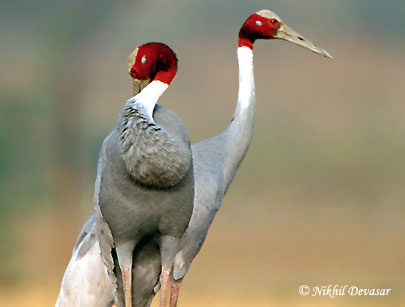
Sarus Crane (Grus antigone) by Nikhil Devasar

Sarus Crane (Grus antigone) by Nikhil Devasar

Around the world there are 15 crane species in the Gruidae Family of the order Gruiformes. The cranes are the Grey Crowned, Black Crowned, Demoiselle, Blue, Wattled, Siberian, Sandhill, Sarus, Brolga, White-naped, Common, Hooded, Whooping, Black-necked, and Red-crowned.

Cranes are large, long-legged and long-necked birds  Unlike the similar-looking but unrelated herons, cranes fly with necks outstretched, not pulled back. Cranes live on all continents except Antarctica and South America.

They are opportunistic feeders that change their diet according to the season and their own nutrient requirements. They eat a range of items from suitably sized small rodents, fish, amphibians, and insects, to grain, berries, and plants.

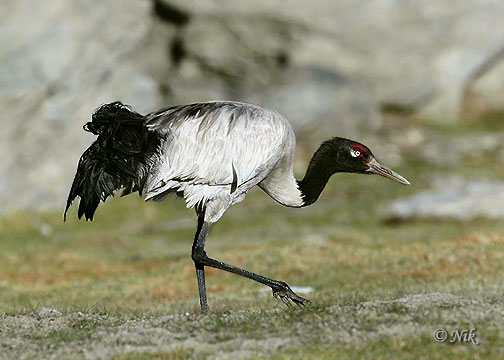
Black-necked Crane (Grus nigricollis) by Nikhil Devasar

Black-necked Crane (Grus nigricollis) by Nikhil Devasar

Most have elaborate and noisy courting displays or “dances”. While folklore often states that cranes mate for life, recent scientific research indicates that these birds do change mates over the course of their lifetimes (Hayes 2005), which may last several decades. Cranes construct platform nests in shallow water, and typically lay two eggs at a time. Both parents help to rear the young, which remain with them until the next breeding season.

Some species and populations of cranes migrate over long distances; others do not migrate at all. Cranes are gregarious, forming large flocks where their numbers are sufficient.

See:

Birds of the Bible – Cranes
Birds of the Bible – Cranes I
Birds of the Bible – Demoiselle Crane
Wordless Birds

*


Louisiana Weeps….

Louisiana Weeps…  – Video by a j mithra

With all the oil that is leaking into the Gulf of Mexico, at this point, Louisiana is taking a direct hit. a j mithra, who lives in India and has seen the destruction of their birds has made the following video. He told me he wept while making the video. Since he is one of our writers, I am posting it here also.

It is hard to watch not only the birds, but all of the wildlife and the people who are being harmed by this oil spill. Our hearts and prayers go out to those whose lives are being so greatly affected. Unfortunately, we are all under the curse and this is just one more example of it. One this is certain, this oil spill did not catch God by surprise.

For I reckon that the sufferings of this present time are not worthy to be compared with the glory which shall be revealed in us. For the earnest expectation of the creature waiteth for the manifestation of the sons of God. For the creature was made subject to vanity, not willingly, but by reason of him who hath subjected the same in hope, Because the creature itself also shall be delivered from the bondage of corruption into the glorious liberty of the children of God. For we know that the whole creation groaneth and travaileth in pain together until now. And not only they, but ourselves also, which have the firstfruits of the Spirit, even we ourselves groan within ourselves, waiting for the adoption, to wit, the redemption of our body. (Romans 8:18-23 KJV)

*

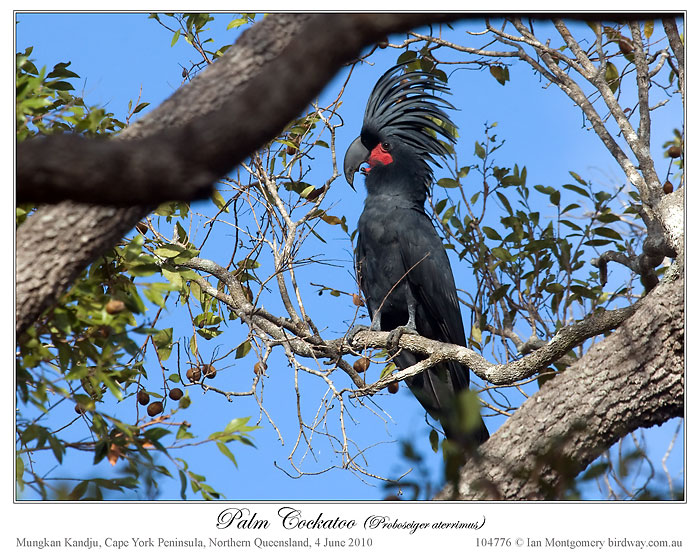
Ian’s Bird of the Week – Palm Cockatoo

Palm Cockatoo (Probosciger aterrimus) by Ian

Palm Cockatoo (Probosciger aterrimus) by Ian Montgomery

Ian’s Bird of the Week – Palm Cockatoo ~ Ian Montgomery

I’ve just returned from Mungkan Kandju National Park between Coen and Weipa on Cape York Peninsula where I took part in the second of a series of Qld Parks and Wildlife surveys to measure the effect of feral animals on the park. It wasn’t all hard work, though, and during one of the surveys I got the opportunity to photograph a couple of Palm Cockatoos, my most ‘wanted’ bird on the Peninsula since I took some poor photos of them in early 2004 and again during the first Mungkan Kandju survey last November.

Palm Cockatoo (Probosciger aterrimus) by Ian

Palm Cockatoo (Probosciger aterrimus) by Ian

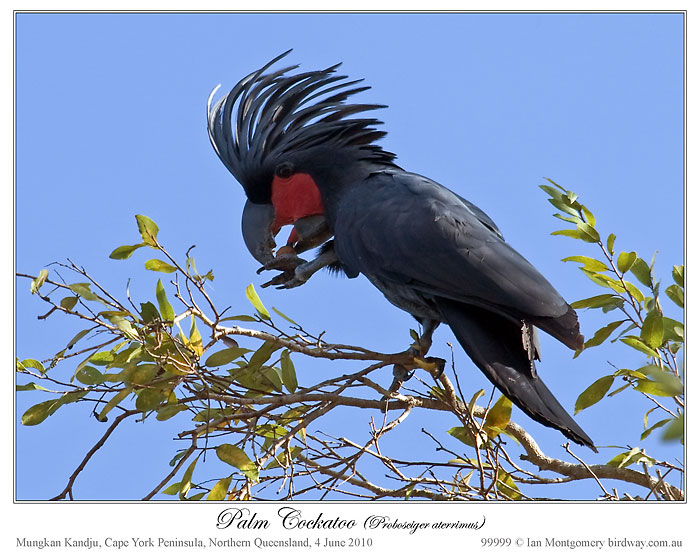
The first two photos show an adult Palm Cockatoo in a fruiting tree (Nonda Plum). Previously I’d found these birds rather shy, but the adult bird was prepared to tolerate me below the tree while it had breakfast. Palm Cockatoos are spectacular birds by any criterion,up to 64cm/24in in length, and unlike some cockatoos are not at all coy about displaying their huge crests. They have massive bills and in the second photo you can see the bird has evolved to be a huge nutcracker with wings. The lower bill is broad to prevent the fruit rolling out sideways while the upper bill has a big notch to hold the fruit in place and is slim and sharp like a blade. The tongue has a pad on the end used to manipulate the fruit, and if that isn’t enough the bird balances casually on one foot to leave the other free to use as a hand.

Palm Cockatoo (Probosciger aterrimus) by Ian

Palm Cockatoo (Probosciger aterrimus) by Ian

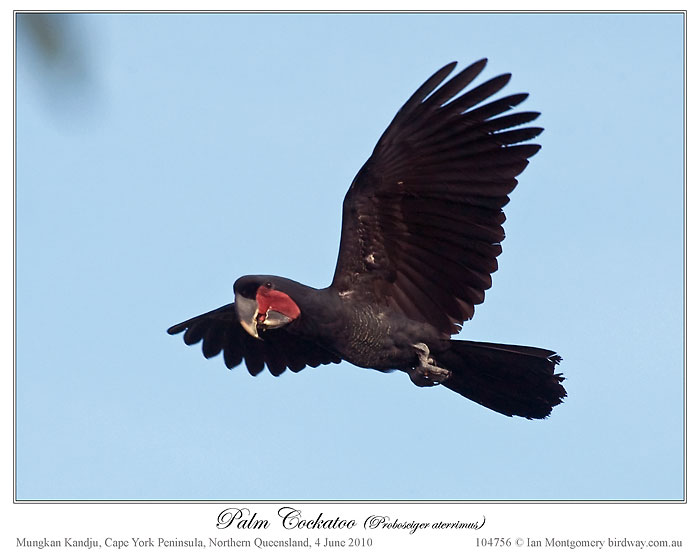
The third photos shows the other bird in flight. This is an immature bird, distinguishable by the barring on the chest, so I suppose that the adult bird was one of its parents. The young bird flew away when we approached and wasn’t seen again, but the adult seemed to think food was more important than parental care. Very young birds have a greyish rather than red face, so this one was old enough to look after itself.

Palm Cockatoos occur in Papua New Guinea and the Aru Islands but in Australia their range is restricted to the northern part of Cape York south to the Archer and Coen Rivers and Princess Charlotte Bay, so Mungkan Kandju is at the southern limit of their distribution. Within this range they are reasonably common on the edges of rainforest and in eucalyptus forest and they call loudly in flight.

I’m just about to post other photos of these birds to the website, so you can check them out at http://www.birdway.com.au/cacatuinae/palm_cockatoo/index.htm .

Best wishes,
Ian

Ian Montgomery, Birdway Pty Ltd,
454 Forestry Road, Bluewater, Qld 4818
Phone: +61-7 4751 3115
Preferred Email: ian@birdway.com.au
Website: http://birdway.com.au


Lee’s Addition:
The Palm Cockatoo is part of the Cockatoos & Allies – Cacatuidae Family in the Psittaciformes Order. This Order includes not only the Cockatoos, but also the New Zealand Parrot (Strigopidae) and Parrot (Psittacidae) families.

What magnificent birds the Lord has created in this Order.  Many of these have been captured and tamed, but is is nice to see these photos of the birds out in the wild.

For every kind of beasts, and of birds, and of serpents, and of things in the sea, is tamed, and hath been tamed of mankind: (James 3:7 KJV)

*

Interesting Things – Birds With a Memory to Envy

Birds With a Memory to Envy

Who provideth for the raven his food? when his young ones cry unto God, they wander for lack of meat. (Job 38:41)

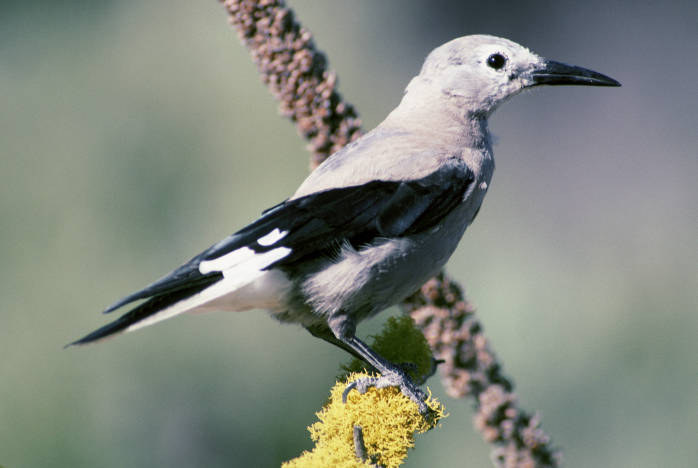
Clark's Nutcracker (Nucifraga columbiana) ©USFWS

Clark's Nutcracker (Nucifraga columbiana) ©USFWS

The shy bird, called Clark’s nutcracker, collects food during the growing season and stores it for the cold winter months. In one year, a bird will store between 22,000 and 33,000 seeds in as many as 2,500 locations, which can be more than ten miles apart. But does the little bird remember where he put all those seeds?

Biologists tracked the activity of Clark’s nutcrackers in the San Francisco Peaks in northern Arizona. A small army of researchers tracked the birds’ seed gathering and storing activities. One of the first things they discovered was that the birds quickly figured out that they were being observed. Some refused to store food when researchers were watching them. Others faked storing seeds when they were watched. Back in the lab, researchers studied the storing activity of Eurasian nutcrackers. After the birds stored seeds in a large sand floor, the birds were removed. Then the seeds they stored were dug up. When the birds were allowed to return, they quickly discovered that their seeds had been stolen, so they refused to store any more seeds. In the end, researchers concluded that the nutcrackers recover as many as two-thirds of their stored seeds within 13 months.

The remarkable memory of these little birds is their gift from God that enables them to be fed all year around.

Prayer: Father, I thank You because You are gracious and generous, not just to the birds, but also to me. Amen.

From Creation Moments©2010 – References: Science News, 2/14: 2004, pp. 103-105, Susan Milius, “Where’d I Put That?”


The Clarke’s and Eurasian Nutcrackers are part of the Corvidae Family of Crows, Jays, and Allies. The Passeriformes Order they are in has at present 123 Families (IOC 2.4).

Wordless Birds

*

The Blue-footed Booby – The Stupid Fellas

The Blue-footed Booby – The stupid fellas  ~  by a j mithra

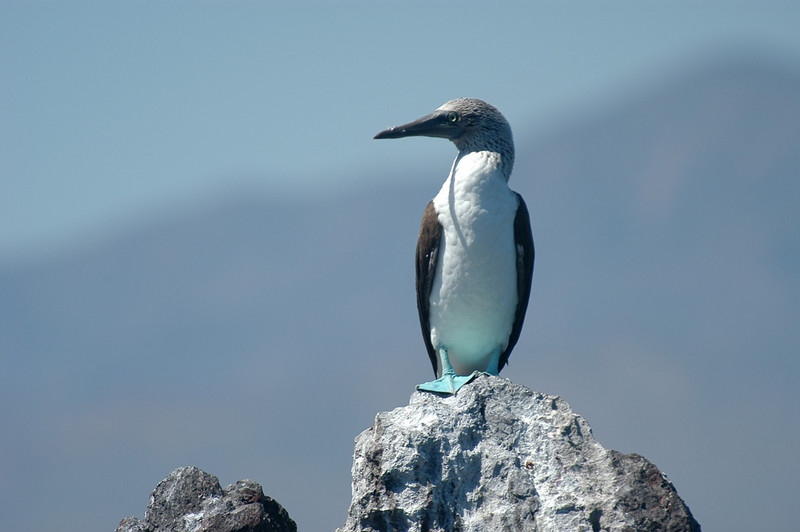
Blue-footed Booby (Sula nebouxii) by Bob-Nan

Blue-footed Booby (Sula nebouxii) by Bob-Nan

The Blue-footed Booby (Sula nebouxii) is a bird in the Sulidae family which comprises species of long-winged sea birds… The natural breeding habitat of the Blue-footed Booby is tropical and subtropical islands off the Pacific Ocean most famously, the Galapagos Ecuador…

Blue-footed Boobies are distributed among the continental coasts of the eastern Pacific to the Galapagos Islands and California…

Blue-footed boobies are possibly one of the world’s most fearless birds! Indeed, lacking any instincts for fear and being quite clumsy on land make them easy prey for other animals. When Spanish settlers first encountered blue-footed boobies, they were amused by how easy it was to hunt these birds…

This is because the Blue-footed Booby is clumsy on the land. To make their point clear, Spanish settlers named this bird “bobo” which means “stupid fellows.”

If people call you “stupid”, just praise the Lord… For, God chooses the fools and the weak instead of the wise and the strong…

But God hath chosen the foolish things of the world to confound the wise; and God hath chosen the weak things of the world to confound the things which are mighty; (1Corinthians 1:27)

The booby’s eyes are placed on either side of their bill and oriented towards the front. They have excellent binocular vision. The Blue-footed Booby has permanently closed nostrils specialized for diving. They breathe through the corners of their mouths. When God created these birds, He knew that they need to dive deep for survival.. That is the reason that He took so much care in placing the eye at the right place and the closed nostrils , so that it does not drown…  Close up of a Blue-Footed Booby

Each one of us are different in size and structure and shortcomings.. But, when God created us, He had a definite plan.. Do you think that God would’ve chosen Moses if he was not stammering? Do you think God would’ve chose Rahab if she was not a harlot?

God changed their shortcomings into their strength to glorify His name… That is because their trust was in God.. If we trust God, He can change our weakness into our strength…

And he said unto me, My grace is sufficient for thee: for my strength is made perfect in weakness. Most gladly therefore will I rather glory in my infirmities, that the power of Christ may rest upon me. (2 Corinthians 12:9)

Blue-footed Booby (Sula nebouxii) by Bob-Nan

Blue-footed Booby (Sula nebouxii) by Bob-Nan

When blue-footed boobies are ready to breed, they carry out many interesting rituals. First, a male blue-footed booby parades around his nest area. The parade is anything but ordinary – just in case a female blue-footed booby fails to notice how attractive he is, the male blue-footed booby raises each of his blue feet in a slow, deliberate stepping motion.  Alternatively, if he is flying over his territory and encounters a potential mate, he flashes his blue feet at her as he lands. These male birds show off their blue feet to attract their female mates..

But, our Lord Jesus Christ turned ugly on the cross to show how much He loves us.. Can you not see His nail-pierced bleeding feet which came in search of us? So many time His presence has hovered over us, but, how much have we felt it?

For he shall grow up before him as a tender plant, and as a root out of a dry ground: he hath no form nor comeliness; and when we shall see him, there is no beauty that we should desire him. (Isaiah 53:2)

Then, both male and female blue-footed boobies point their long beaks toward the sky, tilt their wings around, and give their mating calls. The male blue-footed booby also makes a high-piping whistle noise.

During the courtship, they also pick up small stones or twigs as building materials for their nests, but, strangely, they undo their nests later on just about the time that the female blue-footed booby is ready to lay eggs. They are not a seasonally reproducing species but are opportunistic in their breeding..

The Blue-footed Booby is a monogamous animal although they do have the potential to be bigamous. They reunite at their breeding grounds…

We too are going to unite soon with the Lord…  Jesus is on His way to take His bride and to live with her forever and ever…  Is the bride ready for takeoff?

For now we see through a glass, darkly; but then face to face: now I know in part; but then shall I know even as also I am known. (1 Corinthians 13:12)

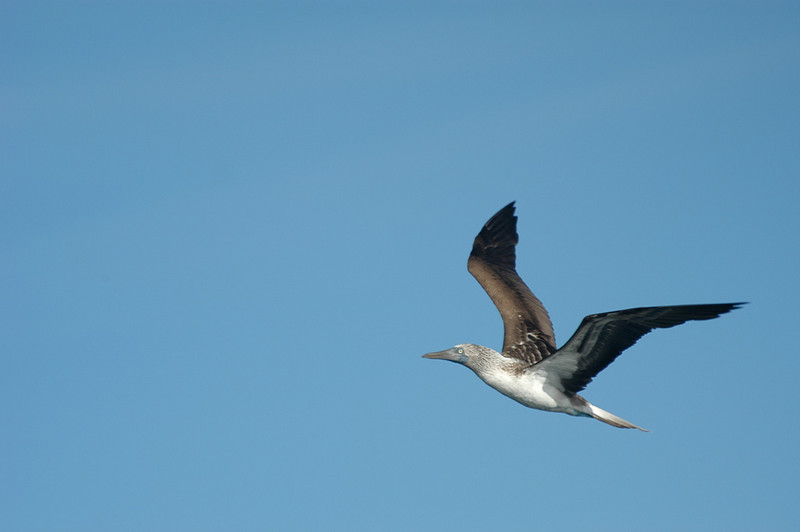
Blue-footed Booby (Sula nebouxii) by Ian

Blue-footed Booby (Sula nebouxii) by Ian

The Blue-footed Booby is strictly a marine bird and their only need for land is to breed, which they do along rocky coasts. They nest on bare black lava in a small dip in the ground. The female will turn to face the sun throughout the day so the nest is surrounded by excretion. The female Blue-footed Booby lays two or three eggs. Both male and female take turns incubating the eggs, while the non-sitting bird keeps a watch.

Since the Blue-footed Booby does not have a brooding patch, a patch of bare skin on the underbelly, it uses its feet to keep the eggs warm. Blue-foots are one of only two species of booby that raise more than one chick.

You may think that you do not have resources, like other to realize your dreams… But, all things are possible with God..

These female birds do not have a brooding patch, but still, they raise chicks with their feet and that too they raise more than one chick…

You may feel that you do not have beauty or talent or riches or influence to make your dreams happen…  When you have Jesus as your everything, nothing is impossible….

And he said, The things which are impossible with men are possible with God. (Luke18:27)

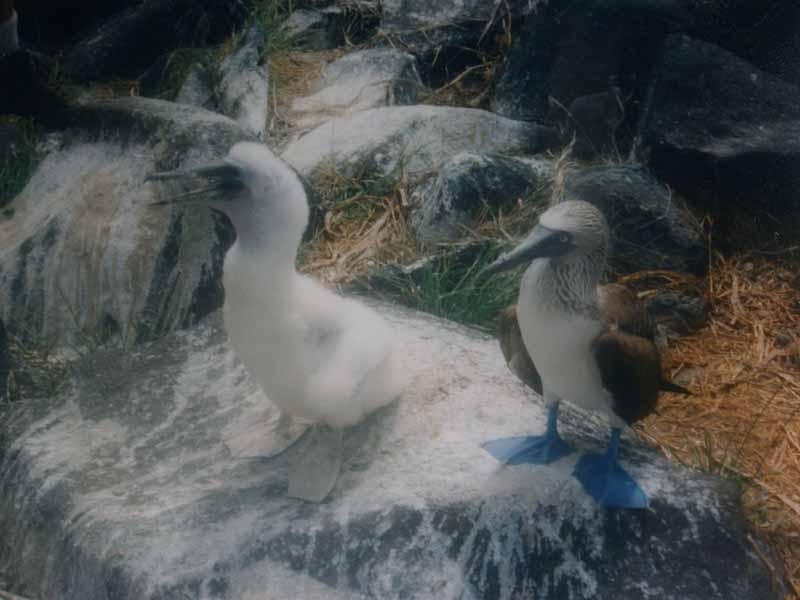
Blue-footed Booby (Sula nebouxii) larger chick by Bob-Nan

Blue-footed Booby (Sula nebouxii) larger chick by Bob-Nan

Blue-foots are one of only two species of booby that raise more than one chick. The males is specialized in diving in shallow waters. They must be fed frequently, so the adults constantly hunt for fish. The chicks feed off the regurgitated fish in the adult’s mouth. If the parent Blue-footed Booby does not have enough food for all of the chicks, it will only feed the biggest chick, ensuring that at least one will survive.

Blue-footed Boobies are specialized fish eaters feeding on school fish like sardines, anchovies, mackerel, flying fish, squid and offal. It dives into the ocean, sometimes from a great height, and swims underwater in pursuit of its prey. It hunts singly, in pairs or in larger flocks. They travel in parties of 12 or so to areas of water with large schools of small fish. When the lead bird sees a fish shoal in the water, it will signal the rest of the group and they will all dive together to catch the fish.

Like these birds, we as believers and church builders need to learn to dive together into the Living water..

These birds signals to the rest of the group when it sees a shoal of fish..

How many of us signal our co-workers when we see a blessing?

Please read 1 Kings Chapter 7, verse from 3…

You will know how God used four lepers to deliver his people from the enemies… How they shared the good news and signaled the others about the blessing which God had kept in store for them…

Surprisingly, individuals do not eat with the hunting group, preferring to eat on their own, usually in the early morning or late afternoon. They will point their bodies down like an arrow and dive into the water. Plunge diving can be done from heights of 33–100 ft and even up to 330 ft (100 m). These birds hit the water around 60 mph (97 km/h) and can go to depths of 82 ft (25 m) below the water surface. The prey is usually eaten while the bird is still under water. Males and females fish differently which could contribute to the reasons that blue foots, unlike other boobies raise more than one young.

The male is smaller and the tail is larger for its body which enables the male to fish in shallow areas instead of just deep waters. The tail can flatten out easier enabling him to change direction in the shallow water. The female is larger and can carry more food. The food is then regurgitated to the young. The males feed the young for the first part of the incubation period. This is done because the males can bring back food quicker than the female. When the demand for more food takes over the female provides the food to the young… These female birds are larger and carry more food…

Even our bridegroom Jesus Christ wants us to do more than what He had done… That is why He says,

Verily, verily, I say unto you, He that believeth on me, the works that I do shall he do also; and greater works than these shall he do; because I go unto my Father. (John 14:12)

Now never ever say that you can’t do this or can’t do that… We have been called to say that I can do all things through Christ that strengthens me, and also to do greater things than what Jesus did…

HALLELUJAH!!!!!!

Have a blessed day!

Your’s in YESHUA,
a j mithra

Please visit us at: Crosstree


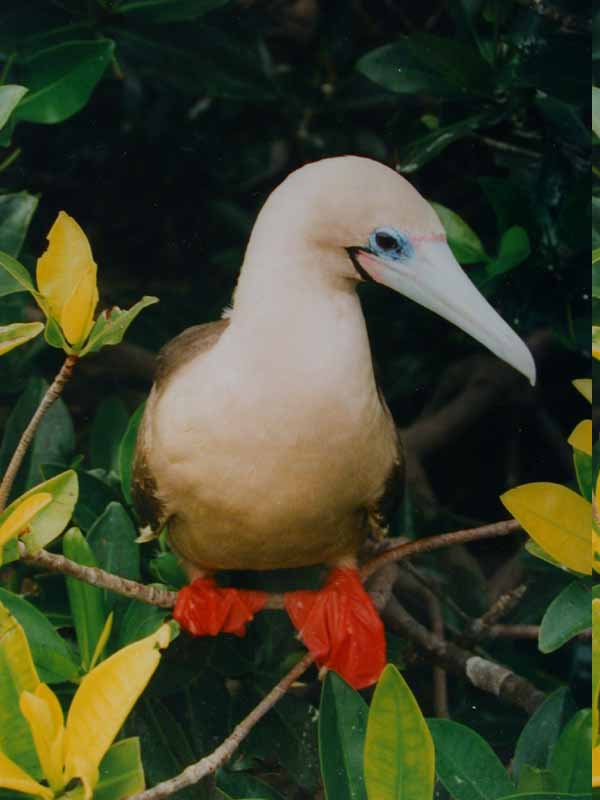
Red-footed Booby (Sula sula) by Bob-Nan

Red-footed Booby (Sula sula) by Bob-Nan

Lee’s Addition:
Boobies are part of the Sulidae Family of Gannets and Bobbies in the Pelicaniformes Order. There are actually 7 Boobies.
Abbott’s Booby
Blue-footed Booby
Brown Booby
Masked Booby
Nazca Booby
Peruvian Booby
Red-footed Booby