Birds of the Bible – Names of Birds

Out of the ground the LORD God formed every beast of the field and every bird of the air, and brought them to Adam to see what he would call them. And whatever Adam called each living creature, that was its name. So Adam gave names to all cattle, to the birds of the air, and to every beast of the field… (Genesis 2:19-20a NKJV)

Common Kingfisher by Phil Kwong

It would be nice to know which birds Adam named and what he named them. Today, the birds we see around the world are variations from those original bird kinds. The names that they now have are different, but, if Adam were to name the birds living today, do you think he might use these current names on the birds?

Below are some bird names that have caught my attention and you can almost visualize something about them:

A  – Amazon, Antbird, Antpitta, Antshrike, Antvireo, Antwren, Apostlebird, Awlbill
B  – Babbler, Bamboowren, Barbtail, Barbthroat, Bare-eye, Barwing, Baywing, Bee-eater, Bellbird, Berryeater, Berrypecker, Bird-of-paradise, Bishop, Blackbird, Blackcap, Blackeye, Black-headed, Blackstart, Blackthroat, Bleeding-heart, Bluebill, Bluewing, Bluebird, Bluebonnet, Bluetail, Bluethroat, Boatbill, Bowerbird, Brilliant, Bristlebill, Bristlebird, Broadbill, Bronzewing, Brushrunner, Bushbird, Bush-hen
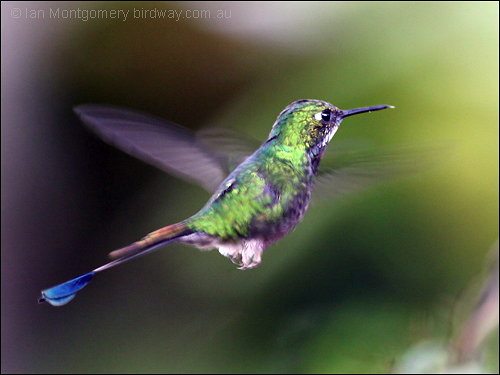
Booted Racket-tail (Ocreatus underwoodii) by Ian

Booted Racket-tail (Ocreatus underwoodii) by Ian

C  – Canvasback, Cardinal, Catbird, Chat, Chatterer, Cicadabird, Comet, Conebill, Cowbird, Creeper, Crestentchest, Crimsonwing, Crossbill, Cuckoo
D  – Darkeye, Darter, Dipper, Dollarbird, Dove
E  – Earthcreeper, Emerald
F  – Fairy, Fairy-bluebird, Fairywren, Fantail, Fieldwren, Figbird, Finfoot, Fireback, Firecrest, Firecrown, Fire-eye, Firefinch, Firetail, Firethroat, Flamecrest, Flatbill, Flicker, Flowerpecker, Flowerpiecer, Flufftail, Flycatcher, Foliage-gleaner, Forktail, Friarbird, Frigatebird, Frogmouth, Fruitcrow, Fruiteater, Fruithunter
G  – Gnatcatcher, Gnatwren, Go-away-bird, Goldcrest, Goldenback, Goldeneye, Goldenthroat, Goldfinch, Grassbird, Grassquit, Grasswren, Greytail, Groundcreeper, Groundpecker, Guineafowl

Carmine BeeEater by Marc at Africaddict

Carmine BeeEater (Merops nubicus or nubicoides) by Marc at Africaddict

H  – Hardhead, Helmetcrest, Helmetshrike, Hermit, Hillstar, Hobby, Honeybird, Honeycreeper, Honeyeater, Honeyguide, Hookbill, Hornbill, Hummingbird
J  – Jewel-babbler, Jewelfront, Junglefowl
K  – Kingbird, Kingfisher, Kite, Knot,
L  – Laughingthrush, Leafbird, Leaftosser, Longbill, Longclaw, Longtail, Lovebird
M  – Marshbird, Metaltail, Mockingbird, Monarch, Morepork, Mountaingem, Mourner, Mousebird, Mudnester
N  – Needletail, Nighthawk, Nunbird, Nutcracker, Nuthatch
O  – Oilbird, Openbill, Ovenbird, Oxpecker, Oystercatcher
P  – Palmchat, Palmcreeper, Pewee, Pilotbird, Pintail, Prickletail, Puffback, Puffbird, Puffleg
R  – Racket-tail, Rail, Razorbill, Recurvebill, Redhead, Redwing, Rockfinch, Rockfowl, Rockjumper, Rockrunner, Rockwarbler, Rockwren, Roller, Rushbird
S  – Sabrewing, Saddleback, Sanderling, Sandgrouse, Sandpiper, Sapphire, Sapphirewing, Sapsucker, Screamer, Screech, Scrubbird, Scrubfowl, Scrubtit, Scrubwren, Secretarybird, Seedcracker, Seedeater, Sheathbill, Shieldbill, Shoebill, Shortwing, Shoveler, Sicklebill, Silktail, Silverbird, Skimmer, Snowcock, Snowfinch, Softtail, Solitaire, Spadebill, Spatuletail, Spiderhunter, Spinebill, Spinetail, Spoonbill, Standardwing, Starfrontlet, Starthroat, Stilt, Stichbird, Straightbill, Streamcreeper, Streamertail, Stubtail, Sugarbird, Sunangel, Sunbeam, Sunbird, Sunbittern, Sungem, Surfbird, Swift
T  – Tailorbird, Tattler, Thicketbird, Thick-knee, Thistletail, Thornbill, Tinkerbird, Trainbearer, Treecreeper, Treehunter, Treepie, Treerunner, Treeswift, Trembler, Triller, Tropicbird, Trumpeter, Tuftedcheek, Tyrant
U  – Umbrellabird
V  – Violetear, Visorbearer
W  – Wagtail, Wallcreeper, Warbler, Waxbill, Waxwing, Weaver, Weebill, Wheatear, Whipbird, Whistler, White-eye, Whiteface, Whitethroat, Whitetip, Widowbird, Winter, Wiretail, Woodcock, Woodcreeper, Woodhen, Woodhaunter, Woodpecker, Woodstar
Y  – Yellowbrow, Yellowhammer, Yellowlegs, Yellowthroat

The slide show has just some of the Passerines (Song Birds) whose names might have been easy. I’ll save the non-Passerines for later. Tried not to use too many colors because that is also for other blogs.

*

This slideshow requires JavaScript.

*


See Also:
Bird Name Challenges
Variation within Created Kinds
Species and Kinds
Explaining Diversity within Created Kinds

*

When I Consider! – Mabbul (Flood)

Rainbow by Mike Bader

Rainbow by Mike Bader

Evidence From the Worldwide Flood

Mabbul

When I Consider!

When I Consider!

Many people claim that Noah’s Flood was just a relatively small local event. Yet God clearly stated in Genesis 6:17 that the coming judgment would be a mighty flood of waters (mabbul mayim). The word for flood (mabbul), used in Genesis 6:17 for the first time, is only used for Noah’s Flood; other floods are denoted by different words in the Bible. The Genesis Flood was the “mabbul,” unique in all history. God not only used a unique and exact word for the worldwide Flood, but also made it clear that the waters covered the highest mountains.

God promised to never send another flood upon the earth. Yet there have been countless local floods throughout history. Either the Genesis Flood was something different, unique, and worldwide–or God is a liar.

Enormous and widespread geologic features around the planet also testify to the global extent of the Flood. From the rapid formation of the Grand Canyon as backed-up waters rushed off the continents…to widespread coal deposits…to over-sized river valleys around the world-it is apparent that this planet was once covered with water.

(The Genesis Record, p 183) – From A Closer Look at the Evidence by Kleiss, November 8.

And the LORD smelled a sweet savour; and the LORD said in his heart, I will not again curse the ground any more for man’s sake; for the imagination of man’s heart is evil from his youth; neither will I again smite any more every thing living, as I have done. (Genesis 8:21 KJV)

Comments – God’s Records

Tree rings from Wikipedia

Tree rings from Wikipedia

“If God can write with the finger of nature the record of the years in trees which He planted, if He can record in the trees the story of the years when there was a drought and make a record of the years when He sent rain on the just and the unjust, it seems reasonable to suppose that He can and will keep a record of the deeds of man whom He created in His own image. Trees may live for millenniums, but eventually they all die and decay. Man will live forever. He does not stay on this earth for long, but he lives somewhere forever and ever.

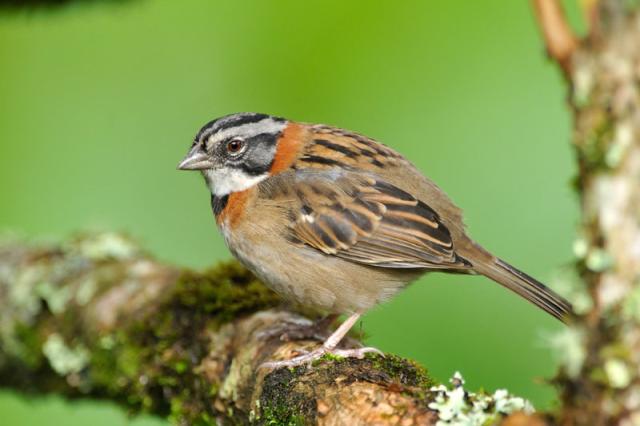
Rufous-collared Sparrow (Zonotrichia capensis) Reinier Munguia

Rufous-collared Sparrow (Zonotrichia capensis) Reinier Munguia

There is a God. He never forgets to keep His records. A bird does not die without His knowledge. ‘He marks the sparrow’s fall.’ The very hairs of our heads are numbered. He hears the cry of every baby. His ears catch the sigh that comes from every broken heart. His recording machine makes an eternal record of every thought. God sees. He knows. Woe be unto the sinner who falls into the hands of an angry God! It is wonderful to be saved. God, infinite as He is, cannot see our sins through the blood of His Son. He sees every Christian as if the Christian never sinned. He has taken us up in His Son. He sees us in Christ. We have all sinned, but if we are save He remembers our sins against us no more forever. As these line have been written there has been a whispered prayer in my heart for all who may read this article.. May you so trust Christ and so write your life record that you will be able to meet God unafraid. Remember, if you are a sinner, Christ bore your sin in His body on a tree. Trust Him. If you are a Christian, Christ is your advocate. He is the attorney who pleads your case. Thank God for such a wonderful lawyer!”

The above article is taken from Comments on Here and Hereafter (1942) by Dr. Bob Jones, Sr., p 34, 35

Are not two sparrows sold for a farthing? and one of them shall not fall on the ground without your Father. But the very hairs of your head are all numbered. Fear ye not therefore, ye are of more value than many sparrows. (Matthew 10:29-31 KJV)

The Gospel Message

When I Consider! – Amazing Stick Insects

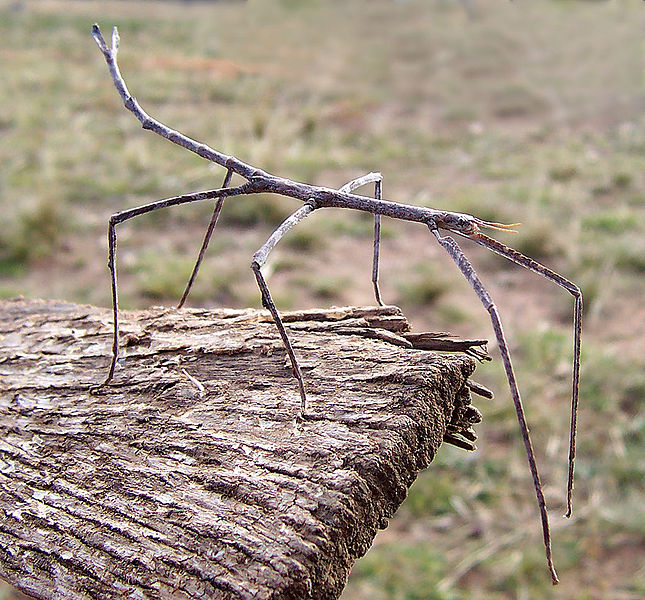
Stick Insect - Ctenomorpha chronus (by Wiki)

Stick Insect - Ctenomorpha chronus (by Wiki)

When I Consider!

When I Consider!

Evidence From Biology

“One of nature’s masters of disguise is the stick insect. Stick insects are leaf eaters designed to look like little twigs. One tropical stick insect is as thick as a finger and the same color as the bamboo on which it is found. It even has swollen ridges just like bamboo! Other types have leafy flaps that match the leaves of the plants which they like to eat. Some stick insects even lay eggs that look exactly like the seeds of the plant on which they feed. A stick insect that’s found in New Mexico glues its eggs to grass stems. The position and shape of their pointed eggs exactly imitate the seeds of the grass!

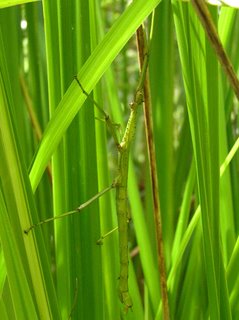
New Zealand Stick Insect - (Landcare Research Manaaki Whenua)

New Zealand Stick Insect - (Landcare Research Manaaki Whenua)

Although stick insects don’t fly, some of them have brightly colored wings that can fold quickly to scare away nervous birds who want to investigate them for lunch. Some stick insects will often sway with the breeze to make their illusion even more effective. Others will sit motionless for hours as if they are just another piece of dead wood.

Stick insects are even geniuses at using their predator’s weakness for their own protection. Birds understand this and will closely examine non-moving twigs in search of a meal. Stick insects will not even move when being carried away by a bird, thus fooling many birds into dropping them. Although these defense mechanisms were likely designed after the Fall, stick insects are clearly not the result of random mutations, but the intelligent design of a Creator.”

(Letting God Create Your Day, Vol 3, p194) – From A Closer Look at the Evidence by Kleiss, February 17.

Give unto the LORD the glory due unto his name; worship the LORD in the beauty of holiness. (Psalms 29:2 KJV)

Birds of the Bible – Birds of the Air

Osprey by Kathleen of Shekinah Photography

Osprey by Kathleen of Shekinah Photography

Kathleen, a Christian photographer, has given permission to use some of her photos on the blog. She also has a blog called the “Birds of the Air.”

Looking into that phrase in e-Sword, the English Standard Version (ESV) shows 21 occurrences of “birds of the air.” Surprisingly most of them have to do with the “birds of the air” showing up to eat the carnage of men as a result of judgment or disease. See Deuteronomy 28:26; I Samuel 17:44, 17:46; Jeremiah 7:33, 15:3, 16:4, 19:7, 34:20. 4:25 and 9:10 speak of the birds of the air fleeing away.

White-backed Vulture (Gyps africanus) by Africaddict

White-backed Vulture (Gyps africanus) by Africaddict

Rizpah spread sackcloth over the bodies of Saul and Jonathan and “And she did not allow the birds of the air to come upon them by day, or the beasts of the field by night” in 2 Samuel 21:10.

Job 28:20,21 says, “From where, then, does wisdom come? And where is the place of understanding? It is hidden from the eyes of all living and concealed from the birds of the air.”

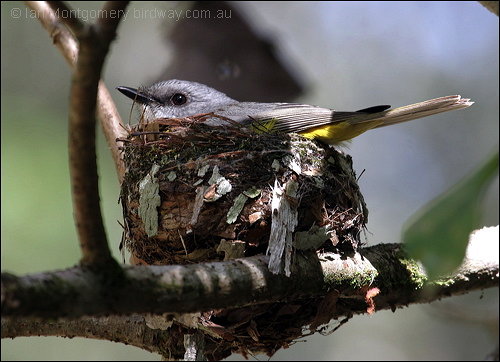
Eastern Yellow Robin (Eopsaltria australis) on nest by Ian

Eastern Yellow Robin (Eopsaltria australis) on nest by Ian

In the New Testament the “birds of the air” is used in different ways. Matthew 6:25 lets us know that the birds of the air “neither sow nor reap nor gather into barns, and yet your heavenly Father feeds them. Are you not of more value than they? “ Matthew 8:20 and Luke 9:58 reminds of that the birds have nest, but the Son of Man has nowhere to lay His head. The parable of the mustard seed in Matthew 13:32, Mark 4:32 and Luke 13:19 tell of the plant growing up and the birds making nests in it and enjoying its shade.

The last references to birds of the air appear in Acts 10:12 and 11:6. Peter had a sheet descend with all kinds of animals, reptiles, and birds in it. This was to teach Peter and others that Jew and Gentile believers alike are equal in God’s sight.

Mr and Mrs Wood Duck by Lee

Mr and Mrs Wood Duck by Lee

What I like about the “birds of the air” is that none of the birds are mentioned by name. That gives lots of future articles for “Bird of the Bible” that can include any of the birds that our Lord has created.

So God created the great sea creatures and every living creature that moves, with which the waters swarm, according to their kinds, and every winged bird according to its kind. And God saw that it was good. (Genesis 1:21 ESV)

The Gospel Message

Placing your mouse over the Green verses will pop them out.

Intelligence of Parrots – by April Lorier

The Intelligence of Parrots

Snickers and Mama

These were two of my birds. The blue one is ‘Mama’ and the red one is ‘Snickers’. When they were alive, I heard opera all day long. Parrots are surprisingly intelligent and have strong personalities. But they were not created in the image of God. Why? Because they do not have the spiritual capacity for a relationship with the Creator of the Universe. Only humans are triune beings: body, soul (mind, will, emotions), and spirit.

Researchers at Purdue University are demonstrating that parrots are capable of intelligent communication. Their carefully designed experiments have convinced even skeptics that the two parrots under study are not just giving conditioned responses. Their results are challenging the accepted scientific knowledge about animal intelligence and the evolutionary claim that intelligence is one of the traits that separate us from animals.

The parrots’ names are Griffin and Alex. Researchers can show Alex two triangles, one red and one green. They ask what’s different about them. Alex will answer, “Color.” When asked what’s similar about them, he will answer, “Shape.” If there is nothing similar, Alex even understands the concept of nothing. Asked what’s similar about the shapes, he will answer, “None.” Researchers say that about five percent of the time someone will mistakenly tell Alex that he has given a wrong answer when he has not. Alex, however, insists that his answer is right until the questioner discovers the mistake. (Funny!)

Both parrots can identify a wide range of objects. Both parrots are even picking up words they have not been systematically taught and are using them correctly. Once, when Griffin was having trouble pronouncing a new word, Alex turned to him and said, “Speak clearly.”

Evolutionists are now having to rethink the idea that intelligence separates us from animals. The fact that we were created in God’s image to have a spiritual relationship with Him is what really separates us from the animals.

References: Discover, 1/00, “Polly Want a PhD?” Creation Moments 2008

2010 Christian Nature

He who instructs the nations, shall He not correct, He who teaches man knowledge? Psalm 94:10

Reprinted with permission of April Lorier

See more of April’s articles.

*

Second Anniversary of Blog

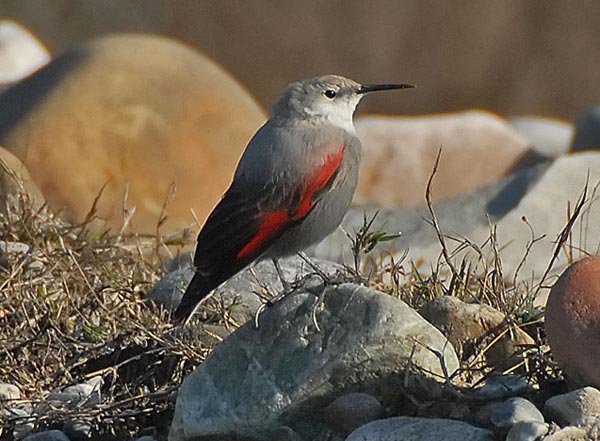
Wallcreeper (Tichodroma muraria) by Nikhil

Wallcreeper (Tichodroma muraria) by Nikhil

The Lord has continued to bless our efforts with this blog. If you read over last years blog, “Happy One Year Anniversary!“, you will see how it began. During this last year there have been more additions. April Lorier gave permission to use some of her articles as did Donna Watkins. Their articles are found in the Guest Authors section. Then Ian Montgomery, one of the photographers we are using, gave permission to turn his Bird of the Week newsletter into a blog series.

Speaking of photographers, the list of their links in the sidebar is growing. I am very thankful for each one of them that has given permission for their photos and videos to be used on the blog. There are now two videographers included in the list. The fantastic work of all of them has greatly enhanced this blog.

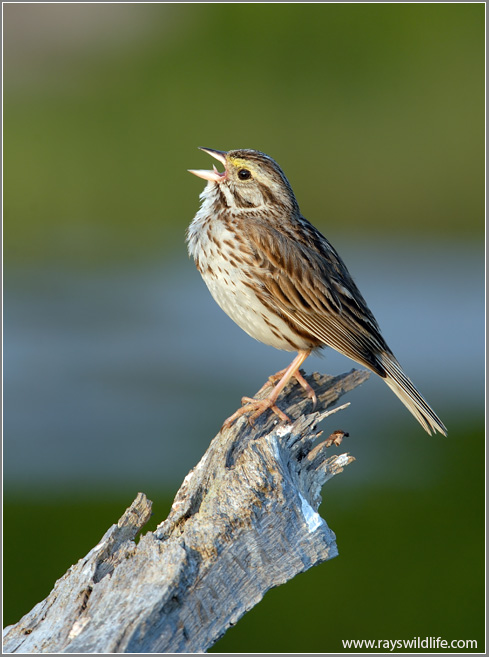
Savannah Sparrow singing by Ray

Of course, Dan and I continue to go out birdwatching, when we can. Those articles are spread throughout. I had started three different blogs, but decided to incorporate them back into Lee’s Birdwatching Adventures Plus, this main blog. The “PLUS Index” contains the Creation articles, “References” contains Nave’s and Torrey’s Topical studies, and “Birds – World” contains the Birds of the World. There are other sections for the Birds in Hymns, Birdwatching, etc. The “Birds of the Bible” articles, which is what started the idea of this blog, are reproduced on the only other blog I maintain. The Birds of the Bible blog only has those articles. I almost stopped it, but readers wanted it to continue. It is doing well and has now had 13,733 pages visited so far. (Stopped it in 2013) This main blog had its 84,000th page visited last night. (Those numbers are for 1.5 years) Thanks to all of you who have visited this site.

Those numbers were not mentioned to boast, but to give credit were it is due. The Lord is the One who gave me the ideas and the ability to do this. He is the One who created all these birds that we get the privilege to write about and show the photos and videos of them doing what He created them to do. Through the internet, these words and photos go to places we would never get to. There, they provide information, encouragement, and blessings to those who view these pages. (At least, that is what the readers tell us.) He, the Lord Jesus, is the One who gets the credit.

O LORD, how manifold are thy works! in wisdom hast thou made them all: the earth is full of thy riches. (Psalms 104:24) I will sing unto the LORD as long as I live: I will sing praise to my God while I have my being. My meditation of him shall be sweet: I will be glad in the LORD. (Psalms 104:33-34 KJV)

Birds of the Bible – Jesus at the Sea

Galilee Shoreline From Above (BiblePlaces.com)

Galilee Shoreline From Above (BiblePlaces.com)

On the same day Jesus went out of the house and sat by the sea. (Matthew 13:1 NKJV)

While working on another article this week, I found and used the above verse, but the thought of it intrigued me. Many of us like to sit by the sea shore and observe what is going on. What did Jesus see as far as birds as He sat there? I decided to investigate it more and here is some of the information discovered.

The commentaries provided these thoughts about that day.

“By the sea-side. The sea-shore is that of the Sea of Galilee, probably near Capernaum, at the northwest corner of the lake.” (People’s New Testament)

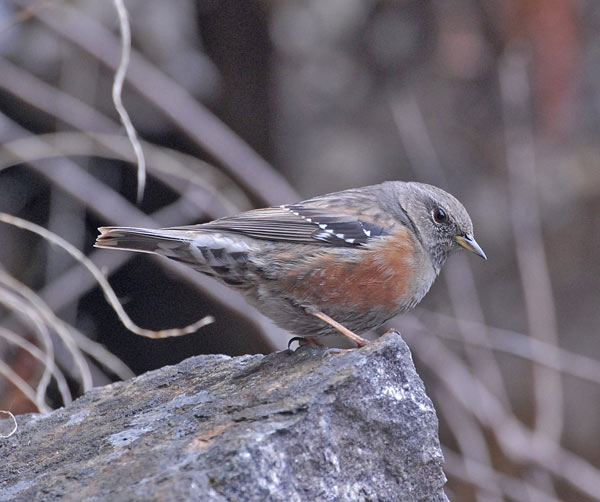
Alpine Accentor (Prunella collaris) by Nikhil Devasar

Alpine Accentor (Prunella collaris) by Nikhil Devasar

“Sat by the seaside … Jesus came out of the stuffy house and took his seat …along the shore with the crowds stretched up and down, a picturesque scene.” (Robertson’s Word Pictures)

“The sea-side – This was the Sea of Tiberias. The multitude stood on the shore near to him, so that he could be easily heard. He went into a ship – that is, a boat; and sat down to address them. Few spectacles could be more interesting than a vast crowd on the hanks of a smooth and tranquil sea – an emblem of his instructions – and the Son of God addressing them on the great interests of eternity.” (Albert Barnes’ Notes on The Bible)

“Went Jesus out of the house – This was the house of Peter. See Matt 17:24.
Sat by the sea side – The sea of Galilee, on the borders of which the city of Capernaum was situated.” (Adam Clark’s Commentary on the Bible)

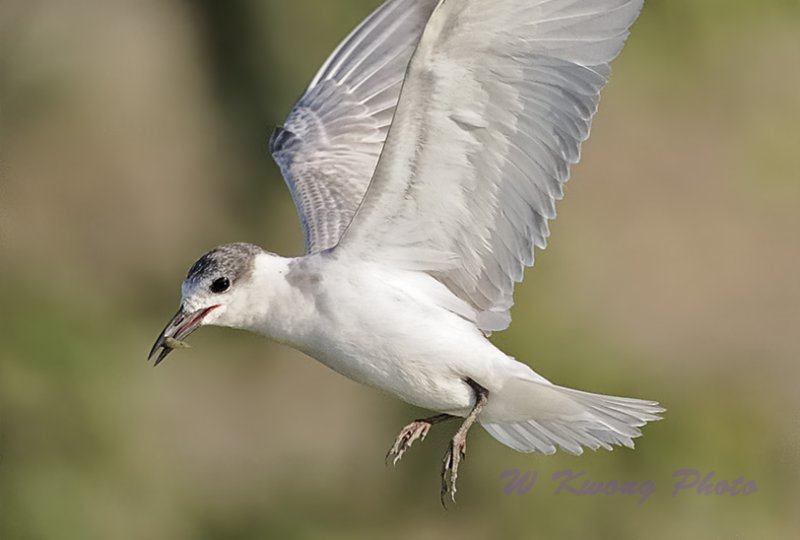
Whiskered Tern (Chlidonias hybrida) by W Kwong

Whiskered Tern (Chlidonias hybrida) by W Kwong

“Mat 13:1  The same day Jesus went out of the house,…. Where he had been preaching, and working miracles: where this house was, is not certain; it seems to have been in one of the cities of Galilee, probably Capernaum, since that was by the sea coast: the reason of his going out of the house was, either to converse with his mother and brethren, as they desired; or to withdraw himself from company, and take some refreshment by the sea side; or because it would not hold the people, and therefore he quitted it for a more convenient place. The time he went out of it, was the same day he had cast the devil out of the man blind and dumb, and had delivered himself so freely concerning the Scribes and Pharisees, who had blasphemously ascribed that miracle to the assistance of Satan; and the same day his mother and brethren came to see him, and speak to him.

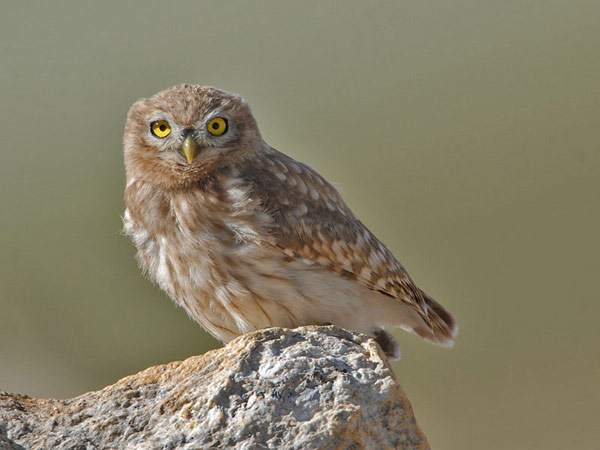
Little Owl (Athene noctua) by Nikhil Devasar

Little Owl (Athene noctua) by Nikhil Devasar

And sat by the sea side; either as weary, and for his refreshment, or in order to preach to the people; for, Mark says, “he began again to teach by the sea side”, Mark 4:1. This was the sea of Galilee, sometimes called the sea of Tiberias.” (Gill’s Exposition of the Entire Bible).

“3. Where he preached this sermon.
(1.) His meeting-place was the sea-side. He went out of the house (because there was no room for the auditory) into the open air. It was pity but such a Preacher should have had the most spacious, sumptuous, and convenient place to preach in, that could be devised, like one of the Roman theatres; but he was now in his state of humiliation, and in this, as in other things, he denied himself the honours due to him; as he had not a house of his own to live in, so he had not a chapel of his own to preach in. By this he teaches us in the external circumstances of worship not to covet that which is stately, but to make the best of the conveniences which God in his providence allots to us. When Christ was born, he was crowded into the stable, and now to the sea-side, upon the strand, where all persons might come to him with freedom. He that was truth itself sought no corners (no adyta), as the pagan mysteries did. Wisdom crieth without, Proverbs 1:20; John 13:20.” (Matthew Henry Commentary)

Another verse states:

But Jesus withdrew with His disciples to the sea. And a great multitude from Galilee followed Him, and from Judea (Mark 3:7 NKJV)

Wallcreeper (Tichodroma muraria) by Nikhil

Wallcreeper (Tichodroma muraria) by Nikhil

Withdrew

Mark alone notes no less than eleven occasions on which Jesus retired from his work, in order to escape his enemies or to pray in solitude, for rest, or for private conference with his disciples. See Mark 1:12; Mark 3:7; 6:31, 6:46;  7:24,  7:31;  9:2;  10:1;  14:34.” (Vincent’s Word Studies)

“Mar 3:7  But Jesus withdrew himself with his disciples to the sea,…. Knowing their evil designs against him, he departed out of the synagogue, and city of Capernaum; and taking his disciples with him, he went to the shore of the sea of Galilee; not out of fear, but because his time was not yet come, and he had more work to do:” (Gill’s Exposition)

From the above you can see what was going on, but I wanted to know what birds Jesus might have seen. Again, I couldn’t find a list for just this area, but here is some of what is there now.

“Israel is a bird-watcher’s paradise, with some of the best bird-watching sites in the world. Although it is one of the smallest countries in the world, Israel’s Checklist of Birds includes 494 species. Just for comparison, the checklists of the world’s two largest countries, Russia and Canada, have 697 and 625 species, respectively. The checklist for the Lower 48 States of the US numbers 908 species – just under twice the size of Israel’s – but then we’re talking about an area 386 times larger than Israel! The bottom line is this: in just a couple of hours, you can spot a wider variety of birds here than almost anywhere in the world. The bird-watching season in Israel begins in late August and ends in early June. There are birds that spend the winter here, birds that are only here for the summer, birds that pass through during the spring and fall migration seasons, and birds that can be found here all year round.” (Sing Israel)

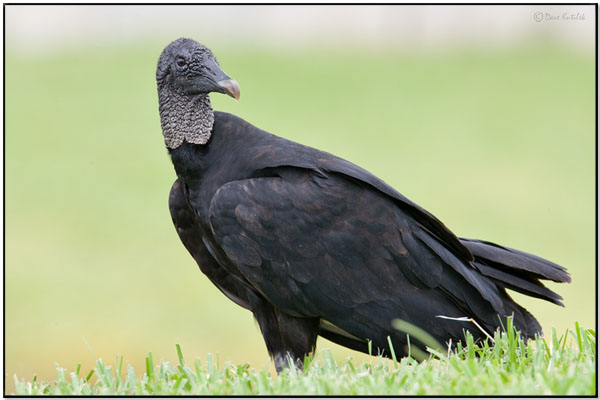
Black Vulture (Coragyps atratus) by Daves BirdingPix

Black Vulture (Coragyps atratus) by Daves BirdingPix

“Leaving the 2,000 meter-high and often snow-capped peak of Mount Hermon and heading south along the volcanic plateau of the Golan, spectacular views of the Sea of Galilee provide a stunning backdrop to search for Black Vulture. Also known as Lake Tiberias, the Sea of Galilee is a vast freshwater lake harboring impressive numbers of wintering Grebes, Pygmy Cormorant, breeding Squacco Heron and a spectacular winter concentration of Whiskered Tern. The surrounding hillsides are full of birds, including Eagle Owl, Little Swift and Long-billed Pipit throughout the year. Patient scanning of the steep-sided wadis in winter may well produce a major prize in the form of a Wallcreeper.” (goisrael.com)

“Sea of Galilee

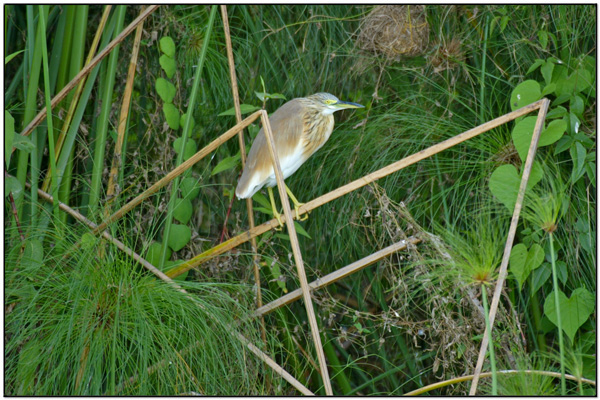
Squacco Heron (Ardeola ralloides) by Daves BirdingPix

Squacco Heron (Ardeola ralloides) by Daves BirdingPix

South of the Hula Valley lies the famous Sea of Galilee (a.k.a. Lake Tiberias). Owing to its size it has in the past been difficult to see offshore birds there. How ever, it has become a regular site for Pygmy Cormorant, Great Blackheaded and Armenian Gulls. A marsh holds in the northern section of the lake that has good numbers of Squacco Heron, a winter concentration of Whiskered Tern, and breeding Clamorous Reed Warbler. The tamarisk trees harbour a colony of Dead Sea Sparrows. The surrounding hills are good for the elusive Longbilled Pipit. Wadi Amud, to the northwest of the lake, is one of the best known sites for this species and also for the endangered Lesser Kestrel, as well as Eagle Owl, Little Swift, Syrian Woodpecker and good numbers of RockSparrow . The cliff:” of Mt. Arbel, west of the lake, are also good for Longbilled Pipit and a regular winter haunt of Wallcreeper, where several individuals may be seen together. Alpine Accentor is an occasional winter visitor and Radde’s Accentor has been recorded consorting with this species, along with the more regular Dunnock.

See Also:
What’s Special About the Sea of Galilee? by Dr. Donald DeYoung
Sea of Galilee – BiblePlaces.com
Capernaum
List of Birds of Israel

*

Wallcreeper (Tichodroma muraria) by Nikhil

Birds of the Bible – Sunbittern

Sunbittern (Eurypyga helias) by Lee at Lowry Park Zoo 2-4-10

Sunbittern (Eurypyga helias) by Lee at Lowry Park Zoo 2-4-10

Let them praise the name of the LORD: for his name alone is excellent; his glory is above the earth and heaven. (Psalms 148:13 KJV)

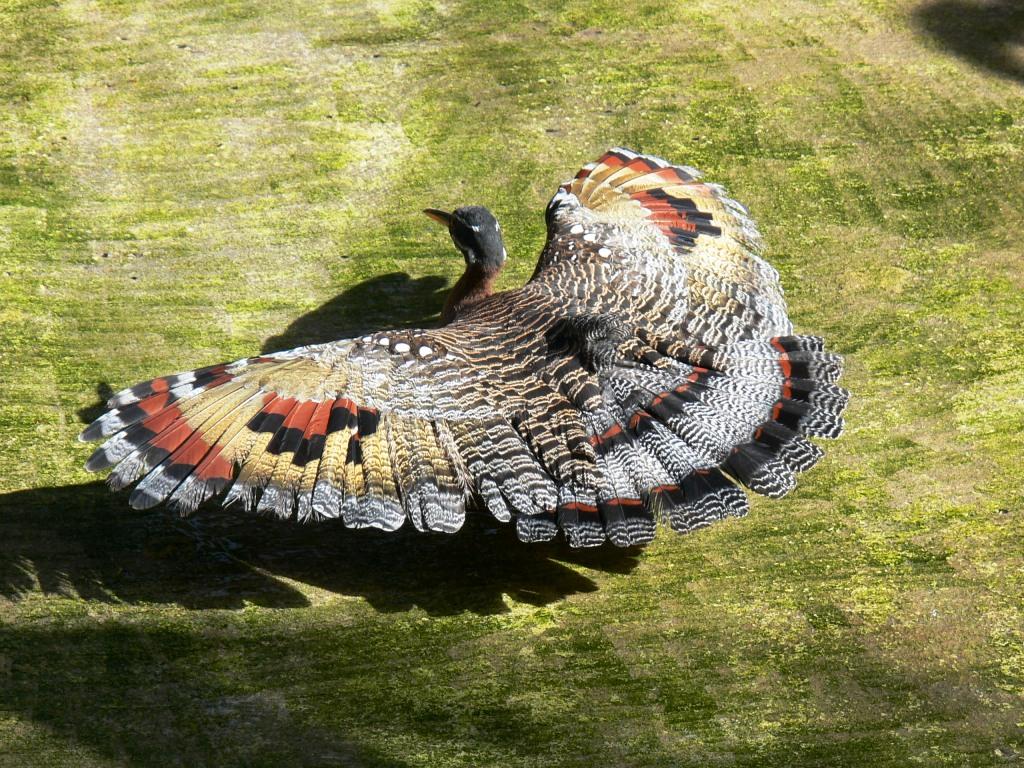
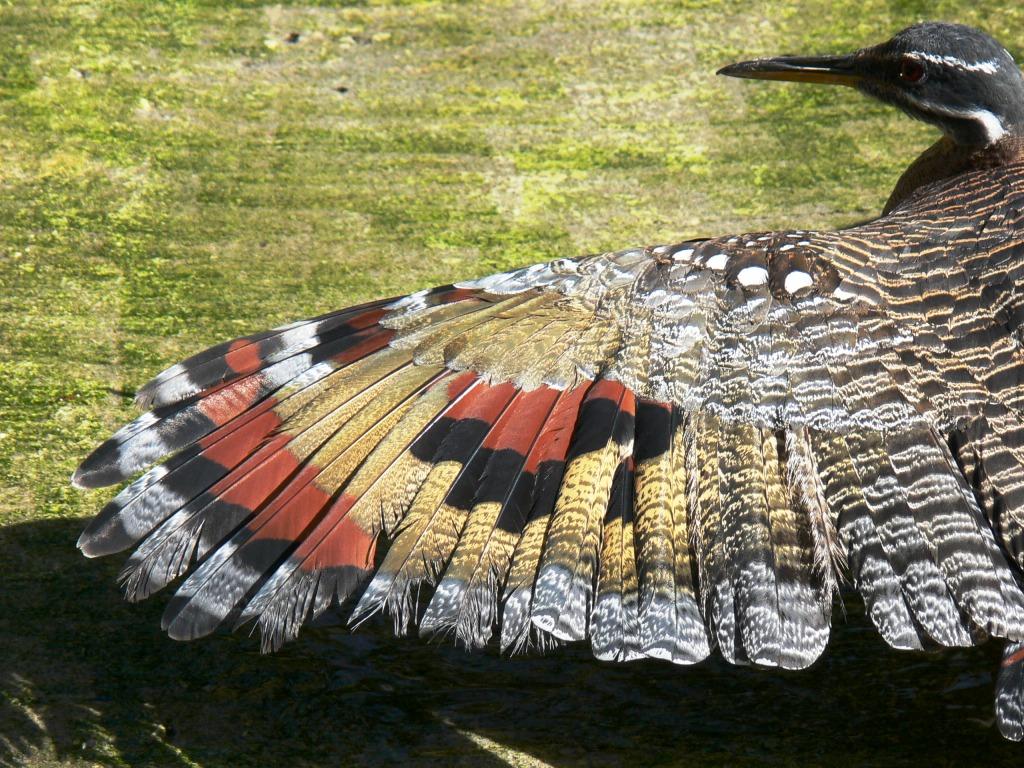
Today, Dan and I went to the Lowry Park Zoo in Tampa, Florida. I was thrilled to see some of the birds in person that I have been entering into the Birds of the World section. This Sunbittern caught my attention when he spread its wings out into the beautiful display shown below. I could not but think of the Lord’s magnificent creative power, details, and love that He gave His creatures. No, this bird is not specifically named in the Bible, but God’s Glory sure is.

Sunbittern (Eurypyga helias) by Lee at Lowry Park Zoo

Sunbittern (Eurypyga helias) by Lee at Lowry Park Zoo

The Sunbittern is similar to a heron or bittern because it has a long straight pointed bill, long legs and a thin neck, but it is in the Eurypygidae family of the Eurypygiformes Order. Most likely they are of the same “kind”, but they like to separate them and then declare “convergent evolution” caused them to develop the “same but different.” They totally deny creation by our Creator God.

They are 17-19 inches (43-48 cm) and have “soft, lax flight feathers, which account for the species being almost silent in flight.” (Bird the Definitive Guide, p.208) They make their nests with leaves, grass, mud and she usually lays 2 eggs. Both parents feed the chicks. “Remarkably, the young molt directly into adult plumage, while still in the nest, which is extremely unusual…” They leave in 3-4 weeks. The wings are spread for displaying (to win their sweetheart’s attention) or for defense (to make them look larger), but the Lord also lets them spread their wings so we can enjoy them and behold His Creative designs.

O LORD, how manifold are thy works! in wisdom hast thou made them all: the earth is full of thy riches. (Psalms 104:24 KJV)

Sunbittern (Eurypyga helias) Left Wing by Lee at Lowry Park Zoo

Sunbittern (Eurypyga helias) Left Wing by Lee at Lowry Park Zoo

All photos can be clicked-on to enlarge.

Interesting Things – Cruel God of Evolution

Thinking

For as in Adam all die, even so in Christ all shall be made alive. (1 Corinthians 15:22 NKJV)

Today’s Creation Moments:

Some people think that they can believe in Jesus Christ as their Savior and at the same time believe God created through evolution. These people are called theistic evolutionists or progressive creationists. What kind of nature would a god have who creates through the death that is essential to evolution?

First, death would have to have begun from the very moment of creation. Death, disease, pain and suffering would have had to originate with this god. Long before man, according to evolution, dinosaurs were eating other dinosaurs, and entire species were dying out. Rather than loving us, such a god would be indifferent and capricious. The god that would use evolution to make living things would have no right to punish sin. He would have had no right to bring a worldwide Flood to punish sinful man. This kind of god would be nothing more than a bully. Such a god would not be likely to have given us his word. And nothing the Bible says about him could be true. If the Bible really is from him, it is full of untrue claims. Any god who created using evolution is not the God of the Bible. If you think about it, the god of evolution sounds surprisingly like the devil.

What’s wrong with believing that God created through evolution over millions of years? Any god that uses evolution and death to make us is extremely cruel. More importantly, if there was no first Adam to bring sin and death into the world, there was no need for Christ, Whom the Bible calls the last Adam, to die and save us from sin and death.

Prayer: I rejoice, dear Father, because you are gracious and merciful to me. Amen.

References: Creation, 9-11/99. pp. 42-45, “The god of an old Earth.”

Birds of the Bible – Vulture Eyesight

Turkey Vulture at Circle B by Lee

Black Vulture (New World Vulture) at Circle B by Lee

In the first Birds of the Bible – Vulture the fact that the vulture was on the “unclean list” and possible why they were on that list. Now, I would like to explore another verse:

There is a path which no fowl knoweth, and which the vulture’s eye hath not seen: (Job 28:7 KJV)

This is found in a passage that is talking about finding gold and silver underground, as in mining underground. In the darkness, no matter how superb their eyes are, they are ineffective in darkness.

We know that the Lord created everything and what amazing capabilities the eye has.

The hearing ear, and the seeing eye, the LORD hath made even both of them. (Proverbs 20:12 KJV)

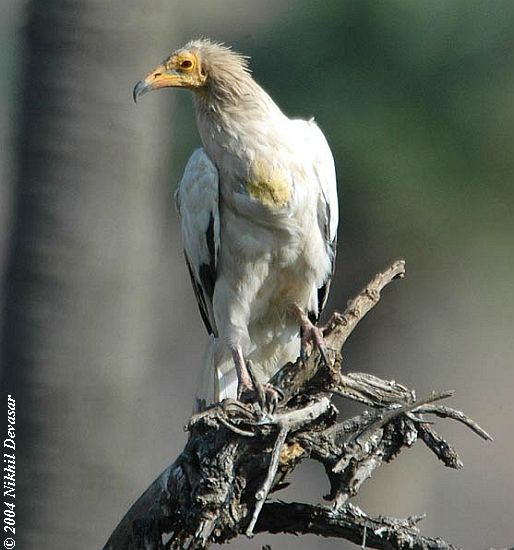
Egyptian Vulture (Neophron percnopterus) by Nikhil

Egyptian Vulture (Neophron percnopterus) {Old World} by Nikhil

“The vulture has a very keen eye, and, like the eagle, can see what is on the ground, even when it is very high in the air. This is referred to in the book of Job. “There is a path which no fowl knoweth, and which the vulture’s eye hath not seen.” It often happens in those countries that almost as soon as an ox, or a horse, or any other large animal has been killed, great multitudes of vultures will gather around, though not one could be seen in the sky before. they seem to fly down from every part of the heavens, and begin to pull and struggle for the flesh of the animal; until in the course of a few hours nothing is left but the bones. We read in Isaiah, “There shall the vultures be gathered, every one with her mate.” This must have been written by one who had seen these birds coming together, as they do in great flocks or companies.” (From The Vulture, Bible Study Tools)

“Vultures have keen eyesight. It is believed they are able to spot a three-foot carcass from four miles away on the open plains. In some species, when an individual sees a carcass it begins to circle above it. This draws the attention of other vultures that then join in.” (From Animals Vulture)

Old World Vultures (Accipitridae) unlike the New World Vultures (Cathartidae), do not have agood sense of smell and therefore do find their carcasses by sight or watching other birds to see what they are doing and have found to eat. Some of the species eat collectively while others use “kleptoparasitism” (stealing from others).

The Lord has created all the birds and has given them fantastic abilities that let them adapt to their role (carrion eaters) He has made for them. How well do we adapt to the ministries or jobs we have to do, even if it is only “taking out the trash?”

Whatsoever thy hand findeth to do, do it with thy might; for there is no work, nor device, nor knowledge, nor wisdom, in the grave, whither thou goest.  (Ecclesiastes 9:10 KJV)

See also:
Vulture Pages

Birds of the Bible – Johannesburg, South Africa

Since I have written about the Birds of the Bible that our missionaries in Niami, Niger, WA and Paraiba, Brazil, it is now time to see what our missionary down in Johannesburg, SA might possible see.

Checking the internet for the birds in that area, I was able to get a list of sorts. Since all birds were created by the Lord, I decided to show more than just the named ones.

So God created the great sea creatures and every living creature that moves, with which the waters swarm, according to their kinds, and every winged bird according to its kind. And God saw that it was good. And God blessed them, saying, “Be fruitful and multiply and fill the waters in the seas, and let birds multiply on the earth.” And there was evening and there was morning, the fifth day. (Genesis 1:21-23 ESV)

So they have been multiplying and here are some of those in the Johannesburg area.

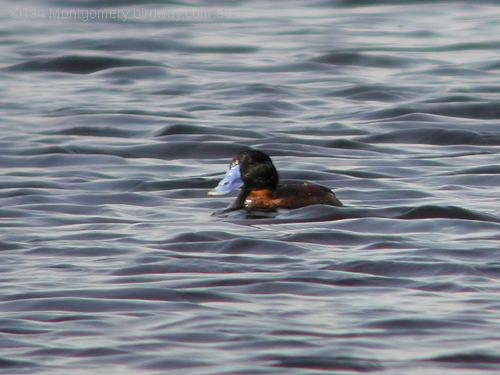
Maccoa Duck (Oxyura maccoa) by Ian

Maccoa Duck (Oxyura maccoa) by Ian

Con Joubert Bird Park
The Con Joubert Bird Park can be found on Desert Road in residential Randfontein and contains a permanent pan with a good bird hide. One can walk around the pan on the inside of the perimeter fence (1/2hr). Species to be seen include, Maccoa Duck, Black-necked Grebe, Little Grebe, Cape Shoveler, African Purple Swamphen, Red-knobbed Coot and Common Moorhen. Lesser Swamp-Warbler, African Reed-Warbler and African Reed-Warbler may be seen in the reedbeds and sometimes Ruff, Wood Sandpiper and Little Stint occur in summer.


Northern Farm (Diepsloot)
This nature reserve is one of Johannesburg’s best kept secrets, with over 300 recorded species.

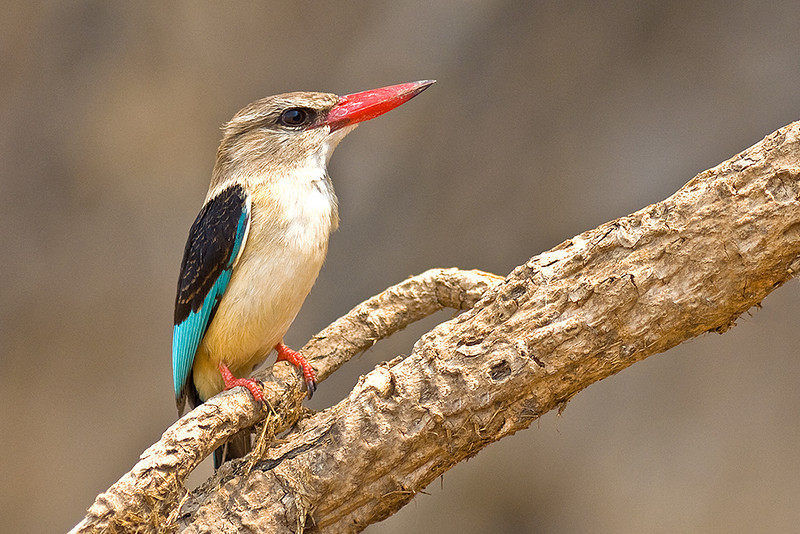
Brown-hooded Kingfisher (Halcyon albiventris) by Africaddict

Brown-hooded Kingfisher (Halcyon albiventris) by Africaddict

Yellow Wagtail, Goliath Heron, Little Bittern, Cape Longclaw, Red-capped Lark, African Fish-Eagle, African Goshawk, Osprey, African Purple Swamphen, Green-backed Heron, African Black Duck, Black-winged Pratincole and African Spoonbill. African Snipe, Red-chested Flufftail, Bar-throated Apalis, Lesser Striped Swallow, Black Crake, Chestnut-backed Sparrowlark, Maccoa Duck, Cape Shoveler and Southern Pochard are found as well. There are several other species that are hard to find in urban Johannesburg like the Orange-breasted Waxbill. Giant Kingfisher, Pied Kingfisher, Malachite Kingfisher and Brown-hooded Kingfisher are also resident in the reserve. The summer migrants also include Sedge Warbler, Great Reed-Warbler, African Reed-Warbler, Amur Falcon and Steppe Buzzard. White Stork are also seen over wintering in the reserve too.


Korsman Bird Sanctuary

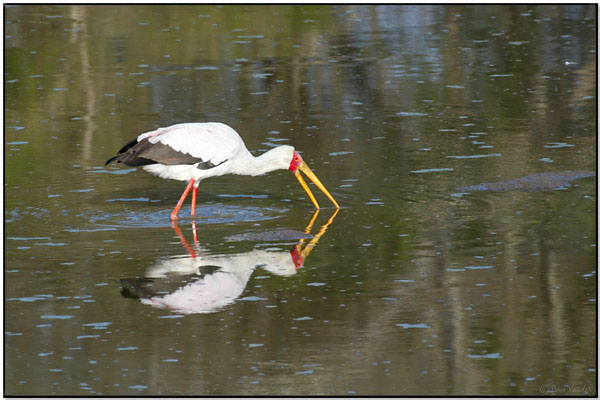
Yellow-billed Stork (Mycteria ibis) by Daves BirdingPix

Yellow-billed Stork (Mycteria ibis) by Daves BirdingPix

This sanctuary is often prolific with a variety of waterfowl. The hides are no longer accessible, but good views are available from “The Drive”, a 2km circular road which surrounds the pan. A spotting scope is recommended, as the area is fenced. Notable visitors are Black Heron, Greater Flamingo, Lesser Flamingo and Great Crested Grebe. There are several active heronries with Goliath Heron, African Spoonbill, Black-headed Heron, Grey Heron, Great Egret, Reed Cormorant and Little Bittern. The reedbeds and their edges should be actively searched for African Purple Swamphen, Black Crake, African Rail, Little Bittern and roosting Black-crowned Night-Heron. The open stretches of the pan almost always have Spur-winged Goose, Red-billed Teal, and numbers of Egyptian Goose and Yellow-billed Duck. A central island supports a colony of White-breasted Cormorant. The shore edges often hide Glossy Ibis, Hadeda Ibis and African Sacred Ibis. Black-winged Stilt and Pied Avocet are regulars and during the wader migration there are sometimes irregular visits from Wood Sandpiper, Common Sandpiper and Eurasian Curlew sandpiper. Spotted Thick-knee hide in the surrounding grasslands.


Florence Bloom bird Sanctuary
Florence Bloom Bird Sanctuary is found within Delta Park, with the entrance at the intersection of Road No.3 and Road No.5 in Victory Park. Species to be seen on the dam include African Black Duck, Little Grebe, Red-knobbed Coot and Common Moorhen. The surrounding reeds and trees is host to Willow Warbler, Great Reed-Warbler, Little Rush-Warbler and Tawny-flanked Prinia. Little Sparrowhawk, European Bee-eater, Red-throated Wryneck and African Palm-Swift have also been spotted.


Krugersdorp Game Reserve
The habitat is mainly grassveld with small dams and reedbeds at the northern-most end. The vast areas of open grassland in the reserve provide the visitor the opportunity to observe many of the grassland species of Gauteng. A densely wooded valley runs through the reserve and includes a selection of bushveld birds. Approximately 200 species have been recorded. There is a good network of roads and walking is not permitted, so one has to bird from the car.

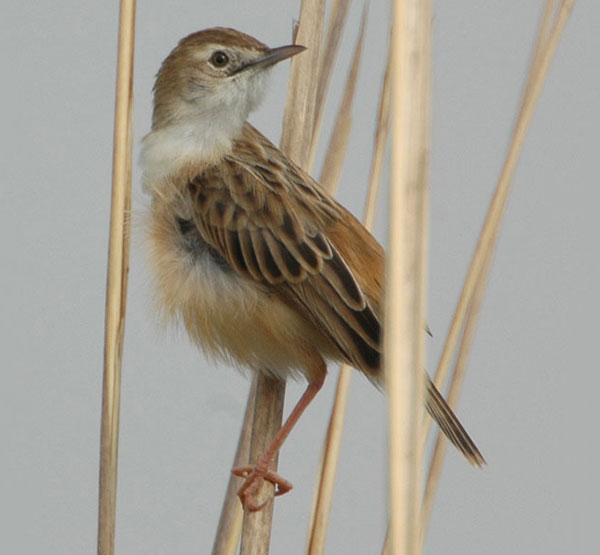
Zitting Cisticola (Cisticola juncidis) by Nikhil

Zitting Cisticola (Cisticola juncidis) by Nikhil

Birding
1) Grassveld areas include most of the reserve and the following species may occur; Wing-snapping Cisticola, Cloud Cisticola, Desert Cisticola, and Zitting Cisticola, Rufous-naped Lark, Ant-eating Chat and African Pipit. Several pairs of Southern Black Korhaan can be seen while the more secretive Kurrichane Buttonquail also occur. In summer Montagu’s Harrier have been recorded quartering over the grasslands.
2) The reedbeds house Southern Red Bishop, White-winged Widowbird, Red-collared Widowbird and Cape Grassbird.
3) The dam usually has Black-headed Heron, Cattle Egret, Glossy Ibis and African Sacred Ibis around it, with Yellow-billed Duck, White-faced Duck, Red-knobbed Coot and Egyptian Goose.
4) An exiting new feature is a large walk through aviary which boasts a wide variety of species. The aviary is built into an old quarry and provides natural vegetation for the birds.


Rondebult Bird Sanctuary, Germiston (Too numerous to list.)

Hamerkop (Scopus umbretta) by Africaddict

Hamerkop (Scopus umbretta) by Africaddict

Walter Sisulu National Botanical Garden
The Walter Sisulu National Botanical Garden is an outstanding birding locality close to the urban centre of Johannesburg. The relatively small area, virtually surrounded by urban development, is managed by the National Botanical Institute (NBI) and includes a diverse array of habitat types which ranges from steep cliffs surrounding a magnificent waterfall to open scrubland and riverine woodland. Several short walks run through the garden and the surrounding natural areas. The JCI Geological Trail has recently been developed and gives visitors the opportunity to not only walk along the Roodekrans Ridge and in the Nature Reserve portion of the garden, but also to learn something about the fascinating geology of the area. Guided tours can be arranged for groups. Information brochures, a map and a bird list are available at the gate or NBI office. A morning’s birding in the garden during summer can easily produce a list of 70 species. A total of 230 species have been recorded in the garden.
Birding
1) The Verreauxs’ Eagle is an icon of the area and attract visitors from all over. Generations of Verreauxs’ Eagle have bred on the steep cliff face next to the waterfall for many years. This is definitely one of the best sites in the country to view these masters of the african skies.

These pictures were taken by John Kormendy on trips to Johannesburg and Cape Town. Fantastic shots.
http://chandra.as.utexas.edu/~kormendy/southafricabirds.html