Birds Aren’t Related to Dinosaurs After All

A recent “Creation Moments” article is worth reading.
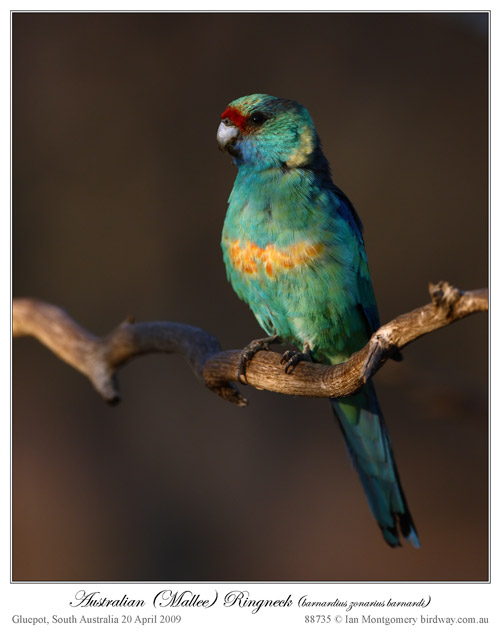
australian_ringneck_88735

Australian Ringneck by Birdway

“Anyone who has seen the film Jurassic Park knows that evolutionists have been telling us that modern-day birds are descended from dinosaurs. Well, it looks like the scientists have recently changed their mind.

According to an article on the ScienceDaily website dated June 9, researchers at Oregon State University have made a fundamental new discovery about how birds breathe and have a lung capacity that allows for flight – and the finding means it’s unlikely that birds descended from any known theropod dinosaurs.

The article goes on to report that the conclusions add to other evolving evidence that may finally force many paleontologists to reconsider their long-held belief that modern birds are the direct descendants of ancient, meat-eating dinosaurs, OSU researchers say.

‘For one thing, birds are found earlier in the fossil record than the dinosaurs they are supposed to have descended from,” said OSU professor of zoology John Ruben. “That’s a pretty serious problem, and there are other inconsistencies with the bird-from-dinosaur theories.’…”

Birds Arent Related to Dinosaurs After All – Continued

Here are some more quotes from the “Discovery Raises New Doubts About Dinosaur-bird Links:

Bird Skeleton“It’s been known for decades that the femur, or thigh bone in birds is largely fixed and makes birds into “knee runners,” unlike virtually all other land animals, the OSU experts say. What was just discovered, however, is that it’s this fixed position of bird bones and musculature that keeps their air-sac lung from collapsing when the bird inhales.”

“This is fundamental to bird physiology,” said Devon Quick, an OSU instructor of zoology who completed this work as part of her doctoral studies. “It’s really strange that no one realized this before. The position of the thigh bone and muscles in birds is critical to their lung function, which in turn is what gives them enough lung capacity for flight.”

“However, every other animal that has walked on land, the scientists said, has a moveable thigh bone that is involved in their motion – including humans, elephants, dogs, lizards and – in the ancient past – dinosaurs.”

“The implication, the researchers said, is that birds almost certainly did not descend from theropod dinosaurs, such as tyrannosaurus or allosaurus. The findings add to a growing body of evidence in the past two decades that challenge some of the most widely-held beliefs about animal evolution.”

For the rest of this article:
Discovery Raises New Doubts About Dinosaur-bird Links – ScienceDaily Article
More Related Articles of Interest:
Warm, Cuddly Dinosaurs?
We Don’t Know More than We Know About Dinosaurs
Latest “Missing Link” in Human Evolution

And God said, Let the earth bring forth the living creature after his kind, cattle, and creeping thing, and beast of the earth after his kind: and it was so. And God made the beast of the earth after his kind, and cattle after their kind, and every thing that creepeth upon the earth after his kind: and God saw that it was good. And God said, Let us make man in our image, after our likeness: and let them have dominion over the fish of the sea, and over the fowl of the air, and over the cattle, and over all the earth, and over every creeping thing that creepeth upon the earth. So God created man in his own image, in the image of God created he him; male and female created he them. (Genesis 1:24-27)

Creation Moments Responds to the Latest “Missing Link” in Human Evolution

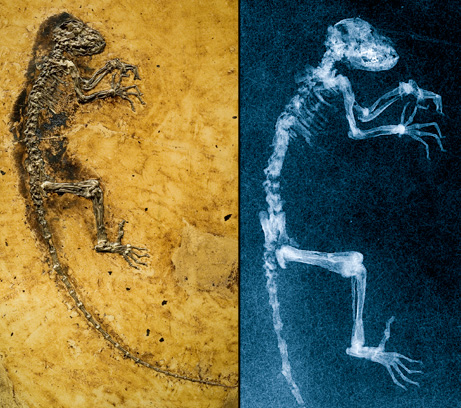
"Ida" the "Missing Link"

"Ida" the "Missing Link"

Thought you might enjoy reading the lastest newsletter from Creation Moments about “Ida”, the new “missing link.” I had seen this on TV just recently and figured someone would question it.

“It is now May and Creation Moments has been wondering when – during this Darwin’s bicentenary year – some startling new fossil discovery would be announced confirming Darwin’s Theory. Well, the announcement is a bit late – Darwin’s  birthday was February 12.  And, to put it mildly, the discovery is not at all spectacular.

It’s a skeleton of a lemur monkey a mere 21 inches long, but half of that is the tail. It is claimed to be 47 million years old, and it was found in two parts by an amateur fossil hunter in Germany in 1983…..”

To read the rest of the article from Creation Moments Click Here

Weaver Birds

And God blessed them, saying, Be fruitful, and multiply, and fill the waters in the seas, and let fowl multiply in the earth. (Genesis 1:22)

The Weaver Bird from Creation Moments

Speke's Weaver

Speke's Weaver

Weaver bird name for the Ploceidae, a family of Old World seed-eating birds closely resembling finches (hence the alternate name weaver finch). It includes a number of so-called goldfinches and waxbill finches that are actually weaver birds, rather than true finches of the family Fringillidae. The weavers are named for the highly complex woven nests built by many species, though others build only crude nests, and the parasitic widow weavers build no nests at all. Most weavers are sedentary, noisy, gregarious, and polygynous, with elaborate courtship rituals. Most weavers use grasses for the weaving of the nests which have an entry at the bottom.

The weaver group is divided into the buffalo, sparrow, typical, and widow weavers.

Buffalo-weavers -The African buffalo weavers are black-and-brown birds 8 to 10 in. (20.3-25.4 cm) long, that travel in small flocks and build bulky compartmented nests with separate chambers for two or more pairs.
Red-billed Buffalo-weaver
White-billed Buffalo-weaver
White-headed Buffalo Weaver

Red-billed Quelea

Red-billed Quelea

Sparrow-weavers – Of the 35 sparrow weavers the best known, and in fact one of the most widely distributed and familiar small birds in the world, is the English sparrow native to Europe, W Asia, and N Africa. It is the most successful town and city dweller among birds, and has followed European civilization wherever it has gone; it was introduced to North America in 1852. As common in Asia is the Eurasian tree sparrow (also introduced in the United States), a nuisance in rice fields and sold in great quantities for food. These birds build untidy domed nests with side entrances. Most specialized of the sparrow weavers is the
White-browed Sparrow-weaver
Chestnet-crowned Sparrow-weaver
Chestnut-backed Sparrow-weaver
Donaldson-Smith’s Sparrow-weaver

Social-weaver of Africa, famous for its apartment-house nest, in which 100 to 300 pairs have separate flask-shaped chambers entered by tubes at the bottom. They build these structures, which may be 10 ft (3 m) high and 15 ft (4.5 m) across, high in a sturdy tree, beginning with a roof of straw thatch. Of the 100 or more African and Asian typical weavers, the small quelea, only 5 in. (12.7 cm) long, sometimes causes huge crop losses in Africa by feeding on grain in flocks numbering as many as one million birds.
Grey-headed Social-weaver
Black-capped Social-weaver

Widow-weavers – The African widow weavers (named for the long, drooping black tail plumes of the breeding male), or whydahs, are notable for their selective parasitic nesting habits; they lay their eggs in the nests of waxbills, and their eggs are white, as are those of the waxbill, rather than spotted, as are those of all other weavers.

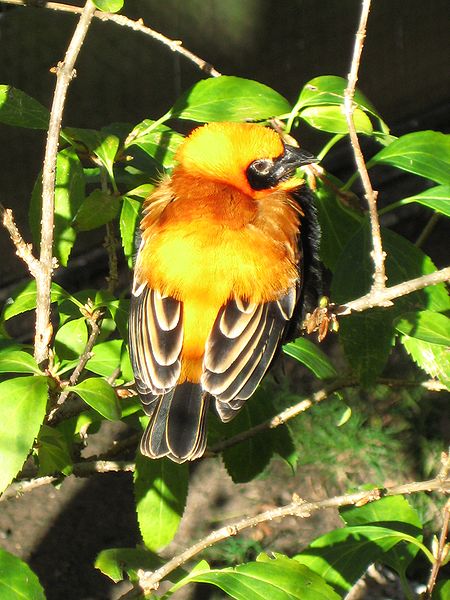
Black-winged Red Bishop

Black-winged Red Bishop

Fan-tailed Widowbird
Yellow-shouldered Widowbird
Red-collared Widowbird
Marsh Widowbird
Buff-shouldered Widowbird
Long-tailed Widowbird

Jackson’s Widowbird

Many of the weaver family are kept as cage birds, especially the colorful waxbills (e.g., the Java sparrow, mannikin, munia, grenadier, cutthroat, and cordon-bleu, locust, parrot, Gouldian, and fire finches). Weaver birds are classified in the phylum Chordata , subphylum Vertebrata, class Aves, order Passeriformes.

Other Weaver Bird families are the:
Just plain Weavers, the Malimbe family, Quelea family, Fody family, and the Bishop family

From:
The Columbia Encyclopedia, Sixth Edition. 2008. Encyclopedia.com. 21 Apr. 2009, Answers.com Ploceidae,   and other internet sources.

Check out the Weaver Bird Videos

When I Consider! – Incredible Bats

When I Consider!

Which doeth great things and unsearchable; marvelous things without number: (Job 5:9)

Evidence From Biology

“The largest known cooperative community of mammals spend their summers together inside Bracken Cave near San Antonio, Texas. During the day 20 million Mexican free-tailed bats raise their 20 million pups, while each night they gulp down an estimated 150 tons of insects! The bats winter in Mexico and mate in the spring. Then, for a reason unknown to scientists, only the females fly to Texas.

During their migration, the bats fly at 40 miles per hour at an altitude of eight to ten thousand feet. Once settled in at Bracken Cave, they become pregnant from the sperm of male bats which they have carried on the journey with them! Four month later each has a single pup. Although the cave’s one-room nursery has 20 million noisy pups, a mother bat released anywhere within the cave can find her own baby in as little as twelve seconds.

How marvelous is our God who created such wonders!”
From April 21 in “A Closer Look at the Evidence,” Kleiss – “Letting God Create Your Day,” Vol. 3, p.91

“Incredible Bats”

Also another Creation Moments video on YouTube.

And they shall go into the holes of the rocks, and into the caves of the earth, for fear of the LORD, and for the glory of his majesty, when he ariseth to shake terribly the earth. In that day a man shall cast his idols of silver, and his idols of gold, which they made each one for himself to worship, to the moles and to the bats; To go into the clefts of the rocks, and into the tops of the ragged rocks, for fear of the LORD, and for the glory of his majesty, when he ariseth to shake terribly the earth.
(Isaiah 2:19-21 KJV)

[

Interesting Things – Ants

Thinking

 Go to the ant, you sluggard! Consider her ways and be wise, Which, having no captain, Overseer or ruler, Provides her supplies in the summer, And gathers her food in the harvest. How long will you slumber, O sluggard? When will you rise from your sleep? A little sleep, a little slumber, A little folding of the hands to sleep So shall your poverty come on you like a prowler, And your need like an armed man.  (Proverbs 6:6-11)
There are four things which are little on the earth, But they are exceedingly wise: The ants are a people not strong, Yet they prepare their food in the summer; (Proverbs 30:24-25)

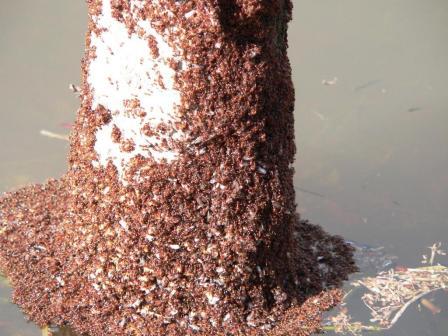
Ants on Tree after heavy rain

Ants on Tree after heavy rain

While reading in Proverbs the other day, I came again across the above verses. I remembered some pictures we had taken while birdwatching at South Lake Howard Nature Preserve. We had had an extreme amount of rain (not this year) and the ants were hugging a tree and many had sacrificed themself for the sake of getting the rest to safety. Below are some of the Creation Moments articles about the Ants. I trust you find them informative and inspirational.
 

Harvesting Ants 

Groceries, Ant Style

Real Ant Farms

Ant Antics

Ant Genius

Wise Raider Ants 

An Ant from CreationWikiAn interesting article about Ants from CreationWiki.Org

Copyright ©2008 by Creation Moments, Inc., P.O. 839, Foley, MN 56329

Interesting Things – Amazing Giraffe

Interesting Things from Smiley Central
The Amazing Giraffe

Here are two different videos about the Giraffe telling about how God has created them with a special feature called the “wonder net.” This really called the “rete mirabile.” See an article I did, “Interesting Things – Why Birds Don’t Wear Socks“, from information from Creation Moments.
The first video is from Creation Moments on YouTube.

The second video is from nubeckett on YouTube and explains the “wonder net” in a little more detail.

God of Wonders DVD at Creation Moments

Creation Moments has just released a new DVD – God Of Wonders

“This brand new 85-minute DVD features Ian Taylor and many other creation science experts … and it includes some of the most breathtaking nature photography you’ve ever seen! Survey the unimaginable size of the universe and ponder the vast energy present in all matter. Examine the elegant water molecule essential for all life and discover how God combines these molecules to form beautiful and symmetrical snow crystals. Learn about the incredible complexity of DNA and the miraculous workings of the tiny seed. From the design functionality of birds to the incredible transformation of butterflies, these and many other features of creation are highlighted in this visually stunning presentation.”


I am ordered mine!