Formed By Him – “Stone” Birds

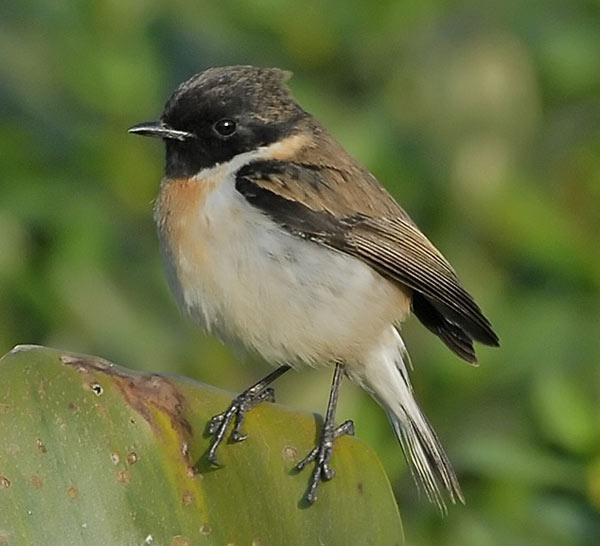
Siberian Stonechat (Saxicola maurus) by Peter Ericsson

Siberian Stonechat (Saxicola maurus) by Peter Ericsson

Happy Easter to All. He is Risen! He is Alive!

All week we have been posting articles about names of birds that are the same as items that are mentioned in the Scripture that lead up to the Crucifixion and then to today’s bodily Resurrection of the Lord Jesus Christ.

As Christians, these events and the meaning of them are very important. Without the event that is celebrated today, we might as well be any other religion, but Christ is not a religion. Christ was the Son of God, who came to earth, born of a virgin, lived a sinless life because He was sinless, offered Himself to be crucified for the sins of man. He could have called legions of angels to get Him of the cross, but He had come to die for us. He stayed and when He was ready, He died of His own choosing.

When Jesus therefore had received the vinegar, he said, It is finished: and he bowed his head, and gave up the ghost. (John 19:30 KJV)

There are four “religions” that had a “person” as their leader. Three of those bodies are still in the grave and their bones are deteriating, but Jesus’ body is not in the tomb. He is risen by His own power because He is God, the great I AM. The stone was rolled back, the disciples went inside, Mary looked in, and they were met will the greatest message of all time.

For as yet they knew not the scripture, that he must rise again from the dead. Then the disciples went away again unto their own home. But Mary stood without at the sepulchre weeping: and as she wept, she stooped down, and looked into the sepulchre, And seeth two angels in white sitting, the one at the head, and the other at the feet, where the body of Jesus had lain. And seeth two angels in white sitting, the one at the head, and the other at the feet, where the body of Jesus had lain. And they say unto her, Woman, why weepest thou? She saith unto them, Because they have taken away my Lord, and I know not where they have laid him. And when she had thus said, she turned herself back, and saw Jesus standing, and knew not that it was Jesus. Jesus saith unto her, Woman, why weepest thou? whom seekest thou? She, supposing him to be the gardener, saith unto him, Sir, if thou have borne him hence, tell me where thou hast laid him, and I will take him away. Jesus saith unto her, Mary. She turned herself, and saith unto him, Rabboni; which is to say, Master. Jesus saith unto her, Touch me not; for I am not yet ascended to my Father: but go to my brethren, and say unto them, I ascend unto my Father, and your Father; and to my God, and your God. Mary Magdalene came and told the disciples that she had seen the Lord, and that he had spoken these things unto her. Then the same day at evening, being the first day of the week, when the doors were shut where the disciples were assembled for fear of the Jews, came Jesus and stood in the midst, and saith unto them, Peace be unto you. And when he had so said, he shewed unto them his hands and his side. Then were the disciples glad, when they saw the Lord.
(John 20:9-20 KJV)

I am letting Scripture speak for itself. It is God’s Word. It is men and women’s choice to believe, but as for Dan and I, we like what Joshua stated:

Now therefore fear the LORD, and serve him in sincerity and in truth: and put away the gods which your fathers served on the other side of the flood, and in Egypt; and serve ye the LORD. And if it seem evil unto you to serve the LORD, choose you this day whom ye will serve; whether the gods which your fathers served that were on the other side of the flood, or the gods of the Amorites, in whose land ye dwell: but as for me and my house, we will serve the LORD. (Joshua 24:14-15 KJV)

They placed a stone in front of the tomb and placed a seal on it to make sure no one entered. I doubt they expected someone to exit. But exit He did! What a Savior!

Satan had tempted him and a stone is mentioned:

Then the devil taketh him up into the holy city, and setteth him on a pinnacle of the temple, And saith unto him, If thou be the Son of God, cast thyself down: for it is written, He shall give his angels charge concerning thee: and in their hands they shall bear thee up, lest at any time thou dash thy foot against a stone. Jesus said unto him, It is written again, Thou shalt not tempt the Lord thy God. (Matthew 4:5-7 KJV)

It was a stone where the angel sat when:

In the end of the sabbath, as it began to dawn toward the first day of the week, came Mary Magdalene and the other Mary to see the sepulchre. And, behold, there was a great earthquake: for the angel of the Lord descended from heaven, and came and rolled back the stone from the door, and sat upon it. His countenance was like lightning, and his raiment white as snow: And for fear of him the keepers did shake, and became as dead men. And the angel answered and said unto the women, Fear not ye: for I know that ye seek Jesus, which was crucified. He is not here: for he is risen, as he said. Come, see the place where the Lord lay. (Matthew 28:1-6 KJV)

“Formed By Him” this week has been remembering the events that led up to the death of Jesus Christ, the Son of God, on the cross. As we think of this time, maybe seeing birds with names of things that happened will help us not forget the events as we see those birds in the future. All the birds were formed through the Lord Jesus Christ omniscience and omnipotence.

In the beginning was the Word, and the Word was with God, and the Word was God. The same was in the beginning with God. All things were made by him; and without him was not any thing made that was made. (John 1:1-3 KJV)

The “Stone” Birds – Birds with “stone” in their names:

The New World Quail  – Odontophoridae Family has the:

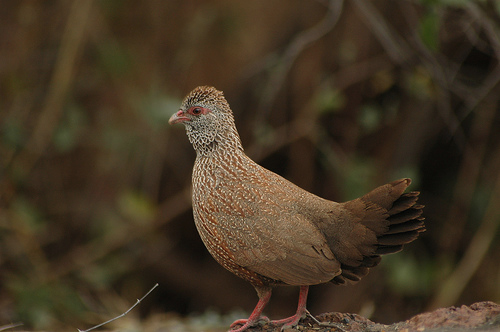
Stone Partridge (Ptilopachus petrosus) ©WikiC

The Stone-curlews, Thick-knees – Burhinidae Family has five Stone-curlews:

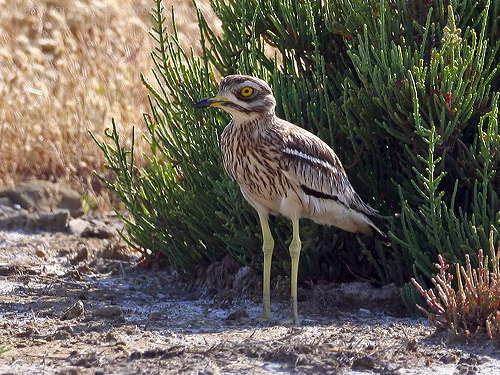
Eurasian Stone-curlew (Burhinus oedicnemus) by Ian
Indian Stone-curlew (Burhinus indicus) ©©
Bush Stone-curlew (Burhinus grallarius) with young by Ian
Great Stone-curlew (Esacus recurvirostris)
Beach Stone-curlew (Esacus magnirostris)

The Sandpipers, Snipes – Scolopacidae Family has two Turnstones:

Ruddy Turnstone (Arenaria interpres)
Black Turnstone (Arenaria melanocephala)

The Pachycephalidae – Whistlers and Allies Family only has a:

Sandstone Shrikethrush (Colluricincla woodwardi)

The Phylloscopidae – Leaf warblers and allies Family has a:

Limestone Leaf Warbler (Phylloscopus calciatilis)
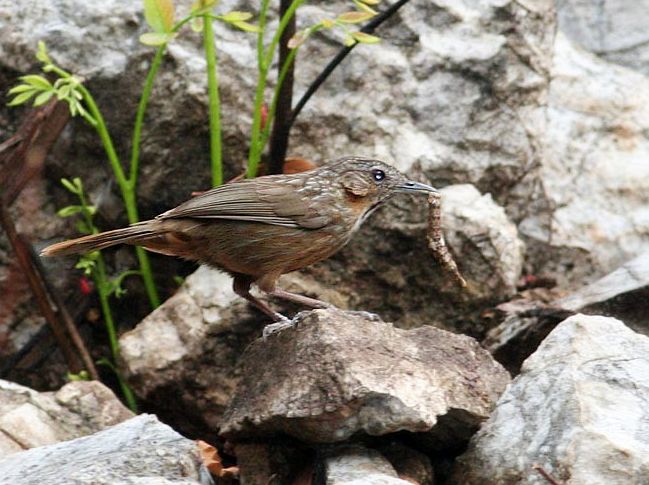
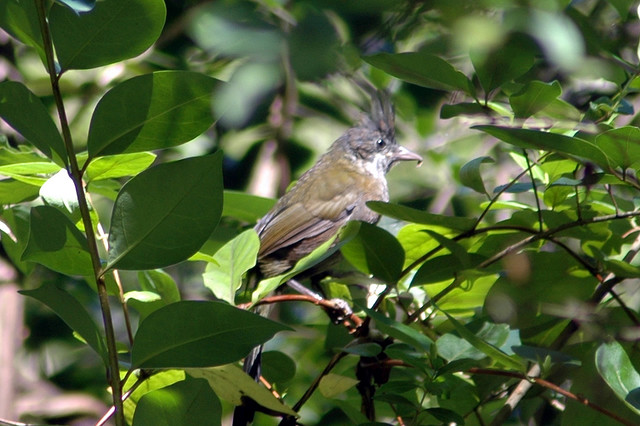
Limestone Wren-Babbler (Napothera crispifrons) by Peter Ericsson

Limestone Wren-Babbler (Napothera crispifrons) by Peter Ericsson

The Pellorneidae – Fulvettas, Ground Babblers Family only has one bird:

Limestone Wren-Babbler (Napothera crispifrons) by Peter Ericsson

Whereas the Muscicapidae – Chats, Old World Flycatchers Family has eight Stonechats:

Canary Islands Stonechat (Saxicola dacotiae)
European Stonechat (Saxicola rubicola)
Siberian Stonechat (Saxicola maurus) by Peter Ericsson
Stejneger’s Stonechat (Saxicola stejnegeri)
African Stonechat (Saxicola torquatus) (Common)
Madagascar Stonechat (Saxicola sibilla)
Reunion Stonechat (Saxicola tectes) female
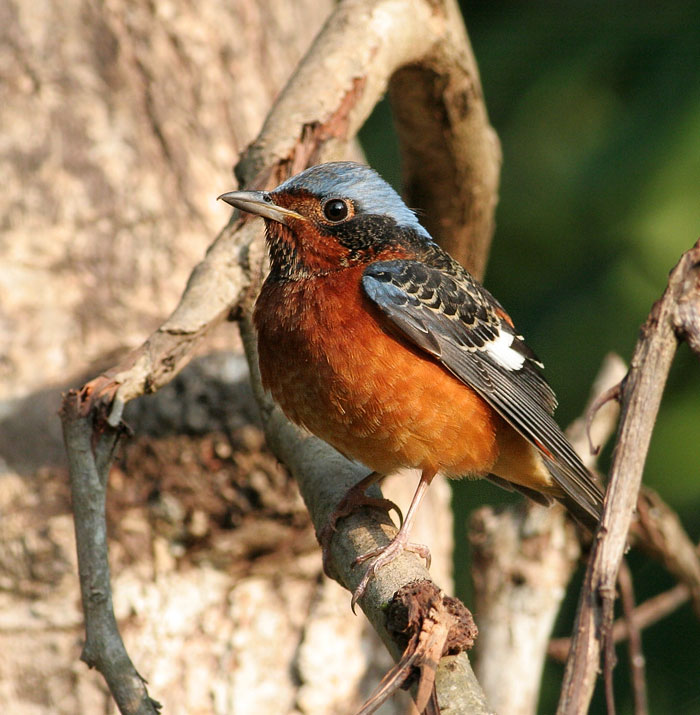
White-tailed Stonechat (Saxicola leucurus) by Nikhil Devasar

And the Fringillidae – Finches Family has a:

Brimstone Canary (Crithagra sulphurata)

Think about the events that we celebrate as “Easter.” Is He your Savior?

Romans 3:10 KJV
(10)  As it is written, There is none righteous, no, not one:

Romans 5:8-12 KJV
(8)  But God commendeth his love toward us, in that, while we were yet sinners, Christ died for us.
(9)  Much more then, being now justified by his blood, we shall be saved from wrath through him.
(10)  For if, when we were enemies, we were reconciled to God by the death of his Son, much more, being reconciled, we shall be saved by his life.
(11)  And not only so, but we also joy in God through our Lord Jesus Christ, by whom we have now received the atonement.
(12)  Wherefore, as by one man sin entered into the world, and death by sin; and so death passed upon all men, for that all have sinned:

Romans 10:9-13 KJV
(9)  That if thou shalt confess with thy mouth the Lord Jesus, and shalt believe in thine heart that God hath raised him from the dead, thou shalt be saved.
(10)  For with the heart man believeth unto righteousness; and with the mouth confession is made unto salvation.
(11)  For the scripture saith, Whosoever believeth on him shall not be ashamed.
(12)  For there is no difference between the Jew and the Greek: for the same Lord over all is rich unto all that call upon him.
(13)  For whosoever shall call upon the name of the Lord shall be saved.

May this be the best Easter you ever had.
________
If you missed the “Easter Bird” mini-series, here are the links to the other articles.

“Palm” Birds
“Whip” Birds
“Thorn” and the
“Sword and Piercer” Birds
“Blood” Birds

See:

Gospel Message

Wordless Birds
___
More Formed By Him Articles

*
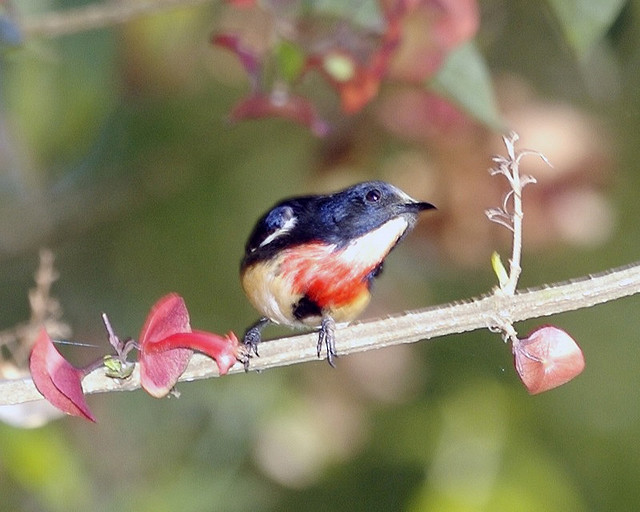
Formed By Him – “Blood” Birds

Blood-breasted Flowerpecker (Dicaeum sanguinolentum) ©©LipKee

Blood-breasted Flowerpecker (Dicaeum sanguinolentum) ©©LipKee

And almost all things are by the law purged with blood; and without shedding of blood is no remission. (Hebrews 9:22 KJV)

As we continue the mini-series of the “Easter Birds”, today we look at the blood that was shed by Jesus Christ on the cross. When we see these “Blood” Birds, may we be reminded of Christ’s sacrifice on the cross for us.

Just before being taken by the soldiers, Christ has been praying:

And being in an agony he prayed more earnestly: and his sweat was as it were great drops of blood falling down to the ground. (Luke 22:44 KJV)

John tells us:

But one of the soldiers with a spear pierced his side, and forthwith came there out blood and water. (John 19:34 KJV)

The Bible teaches all through the Old Testament about the sacrifices that were carried out for the forgiveness of sin. They had to do this time after time because, as Hebrews 9 explains:

Hebrews 9:6-15 KJV
(6) Now when these things were thus ordained, the priests went always into the first tabernacle, accomplishing the service of God.
(7) But into the second went the high priest alone once every year, not without blood, which he offered for himself, and for the errors of the people:
(8) The Holy Ghost this signifying, that the way into the holiest of all was not yet made manifest, while as the first tabernacle was yet standing:
(9) Which was a figure for the time then present, in which were offered both gifts and sacrifices, that could not make him that did the service perfect, as pertaining to the conscience;
(10) Which stood only in meats and drinks, and divers washings, and carnal ordinances, imposed on them until the time of reformation.
(11) But Christ being come an high priest of good things to come, by a greater and more perfect tabernacle, not made with hands, that is to say, not of this building;
(12) Neither by the blood of goats and calves, but by his own blood he entered in once into the holy place, having obtained eternal redemption for us.
(13) For if the blood of bulls and of goats, and the ashes of an heifer sprinkling the unclean, sanctifieth to the purifying of the flesh:
(14) How much more shall the blood of Christ, who through the eternal Spirit offered himself without spot to God, purge your conscience from dead works to serve the living God?
(15) And for this cause he is the mediator of the new testament, that by means of death, for the redemption of the transgressions that were under the first testament, they which are called might receive the promise of eternal inheritance.

There are many verses that speak about the need of Christ shedding His blood, dying, and Praise the Lord, for rising from the tomb. (Opps, that is for tomorrow.) Here are few of those verses:

Much more then, being now justified by his blood, we shall be saved from wrath through him. (Romans 5:9 KJV)

To the praise of the glory of his grace, wherein he hath made us accepted in the beloved. In whom we have redemption through his blood, the forgiveness of sins, according to the riches of his grace; (Ephesians 1:6-7 KJV)

Blood-colored Woodpecker (Veniliornis sanguineus)

But now in Christ Jesus ye who sometimes were far off are made nigh by the blood of Christ.
(Ephesians 2:13 KJV)

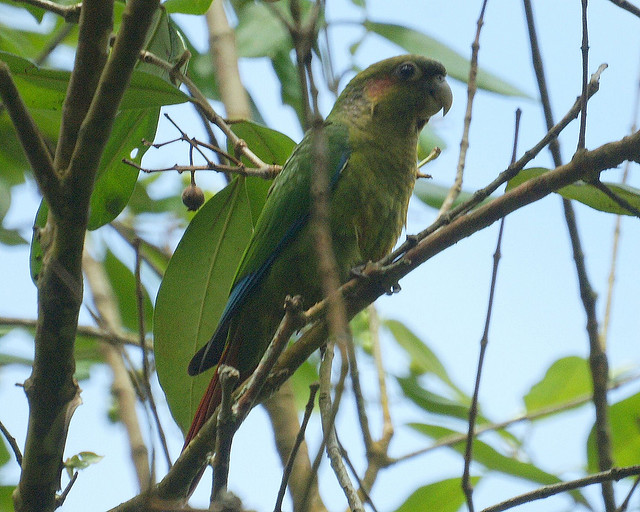
Blood-eared Parakeet (Pyrrhura hoematotis) ©©barloventomagico

Blood-eared Parakeet (Pyrrhura hoematotis) ©©barloventomagico

In whom we have redemption through his blood, even the forgiveness of sins: Who is the image of the invisible God, the firstborn of every creature: For by him were all things created, that are in heaven, and that are in earth, visible and invisible, whether they be thrones, or dominions, or principalities, or powers: all things were created by him, and for him: And he is before all things, and by him all things consist. (Colossians 1:14-17 KJV)

Forasmuch as ye know that ye were not redeemed with corruptible things, as silver and gold, from your vain conversation received by tradition from your fathers; But with the precious blood of Christ, as of a lamb without blemish and without spot: (1 Peter 1:18-19 KJV)

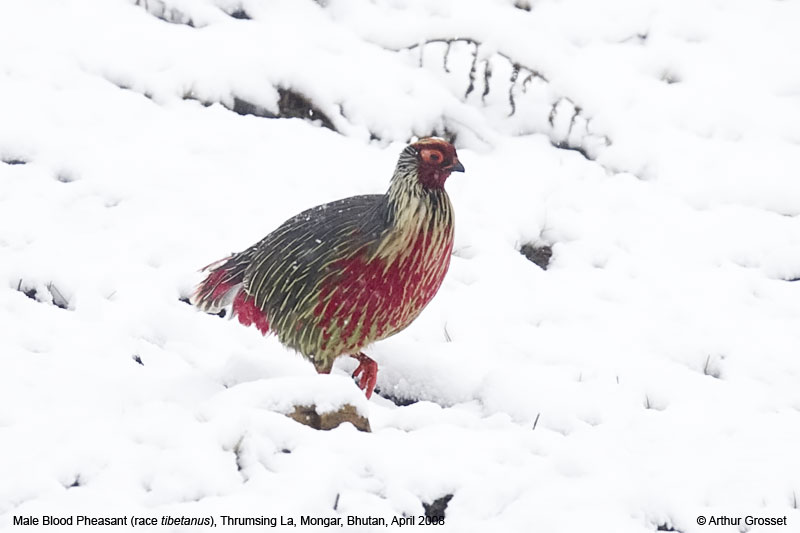
Blood Pheasant (Ithaginis cruentus) ©Arthur Grosset

Blood Pheasant (Ithaginis cruentus) ©Arthur Grosset

The “Cross” birds were considered, but the Crossbills, which are in the Finches – Fringillidae Family, were the only birds with “cross” in their name. Also, “Crown” Birds were considered, but there were too many. If you missed the mini-series, they are the “Palm”, “Whip”, “Thorn” and the “Sword and Piercer” Birds.

See:

Gospel Message

Wordless Birds
___
More Formed By Him Articles
*
Formed By Him – “Sword and Piercer” Birds

Two Edges by wrdpico

When Jesus was taken to the temple for His dedication, Simeon met Mary and Joseph and told Mary:

And Simeon blessed them, and said unto Mary his mother, Behold, this child is set for the fall and rising again of many in Israel; and for a sign which shall be spoken against; (Yea, a sword shall pierce through thy own soul also,) that the thoughts of many hearts may be revealed. (Luke 2:34-35 KJV)

When Judas came to betray Christ in the garden, Peter took out his sword and cut of the right ear of one of them, but Jesus touched his ear and healed it.

And while he yet spake, lo, Judas, one of the twelve, came, and with him a great multitude with swords and staves, from the chief priests and elders of the people… And one of them smote the servant of the high priest, and cut off his right ear. And Jesus answered and said, Suffer ye thus far. And he touched his ear, and healed him. (Luke 22:47, 50-51 KJV)

Most know the facts about the death of Christ on the cross. It was prophesied before the Lord ever came to earth that He would die on the cross. Then:

When Jesus therefore had received the vinegar, he said, It is finished: and he bowed his head, and gave up the ghost. The Jews therefore, because it was the preparation, that the bodies should not remain upon the cross on the sabbath day, (for that sabbath day was an high day,) besought Pilate that their legs might be broken, and that they might be taken away. Then came the soldiers, and brake the legs of the first, and of the other which was crucified with him. But when they came to Jesus, and saw that he was dead already, they brake not his legs: But one of the soldiers with a spear pierced his side, and forthwith came there out blood and water. And he that saw it bare record, and his record is true: and he knoweth that he saith true, that ye might believe. For these things were done, that the scripture should be fulfilled, A bone of him shall not be broken. And again another scripture saith, They shall look on him whom they pierced. (John 19:30-37 KJV)

Throughout this week, the Scripture has been presented that tells of the events that were unfolding during the week of Christ’s sacrifice on the Cross. We have come to the “sword” and the fact that Christ’s side was “pierced,” as was Mary’s heart. Any mother’s heart would be pierced to see their son crucified, but Jesus was no ordinary son. She had the privilege of being His earthly mother, by way of the virgin birth, BUT, His Father was God, and He was, as the centurion stated:

Now when the centurion, and they that were with him, watching Jesus, saw the earthquake, and those things that were done, they feared greatly, saying, Truly this was the Son of God. (Matthew 27:54 KJV)

Sword-billed Hummingbird (Ensifera ensifera) by Robert Scanlon

Sword-billed Hummingbird (Ensifera ensifera) by Robert Scanlon

If you have been following along this week, the “Palm” Birds, “Whip” Birds, and the “Thorn” Birds have been presented along with the events of Christ’s crucifixion. Now it is the “Sword” Birds and the “Piercer” Birds. A connection between the events and the names of the birds is being made to help us remember the Lord Jesus Christ. What love He has shown to us by laying down His life to purchase our salvation.

He created and loves the birds so, that when the little sparrow falls, He knows all about it. How much do you think He cares about me and you?

Are not two sparrows sold for a farthing? and one of them shall not fall on the ground without your Father. But the very hairs of your head are all numbered. Fear ye not therefore, ye are of more value than many sparrows. Whosoever therefore shall confess me before men, him will I confess also before my Father which is in heaven. But whosoever shall deny me before men, him will I also deny before my Father which is in heaven. (Matthew 10:29-33 KJV)

Birds with “Sword” in their name:

There is only one bird in the list used here that has “sword” in its name, the Sword-billed Hummingbird. We have done an article on it already in – Formed By Him – Sword-billed Hummingbird.

Sword-billed Hummingbird (Ensifera ensifera) by Michael Woodruff

Birds with “Piercer” in their name:

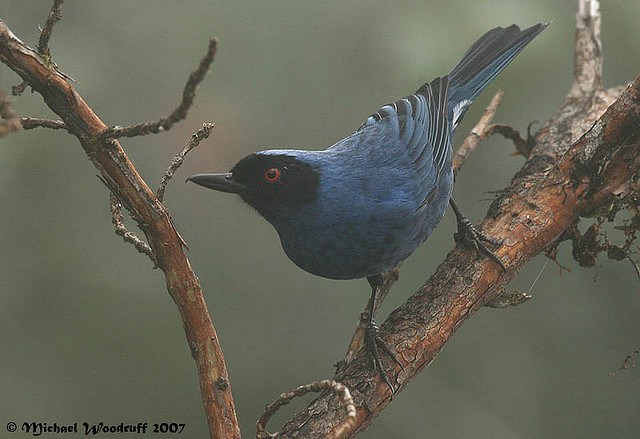
Masked Flowerpiercer (Diglossa cyanea) by Michael Woodruff

Masked Flowerpiercer (Diglossa cyanea) by Michael Woodruff

The Tanagers and Allies – Thraupidae has a Genus of Flowerpiercers, called Diglossa. The Lord has created another facinating bird. The Flowerpiercer’s  common name refers to their habit of piercing the base of flowers to access nectar that otherwise would be out of reach. This is done with their highly created bills, although this is less obvious in the Bluish Flowerpiercer, which has an almost “normal” bill. Most flowerpiercers are restricted to highlands, especially the Andes, in South America, but two species occur in Central America.

Genus Diglossa
Cinnamon-bellied Flowerpiercer (Diglossa baritula)
Slaty Flowerpiercer (Diglossa plumbea)
Rusty Flowerpiercer (Diglossa sittoides)
Chestnut-bellied Flowerpiercer (Diglossa gloriosissima)
Glossy Flowerpiercer (Diglossa lafresnayii)
Moustached Flowerpiercer (Diglossa mystacalis)
Merida Flowerpiercer (Diglossa gloriosa)
Black Flowerpiercer (Diglossa humeralis)
Black-throated Flowerpiercer (Diglossa brunneiventris)
Grey-bellied Flowerpiercer (Diglossa carbonaria)
Venezuelan Flowerpiercer (Diglossa venezuelensis)
White-sided Flowerpiercer (Diglossa albilatera)
Scaled Flowerpiercer (Diglossa duidae)
Greater Flowerpiercer (Diglossa major)
Indigo Flowerpiercer (Diglossa indigotica)
Golden-eyed Flowerpiercer (Diglossa glauca)
Bluish Flowerpiercer (Diglossa caerulescens)
Masked Flowerpiercer (Diglossa cyanea)

Black Flowerpiercer by Keith Blomerley of a bird moving around in a bush.


I trust you are enjoying and being blessed by the “Formed by Him” series this week. To see more  articles – Click Here

See:

The Gospel Message and the Wordless Birds

*
Formed By Him – “Thorn” Birds

Mountain Thornbill (Acanthiza katherina) by Ian

Mountain Thornbill (Acanthiza katherina) by Ian

Thorns are mentioned many times throughout the Bible and in the Gospels it is presented in several applications:

For every tree is known by his own fruit. For of thorns men do not gather figs, nor of a bramble bush gather they grapes. A good man out of the good treasure of his heart bringeth forth that which is good; and an evil man out of the evil treasure of his heart bringeth forth that which is evil: for of the abundance of the heart his mouth speaketh. (Luke 6:44-45 KJV)

Again thorns were mentioned in a parable in reference to the receiving of the Word of God:

And some fell among thorns; and the thorns sprang up with it, and choked it. And other fell on good ground, and sprang up, and bare fruit an hundredfold. And when he had said these things, he cried, He that hath ears to hear, let him hear. (Luke 8:7-8 KJV)
And that which fell among thorns are they, which, when they have heard, go forth, and are choked with cares and riches and pleasures of this life, and bring no fruit to perfection. (Luk 8:14 KJV)

The next references to thorns has to do with the “crown of thorns” they plaited or twisted together of thorny branches. If you think they just placed that crown of those thorns gently on His head, you are mistaken. With as much mockery and hatred they were showing to Christ, they would have crammed that crown on his head, thus, driving those spiked thorns as deep as they could.

And they clothed him with purple, and platted a crown of thorns, and put it about his head, And began to salute him, Hail, King of the Jews! And they smote him on the head with a reed, and did spit upon him, and bowing their knees worshipped him. And when they had mocked him, they took off the purple from him, and put his own clothes on him, and led him out to crucify him. (Mark 15:17-20 KJV)

Pilate therefore went forth again, and saith unto them, Behold, I bring him forth to you, that ye may know that I find no fault in him. Then came Jesus forth, wearing the crown of thorns, and the purple robe. And Pilate saith unto them, Behold the man!
(John 19:4-5 KJV)

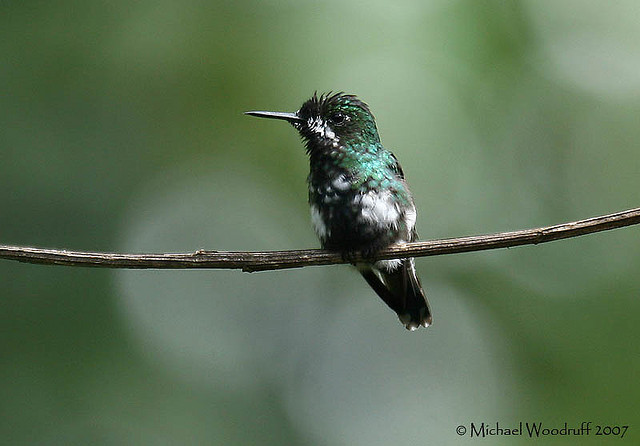
Green Thorntail (Discosura conversii) by Michael Woodruff

Green Thorntail (Discosura conversii) by Michael Woodruff

Today it is obvious that “thorns” are the theme of this blog. The last two days, the “Palm” Birds and the “Whip” Birds were written about and shown. When you see the “Thorn” Birds, maybe the “crown of thorns” will come to mind and you will praise the Lord for His death on the cross which paid for our salvation.

For then must he often have suffered since the foundation of the world: but now once in the end of the world hath he appeared to put away sin by the sacrifice of himself. And as it is appointed unto men once to die, but after this the judgment: So Christ was once offered to bear the sins of many; and unto them that look for him shall he appear the second time without sin unto salvation. (Hebrews 9:26-28 KJV)

There are three families that have birds with Thorn in their name. the Hummingbird family has either Thornbills or Thorntails. The Ovenbird family has actual Thornbirds and one Thorn-tailed Rayadito. One whole Genus of birds in the Australian Warbler family are called Thornbills. As you look at the bills of most of these birds observe how the shape resembles thorns. Their Creator, the Lord Jesus Christ, not only designed their bill to assist in their eating and habitat, He knew that one day that “thorns” would be driven into His head.

Birds with “Thorn” in their name:

Hummingbird – Trochilidae Family

Black-backed Thornbill (Ramphomicron dorsale)
Black-bellied Thorntail (Discosura langsdorffi)
Blue-mantled Thornbill (Chalcostigma stanleyi) – Video by Keith Blomerley
Bronze-tailed Thornbill (Chalcostigma heteropogon)
Green Thorntail (Discosura conversii) by Michael Woodruff
Letitia’s Thorntail (Discosura letitiae)
Olivaceous Thornbill (Chalcostigma olivaceum)
Purple-backed Thornbill (Ramphomicron microrhynchum) – Video

Rainbow-bearded Thornbill (Chalcostigma herrani)
Rufous-capped Thornbill (Chalcostigma ruficeps)
Wire-crested Thorntail (Discosura popelairii) –  Video by Keith Blomerley

Plain Thornbird (Phacellodomus inornatus) ©©barloventomagico

Plain Thornbird (Phacellodomus inornatus) ©©

Ovenbird – Furnariidae Family

Chestnut-backed Thornbird (Phacellodomus dorsalis)
Freckle-breasted Thornbird (Phacellodomus striaticollis)
Greater Thornbird (Phacellodomus ruber)
Little Thornbird (Phacellodomus sibilatrix)
Orange-breasted Thornbird (Phacellodomus ferrugineigula)
Orange-eyed Thornbird (Phacellodomus erythrophthalmus)
Plain Thornbird (Phacellodomus inornatus) ©©
Rufous-fronted Thornbird (Phacellodomus rufifrons)
Spot-breasted Thornbird (Phacellodomus maculipectus)
Streak-fronted Thornbird (Phacellodomus striaticeps)
Thorn-tailed Rayadito (Aphrastura spinicauda)

Chestnut-rumped Thornbill (Acanthiza uropygialis) by Ian

Chestnut-rumped Thornbill (Acanthiza uropygialis) by Ian

Acanthizidae – Australasian Warblers

Acanthiza Genus
Inland Thornbill (Acanthiza apicalis)
Brown Thornbill (Acanthiza pusilla)
Buff-rumped Thornbill (Acanthiza reguloides)
Chestnut-rumped Thornbill (Acanthiza uropygialis) by Ian
Mountain Thornbill (Acanthiza katherina) by Ian
New Guinea Thornbill (Acanthiza murina)
Slaty-backed Thornbill (Acanthiza robustirostris)
Slender-billed Thornbill (Acanthiza iredalei)
Striated Thornbill (Acanthiza lineata)
Tasmanian Thornbill (Acanthiza ewingii)
Western Thornbill (Acanthiza inornata)
Yellow Thornbill (Acanthiza nana) by Ian
Yellow-rumped Thornbill (Acanthiza chrysorrhoa)

See also:

Wordless Birds

*
Formed By Him – “Whip” Birds

Eastern Whip-poor-will (Antrostomus vociferus) by ©Judd Paterson

Eastern Whip-poor-will (Antrostomus vociferus) by Judd Paterson

When He had made a whip of cords, He drove them all out of the temple, with the sheep and the oxen, and poured out the changers’ money and overturned the tables. (John 2:15 NKJV)

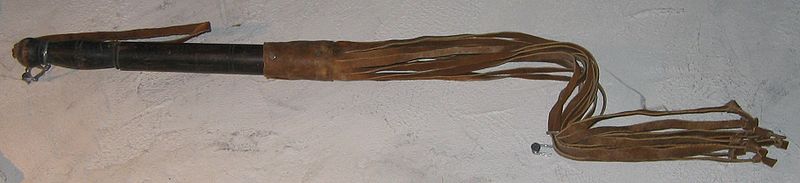
Whips have been used for many years. According to Wikipedia: The word whip describes two basic types of tools:-

A long stick-like device, usually slightly flexible, with a small bit of leather or cord, called a “popper” or a “cracker,” on the end. Depending on length and flexibility, this type is often called a riding whip, riding crop or “bat”. It is also sometimes called a “horsewhip” or “horse whip”.

The other type of whip is a long tapered flexible length of single-strand or plaited (braided) material (usually leather) with a stiff handle. Some whips of this type include the bullwhip and the stockwhip. Each design has many variations and lengths for different purposes, often with different names.

As well as these traditional whip types designed for use on animals, there are whip designs that had historic uses for inflicting pain on humans, such as the “cat o’ nine tails”, knout and others. These devices are used as flogging instruments, a means of control, corporal punishment or torture.

Cat o nine tails ©WikiC

Cat o nine tails ©WikiC

Yesterday’s Formed By Him – “Palm” Birds was about birds with “Palm” in their name and it was about Palm Sunday. Today’s Formed By Him is about birds with “Whip” in their name and helps us remember when they began to torture or scourge Christ with whips or by flogging Him.

Christ told His disciples, “Behold, we go up to Jerusalem; and the Son of man shall be betrayed unto the chief priests and unto the scribes, and they shall condemn him to death,  And shall deliver him to the Gentiles to mock, and to scourge, and to crucify him: and the third day he shall rise again.” (Mat 20:18,19 KJV)

The different versions of God’s Word use various words to describe the torture. In verse 19, the word scourge is translated, whip(ped), scourge(d), or flogged. Matthew 27:26 and John 19:1 also use the same three translations of the word.

Then he let Barabbas go free: but after having Jesus whipped, he gave him up to be put to death on the cross. (Matthew 27:26 BBE)

Then Pilate took Jesus and flogged him. (John 19:1 ESV)

Then Pilate had Jesus taken away and whipped. The soldiers twisted some thorny branches into a crown, placed it on his head, and put a purple cape on him. (John 19:1-2 GW)

This week we are remembering the events that led up to the death of Jesus Christ, the Son of God, on the cross. As we think of this time, maybe seeing birds with names of things that happened will help us not forget the events as we see those birds in the future.

The death of Christ on the cross is the ultimate sacrifice that provides Salvation for our souls.

For I delivered unto you first of all that which I also received, how that Christ died for our sins according to the scriptures; And that he was buried, and that he rose again the third day according to the scriptures: (1 Corinthians 15:3-4 KJV)
Jesus saith unto him, I am the way, the truth, and the life: no man cometh unto the Father, but by me. (John 14:6 KJV)

Eastern Whipbird (Psophodes olivaceus) by Ian

Eastern Whipbird (Psophodes olivaceus) by Ian

There are only two families that contain “Whip” Birds.

The Whip-poor-will or Whippoorwill is a medium-sized nightjar from North and Central America. The Whip-poor-will is commonly heard within its range, but less often seen because of its superior camouflage. It was recently divided into two species, the Eastern and Mexican. The Whip-poor-wills are in the Caprimulgidae – Nightjars Family.

Eastern Whip-poor-will (Antrostomus vociferus) at National Zoo
Mexican Whip-poor-will (Antrostomus arizonae)

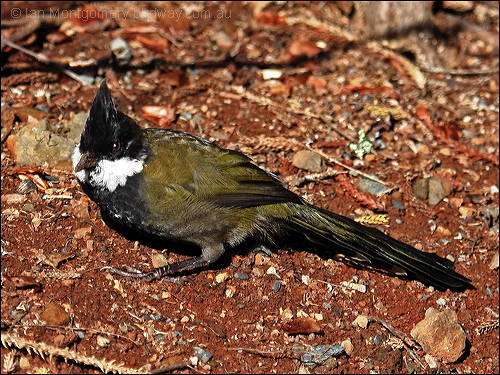
The Eastern Whipbird (Psophodes olivaceus) is an insectivorous passerine bird native to the east coast of Australia, its whip-crack call a familiar sound in forests of eastern Australia. Two subspecies are recognized. Heard much more often than seen, it is a dark olive-green and black in color with a distinctive white cheek patch and crest. The male and female are similar in plumage. The Whipbirds are in the Whipbirds, Jewel-babblers, quail-thrushes – Psophodidae Family.

Papuan Whipbird (Androphobus viridis)
Eastern Whipbird (Psophodes olivaceus) ©©
Western Whipbird (Psophodes nigrogularis) See Photo

Photo of a Western whipbirdAnimal PicturesPictures

See:

The Gospel Message

Wordless Birds

*

Formed By Him – “Palm” Birds

Palm Tanager (Thraupis palmarum) by Ia

Palm Tanager (Thraupis palmarum) by Ia

Yesterday was the traditionally known day of “Palm Sunday.” Many this week celebrate and remember the last week of the Lord Jesus Christ before His sacrifice on the cross for the sins of mankind. Thought it might be interesting to look at the birds that have “Palm” in their names.

In Leviticus the Bible tells of a celebration they had with palm leaves.

And ye shall take you on the first day the boughs of goodly trees, branches of palm trees, and the boughs of thick trees, and willows of the brook; and ye shall rejoice before the LORD your God seven days. (Leviticus 23:40 KJV)

From Gill’s Commentary, we learn – “branches of palm trees: which were very common in the land of Judea, and especially about Jericho; see John 12:13; the Targums of Jonathan and Jerusalem call them “lulabs”, which is the name the Jews give to the whole bundle they carried in their hands on this day:”

Palmchat (Dulus dominicus) ©SevenSeas of Rhye

Palmchat (Dulus dominicus) ©SevenSeas of Rhye

Palm trees, branches or leaves are mentioned in Exodus 15:17, Leviticus 23:40; Numbers 39:9; Deut. 34:3 – Jericho is called the city of palm trees; Judges 3:13 and 4:5; I Kings 6:29, 32, 35, 7:36; 2 Chronicles 3:5, 28:15, Nehemiah 8:15; Psalm 92:15; Song of Solomon 7:7, 8; Ezekial 40:16-37, 41:18-26; Joel 1:12; and in John 12:13.

The next day a great multitude that had come to the feast, when they heard that Jesus was coming to Jerusalem, took branches of palm trees and went out to meet Him, and cried out: “Hosanna! ‘BLESSED IS HE WHO COMES IN THE NAME OF THE LORD!’ The King of Israel!” Then Jesus, when He had found a young donkey, sat on it; as it is written: “FEAR NOT, DAUGHTER OF ZION; BEHOLD, YOUR KING IS COMING, SITTING ON A DONKEY’S COLT.”
(John 12:12-15 NKJV)

The people were excited and were strawing the road with the palm branches. They were celebrating what they thought was their King who would take them out of the control of their current rulers. By weeks end, they will have changed their “Hosanna!”s into “Crucify Him!”s.

I realize that the birds have been named by various people, beginning with Adam until the current namers. Many of the birds that have Palm in their names do associate with Palm trees in one aspect or another. Maybe the next time you observe the “Palm” birds that were “Formed By Him,” our Creator and Savior, you will remember the day He rode into Jerusalem on a “palm road” Maybe He gave these birds the desire to use the Palm Trees so that when we see them we will not forget the prophecies that were fulfilled that day.

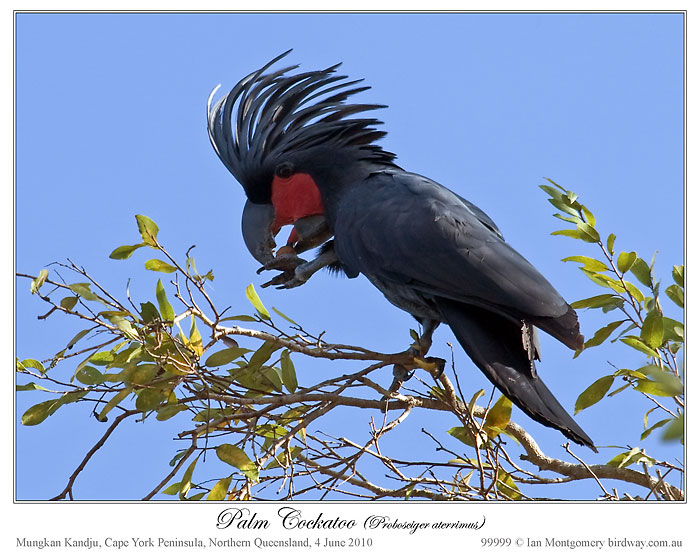
Palm Cockatoo (Probosciger aterrimus) by Ian

Palm Cockatoo (Probosciger aterrimus) by Ian

Birds with “Palm” in their name:

Palm-nut Vulture (Gypohierax angolensis)
“feeds mainly on the fruit of the oil-palm”
Palm Cockatoo (Probosciger aterrimus)
“they have been observed eating the seeds of the kanari and black bean trees, and the fruits of the nonda tree and Pandanus palms.”
Palm Lorikeet (Charmosyna palmarum)
“Its natural habitats are subtropical or tropical moist lowland forests, subtropical or tropical moist montanes, and plantations”
African Palm Swift (Cypsiurus parvus)
The down and feather nest is glued to the underside of a palm leaf with saliva, which is also used to secure the usually two eggs. This is a fast flying bird of open country, which is strongly associated with Oil Palms. (applies to other palm swifts)”
Antillean Palm Swift (Tachornis phoenicobia)
Asian Palm Swift (Cypsiurus balasiensis)
Neotropical Palm Swift (Tachornis squamata)
Pygmy Palm Swift (Tachornis furcata)
“observed them near mature cultivated palms, which represented nesting and roosting substrates”
Point-tailed Palmcreeper (Berlepschia rikeri)
“found in tropical and subtropical dry forests, mostly in palm groves”

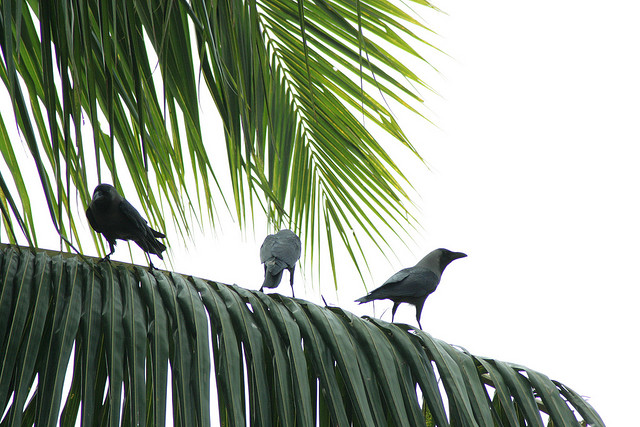
Palm Crows on Palm ©SwamiStream

Palm Crows on Palm ©SwamiStream

Cuban Palm Crow (Corvus minutus)
“Nests are located in stands of tall palms with breeding from April-July or possibly earlier”
Hispaniolan Palm Crow (Corvus palmarum)
“The nest is made of sticks and placed among tree branches or in a palm tree.”
Palmchat (Dulus dominicus)
Collared Palm Thrush (Cichladusa arquata)
“Dry palm savanna and moist palm shrubland.”
Rufous-tailed Palm Thrush (Cichladusa ruficauda)
Spotted Palm Thrush (Cichladusa guttata)
Golden Palm Weaver (Ploceus bojeri)
Palm Warbler (Dendroica palmarum)
Palm Tanager (Thraupis palmarum)
“seems to like habitat with palms on which it feeds”

Information from various internet websites.

See:

The Gospel Message

Wordless Birds

*

Formed By Him – Plants and Pollinator Birds

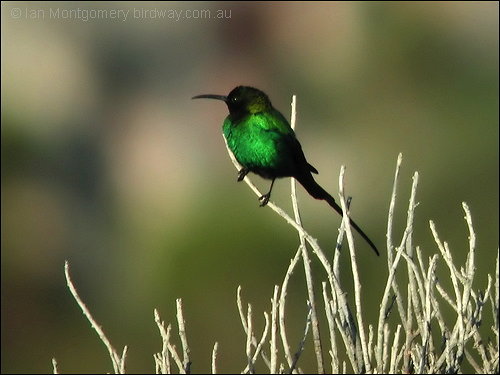
Malachite Sunbird (Nectarinia famosa) by Ian

Malachite Sunbird (Nectarinia famosa) by Ian

And to every beast of the earth, and to every fowl of the air, and to every thing that creepeth upon the earth, wherein there is life, I have given every green herb for meat: and it was so. (Genesis 1:30 KJV)

God has created an amazing bird, the Malachite Sunbird, and a beautiful flower, Babiana Ringens or “Rat’s Tail,” that both need one another to help meet their needs. The bird wants the nectar the flower produces and the flower needs to pollinate and is helped by the birds feathers. To help the two, the flower was created with a perch for the “long-tailed” bird to perch on while drinking nectar.

“Babiana ringens has a bright red floral display situated close to ground level . Its red colour , long corolla tubes and copious nectar supply make it attractive to sunbirds, which seem to be the primary pollinators of this plant. A strange, fleshy, twig-like structure projects above the plant giving it the common name of “rotstert ” or “rat’s tail.” The sole function of this twig-structure is that it provides a perching platform for sunbirds, which presumably “feel more comfortable” pollinating the plant from this vantage point than from the ground (Anderson et al. 2005). Having this perch increases outcrossing rates and positions birds correctly for efficient pollen transfer (Anderson et al. 2005). Anderson et al. (2005) also showed that male sunbirds were more particular about the presence or absence of a perch which they ascribed to territoriality or perhaps because using a perch is less likely to damage the long tail sported only by males than if they used the ground. This is arguably the most specialized bird perch in the world.” (To see whole article – Click Here)

Malachite Sunbird - plant for - Rats Tail (babiana ringens) ©©JG in SF

Malachite Sunbird – plant for – Rats Tail (babiana ringens) ©©JG in SF – (see the stem at left)

From Creation Moments:

Plants with Perches for Pollinator Birds –  Copyright © 2011, Creation Moments, PO Box 839, Foley, MN 56329, www.creationmoments.com.

Praise the LORD from the earth, ye dragons, and all deeps … Beasts, and all cattle; creeping things, and flying fowl… (Psalm 148:7, 10)

Could a plant devise a special growth for itself so that it becomes inviting to its only pollinator? If evolution was true, how could such a plant survive until it could learn enough about its pollinator, and about genetics, to evolve a special growth just for that pollinator.

Those sound like silly questions, but if evolution is true, they must be answered, and answered scientifically. A South African plant called the “Rat’s Tail” grows a seemingly purposeless spear that extends near its flowers. Theorizing that the spear might be a bird-perch for a pollinator, scientists closely watched some of the plants in the wild. They learned that the only bird that seems interested in pollinating the plant is a bird called the “Malachite Sunbird.” The scientists then removed the spikes from some of the plants. The result was that male sunbirds were far less likely to visit and pollinate those plants. As a result, perchless-plants only produced half as many seeds as plants with perches. Researchers pointed out that this arrangement makes sense because male sunbirds have long tails that can be damaged by ground landings.

However, if we conclude that the Rat’s Tails were created for the sunbirds, and the sunbirds for the Rat’s Tails, we don’t have to find natural explanations for such silly questions. This is simply another of God’s clever designs.

Prayer:
Lord, Your caring hand is all around us. I thank You especially for caring for me by forgiving my sins. Amen.
Notes:
Science News, 6/4/05, p. 365, “Built-in bird perch spreads the pollen.”
___

Malachite Sunbird (Nectarinia famosa) ©©Rainbirder

Malachite Sunbird (Nectarinia famosa) ©©Rainbirder

The Malachite Sunbird is in the Nectariniidae – Sunbirds Family of the Passeriformes Order or Perching Birds and are found across Africa, the Middle East and into South-east Asia.

The breeding male Malachite Sunbird, which has very long central tail feathers, is 25cm long, and the shorter-tailed female 15 cm. The adult male is metallic green when breeding, with blackish-green wings with small yellow pectoral patches. In non-breeding (eclipse) plumage, the male’s upperparts are brown apart from the green wings and tail, the latter retaining the elongated feathers. The underparts in eclipse plumage are yellow, flecked with green.

The female has brown upperparts and dull yellow underparts with some indistinct streaking on the breast. Her tail is square-ended. The juvenile resembles the female.

This species, like most sunbirds, feed mainly on nectar, although they will also take insects, especially when feeding young. This sunbird may hunt in a similar manner to a flycatcher, hawking for insect prey from a perch.  Most sunbird species can take nectar by hovering like a hummingbird, but usually perch to feed most of the time. As a fairly large sunbird, the Malachite Sunbird is no exception. They have long thin down-curved bills and brush-tipped tubular tongues, both adaptations to nectar feeding.

Wordless Birds

*

Formed By Him – Hornbills, Monkeys and Eagles

Yellow-casqued Hornbill (Ceratogymna elata) ©Wiki

Yellow-casqued Hornbill (Ceratogymna elata) ©Wiki

Oh, the depth of the riches both of the wisdom and knowledge of God! How unsearchable are His judgments and unfathomable His ways! (Romans 11:33 NASB)

Hornbills that Understand Monkey

The Yellow-casqued Hornbill (Ceratogymna elata) is found in the primeval rain forest of coastal regions of West Africa, for example in Côte d’Ivoire.

Yellow-casqued Hornbills are one of the largest birds of the forest, with adults weighing up to 2 kg. They live mainly in the forest canopy, feeding on the ground only rarely. They live in small family groups containing at least one adult male and female, with one or two immature birds, though they sometimes gather in larger flocks to exploit a major food supply such as an ant or termite nest.

Crowned Eagle (Stephanoaetus coronatus) ©WikiC

Crowned Eagle (Stephanoaetus coronatus) ©WikiC

“The birds are occasionally preyed upon by Crowned Eagles, and they respond to the presence of an eagle (sometimes indicated by its characteristic shriek) by mobbing, i.e. approaching it and emitting calls. Since the eagles depend on surprise to make a catch, this frequently causes them to leave the area.” (Wikipedia edited)

“With the exception of basic messages such as aggression, communication between two entirely different species has seldom been observed among animals in the wild. We know that many animals among the same species give each other specific warnings about an impending danger.” One example is “researchers have found that a downy woodpecker responds to alarm calls from chickadees.” “However, scientists have never noted one species recognizing the specific warning given by a second species.

Diana Monkey at the Henry Doorly Zoo ©WikiC

Diana Monkey at the Henry Doorly Zoo ©WikiC

Diana monkeys on the Ivory Coast of Africa face two primary threats, leopards and crowned eagles. When one of these threats appears, the spotter gives a very specific bark-like call depending on the type of threat. Of course, the monkeys need to respond differently to each threat whether it comes from the leopard below or the eagle above. So it helps them to know what they are facing. On the other hand, a bird named the yellow hornbill is threatened only by the crowned eagles. Researchers noted that these birds ignored the monkeys’ warning about the leopards. But when the monkeys signaled danger from the eagle, the bird took defensive measures. Researchers confirmed their observations using tape recorded monkey calls. The researchers were amazed that these birds understood the monkey warnings in an intelligent manner.”

Such intelligence comes from the Creator, Who has given the gift of such intelligence to His creatures in a way that provides for their survival. This shows His loving care for His creation.

Sources:
Science News, 3/20: 2004, p. 188  Science News, “Hornbills know which monkey calls to heed.”
Copyright © 2011, Creation Moments, PO Box 839, Foley, MN 56329, http://www.creationmoments.com/ and from Wikipedia

Yellow-casqued Hornbills are in the Hornbill-Bucerotidae Family of the Bucerotiformes Order which includes the Hoopoes, Wood Hoopoes, and the Ground Hornbills. Crowned Eagles are found in the Kites, Hawks and Eagles – Accipitridae Family.

Formed By Him – The Kakapo

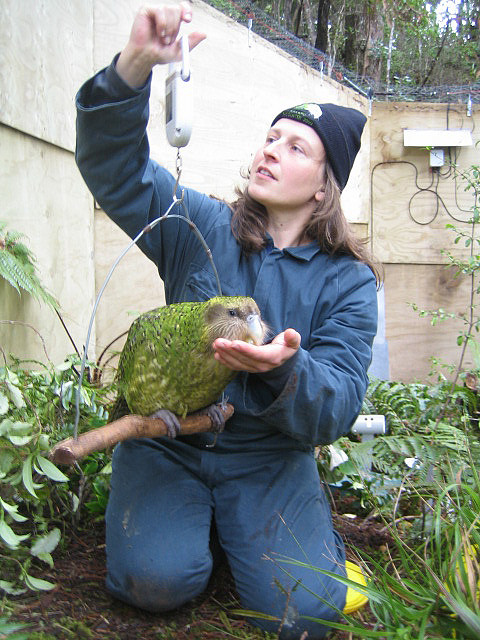
Kakapo (Strigops habroptila) ©Dept of Conservation

Kakapo (Strigops habroptila) ©Dept of Conservation

And wild animals shall meet with hyenas; the wild goat shall cry to his fellow; indeed, there the night bird settles and finds for herself a resting place. (Isaiah 34:14 ESV)

The Kakapo (Strigops habroptila) is another unique bird Formed by the Creator. The following articles will introduce you to a New Zealand bird that is extremely endangered with only about 90-120 left in the world (depending on sources). They belong to the Strigopidae Family, of which it is the only bird in the Strigops genus and keeps company with the Kea and New Zealand Kaka of the Nestor genus. The three are classified as New Zealand Parrots and belong to the Psittaciformes Order of Parrots and Cockatoos.

From Creation Moments: A Truly Strange Bird

Many, O LORD my God, are thy wonderful works which thou hast done, and thy thoughts which are to us-ward: they cannot be reckoned up in order unto thee: if I would declare and speak of them, they are more than can be numbered. (Psalms 40:5 KJV)

Though God created the entire living kingdom in only a few days, the variety and creativity of what He made seems nearly unlimited by our standards. One of the more unusual creatures He made was thought extinct until it was rediscovered in 1958.

Kakapo (Strigops habroptila) ©WikiC showing whiskers around beak

Kakapo (Strigops habroptila) ©WikiC showing whiskers around beak

The kakapo parrot lives in New Zealand. The most unusual parrot on Earth, it is one of only a few known parrots that prefers to sleep during the day and becomes active at night. Weighing in at five pounds, it is also the world’s heaviest parrot. It is, perhaps not surprisingly, the world’s only non-flying parrot.

The Creator’s unusual expression of inventive creativity in designing the kakapo did not end here. The mating habits of the kakapo are especially peculiar for birds. In mating season, the males gather in locations that are used year after year for mate selection. Female parrots come to these places to inspect the males to select a mate. However, in most un-bird-like fashion, the males provide absolutely no help building the nest or rearing the young.

The kakapo is remarkable because of its many strange traits, most of which would make it least fit for survival. In other words, not only is it an unusual creature, but its more unusual characteristics seem to put it at a disadvantage as far as evolution is concerned. So while evolution would not have made the kakapo, our inventive Creator did, perhaps as a witness against evolution.
Prayer:
Dear Father in heaven, I thank You for the beauty and creativity You have placed into Your work of creation and for the blessings these gifts add to life. In Jesus’ Name. Amen.
Notes:
Discover, Mar. 1985. p. 36. ©Creation Moments 3/10/11

Kakapo (Strigops habroptila) ©Dept of Conservation-To See Relative Size

This is what Wikipedia (with editing) has to say about the Kakapo:

“The Kakapo (Māori: kākāpō, meaning night parrot), Strigops habroptila, also called owl parrot, is a species of large (60 cm, 24 in), flightless nocturnal parrot endemic to New Zealand. It has finely blotched yellow-green plumage, a distinct facial disc of sensory, vibrissa-like feathers, a large grey beak, short legs, large feet, and wings and a tail of relatively short length. A certain combination of traits makes it unique among its kind—it is the world’s only flightless parrot, the heaviest parrot (2-4 kg, 4.5-9 lb), nocturnal, herbivorous, visibly sexually dimorphic in body size, has a low basal metabolic rate, no male parental care, and is the only parrot to have a polygynous lek breeding system. It is also possibly one of the world’s longest-living birds. Its anatomy typifies the tendency of bird evolution on oceanic islands, with few predators and abundant food: a generally robust physique, with accretion of thermodynamic efficiency at the expense of flight abilities, reduced wing muscles, and a diminished keel on the sternum.

The Kakapo is critically endangered; as of February 2010, only 120 living individuals are known, most of which have been given names.

The Kakapo has a well-developed sense of smell, which complements its nocturnal lifestyle. It can discriminate among odours while foraging; a behaviour reported for only one other parrot species. One of the most striking characteristics of the Kakapo is its pleasant and powerful odour, which has been described as musty. Given the Kakapo’s well-developed sense of smell, this scent may be a social chemosignal.”

More about the Kakapo from Wikipedia

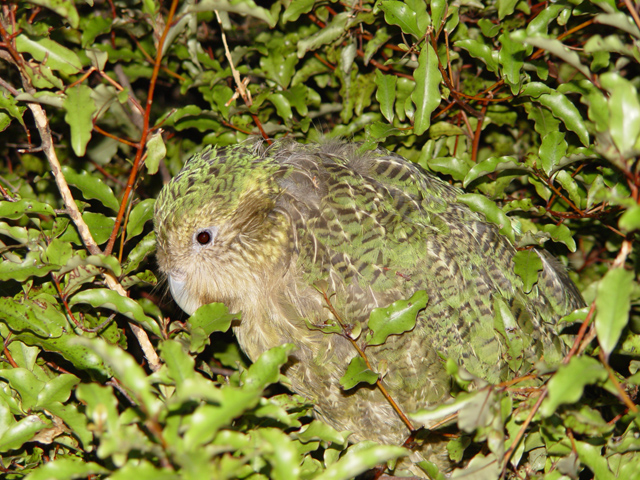
Kakapo (Strigops habroptila) ©WikiC showing camaflage

Kakapo (Strigops habroptila) ©WikiC Showing The Lord’s Design of Camaflage

Facts about the Kakapo from New Zealand’s Dept of Conservation:
* It is the heaviest parrot in the world. Males can weigh over two kilograms. Unique among land birds, it can store large amounts of energy as body fat.
* It is the only parrot to have a ‘lek’ mating system: males compete for ‘calling posts’ specially dug-out bowls in the earth and call (“boom”) each night in summer months for a female. The male’s low-frequency mating boom travels over several kilometres. It is the only parrot to have an inflatable thoracic air sac.
* Kākāpō breed every three to four years.
* A bird can range several kilometres in one night.
* Although it cannot fly, it is good at climbing trees.
* The birds are herbivores and eat variety of foods such as roots, leaves and fruit
* Kākāpō once ranged from near sea level to high in the mountains.
* Possibly as defence against its ancient predator – the giant eagle – the kākāpō became nocturnal and learned to remain still (‘freeze’) at times of danger.

More about the Kakapo from the New Zealand Department of Conservation

Kakapo Release by Spokebird
http://www.youtube.com/watch?v=V-5VlQ9kRzg
*
To see more of the Formed By Him Articles – CLICK HERE

*

Formed By Him – Rock Birds and The Rock – II

Water Splashing on Rocks - Point Lobos State Reserve by Daves BP

Water Splashing on Rocks – Point Lobos State Reserve by Daves BP

Therefore whosoever heareth these sayings of mine, and doeth them, I will liken him unto a wise man, which built his house upon a rock: (Matthew 7:24 KJV)

“Rock Birds” Part II.  See Formed By Him – Rock Birds and The Rock – I to see the first 25 birds with “Rock” in their names.

When the Lord created the world and all that is therein, He created the rocks and hills and the birds that He created were well adapted to live in those places. Birdwatchers through the years have observed them in this habitat of rocks, stones, cliffs, and other high rocky places. Just as Adam named the first birds, ornithologists (bird people) are still naming birds.

Searching through the latest IOC 2.7 List of Birds, I found 50 birds with “Rock” in their names. Searching the Bible for the word “Rock”, I found around 130 verses referring to a “rock” or “The Rock.” Here is a blend of the birds and some of the Scriptures verses that show the mighty Hand of God at work and the neat “Rock Birds” Formed by Him.

Here is the list of the last 25 birds with “Rock” in their name in taxonomic order with a few words about them :

O come, let us sing unto the LORD: let us make a joyful noise to the rock of our salvation. (Psalms 95:1 KJV)

Rockrunner (Achaetops pycnopygius) – The Rockrunner is a monogamous bird which means that the bird finds and breeds with one partner for the rest of its life. The bird lays between 2 to 3 eggs and they are coloured red.

The nest is built high up in the tree canopy and is protected from predators by branches and the dense green foliage.

Rock-loving Cisticola (Cisticola emini) ©©algaedoc

Rock-loving Cisticola (Cisticola emini) – It is usually associated with rocky wooded terrain with interspersed patchy grass tussocks. Forages in rocks or rank vegetation for insects. Split from the Lazy Cisticola.

Rock Wren (Salpinctes obsoletus) by Daves BirdingPix

Rock Wren (Salpinctes obsoletus) – Their breeding habitat is dry rocky locations, including canyons, from southwestern Canada south to Costa Rica. This bird builds a cup nest in a crevice or cavity, usually among rocks.

These birds are permanent residents in the south of their range, but northern populations migrate to warmer areas from the central United States and southwest Canada southwards. They are occasional vagrants in the eastern United States.

These birds actively hunt on the ground, around and under objects, probing with their bill as their extraction tool. They mainly eat insects and spiders. Neat Video This bird’s song is a trill, becoming more varied during the nesting season.

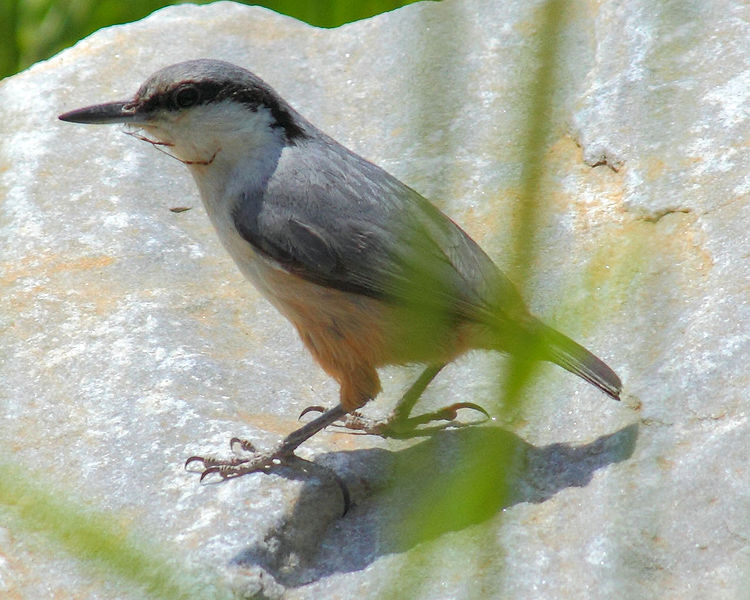
Western Rock Nuthatch (Sitta neumayer) ©WikiC

Western Rock Nuthatch (Sitta neumayer) – Video – The Western Rock Nuthatch is a bird associated with habitats with bare rocks, especially in mountainous areas. Those at the highest altitudes may move lower down in winter.

It feeds on insects and spiders in summer, supplemented with seeds and snails in winter. It feeds on the ground, and will wedge larger items in rock crevies while it hammers them open with its strong bill. It will also flycatch.

This territorial species builds a flask-shaped nest from mud, dung and hair or feathers in a rock crevice, cave, or under an overhang on a rock face. Decorative items may be pushed into crevices and cracks near the entrance to the nest. The nest is lined with softer materials and the entrance is sealed with mud. 4-10 eggs are laid, and are white speckled with yellow.

Eastern Rock Nuthatch (Sitta tephronota) – Video

In God is my salvation and my glory: the rock of my strength, and my refuge, is in God. (Psalms 62:7 KJV)

Brown Rock Chat (Cercomela fusca) – Video – Habitat: Rocky hills, ravines, ruins of ancient tombs and forts, and in suburban compounds, occasionally visiting inhabited homes or nesting in rafters.

Brown-tailed Rock Chat (Cercomela scotocerca) – Photo – A seriously undistinguished little bird that only a birder or ornithologist would bother looking for! It’s main distinguishing feature is its brown-ness and it’s distinguished from the similar Red-tailed Chat by the fact that it’s well, browner. It’s fairly uncommon and prefers rocky bush country. It’s range extends down as far as Samburu, but the best place we’ve found to see it is near Lake Baringo where it can usually be found at the base of the basalt cliffs just West of the lake. Even there it can be difficult to spot since it blends in well against the rocks and dust, especially in the dry season when evrything looks (wait for it) brown. (Kenya Birds)

Sombre Rock Chat (Cercomela dubia) – Video

Cape Rock Thrush (Monticola rupestris) ©WikiC

Cape Rock Thrush (Monticola rupestris) ©WikiC

Cape Rock Thrush (Monticola rupestris) – The rock-thrushes, Monticola, are a genus of chats, medium-sized mostly insectivorous or omnivorous songbirds. All are Old World birds associated with mountainous regions.

Sentinel Rock Thrush (Monticola explorator) – Same as above – Video by Keith
Short-toed Rock Thrush (Monticola brevipes) – Same as above – It is found in Angola, Botswana, Namibia, and South Africa. Its natural habitat is subtropical or tropical dry shrubland.

He brought me up also out of an horrible pit, out of the miry clay, and set my feet upon a rock, and established my goings. (Psalms 40:2 KJV)

Miombo Rock Thrush (Monticola angolensis) – Same as above
Rufous-tailed Rock Thrush (Monticola saxatilis) (Common) – Same as above
Little Rock Thrush (Monticola rufocinereus) – Same as above – It is found in rocky areas with some trees, and sometimes near settlements.[2][3] At 15 to 16 centimetres (5.9 to 6.3 in) this is the smallest of the rock thrushes.

Blue Rock Thrush (Monticola solitarius) by Nikhil Devasar

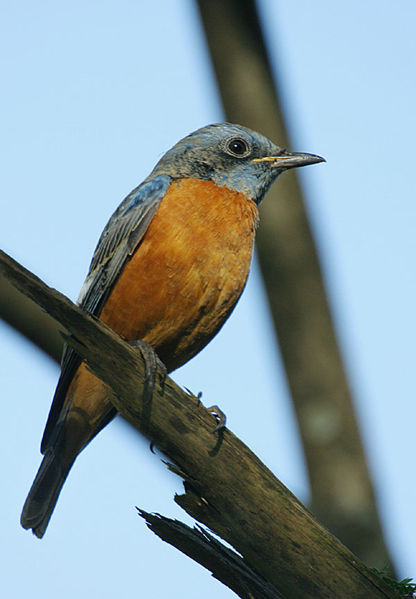
Blue Rock Thrush (Monticola solitarius) – Same as above – Blue Rock Thrush breeds in open mountainous areas, usually higher than the breeding zone of the related Rufous-tailed Rock Thrush. It nests in rock cavities and walls, and usually lays 3-5 eggs. An omnivore, the Blue Rock Thrush eats a wide variety of insects and small reptiles in addition to berries and seeds.

This is a starling-sized bird, 21–23 cm in length with a long slim bill. The summer male is unmistakable, with all blue-grey plumage apart from its darker wings. Females and immatures are much less striking, with dark brown upperparts, and paler brown scaly underparts. Both sexes lack the reddish outer tail feathers of Rock Thrush. The male Blue Rock Thrush sings a clear, melodious call that is similar to, but louder than the call of the Rock Thrush.

The Blue Rock Thrush is Malta’s national bird and is shown on the Lm 1 coins that was part of the previous currency of the country.

Chestnut-bellied Rock Thrush (Monticola rufiventris) – Same as above – It is found in Bangladesh, Bhutan, China, India, Laos, Myanmar, Nepal, Pakistan, Thailand, and Vietnam. Its natural habitat is temperate forests.
Blue-capped Rock Thrush (Monticola cinclorhynchus) – Same as above  Video – This thrush-like Old World flycatcher breeds in the foothills of the Himalayas and winters in the hill forests of southern India.

White-throated Rock Thrush by Peter Ericsson

White-throated Rock Thrush by Peter Ericsson

White-throated Rock Thrush (Monticola gularis) – Same as above – It is found in Cambodia, China, Hong Kong, Japan, North Korea, South Korea, Laos, Malaysia, Myanmar, Russia, Singapore, Thailand, and Vietnam. Its natural habitat is temperate forests.
Littoral Rock Thrush (Monticola imerina) – Same as above – Its natural habitats are dry savanna and subtropical or tropical dry shrubland.
Forest Rock Thrush (Monticola sharpei) – Same as above – It is endemic to Madagascar.

And they remembered that God was their rock, and the high God their redeemer. (Psalms 78:35 KJV)

Rockefeller’s Sunbird (Cinnyris rockefelleri) – It is found in Democratic Republic of the Congo, possibly Burundi, and possibly Rwanda. Its natural habitats are subtropical or tropical moist montanes and subtropical or tropical high-altitude shrubland. It is threatened by habitat loss.
Pale Rockfinch (Carpospiza brachydactyla) – Photo
Rock Sparrow (Petronia petronia) – This sparrow breeds on barren rocky hills from the Iberian peninsula and western north Africa across southern Europe and through central Asia. It is largely resident in the west of its range, but Asian birds migrate to more southerly areas, or move down the mountains.

As it is written, Behold, I lay in Sion a stumblingstone and rock of offence: and whosoever believeth on him shall not be ashamed. (Romans 9:33 KJV)

Rock Firefinch (Lagonosticta sanguinodorsalis) – Photo – It is commonly found in bushy and rocky outcrops on the Jos Plateau, Nigeria and inselbergs to the north and east. It probably feeds on grass seeds.
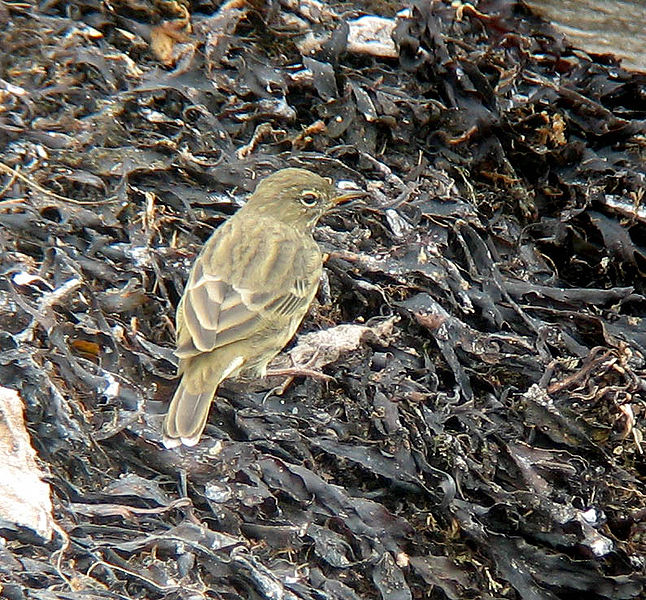
Eurasian Rock Pipit (Anthus petrosus) – a small passerine bird species which breeds on rocky coasts of western Europe northwards from Brittany. Rock Pipits tend to be found along rocky coasts, whereas Water Pipits favour damp grassland.


African Rock Pipit
(Anthus crenatus) – The Yellow-tufted Pipit, also known as the African Rock Pipit, is a species of bird in the Motacillidae family. It is found in Lesotho and South Africa. Its natural habitat is subtropical or tropical high-altitude grassland.

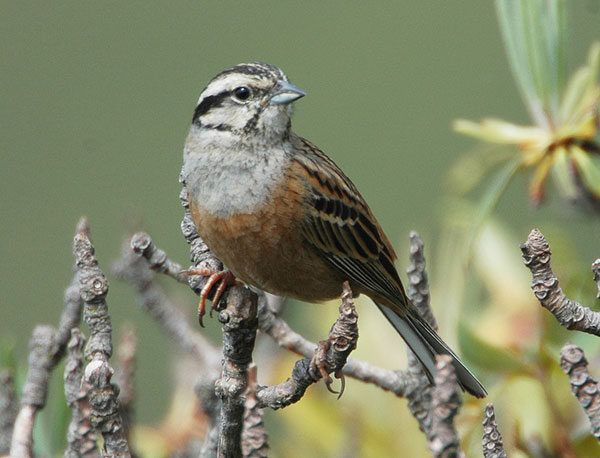
Rock Bunting (Emberiza cia) by Nikhil Devasar

Rock Bunting (Emberiza cia) – Photo – Rock Bunting breeds in open dry rocky mountainous areas. It lays 3-5 greyish eggs in a lined nest on the ground or occasionally in a low bush. Its natural food consists of insects when feeding young, and otherwise seeds.

Doth the eagle mount up at thy command, and make her nest on high? She dwelleth and abideth on the rock, upon the crag of the rock, and the strong place. (Job 39:27-28 KJV)

For thou art my rock and my fortress; therefore for thy name’s sake lead me, and guide me. (Psalms 31:3 KJV)

There are many more verses that mention “The Rock” and there are also many more birds that live and eat in rocky places. They may not have “rock” in their name, but they were all created by The Rock, Jesus Christ.

And to make all men see what is the fellowship of the mystery, which from the beginning of the world hath been hid in God, who created all things by Jesus Christ: (Ephesians 3:9 KJV)

And did all drink the same spiritual drink: for they drank of that spiritual Rock that followed them: and that Rock was Christ. (1 Corinthians 10:4 KJV)

Information mostly from Wikipedia, but other internet sources quoted also. Names according to the IOC 2.7 version.

We trust you know The Rock as your Saviour.

Wordless Birds

Gospel Message

To see more Formed By Him blogs

*

Formed By Him – Rock Birds and The Rock – I

Waves on Rocks - Point Lobos State Reserve by Daves BP

Waves on Rocks – Point Lobos State Reserve by Daves BP

The LORD is my rock, and my fortress, and my deliverer; my God, my strength, in whom I will trust; my buckler, and the horn of my salvation, and my high tower. (Psalms 18:2 KJV)

When the Lord created the world and all that is therein, He created the rocks and hills and the birds that He created were well adapted to live in those places. Birdwatchers through the years have observed them in this habitat of rocks, stones, cliffs, and other high rocky places. Just as Adam named the first birds, ornithologists (bird people) are still naming birds.

Searching through the latest IOC 2.7 List of Birds, I found 50 birds with “Rock” in their names. Searching the Bible for the word “Rock”, I found around 130 verses referring to a “rock” or “The Rock.” Here is a blend of the birds and some of the Scriptures verses that show the mighty Hand of God at work and the neat “Rock Birds” Formed by Him.

Here is a list of the first 25 birds with “Rock” in their name in taxonomic order with a few words about them :

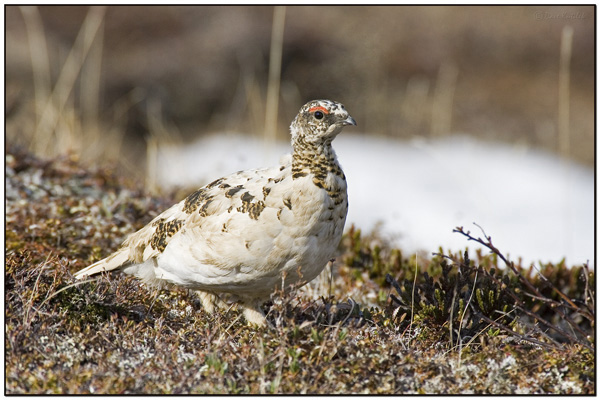
Rock Ptarmigan (Lagopus muta) by Daves BirdingPix

Rock Ptarmigan (Lagopus muta) by Daves BirdingPix

Rock Ptarmigan (Lagopus muta) – It is a sedentary species which breeds across arctic and subarctic Eurasia and North America (including Greenland) on rocky mountainsides and tundra.
Rock Partridge (Alectoris graeca)©AGrosset  – This is a resident breeder in dry, open and often hilly country. It nests in a scantily lined ground scrape laying 5-21 eggs. The Rock Partridge takes a wide variety of seeds and some insect food.

The LORD liveth; and blessed be my rock; and let the God of my salvation be exalted. (Psalms 18:46 KJV)

strong>Rock Bush Quail (Perdicula argoondah)© – is a species of quail found in parts of peninsular India.  They are found in small coveys and are often detected only suddenly, when they burst out into flight en masse from under vegetation.

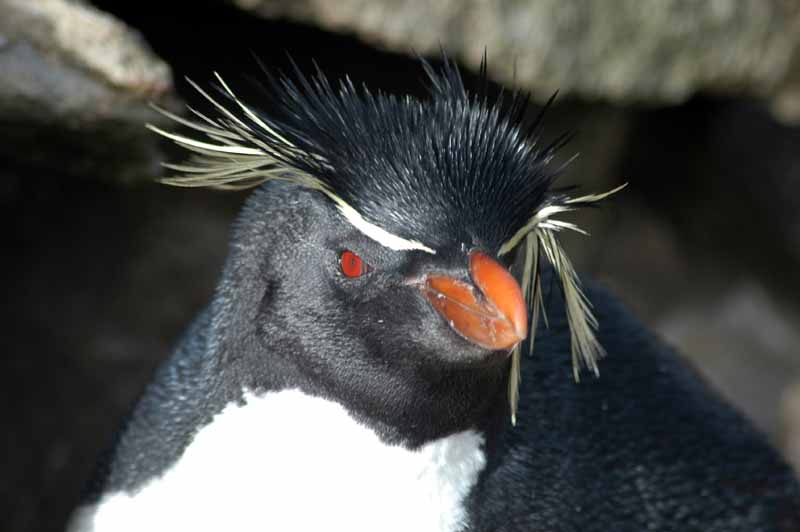
Southern Rockhopper Penguin (Eudyptes chrysocome) by Bob-Nan

Southern (Western) Rockhopper Penguin (Eudyptes chrysocome) by Dave’sBirdingPix- Their common name refers to the fact that, unlike many other penguins which get around obstacles by sliding on their bellies or by awkward climbing using their flipper-like wings as aid, Rockhoppers will try to jump over boulders and across cracks. This behaviour is by no means unique to this species however – at least the other “crested” penguins of the genus Eudyptes hop around rocks too. But the Rockhopper’s congeners occur on remote islands in the New Zealand region, whereas the rockhopper penguins are found in places that were visited by explorers and whalers since the Early Modern era. Hence, it is this particular species in which this behavior was first noted.
Northern Rockhopper Penguin (Eudyptes moseleyi)© – Same as above

Rock Shag (Phalacrocorax magellanicus) by Daves BirdingPix

Rock Shag (Phalacrocorax magellanicus) by Daves BirdingPix

Rock Shag (Phalacrocorax magellanicus) – The Rock Shag usually nests on ledges on steep, bare, rocky cliffs. It normally lays 3 eggs, though nests of from 2 to 5 eggs have been seen. Nesting colonies range is size from 5 pairs to nearly 400.

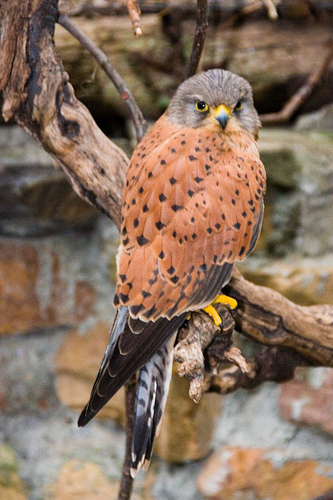
Rock Kestrel (Falco rupicolus) ©©SteveCrane

Rock Kestrel (Falco rupicolus) – It does not require woodland to be present as long as there are alternate perching and nesting sites like rocks or buildings. It will thrive in treeless steppe where there are abundant herbaceous plants and shrubs to support a population of prey animals.

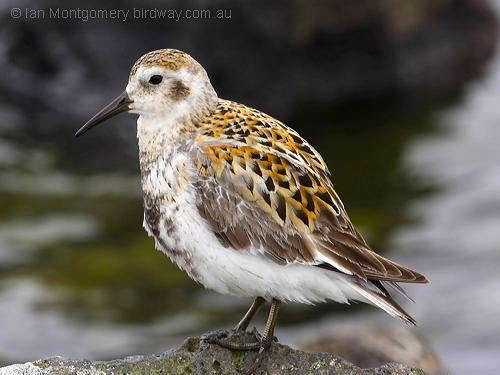
Rock Sandpiper (Calidris ptilocnemis) by Ian

Rock Sandpiper (Calidris ptilocnemis) – They nest on the ground either elevated on rocks or in lower damp location. The males makes several scrapes; the female choose one and lays 4 eggs. Both the male and female take the responsibility for incubation. Birds migrate south to rocky ice-free Pacific coasts in winter.

Now Rizpah the daughter of Aiah took sackcloth and spread it for herself on the rock, from the beginning of harvest until the late rains poured on them from heaven. And she did not allow the birds of the air to rest on them by day nor the beasts of the field by night. (2 Samuel 21:10 NKJV)

Rock Pratincole (Glareola nuchalis) – This species shows a preference for exposed emergent rocks in large rivers and streams, sometimes also frequenting mud and sandbars by lagoons. Eggs are laid directly into shallow depressions, cracks, and on the flat tops of bare rocks surrounded by deep and sometimes fast-flowing water, or on rock ledges and under overhangings. Most nests are found within a metre or two of the water level. (Bird Life)

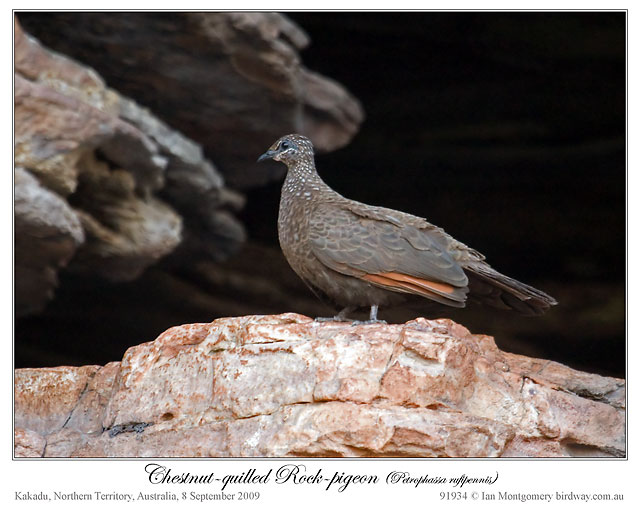
Chestnut-quilled Rock Pigeon (Petrophassa rufipennis) by Ian

Chestnut-quilled Rock Pigeon (Petrophassa rufipennis)by Ian  – found in deep sandstone gorges, rocky gullies & cliffs in the area from the Katherine Gorge to Oenpelli in the Northern Territory of Australia. – See Ian’s Bird of the Week
White-quilled Rock Pigeon (Petrophassa albipennis)by Ian  – Found only among the cliffs, gorges & boulder strewn sloped regions of the Kimberley Division of Western Australia & adjacent Northern Territory east to the Flora River & Stokes Range.

Rock Parrot (Neophema petrophila) by Ian

Rock Parrot (Neophema petrophila) by Ian- Rocky islands and coastal dune areas are the preferred habitats for this species, which is found from Robe, South Australia westwards across coastal South and Western Australia to Shark Bay.

New Zealand Rockwren (Xenicus gilviventris) ©WikiC

New Zealand Rockwren (Xenicus gilviventris) by KentNickell – it is a poor flier, rarely flying more than two metres off the ground or for distances or more than 30 m. It is highly terrestrial, feeding in low scrub and open scree and rockfalls in alpine areas. 

There is none holy as the LORD: for there is none beside thee: neither is there any rock like our God. (1 Samuel 2:2 KJV)

Rock Earthcreeper (Ochetorhynchus andaecola)© – It is found in Argentina, Bolivia, and Chile. Its natural habitats are subtropical or tropical high-altitude shrubland and subtropical or tropical high-altitude grassland.

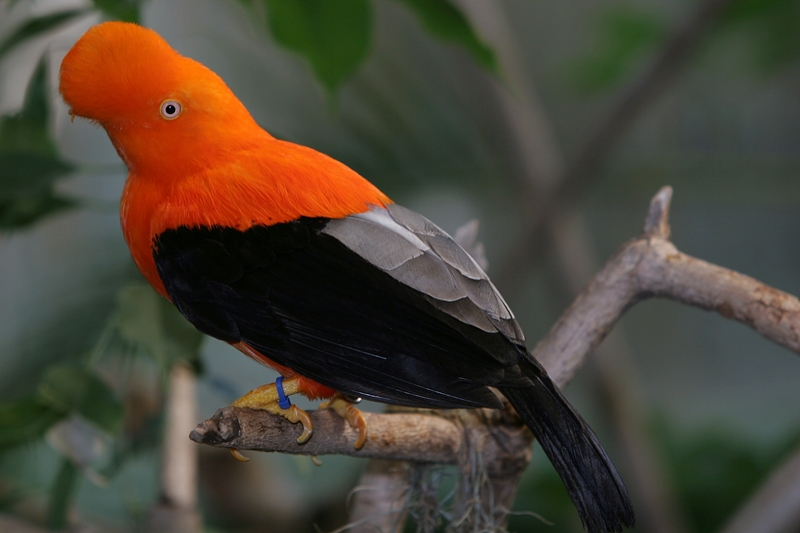
Andean Cock-of-the-rock (Rupicola peruvianus) by SanDiegoZoo

Guianan Cock-of-the-rock (Rupicola rupicola)©©lolodoc – They are found in tropical and subtropical rainforests close to rocky areas, where they build their nests.
Andean Cock-of-the-rock (Rupicola peruvianus) by SanDiegoZoo – Same as above

Rockwarbler (Origma solitaria)by Ian- Nest©©nimpitja – The Rockwarbler is 14 cm in length. It is usually seen hopping erratically over rocks whilst flicking its tail. Its preferred habitat is woodlands with sandstone or limestone. Its distribution is central eastern New South Wales.

The LORD liveth; and blessed be my rock; and let the God of my salvation be exalted. (Psalms 18:46 KJV)

White-necked Rockfowl (Picathartes gymnocephalus)© – They have unfeathered heads, and feed on insects and invertebrates picked from damp rocky areas. Both species are totally non-migratory, being dependent on a specialised rocky jungle habitat. White-necked, also known as the White-necked Picathartes, is found in rocky forest areas at higher altitudes from Sierra Leone to Ghana. It has grey upperparts, white underparts and a yellow head with a black patch on each side.
Grey-necked Rockfowl (Picathartes oreas)© – Same as above, plus, It nests in caves and on rock cliffs and needs specific habitat requirements, such as overhanging rock for protection from the elements and often it needs a seasonal river below to protect from predators.

Cape Rockjumper (Chaetops frenatus) ©WikiC

Cape Rockjumper (Chaetops frenatus)©WikiC – These are small birds with mostly brown and red plumage. Both species have long, white tipped black tails, black throats, broad white submoustachial lines, rufous or orange bellies and rumps and grey and black patterned backs and wings.[1] The iris is red and the bills and legs are black. Their wings are very small and they do not fly very often. They spend most of their lives running and jumping among rocks and grasses while hunting insects. A range of insects are taken, including caterpillars, moths, grasshoppers, beetles and flies. In addition to insects other prey include lizards and geckos, amphibians, scorpions, annelid worms and spiders.
Drakensberg Rockjumper (Chaetops aurantius)©WikiC – Same as above

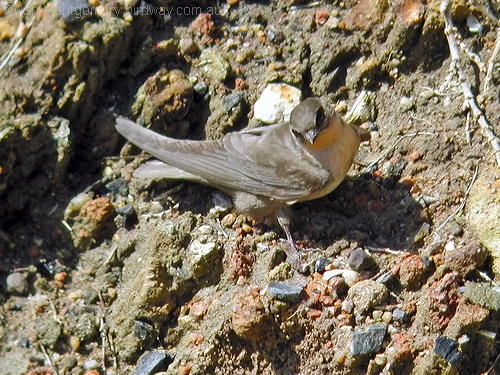
Rock Martin (Ptyonoprogne fuligula) by Ian

Rock Martin (Ptyonoprogne fuligula)by Ian  – The Rock Martin (Ptyonoprogne fuligula) is a small passerine bird in the swallow family that is resident in Africa, and in southwestern Asia east to Pakistan. It breeds mainly in the mountains, but also at lower altitudes, especially in rocky areas and around towns, and, unlike most swallows, it is often found far from water. It is 12–15 cm (4.7–5.9 in) long, with mainly brown plumage, paler-toned on the upper breast and underwing coverts, and with white “windows” on the spread tail in flight. The sexes are similar in appearance, but juveniles have pale fringes to the upperparts and flight feathers. The northern subspecies are smaller, paler, and whiter-throated than southern African forms, and are sometimes split as a separate species, the “Pale Crag Martin”. The Rock Martin hunts along cliff faces for flying insects using a slow flight with much gliding. Its call is a soft twitter.

This martin builds a deep bowl nest on a sheltered horizontal surface, or a neat quarter-sphere against a vertical rock face or wall. The nest is constructed with mud pellets and lined with grass or feathers, and may be built on natural sites under cliff overhangs or on man-made structures such as buildings, dam walls, culverts and bridges. It is often reused for subsequent broods or in later years. This species is a solitary breeder, and is not gregarious, but small groups may breed close together in suitable locations. The two or three eggs of a typical clutch are white with brown and grey blotches, and are incubated by both adults for 16–19 days prior to hatching. Both parents then feed the chicks. Fledging takes another 22–24 days, but the young birds will return to the nest to roost for a few days after the first flight.

From the end of the earth will I cry unto thee, when my heart is overwhelmed: lead me to the rock that is higher than I. (Psalms 61:2 KJV)

The article is quite long so I am breaking it into two Parts. To see the second half – CLICK HERE

Information mostly from Wikipedia, but other internet sources quoted also.

Formed By Him – Broadbills

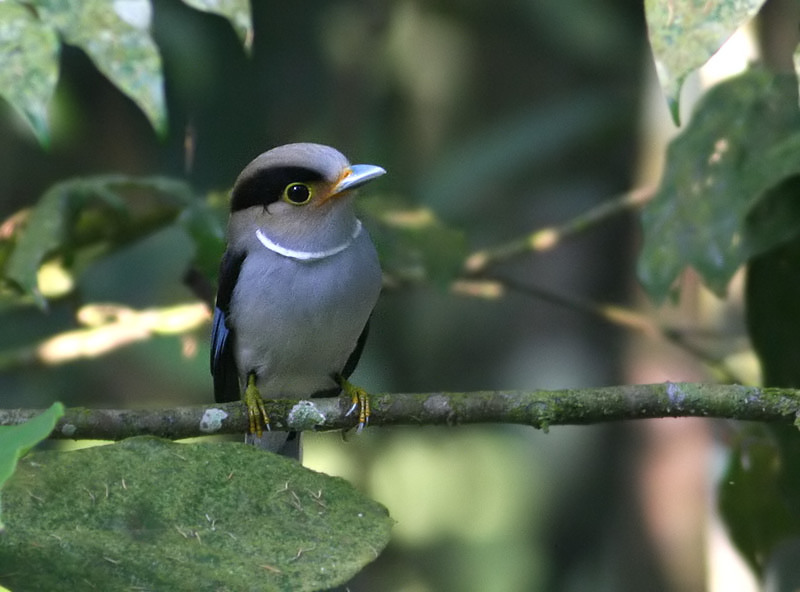
Silver-breasted Broadbill (Serilophus lunatus) by Peter Ericsson

Silver-breasted Broadbill (Serilophus lunatus) by Peter Ericsson

“What are some of God’s favorite object lessons? Certainly His creation is one. A God who can call something into existence which didn’t exist before can do anything. “Lift up your eyes on high, and behold who hath created these things” (Isaiah 40:26).” (Quote from Days of Praise-2-18-2011)

The Broadbills are another of those creations of the Lord. These pretty little birds caught my eye while doing an article. I trust you will find them as interesting as I do. Formed by Him they cannot be anything but amazing. What a great Creator God we have.

The broadbills are a family of small passerine birds, Eurylaimidae. The Smithornis and Pseudocalyptomena species occur in sub-Saharan Africa; the rest extend from the eastern Himalayas to Sumatra and Borneo. The family possibly also includes the Sapayoa from the Neotropics and the asities from Madagascar.

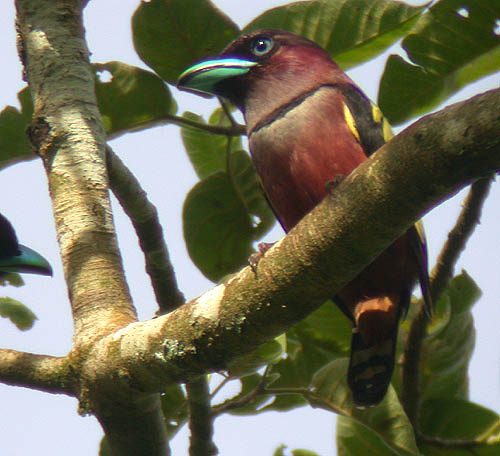
Banded Broadbill (Eurylaimus javanicus) by Peter Ericsson

Banded Broadbill (Eurylaimus javanicus) by Peter Ericsson

Many of the broadbills are brightly colored birds. They range from 4.5 to 11.25 inches (13 to 28 centimeters) in length, and live in the dense canopies of wet forests, allowing them to hide despite their brightly coloured plumage. The plumage of the three African broadbills in the genus Smithornis is in contrast dull and streaked. The bills, which give the family their common name, are broad, flat and hooked and relatively large eyes. Even though many are brightly colored, the Lord has designed them to blend in with their surroundings beautifully.

The broadbills are for the most part insectivorous and carnivorous. Prey taken include insects, spiders, centipedes and millipedes, as well as lizards and tree frogs. Prey is obtained by sallying from a perch to snatch it in flight, and gleaning the prey off leaves and branches while flying. Some species may take some fruit (figs being their favorite), but only the green broadbills of the genus Calyptomena and the African Green Broadbill are primarily frugivores (which also take some insects as well).

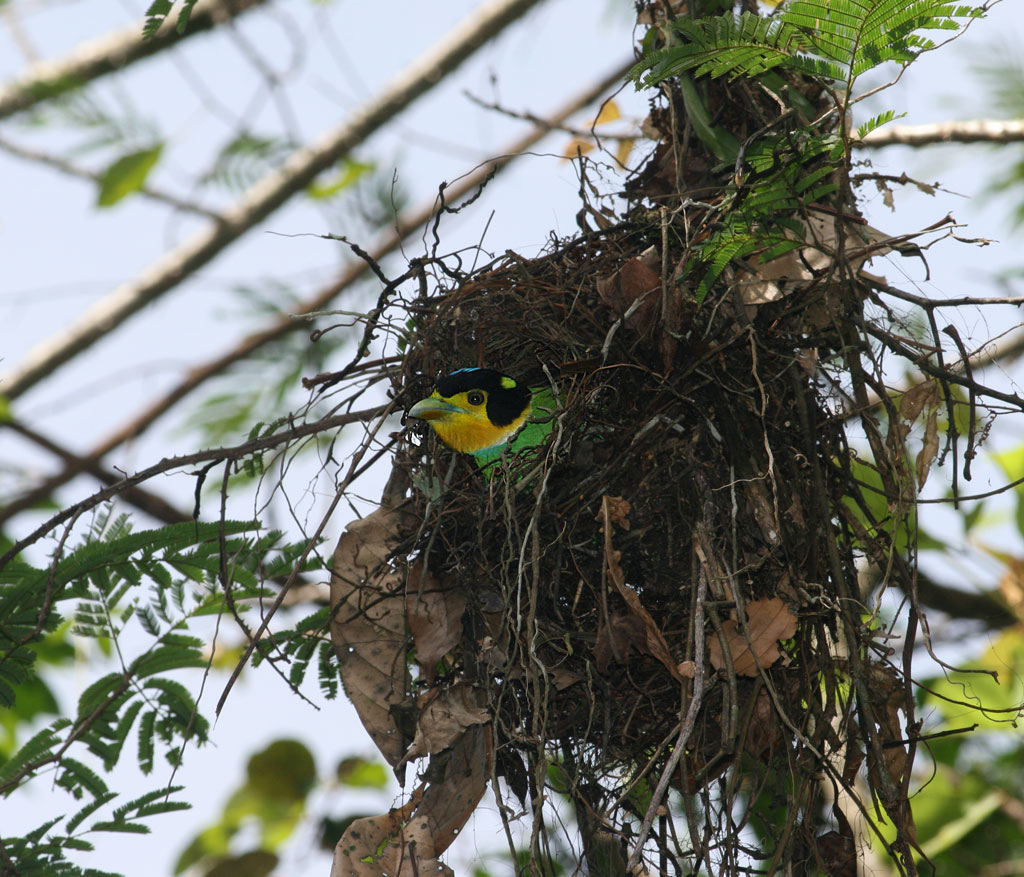
They are generally gregarious, with many species moving about in flocks of about 20 individuals. Broadbills attach their purse-shaped nests to suspended vines, and leave a tail of fibres hanging below it. This gives the nest the appearance of being random debris caught in the tree, an effect further enhanced by the birds covering the nest with lichen and spider webs.

Long-tailed Broadbill (Psarisomus dalhousiae) in nest by Peter Ericsson

Long-tailed Broadbill (Psarisomus dalhousiae) in nest by Peter Ericsson

Most Broadbills are monogamous, some have quite a courtship dispay and typically she lays two to three eggs. Both participate in nest building and in some species they have “helpers” with the young. Here are some of those verses:

Mostly active early and late in the day, otherwise they are sedentary and perched with their neck pulled in, disguised in the foliage.

Maybe the Lord would like us to look at the broad bills of the Broadbill and be reminded of Scripture. Broad or broader is mentioned over 30 times throughout the Bible.

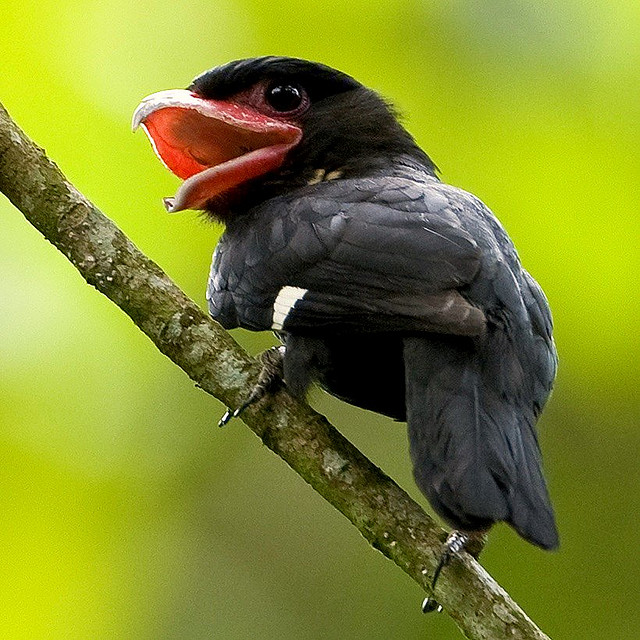
Dusky Broadbill (Corydon sumatranus) ©©Mike

Dusky Broadbill (Corydon sumatranus) ©©Mike

David repeated in Psalm 18:19 what had been written in 2 Samuel:

He also brought me out into a broad place; He delivered me because He delighted in me. (Psalms 18:19 NKJV)
He also brought me out into a broad place; He delivered me because He delighted in me. “The LORD rewarded me according to my righteousness; According to the cleanness of my hands He has recompensed me. For I have kept the ways of the LORD, And have not wickedly departed from my God. For all His judgments were before me; And as for His statutes, I did not depart from them. (2 Samuel 22:20-23 NKJV)

Let those who fear the LORD now say, “His mercy endures forever.” I called on the LORD in distress; The LORD answered me and set me in a broad place. The LORD is on my side; I will not fear. What can man do to me? (Psalms 118:4-6 NKJV)

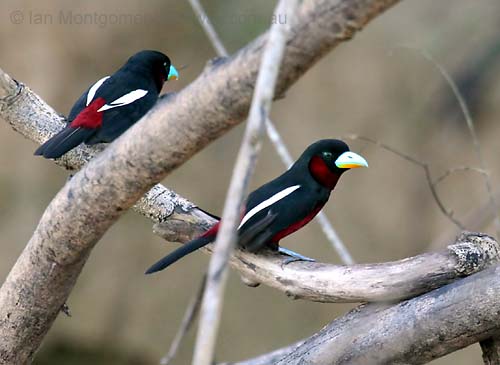
Black-and-red Broadbill (Cymbirhynchus macrorhynchos) by Ian

Black-and-red Broadbill (Cymbirhynchus macrorhynchos) by Ian

The wicked wait for me to destroy me, But I will consider Your testimonies. I have seen the consummation of all perfection, But Your commandment is exceedingly broad. Oh, how I love Your law! It is my meditation all the day. (Psalms 119:95-97 NKJV)

But there the glorious LORD will be unto us a place of broad rivers and streams; wherein shall go no galley with oars, neither shall gallant ship pass thereby. (Isaiah 33:21 KJV)

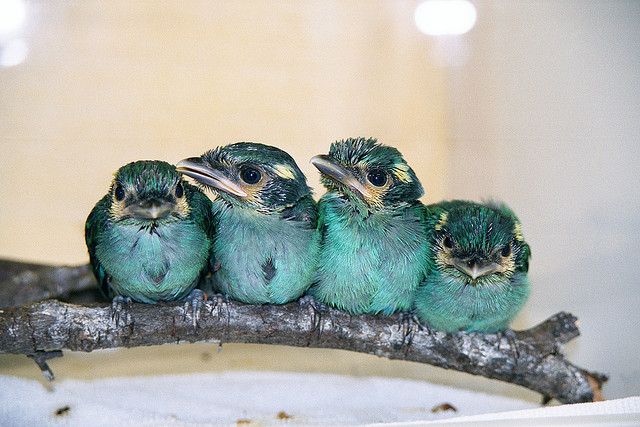
Long-tailed Broadbill (Psarisomus dalhousiae) babies ©©coracii

Long-tailed Broadbill (Psarisomus dalhousiae) babies ©©coracii

Enter by the narrow gate; for wide is the gate and broad is the way that leads to destruction, and there are many who go in by it. Because narrow is the gate and difficult is the way which leads to life, and there are few who find it. (Matthew 7:13-14 NKJV)

Can you search out the deep things of God? Can you find out the limits of the Almighty? They are higher than heaven– what can you do? Deeper than Sheol– what can you know? Their measure is longer than the earth And broader than the sea. (Job 11:7-9 NKJV)

Green Broadbill (Calyptomena viridis) by Peter Ericsson

Green Broadbill (Calyptomena viridis) by Peter Ericsson

The Broadbills are in the Eurylaimidae Family and has 20 members at present. The Eurylaimidae-Broadbills are in the Passeriformes or Perching Bird Order.

Sources from Wikipedia, Complete Birds of the World, Days of Praise and others.

This slideshow requires JavaScript.

*

To see more Formed By Him Articles

*