What Would God Say of Us? by A. J. Mithra

What Would God Say of Us?

Birds choose to mate
only with those birds
which sing the most
complicated songs…

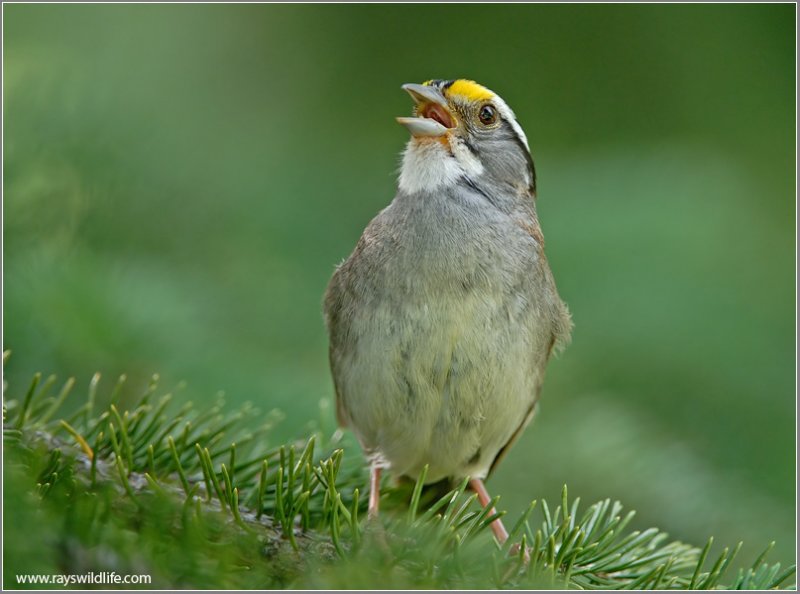
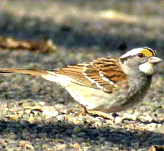
White-throated Sparrow by Ray

For,
they believe that
only those birds
which sing different songs,
are good at raising
and taking care of the family
and the territory…

He worshiped
and
sang for the LORD at all times…

Is that the reason why
GOD certifies David
as the one who pleases
HIS heart?

Would GOD say of us
like how HE said of David?
Most of us have complicated
Our lives.
Instead of singing,
when life turns
too complicated to handle..

If GOD chooses only those
Who sing for HIM at all times,
How many of us would
GOD select?

Yours in YESHUA,
A. J. Mithra at Crosstree

Click to see more of A. J.’s articles

Birds in Hymns – I Am His, and He Is Mine

The LORD hath appeared of old unto me, saying, Yea, I have loved thee with an everlasting love: therefore with lovingkindness have I drawn thee. (Jeremiah 31:3 KJV)

Author: George Wade Robinson, 1838-1877 – Its melody is lively and upbeat. Born in Ireland, Robinson was educated at Dublin’s Trinity College, and later at New College in London. Later he became a pastor in Dudley.

Music: Everlasting Love, James Mountain, 1843-1933 – The melody of “I am His, and He is Mine” was written under the name “Everlasting Love” by James Mountain in 1876. The melody of this hymn was written because the composer was about to publish a first edition of his hymnal, Hymns of Con­se­cra­tion and Faith. He took the words of Robinson’s hymn.

I Am His, and He Is Mine

Loved with everlasting love, Led by grace that love to know;
Spirit, breathing from above, Thou hast taught me it is so!
Oh, this full and perfect peace! Oh, this transport all divine!
In a love which cannot cease, I am His, and He is mine;
In a love which cannot cease, I am His, and He is mine.

Carolina Wren (Thryothorus ludovicianus) by Quy Tran

Carolina Wren (Thryothorus ludovicianus) by Quy Tran

Heav’n above is softer blue, Earth around is sweeter green!
Something lives in ev’ry hue Christless eyes have never seen:
Birds with gladder songs o’erflow, Flow’rs with deeper beauties shine,
Since I know, as now I know, I am His, and He is mine;
Since I know, as now I know, I am His, and He is mine.

Things that once were wild alarms Cannot now disturb my rest;
Closed in everlasting arms, Pillowed on the loving breast.
Oh, to lie forever here, Doubt, and care, and self resign,
While He whispers in my ear, I am His, and He is mine;
While He whispers in my ear, I am His, and He is mine.

His forever, only His; Who the Lord and me shall part?
Ah, with what a rest of bliss Christ can fill the loving heart!
Heav’n and earth may fade and flee, Firstborn light in gloom decline;
But while God and I shall be, I am His, and He is mine;
But while God and I shall be, I am His, and He is mine.

ICR Devotionals just covered this song.
Stanza 1 – Everlasting Love
Stanza 2 – Appreciating God’s Creation
Stanza 3 – His Everlasting Arms
Stanza 4 – While God and I Shall Be

Updated 3/13/2010

Most information from The Cyber Hymnal

See ~ Wordless Birds

More ~ Birds in Hymns

*

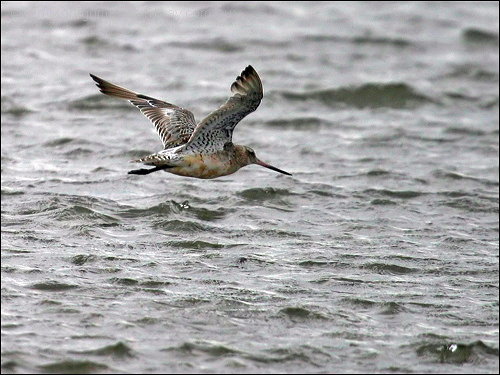
Bar-tailed Godwits – Self Control

Bar-tailed Godwits – Self Control  –  by a j mithra

Bar-tailed Godwit (Limosa lapponica) by Nikhil Devasar

Bar-tailed Godwit (Limosa lapponica) by Nikhil Devasar

With the help of
satellite tracking,
researchers found that,
Bar-tailed Godwits made
the longest non-stop flight
of any bird…
A female Bar-Tailed Godwit,
flew nonstop for eight days
and covered 7,242 miles
from Alaska to New Zealand….
These birds use
the air’s low pressure
to help them migrate
and they take advantage
of the 500 to 800 miles
of strong tailwinds
of the low pressure..
Many a time,
when we face low pressure
in life,
we feel down and out,
weak and weary,
distracted and disturbed
all along our life’s journey….

Bar-tailed Godwit (Limosa lapponica) by Ian

Bar-tailed Godwit (Limosa lapponica) by Ian

All because,
we don’t have the
fruit of self control..
We also fail to realize that
the low pressure
is the launching pad
on our quest to top…
Look at the price
this little bird had paid
to do what no one else
could do!
She didn’t eat or drink,
she didn’t shop or sleep
during her journey..
GOD paid a priceless price
for all our sins..
But,
what price are we
going to pay
to reach our destiny?
This bird neither slept
nor supped for eight long days..
Do we have that self control,
to fast at least once a week?
Do we have that self control
to keep wake all night
and pray for at least once a month?
GOD IS IN NEED OF PEOPLE
TO STAND AT THE GAP
AND PLEAD FOR ALL THOSE
DYING SOULS..
HELLOOOOO….
IS ANYONE LISTENING?

And every man that striveth in the games exerciseth self-control in all things. Now they [do it] to receive a corruptible crown; but we an incorruptible. 1Corinthians 9:25 (A S V)

Have a blessed day!

Yours in YESHUA,
A. J. Mithra at Crosstree

Click to see more of A. J.’s articles


Godwits are in the Scolopacidae Family of the Charadriiformes Order

See also:
Great Travelers Have Great Stories to Tell

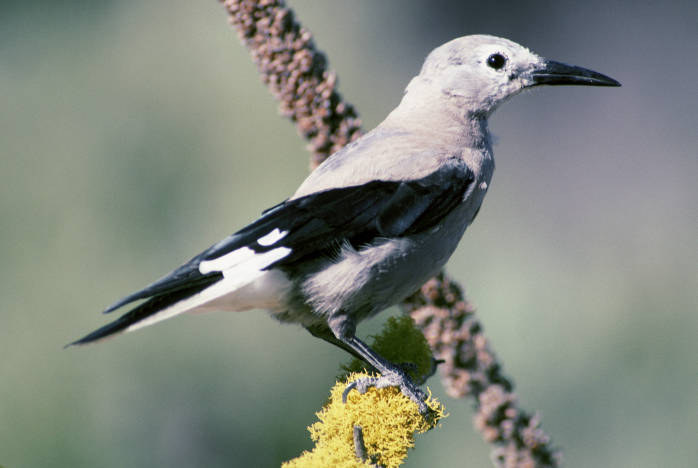
Clark’s Nutcracker by A J Mithra

Clark’s Nutcracker

Clark's Nutcracker (Nucifraga columbiana) ©USFWS

Clark's Nutcracker (Nucifraga columbiana) ©USFWS

Clark’s Nutcracker
is a small shy bird,
stores around
22,000 to 33,000 seeds
during the growing months
in 2,500 different locations,
sometimes at a distance of
nearly 10 miles apart..

If this small little bird
can prepare so well
for the winter months,
how prepared are we to meet
THE SEED – THE WORD?

The amazing part is.
this small little bird
can still remember
the locations
where it hid the seeds..
Such is its remarkable
memory power..

Do we at least remember that
we are fearfully
and wonderfully made
by GOD and that
HE gave HIS precious life
for you and me?

I will praise thee; for I am fearfully and wonderfully made: marvellous are thy works; and that my soul knoweth right well. (Psalms 139:14 KJV)

Have a blessed day!

Your’s in YESHUA,
A. J. Mithra at Crosstree

Click to see more of A. J.’s articles


Lee’s Addition:
Nutcrackers are in the Corvidae – Crows, Jays family of the Passeriformes order

Bird brained-it could be a compliment! (Oct 9, 2009 by Ken Ham)

Nice Video of a Clark’s Nutcracker

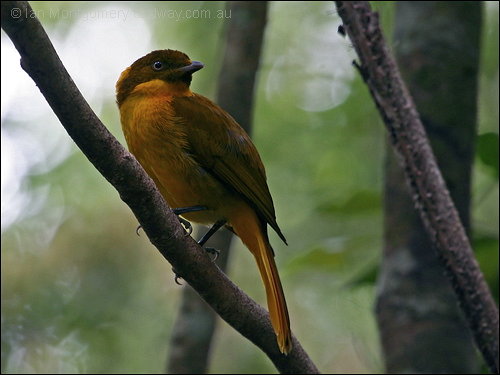
Golden Bowerbird by A. J. Mithra

Golden Bowerbird

Though the Golden Bowerbird
is the smallest
of all the bower species,
it builds a bower,
consisting of at least
two columns,
each consisting of sticks
arranged around a sapling.
This can be up to
3m/10ft in height,
to attract its female..
The female builds its nest
only above 900m/3,000ft..

Golden Bowerbird (Prionodura newtoniana) by Ian

Golden Bowerbird (Prionodura newtoniana) by Ian

God used a small girl
to bring healing
in to Naaman’s life..
God used
David the Shepherd boy
to bring down the giant…

God used
a little boy
to feed the multitudes…

God always uses
small people
to bring great revival..

He turns the smallest
into the greatest..

Why?
Cos, their hopes n(r)ests
in the Lord who dwells
high above in the heaven…

Who is like unto the LORD our God, who dwelleth on high, (Psalms 113:5 KJV)

Have a blessed day!

Your’s in YESHUA,
A. J. Mithra at Crosstree

Click to see more of A. J.’s articles


See Also:

Bowerbird (Malaconotidae – Bushshrikes) Family of the Passeriformes Order
Ian’s Bird of the Week – Golden Bowerbird
Birds in Hymns – Go Out, My Heart, and Seek Delight


Family#126 – Ptilonorhynchidae
*

Second Anniversary of Blog

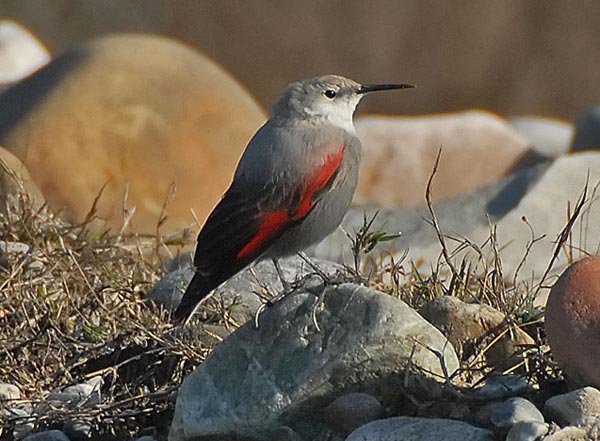
Wallcreeper (Tichodroma muraria) by Nikhil

Wallcreeper (Tichodroma muraria) by Nikhil

The Lord has continued to bless our efforts with this blog. If you read over last years blog, “Happy One Year Anniversary!“, you will see how it began. During this last year there have been more additions. April Lorier gave permission to use some of her articles as did Donna Watkins. Their articles are found in the Guest Authors section. Then Ian Montgomery, one of the photographers we are using, gave permission to turn his Bird of the Week newsletter into a blog series.

Speaking of photographers, the list of their links in the sidebar is growing. I am very thankful for each one of them that has given permission for their photos and videos to be used on the blog. There are now two videographers included in the list. The fantastic work of all of them has greatly enhanced this blog.

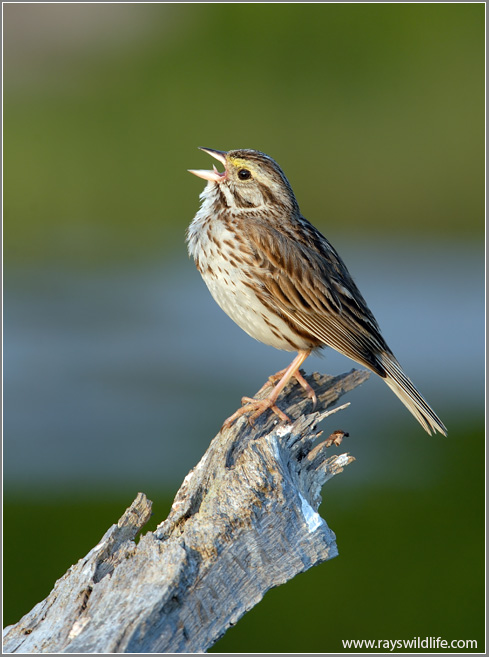
Savannah Sparrow singing by Ray

Of course, Dan and I continue to go out birdwatching, when we can. Those articles are spread throughout. I had started three different blogs, but decided to incorporate them back into Lee’s Birdwatching Adventures Plus, this main blog. The “PLUS Index” contains the Creation articles, “References” contains Nave’s and Torrey’s Topical studies, and “Birds – World” contains the Birds of the World. There are other sections for the Birds in Hymns, Birdwatching, etc. The “Birds of the Bible” articles, which is what started the idea of this blog, are reproduced on the only other blog I maintain. The Birds of the Bible blog only has those articles. I almost stopped it, but readers wanted it to continue. It is doing well and has now had 13,733 pages visited so far. (Stopped it in 2013) This main blog had its 84,000th page visited last night. (Those numbers are for 1.5 years) Thanks to all of you who have visited this site.

Those numbers were not mentioned to boast, but to give credit were it is due. The Lord is the One who gave me the ideas and the ability to do this. He is the One who created all these birds that we get the privilege to write about and show the photos and videos of them doing what He created them to do. Through the internet, these words and photos go to places we would never get to. There, they provide information, encouragement, and blessings to those who view these pages. (At least, that is what the readers tell us.) He, the Lord Jesus, is the One who gets the credit.

O LORD, how manifold are thy works! in wisdom hast thou made them all: the earth is full of thy riches. (Psalms 104:24) I will sing unto the LORD as long as I live: I will sing praise to my God while I have my being. My meditation of him shall be sweet: I will be glad in the LORD. (Psalms 104:33-34 KJV)

Lesson from Smallest Bird – by April Lorier

Lesson from smallest bird”

I was sitting in my car, waiting — I do not like waiting! — and a flock of birds fluttered up to me with expectant looks and frantic behavior. There were birds of all colors, including some with vibrant yellow eyes. I watched them display their pecking order and smiled. Just like people I thought.

Their chatter increased in volume and rhythm as they tried to convince me they would settle for the smallest crumbs of anything I had to offer. I especially noticed one little bird, the smallest of the flock, because the larger birds kept belaboring the point that he was least among the birds. Poor baby, I said as I leaned towards my glove compartment. Let’s see what I can find.

Voila! There was a package of two power bars! Excitedly, I smashed them up and threw them outside the window. That started a race for the crumbs! I noticed all of the birds except one rushed for the smallest crumbs as they pushed the little one out of the way.

I kept watching, hoping he would find at least one crumb. Then a funny thing happened. The smallest bird eyed a very large piece of the power bar and snatched it up. Then he quietly waddled away.

Meanwhile, the larger birds kept frantically scrounging for more crumbs, totally unaware that the best had already been taken away.

“Look at that,” The Spirit whispered, “all of the others settled for crumbs while one bird got enough to eat on all day. How many times do you settle for crumbs?”

It was like a light bulb went off inside my soul. God desires to give us riches beyond our wildest expectations, but we are living frantically in the moment and settling for what we can have NOW: mere crumbs, compared to what we could have if we but trusted in the character of God, our Heavenly Father!

Oh, God, thank You for the gift of this lesson. You not only provide for the birds, but use them to take Your children deeper in You.

(c) 2007-2009 April Lorier

For since the creation of the world God’s invisible qualities—his eternal power and divine nature—have been clearly seen, being understood from what has been made, so that men are without excuse. Romans 1:20

Supplied by and reprinted with permission of April Lorier.

See more of April’s Articles

*

Sparrows and God Care – by April Lorier

When I Consider! – Platypus

When I Consider!

When I Consider!

Evidence from Biology

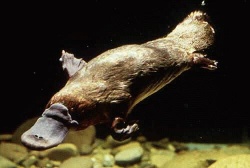
Some animals, such as the duckbilled platypus, have organs that completely confound evolutionary explanation. The platypus has a mixture of features from animals completely unrelated to its supposed ancestry. For instance:

  1. The warm-blooded platypus feeds its babies milk like other mammals.
  2. It lays leathery eggs, has a single ventral opening (for eliminating its waste, mating, and birth), and has claws and a shoulder girdle like most reptiles.
  3. It can detect electrical currents like some fish.
  4. It has webbed feet like an otter, a flat tail like a beaver, and the male can inject poison into its predator like a snake.
  5. It has a bill like a duck.
Platypus From Creation Wiki

Platypus From Creation Wiki

It would seem that animals such as the platypus are God’s reminder of His unfathomable creativity. These animals combine features from many unrelated creatures and have no logical place on the evolutionary tree.” There is no direct evidence that any major group of animals (or plants) arose from any other group. Completely different types of animals are only observed going out of existence (extinctions), never coming into existence.”

In the Beginning, 7th Ed., p.7

Great is the LORD, and greatly to be praised; And His greatness is unsearchable. One generation shall praise Your works to another, And shall declare Your mighty acts. I will meditate on the glorious splendor of Your majesty, And on Your wondrous works. Men shall speak of the might of Your awesome acts, And I will declare Your greatness. (Psalms 145:3-6 NKJV)

From A Closer Look at the Evidence, Richard and Tina Kleiss, Aug 3


Interesting Things – The Platypus more information and a great song about it by Buddy Davis.

More – When I Consider! articles

Photos of Platypus by Ian of Birdway.

The Birds, the Economy, and My Provider – by April Lorier

There I was, snoozing in my lazyboy when I was awakened by such a clatter, I rose from my chair to see what was the matter! I felt like Tippi Hedren and it was The Birds all over again. Just outside my window were dozens of sparrows fighting over a snippet of orange peel! I mean fierce terrorist fighting!

I watched in amazement as one of those little sparrows actually made off with the orange peel, unnoticed, and the rest of the birds were still doing battle. I thought, “Isn’t that the way it goes? Anger got the best of them.”

No one has to tell you the economy is pinching your style. As more and more people enter the survival mode we will see anger rising in more people. Fear does terrible things to people. It’s not displayed as fear, but as anger. And as the economy gets worse, we will see more and more vigilante behavior.

People tend to forget that God said He watched over the sparrows and I am worth far more to Him than a sparrow. That fear takes over and we lose sight of our Provider who is far greater than any recession or depression.

I’m so thankful for the reminder from Him of His Sovereignty over all things. Were it not for these birds, I might have forgotten Who’s actually in control.

(c) 2009 April Lorier

You are worthy, our Lord and God, to receive glory and honor and power, for you created all things, and by your will they were created and have their being. Revelation 4:11

Supplied by and reprinted with permission of April Lorier.

See more of April’s articles.

*

Sparrows and God Care – by April Lorier

April Lorier writes great articles on her “Christian Nature” blog and has agreed to be a guest author. She is allowing us to reproduce some of her very thoughtful and inspiring challenges about birds and the Creator. I trust you will be as blessed by her writings as I am. This is the first one.


Sparrows and God Caresparrow-whiteThroat1 I have written about sparrows before and feel a need to revisit the subject. There are just so many sparrows flying around!Ethel Waters made “His Eye Is On The Sparrow” famous many years ago, and it’s still a master piece. It serves to remind us that if God values sparrows and cares for them, then certainly He does the same for us. He created human beings for companionship, and through Christ we can have that relationship.

One Sunday morning at church, we sang “His Eye Is on the Sparrow” as a congregational hymn. It was a rare opportunity to give voice to a song usually performed by a soloist.

During the first chorus, I noticed a friend who was weeping so hard that he couldn’t sing. Knowing a bit of what he had been through recently, I recognized his tears as ones of joy at realizing that, no matter what our situation, God sees, knows, and cares for us.

Jesus said, “Are not two sparrows sold for a copper coin? And not one of them falls to the ground apart from your Father’s will. But the very hairs of your head are all numbered. Do not fear therefore; you are of more value than many sparrows” (Matt. 10:29-31). The Lord spoke these words to His 12 disciples as He sent them out to teach, heal, and bear witness of Him to “the lost sheep of the house of Israel” (v.6). He told them that even though they would face persecution for His sake, they should not be afraid, even of death (vv.22-26).

When threatening circumstances press us to lose hope, we can find encouragement in the words of this song: “I sing because I’m happy, I sing because I’m free. For His eye is on the sparrow, and I know He watches me.” We are under His watchful care.

If God sees the sparrow’s fall,
Paints the lilies short and tall,
Gives the skies their azure hue,
Will He not then care for you? —Anon.

When you put your cares in God’s hands, He puts His peace in your heart.

2009 April Lorier

Ask the animals, and they will teach you, or the birds of the air, and they will tell you; or speak to the earth, and it will teach you, or let the fish of the sea inform you. Which of these does not know that the hand of the Lord has done this? –
Job 12

Supplied by and reprinted with permission of April Lorier

And Can It Be?

I couldn’t resist posting this devotional from the Institute For Creation Research for Aug 3, 2009.
“And Can It Be!” is my most favorite hymn and I have told Dan, that it is to be sung when I go “home to glory.” This does not have all the stanzas, but here is the full hymn.

Savannah Sparrow singing by Ray

Savannah Sparrow singing by Ray

And can it be that I should gain,
An interest in the Savior’s blood?
Died He for me, who caused His pain?
For me, who Him, to death pursued?

Amazing love! How can it be,
That thou, my God, should’st die for me?

He left His Father’s throne above,
So free, so infinite His Grace!
Emptied Himself of all but love,
And bled for Adam’s helpless race.

No condemnation now I dread,
I am my Lord’s and He is mine;
Alive in Him, my living Head,
And clothed in righteous divine.

What a powerful message that song has. How could God, so love us, (me, Lee) so much that He would come and die for me? A sinner, saved only by the grace of God, by the death of the Lord Jesus Christ on the cross. Amazing Love! How Can It Be?

Can It Be?

by John D. Morris, Ph.D.

“Christ also suffered for us. . . . Who his own self bare our sins in his own body on the tree, that we, being dead to sins, should live unto righteousness: by whose stripes ye were healed.” (1 Peter 2:21-24)

Those who love good church music have come to love Charles Wesley’s commitment to and knowledge of his Savior and the Scriptures, for he wove into his music and poetry deep insights which challenge and thrill us even today. One of his hymns, “And Can It Be That I Should Gain?,” has unfortunately been abridged in modern hymnals. The original five verses are expressed:

And can it be that I should gain,
An interest in the Savior’s blood?
Died He for me, who caused His pain?
For me, who Him, to death pursued?
Amazing love! How can it be,
That thou, my God, should’st die for me?

Even the Old Testament saints wondered why God loves man so. “What is man, that thou shouldest magnify him? and that thou shouldest set thine heart upon him?” (Job 7:17). The New Testament contains many similar expressions of wonder. “Behold, what manner of love |literally ‘what a different kind of love’| the Father hath bestowed upon us, that we should be called the sons of God” (1 John 3:1). “God commendeth his love toward us, in that, while we were yet sinners, Christ died for us. . . . And not only so, but we also joy in God through our Lord Jesus Christ, by whom we have now received the atonement” (Romans 5:8-11).

The point is we were desperate sinners deserving His wrath. “But God, who is rich in mercy, for his great love |i.e., ‘amazing love’| wherewith he loved us, Even when we were dead in sins, hath quickened us together with Christ, (by grace ye are saved)” (Ephesians 2:4-5). JDM

This article was originally published August, 2009. Can It Be?”, Institute for Creation Research, http://www.icr.org/article/4710/ (accessed August 02, 2009).

Update 8/8/09
Days of Praise went on to do each verse on the proceeding days. Here are the links to the rest of the song:
The Immortal Dies – verse 2
His Mercy Found Me – verse 3
My Chains Fell Off – verse 4
Alive in Him – verse 5

Cockatiel Bird Brain Wisdom – by April Lorier

Cockatiel Bird Brain Wisdom

cockatielsm1 It is pretty bad when God has to use Bird Brain Wisdom to get through to His daughter, but He did. I tried my best to avoid Dave at every church function. Most people did. His inordinate need for attention and his obvious emotional and spiritual immaturity embarrassed me. I went out of my way to not be associated with him. Intellectually, I understood people are often needy because they had been damaged in some way, so I would have moments of guilt for acting as I did. Then he would say something totally inappropriate and I’d be right back where I began – embarrassed for him.

At the same time I was hand feeding baby cockatiels every two hours, and one of them who I affectionately called Ernie, just couldn’t eat enough to make him grow. I tried everything, but to no avail.One night, still bleary-eyed from little sleep, I prayed, God, please help me! Ernie isn’t going to make it if You don’t help us out. He’s just too weak. And into my spirit, clear as a bell, came the thought, Ernie is the weakest of your birds, and yet you love him the most. Why doesn’t his weakness embarrass you?
Who are you to judge someone else’s servant? To his own master he stands or falls. And he will stand, for the Lord is able to make him stand. (Romans 14:4 NIV)

The comparison was too obvious, and I hung my head in shame. God loved Dave the same way I loved Ernie! His heart broke with tenderness over this man’s weakness the same way my heart broke over my baby bird. He would persist with Dave just as I had with Ernie, spending extra time with him. And God didn’t need a judgmental child getting in the way of Dave’s growth.

I went to bed that night wiser, but much sadder with the knowledge that I had, in my arrogance, dared to pass judgment on another human being that I really didn’t know. By judging Dave, I had positioned myself to be judged by God.I realized God wasn’t half as embarrassed by Dave’s spiritual and emotional immaturity as He was by my arrogance. And worse was my underestimation of God’s power to work in Dave’s life and make him stand strong. I had, with my attitude, questioned the sovereignty of Almighty God!

O Father, forgive my arrogance. Thank You for the wisdom You taught me through my precious little “bird brain!” Let me never lose sight of Your sovereignty and Your compassion towards Your weaker children. I, too, am one of your weak ones. (c)1996-2009 April Lorier

For since the creation of the world God’s invisible qualities—his eternal power and divine nature—have been clearly seen, being understood from what has been made, so that men are without excuse. Romans 1:20

Supplied by and reprinted with permission of April Lorier.


See more of April’s articles.

*

When I Consider! – Cheetah

When I Consider!

When I Consider!

The cheetah is truly a remarkable creature. It is the world’s fastest land animal, capable of accelerating from 0 to 40 miles per hour in 2 seconds. The cheetah can reach a speed of 70 miles per hour. How does the cheetah reach these phenomenal speeds? It is designed with a high-performance body containing a uniquely powerful heart, strong large-diameter arteries, and extra-large nostrils for breathing large volumes of air. The cheeta also has hip and shoulder girdles that swivel on its spine. As it runs, the cheetah’s spine curves up and down as its legs contract and extend. When moving at high speeds, the cheetah may only touch the ground once every 23 feet.

Cheetah

Cheetah

Evolutionist would claim that some unknown pre-cheetah creature turned into the cheetah by chance mutations of its heart, liver, arteries, nostrils, hips, shoulders, spinal column, and muscles. Yet the oldest known cheetah fossils reveal an animal that is essentially identical to the cheetahs alive today. Once again, the actual physical evidence supports creation, rather than evolution. The cheetah’s unique characteristics are a result of design. All of the information necessary for the cheetah’s speed was programmed into the first large “cat-type” creature. No series of random modifications could have produced this fast, sleek animal.

The LORD is righteous in all His ways, Gracious in all His works. (Psalms 145:17 NKJV)

“Evidence From Biology”, July 27, from A Closer Look at the Evidence, Richard and Tina Kleiss – Taken from Letting God Create Your Day, Vol.4, p.19


From Creation Wiki:
“The word Cheetah actually originates from a Hindi word, which means “spotted one.” Cheetahs are carnivorous cats that are best know for their spots and their speed. They are found mainly in Southern Africa. They rely on speed for hunting, and not stealth, unlike most cats. Females tend to be solitary, while the males spend their whole lives together. They have smaller teeth than most cats, which helps improve the cat’s respiratory system. A cheetah’s life span in the wild is about 12 years. Ancient Egyptians sometimes kept cheetahs as pets, and used them for hunting.”

Cheethah have small teeth which help it get air in while running at those high speeds mentioned above. They weigh between 80-140 lbs. and are about 32 tall and 48-56 inches long. “Almost every part of a cheetah’s body is built, in some way, to help it run faster. They have semi-retractable claws, as well as special paw pads on their feet to give the cat good traction. As mentioned before, large nostril and a clear intake help get air in and out quickly and smoothly. The cheetah’s spine acts as a spring for its back legs. Their tail is much like a rudder, it gives the cat added agility, enabling it to turn quickly. The cheetah’s top speed is an amazing 71 miles per hour. This speed can only be held out for about 200-300 yards. The cheetah can accelerate from 0-60 mph in 3.5 seconds, faster than many sports cars.”

See also:
Cheetah – Creation Wiki
Cheetah – Wikipedia