Interesting Things – Dragonfly (from Creation Moments)

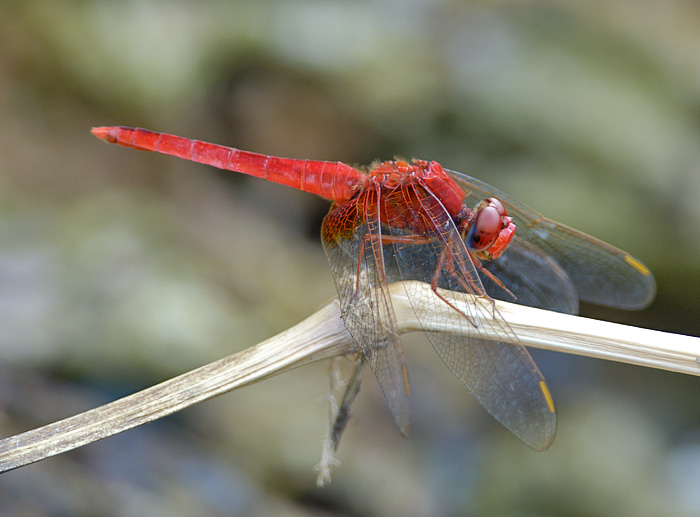
Dragonfly by Phil Kwong

Dragonfly by ©Phil Kwong

Come, ye children, hearken unto me: I will teach you the fear of the LORD. (Psalm 34:11 )

Evolutionary naturalism paints the picture of life as if it were a haphazard series of accidents that just barely resulted in a range of living things that just manage to survive. This fanciful picture destroys our sense of wonder over the sophisticated engineering designs in nature.

SmileyCentral.com

Consider the mystery of flight, for example. Some evolutionists suggest that perhaps birds are descended from lizards that fell out of trees a lot. Other evolutionists say that birds came from lizards who grew wings, not for flight but to chase down and catch insects. Yet, they have little to say about the fact that we humans have come by most of our sophisticated knowledge about flight from studying the birds.

Then there is the problem, for the evolutionist, of how flight accidentally evolved so many times for so many creatures. Scientists studying the dragonfly are learning even more secrets of flight. Our best high-performance aircraft can barely lift themselves off the ground. However, the dragonfly can lift 15 times his own weight into the air. Scientists have learned that this is because the dragonfly’s wings are designed to create little whirlwinds over their top surfaces. These whirlwinds are the secret to creating incredible lifting power. Ways are now being planned to apply this secret to new aircraft designs.
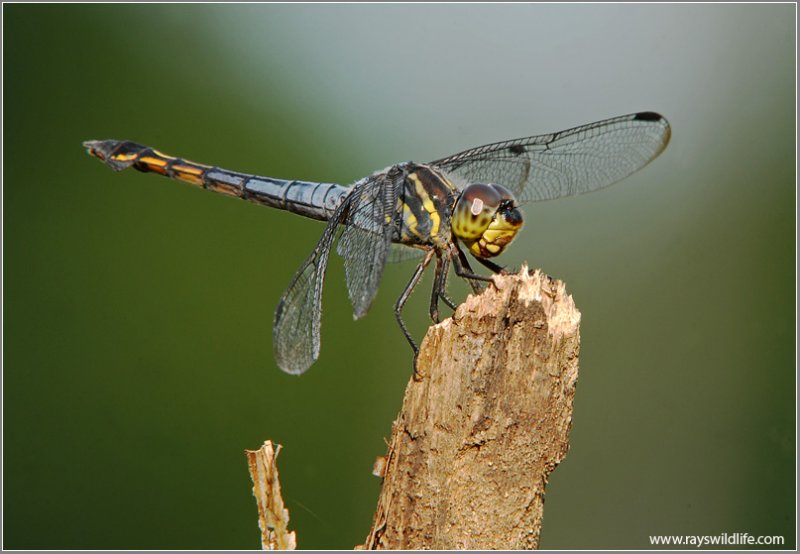
Dragonfly by ©Raymond Barlow

Dragonfly by ©Raymond Barlow

The engineering excellence found in nature and from which we have learned so much even in this day of interplanetary probes is not witness to a mindless process of evolution, but to a wise and mindful Creator.

Prayer:
Father, it seems a shame that humans learned about flight from the dragonfly and fail to see a witness to You. Yet, I know that I don’t learn from You as I should, either. Forgive me for Jesus’ sake and make me a better learner. Amen.

Notes:
“Dragonfly model for future wings.” Science Digest, Mar. 1984. p. 87. ©Creation Moments, 2011

***

The lessons being learned about the dragonfly’s wings are a good example of:

But now ask the beasts, and they will teach you; And the birds of the air, and they will tell you; (Job 12:7 NKJV)

We can learn much from the critters by learning about how the Lord created them and then applying those lessons to better our lives.

More Interesting Things

*

Interesting Things – The Weaver Bird

Lesser Masked Weaver (Ploceus intermedius) by Bob-Nan

Lesser Masked Weaver (Ploceus intermedius) by Bob-Nan

And God blessed them, and God said unto them, Be fruitful, and multiply, and replenish the earth, and subdue it: and have dominion over the fish of the sea, and over the fowl of the air, and over every living thing that moveth upon the earth. (Genesis 1:28)

Intelligence – as much as is needed and no more – is generously found throughout the creation. So we cannot say that intelligence alone makes humans special.

Consider the weaverbird. The weaverbird nest consists of woven strips of fiber and grass. Using beak and feet, the male weaverbird uses both loops and knots to weave his hanging nest. Then the nest must be inspected by a prospective mate. If she doesn’t like the nest’s construction, she will turn down the hopeful mate. The male must then tear down his work and start over. Some males have been observed constructing and tearing down their nests two dozen times before finding a prospective mate who is satisfied with his work. Some weaverbirds actually build huge cities of nests protected by a woven roof. One roof over a weaverbird city was 15 feet across!

SmileyCentral.com

Human intelligence spans much more than animal intelligence. However, what sets us apart from animals is the fact that our Creator made us to have a special relationship with Him. And even when Adam and Eve placed their will above God’s Word, He still loved us enough to pay the highest price to restore us to Himself. Jesus Christ lived in perfect obedience to God for us and then suffered the penalty of our disobedience against God. In His resurrection from the dead, all those who embrace Christ in faith receive the promise of being made new creations again – beginning right here in this life! That’s the wide gulf between humans and animals!

Prayer:
Dear Father, I thank You that You have given me being and life, and that when I was lost in sin, You still sought me out with Your gospel. Help me to truly live as Your new creation in Christ. For His sake. Amen.
Notes:
Science Digest, Aug. 1983. p. 73.

©Creation Moments 2011


Lee’s Addition:

Thought you might enjoy watching the weaver birds at work. Most of the Weaver Birds belong to the Ploceidae – Weavers, Widowbirds Family. Some of the Old World Sparrows – Passeridae Family have Weavers.
*

*

Wordless Birds

*

Interesting Things – Tool-Using Animals

SmileyCentral.com

So God created man in his [own] image, in the image of God created he him; male and female created he them. (Genesis 1:27)

Evolution devalues humanity. It tries to find the most unflattering way to describe human beings to try to counter the Bible’s claim that they were created in God’s image.

Baby Elephant with Tool ©©

Baby Elephant with Tool ©©

For generations, evolutionists said that the humans’ use of tools was all that made them different from animals. Creationists who objected, saying there was obviously more of a difference than that, were ignored as unscientific. It wasn’t so long ago that evolutionists scoffed at creationists who showed them that there are animals who use tools – and, therefore, the evolutionists’ definition was wrong.

Elephants often take sticks in their trunks to scratch their backs. Galapagos Woodpecker Finch (edited) use cactus spines, held in their beaks, to probe insects out of cracks in trees.

Chimpanzees even use sticks as levers to move heavy objects. They also make tools out of sticks by shaping them to the right size to poke into termite nests. The stick full of termites they pull out of the nest offers them a tasty snack. West African chimps actually use stones as hammers to crack nuts. So today, evolutionists recognize that some animals not only use tools, but also make them! Only now they claim that animals who use tools prove their theory. Which only goes to show that evolution is not science that can be disproved. It is a faith that will be believed even when the facts contradict it. The facts say that there is an unbridgeable difference between humans and animals.

Prayer:
Lord, I thank You for making animals. I ask that You would help all who are working to teach Christian young people that they are Your creations and not glorified animals. Show me my part in filling this need. Amen.
Notes:
“Tool-wielding beasts.” Science Digest, Aug. 1983. p. 107.

Lee’s Addition:

*

* More Interesting Things

*

Interesting Things – A Whale Problem

Interesting Things

Interesting Things – A Whale Problem

And God created great whales, and every living creature that moveth, which the waters brought forth abundantly, after their kind, and every winged fowl after his kind: and God saw that [it was] good.” (Genesis 1:21)

“According to evolution, life began in the sea. However, because the land was better for life, evolution developed land life from sea life. It was on land that mammals evolved, according to evolution. Here, though, evolution has painted itself into a corner. Or perhaps it is better to say that evolutionists have fallen into one of the traps set for them by the Creator. You see, the
largest creatures on Earth live in the sea – and they are mammals!

Humpback Whale ©©

Humpback Whale ©©

The great whales are mammals like many land animals. However, it is very clear that they never lived on land – nor do they resemble any land creature. Whales provide clear evidence that, contrary to evolution’s claims, not even all mammals are related to each other. And if mammals are so different that they cannot be related to each other through evolution, neither is it likely that bugs and trees and cows and humans could be related by evolution. As Genesis so clearly tells us, living things were originally made in distinct kinds, and they continue to reproduce after their kinds.

One wants to ask the evolutionist, if the drive to live on land was so great it moved sea creatures to become land creatures, why did some mammals go to all the trouble to move back into the sea? To say the least, whales offer Bible-believing Christians a great testimony to our Creator and a good argument against evolution. For evolutionists, mammals who live in the sea are a whale of a problem!”

Prayer:
Your majesty and power are truly seen to all in the magnificent whales You have created, Lord. I ask that we would be successful in preserving these great creatures who witness so grandly to You. Amen.
Notes:
Bartz, Paul A. 1984. “It takes more than this to make a whale transition.” Bible-Science Newsletter, Feb. p. 1.
From – Today’s Creation Moment’s – “A Whale of a Problem” ©Creation Moments 2011
Re-posted with permission.
*
To see more Interesting Things – Click Here
*

Interesting Things – Hummingbird Courtship Songs

Anna's Hummingbird (Calypte anna) by Ian

Anna's Hummingbird (Calypte anna) by Ian

Just received an interesting article from the Birdwatching Magazine Newsletter. Research has been going on about how the Hummingbird produces sound by the way they spread their tail. The vibrations send out sounds that they use for courtship. “As a diving bird spreads its tail, the motion exposes the tail feathers to air, causing it to flutter like a flag in the breeze and generate sound. This so-called aerodynamic flutter can be hazardous to airplanes, but in hummingbirds it produces a species-specific sound essential to courtship.”

To read the whole article, go to:

http://cs.birdwatchingdaily.com/BRDCS/blogs/field_of_view/archive/2011/09/08/Diving-hummingbirds-produce-species_2D00_specific-courtship-songs-_2D002D00_-with-their-tails.aspx

Hummingbirds are in the Trochilidae Family, which at present has 340 species. Their Order, the Apodiformes, has not only Hummers but also the Owlet-nightjars, Treeswifts, and regular Swift families.

*

Interesting Things – The Egyptian “Crocodile Bird” Plover

Egyptian Plover (Pluvianus aegyptius) ©©patries71

Egyptian Plover (Pluvianus aegyptius) ©©patries71

 I am not worthy of the least of all the mercies, and of all the truth, which thou hast shewed unto thy servant…” (Genesis 32:10a)

SmileyCentral.comHow would you like to be a dental hygienist for a crocodile? That’s how the crocodile bird makes his living.

Of course, you do need to know that the crocodile bird doesn’t show up to do his work with any drills or needles. He and the crocodile are on good terms with each other. After eating, the crocodile climbs the river bank and relaxes with his mouth open. The little crocodile bird enters the crocodile’s mouth to clean up the scraps that are left. While the crocodile bird makes most of his living as sort of a crocodile dental hygienist, he also helps keep the crocodile free of pesky insects that lodge in his skin.

The crocodile also receives one other service from the crocodile bird. Whenever the bird senses approaching danger, he gives his sharp warning call and flies off. The crocodile, now warned, can quickly roll over into the water where virtually no animal can get the best of him.

This is but one of many unlikely cooperative arrangements that we find in the plant and animal kingdoms. Every one of these relationships speaks for a Creator and against the idea that either these creatures, or their cooperation, evolved naturally. Evolutionists have written whole books on the subject. Yet they don’t seem satisfied that they have explained how these relationships could develop through evolution. We agree that they have no explanation. Nor are they likely to find one as long as they deny a Creator who cares for His creation.

Prayer:
Father, because of the innocent suffering and death of Your Son, Jesus Christ, I know that Your love for me is certain and sure. I thank You for this. In Jesus’ Name. Amen.

From Creation Moments ©2011 (With Permission) – The Crocodile Bird


Lee’s Addition:

Egyptian Plover (Pluvianus aegyptius) ©WikiC

Egyptian Plover (Pluvianus aegyptius) ©WikiC

The “Crocodile Bird” is actually the “Egyptian PloverPluvianus aegyptius, is a wader, the only member of the genus Pluvianus. Formerly placed in the pratincole and courser family, Glareolidae, it is now regarded as the sole member of its own monotypic family”, Pluvianidae – Egyptian Plover. This Plover is in the Charadriiformes – Shorebirds & Allies  Order that has 19 families including other Plovers, Painted Snipes, Jacanas, Oystercatchers, Sanderpiper, Snipes and related birds.

It is also sometimes referred to as the Crocodile Bird because it is famous for its symbiotic relationship with crocodiles (National Geographic 1986). According to a story dating to Herodotus, the crocodiles lie on the shore with their mouths open, and the plovers fly into the crocodiles’ mouths so as to feed on bits of decaying meat that are lodged between the crocodiles’ teeth. This is questioned by some. One from Harvard talks about Symbiosis as a fact.

The Egyptian Plover is a localised resident in tropical sub-Saharan Africa. It breeds on sandbars in large rivers. Its two or three eggs are not incubated, but are buried in warm sand, temperature control being achieved by the adult sitting on the eggs with a water-soaked belly to cool them. If the adult leaves the nest, it smooths sand over the eggs, though if it is frightened the job may be hasty.

The chicks are precocial, and can run as soon as they are hatched and feed themselves shortly afterwards. The adults cool the chicks in the same way as with the eggs. The chicks may drink water from the adult’s belly feathers. The adults bury the chicks in the sand temporarily if danger threatens.

Egyptian Plover (Pluvianus aegyptius) ©WikiC

Egyptian Plover (Pluvianus aegyptius) ©WikiC

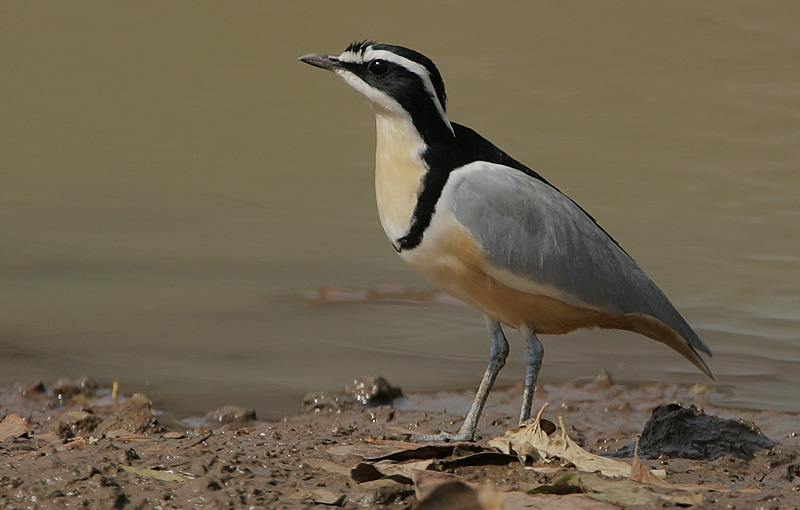
Egyptian Plover is a striking and unmistakable species. The 19-21 cm long adult has a black crown, back, eye-mask and breast band. The rest of the head is white. The remaining upperpart plumage is blue-grey, and the underparts are orange. The longish legs are blue-grey.

In flight, it is even more spectacular, with the black crown and back contrasting with the grey of the upperparts and wings. The flight feathers are brilliant white crossed by a black bar. From below, the flying bird is entirely white, apart from the orange belly and black wing bar. After landing, members of a pair greet each other by raising their wings in an elaborate ceremony that shows off the black and white markings. The sexes are similar, but juveniles are duller and the black marking are intermixed with brown.

Just for fun, watch these two videos about the “crocodile bird.”

*
http://www.youtube.com/watch?v=UIDdCihh5hU&feature=player_embedded

Resources from Creation Moments, Wikipedia and YouTube.

*

Some Very Unusual Birds

The following photos are from an e-mail I received. It has arrived many times from various friends. I don’t know who the photographers are and trust that they do not mind them being presented here.

What I do know is that these very unusual birds have a very Imaginative Creator. For His pleasure He created these kinds of birds and for our enjoyment also. The titles are from the e-mail and maybe #12 is some sort of Bird of Paradise or in that family (I think). Enjoy the photos and God’s Creative Hand at work.

Praise ye the LORD. I will praise the LORD with my whole heart, in the assembly of the upright, and in the congregation. The works of the LORD are great, sought out of all them that have pleasure therein. His work is honourable and glorious: and his righteousness endureth for ever. He hath made his wonderful works to be remembered: the LORD is gracious and full of compassion. (Psalms 111:1-4 KJV)

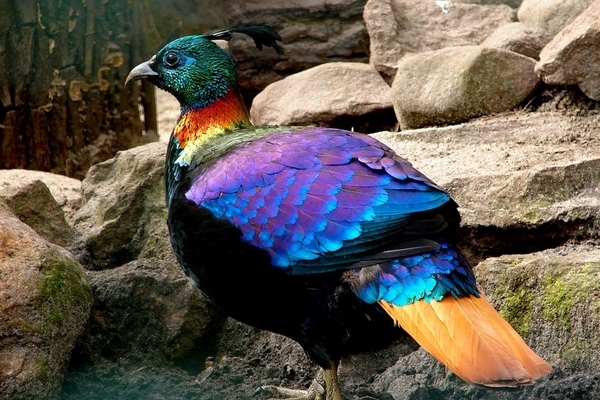
1. Himalayan Monal

1. Himalayan Monal

************

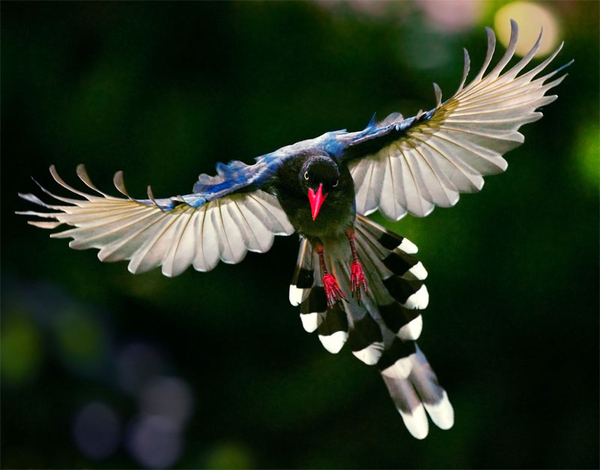
2. Formosan Magpie

2. Formosan Magpie

************

3. Flamecrest

3. Flamecrest

************

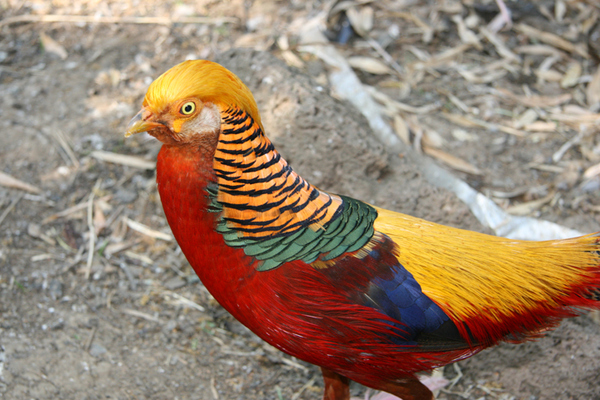
4. Golden Pheasant

4. Golden Pheasant

************

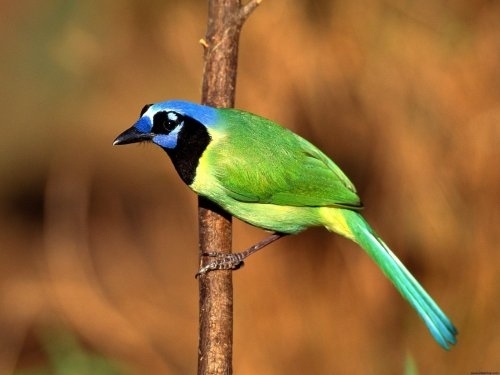
5. Green Jay

5. Green Jay

************

6. Kingfisher

6. Kingfisher

************

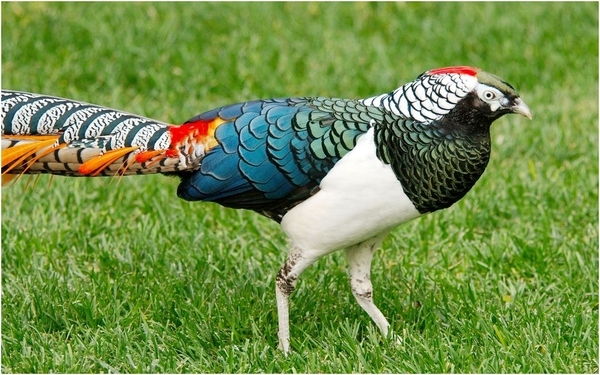
7. Lady Amherst's Pheasant

7. Lady Amherst's Pheasant

************

8. Bleeding Heart Pigeons

8. Bleeding Heart Pigeons

************

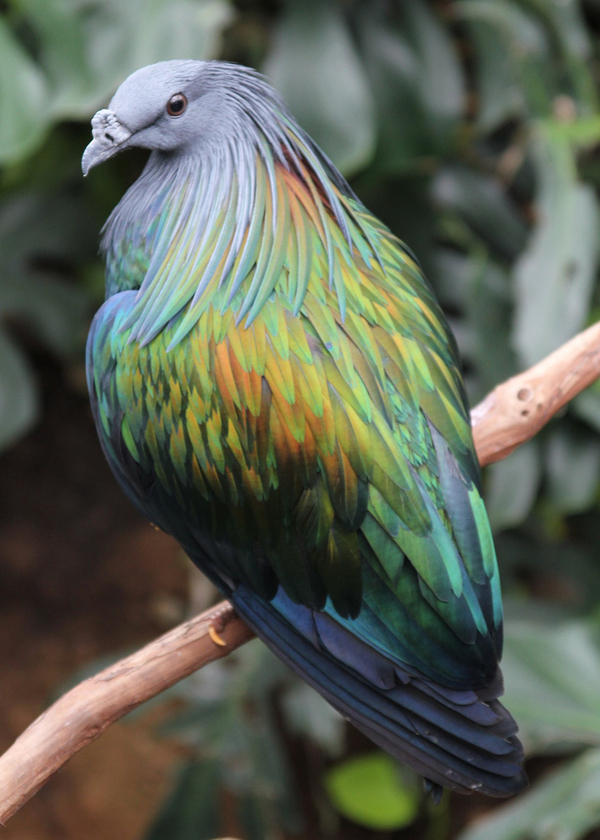
9. Nicobar Pigeon

9. Nicobar Pigeon

************

10. Quetzal

10. Quetzal

************

11. Winson's Bird Of Paradise

11. Winson's Bird Of Paradise

************

12. No Idea What Bird This Is, But It's Totally Rad

12. No Idea What Bird This Is, But It's Totally Rad

************

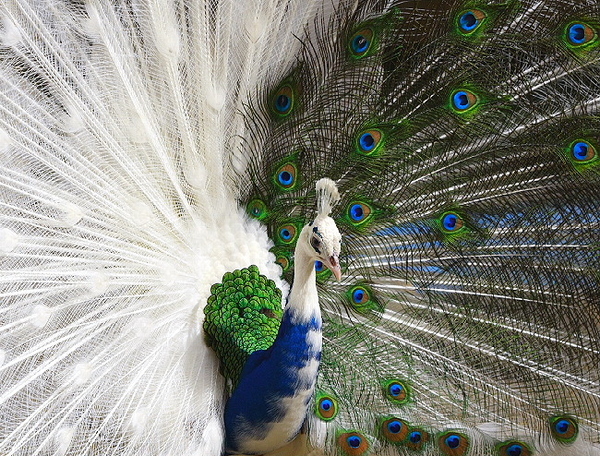
13. Peacock

13. Peacock

************

14. Sup, Polish Chicken

14. Sup, Polish Chicken

************

When I have time, I will update the names, if I can find them. My time is short and these names will have to suffice for now. If you know the exact names or who the photographers might be so they get proper credit, please leave a comment. Thanks, Lee
*

Interesting Things – Grand Canyon and Squirrels

Abert's Squirrel (aka Tassel-eared) ©Bandelier Natl Momument

Abert’s Squirrel (aka Tassel-eared) ©Bandelier Natl Momument

 Thus saith the LORD, thy redeemer, and he that formed thee from the womb, I [am] the LORD that maketh all [things]; that stretcheth forth the heavens alone; that spreadeth abroad the earth by myself; (Isaiah 44:24)

From Creation Moment’s, “Squirrels Give Age of Grand Canyon”

SmileyCentral.com

Who would have thought that squirrels would tell us how old the Grand Canyon is? Yet, creation scientists tell us that the tassel-eared squirrel, who lives near the rim of the canyon in Arizona, has done just that.

Tassel-eared squirrels are found on both the north and south rims of the canyon. Scientists have assumed that the squirrels were there before the canyon was formed, supposedly millions of years ago. However, since the canyon has kept the two populations apart for so long, the differences between them should show what millions of years of evolution will do to squirrels.

Abert's Squirrel (aka Tassel-eared) ©jerryoldenettel

Abert’s Squirrel (aka Tassel-eared) ©jerryoldenettel

There are minor differences between the squirrels on the north rim and the south rim. But they’re not even enough to classify the squirrels as separate species. North rim squirrels have white tails and black bellies. Squirrels on the south rim have white bellies and dark tails. But many north rim squirrels have coloration like those on the south, and many on the south rim are colored like those on the north. Creation scientist Dr. John Meyer has carefully studied these squirrels. He has concluded that the squirrels on the north and south rim are actually one population that has a complete range of fur colors.

According to a law of evolution accepted by evolutionists, there should be a much larger difference between the north and south squirrels if the Grand Canyon is really millions of years old. The conclusion must be, then, that the Grand Canyon is quite young – only thousands of years old.

Prayer:
Heavenly Father, the story of human history as told in the Bible is confirmed all around us. I pray that You would call Your people and Your Church back to complete faithfulness to Your revealed Word. Amen.

Notes:
Meyer, J.R. 1985. “Origin of the Kaibab Squirrel

©Creation Moment’s, “Squirrels Give Age of Grand Canyon”, 2011

Lee’s Addition:

Abert's Squirrel With a Pinecone ©WikiC

Abert’s Squirrel With a Pinecone ©WikiC

(from Wikipedia) “Abert’s squirrel (or tassel-eared squirrel) (Sciurus aberti) is a tree squirrel in the genus Sciurus endemic to the Rocky Mountains from United States to Mexico, with concentrations found in Arizona, The Grand Canyon, New Mexico, and southwestern Colorado.

The Abert’s squirrel is closely associated with, and nearly confined to cool, dry interior ponderosa pine forests [4]. In Arizona, ponderosa pine forests are most extensive between 5,500 and 8,500 feet (1,676–2,590 m) elevation [8]. Abert’s squirrels occur in pure ponderosa pine stands or stands with associated Gambel oak (Quercus gambelii), true pinyon (P. edulis), junipers (Juniperus spp.), quaking aspen (Populus tremuloides), and Douglas-fir (Pseudotsuga menziesii)[4]. Findley and others [9] mention that Abert’s squirrels are common in mixed conifer canyons in New Mexico.

Abert’s squirrels are 18-22.8 in (46–58 cm) long with a tail of 7-10 in (19–25 cm). The most noticeable characteristic would be their hair ear tufts, which extend up from each ear 2–3 cm. This gives this species a striking similarity to the Eurasian Red Squirrel, aside from its differing dark fur coloration. They typically have a gray coat with a white underbelly and a very noticeable rusty/reddish colored strip down their back.”

More:
Interesting Things – Click Here
Plus Items – Click Here

*

Rare Singing Bird Pistols

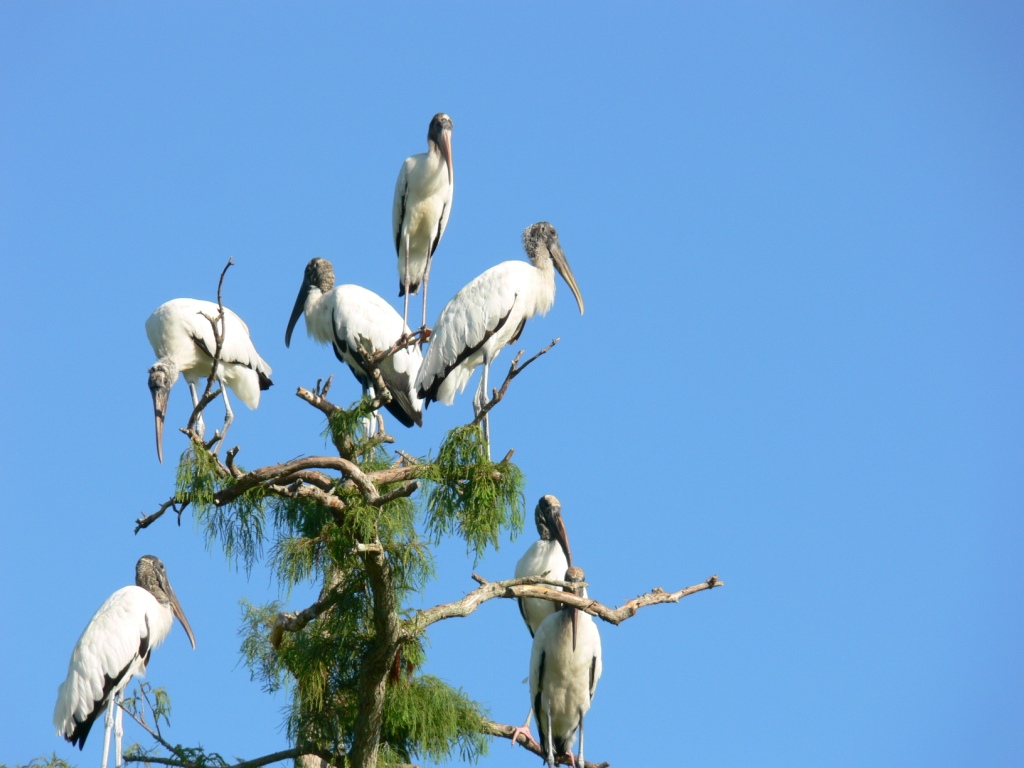
Woodstorks on top of tree at Circle B -7-22-11 by Lee

Woodstorks on top of tree at Circle B -7-22-11 by Lee

I received this link from a friend and thought I would share it with the blog. I was amazed at the intricacy of workmanship. Enjoy!

http://www.christies.com/features/singing-bird-pistols-en-1422-3.aspx

P. S. I am feeling somewhat better and appreciate those of you who have been praying for me.

I will give thee thanks in the great congregation: I will praise thee among much people. (Psalms 35:18 KJV)

In every thing give thanks: for this is the will of God in Christ Jesus concerning you. (1 Thessalonians 5:18 KJV)

(Felt good enough to go birdwatching yesterday.)
*

Interesting Things – World War I Hero – Cher Ami

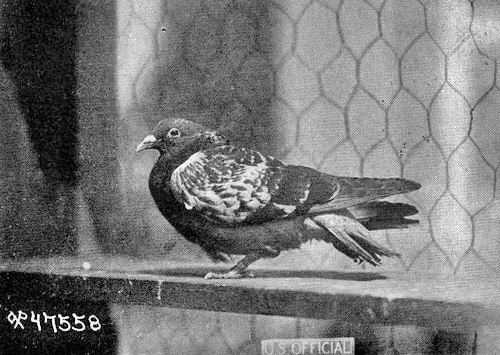
Cher Ami - Homing Pigeon Hero

Cher Ami – Homing Pigeon Hero

Cher Ami – WW1 Hero

While researching for a hero for an article on our church blog, I tried to find out about my father, who was in WW1. Being as he died when I was four years old, it is hard to find out a lot of details. All I knew is that he was in the trenches where they were poisoned with mustard gas and that it took years, but he died as a result of that gassing. Talking to my family, I also found out that he was at the Meuse-Argonne Offensive (Argonne Forrest) in which 117,000 of our American troops gave their lives and that he was in a company that had few survivors. Also found that he had fought hand-to-hand with bayonets. But the actual details are still a mystery. So, my dad and all of our men that fought in WW1 are my heros.

What I did find is a hero of the avian kind. His name was Cher Ami (French for “dear friend”, in the masculine) and he was a homing pigeon which had been donated by the pigeon fanciers of Britain for use by the U.S. Army Signal Corps in France during World War I and had been trained by American pigeoneers. He helped save the Lost Battalion of the 77th Division in the battle of the Argonne, October 1918.

On October 3, 1918, Charles Whittlesey and more than 500 men were trapped in a small depression on the side of the hill behind enemy lines without food or ammunition. They were also beginning to receive friendly fire from allied troops who did not know their location. Surrounded by the Germans, many were killed and wounded in the first day and by the second day, only a little more than 200 men were still alive. Whittlesey dispatched messages by pigeon. The pigeon carrying the first message (“Many wounded. We cannot evacuate.”) was shot down. A second bird was sent with the message, “Men are suffering. Can support be sent?” That pigeon also was shot down. Only one homing pigeon was left: ‘Cher Ami’. He was dispatched with a note in a canister on his left leg,

We are along the road parallel to 276.4. Our own artillery is dropping a barrage directly on us. For heaven’s sake, stop it!

Actual Message Sent

Actual Message Sent

As Cher Ami tried to fly back home, the Germans saw him rising out of the brush and opened fire and for several minutes, bullets zipped through the air all around him.The men of the Lost Battalion saw Cher Ami tragically shot down, but miraculously, he was airborne again soon. He managed to arrive back at his loft at division headquarters 25 miles to the rear in just 25 minutes, helping to save the lives of the 194 survivors. In this last mission, Cher Ami had delivered the message despite having been shot through the breast, blinded in one eye, covered in blood and with a leg hanging only by a tendon.

Cher Ami had become the hero of the 77th Infantry Division, so army medics worked long and hard to save his life. They were unable to save his leg, so they carved a small wooden one for him. When he recovered enough to travel, the little one-legged hero was put on a boat to the United States, with General John J. Pershing personally seeing Cher Ami off as he departed France.

Upon return to America, Cher Ami became the mascot of the Department of Service. The pigeon was awarded the Croix de Guerre Medal with a palm Oak Leaf Cluster for his heroic service in delivering 12 important messages in Verdun. He died at Fort Monmouth, New Jersey, on June 13, 1919 from the wounds he received in battle and was later inducted into the Racing Pigeon Hall of Fame in 1931. He also received a gold medal from the Organized Bodies of American Racing Pigeon Fanciers in recognition of his extraordinary service during World War I.

Cher Ami - WWI Homing Pigeon Hero

Cher Ami – WWI Homing Pigeon Hero – WikiC

Cher Ami was as well known as any human World War I heroes. Cher Ami was later mounted by a taxidermist and donated to the Smithsonian where he is enshrined in the Smithsonian Institution, and is currently on display with Sergeant Stubby in the National Museum of American History’s “Price of Freedom” exhibit.

Who are these who fly like a cloud, And like doves to their roosts? (Isa 60:8)

Pigeons and Doves are in the Columbidae Family of the Columbiformes Order.

(Wikipedia and other internet sources)

*

Interesting Things – The Leaf With An Appetite

SmileyCentral.com

From – The Hungry Leaf ©Creation Moments, 2011

(Thought you might enjoy reading this interesting fact from the Lord’s Creative Hand. What love He shows to us and to the world of critters and nature. Omnipotence and omniscience is definitely seen all around us, if we but look and give the credit to Whom it is do.)

Leaf Fish (Monocirrhus_polyacanthus) ©WikiC

Leaf Fish (Monocirrhus_polyacanthus) ©WikiC

For we are his workmanship, created in Christ Jesus unto good works, which God hath before ordained that we should walk in them. (Ephesians 2:10)

“It’s a warm day on the Amazon River. A small fish swims near the surface, looking among the natural floating river debris for some food. As he looks among the occasional leaf or twig in the water, he sees no danger. At the same time, one of the floating “leaves” is waiting for the little fish to move just a bit closer. Then, without warning, the floating “leaf” comes to life, grabs the fish and eats it!

What the little fish thought was simply another floating leaf was actually another fish. The Amazonian leaf fish is carefully designed not only to look like a leaf, but to act like one as well. It has a flat body, very much like a leaf. A black line runs the length of its body, giving the appearance of the midrib of a leaf. A fleshy growth in its lower jaw looks like a leaf stem.

Beyond looking like a leaf, the leaf fish also acts like a leaf. It lies still in the water, drifting with the current. To hide its identity further, it draws its fins close to its body, removing any last hint that it is indeed a hungry fish looking for lunch.

The leaf fish combines deceptive coloring, appearance and behavior into one design so that it, too, can make its living. In this, the leaf fish shows that the Creator makes nothing without also designing a special purpose for that creature. According to the Bible, the same can be said even more emphatically for each human being He has made. Your Creator has a special purpose for you, too, and it begins with His plan of salvation for you through His Son, Jesus Christ.
Prayer:
Dear Father in heaven, through the instruction of Your Word, help me to better learn how to define who and what I am more completely in the knowledge of Your forgiving love to me in Jesus Christ. Amen.”
Notes:
Hanson, Jeanne K., and Deane Morrison. 1990. “The wonderful weird of flora and fauna.” Star Tribune First Sunday, Dec. 2. p. 17.


Lee’s Addition:

“Leaffishes are small freshwater fishes of the Polycentridae family, from South America.

They usually have large heads, cryptic colors and very large protractile mouths. Those features, along with their peculiar movements help them to catch fairly large prey for the size of their bodies, including small fish, aquatic insects and other invertebrates. Their odd leaf-like appearance make them interesting fishes for aquarium hobbyists. That is likely because of their unique lifestyle, hanging around in the upper story of the tank imitating the leaves that commonly fall in temperate rivers were it typically lives. They are extremely agile hunters, capable of consuming prey within a quarter of a second (0.2 seconds) making them one of the worlds fastest fish.” (Wikipedia)

“Asian leaffishes are small freshwater fishes of the Nandidae family, from Southern Asia. There are only four genera in this group. These fish usually have small heads, coloration that appears to resemble leaves and very large protractile mouths. Those features, along with their peculiar movements (seemingly intended to resemble a leaf innocently moving through the water) help them to catch fairly large prey compared to their body size, including small fish, aquatic insects and other invertebrates. They tend to stay in one place and wait for prey–they are “lie-in-wait-predators.” (Wikipedia with editing)

Here is an interesting video about the leaffish from VinLWJ

See more Interesting Things in the Plus section.

*

Interesting Things – Mantis’s Hearing

SmileyCentral.com

Incline your ear, and come unto me: hear, and your soul shall live; and I will make an everlasting covenant with you, even the sure mercies of David. (Isaiah 55:3 KJV)

All insects that hear, except one, have two ears. Some insects have ears on their legs, thorax or abdomen. However, they all follow the same principle. Their ears are separated so that they can locate the source of the sound – except in one insect.

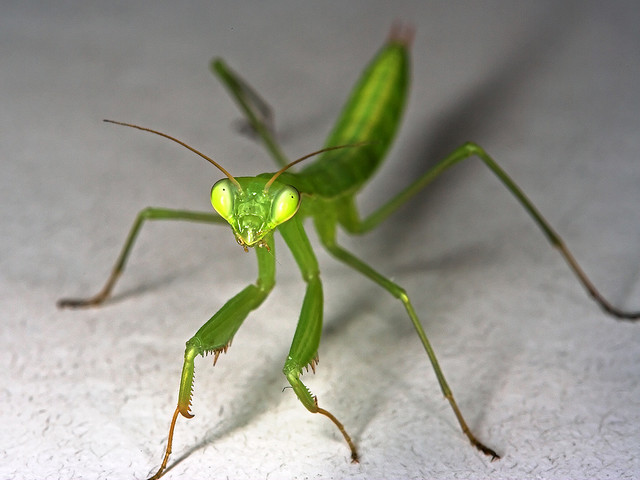
European Mantis (Mantis Religiosa) ©©Reini68

European Mantis (Mantis Religiosa) ©©Reini68

Scientists always thought the praying mantis was deaf. The 1,700 species of mantises have no structure that looks like an ear. Only after a long process of detailed study and testing did scientists finally discover that the mantis can hear. Further investigation finally led to the discovery of one of the most bizarre methods of hearing anywhere in the animal kingdom.

The mantis’s hearing organ is difficult to call an ear. Unlike any other insect, the mantis has only one hearing organ, located in a groove underneath its thorax. The teardrop shaped groove has a thinner cuticle than other parts of the body. Beneath the cuticle there is a relatively large air sac on each side of the groove. These sacs are connected to the insect’s respiratory system. Near the top of the sac are the nerves that carry the sensation of sound to the nervous system. Scientists say that this hearing organ senses ultrasonic frequencies. When researchers played a bat like sound to a mantis in flight, it immediately took an evasive flight path to escape the bat it thought it heard.

There is no limit to God’s creativity or His ability to make whatever He can imagine. We should keep this in mind, especially when some human authority tells us the Bible has made a mistake.

Prayer:
I marvel and praise You, dear Lord, as I consider the creation around me. Even as some would use the creation to deny Your existence, help me to more clearly see the excellence of all that You do, both materially and spiritually. Amen.
Notes:
Miller, Julie Ann. 1986. “Sensory surprises in platypus, mantis.” Science News, v. 129. p. 104.

From Creation Moments – Cyclops Ear ©3/10/11

More – Interesting Things
*